







Abstract
Grit, defined as perseverance and passion for long-term goals, is investigated as a predictor of academic success and well-being. This trait may have special importance for musicians’ functioning as their lives revolve around practice routines and mastering their craft for years. However, there is a growing recognition that extreme perseverance may be maladaptive in some cases. Persistent overinvolvement in goal-oriented activities is related to compulsive overworking, conceptualized within the behavioral addiction framework as work and study addiction. A previous study showed that study addiction is relatively highly prevalent among young musicians and has a clearly negative effect on their functioning. The aim of this study was to investigate the relationships between grit, study addiction, and psychosocial functioning among music academy students. It was hypothesized that perseverance of effort is related to well-being, grade point average (GPA), and study addiction, and that it becomes maladaptive for individuals addicted to studying. A cross-sectional correlational study was conducted among 213 music academy students in Poland. Perseverance of effort was positively related to GPA and study addiction. The relationships between perseverance of effort and self-rated general health, and between perseverance of effort and quality of life, were moderated by study addiction. The results suggest that grit may become maladaptive perseverance in the cases of individuals at risk of study addiction. Based on these findings, further investigations of grit among musicians, as well as further studies of the negative aspects of grit in general, are warranted. Implications for prevention and intervention programs are discussed.
“If I don’t practice one day, I know it; two days, the critics know it; three days, the public knows it.” “There are no two words in the English language more harmful than ‘good job.’”
Research on the predictors of academic success often points to the importance of skills such as self-control and the ability to delay gratification (Mischel, 2015), perseverance, curiosity (Tough, 2012), strong growth mindset and effort (Dweck, 2006), deliberate practice and hours of training (Gladwell, 2011), and passion and grit (Duckworth, 2016). Hard and sustained effort seems to be the basis of success in many areas of life, including arts education. After all, achieving excellence in the musical arts, especially as a performer, entails regular practice and determination in reaching a previously set goal.
A lack of tolerance for wasting time and procrastination, as well as thousands of hours of deliberate practice (see Ericsson et al., 1993), is typically perceived as necessary requirements for achieving success. However, goals that stimulate intense determination, engagement, and perseverance can also have a darker side and provoke dangerous psychological and health consequences. Recent years have seen the emergence of research progressively revealing the differences between harmonious engagement in work or study, leading to better results, engagement, health, and happiness (cf. Ascenso et al., 2017; Croom, 2015), and obsessive and compulsive engagement leading to burnout, lower productivity, worsening of physical and mental health (cf. Kreutz et al., 2008; Matei et al., 2018; Matei & Ginsborg, 2020), a sense of meaninglessness, and a lack of satisfaction with life (Vallerand et al., 2003). Cursory observations indicate that some of the people who are convinced that only determination and hard work can bring them happiness in the form of future success also believe that they can overcome any challenges and failures simply with increased effort and perseverance. However, being overburdened with work or study can lead to an addictive behavioral pattern, which is related to this set of beliefs (Atroszko, 2015; Atroszko, Andreassen, et al., 2015). Consequently, this pattern not only decreases the chances of developing one’s artistic potential but also threatens the health and sometimes even the life of the musician (Gembris et al., 2018).
Grit
Grit was defined by Duckworth et al. (2007) as “[p]erseverance and passion for long-term goals” (p. 1087) and has been shown to be a good predictor of academic success beyond intelligence (Credé et al., 2017; Duckworth et al., 2007, 2010; Eskreis-Winkler et al., 2014). This construct has been receiving increasing attention from educational researchers worldwide to the point of gaining significant attention from the Departments of Education of the United States and the United Kingdom and inspiring the development of programs aimed at training grit (Knowledge Is Power Program [KIPP], 2017; SRI International, 2018; UK Government, 2014, 2015).
Grit has also been found to be related to a number of indicators of well-being, such as (reduced) depression, life satisfaction, meaning in life, and positive affect across a range of cultures (Credé et al., 2017; Datu, King, et al., 2018; Datu, Yuen, et al., 2018; Disabato et al., 2018; Hill et al., 2014), as grittier individuals are more motivated and capable of pushing through adversity on their paths to reach life goals, more successful in achieving their goals, and more often engage in activities that give them a sense of purpose. Moreover, they report better overall physical health because they have better skills for managing their health (Sharkey et al., 2017). However, it is not always optimal to remain committed to a goal. A series of experiments by Lucas et al. (2015) showed, for example, that individuals with higher levels of grit were less likely to give up on tasks when facing certain failure, even when their persistence came at the cost of a potential monetary loss. Another study found that the relationship between grit and progress toward work goals changes over time, producing an inverted U-shape (Khan et al., 2021).
It is important to note that, despite the undeniable popularity of the concept of grit among social scientists, its conceptualization and measurement have raised many controversies. The higher order structure originally proposed, with two lower order factors of consistency of interest, representing passion for long-term goals, and perseverance of effort, representing persistence in efforts to achieve long-term goals, has little empirical support (Credé, 2018; Credé et al., 2017). Moreover, the majority of studies suggest that most of the predictive power of grit comes from the perseverance of effort dimension and not consistency of interest (Bowman et al., 2015; Credé et al., 2017; Datu et al., 2015; Disabato et al., 2018; Goodman et al., 2016). For overviews of issues related to the concept and proposals for refining it, see Credé (2018), Datu (2021), and Tynan (2021).
Perseverance and passion in the lives of musicians
From the beginning of their formal musical education, young adepts of the musical arts are met with high standards (McPherson, 2005), psychological pressure (Gembris et al., 2018), abusive teachers, unsupportive environments, social comparison, competition, disillusionment after entering the profession, social isolation, identity foreclosure, burnout, injury, perfectionism, and endless hours of practice (Pecen et al., 2016, 2018). Although many classical musicians derive positive emotions from their music-making and find their profession meaningful, they also risk negative consequences such as hearing loss, music performance anxiety (MPA), and performance-related musculoskeletal disorders (Matei et al., 2018).
Sacrifice and self-discipline are needed to practice for the amount of time required for an individual to become a professional musician (Jørgensen, 2009). Perfecting one’s skill set is a constant element of a musician’s work, founded on sustained and hard effort. Performing a composition at the highest level of skill involves realizing both short-term (see Hallam, 2006) and long-term goals based on regular, deliberate practice (Krampe & Ericsson, 1996). Kemp (1996) stated that the most talented musicians were driven by a form of motivation bordering on obsession. Other studies have shown that the highest-achieving students exhibit long-term engagement in playing their instruments and practice a great deal (McPherson & McCormick, 2000; Sloboda et al., 1996). As such, musicians’ high perseverance of effort should be indicative of their higher chance of achieving academic and professional success, as well as higher levels of well-being, due to their being more suited to face the challenges inherent in the profession. According to young, pre-elite music graduates interviewed by Pecen et al. (2018, p. 11), perseverance, resilience, commitment, and focus were the qualities most vital to learning and teaching. One research participant summarized their view as follows: Practice, practice, practice. If you feel insecure, you just haven’t practised hard enough. . . . there’s still that idea that somehow you have to practise all the time. If I did what I thought was the “right” thing, I would practise all the time.
Although the components of grit, perseverance, and passion seem to be very important in the lives of musicians, grit has rarely been studied among musicians, to the authors’ knowledge; and even in the published literature, it is rarely the main focus (Miksza et al., 2016; Miksza & Tan, 2015; Tan et al., 2021b; Tan & Miksza, 2017a, 2017b). These studies have shown that grit is positively associated with achievement motivation, flow, and practice efficiency, and negatively associated with MPA. Moreover, perseverance of effort has been shown to influence performance positively, and to facilitate progress and artistic growth (Ericsson et al., 1993; Krampe & Ericsson, 1996). However, it can also have consequences that are clearly negative. Large numbers of hours of practice, involving repetition, making corrections, and striving for precision, corresponds with perfectionism, especially of a dysfunctional nature (Butković et al., 2021; Stoeber & Eismann, 2007).
Study addiction
Study addiction has been conceptualized as a potential early form of, or precursor to, work addiction (Atroszko, 2015; Atroszko, Andreassen, et al., 2015). It has been defined by analogy to a recently proposed general definition of work addiction as characterized by a compulsion to study and preoccupation with study activities leading to significant harm and distress of a functionally impairing nature to the individual and/or other significantly relevant relationships (friends, family). The behaviour is characterized by the loss of control over the studying activity and persists over a significant period of time. This problematic study-related behaviour can have varying intensity from mild to severe. (Atroszko, Sawicki, et al., 2019, p. 326; for a definition of work addiction, see Atroszko, Demetrovics, & Griffiths, 2019, p. 9)
To date, the published data strongly support the notion that study addiction and work addiction reflect the same pathological addictive process. They are both (1) stable over time and (2) longitudinally related (Atroszko et al., 2016a, 2016b); and (3) evident from seven core symptoms: salience, changes in mood, tolerance, withdrawal, conflict, relapse, and problems (Atroszko, Andreassen, et al., 2015). They are related to (4) more engagement in studying/working and more time devoted to studying/working; (5) high scores on measures of neuroticism and conscientiousness; (6) lower levels of performance; and (7) impaired general health, decreased quality of life, poor sleep, and higher levels of perceived stress. Finally, they have similar prevalence rates in populations including high-school and undergraduate students (Atroszko, 2018, 2019; Wróbel, 2020). Indeed 16% of young musicians were found to be at risk of suffering from study addiction in a recent study of music academy students (Lawendowski et al., 2020) using the diagnostic criteria for behavioral addiction.
Work (Atroszko, 2019; Atroszko, Demetrovics, & Griffiths, 2019) and study addiction (Atroszko, 2015; Atroszko & Lawendowski, 2020) are conceptualized as a process of coping ineffectively with stress or other underlying problems. Specifically, compulsive engagement in work-related activities may serve as means of avoiding negative emotions and personal problems such as loneliness. Being immersed in study or work helps the individual to forget about unresolved sources of stress and makes them feel they are being productive. This, in turn, may create the illusion that one day these unattended problems will solve themselves automatically when the individual achieves success in study or work. For example, congruent with this model, social anxiety was found to mediate emotional stability/extraversion and study addiction, which shows that particular personality traits may increase the risk of social anxiety and that this, in turn, may affect study addiction as a means of coping with it (Lawendowski et al., 2020). These results indicate that individual risk factors related to personality and social anxiety, and related constructs such as MPA, should be included in analyses of the specific effects of study addiction on psychosocial functioning.
Lawendowski et al.’s (2020) study also confirmed that an assessment based on the common components of addiction is a valid measure of study addiction that can be used in research involving the participation of music students. Study addiction was found to be positively associated with learning engagement, at least to some extent; it was also positively associated with other variables including low extraversion and high social anxiety, specific aspects of studying (longer learning time and lower academic performance), and indicators of decreased well-being (impaired general health, decreased quality of life and sleep quality, and higher perceived stress). These findings are similar to those of Atroszko (2015), Atroszko and Atroszko (2019), Atroszko, Andreassen, et al. (2015), and Wróbel (2020) in suggesting that study addiction is pathological. These and the results of other studies on the study and work addiction support the notion that intensive, prolonged overinvolvement in work-related activities may exact high costs in terms of health, quality of life, productivity, and social relations (Atroszko, 2018, 2019; Griffiths et al., 2018). Recent analyses suggest that such costs may pose a considerable challenge for health care on a global level (Atroszko, Demetrovics, & Griffiths, 2020), a systemic emphasis on studying/working and studying/working-related goals being ever present in modern society. As such, individuals with a natural inclination toward persevering in any efforts they undertake might spend more time studying or working and are less likely to stop even when this is ineffective and harmful, which makes them susceptible to study/work addiction.
Maladaptive perseverance
It is plausible that there exists a phenomenon akin to maladaptive perfectionism, which occurs when an individual sets too high a standard for themselves, leading to decreased well-being and other negative consequences (Enns et al., 2001; Hamachek, 1978). Similarly, stubbornly pursuing an unobtainable goal or one that requires unhealthy habits could prove to be harmful and might be considered maladaptive perseverance (Grant & Schwartz, 2011; Niemiec, 2019; Smith et al., 2017). A substantial body of research on work addiction strongly indicates that a relentless focus on productivity may lead to clinically significant harm (e.g., health problems, stress) and, paradoxically, a loss of productivity. It is possible that for perseverant individuals who are addicted to studying, their perseverance becomes maladaptive as it reinforces and exacerbates the harmfulness of their already unhealthy behaviors of excess and unproductive studying. In consequence, the normally positive influence of perseverance of effort on well-being and achievement might become negative.
It should be emphasized, however, that maladaptive perseverance and study/work addiction are not the same constructs. While study/work addiction may be driven by the realization of long-term goals, some study/work addicts may engage excessively in activities regardless of their function in achieving these goals. In other words, ad hoc work- and study-related tasks may serve the purpose of mood regulation just as well as those that are part of greater ambitions. Maladaptive perseverance, by contrast, does not always lead to addictive behavior. For example, perseverance in a particular activity may cause health problems or even loss of life, but the individual does not suffer typical addictive symptoms such as withdrawal. Evidence to support a relationship between maladaptive perseverance and addictive behavior is currently limited, so more research is needed to explore the function of perseverance in study/work addiction and the role of compulsion in perseverance.
Another construct that may seem similar to maladaptive perseverance is obsessive passion, a component of the Dualistic Model of Passion (Vallerand, 2015; Vallerand et al., 2003). However, passion refers to strong engagement in a particular form of activity whereas grit refers to general determination to stick to any long-term plan. Nevertheless, it is plausible that when individuals who score high on measures of perseverance of effort engage in activities about which they are obsessively passionate, their perseverance may become maladaptive.
The present study
The present study aimed to examine the relationships between measures of perseverance of effort and variables representing the psychosocial functioning of music academy students, and the moderating role of study addiction in these relationships. Based on previous research and the theoretical frameworks described above, the following hypotheses were tested:
Hypothesis 1 (H1). Perseverance of effort is related positively to grade point average (GPA).
Hypothesis 2 (H2). Perseverance of effort is related to indicators of well-being (i.e., negatively to perceived stress and positively to general health, sleep quality, and quality of life).
Hypothesis 3 (H3). Perseverance of effort is related positively to study addiction.
Hypothesis 4 (H4). Study addiction moderates the relationship between the perseverance of effort and perceived stress, general health, sleep quality, quality of life, and GPA such that, for students scoring high on measures of study addiction, the relationship between perseverance and (a) perceived stress is positive, (b) general health, sleep quality, and quality of life is negative, and (c) GPA is negative.
The purpose of testing these hypotheses was to clarify the role of perseverance of effort, based on the mechanism of pressing on toward one’s goals regardless of the cost, in predicting well-being and academic performance (Bowman et al., 2015; Credé et al., 2017; Disabato et al., 2018). However, to encompass the entirety of the original concept of grit, all analyses were performed for both of its components, that is, passion as well as perseverance of effort. The results of the analyses using the composite grit score are presented in the supplementary materials.
A number of covariates were included in the analyses on the basis of previous findings. Learning engagement was included because confounding may occur if it is not controlled for (Lawendowski et al., 2020). There is a partial overlap between the components of high time and effort involvement in learning engagement and study addiction, so they should always be measured together and their mutual effects controlled for in the statistical analyses (Atroszko & Atroszko, 2019). Otherwise, the negative effects of study addiction may bias the results of research on learning engagement, and the positive effects of learning engagement may bias the results of research on study addiction. The Big Five personality traits were used as covariates because personality is a robust predictor of health and well-being (Czerwiński & Atroszko, 2020; Pinon, 2019). MPA was used as a covariate because of its considerable impact on musicians’ well-being (Biasutti & Concina, 2014; Kenny, 2011; Kenny et al., 2004).
Methods
Participants
A convenience sample was recruited, consisting of 213 music academy students: 135 (63.4%) were female, 73 (34.4%) were male, and 5 (2.3%) individuals did not report their gender. The participants’ mean age was 22.74 years (SD = 3.31). They had attained a mean of 11.25 years (SD = 4.76) of formal musical education. The participants studied at three music academies in Poland: the Stanisław Moniuszko Academy of Music in Gdańsk, the Feliks Nowowiejski Academy of Music in Bydgoszcz, and the Department of the Fryderyk Chopin University of Music in Białystok. They were taking different courses in different faculties and were in different year groups. A total of 85 participants were studying instrumental performance (39.9%), 58 music education (27.2%), 20 solo singing (9.4%), 10 musical theater (4.7%), 9 studied conducting (4.2%), 6 church music (2.8%), 6 sound engineering (2.8%), 6 music theory (2.8%), and the remaining 13 were taking a variety of other courses (6.1%). In Poland, all music academy students take courses closely related to performance, such as classical piano, their own choice of one or more orchestral instruments, piano improvisation, accompaniment, or vocal studies. These courses usually end with a formal examination or public performance. As such, all participants can be considered students of music performance regardless of their main specialization. There were very few missing data (less than 1% overall); these were imputed when necessary using the expectation–maximization (EM) algorithm in SPSS 25.0, which provides unbiased estimates of parameters (Enders, 2001; Scheffer, 2002). The dataset can be made available from the corresponding author on request.
Instruments
Grit
The Short Grit Scale was used to assess grit (Duckworth & Quinn, 2009). The scale consists of two 4-item subscales: perseverance of effort (e.g., “I finish whatever I begin”) and consistency of interest (e.g., “I often set a goal but later choose to pursue a different one”). Participants indicate how well each statement describes them using a 5-point Likert-type scale ranging from 1 (not like me at all) to 5 (very much like me). It showed good psychometric qualities in previous research (Wyszyńska et al., 2017). The Cronbach’s alpha reliability coefficients in the current sample were .75 for perseverance of effort and .72 for consistency of interest.
Study addiction
Study addiction was measured using the Bergen Study Addiction Scale (BStAS; Atroszko, Andreassen, et al., 2015). It consists of seven items pertaining to experiences during the past 12 months (e.g., “Studied in order to reduce feelings of guilt, anxiety, helplessness, and depression?”), with a Likert-type response scale ranging from 1 (never) to 5 (always). It showed good psychometric qualities in previous research (Lawendowski et al., 2020). The Cronbach’s alpha reliability coefficient in the current sample was .76. Based on the polythetic cut-off score, 16% of students fulfilled the criteria for study addiction, which is identical to a previous study (Lawendowski et al., 2020).
Learning engagement
Learning engagement was measured using a single item, the question “How engaged in learning are you?” (Atroszko, 2014), with responses ranging from 1 (I am not at all engaged) to 7 (I am completely engaged). It showed good validity and test–retest reliability in previous research with an intraclass correlation coefficient of .77 for test–retest reliability (Atroszko, 2014; Atroszko, Czerwiński, & Uzarska, 2019; Łukowicz et al., 2017).
Big Five personality traits
The mini-IPIP (Donnellan et al., 2006) was used to measure the Big Five personality traits. It consists of a 20-item inventory with four items measuring each of the Big Five personality factors: extraversion (e.g., “Talk to a lot of different people at parties”), agreeableness (e.g., “Sympathize with others’ feelings”), conscientiousness (e.g., “Like order”), neuroticism (e.g., “Get upset easily”), and intellect (e.g., “Have a vivid imagination”). Participants indicate how well each statement described them using a 5-point Likert-type scale ranging from 1 (strongly disagree) to 5 (strongly agree). The scale showed good psychometric qualities in previous research (Czerwiński & Atroszko, 2020; Czerwiński et al., 2019). The Cronbach’s alpha reliability coefficients in the current study were the following: .74 for extraversion, .61 for agreeableness, .77 for conscientiousness, .71 for neuroticism, and .64 for intellect.
MPA
The Kenny Music Performance Anxiety Inventory–Revised (K-MPAI-R; Kenny, 2009) was used to measure MPA. The instrument consists of 40 items (e.g., “My worry and nervousness about my performance interferes with my focus and concentration”) with a 7-point Likert-type response format, ranging from 0 (strongly disagree) to 6 (strongly agree). Although originally intended as a multidimensional tool, recent research indicates the unidimensional approach to be superior (Chang-Arana et al., 2017). The scale showed good psychometric qualities in previous research (Kantor-Martynuska & Kenny, 2018). The Cronbach’s alpha reliability coefficient in the current sample was .93.
Perceived stress
The short version of the Perceived Stress Scale (PSS-4; Cohen et al., 1983) was used as a measure of perceived stress, with four items referring to the previous month (e.g., “In the last month, how often have you felt difficulties were piling up so high that you could not overcome them?”). Response options are 0 (never), 1 (almost never), 2 (sometimes), 3 (fairly often), and 4 (very often). The scale showed good validity and reliability in previous research (Atroszko, 2015; Czerwiński et al., 2020). The Cronbach’s alpha reliability coefficient in the current sample was .78.
General quality of life, general health, and quality of sleep
Three single-item measures of different aspects of quality of life, developed on the basis of the WHOQOL-BREF (Skevington et al., 2004), were used. General quality of life was measured by the question “How would you rate your quality of life?” with a 9-point Likert-type scale ranging from very poor (1) to very good (9). General health was measured by the question “How satisfied are you with your health?” with a 9-point Likert scale ranging from 1 (very dissatisfied) to 9 (very satisfied). Sleep quality was measured by the question “How satisfied are you with your sleep?” with a 9-point Likert scale ranging from 1 (very dissatisfied) to 9 (very satisfied). This instrument showed good validity and test–retest reliability in previous research with intraclass correlation coefficients of .86 for general quality of life, .72 for general health, and .81 for sleep quality (Atroszko, Bagińska, et al., 2015; Czerwiński et al., 2020).
GPA
The students were asked to provide information about their GPA from the semester prior to the study as accurately as possible. All universities used a scale ranging from 1 to 25. However, some courses at the Stanisław Moniuszko Academy of Music in Gdańsk used a scale ranging from 2 to 6. In these cases, the GPA was recalculated using the conversion rate provided in the official rulebook of the academy.
Procedure
Data were collected in May 2019 using a paper-and-pencil cross-sectional survey. Students were invited to participate anonymously, on a voluntary basis, during lectures or classes. No monetary or other material rewards were offered. Completion of the survey was regarded as proof that the participant had given their informed consent. The estimated response rate was above 95%.
Statistical analyses
Means, standard deviations, percentages, and correlation coefficients were calculated using SPSS 25.0. Six hierarchical regression analyses were conducted in which study addiction, stress, general health, sleep quality, quality of life, and GPA were the dependent variables. The independent variables introduced in subsequent steps can be found in Tables 2 and 3. For all linear regression analyses, preliminary analyses were conducted to ensure that the assumptions of normality, linearity, multicollinearity, and homoscedasticity were not violated. Five moderation analyses were performed in which perseverance of effort was the independent variable; study addiction was the moderator; stress, general health, sleep quality, quality of life and GPA were the dependent variables; and consistency of interest, learning engagement, gender, age, Big Five, and MPA were covariates. In addition, five parallel moderation analyses were performed for consistency of interest as the independent variable and perseverance of effort as a covariate. The PROCESS 3.3 macro was used for moderation analysis (Hayes, 2017). All tests were two-tailed, and the significance level was set to α = .05. In addition, the same analyses but using the composite score of grit can be found in the supplemental materials.
Mean scores and standard deviations (SD), percentages, and correlation coefficients (pearson product–moment/point-biserial) between study variables.
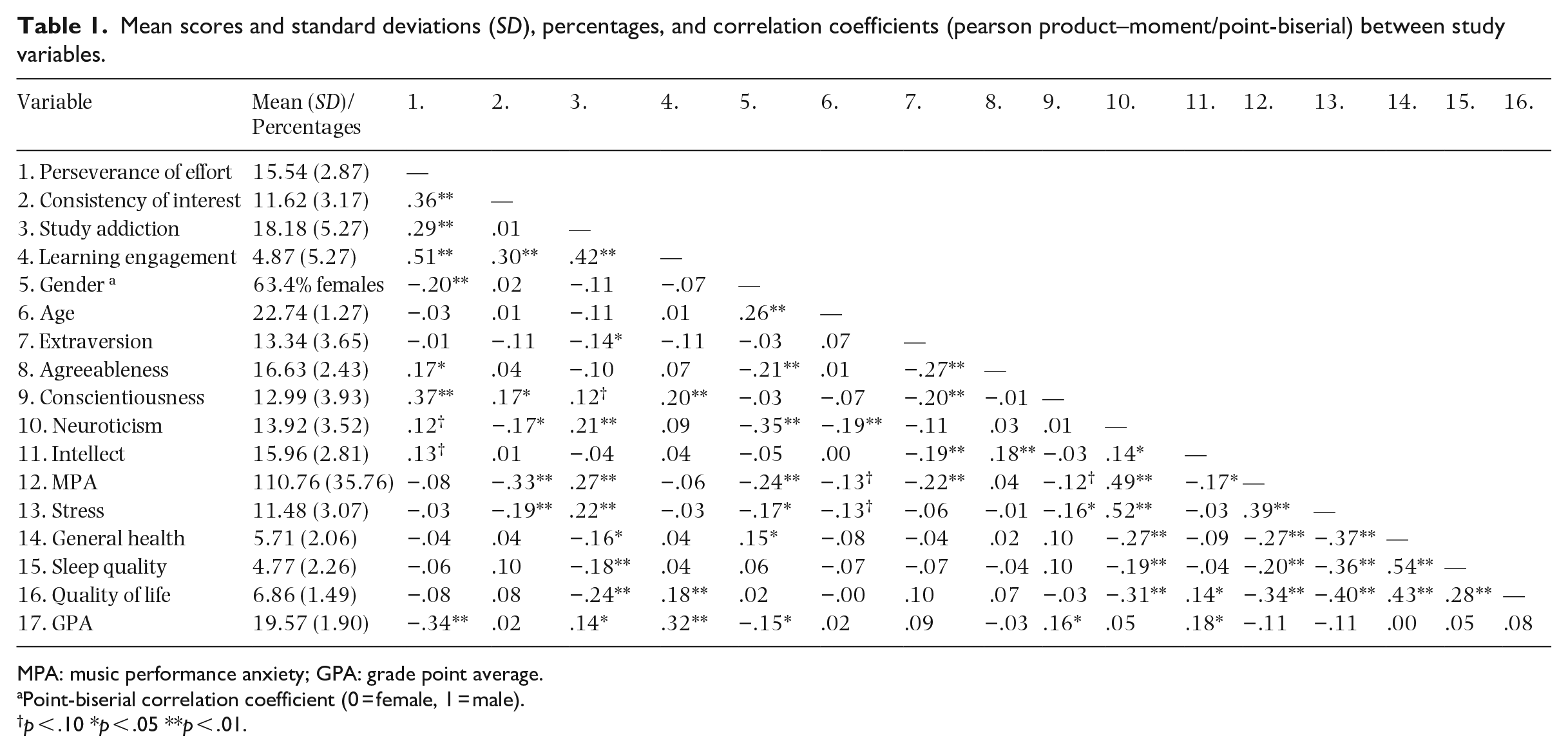
MPA: music performance anxiety; GPA: grade point average.
Point-biserial correlation coefficient (0 = female, 1 = male).
p < .10 *p < .05 **p < .01.
Results of hierarchical multiple regression analyses in which grit, age, gender, big five personality traits, and MPA were regressed upon study addiction.
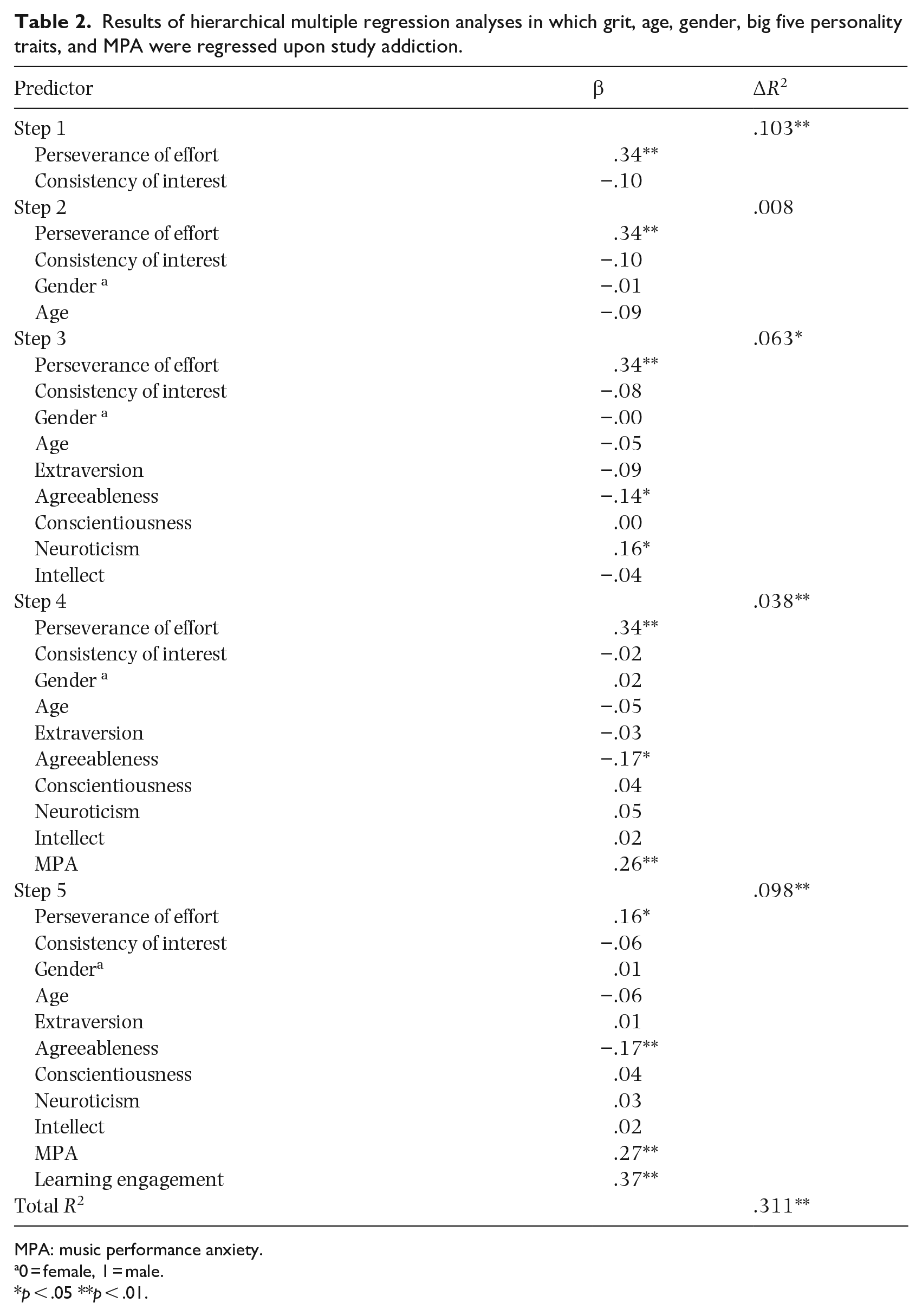
MPA: music performance anxiety.
0 = female, 1 = male.
*p < .05 **p < .01.
Results of hierarchical multiple regression analyses in which grit, study addiction, learning engagement, gender, age, Big Five personality traits, MPA were regressed upon the scores for stress, general health, sleep quality, quality of life, and GPA.
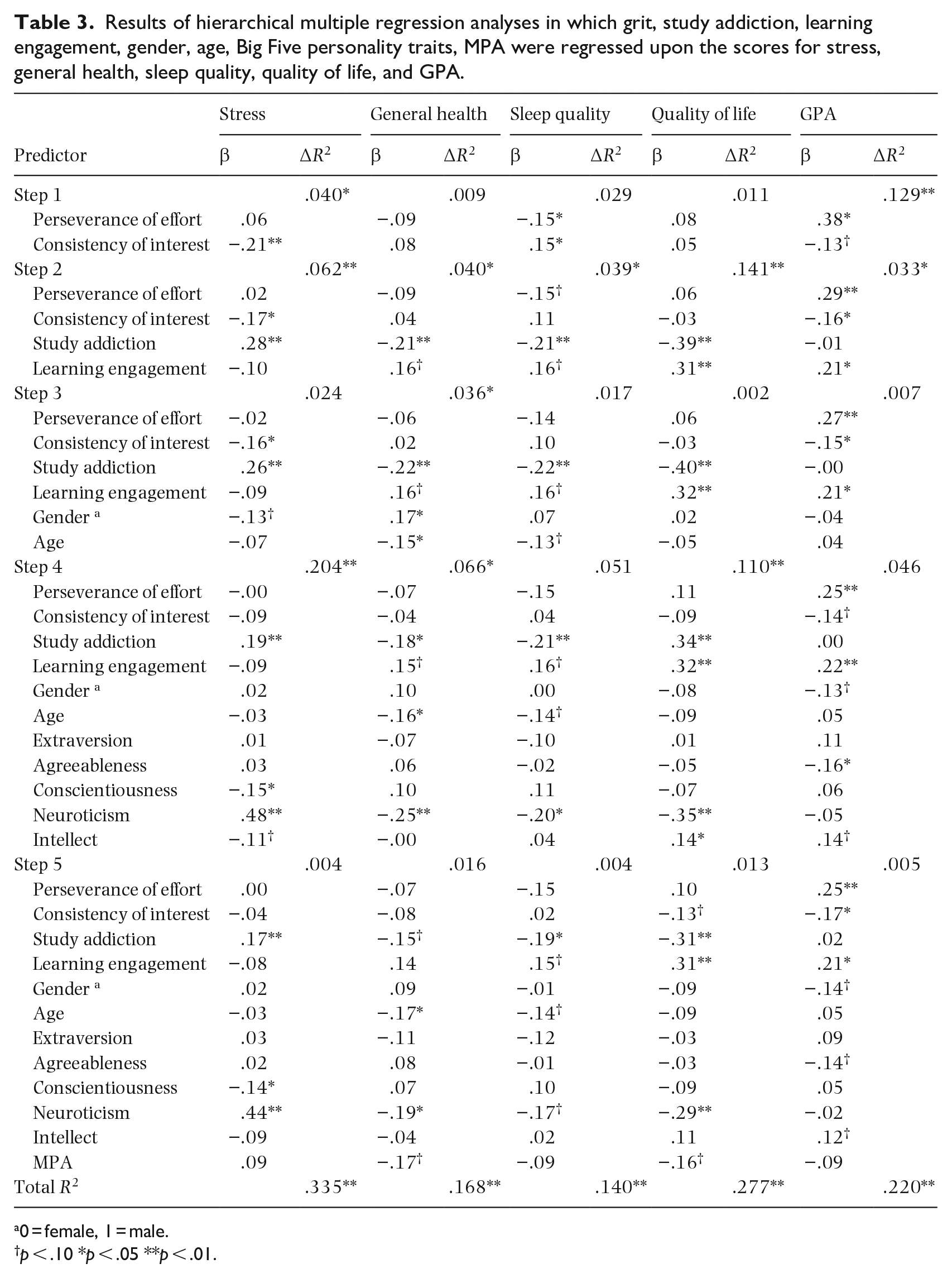
0 = female, 1 = male.
p < .10 *p < .05 **p < .01.
Because the study was confirmatory in nature and the analysis was driven by clear hypotheses, no adjustments for multiple testing were applied. It should also be noted that correcting for multiple comparisons is controversial, some researchers arguing that it is incorrect (see Gelman et al., 2012; Perneger, 1998; Rothman, 1990).
Three benchmarks were set for study addiction based on the mean score and standard deviation. Tests of the significance of regression slopes at these benchmarks were conducted. The bootstrap method, with bias-corrected 95% confidence intervals and 5,000 bootstrap samples, was used. The moderation plots were prepared using the interactions 1.0.3 package (Long, 2020) and the R language in version 4.0.3 (R Core Team, 2020).
Ethics statement
The study was carried out in accordance with the Declaration of Helsinki and the guidelines of the Ethics Committee at the Institute of Psychology of the University of Gdańsk. It did not include ethically doubtful procedures, sensitive data or vulnerable populations. Participants were given detailed information about the study and their role in it, assured that they would be providing data anonymously, and told that they could withdraw at any point.
Results
The mean scores, standard deviations, percentages, and correlation coefficients of the study variables are presented in Table 1. As found in previous studies (Nedelcut et al., 2018; Vaag et al., 2015), participants scored significantly higher on the measures of stress (t = 3.05, p < .01) and lower on sleep quality (t = −2.84, p < .01) than a sample of university (non-music) students who took part in Atroszko et al.’s (2018) using the same measures.
The regression analysis for study addiction, F(11, 191) = 7.84, p < .001, showed that the significant independent variables in Step 5 were perseverance of effort, agreeableness, MPA, and learning engagement (see Table 2).
The regression analysis for stress, F(12, 190) = 7.98, p < .001, showed that the significant independent variables in Step 5 were study addiction, conscientiousness, and neuroticism. Neither the interaction between perseverance of effort and study addiction nor the interaction between consistency of interest and study addiction, added in Step 6, was significant.
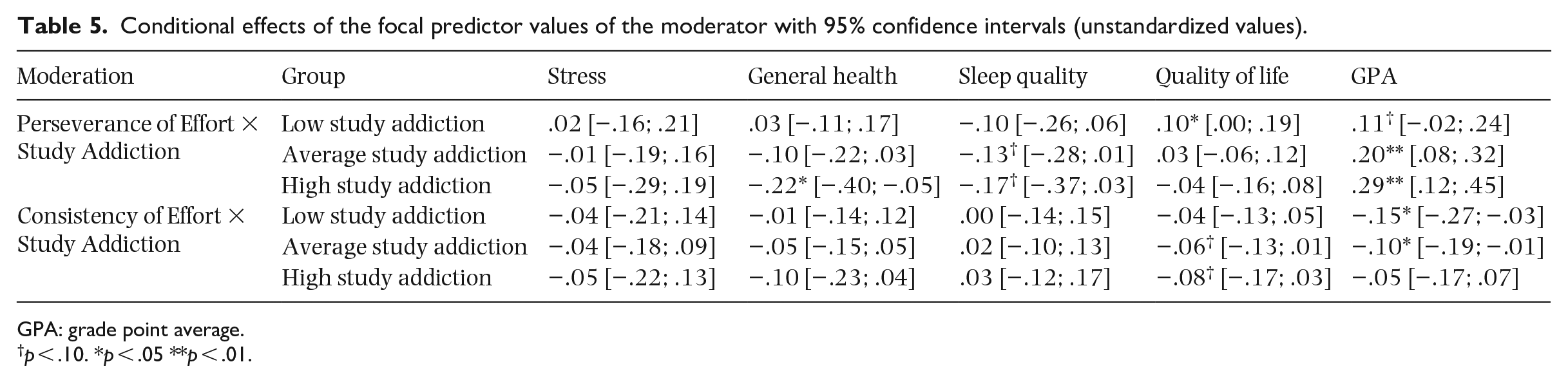
The regression analysis for general health, F(12, 190) = 3.18, showed that the significant independent variables in Step 5 were age and neuroticism, while study addiction and MPA were only on the verge of reaching statistical significance. There was a significant interaction between perseverance of effort and study addiction, added in Step 6. The conditional effects of the focal predictor values of the moderator showed that the relationship between perseverance of effort and general health was negative for participants who scored high on study addiction and non-significant for participants whose scores were average or low (see Figure 1). The significant covariates were age, neuroticism, and MPA. The interaction between consistency of interest and study addiction, added in Step 6, was not significant.
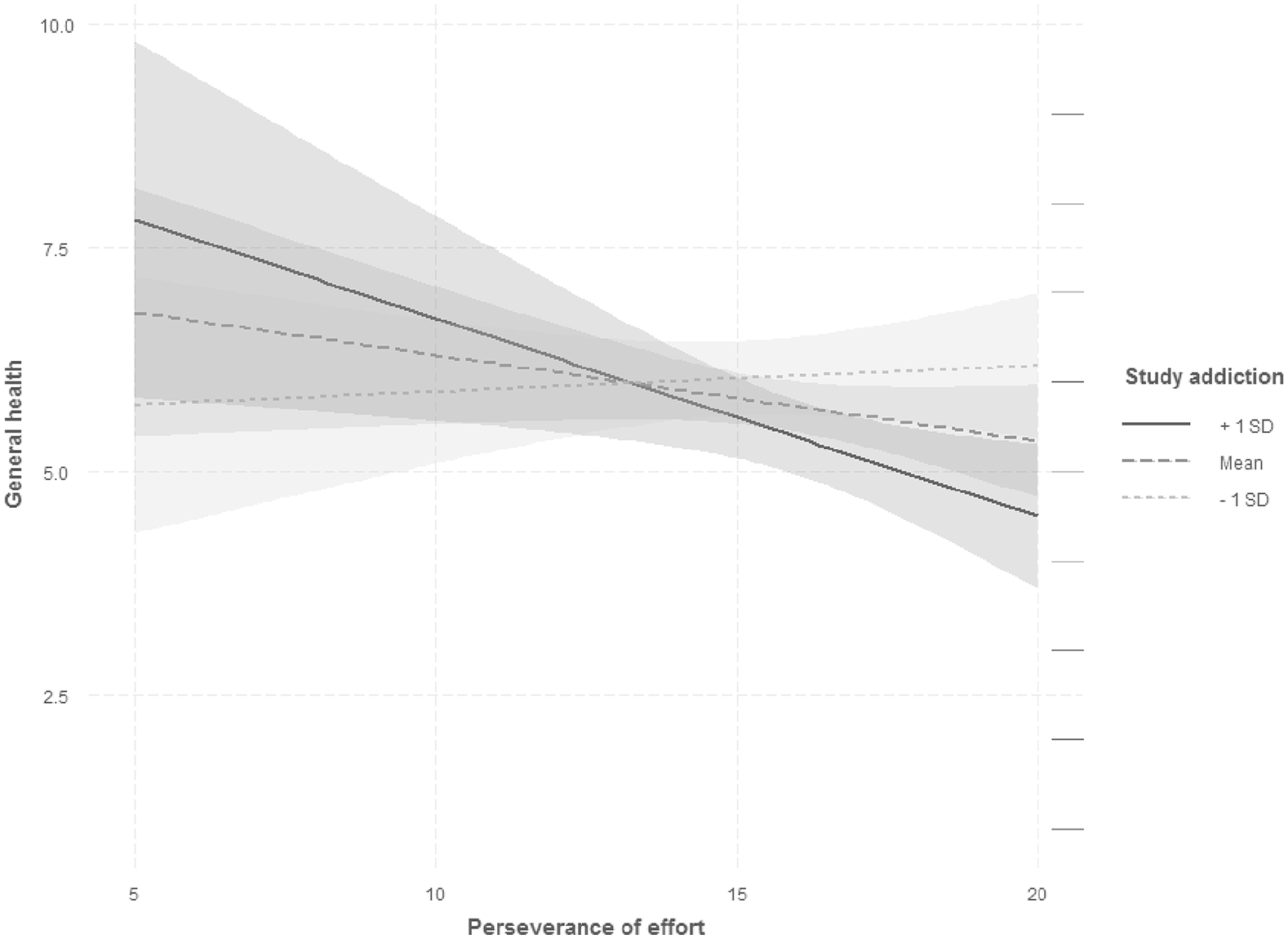
Plot for the moderating effects of study addiction on the relationship between perseverance of effort and general health.
The regression analysis for sleep quality, F(12, 190) = 2.58, p < .001, showed that the significant independent variable in Step 5 was study addiction, while learning engagement, age, and neuroticism were on the verge of reaching statistical significance. Neither the interaction between perseverance of effort and study addiction nor the interaction between consistency of interest and study addiction, added in Step 6, was significant.
The regression analysis for quality of life, F(12, 190) = 6.07, p < .001, showed that the significant independent variables in Step 5 were study addiction, learning engagement, and neuroticism, while the consistency of interest and MPA were on the verge of reaching statistical significance. There was a significant interaction between perseverance of effort and study addiction, added in Step 6. The conditional effects of the focal predictor values of the moderator showed that the relationship between perseverance of effort and quality of life was positive for participants who scored low on study addiction and non-significant in participants whose scores were average or high (see Figure 2). The significant covariates were learning engagement and neuroticism, while the consistency of interest and MPA were on the verge of statistical significance. The interaction between consistency of interest and study addiction, added in Step 6, was not statistically significant.
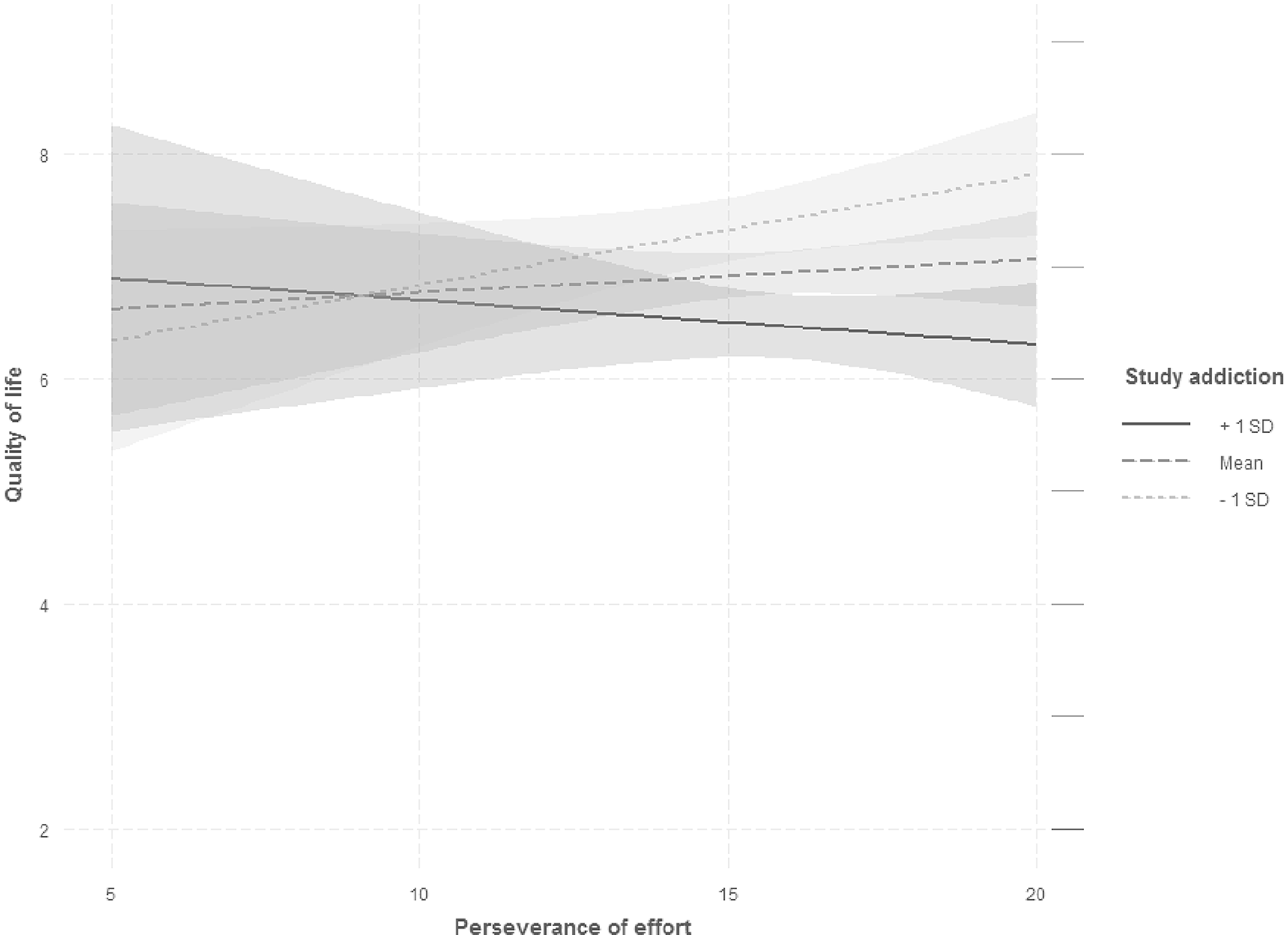
Plot for the moderating effects of study addiction on the relationship between perseverance of effort and quality of life.
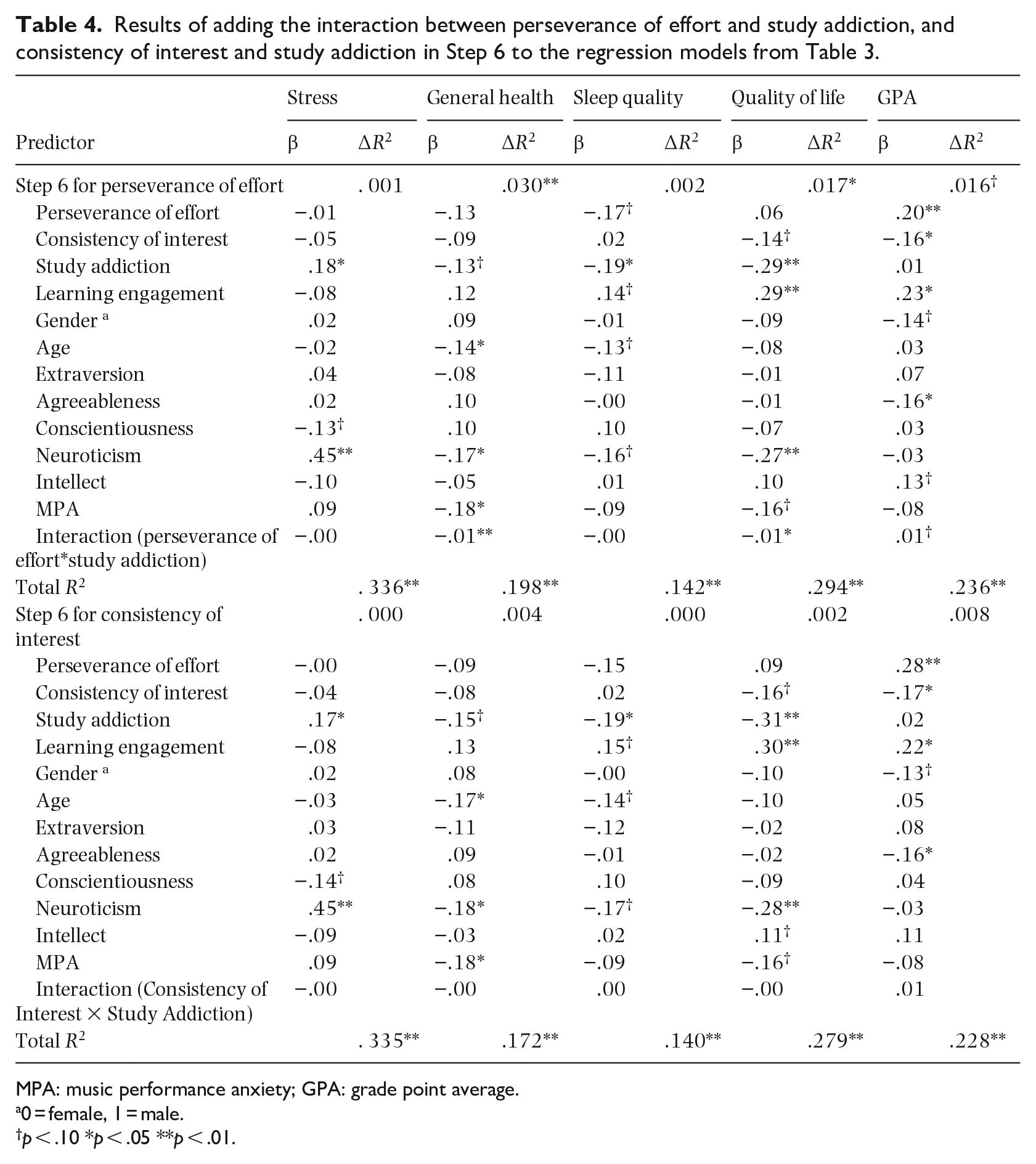
The regression analysis for GPA, F(12, 177) = 4.15, p < .001, showed that the significant independent variables in Step 5 were perseverance of effort, consistency of interest, and learning engagement, while gender, agreeableness, and intellect were on the verge of reaching statistical significance. Neither the interaction between perseverance of effort and study addiction nor the interaction between consistency of interest and study addiction, added in Step 6, was significant (see Tables 3 to 5).
Results of adding the interaction between perseverance of effort and study addiction, and consistency of interest and study addiction in Step 6 to the regression models from Table 3.
MPA: music performance anxiety; GPA: grade point average.
0 = female, 1 = male.
p < .10 *p < .05 **p < .01.
Conditional effects of the focal predictor values of the moderator with 95% confidence intervals (unstandardized values).
GPA: grade point average.
p < .10. *p < .05 **p < .01.
Discussion
The aim of this study was to investigate the moderating role of study addiction in the relationships between measures of perseverance of effort, one of the two components of grit, and variables representing the psychosocial functioning of music academy students including performance and well-being. H1 was supported in that perseverance of effort was related positively to GPA, even when controlling for variables such as personality, MPA, and learning engagement. This finding confirms the important role of grit in musicians’ lives and justifies the argument that grit should be a focus of music education research. However, H2 was not supported, as perseverance of effort was not related to any of the well-being indicators. H3 was supported, as perseverance of effort was positively related to study addiction, even when controlling for variables such as personality, MPA, and learning engagement. These results suggest that perseverance and well-being may not always be related to each other, as the musician’s profession can be highly stressful and pose substantial health risks (Kreutz et al., 2008; Matei et al., 2018; Matei & Ginsborg, 2020). The likelihood that this suggestion is correct was confirmed by subsequent analyses revealing that study addiction moderated the relationships between perseverance of effort and general health and quality of life. This shows how young musicians may experience maladaptive perseverance. H4 was only partially supported, however, as study addiction was found to moderate the relationship between perseverance of effort and only, among the five variables tested, general health and quality of life.
The results of the present study are congruent with findings in the wider research and educational context (see Lehmann et al., 2007; Macnamara et al., 2014; Manturzewska, 1974; McPherson, 2000; Stumpf, 1890), which show that the path to musical achievement involves intensive, goal-oriented work, training, and practice. Young musicians face requirements and expectations such that they are encouraged to commit themselves to engagement in education for musical excellence, demonstrating extreme perseverance of effort. However, greater perseverance of effort can not only help musicians achieve better results but can also cause them to experience specific psychological difficulties. Comparisons with other artists and with the general population (Kapsetaki & Easmon, 2019; Kenny et al., 2014; Vaag et al., 2016) show that musicians experience certain psychological difficulties more frequently and more severely. There is a strong link between study addiction and performance anxiety (Lawendowski et al., 2020), and many music teachers suggest that performance anxiety is the result of inadequate practice and thus recommends longer periods of more intense practice. Extending practice time is not always the optimal course of action (see Mornell et al., 2018) as it can increase the individual’s perfectionist tendencies and cause strong, negative emotions related to lack of perfection and social pressure (Stoeber & Eismann, 2007). This is also congruent with the findings of research testing the dualistic model of passion among musicians showing that musical engagement can be beneficial as well as detrimental to the functioning of an individual (Bonneville-Roussy et al., 2010; Bonneville-Roussy & Vallerand, 2020).
The present results support to some extent concerns as to the potential for individuals with high levels of grit to become dysfunctional (Credé et al., 2017; Datu, 2021; Khan et al., 2021; Lucas et al., 2015). They have important implications for developing educational policies and planning interventions designed to foster perseverance of effort, as this may reinforce the harmful behavioral patterns of some individuals. Many higher education institutions for music, for example in Poland, have not yet established robust, appropriate, and accessible support for students in the areas of psychological self-management, health, and well-being, despite the obvious need for it (Nogaj, 2020). As Pecen et al. (2018) note, this is particularly important because musical success is determined not solely by technical and musical proficiency but also by various environmental and psychosocial factors.
The moderating effects of study addiction
The results of the analyses revealed the moderating effect of study addiction on the relationships between perseverance of effort and measures of well-being differed according to the measure of well-being. Interactions were present for general health and quality of life, but not for sleep quality and perceived stress. To explain these differences, three factors need to be considered. First, measures of stress and sleep quality indicate well-being from day to day, while measures of general health and quality of life indicate well-being in the long term. In other words, increased stress and reduced sleep signal compromised well-being immediately, while problematic behaviors may take longer to affect an individual’s view of their general health and quality of life. Other studies have shown similar differences in the relationships between these indicators and those of study and other forms of behavioral addiction in young people (Atroszko, Andreassen, et al., 2015; Atroszko et al., 2018; Uzarska et al., 2021). Music academy students are already heavily committed to reaching goals related to their future lives as professional musicians (Ericsson et al., 1993; McPherson, 2000), leading, for many of them, to additional worries and less time for sleep or anxiety-driven sleep disturbance (Nedelcut et al., 2018; Vaag et al., 2015). The results of the research cited above suggest that while many music academy students experience high levels of stress associated with sleep problems, it is only in some extreme cases, related to study addiction, that they have noticeable consequences for general health and quality of life. This moderating effect is congruent with the results of previous research indicating the high stress levels of young musicians (see overview in Atroszko, Wróbel, et al., 2019; Lawendowski et al., 2020).
Second, perseverance of effort is strongly related to the performance indicators included in this study, such as GPA. It has been argued that when analyzing data on work and study addiction, it is necessary to consider a proper framework for trade-offs (see Atroszko, Demetrovics, & Griffiths 2019). In this study, greater effort yields superior performance for the individuals who are most obsessed (i.e., who score highest for perseverance and study addiction), but at the cost of compromised general health and quality of life. This result is consistent with those of studies of highly successful performing musicians who face a substantially increased risk of death as the result of addiction and health problems (Bellis et al., 2007; Breitenfeld et al., 2014).
Third, for participants who scored low on study addiction, perseverance of effort was significantly and positively related to quality of life, despite the non-significant results of the correlation and regression analyses. The absence of a significant relationship between grit and well-being may be attributable to the high prevalence of study addiction among musicians (Lawendowski et al., 2020). It is also worth noting that even though the interaction effects for stress and sleep quality were not significant, the non-significant relationship between perseverance of effort and stress was positive for participants who scored low on study addiction but negative for those with average and high scores. Similarly, the relationship between perseverance of effort and sleep quality neared significance for participants with average and high scores for study addiction. It may therefore be that moderation effects do exist for these indicators of well-being but are too small to be detected in a relatively small sample or were diminished by the relatively minor impact of perseverance of effort on well-being found in the present study compared to that found in studies of different populations. Although the relationship between grit and general well-being is well established, few studies have specifically targeted stress and sleep quality. As for GPA, the relationship between study addiction and GPA was not found to be significant, contrary to the findings of previous studies (Lawendowski et al., 2020). This suggests that further research on this topic is warranted.
Consistency of interest and the conceptual clarity of grit
Consistency of interest plays a much smaller role than perseverance of effort, a finding congruent with those of previous studies (Bowman et al., 2015; Credé et al., 2017; Disabato et al., 2018). It was not related to study addiction and was even negatively related to GPA. It was positively related to sleep quality and negatively related to stress, but only in the first few steps of the regression analyses. Also, there was no interaction between consistency of interest and study addiction. As agreed by many other researchers in this area, further refinements in the concept and measurement of grit are warranted. Its components, particularly consistency of interest, are vague and discrepant and need to be clarified, perhaps by reference to better established psychological constructs such as temperament.
Potential prevention and intervention programs
Study and work addiction are greatly under-recognized problems among the general population and particularly among musicians. One reason for this is that addiction is related to denial, and the overwhelming majority of affected individuals either do not recognize it as a problem or, if they do, fail to seek help. It would be helpful if there were more public initiatives and campaigns to raise awareness of work and study addiction, stimulating research and the development and implementation of prevention and intervention programs. The legendary Alanis Morissette is a musician who has spoken in public about her own work addiction and conducted interviews among a number of mental health experts including Bryan E. Robinson, a work addiction researcher who has carried out seminal work in this area (Robinson, 2014; Alanis Morisette, 2018). Similar public disclosure by Lindsey Stirling has also proved useful for raising awareness of eating disorders (EDs) in young musicians. These are highly comorbid with work addiction among working women (five out of six young working women with EDs were found to meet the criteria for work addiction; Atroszko, Mytlewska, et al., 2021). Widespread social recognition of the clinically relevant negative consequences of compulsive overworking is perhaps among the most important challenges to its proper acknowledgment, prevention, and treatment. There is no lack of empirical evidence (Atroszko, Demetrovics, & Griffiths, 2020), only a lack of public awareness of problem behaviors associated with work/study addiction.
Interventions promoting flow (Cohen & Bodner, 2021) and mindfulness, for example, are potentially useful for coping with MPA (Czajkowski et al., 2020), reducing stress, and preventing study and work addiction (Khoury et al., 2013; Van Gordon et al., 2014). However, the relationships between flow and grit (Miksza & Tan, 2015; Tan et al., 2021), and study addiction, need to be investigated cautiously as the absorption component of engagement, which is related to flow (Mesurado et al., 2016), may be a gateway to addiction (Atroszko & Atroszko, 2019; Bereznowski et al., 2021). The results of previous studies revealing links between study addiction and lower social competencies suggest that it may be useful to develop programs for improving these competencies and thus the functioning of introverted and highly socially anxious young musicians (Lawendowski et al., 2020). In many cases, therapeutic interventions based on a cognitive-behavioral approach and motivational interviewing may be effective in reducing compulsive study-related behaviors.
Strengths and limitations
To the authors’ knowledge, this is one of the first studies to examine grit among musicians thoroughly and the first to show that higher levels of grit, a construct hitherto associated by many scientists, policy makers, and the media solely with a positive impact on human functioning, could for some individuals be related to lower levels of well-being. We, therefore, propose the construct of maladaptive perseverance. All the psychometric tools we used were valid and reliable. However, the sample was relatively small, and all the data were self-reported. We used convenience sampling, so we recommend that the results of the study are generalized to other populations with caution.
Future research directions
The present study focused on a population of music academy students, because attending a music academy represents a comparatively advanced stage of musical education. Most participants had already experienced many years of musical training and showed passion and perseverance in pursuing their long-term goal of becoming a professional musician. It is, therefore, possible that grit also has an impact on the lives of those who are just beginning their musical training, so future studies could focus on examining grit at earlier—or indeed the earliest—stages of musical education. It would also be worth exploring the stability of the results of such research over time, using longitudinal methods, and how individuals function in a variety of educational settings.
The results of the present study could also be complemented by analyses of phenomenological data. Such analyses would improve our understanding not only of the meaning attributed by individuals to perseverance of effort, and their reasons for perseverance, but also how they themselves understand their experiences and the mechanisms underlying engagement in studying and realizing goals. Importantly, this research would make a contribution to the literature on the negative consequences of music-making.
The study of grit and its components is rooted in the paradigm of positive psychology, yet this paradigm has been criticized on the grounds that it is binary and reductive (Grant & Schwartz, 2011; Held, 2002, 2004; Ivtzan et al., 2016; Wong, 2011; Wong & Roy, 2017). According to this view, certain nuances of psychological phenomena are disregarded by positive psychologists, undermining the development of psychology as a science and the implementation of psychological findings in everyday lives. By contrast, a recent trend in personality psychology is to show that personality traits traditionally perceived as positive can also have negative consequences for the lives of individuals (Carter et al., 2015; Smith et al., 2017). The finding of the present research that potential conditional effects can turn positive influences into negative ones is part of this trend and should be explored further. Another promising area for future research is the study of the potential negative consequences of grit and the occurrence maladaptive perseverance in other populations.
Conclusion
The findings of the present study show that perseverance of effort is crucial during the course of an individual’s musical education, but if it drives study addiction it can lead to persistent overinvolvement in harmful and unhealthy behaviors. We have called this phenomenon maladaptive perseverance. Identifying perseverance of effort as a contributor only to positive outcomes such as objectively and subjectively measured success and treating it as a typical or necessary condition of musical education could have negative outcomes for beginner musicians.
Monitoring problems associated with perseverance of effort among students at music schools and conservatories may enable potential risks to be identified more effectively and sooner, adequate health behaviors to be promoted via the use of behavioral change techniques and the teaching of life skills, and improved well-being. These suggestions echo those made by other researchers in the same field (e.g., Araújo et al., 2017; Leech-Wilkinson, 2020; Matei & Ginsborg, 2020), drawing attention, first, to the need for further developments in the provision of health and psychological education for musicians and, second, criticisms of the rigid norms of Western classical music and the long-established but nevertheless questionable techniques for educating and training musicians, which assume—incorrectly, as we have seen—that musicians necessarily become stronger, and more resilient and perseverant in their behaviors.
Supplemental Material
sj-docx-1-msx-10.1177_10298649221095135 – Supplemental material for Can perseverance of effort become maladaptive? Study addiction moderates the relationship between this component of grit and well-being among music academy students
Supplemental material, sj-docx-1-msx-10.1177_10298649221095135 for Can perseverance of effort become maladaptive? Study addiction moderates the relationship between this component of grit and well-being among music academy students by Stanisław Konrad Czerwiński, Rafał Lawendowski, Michał Kierzkowski and Paweł Andrzej Atroszko in Musicae Scientiae
Footnotes
Acknowledgements
We would like to thank Wiktoria Braun, Bartłomiej Czarny, and Aleksandra Leniec who helped in the realization of the study.
Authors’ contributions
SKC assisted with literature search, study design and concept, data collection, statistical analyses, data interpretation, generation of the initial draft of the manuscript, manuscript preparation and editing, and final editing; RL assisted with literature search, study design and concept, data interpretation, generation of the initial draft of the manuscript, manuscript preparation and editing, and final editing; MK assisted with study design, data collection, and final editing; PAA assisted with literature search, study design and concept, data interpretation, manuscript preparation and editing, and final editing. All authors have approved the final manuscript.
Declaration of conflicting interests
The authors declared no potential conflicts of interest with respect to the research, authorship, and/or publication of this article.
Funding
The authors received no financial support for the research, authorship, and/or publication of this article.
Ethical approval
The study was carried out in accordance with the Declaration of Helsinki. All gathered data were anonymous, and participants were informed about all the proper details about the study and their role in it, including that they can withdraw at any point. Attaining formal and written informed consent was not regarded as necessary, as voluntary completion of the questionnaires was regarded as providing consent, and no medical information was gathered.

Supplemental material
Supplemental material for this article is available online.
References
Supplementary Material
Please find the following supplemental material available below.
For Open Access articles published under a Creative Commons License, all supplemental material carries the same license as the article it is associated with.
For non-Open Access articles published, all supplemental material carries a non-exclusive license, and permission requests for re-use of supplemental material or any part of supplemental material shall be sent directly to the copyright owner as specified in the copyright notice associated with the article.
