







Abstract
Research shows that memory for conversation is poor. People generally remember gist rather than verbatim and recalled memories of specific sentences are reconstructed to reflect gist memories. Memories of specific sentences that are reconstructed from gist memory are almost certainly not accurate. This study explores a case in which the court nevertheless considers verbatim memories to hold more weight than gist memories, despite the science that shows otherwise. It is suggested that greater research be done into how such evidence is dealt with in our courts, and whether juries should be instructed to be wary of verbatim memories for conversation.
Memory for what was said during conversations is remarkably poor, with people’s inability to recall verbatim details of conversations consistently demonstrated in multiple studies. 1 For example, a 1974 study by Jaqueline Sachs found that participants were unable to distinguish original sentences from paraphrases that capture the meaning but use different wording just 80 seconds after hearing short conversations of between 10 and 100 words. 2 Verbatim memory for conversations rapidly decays 3 unless memory techniques are employed, such as those used by actors to learn scripts. 4 Instead, ‘sentences are quickly transformed into an underlying abstract meaning and … the original surface structure is lost’: 5 people do not remember actual sentences, but instead remember the gist of what was said. This understanding of memory for conversations is old, tracing back to the pioneering research of Alfred Binet in 1894, 6 and has been described as ‘[o]ne of the most robust findings in psycholinguistics’. 7
A simple experiment of creating false memories of words from gist serves as a demonstration. Researchers presented participants with a list of 12 words relating to sleep, such as ‘bed’, ‘rest’, ‘tired’ and asked them immediately to recall as many words as possible.
8
Participants recalled, on average, 65 per cent of the presented words. What is striking is that 40 per cent of participants reported seeing the word ‘sleep’ even though it had not been presented, with confidence in this answer extremely high. The participants had used the gist of the list and created a false memory of the word ‘sleep’. Many people do have various degrees of awareness that they recall gist rather than verbatim. When recounting conversations, it is common to preface with ‘she said something like … ’ or ‘he said words to the effect of … ’ rather than ‘he said precisely … ’. It is also common to simply describe the gist of the conversation but not the sentences.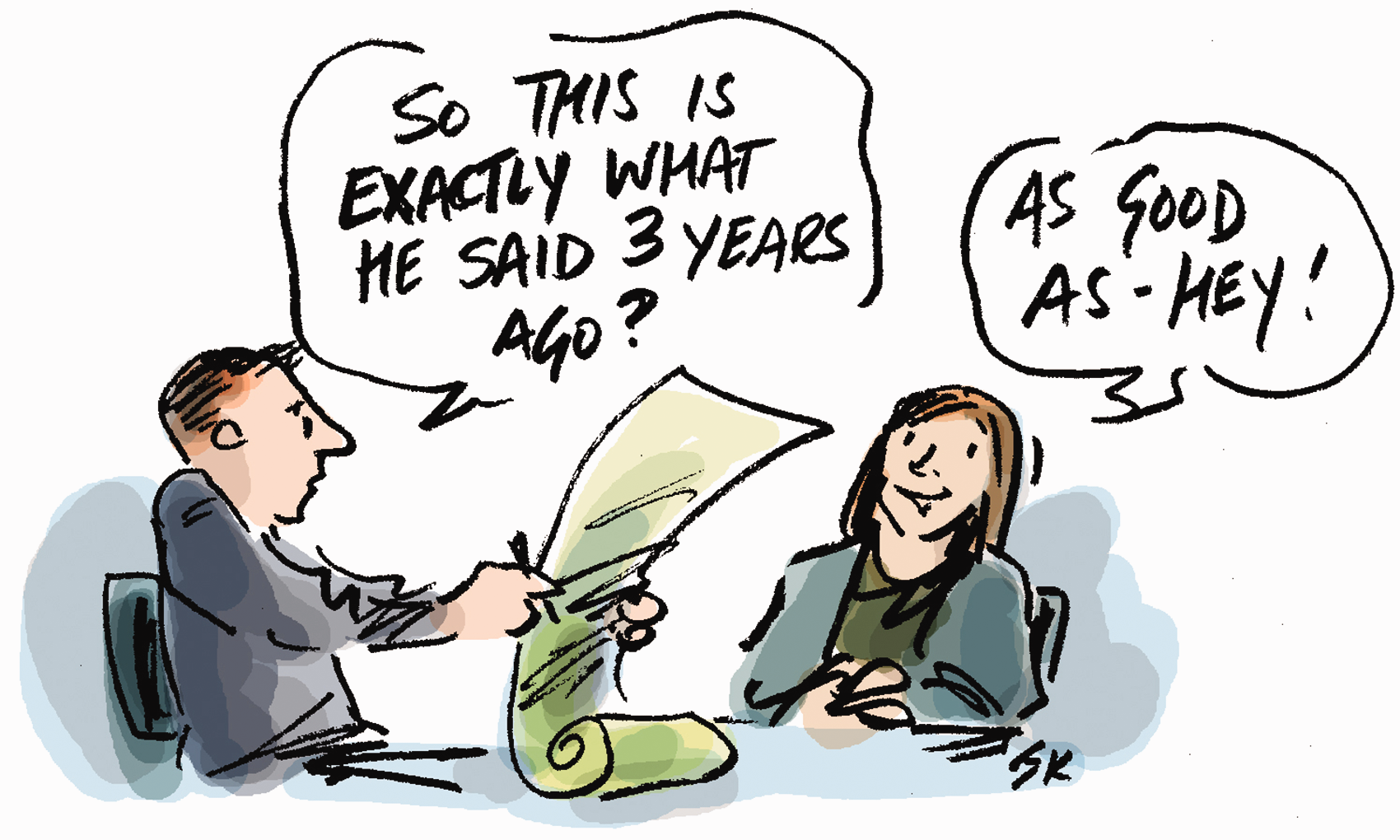
The interesting question for the criminal justice system should revolve around how accurate the remembered gist is. A case study of John Dean’s testimony to the US Senate during the Watergate investigation is illustrative. 9 The accuracy of Dean’s memory for conversations was independently verifiable as they had been secretly recorded. Dean testified that he believed he had a good memory, but that ‘I would say that I have an ability to recall not specific words necessarily but certainly the tenor of a conversation and the gist of a conversation’. 10 So Dean was aware of the notion that he recalls gist rather than specific sentences, but it turns out that Dean did not recall the gist of conversations as accurately as he believed, with his gist memories seemingly influenced by his own personal goals and desires. 11 Studies have consistently shown that our ability to recall gist is far from perfect 12 and suggest that recollections are affected by our current knowledge and feelings about the past event. 13 Assessment of evidence pertaining to memories of conversations should concern the accuracy of gist.
Problems with memory for conversation are not confined to the storage and retrieval mechanisms of the human mind and the ability to recount gist. Comprehension processes also affect how conversation is remembered. For example, the context in which a conversation occurs, or the linguistic structure of sentences can affect how sentences are interpreted and encoded in the first place. 14 Ambiguity is often a problem. The task of drawing inferences from recalled conversation has been compared to solving a single equation with two unknowns, comprehension and memory: 15 people’s memories of a conversation can differ at time of encoding due to their different comprehension of what was said, or they could alternatively differ at later times through the manner in which our memories degrade and evolve.
These understandings of memory have important implications for our criminal justice system as well as for forensic analysts whose work is relied upon by our courts. 16 Reviews of issues of human memory and how they affect our criminal justice process have been made by legal scholars, 17 memory researchers 18 and legal professionals. 19 These issues have led to many jurisdictions changing the manner in which memory evidence, particularly eyewitness testimony, is attained. 20 Further, our modern understanding of memory has led to changes in how memory evidence is handled by our courts, with different jurisdictions employing safeguards that include admissibility standards, judicial instructions and expert testimony. 21 A wealth of ongoing research continues to improve our understanding of the functioning and reliability of memory in different circumstances. 22
While the majority of research of the accuracy and use of memory evidence in our justice system has focused on eyewitness testimony, many criminal trials incorporate evidence pertaining to conversations. Duke, Lee and Pager 23 argue that conversation evidence is so ubiquitous and so prone to errors that faulty memories for conversation are likely a greater cause of miscarriages of justice than faulty eyewitness evidence, which is commonly considered the most common cause of miscarriages of justice. 24 Duke and collaborators call for better procedures for gathering, preserving and presenting conversation evidence, in a manner analogous to reform of eyewitness testimony. 25
Understanding memory for conversation has implications for how we perceive the veracity of witness testimony: witnesses who offer verbatim accounts should not generally be considered more reliable than witnesses who provide gist accounts of memory, while witnesses who provide gist memories should not be considered unreliable when they are pressed to provide verbatim details and cannot. Reliability should be assessed in other ways, such as time between the event and recall, and the degree of exposure to information that could be incorporated into the memories. Yet little research seems to have been made regarding the distinction between gist and verbatim memory, and how they are treated in the criminal justice system, and how much weight to afford these different types of memory evidence.
A case study is presented that highlights this unreported problem with how the criminal justice system admits and analyses evidence stemming from disputes pertaining to memories for conversation. The central problem arises from the false expectation that people can recall sentence structures. In the case, a dispute occurs whereby one witness reconstructs (presumably false) ‘verbatim’ memories of specific sentences from their memory of the gist, while the other witness (in this case, the accused) makes no such claim to be able to recall specific sentences.
In the case explored – Robert Farquharson who was convicted of murdering his three children – the memory of specific, presumably reconstructed, sentences were used to lend weight to a witness’s memory over that of the accused in a dispute over the gist of their conversation. It was used in such a manner by the prosecution, 26 by the judge at sentencing, and by the Appeals Court. The fact that the accused made no claim to recall precise sentences and did not provide an alternative ‘verbatim’ version was taken as tacit admission that the sentences claimed by the witness were reliable. The fact that the verbatim sentences better accorded with the gist memory of the witness than the gist memory of the accused was taken to favour the reliability of the witness’s gist over the accused’s version. Never mind that the recalled verbatim sentences were almost certainly, according to the research, false memories that were created to reflect the gist proclaimed by the witness and disputed by the accused. Ultimately, the inability of the gist version of the accused to adequately address the purported verbatim sentences was taken as an indication that the accused was fabricating his account.
The article is organised as follows: in the following section, the materials that were analysed are catalogued; next, a brief outline is provided of the pertinent facts of the case and the relevance of the witness evidence pertaining to his conversation with the accused; subsequently, it is shown how the accused responded, providing his own version of the gist but not providing his own version of the sentences used; and finally, the dilemma is discussed, as are possible pathways for understanding and dealing with this type of evidence.
Case materials analysed in this study
The author had access to all case material, trial transcripts from both trials and two decisions of the Court of Appeal. Case material includes video and transcripts of police interviews of the man who was convicted for murder, Robert Farquharson; and audio recordings of two conversations between Farquharson and state witness Greg King, which concerned their conflicted memories of a previous conversation that they had. This audio was secretly recorded by King who was ‘wired’ by the police and tasked with ‘confronting’ Farquharson with his memories of the conversation; and three written statements of Greg King pertaining to that conversation, which were taken over several months.
The context of the dispute over the gist of the conversation
A car driven by Robert Farquharson veered off a country road and into a dam on Father’s Day 2005. While Farquharson was able to escape, his three sons drowned in the car. Farquharson was convicted of murder of his sons in 2007, won the right to a new trial on appeal in 2009, and was convicted for a second time in 2010.
Greg King was a key witness for the prosecution whose testimony concerned a conversation he had with Farquharson several months prior to the children’s deaths. King claimed that Farquharson had made threats to harm the children. King made three statements over a three-month period pertaining to the conversation, each of which included verbatim sentences. In each new statement, the expression of the threats became more explicit until, in the final ‘extreme’ version of the conversation, King claimed that Farquharson had said that he ‘hated’ the children and was going ‘to kill them’ to ‘payback’ his ex-wife, Cindy Gambino. 27 The changing nature of the evidence led the judge in the second trial to explicitly state during sentencing that he was ‘not satisfied beyond reasonable doubt’ that King’s third, extreme, version of the conversation ‘was actually said … in the terms that he described’. 28 In the remainder of this study, the primary focus is on a sentence contained in the first statement of Greg King, and how it was presented and interpreted by the courts.
Greg King first made a statement to police one week after the incident. King had spent a restless week of little sleep, vivid dreams and waking visions 29 of the tragic events that had claimed the lives of the three young boys. King recounted the conversation he had had with Robert Farquharson, estimated to have been around three months earlier, in which it is not in dispute that Farquharson made disparaging comments about his ex-wife Cindy Gambino and particularly about her new partner, Steven Moules. King claimed that Farquharson had said during the conversation, regarding Cindy, that he would ‘pay her back big time’ and would ‘take away the most important thing that means to her’. 30
The dispute surrounding the gist of this conversation concerned whether Farquharson made threats to harm the children, which was the gist of the conversation as recalled by King. King wore a hidden police microphone and twice confronted Farquharson with this version of the gist of the conversation, and both times Farquharson emphatically denied that he ever threatened the children. 31 Farquharson provided his own version of the gist of the conversation. Farquharson admitted to making disparaging comments about Cindy Gambino but claimed that his anger was primarily directed at Steven Moules, 32 and he admitted to making insulting remarks about him. Farquharson also claimed that he had told King that he planned to make something of himself in order to make Cindy Gambino regret leaving him for this new [expletive] man. 33 Farquharson again denied having made threats against the children during the trial. Further evidence was adduced by four different witnesses for the defence 34 that Farquharson had been speaking disparagingly about Moules around that time and had been talking of the possibility of taking custody of the boys, due to his dislike of them spending time with Moules.
Using recalled sentences to settle the dispute: Is the tail wagging the dog?
The manner in which this dispute played out in court is well illuminated by reference to the sentencing remarks of the trial judge, and the findings of the Court of Appeal. At sentencing, Justice Lasry referred to the conversation between Farquharson and King, telling Farquharson that, You did not deny that such a conversation occurred, or that in the course of it you stated your intention was to “Pay [Cindy Gambino] back big time”. However, you denied the interpretation on those words for which the prosecution argued.
35
The Court of Appeal found that
the version of the Mr King conversation which the applicant accepted was itself very significant because it disclosed – at a time relevantly proximate to the death of the children – the intensity of the applicant’s animosity towards Ms Gambino and, in particular, the applicant’s use of language conveying an intention to seek revenge. 37
Yet the applicant, Farquharson, had not accepted that he had conveyed an intention of seeking revenge. The Court of Appeal seem to be referencing the particular language structures used by the witness as being accepted by the accused, and that it therefore forms part of the evidence that he accepted. It becomes apparent in what the Court of Appeal judges say next that this is precisely what they have done: Put another way, what was most important about Mr King’s evidence was the extent to which it was confirmed by the applicant, both in the covertly-recorded conversations and in his evidence at the trial. Given the difficulties of recollection, which were such a prominent feature of the applicant’s answers under cross-examination, that confirmation was capable of being viewed as adding strength to the prosecution case. So, too, was the implausibility of the applicant’s attempts to give a benign explanation for his threat to ‘pay her back big time’.
38
Not only did the Court of Appeal resolve the dispute by referencing a particular sentence that had been (presumably inaccurately) recalled by the witness, they explicitly commented on Farquharson’s ‘difficulties of recollection’, as though he should have been able to ‘recall’ sentences, as did King. Farquharson had recalled the conversation and presented his version of the gist. The courts should not ask more than that.
Discussion
Our criminal justice system relies heavily on memory evidence, whether it be eyewitness identification or evidence pertaining to conversations. Investigators, forensic analysts, lawyers and judges will better assess and weigh such evidence if they have an understanding of how the human memory works and can create protocols and systems that take consideration of this scientific knowledge. Implications for eyewitness identification are well documented 40 and a range of protocols have been created to improve outcomes. Such protocols have been adopted in various jurisdictions. 41
Protocols for gathering, analysing and examining testimony pertaining to memories of conversation remain relatively unregulated. A lack of consideration of scientific understanding of memory for conversation continues to pervade the criminal justice system – from investigation, to trial, to appeal. Witnesses are routinely asked to recount what words were said, both during interrogation and on the witness stand while they can only be reasonably expected to recount the gist of the conversation.
In this article, the issue of the weight that should be afforded verbatim and gist memories of conversation was explored. Some witnesses will be more prone to reconstruct false memories of sentences rather than provide their version of the gist of a conversation. A case where verbatim and gist memories were directly compared was highlighted. In the case, Greg King claims to recall verbatim sentences, while Robert Farquharson provides a gist version of the conversation, without attempting to question the verbatim memory of King. The prosecutor stated that the verbatim sentences used by Greg King went ‘unchallenged’, the sentencing judge remarked that Farquharson ‘did not deny’ the sentence, and the Court of Appeal found that he had ‘accepted’ the sentence. Witnesses cannot be expected to know that memory does not work like a tape recorder and be expected to explicitly deny the validity of the sentences that are claimed by other participants of a conversation.
The court accepted the verbatim sentence ‘pay her back big time’, and this was used to determine that King’s version of the gist of the conversation had more credibility. The case illustrates a common misunderstanding of gist and verbatim memory and has implications for much ear-witness evidence that pertains to conversations, which is a very common form of evidence.
There are various ways that investigators, analysts, lawyers and judges can deal with this issue, but the main thing is to be aware that memory for conversations is poor, and in particular that people can only be expected to recall the gist. By all means, allow witnesses to conversations to reflect their memory for gist in the form of sentences, so long as the context is understood as ‘he/she said something along the lines of … ’. When disputes as to the gist of a conversation arise, or questions of reliability and veracity of memories for conversations, memory of verbatim sentences should not provide added weight. Factors that are more important to consider are corroboration, time between the conversation and the recollections, context in which the memories are being made, plausibility, exposure to potentially contaminating information, and broader issues pertaining to the reliability of the witnesses. Consideration should be given to providing instructions to the jury surrounding the relationship between gist and verbatim memory.
Footnotes
Declaration of conflicting interests
The author(s) declared no potential conflicts of interest with respect to the research, authorship, and/or publication of this article.
Funding
The author(s) received no financial support for the research, authorship, and/or publication of this article.
1
Jacqueline S Sachs, ‘Recognition Memory for Syntactic and Semantic Aspects of Connected Discourse’ (1967) 2 Perception & Psychophysics 437 https://doi.org/10.3758/BF03208784; John D Bransford and Jeffery J Franks, ‘The Abstraction of Linguistic Ideas’ (1971) 2(4) Cognitive Psychology 331–350 https://doi.org/10.1016/0010-0285(71)90019-3; Jacqueline S Sachs, ‘Memory in Reading and Listening to Discourse’ (1974) 2 Memory & Cognition 95, 97–8; Kathryn J Bock and William F Brewer, ‘Reconstructive Recall in Sentences with Alternative Surface Structures’ (1974) 103(5) Journal of Experimental Psychology 837–43 https://doi.org/10.1037/h0037391; Susan Kemper, ‘Memory for the Form and Force of Declaratives and Interrogatives’ (1980) 8 Memory & Cognition 367–71. https://doi.org/10.3758/BF03198276; Brian P Ackerman, ‘Contextual Integration and Utterance Interpretation: The Ability of Children and Adults to Interpret Sarcastic Utterances’ (1982) 53(4) Child Development 1075  ; Bo Edvardsson and Linda Sund, Immediate Free Recall of Brief Conversations in Investigative Work (Paper presented at 8th European Conference on Psychology and Law, Cracow, 2–5 September 1998).
2
Sachs (1974) (n 1).
3
4
See, eg, Helga Noice, ‘Effects of Rote versus Gist Strategy on the Verbatim Retention of Theatrical Scripts’ (1993) 7(1) Applied Cognitive Psychology 75–84.
6
Alfred Binet, Psychologie des grands calculateurs et joueurs d’échecs (1894) [trans of Psychology of expert calculators and chess players].
8
10
Ibid.
11
Ibid.
12
See, eg, Jean M Mandler and Nancy S Johnson, ‘Remembrance of Things Parsed: Story structure and recall’ (1977) 9(1) Cognitive Psychology 9, 111–51.
13
14
See, eg, Patricia A Carpenter and Marcel A Just, ‘Models of Sentence Verification and Linguistic Comprehension’ (1976) 83(4) Psychological Review 318–22.
15
Samuel Fillenbaum, Syntactic Factors in Memory (De Gruyter Mouton, 1973).
16
17
Ibid.
18
Mark L Howe and Lauren M Knott, ‘The Fallibility of Memory in Judicial Processes: Lessons from the past and their modern consequences’ (2015) 23(5) Memory 633–56 https://doi.org/10.1080/09658211.2015.1010709; CJ Brainerd and Valerie F Reyna, ‘Fuzzy-Trace Theory and Lifespan Cognitive Development’ (2015) 38 Developmental Review 89–121; CJ Brainerd, ‘Murder Must Memorise’ (2013) 21(5) Memory 547–55 .
19
Mark W Bennett, ‘Unspringing the Witness Memory and Demeanor Trap: What Every Judge and Juror Needs to Know About Cognitive Psychology and Witness Credibility’ (2015) 64(6) American University Law Review 1331–76.
20
See, eg, Helen M Paterson et al, ‘iWitnessed: Capturing Contemporaneous Accounts to Enhance Witness Evidence’ (2018) 29(3) Current Issues in Criminal Justice 273–281 ; Gary L Wells et al, ‘Policy and Procedure Recommendations for the Collection and Preservation of Eyewitness Identification Evidence’ (2020) 44(1) Law and Human Behavior 3–36.
21
Alena Skalon, Mehera San Roque and Jennifer L Beaudry, ‘An Interdisciplinary and Cross-national Analysis of Legal Safeguards for Eyewitness Evidence’ in Monica K Miller and Brian H Bornstein (eds), Advances in Psychology and Law, volume 5 (Springer, 2020).
22
23
Steven B Duke, Ann Seung-Eun Lee and Chet KW Pager, A Picture’s Worth a Thousand Words: Conversational versus Eyewitness Testimony in Criminal Convictions (2007) 44(1) American Criminal Law Review.
24
See, eg, Brian L Cutler and Steven D Penrod, Mistaken Identification: The Eyewitness, Psychology and the Law (Cambridge University Press, 1996) 10–14.
25
26
Transcript of Proceedings, R v Farquharson (Supreme Court of Victoria, 462, Lasry J, 14 October 2010) 5052 (A Tinney SC): ‘Now, members of the jury, even if it was really true that all the accused said during the fish and chip shop conversation was that he would pay his ex-wife back big time, his explanation for that as revealed in the conversations and indeed revealed in court, was unrealistic in the extreme.’
27
R v Farquharson 2010 (n 26) 3087.
28
R v Farquharson [2010] VSC 462, [13] (Lasry, J).
29
R v Farquharson 2010 (n 26) 3114.
30
R v Farquharson 2010 (n 26) 3087.
31
R v Farquharson 2010 (n 26) 3094.
32
Ibid.
33
Ibid.
34
R v Farquharson 2010 (n 26) 5188.
35
R v Farquharson [2010] VSC 462, [10] (Lasry, J).
36
R v Farquharson 2010 (n 26) 4909 (A Tinney SC): ‘[T]he unchallenged evidence in this trial reveals … that he [Robert Farquharson] said of her [Cindy Gambino] to his friend Greg King, “Nobody does that to me and gets away with it”. … When I say unchallenged you know the bit that's being specifically in effect admitted in this court, which is, “I'm going to pay her back big time”, but I suggest the evidence will clearly show you in the end that these things were also said, “Nobody does that to me and gets away with it, it's all her fault. I'm going to pay her back big time. I will take away the most important thing that means to her”.’
37
Farquharson v The Queen [2012] VSCA 296, [34].
38
Farquharson v The Queen [2012] VSCA 296, [35].
39
R v Farquharson 2010 (n 26) Voir Dire 203
40
41
See, eg, Nicholas A Kahn-Fogel, ‘The Promises and Pitfalls of State Eyewitness Identification Reforms’ (2016) 104 Kentucky Law Journal 99–164.