







Abstract
The higher education (HE) landscape continues to grow in complexity; thus, there is a need to improve the understanding of leadership in this context. This action research (AR) study was undertaken in a multi-disciplinary context of an Australian university to develop and evaluate an action learning (AL) project promoting leadership practice. An overview of AL is provided to situate the case study methodology and to demonstrate how it is used to develop leadership capabilities and benefit ‘team learning’. The findings support the development of AR programs for leaders in the ever-changing environment of HE. The need for an understanding of what leadership is, the development of a learning community and the articulation of the learning processes are seen as essential to support leaders in their development. Leaders not only need to be reflective but also require a safe and trusting environment to support their quest for career progression, grants and awards.
Introduction
The higher education (HE) landscape continues to evolve at an ever-increasing pace, compelling the institutions within to become adaptable and responsive; hence, there is a call for new paradigms in the learning, teaching, and professional development of academics. A myriad of factors has shaped the HE landscape, including variations in student demographics, university priorities and technological advancements (Kember, 2000; Williams & Bawden, 2017). This complex environment of HE requires academics to develop capabilities beyond the traditional scope of scholarship, teaching and learning. Leadership, reflection and cross-disciplinary collaboration can be supported by evidence-based learning skills that are essential for success in the complex and demanding world of academia (Brammar & Lezova, 2018). The constant changes in HE means academics, like other professionals, need to pursue ongoing professional development capabilities as new ways to improve leadership.
A novel approach to leadership schemes that go beyond traditional systems, which are built around hierarchies of positional leadership roles and rigid promotion pathways, is therefore required (Beckmann, 2017). Both formal and informal leadership roles within the HE ecosystem are well documented as not being conducive to traditional leadership programs (Jones, 2014). Current concepts of leadership should be broadened beyond simple hierarchal positions (Scott et al., 2008). One of the intricacies within HE is the ‘allocation of responsibility, resources, power and influence’ (Bolden et al., 2015 p. 4), as each of these impacts is perceived as an agent of the academic in the leadership role.
Marshall et al. (2011) identified that the complex nature of leadership in the HE ecosystems has resulted from a lack of clarity in the definition of key terms, such as leader, leading, manager, managing and management. From their research, Marshall et al. (2011 p. 88) identified three key areas of responsibilities for HE leadership and manager roles: developing institutional, faculty and departmental cultures; developing teachers and practice; plus developing collaborative and collegial cultures. In consideration of these key areas, teamwork becomes a key leadership and management strategy; hence, leadership in the HE context is complicated by the diverse nature of the positions and responsibilities within these roles.
An extensive study of Australian academic leadership development (see Scott et al., 2008) confirmed the overwhelming preference for role-specific, practice-based, peer-supported and self-managed learning rather than one-off, formal and generic workshop-based professional learning. The ‘integrated concept and practice of Action Learning and Action Research’ (ALAR) allocation of responsibility facilitates personal and professional development through reflection, continual learning and co-option of one’s experiences and actions (Zuber-Skerritt & Wood, 2019b, p. 213). ALAR is rooted in an understanding of learning that is different from most other leadership schemes (Dick, 2017; Revans, 1983). This understanding of ALAR moves away from traditional leadership theories focused on individual skill sets or behaviour of leaders and towards professional development in areas of problem solving, self-awareness and solution-based processes that embed positive leadership practices (Burns, 2019; Dick, 2017).
Ling and MacKenzie (2001) concluded in their study of professional development schemes that ‘one of the first tasks for professional development may be to facilitate the development of teachers’ ability to engage in critical reflection. Without this, teachers are disempowered and dependent upon outside forces to control their work’ (p. 98). Reflection can be defined ‘as a key competency in learning how to respond effectively to a complex and dynamic post-modern world’ (Lengelle et al., 2016, p. 99), which is important with increasing complexities and insecurities, such as the ‘imposter syndrome’, in organisations including HE institutions (Breeze, 2018). ALAR has been used to address creative practice, gender differences, national cultures and more recently on the power issues in different organisations (Brammar & Lezova, 2018; Edmonstone, 2019) while working to increase trust and collaboration among members.
Research has called for studies in all organisations to understand the experiences of academics working towards a leadership position and the factors that shape their experience once they are recognised as a leader (Bruckmüller et al., 2014; Cook & Glass, 2014; Glass & Cook, 2016). In the present research, a case study is undertaken in an Australian multi-campus university across three disciplines using the integration of ALAR (Zuber-Skerritt & Wood, 2019a) as a reflective learning process and methodology for determining what leaders want leadership to be. We present evidence from the Action Research Program for Program Leaders Scheme (ARPLS) in HE, which covers different levels of seniority, areas of expertise and experience to explore how an ALAR methodology as a professional development tool supports leadership development.
Using program directors as a proxy for leaders, we aimed to develop and evaluate an ALAR program that supports leaders in adapting to the continuously changing environment in HE. The program aims to develop leaders in what they do; to implement change in their practice; to reflect on the outcomes of the interventions and to apply reflective evaluation to ensure continuous improvement in their leadership practice. In this study, we provide evidence of the benefits of implementing action learning (AL) sets for leadership professional development in addition to a critical evaluation of a program implemented as a proposed framework for leadership professional development for HE and potentially beyond.
The Action Research (AR) methodology interacts with the professional development of the AL sets to go beyond learning for deeper sensemaking (Carr & Kemmis, 1986). The social construction that occurs with ALAR has the ability to synthesise and create a breadth of insight from multiple sources and contexts, which is the premise behind developing socially relevant knowledge and understanding (Cunliffe & Scaratti, 2017). The remainder of the paper is organised as follows: the next section gives an overview of ALAR in order to provide a general framework for the study. We then consider ALAR as a program leadership scheme along with the methodology and key learnings from the program implementation, provided as an AR case study. Finally, we present our findings, conclusions and five key takeaway points of the study.
An overview of ALAR
While there are some attribution discrepancies when identifying the originator of AR (Cherry & Bowden, 1999), it is widely accepted that AL is a spiral of learning that Plan, Do, Study, Act (PDSA) supports (Deming, 1994; Dick, 2017). PDSA emerged from the organisational development discipline with historical roots in continual improvement through quality management (Deming, 1994). As a paradigm, AL has gone through different iterations of application throughout history, with modern versions of ALAR oriented towards schemes of quality control and staff development, with a narrow focus on individuals.
The assimilation of ALAR with appropriate theories is the basis for communal knowledge creation, fundamental improvement and transformational change (Zuber-Skerritt & Wood, 2019b). In this study, an AR methodology is used to extend knowledge through a continuous cycle of reflection; it is then through the socialisation of the AL sets that continual learning and improvement are embedded (Carr & Kemmis, 1986; Delaney & Stewart, 2019). By virtue of the interaction of AL as the method and AR as the methodology (McNiff, 2009), the ‘shared paradigm’ of ALAR is used from here on (Zuber-Skerritt & Wood, 2019b, p. 213).
The concepts and application of ALAR are well documented across various sectors, including, but not limited to education, health sciences, management and leadership development (McGill & Beaty, 2001; McGrath & O’Toole, 2016; Zuber-Skerritt & Louw, 2014). Despite the broad application of ALAR within the qualitative research field, no universally accepted definition has emerged (Zuber-Skerritt & Farquhar, 2002). Methodologically, ALAR attempts to explain pedagogical assumptions of researchers and their research project (Kemmis et al., 2013). As a paradigm, ALAR is described as a continuous sequence of planning, action or application and review of the action. The assumption of the ALAR paradigm is that a continuous cycle of reflection, collaboration and a state of change can exist. Another assumption is that individuals engaged in the research have the ability to self-reflect. In theory, ALAR encourages the recycling of experiences, with each experience and data being built upon, reviewed and evaluated (Cherry & Bowden, 1999). This iterative process is how individuals can start to identify and realise what their espoused values are versus theories in use (Argyris & Schön, 1989).
The ALAR process occurs where what is espoused or advocated represents what is conceptualised through thought and ideas of what one believes or wants to happen. To take these actions and behaviours to the produced and generalised level requires a transformational process to be undertaken. The transformational process is where the ALAR sets occur as depicted by the processes of plan (idea), do (pilot/try), study (review and reflect) and act (amend/adopt), whereby the action becomes embedded, amended or potentially abandoned for the process to be repeated (Deming, 1994). The ALAR process adopted for this study is represented in Figure 1.
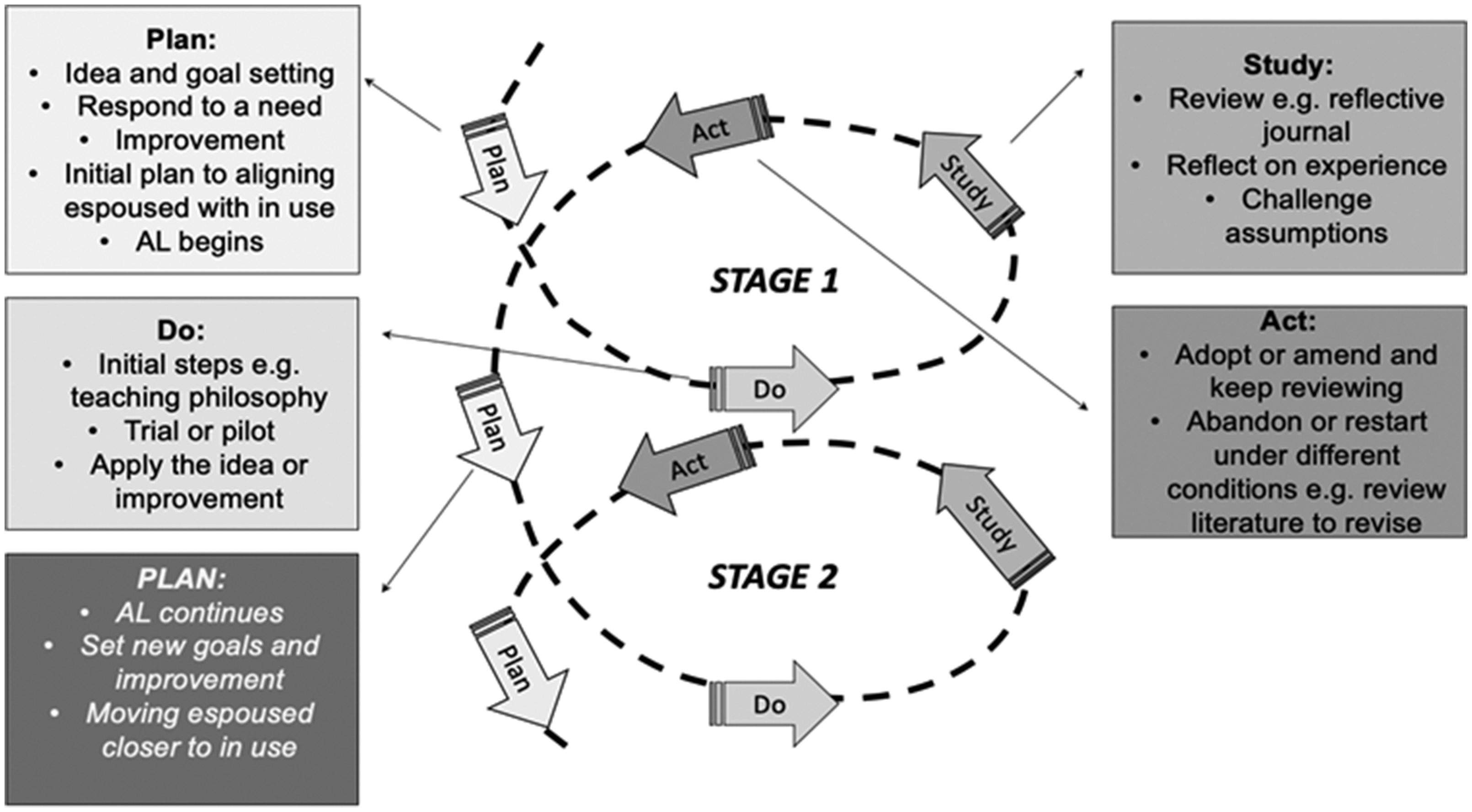
Adapted cycle for ALAR process (Deming, 1994).
The two primary objectives of engaging in ALAR are, first, being action or change in practice, program, community or individual, and, second, enhancing understanding and knowledge of the broader community, including the researchers, patrons or both (Cherry & Bowden, 1999). ALAR is a method for facilitating change in people’s actions and behaviours through reflection, relationships and recognition, which develops a depth in understanding of their practices and leads to transformation (Zuber-Skerritt et al., 2015).The ALAR process can also be explained in reference to the three R’s, being relationships, reflection and recognition. Based on the objectives of ALAR, it is a fitting schema for developing key leadership skills, such as problem solving, self-awareness and solution-based processes (Kemmis, 2009).
ALAR for development of leadership capabilities
Research has established multiple rationales for an increase in AL, using a variety of testing methods and collaboration techniques (Zuber-Skerritt & Wood, 2019a). Recently, researchers have focused much of their attention on the deficits currently faced in workplace environments, among businessmen, and between university students and faculty. From a university and leadership standpoint, there are deficits in the HE community (Beckmann, 2017).Similarly, Edmonstone (2019) found a need for improved management theories, skills and techniques throughout business. Cebrián (2017) furthers this research approach by promoting an established curriculum within the educational setting to streamline professional development and create a sustainable learning approach from everyday practices in academics. Zuber-Skerrit and Louw (2014) placed the same emphasis of streamlined development to leadership for academic staff members.
Further research focused on establishing and developing leadership skills among managers (Zuber-Skerritt & Louw, 2014), entrepreneurs (McGrath & O’Toole, 2016) and the system (Burns, 2019). These research studies emphasise the need for an increased interdisciplinary approach that includes a high level of trust and collaboration among colleagues and subordinates. Beckmann (2017) discussed this need in the university setting, where more communication is needed among professors and educators to improve the management of those promoted to leadership. Beckmann (2017) placed a need on the distribution of resources, authority and impact, while Zuber-Skerritt and Louw (2014) emphasised the need for ‘faster, more creative and more radical change and systems thinking’ (p. 16).
ALAR in graduate programs has proven to be an effective means to achieve high levels of personal growth when an integrated joint learning process between teachers and students is implemented (Villacañas de Castro, 2014). Additionally, several research studies have revealed the benefit of introducing the ALAR process in a practical, linear manner, providing step-by-step instructions, along with observing the organic, free-flowing process of ALAR (i.e. Stewart et al., 2019; Zuber-Skerritt & Wood, 2019a).
Other researchers have documented the challenge of implementing an interdisciplinary approach to teaching and learning, noting how the culture of individualism in teaching practices is difficult to overcome (Delaney & Stewart, 2019). Harland and Staniforth (2000) identified several major engagement hurdles with the application of ALAR as a form of professional development originating from the perception of the academics. The perceptions ranged from the process of ALAR being time-consuming to the idea that professional learning has previously been undertaken. Another hurdle for academics engaging in ALAR is the challenging and at times threatening nature of reflexivity (Harland & Staniforth, 2000). This is especially true for academics who see professional learning as onerous or a onetime occurrence rather than as life-long process. This literature led us to the following research questions: ‘How can professional development of academics be supported through a continuous learning framework?’ and ‘Why is it important to support academic leaders to adapt to the continuously changing environment in HE?’
Leadership and leadership development in action
Historically, leadership theory has focused on the individual’s skill sets or behaviour; however, it has been established that context, situation and environment are important factors to consider when implementing a leadership scheme. In the context of HE institutions, it is important to first acknowledge the complexity and diverging factors that both hinder and promote leadership skill development in academics. Pathways to formal leadership positions are often unclear. Leaders emerge, or are expected to emerge, by increasing their responsibilities or volunteering in some cases for more responsibilities (Beckmann, 2017). The pool of leaders is constrained by hierarchies within HE institutions, and by achievements in research (Fung & Gordon, 2016; Robinson et al., 2008), with leadership development categorized by top-down leadership models (Scott et al., 2008).
Theories of leadership used in the HE context include the traditional models of structural/positional (Scott et al., 2008), change-oriented (Marshall & Oliva, 2006), shared leadership (Pearce et al., 2008) and the emergence of distributed leadership (Woods et al., 2004) as a shared leadership form (Ramsden, 1988). Tertiary institutions generally profess to adopt a distributed leadership model; however, Jones (2014) found that although this leadership style results in more academics involved in decision making, it does not correlate with democratic decision making. Further, it was noted that continual championing from the formal senior leadership group was required to influence the change being implemented.
Methodology
A case study was undertaken at an Australian multi-campus university to extend the understanding of the process for professional development of academic leaders in the leadership role of Program Director. This case study utilises ALAR to demonstrate the development of the leadership capabilities of program leaders and to provide evidence for the benefits of ALAR to create ‘team learning’ (Senge, 1994). The PDSA framework for continual learning (Figure 1) is used as the basis for the ALAR program undertaken in this case study and for the presentation of the experience and data in this context (Stewart et al., 2019; Zuber-Skerritt & Farquhar, 2002).
The aim of the ARPLS was to enable program leaders to reflect critically upon, and analyse, their own leadership practice, both individually and with their peers, to build rigorous evidence of their learning and teaching leadership capabilities. The ALAR case study proceeded in two stages over a two-year period. Participants included eight team members from the business and health schools, and a senior consultant from Learning Futures in the facilitator role. All academics were in a learning and teaching leadership position in their school and were invited to participate in the program with the final group resulting from this process. Based on the iterative nature of ALAR, the two stages engaged participants in both cycles. Stage 1 was a foundational step where participants learned about ALAR, while in Stage 2, participants implemented ALAR theory into practice. Following completion of these two stages, post-project interviews were undertaken with participants to provide evidence of their learnings from this process. The methods used for each of the three steps are included in the following section.
An overview of the ALAR case study approach
Qualitative case studies give insight into ‘personal experience’ in particular contexts with a purposeful focus on narrating a ‘complex and often open-ended account’ (Freeman & Greenwood, 2020, p. 2). An applied reflexive approach was used in this qualitative ALAR case study to build on the continuum of experiences, reflections and learnings of those participating and collaborating during the stages. The ALAR qualitative case study approach was purposeful in constructing social reality and focusing on the interactive events versus measuring objective facts (Neuman, 2014). Specifically, the ALAR case study extends to the ‘situational’ boundaries with the aim of gaining depth and richness for those working through the ALAR (Yin, 2011). Given the investigative and exploratory nature of ALAR, with the goal of understanding, learning and change rather than measuring existing concepts, an abductive approach of seeking meaning and interpretations was adopted (Blaikie, 2010). As this investigation is of real-life relationships within an existing institution, an interpretive ALAR case study methodology is justified (Yin, 2011). This approach produced a substantial amount of data from a small group of people (Blaikie, 2010; Neuman, 2014) to extend understanding of academic leaders’ professional development.
Adapted from an organisational development framework, the layering of Deming’s (1994) ongoing learning cycle of PDSA onto Argyris and Schön’s (1989) theory-in-action is aimed at a transformational and continual learning process. This practice within practice aligns with the university’s continuing aim to build a reputation for high-quality learning and teaching, which recognises the need to support academic leaders to ‘succeed in increasingly complex and demanding roles, and to provide them with the capabilities to facilitate innovation and positively support staff through change and the development of a high-performance culture’ (Griffith University, 2013). Effective program level leadership is crucial in delivering programs that transform the student experience (James et al., 2010; Scott et al., 2008). This reaffirms the importance of program leadership to design, deliver and evaluate programs that constructively align (Biggs, 2012) to graduate attributes. This project addressed the need to build the capacity of program leaders to engage the support of their teams in implementing change. It also produced evidence that learning and teaching leadership teams (such as the reference group) can use ALAR to deepen their understanding of the role of program leaders within their complex organisational structure.
To provide evidence to support the need for collaboration, trust and interdisciplinary approaches, prior studies in ALAR have used a qualitative approach, conducted through observation and interviews, pre- and post-experiment (Beckmann, 2017; Cebrián, 2017; McGrath & O’Toole, 2016). Figure 2 presents the process of applied ALAR, showing an initial AL cycle of reflection leading to structured understanding, improvements and moving espoused theories into actionable outcomes. Figure 2 is adapted from Gapp and Fisher’s (2008) continuous learning model based on the work of Argyris and Schön (1989) and Deming (1994).
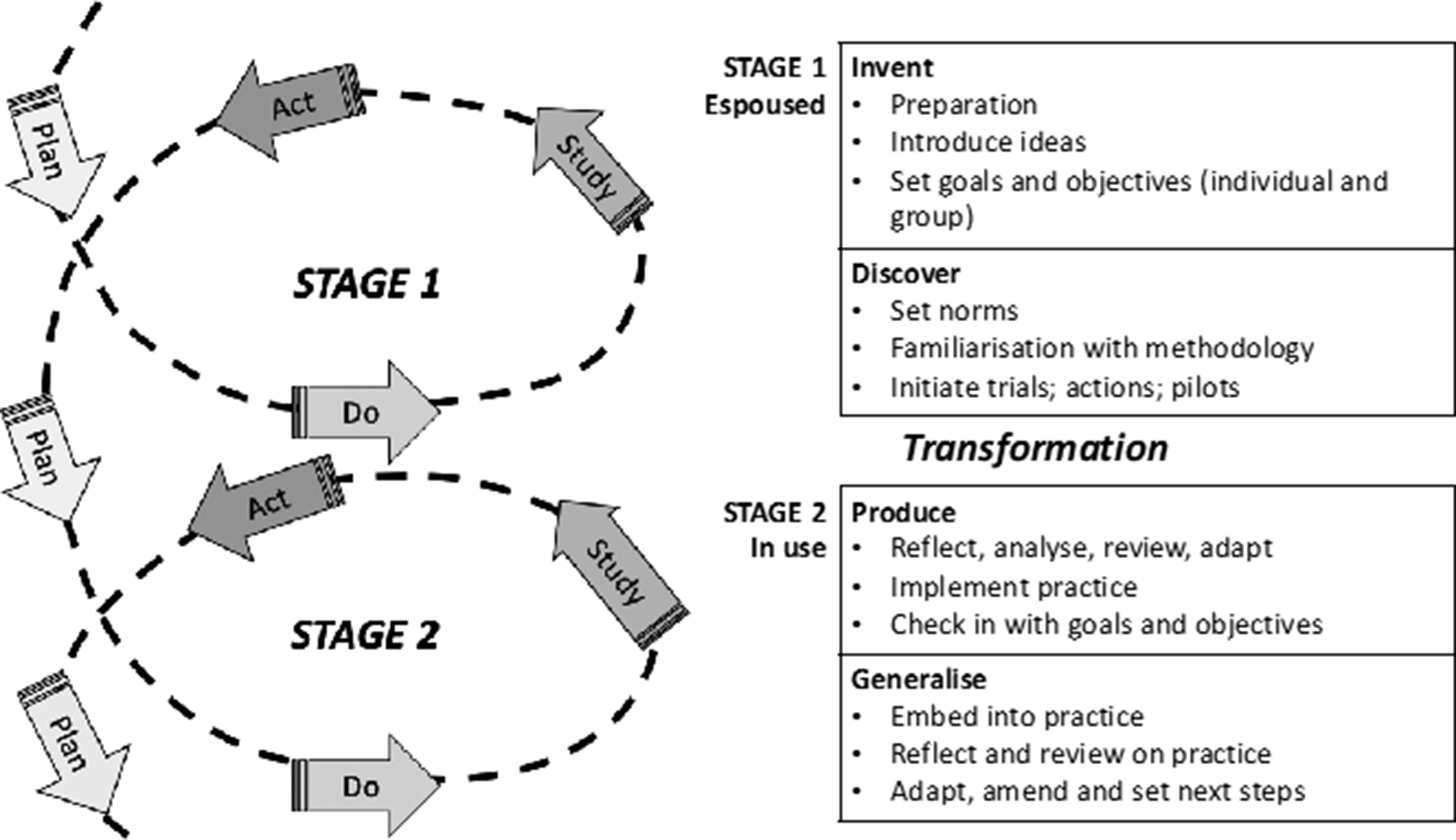
ALAR for program leadership scheme. Adapted from Argyris and Schön (1989), Deming (1994) and Gapp and Fisher (2008).
Stage 1: learning the process ‘espoused’
As part of Stage 1, the familiarisation of ALAR was key to the understanding and uptake of the iterative process. This familiarisation included participants reading and revisiting AL before and at the start of each meeting. Stage 1 of the ARPLS focussed on core leadership skills including running meetings, listening and attending, reflecting back and questioning, disclosure and assertion, empathy, giving and receiving feedback, reflection on own practice – ‘what I bring to the set’, reflection on the process of the set – ‘the way the set works’, time management – own time and the time of the set and personal planning (McGill & Beaty, 2001). Participants engaged in one complete ALAR cycle as detailed in Figure 1 with each of the five meetings organised using the meeting process summarised in Table 1.
An example of an ALAR set process (McGill & Beaty, 2001, p. 51).

In the initial meeting, each of the eight participants (de-identified as P1 to P8) developed their statement to incorporate a ‘leadership for learning plan’, which identified specific areas of their leadership practice that they would like to learn about and develop. At the beginning of each meeting, the ALAR set allocated time to one or two group members to present an issue that they did not fully understand, related to their leadership for learning plan. Other members ‘support’ the ‘presenter’. Between meetings, members gathered data about their leadership practice, critically reflected on their leadership philosophy, and engaged with literature to lend rigour to their analysis. By the final meeting, members had enhanced their leadership philosophy statement, incorporating valid evidence of their practice and critical reflection that draws on leadership in the HE literature.
Stage 1 is the foundational step in developing the leadership skill set of being able to monitor and evaluate internal and external environments. It is during this stage that participants learn ‘to be’ instead of ‘doing’ in order to observe themselves in their various roles of leadership.
Stage 2: transformation of project participants ‘in use’
In Stage 2 of the ARPLS, participants moved from the espoused understanding of leadership to theory-in-action, as shown in Figure 2. It was during Stage 2 that participants began to collect evidence of leadership practice and articulate how they would utilise the ALAR sets. During this stage, participants were able to fill out the action set cycle with their own plans (stated learning goal), doing (describe experience), study (observations – data and reflection – curious questions, theorising) and finally acting (answering what will I do next time). In addition, participants were asked to provide feedback by completing short online questionnaires. These questions were asked at the start of the program and then at the end, to evaluate the participants’ development.
Post-project interviews
Post-project interviews were conducted with each of the eight participants who completed the ARPLS. They were in-person and audio-recorded in accordance with university ethical guidelines. The primary aim of the interview process was a debrief of participants, with a focus on collecting personal learnings as evidence of the programs value in leadership capability building. To address the issue of bias, the interviews were conducted by an experienced third-party interviewer who was not involved with the project at any time. The semi-structured interview questions were designed initially by the project team and refined by the interviewer to suit their interviewing style. The interview recordings were transcribed by a third-party agency.
Interview transcripts were imported into MAXQDA (v. 18.2.0), which is described as ‘methodologically multi-faceted’ and designed for ‘hermeneutic text studies, grounded theory method and various mixed methods procedures. 1 ’ MAXQDA was chosen as the qualitative software based on its multi-faceted functionality for thematic analysis, following the steps outlined by the Braun and Clarke (2006) six-phase process: familiarisation with the data, assigning descriptive preliminary codes, searching for patterns and themes, reviewing prior to defining themes and last write up findings.
Following familiarisation with the transcripts, which included reading through each interview twice, two primary coders coded the transcripts using a grounded theory approach, allowing the data to ‘speak for themselves’ without approaching the data with a pre-existing theoretical framework. One primary coder generated an initial set of codes manually, while one utilised MAXQDA. Preliminary themes were identified and compared through a discussion of findings with the project leader and one reference member of the research team. Codes were then grouped in themes, reviewed and defined. Themes were analysed in such a way as to move from individual themes towards broad analytic themes. In cases where a theme was not consistent across all interviewees, further analysis was conducted to establish abnormalities in the interview process. This included comparing the questions asked across all interviews to ensure consistency. Additional analysis was conducted to determine the quality of the interviewing process in order to identify possible leading comments and/or incomplete participant responses.
Key learnings
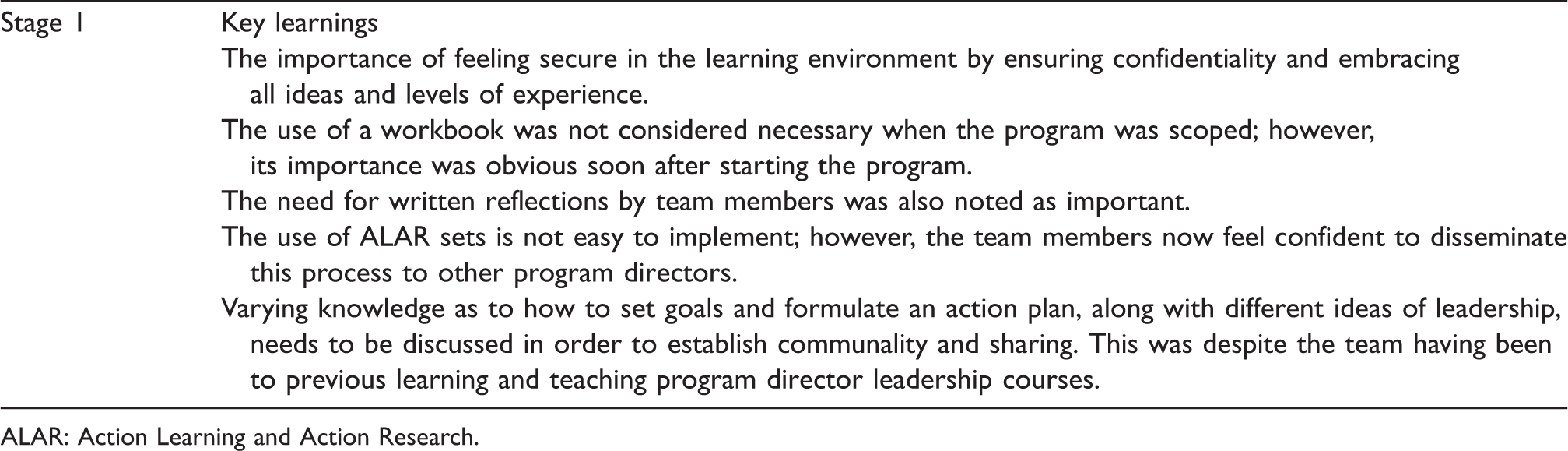
Stage 1 proved to be a slow and tentative process, as the team members got to know each other and learn about ALAR. For several team members, the process of PDSA was counter-intuitive to the culture and practice within the HE setting. Key learnings from Stage 1 are summarised and presented in Table 2.
Key learnings from Stage 1.
ALAR: Action Learning and Action Research.
Key learnings from the process were to not rush the formation of trust and allow time for each participant to feel secure in the learning environment. Confidentiality and embracing all ideas and levels of experience during the ALAR sets were key to creating trust. One of the biggest challenges in implementing this stage was time. Being a large and diverse team, conflicting schedules and priorities were a common occurrence. Major administrative changes in academic timetabling and delivery methods impacted the project, as the team was forced to prioritise additional work associated with change management. During this time, program directors were also experiencing considerable stress from time pressures and indicated that this program was a low priority at that time.
Figure 3 shows that, in the participants who responded to both questionnaires (pre n = 10, post n = 4), the level of confidence in their ALAR capabilities was greater in all areas, and in particular in using ALAR to support the development of leadership capabilities.
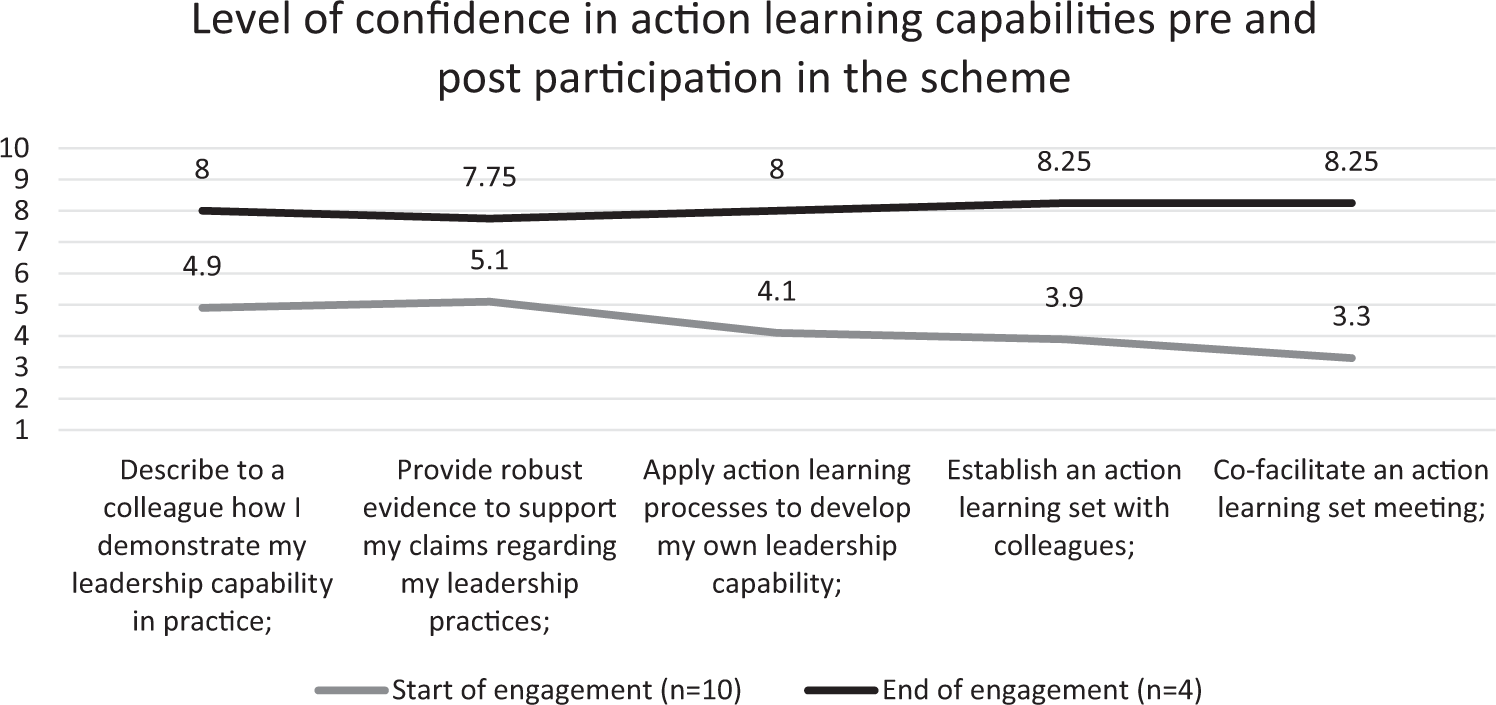
Participants’ level of confidence in ALAR capabilities.
Participants were also asked for feedback relating to the extent to which they engaged in the program. Figure 4 shows that although participants considered they had spent enough time preparing for the ALAR sessions, upon reflection following the session, they stated that they had not reflected on prior learnings or spent enough time in preparation. Figure 5 supports this finding as participants noted the need for prior reflection of scenarios they presented.
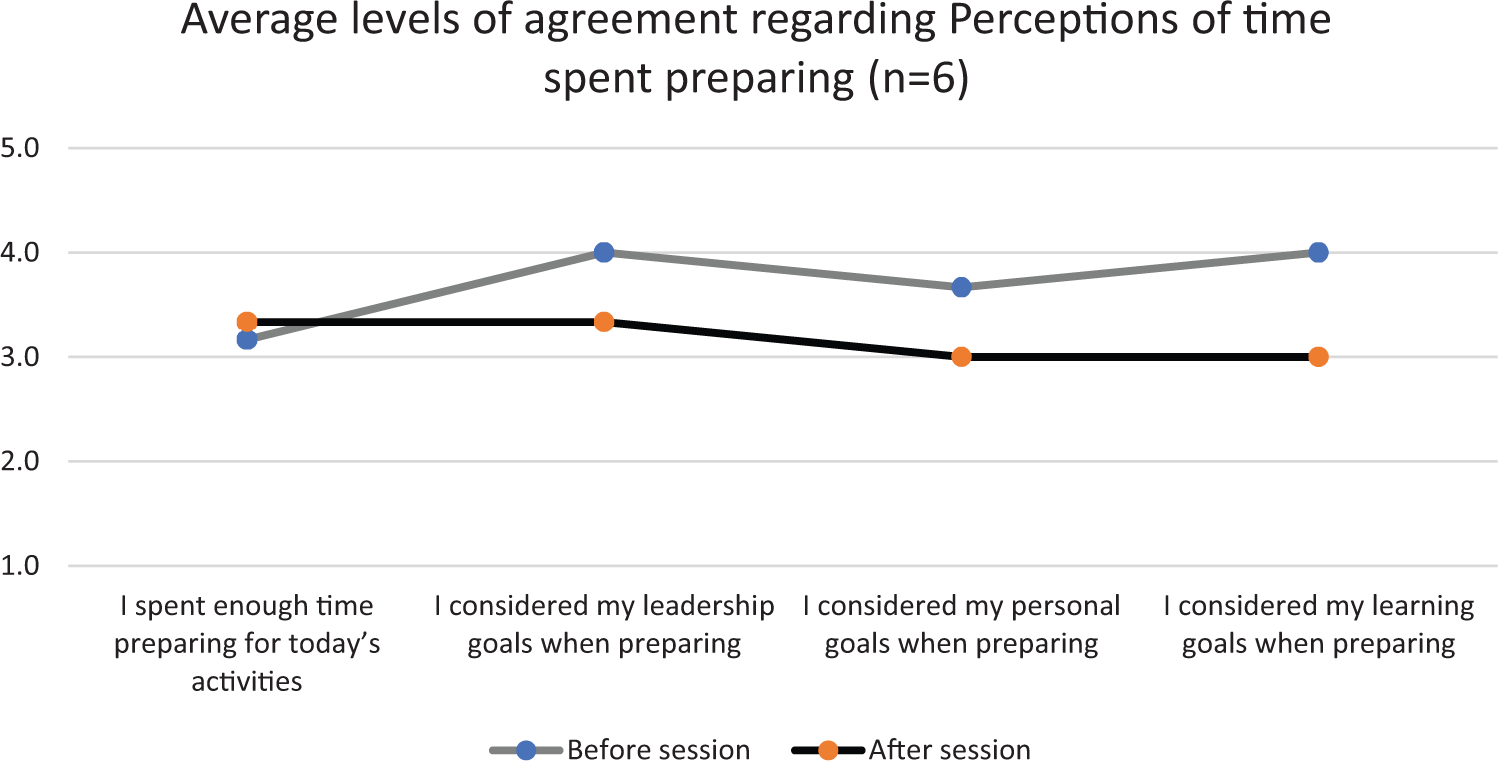
Perception of preparation time.
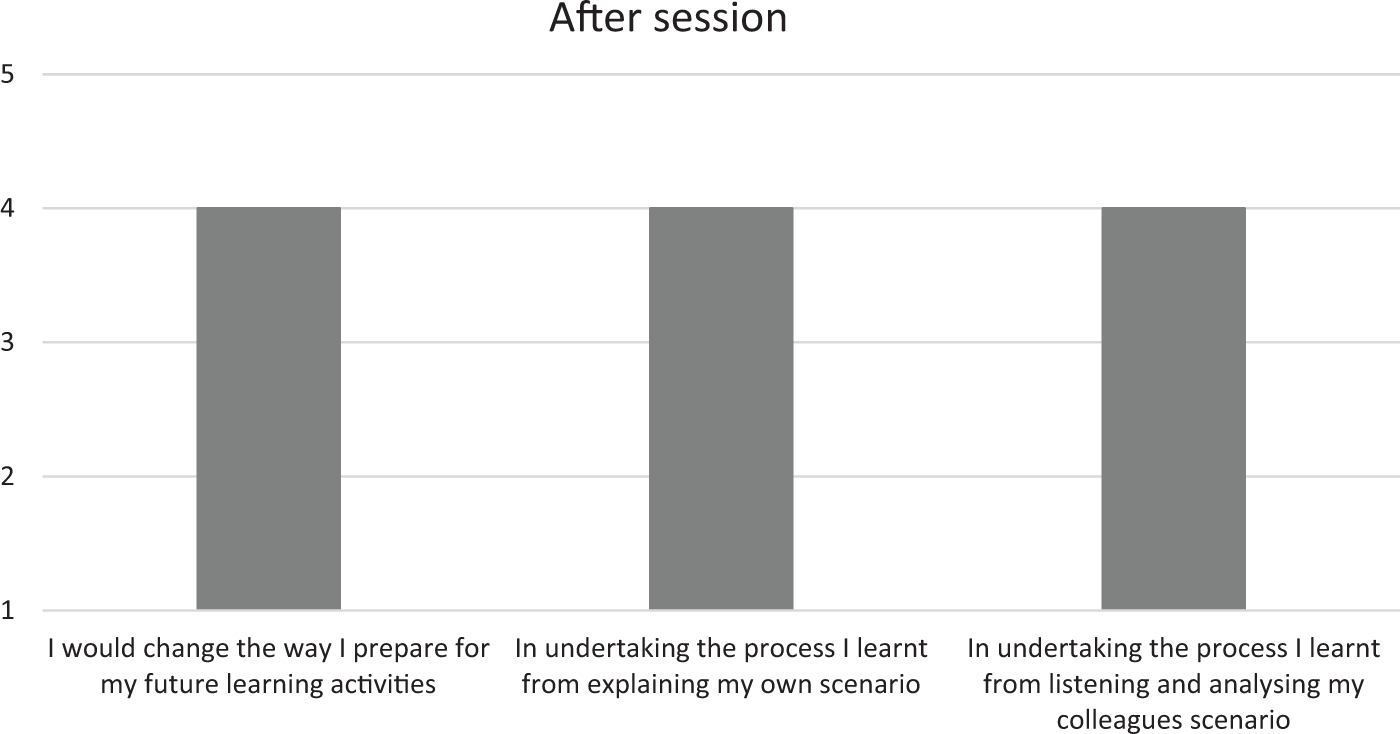
Participant learnings from engaging in interventions.
Finally, at the end of the program, participants were asked to articulate their learning goals. Examples of these are provided in Table 3.
Examples of leadership for learning goal.
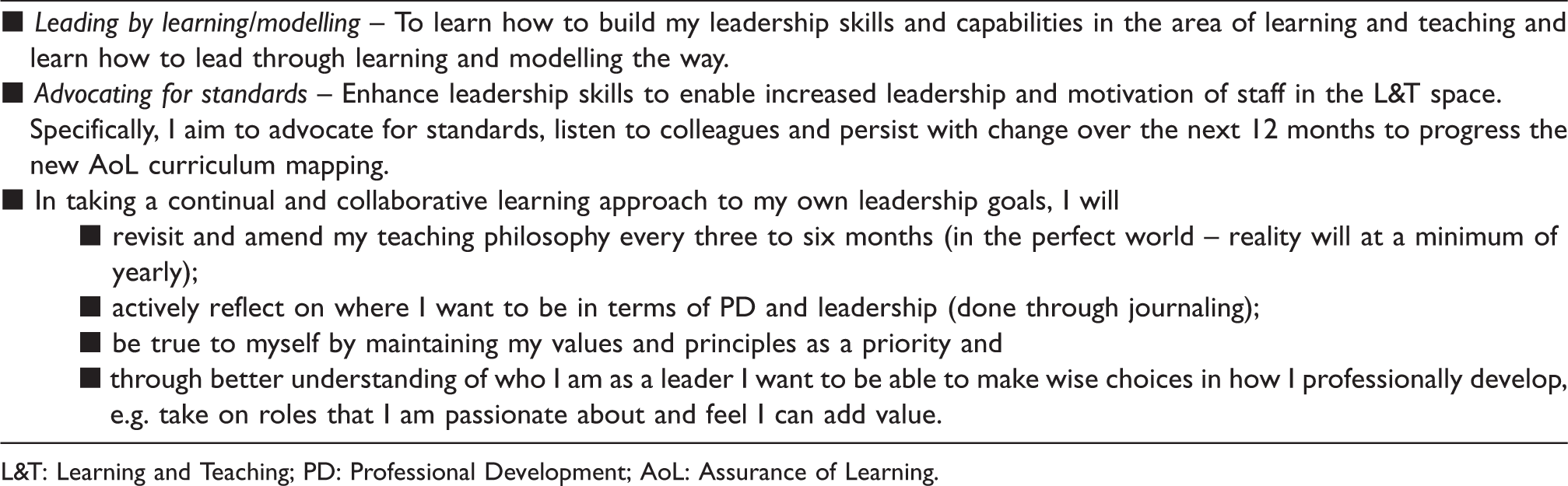
L&T: Learning and Teaching; PD: Professional Development; AoL: Assurance of Learning.
Three major themes emerged during the analysis of interview transcripts where participants discussed their personal learnings from participating in the ARPLS: development of leadership skill sets, clarity in application of ALAR and hurdles to participating in ALAR.
Development of leadership skill sets
The major theme that emerged across all interviews was an articulation of the benefit of ALAR in developing leadership skill sets. The majority of interviews (75%) contained an example of specific leadership skill sets acquired either during or after being part of the ALAR set. In two of the interviews, there was discussion on how the interviewee had seen others gain leadership skill sets as an outcome of being part of the project but were unable to self-reflect when prompted with the question on an individual level. When further analysis was undertaken, it was discovered that these participants had self-identified as facilitators of the research project, not participants.
The three subthemes which emerged under leadership skills were self-awareness, confidence and management of meetings. Each of these subthemes overlapped with each other and often were co-coded during the analysis. Participants shared the following: I’ve got a better understanding and a better, what’s the right word, I’m thinking confidence, but it’s not. It’s better awareness of who I am as a teacher, and also as a program director. (P1) I think what the process has allowed me to do is refine my own expectations of myself as a leader, what I need to do to be successful, and how I navigate those waters probably because in having to describe and discuss that with people who have no clue what my context is. (P7) I think I’ve become more confident in my own ability to engage with and interact with the team. I hope I’m better able to articulate my leadership strengths and capabilities and my philosophy of leadership. (P6) Just trying to make the meetings more productive I think rather than. . . .So yeah, like I said with the first-year coordinator community practice. So rather than just trying to use the information as in like I said, what could have been an email, I’m really trying to share that practice with others, and P8 shared: running different meetings or planning different community of practice of sharing people’s ideas to be able to document that in terms of even just scheduling meetings, being able to include as many people as possible in a supportive way. So, reflecting on that and being able to document that is also really beneficial.
Clarity in application of ALAR
When discussing personal learnings and sharing their experiences, participants were able to identify either present application of ALAR sets or future opportunities in which AL sets could be applied. Present application of ALAR sets in respective leadership roles related to asking core reflective questions of themselves (Zuber-Skerritt & Wood, 2019a) in their leadership roles, such as goals and values alignment: You had to think about some of the goals that you wanted to achieve in the next 12 months, or whatever and then have those goals then match to your values and I realised that I don’t know what my values are. I know what my objectives are but how do you connect these two things? (P3)
Examples of future application of ALAR included utilisation with PhD students, tutors and research assistants as a way of unpacking implicit assumptions and solving potential difficulties in managing supervisors. For example, P1 shared: An ALAR set for PhD students would be a very valuable thing too. Because although you’re all different, you’re all having the same problems. You all have from time-to-time, I know my PhD student has problems with me at the moment because he wants more of my time then perhaps I have to give, with P7 adding: . . . but I think similarly there’s capacity for the [inaudible] tutors to be able to incorporate those types of things, developing their own teaching philosophy statements and perhaps having some of those reflections and being able to articulate their growth in leading students through the learning process.
Hurdles to participating in ALAR
Several engagement hurdles were identified during the discussion of personal learnings, including the process being time-consuming, at times the threatening nature of reflexivity and the non-linear process in the more creative process (Brammar & Lezova, 2018). P1 talked about their key takeaways: The importance of reflection. I think we get so busy oftentimes with the day to day tasks and activities that we undertake as academics or as teachers or as program directors or as leaders. The act of reflecting isn’t recognised as part of the workload or as part of the effort and not necessarily valued.
The project positioned an ARPLS scheme to create and implement an innovative framework to develop emerging academic leaders’ capacity to both articulate and enhance their leadership for learning and teaching practice (Dick, 2017; Zuber-Skerritt & Wood, 2019a). The ARPLS adopted the qualitative approach with the implementation plan outlined in Figure 2. This AR framework is proposed to feed forward to a train-the-trainer platform.
Discussion and conclusion
The aim of this project was to develop and evaluate an ALAR program to support leaders to adapt to the continuously changing environment in HE. We implemented an ARPLS and evaluated this program to understand whether it provided a valuable professional development tool for leaders. Our findings show the benefits of reflective practice (Cunliffe & Scaratti, 2017) but also highlight the lack of understanding of this practice. Participants took time to understand the process and what was required of them, particularly that there is no ‘right way’ or step-by-step approach to learning. Once participants developed trust and realised that this was a personal development journey, they embraced the process and found the program to be of great benefit. It appears that this program was successful in achieving its aim and would provide benefit as an ongoing professional development activity.
Five key takeaways emerged from Stages 1 and 2 of the ALAR process and the post-project interviews as essential considerations when applying the ALAR process as part of a leadership scheme:
Developing leadership capabilities requires developing an individual understanding of what leadership means. The imposter syndrome was a genuine concern for all participants, particularly the female members of the group. Individual understanding of leadership capabilities is essential to support individuals in their diverse roles. The establishment of a learning community is essential to support individuals in their ALAR journey. Articulation of the learning process is essential to provide evidence of leadership development that can be used to support activities such as performance evaluation and promotion, grant and award applications. Facilitation of the ALAR process for leadership is needed through institutional support and engagement with the wider community to encompass the diverse roles of an academic within HE.
In order to effectively apply ALAR within leadership schemes, practitioners must be able to navigate several factors, including the structures affecting HE, contextual constraints of individuals participating in action and the performance culture. While the benefits of ALAR are well documented (McGill & Beaty, 2001; McGrath & O’Toole, 2016; Zuber-Skerritt & Louw, 2014), there remain institutional constraints and the need for rigorous evaluation as to the effectiveness of ALAR programs. To ensure the sustainability of professional development, a reward and career progression structure is needed that can be linked to the leadership program. If an ARPLS is to be effectively adopted, significant cultural changes around reflective learning should be adopted in academic review processes, incentives and cross-departmental collaboration. ALAR takes time compared to quick-fix alternatives (Dick, 2017), and organisational incentives can be required for leaders to undertake reflective learning (Delaney & Stewart, 2019). The ability to engage in AR in HE institutions requires not only individuals to be reflective but the creation of a safe environment professionally where space is allowed for reflection.
A number of challenges were faced in conducting this research. The leaders who participated in the research self-selected and were a small group motivated to engage in professional development. Busy lives and time constraints were significant issues during the project. Future research should seek to explore ways to attract participants who, despite their busy lives, feel committed to improving their leadership practice. In addition, in light of the recent COVID-19 crisis that has resulted in the rapidly increased use of online meeting tools, it could be valuable to embrace these social media tools to connect with people who are working from home, live in remote areas or who simply prefer using this media. This would provide a valuable opportunity to explore alternative contexts in which to explore ALAR and to provide support for academic leaders’ professional development. For an ARPLS to be effectively applied more widely, significant cultural changes around reflective learning should be adopted in the academic review processes, incentives and cross-departmental collaboration. Where such an environment is created, it can be expected that ALAR programs will have positive results for those seeking to develop their leadership in HE, including teaching, learning and professional development.
Footnotes
Declaration of conflicting interests
The author(s) declared no potential conflicts of interest with respect to the research, authorship, and/or publication of this article.
Funding
The author(s) disclosed receipt of the following financial support for the research, authorship, and/or publication of this article: This work was supported by a Griffith Grant for Teaching and Learning.
