






Abstract
Meaning in life and meaning in work are increasingly recognized as relevant for gifted individuals’ careers, even if they remain underexplored in the literature. This article presents a scoping review examining studies on meaning in life and/or work among gifted populations across multiple databases. Fourteen studies were included from 854 records, encompassing both quantitative and qualitative studies. This scoping review mapped the theoretical frameworks used, identified how giftedness was operationalized, examined methodological approaches, highlighted key themes and gaps in existing literature about meaning in life and meaning in work among gifted individuals. The findings provide perspectives for better understanding meaning in life and meaning in work in gifted populations, also offering research directions for career development studying sustainable talents.
Keywords
Introduction
The notion of talent has been examined from multiple disciplinary perspectives, remaining a multifaceted construct understood as a dynamic interplay of potential, ability, motivation, and contextual influences enabling individuals to achieve excellence (Di Fabio, 2022; Maree, 2019; Olszewski-Kubilius et al., 2025a, 2025b).
According to Nijs et al. (2014), talent relates to excellence both interpersonally (performing better than others), and intrapersonally (achieving one's personal best). Talent is not considered as a fixed trait but as a continuous process through which individuals realize their potential over time (Dixson et al., 2024; Olszewski-Kubilius et al., 2022, 2024). Building on Dweck and Leggett's (1988) distinction between entity and incremental theories, Di Fabio (2022) underlines two perspectives: the entity approach sees talent as inherent and stable, while the incremental approach considers it malleable and improvable through learning and effort. Meyers et al. (2013) propose a continuum from natural aptitude to acquired skill, highlighting the interplay between biological predispositions and developmental experiences. Context also shapes how talent is expressed and recognized. Micro-level influences (mentors, peers, relationships) and macro-level factors (cultural norms, societal expectations) affect how potential is cultivated (Csikszentmihalyi & Robinson, 1986; Feldman, 1986). Thus, talent can be understood as a dynamic synthesis of innate potential, learned skills, and environmental influence (Worrell et al., 2025), encompassing not only performance excellence but continuous growth and adaptation (Di Fabio, 2022; Maree, 2019, 2024b; Subotnik et al., 2023, 2022).
Building on this, Di Fabio (2022) offers an integrated framework on talent within the psychology of sustainability and sustainable development (Di Fabio, 2017a, 2017b; Di Fabio & Cooper, 2023; Di Fabio & Peiró, 2018, 2023; Di Fabio & Rosen, 2018, 2020; Rosen & Di Fabio, 2023). This framework on talent pays attention to educational, organizational, social, positive, and counseling psychology contributions, also introducing sustainable talent. In educational psychology, talent is seen as innate giftedness (Gagné, 2004; Meyers et al., 2013); in organizational psychology, as individual differences enabling high performance (Hough & Oswald, 2000; Boyatzis, 2008); in social psychology, as a socially constructed phenomenon shaped by recognition and context (Dominick & Gabriel, 2009); in positive psychology as a set of personal strengths (creativity, wisdom, gratitude) that nurture intrinsic motivation (Peterson & Seligman, 2004); in counseling psychology as an expression of identity drawing on Guichard's (2013) Subjective Identity Form System (SIFS), emphasizing the evolving, multifaceted nature of the purposeful identitarian awareness (Di Fabio, 2014) for the twenty-first century for career success.
The psychology of sustainability and sustainable development broadens the discussion by introducing sustainable talent. Within Sustainability Science (Sahle et al., 2025; Takeuchi et al., 2017), the psychology of sustainability and sustainable development offers a psychological perspective that highlights the role of psychological processes in fostering sustainable development goals. Sustainable talent, in this view, is connected to the authentic self (Di Fabio, 2014) and grounded in personal values and interests. A critical component is the Self-attunement process (Di Fabio, 2014) that allows individuals to identify both objective talents “What am I able to do?” and subjective talents “What energizes and motivates me?” aligning them with meaningful goals (Guichard, 2013; Di Fabio, 2014). Sustainable talent also requires regenerative resources to be nurtured over time (Di Fabio, 2017b; Di Fabio & Maree, 2016), and supports the construction of sustainable personal and career projects grounded in meaning as the basis for an authentic self (Di Fabio & Blustein, 2016). An advancement on sustainable talent on conceptual definition is introduced by the sustainable development as a fourth paradigm for twenty-first century careers (Hartung & Di Fabio, 2024). The fourth paradigm underlines the need of advancing sustainable careers (De Vos et al., 2020; Van der Heijden & De Vos, 2015) considering “an inclusive perspective of respect for nature as a whole (animals, plants, and the planet) incorporating future generations and future life on the Earth” (Hartung & Di Fabio, 2024, p. 207). It is also promising to consider these aspects of the fourth paradigm for careers in the twenty-first century when taking care of sustainable talent, in terms of sustainability of my own talent as well as other peoples’ talent near and far in space and time (Di Fabio & Tsuda, 2018) and the Planet. This conceptualization of talent underlines long-term realization of individuals’ potential in authentic, value-driven, and socially beneficial ways (Di Fabio, 2022), not only in a selfish perspective but in an inclusive perspective including the Planet as a whole and the responsibility for current and future generations.
For gifted individuals, meaning in life and meaning in work constitute crucial dimensions that support psychological well-being, the realization of personal potential, and meaningful engagement in professional and social contexts (Schnell, 2009; Steger et al., 2012; Maree, 2019, 2024b; Di Fabio, 2022; Rodríguez-Fernández & Sternberg, 2024).
Existing research has examined meaning in life and, to a lesser extent, meaning in work among gifted individuals across educational, occupational, and counseling contexts (Maree, 2019, 2024b; Vötter & Schnell, 2019a; Di Fabio, 2022). However, this body of literature remains fragmented and heterogeneous. Studies draw on diverse theoretical frameworks and adopt varying operationalizations of giftedness (Vötter & Schnell, 2019a; Yuen et al., 2023a). As a result, a comprehensive mapping of theoretical and methodological trends is currently lacking, highlighting the need for a scoping review to explore this emerging field.
The aim of this scoping review was to identify what is known from the existing literature about meaning in life and meaning in work among gifted individuals.
The overall questions being addressed were:
Which theoretical frameworks have been used to study meaning in life and meaning in work within gifted populations? How is giftedness operationalized in studies examining meaning in life and/or meaning in work? What methodological approaches (quantitative, qualitative, and mixed-methods) are employed in the literature? What key themes, research gaps, and future directions emerge from the literature regarding the development of talent in gifted individuals?
Consistent with established guidance on scoping review methodology, scoping reviews are particularly suitable for addressing broad research questions and for mapping the extent, range, and nature of research activity in complex or heterogeneous fields (Arksey & O’Malley, 2005; Levac et al., 2010; Peters et al., 2015, 2020).
Method
This scoping review was conducted following established methodological frameworks for scoping reviews (Arksey & O’Malley, 2005; Levac et al., 2010; Peters et al., 2015, 2020) and considering PRISMA-ScR guidelines (Tricco et al., 2018).
Search Strategy
A comprehensive search strategy was developed to identify the breadth of literature addressing meaning in life and meaning in work among gifted individuals. Electronic searches were conducted in Scopus, Web of Science, PubMed, and PsycINFO. These databases were selected for their interdisciplinary coverage and their relevance to psychological constructs of meaning, giftedness, and career-related research. In the search we also include grey literature sources (e.g., dissertations, conference proceedings, conference papers). For grey literature, search was also conducted in ProQuest, which is a specific database for dissertations.
In accordance with scoping review methodology, no restrictions were applied regarding study design or methodological approach. No limits on publication date were imposed in order to capture the development of the literature over time; the final search covered publications from 2005 to 2025.
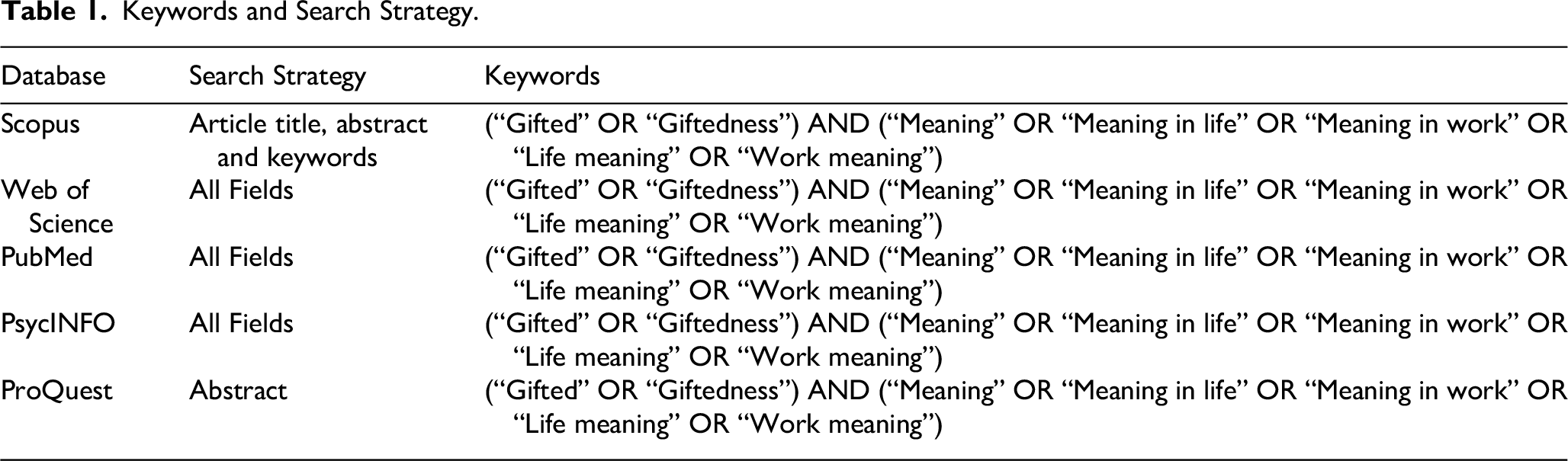
The search strategy combined terms related to giftedness with terms related to meaning in life and meaning in work. Search strings were adapted to the specific requirements of each database, as detailed in Table 1.
Keywords and Search Strategy.
Eligibility Criteria
Eligibility criteria was defined in accordance with the objective and guided by the Population–Concept–Context (PCC) framework (Peters et al., 2015, 2020).
Inclusion Criteria
Studies were included if they met the following criteria:
Population
- Studies involving gifted individuals or addressing giftedness.
Concept
- Studies explicitly addressing meaning in life and/or meaning in work in relation to giftedness.
- Both empirical quantitative and empirical qualitative studies were included in order to capture both measurable outcomes and lived experiences and perspectives.
Context
- Studies conducted in any educational or occupational context were eligible.
Types of Sources
- Articles and chapters, dissertations, conference proceedings, conference papers.
- Studies published in English, Spanish, Italian, or French were considered, as these languages were accessible to the research team.
Exclusion Criteria
Studies were excluded if they met any of the following criteria:
Studies not involving gifted individuals or not clearly addressing giftedness. Studies that did not explicitly examine meaning in life or meaning in work in relation to giftedness. Studies focusing solely on academic achievement, performance, or ability without reference to meaning-related constructs. Studies not available in full text.
Data Extraction
Studies were independently reviewed by two reviewers, with any discrepancies resolved through discussion until consensus was reached. First, duplicate records were removed from the databases. Titles and abstracts were then screened to identify studies relevant to the objectives of the review. Finally, when eligibility or relevant information could not be determined from the title and abstract alone, the full texts were examined to capture additional details. This approach allowed for a comprehensive mapping of the available evidence and identification of research gaps.
Data Synthesis Strategy
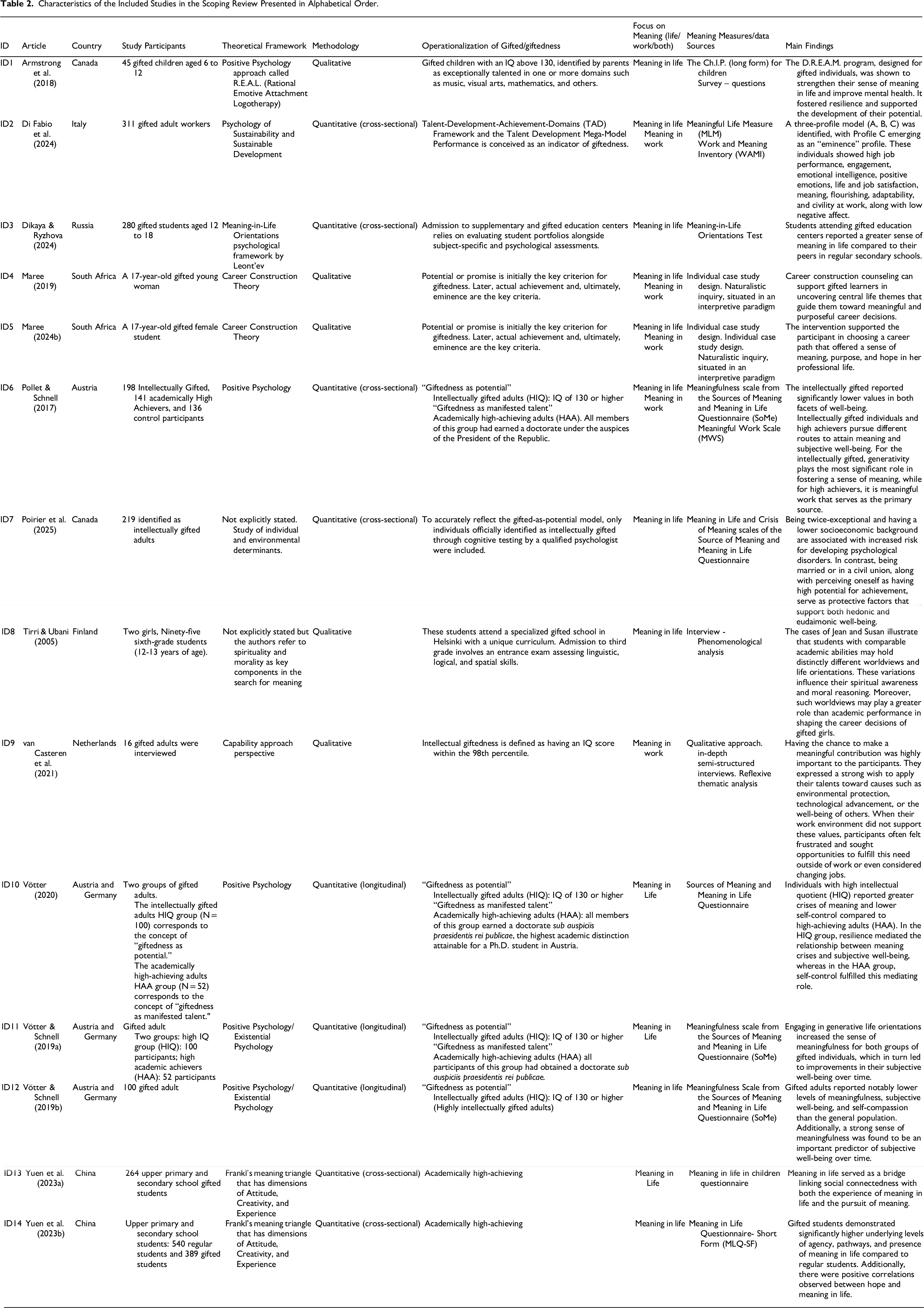
The selection process of the studies is illustrated in the PRISMA flowchart (Figure 1). Key characteristics and information from the included studies are summarized in Table 2, highlighting population, theoretical frameworks, methodology, operationalization of giftedness and main results. This presentation provides a descriptive overview of the available evidence and helps to identify research gaps and areas for future investigation.
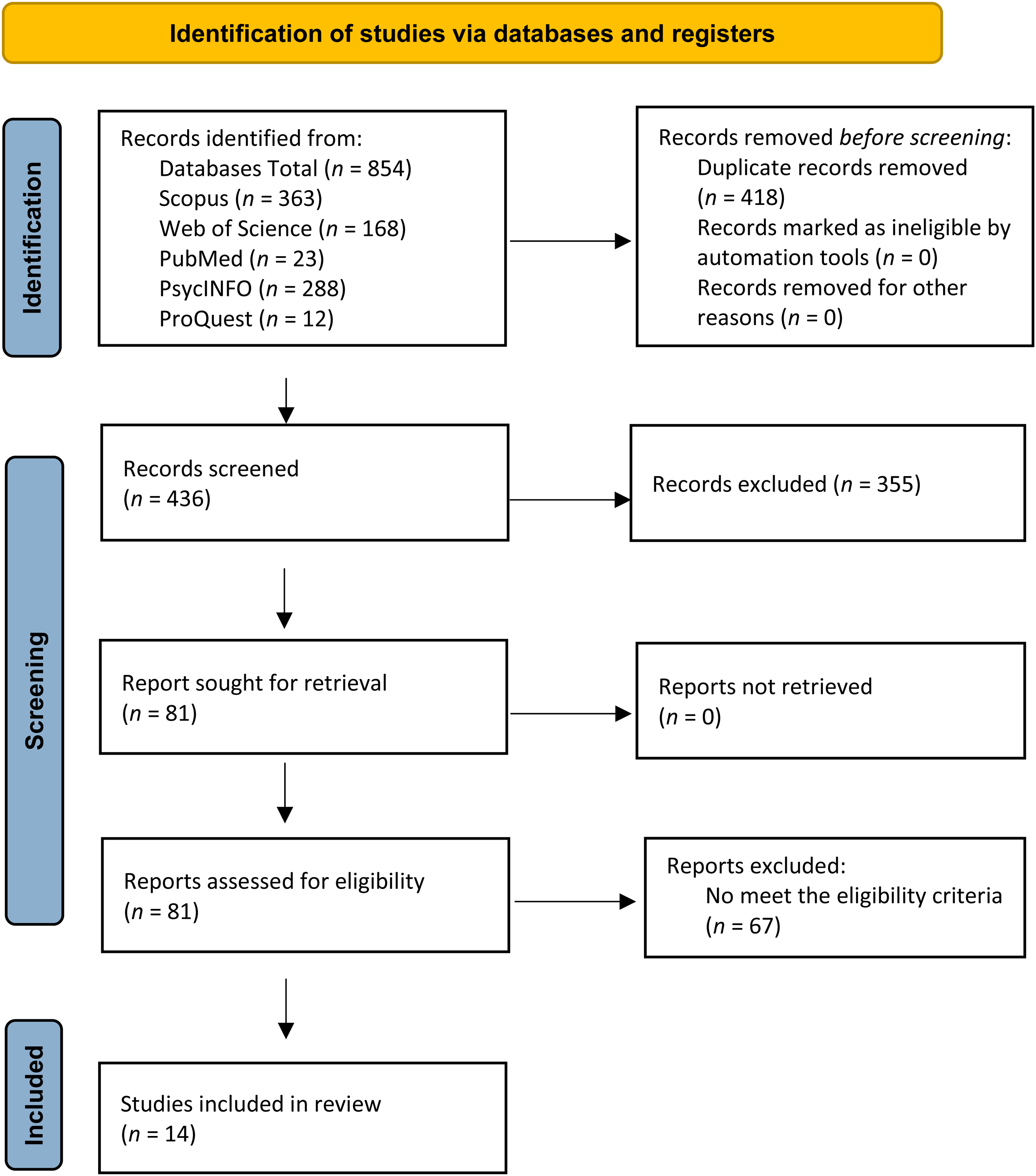
Study selection flow chart according to the PRISMA statement (Page et al., 2021).
Characteristics of the Included Studies in the Scoping Review Presented in Alphabetical Order.
Results
Study Selection
Figure 1 illustrates the PRISMA flowchart. The database search yielded a total of 854 records. After removal of duplicates, 436 records were screened based on titles and abstracts. Following this process, 81 full-text articles were assessed for eligibility. Ultimately, 14 studies met the eligibility criteria and were included in the final synthesis of this scoping review: ID1: Armstrong et al. (2018); ID2: Di Fabio et al. (2024); ID3: Dikaya & Ryzhova (2024); ID4: Maree (2019); ID5: Maree (2024b); ID6: Pollet & Schnell (2017); ID7: Poirier et al. (2025); ID8: Tirri & Ubani (2005); ID9: van Casteren et al. (2021); ID10: Vötter (2020); ID11: Vötter & Schnell (2019a); ID12: Vötter & Schnell (2019a); ID13: Yuen et al. (2023a); ID14: Yuen et al. (2023b).
Study Characteristics
Table 2 outlines the key characteristics of the studies, including year of publication, country, methodological approaches, theoretical framework, operationalization of gifted, employed measures, and main findings.
The included studies were conducted between 2005 and 2025 and were predominantly conducted in Europe: Austria (ID6, ID10, ID11, ID12), Germany (ID10, ID11, ID12), Netherlands (ID9), Italy (ID2), Canada (ID1, ID7), China (ID13, ID14), South Africa (ID4, ID5), Russia (ID3).
Regarding the participants, seven studies focused on gifted adults/workers (ID2, ID6, ID7, ID8, ID10, ID11, ID12), and seven studies involved gifted students or children (ID1, ID3, ID4, ID5, ID8, ID13, ID14).
Concerning the methodological approach, nine studies were quantitative (ID2, ID3, ID6, ID7, ID10, ID11, ID12, ID13, ID14) (among them three ID10, ID11, ID12 were longitudinal), and five studies were qualitative (ID1, ID4, ID5, ID8, ID9). Meaning in life was present in all studies; in two studies, also the meaning in work was present (ID2, ID6).
Regarding the theoretical frameworks used to study meaning in life and meaning in work in gifted populations, the majority of the studies utilize the positive psychology framework (D1, D6, D10, D11, D12). For the other studies the theoretical framework was heterogeneous, until the recent psychology of sustainability and sustainable development framework (ID2).
Among quantitative studies, regarding the used instruments, there is heterogeneity in the measurements. Different measures were used for meaning in life, and the most used is the Sources of Meaning and Meaning in Life Questionnaire (SoMe; Schnell, 2009) (ID6, ID7, ID10, ID11, ID12). In the two studies that considered meaning in work, two different instruments were used: Work and Meaning Inventory (WAMI) (Steger et al., 2012) (ID2); Meaningful work scale (Schnell et al., 2013) (ID6).
With regards to the operationalization of giftedness in quantitative studies, essentially two approaches are recognized: “Giftedness as potential” in terms of high IQ (for example IQ of 130 or higher), and “Giftedness as manifested talent” in terms of results obtained (scholastic/academic/job performance).
With a focus on gifted adults, the quantitative studies focusing on gifted adults primarily examined meaning in life in relation to indicators of well-being, such as positive mood and vitality (ID10, ID11, ID12); meaning in work is fundamental to meaning in life (ID6); meaning in work was considered in relation to self-rated job performance and work engagement (ID2).
With a focus on qualitative articles, the qualitative studies mainly explored how gifted individuals experience and construct meaning in life and in work across different contexts. These studies addressed themes such as resilience-building interventions (ID1), career construction counseling (ID4, ID5), spirituality and moral sensitivity (ID8), and the role of personal contribution and purpose in shaping meaningful life and career trajectories (ID9).
Discussion
This discussion is structured according to the four questions that guided the present scoping review, with the aim of synthesizing and interpreting the existing literature on meaning in life and meaning in work in gifted populations.
Which Theoretical Frameworks Have Been Used to Study Meaning in Life and Meaning in Work Within Gifted Populations?
The reviewed studies revealed a heterogeneous landscape of theoretical frameworks used to examine meaning in life and meaning in work in gifted populations. Quantitative studies predominantly drew on meaning-centered and positive psychology frameworks, considering meaning in terms of purpose, coherence, and significance (Dikaya & Ryzhova, 2024; Pollet & Schnell, 2017; Vötter, 2020; Vötter & Schnell, 2019a, 2019b; Yuen et al., 2023a, 2023b). Furthermore, the quantitative study by Di Fabio et al. (2024) framed the analysis of meaning in life and meaning in work in gifted populations within the psychology of sustainability and sustainable development perspective (Di Fabio, 2017b, 2022; Di Fabio & Cooper, 2023; Di Fabio & Peiró, 2018, 2023; Di Fabio & Rosen, 2018, 2020; Rosen & Di Fabio, 2023), considering talent grounded in meaning as the basis for an authentic self, and opening theoretical perspectives towards sustainable talents.
Regarding qualitative studies, they mainly adopted phenomenological, constructivist, and narrative approaches, emphasizing the subjective experience of meaning-making of gifted individuals across educational and career trajectories (Armstrong et al., 2018; Maree, 2019, 2024b; Tirri & Ubani, 2005; van Casteren et al., 2021). Frameworks such as career construction theory (Savickas, 2005) and life design (Savickas et al., 2009) were employed to explore how gifted individuals integrate personal values, aspirations, and contextual factors into meaningful life and work narratives (Maree, 2019, 2024b). For qualitative research it is highlighted the value of meaning-making as a central process in career development of gifted individuals, best captured through constructivist and narrative approaches.
How is Giftedness Operationalized in Studies Examining Meaning in Life and/or Meaning in Work?
Across the reviewed studies, giftedness was principally defined and operationalized in two main ways (Pollet & Schnell, 2017; Vötter, 2020; Vötter & Schnell, 2019a, 2019b). The first approach “Giftedness as potential” conceptualizes giftedness as cognitive potential, typically operationalized through high intellectual ability, such as an IQ score of 130 or above. The second approach “Giftedness as manifested talent” considers giftedness as demonstrated talent, focusing on manifested achievement or performance in academic, educational, or occupational contexts. These different operationalizations reflect the debate within giftedness research, contributing to variability in research outcomes. Few studies explicitly discussed the implications of their chosen operazionalization of giftedness, suggesting a need for greater conceptual clarity and theoretical integration in future research. Furthermore, the question about how to operationalize and measure sustainable talent (Di Fabio, 2022) does not appear to be considered, and remains open for future research on talent.
What Methodological Approaches (Quantitative, Qualitative, and Mixed-Methods) are Employed in the Literature?
Regarding methodological approach, in the literature there is a predominance of quantitative, cross-sectional studies, with fewer longitudinal or qualitative studies. Quantitative studies used different instruments to assess meaning in life, and the most frequently used was the Sources of Meaning and Meaning in Life Questionnaire (SoMe; Schnell, 2009). In the two studies that examined meaning in work, two different instruments were used (Work and Meaning Inventory, WAMI, Steger et al., 2012; Meaningful work scale, Schnell et al., 2013). This heterogeneity limits comparability across studies.
Qualitative research is mainly based on interviews, narrative analyses, and counseling-based interventions to explore subjective meaning-making processes. Even if these studies offered rich, contextualized insights of gifted individuals, they remain limited in the literature.
What key Themes, Research Gaps, and Future Directions Emerge from the Literature Regarding the Development of Talent in Gifted Individuals?
Overall, quantitative studies highlight that meaning in life and meaning in work are fundamental aspects of the well-being of gifted individuals but it is necessary to consider individual differences, social environments, and existential challenges (Dikaya & Ryzhova, 2024; Yuen et al., 2023a, 2023b). For promoting personal and professional meaning of gifted people, it emerged as important to enhance engagement, emotional intelligence, and resilience (Di Fabio et al., 2024), and generativity (Pollet & Schnell, 2017; Vötter & Schnell, 2019a). Regarding qualitative studies, they showed how gifted individuals find meaning in life and in work through purpose-driven careers and contributing to something valuable, which enhances their well-being and resilience. Furthermore, when meaning is lacking, they may experience frustration and seek more fulfilling paths (Armstrong et al., 2018; Maree, 2019, 2024b; Tirri & Ubani, 2005; van Casteren et al., 2021). These findings underscore that meaning-related constructs are central to both personal and professional development in gifted populations. At the same time, the same gaps emerge from the literature. Longitudinal research examining how meaning in life and meaning in work of gifted people evolve over time is very scarce, and thus it could be important to carry out longitudinal studies in the future. Moreover, the concept of sustainable talent remains largely implicit rather than explicitly theorized. The question of the operationalization of sustainable talent (Di Fabio, 2022) still remains open and asks also for including recent perspectives in career development such as sustainable development as a fourth paradigm for twenty-first century career (Hartung & Di Fabio, 2024). Furthermore, future research would benefit from integrating meaning-centered frameworks with sustainability-oriented models of talent development also considering the current perspective of the psychology of sustainability and sustainable development, expanding cultural and contextual diversity, and adopting longitudinal and mixed-methods designs to capture the dynamic and contextual nature of meaning-making in gifted populations.
This scoping review has limitations that should be considered. It emerges that the majority of the studies were conducted in European countries. Large regions of the world remain unexplored, with no research examining this theme. Future studies conducted in a wider range of countries would help broaden the understanding of the phenomenon more globally. Furthermore, the number of studies included (14) is relatively small, reflecting the current stage of research in this area. This limited number of studies underlines the novelty and emerging nature of this research field, but it limits the possibility to draw comprehensive conclusions. Moreover, the heterogeneity in the theoretical frameworks, operationalization of giftedness, and instruments used to assess meaning in life and meaning in work, makes it difficult to compare the different studies. The analysis of the literature suggests the necessity in future research of more clearly articulated theoretical models and the development of standardized measures, also for sustainable talents.
This scoping review provides a map of the existing literature on meaning in life and meaning in work among gifted individuals, offering research directions, including the need of studying sustainable talents in gifted individuals, in different contexts and specifically for their career development. Meaning emerges as a central construct, supporting the development and expression of gifted individuals’ abilities and potentials in ways that are personally fulfilling and socially impactful for life and career (Di Fabio, 2022; Maree, 2019, 2024b; Sak, 2021, 2023). The concept of sustainable talent, rooted in authenticity, personal values, and alignment with deep interests, motivations, self-efficacy (Di Fabio & Rosen, 2020), provides a useful lens for understanding how gifted individuals navigate their potential in contemporary contexts of rapid social and environmental change (Di Fabio, 2022; Maree, 2024a). Sustainable talent considers also the value to support the design of active lives that meet the challenges of the twenty-first century and contribute to sustainable and fair human development (Guichard, 2022). The fourth paradigm (Hartung & Di Fabio, 2024) of sustainable development for careers in the twenty-first century moves forward in this direction considering both individuals (their identity, purpose, and hope), and others, in space and time, including future generations and the planet. The sustainable talent is also promising for counseling perspectives of eco-awareness (Maree, 2024a) and new life-design interventions in the anthropocene context (Cohen-Scali et al., 2025) aligned with the fourth paradigm. Finally, the findings highlight the need for further research to develop theoretically grounded, culturally diverse, and methodologically varied studies that examine how gifted individuals construct meaning across life stages and work contexts and careers. Mapping research can inform interventions to promote the flourishing of talent for gifted people, also in terms of sustainable talent, contributing to the flourishing of healthier individuals, organizations, and societies (Di Fabio et al., 2020; Peiró et al., 2019, 2021).
Footnotes

Funding
The authors received no financial support for the research, authorship, and/or publication of this article.
Declaration of Conflicting Interests
Annamaria Di Fabio is Editor of Australian Journal of Career Development (AJCD) and did not participate in the editorial handling or peer review process of the article.
Letizia Palazzeschi is a member of the Editorial Board of Australian Journal of Career Development (AJCD) and did not take part in the peer review or decision-making process for this submission and has no further conflicts to declare.
* References marked with an asterisk indicate studies included in this scoping literature review.