






Abstract
Background
Adolescence is a pivotal time for career development, with career self-efficacy playing a key role in effective career counseling. Understanding adolescents’ career self-efficacy can significantly enhance their career growth. This study examined the mediating roles of academic expectation stress and planning in the relationship between career and talent development self-efficacy and career decision-making self-efficacy.
Method
The sample consisted of 397 adolescents (71.3% female) aged 14 to 16 years (M = 15.09 ± 0.68).
Findings
Career and talent development self-efficacy, career decision-making self-efficacy, academic expectation stress, and planning as a coping strategy were positively correlated. Additionally, academic expectation stress and planning each showed mediating effects, both individually and in sequence, in the relationship between talent development self-efficacy and career decision-making self-efficacy.
Conclusions
These results highlight the importance of academic expectation stress and planning in shaping career self-efficacy, suggesting that career researchers and practitioners should incorporate these factors into interventions designed to enhance career self-efficacy.
Keywords
Introduction
Adolescence is widely regarded as one of the most critical stages of human life, marked by significant physical, emotional, and psychological changes (Graf et al., 2021). According to the World Health Organization (2006), adolescence spans the ages of 14 to 19. Regarding career development, it is a critical period in which adolescents discover and formulate potential career goals (Deng et al., 2022). It emphasizes the development of growing independence, exploration of personal identity, and self-reflection (Zarrett & Eccles, 2006), which may make the period a critical one for education, career planning, and capability (Guichard, 2022). They evaluate their capacity to manage academic and social challenges, which serve as the basis for their self-efficacy beliefs (Bandura, 1986).
Self-efficacy may help researchers understand career development. The concept of self-efficacy (Bandura, 1986, 1997), which refers to an individual's belief in their ability to perform specific tasks or achieve goals successfully, may provide a guide for researchers seeking to understand career development (Hartung & Di Fabio, 2024). The concept of self-efficacy was first applied to women's career development by Hackett and Betz (1981). In their seminal study, they argued that socialization experiences often lead many women to have low self-efficacy expectations about career-related behaviors, which can restrict their career achievements. Hackett and Betz also examined how differences in access to critical sources of self-efficacy information lead to these patterns. The study laid the groundwork for future research on career self-efficacy (e.g., Chan, 2020; Duffy et al., 2015; Jemini-Gashi et al., 2021). These studies have expanded the understanding of how self-efficacy shapes career development across different contexts and populations.
People who believe they can plan and perform actions to reach a desired outcome in a specific area are more likely to complete tasks or behaviors, according to the self-efficacy theory (Bandura, 1990). The inclusion of self-efficacy in career models was first suggested by Hackett and Betz (1981). Researchers have considered self-efficacy as a variable affecting individuals’ career behaviors, academic and career decisions, and adjustment (Hamzah et al., 2021). Hackett and Betz (1981) emphasized that attitudes and behaviors related to self-efficacy are essential for career development. They proposed the Career Decision Self-Efficacy Model, arguing that self-efficacy can influence individuals’ career decisions. Career self-efficacy is a crucial concept in career development. Career self-efficacy is positively related to career development (Chan, 2020). Career self-efficacy is a broad concept encompassing personal efficacy judgments related to career behaviors (Jemini-Gashi et al., 2021). Many career self-efficacy models have been proposed by career researchers (e.g., career decision-making self-efficacy, career search self-efficacy, job search self-efficacy, career task self-efficacy, and career and talent development self-efficacy). The present study will examine career decision-making self-efficacy and career and talent development self-efficacy, particularly within these models.
The Career and Talent Development Self-Efficacy model, developed by Yuen et al. (2010), emphasizes four key areas: career exploration, talent development, work habits, and career values. It comprises three primary domains. The first, career exploration, involves investigating potential career paths. Second, talent development refers to the enhancement of individual abilities and strengths. Third, work habits and values focus on cultivating productive behaviors and aligning with meaningful career values. Compared to the more established concept of career decision-making self-efficacy, career and talent development self-efficacy is relatively new, and empirical research on the topic remains limited. Existing studies suggest that talent development self-efficacy is positively associated with psychological resources such as hope and self-compassion (Bedoria & Marañon, 2020). Moreover, Hashish (2019) found that increased career awareness enhances career and talent development self-efficacy while reducing perceived career barriers.
Students face various challenges throughout their educational journey, one of which is academic expectations stress (Eriksen, 2021). Academic expectations stress is a form of subjective stress. Academic expectations stress refers to the psychological strain experienced by students due to the pressure of academic expectations (Ang & Huan, 2006). Academic expectations constitute one of the primary sources of stress among students (Poots & Cassidy, 2020). These expectations may arise mainly from families (Lau et al., 2021), students’ impositions (Oducado & Estoque, 2021), or teachers (Bardach et al., 2022). In addition, it creates unpleasant psychological pressure on students (Hemamalini & Ramaswamy, 2018). High academic expectations are related to undesirable outcomes such as stress and suicidal thoughts (Thomas et al., 2023), anxiety and depression (Fu et al., 2022), and poor academic performance (Spitzer & Musslick, 2021). Despite the stress caused by academic expectations and the negative situations that arise from it (Jabeen et al., 2021), students experiencing moderate stress due to academic expectations tend to achieve high academic outcomes (Aziz et al., 2024). Additionally, perceptions of academic self-efficacy have been reported to increase through moderate stress (Van Slyke et al., 2023). Therefore, academic expectation stress may create different effects at different levels.
Planning is defined as a self-regulatory strategy that organizes concrete, future-oriented responses to anticipated challenges. It is employed to cope with potentially stressful situations through proactive preparation and structured action (Beutler et al., 2003; Hsieh et al., 2019). Planning is considered a self-regulatory process that translates career and talent development self-efficacy into actionable steps, thereby enhancing career decision-making self-efficacy. Individuals with high career and talent development self-efficacy are more likely to believe in their capacity to navigate career pathways, which motivates them to engage in structured planning. This, in turn, fosters clarity, confidence, and readiness in making informed career decisions
During planning, individuals engage in mental simulation to anticipate and manage potential stressors (Babicka-Wirkus et al., 2021). This process enables them to construct mental representations of future scenarios, allowing for more effective identification of key cues and critical challenges (El-Monshed et al., 2022). Individuals who employ the planning coping strategy can effectively utilize environmental resources (Szczypińska et al., 2021). Additionally, they can initiate intended behaviors more quickly than those who cannot plan (Baumeister et al., 2024). Planning enables better identification of the encountered situation and gives more appropriate responses to the encountered problems. The effectiveness of planning increases with detailed knowledge of the situation to be overcome and the individual's determination (Lin, 2023).
Career self-efficacy is a crucial variable that influences career decision-making (Chen et al., 2021). Adolescents’ self-efficacy beliefs predict career-related choices (Falco & Summers, 2021). Career Decision-Making Self-Efficacy is a concept that expresses individuals’ belief in their ability to complete the tasks necessary to make career decisions (Xu, 2023). Self-efficacy is essential to career development (Chen et al., 2009). It is emphasized that career decision-making self-efficacy is crucial in an individual's career planning and decision-making process. It is also associated with exploratory career behavior (Chen et al., 2021).
Numerous studies in the literature are related to career decision-making self-efficacy. Emotional intelligence and difficulties in career decision-making are also associated with career decision-making self-efficacy (Ran et al., 2022; Santos et al., 2018). Career decision-making self-efficacy is associated with personality and vocational commitment (Jin et al., 2009). Career decision-making self-efficacy is related to academic satisfaction, work volition, and career adaptability (Duffy et al., 2015).
Hypothetical Model
We propose a model based on the Social Cognitive Career Theory for career self-efficacy (see Figure 1). We presented this model by evaluating the relationships among career and talent development self-efficacy, academic expectations stress, planning as a coping mechanism, and career decision-making self-efficacy within the context of the existing literature. Within the framework of this model, we discussed six paths and four mediation relations within the scope of the research. This model has been proposed within the context of the relationship between different career self-efficacy constructs (career and talent development self-efficacy & career decision making self-efficacy) (see Figure 1).
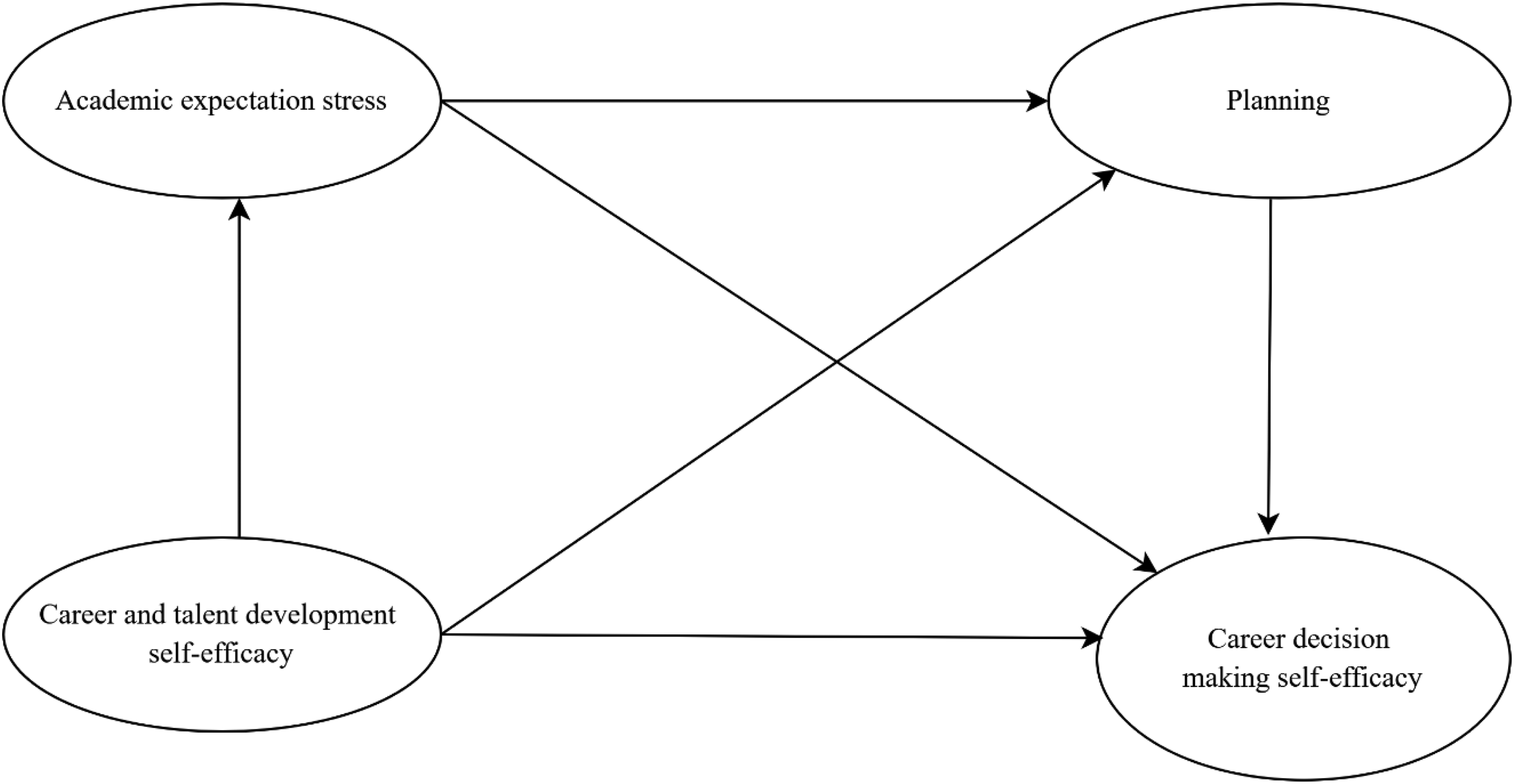
The proposed mediation model.
Career development is a stressful process. An individual may experience stress during the career acquisition process in many ways. The source of this stress may be family or teachers (Dos Santos, 2021). Self-efficacy is a structure that helps explain and predict occupational stress (Nawal et al., 2022). Dysfunctional career thoughts are associated with career indecision (Kronholz & Osborn, 2022). Moreover, Kleiman et al. (2004) found that low levels of dysfunctional career thoughts were related to high levels of career determination. Based on these relationships, it was proposed that career and talent development self-efficacy and academic expectations stress might be negatively correlated.
Goals can help guide and sustain human behavior in tasks that provide distant rewards. Therefore, practical goal setting and planning behavior are fundamental in career decision-making and development (Jung & Yoo, 2022). The career development process may require different planning processes in many respects. Social Cognitive Career Theory (Lent et al., 1994) posits that individuals’ self-efficacy beliefs regarding tasks encountered during the career decision-making and planning process activate them. Based on these, career and talent development self-efficacy and planning might be positively related.
Coping has been defined as a person's efforts to eliminate, reduce, or overcome a distressing and stressful situation (Lazarus & Folkman, 1984). Individuals often resort to coping mechanisms to avoid conditions that cause stress (Wright et al., 2017). Therefore, individuals’ efforts to overcome the stress situation caused by academic expectations could increase their coping skills. Planning coping is one of the cognitive mechanisms used to avoid adverse problems (Freire et al., 2020). Moreover, cognitive mechanisms are commonly employed in stressful situations (Jung & Yoo, 2022); therefore, planning and academic expectation stress may be positively associated.
The career decision-making process is influenced by various variables, including personality traits, skills, and interests (Marciniak et al., 2022; Parola & Marcionetti, 2022). Similarly, individual psychological health and stress levels have also affected the decision-making process (Dos Santos, 2021). Stress, one of these variables, may arise due to academic expectations in the career decision process. As such, factors that affect individuals’ psychological health and personality development also influence the career decision process. The stress generated by academic expectations can have a detrimental impact on individuals’ career choices (Bowyer et al., 2022). For instance, career and life stress are positively associated with negative career thoughts and negatively correlated with career decision-making clarity (Bullock-Yowell et al., 2011). These negative career experiences, in turn, can have an adverse effect on individuals’ perceptions of their self-efficacy (Maurer, 2001). Therefore, academic expectations stress, and career decision-making self-efficacy may be negatively correlated.
In the career decision-making process, individuals use various coping strategies to overcome the difficulty of making career decisions (Wright et al., 2017). It has been established that career decisions and perceptions of self-efficacy are related to individuals’ views on their profession and career (Choi et al., 2012). Similarly, planning in the career decision-making process is a stressful process (Dos Santos, 2021). In this context, it is believed that managing stress during career decisions can lead to better outcomes and boost self-efficacy perceptions. Based on these connections, it is reasonable to assume that planning and career decision-making self-efficacy are positively related.
Studies show that career and talent development are crucial in the career decision-making process of individuals. An individual's career decision is not a momentary situation but the result of a process (Gati & Kulcsár, 2021). Several factors contribute to this process, including the individual's interests, values, abilities, and skills (Jung, 2017). Therefore, it can be inferred that career and talent development influence an individual's career decisions. Moreover, according to social cognitive theory (Bandura, 1986), performance-based achievements have a positive impact on individuals’ self-perceptions. Similarly, social cognitive career theory suggests that individuals’ past performance will support positive expectations about their careers (Lent et al., 1994). Based on these findings, it can be inferred that career and talent development, as well as career decision-making self-efficacy, are positively related.
Academic Expectation Stress, and Planning as Mediators
Academic expectation stress, and planning have emerged as meaningful psychological processes influencing adolescents’ career development. While stress is often viewed as detrimental, moderate levels of academic expectation stress can serve as a motivational force when interpreted as a challenge rather than a threat (Liu et al., 2025; Tanhan, 2014; Tanhan & Mukba, 2014).
The theoretical basis of the hypothesis expands beyond just coping and planning explanations. While expectation stress is linked to negative outcomes, research shows its effects vary. Moderate stress can boost motivation and engagement, but excessive stress may harm well-being and performance, suggesting nonlinear effects. Adolescents with higher self-efficacy are more likely to perceive academic demands as manageable, which in turn can enhance their engagement in future-oriented behaviors such as career planning (Bozzato, 2024). In addition, adolescents with higher career and talent self-efficacy may internalize stronger success expectations, increasing their responsibility and sensitivity to academic pressure. This stress may reflect not just vulnerability but also the pressure to uphold a competent self-image and meet high standards in achievement-focused environments. Therefore, the link between self-efficacy and academic expectation stress can be seen as influenced by both personal effort and perceived external pressures. Overall, these views imply that academic expectation stress might act as a variable that depends on the context, and it can either promote or hinder career-related outcomes based on its level and the individual's psychological resources.
Empirical evidence suggests that academic stress is strongly associated with increased career indecision and decreased self-efficacy. In parallel, planning has been recognized as a critical self-regulatory mechanism through which self-efficacy fosters adaptive career outcomes (Amaral et al., 2023; Flores-Buils & Mateu-Pérez, 2025). Adolescents who believe in their ability to develop their talents are more likely to engage in structured planning, which facilitates clarity and confidence in career decision-making (Pratama & Muttaqin, 2024). Therefore, both academic expectation stress and planning are theoretically and empirically grounded as mediators in the relationship between career and talent development self-efficacy and career decision-making self-efficacy.
Adolescents often face difficulties in making career choices, partly due to the growing uncertainty in job security across many career fields. As a result, many adolescents struggle with indecision and insecurity regarding their career direction (Khattab et al., 2022). This sense of uncertainty can exacerbate academic stress, leading adolescents to use planning as a coping strategy. Stressful experiences, such as academic pressure, can influence various career-related outcomes (Hassanie et al., 2022). Adolescents feel pressure from parents, peers, and teachers (Wilks & Spivey, 2010), and strong teacher-student relationships boost academic resilience (Song et al., 2019). Among the most significant stressors in career decision-making, academic expectations stress plays a crucial role in influencing individuals’ ability to navigate this challenging process (Garver et al., 2021).
One effective coping strategy for stress related to academic expectations is planning. Planning plays a crucial role in career development, as it involves cognitive mechanisms that enable individuals to address various career-related challenges (Falco & Shaheed, 2021). The process of career planning includes setting career goals, developing actionable plans, and identifying strategies to achieve those goals (Hirschi & Koen, 2021). This planning process is closely linked to career decision-making self-efficacy, as individuals’ confidence in their ability to make career decisions is influenced by their ability to plan effectively (Rogers et al., 2008). Given that academic expectations stress can impact one's ability to plan, it is reasonable to hypothesize that academic expectation stress mediates the relationship between career and talent development self-efficacy and career decision-making self-efficacy.
Research suggests that academic expectation stress may act as a factor for increased planning as a coping mechanism (Nir & Zilberstein-Levy, 2006). This suggests that academic expectation stress may influence planning behaviors, which in turn mediate the relationship between career and talent development self-efficacy and career decision-making self-efficacy. Specifically, individuals with higher career and talent development self-efficacy may engage in more planning as a response to academic stress, which could positively influence their career decision-making self-efficacy.
We propose a serial mediation model in which academic expectation stress first influences planning behaviors, which then mediate the relationships between career and talent development self-efficacy and career decision-making self-efficacy. This hypothesis posits that the pathway from career and talent development self-efficacy to career decision-making self-efficacy is indirect, with academic expectation stress acting as an initial trigger, followed by planning as a coping mechanism. This model highlights the sequential impact of these factors on career-related outcomes, providing a deeper understanding of the dynamic processes that influence career decision-making (see Figure 1).
Method
Participants and Procedure
The study included 397 Turkish adolescents, comprising 28.7% males and 71.3% females. They were between 14 and 16 years old, with a mean age of 15.09 (SD ± 0.68). A written consent form was obtained from their parents. After obtaining the necessary permissions, researchers visited the classrooms to inform participants about the study's purpose and duration. Participation was voluntary, and confidentiality and anonymity were guaranteed. Participants were also reminded that they could withdraw from the study at any time for any reason. A paper-and-pencil version of the questionnaires was used to collect the data. Ethical approval was secured from the Ethics Committee of Agri Ibrahim Cecen University (Ethic Code: E-95531838-050.99-18533).
Measures
Data Analysis
Prior to the main analysis, we screened the data, and 13 participants were removed from the analysis due to missing values. Descriptive statistics and correlation analysis were used to understand the characteristics of the data using SPSS 23.0 for Windows. A reliability analysis was performed to assess the reliability of the measurement tools. Skewness and kurtosis statistics were used for the distribution of the variables. A two-step procedure (Anderson & Gerbing, 1988) was followed to examine the variables’ mediation effect and serial mediation effect. First, the measurement model with maximum likelihood estimation was conducted using confirmatory factor analysis (CFA); then, mediation analysis was employed with structural equation modelling (SEM). The most commonly used statistics, along with their corresponding values, were employed to evaluate the proposed models. These statistics include CMIN/DF < 5, SRMR, and RMSEA < .08, as well as CFI, RFI, GFI, and TLI indices and thresholds greater than .90, which were used to evaluate the model's fit to the data (Hu & Bentler, 1999; Kline, 2005). As the observed variables, sub-dimensions of the scales were used in the theoretical structure of the scales. The Planning Subscale was evaluated using a unidimensional item parceling approach. Specifically, items 1 and 2 were combined to create the first parcel, while items 3 and 4 formed the second parcel. To improve the stability and simplicity of the measurement model, item parceling was used for the latent constructs. Item parceling is a common technique in structural equation modeling, often used to reduce measurement error and improve model fit (Little et al., 2002). The constructs included in the study have been conceptualized and supported by prior research as unidimensional. Second, from a statistical perspective, parceling helps reduce random measurement error at the item level, increases the reliability of indicators, and yields more stable parameter estimates and better overall model fit, especially in models with multiple latent variables and complex structures. Additionally, parceling allows for a more favorable indicator-to-parameter ratio, making the model estimation. Therefore, the present study used a parceling method. The measurement and structural models were tested using SPSS AMOS 23.0 for Windows. The bootstrap sampling method (with a sample size of 5,000) was used to generate confidence intervals for the product of coefficients, allowing for a more accurate prediction of the indirect relationship. The effect can be statistically significant if the 95% confidence interval for the parameter estimation does not contain 0.
Results
Descriptive Statistics and Correlation
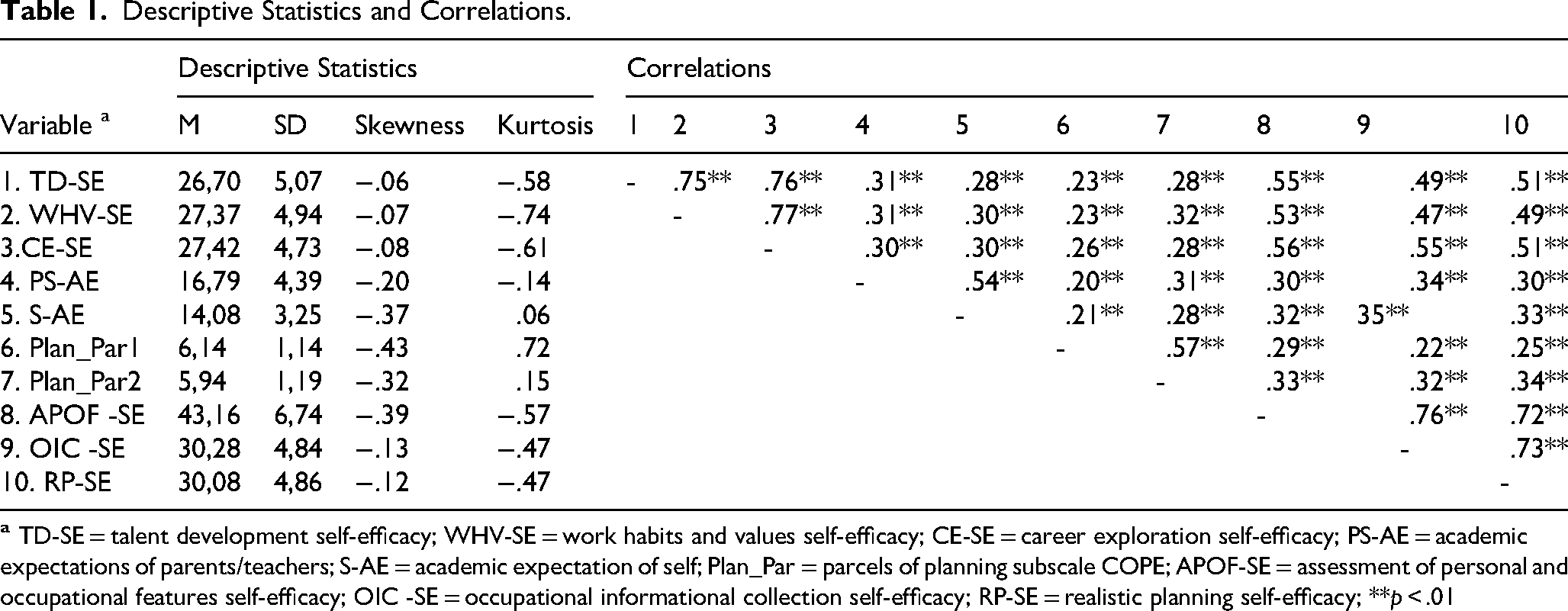
The normality assumption for all the variables was met (skewness ranged from −.39 to −.06, and kurtosis from −.74 to .72) by falling within the range of ±1. Descriptive statistics and correlations between the study variables are presented in Table 1. The correlation coefficients between all variables were statistically significant.
Descriptive Statistics and Correlations.
Measurement Model
A two-step procedure was utilized (Anderson & Gerbing, 1988). Firstly, we used CFA to test the measurement model. After that, we examined the structural relationships. The measurement model comprised four latent constructs (i.e., talent development self-efficacy, academic expectation stress, planning cope, and career decision-making self-efficacy) and ten observed variables (see Figure 2). The measurement model showed an excellent fit to the data: CMIN = 35.398, DF = 29; CMIN/DF = 1.221; CFI = .997; RFI = .974; GFI = .983; AGFI = .967; TLI = .995; SRMR = .017; RMSEA = .024. All observed variables significantly loaded onto their corresponding latent constructs (ranged from .71 to .95, p < .001), showing that all indicators well represent the latent constructs.
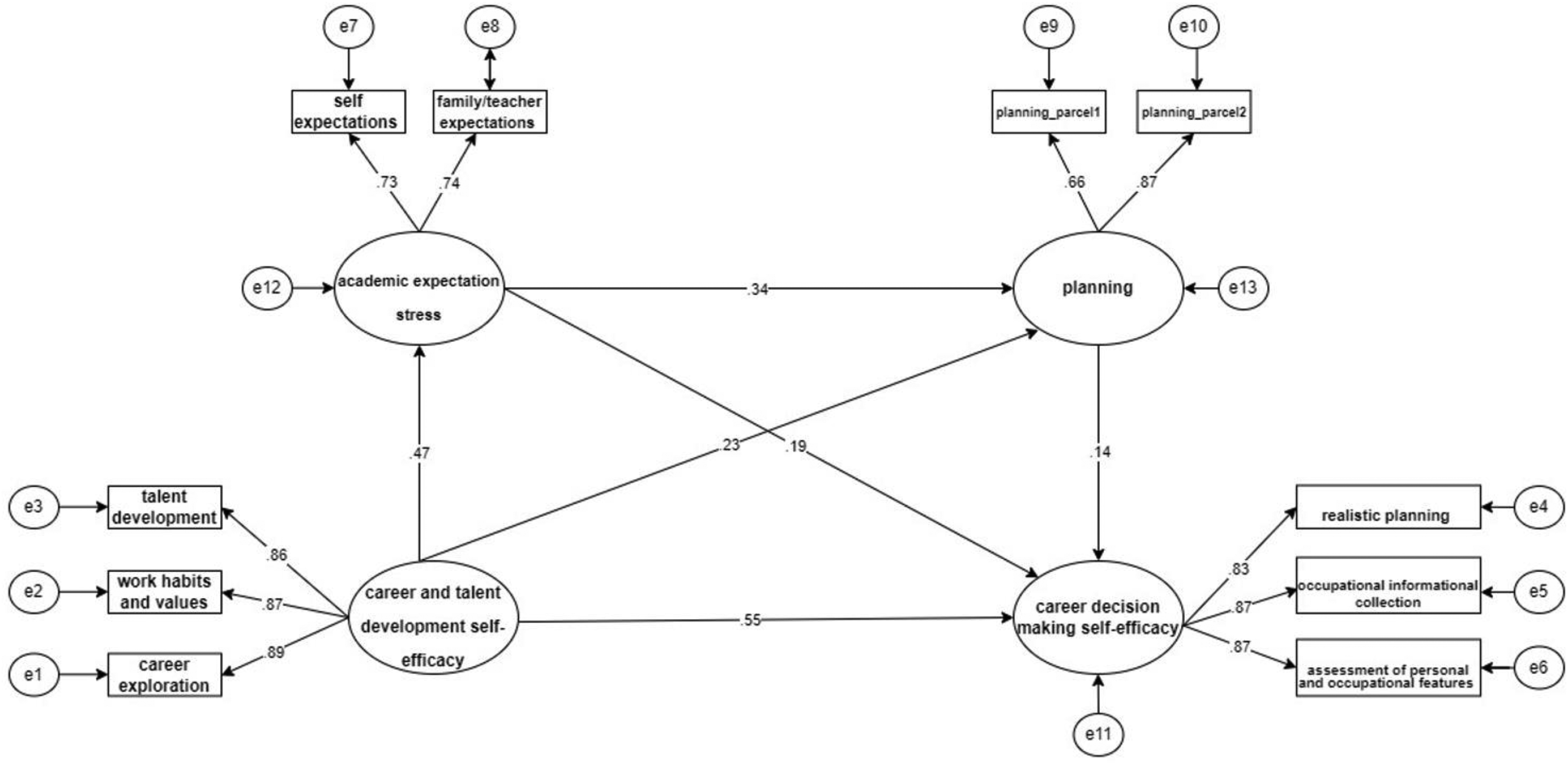
The results of the serial multiple mediational model.
The square root of the average variance explained (AVE) value was examined as a validation criterion. AVE values greater than the correlation coefficient are interpreted as good discriminant validity. The threshold value for the composite reliability (CR) value is > .70, and the AVE value is > .50 (Carmines & Zeller, 1988; Fornell & Larcker, 1981). In this study, AVE values ranged from .54 to .76, and CR ranged from .70 to .90. These data indicate good convergent validity and reliability.
Structural Model
SEM was used to test the research hypotheses. The results indicated that the structural model showed an excellent fit to the data: CMIN = 35.398, DF = 29; CMIN/DF = 1.221; CFI = .997; RFI = .974; GFI = .983; AGFI = .967; TLI = .995; SRMR = .017; RMSEA = .024. The results showed that career and talent development self-efficacy was associated positively with career decision-making self-efficacy (β = .55, t = 9.845, p < .001), supporting Hypothesis 1 (see Figure 2). Besides career and talent development self-efficacy was related positively to academic expectations stress (β = .47, t = 7.095, p < .001) and planning cope (β = .23, t = 3.286, p < .01). Academic expectations stress was related positively with planning cope (β = .34, t = 3.975, p < .001) and career decision making self-efficacy (β = .19, t = 2.970, p < .001). Planning cope was positively related to career decision-making self-efficacy (β = .14, t = 2.463, p < .001).
The bootstrapping method was used to determine the indirect effects of academic expectations stress on the relationship between career and talent development self-efficacy and career decision-making self-efficacy. This method is used to understand whether the effect is statistically significant (Shrout & Bolger, 2002). Besides, we examined the mediating effect of planning in the relationship between career and talent development self-efficacy and career decision-making self-efficacy. Lastly, we examined the serial mediating effect of academic expectations, stress, and planning in the relationship between career and talent development self-efficacy and career decision-making self-efficacy.
Table 2 shows the direct and indirect effects of the structural model. In the relationship between career and talent development self-efficacy and career decision-making self-efficacy, Academic expectations stress's indirect effect results (bootstrap sample: 5000, 95% CIs .03 to .14), planning's indirect effect results (bootstrap sample: 5000, 95% CIs .08 to .12), and serially indirect effect results of academic expectations stress and planning were statistically significant (bootstrap sample: 5000, 95% CIs .01 to .04). The mediating role of academic expectations stress, planning, and serially academic expectations stress and planning has been confirmed by these results (see Table 2).
Direct and Indirect Effects and 95% Confidence Intervals.
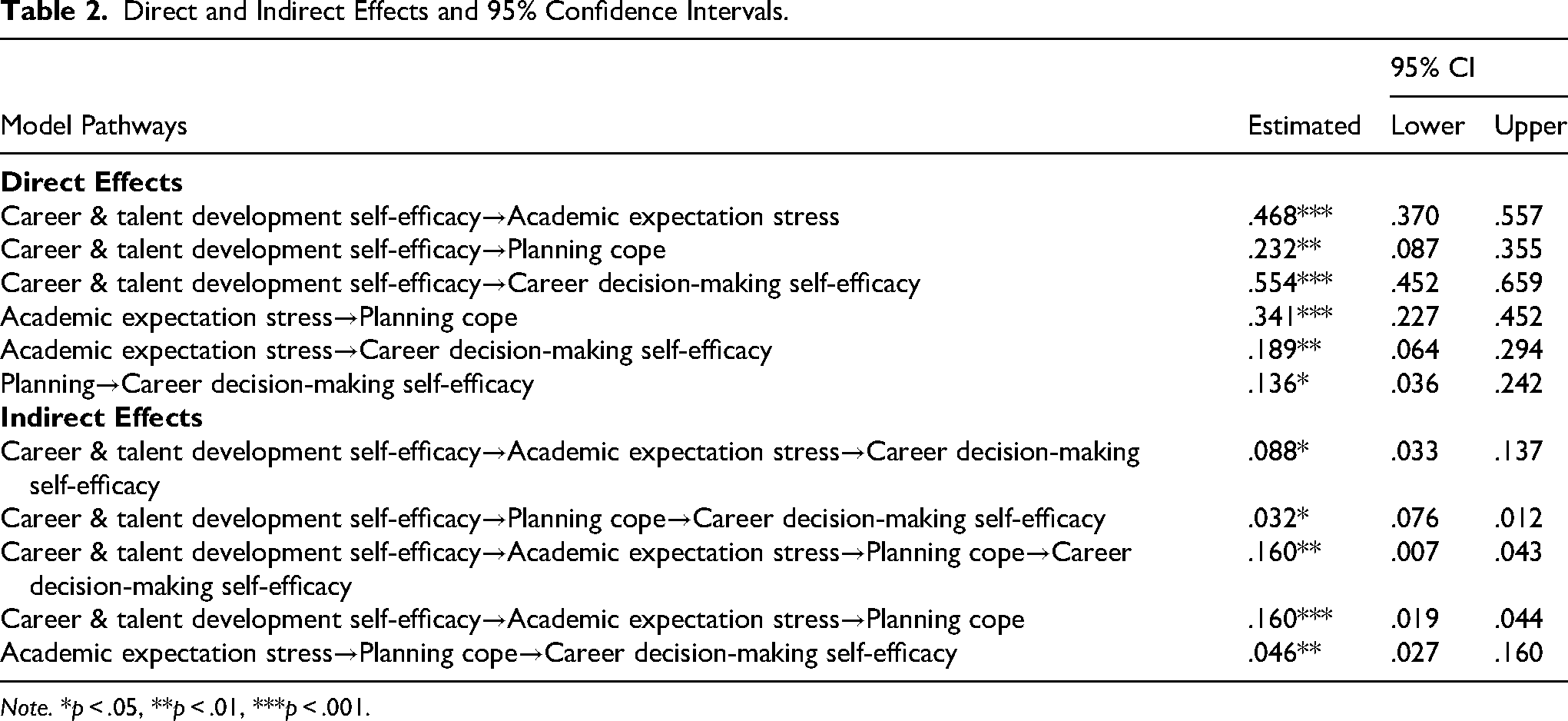
Note. *p < .05, **p < .01, ***p < .001.
Discussion
The study aims to examine the relationship between career and talent development self-efficacy, career decision-making self-efficacy, planning, academic expectations, stress, and to propose a hypothetical model in this context. Firstly, the relationship between career and talent development self-efficacy and career decision-making self-efficacy was tested within the scope of the study. The findings showed an association between career and talent development self-efficacy and career decision-making self-efficacy. These findings align with those of previous studies. For example, career and talent development self-efficacy is associated with academic engagement (Buenconsejo & Alfonso D. Datu, 2020), academic performance (Yuen et al., 2010), academic self-efficacy (Buenconsejo & Alfonso D. Datu, 2020), locus of control (Turan, 2021), career barriers (Hashish, 2019), career adaptability (Turan, 2017), career awareness (Hashish, 2019), coping with career indecision (Turan, 2017), self-compassion (Bedoria & Marañon, 2020), social support (Turan et al., 2014), hope (Bedoria & Marañon, 2020; Turan, 2021), and metacognitive awareness (Turan, 2013).
To the best of our knowledge, no study explicitly examines the association between career and talent development self-efficacy and career decision-making self-efficacy. However, it has been determined that self-efficacy expectations are practical for career decision-making, and individuals’ decision-making self-efficacy is affected by individuals’ abilities and attitudes (Hashish, 2019). Similarly, Bandura's self-efficacy theory suggests that individuals’ career decision-making self-efficacy is related to their ability to successfully perform tasks and responsibilities (Bandura, 1997). In this context, it is expected that the actions and beliefs related to individuals’ successful careers and abilities will increase their career decision self-efficacy. Considering the relationship between career decision self-efficacy perception and general self-efficacy perception, as well as the direction of these relationships, the research results are consistent with the existing literature.
The study's second hypothesis is that academic expectation stress mediates the relationship between career and talent development self-efficacy and career decision-making self-efficacy. In this study, academic expectations stress was found to mediate the relationship between career and talent development self-efficacy and career decision-making self-efficacy, confirming Hypothesis 2. This result is similar to previous studies (Schwarzer & Hallum, 2008). Additionally, career and talent development self-efficacy, career awareness, and understanding of career options lead individuals to increase their career expectations (Hashish, 2019). Being aware of the options may increase the academic expectations stress. In addition, considering the beneficial effects of optimal stress levels on performance (Hargrove et al., 2015) and self-efficacy (Hargrove et al., 2015), it may also affect career decision-making self-efficacy. Together, these conditions can explain the mediating effect of academic expectations stress on the relationships between career and talent development self-efficacy, and career decision-making self-efficacy.
In this study, it was found that career and talent development self-efficacy and career decision-making self-efficacy were positively related to academic expectations stress. However, studies in the literature suggest a generally negative relationship between academic expectations, stress, and career self-efficacy (Chemers et al., 2001). In contrast, studies found a positive relationship between academic self-efficacy and academic stress related to expectations (Mulyadi et al., 2016; Travis et al., 2020). However, this relationship is generally negative in the literature. The fact that career and talent development self-efficacy and career decision making self-efficacy have a positive connection with academic expectations stress may be due to the characteristics of the sample group. Turkish culture places a strong emphasis on academic expectations, family, and teachers (Ayas, 2009). For this reason, although the self-efficacy of individuals increases, the expectations of families and teachers may increase career expectation stress.
Another explanation of the positive association between academic expectation stress and career decision-making self-efficacy may be understood within the socio-cultural context of Türkiye, where familial expectations and educational pressures are deeply embedded in adolescents’ academic experiences. In such contexts, high parental aspirations are often perceived as supportive rather than oppressive, fostering motivation and self-belief (Chen et al., 2009; Sun & Shek, 2012). Moreover, cultural norms emphasizing collective success and academic achievement may lead students to internalize expectations in ways that strengthen their self-efficacy (Kagitcibasi, 2007). These dynamics may help explain the unexpected positive relationship observed in this study.
The study's third hypothesis is that planning has a mediating effect between career and talent development self-efficacy and career decision-making self-efficacy. According to social cognitive career theory, an individual's resources and past experiences help them overcome career challenges, and successful outcomes enhance their self-efficacy (Lent et al., 1994). In this context, the relationship between planning, career, and talent self-efficacy, and career decision-making self-efficacy aligns with the research findings. Additionally, McConville and Lane (2006) argue that increased self-efficacy enhances an individual's ability to cope with challenging situations. Similarly, Matsui and Onglatco (1992) suggest that individuals with high self-efficacy develop coping strategies to meet demanding expectations and manage stress effectively. Given the relationship between stress and self-efficacy, the study's findings are consistent with the existing literature. Career decision-making self-efficacy is a stressful process (Wright et al., 2017). Individuals employ coping strategies to alleviate stressful situations. An increase in career and talent development self-efficacy enhances their ability to manage career-related stress. This, in turn, highlights the mediating role of planning in the process.
Some models include planning as a sub-dimension of career decision-making self-efficacy. However, it is important to distinguish between planning as a coping strategy and planning as a sub-dimension of career decision-making self-efficacy. In this study, planning is referred to as a coping strategy (Carver et al., 1989), used to manage stress and challenges. In contrast, planning as a sub-dimension of career decision-making self-efficacy refers to an individual's belief in their ability to plan and make decisions regarding their career. Therefore, while both concepts involve planning, they differ in their roles and contexts within the framework of career decision-making and coping strategies.
The final findings of the study indicate that academic expectations, stress, and planning sequentially mediate the relationship between career and talent development self-efficacy and career decision-making self-efficacy. The study found a positive relationship between academic expectations, stress, and planning. This relationship between academic expectations, stress, and planning is consistent with the existing literature (Struthers et al., 2000). It is suggested that the academic expectations of individuals, their families, teachers, or themselves can be a source of stress (Tan & Yates, 2011). In cases of stress driven by academic expectations, a planning coping strategy is often employed to overcome the stressful situation (Struthers et al., 2000). In addition, social cognitive career theory suggests that mechanisms such as people's outcome expectations and self-efficacy beliefs are effective in career choices (Lent et al., 1994). Considering all these factors, it is possible to say that individuals’ career and talent development self-efficacy, as well as their expectations, affect their career decision-making self-efficacy. Additionally, coping planning mechanisms are employed to manage the stress resulting from expectations (Aitken & Crawford, 2007). It may be proposed that this explains the serial mediation effect of academic expectations, stress, and planning between career and talent development self-efficacy and career decision-making self-efficacy. It is worth noting that all these findings are consistent with the results of this study.
The findings should be interpreted within the socio-cultural context of Türkiye, where familial expectations, educational pressures, and collectivist cultural values play a central role in shaping adolescents’ academic and career-related experiences. In such contexts, parental aspirations and societal emphasis on achievement may influence how students internalize and respond to academic stress, potentially producing patterns that differ from Western settings (Kagitcibasi, 2007; Sun & Shek, 2012).
While the present study focused on examining the mediating roles of academic expectation stress and planning in the relationships between career and talent development self-efficacy and career decision-making self-efficacy, it is essential to acknowledge that additional contextual and individual factors may influence these associations. For example, parental support could serve as a protective factor, buffering the negative effects of academic stress and enhancing adolescents’ confidence in their career decision-making processes. Likewise, school climate may moderate these pathways, as supportive and resource-rich educational environments are known to promote both effective planning and self-efficacy beliefs. Moreover, individual psychological traits—such as self-regulation skills or personality characteristics—may interact with academic and career-related factors, influencing how adolescents cope with academic expectations and plan their future. Although these variables were not included in the current analyses due to the study's scope and available data, future research should consider incorporating such theoretically relevant moderators or controls to provide a more comprehensive understanding of the mechanisms underlying adolescents’ career development.
The study's model sheds light on career interventions designed to enhance career self-efficacy. Career counselors can also apply the findings to enhance their counseling sessions. The study highlights that the mechanisms underlying career self-efficacy are closely linked to coping strategies and stress. As a result, school intervention programs should focus more on fostering adaptive coping skills and stress regulation techniques.
The findings of the study offer important practical implications for school counseling and intervention programs. Given that academic expectation stress and planning mediate the relationship between career and talent development self-efficacy and career decision-making self-efficacy, school counselors can play a critical role in supporting adolescents’ career development. Accordingly, future intervention programs in the field of career development should focus on reducing excessive expectation stress—particularly that stemming from academic, familial, and societal pressures—while simultaneously enhancing individuals’ capacity for effective career planning. Specifically, counseling programs should focus on helping students manage academic stress effectively through stress-reduction strategies, psychoeducation, and emotional regulation techniques. At the same time, interventions aimed at enhancing planning skills such as goal setting, time management, and structured career guidance may strengthen students’ confidence in making informed career decisions. Integrating these components into comprehensive school-based programs may foster both emotional resilience and career-related self-efficacy, ultimately facilitating smoother school-to-career transitions. Furthermore, psychoeducational and counseling interventions may include stress management techniques, cognitive restructuring strategies, and goal-setting exercises to help individuals develop more realistic expectations and adaptive coping skills. Simultaneously, structured modules focused on enhancing career planning skills—such as decision-making, future orientation, and strategic goal setting—can assist individuals in making more informed and sustainable career decisions.
Finally, school and university-based career counseling services might benefit from incorporating these components into both group and individual interventions, thereby promoting both psychological well-being and supporting more intentional career decision-making. Overall, such integrative approaches are likely to promote healthier, more realistic, and better-planned career paths in increasingly complex and uncertain career environments.
Importance, Limitations, and Recommendations of the Research
Self-efficacy, a key social cognitive mechanism, plays an important role in career choice behaviors. In this context, self-efficacy interventions can help individuals regulate their career choice behaviors. To design effective studies and interventions that enhance career self-efficacy, it is essential to gain a deeper understanding of career self-efficacy models. This study proposes a hypothetical model that explains the factors influencing career decisions within a unified framework. The model tests the relationships between various variables in a serial pattern using a single sample group.
The research data collection, which includes self-report measurement tools, is among the research limitations. The current study used a correlational design, which has inherent limitations. One such limitation is that correlational studies can lead to invalid inferences, as they do not establish causal relationships (Janse et al., 2021). The correlational research design does not establish causal relationships among variables. Additionally, the data collected from participants were obtained using a cross-sectional method, which is a limitation of the study. Another limitation is that the sample consisted of individuals from a single cultural context (data were collected exclusively from Turkey), which may affect the generalizability of the findings. Turkey, with its collectivist family values (Taylan, 2009), may not fully represent cultures with more individualistic characteristics. Examining the research data in more individualistic cultural contexts could enhance the validity of the findings. Moreover, it would be beneficial to replicate the study with different sample groups to assess whether similar results are observed. Furthermore, given that the stress variable can have varying effects at different levels, it is crucial to explore the moderating effect of academic expectations stress, as discussed in this study. Lastly, a potential limitation of this study is the use of self-report measures collected at a single time point, which may raise concerns about common method variance (CMV). To minimize this risk, several procedural strategies were employed, including the use of validated instruments, ensuring participant anonymity, and varying response formats. These methodological precautions are widely recommended to reduce the potential impact of CMV in scientific research (Podsakoff et al., 2003).
A limitation of the present study includes the use of item parceling in the measurement model. Although parceling was employed to enhance model parsimony, improve reliability, and obtain more stable parameter estimates, it may also obscure potential multidimensionality at the item level. Future research is encouraged to replicate the present findings using item-level analyses to provide a more fine-grained evaluation of the measurement structure. Furthermore, the findings showed low internal consistency (e.g., α = .62 and .65). While acceptable for exploratory research, these values may affect result interpretation. Lower reliability can weaken observed relationships, leading to conservative estimates. Cronbach's alpha also has limitations, such as dependence on scale length and tau-equivalence assumptions. Thus, results of Cronbach's alpha should be interpreted cautiously.
Conclusion
In conclusion, the present study showed that academic expectation stress and planning mediate the relationship between career and talent development self-efficacy and career decision-making self-efficacy among adolescents. These findings highlight the crucial role of both emotional and cognitive processes in shaping adolescents’ career decision-making beliefs. Theoretically, the study contributes to career development research by integrating stress and planning into a single mediation framework. Practically, the results suggest that interventions aimed at strengthening adolescents’ career self-efficacy should address both stress management and planning skills. Future research should expand this model by including potential moderators such as parental support, school climate, and individual psychological traits to provide a more comprehensive understanding of adolescents’ career development.
Footnotes
Acknowledgement
We thank all participants who voluntarily contributed to this study.

Ethical Approval
All procedures performed in studies involving human participants were in accordance with the ethical standards of the institutional and/or national research committee and with the 1964 Helsinki Declaration and its later amendments or comparable ethical standards. Ethical approval was secured from the Ethics Committee of Agri Ibrahim Cecen University (Ethic Code: E-95531838-050.99-18533).
Informed Consent
Informed consent: Informed consent to participate was obtained from the parents or legal guardians of the participant under the age of 16.
Consent for Publication
Not applicable.
Author Contributions
AK, MET, MY: Study conception/design. AK, MET: Data collection. MET: Analysis, Statistical expertise and Administrative/technical/material support. AK, MET, MY: Drafting of the manuscript. CL: Writing - Review & Editing, validation. MY: Writing - Review & Editing, Supervision and validation.
Funding
The authors received no financial support for the research, authorship, and/or publication of this article.
Declaration of Conflicting Interests
The authors declared no potential conflicts of interest with respect to the research, authorship, and/or publication of this article.
Data Availability Statements
The datasets generated during and/or analysed during the current study are available from the corresponding author upon reasonable request.