






Abstract
This study validated a 20-item Decisional Capital (DC) scale for novice teachers using the Multidimensional Graded Response Model (MGRM), a multidimensional item response theory (MIRT) approach. Analyzing data from 499 novice teachers, the research supported a three-subscale structure and confirmed all items as meaningful contributors. The four-response category model showed optimal fit, with item discrimination parameters ranging from 1.07 to 3.95, effectively differentiating between low and high DC levels. Difficulty estimates indicated that teachers with low DC endorsed lower response categories. The MGRM analysis provided valuable psychometric insights, offering structural and item-level evidence in support of the scale's use in educational research and practice, and enhancing our understanding of decisional capital in novice teachers’ instructional decision-making processes.
Introduction
Decisional Capital (DC) is a construct of growing importance in the field of education, especially in teachers’ growth and improvement. Defined by Hargreaves and Fullan (2015) as the capital teachers rely on to make critical decisions in the classroom, DC spans multiple domains, including instructional practices, content delivery, behavior management, and organizational strategies. A proper assessment of DC is therefore an important tool for understanding and improving teachers’ decision-making, and may be particularly useful for accelerating the professional growth of novice teachers.
Indeed, research shows that many beginning teachers are vulnerable to leaving the profession within the first three years due to factors such as reduced effectiveness, low job satisfaction, poor student achievement outcomes, and adverse working conditions (Boyd et al., 2011; Johnson et al., 2012; Leana, 2011; Ronfeldt et al., 2013). Kehinde et al. (2024) developed the DC survey in order to help explore how decision-making may improve more or less rapidly for teachers at the beginning of their careers. Their study employed a variety of psychometric methods to validate this newly developed instrument, following best practices in survey validation (de Miranda Azevedo et al., 2016; Devine et al., 2014).
To establish the dimensionality and reliability of the DC scale, Kehinde and colleagues performed reliability analysis, exploratory factor analysis (EFA), and confirmatory factor analysis (CFA). Their findings supported a three-factor structure - agency, confidence, and reflection - underlying a broader higher-order construct of decisional capital. While promising, these results should be interpreted with caution. Notably, one limitation is that CFA offers only a single estimate of the item-trait relationship, limiting its capacity to capture item-level variability across different levels of the construct (Lorber et al., 2014).
To overcome this limitation, researchers have highlighted the advantages of item response theory (IRT) in evaluating item and scale performance. In particular, models like the multidimensional graded response model (MGRM) are well-suited to instruments such as the DC scale, which feature multiple dimensions and ordered categorical responses (Embretson & Reise, 2000; Raykov & Marcoulides, 2011). IRT techniques can provide nuanced insights, including item information curves and differential functioning across trait levels, thus addressing gaps in the current validation strategy.
This study therefore aims to provide a thorough psychometric evaluation of the DC scale for novice teachers using the MGRM framework. By examining item parameters and test information functions, this study contributes to a deeper understanding of the scale's validity and utility. Previous work on decisional capital such as that undertaken by Kehinde and colleagues is exploratory in nature - applying an MGRM approach thus bolsters the potential explanatory power of the DC scale while adding additional rigor to the measurement of decisional capital. These findings offer practical implications for educational institutions seeking to measure and nurture decisional capital among early career teachers.
The Decisional Capital Framework in Educational Practice
Understanding decision-making in education is inherently complex due to the often tenuous relationship between decision quality and outcomes. A well-reasoned decision may lead to failure because of unforeseen factors, while a poorly grounded decision may succeed due to chance. This paradox underscores the importance of assessing decisional capital: not through outcomes alone, but through the processes, judgment, and context-sensitive reasoning that inform professional decisions (Hargreaves & Fullan, 2015).
Empirical explorations of decisional capital indicate that it is comprised of three interrelated components: agency, reflective capacity, and confidence amid complexity (Kehinde et al., 2024). Agency refers to the educator's professional autonomy, the ability to make meaningful instructional and organizational decisions (Nolan & Molla, 2017). Unfortunately, this autonomy is frequently undermined by prescriptive mandates or rigid curricula that diminish teacher's judgment (Vaughn et al., 2022). Reflective capacity, rooted in Hargreaves and Fullan's (2015) theoretical work, involves the ability to reflect not only in and after action but also on the broader systems shaping practice. This multidimensional reflection enables educators to engage in continuous learning, strategic adaptation, and professional growth (Witt et al., 2022). Finally, confidence refers to the assurance educators need to operate effectively within uncertain and dynamic classroom environments (Chapman et al., 2016). This involves not only clarity in purpose but also a steady resolve in the face of complexity.
Broader advancements in career development theory further contextualize the study of decisional capital among novice teachers. Guichard (2022) emphasized the necessity of supporting individuals in designing active lives that address the economic, ecological, and political challenges of the twenty-first century, underscoring the importance of purposeful, adaptive decision-making in professional life. Complementing this perspective, Hartung and Di Fabio (2024) proposed sustainable development as a fourth paradigm for twenty-first-century careers, arguing that career frameworks must evolve to account for long-term well-being, social responsibility, and ecological sustainability. Together, these perspectives highlight that effective professional decision-making such as the decisional capital examined in this study, is not only central to individual teacher development but is also situated within a broader landscape of evolving career demands and societal challenges.
Present Study
In this study, we are interested in further deepening the understanding of validity of the DC scale for novice teachers by examining whether the claim made about the multidimensionality of the DC scale is valid and can be used to obtain a valid multidimensional DC score as Kehinde et al., (2024) implied. Our study was informed by the research questions below:
What are the psychometric properties of the DC scale when evaluated using the MGRM among novice teachers?
How does the MGRM analysis contribute to understanding the validity and performance of the DC scale for assessing decisional capital in novice teachers?
Methods
Procedure and Participants
The study investigated teacher decision-making skills using a self-report questionnaire administered through Qualtrics. The study included 499 teachers from a southeastern state in the United States. The sample arose from ongoing work the authors were doing with an educational cooperative contracted to provide mentoring and professional development to novice teachers – defined as teachers in their first three years in the profession. The cooperative serves 26 public school districts in one region of the state that includes a medium-sized city, some suburbs, and a sizable rural area. The survey was administered by the cooperative to the entire group of novice teachers they serve, deidentified, and shared with the research team. All of the teachers are certified in the state where they teach.
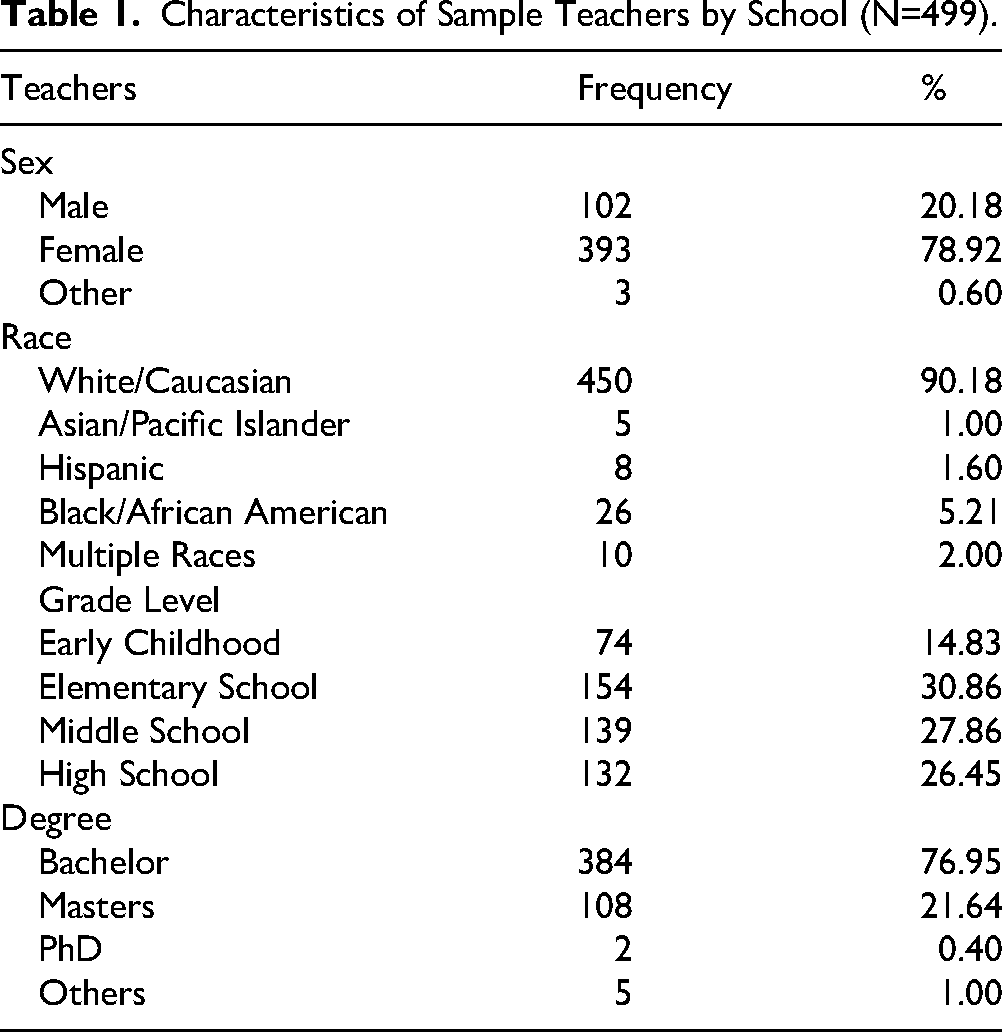
Relative to the population of teachers in the United States this sample mirrors the distribution of teachers who are women (77%), but has a higher proportion of white teachers (90% in the sample vs 80% in the US as a whole) - in other words, this sample reflects the modal teacher in the United States (a white woman), but future research would to examine for potential differences in racial and ethnic subgroups (NCES, May 2023). Table 1, below, offers additional demographic information about the sample.
Characteristics of Sample Teachers by School (N=499).
Measures
The DC Scale for novice teachers was recently developed and validated through a CFA approach (Kehinde et al., 2024). This 20-item scale has a three-factor structure: Reflection (3 items), Agency (4 items), and Confidence (13 items). For each item, participants were asked to indicate their degree of agreement with a statement relating to one of the three factors using six response categories ranging from Strongly Disagree (1) to Strongly Agree (6). Higher scores on these items collectively correspond to higher levels of decisional capital.
Analytical Strategy
We applied a multidimensional IRT model to evaluate the three-factor DC scale. Specifically, we fitted the multidimensional graded response model (MGRM; Forero & Maydeu-Olivares, 2009; Jiang et al., 2016; Kehinde et al., 2022; Muraki & Carlson, 1995), which is an extension of the unidimensional graded response model (Samejima, 1969, 1997). The model was estimated using the mirt function from the mirt package (Chalmers, 2012) in R (R Core Team, 2021) with the following options: itemtype = “graded” for polytomous scored items, method = “MHRM” for the Metropolis-Hastings Robbins-Monro algorithm, and dentype = “Gaussian” for the assumed multivariate density distribution of the latent trait parameters.
The MGRM fundamentally differs from the unidimensional Graded Response Model (GRM) in its approach to underlying latent traits. While the GRM considers a single latent trait influencing item response probabilities, the MGRM accounts for multiple traits. This distinction is reflected in how respondent's ability is estimated: the GRM places a respondent's ability on a single latent trait continuum, whereas the MGRM positions it within a multidimensional space. Despite this key difference, both models maintain consistency in the interpretation of item parameters. Our choice of the MGRM for this study aligns with the theoretical conceptualization of the DC scale as a multidimensional construct comprising three factors.
The application of this multidimensional model produced two critical parameters for each item: discrimination and difficulty. The discrimination parameter indicates how effectively an item distinguishes between teachers with varying levels of decisional capital. Items with high discrimination provide valuable insights into differences in decisional capital across individuals, while those with low discrimination may require refinement or removal. The difficulty parameter represents the position of the item on the decisional capital continuum. In the context of the DC scale, difficulty parameters indicate the level of decisional capital a novice teacher needs to have a 50% probability of selecting a particular response or higher category. Together, these parameters offer crucial information about each item's effectiveness in measuring the underlying constructs of decisional capital and at which trait levels they are most informative. This allows for a nuanced understanding of the scale's performance in assessing novice teachers’ decision-making capabilities.
The exploratory analysis of the response data from participants revealed that the response matrix was sparse, with some response categories having very few observations, especially the “somewhat disagree” and “somewhat agree” categories. Specifically, fewer than 5% of respondents endorsed the “somewhat disagree” and “somewhat agree” options, creating near-empty cells in the response matrix. Such sparseness is a well-recognized empirical threat to model estimation stability and fit in polytomous IRT models, as it inflates standard errors, increases the risk of non-convergence, and can distort item parameter estimates (Chernyshenko et al., 2001; Svetina Valdivia & Dai, 2024).
From a theoretical standpoint, the conceptual distinction between “somewhat disagree” and “disagree” (or “somewhat agree” and “agree”) is unlikely to reflect meaningful different levels of decisional capital, supporting the merger of these adjacent categories without loss of substantive information. The decision to collapse was further validated empirically: as shown in Table 2, the four-category model yielded substantially better fit across all indices (CFI = .908, RMSEA = .093, SRMR = .064) compared to both the five-category (CFI = .807) and six-category (CFI = .731) solutions, confirming that collapsing the middle categories improved model-data fit. This procedure is consistent with established recommendations for addressing sparse polytomous response data (Chernyshenko et al., 2001; Lecointe, 1995; Quan & Wang, 2025), and prior simulation work has demonstrated that collapsing middle categories produces negligible impact on item parameter recovery (Svetina Valdivia & Dai, 2024).
Model Fit Statistics Based on Response Categories.

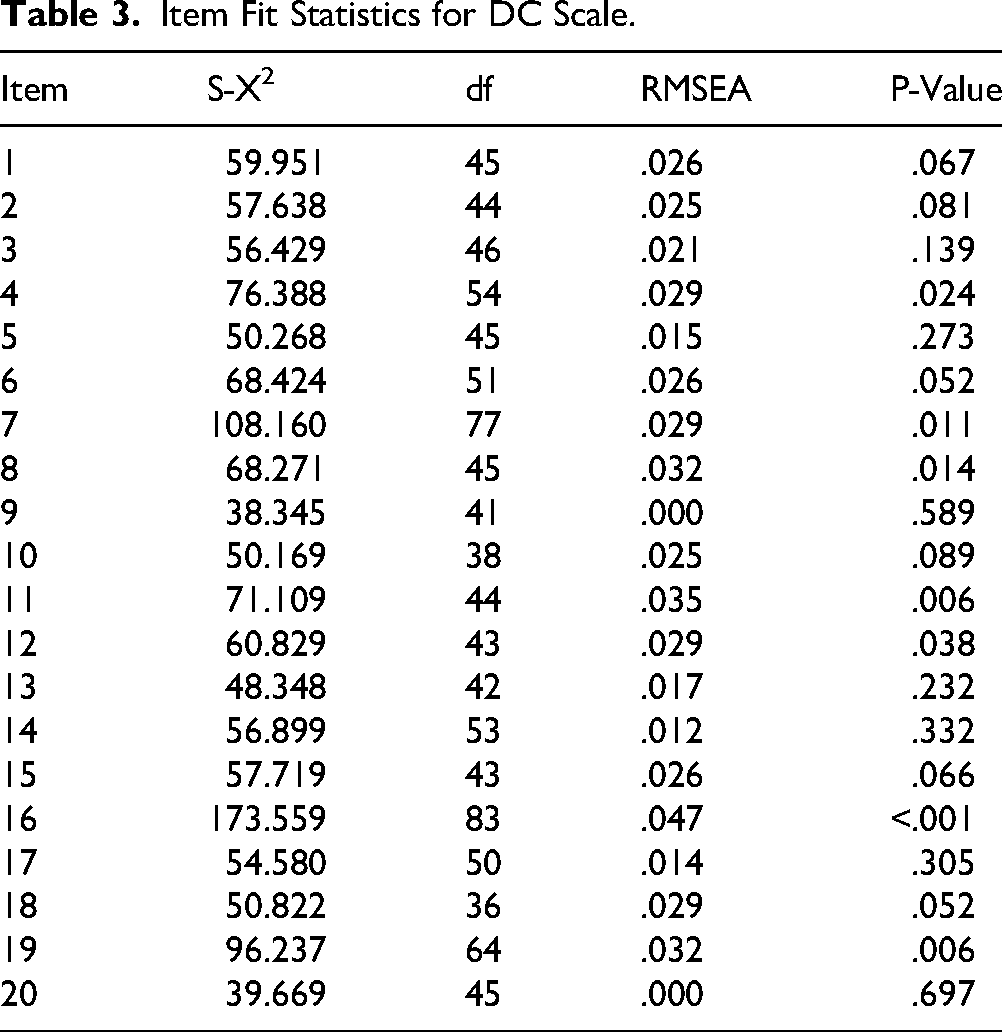
Item Fit Statistics for DC Scale.
To address the issue of low response frequencies in these categories, we collapsed observations from the “somewhat disagree” and “somewhat agree” categories into the “disagree” and “agree” categories, respectively. In evaluating the fit of the multidimensional IRT model to our observed DC data, we employed a range of statistical measures. Primarily, we utilized the M2 statistic, currently recognized as a key indicator of global goodness of fit in multidimensional IRT models, which tests for perfect fit (Maydeu-Olivares & Joe, 2005).
To provide a more comprehensive assessment of model fit, we supplemented this with several additional metrics: root mean squared error of approximation (RMSEA), comparative fit index (CFI), standardized root-mean-square residual (SRMR), and Tucker-Lewis index (TLI). This combination of measures allowed us to evaluate both perfect and approximate fit to the data, offering a thorough assessment of the model's performance.
Results
Model Fit
Table 2 presents the model fit indices for different models based on the number of response categories considered. The model with response categories collapsed to four response options (1 = strongly disagree, 2 = disagree, 3 = agree, 4 = strongly agree) had the best fit compared to the models with more response categories but with sparse observations. The M2 statistics are significant for all models. While the M2 statistics were statistically significant across all models, it is important to note that the M2 statistic is sensitive to sample size and tends to reject even well-fitting models with moderate to large samples; its statistical significance should therefore not be interpreted as evidence of poor fit in isolation (Maydeu-Olivares & Joe, 2005). Accordingly, model evaluation was based primarily on approximate fit indices. For the four-category model, the RMSEA of 0.093 (95% CI: 0.086–0.100) slightly exceeds the conventional threshold of .08 for acceptable fit in structural models, though values below .10 are often considered tolerable in IRT contexts where model complexity and item interdependence may inflate this index (Bonifay, 2019). The SRMR of 0.064 fell below the .08 cutoff, indicating acceptable residual-level fit. The TLI of 0.892 and CFI of 0.908 approached or met the .90 threshold commonly applied in confirmatory factor analytic frameworks, and are considered adequate for complex multidimensional IRT models.
Item Fit
While overall model fit assessment provides a global evaluation of how well the IRT model represents the data, conducting item-level fit evaluation is equally important as it identifies specific items that may not conform to the model's assumptions. Individual items may exhibit poor fit even when the overall model demonstrates acceptable fit, and such items can compromise the validity of ability estimates and the interpretation of results. Therefore, examining item fit statistics ensures that each item contributes appropriately to the measurement of the underlying construct.
In Table 3, the RMSEA values from the item fit statistics indicated that all items fit the data well, with all RMSEA values less than 0.05. An RMSEA value for item fit that is less than 0.05 indicates adequate fit (Bonifay, 2019). Evaluation of item fit through INFIT and OUTFIT statistics also showed that all items demonstrated adequate fit, as all items had infit and outfit values within the recommended range of 0.5 to 1.5. The visual representation of infit and outfit statistics is presented in Figure 1.
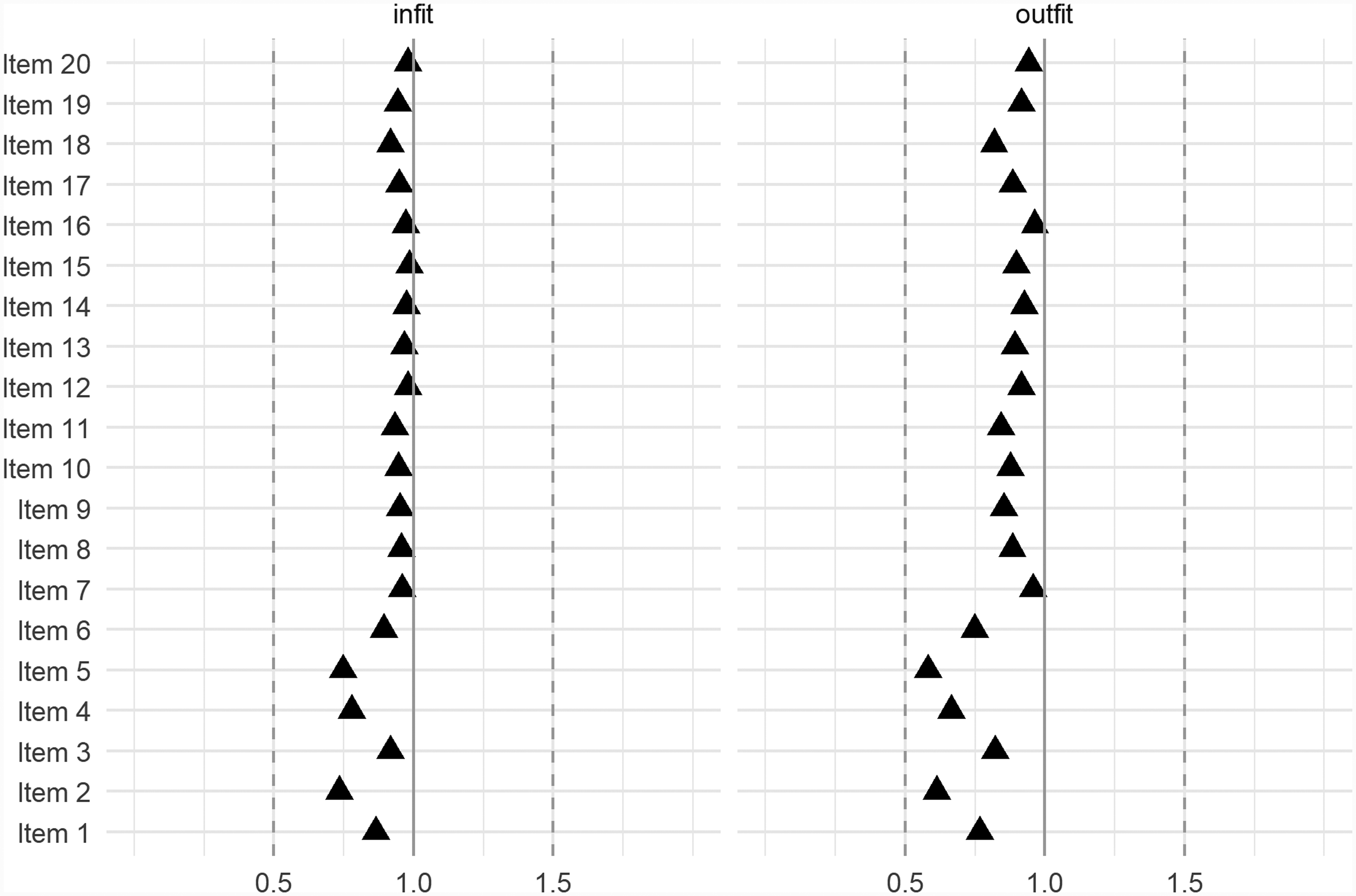
Item infit and outfit statistics.
Parameter Estimates
Table 4 presents the IRT parameter estimates, including item discrimination and item difficulty parameters. Items 1–3 belong to the reflection factor, items 4–7 belong to the agency factor, and items 8–20 belong to the confidence factor. The discrimination parameters for the items range from 1.070 to 3.948, indicating that the overall discrimination values fall within the moderate to perfect range as proposed by Baker and Kim (2017). These values suggest that all items effectively distinguish between individuals with low and high levels of decisional capital. For the reflection factor, discrimination parameters range from 2.421 to 3.257; the agency factor has discrimination values ranging from 1.618 to 3.948; and the confidence factor shows discrimination values ranging from 1.070 to 3.287. It is worth noting that higher discrimination values indicate a greater ability to differentiate between novice teachers with high and low scores on the decisional capital scale.
Model Parameter Estimates for DC Scale.
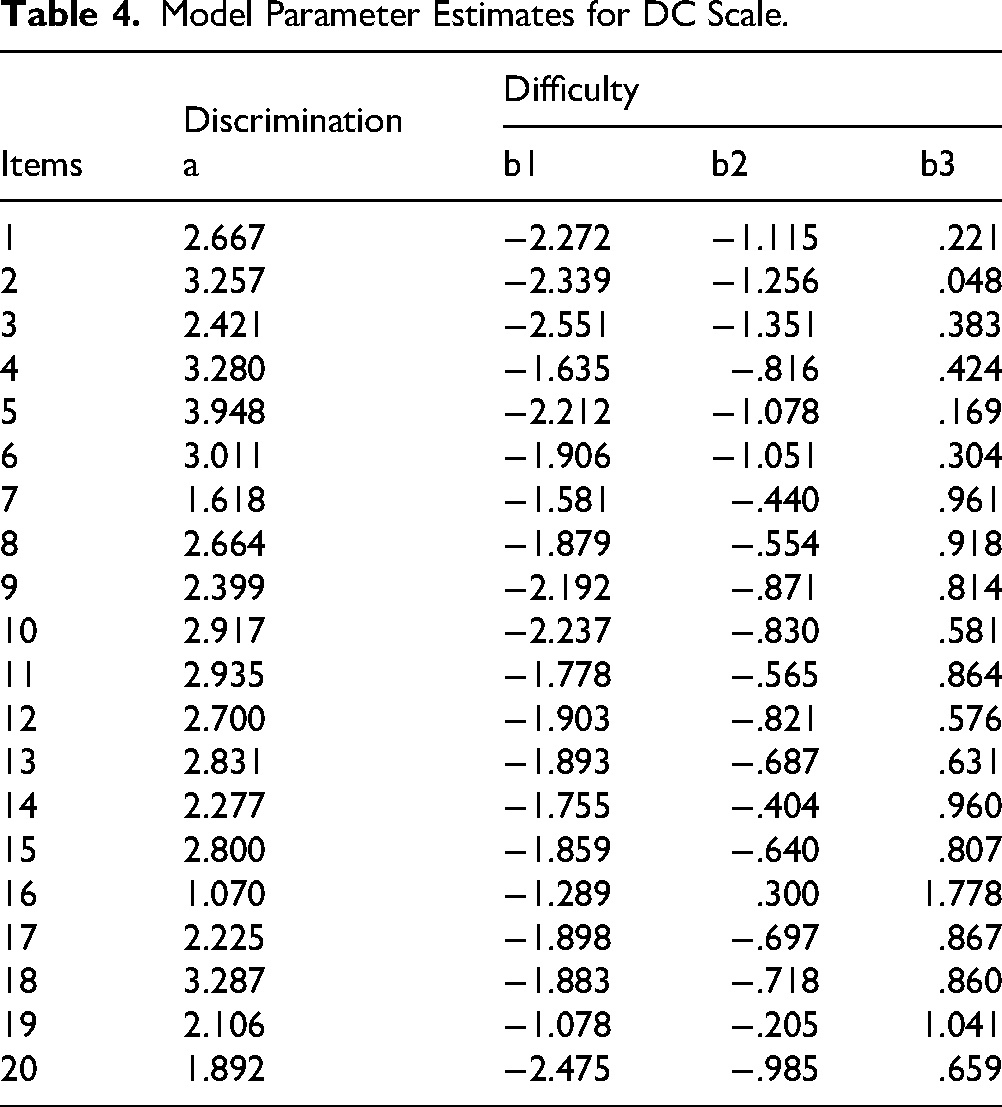
Given that our results are based on a model with four response options, we have three difficulty parameters for each item. These difficulty values indicate the decisional capital ability required for a teacher to endorse a particular response option or higher compared to a lower response option. For example, considering the difficulty parameters for item 1, the first difficulty parameter was estimated to be −2.272. This means that a respondent with a DC ability of −2.272 has a 50% chance of choosing response option 1 (Disagree) or higher versus choosing response option 0 (Strongly Disagree). Therefore, if a respondent has DC ability higher than this difficulty value, they are more likely to choose a response option equal to or higher than “Disagree,” and if a respondent has DC ability less than this difficulty value, they are more likely to choose “Strongly Disagree.” The second difficulty parameter, b₂, represents the point on the DC ability continuum at which a respondent has a 50% chance of choosing option 2 (Agree) or higher compared to option 1 and lower options.
Overall, the distribution of the difficulty parameters shows that the DC instrument is most appropriate for individuals with low to moderate ability on the DC scale. Specifically, the difficulty estimates for category 2 (Agree) are all below the mean of the DC scale, with a range from −1.256 to −0.205, except for one confidence item (item 16), which requires an ability level that is 0.30 standard deviations above the mean of the DC scale for a respondent to choose option 2 or higher.
Discussion
This study significantly advances our understanding of decisional capital among novice teachers through a rigorous psychometric evaluation using advanced IRT-based models, specifically the MGRM. By providing a richer analysis of the DC instrument, this research reveals crucial insights into the multidimensional nature of novice teachers’ decision-making processes, and affords additional insight into the development of both the individual components and overall decisional capital amongst early career teachers.
The MGRM supported the three-factor structure identified by Kehinde et al. (2024), which established confidence, reflection, and agency as the three dimensions of decisional capital in novice teachers. However, for the item response model, using four response categories provided the best model fit compared to the original six categories or the reduced five-category response options. This reduction in response categories has been found not to impact item parameter estimates, particularly when middle categories are combined as was done in this study (Chernyshenko et al., 2001; Svetina & Dai, 2024).
The present psychometric analysis yields favorable evidence of internal structure and item-level measurement quality, collectively supporting the instrument's functioning for its intended purpose. The convergence of multiple fit indices, including INFIT and OUTFIT statistics alongside item-level RMSEA values, provides triangulated evidence that all items conform to acceptable psychometric standards, indicating minimal measurement error and appropriate item functioning within this sample. It is important to note, however, that the evidence generated in this study is confined to internal structure and item-level fit. Broader validity claims, including those pertaining to the scale's relationships with external variables and its predictive utility, remain to be examined in future research. As such, the present study is most accurately characterized as offering structural and item-level psychometric support for the DC scale, rather than a comprehensive evaluation of its construct validity. Taken together, these findings indicate that the instrument captures the underlying constructs with adequate reliability and is suitably calibrated for its target population, establishing it as a promising measurement tool for assessing novice teacher development across the identified dimensions. Nonetheless, further investigation into external validity evidence is warranted before broader claims regarding the scale's utility can be advanced.
The application of a multidimensional IRT-based model in this study represents a methodological leap forward in the development and assessment of DC among novice teachers. This approach yields precise item parameter estimates, offering deep insight into how individual items function across different levels of the underlying constructs. Such detailed analysis enhances our ability to differentiate between high and low-performing respondents, providing a more accurate measurement of decisional capital.
In practice, the ability to discriminate among novice teachers with varying levels of decisional capital across the three subscales (confidence, reflection, and agency) is crucial for tailoring targeted interventions. For instance, when two novice teachers are assessed using the decisional capital scale, they may demonstrate distinct support needs in different areas of their decision-making processes. The psychometric properties revealed through this MGRM analysis, particularly the strong discrimination parameters, support the DC scale's utility for identifying these differences and informing individualized professional development approaches.
The implications of this research are noteworthy for the field of education. By advancing our structural understanding of how novice teachers’ decision-making can be measured, this study provides a psychometric foundation that may inform the design of targeted interventions and support systems. It offers education stakeholders a more rigorously evaluated tool to assess DC, which could potentially support efforts to guide professional development, though the direct links between scale scores and improvements in teacher performance or student outcomes remain to be established through future longitudinal and intervention-based research.
Beyond its immediate implications for individualized professional development, the findings of this study also resonate with broader advances in career development theory, which increasingly call for professional frameworks that address the complex demands of the twenty-first century. Guichard (2022) argued for career guidance approaches that support individuals in constructing active, meaningful lives amid ongoing economic, ecological, and political transformations, a perspective that aligns well with the goals of equipping novice teachers with robust decisional capital. Similarly, Hartung and Di Fabio (2024) introduced sustainable development as a fourth paradigm for careers, advocating for models that integrate personal well-being, social equity, and ecological responsibility into professional growth. Taken together, these perspectives suggest that the development of decisional capital in novice teachers is not merely a technical measurement concern, but is embedded within a larger narrative about sustainable, adaptive, and purposeful professional development in an era of rapid change, one in which tools like the DC scale play a critical role in identifying where targeted support is most needed.
Conclusion
This study examined the psychometric properties of the Decisional Capital (DC) scale for novice teachers using a robust MGRM, confirming its three-factor structure: agency, confidence, and reflection. Results demonstrated favorable structural and item-level psychometric properties, with adequate discrimination parameters and acceptable model fit indices, supporting the scale's capacity to differentiate among varying levels of decisional capital. These findings provide structural and item-level evidence in support of the DC scale as a promising diagnostic tool for identifying specific support needs among early-career teachers and informing professional development. However, broader validity claims, including the scale's predictive utility and relations to external outcomes, await future investigation.
A few limitations warrant consideration. First, the study employed a convenience sample from a single U.S. state, potentially limiting generalizability. Although the sample mirrored the population of U.S. teachers in terms of gender makeup, future research will be important to further investigate potential racial and ethnic difference. Second, while collapsing response categories improved model fit, this process may require an increase in sample size. Future research should explore cross-validation with diverse teacher populations and incorporate longitudinal data to examine predictive validity.
Footnotes
Acknowledgments
Not applicable.

Consent to Participate
Informed consent was obtained from all individual participants included in the study.
Consent for Publication
Not applicable.
Funding
The authors received no financial support for the research, authorship, and/or publication of this article.
Declaration of Conflicting Interests
The authors declared no potential conflicts of interest with respect to the research, authorship, and/or publication of this article.
Availability of Data and Materials
The data that support the findings of this study are available from the corresponding author upon reasonable request.