






Abstract
The perception of climate change and its effects is growing among career researchers and practitioners. The aim of this article is to explore the reflection of climate change in high school students’ career aspirations because young people are those who will most be affected by climate change in the future. Fourteen semi-structured interviews with Czech high school students were analyzed based on the constructivist grounded theory. We propose the notion of the future and the relevance of climate change as two main categories from which to create four niches to illustrate the reflections of climate change in students’ potential careers. The recommendations for practical application are suggested for the field of career guidance and environmental education. Specifically, the study advocates for a mindful reflection of climate change when providing career support to students.
The world is facing the powerful and irreversible impact of climate change. Those who have generally contributed least to this cause are the most vulnerable. The initiatives of adaptation (preferably of multi-sectoral solutions to address social inequities) and the mitigation (greenhouse gas emission reductions in all sectors) will affect the population worldwide (IPCC, 2023). So-called green, or net-zero, transition will transform the nature of the labor market with significant consequences for workers (Chang & Mann, 2024). Therefore, we need to ask how to design career services to address these issues (Guichard, 2022b).
Climate change has been recognized as a considerable challenge for mental health (World Health Organisation, 2009). Doherty (2018) describes direct negative impacts induced by exposure to extreme weather (e.g., posttraumatic stress disorder), indirect impacts caused by the long-term experience of drought and other climate related issues (e.g., food insecurity, forced relocation), and vicarious impacts, such as anxiety and worries, which are caused by the anticipation of climate change or by the witnessing of the suffering of others. These emotions that negatively impact one's well-being should be seen as rational anxiety or rational anger rather than be pathologized (Thompson et al., 2022). Nevertheless, there are indications that climate change may bring positive outcomes for one's life (Lozano Nasi et al., 2023; Thomas et al., 2022).
Climate change influences the individual as well as the wider social and environmental-societal systems (Patton & McMahon, 2006). Therefore, its influence on one's career choice is inevitable and, considering that influence, may be a way to both actively deal with the climate-related challenging emotions and contribute to climate change solutions. As the anthropogenic causes of climate change have been identified (e.g., IPCC, 2023), there is an urgent need to reflect upon three fundamental human activities – labor, work, and action as described by Hanna Arendt in 1958 (Cohen-Scali et al., 2025). For these reasons, our study addresses the question: How is climate change reflected in the career trajectories of Czech high school students? The impacts of climate change will be abiding for younger generations, so understanding the perspectives of young people may provide relevant information to parents, educators, and counselors.
Presently, careers are described as the interaction of educational, vocational, familial, and civic roles throughout the lifespan (Super, 1980; Patton & McMahon, 2006), with a rapid shift to life design because career questions are now part of wider life projects. They help to navigate through life in our current society (Savickas et al., 2009). While traditional structures are disappearing and the diversity of life trajectories is growing, there is an increasing focus on the continuous re-constructing of one's career (Savickas et al., 2009).
There are also voices in the career guidance that raise awareness about the relational perspective of one's career (Richardson, 2012; Palladino Schultheiss, 2003) and the unequal consequences of the socioeconomic context of individuals’ careers. Therefore, more inclusive career theories are needed (Blustein et al., 2005b; Prilleltensky & Stead, 2012), as an illustration, success in school is highly dependent upon the socioeconomic status of the child, the region and the quality of the school in the Czech Republic (Lebeda et al., 2022). The focus on social justice in career development is evident in the usage of inclusive language (Sultana, 2022), the advocacy role of career practitioners (Blustein et al., 2005b; Katsarov et al., 2012), and the critical reflection of the main discourse in career guidance and counseling (Lucas Casanova et al., 2022). Correspondingly, the impacts of climate change are distributed unequally and mostly impact vulnerable populations, such as children, low-income people, and minority populations (Manning & Clayton, 2018; Trott et al., 2023). Norwegian youth mostly perceive the higher responsibility of rich nations to deal with climate change (Fløttum et al., 2016). Based on surveys at two international schools in Singapore, one with 278 students and the other with 19 focus groups with 300 young people, Jimenez et al. (2021) reported their awareness of their privileged position regarding climate change (e.g., geography, socio-economic background, level of education). Additionally, Hamann et al. (2024) described perceived self-efficacy as a privilege itself.
Within career studies, there is growing attention upon sustainability, mostly to reconsider the role of career practitioners or to suggest specific methods or tools for implementation (e.g., Plant, 2014; Nota et al., 2020; Guichard, 2022a; Lucas Casanova et al., 2025). In 2023, a communiqué issued by the International Association for Educational and Vocational Guidance called for the recognition of the environmental impacts on career theory and practice (IAEVG, 2023). There is a need to focus on both the social and environmental aspects of sustainable living on Earth (Raworth, 2018; UN, 2015; Komiyama & Takeuchi, 2006). Alongside these research directions, attention has been paid to sustainable careers from the individual perspective, ensuring resources and career motivation over time (De Vos et al., 2020). As suggested by Di Fabio and Bucci (2016), careers may be developed with consideration for both individual and planetary needs, proposing a need for a new paradigm in career guidance (Hartung & Di Fabio, 2024).
The studies that describe the consequences of climate change on careers refer to recruitment and HR practices (Bauer & Aiman-Smith, 1996), or environmentally motivated career choices in specific professions, such as engineering (Shealy et al., 2021) and environmentalism (Daeninck et al., 2023). The perception of environmental and conservation (EC) careers was assessed in a study that showed 478 diverse university students to be neutral or slightly positive, with no significant difference across gender and race/ethnicity (Morales & Jacobson, 2020). An analysis of 473 responses to online questionnaires, using a purposive sampling strategy, confirmed the higher tendency of climate change considerations in the future career plans of students with high levels of ecoanxiety and environmental degree students, compared to the students interested in other fields (Daeninck et al., 2023). Santilli et al. (2025) confirmed that future orientation in the professional field fully mediates the relationship between future time orientation and inclination to consider global challenges in their careers. Based on the responses of more than 3,000 engineering students, Shealy et al. (2021) found the personal relevance of climate change and the feeling of responsibility to deal with environmental problems to be the most important predictors for addressing climate change in students’ prospective careers. Students who pursue EC careers had higher contact with nature during childhood than students of business, education, medicine, law, science, technology, engineering, and mathematics (Morales & Jacobson, 2020).
The research is also focused on pro-environmental behavior (PEB) within the work context (Wesselink et al., 2017), even though it is mostly focused on the private sphere (Larson et al., 2015). Based on Larson et al. (2015), PEB includes a wide range of activities and lifestyles, such as information about possible pro-environmental actions, land stewardship, conservation, and environmental citizenship. However, actions, which are seen by some as protective to the environment and seen by others as harmful, indicate that PEB can be subjective, e.g., hunting to control wildlife populations may have two points of view (Larson et al., 2015).
As described by Sciberras and Fernando (2022) worries caused by climate change may result in both constructive and nonconstructive behavior. Lozano Nasi et al. (2023, p. 1) introduced the concept of transilience as the “perceived capacity to adapt to climate change risks”. The involvement in local climate action may help to keep a more optimistic outlook that is, nonetheless, accompanied by the risk of burnout (Thompson et al., 2022). Collective climate actions may bring a sense of empowerment, community, and hope, unlike individual actions, which may be accompanied by feelings of hopelessness (Thomas et al., 2022). Based on an analysis of 55 peer-reviewed articles, Trott et al. (2023) proposed to explore the educational aspects of youth activism and civic engagement for both individuals and educational institutions that may be relevant for career development.
As youth will be facing the consequences of climate change, a significant amount of research is interested in their attitudes and coping strategies. Thompson et al. (2022) describes the positive (e.g., hope for change, increased awareness and action) and the negative (e.g., catastrophic scenarios caused by the feeling “that we are running out of time” p. 8) perceptions of the future among adolescents. However, the perception of climate change among young people may vary based on the country of origin. Krajhanzl et al. (2021) surveyed 218 respondents selected by quota sampling and found that about 67% of Czech youth (15–20 years old) have negative expectations for the world in which today's newborns will live, with only 11% believing in the prospects of a better world. In a survey of more than 400 Australian secondary school students, 87% expect significantly negative impacts for future generations, with only 33% expecting these impacts to affect them personally (Baldwin et al., 2022).
According to Krajhanzl et al. (2021), about 71% of Czech young people affirm that people in the Czech Republic can together deal with climate change, but only 43% believe that they can make a difference with their own actions. In comparison, about 88% of young Canadians believe that their actions and lifestyles can lessen climate change, according to a survey by Pickering et al. (2020). Moreover, to protect a healthy climate, 66% of Czech youth are willing to change their lifestyles; however, only about 20% would reduce their standard of living (Krajhanzl et al., 2021).
To conclude, there are links between career and climate change (e.g., mental health, transformation of the labor market, conservation lifestyle, pro-environmental behavior, impact of career choices on climate, social and climate justice). Therefore, it is important to explore and understand these connections and their effects upon the careers of the generations that are likely to face the consequences of climate change.
Methodology
Study Design
The contribution of qualitative research is recognized within career studies (Blustein et al., 2005a; McMahon & Watson, 2007). Our design was based upon the constructivist grounded theory, plus our continuous reflection upon our positions and their influence on the entire research process, from data collection to interpretation (Charmaz, 2014). The interpretation was also influenced by social constructionism (Gergen, 1999) and critical psychology (Prilleltensky & Nelson, 2002).
Participants
During data collection, we conducted 15 interviews with 13 high school students (5 female, 8 male, based on self-reporting). For details see Table 1. All respondents were Czech high school students who were studying in the Czech Republic in programs with a graduation exam. At the time of the interview, the respondents were students of secondary education, which is not mandatory in the Czech Republic.
Characteristics of the Participants, Including Gender, Grade, Type of Education, Form of Interview, and Notes.
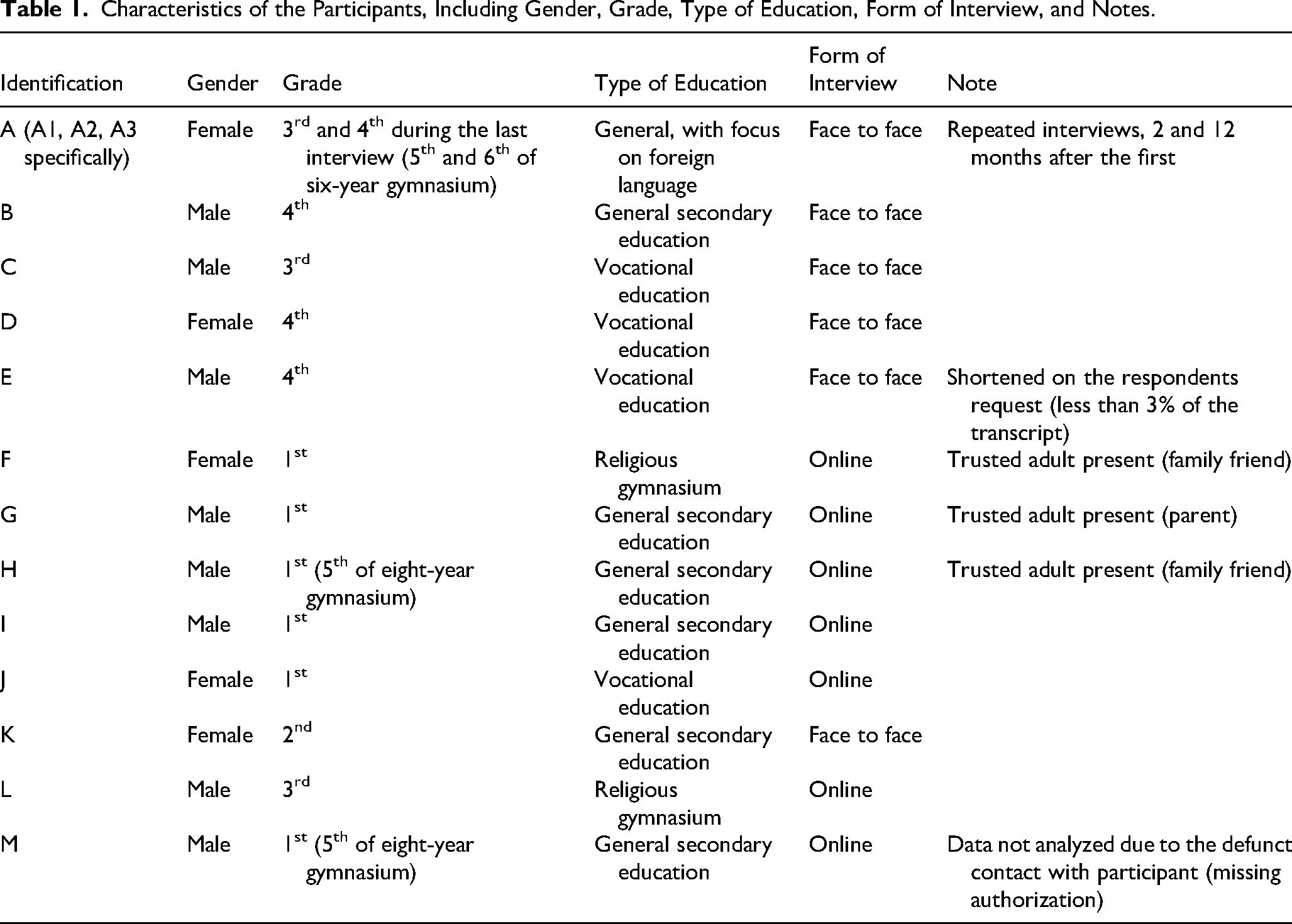
To apply for secondary education, it is necessary to fulfill nine years of compulsory elementary education and pass an entrance exam. There is an option to enter secondary education after the fifth or seventh grades of elementary school (i.e., eight-year or six-year gymnasiums).
Those who graduate from a secondary-educational institution and pass an entrance exam may attend a university. Tertiary education (i.e., university) is generally free of charge in the Czech Republic.
Data Collection
The call for respondents went out through various channels (e.g., schools, youth climate movements, environmental NGOs, student-support organizations) with snowball sampling. Respondents either applied themselves for the interview or they were asked to participate. Data collection took place from November 2022 to May 2024. The interviews were conducted face to face or online by the first author. In-person interviews took place at the Masaryk University or a place chosen by the respondent. During three interviews, a trusted adult was present – the parent of the interviewee (one interview) or a family friend (two interviews). We met repeatedly with one respondent, focusing our conversations on the previous interviews to help us to understand her interpretation of the topics. The setting of the interviews is described in the list of participants in Table 1.
After the interviews, the audio recordings were manually transcribed and then checked by the respondents. The purpose for the authorization was to ensure the correct understanding by the research team and to give the respondents the opportunity to make a final decision about the parts of the interview used in the analysis. In this phase, the transcriptions were anonymized. During this process, one of the transcripts was shortened by about 3% at the request of the respondent; the removed part contained emotional expressions. One of the transcripts was not included in the analysis due to the loss of contact with the participant.
The original list of topics (Supplement 1) was used for the first round of the semi-structured interviews. In the second phase of data collection, a slightly adjusted list was used to keep the questions comprehensible, avoid duplication, and keep focus. We maintained a natural flow in the interviews with attention to the topics that were opened by the respondents themselves. Moreover, we established a welcoming and friendly setting so that the respondents felt free to present their attitudes and opinions.
Data Analysis
During the planning, interviewing, analyzing, and writing we maintained a reflective diary to track our attitudes towards the topic. The reflections from our “daily life” were also collected whenever some situations or conversations called attention to our research topic.
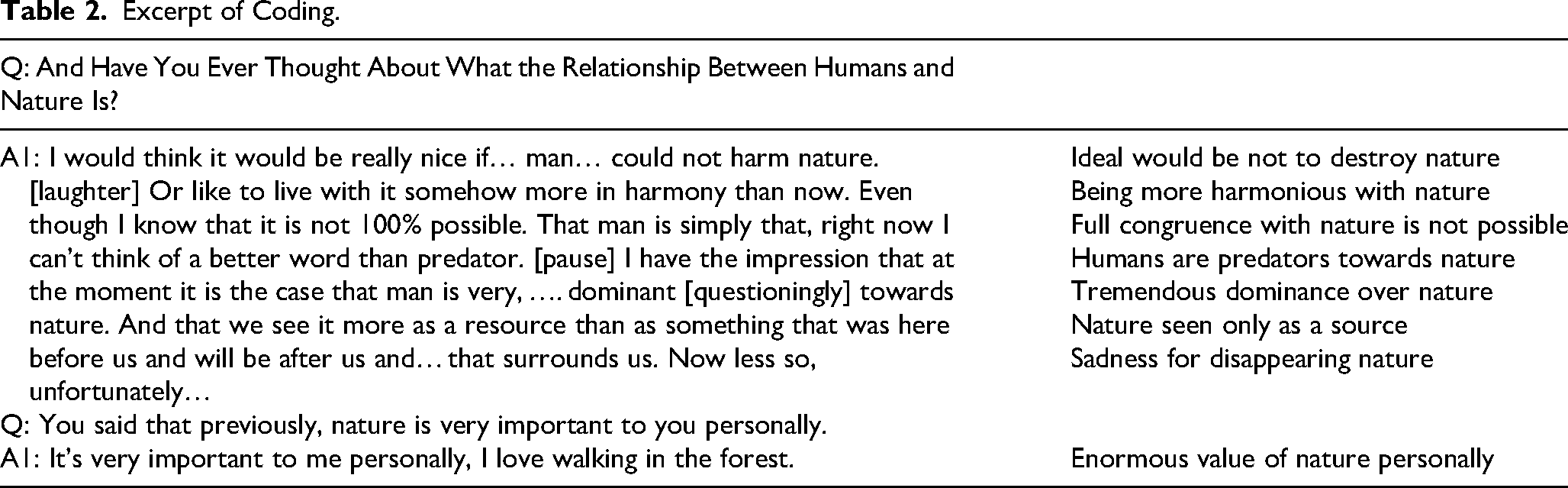
After data collection, the initial coding involved line-by-line and in-vivo coding (see Table 2). The transcripts were analyzed by Atlas.ti software. Focused coding was part of the process, with constant comparison to the proposed categories of data, codes and memos (Charmaz, 2014). We also paid attention to the language used by both the interviewer and the respondents (Charmaz, 2014; Sultana, 2022).
Excerpt of Coding.
Transcripts were read several times. First analysis led to identifying and describing several themes: Importance given to the climate motivated career (Work values), Area of perceived responsibility, Certainty of undertaken or planned actions regarding climate change, Norms perceived in relation to climate change actions and careers, Benefits of climate change action for one's career (Skills and competences; Social networks; Self-care through nature) and Contexts of youth careers (Networks; School context; Constructing attitudes through dialogues).
Subsequent readings, comparison and visualisation of identified codes, memos, themes, and notes from the reflective diary, helped to uncover possible patterns within the data. Consequently, two main categories were described and finally four niches constructed.
Ethical Aspects
While designing our research, the participants’ well-being was an important concern. We were aware of the risks of deepening any possible challenging emotions connected to climate change (e.g., environmental anxiety, grief). The specific and clear information regarding the topics of the semi-structured interviews were provided to the participants. The questions were formulated to avoid catastrophic descriptions of climate disruption and its negative consequences. We attempted to conduct the research with the utmost respect for the youth involved, with curiosity and an open mind. We did not aim to challenge their opinions.
The participants were also informed about the purpose of the research, the ways that the data would be analyzed, the way that the data would be kept, in a written informed consent. During the data analysis, we strived to maintain an awareness of our own assumptions and expectations.
Some participants, when reflecting on the interview, stated that they felt “not green enough” or that they lacked sufficient information about climate change before we started. However, they stated that they lost these concerns because we had focused on creating a safe and non-judgemental atmosphere.
Researchers’ Position
The first author was involved in a reflective process throughout the research. Led by critical psychology (Prilleltensky & Nelson, 2002), she focused on the reflection of the privileged position that had formed her preconception about the studied issue (e.g., geographical location, social system and networks, family support, the education acquired).
To be more specific, the age of the first author, about 20 years older than the respondents, partly shaped the baseline of the study. Experiencing childhood and youth without concerns about climate change and its consequences may seem like nostalgia, but it felt as a privilege. However, it was a privilege accompanied with feelings of guilt for the same reasons. Furthermore, the first author, being a mother of two children and having the opportunity to stay on parental leave, shaped the study. It allowed for a break from her daily routine and for more detailed observations of the changing seasons and the countryside. These experiences evoked questions about the value of time spent working and time spent with family, as well as the future of the next generations and the relationship between career and climate change.
To avoid any misconduct based on these privileges and presumptions, we strived to be aware of how the privileged position may have impacted the interviews, approaching respondents with respect and curiosity.
This study could not have been realized without extensive familial support, which provided the awareness in order to explore and reflect about climate change in career choices, both theoretically and practically. Within our analysis, we tried to understand what the availability of support for some and not for others meant to our research question.
The reflective process led us throughout the analysis. Our assumptions served as the background for constant comparison (Charmaz, 2014) and enabled the comparison of our data for participants, codes, and categories. The differences and similarities informed the initial and focused coding.
Findings
Our research searched for answers to the question: “How is climate change reflected in the career decisions of Czech high school students?” Using constructivist grounded theory (Charmaz, 2014), we sought to learn about young people's perspectives.
During the analysis, we focused on two main categories that illustrate how young people reflect climate change in their careers: the notion of the future and the relevance of climate change (Table 3). The notion of the future refers to one's idea about how the future will look. It combines one's prospects as well as the forthcoming state of the world. We observed the notion of the future in two dimensions: its clarity and its constancy. Clarity describes how elaborate and detailed the idea of the future is. Constancy expresses the extent to which the idea of the future corresponds or differs from our current world. The notion of the future also suggests differences in the understanding of what action is needed regarding climate change because doubts, ambiguity, and confusion were often present in our interviews.
Two Main Categories: the notion of the future and relevance to climate change, as Illustrated in the Excerpts from the Interviews.
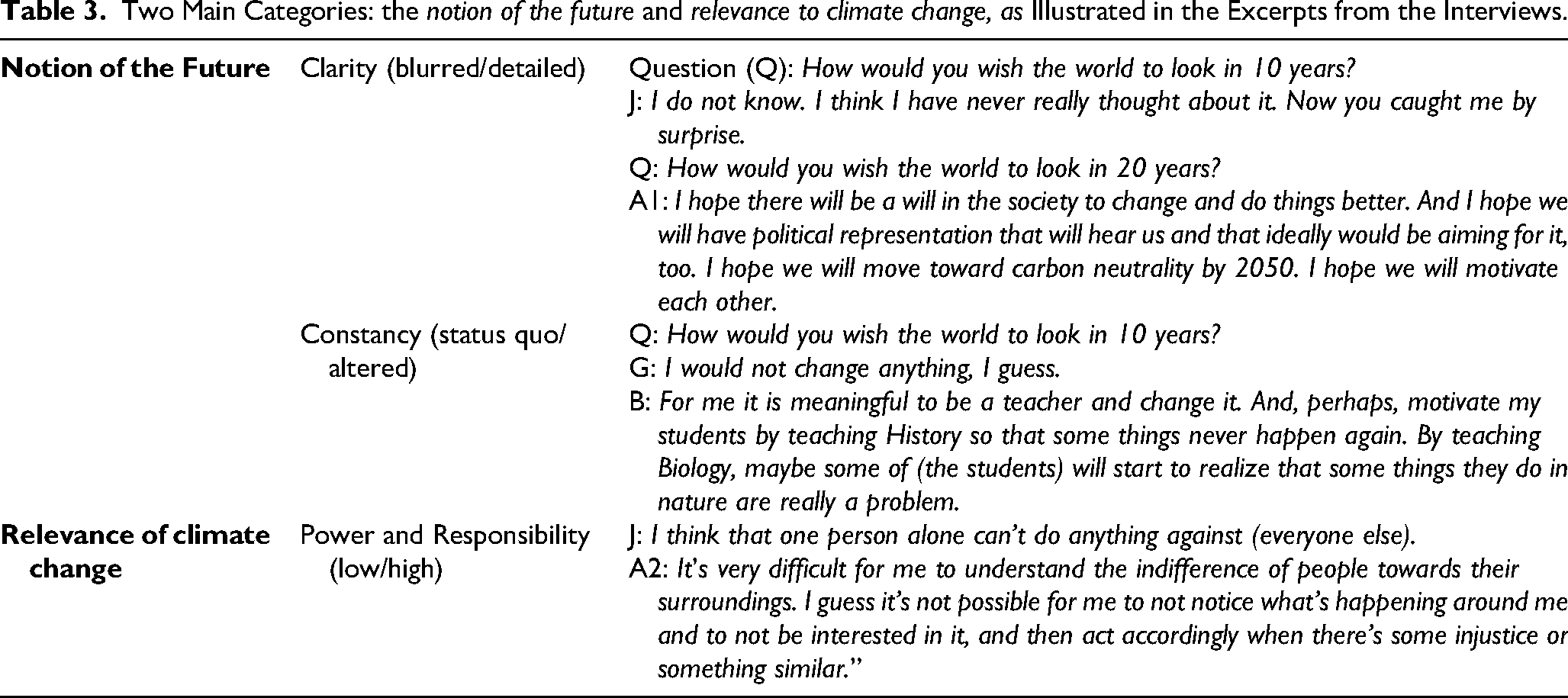
The second category — the relevance of climate change — represents one's perception of climate change from the position of power and responsibility. Power refers to both the perceived abilities and opportunities to contribute to climate action. Responsibility reflects the level of endorsed accountability for climate action. Students described the growing perceived power based on their successful experiences of achieving change.
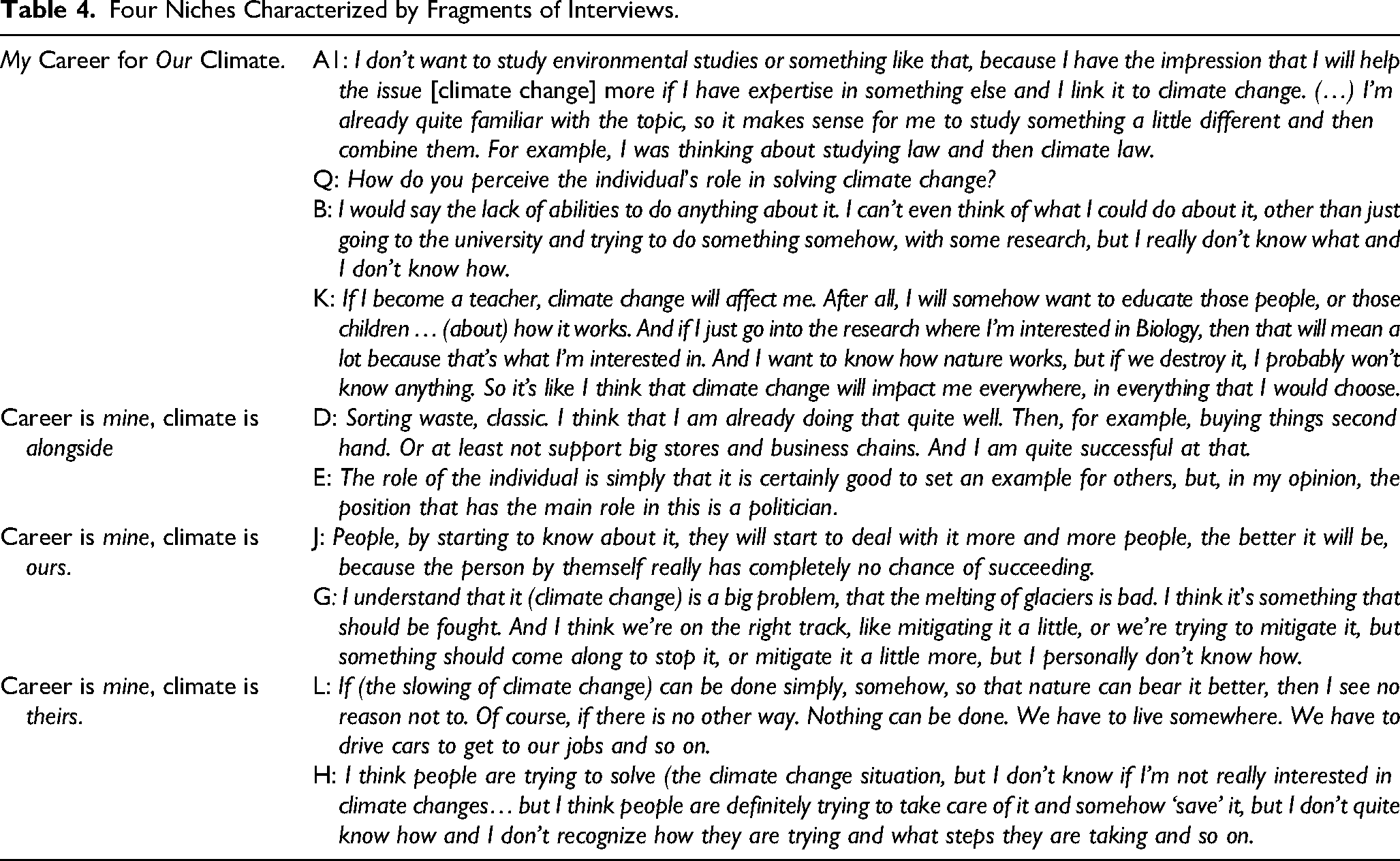
Based on these two main categories we proposed four niches to illustrate the reflections of climate change in students’ career plans (Figure 1). Each of them is described below and depicted in the fragments of interviews in Table 4. All of the respondents perceived their career as self-driven. However, they recognized the important influence of family, peers, and teachers. The respondents mostly sought for work to be enjoyable. Some of them hoped for meaningfulness, self-development, and a decent salary.
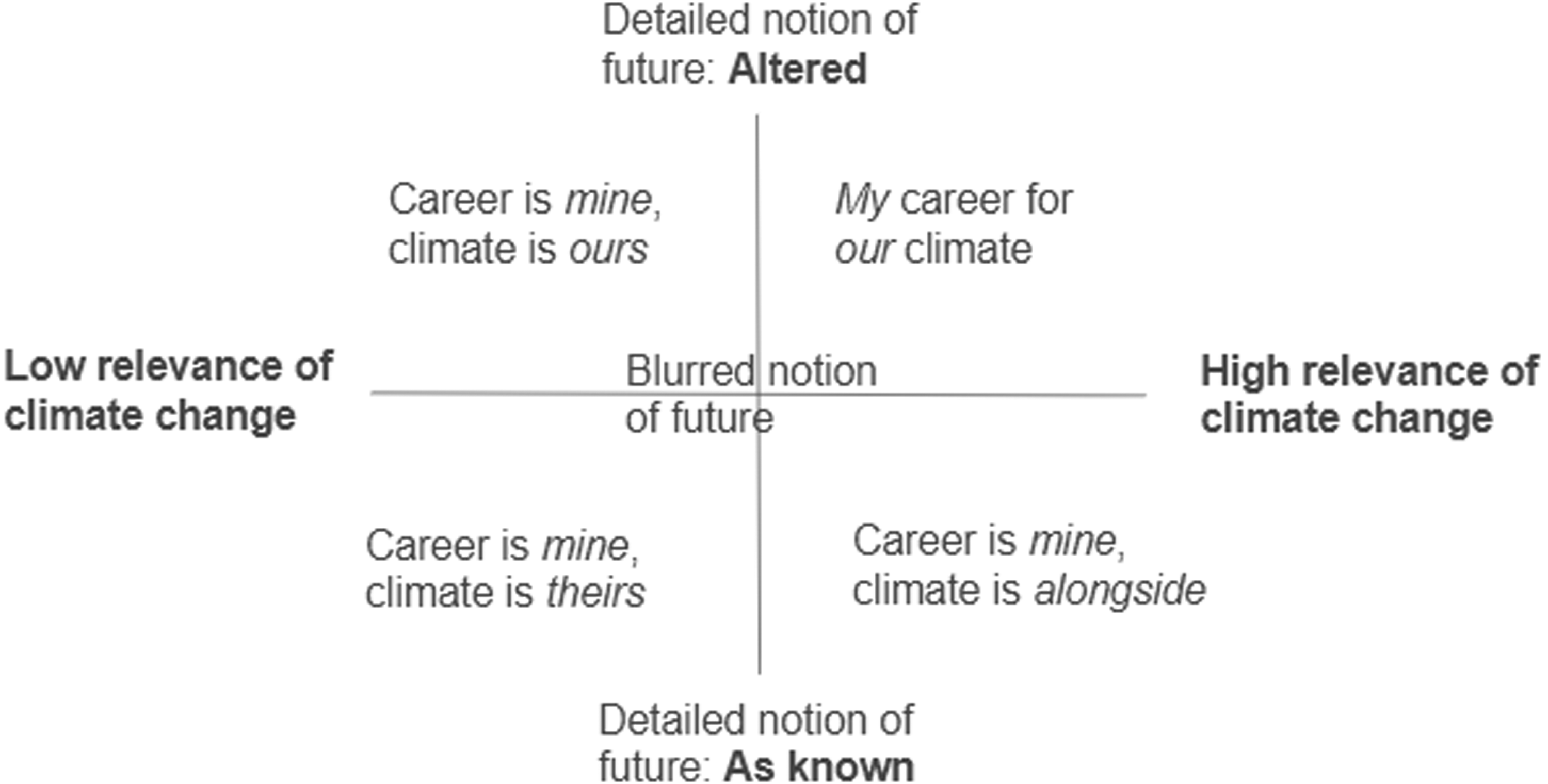
Four niches that illustrate the reflection of climate change in students’ careers.
Four Niches Characterized by Fragments of Interviews.
“My Career for our Climate”
Participants who showed high levels of perceived power and responsibility for climate change expressed strong will to make a difference in the world through their career. Their career choices would likely be motivated by climate change or they expected climate change to be present in any career trajectory they would choose. They felt that climate action is also an opportunity for them to develop their skills and abilities and to expand their network of connections and social support.
Career is Mine, Climate is Alongside
This niche is characterized by the students’ beliefs that their actions matter and they can make a difference regarding climate change. These efforts were not explicitly connected to their likely career choices, but more generally with lifestyle (e.g., consumption and waste habits, political participation, volunteering in their leisure time). These participants imagined a future broadly similar to our current world.
Career is Mine, Climate is Ours
Other respondents felt less power and personal responsibility to deal with climate change but they perceived a need for climate action. They mostly rely on “others” to take action. For their higher involvement in climate action there need to be “more people” to get involved. Their career choices are not influenced by climate change. However, they do not eliminate the option that their careers could be potentially more connected to climate change solutions in the future.
Career is Mine, Climate is Theirs
Some students were generally satisfied with the current world or they did not imagine any modifications. They felt less related to climate change and their career choices did not reflect it. They described climate change as an issue to be dealt with by others, such as politicians, those with power, or other involved parties.
Discussion
In our study, we were interested in the ways that climate change is reflected in Czech high school students’ career trajectories. Based on interviews, two main categories emerged to frame the perception of this issue: the notion of the future and the relevance of climate change. These categories form four possible perspectives through which our respondents connect climate change to their potential careers. In the following part of the paper, the interconnections of identified concepts are explored within the current career theory, developmental and socio-political context. Consequently, implications for practice and further research are discussed, and limitations of the study reflected.
The niche “My career for our climate”, did not manifest in a uniform way. For some, the main motivation was to contribute to the solutions for climate change through their careers which could be referred to as a value-driven career choice (Brown, 2002). For others, climate change risk reduction was only one benefit among many when making a career choice. They expected climate change to possibly alter their careers. Some participants declared the possible relevance of climate change to their careers in the future as they did not rule out their potentially growing interest in the topic. Therefore, we may identify a two-directional relation between career and climate change within this niche. Firstly, career is a channel that enables us to influence the world, referring to the concept of transformative agency (Thomsen et al., 2022), e.g., How do I influence climate change? Secondly, career is a way to react to the world around us in a sense of career adaptability (Savickas, 1997), e.g., How is my career/life influenced by climate change? These trajectories may remind us of mitigation and adaptation strategies to climate change.
“Career is mine, climate is alongside” represents the cases where climate change was mostly reflected in other life roles, such as active citizenship and responsible consumerism in congruence with the life-span theory (Super, 1980). Additionally, we may also expect secondary consequences for career choices on the level of values, interests, and skills (Patton & McMahon, 2006). Competencies developed through environmental protection can be applied in education or vocation, networks can be built and climate action can be used for career development, and values toward environmental sustainability can influence career choices (e.g., a job that is reachable by public transport). Awareness about the interconnectedness of career and life(style) choices can be promoted.
The niche “Career is mine, climate is ours” portrays those who do not see individual power for climate action. These can possibly underrate the impact of one's career and reduce the perception of how the world is co-created by one's actions linking our findings to the concept of transformative agency (Thomsen et al., 2022). The process of empowerment, balanced with the proper levels of perceived responsibility, can be exercised.
Some respondents, described by “Career is mine, climate is theirs”, did not sense that climate change was relevant for their careers. It may refer to the perceived independence of their career choices within wider networks and structures. This can be compared to the relational approaches in career theory (e.g., Palladino Schultheiss, 2003) or to more nature related concepts inspired by non-Western cultures (Plant, 2014). The interdependency of career on other human and non-human systems can be further explored.
Two main categories identified in our study, the notion of the future and the relevance of climate change, can also be seen from a more general perspective, like two characteristics inherently present while considering the meaning and impact of our career decision making. The notion of the future — referring to “me in time” as indicated by stability, fluidity, and the temporality of self — shapes career decision making. The concept of the future is commonly examined in career studies (e.g., the lifespan perspective; Super, 1980), in planning attitudes and future orientation towards one's career (Savickas, 1997), and in our legacy to future generations (Guichard, 2018). It is very much the concept of the future that is shaken by the risks of climate change (Krajhanzl et al., 2021; IPCC, 2023). The notion of the future described in our study includes both the future of the individual (e.g., How will my life look?) and the shared future of the world (e.g., How will the world look?). Similarly, Hamann et al. (2024) refer to the concepts of self-efficacy and collective efficacy in climate change and social justice action.
The relevance of climate change was characterized as power/responsibility towards climate action (compare Shealy et al., 2021). Some of the respondents took relatedness to others as significant for setting social norms regarding pro-environmental behavior and taking collective climate action. However, for others, the disunion between us and them was part of the climate change issue, perceiving less climate active individuals, communities, and countries, feeling discouraged by their inactivity. More broadly, it refers to relations we live with – family, friends, neighborhood, the wider community, and living creatures and lifeless nature – and it can be labeled as “me and the world”. It emerges from one's understanding of their position in the world, the feeling of interconnections and relations to others and other forms of life – are we in or out (Gergen, 1999). Hamann et al. (2024) pointed out that collective efficacy in environmental studies can vary, whether referring to an ingroup (e.g., feeling part of the group), outgroup (e.g., not feeling part of it), or anonymous collective efficacy (e.g., generic, without specification).
Inevitably, our results need to be considered within the biological, emotional, social, and career changes associated with early adolescence (Erikson, 1994). Accordingly, climate change may seem distant compared to the urgency of adapting to the new environment at school, growing independence, the need for financial self-sufficiency, and dynamic peer and romantic relationships. The influence of family relations and peers upon issues, such as climate change, is transformative. Based on our interviews, family background may lead to the perceived relevance of climate change, even though its influence may be rejected in some phases of their development. Young people themselves can introduce the topic to their families. Our respondents also stated the importance of peer influence upon their non/participation in pro-environmental behavior. In addition, the unique historical events experienced by young people today (e.g., COVID-19, the invasion of Ukraine, escalation of the Israeli-Palestinian conflict) may affect the immediacy of climate change.
Surely, there is a need to frame our results in the context of Czech narratives about climate change, such as relatively low knowledge about climate change among Czech youth (Krajhanzl et al., 2021).
Implication for Practical Application and Further Research
We propose that our results may provide relevant incentives for those who have the capacity to encourage young people in their career choices, such as parents, educators, and career counselors. To engage with young people in dialogue about the individual and collective future may bring a new understanding for their career decision making. It allows for the reflection of how one's career choices influence wider networks.
Moreover, we believe that our findings can be useful for those involved in environmental and climate education and contribute to the whole-school approach towards climate change education. Career trajectories may be seen as a platform to explore (a) the skills, competences, and networks that young people can use to reduce climate change; (b) how their careers create the world of the future; (c) how their interests may be shifted as a consequence of climate change; and (d) how the power and responsibility regarding climate change is perceived by students. Careers can be considered within the mitigation and adaptation strategies of climate change. Career practice, led by social justice, may be the way to support climate justice for vulnerable populations.
Our findings, which are based on interviews with respondents from a specific population, suggest two categories – the notion of the future and the relevance of climate change – that may serve as an invitation for further exploration on ways young people relate their careers to climate change.
Young people who find climate change relevant to their careers may be supported in mapping their skills, competences, and networks through the development of climate-protecting activities in various life roles. This assessment can be done with focus on (a) their career development and (b) the reduction of the impacts of climate change. Students who recognize the potential in collective action, but find their own capacities to deal with climate change limited, can be supported with place- or community-based education in schools. Through their involvement they can (a) experience success and observe the impact of their actions, and (b) identify how their own skills and competencies contribute to the change. Those who do not find climate change relevant and believe that others should take action in dealing with it may benefit from an exploration of their preferred futures. Their individual career decisions may be determined by the futures to which they want to contribute. Finally, there are those who are willing to commit their careers to climate change. There is a challenge to raise awareness about their other career preferences – to support them in finding a career that will also reflect their skills, interests, and opportunities.
Our results show a great diversity in a way how climate change may relate to young people's careers. Nevertheless, we argue that climate change needs to be reflected upon in career guidance because (a) some young people intend to navigate their careers by climate action; (b) others expect the labor market to be altered by climate change; (c) clients have the right to know about emerging changes in the labor market caused by climate change; (d) it reflects current holistic and contextual approaches in career theory (Cohen-Scali et al., 2025; Hartung & Di Fabio, 2024) and practice (Lucas Casanova et al., 2025). Surely, this demand leads to considerations of how to ensure ethical practice. Therefore, we believe that self-reflection upon practitioners’ own attitudes towards climate change and consideration of values that are intentionally and unintentionally advanced in career practice may be the first step.
As an example, this study was an opportunity to reconsider our own positions on the topic. With that in mind, we propose the next line of analysis to seek “research” questions about climate change and careers that are asked by clients themselves. Working on this paper led to continuous reflection on the line between practice, research and advocacy. Hence, in accordance with professional organizations (e.g., APA, 2022) and previous research (Komiyama & Takeuchi, 2006), we would like to suggest further reflection on researchers’ roles in dealing with climate change and other complex problems within different fields of study.
Limitations of the Study
Our study describes the reflection of climate change in the careers of Czech high school students. It represents the views of those willing to engage in conversation about climate change and career. On the contrary, there are no voices from those who do not see these topics as relevant, who are not confident to share their opinions, or who have an impression that they have nothing to say. That is partly the result of the ethical considerations of our study, and partly a sign that these topics are, for some, missing in general education. In any case, our respondents represent a great variety of attitudes regarding the research question that informed our result.
The study does not represent the views of secondary students who attend programs without a final-leaving exam, which could be a subject for further studies of young people with elementary education. Their voices could be valuable because there is a connection between educational level obtained and the socioeconomic status of the child in the Czech Republic (Lebeda et al., 2022) and because those with low income are generally more vulnerable to the risks of climate change (Manning & Clayton, 2018). However, we believe that our study may contribute to career studies by reflecting the unique views of young people themselves.
The description of the study and the formulation of the questions may influence and shape collected narratives (e.g., some students who declared no relevance of climate change for their careers slightly shifted their opinions during our conversation). However, from our point of view, this points out the importance of dialogue for career decision making and for understanding and evaluating the consequences of climate change.
Due to time and cost savings we decided to have some interviews online. It was more difficult to build a trustworthy and non-judgmental environment and avoid misunderstandings in the online setting. Moreover, perhaps it led to some misinterpretations on both sides, even though we tried to clarify when we sensed any signs of this risk. Nevertheless, we made an effort to hold online interviews in a secure atmosphere and clarify potential confusions.
There was a trusted adult present in some interviews that may have led to the possible coloring of statements (e.g., not revealing all information, making oneself look better). However, efforts to establish mutual trust were taken to address this aspect. On the other hand, this setting may have made the young people more comfortable and encouraged them to share their attitudes.
Conclusion
Our paper focused on the reflection of climate change in Czech high school students’ career trajectories. The four perspectives framed by the notion of the future and the relevance of climate change were based on our interviews. We have reviewed our results from the perspectives of career theory and we suggested possible implications for career guidance practice.
Footnotes
Acknowledgements
We thank the students for their participation, to Marta M. for her kind support, and to Tomáš Řiháček for his insights into the study.
This research was supported by the International Research Team on Internet and Society (IRTIS) based in Masaryk University, Brno, the Czech Republic.

Ethical Considerations
Agreement of ethics committee was not obtained prior to the research as conducted as a part of the doctoral thesis. Written informed consent was obtained from the participants.
Author Statement
Kateřina Hašková: Conceptualisation, Investigation, Formal Analysis, Writing – Original Draft.
Martin Vaculík: Supervision, Conceptualisation, Writing – Review and Editing, Funding Acquisition.
Funding
The authors received no financial support for the research, authorship, and/or publication of this article.
Declaration of Conflicting Interests
The authors declared no potential conflicts of interest with respect to the research, authorship, and/or publication of this article.
Data Availability Statement
The participants of this study did not give written consent for their data to be shared publicly, so due to the sensitive nature of the research supporting data is not available.
Supplemental Material
Supplemental material for this article is available online.
References
Supplementary Material
Please find the following supplemental material available below.
For Open Access articles published under a Creative Commons License, all supplemental material carries the same license as the article it is associated with.
For non-Open Access articles published, all supplemental material carries a non-exclusive license, and permission requests for re-use of supplemental material or any part of supplemental material shall be sent directly to the copyright owner as specified in the copyright notice associated with the article.
