







Abstract
Keywords
‘Gadfly: Someone who likes to go about, often stopping here and there.’
Of the disciplines in medicine, psychiatry has arguably had the most attraction for creative, artistic and talented individuals. The creative and multi-talented doctor was more in evidence before World War II, when psychiatry was held in low esteem. Much of the work was done in asylums, which were reluctantly moving away from a custodial role. There were only a limited array of treatments available and, in the absence of anything else, charismatic individuals could assert themselves to an extent not possible elsewhere in medicine.
In the pantheon of Australian psychiatrists, one individual stands out: Reginald Spencer Ellery (1897–1955), who not only pioneered malariotherapy and psychoanalysis, but mixed with leading intellectuals including Max Harris, John and Sunday Reed, was a member of the Communist Party, wrote poetry and published widely on a wide range of topics. Ellery is mentioned in works on the Angry Penguins, the Sunday Painters and Australian communism. Described as a ‘flamboyant, outspoken and unquestionably erudite’ figure, 1 Ellery wrote in what was described as Bohemian prose. His autobiography, The Cow Jumped Over the Moon (hereafter Cow), confirms the impression of a restless and creative mind reluctant to be constrained by conventional orthodoxy, while going to considerable lengths to avoid certain issues.
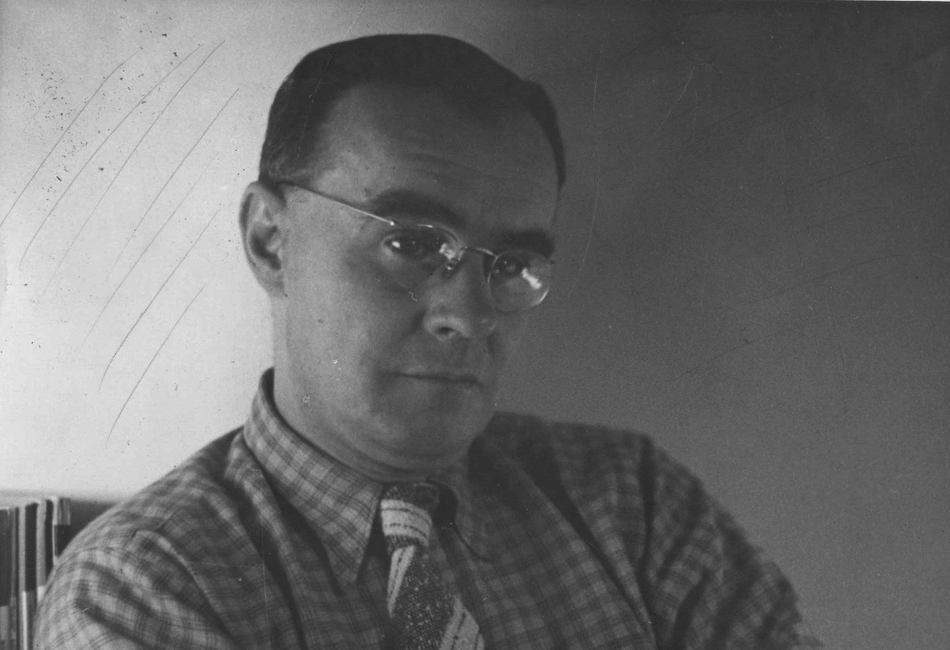
Reginald Spencer Ellery (1897–1955).
Born on 12 August 1897, Reginald Spencer Ellery was raised in Adelaide. His father becoming Town Clerk of Melbourne, he started medicine at Adelaide University, failed his first year, moved and failed again at the University of Melbourne. With this unpromising beginning, why did Ellery do medicine? His account is that:
The medical student had always wanted to be a writer. All his happiest moments were associated with writing. Most of all he wanted to impress people – to shock them; to stagger them with cleverness, or affront them with indecency. Occasionally, in the dissecting room, someone would hurl a female breast at another student and thereby start a meat fight. He wanted to do the same thing with his pen. To throw an udder at an archbishop [as his father had perhaps] or disconcert a prima donna with a bad smell.
2
The more likely explanation lay close to home. His father, who was to support him through university, insisted he do the most prestigious course. Having committed himself to medicine, free of the constraints of school, Ellery immersed himself in the campus literary set; socialising and drinking featured heavily. He adopted the image of an Oxonian dilettante, Bohemian in outlook, speaking and writing in an overblown, highbrow style. 3 He found his first mentor, Archie Strong, an English lecturer, and became close to physiologist Professor Alexander Osborne, a brilliant scientist who had studied under Starling. 4 The other side to Osborne was his eugenic and racial obsessions, 5 with a special animus towards Irish Catholics and blacks (but, oddly enough, not Jews). Ellery had meals at his house through his student years and they maintained a ‘Socratic’ friendship.
While treading water with his medical studies, Ellery continued his literary and journalistic activities. In 1921, he was Editor of the medical students’ journal The Speculum and Associate Editor of Melbourne University Magazine, standing in for Keith Hancock.
Ellery, a pacifist, reluctantly served in the Australian Imperial Force from 26 June 1918 to November 1918. On his discharge, he started going out with Mancell Kirby (always known as Mancell), a talented pianist. Ellery did not lack in charm or good looks, the attraction was mutual and romance soon blossomed.
His later years in medical school were characterised by a faux-scandal, provoked by publishing a scurrilous item about female medical students in the May 1921 edition of The Speculum. This led to threats of rustication from the Dean, Sir Harry Allen, even attracting publicity in The Argus. 3 However, Osborne intervened, Ellery stood down as Editor and the fuss blew over in a fortnight. 6
After qualifying with an undistinguished pass in March 1923, Ellery, for lack of any other offers, reluctantly took a position as a medical officer to Kew Hospital. It was not an encouraging choice. He described it as ‘a stagnant medical backwater… a sanctuary for the medical officers, nurses, attendants, clerks and artisans, providing shelter and security of employment’. 7 Ellery, however, was undeterred and threw himself enthusiastically into his work. After 9 months, he moved to the Idiot Cottages. A clash with staff, who resented the intrusion on their comfortable routine, followed, the Lunacy Department was informed and there were leaks to politicians and the press. Ellery alleged that the wardsmen and nurses were tightly unionised, resulting in a corrupt and nepotistic cabal in which the patients had to pay the cost in neglect, if not abuse.
The Inspector-General of the Lunacy Department cleared Ellery in an inquiry in August 1924, the charges listed as malicious, but this was not the end of the matter. Smith’s Weekly ran a campaign again him, and the newly elected Prendergast Labor government appointed a Royal Commission, conducted between 5 and 19 November, to inquire whether Ellery was guilty of ‘maladministration, cruelty to the children, and conduct unbecoming to a medical officer’. If nothing else, this gave Ellery – not Dr Harry Bailey of Callan Park, as widely believed – the dubious distinction of being the first Australian psychiatrist to have a Royal Commission inquiring into their activities.
Despite being exonerated (thanks, in part, to the efforts of his barrister, the young R. G. Menzies), Ellery was transferred to Sunbury State Mental Hospital in the country, presumably to ensure that he did not make more waves. The Director, John Adey, was dedicated to the welfare of his patients, well informed about recent developments in psychiatry and open to new ideas like psychoanalysis. The partnership was beneficial and, for the first time, Ellery began to think of himself as not just an asylum medical officer, but a psychiatrist.
In 1924 there were 46 GPI cases out of a total of 6096 hospitalised patients in Victoria, with 10 at Sunbury. A colleague, Professor Robertson of Edinburgh, wrote to Adey recommending malariotherapy, the new treatment pioneered by Wagner-Juarreg in Vienna. In 1925 Adey asked Ellery to try malariotherapy on a group of 10 patients. There were two problems to be overcome before starting the trial. The malaria strain used to inoculate patients to induce a fever to kill the treponema organisms in their brains had to be the Vivax strain or they could die. In southerly Melbourne, malaria cases were not exactly thick on the ground and malarial blood was hard to obtain. To add to the difficulties, three of the cohort of 10 patients were considered too ill, reducing the subjects to an even smaller seven, later six at the time the course was initiated.
On 26 May 1925, a male paretic, ‘far gone in dementia and his doom sealed in a progressive paralysis’, was subjected to the new treatment. 8 Of the six treated patients, three had a good response to treatment, making such progress they could be discharged from hospital. 9 Several decades later, Ellery said that to discharge three patients out of 10 ‘may seem a mere nothing’, but the importance lay in being able to administer treatment to those in whom ‘a lingering death was certain’. 10 Malariotherapy, the first effective psychiatric treatment, was ‘the first plank over the moat’ that separated mental hospital alienists from the rest of the medical profession.
For Ellery, malariotherapy was to be his first dazzling success. By 1927, his career was in the ascendant. He became a medical officer at Mont Park Hospital in Melbourne, the first asylum doctor to be so appointed. As a measure of his achievement, Hal Maudsley asked him to be his assistant at his Melbourne Hospital outpatient clinic, an offer that he accepted in the teeth of resistance from the Lunacy Department. This made him the first asylum officer in Victoria to be attached to a teaching hospital. There he introduced malariotherapy. 11 Ellery reported that of 90 patients treated, no deaths had occurred, 42% were discharged as remitted, 34% improved but remained in hospital, and 23% were unchanged. He published an account of malariotherapy in the MJA, presented his findings to a conference illustrated with a film of patients before and after treatment, 12 and then wrote it up for an MD thesis in 1931. In 1928, he was invited to present the prestigious Beattie-Smith lecture, 13 the selection committee chaired by his mentor Alexander Osborne – a notable achievement for a medical officer at a country hospital.
But asylum work, once the excitement of malariotherapy faded, had its limitations. Ellery was starting to resent the obscurity and parochialism of the hospitals. Sunbury was in the country, far from the buzz and intellectual excitement of Melbourne. The hospitals remained under-funded, the bureaucracy was stifling, the other staff, with rare exceptions, had little to offer either socially or intellectually. Mostly, however, the problem was with the patients, who suffered from severe chronic disorders such as schizophrenia, manic depression or alcoholism. Maintaining their health was necessary, but it was really custodial work. Ellery was on the crest of a tidal shift in psychiatry that recognised the future lay in office treatment of neurotic patients by psychotherapy with admission to smaller, more exclusive hospitals. It was to change psychiatry for ever, greatly expanding its range, bringing it to the middle classes and reducing the stigma. In the process, the alienists disappeared for ever and psychiatrists joined the physicians in their own territory.
Ellery moved back to Melbourne with his family and was soon a fixture in the social and intellectual scene. He moved into private practice and, defying the department’s monopoly on mental health care, set up a private psychiatric clinic in Malvern in 1933. This had to be done by subterfuge, putting on a front as a nursing home, but there were few problems. He soon built up a large practice. A regular contributor to scientific meetings and to journals, he established a reputation as a leader in this developing field. He was honorary consultant psychiatrist at the Alfred Hospital from 1931 to 1946 and consultant alienist at the Women’s Hospital from 1931.
A member of the British Psychological Society, from 1938 Ellery, Paul Dane and Roy Winn worked tirelessly to get psychoanalysis established in Melbourne. Ellery promoted Freud’s work, speaking and writing about it at every opportunity. In establishing the Melbourne Institute for Psycho-Analysis in October 1940 and bringing in the Hungarian Clara Lazar-Geroe as the first training analyst in Australia, the group encountered opposition from the local branch of the British Medical Association. This was not to last and psychoanalysis finally had a firm footing in the Antipodes. Ellery remained a Director of the Institute for the rest of his life.
Ellery achieved his most active role outside psychiatry with his involvement with Melbourne painting circles. 14 A peripheral figure in the Angry Penguins movement but a regular contributor to the Angry Penguins Journal, he was a ‘pervasive’ associate of Max Harris. 15 Ellery gave evidence as an expert witness for the obscenity trial that followed publication of the Ern Malley poems. A ‘keen’ expert witness, Ellery described the motives of the protagonists in psychoanalytic terms, but failed to sway the jury. Albert Tucker, whom he treated, produced a series of portraits of traumatised patients at the Heidelberg Hospital. Drawings by psychotic patients that Ellery provided to Sidney Nolan (it is unclear if he had treated Nolan) influenced his work, in particular a series of heads exhibited in 1943. Ellery used one of them on the cover of his book, Psychological Aspects of Modern Warfare (1945), published by John Reed and Max Harris. 16
Ellery was a committed communist. The genesis of this was laid down during his student days, fanned by the 1917 Revolution and encouraged by his colleague Frank Graham. He regularly associated with communists – many of whom frequented the same literary and artistic circles – but never joined the party. This, he claimed, left him free to promote the cause of world revolution without the restrictions of party discipline. His dedication to the cause was to culminate in a trip to the USSR.
If any year is to be chosen as the apogee of Ellery’s career, 1937 is as good as any. The time of the new treatments had arrived, and psychiatrists in Victoria, New South Wales and Perth were keen to try insulin coma therapy (ICT), cardiazol fits, sleep therapy and electroconvulsive therapy. It was an indication how the situation had changed since Ellery had so tentatively set off with malariotherapy in 1926.
That year Ellery went on a professional and political pilgrimage to Europe. He met leading European psychiatric figures to learn about the new treatments, and visited 40 psychiatric hospitals in Moscow, Munich, London, Edinburgh, Helsinki, Stockholm, Warsaw and Vienna, buying every psychiatric textbook he could lay his hand on. Much of his investigation focussed on Vienna, where Mancell had to use her German as a translator. Wagner-Juarreg, by then in retirement, was initially reticent, but brightened when he heard that Ellery has started malariotherapy in the Antipodes. Manfred Sakel was not available, but he learned the techniques of ICT from his assistant. After finding a book by Von Meduna, he went to Budapest to learn about cardiazol treatment. 17 He attended a meeting chaired by Wilhelm Stekel. A trip to 19 Bergasse was intended to be a highlight, but he was only able to have a conversation with Freud’s daughter Anna as her father was too unwell to receive visitors. He wrote of the thrill he got from seeing the Master’s walking stick and hat in the hall and then catching a glimpse of him through the window when downstairs.
His professional investigations behind him, Ellery headed east to the Soviet Union. While the stream of party faithful going to visit the world’s only communist country was already an established feature, Ellery was one of the early Australian ‘useful idiots’ – establishment figures who were useful with their money, social connections or to provide a front for other members. 18 The lure of communism to intellectuals and like-minded people in the 1930s was huge, and Australia was no different in this regard. Ellery was not alone. At least five other doctors went during the period 1920–40, but he was the only psychiatrist (or specialist), one of the oldest and by far the most prominent establishment figure. 19 From this point, he constantly agitated for psychiatric care in Australia to catch up with what he had witnessed in the USSR.
Returning to Australia, Ellery immediately notified the press of the highlights of his travels, the new treatments and the advanced health care in the Soviet Union. Ever defiant, he was determined to promote the triumphs of the Soviet Union, joining the Australia–Soviet Friendship Programme and writing an article in the MJA. 20
He soon began doing ICT, cardiazol fits and deep sleep therapy at his clinic, 21 inviting colleagues to view the procedure. He realised that he needed facilities and opened a new clinic in Malvern, getting colleague, Guy Reynolds, to join the practice. The clinic had two wards specially set up for somnotherapy, as deep sleep treatment was then known. Considering Ellery’s high profile, it is interesting to note that there is no public record of problems arising from this, leaving the assumption that, regardless of therapeutic benefits, it was not causing serious problems or casualties among his patients.
Ellery set out his results in the MJA, stating that he had done ICT before he left for Europe but used the wrong doses. 22 However this time, he was not to get credit for being the first. Clive Farran-Ridge ‘pipped R. Ellery to the post’. John Cade makes the point that Farran-Ridge had chanced upon a positive response to insulin coma in 1925, but did not follow this up and was therefore cheated of the opportunity to get credit for its discovery. 23 Cade’s words are worth noting. The local psychiatrists were all anxious to start using ICT and there was much concern that Ellery would again be the first to use it in Australia. Ellery had a ‘tremendous reputation’ and it was ‘the ambition of all right-thinking psychiatrists to steal Ellery’s thunder’. These comments are an indication of Ellery’s primacy among his peers as an innovator. If nothing else, it gives an indication of the intense competitiveness there was now among the psychiatrists. 24
Profound disturbance was looming and even in far-off Australia it was impossible to ignore the fact that war was coming. He had returned from Europe with, as it were, a troika in his hand: communism, psychoanalysis and biological treatments. Yet, it seems, fate was to intervene and he was never to play the flush, only watch helplessly as they turned to dust.
The war brought out Ellery in red, strongly supporting the Soviet cause. As a communist, he could rationalise the situation as another war between capitalist nations, but this must have taken a severe battering with the 1939 Nazi–Soviet Pact. His dilemma would have been relieved by Hitler’s invasion in 1941, and from then on, he could put his energy into agitating for the Soviet cause now that they were official allies. His message was unmistakeable. Although officially allies, this did not lessen suspicions of communist supporters and fellow travellers. The heroes of the situation were the Soviet people, the only one to take on the might of the Nazi war machine, paying for it in blood but saving the world in the process.
In 1941, Ellery published his first book: Schizophrenia, the Cinderella of the Sciences: 25
Any study … that neglects the social setting is worthless … the accepted way of life, so dear to the Tory-minded ruling-class, helps to produce a schizophrenic reaction in many of those whose sensitive minds recoil from the flagrant hypocrisies and tawdry ideals of the capitalist world. It therefore behoves the physician who seeks to forecast the outcome of this conflict to give due weight to the social factors involved in a given situation.
Psychiatry, he said, had neglected the role of social factors on the individual, to its detriment. The book got a respectful response from overseas journals, and Max Harris gave all the Angry Penguin painters a free copy of the book, which insisted on the validity of psychotic art in ‘abnormally literary flavour’. A local reviewer praised his ‘vivid sketch of patients in a mental hospital’, 26 but another critic, less impressed, said he had sacrificed ‘precision of meaning to the lure of sound’. 27
The debate on war neurosis was becoming increasingly sophisticated; physical treatments, promoted by Sargent and Slater, were coming into fashion. Although he had not experienced combat, Ellery was intensely interested in the psychological effects of warfare. Drawing on reports of shell shock in trenches during World War I, he believed that war was a capitalist affair, an attitude that was hard to maintain once Germany invaded the Soviet Union.
Cinderella was followed by two pamphlets: Health in the Soviet Union (1942) 28 and Eyes Left! The Soviet Union and the Post-War World (1943). 29 The latter was his greatest publishing success, going into a second edition with a further 20,000 copies sold before the end of the year. Health described the ‘unforgettable experience’ of visiting the Soviet Union and its superior system of care based on psychological principles, while Eyes Left! praised the revolutionary social, economic and cultural achievements of the USSR.
On the cover of Eyes Left! is a picture of Ellery. Smartly dressed in a suit, his arms folded across his chest, hair slicked down, a cigarette protruding from his fingers, he looks both laconic and stern.
Publishing his book Psychiatric Aspects of Modern Warfare in 1944, Ellery continued to insist on the role of unconscious factors. ‘Modern psychiatry’, he said, ‘was born in the shell craters of Flanders’, assimilating the experience of total war using insights derived from psychoanalysis and socialism. The German people, Ellery maintained, suffered from a collective psychosis and would need to be assessed by psychiatrists before they could be readmitted to the stable of nations. That this view involved not only a grandiose view of the capacity of psychiatry to solve every problem in the world, but indicated a gratuitously incorrect understanding of society did not seem to have occurred to him.
Having taken the high position, Ellery was aware it would antagonise the medical establishment, but was still upset when not reappointed as Visiting Medical Officer at the Alfred Hospital in 1940, his replacement described as a khaki-clad scion of the Melbourne Club. 30 Also rebuffed when he offered his services as a psychiatrist to the ADF, he had to continue in the Australia Soviet Friendship Programme (ASFP) and the Russian Red Cross. A lecture under the auspices of the BMA was prevented, but he continued to give talks to small audiences for the ASFP. 31
By the end of the war, Ellery’s views had changed. It was becoming impossible to ignore the cascade of information on Stalinist abuses and he realised he had been misled when he visited in 1937. He distanced himself from both communism and psychoanalysis. Psychoanalysis was too focussed on the Oedipal situation and ignored the role of social factors in shaping the individual. His writing shifted to a less ideological perspective: the impact of social and psychological conditions on the individual.
Health issues now began to intrude on his life. He developed swollen joints, which he attributed to Dutch gin and German beer – a comment on his lifestyle – but it was rheumatoid arthritis. His condition advancing remorselessly, he found it easier to spend his time at home surrounded by his book collection, listening to Mancell’s music in his study.
New treatments for arthritis became available. He tried cortisone, hailed as the wonder drug, without much gain. Ellery then made his second overseas trip to America, where he was unimpressed by the quack cures he was offered. He enjoyed the UK more, seeing an old friend for what he knew would be a last visit. Returning home, he continued with gold therapy but, like many doctors, ignored precautions and consequently overdosed. 7
Then came the final blow. He was found to have inoperable cancer of the upper jaw, presumably the consequence of a lifelong smoking habit. The only consolation must have been that he had a closely related condition to that of Sigmund Freud. Radiotherapy failed to control its spread. When it was evident that he was not going to recover, he wrote Cow. Ellery did his best to cope with the condition in a stoic fashion, but it was a miserable existence. He died at Prahran on 27 December 1955 and was cremated.
Cow, published a year later, is a unique autobiography by an Australian psychiatrist (admittedly a rather limited field), giving an insight into the psychiatric world he entered in 1923. It is also a testimony to Ellery’s disillusionment with the causes he had so eagerly embraced over the years: Freud and psychoanalysis, Stalin and communism.
A Sydney reviewer found it was ‘not an easy book to read and by no means entirely pleasant… but a rewarding document’ 32 while another reviewer remarked on his ‘pugnacious, rebel courage, presided over by a cool, sardonic mind, never faltered’, saved by ‘an inborn skill with words’. 33
Written by a dying man, Cow is a remarkable thing. There are some passages that are as good as any written about psychiatry and would hold their own in any company:
The alphabet of psychiatry cannot be learned in a day. Medical practice does not present an unclouded picture. Among the deeper shadows cast by accident and misadventure is dishonesty, moral declivity, the clotted mistakes of the alcoholic, the fuddled judgements of the morphomaniac and the irresponsible conduct of those who cannot face the problems of a life of service and compassion.
For comparison, it is worth looking at Dr John McGeorge’s book, published over a decade later. 34 McGeorge, a Sydney forensic psychiatrist and television personality, was unrepentantly hostile to the role of psychological and social factors in forensic situations, his condemnation of psychoanalysis verging on the inflammatory. He would never hesitate to make uncomplimentary allusions to people like Ellery who would explain criminal behaviour from a social and psychological basis. But any disinterested reading of the book would perceive it as superficial and opinionated, consisting of a series of case studies to illustrate the sagacity of the author. There is nothing of the world of literature and culture, and the historical traditions of psychiatry, in which Ellery was immersed, are quite absent.
Discussion
Fifty-five years after Ellery’s death, Australian psychiatry is transformed. A College with over 4000 members holds its own among the other medical disciplines, and issues portentous pronouncements on a range of public issues (scrupulously avoiding ones that it deems to be politically incorrect). College members have to meet exacting training requirements, leading some to wonder whether these towering hurdles are merely creating psychiatrists who know how to pass examinations, and are subjected to disciplinary penalties by a pious Sanhedrim that make the Inquisition seem a mild affair. Drugs can relieve or even cure many disorders. Schizophrenia can be brought under better control, enabling many sufferers to lead useful lives in the community. While psychoanalysis is dwindling to a quaint practice with its archaic rites practiced in secret places, new psychotherapies are being applied everywhere, even to modify delusional beliefs (incidentally a prediction of Robert Kendell before his death).
Ellery is the most eminent psychiatrist in Australia between the wars, a crucial period when the nascent discipline moved from alienists caring for lunatics in asylums to psychiatrists working in public hospitals and private practice, confidently using a new range of biological and psychological treatments, agitating for professional recognition and respectability. Starting with malariotherapy, Ellery was in the forefront of developments, embracing psychoanalysis when it was regarded by many both in and out of the profession as either charlatanry or immoral, and taking a prominent role in lobbying for a psychiatric college. Considering his entry into psychiatry as an undistinguished medical graduate who was soon subjected to a Royal Commission, his ascent against more established colleagues didn’t simply mark him as a significant player in the field, but indicated an extraordinary drive, ability and initiative.
And he didn’t stop there. Had he not been constrained by crippling arthritis after World War II, he would have been among the first to embrace the new drugs that were to change psychiatric practice.
Ellery’s achievements were no accident. Despite his professed casual attitude, and recurrent attempts to self-destruct his career and distance himself from the mainstream, he was highly innovative, adept at picking up the latest developments and more than just a foot soldier of the profession. He was no ivory tower academic either, but from his early years at university, a regular participant in the organised activities of his profession – it is difficult to think of a committee on which he did not serve. All of this implies enormous energy, bearing in mind he ran a successful and demanding practice.
At the same time, he seethed with creative drives that sought diverse outlets. This manifested with the promotion of collectivist socialism, as exemplified by the Soviet Union, with the role of unconscious factors, as described by psychoanalysis, in all mental activity. Attempts to promote this had mixed results. He never established himself as an independent writer, despite some successful books, but his work had a significant influence on the artists with whom he associated. Ultimately, both his gods – Freud and Marx – failed him and by the end of his life, he morphed into more mainstream ideas about social influences and psychosomatic medicine.
Dying prematurely after being slowly crippled for years, Ellery would have been entitled to be bitter; it is a measure of the man that he was able to transcend this and, for one last effort, put all his energy into producing Cow.
As Ellery faced down the last paragraphs of his biography, knowing there was nothing that could be said after that, like his shrinking lifespan, he wrote of how he had been transformed by his work with the Kew lunatics who, in their hopeless but innocent state, were an inspiration to someone whose life until then could be fairly described as that of a dilettante:
He found the deepest satisfaction in helping those who lived in the perplexity of emotional conflict or whose minds were beset with ruinous fantasies. In psychiatry’s unpretentious fane he walked with humility, fulfilling its teaching and acknowledging its mysteries.
Cow ends on a note that finally eschews the flighty oratory and comes close to being literary, with what can only be described as an evangelical theme, suggesting that the many causes he had followed were a search for a secular form of just that:
For he, also, has lit candles at the altar of compassion. And now their little flames merge into a soft radiance which falls gently upon a head that is bowed.
That Ellery is virtually forgotten by an ahistorical profession is nothing less than an unrequited shame. Ellery deserves better: a College-sponsored award for writing is the least we could do. By forgetting our past, we are mortgaging our future, if not demeaning our present.
Footnotes
Acknowledgements
As ever, such a study can only be as good as the librarians that are always there to assist. My thanks go to the staff at the RACP Medical Library in Sydney and the Wollongong Hospital Library. Heartfelt thanks to those who answered my queries and offered helpful information, notably Sebastian Gurciullo, who kindly sent me a copy of his thesis, to which I have made frequent reference. In regard to the sources used, I have done my best to list the relevant sources in the references, but especially acknowledge the use of Ellery’s autobiography Cow and the Ellery Archive at the State Library of Victoria. Finally, for encouragement and support above and beyond the call of duty, I can only express my gratitude to NWG.
Disclosure
The author reports no conflict of interest. The author alone is responsible for the content and writing of the paper.