






Abstract

Dear Sir,
There are many artistic representations of suicide. To my knowledge, there is only one of murder–suicide. In the Museo Nazionale di Roma, Rome, stands a marble statue which has been variously named, but is now most commonly called ‘Gaul Killing Himself and His Wife’ (Figure 1). It is believed to be a Roman copy of a Greek bronze.
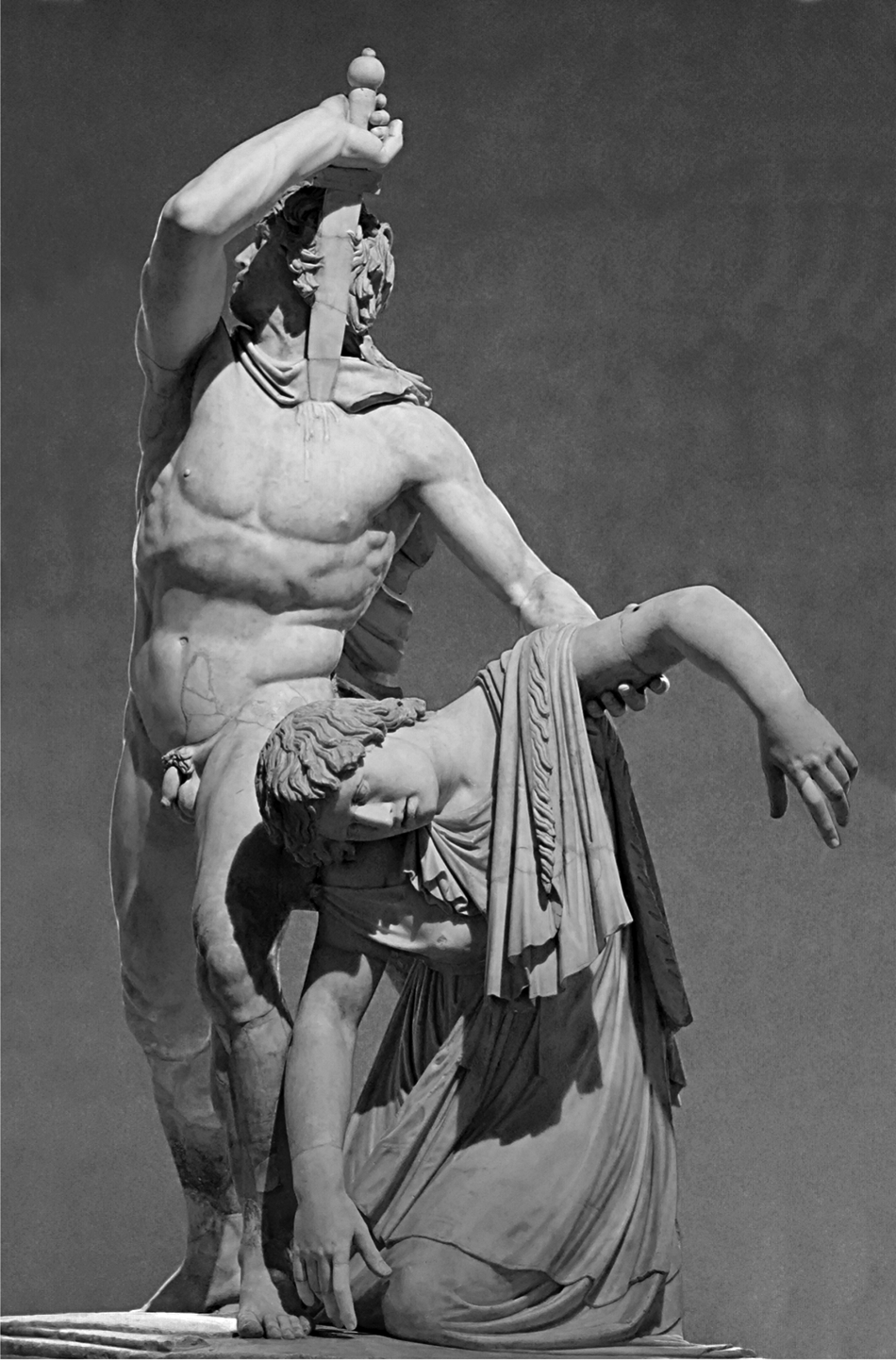
Gaul killing himself and his wife
Pergamon was a Greek city in what is now Turkey. In the third century BC, it was under constant attack by the Gauls. Attalos I became king of Pergamon in 241 BC, and immediately attacked and defeated many Gaul tribes. Remnants continued to be troublesome until 228 BC. Attalos erected a series of monuments commemorating his victories, of which the piece under discussion was one.
Bieber 1 states the Gaul “sees no hope and refuses to flee”, and kills himself while “looking defiantly back at the pursuing enemy” (p. 80). Of the murder of the wife, she states, “He has killed her so that she cannot fall into the hands of the Greek enemy to suffer ignominy” (p. 80).
These Gauls look rather splendid people, and I doubt I would have represented my enemies so kindly. However, the answer may be as Mitchell Havelock 2 contends, “In dying the Gauls are made to appear so courageous and noble that Attalos’ triumph over them takes on epic proportions” (p. 146).
Whether the art historians have grasped the predicament/motives correctly is anybody’s guess. However, the evidence is strong that this sculpture represents murder–suicide.