






Abstract

With the introduction of constitutional reform and a reduced board size; the implementation of direct Board elections; a focus on recruitment of Indigenous trainees; the delivery of the new (competency-based) Fellowship program; and development of new policy in the area of the mental health of people with intellectual and developmental disability, Dr Maria Tomasic’s presidency was certainly a productive and innovative period. But Maria’s attention was not directed only at internal affairs, as demonstrated by her drive to invigorate areas such as the further development of the College’s relationships with fellow psychiatric associations in the Asia-Pacific.
Australians and New Zealanders have long been involved with mental health policy and service development in the Asia-Pacific. Collaborations with local services and the development of key relationships have been occurring for many years. Said Maria “Many members have done wonderful work … When I became President I wanted to embed this focus on our relationship with the Asia-Pacific in the College so we were able to keep building on it – to share resources, to collaborate and to learn from other countries in this region. I think this only happens when it becomes part of the philosophy and ongoing strategic plan of the College. Importantly, it can only be achieved with the hard work and commitment of the CEO, and our CEO Mr Andrew Peters and his management team have been dedicated to this task through what has been a very busy time for the RANZCP. By making their own relationships internationally, continuity and an ongoing focus through changes in the Presidency and Board members is ensured.”
Having the College take some responsibility in the area and enhance psychiatric organisational links complemented what many individual Fellows have been doing for many years personally or in work-related roles, Maria notes. She is keen to acknowledge the special contributions from a wide range of people; “Fellows from the University of Melbourne and Asia Australia Mental Health (AAMH) such as Chee Ng, Helen Hermann and Harry Minas; individuals such as Victor Storm in Thailand and Vietnam, Ernest Hunter in New Guinea, Mohan Isaac who has maintained strong links with India, and those who have formed strong links in the Pacific region such as Francis Agnew, David Chaplow and Stephen Stathis, to name just some members who have contributed their expertise in recent years for the benefit of the region. Our links with the World Psychiatric Association (WPA) through our Zonal Representatives, currently Francis Agnew who took over from Julian Friedin, and previous members of the WPA Board such as Helen Hermann all made important contributions.”
In 2009 the International Affairs Working Group was established made up of some of the Fellows who were known to be active in the region. A proactive strategy was developed to expand the College’s connections and liaise with psychiatric agencies in countries including: Indonesia, Singapore, Malaysia, China, Japan, India, Fiji, Solomon Islands, Papua New Guinea, Vanuatu, Thailand, Myanmar, Bangladesh and Pakistan. “Traditionally we had regularly visited the Royal College in the UK and more recently met with the American Psychiatric Association even though we were increasingly thinking of our self as being part of Asia.”
Maria remains slightly surprised by the warmth of the welcome the College received when it began to venture more proactively into the global neighbourhood. “Some relationships had already been established for several years, such as with the Japanese Society of Psychiatry and Neurology, but many organisations had not officially dealt with the College before. We went into it talking about our ‘responsibility’ to be involved with our regional neighbours and being keen to contribute and learn from them as well … and I think it was just the right time for formal relationships to be developed.”
The challenges facing psychiatric work in Asia and particularly the Pacific are well known. Low levels of resourcing, limited workforce, a lack of services and mental health legislation in need of further development are common. Stigma remains a huge issue, with some countries not yet acknowledging mental health as a significant issue for their population. Difficulties with providing training for doctors, developing policy and a lack of relevant research are other common frustrations.
“Particular areas have unique challenges such as the Pacific where a low population, vast distances between communities and countries and a lack of trained staff makes delivering quality care incredibly difficult,” says Maria. “Other countries such as India train psychiatrists only to lose them to wealthier countries such as New Zealand, Australia, Canada, the United States and the United Kingdom. This raises ethical issues that we need to consider.
“In Australia and New Zealand we are relatively well resourced compared to other countries in this region. We constantly aim for an optimal mental health system and of course we should continue to advocate for that. However, I think we would benefit from also looking at how other countries have developed creative solutions in the face of very limited resources and greater levels of stigma. We can learn from instances like Thailand which despite its challenges, but because of political will … have developed comprehensive services for children with autism.”
This idea of being creative and open was core to Dr Tomasic’s vision for the Presidency when she was appointed. “When I became President I had a number of objectives, and one of the important ones was for the College to be more outward looking. Having more collaborations and relationships generally, rather than being too insular … [I believe] connecting to what happens around us keeps us in touch with the community and stops us from becoming solely focused on internal matters.
“This has added benefits, such as in our interaction with government … there is a danger to being too insular as medical colleges are often seen as self-interested … by demonstrating that we are interested in things outside ourselves and acknowledging our responsibility in advocacy. Initiatives such as the Asia-Pacific Forum are a very good thing to do, but they also have additional benefits of demonstrating the College and College members’ commitment to broader issues.
“When deciding upon strategic priorities [for the College] you are making a judgement about the membership and what they support based on feedback and knowledge of the broader membership. It is pleasing that members have been very supportive of the College’s work in this area and the element of social responsibility.”
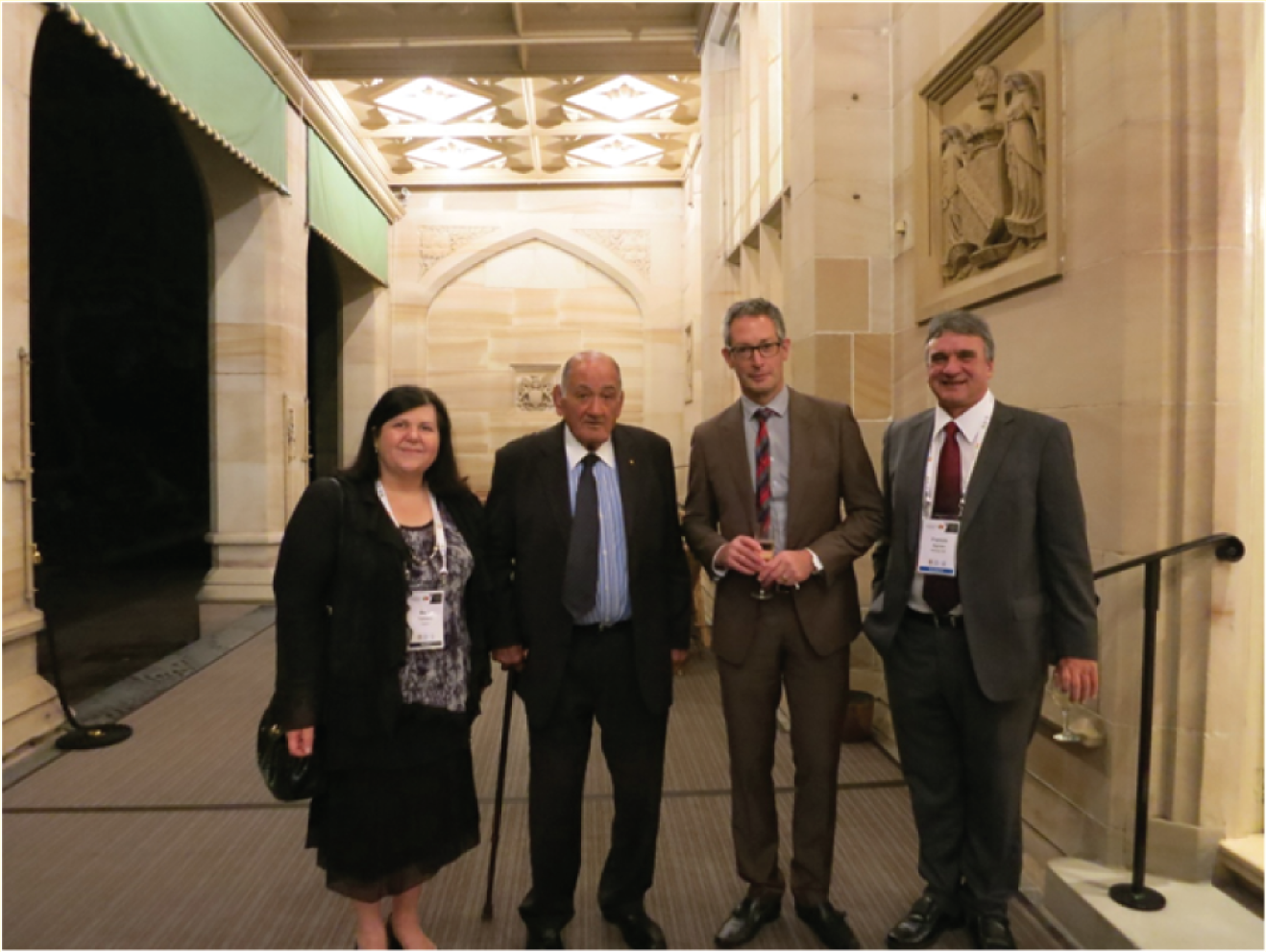
Dr Maria Tomasic, Sir Nicholas Shehadie, President Dr Murray Patton and Dr Francis Agnew at APMHF event at Government House during Congress 2013.
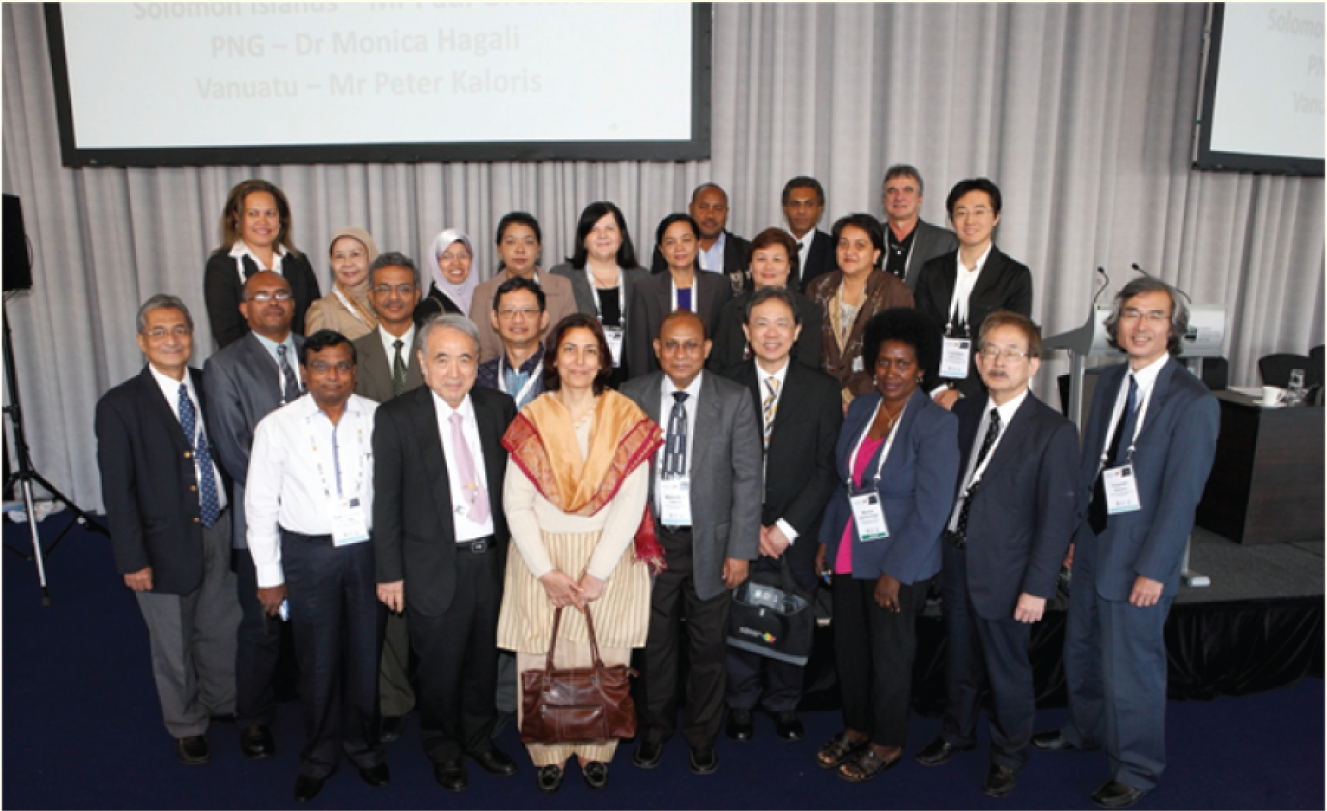
Dr Maria Tomasic with APMHF delegates at Congress 2013.
Certainly, positive feedback has been forthcoming for Maria and the RANZCP’s work in this area from international psychiatric associations. Contacts from countries such as Japan and Thailand have reiterated their appreciation for the College’s work, and for the deeply held idea of collaborating as ‘Australasia’ for the mental health of the region.
“Now that my term is completed I’m very pleased that the current President Murray Patton is committed to continuing the work at the Presidential level and I will also continue to contribute as Immediate Past President. CEO Andrew Peters and I have worked with the Asian Federation of Psychiatric Associations (AFPA) over the last few years assisting where we can with their enhanced governance. This culminated with the 4th World Congress in Asian Psychiatry in Bangkok in August 2013, in collaboration with the Psychiatric Association of Thailand meeting which was their largest meeting to date with over 1200 attendees from 43 countries. I am privileged to have been included as a member of the AFPA Council which consists of six international members who can advise and assist the Board and Executive. Murray Patton sits on the AFPA Board which is made up of the Presidents of member national psychiatric organisations. Through collaboration with Asia Australia Mental Health the College has assisted Fiji National University, and Lisa Lampe has recently been involved in reviewing their new Diploma in Mental Health course. Also to be noted is Nick Kowalenko, who has been building links in the Pacific through the Faculty of Child and Adolescent Psychiatry.
“Mental health care in the Asia-Pacific varies considerably and there is much that Australian and New Zealand psychiatrists can learn,” says Maria. “It can provide a powerful reminder for some psychiatrists of why they went into psychiatry in the first place.
“We sometimes need to remind ourselves what happens when there isn’t a comprehensive mental health system. In some of the worst case examples, we hear of psychiatrists in those countries dedicated to improving the situation but faced with situations such as people with psychotic illnesses being chained in backyards rather than getting appropriate treatment …. Sometimes we forget just how much good mental health care can do, how it changes people’s lives … seeing and hearing about those things is very powerful.”