






Abstract
Nearly 25 y ago, major transformative changes were made, leading to the modernization of the U.S. veterinary diagnostic laboratory (
Three milestone events occurred in 2001, laying the foundation for the transformation of the U.S. VDL system to the one we know today:
Publication of the Animal Health Safeguarding Review—October 2001
1
A suggestion for improved cooperation between state and federal laboratories and the subsequent launching of the National Animal Health Laboratory Network (
2. Signing of the first Memorandum of Understanding
4
( A joint pledge to strategically create an effective state/federal partnership that would ensure quality and capacity in our animal health diagnostic laboratories.
3. Decision to transform our AAVLD laboratory accreditation standard of the time into a direct application of the ISO Guide 17025—Fall 2000 to February 2002. A decision that made the oldest VDL accreditation program in the world even better, with an operational standard that was internationally recognized by the World Organisation for Animal Health (
Our historic review is primarily the perspective of the veterinary laboratory diagnosticians who were involved in the historical advances of 2001 and subsequent early developmental years. It is not a comprehensive history of these programs to date.
Background
Initial development of the U.S. VDL system
The United States is a highly populated nation with a sophisticated food animal production system, millions of beloved pets, and a rich treasure of wild animals among us. We are a nation of 50 uniquely independent states. Yet, for trading and international animal movement purposes, we have one national animal health status when it comes to interpreting and enforcing rules for controlling diseases. The test results in one state diagnostic laboratory have national and international ramifications, especially in the area of trade and transport of animals and animal products. Therefore, it is imperative that laboratory test results be as accurate as technology allows and that reporting mechanisms be secure and timely. With diagnostic test results produced in more than 50 independent state laboratories (several with multiple sites), consistency, speed, and response coordination (at state and federal levels) are complex and critical issues.
The federal authority for coordination of animal health, disease detection, and response traces back to the middle of the 19th century. Subsequent years of legislative acts defined the roles of various agencies, many of which were yet to be created. When President Lincoln founded the USDA in 1862, the first laboratory chemist, Charles M. Weatherill, was appointed. 2 This set a precedent from the onset that scientific data would be important to the decisions of federal agency leaders. Over the decades, additional legislation and agency transformations shaped today’s model for protecting the public’s food supply (including food animal health) and public health (including zoonotic disease management). Key points included 6 :
1862—President Lincoln established the USDA, which included a Division of Chemistry.
1865—USDA Secretary Isaac Newton urged Congress to enact legislation providing for the quarantine of imported animals.
1884—President Chester Arthur signed an act establishing the USDA Bureau of Animal Industry, charged with preventing diseased animals from being used as food.
1887—Congress passed the Interstate Commerce Act, giving the federal government authority to monitor issues regarding the trading of animals and animal products across state lines.
1890—President Benjamin Harrison signed the first law requiring inspection of exported meat products for the purpose of maintaining export opportunities for U.S. producers. This law was amended in 1891 to require the additional inspection and certification of all live cattle and beef intended for exportation.
1905—Upton Sinclair published his novel, The Jungle, which exposed serious fraud and corruption within the nation’s meat-packing industry. The book cast major doubt on the wholesomeness of meat products served to the American public. In 1906, the Federal Meat Inspection Act (FMIA) became law with President Theodore Roosevelt’s signature. The FMIA prohibited the sale of adulterated or misbranded meat and meat products for food and ensured that meat and meat products were slaughtered and processed under sanitary conditions. The Pure Food and Drug Act was passed the same day, and prevented the manufacture, sale, or transportation of adulterated or misbranded foods, drugs, medicines, and liquors.
1927—USDA’s Bureau of Chemistry was reorganized and renamed the Food, Drug, and Insecticide Administration, which was renamed the USDA Food and Drug Administration (
1938—Congress passed the Federal Food, Drug, and Cosmetic Act, which gave the FDA the authority to issue food safety standards.
1940—The FDA was moved from USDA to the Federal Security Agency, which, in 1953, became the Department of Health, Education, and Welfare (
1972—The USDA Animal and Plant Health Inspection Service
6
(
1977—USDA established the Food Safety and Quality Service, with the primary responsibility of managing the federal meat and poultry slaughter inspection programs. This program was renamed the Food Safety Inspection Service in 1981.
1979—HEW was split into the Department of Health and Human Services (
In short, the state and federal VDL systems developed during the 19th and 20th centuries were sparked by the public’s demand for governmental oversight to ensure wholesome and safe food, both for our citizens and for those in the countries to which we export. This required healthy herds and flocks of food animals. Likewise, ensuring healthy companion animals and wildlife also helps protect the public from zoonotic diseases, making protection of the public’s health another key mission of VDLs. Officials charged with overseeing these responsibilities increasingly realized that they required accurate laboratory data for making informed decisions.
During 1950–1980, the demand for reliable laboratory and research data by various state and federal agencies, producers, field veterinarians, and regulatory officials led to significant investments in state VDLs and research laboratories. Many states created new statutory authorizations that clarified their roles in food safety and food security via production efficiencies. A proliferation of modern state VDLs followed, especially in states that were heavily involved in food-animal production. Many university research laboratories were already informally providing diagnostic and research support within their states (USDA Extension and Agricultural Experiment Station work), but new authorizing legislation and state investments were necessary to organize efforts for creating functional multidisciplinary VDLs. These units typically found their homes at land-grant Universities within Veterinary Science Departments or Schools or Colleges of Veterinary Medicine, or state Departments of Agriculture. The transitions of that era were essentially the first modernization of the U.S. VDL system.
The Federal government also made significant investments in their diagnostic and research laboratories during this era. The Plum Island Animal Disease Center was established by USDA in 1954 to conduct FAD research and diagnostic work. The National Animal Disease Laboratory was established in Ames, IA, in 1961, evolving into the National Veterinary Services Laboratories (
Second modernization of the U.S. VDL system
FAD testing speed, accuracy, and capacity issues were high on everyone’s mind in 2001, especially after a serious foot-and-mouth disease (FMD) outbreak in the United Kingdom. As a result of inadequate testing capacity, the UK was forced to make many decisions without laboratory data. Before the 7-mo outbreak ended, >6 million animals were destroyed, and the disease had spread to Ireland, France, and the Netherlands. The looming question at the time for the United States was: What would happen here in a similar situation?
At the time of the 2001 FMD outbreak in the UK, state VDLs were not allowed to conduct FAD testing. This created potential bottlenecks and delays in rapidly diagnosing the index case of a FAD incursion. In addition, the small workforce and the remoteness of the FADDL (located on Plum Island, NY) created serious concerns regarding FAD testing capacity if a major outbreak occurred. Ironically, the state labs collectively had the potential capacity to handle rapid high-volume outbreak testing but lacked the authorization to test for FADs. Also lacking were standard operating protocols, harmonized testing protocols, a common quality assurance program, and reporting procedures that would guide a national system of testing, even if such testing was allowed. Existing rules did not nurture state and federal VDL interactions, collaboration, or team building. It was evident that a better strategy needed to be developed and implemented as soon as possible.
The Animal Health Safeguarding Review
The Animal Health Safeguarding Review
1
(hereafter, Review) was the vision of leaders at USDA APHIS, the United States Animal Health Association (
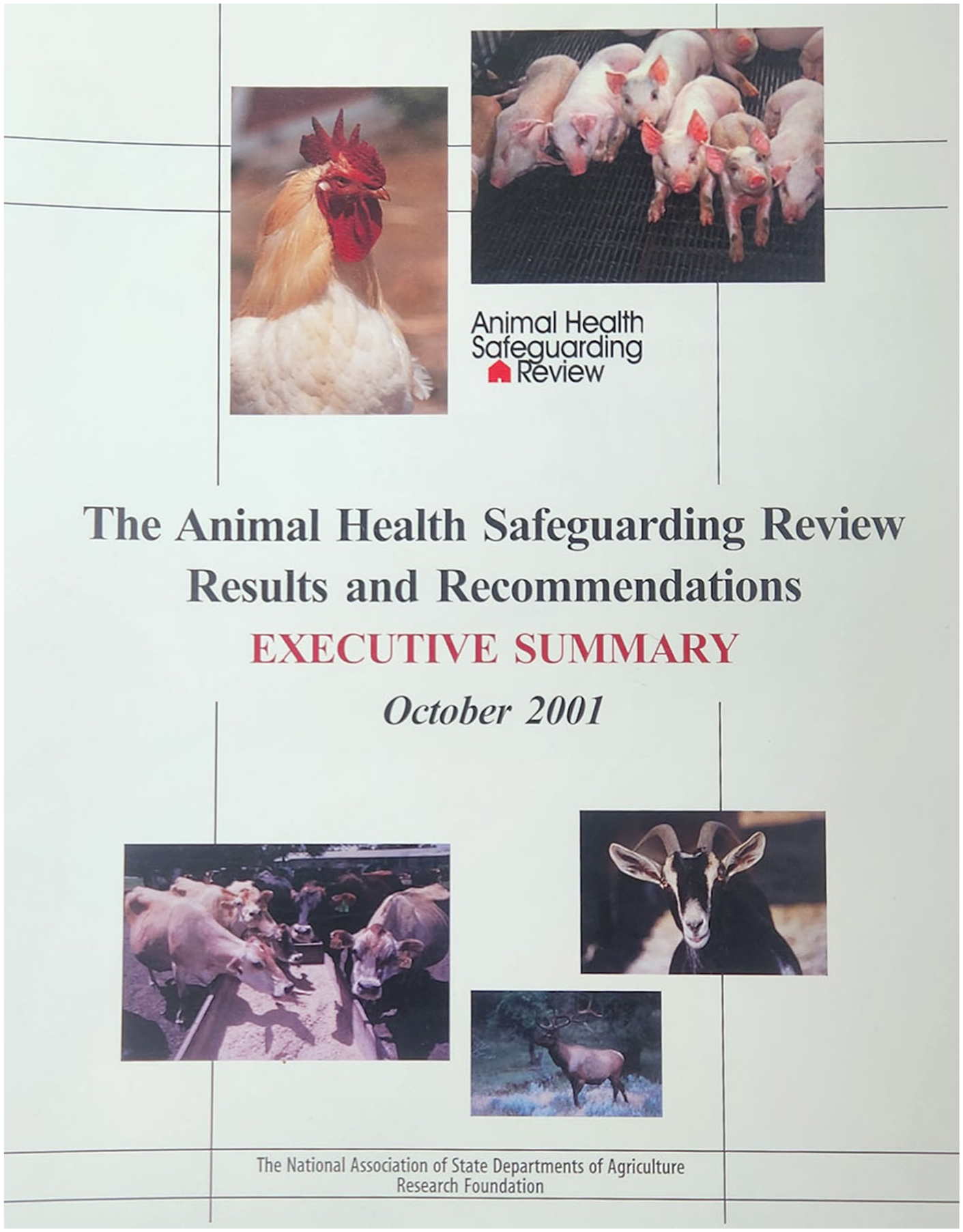
Cover of Animal Health Safeguarding Review, October 2001.
The Review was written against the backdrop of the European FMD crisis, but subsequent events would make it even more urgent to improve preparedness. Overnight, the terrorist attacks of 2001 Sep 11 changed security and safety dynamics around the world. Risk analyses rapidly expanded beyond that of direct human safety to include vital infrastructures such as power, utilities, transportation, food safety, and food production/security.
In addition, pathogenic organisms regularly detected within our laboratories were found to be of interest to bioterrorists. This became obvious when, within weeks of 9/11, letters containing powder with viable anthrax spores were mailed to Senator Tom Daschle (South Dakota), Speaker of the U.S. House of Representatives, and Senator Tom Leahy (Vermont). A total of 22 individuals were sickened by anthrax-laced letters, and 5 were fatally infected. This event directly impacted safety management within our VDLs, revealing an imminent need for higher levels of laboratory personnel biosafety and pathogen containment and security.
Four committees were created to conduct the work of the Review, with several AAVLD leaders engaged in each committee. The committees included:
Domestic Detection and Surveillance;
Exclusion;
International Information; and
Response.
The 46 animal health experts assembled for the Review included veterinarians, industry leaders, state and federal agency leaders and regulatory officials, diagnosticians, researchers, and producers. AAVLD members serving on the Review included: Richard Breitmeyer, Sharon Hietala, Don Lein, Bruce Akey, David Zeman, Alex Ardans, Mo Salman, and Linda Logan.
The committees reviewed documents, analyzed data, held meetings with pertinent stakeholders, and conducted on-site visits and interviews at state and federal laboratory facilities. Some teams visited the borders and observed interdiction facilities and procedures (such as the Miami International Airport and the Canadian border at Pembina, ND). The Review report was published and released in October 2001. The following recommendations and needs are direct quotes from the Review.
Primary recommendation of the Review
“Congress and the United States Department of Agriculture must provide funding and act to rebuild the state and national infrastructure for animal disease control, emergency disease preparedness, and response.
Four major needs identified by the Review
Infrastructure inadequacies, especially in terms of staffing and facilities, are now so deep that the system cannot appropriately respond to a severe animal health crisis.
Improved communication—including establishment of the Emergency Operations Center—is vital for the acquisition and sharing of critical animal health information; and special attention must be focused on the use of advanced technologies.
America can no longer responsibly refrain from establishing a coordinated and vigorous National Surveillance System (NSS) and National Response Plan to monitor and respond to animal health issues.
The U.S. has a pressing and urgent need for improved and expanded applied research, and for diagnostic laboratories, both focused on animal health issues.”
Selected recommendations from the Review of special interest to veterinary laboratory diagnosticians included
“USDA must take the lead in developing a world class system of exclusion, detection, surveillance, diagnosis, safeguarding and response.
APHIS will be the central component of this system, with support and assistance from both domestic and international partners.
The agency’s (APHIS) performance has been strong, but escalating demand is overwhelming resources and facilities.
Virtually all APHIS-VS components need increased funding to improve human resources, laboratories, and technological capabilities; staff is now overwhelmed by the volume of work, and is inadequate to handle emergencies. An improved state infrastructure is especially needed, as are state federal partnerships at the local level, where programs are actually carried out.
The USDA, state agencies, and universities must rapidly allocate funding into applied research on animal disease detection, control, prevention and treatment, and emergency response systems.
A national strategy melding the nation’s federal, state, and local resources, would be capable of responding to any type of animal health emergency, including foreign animal diseases and bioterrorism.
A comprehensive, coordinated, integrated surveillance system is the foundation for animal health, public health, food safety, and environmental health.
The National Surveillance System (
The NSS must meet international surveillance requirements.
NSS cannot be implemented by APHIS-VS alone. Partnerships with states, animal industries, veterinary practitioners, universities, OIE reference centers, and diagnostic laboratories are essential.
The NSS requires world-class national diagnostic laboratories. Define the role of NVSL as the reference laboratory in support of the NSS.
Diagnostic facilities and staffing must be excellent. Promote implementation and full funding for the APHIS-ARS Master Plan for Facility Consolidation and Modernization on an accelerated time frame of three to four years, and for the modernization plan for the laboratories at Plum Island.
A state-of-the-art infrastructure for a federal/state diagnostic laboratory system is crucial to support response actions for all animal health events, from routine surveillance monitoring to large-scale outbreaks.
Define roles and responsibilities of federal and state laboratories in the national laboratory infrastructure, including roles in FAD testing.
Develop and implement a quality assurance and control system for both federal and state laboratories that meets or exceeds international standards. Maintain and disseminate an active database of laboratories meeting these standards.”
In summary, a thorough assessment by animal health experts gathered from across the country, conducted amidst the dire news regarding the UK FMD outbreak, the attacks of 9/11, and the weaponization of anthrax against public officials, revealed that the nation was not ready for a major animal health crisis. The time for action was now. The Review laid the blueprint for the second modernization of the nation’s state and federal veterinary diagnostic laboratory system.
MOU between AAVLD and USDA NVSL
After years of discussion, debate, and deliberation, and shortly following the publication of the Review, an historic agreement was finally reached between the federal diagnostic laboratories managed by the USDA APHIS-VS NVSL and the AAVLD, which represented the state veterinary diagnostic laboratories. The first Memorandum of Understanding
4
(MOU; APHIS agreement 02-9419-577-MU;
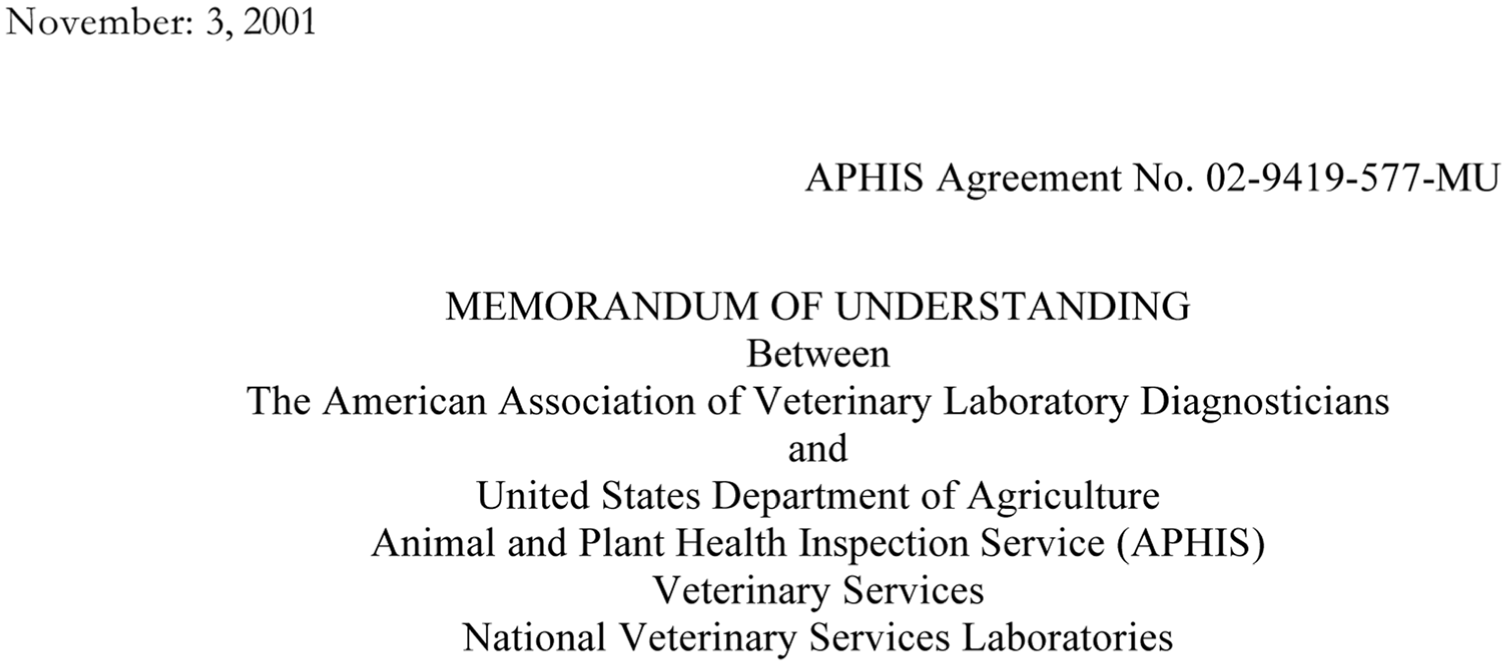
The first MOU between AAVLD and USDA NVSL, November 2001.
Here are some key concepts directly quoted from the MOU, 4 as signed in the original 2001 document:
“The general purpose of this memorandum of understanding is to cooperatively improve animal health diagnostic services in the United States. Animal health diagnostic services are predominantly provided in each state by publicly funded laboratories staffed by members of the American Association of Veterinary Laboratory Diagnosticians and federally by the National Veterinary Services Laboratories in both Ames IA, and Greenport, New York.
Although the AAVLD and the NVSL have been informally cooperating for many years, this MOU will serve to clarify mutual goals and objectives, while promoting and enhancing animal health diagnostic services in the United States.
During the year 2000, leaders from the AAVLD and the NVSL met to discuss strategic issues regarding animal health diagnostic services in the United States. After discussing these issues at the AAVLD, their Board of Directors crafted and the House of Delegates passed 2 resolutions at their 43rd annual meeting supported by the NVSL and VS/APHIS leaders. The resolutions are as follows: ○ Whereas, the AAVLD accreditation process needs to prepare to operate under world expectations and standards for accrediting bodies, and ○ Whereas, the United States needs to present to the world a unified nationwide animal health diagnostic system which is currently comprised of state diagnostic labs, and our federal partner, NVSL, therefore. . . ■ Be it resolved that the AAVLD shall cooperate with NVSL as our federal partner in the US veterinary diagnostic lab system, to develop a national strategy for animal health diagnostic services. Such cooperation should result in a memorandum of understanding to be presented and considered for formal adoption to the 2001 AAVLD House of Delegates ■ Be it resolved that the AAVLD Accreditation Committee shall investigate the feasibility of utilizing ISO 17025 as part of accreditation of AAVLD labs and the feasibility of utilizing an appropriate accreditor to assist with accreditation responsibilities for AAVLD under AAVLD/NVSL advisement.
The objectives of this voluntary MOU between the AAVLD and the NVSL are: ○ To promote and protect animal health in the United States. ○ To promote uniform diagnostic standards and criteria across the United States, while addressing international expectations. ○ To promote understanding by our international trade partners that animal health in the United States is monitored cooperatively by both AAVLD and NVSL. ○ To enhance development of a national strategy for provision of quality animal health diagnostic services. ○ The AAVLD agrees to:
■ Recognize the NVSL as a crucial federal partner with the AAVLD. ■ Utilize the NVSL as the national (federal government) reference laboratory. Utilize the NVSL as a reliable source of quality diagnostic reagents where needed. ■ Rely upon the NVSL to conduct proficiency testing and to determine the competence of laboratories to conduct diagnostic testing for national program diseases and tests critical to promoting international trade. ■ Work with the NVSL to move towards international quality standards. ○ The NVSL agrees to: ■ Have AAVLD-accredited veterinary diagnostic laboratories recognized as an integral part of the national animal health diagnostic system in the United States. ● This may include, depending on mutual agreement by veterinary services, participation in foreign animal disease testing, and/or domestic surveillance and international/interstate regulatory testing. ■ Participate as an integral part of a national animal health diagnostic system in the United States. ■ Recognize the AAVLD as a crucial partner in the development of a national animal health diagnostic system. ■ Continue utilizing the AAVLD as part of the national animal health diagnostic system for surveillance and international export testing. ■ Serve as a diagnostic reference laboratory to support veterinary diagnostic laboratory activities. ■ Serve as a reliable source of quality diagnostic reagents where needed. ■ Conduct proficiency tests, to determine the competence of laboratories to conduct diagnostic testing for national program diseases and tests critical to promoting international trade. Work with AAVLD to move towards international quality standards.
Management of this MOU shall be coordinated by the leadership of the AAVLD Executive Committee and the Director of the NVSL, and the diagnostic chiefs of the NVSL organization. This group is designated the Management Working Group.”
The MOU was a strategic necessity that removed much of the prior ambiguity regarding the working relationship between the state and federal laboratories. It clearly declared the need for partnering so that our global trade partners could have confidence in our national herd and flock health status. Each partner accepted roles that were necessary for a successful animal health diagnostic system in a nation of our size and complexity. The state laboratories brought access to animal diagnostic caseload across the nation, established relationships with veterinary practitioners, animal producers, and owners, and provided testing capacity along with cutting-edge technologies from university research affiliations. The federal laboratories brought statutory authority, coordination, and subject matter expertise, as well as working relationships with state and federal regulatory agencies.
The MOU utilized many recommendations from the Review 1 and was one of the earliest action items from that landmark document. The MOU mandate to utilize AAVLD-accredited laboratories to establish an “animal health diagnostic system” in partnership with NVSL ultimately led to the establishment of the NAHLN in 2002. NAHLN not only fulfilled the MOU’s appeal for state lab participation in official FAD testing, but also ensured these labs have a continued role in testing for national animal program diseases and other high-consequence animal diseases.
After both partners signed the MOU in the fall of 2001, incoming President Pat Blanchard began implementation efforts, working alongside the new NVSL Director, Randall Levings. The following Joint USAHA/AAVLD Government Relations Committee meeting in Washington, DC, March 2002, was important for promoting the goals of the MOU. It was at this meeting that a group of AAVLD leaders met to write the first one-page legislative informational document describing and proposing the establishment of a new network, the NAHLN. Volunteers working on that original promotional document (
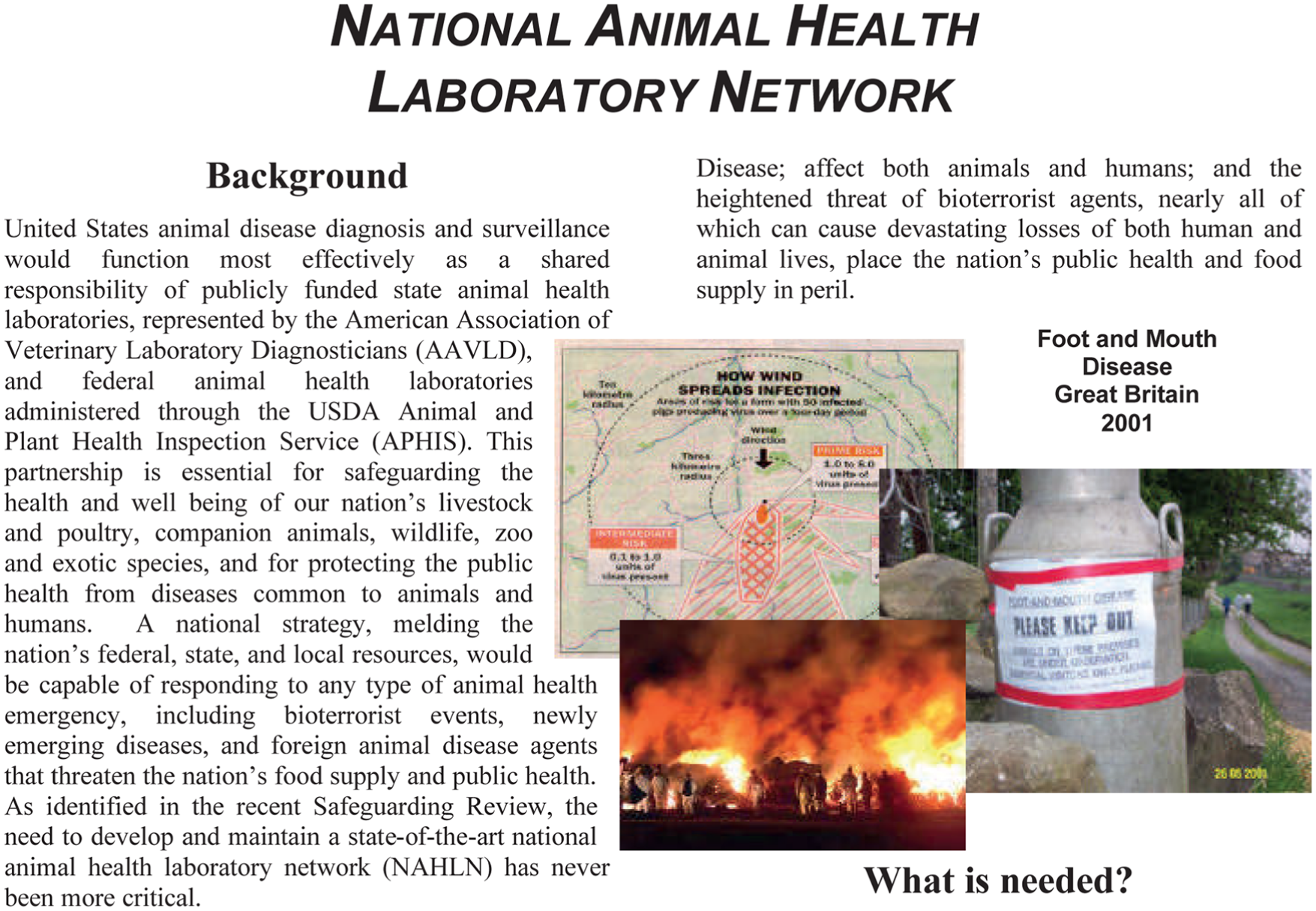
The first AAVLD General Relations Committee legislative informational document (“white paper”) advocating for funding of the NAHLN, March 2002. https://www.aphis.usda.gov/sites/default/files/aavld_nahln_white_paper_2002march.pdf
The first federal support for the effort came quickly, with the passing of the Public Health Security and Bioterrorism Preparedness and Response Act of 2002 (Bioterrorism Act). The goal of the act was to strengthen our national defenses against biological threats, including threats to the food supply. Potential bioterrorism against our nation’s food-producing flocks and herds was a significant concern at the time.
Additional support toward the development of the NAHLN came from the direction of President George W. Bush when, on 2004 Jan 30, he signed the Homeland Security Presidential Directive 9 (HSPD-9). The USDA, Department of Homeland Security (DHS), and HHS were assigned responsibilities to establish policies and actions that would protect the nation’s food systems against potential terrorism, natural threats, or accidental introductions of foreign diseases associated with the growing international trade in agricultural products (including trading and transport of animals and animal products). VDLs working in coordination clearly were going to be necessary for success. HSPD-9 led to significant funding for the NAHLN. HSPD-9 also led to the establishment of the FDA Food Emergency Response Network. During that time, AAVLD leaders met with allies from USAHA and animal producers each year to promote the development of the NAHLN. Those efforts included regularly updating the original AAVLD NAHLN advocacy document, refining its mission, and seeking funds to improve animal health diagnostic laboratory infrastructure and operational needs. In 2006, USDA Administrator Ron DeHaven presented Terry McElwain and Willie Reed with the APHIS Administrator’s Award for their role in the early implementation years of the NAHLN.
AAVLD leaders and allies simultaneously advocated for the need to modernize NVSL facilities, including the labs at Ames and Plum Island, to secure their indispensable role as reference laboratories and coordinators of the new laboratory network. USDA leaders gave guidance on making these laboratories world-class and physically secure and biosecure facilities. USDA could not directly advocate for funding, so AAVLD, USAHA, and agricultural producer groups stepped in to garner support, promoting the urgent need for funding these federal laboratory improvements.
The original MOU of 2001 was launched through the efforts of several AAVLD leaders of the time, including Don Lein, Bruce Akey, Alex Ardans, Leon Thacker, Art Bickford, David Zeman, and Doris Miller. After its launch, the MOU goals were nurtured and refined by subsequent AAVLD leaders, including Pat Blanchard, Terry McElwain, and Willie Reed. From the start, USDA leaders were highly supportive of the goals of the MOU, and those early leaders included Bill Buisch, Beverly Schmitt, Alfonso Torres, Randall Levings, Elizabeth Lautner, Bobby Accord, Bill Wagner, John Clifford, Ron DeHaven, and Barb Martin. Subsequent leaders of both MOU partners have now worked for 25 y to sustain the goals of the MOU and improve key aspects of the system, making it one of the most effective state/federal partnerships of our time.
Since the signing of the original MOU on 2001 Nov 3, the document has been updated and renewed heartily by leaders of both AAVLD and USDA:
Version 2, 2006, signed by AAVLD President Barb Powers and NVSL Director Beth Lautner.
Version 3, 2011, signed by AAVLD President Craig Carter and NVSL Director Beth Lautner.
Version 4, 2017, signed by AAVLD President Pat Halbur and NVSL Director Beverly Schmitt.
Version 5, 2022, signed by AAVLD President Eric Burrough and NVSL Director Suelee Robbe-Austerman.
Modernization of the AAVLD laboratory accreditation standard
Larry Morehouse published a historic review of AAVLD in the June 1994 AAVLD Newsletter. 5 The first exploratory organizational meeting for the now AAVLD was in 1957, during the American Veterinary Medical Association (AVMA) meeting in Cleveland, OH. A core group of 32 diagnosticians (representing 19 states, Hawaii, Canada) and the USDA decided to name the organization the Conference of Veterinary Laboratory Diagnosticians and established its purpose and goals. As stated in Dr. Morehouse’s review: “All individuals present expressed the opinion that much closer organization and cooperation between laboratories offering diagnostic services throughout the country was needed.” That key concept of cooperation (working together to improve our diagnostic services; sharing best methods, procedures, and practices) has remained a core tenet and secret to our success over the decades.
About a decade later, in 1968, AAVLD President Vaugh Seaton of Iowa State University announced that a voluntary laboratory accreditation program was soon to be launched. He noted, “We do not yet have a final plan in mind as to how all the details can be carried out but real progress has been made and I believe we can very soon embark on a voluntary laboratory certification program.”
In 1969 that ongoing concept of cooperatively sharing best methods, procedures, and practices culminated in the writing of the historic first veterinary diagnostic laboratory accreditation standard of the AAVLD (to our knowledge, the world’s oldest comprehensive VDL accreditation standard). The AAVLD Accreditation Committee prepared to receive applications for the new standard and developed procedures to determine accreditation status for labs that were voluntarily applying. In 1970, the first applications were received from 8 VDLs. After on-site audits, 3 were accredited: the South Dakota State University ADRDL (Brookings, SD), the Iowa State University VDL (Ames, IA), and the Kentucky Department of Agriculture VDL (Hopkinsville, KY); 3 other laboratories were provisionally accredited: Indiana/Purdue University ADDL (West Lafayette, IN), the University of Missouri VMDL (Columbia, MO), and the University of Connecticut VMDL (Storrs, CT). Now, decades later, 70 accredited laboratories exist across the United States and Canada (includes branch laboratories).
The AAVLD laboratory accreditation standard proved to be a key mechanism for diagnostic laboratories, enabling them to work cooperatively, adopt best practices, and produce uniform animal test results across the continent. The combined test results from state laboratories formed the national herd and flock health status, which directly impacted trade negotiations. Getting these standards right was highly important, as the global trading of agricultural products expanded. In 1972, regarding the voluntary AAVLD accreditation program, AAVLD President Ken Keahey of Michigan State University stated, “We believe that accreditation of laboratories will be essential, in the years to come, to enable standardization of techniques, interpretations, nomenclature, reporting systems and animal disease surveillance.” This prediction certainly came true; in the decades to follow, laboratories across our nation and Canada continue to voluntarily maintain the quality rigor required to be an accredited AAVLD veterinary diagnostic laboratory.
However, in a world where the international trading of animals and animal products is ever-growing, international recognition of our VDL accreditation program quickly became an issue for consideration. AAVLD, with one of the world’s oldest, most comprehensive, and rigorous accreditation programs, was largely unfamiliar to those outside of North America. No defined world standard was available at that time. The OIE was studying the matter, as was AAVLD. In fact, AAVLD had been considering options a full year before 2001. In July 2000, President Akey reported to the board of directors that one of the goals established at the recent 2000 AAVLD Strategic Planning Meeting was to: “Gain recognition of AAVLD accreditation as a viable internationally acceptable quality-based process for accreditation in order to ensure acceptance of work performed in AAVLD laboratories.”
At the 2000 Annual Meeting in Hershey, PA, Program Chair David Zeman arranged a panel of experts for our turn-of-the-century plenary session: Expectations of AAVLD Laboratories in the Next Century. Topics and participants included:
OIE and World Expectations—Jim Pearson
QA and QC Expectations—Frank Galy
Food Safety Expectations—Richard Breitmeyer
The 2000 AAVLD House of Delegates passed the following resolution at the same meeting: “The Accreditation Committee shall investigate the feasibility of utilizing ISO 17025 as part of the accreditation of AALVD Labs and the feasibility of utilizing an appropriate accreditor to assist with accreditation responsibilities for AAVLD under AAVLD/NVSL advisement.” ISO 17025 was the international standard for testing and calibration laboratories. It could be universally applied to VDL accreditation with some modifications.
In response to the resolution, Accreditation Committee Chair Leon Thacker and David Zeman registered for and completed a one-week auditor training with The American Association for Laboratory Accreditation (A2LA) in the spring of 2001, giving them greater familiarity with the ISO 17025 standard. Members of the Accreditation Committee agreed to write a feasibility white paper regarding the possible transition of our accreditation standard, making it compatible with both OIE expectations and the ISO 17025 standard. That paper was intended to be ready for board consideration at the 2001 annual meeting. Also in 2001, while attending the WAVLD meeting in Europe, AAVLD President David Zeman and President-Elect Pat Blanchard met with OIE leaders (Jim Pearson) and Great Britain laboratory leaders to discuss accreditation standards and how Europe was utilizing the ISO 17025 standard in their laboratories.
Taken together, the Review,
1
the events of 9/11, and the UK FMD outbreak of 2001, encouraged AAVLD leaders to both hasten and make final decisions regarding possible transformations of the accreditation program. The AAVLD/NVSL MOU signed that year specifically recognized the importance of gaining international recognition of our accreditation process. AAVLD leaders needed analytical guidance from the Accreditation Committee (at the time chaired by Leon Thacker) to make some decisions. The draft white paper was presented to the AAVLD Board at the annual meeting in November 2001. In February 2002, AAVLD accreditation leaders released the final version of that key white paper: AAVLD Laboratory Accreditation Program—Current and Future Perspectives; authored by McElwain et al.
3
(
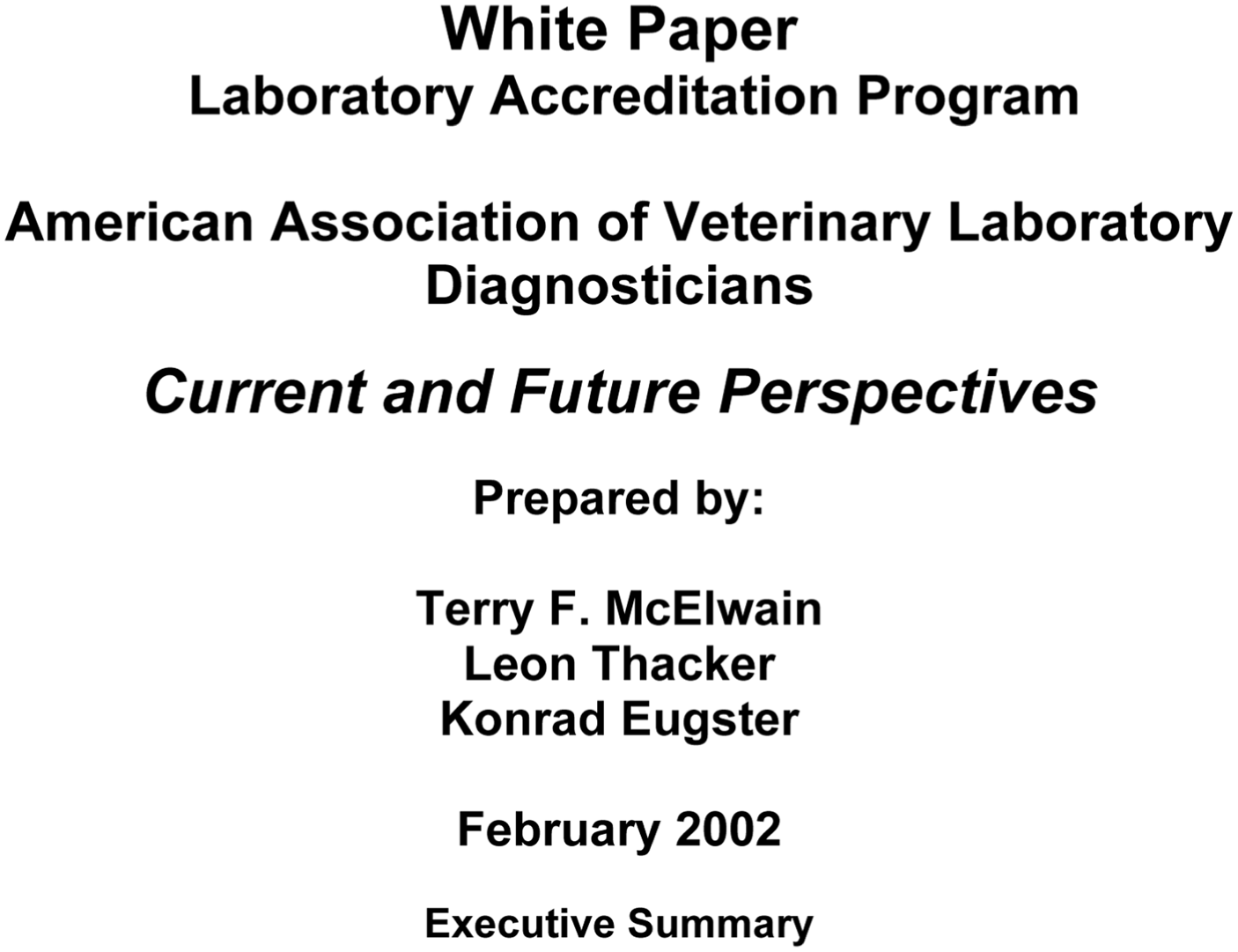
Title page of the Accreditation White Paper, written to explain the decision to rewrite the AAVLD standard, February 2002.
“The time is at hand for the AAVLD accreditation program to adopt internationally recognized standards for measuring veterinary diagnostic laboratory competence to perform prompt, accurate, and reliable testing for animal diseases and disorders. It is anticipated that the outcome of alterations to the AAVLD accreditation program will incorporate those standards that will provide authority for international recognition while maintaining the flexibility to accommodate the varying needs, testing requests, financial means, and administrative structures present in veterinary diagnostic laboratories associated with the AAVLD. As a first step, the Accreditation Committee recommends incorporation of OIE standards into the AAVLD Essential Requirements and accreditation process. This will require changes in the standards for accreditation, the site visit, and laboratory operation. It is the intention of the Accreditation Committee that these changes will be incorporated promptly, openly and with guidance from the organization so that all laboratories will have the opportunity to respond as necessary.”
At the February 2002 AAVLD Executive Board meeting, the board unanimously approved the recommendations from the Accreditation Committee as stated in the white paper.
The adoption of the new standard was a heavy lift for AAVLD and our associated laboratories. In addition to a complete rewrite of the old standard to better align with OIE international expectations, the new standard required significant retraining and increased human resources to make the Accreditation Committee fully operational. Laboratory auditors needed to be re-trained for auditing under the new standard. Laboratories needed to re-write their quality manuals and comply with higher expectations for documentation to show compliance.
Once the decision had been made, the first AAVLD ISO Assessor Training Workshop was promptly held in June 2002. Twenty-nine attendees were trained by ISO expert consultant Ken Stoub. The first laboratories were accredited under the new standard in 2005. It was a very busy time for the Accreditation Committee, which diligently managed these changes with excellent results. Now, 25 y later, the progress in advancing our discipline through the new accreditation standard (
AAVLD Accreditation Standard, 2023. https://aavldac.qualtraxcloud.com/Showdocument.aspx?ID=1137
Closing comments and appreciation
Our manuscript is written primarily from the perspective of veterinary laboratory diagnosticians that have been engaged for many decades with the mission of AAVLD. The efforts of allied organizations, especially USAHA and USDA, are not meant to be diminished, given that these entities played essential roles in the transformation described.
The rapid changes following the launch of these 3 major initiatives in 2001 were remarkable. Major events of that time certainly accelerated the transition (the UK FMD outbreak, 9/11, and the anthrax letters). The nation was in a mood to solve problems, and state and federal legislators were anxious to hear solutions and apply funds where necessary. Creating an effective state and federal veterinary diagnostic laboratory partnership just made sense. The AAVLD/NVSL partnership blended the capacity muscle of the state laboratory system with the authority and coordination power of the federal laboratory system.
Since then, state and federal governments have spent billions of dollars to build or remodel animal health diagnostic and research laboratories, and operational budgets have been expanded to meet the needs of our stakeholders. These facilities combined are the most extensive and competent animal health laboratory network in the world, including:
70 AAVLD-accredited diagnostic laboratories (and branch laboratories;
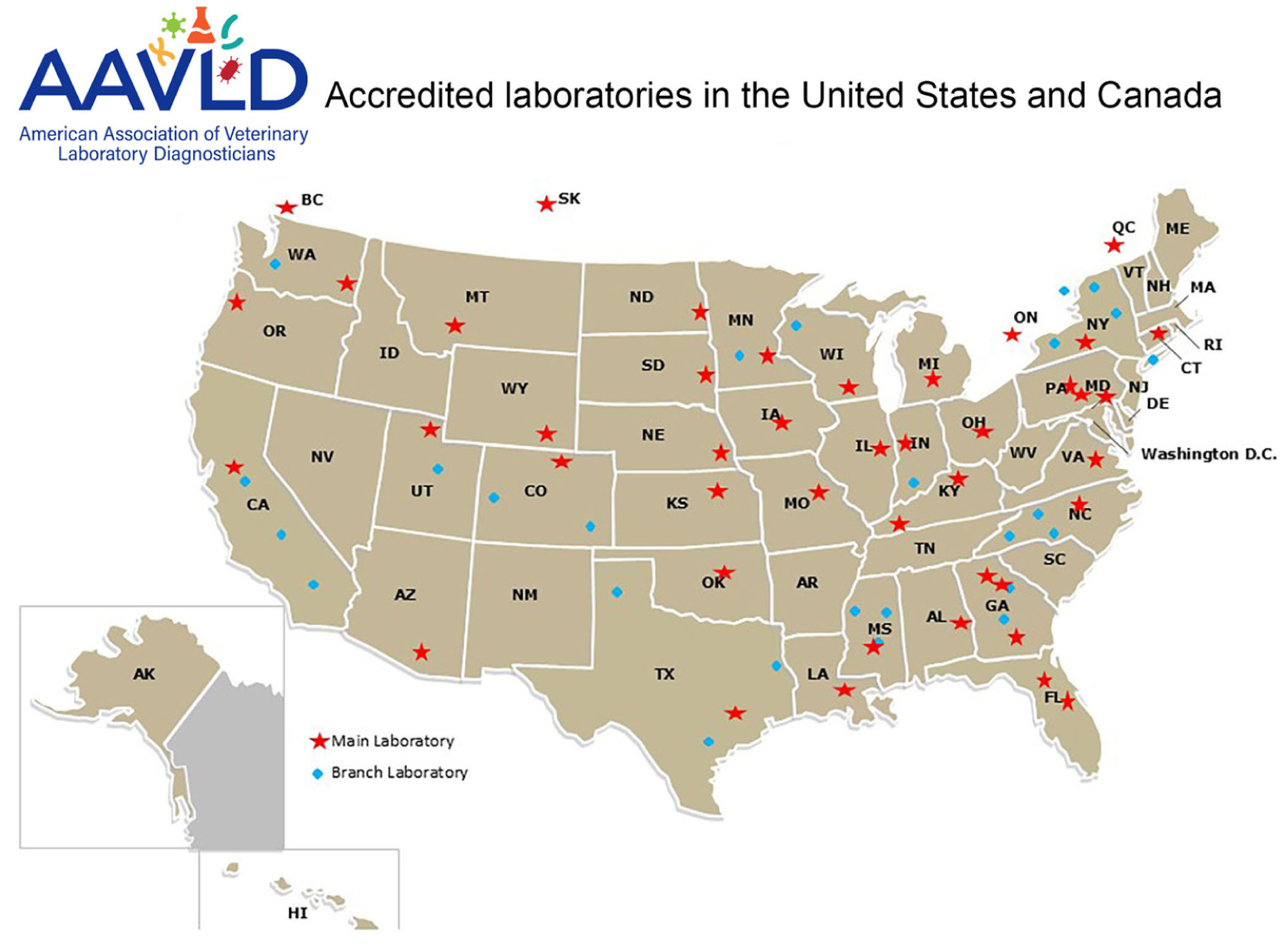
Map of AAVLD-accredited laboratories, 2026.
66 laboratories that are members of the NAHLN (
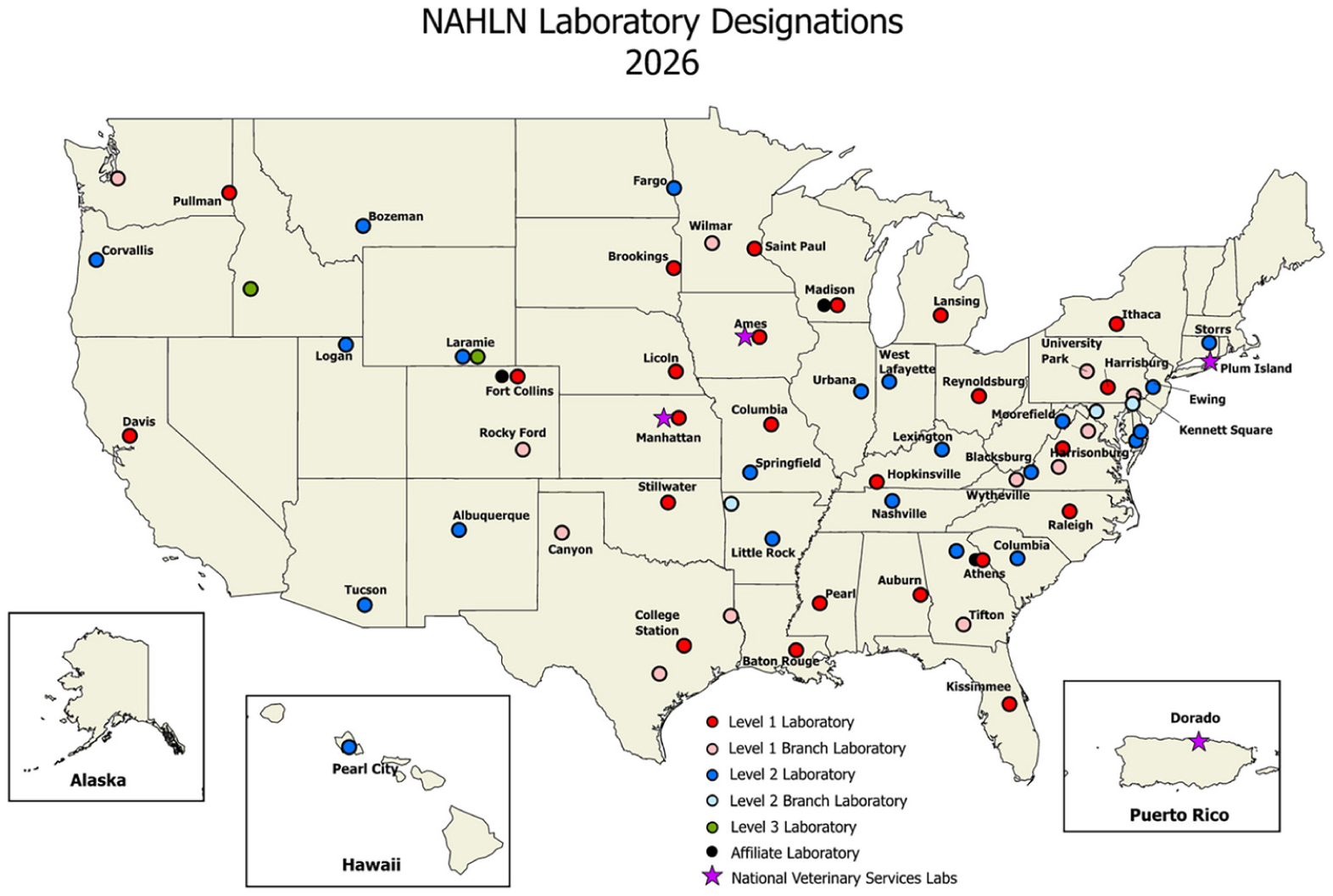
Map of NAHLN laboratories, 2026. https://www.aphis.usda.gov/labs/nahln/approved-labs.
A complete rebuilding of the USDA NVSL in Ames, IA, ensuring adequate space and biocontainment levels, which now is fully operational).
Construction of the National Bio and Agro-Defense Facility (NBAF) in Manhattan, KS, which is soon to be fully commissioned, replacing the functions at Plum Island.
To all veterinary laboratory diagnosticians, thank you for your dedicated service and Happy 25th Anniversary of the modernization of the U.S. veterinary diagnostic laboratory system!
In appreciation of all those who safeguard animal and human health
Several individuals—from both before and after 2001—are mentioned in this review, causing us to historically reminisce and celebrate the 25th anniversary of major changes in our U.S. animal health diagnostic laboratory system. We focused on AAVLD people involved with these changes (
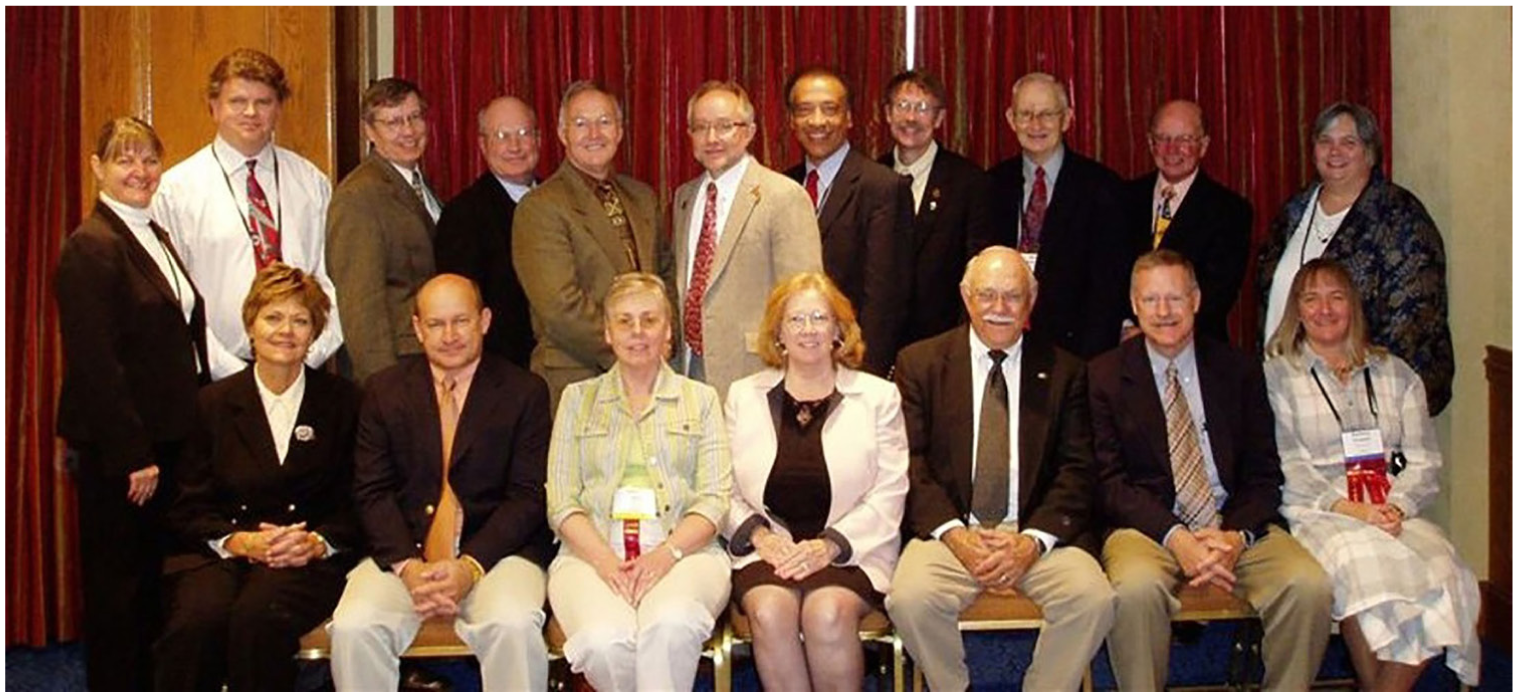
AAVLD leaders and Accreditation Committee members, circa 2002. Left to right, standing: Sharon Heitala, Dave Korcal, Grant Maxie, Richard Mock, Ron Lewis, David Zeman, Willie Reed, Frank Galy, Alex Ardans, Bill Johnson, Pat Lukens; left to right, sitting: Bev Byrum, Ron Wilson, Helen Acland, Doris Miller, Leon Thacker, Terry McElwain, Barb Powers.
Footnotes
Acknowledgements
The authors gratefully acknowledge the general advice and professional editorial assistance of Dr. Grant Maxie.
Declaration of conflicting interests
The authors declared no potential conflicts of interest with respect to the research, authorship, and/or publication of this article.
Funding
The authors received no financial support for the research, authorship, and/or publication of this article.
