







Abstract
In this paper, we open the black box of effectuation as a process by identifying effectuation process characteristics and patterns and thereby unveiling the heterogeneity of effectuation processes. Based on a multiple case research approach, sequential qualitative analysis is used to contrast similarities and differences in effectuation processes among six high-technology ventures. By theorizing the relationship between effectuation principles and process characteristics, we increase the conceptual clarity of effectuation theory and provide insights into how effectuation may be operationalized for scholars in future research.
Keywords
Introduction
Over the past 15 years, the entrepreneurship literature has recognized effectuation as an important mode of entrepreneurial behavior. Building on influential early work (Sarasvathy, 2001), effectuation has firmly established itself as a mode of entrepreneurial behavior under conditions of uncertainty (Alvarez & Barney, 2005; Fisher, 2012). Effectuation is commonly contrasted with the causation mode. Whereas effectuation emphasizes that entrepreneurs create goals on the basis of the available means, causation is closer to traditional views of entrepreneurial decision-making by assuming that the means are selected in order to attain the goals (Sarasvathy, 2001).
Effectuation theory suggests two ways of understanding effectuation as a mode of entrepreneurial behavior. Firstly, effectuation theory converges on four principles (Sarasvathy, 2001, p. 252): affordable loss rather than expected return, strategic alliances rather than competitive analysis, exploitation of contingencies rather than exploitation of preexisting knowledge, and controlling an unpredictable future rather than predicting an uncertain one. Entrepreneurial reactions to these principles takes the form of concrete activities, allowing scholars to identify effectuation in contrast to causation (e.g., Brettel, Mauer, Engelen, & Küpper, 2012; Chandler, DeTienne, McKelvie, & Mumford, 2011; Perry, Chandler, & Markova, 2012).
Secondly, from the outset, effectuation theory has also suggested that effectuation should be considered from a process perspective, in other words: as sequences of activities with different starting and ending points (Fisher, 2012; Sarasvathy, 2001; Sarasvathy & Dew, 2005; Wiltbank, Dew, Read, & Sarasvathy, 2006). Recent effectuation dialog has further emphasized the need to study effectuation as a process (Garud & Gehman, 2016; Gupta, Chiles, & McMullen, 2016), and the empirical study of effectuation processes has started to play a prominent role in recent research (e.g., Berends, Jelinek, Reymen, & Stultiëns, 2014; Reymen et al., 2015). However, to the best of our knowledge, all previous studies approach the effectuation process as a “black box,” focusing on the empirical presence or absence of effectuation activities belonging to the four principles, and thus portraying the effectuation process as a categorical entity (Van de Ven, 2007), rather than observing how sequences of activities unfold over time.
Our study seeks to open the “black box” of effectuation processes by examining how effectuation processes in ventures unfold over time. In order to observe effectuation processes, we introduce the “episode” concept, defined as a sequence of events marked by a beginning and an ending point (Hendry & Seidle, 2003; Poole, Van de Ven, Dooley, & Homes, 2000). We used a multiple comparative case study approach (Eisenhardt, 1989a, 1989b). Based on longitudinal data for six high-technology ventures, we sequentially applied synthetic analytical (Eisenhardt, 1989b) and visual mapping (Langley, 1999; Langley & Truax, 1997) strategies to identify effectuation episodes inductively and examine how they unfold over time.
We found that effectuation processes were not homogenous across episodes but differed in terms of five process characteristics: perception of uncertainty, nature of aspirations, information processing, orientation of new goals, and attention to new goals. We also found that the five process characteristics gave rise to two distinct patterns, combined into two overall types of effectuation processes: Externally Motivated Effectuation (Type 1) and Internally Motivated Effectuation (Type 2), each of which has implications for the iteration of effectuation processes.
Our study contributes to the entrepreneurship literature in three ways. Firstly, our findings allow us to discuss the heterogeneity of effectuation processes and to challenge the widely held assumption that effectuation processes are invariable. Secondly, our discussion of dominant effectuation process types explores how our five effectuation process characteristics relate to the four principles present in the literature. In doing so, we conceptualize the relationship between process and principle constructs in effectuation theory. Based on this theorizing effort, we theoretically explain why principles and processes are related and highlight three aspects—sequence, combination, and iteration—to be considered as future steps to embrace the process perspective when conducting empirical research on effectuation.
The remainder of this paper is structured in the following manner. We begin by introducing the main tenets of effectuation theory and review recent work on effectuation processes. We then introduce our research design and methods, and present our findings on the heterogeneity of effectuation among our case study ventures. The discussion section relates our findings back to the literature and outlines our theoretical contributions regarding the process perspective of effectuation theory.
Literature Review
Effectuation theory distinguishes between two modes of entrepreneurial behavior in the context of new venture creation (Sarasvathy, 2001). The first mode—causation—emphasizes goal-orientation, rational analysis, and formal planning (e.g., Brinckmann, Grichnik, & Kapsa, 2010; Delmar & Shane, 2003). The second mode—effectuation—is characterized by means-oriented collaboration in which entrepreneurial actions are more dependent upon entrepreneurs’ identities, networks, and knowledge than upon objectively given external economic and market conditions (Sarasvathy, 2001).
Conceptually, effectuation theory proposes two ways of understanding effectuation as a mode of entrepreneurial behavior: principles and processes. We conceptualize each of these important theoretical constructs of the theory, as they allow scholars to characterize entrepreneurial behavior according to behavior mode, causation, and effectuation (Suddaby, 2010). Originating from decision-making theories (March, 1991; Mintzberg, 1991; Simon, 1959; Weick, 1979), effectuation theorists converge on four principles (Sarasvathy, 2001, p. 252), although their precise nature may vary slightly in different publications (Reymen et al., 2015). This view theorizes that entrepreneurial behaviors can be identified as effectuation in comparison to causation based on how entrepreneurs act to cope with risks, outside actors, unexpected events, and uncertainty (Brettel et al., 2012; Chandler et al., 2011; Fisher, 2012; Sarasvathy, 2001).
The four principles include: (a) affordable loss rather than expected return: entrepreneurs engaged in effectuation base their actions on affordable loss, meaning that downside risks which cannot be handled will be avoided (Berends et al., 2014); (b) strategic alliances rather than competitive analysis: entrepreneurs acting in effectuation mode tend more strongly towards negotiating pre-commitments and creating alliances with stakeholders; (3) exploitation of contingencies rather than exploitation of preexisting knowledge: entrepreneurs acting in effectuation mode seek to exploit unexpected events and opportunities arising from unexpected situations; and (4) controlling an unpredictable future rather than predicting an uncertain one: entrepreneurs acting in effectuation mode typically control uncertainty by taking a set of means as given and seek to create outcomes that are possible with their set of means.
Empirically, these principles have been associated with concrete sets of activities. For example, in their empirical work on effectuation, Reymen et al. (2015) considered that an activity, such as “being willing to make affordable personal sacrifices for the best of ventures,” is an effectuation activity of affordable loss; “reaching trust-based flexible stakeholder agreements and commitments,” is an effectuation activity of strategic alliances; “accepting, gathering, and incorporating unexpected feedback, leading to changing paths of development,” is an effectuation activity of exploiting contingencies; and, finally, “defining only rough visions while leaving the details open,” is an effectuation activity of using means to control the future (pp. 361–362).
More examples of how entrepreneurial acts correspond to the four principles are illustrated in numerous earlier studies in effectuation literature (e.g., Chandler et al., 2012; Fisher, 2012; Read, Song, & Smit, 2008). Not only have scholars described representative effectuation activities belonging to the four principles (Fisher, 2012), but these principles have also been empirically validated (Chandler et al., 2012; Werhahn, Mauer, Flatten, & Brettel, 2015), and operationalized to test their implications for venture performance (Read et al., 2008), R&D project performance (Brettel et al., 2012) and entrepreneurial internationalization processes (Kalinic, Sarasvathy, & Forza, 2014).
In addition to addressing effectuation through entrepreneurial activities, effectuation theory also suggests that effectuation be considered as a process (e.g., Fisher, 2012; Sarasvathy & Dew, 2005; Wiltbank et al., 2006). The process view theorizes that entrepreneurial behaviors can be identified as causation or effectuation on the basis of different sequences of activities. This view suggests that causation and effectuation develop as sequences of activities with different starting and ending points, as illustrated by the process diagrams of Wiltbank et al., (2006, p. 992) and Fisher (2012, p. 1024 and p. 1025).
More specifically, effectuation processes have been described as starting with entrepreneurs asking themselves questions such as “who are we?” “what do we know?” and “who do we know?” and initiating a consideration of the resources at hand (Sarasvathy & Dew, 2005). Entrepreneurs may then seek out potentially compatible stakeholders with whom they can interact and co-create a common future by identifying new goals or establishing new means, which in turn enable entrepreneurs to reevaluate potential courses of future actions (Sarasvathy & Dew, 2005). This iteration process comprises two distinct cycles: an expanding cycle that increases the available means, and a converging cycle that yields new constraints on the goals of the growing stakeholder network. Repeatedly executing these two cycles enables entrepreneurs to solidify the future they aim to co-create with the selected stakeholders and also to reorganize the stakeholders’ preferences in the market (Wiltbank et al., 2006).
Despite the considerable theoretical development of the process perspective, the development of empirical research subscribing to a process view is a more recent occurrence. Recent empirical papers studying the effectuation process typically build on an observation of effectuation activities belonging to the four principles over a period of time (e.g., Berends et al., 2014; Reymen et al., 2015). These studies yield important insights such as suggesting that optimal decisions result from a combination of both effectuation and causation activities, and that the number of effectuation and causation activities varies as the venture creation process progresses (Reymen et al., 2015). By showing how effectuation and causation activities evolve, these studies make an important contribution to the effectuation literature, highlighting that the two behavioral modes are not mutually exclusive. This finding provides important insights into the recent debate on the relationship between effectuation and causation as independent (Brettel et al., 2012; Corner & Ho, 2010; Perry et al., 2012) or inclusive behaviors (Dew, Read, Sarasvathy, & Wiltbank, 2009; Fisher, 2012; Sarasvathy & Dew, 2008).
Even though the recent effectuation process studies have yielded valuable insights, to the best of our knowledge, all contributions to date tend to consider the effectuation process itself as a “black box.” This is because scholars empirically observe these processes via effectuation activities that are associated with the four principles. This means that scholars conceive of effectuation as a process that evolves throughout four fixed entities, and measure the process via four categories of activities (McMullen & Dimov, 2013). This way of studying effectuation is only partially based on the definition of a process as a sequence of activities (Van de Ven, 2007); in other words, how the effectuation process starts, continues, and ends. Therefore, it deviates from the manner in which effectuation theory originally described the effectuation process (Fisher, 2012; Sarasvathy & Dew, 2005; Wiltbank et al., 2006). As a result, our current understanding of effectuation implicitly assumes that the sequence of activities in effectuation processes is invariable and identical. In other words, we are currently unaware of the potential variety of ways in which effectuation processes unfold in practice. Moreover, we are unable to identify the interconnections of actions in the temporal mechanisms of effectuation processes.
In order to open the black box of effectuation processes, we propose to build on the concept of “episodes” from the literature on organizational processes (Poole et al., 2000). An episode involves a coherent set of actions, analyses, reflections, or proposals bracketed by starting and ending points (Poole et al., 2000). The notion of episode entails three main aspects: (a) initiation, (b) conduct, and (c) termination (Hendry & Seidl, 2003). Initiation is the point at which an episode is identified against other ongoing organizational processes. Conduct describes activities within an episode. Termination is the point at which a distinctive episode is completed.
Opening the black box of effectuation processes in the way we have just outlined is important. Firstly, as mentioned above, we propose that effectuation can be studied by focusing on discrete episodes, as this helps us develop a better understanding of how the effectuation process starts, continues, and ends. Of particular interest are the beginning of an effectuation episode, that is, how entrepreneurs start effectuation (Harms & Schiele, 2012; Johansson & McKelvie, 2012) by asking “who they are,” “what they know,” and “whom they know”; the way in which it continues, that is how entrepreneurs interact with stakeholders in order to convince them to co-create a common future (Wiltbank et al., 2006); the way in which it ends, that is, what new goals result from the effectuation episode (Arend, Sarooghi, & Burkemper, 2015), and how the iteration of the effectuation process occurs after setting new goals and/or new means (Wiltbank et al., 2006).
Secondly, opening the black box establishes a connection between the principles and processes by which effectuation and causation behaviors are distinguished in the literature. To date, the conceptual link between the two perspectives has not been established. On the one hand, effectuation theory proposes to differentiate between effectuation and causation activities on the basis of four principles, which are not processual in nature and which are considered empirically from a variance perspective [(Gupta et al., 2016), see, e.g., the 11 empirical studies identified in Perry et al. (2012)]. On the other hand, effectuation theory proposes that effectuation differs from causation because it relies on different sequences of activities. Theorizing about the links between these two constructs will not only provide insights into the underlying patterns of how effectuation principles develop throughout effectuation processes, which in turn will clarify effectuation theory (Suddaby, 2010), but it will also give a more nuanced understanding of the implications of effectuation theory.
To our knowledge, there have been few studies on the implications of effectuation theory for entrepreneurial outcomes, and divergent views have emerged. Whereas certain scholars suggest that not all principles of effectuation are positively related to the performance of new ventures (Read et al., 2008) in all contexts (Baron, 2009), others suggest that effectuation in general is positively related to corporate performance in the context of innovation (Brettel et al., 2012). We argue that because finely grained process data and process patterns (Langley, 1999) have not been empirically collected or explored (Gupta et al., 2016), looking solely at effectuation-attributed-based activities and their effects on entrepreneurial outcomes may not yield sufficient insights to map out the full implications of effectuation theory.
To summarize the main thrust of our argument, our study asks the following overall research questions:
Methods
Research Design
In order to address our research questions, we adopted a longitudinal, comparative case study approach (Eisenhardt, 1989a) to investigate effectuation processes among high-technology entrepreneurial ventures. In doing so, we built on previous research on effectuation processes (Berends et al., 2014; Reymen et al., 2015). Compared to other research designs, for example, large-sample survey studies (Brettel et al., 2012; Chandler et al., 2012; Werhahn et al., 2015), adopting a cast study research design allowed us to conduct an inductive investigation of the dynamics of effectuation from a process perspective.
Case Selection
In order to identify and negotiate access to cases, we adopted a theoretical sampling approach in order to search for cases which were similar with respect to a set of criteria that were relevant to our study (Eisenhardt & Graebner, 2007). This approach facilitated repetition with similar results due to a clearly structured sampling approach incorporating guided semistructured interviews (Yin, 2003). The structured data collection allowed for the consistent identification of effectuation episodes and for their systematic comparison across cases.
For our research context, we decided to study new venture creations in China. Shortly after 2010, the Chinese government implemented public entrepreneurship and a mass innovation policy. This has provided researchers with a rich research context in order to gain an in-depth understanding of entrepreneurial behavior (Xinghua News Agency, 2015). In line with recent effectuation studies, we chose to study the evolution of high-technology ventures because this environment provided us with an empirical context that is characterized by uncertainty during the venture creation process, and because the development of new services and products by ventures, as well as their market selection and commercialization processes, are unpredictable and ambiguous (Reymen et al., 2015).
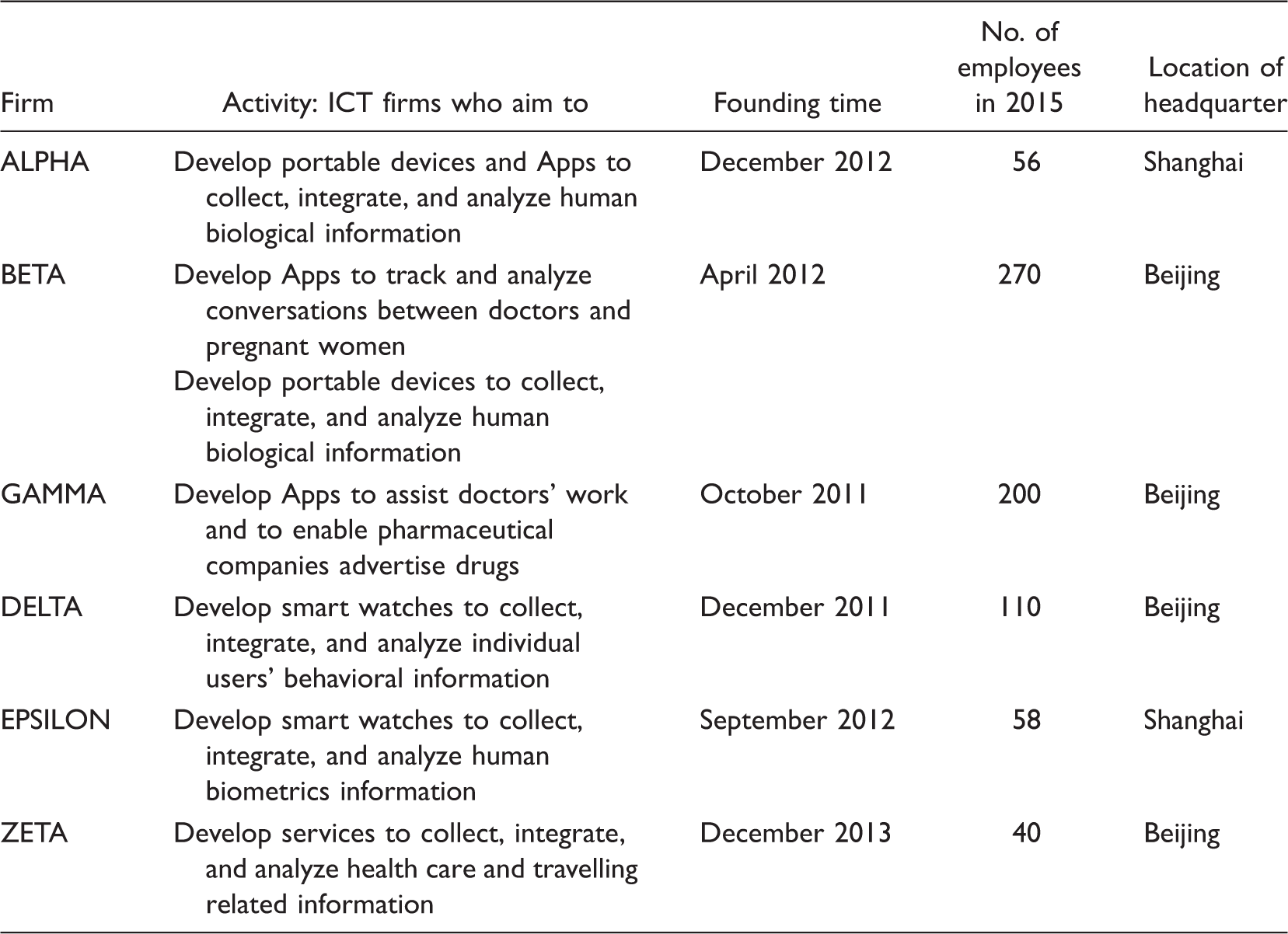
We began (in April 2013) by identifying ventures in the big data technology field in China. We initially conducted key word searches on Baidu (a Chinese internet search engine) to identify potential cases. The key words used included “big data,” “portable device,” “big data analytical service,” “entrepreneur,” and “new venture.” Based on an examination of firms’ websites and other publicly available information, we selected an initial set of 23 firms, most of which were in the health-care, well-being, and/or education sectors. We contacted all of them by telephone to inquire about the possibility of access. Ten firms from the set agreed to be interviewed.
Case Studies
Data Collection
Data Sources

The first round of interviews was conducted in November and December 2013. The initial interviews were carried out with the six firms’ CEOs or Chief Marketing Officers (in the case of EPSILON), who also put us in contact with additional founding team members and senior managers. The intention behind our initial interview questions was to understand the broad domains in which the case study ventures operated, and to understand how the entrepreneurial activities had developed over time. We sought to identify effectuation processes within the founding teams or senior management teams which were directly involved in strategic decision-making.
Interviews were semistructured, beginning with questions concerning the participants’ general views of opportunities relating to information and communication technology. The interviewees were then asked to describe why and how they identify (create or discover) and pursue these opportunities. We inquired about the type of information that participants used as well as how goals were involved in decision-making processes. We also collected detailed descriptions of the activities carried out by the ventures. We used knowledge gained from earlier interviews as probes in later interviews in order to obtain more precise information and corroborate our understanding.
During the second round of interviews (November and December 2014), we used similar interview guidelines to the first round, and in addition asked what had changed since 2013, and how these changes had occurred. We then asked whether the goals identified in 2013 had been achieved and if so how. The third round of interviews was conducted in November and December 2015 using the same interview guidelines as in 2014. At the end of each third-round interview, we explained our emerging understanding of entrepreneurial behaviors to the interview participants. It is important to note here that we thoroughly analyzed all of our data between each round of interviews. We collected the interviewees’ feedback and reactions to our findings, which allowed us to corroborate our observations further and to reduce any retrospective biases, as we confronted the informants with factual information from earlier interviews rather than solely soliciting their personal memory and feelings (see Vuori & Huy, 2015, for the use of this strategy).
In addition to conducting interviews in the case-study firms, we collected and analyzed several hundred publicly available documents, including press articles and blog entries, as well as a large number of internal reports, presentation slides used during annual meetings and internal memos about the six firms. We used secondary data to triangulate our findings about which further details are given in the data analysis subsection below.
Data Analysis
Steps in The Process Analysis
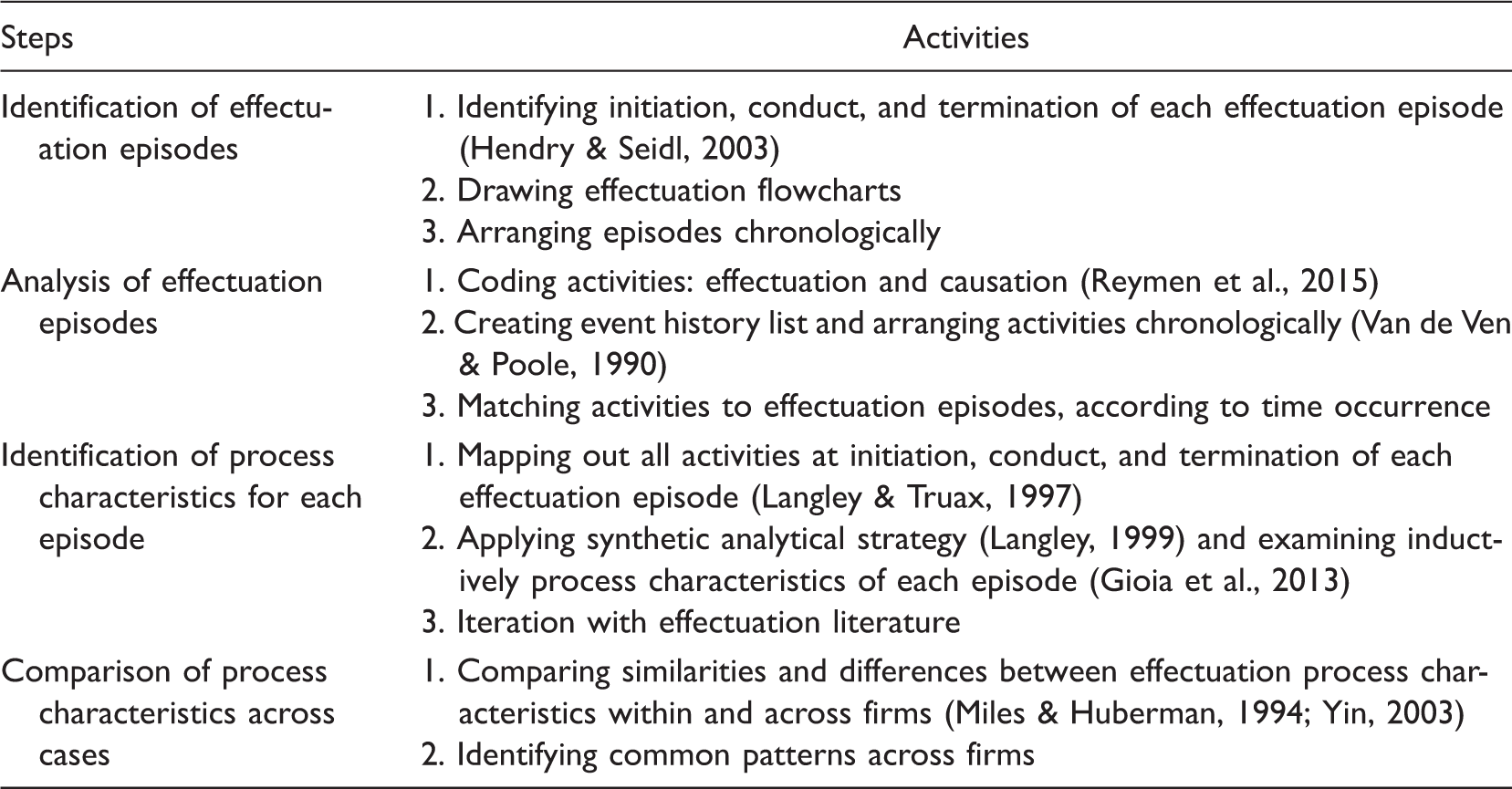
Firstly, based on the prior process chart proposed by Fisher (2012), Sarasvathy and Dew (2005), Wiltbank et al. (2006), and referring to other studies that have coded episodes in the field of organizational process studies (e.g., Jarzabkowski & Seidl, 2008), we identified three core aspects of effectuation episodes: initiation, conduct, and termination (Hendry & Seidl, 2003). For the initiation of an effectuation episode, we identified instances in our data in which entrepreneurs talked about reaching out for information or carrying out actions in which they reflect on “who I am (identity),” “what I can achieve (knowledge)” and “whom do I know (network)” (Wiltbank et al., 2006, p. 991). The conduct aspect consists of entrepreneurial sequential interactions with stakeholders. These interactions include how entrepreneurs convince stakeholders to participate, or how they interact with other stakeholders, conduct the negotiation process and convince stakeholders to commit to their businesses. The termination aspect was marked at the point in time when interviewees highlighted the establishment of new goals, which were shaped by interactions with stakeholders.
We used this approach to develop detailed process flowcharts for all six firms. Figure 1 below presents an extract from the effectuation episode flowchart established for BETA. Each case resulted in a unique flowchart, which enabled us to analyze differences among effectuation episodes across cases. In total, we identified 19 effectuation episodes, including four episodes for each of ALPHA, BETA, DELTA, EPSILON, two for GAMMA, and one for ZETA. We structured the flowcharts chronologically.
Extract of flow-chart for BETA.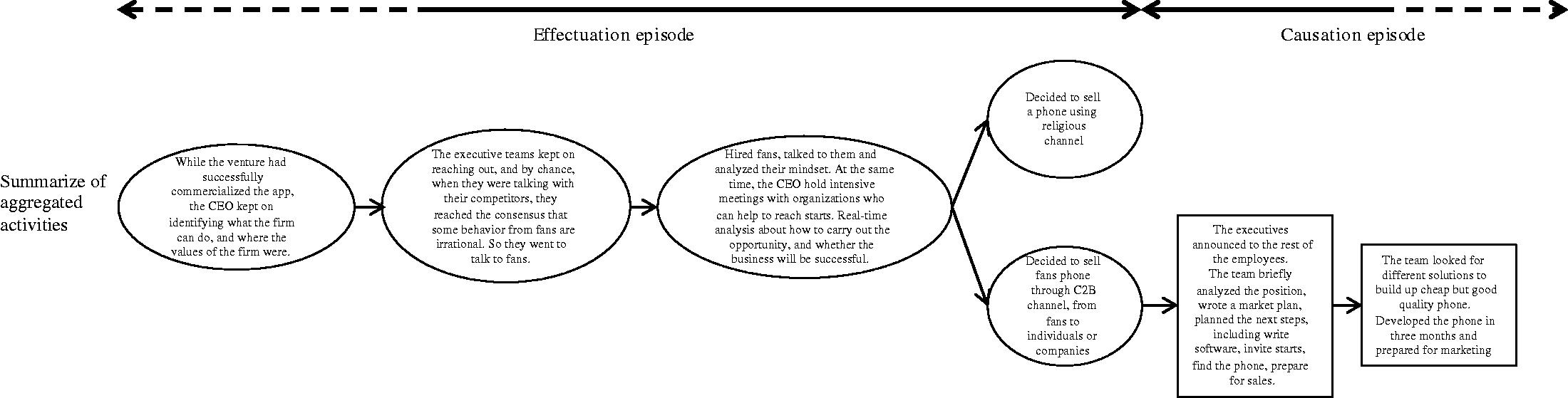
Coding Template and Examples for Effectuation and Causation Activities
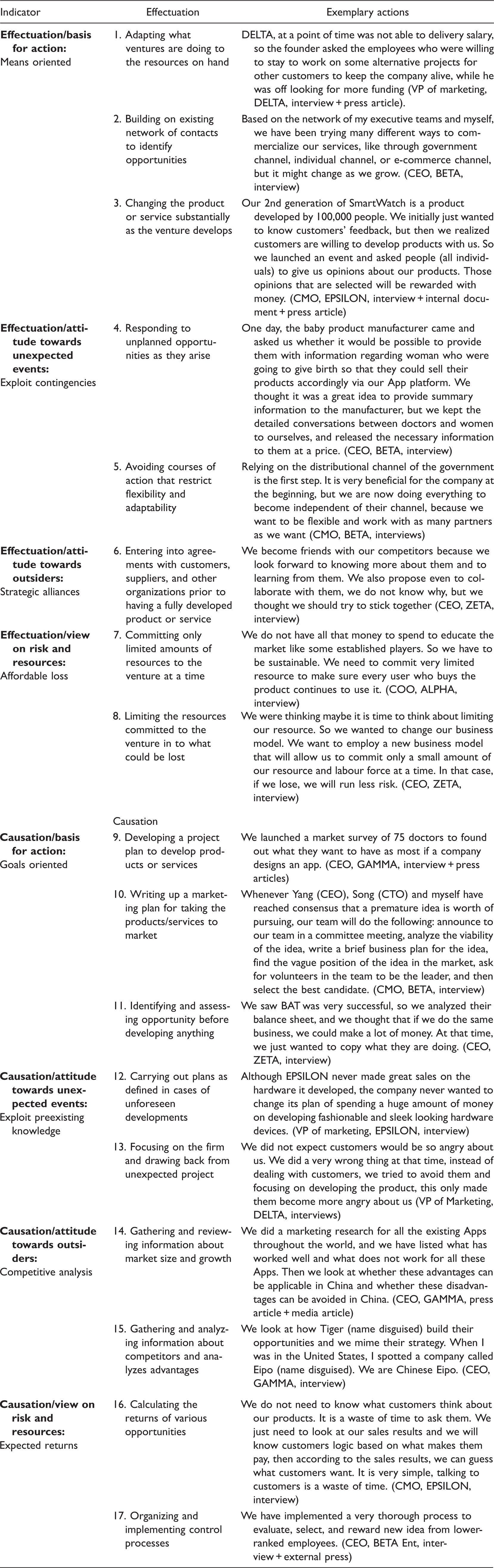
We then created an event history table to organize all of the effectuation and causation activities according to their temporal occurrence (Van de Ven & Poole, 1990). The event table helped us develop a better understanding of how the effectuation episodes unfolded by matching sequences of activities to each episode according to their temporal occurrence, and enabled us to visualize all of the activities that constituted each effectuation episode.
In the third step, based on our efforts in the second stage, we used visual mapping (Langley & Truax, 1997) and synthetic analytical strategies (Eisenhardt, 1989b; Langley, 1999) to inductively identify process characteristics regarding the initiation, conduct, and termination of each effectuation episode. This systematic inductive analysis was iterative and enabled us to identify five process characteristics that were present throughout all six cases.
For initiation, we focused on the entrepreneurial perception of uncertainty at the beginning of each effectuation episode. This choice reflected the suggestion in prior research that entrepreneurs are more likely to employ effectuation when they are operating in an uncertain environment (Read et al., 2009; Ries, 2011; Sarasvathy, 2001). For conduct, we paid attention to how entrepreneurs interact with other stakeholders (Wiltbank et al., 2006). More specifically, we looked at how entrepreneurs convince stakeholders to participate and commit to creating “something”; we focused in particular on understanding how entrepreneurs describe this “something” during interactions. We also looked at how entrepreneurs interact with other stakeholders and conduct the negotiation process. For termination, we identified novel goals or means resulting from an effectuation episode. Furthermore, we used the event history table to trace activities of ventures after the end of a single episode in order to understand how entrepreneurs establish cycles to increase the available means and to constrain the stakeholder network’s preferences. Our comparative analysis of effectuation episodes yielded five process characteristics (Gioia, Corley, & Hamilton, 2013). Figure 2 represents the overall data structure resulting from our analysis.
Data structure of effectuation process characteristics.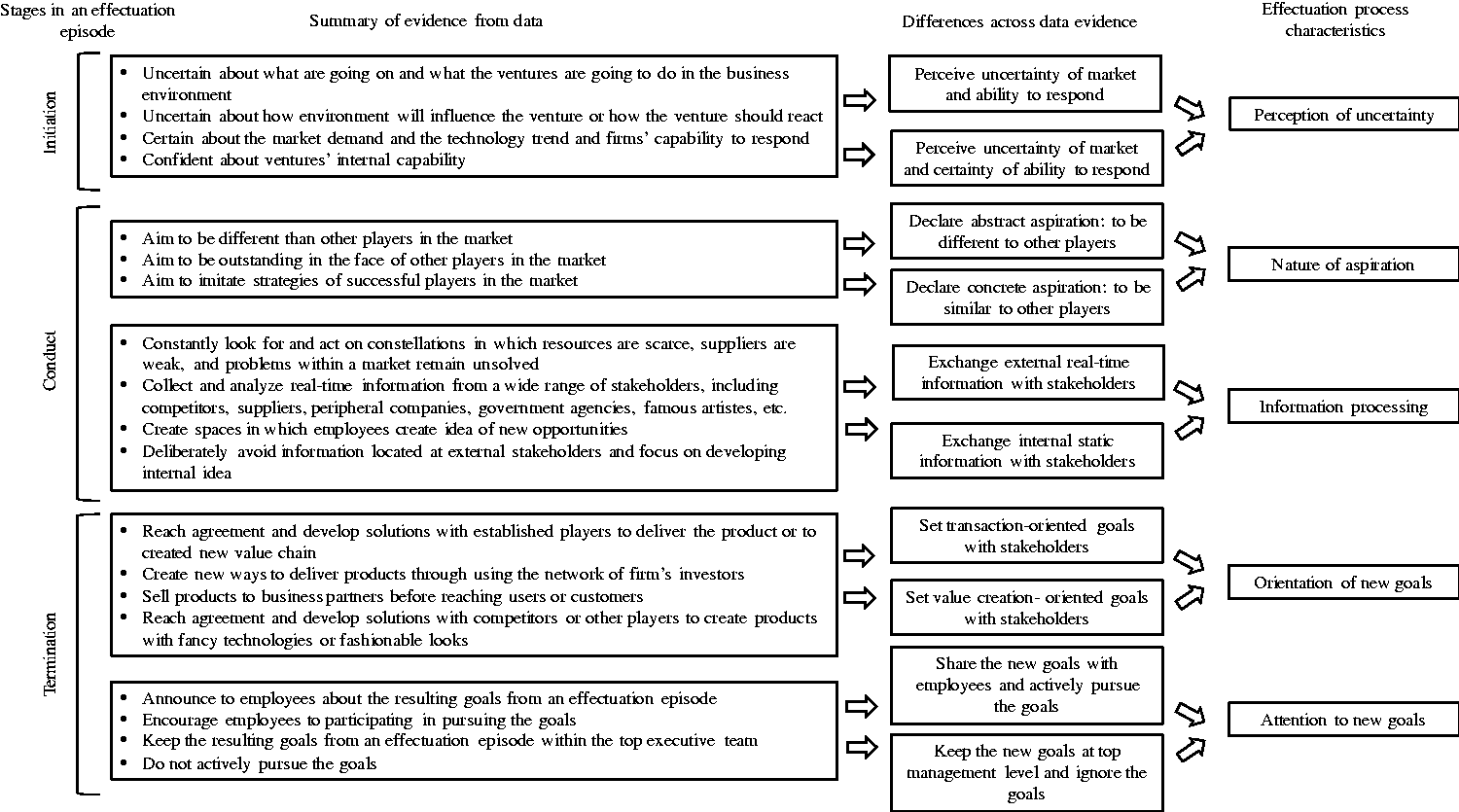
In the final stage of our analysis, we moved our unit of analysis from the episode level to the firm level by engaging in a comparison of similarities and differences between the effectuation processes throughout the six firms (Miles & Huberman, 1994). To this end, we developed a series of tables (some of which are included in the Findings section below) representing the differences in the various aspects analyzed. This allowed us to identify two overall effectuation process types. Moreover, we found that certain types tend to prevail in particular cases. We revisited all of the cases to check whether the data confirmed the connections identified in our data analysis. Concurrently, we reflected on how these connections could be explained theoretically (Gioia et al., 2013). Throughout the analytical process, we actively compared our observations with the existing entrepreneurship literature in order to refine and identify overall effectuation patterns.
Overall, the coding and data analysis followed a rigorous iterative process (Eisenhardt, 1989a). All interviews were digitally recorded and transcribed, and the coding was supported by NVivo9 qualitative data analysis software in order to manage the data and carry out the analysis in a systematic and consistent manner. In addition, the coding structure and the flowcharts for the cases were reviewed several times by two scholars before the final round of interviews in November and December 2015.
Findings
On the basis of our comparative analysis of effectuation episodes in the six cases, we found five process characteristics in which the effectuation episodes varied. As we have outlined in the Methods section above, these five process characteristics refer to different moments in the development of an effectuation episode (initiation, conduct, and termination). In this section, we first illustrate each process characteristic before addressing how characteristics combine to form dominant types of effectuation processes.
Effectuation Process Characteristics
Effectuation Episodes, Process Characteristics, and Examples

Perception of uncertainty
Perception of uncertainty was a characteristic that commonly emerged from the data when entrepreneurs began an effectuation episode. We found that the starting point of an effectuation episode was motivated by both the entrepreneurial perception of the external environment and the internal capability. Our data suggest that although all entrepreneurs acknowledged uncertainty in the business environment, the entrepreneurs at ALPHA, BETA, GAMMA, and DELTA (subsequent stage) used effectuation as a response to the perceived uncertainty about their ability to respond to the market. Conversely, the entrepreneurs at DELTA (in an earlier stage), EPSILON, and ZETA employed effectuation in situations in which the managers expressed a high degree of certainty about their capability to respond.
Executives from ALPHA, for example, started an effectuation episode when they felt unable to move forward, as explained by the CEO during an interview: “Nobody knows what we are doing … nobody wanted to work with us … we didn’t know how customers’ needs would impact us.” (CEO, ALPHA, 2013). As a consequence of these concerns, managers from ALPHA decided to stop developing new products. They asked external stakeholders, such as employees’ relatives and friends, or investors’ friends, to help them brainstorm who they were and define their identity. The executives mentioned that they struggled at the beginning, but soon accepted their present state of confusion, as stated by the CTO: “The reality now is that we do not know anything, but what we do know is that we need to face up to it. It is difficult, because everything is changing all the time. But it is not that bad, because we are developing a new product with a new technology.” (CTO, ALPHA, 2013). Senior managers from BETA, GAMMA, and DELTA (at a subsequent stage) expressed similar concerns and a sense of tolerance for unpredictability.
In contrast, executive teams from DELTA (at an earlier stage), ZETA, and EPSILON did not engage in effectuation as a response to uncertainty. Instead, they expressed confidence in their abilities to cope with business environments. For example, the perception of certainty at EPSILON was illustrated by the following quote: “We will have a market no matter what we manufacture as product. China is a country with a huge population. So even if we design a ridiculous, but new product, and even if only 1% of people like it, we will still have enough customers to support the company.” (CMO, EPSILON, 2013). As a result, EPSILON focused on developing multiple product lines. It invested about 200 million Yuan (i.e., about USD 30 million) in cutting-edge technology to improve product features and performance. However, most of its products suffered from liabilities relating to new technology, and created relatively lower sales revenue. A similar example of perceived certainty was expressed by the CEO of DELTA, who claimed that he had thought nothing would be difficult for the venture, and that he would become the best hardware manufacturer in China: “At the beginning, when I had just started the venture in the smart watch industry, I did not look for any information about the market. I had money, I had experience in the hardware industry, and I had a lot of friends. I thought success was just one step away …” (CEO, DELTA, 2014).
Nature of aspiration
At the time entrepreneurs were embarking on an effectuation episode, they used different mechanisms in their attempts to find stakeholders to participate in their efforts to manufacture a product or produce a service. We found that entrepreneurs conveyed different aspirations to stakeholders in their strategy of convincing them to co-create a future together. Table 5 illustrates examples of goals. Entrepreneurs at ALPHA, BETA, GAMMA, and DELTA all conveyed aspirations of being different to the other players; whereas entrepreneurs at ZETA and EPSILON conveyed aspirations of being similar to the other players in the market.
For example, the top executives from BETA were convinced that the firm needed to be different from all of its competitors in order to survive. ALPHA and DELTA shared similar long-term visions, as illustrated by the following quotes: “We want to become the first company to provide preventive healthcare gadgets in China. This has never changed.” (CEO, ALPHA, 2015); “We don’t want to be Apple, we want to defeat Apple, and become the Chinese people’s Apple.” (CEO, DELTA, 2014).
In contrast, entrepreneurs at ZETA and EPSILON conveyed aspirations of being similar, with clear referent companies, when interacting with stakeholders. Their aspirations favored mimicking and copying the strategies of other established firms. They were more detailed and stayed on the operational level, including lists of opportunities to pursue, how to design products, and how to develop a business model, and so on (see some more examples in Table 5). This implies that entrepreneurs used different strategies in order to shape what to produce in their efforts to convince stakeholders about the benefits of participating.
Information processing
During the negotiations and interactions with stakeholders, we identified information processing as an important characteristic of effectuation episodes. We found two information-processing modes: exchanges of real-time information with external stakeholders and analyses of information with internal team members. Certain entrepreneurs paid significant attention to real-time information exchanges during effectuation. This information was not widely available to market players and was collected through exchanges with entrepreneurs’ external networks. In contrast, other entrepreneurs paid more attention to analyzing information based on what had previously happened in the market and their team members’ accumulated prior experience. Some examples are provided in Table 5.
We found that certain entrepreneurs constantly sought to exchange information about changes in customer needs, other companies’ strategies, competitors’ moves, the availability of talented people, government policies, the ecosystems of micro-segmented industries, and so on. For example, when the venture was first created, the CEO of ALPHA did not know what the firm’s product should look like, nor did he know what software services should be embedded in the product. ALPHA’s executives explained that in addition to watching their competitors closely, they also organized weekly visits to subcontractors in order to collect information about other firms’ products: “We often talk with lots of companies, including competitors, and every time we talk with competitors, we listen very attentively to their complaints and difficulties in their businesses. We also become friends with factories that produce products. In the beginning, we ask them to show us our potential competitors’ products every week.” (CEO, ALPHA, 2013). Meetings were held at least twice a day via Wechat (a popular Chinese social media application) in order to exchange insights with external stakeholders. All informants claimed that these short meetings could happen at any time, 7 days a week. The founding teams at BETA also extensively exchanged real-time information during the effectuation process. For example, every morning, the CEO set aside time for discussing what he had heard the night before from managers of other firms. These meetings were devoted to discussing newly acquired information and determining the viability of ideas.
In contrast, there was little evidence supporting the use of real-time information during effectuation at DELTA (at an earlier stage), EPSILON, and ZETA. At EPSILON, for example, all executives mainly interacted with internal employees concerning the information their collaborators had collected about the market, as illustrated by the following quote: “Our CEO presents opportunities, and during the last internal ideas meeting, he came up with the idea of how to improve the appearance of our smart watch. He said we do not need to look outside; we just need to do what he says.” (CMO, EPSILON, 2015). Similar evidence was found at DELTA whose CEO confirmed that the decision to commercialize the prototype product completely ignored the outside world (this changed at a subsequent stage).
Orientation of new goals
We found that as a result of an effectuation episode, all ventures set new goals with stakeholders. Certain ventures were more likely to set transaction-oriented goals, whereas others were more likely to set value creation-oriented goals. Transaction-oriented goals define key distribution channels with partners and stakeholders. Value creation-oriented goals define ways to improve product performance or identify new market segments. A summary of goal setting resulting from effectuation and examples are presented in Table 5.
Our data show that the CEO of GAMMA intended to collect feedback from medical doctors in order to improve the design of the firm’s mobile application, for example. Following his interactions with doctors, the CEO was invited to attend seminars, where he came into contact with seminar organizers and media companies. After multiple exchanges, the CEO negotiated simultaneously with a number of prospective partners to distribute the venture’s products. In addition, the venture managed to gain access to medical schools during breaks between classes in order to talk to students about their products and services. In addition, the venture recruited medical students to work as interns. Similar evidence showing that goals from effectuation episodes were predominantly transaction-oriented emerged from ALPHA’s and BETA’s effectuation episodes.
In contrast, senior management teams from EPSILON and ZETA primarily established value creation-oriented goals. These goals emphasized the improvement of technology, or the development of new types of businesses. For example, as an outcome of the effectuation process, the top management teams of both EPSILON and ZETA established goals concerning how to design products, improve product content, and where to target customers. The CMO of EPSILON described that during the customer feedback collection process, the venture engaged in active interactions with customers, and discovered that the firm could improve the design of its smart watch. As a consequence, the venture initiated an innovation contest to design the smart watch interface, which included financial incentives: “Our second-generation SmartWatch is a product developed by 100,000 people. We launched an event and asked people (all individuals) to give us their opinions of our products, but through the process we realized that many users like fashionable-looking watches, so we launched a competition asking people to design the coolest smart watch interface. The designs that are selected receive cash prizes.” (CMO, EPSILON, 2014). Similarly, the CEO of ZETA employed effectuation when he feared that the firm might go out of business due to the high R&D expenditure on their new product: a new analytical tool. He decided to engage in discussions with some of the firm’s competitors to learn more about their survival strategies. As an outcome of these interactions, the CEO realized that together, the firms could build a more powerful data analysis algorithm that could be used throughout distinctive sectors.
Attention to new goals
Finally, we identified activities carried out towards the end of each effectuation episode. We found that ventures paid attention to the new goals in various ways: certain entrepreneurs communicated with their employees and allocated resources to attain the new goals, whereas others did not share new goals with their employees, nor did they actively try to pursue the goals. Table 5 summarizes these findings with illustrative examples.
Senior managers from BETA claimed that when a new goal was developed in the effectuation process, they immediately started writing a detailed follow-up plan to attain that goal. The firm’s CMO stated that: “Whenever Yang (the CEO), Song (CTO) and myself reach a consensus that an initial idea is worth of pursuing, our team will do the following: announce the news to our team in a committee meeting, analyze the viability of the idea, write a brief business plan for the idea, establish the approximate positioning of the idea on the market, ask for volunteers in the team to be the leader, and then select the best candidate.” (CMO, BETA, 2014). During our interviews in 2014, three informants from BETA described a process by which effectuation-oriented goals were pursued: the CEO met a young talent—Tang—in March 2014, and was delighted to learn that he owned a large customer database related to the online education sector. The CEO then reached a consensus within the company to exploit this opportunity by hiring Tang. When the hiring process began, the CEO had already assigned employees to work on Tang’s project, prepared a detailed business plan, decided that the product would take the form of a mobile application, outlined the content of the app, scheduled the possible release date, and negotiated with potential investors. The entire venture emergence process lasted less than 6 months. Similarly, both ALPHA and DELTA (in a subsequent stage) devoted efforts to attaining goals identified through effectuation. The informants from DELTA claimed that they needed to be ready 24 hr a day to support “high-flying” ideas from their CEO.
In contrast, senior executives in other ventures did not share decisions with employees or explain their goals to the same extent, nor did they actually try to attain their value creation-oriented goals. For example, when we asked EPSILON’s VP of marketing to describe how the firm had pursued the goals set during a previous effectuation episode, he explained that the person who was assigned to follow up the goals had left the company, and that the firm was not attempting to pursue the goals any further. A similar situation was also found at ZETA. Its CEO explained that the firm had tried to collaborate with previously unknown stakeholders, but this collaboration had proved to be complicated. After a 1-month trial, ZETA abandoned its pursuit of this goal. ZETA’s CEO explained: “It was not worth pursuing something that was not originally planned. It turned out to be complicated anyway. We decided that we should focus on our initial business.” (CEO, ZETA, 2015).
Dominant Process Types
The previous section examined the five effectuation process characteristics independently. According to our six cases, the five characteristics combined to form two distinct overall patterns, which we propose to label: Type 1—Externally Motivated Effectuation and Type 2—Internally Motivated Effectuation, and each of which tend to be prevalent in particular cases. Supported by the original effectuation process diagram by Sarasvathy and Dew (2005), Figure 3 below illustrates effectuation process stages, characteristics, and dominant types.
Effectuation process, process stages, characteristics, and dominant types.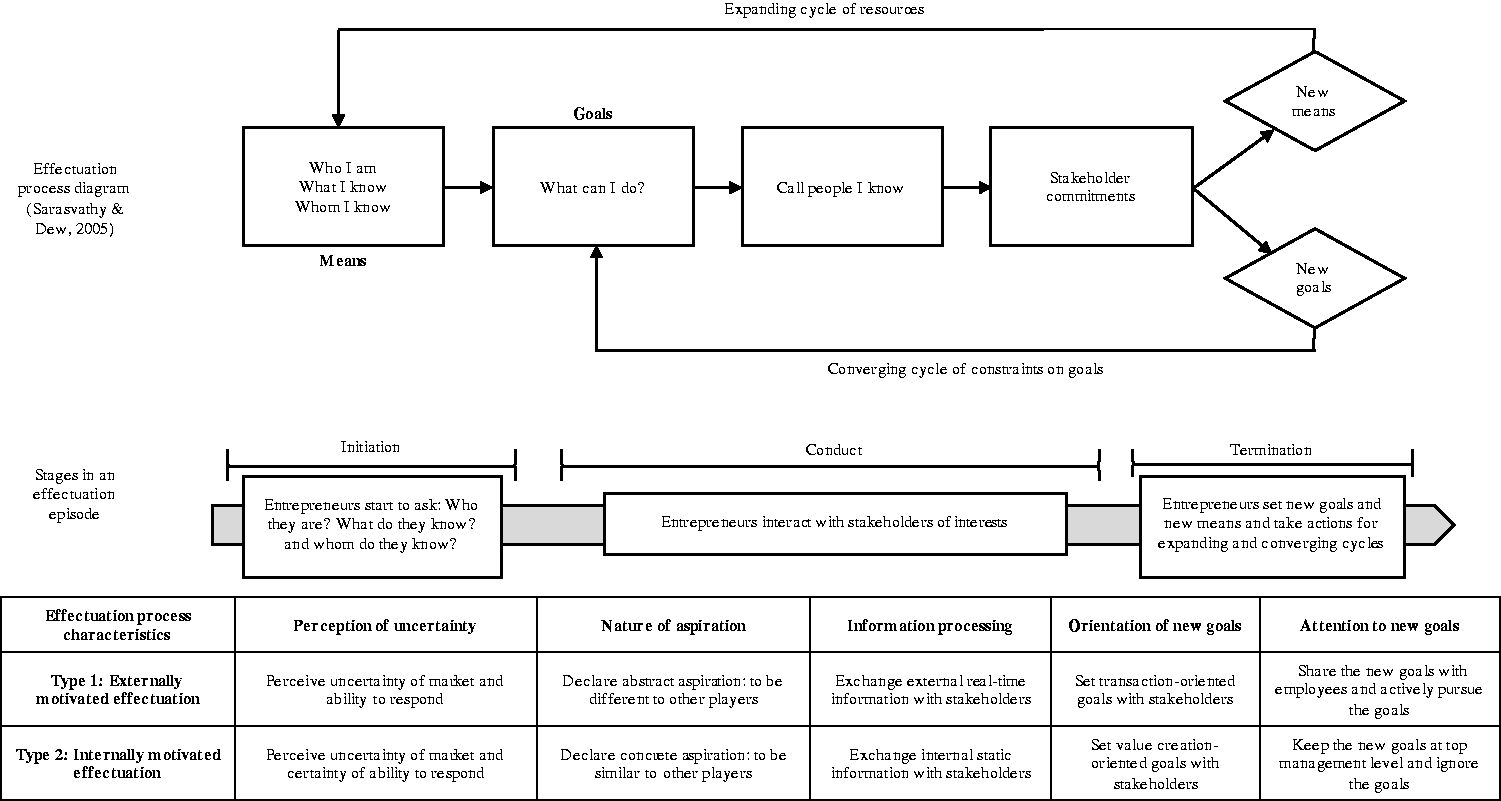
Type 1 effectuation: Externally Motivated Effectuation
“Type 1” effectuation processes were mostly observed in ALPHA, BETA, GAMMA, and DELTA (at a later stage). Externally motivated effectuation processes responded to an initial sense of uncertainty about the external business environment and venture capabilities with the formulation of aspirations to be unique and an emphasis on dynamic ongoing exchanges with stakeholders in order to gather and process information. They typically resulted in the development of new goals that were transaction-oriented, and which received a high degree of attention in the venture. At BETA, for example, stakeholders made a preliminary commitment to establish multiple distribution channels before the arrival of new products. Entrepreneurs at BETA also engaged employees in the effectuation episodes by sharing the resulting goals and allocating resources to pursue these goals.
Type 2 effectuation: Internally Motivated Effectuation
“Type 2” effectuation processes were commonly observed in EPSILON, ZETA, and DELTA (at an early stage). Here, the initiation of internally motivated effectuation processes was characterized by entrepreneurial perceptions of uncertainty about external markets, coupled with a strong sense of certainty about the ventures’ ability to respond to the market. This means that although founding team members acknowledged the external market uncertainty, they embarked on an effectuation process with an initial sense of confidence in their abilities to respond. During interactions with stakeholders, Type 2 effectuation processes were also characterized by an aspiration focus on being similar to other players and a strong reliance on existing information and prior experience. In our cases, they typically led to the establishment of value creation-oriented goals, strongly inspired by existing products or services in the market. In contrast to entrepreneurs embracing externally motivated effectuation processes, entrepreneurs using Type 2 effectuation processes did not actively share or communicate about goals with employees in their ventures and allocated only limited resources to achieving these goals.
To summarize, externally motivated effectuation episodes were marked by the perception of a high degree of uncertainty regarding both the business environment and the ventures’ ability to respond, whereas internally motivated effectuation episodes were characterized by the entrepreneurs’ perception of uncertainty about the business environment coupled with certainty about the ventures’ ability to respond. As effectuation episodes unfolded, the nature of aspiration differed between more an abstract aspiration to be different for externally motivated effectuation, and a more concrete aspiration to be similar for internally motivated effectuation. Moreover, externally motivated episodes were strongly characterized by ongoing and dynamic information exchanges with external stakeholders, whereas internally motivated episodes were more strongly characterized by an approach focusing on analyzing information with internal team members. Regarding the termination stage of an effectuation episode, externally motivated effectuation episodes were more likely to yield transaction-oriented goals than value creation-oriented goals set at the end of internally motivated effectuation episodes. Finally, externally motivated effectuation episodes were characterized by an immediate allocation of resources and an organization-wide attention to attaining the new goals, whereas the goals resulting from internally motivated episodes were not pursued as strategic priorities.
Discussion
This study explores how effectuation processes unfold over time and to what extent they vary. Relying on longitudinal data from six ventures, our empirical findings yield three theoretical contributions that offer revelatory insights for effectuation theory. Firstly, we highlight the heterogeneity of effectuation processes and challenge the widely held assumption that effectuation processes are invariable and can simply be captured by analyzing activities on the basis of the four principles of effectuation. Then, by relating our five process characteristics to the four effectuation principles, we discuss the mechanisms underpinning each effectuation process type and theorize about the integrative relationship between process and principle constructs in effectuation theory. Finally, we propose a theoretical explanation for the heterogeneity of effectuation processes and suggest avenues for further empirical study of effectuation as a process. We conclude by discussing the limitations of our study, avenues for further research, and the managerial implications of our findings.
Heterogeneity of Effectuation Processes
The results of our explorative study indicate differences concerning the ways in which entrepreneurs conduct effectuation processes in terms of five process characteristics: perception of uncertainty, nature of aspirations, information processing, orientation of new goals, and attention to new goals. These findings challenge the conventional belief about effectuation. We propose that effectuation is a heterogeneous process.
From the outset of effectuation theory, effectuation processes have always been studied on the basis of principles pertaining to four types of behaviors at the individual or firm level. In doing so, scholars implicitly assume that effectuation processes can be studied by adopting a categorical approach (McMullen & Dimov, 2013) and that they progress in a unitary fashion (Van den Daele, 1969). This approach, however, discounts the originality of the process idea, which describes an effectuation process as the way in which actions develop and change according to a sequence—processes (Van de Ven, 2007).
The variations among the effectuation episodes in our cases, captured by the five process characteristics above, provide evidence that effectuation should be considered a heterogeneous process. For example, entrepreneurs may perform an effectuation activity such as building strategic alliances in response to their different perceptions of uncertainty about the market and their ability to respond. Interestingly, our data show that entrepreneurs’ confidence in their own ability (Koellinger, Minniti, & Schade, 2007) may also mark the start of an effectuation episode. This implies that variations in both the degree and combination of perceived uncertainty types (Milliken, 1987) may trigger effectuation behavior. Alternatively, entrepreneurs may build strategic alliances by declaring different forms of aspirations, for example, being different or similar, during interactions with stakeholders. This implies that entrepreneurs may use different strategies to interact with stakeholders on co-creating the future throughout their effectuation processes.
Over the last 15 years, scholars have relied on effectuation principles (Sarasvathy, 2001) to measure and test effectuation empirically. The methods have included scale development (e.g., Chandler et al., 2012; Werhahn et al., 2015), surveys (e.g., Blauth, Mauer, & Brettel, 2009; Brettel et al., 2012), qualitative in-depth case analyses (e.g., Evald & Senderovitz, 2013; Harmeling & Sarasvathy, 2013; Reymen et al., 2015), meta-analysis (e.g., Read et al., 2008), and experiments (Engel, Dimitrova, Khapova, & Elfring, 2014). These empirical studies of effectuation provide rich insights into whether or not activities based on effectuation principles are used, how they are displayed, and how effectuation can be measured according to the four principles. Yet, all of these studies treat the effectuation process as a category of concepts (Van de Ven, 2007), which means that the effectuation process can be embodied by activities corresponding to the four principles, and assumes that effectuation processes are homogenous modes of entrepreneurial behavior. Contrary to this assumption, our study provides new insights into the ways in which effectuation processes unfold. In order to provide a more in-depth understanding of this point, we propose to address the connections between the principle and the process constructs in effectuation theory in the following subsection.
Effectuation Principles Underpinning Both Effectuation Process Types
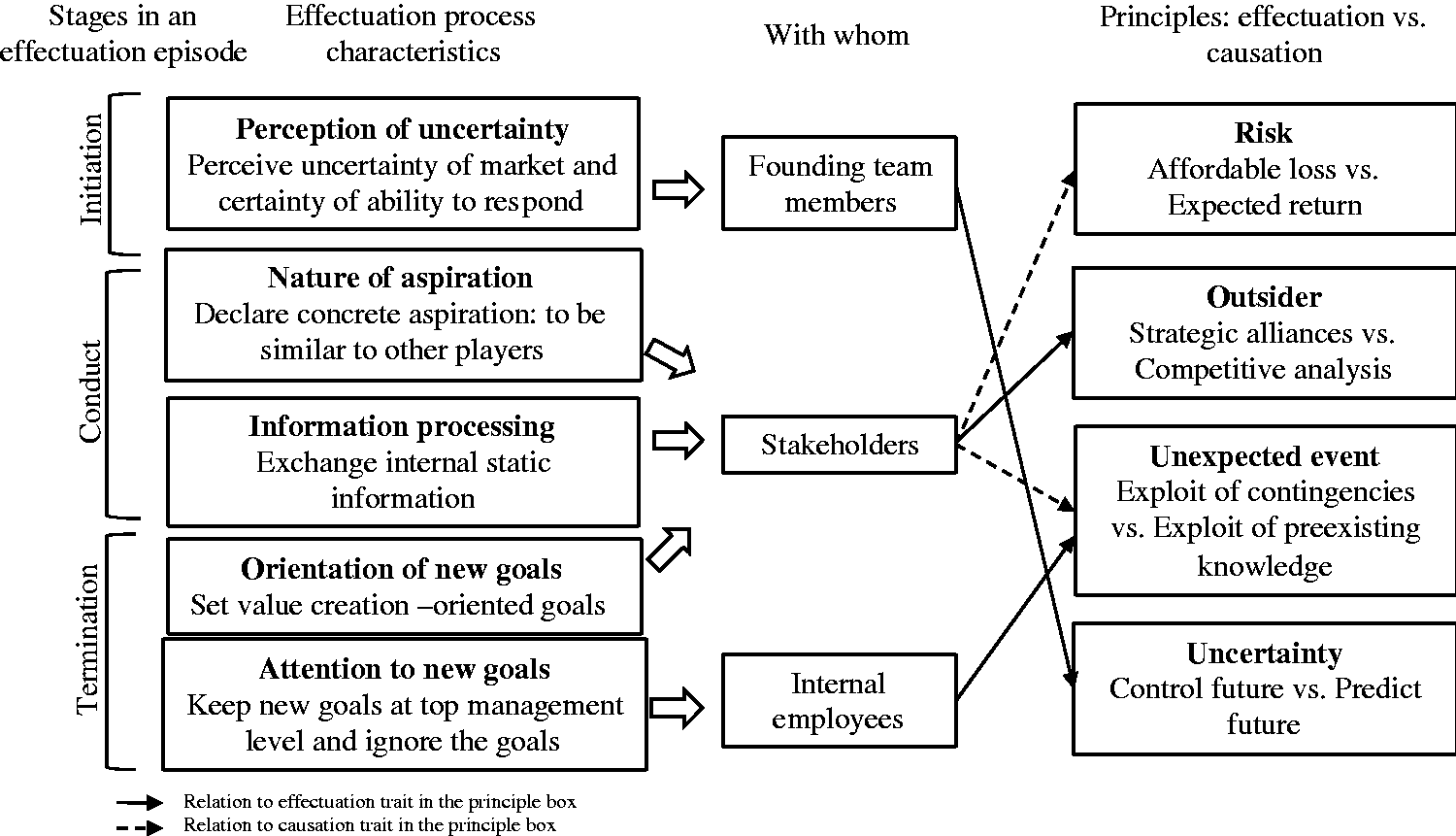
In this section, we rely on insights from the domain of social psychology to explain how principles underpin the process characteristics for the two effectuation process types outlined above. By doing so, we propose an integrative relationship between the two constructs—principles and processes—in effectuation theory. This means that effectuation processes can comprise activities that are associated with principles of both effectuation and causation. Figures 4 and 5 illustrate the relationship.
Externally motivated effectuation: process characteristics and principles. Internally motivated effectuation: process characteristics and principles.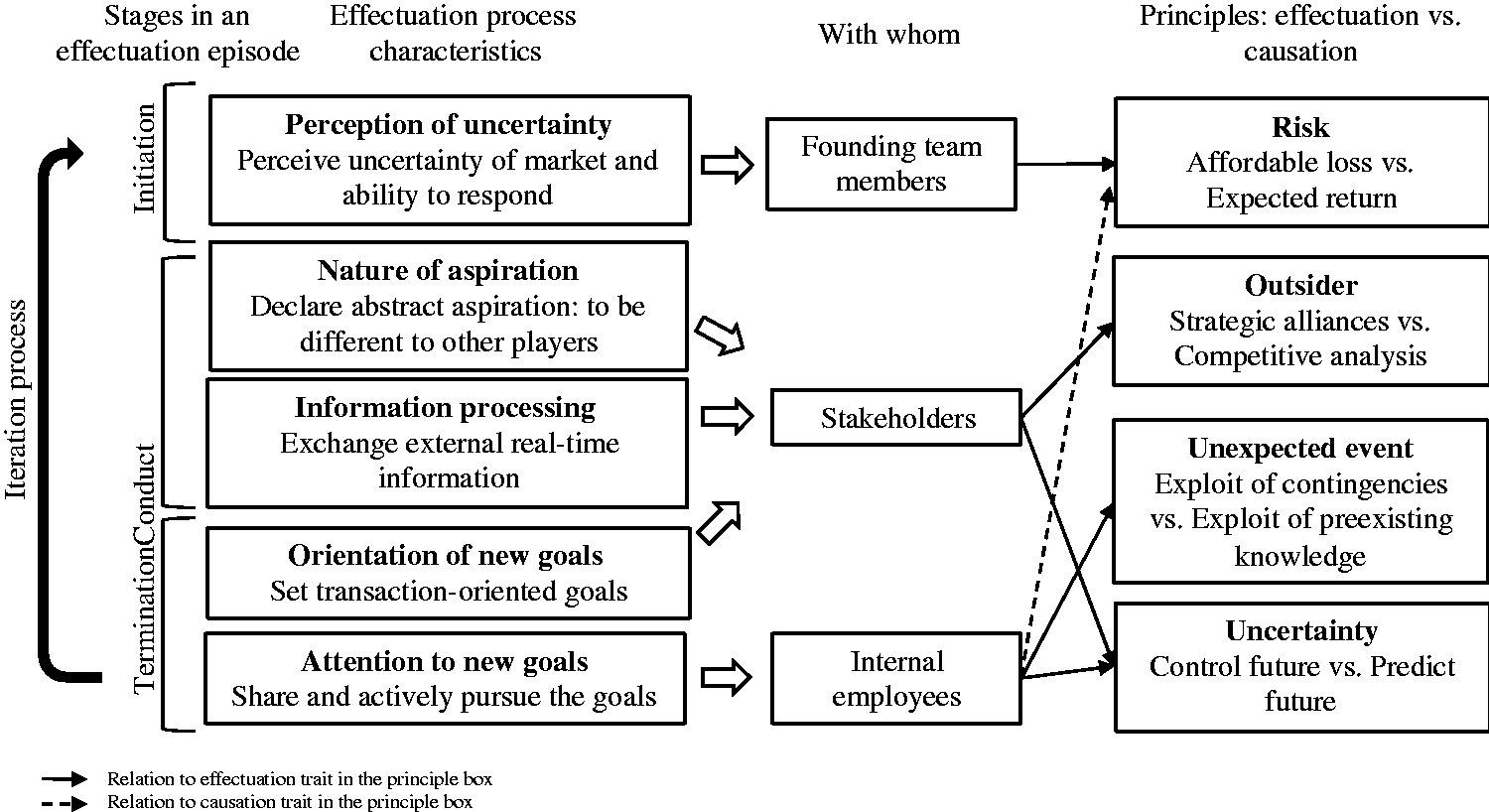
Type 1: Externally motivated effectuation
In externally motivated effectuation, the perceived uncertainty about markets and the firm's ability to respond relates to the affordable loss principle. In this case, entrepreneurs acknowledge uncertainty before they begin to ask questions such as “whom do they know?” “who are they?” and “what do they know.” Reflections on these questions shift the entrepreneurs’ decision-making processes from creating the right products or services to experimenting with as many options as possible (Sarasvathy, 2001). Entrepreneurs try to find out what they can afford to lose in an uncertain environment. A typical example from our empirical data is that instead of focusing on determining what is the right product or service to create, entrepreneurs often embark on an effectuation process by aiming to understand what they should
Three of the process characteristics—aspiring to be unique, exchanging external real-time information, and setting transaction-oriented goals, relate to building strategic alliances and controlling uncertainty. Although entrepreneurs acknowledge uncertainty among founding team members, when it comes to interaction with stakeholders, they tend to present their uniqueness as a strategy to control and reduce the stakeholders’ perception of uncertainty and to gain cognitive legitimacy (Pollack, Rutherford, & Nagy, 2012). Moreover, during these interactions, entrepreneurs exchange large amounts of real-time information regularly in order to take charge of the negotiation process and to set the goals in order to optimize their chances of achieving success for the firm (Bazerman, Curhan, Moore, & Valley, 2000). Setting transaction-oriented goals with stakeholders ensures the existence of distributional channels once the new product or services are ready (George & Bock, 2011). Therefore, these three process characteristics relate to how entrepreneurs build strategic alliances and control uncertainty.
The characteristic of share and actively pursue new goals relates to both causation (expected return) trait and effectuation (exploiting contingences and controlling uncertainty). Activities based on this characteristic occur during the expanding cycle and the converging cycle of the effectuation process (Sarasvathy & Dew, 2005). Sharing new goals that resulted from effectuation episodes gives employees a sense of security and increases their confidence (Eisenhardt, 1989b) to pursue the new goals. Actively pursuing goals increases the employees’ sense of participation and commitment, as well as their determination to attain the goals (Locke & Latham, 1990); it also allows entrepreneurs to exploit the contingencies and quickly test the potential returns of the contingences.
Type 2: Internally motivated effectuation process
In Type 2 effectuation, although founding teams acknowledge external uncertainty, they are relatively certain about how the firm should respond to the market (response uncertainty) (Milliken, 1987). Here, entrepreneurs embark on an effectuation process with the feeling of being capable to control their future, based on confidence in their capabilities (Koellinger et al., 2007).
When interacting with stakeholders, the aspiration to be similar, the analysis of static information, and the setting of value creation-oriented goals are characteristics related to causation (expected returns and exploitation of existing knowledge) as well as effectuation (strategic alliances) principles. In Type 2 effectuation, founding teams try to interact with stakeholders in an effort to participate by aiming to resemble pre-selected cognitive representatives (Tversky & Kahneman, 1975). In this sense, actions undertaken during interactions with stakeholders relate to the expected returns, which is a causation activity in effectuation theory. Although new value creation-oriented goals (George & Bock, 2011) have emerged from Type 2 effectuation processes, interactions with stakeholders have resulted in the co-creation of new products and services, inspired by an existing entity in the market.
Finally, keeping the new goals at the top management level and ignore the goals relates to exploiting contingencies. In this case, entrepreneurs tend to ignore new goals and do not give directions to employees about necessary actions to take to pursue the goals. Subsequently, employees exploit contingencies much more slowly and new goals resulting from effectuation episodes are often not implemented or realized. This means that although entrepreneurs involved in Type 2 effectuation processes deliberately leave room for leveraging contingencies, they seem to have difficulties in iterating effectuation processes.
Taken together, we argue that effectuation principle and process constructs are in fact interconnected: an effectuation episode could unfold via different sequences, combinations, and iteration trajectories of activities belonging to four principles. This provides plausible explanations for the recent suggestions that effectuation and causation activities are not mutually exclusive (Berends et al., 2014; Reymen et al., 2015).
Based on the preceding discussion, in the next section, we will propose concrete ways to take the process perspective into account when studying effectuation, by discussing the effects of effectuation processes on potentially relevant dependent variables.
Steps Towards Taking The Effectuation Process Perspective Seriously
Our effort to highlight the heterogeneity of effectuation processes, and to relate principle and process constructs, coupled with our empirical observations, enables us to put forward the idea that the effects of the effectuation process are conditioned by sequences, combinations, and iterations of effectuation and causation activities. Using temporality and goal-setting literature as two theoretical lenses, we propose to explain the underlying mechanisms of how principle and process constructs relate. In doing so, we provide new insights into effectuation as a mode of entrepreneurial behavior.
Using the episode concept as a tool, ours is the first study to take temporal aspects into account in effectuation process research. Instead of capturing snapshots of effectuation and causation activities, an episode brackets an effectuation process between its initiation and termination points. It has been argued that because the content and the temporal occurrence of a bracketed episode may vary, the meaning of each episode and its relationship with other constructs, such as potential dependent variables, could also vary (George & Jones, 2000). Therefore, during an effectuation process, different combinations and sequences of how entrepreneurs carry out both effectuation and causation activities could have important implications for effectuation as a mode of entrepreneurial behavior.
We also argue that goal-setting has important implications for the iteration of effectuation processes. In particular, we add specificity to Sarasvathy and Dew’s (2005) process model, which states that goals are a natural artefact of a successful iteration of the effectuation proposing that transaction-oriented goals are more relevant than value-creation-oriented goals for the iteration of effectuation processes. Our empirical observations show that transaction-oriented goals are specific and actionable goals, accompanied by clear tasks for each stakeholder involved, deliverables, payment conditions, and so on. Because of their specificities, it is easier for entrepreneurs and their team members to devote their attention to the new goals and commit to them (Klein, Wesson, Hollenbeck, & Alge, 1999). Consequently, transaction-oriented goals are more relevant for iteration, because they force a departure from an effectuation episode into a causal execution mode. Conversely, value-creation-oriented goals often relate to the creation of new products or services. There is an ambiguity in these goals with regard to what needs to be attained stepwise. The venture is left with vague directions and cannot move ahead effectively. Therefore, value-creation-oriented goals are less relevant for the iteration of effectuation processes, as they are not specific enough to effect a clean transition into causal execution modes (Locke, Chah, Harrison, & Lustgarten, 1989; Locke & Latham, 1990).
Based on our discussion outlined above, we challenge the ways in which scholars have assessed effectuation and propose to reflect on how this challenges the causal relationships between effectuation and its potential dependent variables. Effectuation was initially developed as a process theory. The word process appears over 90 times in Sarasvathy (2001)’s seminal work (Gupta et al., 2016). However, effectuation scholars remain remarkably silent on the issue of time. To our knowledge, no prior study has considered the temporal aspect when theorizing effectuation, or taken the process perspective into account when measuring effectuation. Because any variations in processes may affect the relationship between effectuation as a behavioral mode and outcome variables (George & Jones, 2000), it is therefore important that we start to take process-based perspectives of effectuation into consideration.
By including the process aspect in empirical studies, we could consider different ways of treating activities that are based on different principles. For example, we could consider the temporal occurrence of effectuation and causation activities, which configurations of activities are carried out, and whether or not the iteration of effectuation processes actually happens. For example, in internally motivated effectuation, we did not find any process characteristics relating to the affordable loss principle, which implies that certain effectuation principles might not be present during an effectuation process. This is a plausible explanation for why Read et al. (2008) did not find a significant effect of affordable loss on the performance of ventures. Therefore, by acknowledging additional aspects when measuring activities that pinpoint effectuation or causation principles, we could move towards incorporating the process perspective into the theorization and operationalization of the theory.
Alternatively, scholars could consider developing effectuation scales by assessing the general tendency of founding teams to employ effectuation or causation, rather than looking at the extent to which effectuation and/or causation activities are carried out. For qualitative process studies we propose that the analysis of effectuation should focus more on paths of actions, longitudinal data, and proximate outcomes (McMullen & Dimov, 2013) than on correlational snapshots of effectuation or causation at single point in time.
This study is the first to focus on episodes (Hendry & Seidl, 2003) as a research approach combined with process research methods (Langley, 1999) in the entrepreneurship field. Because entrepreneurship is an emerging academic discipline, we believe that by focusing on episodes as a way to bridge this research approach that has already been adopted in the fields of organizational learning (e.g., Berends, Smits, Reymen, & Podoynitsyna, 2016) and organizational change (e.g., Denis, Dompierre, Langley, & Rouleau, 2011; Spee & Jarzabkowski, 2011), we can develop a better understanding of processes and of new venture creation processes in particular.
Limitations and Future Research
Our study is subject to certain limitations that also suggest possible avenues for future study. To begin with, in our study, we have described effectuation episodes by observing effectuation and causation activities. Data concerning other behaviors, including bricolage (Baker & Nelson, 2005), visionary strategy (Wiltbank et al., 2006), improvisation (Miner, Bassoff, & Moorman, 2001), and so on, were not taken into account. Future work on addressing this challenge and comparing additional behaviors may enhance our understanding of the boundary conditions in which effectuation behavior applies. Secondly, we have identified two dominant types of effectuation processes. Future research could explore how variations defined in each process characteristic combine in different contexts. In doing so, the potential implications of effectuation theory for various entrepreneurial outcomes might be better understood (Arend et al., 2015). Thirdly, the present study focused on observing and identifying the characteristics of effectuation processes in the early stages of ventures. However, we do not understand whether such characteristics evolve over time, especially when ventures move from infancy into mature stages (Carter, Gartner, & Reynolds, 1996). In the future, scholars tracking the evolution of the characteristics of high-performance effectuation could add more insight into the role played by temporality in the competitive landscape of effectuation.
Managerial Implications
By opening the black box of effectuation as a process, we offer entrepreneurs ideas on how to engage in effectuation when founding teams are obliged to cope with resource constraints in a high-speed business environment. For example, we suggest that founding teams should not hesitate to acknowledge uncertainty among founding team members, and that they could adopt a different attitude when interacting with stakeholders and internal employees. We can also provide entrepreneurs with guidelines on how to use effectuation (Type 1 and Type 2) differently as a process in the early stages of venture creation. Secondly, our results can provide more detailed guidelines for investors and people involved in start-up incubation on how to provide more effective training for entrepreneurs and on the overall development of entrepreneurial ventures. All in all, our findings make a significant contribution to what scholars already know about effectuation. We believe that the five process characteristics of effectuation will help us move towards developing a better understanding of effectuation as a process theory.
Footnotes
Acknowledgments
I would like to thank Stuart Read, Kim Klyver, and Marcos Barros for their comments and encouragement on earlier drafts of this manuscript during my PhD years.
Declaration of Conflicting Interests
The author(s) declared no potential conflicts of interest with respect to the research, authorship, and/or publication of this article.
Funding
The author(s) received no financial support for the research, authorship, and/or publication of this article.