







Abstract
The challenge of providing high-quality, relevant, time-sensitive continuing nursing education is particularly salient in pediatric oncology, where nurses commonly deliver complex protocol-based care to children enrolled on clinical trials. The Children’s Oncology Group Nursing Discipline developed Portable Document Format multimedia modules to make a broad range of educational content regarding pediatric oncology clinical trials available to its membership. This time-sensitive educational content is accessible to nurses via asynchronous online education. To assess awareness of and user experience with the multimedia modules, a survey was conducted of nurses attending a Children’s Oncology Group meeting. Over half (57%) of nurses were aware of the modules and half of those (51%) had viewed at least 1 module. Over 90% of nurses who viewed the modules were satisfied or very satisfied with the viewing experience; nurses younger than age 40 were 4 times more likely to be unaware of the modules than were older nurses (P = .007).
Keywords
Introduction
The Children’s Oncology Group (COG) is a National Cancer Institute–supported international cooperative clinical trials group that conducts research aimed at understanding the causes of pediatric cancer, finding more effective treatments, and improving the quality of life of children, adolescents, and young adults with cancer (O’Leary, Krailo, Anderson, & Reaman, 2008). Founded in 2000, the COG was formed by the merger of 4 legacy pediatric oncology cooperative groups (Children’s Cancer Group, Pediatric Oncology Group, National Wilms Tumor Study Group, and Intergroup Rhabdomyosarcoma Study Group) and consists of more than 8000 multidisciplinary members from specialties including pediatric oncology, radiation therapy, surgery, pharmacy, pathology, clinical research associates, patient advocates, and nursing. The Nursing Discipline represents more than 25% of COG’s membership and supports the group’s pediatric oncology clinical trials by direct participation in protocol planning and care delivery, nursing research, and the education of nurses, patients, and families regarding the care of children enrolled on clinical trials conducted by the group (Landier, Leonard, & Ruccione, 2013; Ruccione & Kelly, 2000).
Background
The mission of the COG Nursing Discipline is to set the standard of excellence for the care of children and adolescents with cancer treated on COG clinical trials. Pediatric oncology nursing is a small subspecialty with very specific learning needs. Specialized continuing education is needed for COG nurses, with a focus on clinical trials and the rapid, ongoing changes regarding delivery of protocol-specific care at the bedside.
During COG’s formative years, the Nursing Discipline held semiannual meetings that coincided with the cooperative group’s general meetings. These included Nursing Subcommittee meetings (Education, Clinical Practice/Trials, and Research/Scholars) and continuing education sessions twice per year, as well as in-depth 2-day continuing education workshops for nurses every 18 to 24 months. All content in the continuing education sessions and workshops was nursing-focused and related to COG clinical trials.
Due to economic constraints, the frequency of COG general meetings was decreased to an annual schedule in 2007, and fewer nurses were able to attend these in-person meetings. Factors contributing to decreasing meeting attendance included limited travel budgets, time constraints, and the need to staff the clinical care units at local COG institutions with experienced pediatric oncology nurses on a 24-hour, 7-day-per-week basis. Recognizing the importance of making timely clinical trials educational content accessible to the Nursing Discipline’s membership, COG and the Association of Pediatric Hematology/Oncology Nurses (APHON) joined together to conduct a continuing education workshop in conjunction with the 2009 COG meeting; however, financial and practical considerations and the continued challenges related to limited nursing attendance at COG meetings led to a decision to transition the venue for the continuing educational workshop offerings to the annual APHON conferences.
The “COG Educational Track” has been incorporated into the APHON annual conferences since 2010, and includes one half-day preconference workshop, and four 1-hour concurrent sessions (see Table 1). However, even with the availability of the COG educational sessions at APHON, and with attendance at the APHON annual conferences exceeding that seen prior to incorporation of the COG Educational Track, the COG Nursing Discipline leadership recognized that the specialized clinical trials–related content was not available to all COG nurses, since not all were able to attend the APHON conferences. Given these ongoing challenges, the COG Nursing Discipline leadership explored potential ways to effectively broaden the distribution of the relevant, time-sensitive information presented by clinical experts in the COG Educational Track offerings, with the goal of promoting professionalism, participation, and increased understanding of clinical trials among COG nurses.
Content of COG Educational Track Sessions at APHON Over the Past 4 Years.
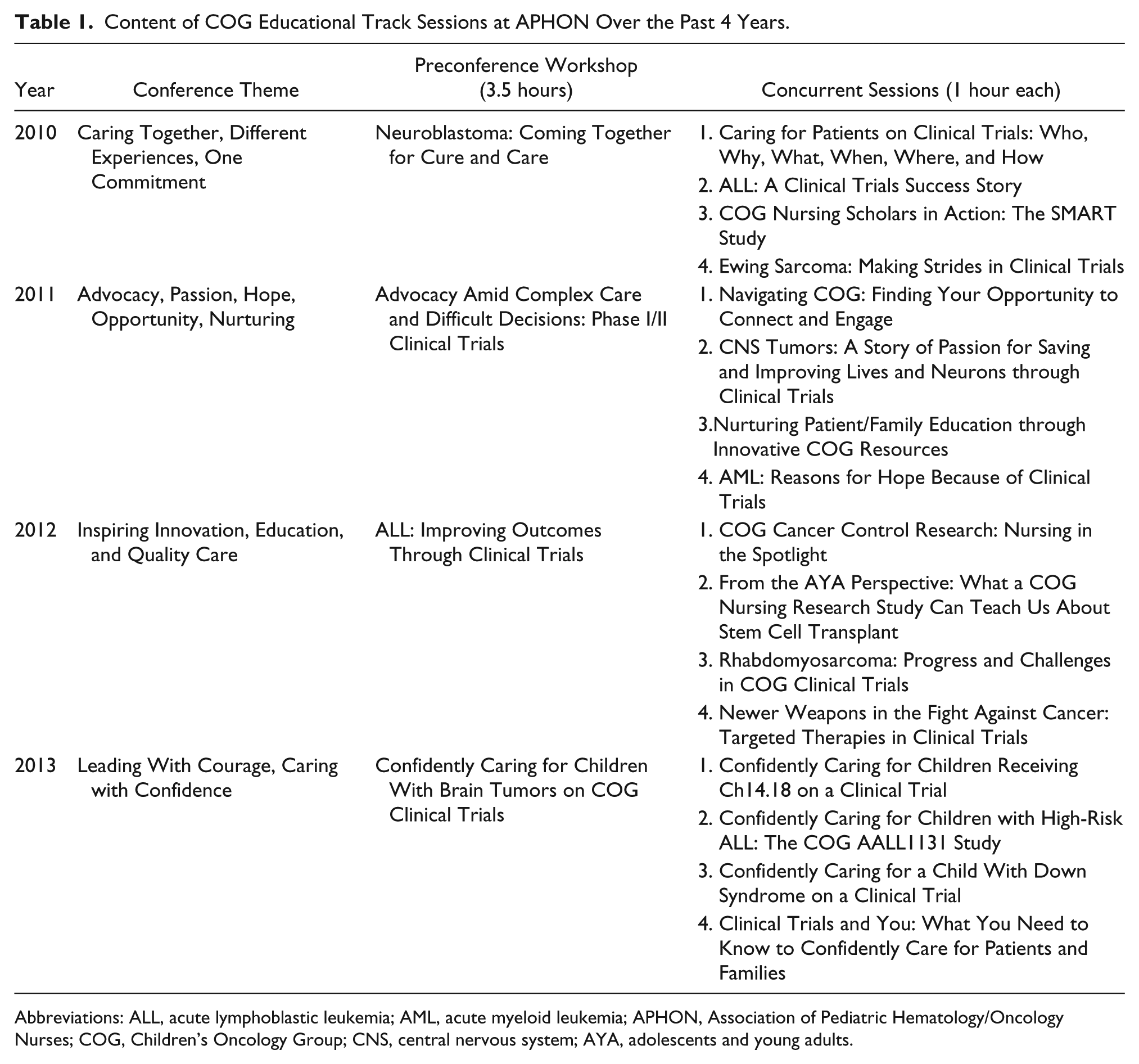
Abbreviations: ALL, acute lymphoblastic leukemia; AML, acute myeloid leukemia; APHON, Association of Pediatric Hematology/Oncology Nurses; COG, Children’s Oncology Group; CNS, central nervous system; AYA, adolescents and young adults.
Potential Solutions
Seeking to make content from the COG Nursing educational sessions more widely available to Nursing Discipline membership, slides from past educational sessions were posted on the COG member-accessible website as a resource available to all COG nurses. However, concerns were raised that the slides alone would not provide the learner with the detailed explanations and rich content delivered by speakers at the in-person events. Speaker notes, if included, could potentially provide the additional detail, but concerns persisted that information loss could still be significant with the posting of only written materials.
Attention was therefore directed toward exploring both video- and audio-taping of educational sessions in order to preserve this educational content and disseminate it to the Nursing Discipline membership. Limitations of videotaping that were identified include the fact that the speaker (and not the slide) is typically the primary focus, and the content on the slide is often difficult for the learner to see. With both audio- and video-taping, the recording captures errors and misspoken words that may occur during live presentations, it may be difficult for the learner to synchronize written materials (ie, printed slides) with the content as it is delivered by the speaker, and the learner is unable to move effortlessly to specific topics within the presentation.
Issues related to broadcasting a live presentation online and/or preserving the presentation to make it reusable involve the concepts of synchronous and asynchronous formatting (Gormley, 2013). Synchronous presentations allow the learner to view the presentation online at the time it is occurring, and may potentially allow learners who are not able to attend the conference to interact directly with the speaker or audience via web-based technology; however, synchronous formatting requires the online learner to be available at the actual time of the presentation, in order to participate in the live broadcast as it occurs. Alternately, asynchronous course offerings allow the online learner the ability to access the course at a date and time of their own choosing, which simultaneously achieves the goal of archiving educational presentations and conference proceedings. Both synchronous and asynchronous methods of online content delivery may increase the convenience and accessibility of timely and appropriately-focused educational materials at decreased cost to the learner.
The COG Nursing leadership first explored the use of asynchronous formatting for an educational presentation in 2007, using slides with voice-over made accessible via a web-based link. The goal of this first project was to create a professionally produced multimedia educational module aimed at adult oncology health care providers (physicians, nurses, pharmacists, research assistants) caring for young adult patients enrolled on a pediatric-based oncology clinical trial at non-COG institutions. Developing this multimedia module for asynchronous use proved to be a very labor-intensive and expensive endeavor, with significant cost and logistical barriers encountered (Haugen & Toomey, 2009). The Nursing leadership determined that if future web-based educational materials were to be made available asynchronously, a more efficient approach would be needed.
Multimedia Module Development
Consultation was sought with a nursing colleague who had technical expertise in media, computers, and the Internet, to explore possible options for efficiently disseminating the Nursing Discipline’s educational content. This resulted in a recommendation for development of asynchronous multimedia modules as portable document format (PDF) files. The PDF formatting was identified as a workable solution because of its wide availability across COG institutions, the ability to store both audio and visual elements within the PDF files, and the ability to index the slides to allow the user to access any portion of the presentation that they wished at any time.
The technical consultant was subsequently invited to attend the COG Educational Track Sessions at APHON to create audio files of all of the presentations. The recordings were then edited to transform the live presentations into a format suitable for on-demand learning. The consultant edited the audio recordings to synchronize each speaker’s words with their slides. Additional editing was done to enhance the experience for the on-demand learner. For example, the audio was edited to remove “uhs,” misspoken phrases, and other audio artifacts, and the sounds were blended together to preserve natural speech. Indexing was then added and the modules converted into PDF files for posting on the COG member-accessible website (see Figure 1).
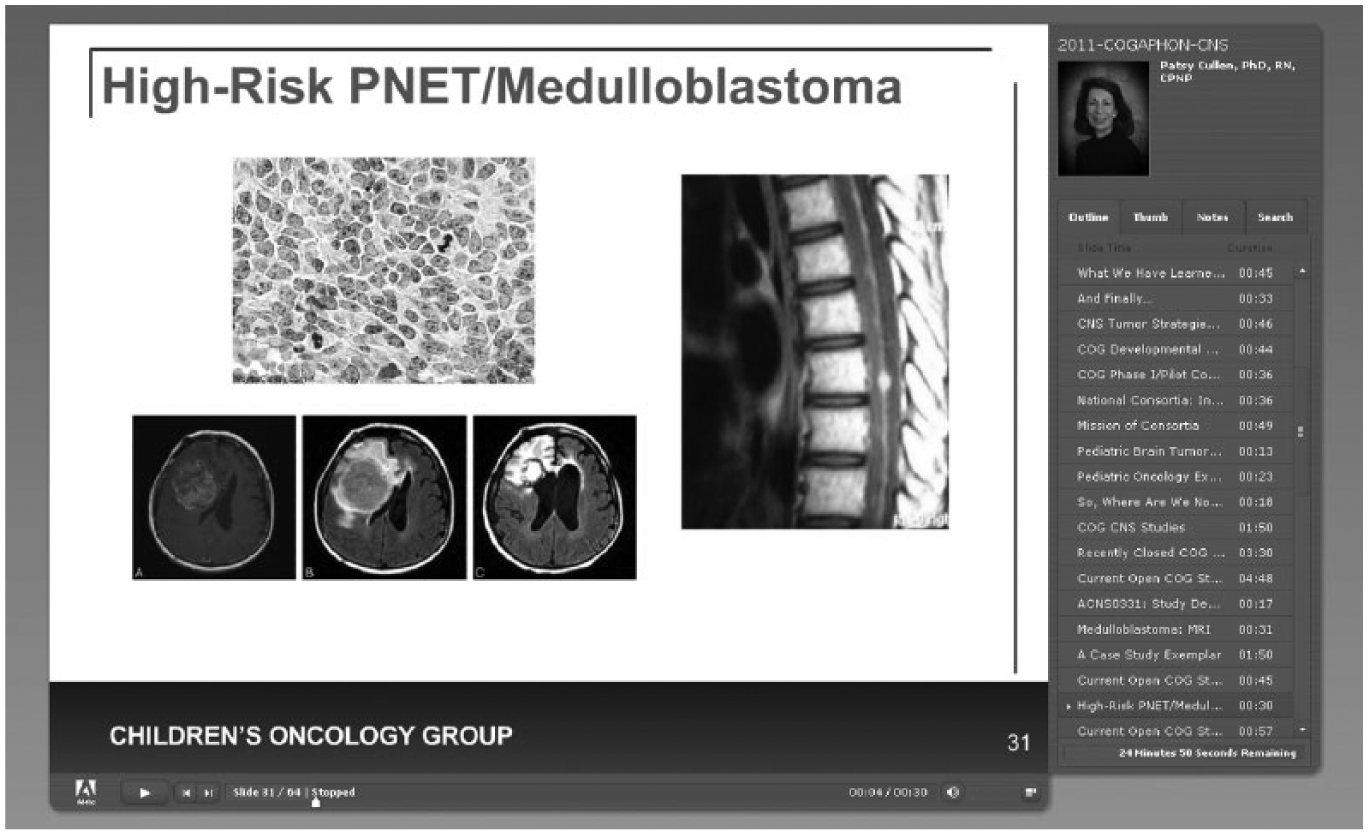
Screen shot of multimedia module depicting speaker slide and indexing system.
Thus, through the use of multimedia technology, the COG Educational Track sessions are now accessible to all COG Nursing Discipline members for online learning. The asynchronous nature of the modules allow learners to access them at the time and place of their choosing; yet viewers can experience the presentations as if they are in the room, as all audio from the live presentations is captured in the PDF files. Additionally, by using the indexing feature, the learner is able to replay any portion of the presentation at any time, as well as skip to specific sections of the module as desired.
The COG Nursing leadership selects topics for the COG Educational Track presentations based on current issues related to pediatric clinical trials (identified by the Nursing Discipline leadership) and learner-identified needs (as captured in session evaluations). For example, diseases with several ongoing clinical trials, or protocols requiring particularly complex nursing care, are prioritized for presentation. Additionally, COG nursing research and other current topics related to clinical trials are also chosen for presentation. Experienced speakers are invited to participate, and are encouraged to partner with and mentor new speakers in the process, in order to develop the next generation of experienced presenters. Slides for the presentations are edited by the Nursing Discipline leadership to assure that COG confidentiality standards are upheld, and volunteer support is provided to speakers to assist with slide design.
Future considerations include enhancing the presentations with content that is typically not available in a recorded presentation. Such enhancements may include the audience question-and-answer sessions accompanying the live presentations, inclusion of reference information and other supporting materials, such as checklists, sample forms, and Internet links directed to additional resources (eg, in-depth journal articles). These types of materials can be difficult to effectively incorporate into traditional presentations, but their inclusion in the multimedia modules may extend the value of the on-demand learning experience. An additional area currently under consideration is the development of an effective mechanism for awarding continuing education units to the learners on completion of each multimedia module.
Evaluation
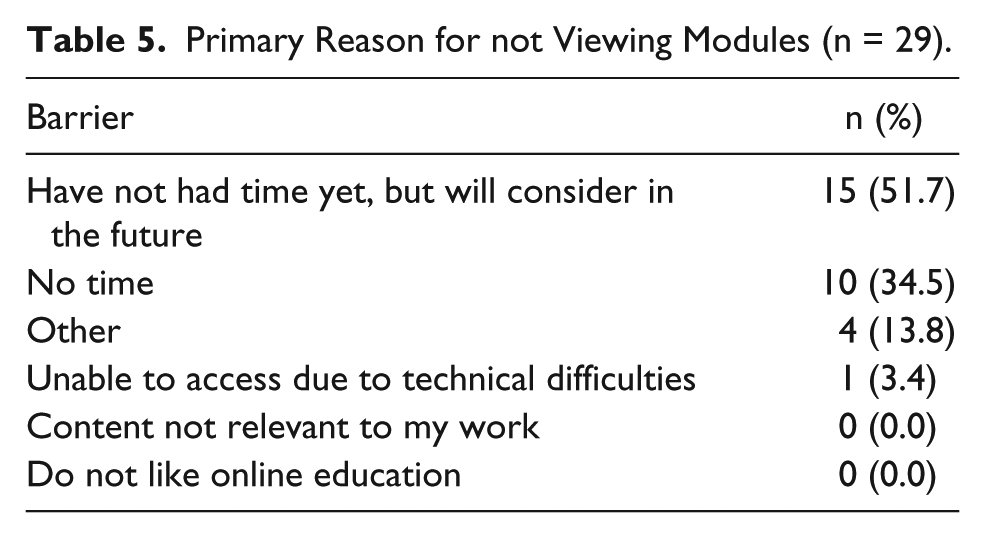
In order to better understand whether COG nurses were aware of the online multimedia educational modules, and to determine their perceptions regarding accessibility, content, and relevance of the modules, a survey was administered to nurses attending the fall 2013 COG meeting in Dallas, Texas. This survey was reviewed by the City of Hope Institutional Review Board and determined to be exempt from institutional review board oversight under 45 CFR 46.101(b)(2). All registered nurses who attended the general nursing sessions at the COG meeting in Dallas on October 9 and 10, 2013, were eligible and invited to participate in the anonymous survey. One hundred eighteen surveys were distributed, and 106 (90%) were returned. Participant characteristics are summarized in Table 2. A total of 59 (57%) nurses were aware of the multimedia modules. Nurses aware of the modules were more likely to be aged ≥40 (P = .015), to have a master’s degree or postgraduate certificate (P = .019), and to have attended an APHON conference at least once in the past 4 years (P < .001). Participants who were aware of the modules indicated that they learned of the multimedia presentations via the COG Nursing Newsletter, an email from the COG Nursing Discipline, colleague/word of mouth, attendance at an APHON conference, or by other means (Table 3). Of the 59 nurses who were aware of the multimedia modules, 30 (51%) indicated that they had viewed at least 1 module. The experience of participants who viewed the modules is summarized in Table 4. Most found accessibility of the modules to be very (57%) or somewhat (37%) easy, and were very satisfied with the content (73%), relevance (70%), and viewing experience (70%). All participants indicated that they would recommend the modules to their colleagues. Suggestions for improvement were consistent with requests to award continuing education units to nurses completing the modules. The majority of participants who had not viewed the modules indicated that they planned to do so, but had not yet found the time (Table 5).
Survey Participant Characteristics.
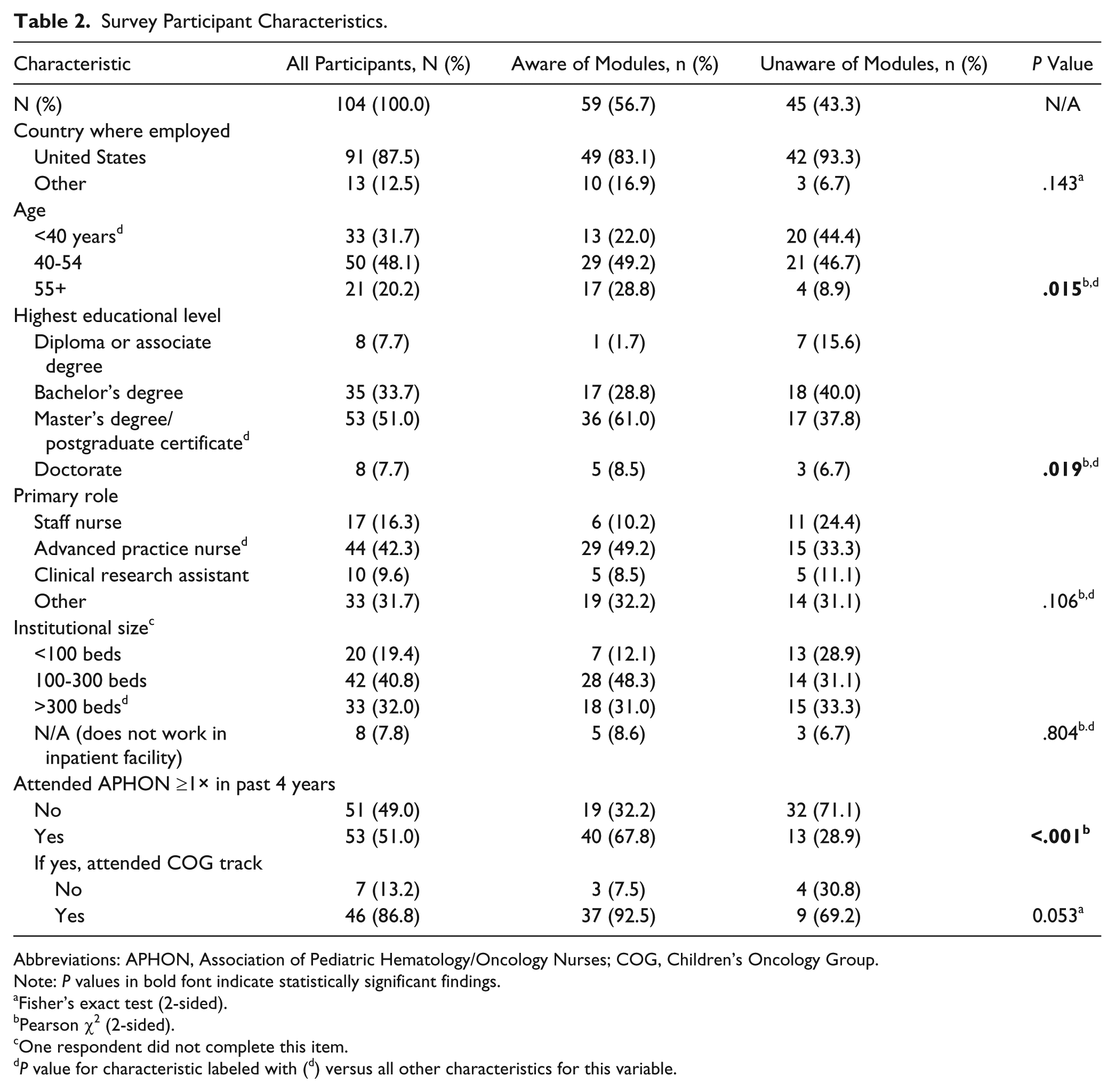
Abbreviations: APHON, Association of Pediatric Hematology/Oncology Nurses; COG, Children’s Oncology Group.
Note: P values in bold font indicate statistically significant findings.
Fisher’s exact test (2-sided).
Pearson χ2 (2-sided).
One respondent did not complete this item.
P value for characteristic labeled with (d) versus all other characteristics for this variable.
How Participants Became Aware of Multimedia Module Posting on COG Web Site a (n = 59).
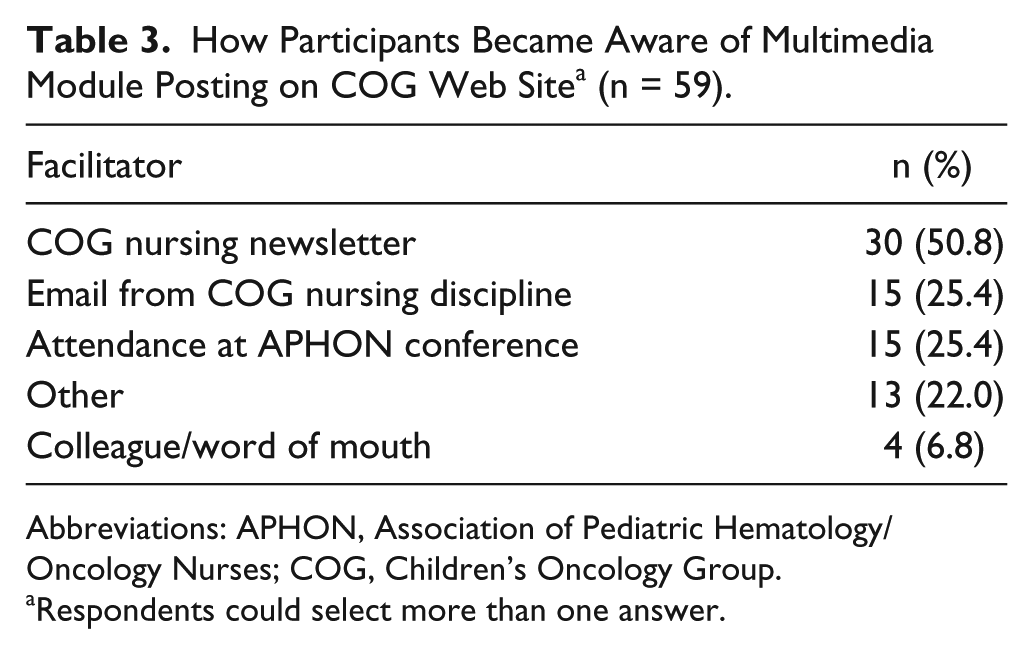
Abbreviations: APHON, Association of Pediatric Hematology/Oncology Nurses; COG, Children’s Oncology Group.
Respondents could select more than one answer.
Experience of Participants Who Viewed Modules (n = 30).
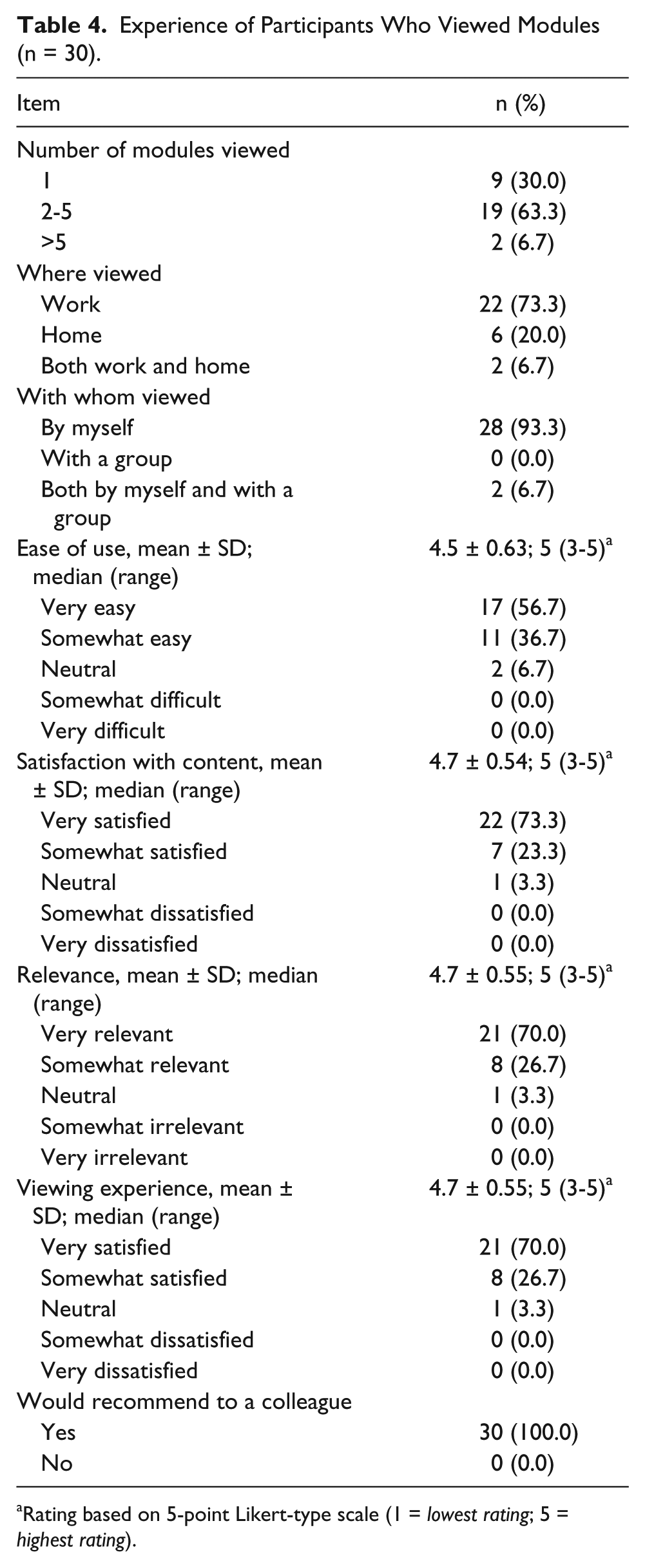
Rating based on 5-point Likert-type scale (1 = lowest rating; 5 = highest rating).
Primary Reason for not Viewing Modules (n = 29).
To understand which factors were significant predictors of awareness of the multimedia modules, we developed a multivariate binary logistic regression model, using awareness of the modules (yes/no) as the outcome variable. In univariate logistic regression analyses, older age, master’s level education, advanced practice nursing (APN) role, institutional size between 100 and 300 beds, and attendance at an APHON conference were all found to be statistically significant (P < .05) in predicting awareness of the multimedia modules; country of employment was not found to be a significant predictor. APN role and master’s level education were found to be significantly correlated (Pearson correlation 2-tailed, P < .001); APN role was therefore dropped from the model due to this significant correlation. All other variables that were statistically significant in the univariate modeling were retained. In the multivariate model, controlling for educational level and hospital size, nurses >40 years of age were 4.0 times more likely to be aware of the multimedia modules than those age <40 (95% confidence interval = 1.5 to 10.8; P = .007), and nurses who attended an APHON conference within the past 4 years were 5.0 times more likely to be aware of the multimedia modules than those who did not attend APHON (95% confidence interval = 2.0 to 12.8; P = .001).
Conclusion
The challenge of providing quality continuing education or professional development in a streamlined fashion is particularly salient in pediatric oncology, where nurses commonly provide complex protocol-based care to children enrolled on COG clinical trials. By developing and disseminating asynchronous online multimedia modules for COG nurses unable to attend educational conferences in person, the COG Nursing leadership has been able to harness existing technology to make a broad range of pediatric oncology clinical trials educational materials available to COG nurses. These modules can be accessed by COG nurses at a time and place of their choosing, and remain available for multiple viewings, in part or in their entirety, whenever they may be needed. However, making the modules available does not equate with all COG nurses actually viewing the modules. We found that despite posting the multimedia learning modules on the COG member Web site and providing COG member nurses with continuous access to the modules, over 40% of nurses remained unaware of the availability of the modules. Younger nurses (age <40) were significantly more likely to be unaware of the modules than older nurses; therefore, novel approaches (beyond newsletter postings, emails, and conference attendance) may be needed to increase younger nurses’ awareness of these modules. Additionally, although nurses attending an APHON conference within the past 4 years were more likely to be aware of the modules, attendance at an APHON conference may be a more general indicator of nurses likely to seek out educational opportunities, as only 15/40 (37.5%) of the nurses who attended APHON and were aware of the modules cited APHON attendance as a reason for their awareness. We also found that awareness of the modules did not equate with viewing. Of the 59 nurses aware of the modules, 29 (49%) had not yet viewed them. The overwhelming barrier to viewing the modules was lack of time (86%); technical difficulties prevented only one nurse from viewing the modules, and none of the participants indicated that they did not like online education. The COG Nursing Discipline will therefore continue to produce and post multimedia educational modules from the COG Educational Track sessions at APHON in order to make timely, relevant clinical trials educational materials continuously available for nurses providing protocol-based care. The Nursing Discipline leadership will also seek out ways to better communicate the availability of these modules to its members, particularly to those who are younger. Efforts will also be undertaken to develop a mechanism to award continuing education credits to nurses who complete the modules, which in turn may assist in justifying the time needed to complete the modules, as most nurses are required to obtain continuing education credits in order to meet licensure and certification requirements. By continuing to make these multimedia educational modules available, and by identifying novel ways to communicate the availability of the modules to all COG nurses, the COG Nursing Discipline will be better able to provide for the educational needs of its membership.
Footnotes
Declaration of Conflicting Interests
The author(s) declared no potential conflicts of interest with respect to the research, authorship, and/or publication of this article.
Funding
The author(s) disclosed receipt of the following financial support for the research, authorship, and/or publication of this article: Supported by the National Cancer Institute—Children’s Oncology Group Chair’s Grant (U10 CA98543).