







Abstract
This study examines how social capital moderates the associations between regional economic and cultural externalities and support for populist radical right parties (PRRPs). While demand-side research has documented the role of economic and cultural grievances, the social mechanisms that condition the response to these shocks remain less understood. This study addresses this gap by distinguishing between bonding, bridging, and linking social capital and by applying a multilevel analysis to capture the cross-level interplay between social structures and macro-level changes. Drawing on the UK Household Longitudinal Study and UK Census data, the findings demonstrate that bonding social capital amplifies the positive association between grievances and PRRP support, whereas both bridging and linking social capital tend to attenuate these relationships. These interactive patterns remain consistent even when party choices, including Conservative, Labour, and UKIP, are explicitly differentiated. By shifting the focus to these contingent associations, this study refines conventional demand-side explanations and highlights how the social fabric of communities determines the political consequences of economic and cultural shocks.
Keywords
Introduction
In May 2025, the United Kingdom held its first local elections following a change in government. In these elections, Nigel Farage’s Reform UK achieved a significant victory, challenging traditional two-party dominance. This trend was not limited to UK’s local elections. In national elections across Europe, populist radical right parties (PRRPs) have gained ground, with some entering government. PRRPs now rank among the top-three parties in one-third of European countries, marking them as key actors in contemporary European politics (Aktas, 2024).
Demand-side literature on the rise of populism in Europe has focused on economic and cultural factors (Berman, 2021; Golder, 2016). Studies have highlighted economic grievances triggered by trade shocks, financial crises, and automation (Anelli et al., 2019; Dippel et al., 2017; Funke and Trebesch, 2017), as well as cultural resentment rooted in cultural backlash and anti-immigrant sentiment (Brunner and Kuhn, 2018; Inglehart and Norris, 2016). However, this strand of research, which centres on public discontent and voter demand, has largely overlooked the role of civil society. Moreover, empirical findings on the civic dimension, particularly social capital, remain inconclusive. While some studies suggest that social capital suppresses support for PRRPs (Boeri et al., 2021; Jesuit et al., 2009), others have found no such effect (Rydgren, 2009; Satyanath et al., 2017). Focusing on civil society as represented by social capital and clarifying its relationship with support for PRRPs, thus, remains a meaningful endeavour.
This study reconceptualises social capital by examining how bonding, bridging, and linking ties condition the impact of regional externalities on political behaviour. Drawing on established findings about economic and cultural drivers of PRRP support, this study focuses on the multilevel interplay between individual social structures and macro-level shocks. Specifically, a multilevel framework with random slopes is employed to examine how social capital moderates the effects of regional economic and cultural externalities on PRRP support. By integrating individual-level social capital within its broader environment, this approach recognises that the political consequences of economic and cultural factors are fundamentally contingent upon the social networks through which they are experienced.
This study’s empirical analysis provides strong support for these interactive hypotheses. While factor analysis confirms the distinct dimensions of social capital, the core findings demonstrate that the associations between economic or cultural grievances and PRRP support are significantly moderated by an individual’s social capital profile. By identifying these cross-level interactions, this study refines conventional explanations for PRRP support, showing that the influence of sociotropic and egotropic concerns is not uniform but is filtered through specific social mechanisms. This multilevel perspective shifts the focus from social capital as a static resource to its role as a dynamic moderator of external shocks.
Literature review
Civil society and social capital
Social capital remains a contested concept: scholars have long disagreed over its role in promoting or hindering PRRPs. Conflicting findings often stem from different conceptualisations of social capital, particularly regarding its specific aspects and units of analysis. This section addresses these inconsistencies by reviewing the literature on social capital frameworks and units of analysis.
While associations and trust are widely recognised as core components of social capital (Van Deth, 2008), empirical studies that focus on these distinct elements often reach contradictory conclusions. PRRP support has been generally found to be suppressed by social trust (Berning and Ziller, 2017; Glaeser, 2016; Koivula et al., 2017) and institutional trust (Algan et al., 2017; Fieschi and Heywood, 2004). Similarly, Boeri et al. (2021) have reported that these associations inhibit PRRPs. By contrast, Foertsch and Roesel (2023) and Satyanath et al. (2017) have highlighted the ‘dark side’ of social capital, demonstrating that associations may foster PRRPs or extremism. Cross-national studies by Rydgren (2009, 2011) further suggested that associations have limited explanatory power, whereas social trust, although more impactful, remains inconclusive.
Beyond trust and association membership, some studies have examined alternative aspects of social capital; however, their findings remain inconclusive. Nannicini et al. (2013) used blood donation as a proxy, whereas Jesuit et al. (2009) treated income inequality as an indicator. Others have employed principal component analysis (PCA) to construct composite indices. For example, Giuliano and Wacziarg (2020) found a negative association between social capital and support for Donald Trump, whereas Rodríguez-Pose et al. (2021) reported the opposite. Additionally, sociopsychological theories, though distinct, overlap with key elements of social capital, including homogeneity, organisation, and networks. These include the social isolation hypothesis (Lynch et al., 2022), local sociocultural degradation theory (Bolet, 2021), social belonging (Langenkamp and Bienstman, 2022), and social cohesion (Fitzgerald and Lawrence, 2011). Overall, varying conceptualisations contribute to a fragmented and contradictory empirical landscape.
Further inconsistencies arise from the divergent units of analysis employed across existing studies. Researchers have examined social capital through various lenses, ranging from macro-level studies (Coffé et al., 2007; Jesuit et al., 2009) to micro-level analyses (Boeri et al., 2021) and multilevel approaches (Berning and Ziller, 2017; Glaeser, 2016). Although these approaches offer valuable insights, the resulting evidence is not always theoretically coherent or readily comparable across studies. Importantly, variation in findings is not attributable solely to differences in units of analysis. For instance, while examining generalised trust at both the canton and individual levels and identified distinct mechanisms at each level, Glaeser (2016) did not distinguish conceptually between types of trust, such as intragroup and intergroup trust. Such conceptual heterogeneity can limit explanatory precision and contribute to inconsistent empirical relationships between social capital and PRRPs. To address these inconsistencies, this study employs a multilevel framework to examine how distinct types of social capital moderate the association between regional contexts and PRRP support.
Approaches that rely on a single proxy or focus only on one aspect of social capital fall short of explaining its impact on PRRP support. Crucially, a multilevel framework serves to clarify how social capital moderates the association between regional conditions and PRRP support. By distinguishing the roles of bonding, bridging, and linking social capital within this framework, this study attempts to reconcile the inconsistencies observed in previous research.
Theoretical background
Theoretical development of social capital
Social capital has been defined in various ways, with foundational contributions by Bourdieu (1986), Coleman (1990), and Putnam (1993). Putnam’s (1993: 167) influential definition—features of social organisation, such as trust, norms, and networks that can improve the efficiency of society by facilitating coordinated actions—has shaped much subsequent research. Putnam (2000) subsequently noted that trust within networks can also foster exclusion, leading him to distinguish between bonding and bridging social capital: bonding refers to inward-looking ties within homogeneous groups, whereas bridging describes inclusive networks that connect diverse individuals. Szreter and Woolcock (2004) introduced linking social capital, defined as connections across formal hierarchies, to incorporate vertical relationships. These three subtypes—bonding, bridging, and linking—form a comprehensive framework for analysing social ties, ranging from close-knit communities to cross-group and institutional connections.
Relationship between social capital and support for PRRPs
This study argues that the three subtypes of social capital—bonding, bridging, and linking—affect PRRP support through distinct ideological channels. Following Mudde’s (2007) framework, PRRPs are defined by a core of nativism and, more broadly, by a combination of nativism, authoritarianism, and populism. Nativism, which includes nationalism and xenophobia, is central to the influence of bonding and bridging social capital. Authoritarianism, which reflects support for a strict social order, is beyond the scope of social capital. Populism, as a ‘thin-centred ideology’ opposing the ‘pure people’ to the ‘corrupt elite’ and grounded in anti-establishment sentiment (Mudde, 2004), underpins the role of linking social capital. By focusing on nativism, xenophobia, and populism, this study clarifies how each subtype of social capital shapes the ideological dimensions of PRRPs, leading to variations in support.
Bonding social capital, marked by demographic homogeneity, shared norms, and strong internal ties, is typically inward-looking, protective, and exclusive (Claridge, 2018). Such cohesion often marginalises outsiders, as seen in extreme cases, such as that of the Ku Klux Klan (Nannestad et al., 2008; Putnam, 2000). Social identity theory explains this cohesion by emphasising the in-group/out-group divide, with categorical identities in homogeneous groups forming the basis of bonding social capital (Brewer and Gardner, 1996; Davis, 2014; Hogg and Terry, 2000). These characteristics closely mirror the support base of PRRPs, which emphasise moral unity and shared identity while fostering hostility towards outgroups (Mudde, 2004). Bonding social capital reinforces PRRP support by amplifying nativist and xenophobic attitudes; its focus on shared identity strengthens in-group loyalty and nationalism, while its exclusionary logic fuels fear of immigrants and minorities as cultural and economic threats. Thus, bonding social capital underpins the ideological appeal of PRRPs and consolidates their support.
Bridging social capital involves ties that extend beyond dense, intimate social circles to link individuals across broader social divides. In this study, bridging capital is conceptualised as involving weaker, more outward-oriented connections typically cultivated through participation in civic associations. Unlike the inward-looking nature of bonding ties, these outward-oriented networks promote generalised trust and social inclusivity, contributing to positive outcomes such as economic well-being and health (Iwase et al., 2012; Zhang et al., 2011). This form of capital is grounded in relational social identity, which emerges through interactions within formal organisational and social settings (Davis, 2014). By facilitating engagement across social cleavages, these ties foster cultural pluralism and provide a counterweight to exclusionary narratives (Hooghe and Marks, 2018; Putnam, 2000). In the process, bridging ties mitigate the perceived threat of ‘others’ and reduce social isolation, thereby attenuating the nativist and xenophobic rhetoric central to PRRPs and undermining their ideological appeal.
Linking social capital diminishes the appeal of PRRPs by reinforcing trust in public institutions. While often viewed as a subtype of bridging social capital, linking social capital is distinct in emphasising vertical relationships—those defined by differences in social status or power (Bofota, 2012). Patulny (2009) identified institutional trust and resistance to ‘cheating the system’ as the core norms behind linking social capital. Citizens rely on institutions to act as agents and hold elites accountable (Nannicini et al., 2013; Rothstein and Stolle 2008). However, vertical relationships can also foster ‘closed’ ties, potentially leading to negative outcomes such as clientelism and nepotism (Szreter and Woolcock, 2004), which might suggest the theoretical possibility of treating these as a distinct fourth dimension. 1 Nevertheless, few studies have captured the phenomenon of clientelism, especially through individual-level social surveys (Muno, 2010). This study considers linking social capital to be the sole representation of vertical relationships. PRRPs exploit declining institutional trust through populist rhetoric that pits ‘the pure people’ against ‘the corrupt elite’. Linking social capital counters this narrative by enhancing institutional confidence, thereby reducing anti-establishment sentiments and weakening support for PRRPs.
The latest theoretical advancements in social capital clarify the conflicting findings of prior research, which often conflates distinct subtypes of social capital when examining their relationship with PRRP support. To overcome these limitations, this study explicitly distinguishes between bonding, bridging, and linking social capital and proposes the following hypotheses.
The higher the level of bonding social capital, the higher the support for PRRPs.
The higher the level of bridging social capital, the lower the support for PRRPs.
The higher the level of linking social capital, the lower the support for PRRPs.
Interaction between social capital and economic and cultural factors
This study builds on research exploring the interactions between social capital and economic and cultural factors. Recent studies recognise that social capital not only directly affects voter behaviour but also interacts with economic and cultural contexts (Berning and Ziller, 2017; Colombo and Dinas, 2023). However, existing analyses often fail to explicitly distinguish among bonding, bridging, and linking social capital. For example, Colombo and Dinas (2023) adopted a minimal definition of associations, while Berning and Ziller (2017) emphasised social trust. Understanding the interactions between different subtypes of social capital and economic and cultural factors is essential for elucidating the mechanisms underlying support for PRRPs.
In the debate over the political consequences of economic and cultural factors, previous research proposed a more nuanced typology comprising three distinct forms of concern: egotropic economic, sociotropic economic, and sociotropic cultural concerns (Becker et al., 2022; Hainmueller and Hopkins, 2015). Egotropic economic concerns refer to resentment stemming from economic hardships. Sociotropic economic concerns involve anxiety over broader economic conditions that shape individuals’ perceptions of their personal economic prospects. Sociotropic cultural concerns emphasise the perceived threats posed by immigration to local cultural values and norms. Building on this typology, this study draws on Opp (2026) by treating economic and cultural concerns as negative externalities and examines how social capital moderates their association with PRRP support.
Bonding social capital strengthens the association between economic decline and PRRP support. At the egotropic level, personal hardships such as job insecurity generate a demand for protective norms (Bossert et al., 2019; Fetzer, 2019). Bonding social capital consists of close social ties and provides a crucial structural condition for the realisation of such norms. According to the framework proposed by Coleman (1990) and integrated by Opp (2026), dense social networks provide the behavioural foundation for norm emergence by reducing the transaction costs associated with communication, coordination, and sanctioning. Individuals within these networks are more likely to enforce parochial group norms, as the costs of monitoring and social control are significantly lowered. A similar logic applies at the sociotropic level, where regional economic shocks are associated with increased support for PRRPs (Anelli et al., 2019; Funke and Trebesch, 2017). In this context, bonding social capital functions as a ‘multiplier’ (Colombo and Dinas, 2023), facilitating the collective enforcement of exclusionary norms. Consequently, bonding social capital is expected to amplify the positive association between economic grievances and support for PRRPs.
Bonding social capital strengthens the positive association between individual-level economic dissatisfaction and support for PRRPs.
Bonding social capital strengthens the positive association between regional economic decline and support for PRRPs.
Bridging social capital weakens the association between economic decline and PRRP support. Bridging social capital, characterised by ‘weak ties’ across heterogeneous networks, serves as an informational buffer against these pressures (Burt, 1992; Granovetter, 1973). At the egotropic level, access to diverse resources and non-redundant information mitigates the impact of personal economic insecurity, such as income dissatisfaction or job loss. At the sociotropic level, bridging ties provide a behavioural foundation for a learning mechanism, allowing individuals to acquire information about the trustworthiness of others and correct information asymmetries (Opp, 2026). By undermining the zero-sum narratives commonly exploited during periods of economic hardship, these connections reduce the demand for exclusionary political solutions (Barone and Kreuter, 2021). Thus, bridging social capital is expected to attenuate the association between economic grievances and support for PRRPs.
Bridging social capital weakens the positive association between individual-level economic dissatisfaction and support for PRRPs.
Bridging social capital weakens the positive association between regional economic decline and support for PRRPs.
Linking social capital weakens the association between economic decline and PRRP support. Linking social capital connects citizens with formal institutions and provides a structural basis for addressing these externalities through established channels. At the egotropic level, while personal economic hardships such as income loss tend to erode political trust (Giustozzi and Gangl, 2021), linking ties encourage individuals to seek solutions through formal institutional frameworks. Following Opp (2026) on the behavioural foundations of norm emergence, we can understand support for PRRPs as a preference for alternative exclusionary norms. This demand declines when existing institutional actors are perceived as credible and trustworthy. At the sociotropic level, regional economic decline or rising inequality is less likely to translate into populist support when robust welfare institutions buffer the impact of crises (Gallie, 2013). Trust in government responsiveness reduces the perceived necessity of supporting movements that characterise the political elite as corrupt or ineffective. Therefore, linking social capital is expected to attenuate the positive association between economic grievances and support for PRRPs.
Linking social capital weakens the positive association between individual-level economic dissatisfaction and support for PRRPs.
Linking social capital weakens the positive association between regional economic decline and support for PRRPs.
Increasing regional ethnic diversity can be interpreted as a negative cultural externality that generates a demand for exclusionary normative responses among the majority population. Bonding social capital is characterised by structural closure within homogeneous communities. Such closure facilitates the realisation of these norms (Coleman, 1990). Within these dense networks, the costs of monitoring and sanctioning are lowered, making it more efficient to enforce parochial group identities and exclusionary preferences often aligned with PRRP rhetoric (Mudde, 2007; Rodrik, 2021). Conversely, bridging social capital serves as a structural foundation for a learning mechanism, allowing individuals to acquire information on the trustworthiness of out-groups (Opp, 2026). In the context of growing ethnic diversity, these heterogeneous ties reduce information asymmetries and alleviate perceived symbolic threats (Sniderman and Hagendoorn, 2009). By fostering intergroup contact, bridging capital diminishes the demand for exclusionary norms, thereby attenuating the cultural backlash that drives PRRP support. Finally, linking social capital provides a vertical channel for institutional trust, enhancing confidence in the capacity of the state to manage cultural change. According to the behavioural logic of norm emergence (Opp, 2026), the demand for alternative populist norms decreases when formal institutions are perceived as capable of mitigating cultural externalities. When voters believe public institutions can effectively handle immigration, they are less likely to seek protective responses through radical political alternatives. Based on the interaction between social capital and sociotropic cultural concerns, the following three-part hypothesis is proposed.
Bonding social capital strengthens the positive association between increasing regional ethnic diversity and support for PRRPs.
Bridging social capital weakens the positive association between increasing regional ethnic diversity and support for PRRPs.
Linking social capital weakens the positive association between increasing regional ethnic diversity and support for PRRPs.
Data and method
Data sources
This study employed both individual- and regional-level data that were linked using geographic codes for local authorities. At the individual level, data were drawn from Wave 6 (2014–2015) of the UK Household Longitudinal Study (Understanding Society). Wave 6 was selected because UKIP experienced a surge in support following the 2014 European Parliament elections, while subsequent developments, such as the resignation of party leader Nigel Farage and the establishment of the Brexit Party, led to political volatility. Thus, 2014 was considered the most appropriate period for observing stable support trends. Regional-level data were constructed based on the 2001 and 2011 UK censuses provided by the Office for National Statistics. The analytical focus was restricted to 326 local authorities in England. Scotland and Wales were excluded because UKIP’s appeal was relatively limited. This sampling strategy ensured adequate statistical power and improved estimate precision.
Dependent variable
This study positions UKIP as a representative PRRP and examines the structural factors underlying its support. It characterises UKIP as a party that, while maintaining its core commitments to neoliberalism and Euroscepticism, actively adopts populist rhetoric (Ford and Goodwin, 2014). This study focuses on support for UKIP as a party with these characteristics and examines the underlying determinants of that support. For empirical analysis, a binary logistic regression model was employed with support for UKIP as the dependent variable. Specifically, a variable labelled ‘Party would vote for tomorrow’ was used to construct a binary outcome, coding UKIP support as 1 and all other responses as 0. However, this dichotomous classification might obscure important motivational and ideological distinctions. Some ideological overlap may exist between UKIP and Conservative supporters, potentially leading to an underestimation of the influence of explanatory variables such as social capital. To address this concern, a multilevel multinomial logit model was introduced as a robustness check during the final stage of the analysis. This model explicitly distinguishes between support for UKIP, the Conservative Party, and the Labour Party, treating supporters of minor parties and non-partisans as the base category. This approach enables a more refined assessment of the factors that differentiate UKIP support from that of other major parties.
Independent variables
Bonding social capital refers to ties within relatively homogeneous groups, characterised by specialised trust and support among individuals who share similar identities. More homogeneous friendship networks are more likely to generate particularised trust, relational cohesion, and behavioural conformity (Winter and Kataria, 2020). Bonding social capital was measured using three indicators: a racial homogeneity score based on the racial background of respondents’ three best friends, the proportion of friends with similar income levels in respondents’ broader social networks, and a survey item asking whether one could borrow things from neighbours. 2 Taken together, these indicators capture the inward-looking and homogeneous character of bonding social capital.
Bridging social capital is characterised by connections across heterogeneous social groups and is typically formed in open networks, such as civic associations and sports or leisure organisations (Putnam, 2000). This study emphasises that the nature of organisations and membership in sports and leisure groups is a primary indicator of bridging social capital. 3 These groups are loosely structured and attract diverse participants, making them representative of so-called Putnam-type associations (Engbers et al., 2017; Patulny, 2009). Additionally, participation in volunteer activities and charitable work were used as the second and third indicators of bridging social capital, respectively. Notwithstanding debate over whether such activities reflect bridging social ties or access to political and institutional resources (linking social capital) (Patulny, 2009; Sabatini, 2009), this study focuses on their role in fostering an active and reciprocal civil society (Putnam, 2000) and classifies them as bridging social capital. Thus, they are clearly distinguishable from linking social capital, which centres on vertical access to political resources. Together, these indicators capture the civic qualities of bridging social capital, including openness, outward orientation, and inclusiveness.
Linking social capital refers to relationships that span social hierarchies, such as power and institutional structures, and reflects the political dimension of social capital, including trust in political institutions and attitudes towards political participation (Szreter and Woolcock, 2004). In this study, the first indicator of linking social capital is based on the survey item ‘It takes too much time and effort to be active in politics and public affairs’. This item captures perceived institutional accessibility, aligning with a rational-action view in which participation costs shape the expected utility of engaging with institutions. Political participation is considered both a source and outcome of linking social capital (Engbers et al., 2017). The second and third indicators are derived from the political efficacy module, specifically, ‘Public officials do not care much about what people like me think’ and ‘People like me do not have any say in what the government does’. Political efficacy is closely related to political participation (Poortinga, 2012) and relevant to understanding linking social capital. This study does not aim to offer a precise conceptual delineation of political psychology, and because of the lack of behavioural data, the analysis is limited to attitudinal measures to explain UKIP support. As noted by Patulny and Lind Haase Svendsen, 2007, linking social capital overlaps with concepts such as institutional trust and democratic attitudes, and its conceptual boundaries are not always clear. Nevertheless, this study focuses on vertical relationships with political institutions and employs these items as indicators of linking social capital. This approach provides a framework for analysing how perceptions of trust and distance from institutions influence their support for PRRPs.
Loadings of the variables on the first three factors according to the varimax-rotated FA.
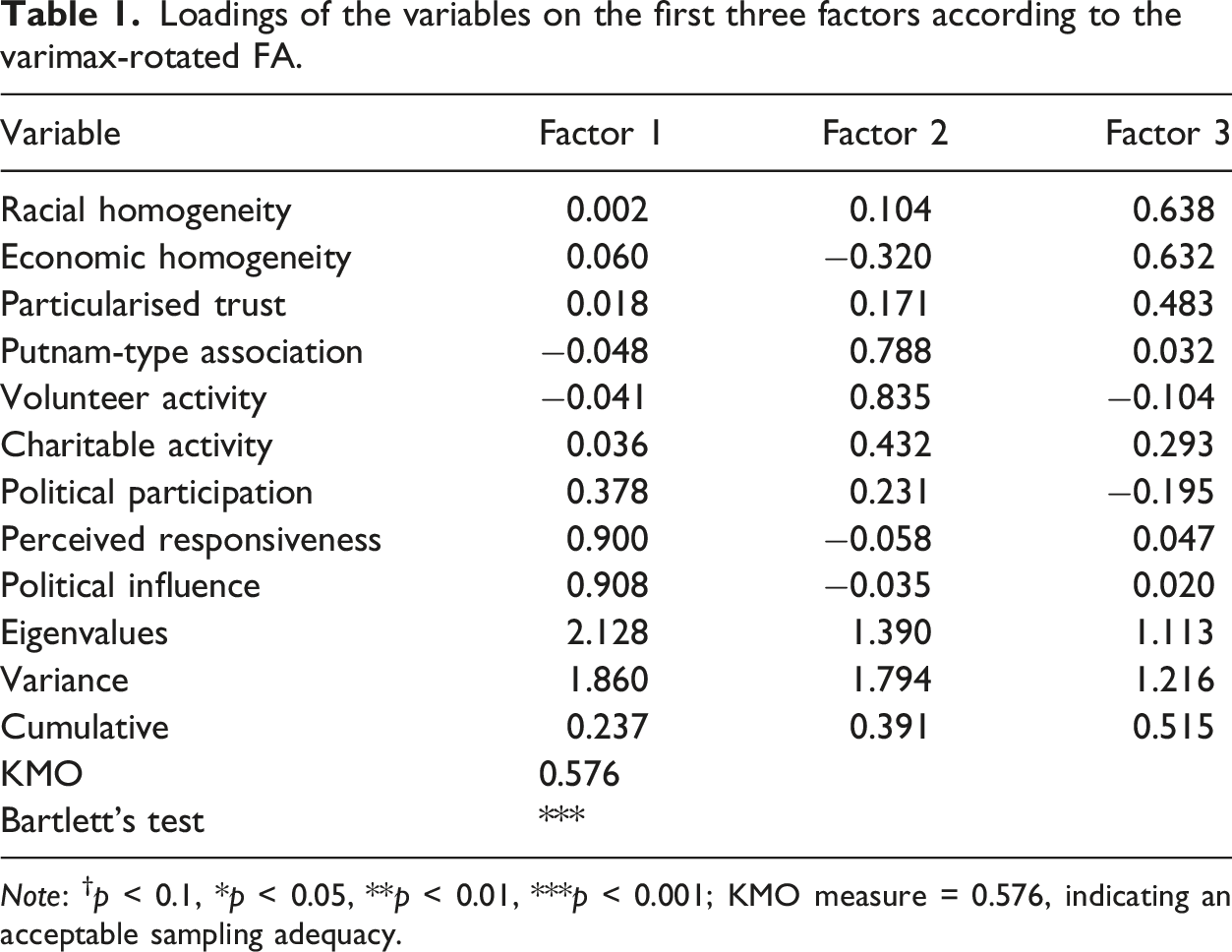
Note: †p < 0.1, *p < 0.05, **p < 0.01, ***p < 0.001; KMO measure = 0.576, indicating an acceptable sampling adequacy.
To more precisely capture the economic and cultural factors commonly cited as drivers of populism, this study constructed individual- and regional-level indicators based on three dimensions: egotropic economic concerns, sociotropic economic concerns, and sociotropic cultural concerns. Egotropic economic concerns were measured using individual-level subjective income satisfaction. Sociotropic economic concerns were captured by the 10-year change in regional employment conditions based on 2001 and 2011 UK Census data. Sociotropic cultural concerns were measured by changes in regional ethnic diversity derived from census data. 5 Additionally, key demographic variables—including race, sex, age, and educational qualifications—were included as control variables in the analysis.
Operationalisation of variables
In multilevel analyses, Grand-Mean Centring (GMC) and Centring Within Cluster (CWC) are commonly considered. Enders and Tofighi (2007) recommend the use of CWC for Level-1 variables and cross-level interactions because it enables a purer estimation of individual-level effects and yields more accurate variance estimates for random coefficients. Following this approach, the three individual-level indicators of social capital and economic satisfaction were centred using the CWC, while the regional-level variables, ethnic diversity change, and employment condition change were grand-mean centred (GMC) prior to model estimation.
Model specification
This study adopted a multilevel modelling approach based on recognition that individuals living in the same region share contextual characteristics and that individual-level social capital is embedded within regional environments. Multilevel models allow for the decomposition of variance across levels, explicitly accounting for hierarchical data structures and reducing the risk of misestimations (Hox et al., 2017).
In this study, the hierarchical structure was defined by individuals nested within local authorities. To account for the potential systematic variations in UKIP support across regions, the analysis began with a random intercept model. This allows unobserved regional heterogeneity to be captured, thereby preventing biased estimates. The model was then extended to a random slope specification to address possible regional variances in the influence of individual-level variables. This approach enables us to estimate how the influence of key predictors changes according to context, allowing for greater flexibility and precision. Following Heisig and Schaeffer (2019), the study’s approach of adding random slopes to multilevel models with cross-level interactions prevents underestimating standard errors and inflating interaction estimates. In addition, this study allows for a free correlation between random intercepts and slopes (Rabe-Hesketh and Skrondal, 2008). This accounts for the possibility that the average level of social capital in a region (intercept) is related to the strength of its relationship with individual outcomes (slope).
To further explore the interaction between individual-level factors and regional contexts, the model includes both within-level and cross-level interaction terms. These terms examine how shared social environments and regional change shape individual support for UKIP. In the context of PRRP support, changes in regional ethnic diversity refer to increases in ethnic diversity. They are used not as a direct measure of symbolic threat but as a contextual proxy for changes in the ethnic composition of local communities that may heighten the salience of symbolic boundaries, identity differences, and perceptions of community change. Changes in employment refer to increases in unemployment and capture worsening local labour market conditions. Models with cross-level interactions were estimated using a subsample limited to White respondents. Because support for UKIP is closely tied to perceptions of ethnic boundaries and the party’s core appeal resonates particularly with the White majority, this restriction reduces heterogeneity in group status and identity (Jennings and Ralph-Morrow, 2020).
Finally, to compare the behaviour of UKIP, Conservative, and Labour supporters against that of those who support other parties or are non-partisans, a multilevel multinomial logit model was estimated. As explained above, this model addresses the limitations of binary models, which may fail to isolate the unique drivers of UKIP support adequately. Although random slopes could not be included because of computational constraints, this specification serves as a robustness check to assess whether the observed patterns hold when distinguishing between multiple party preferences.
Results and discussion
Random intercept and slope model results (individual-level variables; DV: UKIP support).
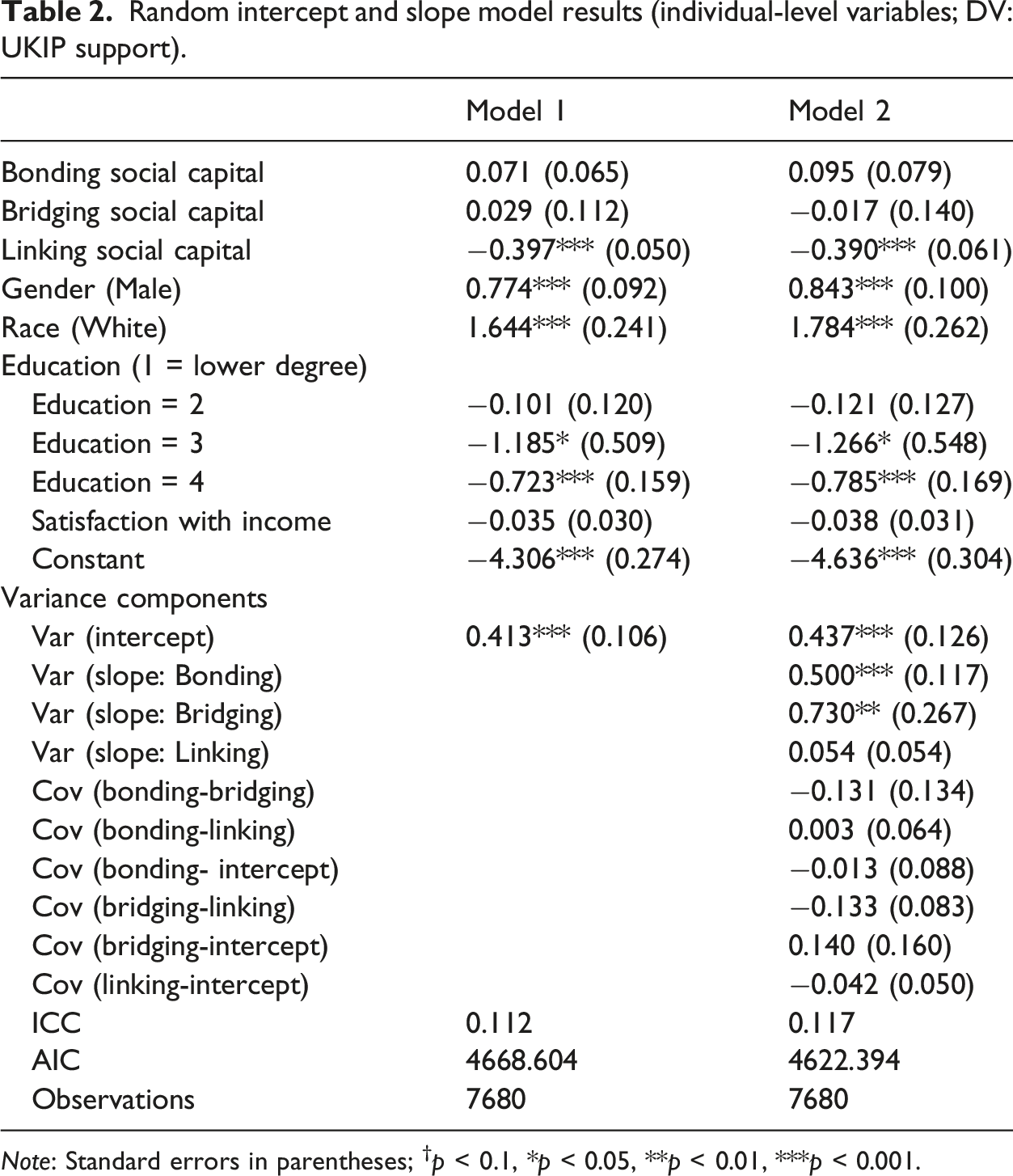
Note: Standard errors in parentheses; †p < 0.1, *p < 0.05, **p < 0.01, ***p < 0.001.
Random intercept and slope model results (individual-level variables and interaction terms; DV: UKIP support).
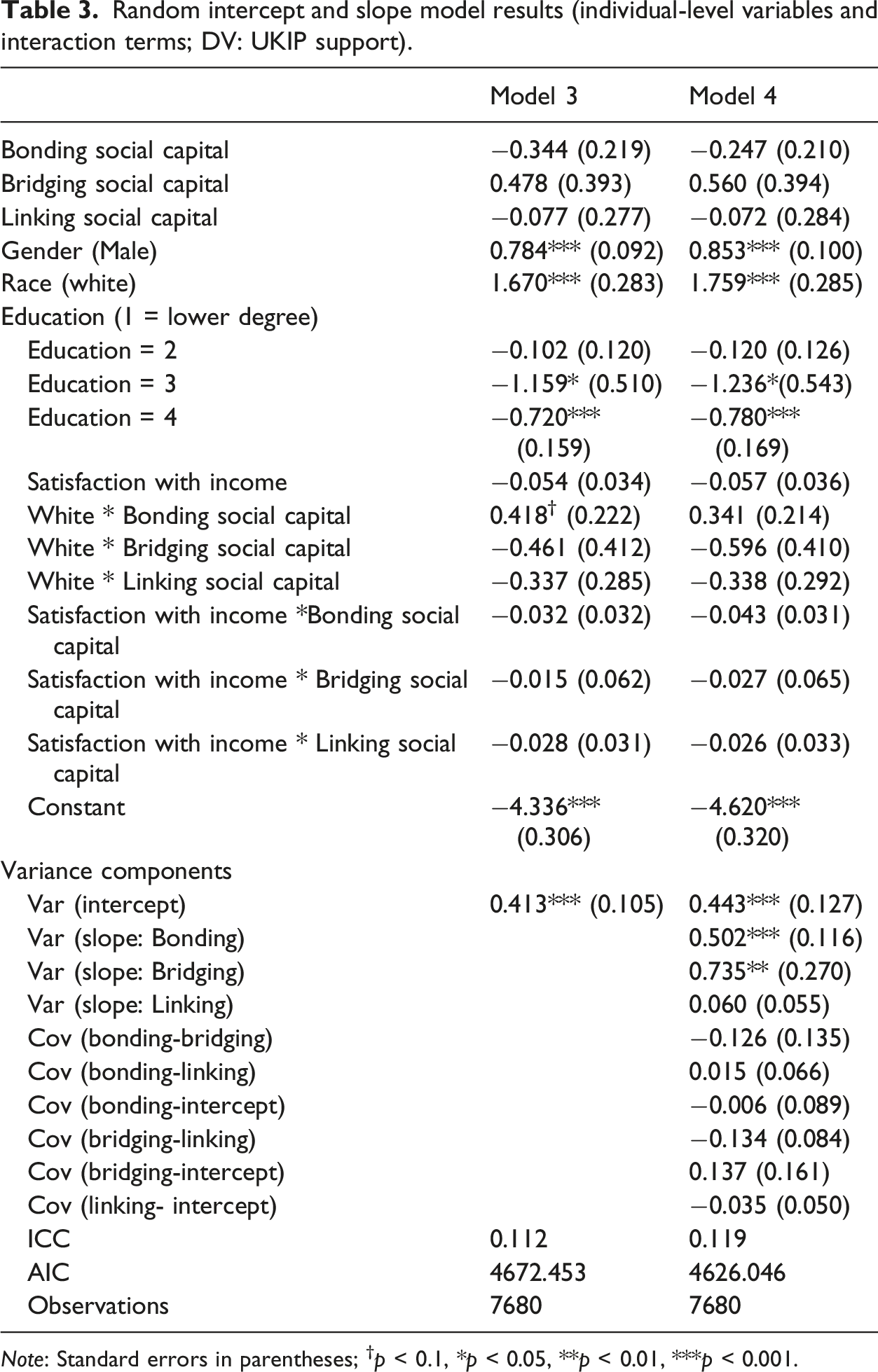
Note: Standard errors in parentheses; †p < 0.1, *p < 0.05, **p < 0.01, ***p < 0.001.
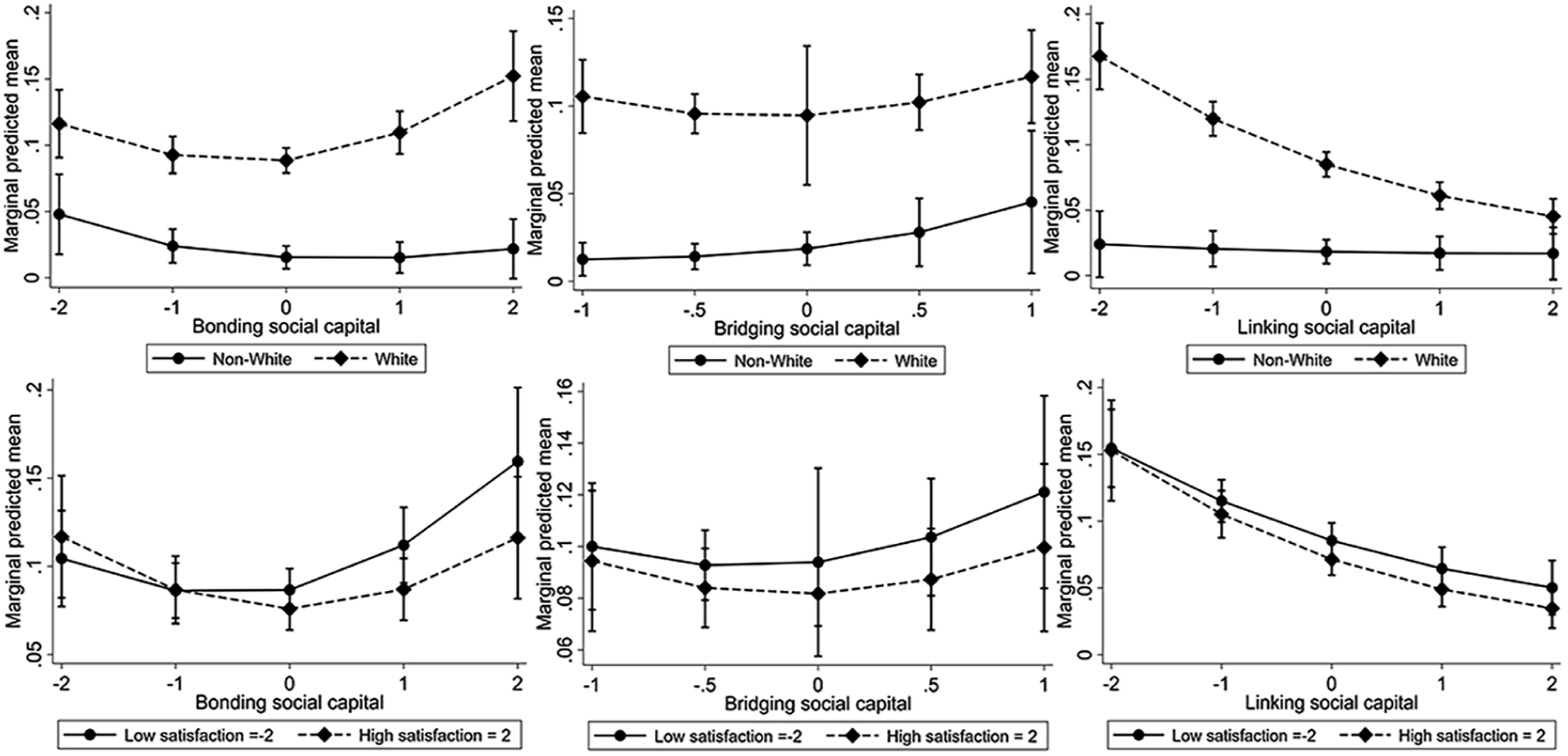
Graph of moderation patterns from individual-level interaction terms.
Random intercept and slope model results (incorporating regional-level variables and cross-level interactions; DV: UKIP support, white respondents only).
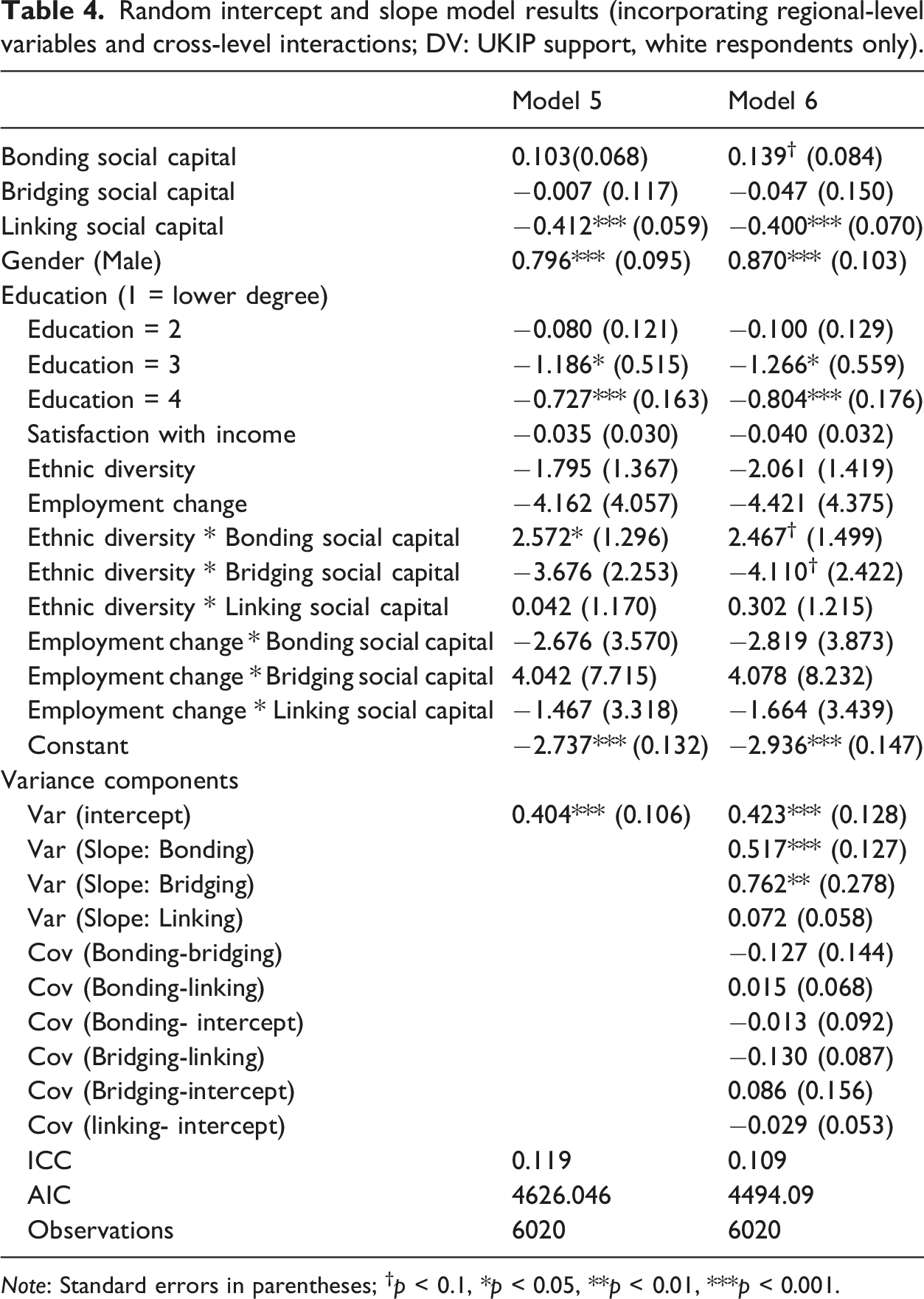
Note: Standard errors in parentheses; †p < 0.1, *p < 0.05, **p < 0.01, ***p < 0.001.
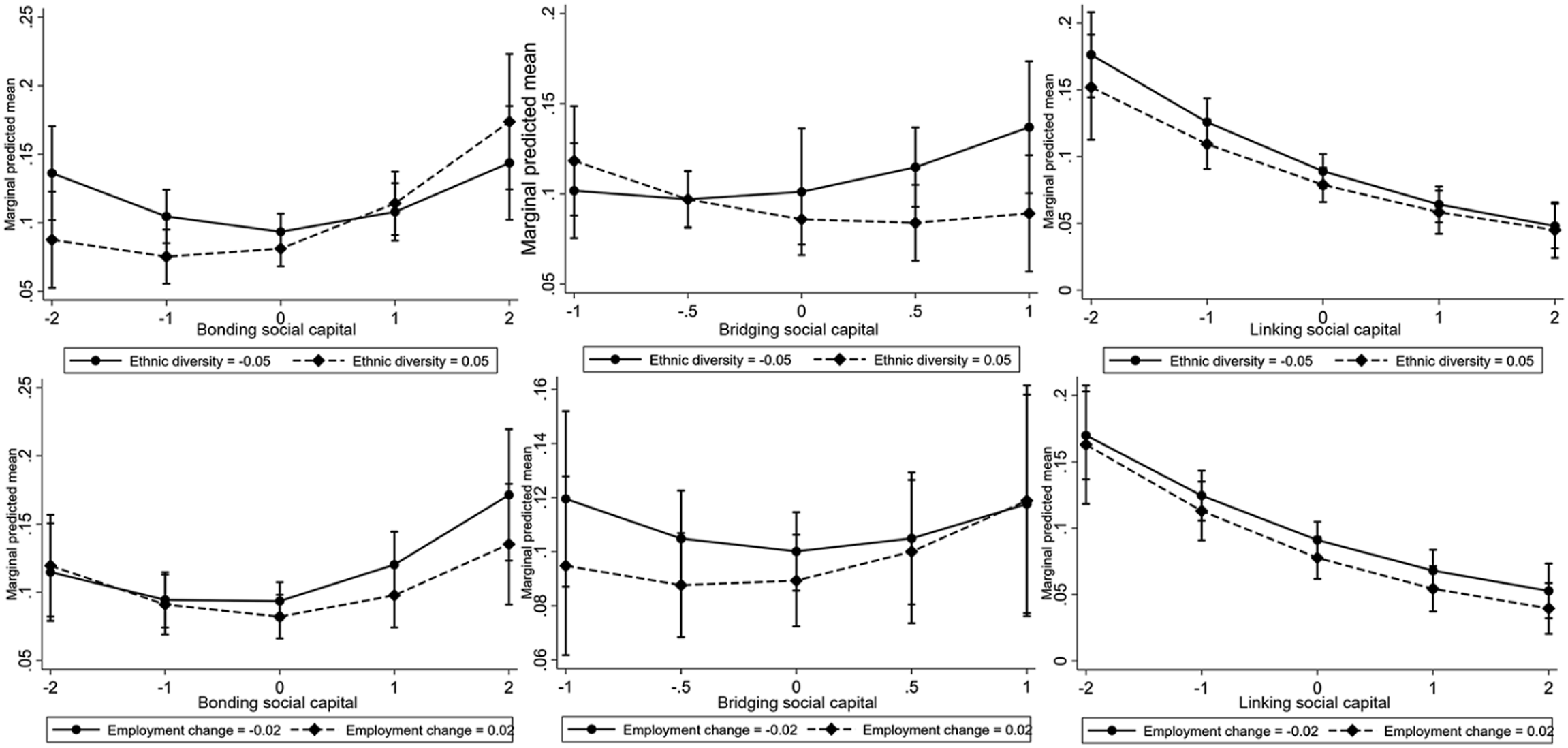
Graph of the moderation patterns of cross-level interaction terms.
Random intercept multilevel multinomial logit model results (DV: Party support among white respondents — conservative, labour, UKIP, others).
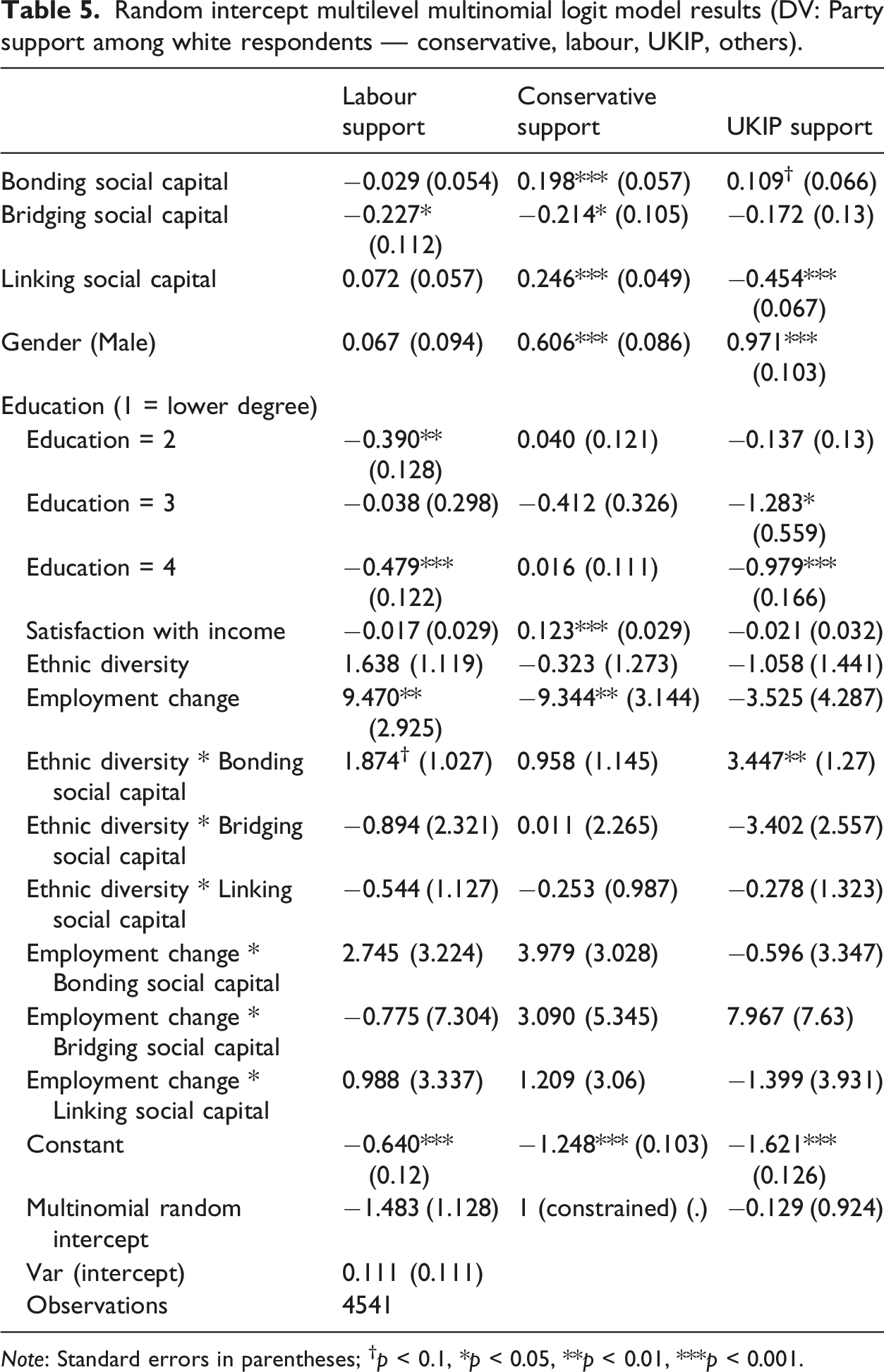
Note: Standard errors in parentheses; †p < 0.1, *p < 0.05, **p < 0.01, ***p < 0.001.
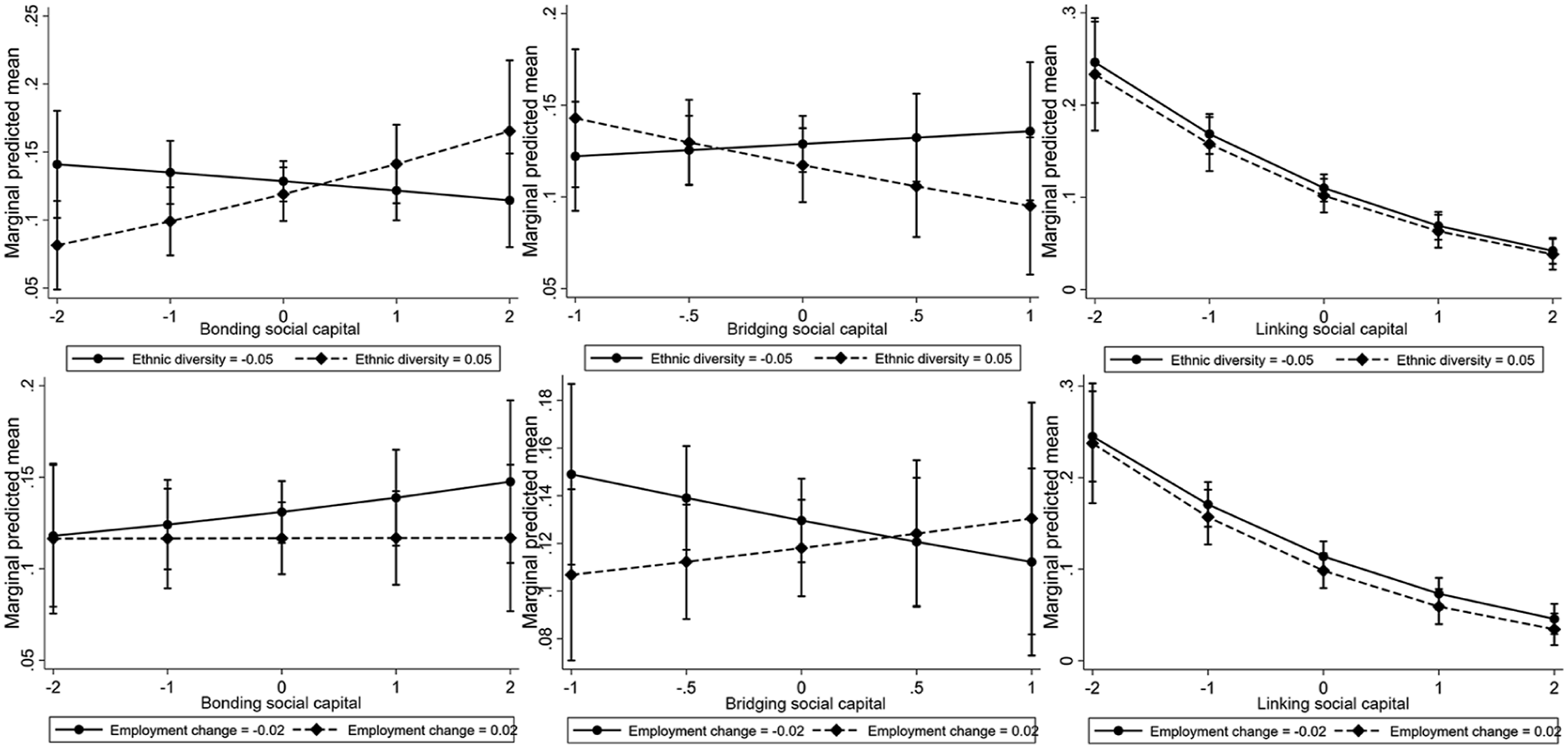
Moderation patterns on UKIP support (Distinguishing support for conservative, labour, UKIP, and others).
Conclusion
This study employs a multilevel approach to examine how social capital moderates the associations between regional economic and cultural externalities and support for PRRPs. This analysis demonstrates that social capital cannot be viewed as a uniform resource; rather, its disaggregation into bonding, bridging, and linking ties is essential for capturing the contingent nature of political behaviour. This framework provides a behavioural foundation to explain prior inconsistent findings, suggesting that the moderating role of social networks determines how macro-level grievances are translated into individual voting choices. Specifically, it highlights how bonding ties may amplify exclusionary responses to diversity and decline, whereas bridging and linking ties attenuate these associations by providing informational buffers or institutional trust.
By addressing these cross-level interactions, this study provides a more precise account of the interplay between social structures and macroeconomic shocks (Boeri et al., 2021; Nur-tegin, 2021). The findings suggest that the rise of PRRPs is not merely a direct response to negative externalities, but is fundamentally conditioned by the social fabric of communities. From a rational-choice perspective, individuals do not experience economic or cultural shifts in isolation. Instead, their normative demands for protective politics are filtered through specific network mechanisms that shape perceptions of ‘in-groups’ and ‘out-groups’. Consequently, this multilevel perspective shifts the focus towards the dynamic interactions that determine why similar regional conditions lead to divergent political outcomes.
Despite its strengths, this study has several limitations. First, both the conceptualisation and operationalisation of linked social capital warrant refinement. While the ‘open’ vertical dimension has been specified as linking social capital, the ‘closed’ dimension may encompass related concepts, such as clientelism, which this study did not fully address. Moreover, although this study considered the overlap between linking social capital with concepts such as political trust and political efficacy, attitudinal indicators are arguably less objective than structural measures of social capital such as participation in protests or petition signing. Second, some findings about interactions between social capital and economic or cultural factors rely on observed trends, rather than on statistically significant estimates because of limited sample sizes and overlapping confidence intervals. Finally, future research should assess the generalisability of these findings across a broad set of countries and geographical contexts.
Supplemental material
Supplemental material - Social capital and support for populist radical right parties: A multilevel analysis of a household panel in the UK
Supplemental material for Social capital and support for populist radical right parties: A multilevel analysis of a household panel in the UK by Jianyang Yang in Rationality and Society.
Footnotes
Acknowledgements
Preliminary versions were presented at the 2025 Annual Conference of the Japan Association for Comparative Politics (28–29 June 2025, Toyo University/online). I am deeply grateful to Professor Takeshi Hieda for his continuous guidance during the preparation of this paper. I also wish to thank Professor Takeshi Ito and Dr Junpei Suzuki for their valuable comments during the conference sessions.
Funding
This study was supported by JST SPRING (Grant Number JPMJSP2139).
Declaration of conflicting interests
The authors declared no potential conflicts of interest with respect to the research, authorship, and/or publication of this article.
Data Availability Statement
This study used individual-level data from Understanding Society: The UK Household Longitudinal Study (UKHLS). Wave 6 main survey data (SN 6614) were originally released as open data, but are now safeguarded and can be accessed via the UK Data Service under safeguarded conditions (https://beta.ukdataservice.ac.uk/datacatalogue/studies/study?id=6614). To construct the matched regional indicators, I employed the UKHLS Special Licence dataset (SN 6666), which requires a Special Licence application from the UK Data Service (https://beta.ukdataservice.ac.uk/datacatalogue/studies/study?id=6666). Regional-level contextual variables were obtained from the UK Census 2001 and 2011, and are publicly available from Nomis (https://www.nomisweb.co.uk/sources/census_2001;  ). The Stata syntax necessary to replicate the analysis is provided in the online Supplemental Materials accompanying this article. Access to safeguarded and Special Licence datasets requires registration and approval from the UK Data Service, and raw data cannot be shared directly.
Supplemental material
Supplemental material for this article is available online.