







Abstract
Population shifts in the United States are projecting growth of elderly Latinos from 2.9 million in 2010 to 17.5 million in 2050 (Fregoso, 2014). Subsequently, it is projected that by 2019, elderly Latinos will be the largest ethnic minority of this age group making up 20% of the total elderly population (Fregoso, 2014), while birth rates will be highest for Latino immigrants (Passel & Cohn, 2008). This growth will place increased demands on Latina women, especially childbearing Latinas, who are often the primary caregivers within their homes and communities (Escandon, 2006; Flores, Hinton, Barker, Franz, & Velasquez, 2009; Magana, & Ghosh, 2010; Rabinowitz, Mausbach, Atkinson, & Gallagher-Thompson, 2009; Saunders, 2013; Simpson, 2010; Williams, Hicks, Chang, Connor, & Maliski, 2014). Those childbearing Latina women who are intergenerational caregivers are the primary caregivers to those of various generations and relations who are in need of assistance within their homes and communities including their own children.
For the purposes of this integrative literature review, intergenerational caregiving is defined as the care provided to children, parents, and other members of one’s own family. That is, intergenerational caregiving occurs within family units by individuals providing care to one or more generations of family members. Family is self-defined as being composed of individuals related by birth, marriage, adoption, or choice who are not necessarily in the same household(s) (Kaakinen, Coehlo, Steele, Tabacco, & Hanson, 2015). Historically, Latino family research has coalesced around two broad general interest areas: (a) the role and internal dynamics of families and social networks for communication, socialization, distribution of resources, preservation of cultural forms, family reformation, immigrant resettlement and (b) feminist perspectives on changing family life and gender-role patterns (Zambrana, 1995). Current research is shifting to take a more nuanced approach in exploring the relationship between ethnicity and culture. Cultures transform as ethnic groups are shaped by a myriad of factors including but not limited to immigrant status on arrival, length of time in the United States, increased education and dominant perceptions, and ideologies of the racial and ethnic group by the host culture (Zambrana, 2011).
When situating Latina women and intergenerational caregiving through a health equity lens, it is important to note that Latinas are potentially more vulnerable to disparities in their health compared with non-Latina White women (Friedman, Buckwalter, Newman, & Mauro, 2013; Hinojosa, Zsembik, & Rittman, 2009). Some of the disparities (increased maternal morbidity and mortality, caregiver mental health issues, and poor infant outcomes) are linked to being poor and lacking access to general health care and community services (Philadelphia Department of Public Health, 2014). Puerto Rican women specifically have higher infant mortality rates compared with Cuban American women and Mexican American women (MacDorman & Matthews, 2011). In addition, Puerto Rican women are twice as likely to begin prenatal care in their third trimester or not receive prenatal care at all compared with White women who are not Latina (Philadelphia Department of Public Health, 2014).
Therefore, consistent with the Strategic Plan of the National Institute of Nursing Research (2011), research is needed to develop innovative behavioral interventions to promote health and prevent illness for diverse populations across the life span. This review focused on the science regarding intergenerational caregiving and Latina childbearing women generally and then specifically focused on Puerto Rican childbearing women and their families to provide recommendations regarding future research. The purpose of this integrative literature review was to (a) identify and synthesize the scholarship toward understanding Latinas and intergenerational caregiving and (b) integrate the findings of this literature review into recommendations regarding nursing practice and research to ameliorate poor maternal and fetal outcomes of Puerto Rican childbearing women engaged in intergenerational caregiving.
Framework
To understand Latinas and intergenerational caregiving within a larger sociocultural and environmental context, this integrative review was directed by Bronfenbrenner’s Ecological-Environmental Theory (Bronfenbrenner, 1977). The theory holds that an individual’s behavior is shaped to varying degrees by the various environments encompassing their life. Bronfenbrenner described the direct and indirect multidimensional influences on the individual as existing in five simultaneous systems: the microsystem, the mesosystem, the exosystem, the macrosystem, and the chronosystem.
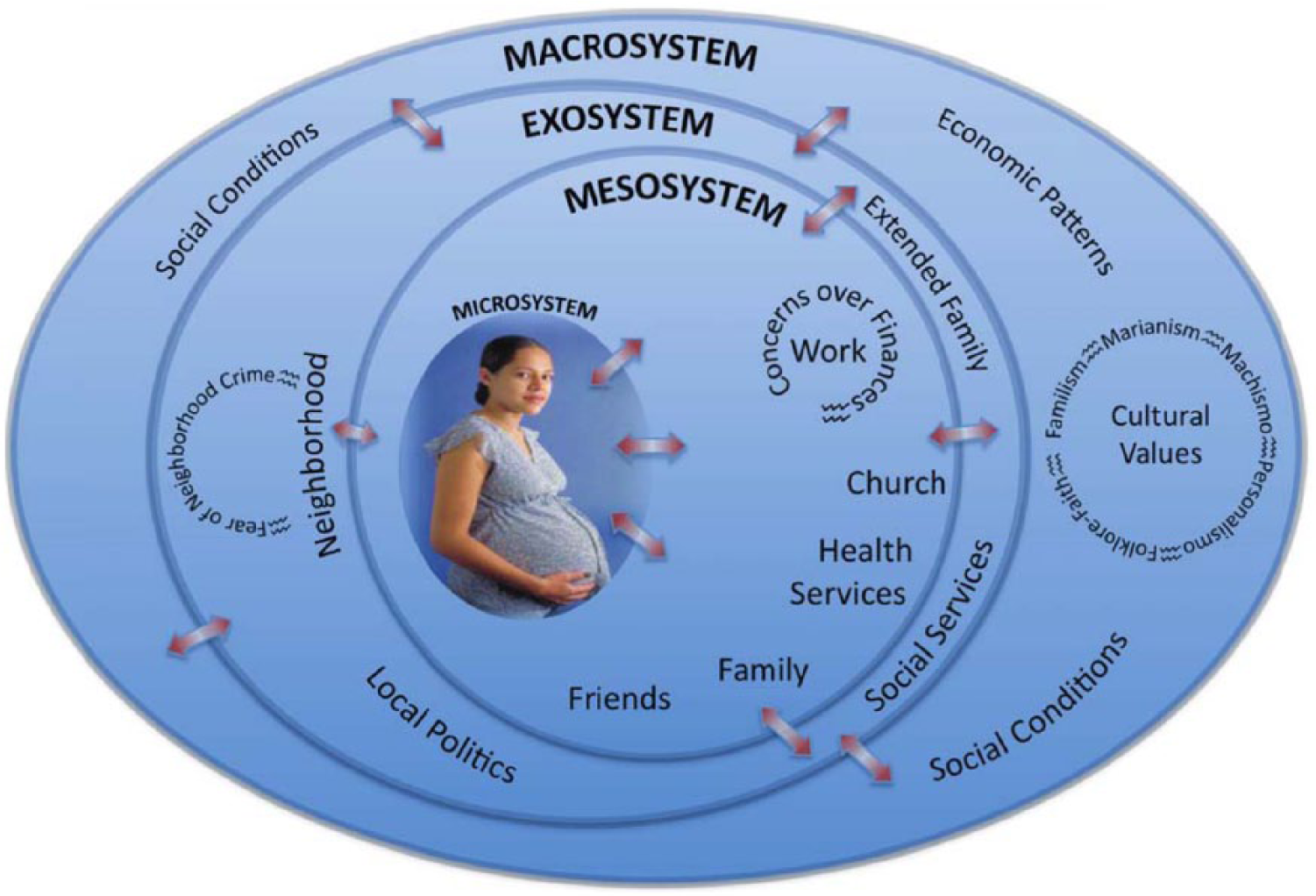
Figure 1 presents the Childbearing Puerto Rican Woman and Intergenerational Caregiving Model that was constructed based on Bronfenbrenner’s Ecological-Environmental Theory. The Childbearing Puerto Rican Woman and Intergenerational Caregiving Model focuses on the cultural and other influences existing in Latinas’ daily lives as they enact their caregiving. The Latina, age, gender, and health, exist within the center (microsystem) of this ecological–environmental perspective. Her family, peers, school, church, and health services all exist in the mesosystem. Any health care systems, jobs, schools, and political influences reside in the exosystem. The macrosystem contains the culture and subculture within which the childbearing woman exists including dominant cultural beliefs, attitudes, and ideologies which may influence her family and herself. Cultural values exist in every area of the childbearing woman’s life and influence how she interprets the various systems around her. In a reciprocal fashion, the childbearing woman’s sociopolitical and environmental contexts contribute to how she enacts cultural values.
Childbearing Puerto Rican Woman and Intergenerational Caregiving Model.
Method
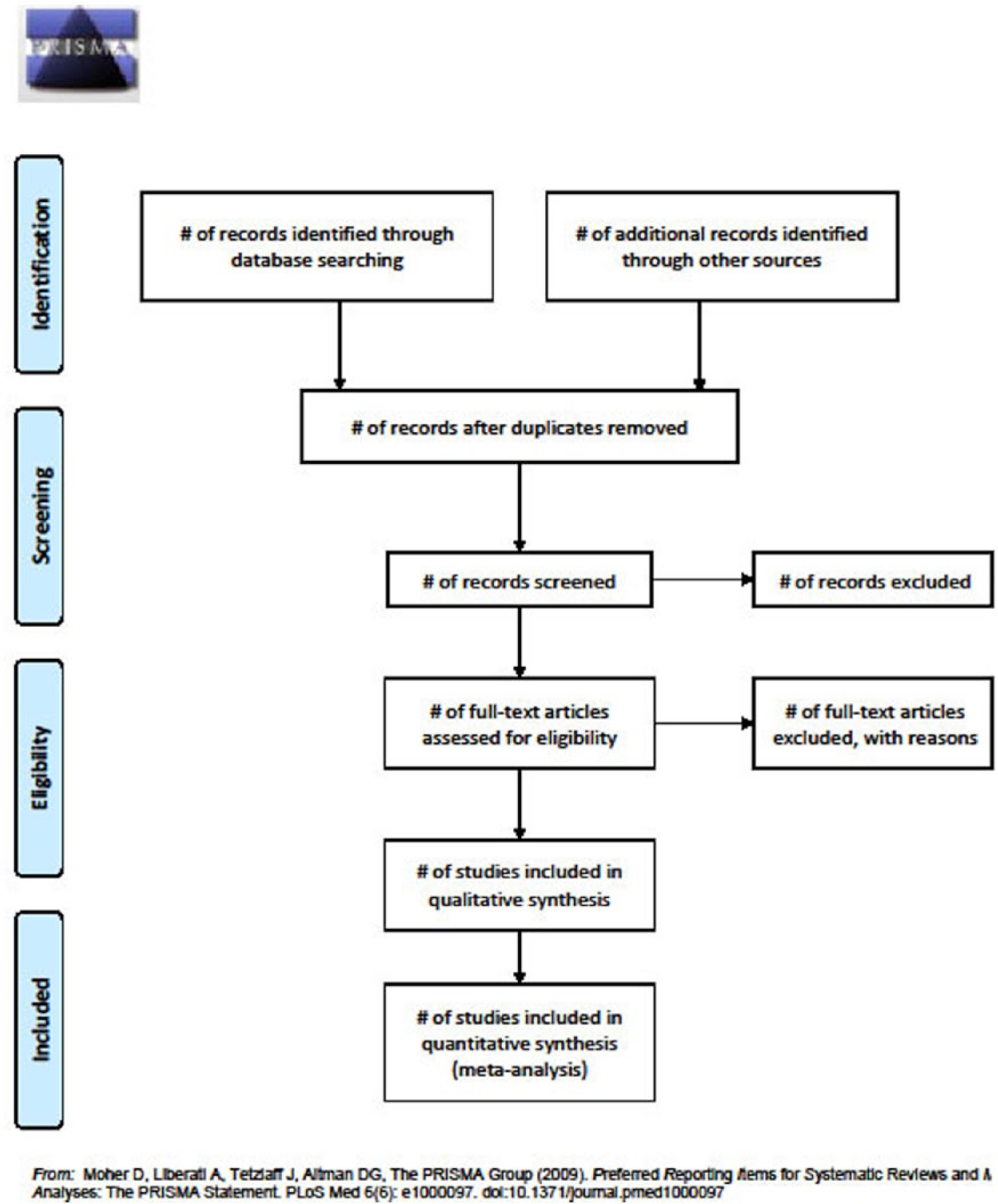
This integrative literature review utilized the Whittemore and Knafl methodological strategy (2005) as well as the PRISMA guidelines in Figure 2 (Liberati et al., 2009). The strategy included the following steps: problem identification, literature search, data evaluation, data analysis, and presentation. Electronic searches of PubMed and CINAHL from 2009 through 2014 were conducted using the following key terms: Latinas, intergenerational caregiving, intergenerational, and caregiving. This strategy resulted in 112 articles that required further screening to yield only specific research articles.
PRISMA 2009 flow diagram.
The following inclusion criteria were used to screen these 112 articles for the final sample selection: (a) reported on a primary research study approved by an institutional research ethics body, (b) appeared in a peer-reviewed journal, (c) published between 2009 and 2014, (d) published in English, (e) explored any relationship between Latinas and intergenerational caregiving, and (f) demonstrated systematic data collection and analysis. Many articles were eliminated because direct caregiving was not the focus or Latinas were not well represented in the study sample. This resulted in a selection of 53 articles that were further screened to identify original research and exclude articles with a clinical care or policy focus. This final review yielded 18 research articles that were obtained as the final literature review sample for analysis.
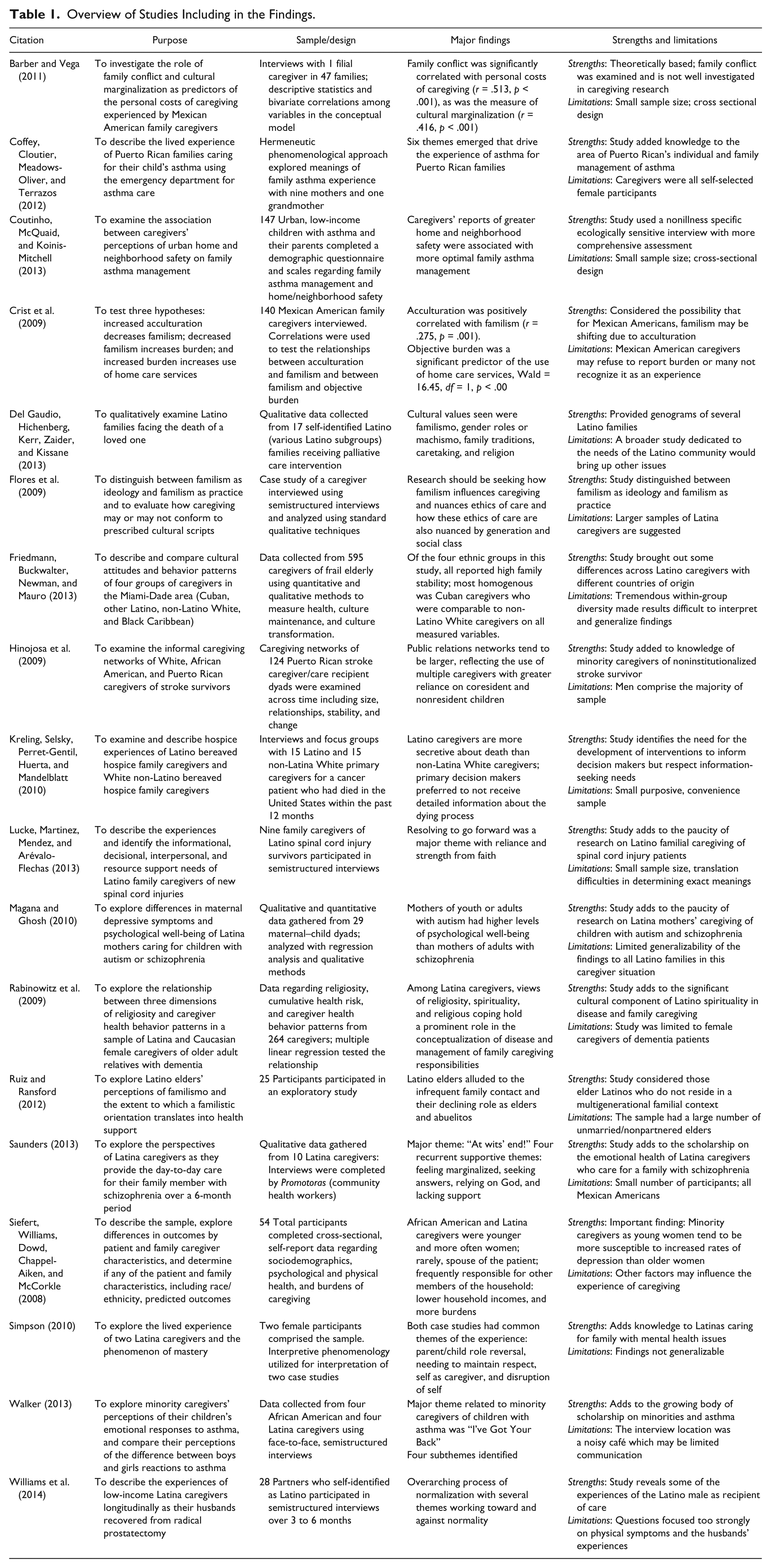
The analysis was conducted using a two-stage analysis. A content analysis was done first to identify categories of caregiving in the literature. Next, themes were explored as they applied to Bronfenbrenner’s systems of influence (Bronfenbrenner, 1977). Analytic grids were constructed that contained summaries of the 18 research articles including the purpose, sample, design, major findings, and strengths/limitation. Studies were labeled with categories that corresponded with topical areas of research and then with themes as similar results were further synthesized. To increase the rigor of this review, the strengths and limitations of each article were assessed based on appraisal tools for qualitative studies (Tong, Sainsbury, & Craig, 2007) and quantitative studies (Moher, Liberati, Tetzlaff, & Altman, 2009). These strengths and weaknesses were also listed in the analytic grids.
Results
The 18 articles that were reviewed and analyzed included both qualitative (10) and quantitative (8) research designs. Most of the qualitative research employed focus groups and structured interviews to understand the themes involved with caregiving as they occurred around various health contexts. One case study used a feminist theory approach to understanding the inevitable tensions that occur as the result of negotiating divergent cultural mandates while caring for an elderly parent (Flores et al., 2009). Quantitative articles focused on caregivers’ predictive and associated behaviors with particular Latino cultural constructs such as familism and acculturation. These articles also examined family conflict. Three of the quantitative studies compared components of informal caregiving, such as cultural attitudes, toward caregiving. The Latino-only participant studies examined a singular Latino group or compared multiple Latino subgroups. The rest compared Latino caregivers with White caregivers who are not Latina and caregivers who are African American. The majority (n = 12) of Latina caregivers in the studies were between the ages of 30 to 60; single with partners; belonged to a lower socioeconomic class; and had no higher than a high school education. Table 1 provides a brief summary of the 18 selected articles.
Overview of Studies Including in the Findings.
Themes
A thematic analysis of the 18 articles provided the following themes related to intergenerational caregiving. These included (a) value-oriented themes, (b) the effects of caregiving on mental health, (c) Western and folk medicine, and (d) pattern-oriented themes.
Value-Oriented Themes
Values Theme 1
Familism, gender roles, and the influence of folklore and faith on caregiving are cornerstones of Latino values and culture (Crist et al., 2009; Del Gaudio et al., 2013; Flores et al., 2009; Kreling et al., 2010; Lucke et al., 2013; Rabinowitz et al., 2009; Saunders, 2013; Siefert et al., 2008). The majority of the studies focused on the intersection of values themes with the care of the elderly suffering from dementia and receiving palliative care; care of family with various mental disorders; and the management of asthma. Familism ideology refers to the cultural valuing of the family over individual interest that guide family relationships. While familism is not unique to Latinos, it is often regarded as the most significant common cultural denominator among Latinos of various national origins, and the value most likely to remain unchanged despite migration and increased acculturation (Marin & VanOss Marin, 1991; Velasquez, Arellano, & McNeill, 2004). Familism with its cultural expectation for children to care for their parents operates in tension with a larger society that values a more individualistic culture. As a result of economic demands for the caregiver to work outside the home, relocate for work, and care for their own children, some Latino elders find themselves spending more time alone. Due to this, some Latino elders have compensated by reforming familial relationships with networks of friends. These elder Latinos broadened their family networks to include fictive kin when their own sibling networks became smaller through illness, death, or reverse migration (Ruiz & Ransford, 2012). The cultural relevance of familism on intergenerational caregiving, however, was not explored and particularly how it might influence the priorities and demands placed on childbearing women, as well as their consequences.
Values Theme 2
Machismo and marianismo are terms for ideologies of gendered behaviors and characteristics that are historically associated with, respectively, men and women in Mexico. Machismo is associated with positive traits in a Mexican male such as responsible fatherhood as well as negative traits such as increased aggression. Marianismo is a term derived from the Virgin Mary. Within the cultural mandate of Marianismo, the Mexican woman is expected to be a source of boundless self-sacrifice and has a societal expectation to serve her family while deferring to the male partner (Englander, Yanez, & Barney, 2012). Many Latin American countries have also adopted variations of these gendered behavioral expectations with the literature supporting various gendered behavior influences.
Gendered behavioral expectations can produce various tensions and expectations within families, especially with female caregivers who must also raise their own families and work outside the home. These ethnic and gender differences in the cancer caregiving experience were examined in three studies (Flores et al., 2009; Simpson, 2010; Williams et al., 2014). Latina caregivers expressed tension as they cared for family members while trying to maintain their own sense of self. Simpson (2010) found that Latina caregivers to family members with dementia voiced with concerns about the reversal of parent/child roles, the need to maintain respect, the role of self as caregiver, and disruption of self. Drawing from feminist and Chicana literature on the gendered nature of intergenerational caregiving, Flores et al. (2009) provided a case study of one Latina’s tensions and negotiations as, despite having eight other siblings, the care for her mother with dementia fell solely on her shoulders.
When a spouse becomes the recipient of a Latina’s caregiving, burden increases when trying to maintain a spousal relationship while negotiating the shift in the power dynamic of now caring for the husband (Williams et al., 2014). Even children were assigned gendered behavioral norms by parents in describing their experiences with asthma. Boys were described as not expressing emotions concerning their life with asthma, while girls were described as more expressive (Walker, 2013).
Values Theme 3
The importance of religion to intergenerational caregivers was discussed as a source of strength and reliance within the context of palliative care, contending with mental illness, as well as caring for a family member after a life-altering accident. Spirituality in the Latino family has been shown to increase positive aspects of caregiving and as a result decrease caregiver subjective burden (Hodge & Sun, 2012). Latino values regarding religiosity, spirituality, and religious coping were examined as they emerged within the context of palliative care surrounding families (Del Gaudio et al., 2013). These issues were found to hold prominent roles in Latinas’ conceptualization of disease and management of family caregiving demands surrounding dementia (Rabinowitz et al., 2009).
Schizophrenia was studied from the perspectives of 30 Mexican American dyads; themes of feeling marginalized and lacking support were found (Saunders, 2013). The major theme identified was “At wits’ end!” Four metathemes also emerged: feeling marginalized, seeking answers, relying on God, and lacking support. The resource supports needed by Latino families of newly injured members with spinal cord injuries included reference to a spiritual sense of building strength and getting through the experience of the injury and its life-changing effects (Lucke et al., 2013). Themes developed using comparative analysis included resolving to go forward, learning to care for, and getting through (Lucke et al., 2013). The integration of these ongoing care responsibilities into family life was not discussed.
In an effort to negotiate the dying process of a family member within a Western medical context, Latina caregivers often exhibit coping mechanisms that may appear as denial of the imminent death. Latina caregivers of dying family members often search for ways to be polite and prevent hurting feelings of family members as well as the patient (Del Gaudio et al., 2013; Kreling et al., 2010; Rabinowitz et al., 2009). This denial includes being secretive about the prognosis with both health practitioners and each other (Kreling et al., 2010). Latina caregivers felt that it was their responsibility to protect the patient from the knowledge of his or her illness, to deny death was imminent, and to act as if the patient were getting well. In most families, they would not discuss the family member’s death among themselves because they did not want to “hurt” each other. Rather, many Latina caregivers reported denial, preferences for less information, and maintaining secrecy about the prognosis.
The Effects of Caregiving on Mental Health
Caring for family can be stressful and challenging. Younger Latina caregivers reported higher incidences of depressive symptoms, more burdens and demands related to finances, work, and lack of family support when compared with older Latina caregivers (Magana & Ghosh, 2010). Both Latina and African American female caregivers overwhelmingly reported severe financial strains as a more problematic component of the actual caregiving experience (Siefert et al., 2008). None of the studies reported if any of these female caregivers were childbearing.
Western and Folk Medicine
Members of the Latino culture have historically depended on both their healing traditions and Western medicine which can add resources but also complexity to caregiving. Currently, medical providers are cautioned to be aware of the potential for simultaneous use of curanderismo, Santeria, and/or epsiritismo in Latino populations (Juckett, 2013). Referred to as “alternative treatments,” practitioners are encouraged to accommodate both alternative and conventional medicine in the care of their patients (Juckett, 2013).
Asthma is an example of a disease process that Latinos often treat with both conventional and alternative therapies. It is also a disease that disproportionately affects African Americans and Latinos (Coffey et al., 2012; Coutinho et al., 2013). Two studies examined familial response to caring for family members with asthma. One study examined 10 Puerto Rican families who were enrolled in the Easy Breathing program as the result of an emergency department visit (Coffey et al., 2012). Using a hermeneutic phenomenological approach, six themes addressing the lived experience of caregivers of children with asthma were identified: the folklore of asthma, culture and the medicine woman, in awe of asthma, praying to God, the decision: time to go, and the emergency department. Despite using herbal treatments for themselves, mothers of children with asthma chose not to use herbal treatments on their children. For their children, the mothers preferred to use the medicines prescribed by their health care providers. Collectively, these issues speak to Latina caregivers’ interdependence on both cultural traditions and Western medicine.
Another study (N = 147) considered the effect of urban neighborhood violence on how Latina (n = 59), African American (n = 39), and non-Latina White (n = 49) caregivers cared for their family members with asthma (Coutinho et al., 2013). Caregivers who are non-Hispanic White reported significantly higher levels of perceived home and neighborhood safety and were less likely to experience severe poverty than Latino and African American groups. Latina and African American caregivers had less optimal family management of asthma than non-Latina White caregivers and reported lower levels of neighborhood safety.
Pattern-Oriented Themes
Patterns in Latina caregiving were noted in terms of various aspects of caregiving networks (Friedmann et al., 2013; Hinojosa et al., 2009), the effects of acculturation and cultural marginalization (Barber & Vega, 2011; Crist et al., 2009), as well as the influence of neighborhood safety on managing illness (Coutinho et al., 2013). Friedmann et al. (2013) found tremendous within-group diversity in patterns of caregiving among a wide representation of Latinos. Cuban caregivers, the most economically stable of the Latino subgroups, were most comparable to non-Latina White caregivers when examining cultural attitudes and behavior patterns in caregiving.
Ethnic differences in caregiving were also considered by examining the networks formed by Puerto Rican, non-Latina White, Asian, and African American caregivers. Hinojosa et al. (2009) compared the nature of informal caregiving networks of Puerto Ricans with non-Latina Whites, Asians, and African Americans. These authors found that Puerto Rican caregiver networks were significantly larger and were also more likely to contract and expand over time due to migration patterns when compared with the other groups. Puerto Rican caregivers also were more likely to rely on family who not only lived with the caregiver but also those who did not.
Cultural marginalization and acculturation are often studied within the context of Mexican Americans despite the intersection of other Latino subgroups with issues of immigration and subsequent acculturation into an American culture. In this review, several studies focused singularly on Mexican Americans and were dedicated to understanding various relationships between cultural marginalization, acculturation, and familism and the objective burden in familial caregiving (Barber & Vega, 2011; Crist et al., 2009). Cultural marginalization describes the experience of individuals living within two cultures, while at the same time not integrated into either of them (Barber & Vega, 2011). Acculturation, on the other hand, is defined as a blending of behaviors and attitudes between a minority and majority culture (Cuellar, Arnold, & Maldonado, 1995).
Family conflict and cultural marginalization were studied as predictors of the personal costs of caregiving experienced by Mexican Americans (Barber & Vega, 2011). Family conflict was correlated with personal caregiving costs (r = .513) even after controlling for cultural marginalization (Barber & Vega, 2011). While family conflict constitutes a substantive focus of a large body of research in the social and behavioral sciences with complex and various definitions, this study used Semple’s (1992) conceptualization, namely that family conflict exists when overt personal disagreement exists among individuals related by birth, marriage, or adoption regarding caregiving issues.
Discussion and Implications for Future Nursing Research
As a result of this integrative review, there were three gaps noted in the literature. These gaps include (a) lack of studies related to intergenerational caregiving, (b) lack of studies that explored the experiences of childbearing Latinas with intergenerational caregiving, and (c) the lack of studies exploring the subgroups within the larger Latino community. As elder Latino and childbearing Latina populations grow as predicted over the next few decades, there is a likelihood of increased familial responsibilities for Latina women related to intergenerational caregiving.
It was quite evident that Latinas of childbearing age are a cornerstone to caregiving within their families and communities. Despite this, the number and various types of caregiving obligations were not acknowledged in the literature. In addition, gaps in the literature highlight the need to understand how the potential strains of intergenerational caregiving may affect the various health concerns of childbearing Latinas. Figure 1 illustrates the pregnant Puerto Rican woman located at the center of the various levels and components of her life. These factors interact with each other and ultimately affect how she cares for family and herself. The importance of individually examining the various Latino subgroups exists given each of their various histories and sociopolitical contexts (Escandon, 2006). Important health-related questions may pertain to one subgroup and not another.
For example, among Latinas in the United States, considerable heterogeneity exists in infant health with poorest outcomes reported among Puerto Rican infants. Puerto Rican women have higher infant mortality rates as compared with Cuban American women and Mexican American women. In addition, Puerto Rican women are twice as likely to begin prenatal care in the third trimester or not receive prenatal care at all as compared with non-Latina White mothers (U.S. Department of Health and Human Services, 2013). Nursing research examining Latino subgroups will ultimately lead to improved health care by building a more accurate and nuanced knowledge base for health professionals.
An important research component will be innovative behavioral interventions aimed at improving health disparities with important focus on the needs of specific Latino subgroups. For example, specific behavioral intervention research can be directly aimed at improving poor prenatal care adherence within urban Puerto Rican childbearing women. This type of nuanced nursing research supports the Healthy People 2020 Focus Objective in Maternal Infant and Child Health that seeks to improve prenatal care initiation and adherence (U.S. Department of Health and Human Services, 2015).
Footnotes
Acknowledgements
I would like to express my love and gratitude for the mentorship and insights of Dr. Janet Deatrick.
Declaration of Conflicting Interests
The author(s) declared no potential conflicts of interest with respect to the research, authorship, and/or publication of this article.
Funding
The author(s) disclosed receipt of the following financial support for the research, authorship, and/or publication of this article: This research and article were supported by a Ruth L. Kirschstein NRSA Postdoctoral Fellowship Research on Vulnerable Women, Children and Families [T32NR007100] at the University of Pennsylvania School of Nursing, Centers for Global Women’s Health and Health Equity Research.