







Abstract
Introduction:
In 2016, 5,712 American Indian/Alaskan Native (AI/AN) women and girls were reported missing in the United States. In Canada, 4% of the population is Indigenous, yet Indigenous females represent 50% of all sex trafficking victims. This systematic mixed-studies review examined the effects of Missing and Murdered Indigenous Women and Girls (MMIWG) to define a role for nurses.
Methods:
We used five databases with keywords, inclusion criteria, and the Mixed Methods Appraisal Tool.
Results:
Findings of 22 papers discuss: (a) demographic data; (b) factors that increase vulnerability of AI/AN women; and (c) how nurses can decrease the prevalence of MMIW.
Discussion:
Nurses are the first provider patients see when accessing care. Increasing knowledge about the impact of violence against AI/AN women and girls is the first step in identifying measures needed to address this public health concern.
Introduction
Even though “going missing” has for decades been an important social issue, there is little research on the phenomenon (Ferguson & Soave, 2021). Researchers have recently focused on risk factors that may precede missingness. Demographic variables that have been identified to increase the risk of going missing include disadvantaged youth, Indigenous people, female gender, and individuals experiencing unstable housing (Kiepal et al., 2012). Although being female and Indigenous are identified as independent risk factors, occupying both a female and an Indigenous identity might increase the risk of missingness (Ferguson, 2022).
In the 2010 United States census, 5.2 million individuals self-identified as American Indian/Alaskan Native (AI/AN) along with another race and an additional 2.9 million reported AI/AN as their only race (Satter et al., 2021). The high rates of violence and sexual trafficking is referred to as Missing and Murdered Indigenous Women and Girls (MMIWG) with over 5,000 young women kidnapped or trafficked and murdered in the United States (Lucchesi & Echo-Hawk, 2018). In 2016 the National Crime Information Center reported 5,712 missing AI/AN women and girls although the U.S. Department of Justice’s federal missing persons database entitled NamUS only reported 116 AI/AN cases that same year (National Crime Information Center, 2018; U.S. Department of Justice, 2018). This discrepancy is disturbing since there is a correlation between missingness and human trafficking (Johnstone & Lee, 2021). For example, 94% of Indigenous women in Seattle alone reported being raped or coerced into sex at least once, a statistic that is representative for AI/AN women across the U.S. (Urban Indian Health Institute, 2018). Rates are high in Canada as well. Even though Indigenous Peoples only make up 4% of the Canadian population, Indigenous women and girls represent 50% of sex trafficking victims (Olson-Pitawanakwat, & Baskin, 2021).
Data regarding missingness can be obtained from police reports, medical examiner files, vital records, hospital records, registries, and population-based surveys. However, data on MMIWG are underrepresented in these statistics most likely due to misclassification of race in data systems (Burhansstipanov & Satter, 2000). In addition, AI/ANs tend to be overlooked in national surveys because the population is small and been reported to cluster in rural areas (Satter et al., 2021). Because setting priorities and funding allocation decisions are based on data and science, it is critical that AI/ANs are represented. Not having accurate data limits the ability to address missingness among AI/ANs (Connolly et al., 2019).
Theoretical Framework
Indigenous research includes both quantitative and qualitative methodologies (Burnette & Figley, 2017). For a methodology to be correctly identified as Indigenous, it must be anchored in Indigenous epistemology, theory, ethics, and story (Kovach, 2021). Assumptions of Indigenous epistemologies view knowledge as arising from the intellectual realm of the mind, the affective domain of the heart, the kinetic domain of the body, and the spiritual domain of the soul. Knowledge revelations emerge from intangible knowledge sources such as dreams, visions, cellular memory, and intuition. Many concepts found in Indigenous methodological research are expressed through metaphor and stories to communicate ideas (Kovach, 2021).
A two-eyed seeing perspective proposes that both Indigenous and Western ways of knowing are important for building upon existing knowledge (Reiger et al., 2020). When engaging Indigenous communities in research, there is a need to understand historical and ongoing impacts of colonialism. Scholars have argued that traditional Indigenous matriarchical societies were a threat to male authority and encouraged male dominance (Berger, 2004; Bubar & Thurman, 2004). These attitudes are associated with missingness and violence against AI/AN women and girls (Johnstone & Lee, 2021).
Agreeing with the assumptions of two-eyed seeing and knowing that AI/AN culture is based on storytelling (Woods et al., 2021), we felt it was critical that qualitative and mixed methods studies be included in this review. The purpose of this systematic mixed-studies review was to examine the effects of MMIWG in North America to increase nurses’ awareness and begin to define a role for nurses.
Methods
To complete this review, we employed a systematic mixed-studies method (Pluye & Hong, 2014) using a results-based convergent synthesis design (Hong et al., 2017). This design involves analyzing quantitative and qualitative data separately and synthesizing the findings in a third synthesis. We chose this design because it allowed us to integrate a diverse group of studies. Institutional Review Board (IRB) application was not required for a systematic review.
Search Methods
PsycInfo, Sage Online, Scopus, PubMed, and CINAHL were searched for articles published using the search terms “MMIWG” and “MMIW.” Included studies were full-texted peer reviewed, quantitative, qualitative, or mixed method data-based studies. Research studies were included if they were published in English between the years 2018 and 2022 that focused on rates and factors associated with MMIWG. The timeline of this review coincides with the initial introduction of the Savanna Act in Congress in 2018. The Savanna Act passed both chambers of Congress in 2020 and is named after Savanna LaFontaine-Greywind who was brutally murdered as an example of the terrible abuse and homicide of AI/AN women (GAO, 2021). This bill reforms law enforcement and justice protocols appropriate to address MMIWG (Table 1).
Table of Evidence.
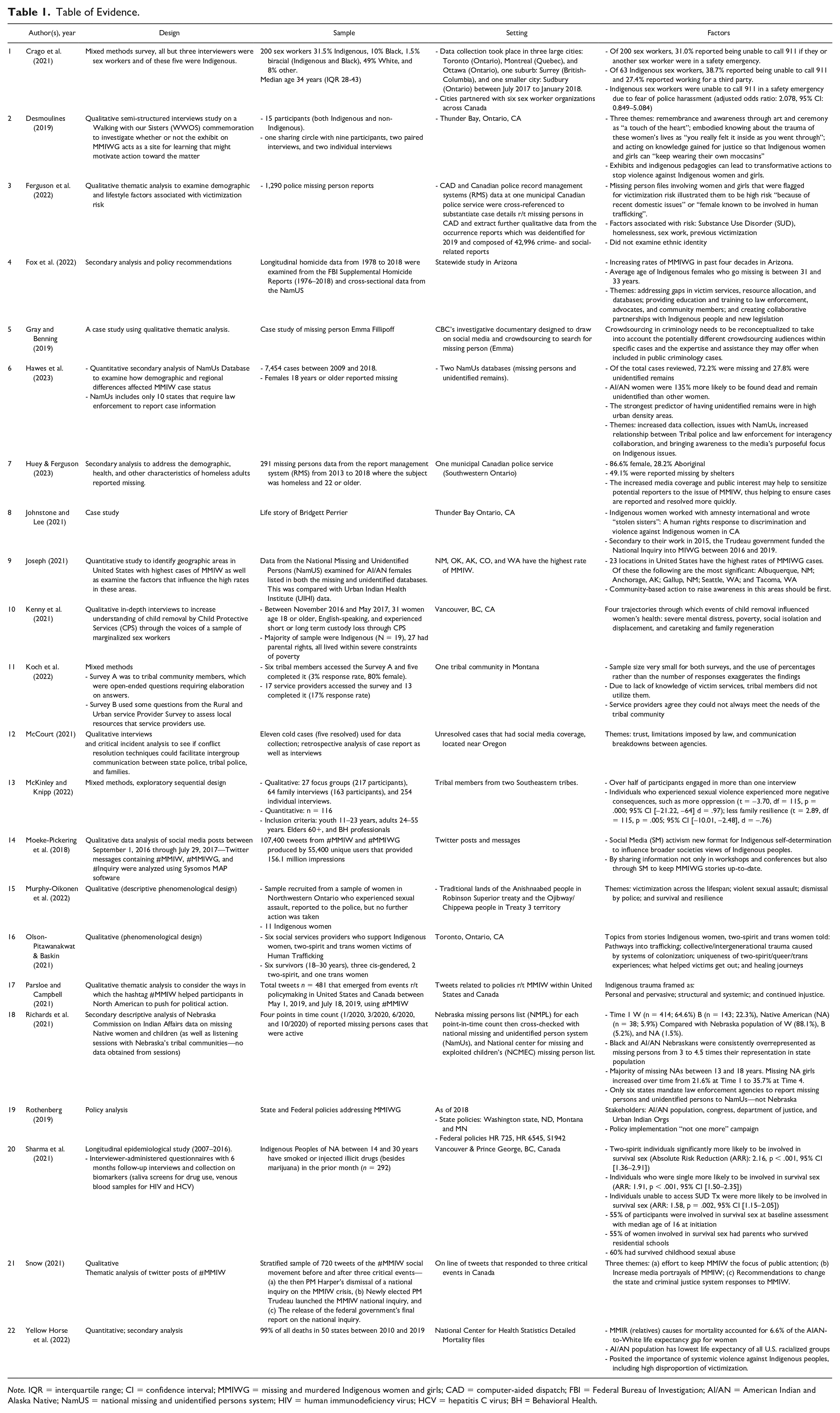
Note. IQR = interquartile range; CI = confidence interval; MMIWG = missing and murdered Indigenous women and girls; CAD = computer-aided dispatch; FBI = Federal Bureau of Investigation; AI/AN = American Indian and Alaska Native; NamUS = national missing and unidentified persons system; HIV = human immunodeficiency virus; HCV = hepatitis C virus; BH = Behavioral Health.
Quality Appraisal
We used the Mixed Methods Appraisal Tool (MMAT) to evaluate the studies (Hong et al., 2018; Pluye et al., 2011). MMAT has separate questions for each type of research design as demonstrated in Table 2 and can be use even when most of the papers are from a qualitative worldview. The latest version of the MMAT encourages a descriptive quality appraisal rather than a numerical score. The product of this appraisal can be found in Table 2.
Mixed Methods Appraisal Tool (Hong et al., 2018)—Quantitative, Qualitative, and Mixed Methods Studies.
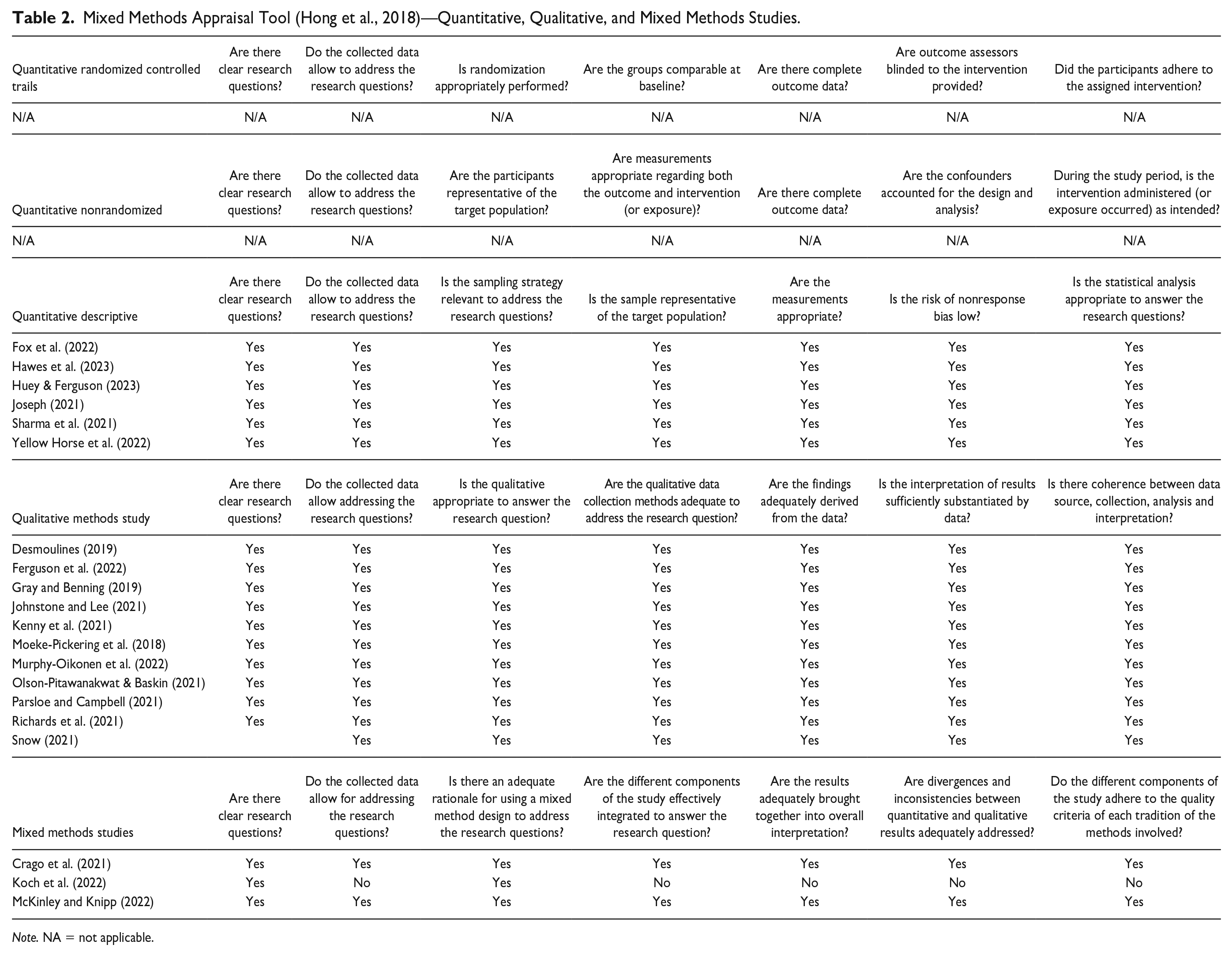
Note. NA = not applicable.
Data Abstraction and Synthesis
We extracted numerical data from quantitative studies and synthesized these data narratively. We performed qualitative thematic synthesis to abstract and synthesize data from the qualitative studies (Hong et al., 2017; Thomas & Harden, 2008). To form themes, studies were read in their entirety and findings from all included studies were coded (Hong et al., 2017). Codes were then grouped together to develop themes (Pluye & Hong, 2013; Thomas & Harden, 2008). We then performed a third synthesis to compare quantitative and qualitative findings and derived additional themes from the combination of these findings.
Results
Sample
The original search from the five databases and hand-searching resulted in 9,204 articles. The term “missing” caused difficulty with narrowing the search and many studies were excluded. After title and abstract review, 9,157 were excluded. The titles and abstracts of the 47 remaining articles were manually reviewed. The final sample was 22 studies (see Figure 1). Table 1 contains concise information about each study including authors, design, sample, setting, and factors. Of the 22 included studies seven were quantitative descriptive and 15 were qualitative or mixed methodology designs. Nine studies were conducted in Canada, nine studies in the United States, and four were media driven.
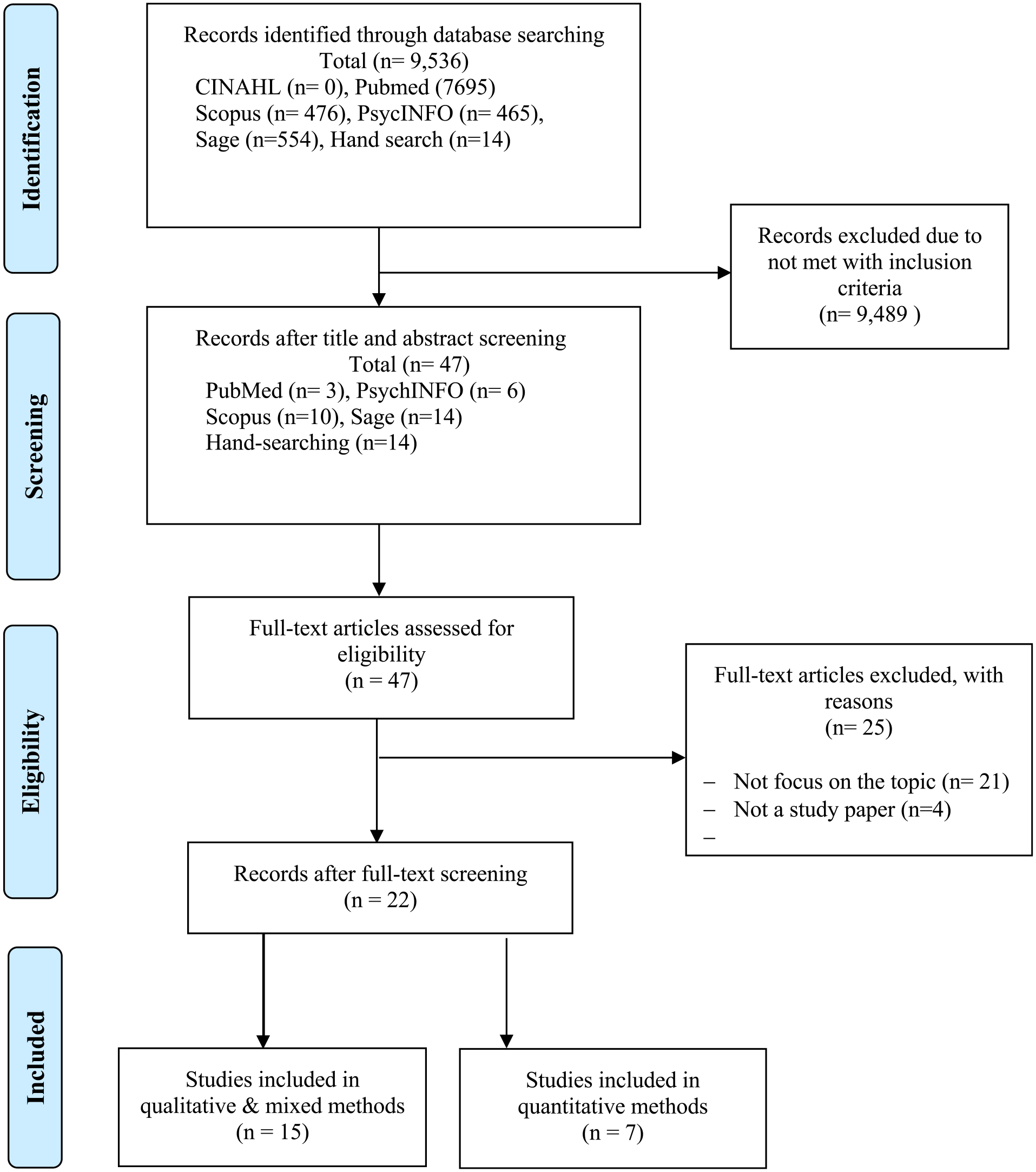
Search Results.
There were no experimental or quasi-experimental studies in the sample. Textual analysis of policies addressing MMIWG was the focus of one study (Rothenberg, 2019). Four studies used large data through crowdsourcing (Gray & Benning, 2019) and social media (Moeke-Pickering et al., 2018; Parsloe & Campbell, 2021) to examine the #MMIW social movement. One study (Desmoulins, 2019) interviewed individuals after they had attended the “Walking with Our Sisters” exhibit on MMIWG, asking the participants about their reactions to the exhibit.
The seven quantitative studies used state or national data sets to examine rates of missingness among Indigenous women and girls (Fox et al., 2022; Hawes et al., 2023; Huey & Ferguson, 2023; Joseph, 2021; Richards et al., 2021; Sharma et al., 2021; Yellow Horse et al., 2022). Two studies focused on thematic analysis of case studies (Gray & Benning, 2019; Johnstone & Lee, 2021). Five research teams completed data collection with tribal communities (Kenny et al., 2021; Koch, 2022; McKinley & Knipp, 2022; Murphy-Oikonen et al., 2022; Olson-Pitawanakwat & Baskin, 2021). Four studies included a sample of individuals that were more likely to be involved in survival sex or sex work (Crago et al., 2021; Kenny et al., 2021; Olson-Pitawanakwat & Baskin, 2021; Sharma et al., 2021).
Quality Appraisal
We used the MMAT to evaluate the studies (Hong et al., 2018; Pluye et al., 2011), which encourages a descriptive quality appraisal rather than a numerical score. This appraisal tool has separate questions for each type of research designs and the product of this appraisal is outlined in Table 2. There were no randomized control trials or one-group intervention studies.
Factors Related to Missingness
The most pressing issues discussed by researchers in this review included a lack of public awareness of MMIWG, the discrepancies between agencies on the number of reported cases of missingness among AI/AN women and girls, and the association between missingness and human trafficking. Each issue will be discussed further below.
Lack of MMIWG Awareness
Participants reported an increase in awareness of MMIWG after attending an art exhibit on the topic. In fact, one participant reported a deep “knowing” about the trauma these women have experienced after engaging in the exhibit (Desmoulins, 2019). Several studies raised the issue of gaps in victim services as well as health providers’ and the public’s lack of MMIWG awareness (Fox et al., 2022; Hawes et al., 2023). Some studies reported that tribal members were unaware of victim services (Koch et al., 2022) and assumed if they reported to law enforcement they would not be believed (Murphy-Oikonen et al., 2022; Olson-Pitawanakwat & Baskin, 2021; Parloe & Campbell, 2021). One way to raise awareness of missingness among Indigenous women and girls that was suggested in several studies is to use a variety of media formats (Gray & Benning, 2019; Huey & Ferguson, 2020; Joseph, 2021; Moeke-Pickering et al., 2018; Parloe & Campbell, 2021).
Lack of Coordination Between Law Enforcement Agencies
A theme raised in several studies is the inconsistency in data collection across agencies (Hawes et al., 2023; McCourt, 2021; Richards et al., 2021). For example, NamUs includes data from law enforcement in only 10 states in the United States because the other states are not mandated to report missing person data to NamUs (Hawes et al., 2023). In a secondary analysis of the National Center for Health Statistics Detailed Mortality files, AI/AN population had the lowest life expectancy of all U.S. minoritized groups and MMIWG causes for mortality accounting for 6.6% of the AI/AN-to-White life expectancy gap for women (Yellow Horse et al., 2022). Researchers have suggested that this may be secondary to issues with data collection and lack of interagency collaboration between law enforcement including Tribal police (Hawes et al., 2023). State and Federal law enforcement agencies such as the Federal Bureau of Investigation (FBI), state police, and county sheriffs who are responsible for addressing MMIWG are not coordinating with Indian law enforcement (Rothenberg, 2019), leaving gaps in response to a missing person report and available victim services.
Missingness and Human Trafficking
Indigenous women are being trafficked in a “space between missing and murdered” (Olson-Pitawanakwat & Baskin, 2021). Stories of Indigenous women, two-spirit, and trans women show multiple pathways into trafficking. Some factors common in these stories include adverse childhood events, unstable housing (Ferguson et al., 2022), less family resilience, and high levels of oppression (McKinley & Knipp, 2022). Rates of sexual violence are 2.5 times higher among Indigenous women as compared with other racial groups (McKinley & Knipp, 2022). One common tactic used by sex traffickers is to have older girls recruit younger girls, giving the younger girls a false sense of connectedness.
Indigenous women experience violence across their lifespan (McKinley & Knipp, 2022). In fact, when Indigenous women report a sexual assault to the police, they are often dismissed (Murphy-Oikonen et al., 2022). These experiences have led to distrust of law enforcement by tribal members. In one study, sex workers reported they were unable to call 911 if they or another sex worker were in a safety emergency because they feared police harassment (Crago et al., 2021).
Another study of sex workers described their interactions with social services regarding understanding child removal by child protective services (Kenny et al., 2021). Many women reported experiencing childhood sexual assault, extreme poverty, and lack of cultural support as precursors to trafficking. In addition, the collective trauma and violence of the residential school system continues across generations (Olson-Pitawanakwat & Baskin, 2021). In fact, 55% of the women who reported being involved in survival sex had parents who endured residential schools (Sharma et al., 2021).
Discussion
Prevalence of This Crisis
Historically, data collection regarding race/ethnicity has been limited to four options: White, Black, Hispanic, or Other. AI/ANs are the smallest racial/ethnic groups in the United States, and therefore, were documented in the “Other” category. Combining all smaller minority groups did not allow for analysis of specific racial information or cultural importance. As discussed in several studies included in this review (Hawes et al., 2023; McCourt, 2021; Richards et al., 2021; Yellow Horse et al., 2022), missing person data for Indigenous women and girls is not centralized; therefore, there is an underreporting of MMIWG. Reliable and comprehensive data are lacking.
Recommendations have been made to the Office of Management and Budget (OMB) regarding data collection within the AI/AN population. First, all federally funded research and service projects must use the 15 racial categories when providing study findings (Burhansstipanov & Satter, 2000). Another recommendation was to facilitate partnerships for the collection of diverse tribal data supported by tribal nations, urban and national Indian organizations, federal and state agencies, and national organizations (Connolly et al., 2019).
Factors that Increase the Vulnerability of AI/AN Women
As previously mentioned, factors that increase the risk of MMIWG are multifaceted involving individual, community, as well as societal factors (Ferguson et al., 2022). A history of adverse childhood events, homelessness, family dysfunction, historical trauma, and high levels of oppression increase the risk of missingness among Indigenous women and girls (McKinley & Knipp, 2022) and distrust of law enforcement. Findings from one study in this review showed that historical trauma and violence have decreased the likelihood that Indigenous women would call 911 when a safety emergency arose (Crago et al., 2021). This lack of trust increases Indigenous women’s vulnerability (McCourt, 2021).
Sexism and patriarchal values in the Canadian Indian Act of 1876 as well as U.S. policies banning cultural ceremonies increased the vulnerability of Indigenous women and girls (Jaber et al., 2022). Colonialism facilitated by racist and sexist ideologies has dehumanized Indigenous women and girls and encouraged violence (Dorries & Harjo, 2020). Indigenous women and girls are stereotyped as sexually accessible and disposable women, as a result, Indigenous women and girls have been subject to sexual violence that has been neglected by police (“The National Inquiry on Murders and Disappearances of Indigenous Women and Girls: Recommendations from the Symposium on Planning for Change,” 2016).
Ninety-six percent of perpetrators of sexual violence against Indigenous women are non-Native (Indian Law Resource Center, 2021). In fact, increased risk for MMIWG is secondary to resource extraction policies (Hoogeveen et al., 2021). The “man camps” constructed to house pipeline workers are centers of rape and sex trafficking with AI/AN women frequently targeted due to a perception that men will not be prosecuted for assaulting them (Condes, 2021). Victims have little recourse and face underfunded tribal police departments and lack of coordination of law enforcement agencies (Connolly et al., 2019).
This lack of coordination between law enforcement agencies is of particular concern in the United States, along with lack of promised resources, geographical isolation, and jurisdictional limitations on tribal justice systems (Deer, 2004). As previously mentioned only 10 states in the United States are mandated to report missing persons to the federal registry (NamUS), increasing the underreporting of cases (Hawes et al., 2023). Violence against Indigenous women and girls is also a major concern in Canada. However, the Royal Canadian Mounted Police provide service to First Nations and Inuit communities under the First Nations Policing Program administered by Public Safety Canada. Cost-sharing between the federal and provincial/territorial governments provides more accurate reporting of missingness cases (Royal Canadian Mounted Police, 2020).
Although the included studies in this review have focused on the risks, other authors have suggested that a focus on the strengths of Indigenous communities should be foremost (Burnette & Figley, 2017). It has been shown that participating in cultural ceremonies increases protective factors against risk behaviors (Shepherd et al., 2017).
How Nurses can Work to Decrease the Prevalence of MMIW
Nurses are the health provider who spends the most time with individuals (Butler et al., 2018). Nurses need to know the historical trauma that the AI/AN population has experienced and the association of historical trauma and missingness of Indigenous women and girls. Indigenous feminist frameworks need to guide nursing research, practice, and curriculum (Harder et al., 2019; Luebke et al., 2021). Respectful relationships need to be formed with Indigenous nursing associations in Canada and the United States to coordinating education, research, and practice applying a transcultural framework (Monkman & Limoges, 2023).
To embed Indigenous content within a nursing curriculum, faculty must consider partnering with the Indigenous community and rely on Indigenous Elders to guide and inform practices that enhance nursing education to be responsive to diversity in health care. Embracing a strength-based approach utilizing a two-eyed vision with mutual reciprocity and respect will enhance nursing education curricula (Harder et al., 2019). Nurse researchers need to partner with tribal communities employing a community participatory action iterative approach. Dissemination of findings to the tribal communities is as important as presenting in professional circles.
In practice, nurses can employ public health strategies to support survivors and address trauma recovery. There is a critical need for Indigenous culturally safe response teams, as well as community-led social safety nets for families that include locally tailored resource packages for families and service providers (Smylie & Cywink, 2016). In addition, addressing factors that increase the risk of missingness such as poverty and mental health concerns are important tools for primary prevention of MMIWG (Satter et al., 2021).
Indigenous culture centers on relationality and is a kinship society (Kovach, 2021). Culturally based interventions that focus on increasing connectedness to family and community can provide protection against victimization. Applying the concepts of trauma and culturally informed care are also important. Moreover, including engagement in cultural traditions and practices such as pow wows can help increase community bonds (Gordon & Roberts, 2021).
Aesthetic ways of knowing such as art exhibits help increase awareness of MMIWG (Desmoulins, 2019). Another exhibit is the REDress Project, which is used to raise awareness of MMIWG and prevent sexual violence (Brule, 2018; Peternelj-Taylor, 2014). Using art is consistent with the Indigenous epistemological assumption that knowledge can arise from intangible sources (Kovach, 2021). These exhibits engage the public and raise awareness of MMIWG. Other ways to keep MMIWG the focus of public attention is by using social media (Moeke-Pickering et al., 2018).
Conclusion
Nurses are health care providers that spend the most time with patients (Butler et al., 2018) and are most often the first provider patients see when accessing care. Increasing knowledge about MMIWG and the impact of the social and structural determinants of this violence against AI/AN women and girls is the first step in identifying measures needed to address this public health concern. Teaching cultural humility specific to AI/ANs to health care providers will assist in gaining tribal members’ trust to provide support for the community. In addition, active recruitment of AI/AN individuals into nursing would provide the tribal communities some of their own members to provide care, advocacy, and increase equity. Nursing can help to increase public awareness of MMIWG through the use of art exhibits and social media. To decrease this disparity and to increasing reporting and prosecution, it is critical that disciplines (i.e., nursing, medicine, social work, and law enforcement) work together to build a stronger rapport and mutual respect between tribal, state, and federal law enforcement agencies.
Footnotes
Declaration of Conflicting Interests
The author(s) declared no potential conflicts of interest with respect to the research, authorship, and/or publication of this article.
Funding
The author(s) received no financial support for the research, authorship, and/or publication of this article.
