







Abstract
Introduction:
Few studies have focused on developing theories to explain caregiving as performed by grandparents who provide care for their grandchildren in any setting. Theory development that is grounded in the experiences and cultural context of those being studied is needed to inform research, subsequent care, and overall well-being, especially of populations that are understudied.
Methods:
This manuscript was informed by Constructivist Grounded Theory, semi-structured in-depth and individual interviews. Also, three methodological phases were followed: (a) concurrent data collection and analysis procedures, (b) developing categories and relationships among them, and (c) defining the core category and building the substantive theory.
Results:
The methodological steps involved in generating a substantive theory, the GRAndparent-CarEgiving (GRACE) model, are reported.
Discussion:
Research, and subsequently the well-being and health care of grandparent-caregivers, needs to be informed by culturally congruent theories that are founded in the experiences and cultural context of the individuals being investigated.
Over the last seven decades, theory has evolved from grand or broad-range theories that attempt to explain ideas at a very high degree of abstraction to mid-range theories that, in contrast, focus on a narrower scope of an observable phenomenon (Valentine et al., 2020). For example, the trajectory of nursing theory development since the 1950s has included explanatory, descriptive, and predictive models that can inform nursing practice and advance science in general. However, to investigate phenomena, nursing research has mostly relied on adopting theoretical assumptions, concepts, and research tools from other disciplines, including anthropology, sociology, psychology, and education (Hogan & DeSantis, 1991). These authors recommended that substantive theories be developed that are grounded in the experiences of those being studied to better inform their care and well-being. This approach is particularly important when studying understudied populations or exploring phenomena that may be unknown or inadequately understood in a given setting. Moreover, the motivations and willingness to provide family caregiving are underpinned and shaped by cultural values in each society.
Rigorous qualitative research serves the purpose of exploring and gaining insights into a phenomenon and generating theoretic frameworks that can inform future research and practice. Although the general concept of grandparenting is fairly clear, there are nuances in which the phenomenon may be experienced that are contextually and culturally defined. For example, appreciating the context of family restructuring that renders grandparents the primary caregivers for their grandchildren can be both contextual and cultural. Developing theories that are grounded in the realities and interactions of those being studied may yield unique theoretical insights that advance science and practice. Therefore, this paper illustrates the methodological steps involved in generating a substantive theory, the GRAndparent-CarEgiving (GRACE) Model that focuses on empirical and cultural data of Ugandan grandparent-caregivers. A substantive theory is defined as “a theoretical interpretation or explanation of a delimited problem in a particular area, such as family relationships, formal organizations, or education” (Charmaz, 2006, p. 189).
GRACE Study That Informs the Current Paper
This article draws upon empirical data from a grounded theory qualitative study that explored the experiences and psychosocial well-being of 32 Ugandan grandparent-caregivers aged 50 and older who provided care to children affected by HIV/AIDS for at least 6 months (Matovu, et al., 2020). Primary research approval for the study was obtained from the Institutional Review Board of the University of California, San Francisco Committee on Human Research. Potential participants provided informed consent and were reminded of the study purpose and assurance of confidentiality as part of ethical protocol as with any other research on human subjects.
The foundational research that informed the current paper utilized a constructivist approach to grounded theory, with the underpinning assumption that knowledge is co-constructed between the researcher and participants from a shared human experience and epistemological point of view (Charmaz, 2006; Holloway & Wheeler, 2010). The study was underpinned by the social theory of symbolic interactionism (Blumer, 1969). This theoretical perspective provides a basis for understanding human behavior as a product of an actor’s self-interpretative process and formation of meanings of social interactions with symbols in their world.
The rigorous methodology was ensured by utilizing: (a) reflexivity, a heightened awareness of the “self” in relation to data that requires the researcher to detach from the data, internalize dialogue, and intensively scrutinize their own ideologies and how they may inform the research (Hertz, 1997); (b) relationality, a critical analysis method using memoing to reflect on her authentic self and personal attributes that might have influenced the research findings; and (c) theoretical sensitivity, a researcher’s ability to “conceptualize and formulate a theory as it emerges from the data” (Charmaz, 2006; Glaser & Strauss, 1967; Hall & Callery, 2001 p. 46). In previous publications from that study (Matovu & Wallhagen, 2020; Matovu & Wallhagen, 2018; Matovu, et al., 2019; Matovu, et al., 2020), details of the different categories that emerged from the analytic process were reported. The current paper focuses on the methodological process of developing the substantive theory.
Development of a Substantive Theory for GRACE
The substantive theory development followed three phases (see Figure 1), or “canons and procedures” as recommended by Strauss and Corbin (1990): (a) concurrent data collection and analysis procedures (inductive and deductive approaches), (b) developing categories and identifying relationships among them, and (c) defining the core category and building the substantive theory.
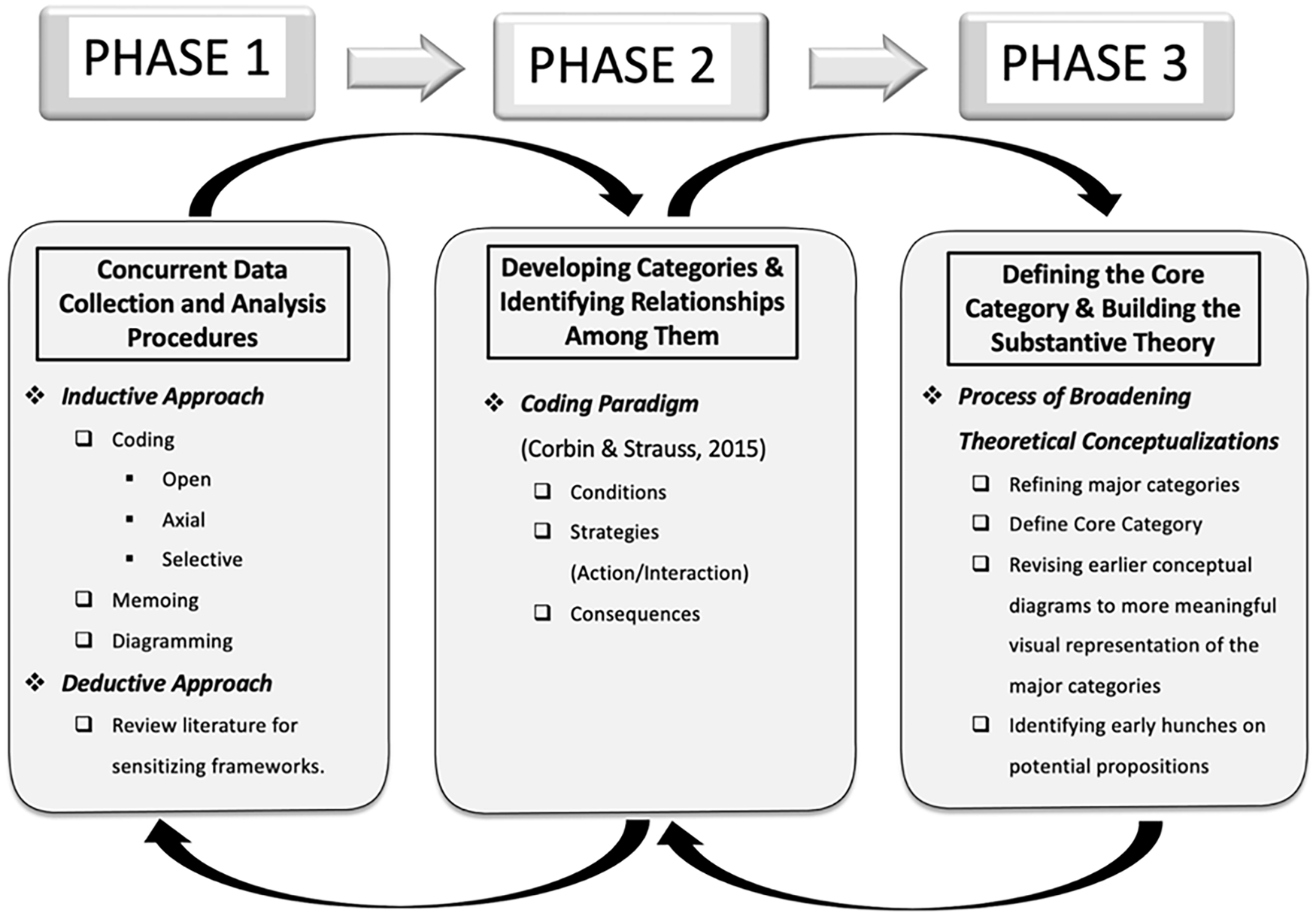
Phases of Theory Development.
Phase 1: Concurrent Data Collection and Analysis Procedures
Inductive Approach
The inductive approach in this study started with insightful descriptions from participant observation and narratives, data from a study’s 32 interviews were audio-recorded, translated to English, transcribed by the PI, and coded via open, axial, and selective coding.
Open Coding
The PI independently performed open coding, also referred to as “initial coding” (Charmaz, 2006, p. 47), a data analysis process that involves identifying short descriptive summaries and direct, salient participant quotes (in vivo codes) from participants’ dense narratives to capture the meanings embedded in the data. This process was achieved by line-by-line, word-by-word, incident-by-incident, and performed using gerunds, such as “accepting loss” or “sacrificing self,” to preserve actions reported in the narratives, detect emerging processes, and promote theoretical sensitivity. The open coding process produced a total of 728 codes.
Axial Coding
This form of coding is an analytic process in which the open codes that were previously generated are reconsolidated into new subcategories according to their logical connections. Following Charmaz’s (2006) guidelines, the PI identified subcategories and found the relationships between them in an attempt to reform the puzzle from the pieces of the narrative structure from which they were previously dismantled. For example, during axial coding, the “financial challenges” and “social challenges” open codes were combined with others to form the subcategory “Caregiver Stress.”
Selective Coding
Selective coding is characterized by the identification of emerging relationships between the subcategories which are then analyzed and related back to the emerging conceptual framework (Strauss & Corbin, 1990). For example, subcategories such as “Caregiver Stress” and “Caregiver Rewards” both related to the emerging key category of “Perceived Consequences” that described the GRACE core category. As illustrated in Figure 2, the inductive process continued with the identification of additional subcategories and later categories established through selective coding.
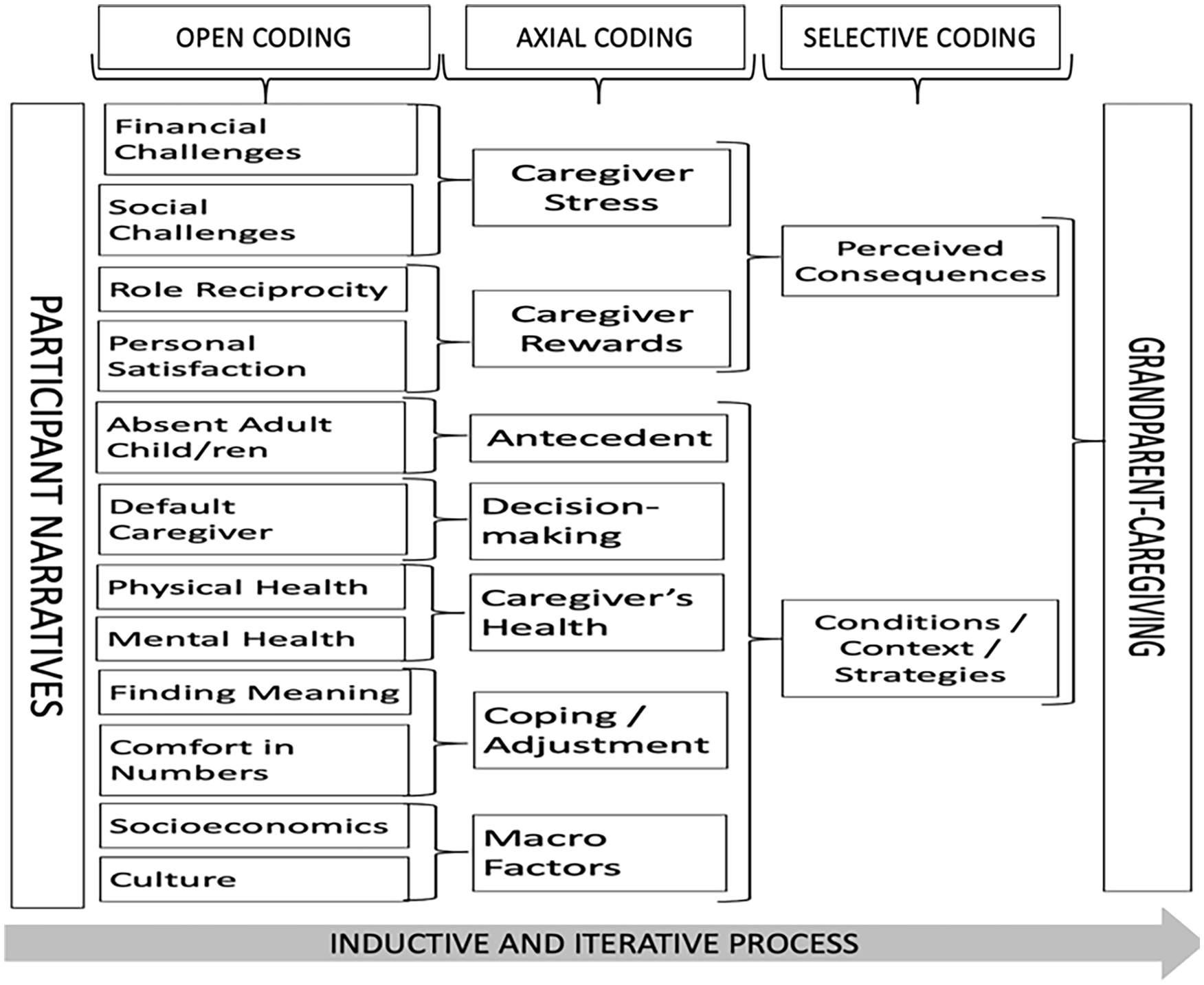
Illustration of the Data Analysis: Induction Process.
An iterative and constant comparative process was used to contrast new and old interviews or compare incidents that collectively defined the emerging categories. Additional participants who would provide narratives to further confirm and strengthen the salient and emerging categories were recruited, a strategy referred to as theoretical sampling (Glaser & Strauss, 1967). This process led to theoretical saturation, a “point at which gathering more data about a theoretical category reveals no new properties nor yields any further theoretical insights about the emerging grounded theory” (Charmaz, 2006, p. 189).
Memoing
Charmaz (2006) described memos as analytic locations where researchers are most fully present, implying that the memoing exercise requires the researcher to be fully aware of the meanings emerging out of the data and reflect on them. During the data collection and analysis processes, the PI paused frequently and intermittently to annotate thoughts and ideas about the emergent categories and general storyline (Charmaz, 2006). The two types of memoing used were reflexive memos, or the researcher’s self-reflection on the data, participants, and or their worlds, and analytic memos or “questions, musings or speculations” used to analyze developing and or complex concepts that seemed to be more salient than others during coding or other levels of analysis (Bryant & Charmaz, 2007; Creswell, 1998, p. 290). For example, the PI wrote several reflexive memos in acknowledgment of her positionality as a Ugandan native to challenge her own pre-perceived ideas about the experiences of grandparents in order to refine emerging themes. Further discussions of memoed ideas with the research team and peers enhanced the dependability, trustworthiness, credibility, and hence rigor of the study (Ryan et al., 2007).
Diagramming
Several grounded theorists suggested that diagramming is an essential element of the analytical process since it allows researchers to clearly illustrate the relationships, power, range, and direction among emerging categories (Charmaz, 2006). Therefore, as part of the data analysis process, the PI developed the conceptual tree presented in Figure 3 to illustrate the relationships between emergent codes, subcategories, and categories and discussed her findings with the research team for their feedback.
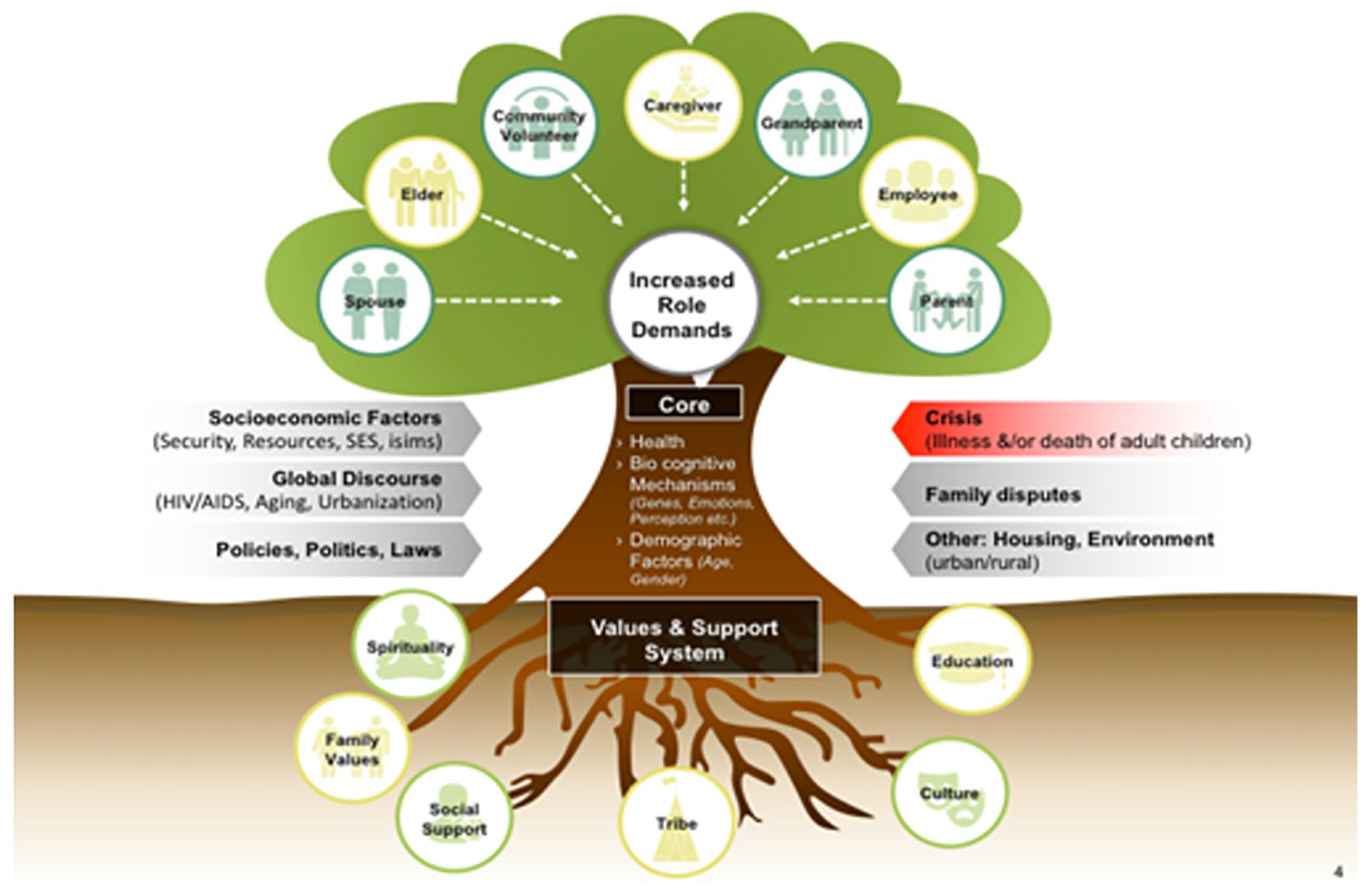
Conceptual Tree Illustrating the Relationships Among Emerging Themes.
The conceptual tree provided a visual representation of the grandparent-caregiver and the emerging theoretical categories and the relationships among these categories. The participants’ narratives revealed deeply ingrained values (the tree roots), such as cultural or religious beliefs, that were believed to guide their actions and grandparenting roles and responsibilities. Conversely, the grandparent-caregivers described multiple and increased roles and responsibilities, as well as the demands that seemed to pull them in different directions (the tree branches), such as caring for their grandchildren, formal employment, being the parents of an adult child with a disability, or volunteering at a local church. The “core,” or stem of the tree, represented the grandparent-caregivers’ individuality (qualities or character), such as their health and demographic factors, while the other external factors and variables, such as crises (e.g., loss of an adult child), were represented as acting toward the conceptual tree. Although visually illustrative, the conceptual tree did not clearly identify relationships between emerging categories that would have otherwise provided an adequate explanation of the emerging theory. This limitation was then addressed using a deductive approach to the theory development.
Deductive Approach
To further develop conceptual ideas and identify deficits in knowledge of the GRACE phenomenon as experienced by grandparent-caregivers in Uganda, a return to and review of pertinent literature on similar theoretic insights of existing theories was necessary (Charmaz, 2006). Two relevant theories were selected: (a) the social-ecological model (SEM) (Bronfenbrenner, 1994) and (b) the double ABC-X framework or family adjustment and adaptation response (FAAR) model (McCubbin & Paterson, 1982, 1983)
Social Ecological Model
The SEM considers the intricate interactions between societal, relationship, community, structural, and individual aspects (i.e., macrosystem, microsystem, mesosystem, exosystem, and chronosystem levels of interaction) (Bronfenbrenner, 1994; Stokols, 1992). Although the SEM has been critiqued for its lack of parsimony and clarity, its interactive levels inform the direct and indirect influences on the health and well-being of older Ugandan grandparent-caregivers, their grandchildren, and their extended families. A critical look at the unique social contexts and the interplay between the levels of interaction led to the adaptation of Bronfenbrenner’s SEM (see Figure 4) that allowed for further refinement of emerging categories.
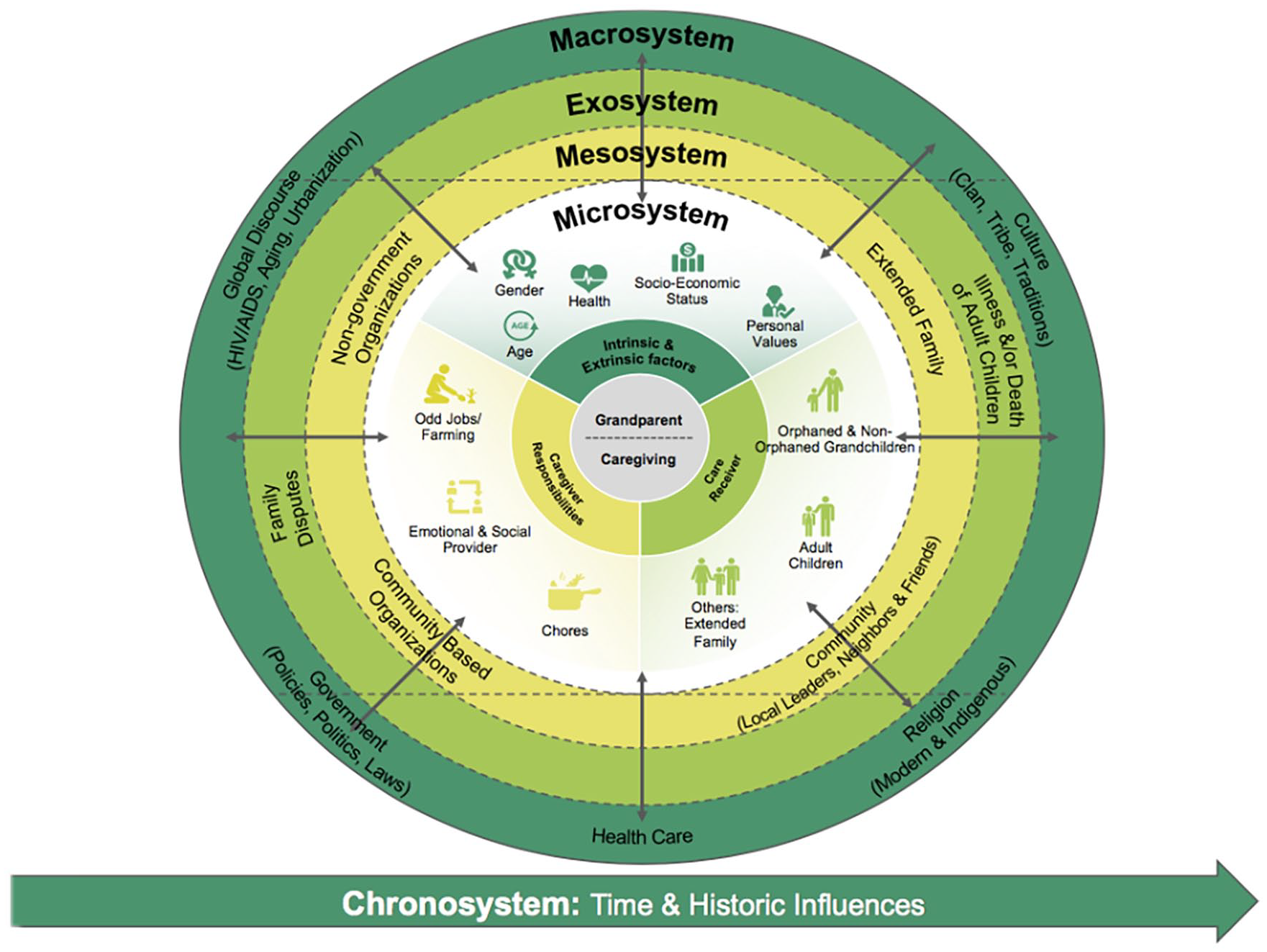
Modification of Bronfenbrenner’s SEM.
FAAR Model
The FAAR model uniquely highlights the dynamic and continuously interactive nature of families and their resilience, particularly when faced with stressful life events (McCubbin & Paterson, 1982, 1983) This framework provides a rich and detailed approach to understanding the process of family adjustment from the pre- to post-crisis phases, with nuanced focus on the psychosocial component of coping, resilience, and adaptation. For instance, if a surviving parent who is a family’s sole support dies, the FAAR model would suggest the necessity of reevaluating the new situation to re-establish optimal equilibrium or balance between demands and resources or capabilities (Paterson, 1988).
The model does have limitations. For example, in a resource-strained setting such as Uganda, restoring a healthy balance between meanings, needs, and capabilities can be challenging for a family, especially after the loss of an instrumental family member, such as an adult child. More so, families may not necessarily respond in a direct manner after a crisis, especially due to various related uncertainties that may exist. In fact, Boss and Greenberg (1984) introduced a concept of boundary ambiguity or “state, resulting from either nonnormative or normative stressor events, in which family members are uncertain about who is in the family and who is out, or about who is performing which roles and tasks within the family system” (as cited in Daneshpour, 2017, p. 5). Boss and Greenberg (1984) argued that this ambiguity may make it difficult for the family to define the problem precisely enough to know how to react to it. The FAAR model concepts that had little relevance to the context of study participants were eliminated and instead retained and modified those that were. Fundamentally, both these theories are based on the dynamic nature of families, meaning, subsequent behavior, and levels of influence on behavior or actions—all four elements that were evident in participants’ narratives and represented in the emerging categories. These sensitizing insights further advanced the theorizing process of the emerging substantive theory.
Phase 2: Developing Categories and Identifying Relationships Among Them
During this phase, salient categories and subcategories were identified and links were made between them to make sense of the emerging theoretic explanation of the caregiving experiences. Corbin and Strauss’ (2015) coding paradigm categories of conditions, strategies (action/interaction), and consequences were used to guide the process to further organize, analyze, and develop the identified subcategories and categories.
Conditions
Vollstedt and Rezat (2019) defined conditions as “incidents or occurrences that result in appearance or development of” a given phenomenon (p. 88). For instance, conditions proximal to the caregiver and caregiving phenomenon included the absence of adult children due to death, illness, or other socioeconomic factors, and the poor health and aging of some of the grandparent-caregivers (Matovu et al., 2019). These conditions describe the “antecedents” to caregiving as a category of the emerging theory. The most prevalent and overarching causal conditions were related to the HIV/AIDS epidemic that uniquely created the context in which older grandmothers took on the responsibility of caring for their grandchildren (UNAIDS, 2017). Other contextual factors or characteristics included: (a) the absence of formal social supports and services for orphan care and (b) cultural expectations of paternal grandmothers, as the ideal caregivers in the absence of or inability of the adult children (Matovu & Wallhagen, 2020). These overarching causal conditions comprised the “macro factors” category that impacted the grandparent-caregivers.
Strategies (Action/Interaction)
Further prompting of participants on the process of initially determining who would care for orphaned grandchildren yielded responses characterized as “strategies (action/interaction) that comprised of ‘time, space, culture, socioeconomic status’” (Vollstedt & Rezat, 2019, p. 88). Both subcategories and categories were described under the strategies. For example, the “decision-making” category of the emerging theory comprised of the following subcategories: (a) lack of choices for viable candidates for the caregiving role and (b) financial negotiations at commencement of the caregiving (Matovu et al., 2020, p. 7). Other actions and interactions that were directed toward the caregiving phenomenon included performing chores or caregiving responsibilities at home and caring for other family members such as ailing spouses and adult children. Actions also included the “coping and adjustment” category that described activities that grandparent-caregivers engaged in to overcome the caregiver stress, such as praying, “letting go” of the past, or “finding meaning” (Matovu & Wallhagen, 2020).
Consequences
Interplay between the conditions, context, and strategies (actions/interaction) resulted in the third category of the coding paradigm, consequences, or outcomes, which can be “real or hypothetical, in the present or in the future . . .” (Vollstedt & Rezat, 2019, p. 88). For example, grandparent-caregivers described psychological and physical symptoms that they believed were either created or exacerbated by their caregiving demands (Matovu et al., 2019). These symptoms were grouped under the subcategory of “Caregivers Stress.”
Conversely, the grandparent-caregivers also described positive aspects of caregiving, such as “Role Reciprocity” in which the older caregivers benefited from the care and assistance they received from their grandchildren, like help with daily chores (Matovu et al., 2019). Such reports were grouped under the subcategory of “Caregivers’ Rewards” during axial coding. Through selective coding, both subcategories describing caregivers’ stress and rewards constituted the “Perceived Consequences” category of the caregiving phenomenon. Additional categories central to the emerging core category were defined as the “Caregiver” and “Care Receiver” characteristics, such as age and gender described in Figure 5.
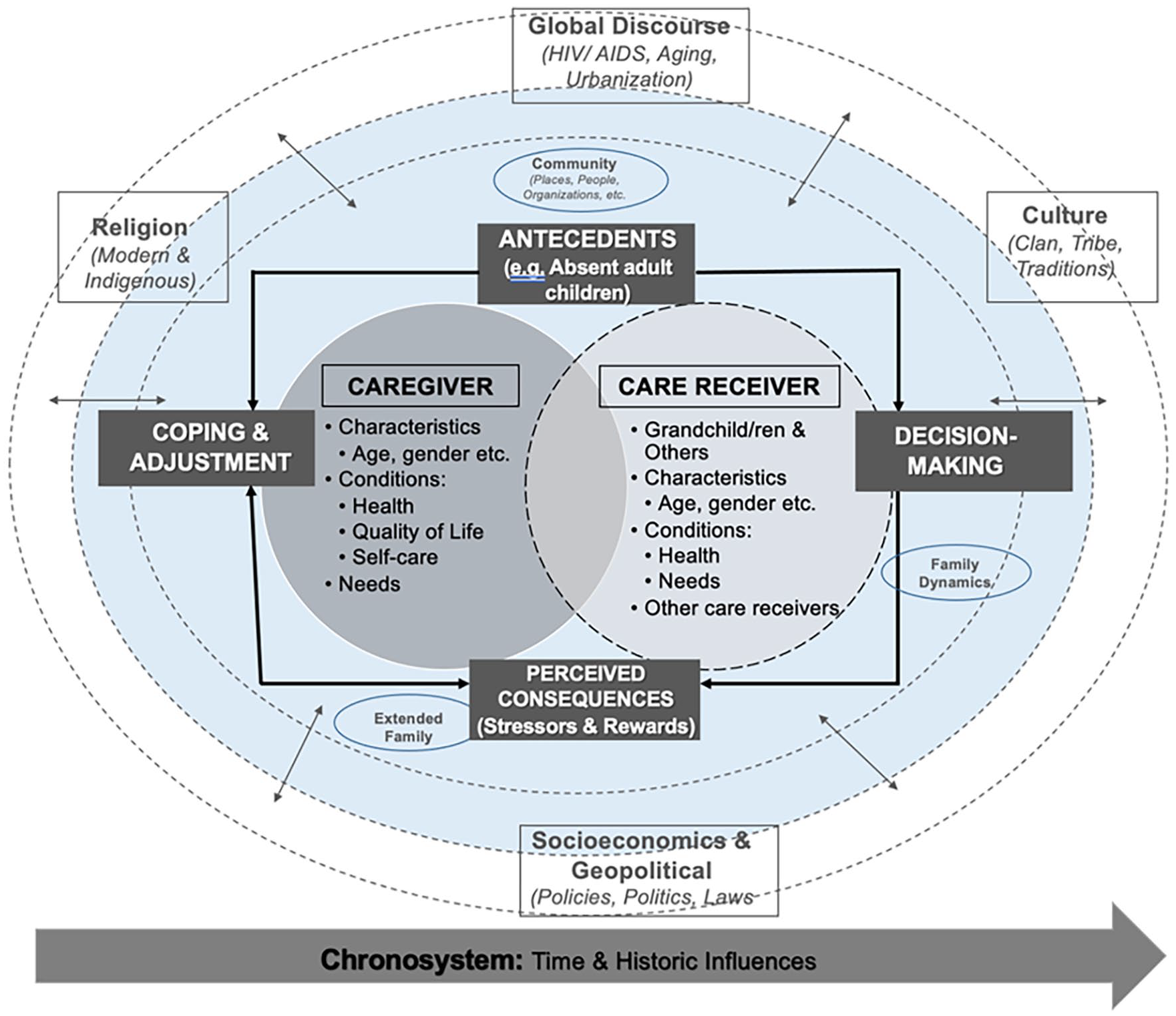
The GRACE Model.
Phase 3: Defining the Core Category and Building the Substantive Theory
To achieve higher levels of abstraction and develop a substantive theory, an ongoing process of broadening theoretical conceptualizations was used. This final phase of theory development involved analyzing earlier conceptual diagrams using a more meaningful visual representation of the categories and links between them. Given that the grounded theory study focused on the grandparent-caregiver as the primary unit of analysis, the grandparent-caregiver was centered at the core of the microsystem while visually acknowledging that grandchildren as the care receivers were secondary in the dyad. The exosystem level that “incorporates other formal and informal social structures, which do not themselves contain the [grandparent-caregivers] but indirectly influence them . . .” (Evans, 2023) was less pronounced in the data but consisted of physical environments and services and programs or lack thereof.
The revised model also consisted of “macro factors” that focus “on how cultural elements affect a [grandparent-caregivers] . . ., such as socioeconomic status, wealth, poverty, and ethnicity” (Evans, 2023). Subcategories under this level of influence and that underpinned grandparent-caregivers’ beliefs and values included culture (clan, tribe, traditions, etc.), religion/spirituality (e.g., modern and indigenous religion), sociopolitics and geography (socioeconomics/geopolitical), and global discourse (e.g., on HIV/AIDS, aging, and urbanization). The final diagram presented in Figure 5 represents the final seven categories that emerged through the coding process and related to grandchildren care: (a) antecedents, (b) decision-making, (c) perceived consequences, (d) coping and adjustment, (e) caregiver characteristics, (f) care receiver characteristics, and (g) macro factors that impact grandparent-caregivers (religion/spirituality, global discourse, culture [beliefs and values], socioeconomics/geopolitical). These categories framed the GRACE model, which provided a comprehensive and theoretical explanation of the caregiving phenomenon as experienced by the interviewed 32 grandparent-caregivers.
As previously reported (Matovu et al., 2019), the concept of “grandparenting” as employed in the Western literature had no parallel or linguistic equivalent in Luganda, the most spoken language in Uganda which all participants spoke. However, when the participants were asked to explain what it meant to be a grandparent, it was discovered that their explanations were based on: (a) a biological or extended family link with the children in their charge and (b) the duties they engaged in while caring for their grandchildren (Matovu, et al., 2020). The emerging “Grandparent-Caregiving” core category was then shaped by the meaning derived from these older caregivers’ representations of the grandparent role and caregiving duties. The “Grandparent-Caregiving” core category was described as “a grandparent’s inherent and yet obligatory assumption of the primary responsibility of attending to the needs of their grandchild/grandchildren” (Matovu, et al., 2020, p. 6).
Early hunches that support the theoretical insights and propositions among the key categories emerged. Some preliminary propositions or generalized relationships between the emergent category were (a) increased perceived stress will lead to poor coping and adjustment; (b) decreased ability to cope and adjust well will lead to increased perceived stress; (c) increased perceived rewards/benefits of caregiving will lead to improved coping and adjustment; (d) increased perceived rewards/benefits of caregiving will lead to decreased perceived stress; (e) poor decision-making will lead to increased perceived stress; and (f) good decision-making ability will lead to increased perceived rewards/benefits of caregiving. These early theoretical insights can be further explored and refined using different approaches such as theory elaboration which can be used to develop the GRACE Model from a transferrable model to a generalizable formal theory. Fisher and Aguinis (2017) defined theory elaboration as a “process of conceptualizing and executing empirical research using preexisting conceptual ideas or a preliminary model as a basis for developing new theoretical insights by contrasting, specifying, or structuring theoretical constructs and relations to account for and explain empirical” (p. 441). Triangulation (Denzin, 1978; Patton, 1999) of qualitatively developed theoretical insights, coupled with quantitative testing and verification of generated propositions and assumptions, may also further advance the development of the GRACE Model to a formal theory.
Discussion
The purpose of the current paper was to illustrate the methodological steps involved in generating the substantive theory for GRACE or the GRACE model as informed by narratives from 32 Ugandan grandparent-caregivers. To achieve that purpose, a detailed account of the three used phases was provided and their methodological and philosophical underpinnings are highlighted in Figure 1. In Phase 1, inductive and deductive approaches were used to develop the codes, subcategories, and major categories that emerged from the participant narratives. In congruence with Glaser and Strauss’ (1967) integrative approach to grounded theory, literature on existent theories was reviewed to perform a comparative analysis to further support, corroborate, and illustrate the emerging substantive theory. In Phase 2, Corbin and Strauss (2015) coding paradigm was utilized to further organize, analyze, and refine the identified subcategories and categories. Finally, in Phase 3, a higher level of abstraction was followed to broaden and define major categories and how they related to each other and the emerging core category of GRACE. After defining the core category, the previous diagram was refined to construct the conceptual framework in Figure 5, which visually demonstrates the relationship between the different categories, and provided theoretic explanation of the GRACE phenomenon as experienced by the 32 grandparent-caregivers involved in the study.
The current paper addressed the gap in the literature on culturally appropriate theories that could facilitate the investigation of core priorities of grandparent-caregivers in Uganda. This gap may be attributed to the deficits in the understanding of the phenomenon and the absence of interventions needed to address the needs of older grandparent-caregivers in this and or similar settings. These gaps are substantial and consequential. Research, and subsequently the well-being and care of grandparent-caregivers, needs to be informed by theories that are founded in the experiences of the individuals being investigated. In a recent review of several journal articles on GRACE, Hayslip and Fruhauf (2019) analyzed theories that have been used at both micro and macro levels to examine the grandparenting phenomenon. These authors noted that the majority of studies on this phenomenon adopted an individual theoretical approach, such as the life span developmental theory which focuses on how people experience stages of development from early childhood to late adulthood. Given the global and complex nature of the GRACE phenomenon, these authors recommended adopting sociological theories, such as those underpinned by symbolic interactionism, to examine individuals’ meaningful interactions within their immediate social worlds. A study that was informed by symbolic interactionism contributed to that knowledge advancement. Also, the use of grounded theory methods and the adoption of the SEM allowed for consideration of complex human interactions at multiple levels of influence. Such demonstration of the interactive nature of families when dealing with a normative or nonnormative stressor may inform research questions or target areas for intervention that are unique to Ugandan, or similar populations of, grandparents.
In most of the Western literature on GRACE, concepts, such as resilience, aim to highlight strengths and positive outcomes of caregiving as opposed to focusing on the adverse life circumstances experienced by grandparent-caregivers. Hayslip and Smith (2013) reported that multiple investigators have qualitatively and quantitatively explored value or strengths-based and positive coping approaches toward GRACE. When challenged with multiple chronic stressors and dwindling or non-existent resources in a poverty-stricken environment, grandparent-caregivers may fail to adapt successfully, thrive, or have a positive outlook on life. Potentially maladaptive coping strategies and exacerbation of preexisting illnesses and accelerated biological aging mechanisms may be some of the negative impacts of caregiving on the health and well-being of the caregiver in spite of resilience efforts. In addition, the application of the resilience framework, according to other researchers, may put an unwarranted burden on the individual based on their personal characteristics or inability to learn the skills necessary to “bounce back” (Luthar, Cicchetti & Becker 2000). Consideration of contextual social determinants of health, such as chronic poverty, that adversely impact the ability of grandparent-caregiver to effectively regain control over their circumstances is required.
The complementary use of theoretic insights from both the SEM and the FAAR model in the development of the GRACE model provided a broader theoretical explanation of the caregiving phenomenon as experienced by the 32 grandparent-caregivers. Although the adaption of multiple theoretical insights may be limited by the weaknesses of the parent theories, grounding their synthesis in the experiences of those being studied has the potential to strengthen the emergent substantive theory and how it informs research and understanding of the grandparent experiences in a more robust manner. As the complexity and diversity of GRACE as provided by older grandparents in this setting becomes more recognized, examining the phenomenon from the aging caregiver’s perspective offers researchers an additional reservoir of theoretical and analytical insights to consider. This study adds to existing methodological knowledge by demonstrating the first step toward theory development. This study also informs research that seeks to develop interventions that are culturally congruent.
Footnotes
Acknowledgements
My sincere gratitude to the unsung heroes, the invisible and unpaid grandparent-caregivers, who welcomed me into their homes and shared with me their personal stories of love, loss, courage, and perseverance. I am honored to amplify your voice.
Declaration of Conflicting Interests
The author(s) declared no potential conflicts of interest with respect to the research, authorship, and/or publication of this article.
Funding
This research is funded in part by the Substance Abuse and Mental Health Services Administration Grant # 5T06SM060559-03.
Disclaimer
The views expressed in the submitted article are those of the authors and not an official position of their institutions or journal.
