







Abstract
Introduction:
Men’s decisions regarding family planning and reproductive health are as crucial as women’s especially in societies where patriarchal norms are strong, such as among Afghan communities. In this context, there is a need for studies on the opinions and experiences of Afghan men who have immigrated to Türkiye regarding family planning.
Method:
The study employed a phenomenological design and involved 20 Afghan refugee men. Data collection was performed through in-depth, semi-structured interviews.
Results:
Three main themes and their subthemes emerged from interviews: reproductive health and gender equity, enhancing family planning understanding, and navigating complex realities of family planning.
Discussion:
The influence of cultural and religious teachings on Afghan men’s reproductive choices is evident, shaping their perceptions of familial and social responsibilities. The study offers evidence that the social norms of host countries may influence Afghan men’s attitudes toward reproductive health and family planning.
In Türkiye, which currently hosts the highest number of refugees globally, Afghans lead in both the number of international protection applications and the highest international protection status (United Nations High Commissioner for Refugees, 2022). Afghan refugee men, who have fled conflict, persecution, and economic uncertainty in Afghanistan, have chosen Türkiye as a haven with the aspiration of rebuilding their lives (İçduygu & Karadağ, 2018). A profound understanding of the needs of these displaced individuals is essential for a successful transition to a new life in Türkiye.
This refugee population encounters numerous challenges, with family planning (FP) emerging as a dimension that requires attention and comprehensive support (Alan Dikmen et al., 2019). The specific circumstances of displacement often deteriorate their existing vulnerabilities, and access to reproductive health services and FP resources becomes critical to the well-being of displaced communities (Al-Sheyab et al., 2021; Davidson et al., 2022; Kuru Alici & Ogüncer, 2024). Studies have revealed inferior sexual and reproductive health indicators among refugees compared with the local population (Abbasi-Shavazi et al., 2015; Alarcão et al., 2021; Gissler et al., 2009; Metusela et al., 2017). The high rate of unmet need for FP, particularly common among citizens in low- and middle-income countries, contributes to elevated rates of maternal and neonatal mortality and morbidity. This risk is further increased by unsafe abortions resulting from unwanted or unplanned pregnancies (Say et al., 2014; World Health Organization, 2019).
Despite the emphasis on women in studies related to traditional FP, reproductive health and FP decisions made by men are equally important (Aventin et al., 2023). Indeed, only 57% of women worldwide can freely make decisions regarding their sexual and reproductive health rights, whereas 43% are compelled to comply with the decisions made by their partners, wives, or close relatives concerning their bodies (United Nations Population Fund, 2022).
The engagement of men in FP processes has a positive impact on maternal and child health, reducing both maternal and infant mortality rates and increasing behaviors related to prenatal, perinatal, and postnatal care (Yargawa & Leonardi-Bee, 2015). In addition, men’s involvement in FP enhances the relationship and coordination between couples, fostering behaviors that support positive health outcomes, including their partners’ consistent use and maintenance of FP methods (Gebru, 2015; Wondim et al., 2020; Zakaria & Moniruzzaman, 2016). The involvement of men in FP processes is influenced by various factors, including individual, social, cultural, and environmental elements. Individual factors encompass the man’s level of education, knowledge about FP, ability to communicate within his environment, desire to have a son, and socioeconomic status. Social factors include the integration of health services within the realm of reproductive health, their accessibility and inclusion of men, the availability of services, the attitude of health personnel toward men, and issues related to stigma (Anbesu et al., 2022; Ndunge Koome et al., 2022; Roudsari et al., 2023). The traditionally acquired extended family structure, combined with societal pressure and religious teachings, emerges as a significant cultural factor influencing men’s use of FP methods (Haider et al., 2009; Shafiqullah et al., 2016; Todd et al., 2008; Van Egmond et al., 2004).
Studies directly investigating the FP status of Afghan men within the displaced population are scarce (Abbasi-Shavazi et al., 2015; Russo et al., 2020). These studies examine the utilization of information and methods related to FP, the influence of migration and culture on access to FP services, and decision-making processes about FP. They emphasize the necessity for health services to be integrated and inclusive of men (Abbasi-Shavazi et al., 2015; Piran, 2004; Russo et al., 2020). There is a need for sexual and reproductive health studies to be conducted, taking into consideration the cultures, nationalities, and ethnicities of displaced societies with varying characteristics (Alarcão et al., 2021; Chalmiers et al., 2022; Cox et al., 2019; Donnelly et al., 2023; Hawkey et al., 2018; Russo et al., 2020; Tober et al., 2006).
The involvement of men in FP processes is very crucial for achieving the goals of sustainable development, particularly Goals 3, 5, and 10, which emphasize gender equality, health, and especially diminishing inequality for marginalized groups, including refugees, in relation to sexual and reproductive health (Green et al., 1995; Resolution Adopted by the General Assembly, 2015; United Nations [UN], 1995). Therefore, within the context of Afghan refugee men in Türkiye, understanding and addressing FP needs to assume great significance. The aim of this study was to explore the opinions and experiences of Afghan men who have immigrated to Türkiye regarding FP methods. This study was reported following the Consolidated Criteria for Reporting Qualitative Research (COREQ) guidelines (Tong et al., 2007).
Method
Study Design
The study used a phenomenological design. Phenomenological designs are very powerful in explaining various problematic situations for health care providers (Neubauer et al., 2019). Phenomenology aims to define the essence of a phenomenon from the perspective of those who experience it and by revealing their in-depth experiences (Teherani et al., 2015). Therefore, this approach is particularly appropriate as it allows for an in-depth understanding of how Afghan men perceive, interpret, and make sense of their FP experiences, considering their cultural and social values.
Sample and Setting
A purposive sampling method was used to recruit participants registered with the Türkiye Refugee Support Association in Eskişehir. Eskişehir, located near the capital, offers well-developed health care services, including two refugee primary health care centers that provide free access to specific FP methods such as condoms and intrauterine devices (IUDs). The city also hosts a women’s health center funded by the UN, offering free contraceptive injections, oral contraceptives, and condoms to refugees. While intentional abortion is legal for up to 10 weeks in Türkiye, access is often limited due to reproductive policies. Afghan refugees are eligible for health insurance for 1 year after registration, with conditional extensions afterwards. Refugee children born in Türkiye do not automatically gain citizenship.
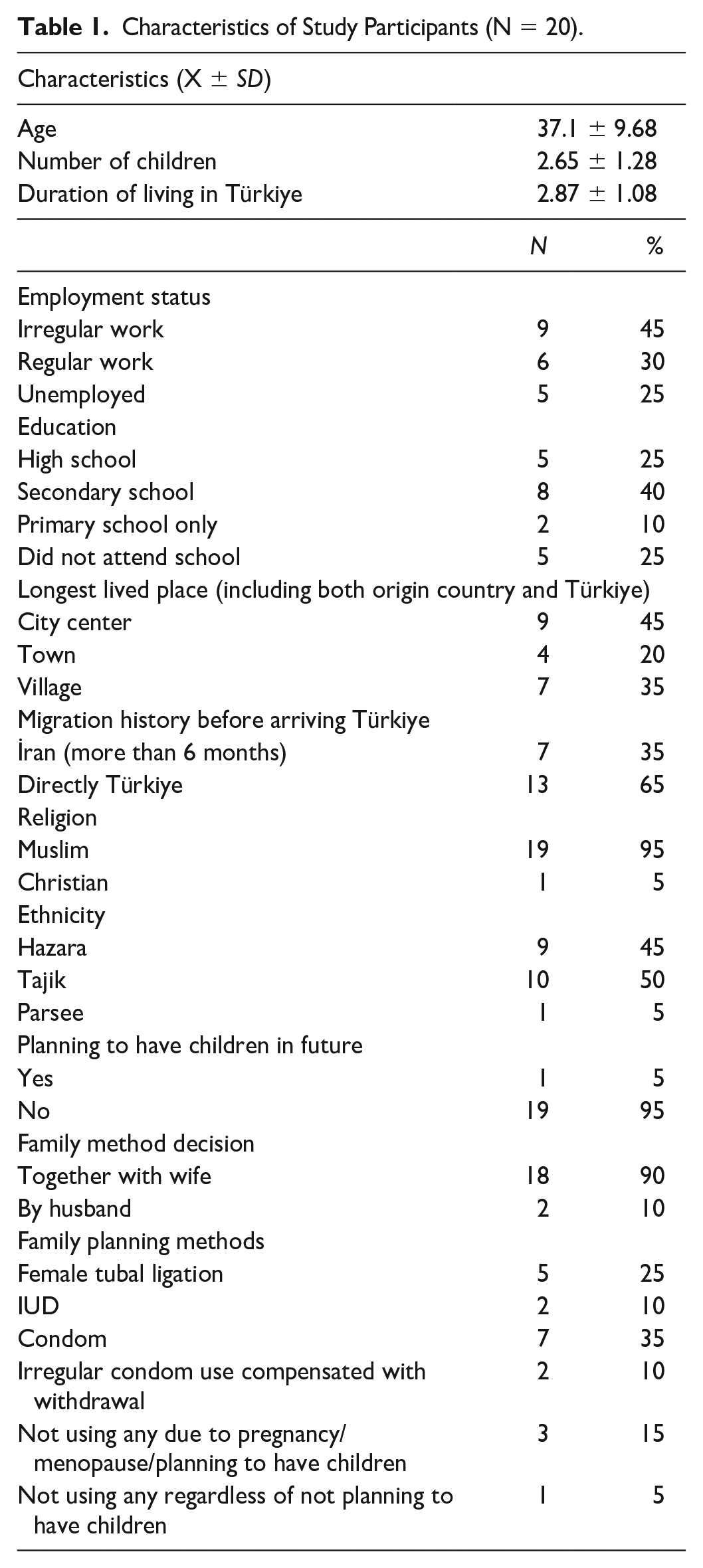
The inclusion criteria for the study were (a) being an Afghan refugee man, (b) having a partner or wife, and (c) volunteering to participate in the interviews. The researcher’s field experience, theoretical background, and existing literature guided the initial sample selection for the study. The data collection process persisted until new information could no longer be obtained, reaching data saturation at the 20th interview, thereby establishing the study’s sample size (Saunders et al., 2018). The study was completed with 20 Afghan refugee men between the ages of 26 and 57 with an average of 37.1. All participants in this study reside in central districts and are documented refugees. The sociodemographic data of the participants are illustrated in Table 1.
Characteristics of Study Participants (N = 20).
Data Collection
Data were collected between January and March 2023. The data collection process was carried out by the Principal Investigator (PI) and the translator. The PI is a male nurse and a master’s student in public health who has worked with refugees for 6 years as a health educator at the Refugee Support Association. He holds certificates and has conducted qualitative studies on sexual and reproductive health. Afghan Refugee men who met the inclusion criteria for the study and had previously received various psychosocial counseling services from the association were contacted by phone by the PI. After the explanation of the aim and method of the study, an appointment was made for a day and time with the men who consented to participate in the study. Before the interviews, the male translator working in the association was informed of the aim of the study as well as the entire study process, and a pilot study was conducted. The translator of the study is a man who can speak and write Turkish and Persian, has a bachelor’s degree in translation, and has been working with refugees at the Refugee Support Association for a long period.
Six interviews were conducted online in the evenings due to men’s concerns about taking time off from work. The remaining 14 interviews took place face-to-face at the association, involving individuals who faced no issues with taking time off from work or were not currently employed. Face-to-face interviews were conducted with the PI and a sworn translator in a quiet, private room at the association, and they were audio-recorded for transcription with their permission. Data were collected through a questionnaire regarding the sociodemographic characteristics of the participants and a semi-structured interview form created by the researchers including questions about participants’ knowledge, beliefs, cultural experiences related to family planing.
No participant left the interview before completion and no interview was repeated. The interviews lasted an average of 40 min (35–45) and, after each interview, were transcribed verbatim by the second researcher for analysis. The second researcher is a woman who has a doctorate degree in public health nursing, has worked with refugee groups, has qualitative research experience, and works as an associate professor at the Faculty of Nursing.
Data Analysis
Latent content analysis was used to analyze and interpret the study (Graneheim et al., 2017; Graneheim & Lundman, 2004). Latent content analysis involves interpreting the underlying meaning of texts and identifying relationships (Graneheim et al., 2017; Kleinheksel et al., 2020). After the interviews, the data were transcribed, and the researchers read the content repeatedly and discussed it to obtain the meaning of the whole. At this stage, to determine the implicit meanings in the text, the researchers analyzed the similarities and differences between the participants’ expressions. Authors established conceptual connections to determine the relationships between the themes. Repeated readings continued after the semantic units were determined, and coding was carried out based on the determined semantic units. The researchers independently analyzed the text during the coding process, and the codes obtained were compared, reaching a consensus. Based on the codes, the researchers determined the themes and subthemes separately, compared them, and decided on common themes. In the final stage, themes and subthemes were compared and reorganized to identify similarities and differences better. All data were then synthesized into a comprehensive analysis, and consensus was reached on familiar themes (Graneheim & Lundman, 2004; Lindgren et al., 2020).
Rigor
Quotes were taken from different participants to ensure transparency and reliability. To provide higher reliability, repeated developmental discussions were made by the researchers about the findings and groupings. To ensure confidentiality, pseudonyms were assigned to participants at the start of the interviews and used consistently throughout the study, ensuring the anonymization of all collected data (Graneheim et al., 2017). Participants were included in the study by paying attention to sociodemographic diversity to ensure transferability (Graneheim & Lundman, 2004).
Ethical Permission
Ethical approval was received from the ethics committee of a state university (IRB number: E.2765) after undergoing a full review process to conduct this study. The researcher explained the aim of the study, assured participants of the confidentiality of their data, emphasized the voluntary nature of participation, and informed them of their right to terminate the interview or withdraw from the study at any time without providing a reason. Emphasis was placed on the assurance that their participation would not affect the services they receive from the association. The interviews were audio-recorded by obtaining verbal and written consent from each participant in advance. Transcribed data was saved to Google Drive and will be stored by PI on software password-protected laptops for 2 years.
Findings
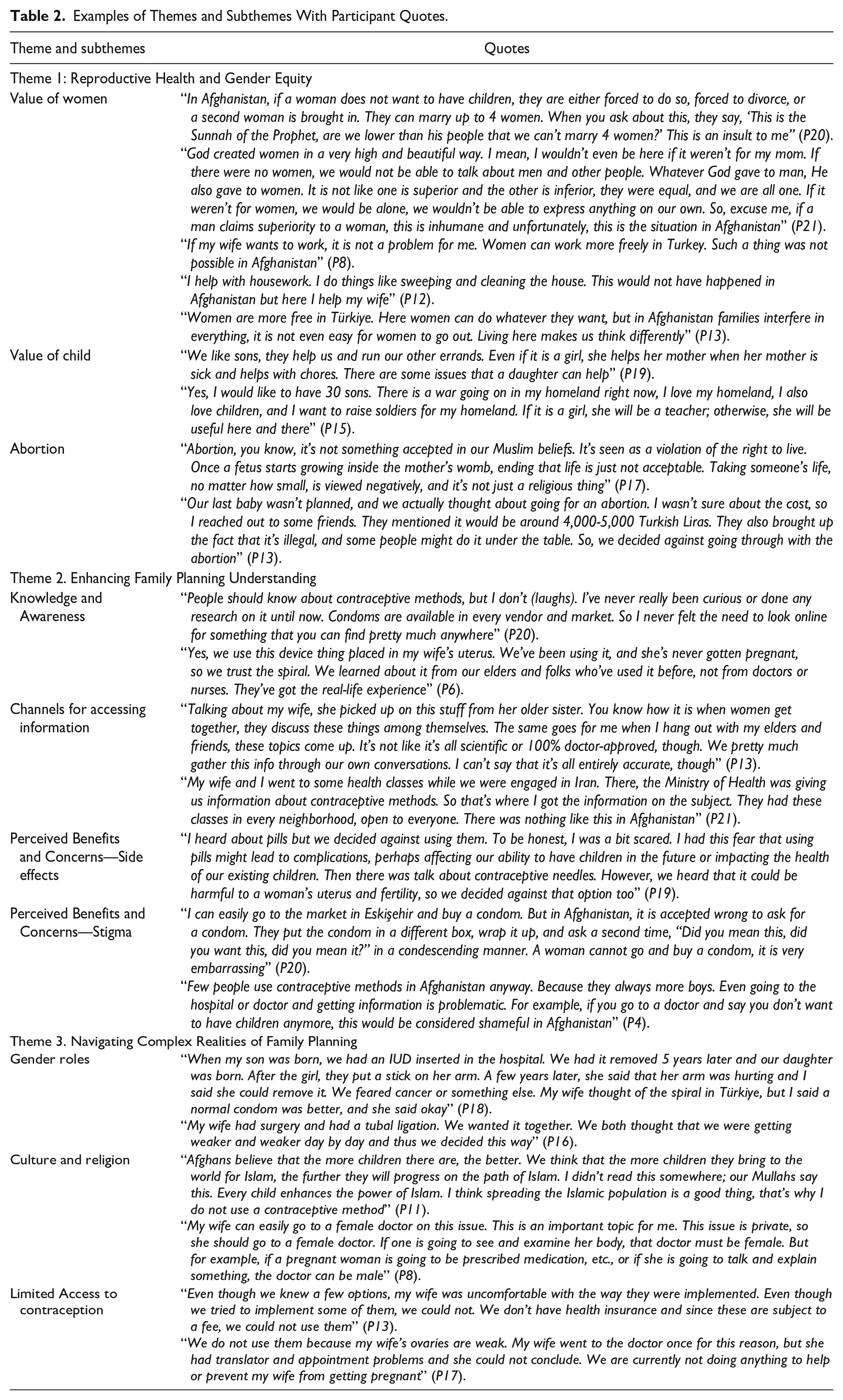
Based on the study findings, three themes—Reproductive Health and Gender Equity, Enhancing FP, and Navigating Complex Realities of FP—along with their subthemes, were identified. The first theme focuses on women’s and children’s values as well as important reproductive health issues such as abortion. In contrast, the second theme examines factors such as knowledge and awareness levels, access channels, and potential benefits and concerns of FP. Finally, the third theme addresses social and cultural realities that influence FP practices, such as gender roles, cultural and religious beliefs, and limited access to contraception. These are presented in Figure 1. Participants’ quotes according to themes and subthemes are shown collectively in Table 2, in line with their order in the text.
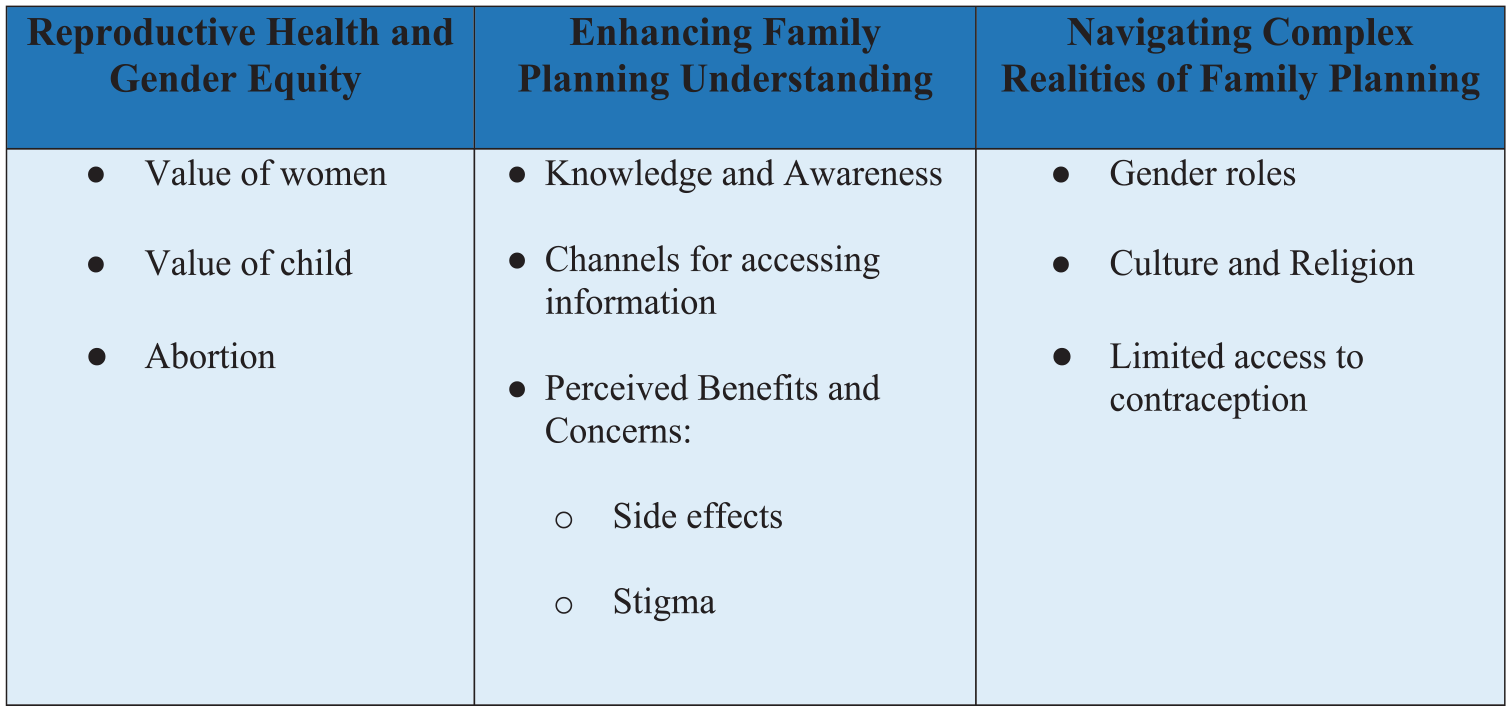
Major Themes and Their Subthemes.
Examples of Themes and Subthemes With Participant Quotes.
Theme 1: Reproductive Health and Gender Equity
Subthemes: Value of Women, Value of Child, Unwanted Pregnancy/Abortion
Value of Women
Although most male participants expressed their opinions about the value of women, they also stated that women were undervalued in Afghanistan and Afghan culture. This perception is particularly evident in the norm of polygamy, and in strict gender roles that limit women’s autonomy. However, migration has been instrumental in changing perspectives. Some expressed a greater acceptance of women’s independence, particularly in relation to the right to work, which is a largely discouraging concept in Afghanistan.
In addition, some participants noted a change in the dynamics within the household, with some taking on child care and household chores—responsibilities previously assigned only to women. Although some cultural expectations have remained, exposure to a different social environment has led to a gradual reassessment of gender roles. This shift points to an evolving perception of the value of women beyond traditional norms, shaped by living in a new cultural environment.
Value of Child
The majority of men participating in the study emphasized the role of daughters as assistants to the mother and sons to the father. In particular, the preference for sons due to the positive qualities associated with sons is expressed. The preference for sons is grounded in their assistance with general household tasks, contribution to the family’s economy, engagement in defense efforts during wartime, and provision of support across various aspects of life. Daughters, on the contrary, are regarded as valuable assets for their mothers, with an anticipated active role in caregiving, household responsibilities, and support during times of illness. An intriguing perspective was offered by one participant who conveyed a belief in the potential societal contributions of girls, particularly as educators, which underscores the participant’s recognition of the versatility and capabilities of children, irrespective of their gender, in fulfilling various social roles.
Abortion
Some of the participants expressed a determined point of view against abortion in the Muslim community. The claim that abortion is religiously contrary to the sanctity of life is emphasized, expressing the belief that the fetus must grow after being conceived and that ending this natural progression is religiously unacceptable. However, apart from religious reasons, people who wanted to have an abortion to terminate an unwanted pregnancy were seen to face financial and legal restrictions.
Theme 2: Enhancing FP Understanding
Subthemes: Knowledge and Awareness, Channels for Accessing Information, Perceived Benefits and Concerns
Knowledge and Awareness
Within the scope of the subtheme of Knowledge and Awareness, the limited knowledge and awareness about contraceptive methods among the participants is noteworthy. The individual characteristics of the participants and their curiosity about the subject are important factors affecting their knowledge and awareness. While one of the participants stated the absence of a need for information about an easily accessible method, another participant exhibited a more conscious approach to birth control and specifically discussed the use of an IUD called a spiral. However, they obtained information about the IUD from family members and the experiences of others in their community.
Channels for Accessing Information
Participants often obtain their knowledge of FP methods through familial and social networks in gender-specific contexts. In addition, the different country experiences before their arrival in Türkiye also emerge as a factor affecting access to information. One participant stated to have acquired information about FP from their peers and family elders, whereas the other participant stated that he attended health training provided by the state in Iran.
Perceived Benefits and Concerns
Side Effects
Participants express their concerns about FP methods and explain complex decision-making processes regarding FP. The participant acknowledges being aware of contraceptive options such as birth control pills and injections but expresses concern about their potential impact on fertility and the well-being of future children. Both fears of potential reproductive complications and potential negative effects on children’s health play a deterrent role and lead the participant to choose not to utilize these methods.
Stigma
Participants reveal widespread social taboos and stigma surrounding access to and use of contraceptives, which contribute to the complexity of reproductive health decisions. One participant compares the ease of purchasing condoms in Türkiye with the secrecy and stigmatization of the same action in Afghanistan. The ways of storing and handing over condoms in separate boxes highlight the cultural unease and social norms around birth control, particularly highlighting the embarrassment faced by women while purchasing birth control pills.
Theme 3: Navigating Complex Realities of FP
Subthemes: Gender Roles, Culture and Religion, Limited Access to Contraception and Health Services
Gender Roles
Participants’ views reveal the importance of gender roles in decision-making processes related to FP and reproductive health. While describing her experiences with various FP methods, one of the participants expresses the influence of male dominance in the decision-making process. In contrast, other statement emphasizes the collaborative nature and shared responsibility of the decision-making process, involving discussions between spouses about the preferred method.
Culture and Religion
This subtheme highlights the impact of cultural and religious teachings on individuals’ reproductive choices, revealing how these beliefs shape perceptions of familial and social responsibilities. One participant expressed the influence of cultural and religious beliefs on family size, reiterating the notion that having more children is considered a positive contribution to the advancement of Islam. In contrast, other participant provides insight into the cultural nuances surrounding gender roles and health care preferences. Emphasizing the importance of privacy in reproductive health matters, the participant underscores the cultural sensitivity required in handling private affairs.
Limited Access to Contraception and Health Services
This subtheme brings attention to the challenges experienced by participants in accessing reproductive health services, encountering various barriers. One participant expressed discomfort with certain contraceptive options used by herself and her partner, which led to unsuccessful attempts to use them. She cited the lack of health insurance and associated fees as restricting their access to these services. Another participant reported experiencing language barriers when accessing these services and encountered difficulties in making appointments.
Discussion
This study analyzed the views and experiences of Afghan men who migrated to Türkiye, about FP methods. The findings reveal that there has been a positive change in the value that Afghan men attribute to women and children. This change is a result of cultural transformation and a more open-minded approach. In addition, Afghan men have developed a more equitable and conscious perspective on FP, though traditional and religious values still play a role. These findings emphasize the importance of tailored initiatives, including culturally informed education programs and community-driven support efforts, to assist Afghan men in making informed FP choices while considering their cultural and religious values.
In detail, the study explores the value attributed to women and children by Afghan men, along with their opinions on unwanted pregnancies and abortion based on principles of gender equality. An important finding of the study is that Afghan men have positively shifted their attributed value to women and children, and this change is acceptable to them. The study findings are supported by the determination that Afghan women and men living in Australia were open to and adept at adapting to the new culture (Chalmiers et al., 2022; Russo et al., 2020). The positive shift in the perception of the value of women and children among Afghan refugee men in Türkiye, coupled with exposure to diverse cultural contexts and more inclusive social structures, may have played a role in questioning and reshaping traditional gender norms. Furthermore, the necessity to adapt to a new environment has prompted a re-evaluation of familial roles and responsibilities (Shabanikiya et al., 2023).
For the Afghan men in the study, the issue of abortion is complex and multifaceted. Some are deterred from seeking safe abortion techniques due to cultural and moral beliefs, whereas others face barriers stemming from their inability to access accurate information and services within the health care system in Türkiye. Studies indicated that Afghan refugee men’s perspectives on abortion were shaped by a complex interplay of cultural, religious, and personal factors (Alomair et al., 2020; Metusela et al., 2017; Russo et al., 2020; Tober et al., 2006). In the context of Afghan men living in Türkiye, this situation can be explained by the individual, cultural, and religious characteristics of Afghan men, along with the Turkish society’s perspective on abortion and the challenges faced in accessing sexual and reproductive health services in Türkiye.
The second theme encompasses the knowledge and awareness of refugee Afghan men about FP methods, channels for accessing information, and situations affecting the use of methods. Male participants in the study demonstrate a notable constraint in their knowledge and awareness regarding FP methods. While some of the men who participated in the study stated that they made FP decisions together with their wives, they also stated that they considered access to information and contraceptives related to FP as women’s responsibility due to gender roles. Despite differing opinions from other participants, some mentioned encouragement for having multiple children, especially influenced by religion in Afghan culture. Acting contrary to this norm would subject them to potential stigmatization by health care providers and social circles. Studies similarly revealed that men in Afghanistan expressed fear of stigma and stereotyped gender roles in FP processes, where FP was often feminized (Shabanikiya et al., 2023; Todd et al., 2008; Van Egmond et al., 2004). The participants’ description of the thoughts and behaviors of men in Afghanistan as different from their own reaffirms the concept of cultural transformation. In this study, it was determined that approximately 40% of men used condoms, and while they were aware of the existence of different methods, they did not have sufficient knowledge about the side effects. Similarly, research conducted in Iran revealed that condoms are the most commonly used FP method among Afghans living there (Delkhosh et al., 2019). The widespread use of condoms in Türkiye may be attributed to the easy and affordable access to condoms in the country. In addition, a notable portion of the participants (35%) lived in Iran before coming to Türkiye, where FP services were relatively better than in Afghanistan.
The final theme explores the profound impact of cultural and religious teachings on Afghan men’s reproductive choices, revealing how these beliefs shape perceptions of familial and social responsibilities. In a study conducted by Piran (2004), it was found that a majority of refugee Afghan men in Iran were similarly strongly influenced by religion in their decision-making process about FP. Despite acquiring awareness about FP, their beliefs hindered them from changing their attitudes. In the study conducted by Tober et al. (2006), religious influences among the Pashtun ethnic group were found to contribute to a stricter approach toward FP methods, resulting in resistance to their use. In contrast, adopting FP methods was relatively easier within the Hazara population. The prevalence of Hazara and Tajik ethnicities among Afghan men in the study may explain their more moderate attitudes toward FP methods. In addition, cultural and social expectations lean toward a preference for more children among men in the study. This cultural influence becomes a crucial factor in understanding the reluctance or difficulty in seeking FP services. A study underscored the cultural influences and expectations in rural and urban areas in determining family size among men in Afghanistan. It revealed that men in rural areas were expected to have more children in their environment (Haider et al., 2009). Similarly, Inhorn (2018) highlights how, among Iraqi refugee men in Arab Detroit, the desire to have children is deeply embedded in cultural identity, masculinity and social belonging. Infertility or difficulty having children not only causes psychological distress, but also threatens one’s standing in the community. For many men, fatherhood is seen as a pathway to social acceptance and a marker of full adult personhood. The cultural stigma associated with infertility often prevents men from openly discussing reproductive health issues or seeking medical help. This reinforces traditional norms that emphasize large family sizes. Such expectations contribute to a reluctance to seek FP services, as limiting fertility goes against deeply held social values.
The study emphasized the challenges faced by male Afghan refugees in accessing FP services, reflecting persistent issues found in the literature (Kuru Alici & Ogüncer, 2024; Royer et al., 2016). In addition, the study revealed that, beyond financial constraints and language barriers impacting their access to reproductive health services, male Afghan refugees in Türkiye also faced limited knowledge about FP services and encountered difficulties in scheduling appointments to benefit from existing services.
Limitations
The study has limitations that should be taken into consideration. First, the Afghan men involved in the study represented diverse ethnicities, making it challenging to generalize the findings to all Afghan men. Second, the data collection alternated between face-to-face and online platforms. Third, although interviews with the PI and a translator created a supportive environment, it may have influenced participants’ objectivity at certain points. Finally, despite the use of a professional translator with extensive experience working with Afghan refugees and familiarity with the study technique, the potential for information loss and misinterpretation should be acknowledged.
Conclusion
The social and cultural context of Afghanistan profoundly shapes the views and experiences of Afghan men regarding FP. The influence of cultural and religious teachings on the reproductive choices of Afghan men is evident, revealing how these beliefs shape their perceptions of familial and social responsibilities. Furthermore, the multifaceted barriers identified in the study underscore the urgent need for targeted interventions and culturally sensitive strategies to enhance the accessibility of FP services for male Afghan refugees. Effectively addressing these challenges is crucial for promoting equity in reproductive health and ensuring that individuals can make well-informed decisions about FP within a health environment that is supportive, inclusive, affordable, and accessible. The study further offers evidence that the social norms of host countries may influence Afghan men’s attitudes toward reproductive health and FP. It can be said that the understanding of gender equality and the importance given to women’s reproductive rights in Türkiye positively affect Afghan men’s attitudes toward FP. However, some traditional values and religious beliefs may create resistance against these changes. Understanding how Afghan men can shift their views on these issues is a crucial step in developing culture-specific and relevant programs and services. The current findings suggest that future studies should address reproductive health services in the context of acculturation and gender transformation among refugee men.
Footnotes
Credit Authorship Contribution Statement
Data Availability Statement
The data that support the findings of this study are available from the corresponding author upon reasonable request.
Declaration of Conflicting Interests
The author(s) declared no potential conflicts of interest with respect to the research, authorship, and/or publication of this article.
Funding
The author(s) disclosed receipt of the following financial support for the research, authorship, and/or publication of this article: The French Embassy in Ankara provided financial support in the conduct of this research but did not provide any support in the writing of the article. Participants were provided €7 for participation to prevent potential economic difficulties that can be caused because of absence at the workplace and transportation fees. The authors would like to thank the Afghan men, the Refugee Support Association, and the French Embassy in Ankara for sharing their knowledge and experiences during the interviews.
