







Abstract
Black children in the United States disproportionately experience early childhood adversity and toxic stress, which can lead to long-term negative physical and mental health outcomes. Mothers are traditionally enrolled in intervention programs to help address this while fathers typically are not. This study assessed Black fathers’ perspectives about early childhood adversity and toxic stress to begin to understand this public health concern through their lens. Sixteen self-identified Black fathers watched a six-minute animation about toxic stress, neurodevelopment, and resilience, and engaged in focus group discussions. Fathers identified unique and culture-specific contributors to early childhood adversity and toxic stress, as well as their inherent strengths and needs to help protect children. Implications for social work practice, particularly related to Black father engagement in early childhood prevention and intervention programs, are discussed.
Keywords
Introduction
Background
Almost 30 years ago, the adverse childhood experiences (ACE) study found there to be a dose-dependent relationship between experiencing adversity prior to the age of 18 and negative health outcomes later in life (Felitti et al., 2019). This means that childhood events such as abuse, neglect, and household dysfunction lead to increased risk for many of the leading causes of death, including coronary heart disease, cancer, stroke, lung disease, depression, addiction, and suicidality (Centers for Disease Control and Prevention [CDC], 2021; Felitti et al., 2019). The ACEs lead to a similar effect on socioeconomic outcomes, and individuals who endure more adversity have lower levels of educational attainment, employment, and access to health care (CDC, 2021; Metzler, 2017). Today, early childhood adversity is understood to go beyond the 10 experiences examined in the ACE study and to include a myriad of difficulties or hardships, including, but not limited to, chronic poverty, community violence, and growing up in the foster care system (Cronholm et al., 2015).
All of these adverse events can lead to toxic stress, which is the body’s biological response to severe or prolonged threat or adversity that occurs in the absence of a buffering relationship (Garner & Yogman, 2021; Shonkoff et al., 2012). Unmitigated exposure to events that lead to toxic stress results in hyperactivation of the body’s stress response, the sympathetic-adrenomedullary and hypothalamic-pituitary-adrenocortical systems, and the unchecked release of hormones that prepare an individual to mount a fight, flight, or freeze response (Gunnar & Quevedo, 2007). When it occurs frequently in early childhood, particularly during the ages of 0 to 3, toxic stress leads to changes in gene expression and brain development, which is believed to result in risk-taking behavior, adoption of unhealthy lifestyles and coping mechanisms, and subsequent physical and mental health morbidity and mortality (Felitti et al., 2019; Flaherty et al., 2013; Shonkoff et al., 2012). Early adversities have cumulative negative effects (Hughes et al., 2017) and while every type of adversity is not preventable, many types are. This makes the experience of early childhood adversity a modifiable social determinant of health (Braveman et al., 2011).
Black Children Disproportionately Experience Adversity
Early childhood adversity and toxic stress occur more frequently in Black and low-income families than in other families (Morsy & Rothstein, 2019; Sacks & Murphey, 2018). In the United States, historic and systemic barriers related to racism and discrimination have contributed to children of color being disproportionately of low socioeconomic status (Braveman et al., 2022; Wilson & Rodgers, 2016). For instance, post-World War II practices such as discriminatory mortgage lending and redlining resulted in racial residential segregation and low levels of property ownership among Black Americans (Braveman et al., 2022). Given that home ownership is one of the main ways to gain wealth in the United States, such practices have been implicated in ongoing cycles of poverty within the Black community. Even in 2019, when the rates of poverty for Black Americans was the lowest ever recorded (Creamer, 2020), “more than 25 percent of Black children were poor in 39 states and the District of Columbia,” according to U.S. Census Poverty Data (Children’s Defense Fund, 2021, p. 14). Low socioeconomic status increases familial stress (McLeod & Kessler, 1990) as well as risks for the household adversity and community dysfunction that has been associated with toxic stress (Cronholm et al., 2015). In fact, one study examining risks for toxic stress found that children living in households with an annual income less than $20,000 were 74% more likely to have experienced three or more frightening or threatening events by the age of 5 (Jimenez et al., 2016).
Early Intervention Helps, But Is Mother-Child Focused
To mitigate this risk, early intervention and prevention programs function to provide services for babies and young children to support their optimal development and often enroll families living below the federal poverty line (Adirim & Supplee, 2013). These include evidence-based home-visiting programs such as Family Check-Up, Nurse Family Partnership, and Parents as Teachers (National Home Visiting Resource Center, 2018) as well as home and center-based programs such as Early Head Start. Eligibility for such programs often begins prenatally and continues until children are age 3, which represents the time period when brain development is most sensitive to environmental input (Huttenlocher, 2002). In addition to providing education, resources, and support, these programs work to foster safe, stable, nurturing relationships (SSNRs) between young children and their caregivers (Garner & Yogman, 2021). These relationships are characterized by caregiver attunement and responsiveness to a child’s physical and emotional needs, which buffers children from the effects of adversity and has been shown to foster secure attachment and resilience (Garner & Yogman, 2021; National Scientific Council on the Developing Child, 2015).
While imperfect, such interventions have led to improved child outcomes, including stronger cognitive skills, decreased child abuse and neglect, and decreased risk factors for toxic stress (i.e., harsh parenting practices) (Avellar & Supplee, 2013; Filene et al., 2013; Peacock et al., 2013). One study by Katz et al. (2011) found that a combined home visiting and group intervention program delivered to Black mothers who received low prenatal care improved their ability to create safer home environments for their infants. This is particularly important since accidental injuries are a leading cause of death and disability for children aged 1 to 4 years old (U.S. Department of Health & Human Services, Centers for Disease Control and Prevention, 2017) and infant mortality and morbidity is highest among Black children in the United States (Ely & Driscoll, 2022). In a study of Family Check-Up, in which 28% of families were Black, randomization to the intervention resulted in increased duration of positive engagement between caregivers and children by age 3 and decreased neglect of the child at age 4 (Dishion et al., 2015). This study additionally found the families with the most adversity to be highly responsive to the intervention.
Many intervention and prevention programs focus only on the mother-child dyad (Panter-Brick et al., 2014) without specific consideration or inclusion of fathers, however. This is despite the fact that fathers often desire to be more involved during the perinatal period (Palioura et al., 2023) and that their involvement has been shown to improve maternal and family outcomes in the United States and abroad (Jeong et al., 2023; Mayers et al., 2020). In addition, the implementors of early intervention programs, often from social service agencies, don’t always receive formal training about the benefits of engaging fathers, strategies to help them accomplish this, or help resolving any of their own biases about father engagement (Cryer-Coupet et al., 2021; Sandstrom et al., 2015).
Dads Contribute to Child Development
Engaged fathers make significant and unique contributions to child development (Cabrera, 2015; Lamb, 2010), including the promotion of children’s socialization and emerging self-regulation skills (Feldman & Shaw, 2021). This is particularly notable during a child’s first five years when they gain their cognitive, social, and emotional capacities (Downer et al., 2008). Early engagement of Black fathers, specifically, in language, reading, and play activities has been correlated with better socioemotional skills (Baker, 2013a), higher reading and math achievement in preschool, and increased school readiness (Baker, 2013b). An analysis of the Future of Families and Child Wellbeing Study (previously the Fragile Families and Child Wellbeing Study) found that Black father involvement was associated with reductions in children’s exposure to adverse childhood events and led to fewer behavioral problems into middle childhood and adolescence (Ray et al., 2021). Children also benefit from improved social competence (Fagan, 2000) and emotional regulation during the first three years of life when Black fathers are involved in their early childhood (Bocknek et al., 2017). This points to a potential opportunity to amplify the positive outcomes of the most vulnerable children through the engagement of Black fathers.
Efforts to Engage Black Dads in Early Intervention
Researchers have identified key aspects of intrapersonal, interpersonal, and professional collaborative competencies that support the father-practitioner relationship in family-centered services. These include providers allowing their personal experiences with their own fathers and children to drive their engagement of non-resident fathers, using appropriate self-disclosure to build rapport, and receiving formal or self-initiated training on father engagement protocols (Cryer-Coupet et al., 2021). Despite this and other efforts to incorporate fatherhood material, father engagement in early childhood intervention programs remains low overall, and is specifically lower for non-resident fathers (Raikes et al., 2007) and low-income resident fathers (Karberg et al., 2017). This is notable for Black families in light of the socioeconomic challenges discussed earlier as well as the fact that only 40% of Black children live with both of their parents (Lloyd et al., 2021). For many Black non-resident fathers, fractured or contentious coparenting relationships with their child’s mother can be a barrier to engaging in intervention programs (Carlson et al., 2008; Julion et al., 2021).
Many research studies of fathers’ impact on early childhood have struggled to recruit or retain Black fathers in numbers needed for clinical significance (Julion et al., 2012, 2021). One possible reason for this is the persistent mistrust that Black Americans have in the health care system due to past racial injustices and stigmatized social statuses (Cryer-Coupet et al., 2021; Scharff et al., 2010). Other possible reasons, identified by Black fathers, are the perceived temporary nature of many grant funding programs, demanding and unreliable work schedules, and concerns related to disclosing topics that are highly stigmatized (Doyle et al., 2022). When Black fathers have been included in studies, much of the information about them has been obtained from mothers instead of from the fathers themselves (Julion et al., 2012; Sandstrom et al., 2015). This is a less-than-ideal strategy, as there are discrepancies between parents’ reports of father-child interactions based on parental relationship status, living arrangements, and other factors (Charles et al., 2016).
There have been some randomized controlled trials of father-inclusive early childhood prevention programs that have had variable representation of Black fathers, including Supporting Father Involvement (Pruett et al., 2019), Dads Matter-Home Visiting (Guterman et al., 2018), and Tennessee Dads (Stolz et al., 2020). These trials have demonstrated various positive outcomes (e.g., improved coparenting relationship, better childhood maltreatment indicators, increased father engagement and paternal satisfaction, etc.), but race has not consistently been used as an independent variable in study analyses. This precludes an understanding of the specific effects that engaging Black fathers in early childhood prevention programs has on the health of Black children and their experience of adversity.
The participation of non-residential fathers in early childhood programming increases with increasing levels of father-specific program activity (Raikes et al., 2007; Raikes & Bellotti, 2006), and personalization of programming has been suggested as a tool to increase father engagement (Henry et al., 2019; Palm & Fagan, 2008). Prior to creating new strategies to engage Black fathers, however, it is important to understand the problem of early childhood adversity and toxic stress from their unique lens and cultural context (Panter-Brick et al., 2014).
Summary and Research Question
Given the benefits associated with positively engaged fathers, there is great potential in including Black fathers in efforts to mitigate the disproportionate experience of early adversity and toxic stress in Black children, and a community-based approach will provide an understanding of the problem and potential solutions from their specific point of view. Accordingly, the purpose of this study was to assess Black fathers’ perspectives about early childhood adversity to help guide strategies and social service practices to increase their engagement in primary prevention programs. Specifically, we present Black fathers’ responses to the following questions: (a) Are there unique issues faced by the Black community that increase the likelihood of parents being overwhelmed with stress and, subsequently, children experiencing toxic stress? (b) What are some of the unique strengths among the Black community or Black fathers that can help address toxic stress? (c) What would be the best way to address the issue of toxic stress in the Black community?
Methods
The Institutional Review Board of the University of Pittsburgh approved this study. The research team recruited participants in Pittsburgh, PA using strategies that included face-to-face conversations, word of mouth, presentations at community father-initiative meetings, distribution of fliers in Black neighborhoods and businesses, and email distribution of a recruitment video to directors of local fatherhood groups. Prospective participants contacted the principal investigator via email to express their interest and received a reply detailing the purpose, risks, and benefits of the study. Their reply also explained that they would be consenting to participate in the study if they subsequently chose to complete the associated online questionnaires.
Participants
The research team invited self-identified Black males, 18 years or older, with children between the ages of 0 to 18 years old to participate in the study. Thirty-four fathers expressed initial interest, of whom seven did not begin questionnaires, five partially completed questionnaires, and 22 consented by completing questionnaires. Of the 22 eligible fathers, one died prior to being scheduled for a focus group, three did not attend their scheduled group (of these, two missed a rescheduled group and one was unable to be rescheduled prior to the conclusion of the study), one did not respond to researchers about scheduling, and one was unable to be scheduled due to a lack of mutual availability. Subsequently, this paper presents the perspectives of 16 fathers who engaged in the study.
Toxic Stress Video
Group discussion was preceded by the viewing of a six-minute animated video defining early adversity and toxic stress and demonstrating their effects on a developing child (Powe, 2022). The video starts with the birth of a child and shows how household and community dysfunction (e.g., poverty and the inability to pay bills, and living in a dangerous neighborhood with exposure to gun violence) can lead to significant childhood adversity (e.g., physical and emotional neglect), altered neurodevelopment, and subsequent health and social challenges (e.g., executive functioning deficits and increased risk-taking behavior). It then revisits the same life circumstances and shows how improved outcomes are possible when appropriate protective factors (e.g., nurturing and supportive relationships with caregivers and community and school resources and support) are put in place. The researchers chose animation to visually present the complex concepts of brain development and neuroplasticity to a lay audience.
Focus Groups
Three focus group meetings were held via Zoom, with the number of participants in each group ranging from three to seven. A fourth group was scheduled, but only two fathers arrived, so this became a dyadic interview instead of a focus group. Each group lasted two hours and was facilitated by the second author (CV), a Black male social worker and PhD student. The first author (PP), a Black female child and adolescent psychiatrist created the animated video and attended all groups. The third author (AC), a female mixed-race (Caucasian-Indian) child and adolescent psychiatry fellow, and the fourth author (MN), a male Egyptian American general psychiatry resident, observed two of the four groups for notetaking purposes. The research team collected demographic information via an online survey. Fathers received a total of $40 for their participation.
Data Collection, Codebook Development, and Coding Reliability
Data were collected between December 2020 and March 2021 and video recordings were transcribed verbatim. Four members of the research team participated in coding and thematic analysis (Braun & Clarke, 2006) as a form of investigator triangulation. Our thinking was that having several analysts involved would ensure that a diversity of perspectives was included in the analysis and that so many researchers coming to a consensus on coding and analysis would strengthen the credibility of the results. Two members of the research team (PP and CV) used consensus coding (Hemphill & Richards, 2018) to independently develop codebooks from one focus group transcript through inductive coding methods (Liu, 2016). The initial codebooks were remarkably similar and (PP and CV) met to discuss and reconcile minor discrepancies and reach a consensus on a final codebook when no new codes emerged (Braun & Clarke, 2006). Four researchers then paired up and coded two transcripts apiece, using iterative discussions to add codes for new concepts as necessary and reach full agreement on the final coding and themes. The pairs kept detailed notes of the coding process for transparency and discussed personal assumptions and biases as they arose. The resultant themes from the pairs were then reviewed among all four coders to ensure consensus. The fifth author (IC), a Black male child and adolescent psychiatry fellow who was not present at any of the focus groups and had no prior access to the transcripts or codebook, resolved any remaining thematic discrepancies. All study participants were invited to a family-friendly member-checking event with researchers to enhance interpretative credibility. During this event, which was held in a local community park, researchers shared the major themes that emerged from the thematic analysis and asked participants if their perspectives had been correctly captured. Five participants, representing three of the four meetings, attended this event and provided feedback that clarified, but did not result in changes to, the thematic interpretation.
Results
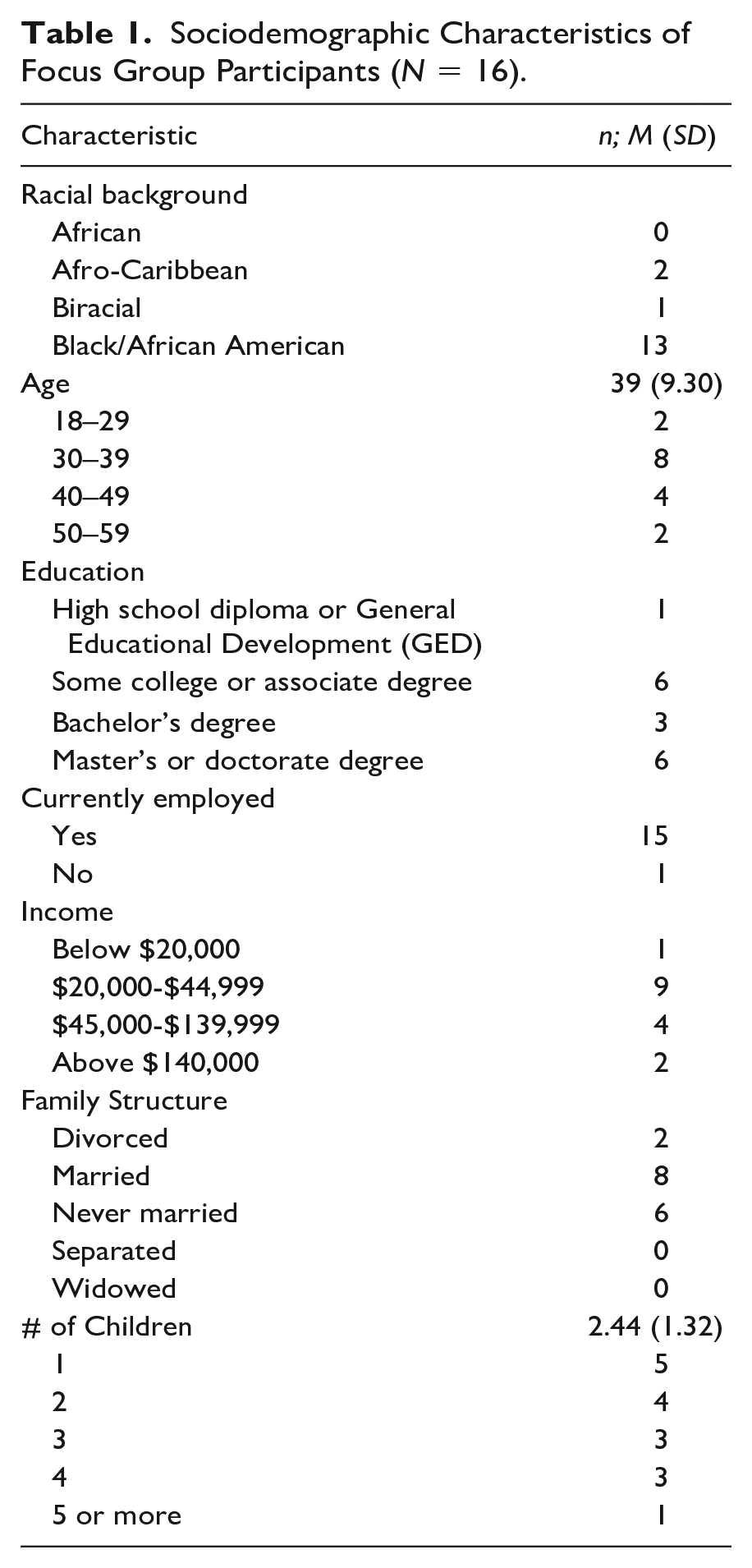
Table 1 describes the sociodemographic characteristics of participants. A total of 16 fathers, (mean age = 39; SD = 9.30), participated in the study. Participants’ education levels ranged from earning a GED to obtaining a doctorate degree, and 9/16 (56.25%) had an annual income in the range of $20,000 to $44,999. Fifty percent of fathers were married, 9/16 (56.25%) had non-resident status with at least one of their children, and the mean number of biological children per father was 2.44 (SD = 1.32). The mean age of children living with their fathers full-time was 3.2 years old. Eighty-one percent (13/16) of fathers lived with at least one of their children on a full-time basis, and 12.5% (2/16) lived with at least one of their children on a part-time basis.
Sociodemographic Characteristics of Focus Group Participants (N = 16).
Contributors to Early Childhood Adversity in the Black Community
Theme 1: Fathers Noted the Contribution of Negative Interactions With the Mother of Their Child
Black fathers endorsed a connection between the stress that they experience, their parenting role, and the adversity experienced by their children. Specifically, the more stress they were experiencing, the more challenging it was to be psychologically available for their children. A significant source of their stress was related to their role as a coparent, especially when they were no longer in a romantic relationship with the mother of their child and the physical and emotional separation caused relational discord. As Participant 3 put it, “But raising five kids and trying to be active in my kids’ life and fighting their mother about it tooth and nail, like it’s just a lot.” Several other participants agreed, including Participant 5 who changed his relationship status with the mother of his children because of their ongoing conflict:
The biggest toxic stress that I’ve experienced with my children has been just fighting with their mother. That’s the reason why their mother and I aren’t together, because I thought in my mind, I’d be doing better by removing that consistent toxic stress of being in the house fighting.
Theme 2: Fathers Described Systemic Issues Outside of Their Control That Affect Their Parenting
Fathers highlighted the importance of financial provision and reported that the level of support and physical interaction that they would like to provide to their children is often hindered by socioecological factors outside of their control. One father spoke about the financial stress that Black men experience because of racial pay discrepancies: “One of the biggest stressors is economic stress. . . here in Pittsburgh, African American families bring home half the amount of white families. . .” (Participant 2). Several fathers described how this racial discrimination causes financial inequities for Black fathers and leads them to have to choose between working long hours or multiple jobs and being physically present with their children.
Another systemic issue fathers noted was the disparate sentencing and incarceration of Black men in the context of similar crimes committed by non-Black offenders, and how it both obstructs the ability of Black fathers to be present and limits their subsequent efforts toward upward mobility. Participant 1 put it this way: “The first thing that came to my mind was mass incarceration. Growing up fatherless, growing up with just a single mom just creates additional stressors. It’s so prevalent in our community. . ..”
Fathers shared that several systems, including child protection and family courts, tend to favor mothers over fathers. “Being a father is not validated. It’s not equal. We’re still working to bring fatherhood to equality. It is not equal. It’s not valued the same as motherhood, regardless of race” (Participant 3).
Other fathers described the negative impact that media stereotypes of the “absent Black dad” have on their overall wellbeing. According to Participant 4:
The media has played a negative role on the African American male in the form of psychological warfare. We don’t realize that. Because when you believe that you create a domino effect and pass it on to your children and then their children, not realizing that there are more Black males across the country who are taking care of their children more than white males. It’s documented, but we don’t know that.
Theme 3: Fathers Highlighted the Effects of Historical and Intergenerational Trauma
Fathers expressed that the severity of historical trauma endured by Black America has led to the normalization and perpetuation of adversity, often without conscious thought. Participant 6 spoke about the challenges parents will have to protect their children if they haven’t yet addressed their own trauma and pain:
These things stem from centuries, and you just see the generational trauma just passed on. . . it’s normalized. . . how can you go about helping that child, but also [help] that parent overcome their traumatic experiences to not relay that to that child? Because if the parent hasn’t healed, then there’s no way they’re going to be able to heal that child.
Participant 15 spoke about the normalization of unhealthy parenting practices. He shared that he lacked positive role models in early fatherhood and found himself doing what he saw around him:
In my first few years as a dad because I didn’t know anything else but whoop ass and yell. . . so for my first baby I was kind of a little more hardcore and short-tempered when it came to doing stuff. Like, [I was] following everybody else’s norm.
Assets to Help Prevent Early Adversity and Toxic Stress
Theme 1: Fathers Described the Desire to Do Things Differently
While some fathers reported parenting like they were parented, as this was the only thing that they knew, others described a purposeful effort to parent opposite to the emotionally absent fathering that they received. Specifically, several who did not receive nurturing from their own fathers, a crucial aspect of a buffering relationship, spoke of intentionally interacting differently with their own children. Participant 8 had this experience and shared the following:
When it comes to nurturing, I try to just step away from what I grew up under and just try to set a new path where I am saying “I love you.” I’m saying, “I’m proud of you. You’re doing a great job.”
Participant 9 agreed and shared that in addition to teaching his children a new way of being, he was also modeling it for his father:
When you just hear “nurture,” it automatically goes to. . . more of like a woman or more of like a coddling. . . my dad, he didn’t do a lot of nurturing, or hardly ever said “I love you” or anything. . . I’m more emotional, so I would always want more affection from him. I guess, seeing me interacting with my kids, he sees how much more meaningful it is.
Theme 2: Fathers Described Intrinsic Resilience of Black American Culture
Fathers offered up the resilience of Black people in general, and Black fathers specifically, as a strength to be leveraged in the prevention of early childhood adversity. They spoke of historic and current endurance and perseverance of Black fathers, who they believe do not give up despite the odds perceived to be against them. “I mean, I think that that’s one of the beautiful things about Black fathers. They’re battle tested, even before fatherhood,” shared Participant 13. Participant 8 shared a similar sentiment, that “one of the strengths is knowing our history. Knowing that we are descendants of kings and queens—knowing what our ancestors have overcome.”
Notably, at the member-checking event, Participant 10 cautioned against the word “resilience” and over-relying on “Blackness,” however, explaining:
We’ve also masked our hurt and our pain and our dysfunction in ways that appear to be “resilience” when they simply are just masks. We often equate power and strength with the ability to suffer. Can we admit that we’re hurting sometimes?
Needs to Help Prevent Early Adversity and Toxic Stress
Theme 1: Fathers Expressed Extrinsic Needs for Education and Mental Health Resources
Fathers noted that the protection of their children from early adversity is not something that they can do alone. Specifically, they described wishing that they had a better understanding of the effects of stress on the body, child development, and coparenting earlier in life, with some fathers advocating for this information prior to becoming a father. Participant 11 shared his thoughts that “a brother touched on rebuilding the relationship structure with the men and women. . . you should be learning the different forms of the rules of engagement and how we engage with each other and what it means.”
Fathers also spoke of the importance of addressing mental health needs, though most did not explicitly mention “therapy” or other traditional therapeutic settings. According to Participant 5, “how you would help fathers is by giving more venues [and] time to express and work through their own issues and also learn how to not transfer them to their children.”
Theme 2: Fathers Expressed Great Appreciation for the Opportunity to Meet Together
Notably, by the end of every focus group, fathers thanked each other for participating and sharing their experiences, and additionally thanked the researchers for gathering everyone together. They spoke of the benefits of connecting with other Black fathers and seeing other Black fathers who were “doing it well.”
Several fathers spoke to the power of positive self-imagery, particularly as it combats the negative stereotypes of Black fathers that are often portrayed in the media, including Participant 7:
There seems to be this growing nice embrace of fatherhood and Black fatherhood that I’ve seen that hopefully promotes a positive view of how you can interact with your children and how you can be a father. It kind of ignores your marital status and just denotes, “being a father is particularly important for a lot of reasons.”
Discussion
This qualitative study identified several factors that Black fathers perceive as strengths and challenges to buffering children from the negative effects of exposure to early adversity. Prior research has examined stressors and strengths to protect children from early adversity and toxic stress from the perspective of disadvantaged mothers, the majority of whom were Black, (Condon & Sadler, 2019), but to our knowledge, there are no similar studies for fathers in the United States. These findings add to this growing body of literature by capturing Black fathers’ perspectives in their own words, noting specifically that when it comes to protecting children from adversity and toxic stress they face several unique extrinsic stressors that influence their parenting and psychological availability for their children, and that, even though they are resilient, they still need support. In addition, the identified needs in this study provide some novel features that could be leveraged by early childhood prevention programs to improve cultural competence and better attract and retain Black fathers. Such intentional incorporation into programs that have successfully improved child outcomes, but have not traditionally been father-focused, could capitalize on the unique developmental contributions of fathers, enhance the protection of young Black children, and subsequently help decrease health inequities associated with early childhood adversity and toxic stress.
Structural racism, “racial discrimination embedded within interconnected social, political, and economic systems and institutions” (Shonkoff et al., 2021), is a major stressor that Blacks in the United States must endure (Lemmons & Johnson, 2019). Fathers in our study clearly identified how structural and persistent discrimination impacts their fatherhood and protective roles by limiting their employment, financial opportunities, and upward mobility, as well as compromising the amount of time they get to spend with their children, consistent with previous studies (Julion et al., 2016; Lemmons & Johnson, 2019). They also noted the tension between these limitations and the outdated, but widely held, belief that fathers are only valuable for financial contributions to the family system and unimportant or ineffective in child-rearing (Amato & Gilbreth, 1999; Carlson & Magnuson, 2011).
Another type of racism, cultural racism, the pervasive belief that whites are superior to other racial groups, is demonstrated in media portrayals of Black fathers. These center on a deficit perspective and stereotypes of the “absentee Black dad” who is not present in his children’s lives and, as such, is the source of maladaptive outcomes for children (Robinson, 2021). Although Black fathers face multiple barriers to involvement in their children’s lives, they have responded to these stereotypes with more substantial involvement with their children (Cabrera et al., 2011; Cooper et al., 2021; Jones & Mosher, 2013; C. A. Smith et al., 2005). As noted by the fathers in our study, this is not common knowledge, however, the onslaught of negative images of Black fatherhood can be psychologically damaging and lead to internalized racism and low expectations of oneself. Such results have well-known negative emotional and psychological impacts on Black men (Hammond, 2012; Watkins et al., 2009), their parenting practices (Bécares et al., 2015), and child development (Turney, 2014). Unfavorable stories and images of Black men can also negatively affect the perspectives and expectations that mothers, and even social service workers, have of Black fathers, and subsequently influence their desire and motivation to include them in prevention efforts (Cryer-Coupet et al., 2021).
Fathers in this study stressed that healthy relationships are needed to protect children from early adversity, and they expressed a desire to learn more about the dynamics of coparenting. This seems to be of particular importance for fathers who have non-residential status with their children since they need to negotiate their fathering role with their child’s mother (Carlson et al., 2008; Edin et al., 2009), which was the case for more than half of the fathers in our study. Positive coparenting relationships have demonstrably reduced internalizing and externalizing behaviors in young children, particularly boys (Marchand-Reilly & Yaure, 2019; Parkes et al., 2019). Positive coparenting relationships also increase the quantity and quality of time that fathers spend with their children (Carlson et al., 2008; Waller, 2012). Two evidence-based coparenting interventions, “Figuring It Out for the Child” and “Supporting Father Involvement,” have successfully helped decrease couple conflict, the latter leading to reduced anxious and harsh parenting and subsequent improvement in child outcomes (McHale et al., 2015; Pruett et al., 2019).
Fathers also noted their need for the support of other Black fathers, specifically a safe space where it’s not always necessary to be “resilient” and where they can admit to suffering without fear of judgment. Similarly, Black fathers of pre-teen sons at risk for aggression and depressive symptoms in a study by Doyle et al. (2022) endorsed preference for group-based interventions that afforded them the opportunity to bond with and learn from each other. The normalization and validation gained through such relationships could additionally serve as a prerequisite to seeking mental health treatment and other forms of help that pave the way for healing from historical and intergenerational trauma. Such healing, particularly for Black fathers who likely experienced early adversity and/or toxic stress themselves, holds great potential to improve child developmental outcomes. This is consistent with Belsky’s Process Model of Parenting, which presumes that parenting competence is multiply determined but that the psychological wellbeing of the parent is the most important factor when it comes to buffering the parent-child relationship from stress (Belsky, 1984; Taraban & Shaw, 2018).
Finally, fathers in our study who did not receive emotional support and affection from their own fathers reported that they are purposefully providing these nurturing qualities to their own children. This highlights a natural desire to shift generational patterns that were viewed as less than ideal (Perry & Lewis, 2016) and is in line with the type of relational buffering known to improve outcomes of children exposed to early adversity and toxic stress (Garner & Yogman, 2021). Such fathers often find themselves navigating unchartered territory, however, as noted by Perry and Lewis (2016), “Reflecting on their fathers’ lack of engagement led to emotions ranging from disappointment to anger and resentment. Most often, the men acknowledged sometimes feeling lost with regard to identifying and fulfilling their paternal roles” (p. 11).
Implications for Social Work
The findings in this study have implications for social work practice through the work that takes place in early childhood prevention and intervention programs. Specifically, by capitalizing on the inclusion of Black fathers, there is potential to further attenuate the short and long-term health disparities that Black children experience secondary to early adversity and toxic stress.
On the level of agencies that implement these programs, home visitors and family service staff should work to actively engage all fathers, but particularly Black non-residential fathers, in all aspects of early childhood and family-based interventions whenever possible. They are encouraged to familiarize themselves with the concerns that Black fathers reported in this study and reflect on the multitude of barriers non-residential and low-income fathers experience, especially the systemic challenges to their fatherhood role. Staff should also work to confront any personal biases and assumptions that fathers who are not present for interventions lack a desire to be involved or to protect their children from adversity. This will better enable them to stress the importance and benefits of the fathers’ involvement and emotional support upon child development and protection to both mothers and fathers. These efforts could help ensure a non-judgmental and empathic approach to Black fathers necessary to get, and keep, them engaged in programming.
For evidence-based programs that interact with family systems but do not already include father-specific modules or material, the authors recommend that modifications be made to incorporate these components. Content tailored to Black fathers around healthy coparenting relationships, conflict resolution techniques, historical and social dynamics of Black fatherhood, varied demonstrations of nurturance, and the importance and examples of self-care would be particularly beneficial given the complex structure of Black families in the United States. The messaging and marketing of these program components should also be strengths-based, highlighting and building upon the resilience that Black fathers have demonstrated in the face of oppressive systems, and include culturally congruent positive imagery to challenge common stereotypes. Finally, the authors recommend that consideration be given to the addition of a fatherhood group component that allows for capacity-building and healing among like-minded fathers with similar lived experiences.
Strengths and Limitations
There are several notable strengths of this study. First, the perspectives of fathers were gathered in their own words and not through the mothers. Second, the research team was culturally diverse and had clinical experience engaging Black fathers. Third, researchers partnered with community organizations to identify Black fathers and used culturally tailored recruitment strategies. As a small exploratory study, findings are not generalizable beyond the few fathers who participated in our local project, although participants did speak broadly about structural racism and media portrayals of Black men that extend beyond local experiences. Clearly, larger samples of fathers with children in more narrow age ranges would be preferable in future work. Relatedly, another major limitation is that results do not reflect the perspectives of young Black fathers or those with less than a high school diploma or equivalent; neither population was represented within our sample. The skew of the study toward older, more educated men reflects the difficulties of engaging young, socioeconomically disadvantaged men in research studies. Another limitation is that fathers described their roles in the context of heterosexual romantic and coparenting relationships, which may not be reflective of the experiences of Black fathers with other sexual orientations.
In summary, this qualitative study descri-bed unique stressors, strengths, and needs of Black fathers as it relates to Black children’s experience of early childhood adversity. Early childhood interventions have the potential to be more effective when both parents participate (Cowan et al., 2009; McGinnis et al., 2018). All parents, especially those with children at the highest risk for exposure to adversity, should have equal opportunities to receive support and learn evidence-based techniques to help them promote their children’s cognitive and social-emotional development. Findings suggest that Black fathers are interested in and stand to benefit from being integrated into existing early childhood prevention programs, and such programs should employ purposeful efforts to include them. Programs that build on family strengths, particularly in the context of socioeconomic and family adversity, have great potential to promote healthy child development, but to appeal to Black fathers they must become both father-friendly and culturally sensitive (Goldstein et al., 2020). Future interventions may benefit from increasing social and mental health supports, peer groups, and culturally responsive resources specific for Black fathers to promote more effective involvement of fathers in early childhood programming.
Footnotes
Disposition editor: Cristina Mogro-Wilson
Declaration of Conflicting Interests
The author(s) declared no potential conflicts of interest with respect to the research, authorship, and/or publication of this article.
Funding
The author(s) received no financial support for the research, authorship, and/or publication of this article.
