







Abstract
Mandated reporting policies have expanded in scope and focus since their inception in the 1960s, though their effectiveness in protecting children is mixed. Researchers and advocates argue these policies may exacerbate racial disproportionalities in child welfare. This article presents select findings from a study examining the relationship between mandated reporting laws (State Child Abuse and Neglect [SCAN] Policies Database) and substantiation rates (National Child Abuse and Neglect Data System [NCANDS]) to understand how these laws might be associated with accurate reporting of maltreatment. We did not find a relationship between mandated reporting policies and the likelihood of a report being substantiated. However, the relationship changed based on child race/ethnicity and type of maltreatment experienced. This suggests that mandated reporting policies may have unintended consequences, including unnecessary reports that contribute to racial disproportionalities.
Keywords
Introduction
Policies about who should be required to report suspected maltreatment and what type of maltreatment they are required to report has been a topic of ongoing debate in the child welfare field. While any adult can report maltreatment, the majority of maltreatment reports are made by those commonly classified as mandated reporters—professionals who encounter children as part of their job (e.g., teachers, law enforcement, doctors) (U.S. Department of Health & Human Services [U.S. DHHS] et al., 2024). Many states have policies that require all adults to report suspected maltreatment, referred to as universal mandated reporting (UMR) policies. The research on the effectiveness of UMR and other mandated reporting policies (e.g., training requirements, ability to report anonymously) in preventing and responding to maltreatment, is mixed. Most research shows that mandated reporting policies do not increase the accurate detection of maltreatment (Ho et al., 2017; Krase & DeLong-Hamilton, 2015; Rosenberg et al., 2024). However, Palusci and colleagues found a positive relationship between URM policies and rates of reports and substantiations (Palusci et al., 2016; Palusci & Vandervort, 2014). These mixed results and lack of research on other mandated reporting policies indicate the need for further research.
The original and prevailing theory behind mandated reporting policies was that, without them, many instances of child maltreatment would go undetected, and children would go unprotected from harm (Brown & Gallagher, 2014; Drake & Jonson-Reid, 2015; Kempe et al., 1962; Mathews, 2015). However, some researchers and advocates argue that mandated reporting policies, while well-intentioned, are misguided and unnecessarily subject many families to involvement with child-protective services, particularly families of color (Hixenbaugh et al., 2022; Inguanta & Sciolla, 2021; Itzkowitz & Olson, 2022; Roberts, 2002, Roberts, 2022). These policies can also negatively impact help-seeking among those in need (Gilbert et al., 2009; Gruber, 2023), and overburden an already underfunded system, diverting limited resources away from children in need of protection from serious imminent harm (Gilbert et al., 2009; Ho et al., 2017).
In this article, we discuss the history of mandated reporting policies and their relationship with racial disproportionalities in child welfare, then present findings from a study examining the effectiveness of mandated reporting policies in accurately detecting maltreatment, followed by a discussion of the study results including the unintended consequences of mandated reporting policies such as unnecessary reports and racial disproportionalities.
Background
History of Mandated Reporting Policies
The first mandated reporting policies were introduced in the late 1960s and early 1970s in response to a report by Kempe and colleagues (1962), The Battered Child Syndrome, which identified child maltreatment as a diagnosable and treatable condition among parents. The authors of the report posited that the biggest challenge to addressing child maltreatment is identifying it, which became the justification for mandated reporting policies (Kempe et al., 1962; Williams-Butler et al., 2024). The Kempe report was released in 1962, and by 1967 every state had laws mandating that certain professionals report suspected maltreatment (Brown & Gallagher, 2014; Myers, 2008). By 1974, in response to calls from child welfare advocates, Congress passed the first major federal child welfare legislation, the Child Abuse Prevention and Treatment Act (CAPTA), which required states to have mandated reporting policies—focused primarily on physicians reporting physical abuse—to receive federal funding for child welfare services (Child Welfare Information Gateway [CWIG], 2019). Mandated reporting policies are still a requirement of CAPTA today, dictating child welfare policy at the state level.
Mandated reporting components of CAPTA have been a source of controversy since their inception. In a qualitative analysis of Congressional testimony and other legislative documents, Williams-Butler et al. (2024) found that lawmakers relied predominantly on the most egregious cases of maltreatment to justify the need for mandated reporting policies, ignoring the rarity of these extreme instances of maltreatment and the prevalence of other forms of maltreatment, such as neglect. Furthermore, when passing CAPTA, the discussion of how to best protect children from harm did not address the structural issues that result in inequities within and beyond the child welfare system (e.g., poverty and structural racism) and that are risk factors for child welfare involvement (Williams-Butler et al., 2024). This historical and ongoing lack of attention to structural issues as risk factors for maltreatment when passing child welfare legislation continues to contribute to the disparities seen within the child welfare system.
During the passage of CAPTA, “helping professionals” (e.g., doctors, teachers, therapists, social workers) shared their concerns that mandated reporting requirements were punitive and would impact their relationship with and inhibit help-seeking behavior of the families with whom they work (Williams-Butler et al., 2024). In response to this resistance and in an attempt to incentivize reporting, Congress added provisions to protect reporters and penalize the failure to report suspected maltreatment. For example, policies related to immunity from civil or criminal liability were added to protect professionals and other reporters and to encourage them to report suspected maltreatment. Furthermore, lawmakers also recognized that a policy cannot be mandated without an enforcement mechanism; therefore, they added penalties for not reporting suspected maltreatment. This was also thought of as a way to help manage the relationship between professionals and clients; if families understood that their doctor or teacher faced penalties for not reporting their suspicions, the family would not be as angry with them for making a report (Williams-Butler et al., 2024).
Mandated Reporting and Racial Disproportionality
When mandated reporters or others make a report to a child protective service (CPS) agency, the report starts a family’s involvement with the child welfare system, setting off a chain of events that are shown to be traumatic for children and families, such as invasive investigations and possible separation (Gruber, 2023). Research shows that Black and Indigenous families are more likely than white families to be reported, investigated, and ultimately separated (Roberts, 2022). Families of color are also more likely to live in poverty (Lloyd et al., 2021), the conditions of which are often conflated with neglect, which is the most commonly reported type of maltreatment (Williams et al., 2022, 2024). Therefore, Black and other families of color may be more likely to bear the brunt of the unintended consequences of mandated reporting policies. These disparities indicate that mandated reporting policies may contribute to inequities within child welfare.
In the decades following the passage of CAPTA, mandated reporting policies broadened in terms of who is required to report suspicions of maltreatment and what type of maltreatment they are required to report, along with requirements related to training for mandated reporters and whether anonymous reports are permitted (Brown & Gallagher, 2014; Kenny et al., 2018). Like the passage of CAPTA, many of these mandated reporter policy expansions were reactions to egregious cases of maltreatment, often covered prominently in the media (Brown & Gallagher, 2014). For example, within a year of the Sandusky sexual abuse scandal eight states enacted UMR policies, in which all adults are required to report suspected maltreatment (Ho et al., 2017). Within a year of The Boston Globe exposé on sexual abuse within the Catholic church, 12 states had added clergy as mandated reporters (Brown & Gallagher, 2014). As with these two examples, these high-profile cases usually involve white children (Itzkowitz & Olson, 2022), aligning with research that white victims tend to garner more media attention and are portrayed more sympathetically than victims of color (Ortega & Feagin, 2016). This demonstrates how policies can be based on the perceived needs of white children and families, yet Black and Indigenous families end up being more likely to be impacted by these policies, as shown in studies that highlight racial disproportionalities in reporting of maltreatment (Fluke et al., 2011).
Poverty, Neglect, and Race
Neglect has been the most commonly reported type of child maltreatment since at least 1992, the first year for which we have reliable national statistics on maltreatment (U.S. DHHS & National Center on Child Abuse and Neglect, 1994). Even what is considered the first high-profile case of maltreatment, which happened in 1874, was rooted in poverty and neglect, and prioritized separating a family instead of providing services that would keep a family together (Itzkowitz & Olson, 2022; Myers, 2008). Maltreatment is often defined by poverty (Roberts, 2002); all states include at least one income-related factor like inadequate food, shelter, clothing, or child care or supervision in their definitions of maltreatment (Williams et al., 2022). The narrative that poverty is a personal failure, as opposed to a societal one, continues to dominate in U.S. society, and is often used as a justification for removing children due to neglect as their parents are seen as “unfit” (Itzkowitz & Olson, 2022; Roberts, 2002).
The conflation of poverty and neglect is also thought to contribute to racial disproportionalities in child welfare (Dettlaff et al., 2021; Fluke et al., 2011). This is not because Black families are inherently more likely to neglect or maltreat their children, but due to interpersonal, structural, and systemic racism—such as discrimination in education, housing, and employment (Kendi, 2017; McGhee, 2021)—leave Black families more likely to live in poverty than white families (Lloyd et al., 2021).
This study contributes to the literature by examining the extent to which several mandated reporting policies support the accurate detection of maltreatment, and whether child race/ethnicity and maltreatment type change that relationship.
Methods
This article presents select findings from a larger study that examined the relationship between mandated reporting laws and reporters’ ability to detect maltreatment (using substantiations as a proxy for accuracy) to understand how these laws might support accurate reporting (Rosenberg et al., 2024). The study relied on two data sources described below.
The first data source is the National Child Abuse and Neglect Data System (NCANDS) Child File for federal fiscal year (FFY) 2019, Version 3. NCANDS is an administrative dataset created by data that states report to the federal government. NCANDS includes information on all reports of child maltreatment during the FFY including child demographics such as race/ethnicity, child age, and child sex. It also includes information on the outcome of that report (e.g., substantiated or not) (Children’s Bureau et al., 2019a, 2019b).
The second data source is the State Child Abuse and Neglect (SCAN) Policies Database, which includes information on state-level mandated reporting policies and was created by reviewing state statutes and policies (Weigensberg et al., 2022a). These policies include UMR, ability to report anonymously, training requirements, penalties for not reporting, and severity of those penalties.
Study Sample
The findings presented here are for children and families ages 0 to 17 who had a screened-in report of child maltreatment in FFY 2019. The study sample is limited to those ages 0 to 17, because youth ages 18 to 21 can only be in foster care if they entered before the age of 18. In the child welfare system, an allegation of maltreatment (called a referral) is made to CPS and either screened-out (e.g., does not warrant investigation by CPS) or screened-in for investigation as a report. Figure 1 displays a diagram of a simplified process that a report of maltreatment moves through (U.S. DHHS, 2024). 1 To be included in the analysis, the report had to include data for all the control variables (e.g., report disposition, race/ethnicity, age, and prior victimization, and maltreatment type). There were 1,724,752 report-level observations from 50 states, DC, and Puerto Rico.
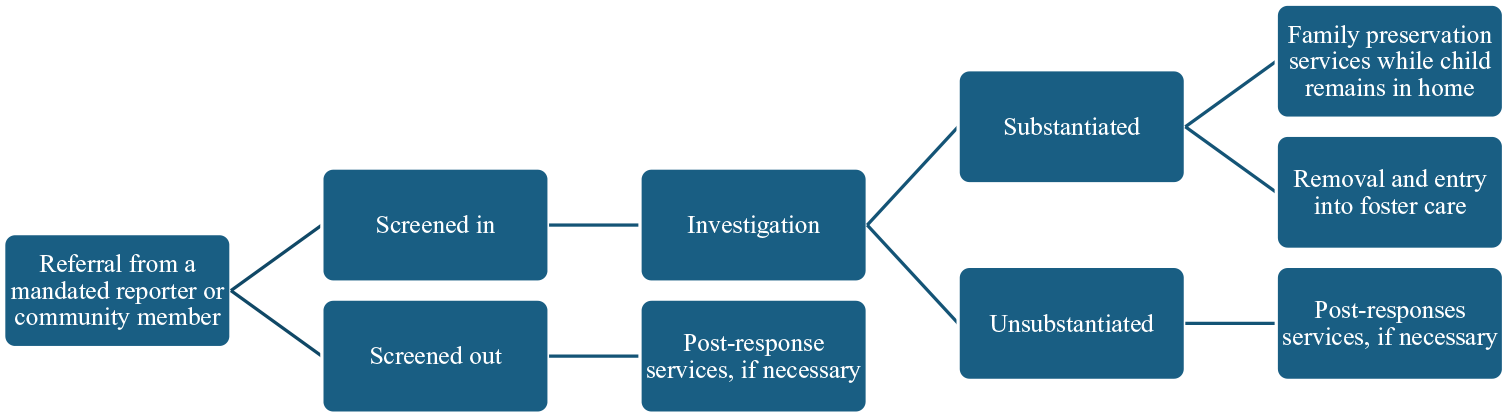
Flow a Maltreatment Report Through the CPS System.
Analysis
First, we ran a latent class analysis, using M-plus 8, to examine if states belonged to underlying classes or had similar groupings of policies. One class was identified with a few states; however, most states did not fit into classes. This finding indicates that, according to our analysis, there is no evidence of groupings of mandated reporting policies across states nor systematic overlapping in state policies (Rosenberg et al., 2024). Based on this finding, we proceeded with examining each individual policy’s relationship with substantiation rates instead of groupings of policies.
Next, we used a multilevel logistic regression to examine the likelihood of a report being substantiated (dependent variable) based on different state mandated reporting policies and controlling for child-level demographics (main effect models). A report was considered substantiated if the disposition was listed in NCANDS as substantiated, indicated or reason to suspect, or alternative response. While not a true measure of the accuracy of a report—such a measure does not exist—we used substantiated reports as a proxy for accurate reports. Each child in NCANDS is assigned a unique ID that is associated with all maltreatment reports with which the child is associated. We then dropped any duplicate IDs to ensure each child was only included once. Next, we dropped any child with a maltreatment disposition of “no alleged maltreatment.” Finally, because multiple children can be associated with the same report, we randomly selected one child per report to be included in our analysis. It is possible that different maltreatment types can have different dispositions (e.g., substantiated for neglect but not for physical abuse). However, the report disposition variable provided by the National Data Archive Child Abuse and Neglect (NDACAN) always uses the most severe of the determinations. Therefore, we used the most severe determination in the current analysis (Rosenberg, et al., 2024). We included five state-level mandated reporting policies as independent variables: (a) whether a state has UMR classifying all adults as mandated reporters, (b) whether a state allows mandated reporters to remain anonymous, (c) whether a state requires training for mandated reporters, (d) whether a state imposes penalties for failure to report, and (e) how many penalties states may impose. We controlled for child age, prior victimization, and race/ethnicity. Finally, we examined how race/ethnicity and maltreatment type change the relationship between each mandated reporting policy and likelihood of substantiation (moderation models). We categorized maltreatment type into three categories: neglect only, neglect with another type of maltreatment (e.g., neglect and physical abuse), and nonneglect (e.g., does not include an allegation of neglect, this includes reports such as physical or sexual abuse, psychological or emotional maltreatment, medical neglect, or sex trafficking).
Results
Descriptive Statistics
There were 17 (32%) states with UMR policies and 20 (39%) states that require training for some or all mandated reporters. In 17 (32%) states, penalties can be imposed on all adults (regardless of status as a mandated reporter) for failure to report suspected maltreatment and penalties can be imposed on some or all mandated reporters in 35 (67%) states. See Table 1 for more information on mandated reporting policies across states. For more detailed information about each state’s mandated reporting policy, please see the full article by Rosenberg et al. (2024).
Mandated Reporting Policies.
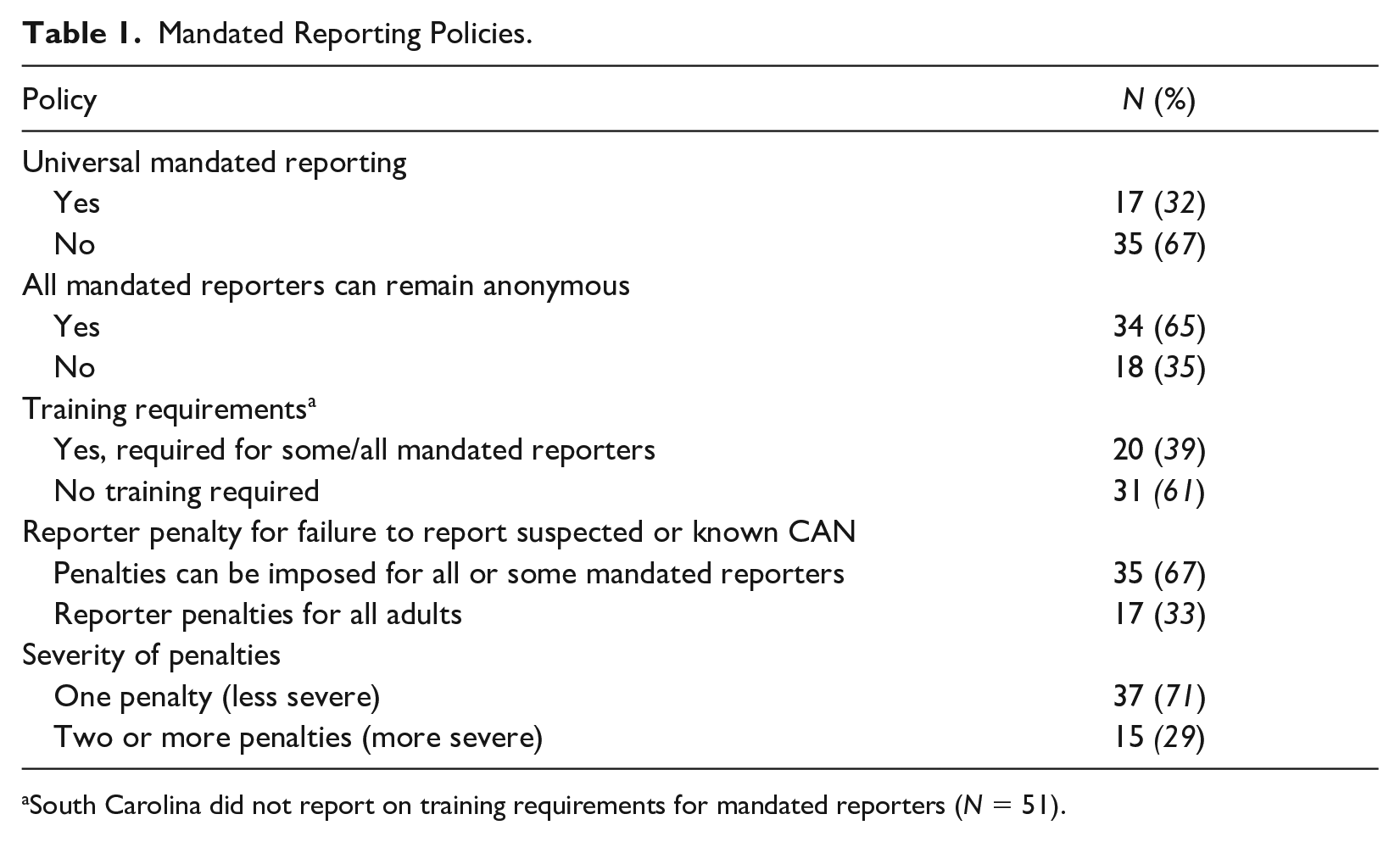
South Carolina did not report on training requirements for mandated reporters (N = 51).
Only 20% of all screened-in reports of maltreatment were substantiated. Among children with a substantiated report, 44% were white, non-Hispanic (NH); 22% were Black, NH; 26% were Hispanic, any race; and 8% were other racial groups. Among children with a substantiated report of maltreatment, 28% were prior victims, 48% were ages 0 to 5, and 80% of the reports were made by someone who has contact with the child because of their profession. Table 2 provides more information on the characteristics of children with a substantiated report.
Child Characteristics of Substantiated Reports.
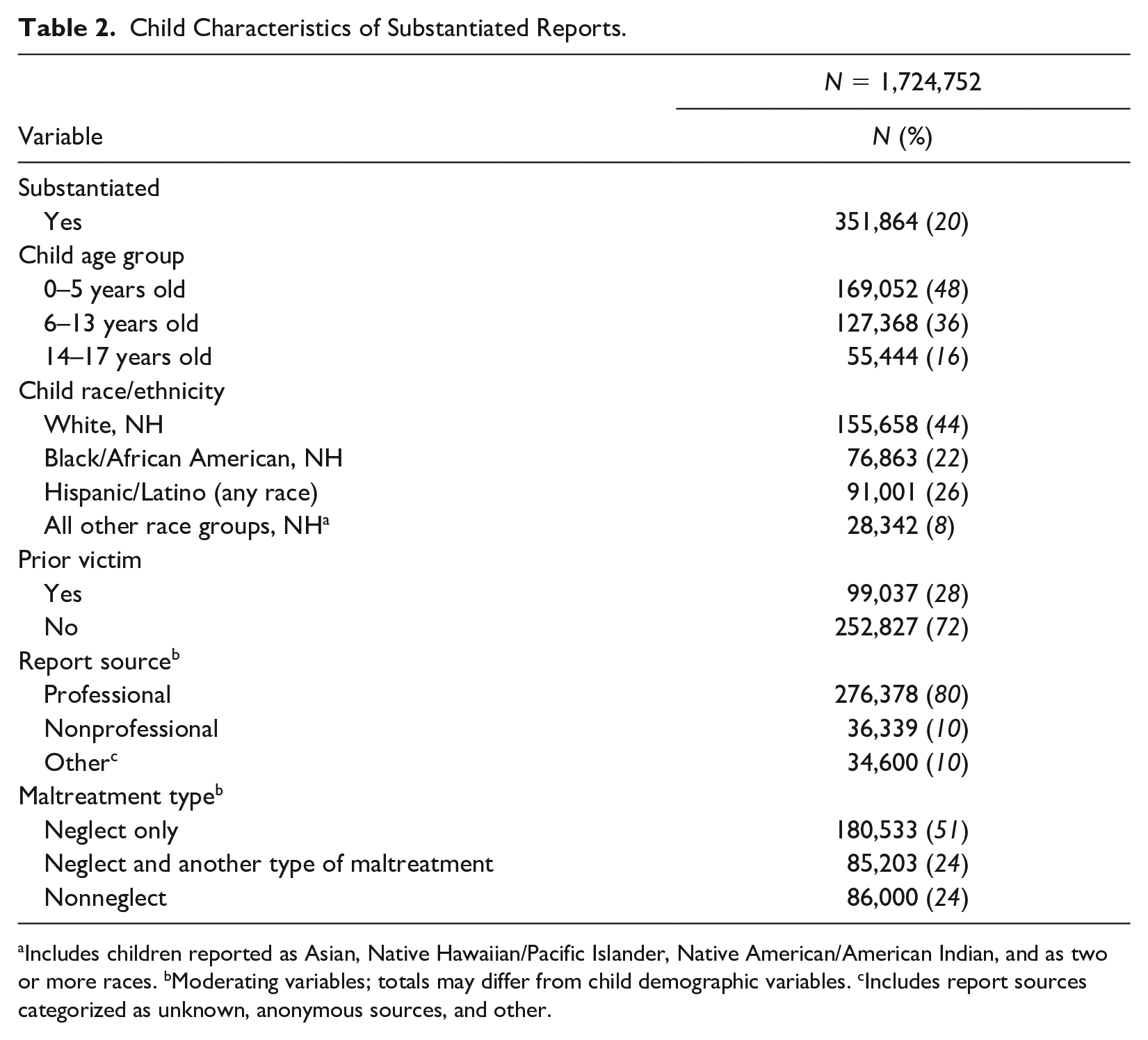
Includes children reported as Asian, Native Hawaiian/Pacific Islander, Native American/American Indian, and as two or more races. bModerating variables; totals may differ from child demographic variables. cIncludes report sources categorized as unknown, anonymous sources, and other.
Multivariate Statistics
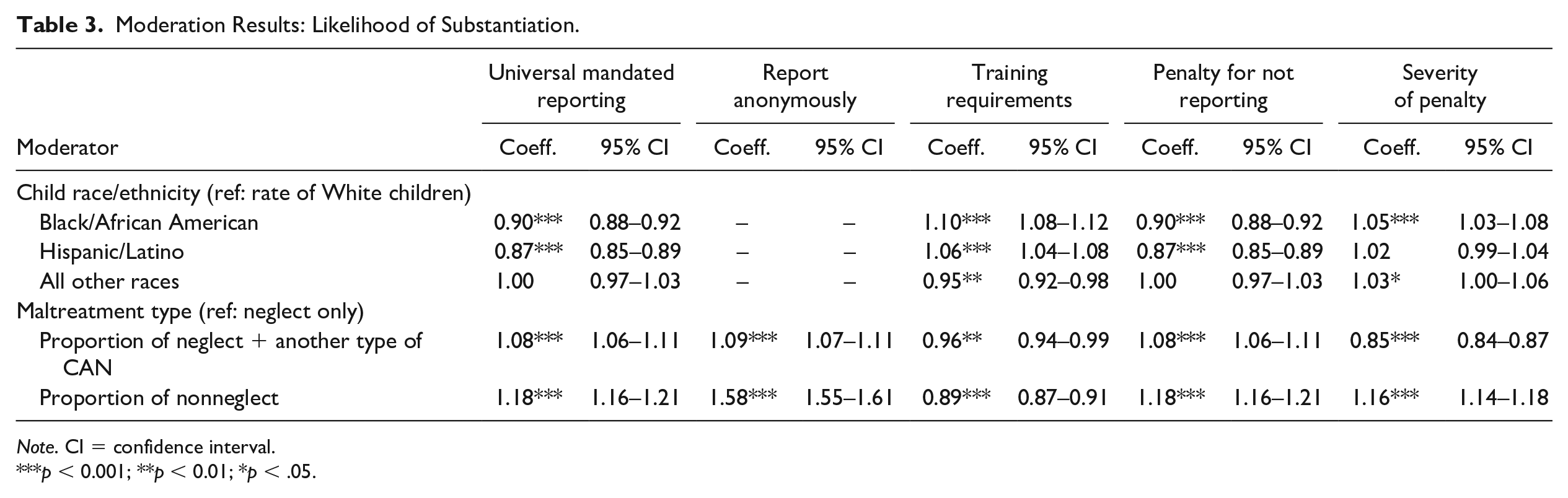
There were no statistically significant findings for the main effect models indicating that individual mandated reporting policies do not significantly increase or decrease the likelihood of a report being substantiated. However, when examining how race/ethnicity and maltreatment type change the relationship between mandated reporting policies and likelihood of substantiation we found several statistically significant findings indicating that the policies do not contribute to equal results across children of different race/ethnicities or by type of maltreatment reported. Table 3 presents the full results of the moderation models.
Moderation Results: Likelihood of Substantiation.
Note. CI = confidence interval.
p < 0.001; **p < 0.01; *p < .05.
UMR Policies
In states with UMR policies, reports that included children identified as Black, NH, or Hispanic had lower odds of substantiation than reports including children identified as white. This indicates that UMR policies may not be implemented consistently across all racial and ethnic groups. In states with UMR policies, reports of neglect and another form of maltreatment and nonneglect reports were more likely to be substantiated than neglect-only reports. This may indicate that mandated reporters may be better at detecting other forms of maltreatment such as physical or sexual abuse than neglect.
Anonymous Reporting
Similarly, in states that allow anonymous reporting, reports of neglect and another type of maltreatment and nonneglect reports were more likely to be substantiated than neglect-only reports. This indicates reports involving only neglect may be more difficult to detect and report, particularly when reported anonymously. We found no statistically significant findings based on race/ethnicity in this analysis. While anonymous reporting may alleviate fear on behalf of the reporter of jeopardizing their relationship with the family (Kuruppu et al., 2020), it does not appear to promote more accurate reporting of maltreatment across race/ethnicity. However, anonymous reporting may promote more accurate detection of neglect and another form of maltreatment and nonneglect reports.
Training Requirements
In states that require training for some or all mandated reporters, reports including children identified as Black, NH, or Hispanic were more likely to be substantiated than reports about children identified as white, NH. Reports about children of all other races were less likely to be substantiated. This indicates that training may need to include information about implicit racial/ethnic bias. In addition, in states that require training for some or all mandated reporters, reports of neglect and another form of maltreatment and nonneglect reports were less likely to be substantiated than neglect-only reports. This indicates that more work may be needed to ensure training prepares mandated reporters to accurately detect all forms of maltreatment.
Penalties for Failing to Report and Severity of Penalties
In states that penalize all or some adults for failure to report suspected maltreatment, reports including Black, NH, and Hispanic children were less likely to be substantiated than reports about white children. In addition, reports of neglect and another form of maltreatment and nonneglect reports were more likely to be substantiated than neglect-only reports in these states. Furthermore, in states that impose two or more penalties for failure to report suspected maltreatment, reports about children identified as Black, NH, and all other races were more likely to be substantiated than reports about white children. Finally, in states with two or more penalties, reports of neglect and another type of maltreatment were less likely to be substantiated than neglect-only reports, while nonneglect reports were more likely to be substantiated. This may indicate that the threat or severity of penalties for failure to report may not contribute to families being reported equitably across race/ethnicity and maltreatment type.
Discussion
The first mandated reporting policies were passed over 60 years ago with the intent to protect children from harm. They have met this goal in part by raising awareness of maltreatment and making child protection a priority (Gilbert et al., 2009). However, using substantiated reports of maltreatment as a proxy for accuracy, this study demonstrates that mandated reporting policies may unintentionally result in inaccurate—and therefore unnecessary—reports. Below we discuss how our findings about mandated reporting policies can impact racial disproportionalities in child welfare via unnecessary reporting.
Child Race/Ethnicity
Many portend that mandated reporting policies contribute to racial disparities due to racial, cultural, and economic bias among mandated reporters (Itzkowitz & Olson, 2022; Palusci & Botash, 2021; Pryce & Yelick, 2021; Raz, 2020). Whether cognizant of this or not when deciding whether to report suspected maltreatment, mandated reporters are making subjective risk calculations that are influenced by personal bias and moral judgments about parenting practices (Raz, 2020). We know that “perceptions of risk are correlated with race/ethnicity” (Raz, 2020, p. 3) and that parenting and other societal norms in the United States are based on white middle-class standards and practices (Itzkowitz & Olson, 2022; Ortega & Feagin, 2016). When mandated reporters make risk assessments using these standards, communities of color and/or those of disadvantaged backgrounds are more likely to be negatively impacted (Raz, 2020). Furthermore, mandated reporters may not understand the implications of making a report and the accompanying investigations and may expect CPS to address the family’s needs, not remove the child from their home (Fong, 2020). Investigations are not “benign procedures” (Raz, 2020, p. 3); rather, they are traumatic for children and families.
Our findings support the racial bias hypothesis by indicating that mandated reporting policies have different accuracy rates across different child races/ethnicities (Rosenberg et al., 2024). For example, as discussed above, in states where all adults are required to report suspected maltreatment (i.e., with a URM policy), reports including Black and Hispanic children had lower odds of being substantiated (i.e., being an accurate report). In other words, in states where all adults are mandated reporters, reports that include Black and Hispanic children are less likely to be “accurate” reports than in states where only certain professionals are mandated reporters. This indicates that UMR policies may result in an increase in unnecessary reports that include Black and Hispanic children, thus contributing to disparities seen in the child welfare system.
However, our findings tell us that in states where some or all mandated reporters are required to be trained, reports including Black and Hispanic children had higher odds of being substantiated. While the policy information we analyzed in this study did not indicate what topics are covered in such trainings, there is emerging evidence that certain mandated reporting training curricula increases mandated reporter knowledge and positive attitudes toward reporting (Humphreys et al., 2021; Yang et al., 2020). Our findings and other research indicate that trainings should cover information on reporter bias in additional to information on how the child protection system works and the policies governing mandated reporting.
Maltreatment Type
This study also found that the relationship between mandated reporting policies and likelihood of substantiation differed across maltreatment types. In states with UMR policies, policies that permit anonymous reporting, and states that impose penalties for not reporting maltreatment, reports that only include neglect are less likely to be accurate reports (i.e., substantiated) than reports that involve other types of maltreatment. This indicates that these policies may result in an increase of neglect reports that are not actual incidences of maltreatment and are therefore unnecessary. These findings about maltreatment type are another indication that lawmakers may have unnecessarily expanded mandated reporting policies beyond their original parameters of being limited to reporting physical abuse (Itzkowitz & Olson, 2022; Williams-Butler et al., 2024). The link between neglect, race, and poverty discussed earlier in this article is an indication that families of color may be more likely to be affected by unnecessary reports of neglect, further contributing to racial disproportionalities.
However, in states that require training for mandated reporters, neglect-only cases are more likely to be substantiated, indicating that training helps mandated reporters more accurately identify this type of maltreatment. This is important as neglect can be more difficult to detect than egregious physical and sexual abuse because it is defined as an act of omission that can harm a child, rather than an act of commission (Williams et al., 2022); yet it is the most commonly reported type of maltreatment (Williams et al., 2024).
Implications
Given the exposure to intrusive processes associated with the CPS investigations that follow maltreatment reports as well as the subsequent surveillance that puts children and families at risk for continued child welfare involvement (Gruber, 2023), the child welfare field should think critically about how to reduce unnecessary maltreatment reports. Below we present several approaches to meeting this goal through mandated reporting policies based on the findings of this study.
Changes in Messaging and Training
Mandated reporters make reports not only because they are required to do so, but also because they want to help the child (Fong, 2020). When reporters suspect a child is being neglected—which is likely related to the family’s financial ability to meet the child’s needs (e.g., inadequate food, clothing, shelter, hygiene)—they may think the best way to help the family is to call CPS. Reports are often made under the incorrect assumption that the child welfare agency is best-suited and has the resources to help the family (Raz, 2020). However, in most states, an agency other than child welfare is responsible for administering public benefit programs that provide economic and concrete supports and only a small proportion of child welfare agencies include helping meet a family’s economic need in their mission statement (Heaton et al., 2023).
One approach to helping families without reporting them to CPS is shifting the narrative about mandated reporting from a liability focus (e.g., “when in doubt, report!”) to a supportive focus (e.g., “you do not have to report a family to support a family”), which can help mandated reporters think more critically and identify the least invasive way to get families the help and assistance they need. An important mechanism for relaying this new messaging is training, which our study showed decreases the likelihood of inaccurate reports for Black and Hispanic children and neglect-only reports. Mandated reporter training for educators in New York now encourages teachers to be more cautious and “think twice” before making a report and make CPS “the last call instead of the first call” (Elsen-Rooney, 2023). For example, reporters could help families utilize community resources by calling 211 or other available support lines before calling CPS.
Our findings reinforce the importance of requiring mandated reporters to be trained on reporting maltreatment, and there is always room for such trainings to be improved. Training for mandated reporters typically covers who must report suspected maltreatment, how to make a report, and the consequences for failing to make a report (Baker et al., 2021). However, training for mandated reporters can promote more supportive approaches by focusing on topics such as what actually constitutes maltreatment, how to recognize the signs of maltreatment, available options to support families before making a report, how personal bias and cultural parenting norms play a role in the decision to make a report, and the potential implications for the family if a report is made (Itzkowitz & Olson, 2022; Palusci & Botash, 2021). Mandated reporters, particularly nonprofessionals, need to understand that while a maltreatment report can lead to families accessing needed services, it can also—and will likely—lead to unnecessary involvement with and ongoing surveillance by the child welfare system.
Examining Implicit Bias
Our findings showed that child race/ethnicity influences the relationship between mandated reporting policies and the accurate detection of maltreatment, which supports the hypothesis that implicit bias plays a role in reporting of maltreatment. When deciding whether their suspicion of maltreatment is a “reasonable” suspicion, it is not uncommon for mandated reporters to confuse feelings of discomfort for evidence of risk or lack of safety (Itzkowitz & Olson, 2022); such feelings can be rooted in implicit bias. For example, when a mandated reporter sees a parent of another race parenting differently, it can make them uncomfortable and anxious, which is an indication of potential bias. For many white-mandated reporters, bias can also stem from personal experience, as they have traditionally benefited from public systems—or at least have not been negatively impacted by such systems to the same degree as reporters of color—and therefore have a hard time understanding how a system could harm a family (Itzkowitz & Olson, 2022; McGhee, 2021; Roberts, 2002). When presented with feelings of doubt or discomfort, mandated reporters often make a report to be “safe” because that is what they are expected to do (e.g., “when in doubt, report!”). But this begs the question of whose risks we are contemplating: the risk to the reporter/institution, or to the child and their family?
One way to ensure that reporters and institutions prioritize safety risks to children over their own risks (e.g., professional liability) and avoid practices that perpetuate racial disproportionalities is to help reporters examine or “check” their racial and/or class bias by promoting the use of decision-making tools in trainings for mandated reporters (Palusci & Botash, 2021). Not to be confused with investigative tools—which are used by CPS to determine whether the available evidence supports the maltreatment allegation—decision-making tools can be a way to encourage mandated reporters to stop and think critically about whether making a report is the best way to support a family with a suspected need (Itzkowitz & Olson, 2022). For example, is the reporter reacting to actual maltreatment or to witnessing a different parenting style? Is the reporter using a reasonableness threshold versus an anxiety threshold? As a part of efforts to reduce unnecessary maltreatment investigations in New York—which disproportionately affect Black and Latino families—training for educators now includes a “decision-making tree” that can aide teachers as they consider whether a maltreatment report is warranted (Elsen-Rooney, 2023).
Furthermore, some states are considering additional policies that attempt to directly address implicit bias. For example, in Colorado, a task force focused on re-examining mandated reporting laws is attempting to clarify policies to specify that a report should not be made based solely on race, class, gender, or child/parent disability, or because of inadequate housing, income, clothing, and so on (Jones, 2024). While most mandated reporters would not say they make reports based on these factors, their implicit bias about these things, particularly the enumerated inadequacies, could lead them to make a report unnecessarily.
Statutory Scope and Language
The findings presented in this article suggest that neglect is more difficult than other types of maltreatment for mandated reporters to accurately identify. Therefore, another consideration is the scope of mandatory reporting policies and whether they discourage unnecessary reports. For example, should the focus be on who is required to report suspected maltreatment or about what types of maltreatment MRs are required to report? (Rosenberg et al., 2024). By narrowing the scope of what type of maltreatment mandated reporters are required to report alongside ensuring resources exist to support families outside of the child welfare system, policies will be more aligned with what evidence tells us is effective in preventing unnecessary child welfare involvement (Rosenberg et al., 2024).
Conclusion
The child welfare system aims to promote safety among the children it serves. However, for many children, involvement with child welfare does not promote safety and may inflict harm. Mandated reporting policies have largely been expanded and enacted without clear evidence that they are effective in protecting children (Hixenbaugh et al., 2022; Ho et al., 2017; Krase & DeLong-Hamilton, 2015; Palusci et al., 2016; Palusci & Vandervort, 2014). Furthermore, mandated reporting policies can have negative impacts on children and families such as increased surveillance for families of color and perpetuate racial disproportionalities. The findings presented in this article indicate that mandated reporting policies do not promote the accurate detection of maltreatment, which could lead to unnecessary reporting. However, by revamping messaging to and training for mandated reporters, as well as more closely aligning policies with strategies that encourage supporting families and discourage unnecessary reports, we can avoid practices and policies that perpetuate racial disproportionalities.
Limitations
While the findings have important implications for the child welfare field, they should be considered within the context of several limitations. 2 Importantly, this study focuses on the presence of policies, not the implementation of those policies. While we know if a state has a certain policy, we do not know how or to what extent it is implemented. For example, while we know whether training is required, we do not know what is included in the training curriculum, how often it is provided, or details on other career-specific training required (e.g., education system requirements for teachers). In addition, this study does not account for when a state policy was implemented and changes that may occur before and after implementation. All of these implementation factors may influence associations between policies and outcomes.
Finally, race/ethnicity is not self-reported in NCANDS and represents what is entered into the administrative data system. The guidance provided to states is for case workers to ask the child how they identify and if the child cannot answer (e.g., is too young or nonverbal), they are to ask the child’s guardian. This may create inconsistencies in what is reported and how the family/child identifies. Furthermore, this study was unable to control for disparities based on race/ethnicity in the initial contact with CPSs. Therefore, the data we have on screened-in reports, may already have bias included based on who is reported and screened in for an investigation. Having accurate race/ethnicity data is imperative to achieving equitable results. Therefore, more work should be done to ensure that all caseworkers are following this guidance and that the self-identification of a child is prioritized over how a guardian or other adult identifies them.
Footnotes
Acknowledgements
The authors would like to thank the many individuals who participated in focus groups to inform the study design and to provide input on the implications of the findings. Your expertise on child welfare policy, mandated reporting, and your lived experience growing up in the foster care system or working within the system was invaluable to the authors. They also thank their colleagues who provided input on the analyses and reviewed early drafts of the article including Karin Malm and Alyssa Liehr.
Disposition editor: Cristina Mogro-Wilson
Declaration of Conflicting Interests
The author(s) declared no potential conflicts of interest with respect to the research, authorship, and/or publication of this article.
Funding
The author(s) disclosed receipt of the following financial support for the research, authorship, and/or publication of this article: This project was supported by the Administration for Children and Families (ACF) of the United States (U.S.) Department of Health and Human Services (HHS) as part of a financial assistance award (grant no: 90FA3004) totaling $100,000 with 100% funded by ACF/HHS. The contents are those of the authors and do not necessarily represent the official views of, nor an endorsement, by ACF/HHS, or the U.S. Government. The analyses presented in this publication came from two sources: the National Child Abuse and Neglect Data System (NCANDS) and the State Child Abuse and Neglect (SCAN) Policies Database. Both datasets were provided by or made available through the National Data Archive on Child Abuse and Neglect at Cornell University, Ithaca, New York, and have been used with permission. Each is described below:
NCANDS Child File, FFY FFY 2019. The data were originally collected under the auspices of the Children’s Bureau. Funding was provided by the Children’s Bureau, Administration on Children, Youth and Families, Administration for Children and Families, U.S. Department of Health and Human Services. The collector of the original data, the funding agency, NDACAN, Duke University, Cornell University, and the agents or employees of these institutions bear no responsibility for the analyses or interpretations presented here. The information and opinions expressed reflect solely the opinions of the authors.
SCAN Policies Database. Prepared by Elizabeth Weigensberg, Nuzhat Islam, Jean Knab, Mary Grider, Jeremy Page, and Addison Larson. Funding for the project was provided by the Office of Planning, Research, and Evaluation in collaboration with the Children’s Bureau in the Administration for Children and Families at the U.S. Department of Health and Human Services (grant no: HHSP233201500035I/HHSP23337023T). The collector of the original data, the funder, NDACAN, Cornell University, and their agents or employees bear no responsibility for the analyses or interpretations presented here.
