







Abstract
With increasing attention to racism embedded in child protective services (CPS) in the United States, mandated reporting laws remain entrenched in historically racist systems and policies. The potential biases of mandated reporters coupled with their failure to consider the sociopolitical and socioeconomic contexts of Black families continue to shape decisions to report and investigate families for possible child abuse and neglect. Black parents avoid interacting with people compelled to report out of an abundance of caution, the threat of professional penalties, or inattention to biases. Employing mixed methods, this phenomenological study design elicited the lived experiences of Black mothers impacted by CPS in the United States. Participants completed a qualitative, voice-recorded electronic survey about the impact of surveillance related to child neglect. Deductive analyses resulted in identified themes related to the impact of mandated reporting.
Keywords
“Well, you can’t avoid it because we’re over surveillance, right? And we are in too many mandatory reporter’s eyes, right?” “I know what it means to have case workers coming to your house and everybody’s looking over everything and living under a microscope.”
Introduction
The primary component of child protective services (CPS) is the oversight and surveillance of families at risk for child abuse or neglect. Mandated reporting for child abuse and neglect is increasingly at the center of child welfare system reform contemplation as a potential way to address the disproportionate rates of CPS surveillance among families of color (Dettlaff et al., 2011; Fluke et al., 2010). Mandated reporting laws require certain professionals (e.g., medical, social work, teachers, law enforcement) to report suspected child abuse or neglect (Child Welfare Information Gateway, n.d.). The majority of screened-in reports are from personnel in the education (20.7%) legal or law enforcement (21.2%) and medical (11.2%) fields (U.S. Department of Health and Human Services [USDHHS] et al., 2024). Fundamental to CPS oversight is an underlying assumption that parents intend to harm their children, either by the omission of a behavior or the commission of one that places children at risk (Child Abuse Prevention and Treatment Act [CAPTA], 1992, as amended in 2017; Child Welfare Information Gateway, 2019; Fluke et al., 2010; Kohler-Hausmann, 2015; Krase, 2015; USDHHS et al., 2023; White & Persson, 2022). Given initial CPS oversight frequently begins with referrals from mandated reporters, parents at risk of CPS exposure and its attendant harms often base parenting decisions on avoiding or mitigating intrusive systems oversight (Harp & Bunting, 2020; McTavish et al., 2019; Smith, 2024).
Racialized families disproportionately have CPS investigations, substantiated reports, and experience family separation by CPS (Baughman et al., 2021; Dettlaff & Boyd, 2020; White & Persson, 2022). Multi-system surveillance that is grounded in generational oppression and racial discrimination contributes to CPS exposure and its subsequent surveillance (Berkman et al., 2022; Harp & Bunting, 2020; Murphy et al., 2023). Mandated reporting policies remain central to the harm families experience through the threat of and removal of children, and they contribute to racial disproportionalities and disparities. As noted by Baughman and colleagues (2021) in a review of the surveillance mechanisms of the child welfare system, mandated reporters such as social workers, teachers, and medical doctors serve to surveil families in environments that provide public assistance, homeless services, and health care, which increases the risk of exposure to the child welfare system for Black and other racialized families (Baughman et al., 2021). Whereas there is prior research exploring the experiences and decision-making factors related to mandated reporting (Lau et al., 2024; Rogerson, 2024; Williams-Butler, 2023), this study examines the specific experiences of Black mothers, in the United States, impacted by reporting policies and CPS exposure. Fear, trauma, and hypervigilance in their day-to-day parenting were cross-cutting themes related to mandated reporting.
Child Neglect Prevalence
In the United States, approximately 4.3 million reports of maltreatment 1 were made in fiscal year 2022 (USDHHS, 2022; USDHHS et al., 2024). Of these reports, 2.1 million were screened in and 2.1 million were screened out (USDHHS et al., 2024). CPS exposure is initiated with allegations of one or more types of child maltreatment, which include physical abuse (17%), sexual abuse (10.6%), and various forms of child neglect (76.2%) (USDHHS, 2024). The most prevalent forms of neglect are supervisory neglect and physical neglect. Supervisory neglect typically refers to a lack of childcare and inappropriate supervision depending on the ages of children. Physical neglect refers to a lack of basic needs such as proper clothing, suitable housing, nutritional food, all of which are related to a lack of financial resources (Chandler et al., 2022; Eckenrode et al., 2014; Escaravage, 2014; Slack & Berger, 2017). Notably, 56% of all the investigated reports were deemed unsubstantiated (USDHHS, 2024). Among substantiated or indicated maltreatment allegations, American Indian or Alaska Native children have the highest rate of victimization at 14.3 per 1,000 children. Black children are substantially overrepresented, with the second highest rate of victimization at 12.1 per 1,000 children, white children are underrepresented at a rate of 6.6 per 1,000 children, and Hispanic children are also slightly underrepresented at a rate of 7.0 per 1,000 children (USDHHS, 2024). Germane to this research is the prevalence of Black mothers and families from low socioeconomic backgrounds impacted by CPS (Dettlaff et al., 2011). This group is substantially overrepresented, and as it follows, Black children are more likely to interface with CPS than their white peers (Cénat et al., 2021; Dettlaff et al., 2011; Fluke et al., 2010).
Black Families and Risk of CPS Oversight
The multisystem over-surveillance of Black families in the United States is a product of generations of oppression and purposeful disenfranchisement (Dettlaff & Boyd, 2020; Kohler-Hausmann, 2015). Black families are more likely to lack sufficient housing, generational wealth, childcare, income, and to live in areas with cumulative neighborhood disadvantage (Chetty & Hendren, 2018; Eckenrode et al., 2014; Fong, 2017; Font et al., 2012; Grinstein-Weiss et al., 2014; Huang et al., 2013; Klein & Merritt, 2014; Slack & Berger, 2017), all factors that place them at higher risk of CPS exposure. Black families accumulate less wealth over working years compared with white families and have exponentially lower wealth, noting they hold 4.7% of all wealth despite representing 13.6% of all U.S. households. Their median wealth ($24,520) is only a tiny fraction of the median wealth of white families ($250,400) (U.S. Census Bureau, n.d.). Even despite recent rising incomes, Black families continue to be systemically and generationally behind in earnings and wealth trends. These financial antecedents drive the overrepresentation and over-surveillance of Black families by CPS. Risk factors associated with substantiated cases of maltreatment (inadequate access to employment, food, clothing, and housing) are driven by policy, political, systemic, and community-level deficits. The effect of systemically shutting people of color out of economic mobility and social capital is evident when looking at inequities in income, education, and so on, and the coinciding expansion of the oversight systems exposure (Akee et al., 2019; Chetty & Hendren, 2018; Kohler-Hausmann, 2015).
Subsequently, Black families have a disproportionate number of substantiated maltreatment reports and foster care placements (Kahn & Hansen, 2017; Thomas et al., 2023), and in some instances, at twice the rate (Berkman et al., 2022; Kahn & Hansen, 2017). Black mothers are especially impacted and disadvantaged in CPS supervision compared with white mothers and, also Black fathers, indicating intersectional disadvantage (Middel et al., 2022; Roberts, 2019).
Among a host of other race-based factors that impact CPS decisions to supervise families are erroneous and biased moral perceptions regarding Black parents, demonstrating anti-Black implicit biases. Middel et al. (2022) found CPS staff that perceived parents as trustworthy, honest, and sincere (examined as a scale of perceived morality) were associated with a lower rate of decisions to supervise, indicating a lower risk for future harm. Conversely, parents perceived as immoral are positively associated with decisions to implement supervision (Middel et al., 2022), ultimately increasing the likelihood of subsequent out-of-home placements (Keddell, 2011). Others have assessed CPS decisions based on biased perceptions of lifestyle and noted Black mothers to be more likely to be under CPS oversight when they were in poor health, impacted by the carceral system, unpartnered, experiencing depression, and had a larger number of children (Thomas et al., 2023). Moreover, some research suggests that racial disparities persist in the consequences of (structural) risk factors, rather than the specific individual indicators of intentional child maltreatment (Kahn & Hansen, 2017).
Mandated Reporting Laws
A core piece of the CAPTA legislation includes adherence to its corresponding distinct mandatory State reporting laws and processes (CAPTA, 1992, as amended in 2017). Mandatory reporting laws date back to the 1960s and are underpinned by the negative impact of racialized poverty associated with child maltreatment (unintentional neglect) assessments, mainstay legislation codified differentially across states (Melton, 2005; Raz, 2020; Sussman & Cohen, 1975). While mandated reporting has existed as a primary intervention to keep children and adolescents safe from purported abuse and neglect for more than 60 years, new evidence suggests that these reporting requirements do not explicitly support or promote children’s welfare or prevent child abuse and neglect (Gruber, 2023; Inguanta & Sciolla, 2021; Itzkowitz & Olsen, 2022; Pyland et al., 2024; Rosenberg et al., 2024). Trauma begins the minute a report is made and persists throughout all family interactions with CPS, and further, unwarranted reports do little to mitigate neglect burdens (Merritt, 2021b, 2021c; Merritt et al., 2021).
Furthermore, mandated reporting creates a sense of social isolation and potentially places families under surveillance at greater risk of harm due to ongoing fears of being reported by seeking support from public agencies comprising mandated reporters (Harp & Bunting, 2020; McTavish et al., 2019). The presence of authorities with the power to disrupt one’s family is a pervasive and enduring trauma (Inguanta & Sciolla, 2021). In large part, reports are underpinned by the pervasive history of white supremacy and racism, particularly directed toward those navigating racialized poverty, and other individual and structural challenges (Inguanta & Sciolla, 2021). These mandated policies are well known among minoritized communities familiar with oversight systems. Consequently, Black parents curb their behaviors and adjust their parenting choices to avoid people most likely to be compelled to make a CPS report (e.g., medical providers, social workers).
The trauma extends within and without the home, such as instances of domestic violence when abusers weaponize CPS against mothers (Lippy et al., 2020) and community-level trauma from surveillance in general (e.g., police, schools, medical settings) that causes a persistent fear of reports and possible family disruption (Smith, 2024). This is particularly troubling for Black parents and parents of color because racial biases are present at each step of CPS processes (Inguanta & Sciolla, 2021)—from reporting, screening, investigation, and substantiation (Dettlaff et al., 2011). Research indicates exposure to CPS is system-inflicted trauma for families (Fong, 2017; Merritt, 2021b, 2021c; Merritt et al., 2021; Roberts, 2014) and results in the ongoing surveillance of mothers via state agencies, community members, or abusive partners. With each report, marginalized parents are under constant threat of enduring CPS investigation and intrusion in their homes. Their parental autonomy is severely diminished, and their voices are muted because they must accept and adhere to the imposed oversight for fear of losing their children forever.
Given the bulk of helping professionals are mandated reporters, it follows that asking for help triggers reports. Unfortunately, as mandated reporters, domestic violence and homeless shelter “helping” staff are effectively weaponized by these policies; hence, the spirit of their helping roles is often more harmful than helpful as a matter of protocol and process. Similarly, educators are also weaponized by CPS policies, given they have the most oversight of children through their awake hours—a distinct type of power over daily family functioning presented to public settings. Note, school teachers are among the largest block of mandated reporters and are not failsafe to systemic racism and related biases. The salient dilemma underpinning the power dynamic between teachers and parents is the risk of both professional and moral negative consequences for failing to report abuse or neglect, thus diminishing the capacity to consider inequitable contexts among their students. In addition, mandated school personnel reporting requirements also overlap with the medical and juvenile carceral systems.
Further exemplified, a significant number of reports come from medical professionals (11.2%; USDHHS, 2024), unfortunately creating an inherent distrust in seeking or being exposed to medical help, especially for Black mothers (Smith & Roane, 2023). Other reports are lodged from social workers (9.8%; USDHHS, 2024) acting out of an abundance of caution and often with good intentions to initiate help for overwhelmed parents. These reporting policies have shaped the experiences of struggling families in myriad deleterious ways, and yet, as noted, there is no empirical evidence that these policies serve to prevent or decrease child maltreatment, particularly poverty-related neglect (Harden et al., 2024; Ho et al., 2017; Rosenberg et al., 2024; Sussman & Cohen, 1975).
We posit the initial harm of CPS oversight begins with the first allegation/report of maltreatment and continues as the surveillance of families continues. Unfortunately, there is inattention to the harms of the “first touch” of CPS exposure—the reports that are deemed worthy of investigation. Notably curious, 56% of the reports that were investigated were unsubstantiated. This would suggest there are inappropriate reports that lead to investigations and begin the trauma of surveillance. Dorothy Roberts (2022) has coined the term “Family Policing” to rename CPS, and similarly, Merritt refers to CPS as “Child Poverty Surveillance.” In essence, given the majority of CPS-impacted families are surveilled for conditions related to racialized poverty, this system should be acknowledged as such, Child Poverty Surveillance.
Study Overview
Expanding from a pilot study designed to illuminate Black mothers’ perceptions of neglectful behaviors in the context of CPS surveillance, this article draws from an NICHD R21 mechanism-funded grant 2 designed to assess behaviors through an elicitation study of expectancies that influence the relationship between intentions and resulting parenting behaviors. The guiding queries for this work qualitatively explore (a) how families experience and interact with CPS and (b) how mothers report on their intersectional contexts as they impact or result in surveillance for neglect (e.g., race-based inequities, financial/social supports, childcare burden, familial and environmental stressors, domestic violence; child welfare system oversight). With a focus on parental decision-making, these accounts highlight parental perspectives and accounts of their lived experiences, with attention paid to the systemic racism embedded in CPS policies, often neglected in research, intervention design, and policy development. Parenting decisions need to be framed in a context that doesn’t facilitate a punitive assessment of poor/bad parenting, resulting in harmful reports to CPS. It is critical to document the impacts of reports based on biased assessments of what the CPS system typically deems bad parenting or intentional bad parenting.
Efforts to decrease the prevalence of unintentional child neglect must consider the challenges of parenting in impoverished communities, accompanying parental fears, and experiences with systemically oppressive oversight systems, such as CPS, educational, and carceral systems. This study presents new knowledge about the relationship between child-rearing practices and parents’ experiences with child welfare agency oversight, primarily among Black parents receiving child maltreatment preventive services. The underlying goal of this inquiry was to arrive at preliminary guidance in identifying the linkages and pathways between parenting intentions and parental decision-making in the context of CPS surveillance. Relying on the theoretical underpinnings of the family stress model (Conger et al., 2010), minority stress theory, the amplified disadvantage model (Roche & Leventhal, 2009), and critical race theory (Crenshaw et al., 1996), the overall aims were to gather information about the impact of CPS-related parental fears on child-rearing decisions according to race/ethnic identities and socioeconomic status to identify thematic commonalities related to parenting decisions and child neglect. The findings highlighted herein address the first aim (qualitative) listed below.
The two aims of the elicitation analysis are to:
Elicit and describe mothers’ perspectives on two specific types of child neglect, supervisory and physical child neglect, using qualitative methods.
Identify factors that shape mothers’ parenting decisions with respect to neglect, with an emphasis on their pre-existing cognitions and schemas about parenting, using quantitative methods.
Method
The methodology employed herein is based on a phenomenological approach (Giorgi, 1997; Moustakas, 1994; Padgett, 2016) focused on lived experiences and parental perceptions as a function of CPS impacts on Black moms related to familial well-being while enduring systemic oversight from CPS. Using a transcendental phenomenology qualitative approach places emphasis on the essence of the phenomena being studied, allowing for respondents’ voices to naturally emerge from the data and the identification of salient themes. The scope of work herein presents qualitative findings of the aforementioned larger two phased mixed-methods project, highlighting the impact of mandatory reporting laws on the lived experiences of Black birth moms. This work documents how the overall experience of CPS surveillance and accompanying contexts guide Black parents’ decisions related to supervisory and physical neglect.
The qualitative phase began with in-depth interviews among a sample of clinicians (n = 12) and Black moms (n = 11). Flyers outlining the study particulars and screening instructions were distributed to child welfare preventive agencies and parent advocacy agencies across the country (via existing organizational connections and Child Welfare League of America affiliates). Once moms met the screening criterion, they were provided the information to be contacted by the Principal Investigator (PI) to move forward with scheduling the interviews. Respondents were compensated $50.00 (via Amazon cards) for their time to complete the interviews. The 12 clinicians interviewed were employed by a child maltreatment prevention agency the PI was previously affiliated with, and the purpose was to garner an understanding of Black moms on their caseloads who had been identified as neglectful. Similarly, to understand perspectives about child neglect and parental challenges to optimal parenting, 11 parents were queried about their lived experiences and perceptions of behaviors they define as neglectful parenting within two domains of child neglect (e.g., supervisory or physical neglect). Noted above, these moms were recruited through purposive, nonprobability sampling techniques with outreach to child welfare prevention and advocacy agencies throughout the United States. The inclusion criteria were that the parents were above 18 years of age, the primary caregiver of at least one child age <18 years living in the home, receiving services from an agency based on a child’s risk for neglect or documented neglect, and spoke English. Informed consent was obtained in accordance with the protocols approved by the Biomedical Research Alliance of New York (BRANY) (IRB). All interviews were conducted on Zoom (pandemic) audio-recorded, transcribed verbatim, and secured as per IRB protocol. In addition, they were all conducted by the PI, who identifies as a Black, cisgender female single mom, which is a common identity of the bulk of study respondents.
Results from these interviews informed the development of a survey that assessed a larger sample of women to more rigorously evaluate different cognitions associated with neglectful and non-neglectful parental orientations using innovative methodologies focused on belief/emotion salience in working memory. Data were collected via an Elicitation Analysis Digital App Survey, a qualitative, voice-recorded, electronic survey to capture the impact of surveillance related to child neglect and collect the data necessary to conduct a subsequent quantitative decision-theoretic analysis (not presented herein). Through a collaboration with a design company (Kert-wang) that offers high-quality services for people with lower socioeconomic status, a qualitative scalable survey was designed that collected reliable, unbiased data, relying on co-designed survey development sessions with Black mothers who have experience with CPS. The electronic survey covered information and parental perceptions and asked parents to free associate thoughts about targeted behaviors identified in the in-depth interviews. The methods employed allowed for an assessment of behaviors through an elicitation study of outcome expectancies that influence the relationship between intentions and resulting parenting behaviors. The overarching objective is the development of empirical knowledge highlighting the relative importance of salient expected CPS-oversight outcomes based on neglectful behaviors and parents’ intent to engage in certain behaviors based on their prior experiences with CPS. The answers were recorded via the electronic survey platform and the findings reported below are qualitative accounts of responses to these queries.
Data Analysis
The data were analyzed using Atlas.ti with a focus on lived experiences and perceptions as a function of CPS oversight related to parenting decisions. The PI and research assistants employed a reflective, iterative process of multiple readings and open coding of transcripts to identify key language, allowing for corroborating the identified conjoint themes and underlying sentiments of the responses in the context of the overall tone and tenor of the interviews. We created a codebook of identified themes observed in the data and discussed similarities, distinguishing the relationships among and between the uncovered themes and checking for variation across all transcripts. The separate codebooks were merged, and duplicate codes were removed, followed by a synthesis of the major themes. The process allowed us to acknowledge what participants experienced and how they experienced it. We memoed after each engagement with the transcripts and recordings, reflecting on the presented accounts and mindful of our positionalities—a Black mother (PI), a Black woman with a history of systems oversight, two women of color, and one white woman. The key focus was to unearth how institutional and systemic racism plays a role in Black parent’s experiences of receiving preventive child maltreatment services (Dettlaff et al., 2021; Merritt, 2021a, 2021b).
Findings
The target sample of moms to survey in phase two was 150 respondents; however, we reached saturation at 112 completed final surveys with no striking new information shared. All the respondents in the final sample identified as Black female caregivers and there was no other demographic information collected (e.g., age, educational level). Among the sample, moms overwhelmingly expressed interacting with the world through fear and needing to be hyper-vigilant about systems (e.g., medical, education), as well as in community-level settings (e.g., public housing). In addition, they felt compelled to interact cautiously with others in their communities, because it is not uncommon for anonymous, malicious, false reports to be made, thus weaponizing CPS. Parents overwhelmingly display hyper vigilance in documenting (and defending) their behaviors at every turn. They fear opening up to others, unexpected knocks on the door, and they are keen in understanding the importance of documenting compliance with mandated activities to avoid family separation. Notably, CPS-impacted moms report they and their children are overall traumatized by the mere exposure to CPS oversight. They experience constant fear and anxiety—as one mom responding in this study lamented being “always scared when there is a knock at the door.” Their narratives describe the perils of surviving without sufficient financial resources under the threat of constant surveillance and punishment for their status in our social structure.
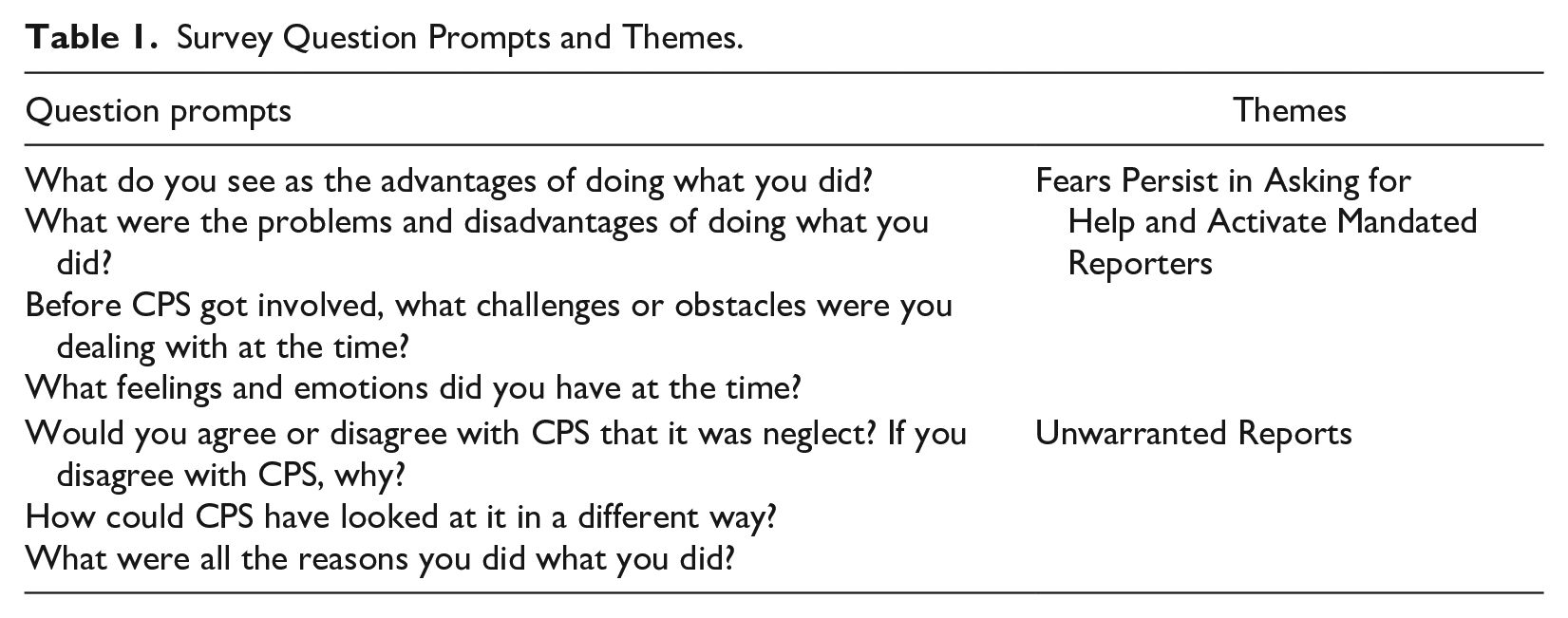
Identified themes (Table 1) concerning how mandated reporting policies have impacted these mom’s lives revolve around feeling punished for having/needing jobs, financial challenges, and blamed for socioeconomic and mental health challenges outside of their control. Below, we highlight salient accounts of mom’s fears in asking for help and the traumatic consequences of mandated reporting from shelter staff, teachers, doctors, social workers, and community members. Most of all, they know the perils of surviving without sufficient financial resources under the threat of surveillance and punishment for their status in our social structure. The survey queries related to mandated reporting policies centered around reasons for initial CPS exposure. Sadly, the moms in this sample have developed an institutionalized language and characterize reports as “Catching a CPS Case.” A series of questions began with the back story that led to CPS oversight and the underlying personal (e.g., mental health challenges) and systemic conditions (e.g., lack of childcare, food and housing insecurities, stressed neighborhoods). Related themes were identified and assessed for nuanced commonalities.
Survey Question Prompts and Themes.
Theme 1: Fears Persist in Asking for Help and Activate Mandated Reporters
Below are accounts from moms 3 that characterize the pervasive fear they have in accessing help or sharing their struggles with mandated reporters. These parents found themselves navigating challenging barriers to optimal parenting and they expressed the overwhelming fear of being under the microscope of mandated reporters at every turn—school, doctors, community members, disgruntled, and abusive partners. Seeking help from reporting professionals is a suboptimal choice for these moms because they are then in danger of being reported to an agency designed to protect children from intentional harm, not structural and systematic marginalization.
Josie
The account below relates to a situation where a mom, Josie, enrolled her child in a low-quality school, unaware of other resources and options for his school setting, and upon going to retrieve the child from school, the teacher didn’t know where the child was. While frantic, this mom found her child wandering down the street on his own. Instead of blame placed on the lack of teacher supervision, Josie ended up under the oversight of CPS, simply because she expressed feeling overwhelmed, which generated a report.
My son walking down the street by himself after I asked the teacher where he was, she didn’t know where he was, a six-years-old. I’m coming from work and I had to run out, found him wandering down the street, (in an urban NYC neighborhood), which was very bad at that time. I was in my twenties. I didn’t understand, I talked to the social worker who ended up calling ACS because I told her I was overwhelmed. I really feel that they should have helped me with resources, helped me to navigate the system, the . . . the choices that I made then I would not make now . . . I never would have taken him to a deplorable school in such a bad area. If I had known I had other resources and other options. I was trying to keep that job . . . I just gave up and I asked my job to lay me off.
Sally
Another mom, Sally, was reported to CPS because she failed to change a Band-Aid on her daughter’s arm over the weekend. She was a single mother, working two jobs and managing a host of extracurricular activities for her child:
Um, there was just so much going on in my life that I didn’t think to stop and check that Band aid, if that makes sense between Friday and Monday. Our weekend didn’t slow down enough for me to stop and be like, oh my daughter had a bandage on her arm, let me make sure I changed it because in my mind she would have just took it off and throw it away and then she needed a new one.
Sally continued to articulate the disadvantages of sharing her struggles with the school professionals:
In my situation, I personally feel like the problems . . . came from me trying to be transparent with the school. Um me doing that, I feel like opened the door for them to ask questions and just . . . based off of an eight-year old’s standpoint . . . but working with the school, I feel like my trust in them put me in this situation.
Lucie
The below account from a mom, Lucie, laments seeking help from her doctors and sees doing so as a disadvantage to mitigate eventual CPS oversight. She was enduring many struggles related to her mental and physical health. On top of all, her son had missed some days of school at the direction of his doctor as he was suffering with asthma and not feeling well.
It’s just you being watched. I mean I hate to say it like that . . . but you have to move differently . . . accordingly because there’s always someone watching you . . . if I make one wrong move, like that’s it . . . and I’m stuck in this situation. I kind of put myself at a disadvantage, which I know might sound crazy, but I mean, seeking help, the mental help that I was seeking, and the physical help that I was seeking from my doctors, and trying to be honest with my doctors about what was going on with me. I opened my whole world up for that, like just that extra layer of surveillance.
Amy
Below is an account from a mom, Amy. The catalyst of her traumatic experiences was that she was sexually assaulted/raped, hence suffering from both emotional and physical trauma, Amy was struggling to care for her children and her 9-year-old boy was consistently truant from school. She expressed having ongoing trouble taking care of the home and providing for her children. She was unable to ensure her child made it to school timely and consistently because she was triggered by the fact that the rape occurred two blocks from his school and so she had a hard time walking him past the area where she was assaulted toward his school. Her depression was debilitating and paralyzed her from taking care of the home and her family. Unfortunately, the lesson she learned was that the people in place she sought to help were sadly the people who caused further traumatic harm of CPS oversight and the worst possible outcome of having her children removed. She wasn’t reunited with her children for 5 years after this experience. Both doctors she sought out for help and the teacher mandated to report the truancy made reports, which opened the door to an ongoing nightmare.
In response to the question: What were the problems and disadvantages of doing what you did? And who would have approved or disapproved of your decision, Amy responded,
The doctor comes to mind because I went to help. And I was honest in my struggle, my mental struggle, that it was hard at the time for me to take care of the children because of what I was going through. I was struggling to take care, you know, to meet all their level of needs. I was struggling and instead of helping, I was, you know, punished. I was punished because he was a mandated reporter. Every place that a person such as I can turn to in the city for help can also be that place that hurts the most because every professional, anybody that’s connected in a professional realm is a mandated reporter and they don’t understand the ins and outs of what is reportable . . . Everybody is that . . . hammer everywhere you go. We struggle to ask for help because help is scary.
In general, the Black moms in this sample overwhelmingly expressed a pervasive distrust of mandated reporters of all kinds. Below are some salient quotes indicating the fear and unrest these moms have while navigating the world with the constant threat of their children being removed for situations and conditions outside of their control.
Rochelle
“That is your support network, right? Your family, your friends, your teachers, your workers, your doctors. Because they are the same ones that are, um, credible messengers. They are the people that are mandated reporters as well.”
Jennifer
“Um, and other outsiders, I would say police, um, doctors, teachers are all mandated reporters. Um, so as parents impacted, the fear of being around mandated reporter means that they will call, um, to try to separate your family.”
Jennifer was asked, thinking of taking the extra shift, please list out all the people in your life that would approve or disapprove. For example, family, friends, teachers, workers, doctors:
Again, I think the people that will disapprove are the ones that are mandated reporters, um and the ones that would approve are people that go through the same situations and understand real life, um, day to day living that happens within our communities.
For each person you mentioned in response to the previous question, why do they come to mind? Please take us through each person, one by one:
Mandated reporters because . . . we just know that they think they will lose their jobs if they do not make these calls. Um, so the reality is that people are afraid of anyone who’s a mandated reporter . . .
Jayda
“Other workers. I don’t tell coworkers. My doctors, doctors probably are mandated reporters. Why would I tell them my information? . . . So I mean doctors and and people outside, outsiders, as I call them. You don’t, I don’t trust them like friends . . . I wouldn’t tell like people who are mandated reporters my business. So yeah, you have to be careful what you say. Everything you say can and will be used against you in life.”
Theme 2: Unwarranted Reports
Mothers are parenting in diverse and precarious circumstances where their decision-making happens in the context of poverty, lack of access to safe or good schools, and insufficient access to many supports (e.g., mental health services). These conditions create a lack of autonomy and impact parenting in response to the constant threat of CPS oversight.
In this mother’s situation, while residing in a shelter, Kenya made a decision to quickly run downstairs and receive her breakfast delivery, instead of waking her children and dressing them to go downstairs, she decided to leave them sleeping. This decision was against the shelter’s rules, observed by a shelter employee, who subsequently called CPS to investigate supervisory neglect, initiating CPS oversight. Had this mom made this decision, for example, in her own home, there would likely have been no report made. She weighed the costs and benefits of her decision in that moment, risked being observed by a shelter worker and decided to make a choice privileged moms have—to let her children sleep. The reporter made the unfortunate and unwarranted decision to expose this family to traumatic CPS exposure when she was already struggling, forced to live in a shelter with her children.
Kenya
At the time, um both of my kids, my four-year-old and my 10-year-old, they were asleep and I had ordered breakfast and instead of just instead of waking them up and making them get dressed to take a quick two minute trip downstairs to get the food . . . the fact that it was ordered, I mean being the fact that was being delivered to me, I decided to just get dressed and run downstairs real quick, grab the food and come back upstairs. I believe if I was in my own home, um this wouldn’t have happened, but um, being the fact that one of the workers saw me come downstairs, she saw me grab the food and go back up there. And that’s another disadvantage of the workers seeing me downstairs without the kids.
Yet another account of an unreasonable CPS report relates to the mom highlighted below (Kamala), who was reported because the teacher couldn’t readily see that her child was properly strapped in a car seat.
Kamala
A teacher accused me of not putting my five-year-old kid in a car seat on the first day, I put her in a new backless booster seat, and she threatened to call CPS. It wasn’t neglect, as the teacher couldn’t just see the booster, so the accusation is not true. I actually put her in a new backless car seat because I felt it was safer than putting her in just a car seat. The disadvantage of what happened was that just anybody couldn’t see in the car backless, and that is why the teacher got the CPS involved.
Lucie
This is an instance when a mom complied with the mandated reporter doctor and kept her child home from school and yet, the teacher mandated to report called CPS with an allegation of neglect.
He missed a couple of days of school because he has asthma, and he wasn’t feeling well. He missed school because he had to go to the doctor, and the doctor said that he should stay out of school for a couple of days . . . I’m a great parent, I love my child, he has autism and I’m extra careful and special with him.
Ashley
As an example of racial bias, this mom experienced an egregious harm of not being acknowledged as the mother of her newborn child due to the color of their skin. Upon calling CPS for an unknown reason, a hospital social worker proceeded to harm her with racist questioning.
The hospital social worker . . . finally came back on, I was able to talk to her and they were saying that they didn’t know who I was and that wasn’t my baby because my baby was too light skinned.
Eve
Unfortunately, many reporters and CPS caseworkers fail to identify parental strengths and rather make judgments based on their own privileges of resources and opportunities. Here, a caseworker admonished a mom, Eve, for having frozen food and not fresh food. The worker failed to recognize the protective decision the mom made to ensure her family had food that would last and not spoil, as well as avoid the expense of purchasing fresh food every few days, that only the privileged among us can do.
So, she would come . . . and say, oh, you don’t have enough food and you might not see food in my fridge, but I have food in my freezer. And that’s because I can’t afford to buy fresh food . . . every few days, right? I don’t have the luxury of time or resources to do that. So, I’m going to buy frozen foods because I know they last longer, and I can cook them whenever I need.
Gina
Yet another unwarranted report occurred with this mom’s account of being reported because she was thought to have been ingesting intravenous drugs when in fact, she was pregnant and donating blood to afford housing costs for her family.
Because I wasn’t showing . . . I was able to donate blood without them knowing that I was pregnant and to pay for rooms when we couldn’t . . . because of that they said that I was using a needles. I’ve never used a needle in my life . . . They didn’t believe that I was going to the blood bank . . . never checked, never followed on anything . . . never drug tested us, nothing.
All the above accounts are heartbreaking and unnecessary reports of Black moms navigating the lower socioeconomic echelon of our society and yet, they are further harmed by the policies deemed necessary to protect their children from harm. These are examples of how shelter staff, doctors, mental health professionals, and teachers are by law, unavoidably weaponized by CPS mandated reporting policies.
Discussion
The consequences of CPS impacts bleed into other systems’ exposure and oversight experiences (Harp & Bunting, 2020), which results in over-surveillance and occurs across all domains where mandated reporters are urged to “protect” children from the unavoidable conditions of their parents (Fong, 2019). The experiences of families of color exposed to and interacting with CPS, and other surveillance (e.g., carceral, educational, shelter, welfare) systems, illustrate the systemic harms of these systems and a clear need for change (Fong, 2019; Harp & Bunting, 2020; Kohler-Hausmann, 2015; Roberts, 2022). There is increasing scholarly attention to racism and child welfare systems, some of which focus on mandated reporting laws in various settings (e.g., health care), and call for a clearer assessment of harm mindful of potential biases in assessment and decision-making. Many families are referred to CPS without reflection on the sociopolitical and historical contexts in which families of color live and ways in which systemic racism is embedded in the reporting processes (Berkman et al., 2022; Cénat et al., 2021; Kohler-Hausmann, 2015; Roberts, 2014). The decision points throughout CPS exposure are rife with the possibility of implicit or explicit biases, particularly when the assessment tools are inattentive to contextual experiences, such as structural and systemic discrimination, rather than focusing on individual-level deficiencies (Feely & Bosk, 2021).
Families of color and those with lower socioeconomic status are surveilled and impacted very differently than their White counterparts (Dettlaff et al, 2020; Slack & Berger, 2017). Systemic racism and oppression inherent in CPS are underpinned by a salient, harmful power dynamic. For instance, assessment protocols have been developed by people in positions of power (primarily white people) who lack an understanding of the impacts of generational racialized poverty on CPS exposure risks or the lived experiences of families impacted by the fear of CPS. By nature, such services mandate an accusatorial approach and intrusive judgment that evaluates appropriate parenting based on privileged Western Eurocentric norms without consideration of societal positionality.
The findings from our study show unnecessary harms inflicted upon Black mothers resulting from mandated reporting laws, CPS processes, and the inequitable risk of CPS exposure Black families experience. First, CPS oversight is excessive, inherently coercive, and assigns motive to parents’ behaviors while ignoring the complex systems and circumstances families of color live and parent within (Colvin & Howard, 2022; Fong, 2020). Second, interactions with CPS are traumatic and impact family dynamics, experiences of joy, and a parent’s sense of autonomy and empowerment (Callejas et al., 2021; Colvin & Howard, 2022; Merritt, 2021). Third, educational, medical, and family court systems can be weaponized through mandated reporting and serve as a gateway to CPS surveillance. Finally, the intrinsic power dynamics between mandated reporters, and CPS decision-makers, and the family under scrutiny is harmful and exacerbates the diminished control among historically oppressed families. Parental behaviors should be considered as a function of available resources, environmental contexts, and histories of systemic racism. Further, parental behaviors related to poverty and oppression should not be adjudicated as maltreatment.
Those with the power and privilege to pass judgment on optimal parenting are those who ultimately make the decisions about child rearing and family management. Parents in these circumstances have very little parental autonomy in raising their families. Moreover, as noted above, reporting mandates place limited consideration of parental intent associated with neglectful parental behaviors in socioeconomic and emotional contexts. The impact of low socioeconomic status plays out, especially in the lack of opportunities, support, and a dearth of tangible resources. Poverty, a form of trauma, is directly related to poor functioning and suboptimal behavioral choices. It is also critical to acknowledge that experiences with poverty are intensified by structural racism in practice (Feely & Bosk, 2021), inclusive of mandating reports from professionals and others. In addition, mandated reporting is not immune to the discriminatory practices insidious in financial assistance programs, including housing support, quality childcare, educational opportunities, and needed behavioral and mental health service accessibility.
The intersection of populations of color and those with low socioeconomic status results in systems’ over-surveillance and biased judgments regarding child maltreatment risk (Feely & Bosk, 2021). This intersection can be understood as racialized poverty in the United States and is associated explicitly with Black/African American families involuntarily living in poverty and suffering systemic oppression based on the skin they live in (Merritt, 2021a, 2021b). Racialized poverty shapes negative perceptions of historically disenfranchised populations seeking and in need of equitable support mindful of their marginalized contexts. These perceptions are embedded in the institutional procedures and policies of bodies responsible for protecting children and inform the actualization and processes of surveillance, which begin with initial mandated reports.
Parents who face the daily reality of racialized poverty are not intentionally neglecting their children but are often simply trying to provide the best they can under incredibly difficult circumstances. It is essential that mandated reporters—from teachers to health care professionals to social workers—understand that experiencing systemic racism and poverty is not a choice, and thus the consequences should not be unfairly attributed to parental negligence. Instead, these systems should acknowledge the racial and economic inequalities that shape parenting experiences and seek to provide support rather than punishment. Parental behavior is judged as appropriate based on the norms of those privileged without consideration of one’s societal positionality, and essentially, parents are pathologized for living in poverty as minoritized communities. Overwhelmingly, Black parents and other parents of color experience CPS oversight, and intrusive surveillance as traumatic that serves to exacerbate past experiences with racism and discrimination (e.g., stigma, shame, loss of control, intimidation, overwhelming). The imbalance between those in positions of judgment and parents under scrutiny is striking. The coercive nature of CPS surveillance is socially unjust and pervasive in all components of CPS delivery and goal identification, with little to no consideration of intergenerational and past experiences with racism and discrimination (Dettlaff et al., 2020; Hertz, 2005; Roberts, 2022).
Racial bias acknowledgment, understanding and training is critical for those mandated to report suspicions of child maltreatment, as it helps address how unconscious biases can influence decisions that impact the lives of both children and parents. Training alone is not enough, it must also be accompanied by a concerted effort to encourage reporters to reflect on their biases and then be held accountable to ensure that decisions are consistently made with empathy, fairness, and a commitment to social justice.
Furthermore, a more supportive and empowering approach to child welfare is necessary—one that first embraces family welfare and in doing so, reduces punitive oversight and urges efforts to address structural oppression. This approach should be grounded in a phenomenological understanding of parents’ lived experiences, recognizing the ways in which historical and ongoing discrimination shape their interactions with mandated reporters set up to weaponize CPS policies.
Instead of focusing on reporting (much of which is unwarranted) and punitive measures, we must invest in stabilizing supports that meet the needs of families and prioritize respect and kindness. A policy shift that de-emphasizes surveillance and focuses on strengthening families through equitable resources, respect, and community-building will ultimately serve the best interests of children. To make meaningful progress, we must acknowledge the role of systemic oppression in all levels of child welfare oversight and take action to dismantle those inequities. Families need support, not punishment—empowerment, not surveillance—and our policies must reflect that fundamental truth.
Implications
Systems Approach and Biases Education
Current policies (e.g., mandated reporting) are a real risk factor for Black parents/moms to be exposed to and negatively impacted by CPS oversight, notably systemic racism embedded and codified in the child welfare system in all its assessment and decision processes. There is increasing scholarly attention to racism and child welfare systems, some of which focus on mandated reporting laws and call for a clearer assessment of harm informed by the potential of biases in the decision to refer families to CPS without reflection on sociopolitical and historical contexts in which families of color live (Berkman et al., 2022).
Existing guidance includes a call for a dynamic cross-system approach, holding multiple systems accountable to address the broader societal ill of pervasive poverty and the intersectional structural underpinnings of racial disparities related to CPS outcomes (Fong, 2019; Rollins et al., 2024; Simon et al., 2022). Furthermore, research calls for stricter case assessments requiring non-punitive support from CPS coupled with alternative resources for mandated reporters (Fong, 2019) earnestly attempting to assist struggling families. To date, scholars are challenged with accurately defining and measuring racial bias, which hinders the development of effective implicit bias trainings and anti-racist pathways, specific to CPS-impacted families.
A Refreshed Framework
A forward-thinking report by Chapin Hall comprehensively sets forth a useful framework to envision ideal supportive initiatives needed to correct what they call the “design flaw” of CPS, noting child welfare is not designed to address unmet family needs and persistent adversity (Rollins et al., 2024). When these needs are left unattended to, mandated reporters are activated, beginning the life trajectory of experiencing unhelpful CPS interventions and harmful surveillance. Current guidance on meaningful holistic remedies to address the flaws in family serving initiatives center the need for upstream prevention spearheaded by community focused services that proactively address needed familial resources, the lack of which that bring attention to CPS oversight (Rollins et al., 2024). These approaches are needed by advocates, policy-makers, and leaders across local, state, and federal levels in collaborative efforts to disrupt the mismatch between the goals of CPS and impacted families (Rollins et al., 2024). As exemplars, many families reported to CPS for investigation are not actually provided needed services, available supports are inefficiently resourced and/or inaccessible to those most in need, and the familial and mental health stressors coupled with poor child developmental outcomes intensifies hopelessness and fear of continued CPS exposure, surveillance, and stigma.
Our delay of correcting course is unacceptable and harmful on an ongoing basis. The longer we promote biased decision-making and minimize the importance of micro-level anti-bias training, and structural risks (e.g., racism, poverty) associated with biases, efforts to improve and design systemic innovations will be shortsighted and result in misinterpreted outcomes. The decision points throughout the course of CPS exposure 4 are rife with the possibility of implicit or explicit biases, particularly when the assessment tools are inattentive to contextual experiences, such as structural and systemic racism, rather only focusing on individual-level deficiencies. Scholars have critiqued tools, such as the Structured Decision-Making Model (SDM), an actuarial-based risk assessment (RA) 5 as incomplete to mitigate the impact of biases that influence reporting at the community level and among CPS personnel at decision-making points (Feely & Bosk, 2021). Essentially, the exclusion of structural factors (e.g., racism, economic conditions) and those unchangeable, such as race and ethnicity has caused over-attention to other factors as proxies, resulting in erroneous RAs (Feely & Bosk, 2021).
Limitations
Whereas this study is one of a few that qualitatively provides empirical evidence of the harmful consequences of mandated reporting laws in this country, there are a few notable limitations. For instance, these study participants were recruited in a purposeful manner from existing child maltreatment prevention agencies, and therefore, these results cannot be acceptably generalizable and we make no inflated notion of external validity; however, these qualitative accounts are empirical evidence documenting the lived experiences of CPS-impacted Black mothers. In addition, despite the existence of shared race, gender identity, and maternal roles among the PI and respondents, positionality differences based on socioeconomic status might have influenced an element of social desirability within the interviews.
Conclusion
Child welfare is not designed to address unmet family needs and persistent adversity. Policies such as mandatory reporting are a risk factor for Black moms to be exposed to and negatively impacted by CPS oversight, given systemic racism is embedded in all CPS assessments and decisions. The stigmatizing message is—“family surveillance is needed because you are a poor minority.” Mandated reporting laws are intended to protect children, but they must be examined through a lens of social justice to mitigate the disproportionate harm to families, especially those from marginalized backgrounds. While these laws are a necessary component of child welfare oversight, it is crucial to recognize the unintended consequences of minimizing the contextual and historically systemic inequities faced by certain populations of parents. Families, particularly those affected by racialized poverty, often experience a complex web of challenges that intersect with child-rearing assessments, which are too frequently tied to socioeconomic status and racial disparities.
This study inspires attention to social justice with a renewed effort to support and empower parents by decreasing punitive oversight and restoring familial control to parents with equitable resources and support for optimal functioning. There should be no circumstances where parental behaviors related solely to poverty and oppression are treated as intentional maltreatment (Dickson, 2009; Ketteringham et al., 2016; Leotti et al., 2023). Severe policy revisions that encourage and mandate an unbiased approach beginning with mandated reporting policies and throughout CPS exposure 6 are sorely needed. This can only be done by acknowledging structural oppression inherent in all systems and service efforts and encourage supports, rather than reports. Including parental voices with a trauma lens in policies can meaningfully address the impact of oppressive system oversight. To fill some gaps, forward-thinking revisions to reporting protocols should be based on parental experiences regarding challenges to optimal parenting outside of their control, such as long histories of racial and financial marginalization.
Footnotes
Disposition editor: Cristina Mogro-Wilson
Declaration of Conflicting Interests
The author(s) declared no potential conflicts of interest with respect to the research, authorship, and/or publication of this article.
Funding
The author(s) disclosed receipt of the following financial support for the research, authorship, and/or publication of this article: Funding for this project is from the National Institute of Child Health and Human Development/Center for Research for Mothers and Children (NICHD) R21 mechanism; study title: An Elicitation Analysis of Parental Perspectives Regarding Child Neglect (R21, 8/19-8/22).
