






Abstract
This study investigated the effectiveness of positive psychotherapy-based group counseling on parents’ persevering hope and self-compassion. Sixty-four parents (32 experimental, 32 control; mean age 37.63 years) participated in a fully experimental design with pretest, counseling intervention, post-test, and two follow-ups over 1.5 years. Results indicated significant improvements in hope and self-compassion for the experimental group at all stages, with outcomes consistently superior to those of the control group. These findings demonstrate that long-term, follow-up-based positive psychotherapy is an effective intervention for enhancing parents’ psychological resilience and emotional health. The study contributes to family counseling practice and research by providing evidence of the intervention’s efficacy.
Introduction
Today’s rapidly changing social dynamics have made parenting roles more complex and multidimensional than in the past (Sağlam, 2025; Uzun, 2025). As a result, parents now need not only to meet their children’s developmental needs but also to develop their own psychological resilience and internal resources (Cheraghian et al., 2023). Furthermore, the stress and uncertainty of modern life significantly challenge parents’ psychological resilience during child-rearing (Essler et al., 2021). In light of these challenges, positive psychological resources such as hope (Snyder, 2002) and self-compassion (Neff, 2011) strengthen parents’ internal relationship with themselves and, consequently, help them develop healthier, more supportive relationships with their children (Aydın Sünbül & Aslan Gördesli, 2020; Khosrobeigi et al., 2022).
Hope is the motivation to create paths to achieve one’s goals and to use these paths (Snyder, 2002). Hope is more than positive thinking. It is also the determination to develop and carry out strategies to achieve goals (Snyder, 2005). Persevering hope is an individual’s determination to pursue their goals while maintaining positive expectations for the future. In psychology, this concept combines hope with perseverance (Rueger et al., 2023). For parents, persevering hope means staying motivated to set goals for their children’s development, devising ways to reach those goals, and using those methods. Hopeful parents expect positive outcomes for their children’s future and actively work to realize these expectations (Karababa, 2018).
Hope is a key mechanism for parents to achieve their parenting goals. It allows them to find effective ways forward despite difficulties and maintain the willpower to continue (Snyder, 2000). However, self-compassion is needed to keep this mechanism working well. Self-compassion provides the emotional support people need to increase their resilience when they face mistakes or failures. It lets them treat themselves kindly (Neff, 2003b).
Self-compassion is being kind, understanding, and supportive toward oneself, even in the face of pain, inadequacy, or failure (Neff, 2011). It means showing yourself the same care you would give a good friend in hard times (Neff, 2003b). Mindfulness in parenting is noticing, observing, and accepting strong emotions like stress, anger, guilt, or regret that arise from parenting. Instead of over-identifying with or suppressing these emotions, mindfulness encourages acceptance (Neff & Faso, 2015).
The parenting journey is full of intense emotions. Psychological resources such as hope (Snyder, 2000) and self-compassion (Neff, 2003b) are fundamental skills that support the well-being of both the parent and the child on this journey. Notably, hope and self-compassion are two important resources that reinforce each other in parenting. For instance, self-compassion reduces self-criticism and helps parents adopt a more balanced, accepting attitude, which in turn nurtures their sense of hope (Garcia et al., 2022). For example, a study of parents of children with special needs found that self-compassion enhanced psychological resilience and increased hope (Lloyd & Hastings, 2009). In addition, online self-compassion programs have been shown to strengthen parents’ hope and resilience (Demirbağ et al., 2025). Similarly, parents with higher self-compassion reported greater hope, which supported their psychological strength (Aydın Sünbül & Aslan Gördesli, 2020). Furthermore, self-compassion helps parents manage perfectionistic tendencies and develop healthier, more hopeful attitudes (Öztürk Belet, 2025). Finally, studies on parental burnout and self-compassion show that parents with higher self-compassion are less affected by burnout and better able to maintain hope (Kılıç, 2025).
Developing these skills needs an approach focused on strengths, life meaning, and internal resources. Positive psychotherapy provides this kind of support. It lets parents restructure their hopes and grow more compassionate toward themselves (Demirbağ et al., 2025; Yanık & Arslan, 2024). Positive psychotherapy is a holistic method for improving psychological well-being through focusing on people’s strengths (Seligman et al., 2006). This approach helps individuals find meaning in life, rebuild hope, and become more self-compassionate (Rashid, 2015). Especially in group counseling, people interact with others who have similar experiences. This interaction brings social support and deepens self-awareness (Peseschkian, 2012).
Positive psychotherapy is a holistic way to boost psychological well-being by focusing on people’s strengths (Seligman et al., 2006). This approach helps people find meaning in life, rebuild hope, and develop greater compassion for themselves (Rashid, 2015). In group psychological counseling, individuals gain social support and deepen inner awareness through contact with others facing similar situations (Peseschkian, 2012).
The main goal of this study is to help parents build hope and self-compassion through group counseling based on positive psychotherapy. Parenting involves emotional burdens like intense stress, guilt, anger, and regret (Uzun, 2025). Increasing parents’ psychological resilience is crucial for their own well-being and their relationships with their children (Patterson, 2002).
For this study, the research supported parents’ motivation to set goals, find ways to reach those goals, and use those ways, based on Snyder’s concept of hope (Snyder, 2000). At the same time, the group helped parents improve self-kindness, a sense of common humanity, and mindfulness skills. This approach aimed to foster a more understanding, non-judgmental attitude toward themselves (Deniz et al., 2012).
Group work using the balance model of positive psychotherapy helped parents find balance in life, recognize their internal resources, and rebuild their hope (Demirbağ et al., 2025; Püsküllü, 2024; Yanık & Arslan, 2024; Zenginal, 2021). Through group dynamics, the process aimed to boost parents’ well-being with social support, empathy, and a sharing environment.
The hypotheses to be tested by the researcher in this context are as follows:
Method
This study employed a true experimental design, considered one of the strongest scientific research methods for establishing causal inference (Babbie, 2020). In this design, participants are randomly selected and assigned to conditions. This ensures that groups are comparable and that observed effects can be linked to the intervention.
Participants were recruited and randomly assigned to either the experimental or the control group. Random assignment was used to minimize selection bias and strengthen the internal validity of the research. The experimental group received the researcher’s 12-week positive psychotherapy-based group counseling program, while the control group did not receive any intervention during the study period.
The intervention program is presented in Table 1. This design allows for testing the causal effect of the independent variable (participation in the intervention program) on the dependent variables (hope and self-compassion levels).
Group Counseling Program.
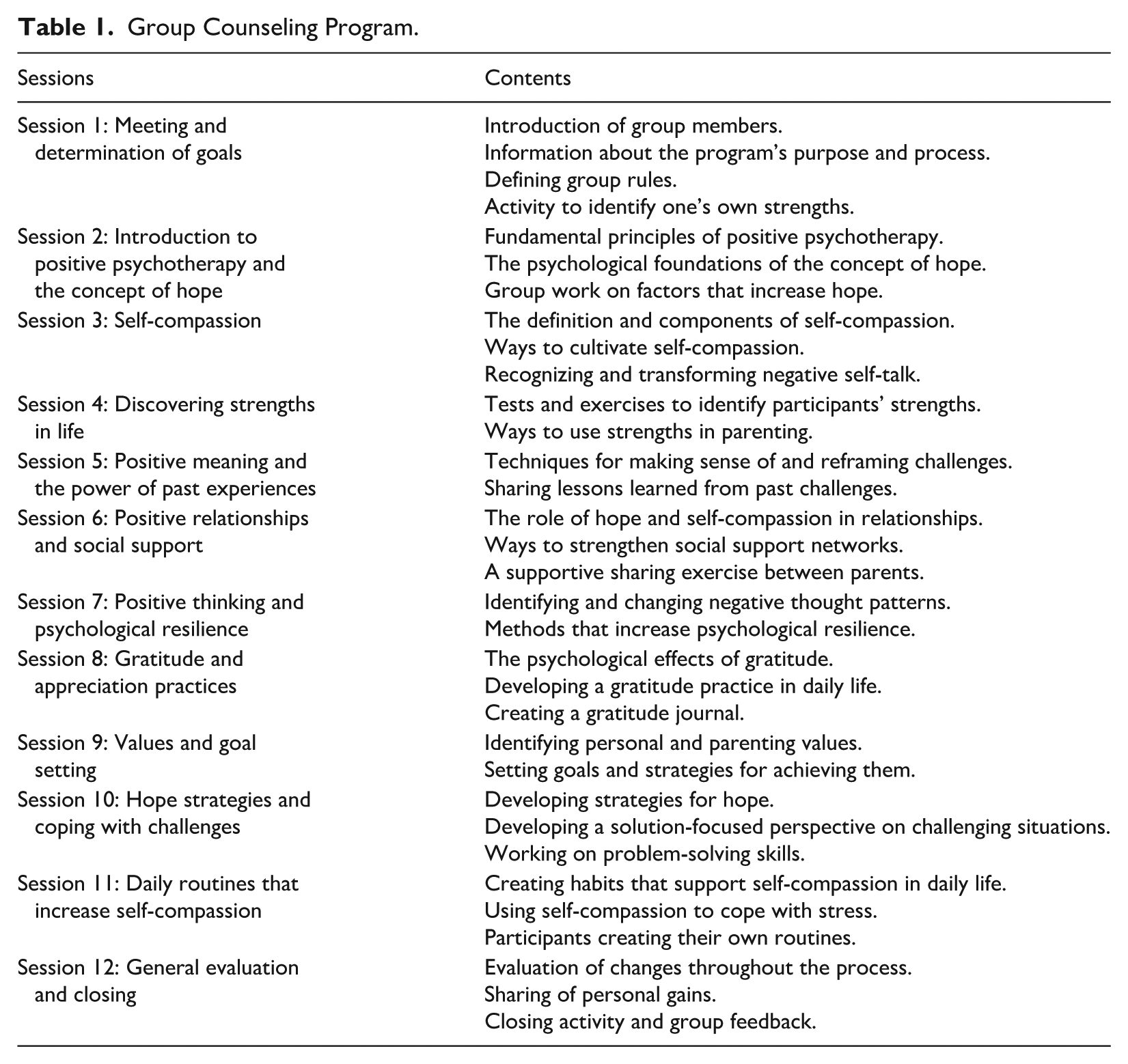
In the first session, participants were introduced to one another and informed about the program’s purpose and process. Group rules were established, and a safe environment for sharing was created. Activities were conducted to help participants recognize their own strengths. For example, the exercise “share the parenting moment in which you felt strongest” was implemented (Leszcz, 2020).
In the second session, an introduction to positive psychotherapy and the concept of hope was provided, along with its core principles. The psychological foundations of hope were explained, and group activities facilitated discussions on factors that enhance hope. For instance, the exercise “setting small but meaningful goals for the future” was carried out (Snyder et al., 2002).
The third session focused on the definition and components of self-compassion, as well as strategies for cultivating it. Exercises were conducted to raise awareness of negative self-talk and to transform it into more compassionate expressions. For example, the activity “reframe a self-critical statement into a more compassionate expression” was implemented (Germer, 2025).
In the fourth session, exercises were conducted to identify participants’ strengths and explore how they could be applied to parenting. For example, the activity “share a situation in which you approached your child with patience” was carried out (Waters, 2017).
The fifth session emphasized positive meaning-making and the power of past experiences. Techniques for reframing and reinterpreting challenges were taught, and participants shared lessons learned from previous experiences. For instance, the exercise “reinterpret a difficult parenting experience” was implemented (Park, 2010).
In the sixth session, the role of positive relationships and social support in fostering hope and self-compassion was discussed. Strategies for strengthening social support networks were introduced, and supportive sharing activities among parents were conducted. For example, the exercise “write an encouraging message to another parent” was implemented (Crockenberg, 1988).
In the seventh session, positive thinking and psychological resilience were addressed, with a focus on recognizing and transforming negative thought patterns. Methods for enhancing resilience were taught, and participants engaged in exercises such as “replacing a negative thought with a positive alternative” (American Psychological Association [APA], 2024).
The eighth session centered on gratitude and appreciation practices. The psychological effects of gratitude were explained, and strategies for cultivating gratitude in daily life were introduced. Participants created their own gratitude journals, for example, through the exercise “write down three things you are grateful for today” (Watkins et al., 2004).
In the ninth session, values and goal-setting were emphasized. Participants identified their personal and parenting values and developed goals and strategies aligned with these values. For instance, the activity “identify the most important value in your parenting and write a goal consistent with it” was implemented (Koestner et al., 2020).
The tenth session focused on hope strategies and coping with challenges. Strategies for fostering hope were introduced, and participants were encouraged to adopt a solution-focused perspective. Exercises aimed at strengthening problem-solving skills were conducted, such as “reframing a problem experienced with one’s child from a solution-focused perspective” (Lazarus, 1999).
In the eleventh session, daily routines that enhance self-compassion were explored. Participants learned how to establish habits that support self-compassion in everyday life and how to apply self-compassion in coping with stress. They designed their own routines, including practices such as “ending the day by saying a compassionate sentence to oneself” (Barnett & Homany, 2022).
The twelfth session involved a general evaluation and closure. Changes experienced throughout the program were assessed, and participants shared their personal gains. A closing activity and group feedback were conducted, for example, through the exercise “share the most valuable thing you gained from the program” (Corey, 2015).
The positive psychotherapy-based group process was conducted in a way that encouraged active participation and placed participants’ strengths at the center. Throughout the process, participants were closely supported, and a motivating, encouraging, and supportive approach was adopted to sustain engagement. Group sessions provided a safe environment for participants to share experiences, learn from one another, and enhance their psychological resilience (Corey, 2015). Positive psychotherapy focuses not only on reducing symptoms but also on fostering individuals’ sense of meaning and strengthening their personal resources (Peseschkian, 2012). Therefore, the group process offered a multidimensional mechanism of change that supported participants’ psychological well-being both individually and within the parenting context.
The effect of the intervention was evaluated by comparing pretest, post-test, and two follow-up tests across both groups (Sığırcı, 2023).
Participants and Procedure
The primary aim of this study is to examine the effectiveness of a group psychological counseling process based on the positive psychotherapy approach in fostering hope and self-compassion among parents. The parenting process can involve intense emotional burdens such as stress, guilt, anger, and regret (Urbanowicz et al., 2023). Therefore, evaluating the effectiveness of this intervention in enhancing parents’ psychological resilience is critically important both for supporting their individual well-being and for maintaining healthy relationships with their children.
For this study, inclusion and exclusion criteria were carefully defined to ensure ethical compliance and scientific validity. Participants were required to voluntarily agree to participate in the research and to provide written informed consent. They also needed to be actively engaged in parenting at least one child, be able to regularly attend and participate in the study—which was planned to last approximately 18 months—and have physical and psychological health conditions that would not prevent their participation. Conversely, individuals who were unwilling to participate or refused to sign the consent form, who could not commit to regular participation throughout the study period, or who had serious health problems that would hinder their involvement were excluded. In addition, those without parenting experience or with any conflict of interest with the research team were not eligible to participate.
During the recruitment process, 75 parents applied to join the study. Of these, 11 were excluded based on the criteria outlined above, primarily due to health-related limitations or inability to commit to the study schedule. The remaining 64 participants met the inclusion criteria and were randomly assigned to either the experimental group or the control group. This careful screening and assignment process was designed to safeguard the rights and well-being of the parents while also ensuring the reliability and validity of the study outcomes.
All ethical procedures for the research were fulfilled. The study was conducted with parents of children enrolled in preschool institutions. The preschool period was deliberately chosen because parents often feel more vulnerable in terms of hope and self-compassion during this stage. Previous literature indicates that parents of preschool-aged children experience challenges related to psychological resilience, self-compassion, and hope, which directly influence their parenting attitudes and children’s developmental processes (Meriç, 2020). Moreover, expectations and anxieties regarding the educational process are particularly high during the preschool years, increasing the need for psychosocial support (Bada, 2016).
The participants in this study were mothers and fathers of children aged 3 to 6 years attending local preschools, mostly between 25 and 40 years old, with educational backgrounds ranging from primary school to university degrees. The majority were married and living in nuclear-family structures, while a smaller proportion came from extended-family households. Recruitment was conducted transparently and ethically through preschool administrators, parent meetings, and brochures, after which parents who expressed interest applied voluntarily and were screened according to inclusion and exclusion criteria. Ultimately, 64 eligible parents (32 in the experimental group and 32 in the control group) were randomly assigned, with the experimental group receiving a positive psychotherapy-based group counseling program and the control group receiving no intervention. The sample consisted of 37 women and 27 men, with a mean age of 36.2 years, none of whom had a psychiatric diagnosis. Educationally, 11 had completed primary school, 19 middle school, 26 high school, and 8 university. Written informed consent was obtained from all participants, and the Persevering Hope Scale and Self-Compassion Scale were administered face-to-face. The inclusion of preschool parents was based not only on children’s developmental characteristics but also on the psychological vulnerability parents experience during this stage, as studies highlight the critical role of parental hope in supporting children’s socio-emotional development (Karakaya Dohman & Ömeroğlu, 2025).
The research process was designed and implemented within an experimental framework. Initially, pretests were administered to both the experimental and control groups to determine baseline levels. Following the pretest, the experimental group participated in a 12-week intervention program. Upon completion of the program, post-tests were administered to both groups to evaluate the short-term effects of the intervention.
Subsequently, a follow-up test (Follow-up 1) was conducted 6 months after the post-test to assess the persistence and sustainability of the intervention effects. Nine months after Follow-up 1, a second follow-up test (Follow-up 2) was administered, thereby providing data on the long-term effects of the intervention.
Altogether, the research procedures—including pretest, intervention program, post-test, and two follow-up tests—were completed over a total period of 18 months. This structured process enabled the systematic evaluation of both the short- and long-term effects of the intervention.
Within the research design, the experimental and control groups were formed using randomization. Randomization was employed to prevent systematic differences between groups and thereby enhance internal validity (Shadish et al., 2002). In addition, potential confounding variables (such as parents’ educational levels) were controlled for during data collection, ensuring balanced group distributions. This approach strengthened the attribution of the findings solely to the intervention applied.
The study was conducted in a disadvantaged region characterized by low socioeconomic status. In this context, participants were observed to be highly motivated to receive psychological support services. The literature emphasizes that parents living in disadvantaged areas tend to be more willing to participate in psychosocial support programs (Conger & Donnellan, 2007; McLoyd, 1998). Consequently, no participant attrition occurred during the research process, and all volunteers completed the study. The absence of attrition contributed to the comprehensiveness of the analyses and enhanced the reliability of the results.
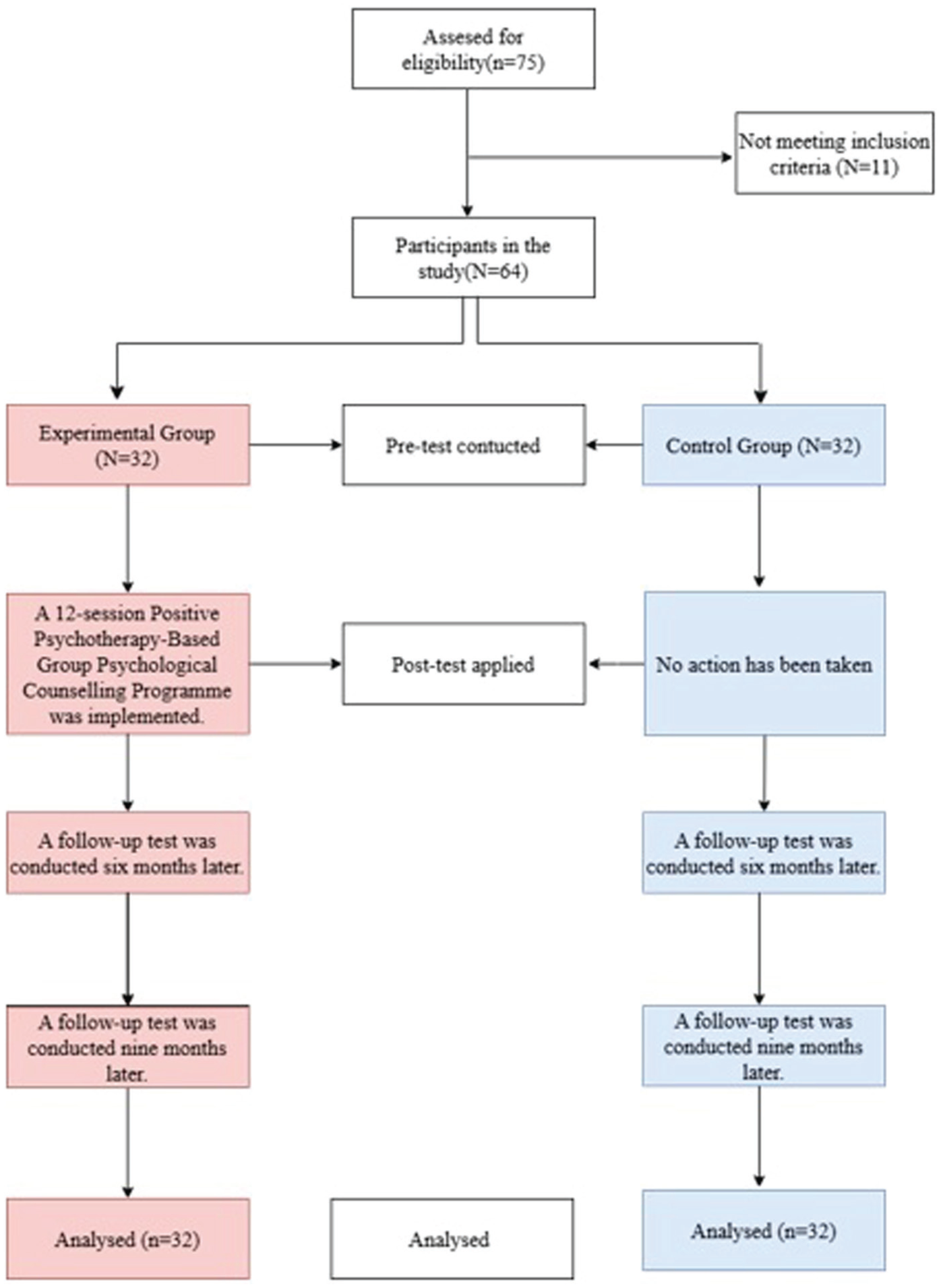
Participant Flowchart.
In conclusion, methodological rigor was ensured through randomization and the control of confounding variables. Moreover, the high level of participant motivation in the disadvantaged region preserved sample integrity. These factors strengthened both the internal validity of the findings and their applicability to interventions targeting disadvantaged groups.
Measures
Personal Information Form
A personal information form consisting of three questions was prepared by the researcher to assess participants’ gender, age, and education level.
Persevering Hope Scale
It was developed by Rueger et al. (2023). The adaptation to the Turkish language was carried out by Ekşi and Başol (2023). The scale consists of four items and a 5-point Likert-type scale. The analysis results showed that the fit index values were goodness-of-fit index (GFI) = .999, comparative fit index (CFI) = 1.000, Tucker–Lewis index (TLI) = 1.007, standardized root mean square residual (SRMR) = 0.0054, root mean square error of approximation (RMSEA) = 0.000, and χ2/df = 0.469, p < .01, indicating that the scale showed good fit in a single-factor structure. Cronbach’s alpha coefficient for internal consistency reliability was .857.
Self-Compassion Scale
It was developed by Neff (2003a). Adaptation studies for the Turkish language were conducted by Deniz et al. (2008). The scale consists of 24 items on a 5-point Likert-type scale. The analysis yielded the following fit indices: c2 = 1523.02 (standard deviation [SD] = 299, p < .01), (c2/SD) = 5.09, RMSEA = 0.123, root mean square (RMS) = 0.128, standardized RMS = 0.255, GFI = 0.692, and adjusted goodness-of-fit index = 0.638. The scale’s internal consistency coefficient was .89, and the test–retest correlation was .83.
Analyzing the Data
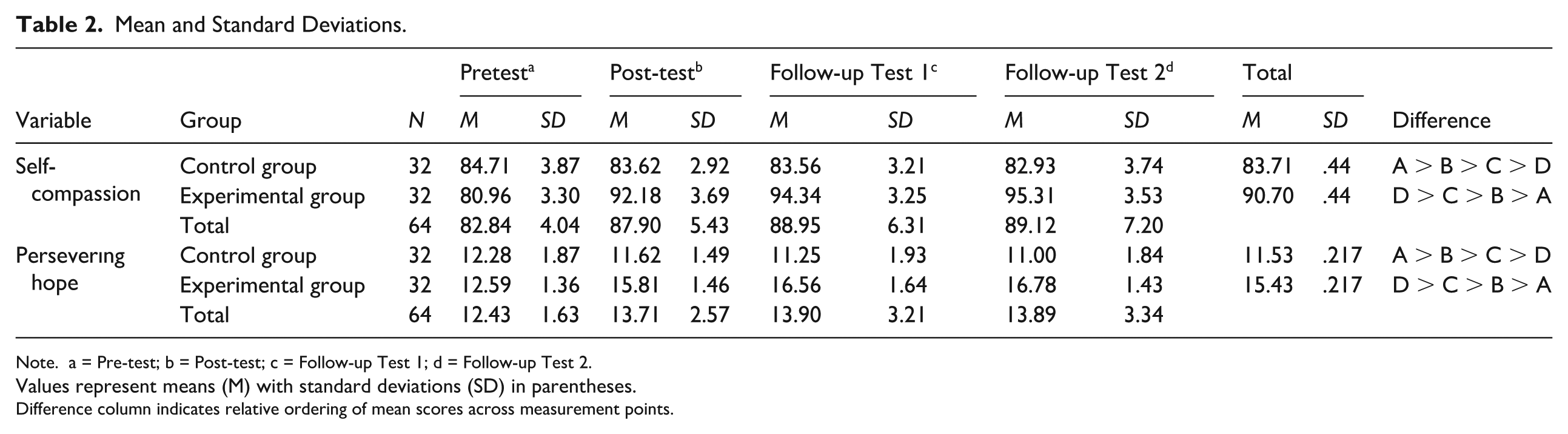
SPSS 23 was used to analyze the data. Skewness and kurtosis were examined to assess the normality of the data. Skewness values between –1.5 and +1.5 indicate that the assumption of normality was met (Tabachnick & Fidell, 2013). The Levene test was performed to determine whether the variances met the assumption of homogeneity. All values greater than .05 indicate that the variances were homogeneously distributed (Field, 2009). Box’s M test was used to examine the assumption of homogeneity of covariance matrices. Box’s M test results of p > .05 indicate that this assumption was met (Field, 2009). A mixed-design analysis of variance (ANOVA) was used to determine differences in the pretest, post-test, Follow-up Test 1, and Follow-up Test 2 scores between the control and experimental groups. The results are shown in Table 2.
Mean and Standard Deviations.
Note. a = Pre-test; b = Post-test; c = Follow-up Test 1; d = Follow-up Test 2.
Values represent means (M) with standard deviations (SD) in parentheses.
Difference column indicates relative ordering of mean scores across measurement points.
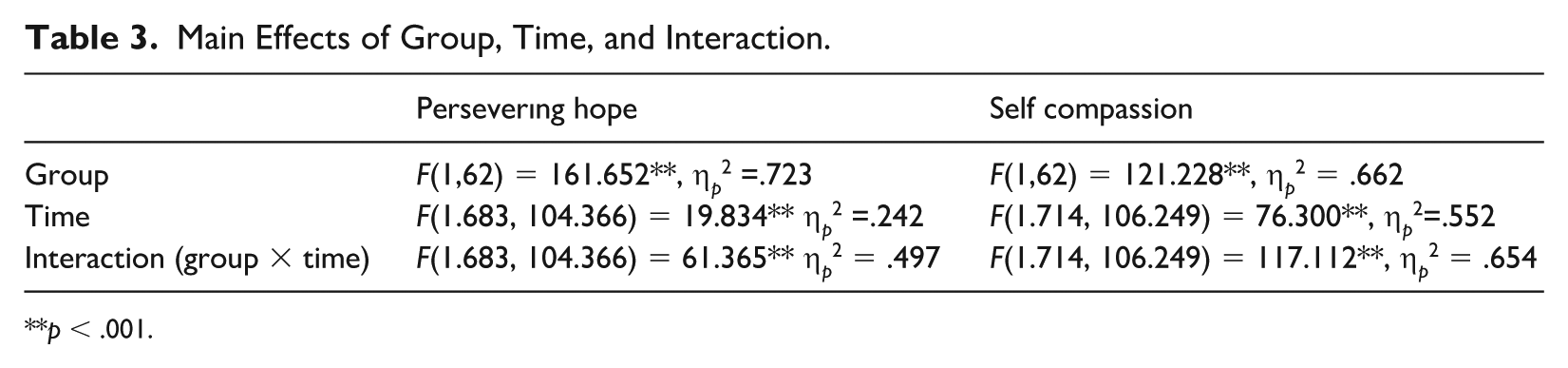
To test the effectiveness of the Strengthening Hope intervention, comparisons were made between the experimental and control groups at pretest, post-test, Follow-up Test 1, and Follow-up Test 2. A mixed-design ANOVA was used. First, the assumptions of the mixed-design ANOVA were tested. Skewness and kurtosis values were examined to test the assumption of normal distribution. The pretest had a skewness of 0.500 and a kurtosis of −0.062; the post-test had a skewness of –0.064 and a kurtosis of –1.267; the Follow-up Test 1 had a skewness of –0.143 and a kurtosis of –1.306; and the Follow-up Test 2 had a skewness of –0.149 and a kurtosis of –1.381. Skewness and kurtosis values between –1.5 and +1.5 indicate a normal distribution (Tabachnick & Fidell, 2013). Then, Levene’s test statistics were examined to test the homogeneity of variances in the strengthening hope scores of the experimental and control groups obtained from the pretest, post-test, Follow-up Test 1, and Follow-up Test 2. The Levene test statistics p values were found to be .16 for the pretest, .57 for the post-test, .22 for Follow-up Test 1, and .06 for Follow-up Test 2. These values indicate that the assumption of homogeneity of variances was met. Box’s M test was used to examine the assumption of homogeneity of covariance matrices. According to the result of Box’s M test, F (10, 18 377) =1.60, p =.10, it was concluded that the assumption of homogeneity of covariance matrices was met. Mauchly’s test statistic was used to test the assumption of sphericity. It was observed that the values obtained from Mauchly’s test violated the assumption of sphericity, χ2 (5) = 70.98, p = .000. It has been stated that the Greenhouse–Geiser correction can be used in cases where this assumption is not met (Girden, 1992). Therefore, the Greenhouse–Geiser correction values are reported in Table 3.
Main Effects of Group, Time, and Interaction.
p < .001.
The results of the mixed-design ANOVA test were examined. These values are presented in Table 2. The time variable was found to have a significant effect on strengthening hope scores, F (1.683, 104.366) = 19.834, p< .001, ηp2 = .242. In other words, when the group variable was not included in the analysis, at least one of the pretest, post-test, Follow-up Test 1, and Follow-up Test 2 measurements differed significantly. The effect of the group variable on strengthening hope scores was found to be significant, F(1,62)= 161.652, p < .001, ηp2 = 723. Based on this result, when the experimental and control groups were compared for changes in hope scores without accounting for time, a significant difference was found. The interaction effect of the time and group variables was also significant, F(1.683, 104.366) = 61.365, p < .001, ηp2 = .497.
After testing the significance of the main effects, a post hoc analysis was performed. The Benferroni and Tukey corrections were used to control for the probability of type I error.
Considering the changes over time within the group, it was concluded that the final test score of the experimental group (M = 15.81, SD = 1.46) was significantly higher than the pretest score (M = 12.59, SD = 1.36) (p < .001, 95% confidence interval [CI] = [2.20, 4.23]). The Follow-up Test 1 score of the experimental group (M = 16.56, SD = 1.64) was found to be significantly higher than the final test score (M = 15.81, SD = 1.46) (p< .05, 95% CI [.21, 1.28]). The Follow-up Test 2 score of the experimental group (M = 16.78, SD = 1.43) was also found to be significantly higher than the final test score (M = 15.81, SD = 1.46) (p < .001, 95% CI [.40, 1.53]). In the control group, no significant difference was found between the pretest (M = 12.28, SD = 1.87) and the post-test (M = 11.62, SD = 1.49) (p > .001, 95% CI [–.358, 1.67]).
Considering all measurement results, the scores of the experimental group (M = 15.43, SD = 0.21) were found to be significantly higher than the scores of the control group (M = 11.53, SD = 0.21) (p< .001, 95% CI [3.28, 4.51]). All these results are shown in Figure 2.
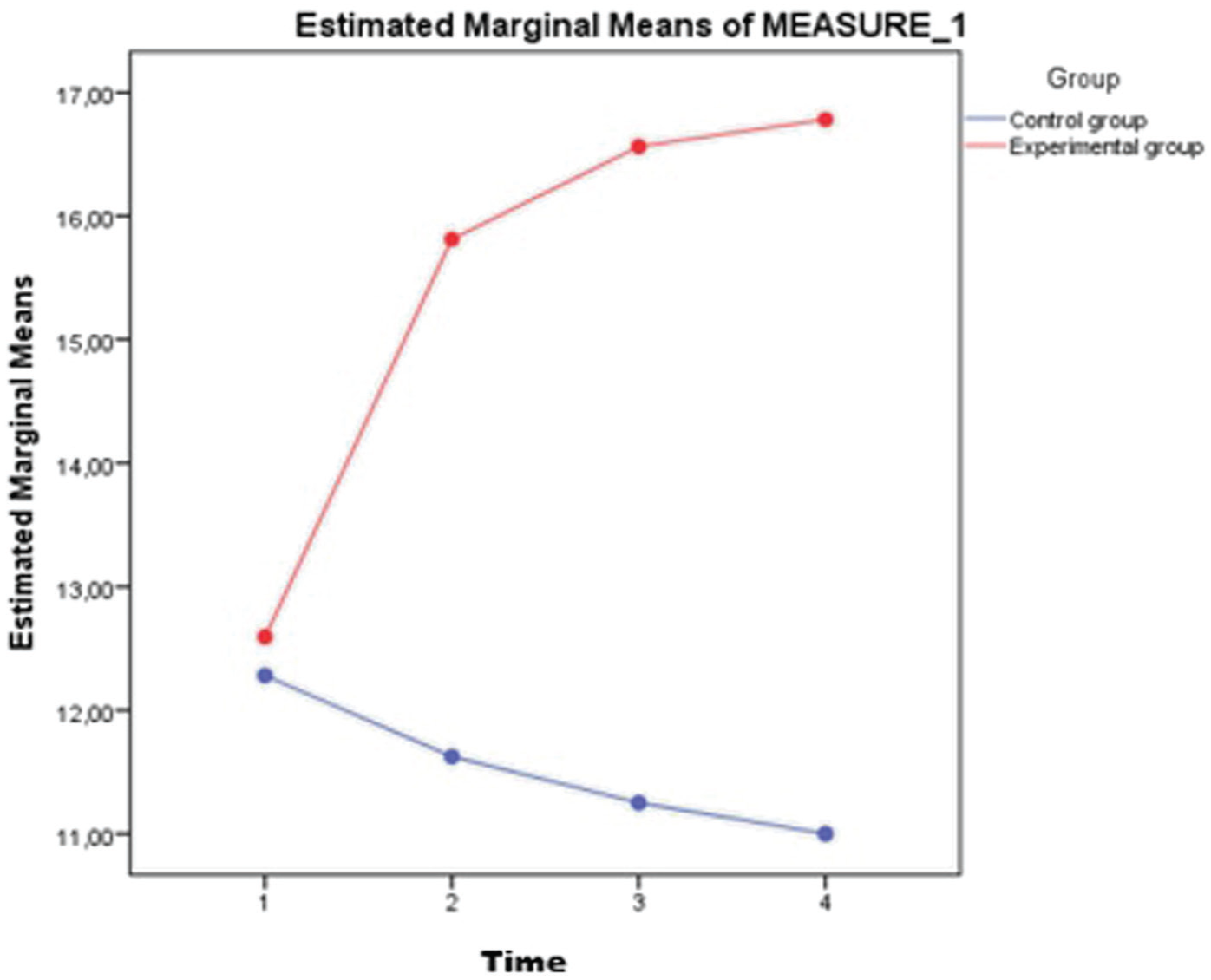
Changes in Persevering Hope Scores of Parents in the Experimental and Control Groups After Pretest, Post-test, Follow-up Test 1, and Follow-up Test 2.
To test the effectiveness of the self-compassion intervention, comparisons were made within and between the experimental and control groups at the pretest, post-test, Follow-up Test 1, and Follow-up Test 2. A mixed-design ANOVA was used. First, the assumptions of the mixed-design ANOVA were tested. Skewness and kurtosis values were examined to test the assumption of normal distribution. The pretest had skewness of 0.351 and kurtosis of –0.056; the post-test had skewness of 0.135 and kurtosis of –0.925; the Follow-up Test 1 had skewness of 0.008 and kurtosis of –0.953; and the Follow-up Test 2 had skewness of –0.046 and kurtosis of –0.963. Skewness and kurtosis values between –1.5 and +1.5 indicate a normal distribution (Tabachnick & Fidell, 2013). In the next step, the Levene Test was used to assess homogeneity of variances for self-compassion scores from the pretest, post-test, Follow-up Test 1, and Follow-up Test 2 in the experimental and control groups. The Levene test found p values of .33 for the pretest, .27 for the post-test, .95 for Follow-up Test 1, and .61 for Follow-up Test 2. These values meet the assumption of homogeneity of variances. All values greater than .05 indicate a homogeneous distribution of variances (Field, 2009). Box’s M test was conducted to assess the assumption of homogeneity of covariance matrices. According to the Box’s M test, F(10, 18 377) = 2.23, p = .01, the assumption of homogeneity of covariance matrices was not met. Field (2009) states that when sample sizes are equal across groups, the F statistic is more resistant to violations of the assumption of homogeneity of covariance matrices. Based on this interpretation, the analysis was continued. Mauchly’s test statistic was used to test the assumption of sphericity. According to Mauchly’s test, the assumption of sphericity was violated (χ2 (5) = 90.26, p = .000). When this assumption is violated, the Greenhouse–Geisser correction may be preferred (Girden, 1992). Therefore, the Greenhouse–Geiser correction values are reported.
The results of the mixed-design ANOVA test were examined. These values are presented in Table 2. The effect of time on self-compassion scores was significant, F(1.714, 106.249) = 76.300, p < .001, ηp2 = .552. In other words, when the group variable was evaluated without including it in the analysis, at least one of the pretest, post-test, Follow-up Test 1, and Follow-up Test 2 measurements differed significantly. As a result of the analysis, a significant difference was found between the groups, F(1,62) = 121.228, p < .001, ηp2 = .662. According to this result, when the experimental and control groups were compared on self-compassion scores, regardless of time, a significant difference was found. The interaction effect of the time and group variables was also found to be significant, F(1.714, 106.249) = 117.112, p < .001, ηp2 = .654.
After testing the significance of the main effects, post hoc analysis was conducted. Benferroni and Tukey corrections were used to control the type I error rate. When the changes over time within the groups were taken into account, it was concluded that the post-test score (M = 92.18, SD = 3.69) of the experimental group was significantly higher than the pretest score (M = 80.96, SD = 3.30) (p < .001, 95% CI [8.99, 13.44]). The Follow-up Test 1 score (M = 94.34, SD = 3.25) of the experimental group was found to be significantly higher than the post-test score (M = 92.18, SD = 3.69) (p < .001, 95% CI [.89, 3.42]). The Follow-up Test 2 score (M = 95.31, SD = 3.53) of the experimental group was also found to be significantly higher than the post-test score (M = 92.18, SD = 3.69) (p < .001, 95% CI [1.67, 4.57]).
When all measurement results were considered, the scores in the experimental group (M = 90.70, SD = 0.44) were found to be significantly higher than those in the control group (M = 83.71, SD = 0.44) (p < .001, 95% CI [5.73, 8.26]). These results are shown in Figure 3.
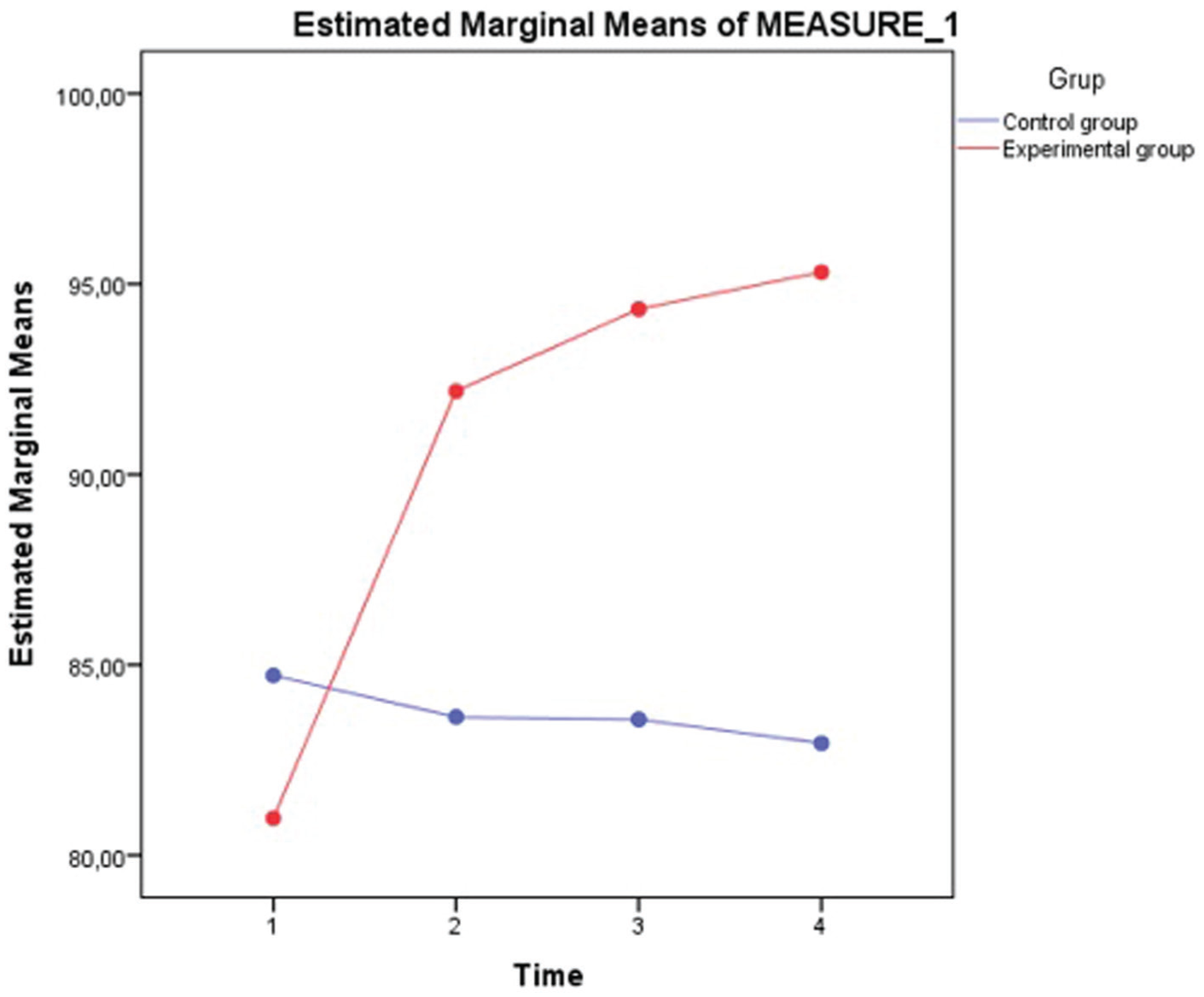
Changes in Self-Compassion Scores of Parents in the Experimental and Control Groups After Pretest, Post-test, Follow-up Test 1 and Follow-up Test 2.
Discussion and Conclusion
The study found that the experimental group showed significant improvement in hope and self-compassion compared with the control group. These results suggest that the intervention may have the potential to support psychological well-being. However, rather than serving as definitive evidence of effectiveness, the findings should be considered as an important step toward evidence-based family interventions. In this section, the results will be discussed in relation to previous research in the field and will provide a guiding framework for future studies with larger samples.
The study’s outcomes showed a significant increase in hope in the experimental group compared with the control group. This outcome suggests that the intervention may have enhanced individuals’ psychological well-being. The mechanism underlying this effect can be linked to parents’ ability to develop more positive expectations for the future in stressful life roles and to adopt a more flexible perspective in problem-solving. Similar studies in the literature support these findings. For example, Navroodi et al. (2018) reported that group-based positive parenting education increased hope and life satisfaction among mothers of children with autism spectrum disorder. Likewise, Yanık and Arslan (2024) observed significant increases in mothers’ hope levels in a study of a positive psychotherapy-based intervention. Aksüt (2022) emphasized that intervention programs enhanced parents’ self-efficacy perceptions and psychological well-being, thereby indirectly improving hope levels. A systematic review by Hoang et al. (2024) revealed strong associations among parental hope, social support, and well-being, highlighting that hope is associated with positive parenting practices and can be fostered through interventions. Furthermore, the group intervention program based on acceptance and commitment therapy developed by Yüksel-Şahin and Karaca (2024) demonstrated that increased psychological flexibility strengthened coping skills with stress, thereby contributing to a more hopeful outlook. Taken together, these studies indicate that structured, group-based intervention programs have considerable potential to enhance parents’ hope levels. In this regard, the present study’s findings are consistent with prior literature; however, they should be interpreted as an important step toward evidence-based family interventions rather than definitive proof of effectiveness. The findings underscore that hope is not merely an individual emotional state but also a psychological resource that can be targeted and developed through interventions. Particularly in high-stress life roles such as parenting, enhancing hope may support both individual and family functioning.
Findings demonstrated that the intervention led to a significant rise in self-compassion among the experimental group, whereas no such improvement was observed in the control group. This result indicates that self-compassion is a psychological resource that can be developed and supported through structured intervention programs. The mechanism underlying the intervention’s effectiveness can be explained by parents’ ability to cultivate a more accepting and compassionate attitude toward themselves, to be less judgmental in the face of mistakes, and to adopt healthier strategies for coping with stress. Comparable studies in the literature also support these findings. For instance, the meta-analysis conducted by Ferrari et al. (2019) demonstrated that self-compassion-based interventions, such as mindful self-compassion programs and compassion-focused therapy, produced significant increases in self-compassion levels compared with control groups and had positive effects on psychosocial well-being. Wang et al. (2025), in a randomized controlled trial, found that a multi-component digital positive psychology intervention designed to enhance self-compassion significantly improved mental well-being, with the effect mediated by increases in self-compassion. Similarly, Demirbağ et al. (2025) reported that a 4-week online self-compassion program based on the balance model of positive psychotherapy supported parents’ mental well-being and that the theme of self-compassion prominently emerged in participants’ experiences. Yücel (2024), in a study conducted with university students, also found that a positive psychology-based psychoeducational program had a significant effect on self-compassion levels. In this context, the findings of the present study are consistent with both international and local literature. However, rather than serving as definitive proof of effectiveness, they highlight the considerable potential of positive psychotherapy-based interventions to foster self-compassion and support psychological well-being. From an academic perspective, these findings demonstrate that self-compassion is not merely an individual awareness but a dynamic construct that can be cultivated through structured psychoeducational interventions and that contributes to psychological resilience. Therefore, disseminating self-compassion-focused interventions across different age groups and demographic profiles is important as a preventive and empowering approach in mental health.
Analysis revealed that the intervention program contributed to substantial increases in hope and self-compassion in the experimental group, whereas such changes were not observed in the control group. This outcome suggests that psychoeducational interventions may have considerable potential to support individuals’ psychological resilience and well-being. The mechanisms underlying the intervention’s effectiveness can be explained by parents’ ability to cultivate a more accepting and compassionate attitude toward themselves, reinterpret stressful life events with a more hopeful perspective, and adopt greater flexibility in their problem-solving processes. Similar studies in the literature support these findings. For example, Khosrobeigi et al. (2022), in a study involving parents of children with cancer, reported that self-compassion training significantly reduced hopelessness and increased resilience. These findings demonstrate that self-compassion interacts with hope to strengthen individuals’ psychological resources. Likewise, Yang et al. (2016) used structural equation modeling and found that self-compassion positively influenced hope levels, which, in turn, enhanced life satisfaction. Accordingly, interventions that foster self-compassion may indirectly increase hope levels. Demirbağ and Sarı (2023), in their study based on positive psychotherapy, noted that clients reinterpreted their problems through the principle of hope, thereby gaining self-help skills and enhancing psychological resilience. Similarly, Ayran and Karaaziz (2025), in their study with individuals diagnosed with depression, emphasized that positive psychotherapy practices supported positive psychological resources such as hope and self-compassion.
In summary, the evidence obtained in this study is in harmony with the conclusions reported in earlier studies. However, rather than serving as definitive proof of effectiveness, they should be considered an important step toward evidence-based family interventions. The interaction between self-compassion and hope can enhance individuals’ coping skills and life satisfaction, making positive psychotherapy-based practices valuable preventive and empowering tools in mental health.
The results of this study align with both theoretical and empirical literature, demonstrating that the interaction between self-compassion and hope constitutes a holistic structure that supports psychological well-being. From an academic perspective, this interaction emerges not only at the individual level but also as a fundamental dynamic that should be taken into account in the design of intervention programs. The relationship between self-compassion and hope enables individuals to approach stressful life events with greater acceptance and compassion, to develop more positive expectations for the future, and to adopt more flexible problem-solving strategies. These mechanisms strengthen both individual psychological resilience and the functionality of the family system.
Nevertheless, it is important to discuss the generalizability of these findings to diverse international populations. To evaluate the universal validity of the results and to explore the broader applicability of positive psychotherapy-based interventions, conducting similar studies across various cultural, socioeconomic, and demographic contexts would be highly valuable. Comparative research across different societies could further clarify the cross-cultural consistency and implementation potential of these findings.
In conclusion, positive psychotherapy-based practices have the potential to serve as preventive and empowering tools in mental health by enhancing self-compassion and hope. At the same time, the current findings should not be interpreted as definitive evidence of effectiveness, but rather as a significant step toward developing evidence-based family interventions. Expanding the scope of research to include larger, more diverse international samples will make critical contributions to the global validity and applicability of this approach.
In the study, it was seen that some effect size values were higher than .65. In the post hoc analysis performed with G*Power 3.1.9.7, it was found that the power of the test for these values was 1.00. This indicates that the sample used is more than sufficient to capture these effects. The sensitivity analysis (power = .99) showed that the present sample had sufficient power to detect even small to medium effects at f = 0.21. These two analyses show that the present sample is sufficient to detect the effects.
This effect sizes are above the averages reported in the psychoeducation intervention literature. Too high effect size values can be caused by several factors. This high effect size may be due to the program’s long-term, structured 12-session format. Unlike short-term interventions, a 12-session positive psychotherapy-based psychoeducation program may have created a profound and lasting shift in participants’ tenacious hope and self-understanding. The absence of a decrease, or even a small increase, in follow-up test scores can be interpreted as evidence of the program’s permanence in the experimental group. So much so that the designed psychoeducation program was structured to take into account theoretical models in the literature and the factors affecting the variables. In addition, the study group’s homogeneous composition of university students and the assumption of variance homogeneity (Levene’s test) being met across all measurements may have contributed to the more pronounced statistical effect sizes.
In addition to all this, caution should be exercised in generalizing the current findings to the universe.
Implications for Practice
The findings of this study have important implications for family counseling and positive psychotherapy practices. Group counseling programs grounded in positive psychotherapy were shown to enhance parents’ levels of hope and self-compassion, thereby strengthening psychological resilience and supporting emotional well-being. However, it is important to note that while the intervention produced significant short-term improvements, there remains a lack of comprehensive data regarding the durability of these effects over longer periods. This limitation underscores the need for future research to include extended follow-up assessments and longitudinal designs to determine whether gains in hope and self-compassion can be sustained over time.
In practice, counselors should therefore design interventions that not only provide immediate benefits but also incorporate long-term sessions and systematic follow-up evaluations to ensure the sustainability of outcomes. Integrating such programs into family counseling services may help parents improve coping skills and foster healthier family relationships. At the policy level, supporting the implementation of positive psychotherapy-based programs within educational institutions and community services could enhance family dynamics and children’s developmental processes. From a research perspective, evaluating the effectiveness of similar programs across diverse socioeconomic and cultural groups will be essential for assessing the generalizability and applicability of this approach. Furthermore, extending the discussion to international populations would enrich understanding of the intervention’s potential, highlighting both its cross-cultural relevance and the need for comparative studies across varied contexts.
Conclusion
This study suggests that positive psychotherapy-based group counseling holds promise for enhancing parents’ persevering hope and self-compassion. While the results indicate meaningful improvements sustained across follow-up assessments, they should be interpreted as evidence of the intervention’s potential rather than conclusive proof of effectiveness. Positioned as an important step toward evidence-based family interventions, the findings highlight the value of long-term, structured counseling programs in supporting psychological resilience and emotional well-being among parents. Future research with larger and more diverse samples, as well as replication across different contexts, will be essential to strengthen the evidence base and further clarify the scope of this approach’s impact.
Limitations
Some limitations of this study should be carefully evaluated in terms of the generalizability of the findings and methodological scope. First, the study was conducted with only a specific sample group (64 parents), and the voluntary selection of participants may have limited the sample’s diversity. This may make it difficult to generalize the results to individuals with different socioeconomic levels, cultural structures, or parenting styles.
Furthermore, conducting the intervention process in groups may make it difficult to control for individual differences; group dynamics may be supportive for some participants, while creating a limiting effect for others. The self-report scales used as measurement tools (hope and self-compassion) may introduce biases in participants’ responses, such as social desirability.
Furthermore, the fact that follow-up tests were conducted within a specific time frame limits the assessment of long-term effects. Finally, as the research used only quantitative data, the absence of qualitative data on participants’ experiences prevented an in-depth understanding of the application’s internal processes.
The high effect sizes reported in the findings are the result of the intensive 12-session program. Due to the relatively small sample size (N = 64), the generalizability of the effect sizes to the general population may be limited. For this reason, it is recommended to repeat the study in larger groups in future studies.
These limitations offer opportunities for improvement at both the methodological and application levels for future studies.
Suggestions for Future Research
The finding that positive psychotherapy-based group counseling applications significantly increase levels of hope and self-compassion in parents demonstrates that this approach is an effective tool for supporting psychological well-being in the parenting context. In this regard, the following recommendations are made to ensure that future research contributes at both the theoretical and practical levels:
Future studies can test the effectiveness of positive psychotherapy in a broader sample by conducting them with parent groups from different socioeconomic levels, cultural backgrounds, and educational levels. This will allow for the evaluation of the method’s generalizability and cross-cultural validity.
In this study, follow-up tests were conducted to evaluate the persistence and sustainability of the effects of positive psychotherapy interventions. Two follow-up assessments were administered: the first 6 months after the intervention and the second 9 months after the intervention, to examine the durability of the outcomes. These measurements provided more comprehensive data on the trajectory of psychological well-being over time and allowed investigation of not only short-term but also medium-term effects of the intervention. Nevertheless, incorporating longer-term follow-up studies would further strengthen the validity and reliability of the findings by assessing whether the intervention’s effects persist over time.
In addition to quantitative findings, qualitative data collection methods (e.g., interviews, focus groups) can be used to gain a deeper understanding of participants’ experiences. This would allow for a more detailed examination of the reflections of hope and self-compassion in individual experiences.
The effects of parents’ psychological changes on children’s emotional, social, and academic development have not yet been sufficiently researched. Future studies could provide a comprehensive analysis at the family system level by also evaluating the outcomes of parental interventions that are reflected in children.
Positive psychotherapy-based group counseling practices can be compared with other psychological intervention approaches (e.g., cognitive-behavioral therapy, mindfulness-based programs). Such comparisons can help determine which approach is more effective for which parent profile.
Online psychological support applications are becoming increasingly widespread today. Studies on the applicability and effectiveness of positive psychotherapy-based group counseling processes via digital platforms can increase accessibility.
Footnotes
Disposition editor: Cristina Mogro-Wilson

Ethical Considerations
Ethical committee approval for this research was secured.
Funding
The author received no financial support for the research, authorship, and/or publication of this article.
Declaration of Conflicting Interests
The author declared no potential conflicts of interest with respect to the research, authorship, and/or publication of this article.