






Abstract
Transition-age youth (TAY) in foster care experience significant challenges in leveraging higher education opportunities during their transition to adulthood. Education and Training Vouchers (ETVs) are a key resource, but research about access is limited. This study linked administrative data to examine how foster care experiences such as extended foster care (EFC) and placement stability may be associated with higher education enrollment and ETV access for this population. Youth staying in EFC, as well as those with greater stability and family-like placements, were significantly more likely to enroll in higher education and receive ETV funds. Jurisdictions should explore how best to facilitate social supports and resource awareness through these programs so that youth are equipped to thrive in higher education settings.
Keywords
Introduction
Transition-aged youth (TAY) involved with the foster care system in the United States face significant and unique challenges as they seek to access higher education opportunities and transition successfully to adulthood (Okpych & Courtney, 2023). Nationally, about 18,000 youth transition to adulthood at or after age 18 each year, although many opt to remain receiving foster care services after this date through extended foster care (EFC) programs (Children’s Bureau, 2026). This population is uniquely at risk for adverse developmental outcomes as they become emerging adults due to the minimal or total lack of family connectedness and financial support resulting from being separated from their families of origin (Stone et al., 2025). While many TAY demonstrate incredible resilience to pursue meaningful life goals, some have also experienced trauma and instability before, during, and after their stays in foster care in ways that might limit their abilities to navigate the complex challenges of emerging adulthood (Geiger & Katz, 2025). Though 70%–85% of youth in foster care aspire to attend college, researchers have estimated that as few as 30% enroll in postsecondary education settings, compared to about 60% among their peers (Courtney & Dworsky, 2006; Hanson et al., 2023; Okpych et al., 2025). Furthermore, only 8%–12% earn a degree or credential, compared to more than one third among their peers (Okpych et al., 2023, 2025). Low educational attainment is both impacted by and further compounds the long-term health and well-being challenges that these youth must navigate to achieve their goals, which include higher rates of economic instability, reduced employment opportunities, greater risk of homelessness, greater prevalence of mental health difficulties, and higher rates of criminal legal involvement compared to similarly situated youth (Courtney et al., 2011, 2020).
Policymakers, educational institutions, practitioners, and advocates have developed several strategies to support youth in this challenging educational landscape, including through the creation of the federal Education and Training Voucher (ETV) program. The ETV program, administered by state agencies, seeks to address this population’s educational disparities by providing financial support for youth exiting care during the transition to adulthood and has shown promising associations with motivating youth to attend higher education and helping them to persist to graduation (Hanson et al., 2023; Nixon & Jones, 2007; Okpych et al., 2020). However, while some states experience program utilization that exceeds funding amounts, many states ultimately return large amounts of ETV funds due to low utilization (Landers, 2019; U.S. Government Accountability Office, 2025). Therefore, it is important to understand the factors that serve as facilitators or barriers to enrollment and ETV receipt so that the field can develop practices to maximize access to higher education opportunities and the youth most at need of such supports are able to leverage critical resources such as EFC and ETV. To date, very few studies have employed longitudinal and cross-system data to understand the trajectories that shape youths’ educational and resource access in this way (Okpych et al., 2025). Accordingly, this study uses linked administrative child welfare, higher education, and ETV data from a southeastern state to examine how foster care experiences such as EFC utilization and placement instability interact with youths’ backgrounds to predict higher education enrollment and receipt of ETV funds.
The ETV Program
The federal ETV program was created by the Promoting Safe and Stable Families Act as a congressional amendment to the 1999 John H. Chafee Foster Care Independence Act in 2001 (Public Law 107-133, 2002) and was most recently amended by the Families First Prevention Services Act (Public Law 115-123, 2018). The program provides vouchers of up to $5,000 to youth who exit foster care after age 16, which can generally be spent on college-related expenses such as tuition, fees, books, room and board, and transportation for up to 5 years or until youth turn 26 (originally age 23). In the state examined in this study, youth also must have spent at least 6 months in care after their 14th birthday, be enrolled in an accredited higher education setting, and maintain satisfactory academic progress. Due to expanded temporary support for participating youth during the COVID-19 pandemic, the maximum voucher amount and age were increased to $12,000 and 27, respectively, from 2020 to 2022 through the Supporting Foster Youth and Families through the Pandemic Act (Public Law 116-260, 2020). State-level administration, outreach, eligibility criteria, funding limits, and population sizes vary (Tiller et al., 2022), which in part has contributed to some states experiencing funding shortfalls, while others have returned funds (Landers, 2019). Nationally, approximately 15,000 youth (estimated to be about 37% of eligible youth enrolled in college) receive ETV vouchers each year (Hanson et al., 2023; Landers, 2019).
While the ETV program has been providing postsecondary funding support to youth transitioning from foster care for the last 25 years, empirical literature is relatively sparse in the demonstration of the program’s impact on postsecondary education access and completion. Literature is also limited on the predictors of ETV receipt. A small number of empirical studies have suggested that ETV funds can act as a key facilitator of educational and developmental outcomes for their target population, although their descriptive designs and limited range of explanatory variables limit their use as rigorous evaluation evidence for the ETV program. Youth who receive ETVs are more likely to attend public in-state institutions (Adams et al., 2025), are three to four times more likely to persist through their first two semesters in college (Hanson et al., 2023; Okpych et al., 2020), and are more likely to graduate by age 24 (17% vs. 9%; Hanson et al., 2023) when compared to TAY in foster care who do not receive this support. Furthermore, program participants have consistently described this resource as being invaluable due to its effects on decreasing stress, its flexibility in overcoming common obstacles, and motivating them to complete their academic trajectory (Coffey et al., 2023).
Access to Higher Education and ETV Funds
Despite the legislative intent and promising research evidence of using ETV funds to increase educational access, many eligible youth do not receive the funds to which they may be entitled. In a study of ten state programs, program utilization rates varied between 26% and 61% for eligible youth enrolled in college (Hanson et al., 2023), and participation may be declining in the years after the COVID-19 pandemic due to changing foster care population sizes and enrollment trends (Adams et al., 2025). Little is known, however, about the factors that shape access to ETVs, given the challenge of separating youth ETV experiences from broader educational achievement challenges. Several child welfare practices have been suggested as being critical to building awareness, such as coordinated and early communication from independent living services personnel (Coffey et al., 2023; Smith, 2015; Tiller et al., 2022), active participation in comprehensive case planning with child welfare caseworkers (Okpych et al., 2020), service provider understanding of the program (Wells & Zunz, 2009), access to and participation in campus support programs designed specifically for this population (Geiger & Katz, 2025; Okpych et al., 2020), and support from “institutional adults” who are both invested in their future and aware of relevant resources (Augsberger et al., 2025).
Youth-level factors have also been shown to be predictive of enrollment and ETV utilization, with higher reading proficiency and high school grades increasing youths’ odds of receipt and special education classroom placement, and grade repetition decreasing their odds (Okpych et al., 2020). Youth who felt more prepared to pursue postsecondary education were also more likely to receive funds (Okpych et al., 2020). Gender and racial identity were also influential, although it is unclear whether this is a result of specific biases in higher education or as proxies for other associated factors. Females were both more likely to attend college and to receive ETV if they did, while both Black and Hispanic youth were more likely than their white peers to receive ETV once they enrolled in college (Hanson et al., 2023). In-state attendees, older students, and those with higher GPAs have also been observed to utilize the program at greater levels (Adams et al., 2025). Those who enrolled at higher education institutions with greater retention rates, more per-student spending, and a higher percentage of full-time students were also more likely to use the program (Okpych et al., 2020).
Foster Care-Related Trauma and Instability
Youths’ experiences while in foster care can be uniquely influential in shaping their development, their higher education trajectory, and, thus, their likelihood of accessing ETV (Okpych et al., 2020; Schelbe et al., 2024). TAY entering adulthood from foster care are more likely to experience economic hardship, multiple employment due to low pay, and parenting responsibilities in ways that cannot be addressed through the ETV program’s limited funding amounts (Okpych & Courtney, 2023). Furthermore, their social support from both family and institutional adults can be limited and lacking in both encouragement and information about achieving their higher education aspirations (Augsberger et al., 2025; Dworsky & Pérez, 2010).
TAY also experiences particularly high rates of trauma, mental health challenges, and instability that can act as barriers to college adjustment and educational achievement (Geiger & Katz, 2025). Youths’ trauma histories and resulting mental health challenges can both exacerbate and be worsened by continuous placement instability in care as their behavioral challenges result in repeated placement disruptions (Stone et al., 2025; Wells & Zunz, 2009). Such instability can not only contribute to greater traumatic stress but can also disrupt the sorts of high school achievement and relational support required to successfully pursue higher education and draw down financial resources (Crear, 2020; Geiger & Katz, 2025; Geiger & Okpych, 2022; Wells & Zunz, 2009). In this way, instability during youths’ time in foster care can be seen as having both a direct and indirect effect on access, as the conditions leading to instability undermine youths’ ability to thrive in higher education settings and limit their access to critical resources that may address common barriers to educational achievement.
Extended Foster Care
EFC policies, which allow youth to remain in care beyond age 18, have emerged as a potentially important resource for providing wraparound supports for higher education access. Youth who take advantage of EFC receive more services, greater housing assistance options, access to case planning with institutional adults, and other critical resources during their transition to adulthood (Okpych et al., 2019). This can offer greater connection to supportive adults with awareness about critical transitional supports, although many youth with the most negative foster care experiences refuse EFC services or do not remain in extended care for long periods (Wells & Zunz, 2009).
Analyses conducted in a limited number of states have found that EFC utilization is associated with greater enrollment in higher education settings, with each month in care increasing the probability by .7 percentage points (Okpych et al., 2019). Furthermore, receiving clear information about EFC during transition planning stages and ultimately remaining in care has been found to result in greater ETV and campus support program participation (Okpych et al., 2020). Interestingly, those who exited care even earlier (i.e., before turning 18) were found to be even less likely to attend college or receive ETV funds as this formal connection to child welfare system resources became more tenuous (Hanson et al., 2023).
The Current Study
The existing literature on higher education and ETV utilization provides critical insights into the dynamics that influence this critical stage of youths’ long-term development, but it remains unfortunately scarce and limited. To date, most empirical studies on these issues have been limited to a small number of states, with most data coming from the unique context of California’s transitional support system. Given the known variation across states, it is critical that the experiences of youth in understudied areas of the United States and the practices of different state administrations be reflected in the field’s understanding of foster youth higher education outcomes. Even fewer studies have drawn on data from youths’ childhood experiences while in foster care to examine the ways in which issues such as stability and utilization of transitional supports can act as further barriers and facilitators of educational success (Hanson et al., 2023; Okpych et al., 2019).
Addressing these gaps in the research literature is crucial for the development of evidence-based strategies to increase higher education and ETV access among eligible youth. Understanding the complex interplay of foster care experiences, individual characteristics, and systemic factors that influence these outcomes can inform policy and practice efforts aimed at promoting educational success among this vulnerable population. Administrative data documenting the experiences of youth in foster care and higher education settings represents a promising approach for understanding how these factors operate on a population level. This study linked large, longitudinal datasets in one southeastern state to examine how demographics and foster care experiences interact over time to predict higher education enrollment and utilization of the ETV program. The study was guided by the following research questions:
Method
Datasets and Study Design
This analysis linked two state-level administrative datasets to determine whether TAY who turned 18 while in foster care enrolled in higher education and received ETV funds. The first dataset was generated from the state child welfare agency’s database and included demographic and foster care experience items for all youth who turned 18 while in care between 2015 and 2024. While 18 is the age of majority in the state, the child welfare agency has an EFC program in which all eligible youth may remain in care through age 21 unless they choose to opt out. This analysis was limited specifically to those who turned 18 while in care to examine the outcomes of these most vulnerable youth who did not achieve legal permanency before the age of majority. All foster care-related variables in the study (except EFC program use) reflected youths’ experiences on or before their 18th birthday to examine how past experiences might later influence enrollment and support outcomes. The second dataset contained all ETV program data collection and payment processing data from state fiscal years 2016 through 2024. Data were merged using first name, last name, middle initial (if applicable), and date of birth, with members of the research team manually examining all close matches to ensure that any variations in spelling were corrected to the name in the child welfare database when a similar name and exact date of birth were identified. Approximately 177 names (about 3% of all youth in the full dataset) were corrected in this process. Finally, these youth names were matched with higher education enrollment indicators from the National Student Clearinghouse database to estimate which youth ever enrolled in higher education settings.
To answer the research questions, the combined dataset was first limited to cohorts of youth who turned 18 between 2015 and 2018 to allow observation of each youth in the sample for 6 years to detect higher education enrollment and ETV use. A second subsample of youth who ever enrolled in higher education was then created to examine ETV utilization among enrollees. This retrospective cohort design was chosen to deepen the field’s understanding of the cumulative incidence of enrollment and program use, as well as the overall facilitators and barriers operating during the study period. All data-sharing and study procedures were approved by the research team’s university institutional review board.
Study Sample
The final analytical sample for the study consisted of 2,304 youth who turned 18 between 2015 and 2018 while in the state’s foster care system. While the full merged dataset contained information about youth who turned 18 between 2015 and 2024, the research team limited the final sample to those whose higher education outcomes could be observed for 6 years (i.e., by age 24). For examination of ETV receipt rates, this sample was further limited to those whose matched data contained a record of postsecondary enrollment (n = 487) so that uptake rates could be analyzed among those who were most likely to be eligible.
As shown in Table 1, the overall sample consisted of an approximately even number of males (47.40%) and females (52.60%), and about half of the population was identified as Black (53.91%, non-exclusive) or white (49.48%, non-exclusive). About seven percent of the population (164 youth) were identified as Hispanic or Latine, and about half of one percent were identified as Asian, Pacific Islander, or Indigenous/American Indian. Between 495 and 655, youth turned 18 each year, and the median year of discharge was 2017 (meaning more youth in the sample tended to be from later cohort years). Approximately 45% of the population were in residential settings on their 18th birthday (n = 1,041), 27% were in foster homes (n = 620), 15% were in kinship foster placements (n = 348), less than 2% were with their parent (n = 39), and the remaining 11% were incarcerated, hospitalized, or in runaway or unknown living situations (n = 256). About a quarter of the youth were from rural counties (n = 613). Nearly 60% of youth remained in EFC after their 18th birthday, which underscores the manner in which the state’s “opt-out” policy (in which youth must affirmatively choose not to remain in care) drives higher EFC use rates. Enrollees and ETV recipients were more likely than the overall sample to be female, Black, from rural counties, and in EFC.
Demographics of Overall Sample, Enrollee Subsample, and ETV Recipients.
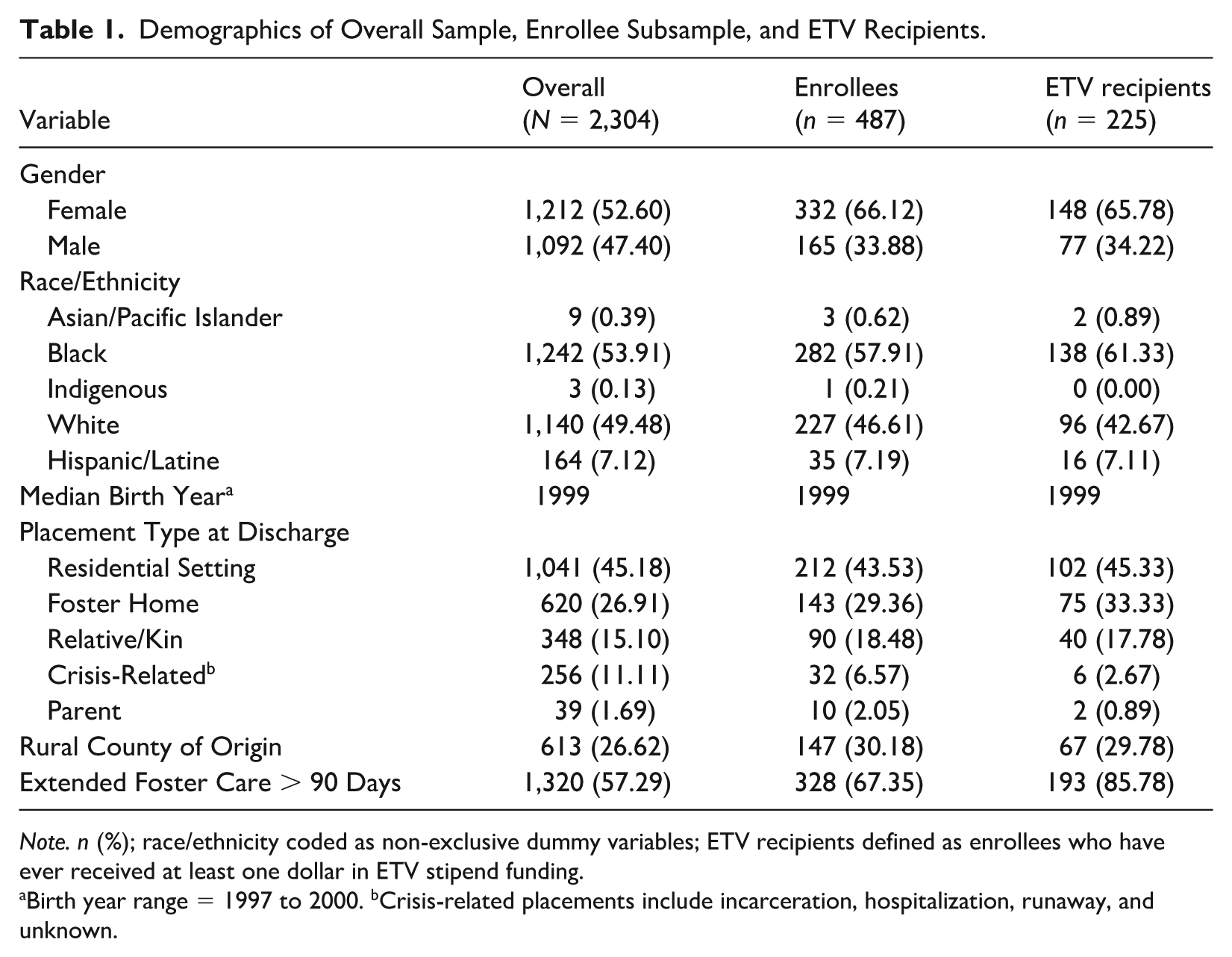
Note. n (%); race/ethnicity coded as non-exclusive dummy variables; ETV recipients defined as enrollees who have ever received at least one dollar in ETV stipend funding.
Birth year range = 1997 to 2000. bCrisis-related placements include incarceration, hospitalization, runaway, and unknown.
Data Collection and Measures
Administrative child welfare data for this study were extracted from the state’s State Automated Child Welfare Information System (SACWIS) on December 13, 2024. All data were entered by agency personnel or were automatically generated based on placement data entry. ETV data reflected automated payment data generated when funds were distributed to each participant. Some self-reported data regarding demographics, educational enrollment, and program of study were self-reported by recipients during the ETV application process, but the research team only used these variables for sensitivity analyses, given the availability of more complete administrative records. All ETV data were exported and collated at the end of the state’s fiscal year 2024 (June 30, 2024) and include any youth that received funding between October 1, 2016 and that date. National Student Clearinghouse records were extracted in May of 2025.
Higher Education Enrollment
National Student Clearinghouse data were used to derive an indicator for whether each youth ever enrolled in higher education by age 24. Enrollment was defined as having any matching record indicating attendance, without regard to the enrollment status (i.e., part-time or full-time) or whether the youth ultimately withdrew during that period. Records were limited for each youth to those occurring prior to their 24th birthday to ensure that (1) non-immediate enrollees and later high school graduates were captured and (2) all youth outcomes were observed for an equal period of time. As has been reported in a similar study examining the relationship between ETV utilization and higher education enrollment (Hanson et al., 2023), a relatively high proportion of ETV recipients in the overall study sample (nearly 40%) did not have matched enrollment records. This is likely due to both name and date of birth mismatches in the data extraction process and records not being reported to the Clearinghouse, and suggests that all descriptive rates should be cautiously interpreted as being conservatively low and not be extrapolated as population-level estimates.
ETV Receipt
After state agency and ETV data were merged, an indicator was created to designate which youth were present in the ETV data and received ETV funds by age 24. To be included in the ETV administrative data, a student had to have received at least $1 in ETV funds during the observation timeframe. Youth who may have been approved for ETV funds but never utilized them are thus not captured by this indicator. ETV receipt rates were only estimated among the enrollee subsample, given that many in the overall sample may have not been eligible for the funds due to lack of enrollment in a higher education setting.
Demographics and Background
All demographic and background variables originated from the agency data due to the lack of reliability arising from the self-reported nature of ETV applications. Youths’ age and date of reaching age 18 were derived from the dates of birth contained in the agency’s data system, which is typically substantiated using birth certificates and other vital records. The age of 18 was included in descriptive and inferential analyses to account for any system-level changes across the 4 cohort years. Racial and ethnic identity was entered by agency staff and therefore could have reflected (1) self-reported information from the youth or family, (2) copied information from collateral records, or (3) frontline personnel’s impressions of the clients’ backgrounds. Race and ethnicity were coded as non-exclusive dummy variables to allow for multiraciality while not collapsing all possible multiracial combinations into one group. Neither dataset collected information about youths’ identification as being transgender or gender-nonconforming, so gender was operationalized as biological sex assigned at birth (i.e., male or female). Whenever possible, discussions of identity variables will therefore refer to youth as “being identified as” a certain category rather than as “identifying” as such.
Foster Care Experiences
This study examined four key foster care experiences to determine which foster youth characteristics may serve as facilitators or barriers to ETV receipt. First, an indicator from the agency database was used that measured whether an individual participated in EFC for at least 90 days. As discussed above, participation in EFC denotes not only a longer stay in foster care but also continued receipt of case management and referral services delivered by independent living services staff. Some studies examining EFC impacts have found “dosage” effects in which a longer duration of EFC stay is associated with improved outcomes (Okpych et al., 2019). However, as seen in Figures 1 and 2, the distribution of EFC lengths of stay among this sample (as well as enrollment/receipt outcomes) was noted to be approximately bimodal. Because of the distinctive difference between youth who experienced little to no EFC stay and those who more extensively used the program, the research team sought to contrast these two experiences using a binary indicator in primary analyses. The 90-day cut-off was employed to account for the implications of only briefly staying in an “opt-out” system for a few months. A continuous variable denoting the months of stay in EFC was still calculated but used only for follow-up analyses to further examine potential dosage effects within the EFC stayer group.
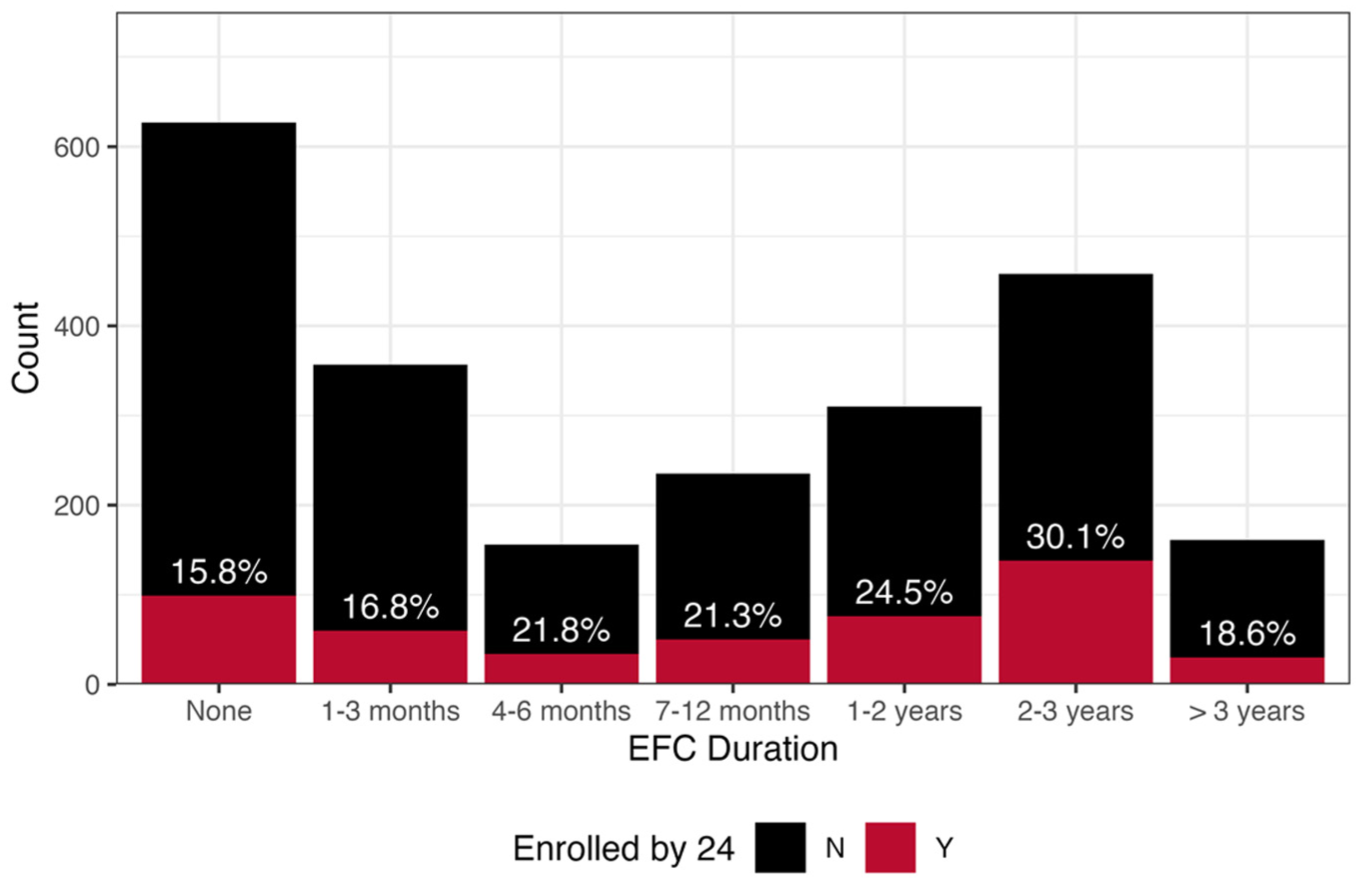
Frequency of enrollment in overall sample (N = 2,304), by length of EFC stay.
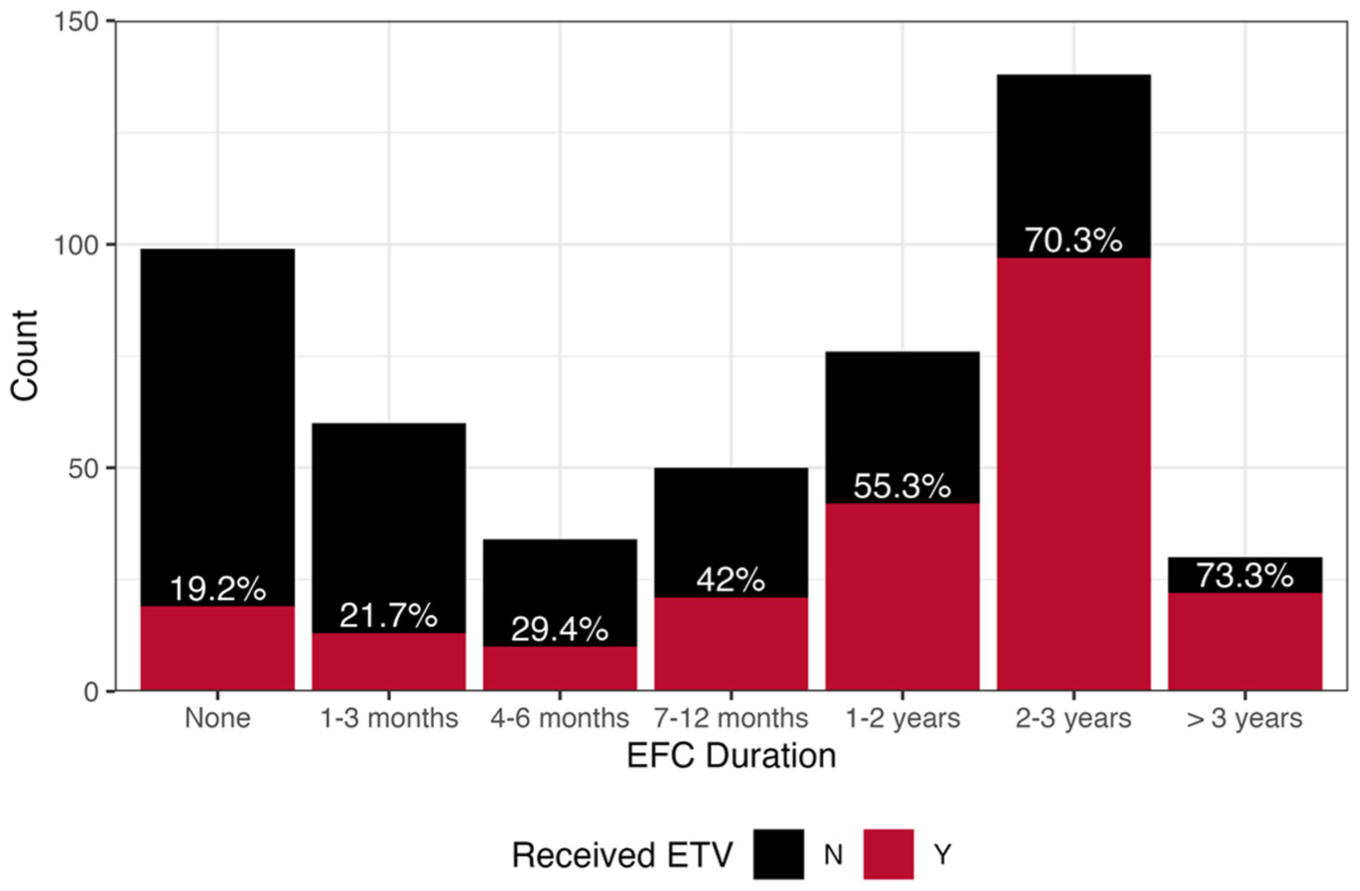
Frequency of ETV receipt in enrolled subsample (n = 487), by length of EFC stay.
Each youth’s cumulative length of stay in foster care prior to their 18th birthday was reported in months to assess how longer-term foster care stays may impact enrollment and participation in available support programs. Given the long-term implications of placement instability for youth with foster care histories (Clemens et al., 2018; Wang, 2025), as well as the ways in which placement instability often results from a lack of mental and behavioral well-being while in care, the study also included a derived placement stability variable consisting of the total length of stay (in months) divided by the total number of placements the youth experienced before age 18. The youth’s final placement type at the time of their 18th birthday was also included as a way of explaining the circumstances of their transition experience. Several placement types (hospitalization, incarceration, runaway, and unknown) were grouped together for regression analyses due to small cell sizes and the fact that they often indicate some sort of crisis circumstance for youth in care.
Data Analysis
All data preparation, cleaning, and merging were conducted in RStudio version 4.4.3, using only the base stats package and tidyverse collection of packages (Posit Team, 2025). Missingness was minimal, with only two individuals missing data regarding their length of stay and placement stability (less than .1% of the sample). All predictors were first analyzed and plotted to understand descriptive patterns across the sample, and distributions were compared between EFC stayers, enrollees, and ETV recipients. Furthermore, the cell sizes for each categorical predictor were examined across each of the binary outcomes of enrollment and ETV receipt to ensure there were no zero values (i.e., complete separation in which the predictor is only present in one of the outcome conditions).
Subgroup and correlational analyses were then conducted across demographic and foster care experience variables to examine initial patterns of enrollment and ETV utilization. Chi-square tests of independence were used across dummy-coded demographic and placement variables to determine whether some groups were more likely than others to enroll and use ETV when not controlling for other factors. Independent samples t-tests and one-way analyses of variance (ANOVAs) with Tukey’s post hoc tests were calculated to see how foster care experiences varied across groups.
Finally, a hierarchical series of logistic regression models was calculated to predict whether background and foster care experience variables were associated with a higher likelihood of higher education enrollment. A hierarchical approach was used to determine whether each block of potential explanatory variables explained significantly greater amounts of variation in the key outcome variables, to test the theoretical importance of each set of factors and to determine whether additional model complexity (such as interaction terms) improved model estimation. Given the results of exploratory analyses and empirical evidence of its significance in the literature, EFC was used as a focal predictor for regression analyses. Assumptions of collinearity (variance inflation factor [VIF] values less than 5) and linearity of log odds were examined prior to model specification. Cook’s Distance values were calculated for each observation after model specification to ensure that no outliers or influential values existed that may bias model coefficients (defined as having a value of Di < 4/n). Models were estimated as follows: the null (average) model; an EFC variable-only model; an EFC and demographics model; an EFC and demographics and foster care experiences model; and a final model including an interaction between EFC participation and placement stability. The last model was included to understand how youth with higher needs may experience the EFC-to-higher-education pathway differently than their peers, given the uncertain nature of this question in the research literature.
The best model fit for interpretation was determined using the likelihood ratio tests and a comparison of model Akaike information criterion (AIC) values, as well as an examination of plotted model residuals. After exponentiating log odds to produce odds ratio coefficients, all models were then interpreted and tabled for publication. Predicted probabilities were then calculated (at sample mean values for continuous predictors and at the largest/reference group values for categorical predictors) and plotted to interpret the magnitude of changes in probability. The margins package (Leeper, 2024) was also used to calculate and plot the average marginal effect (or AME) of each predictor, which represents the average one-unit change in probability derived from averaging across the actual observed cases in the data rather than at hypothetical “held at means” cases. The difference in AME for EFC program participation across different levels of placement stability was also calculated and plotted to aid interpretation of the change in probability at representative levels of the sample.
Similar models were fitted to examine ETV use among the enrollee subsample. However, given a combination of lower power and decreased variation across key predictors, only a simplified model including EFC and placement stability fit the data well. After both final models were chosen, alternative versions were estimated with a continuous EFC duration (months) predictor for sensitivity testing and to better understand potential dosage effects of longer stays. These models fit the data equally as well and suggested no changes to statistical relationships or effects, and the change in odds across EFC duration values is reported below.
Results
Of the 2,304 youth who aged out of foster care in the state between 2015 and 2018, 487 (21.14%) enrolled in higher education and 225 of those (46.20%) received ETV funds. These students received between 1 and 5 years of ETV funding, with an average of 2.84 years of receipt (SD = 1.73). On average, youth received $3,650.22 per academic year (SD = 2,774.96) and a cumulative total of $11,784.58 (SD = 13,601.01).
Tables 2 and 3 describe the characteristics of the overall sample and enrollee subsample, as well as differences and initial patterns among subgroups. On average, youth in the sample were in foster care for just under 3 years prior to their 18th birthday (M = 33.80, SD = 46.96), and experienced about 7.5 placements during that time (M = 7.33, SD = 5.79). They spent an average of 6.27 months in each placement (SD = 10.35). While those enrolled in higher education had similar lengths of stays and placement stability compared to their peers, they experienced fewer placements during their childhood (6.47 vs. 7.33, t(2,302) = 3.70, p < .001).
Subgroup Analyses of Enrollment and Foster Care Experiences (Overall Sample; N = 2,304).
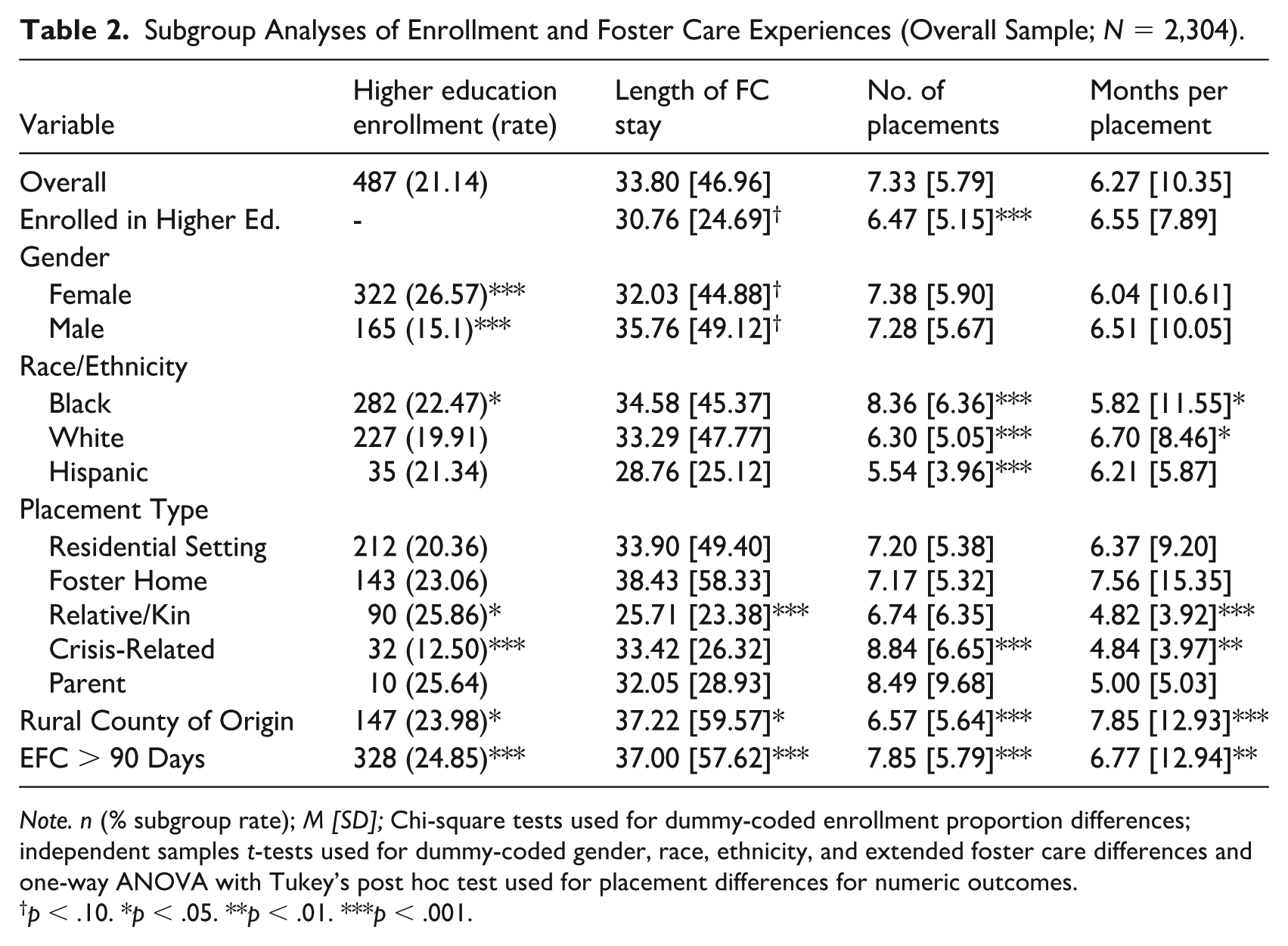
Note. n (% subgroup rate); M [SD]; Chi-square tests used for dummy-coded enrollment proportion differences; independent samples t-tests used for dummy-coded gender, race, ethnicity, and extended foster care differences and one-way ANOVA with Tukey’s post hoc test used for placement differences for numeric outcomes.
p < .10. *p < .05. **p < .01. ***p < .001.
Subgroup Analyses of ETV Receipt and Foster Care Experiences (Enrolled Subsample; n = 487).
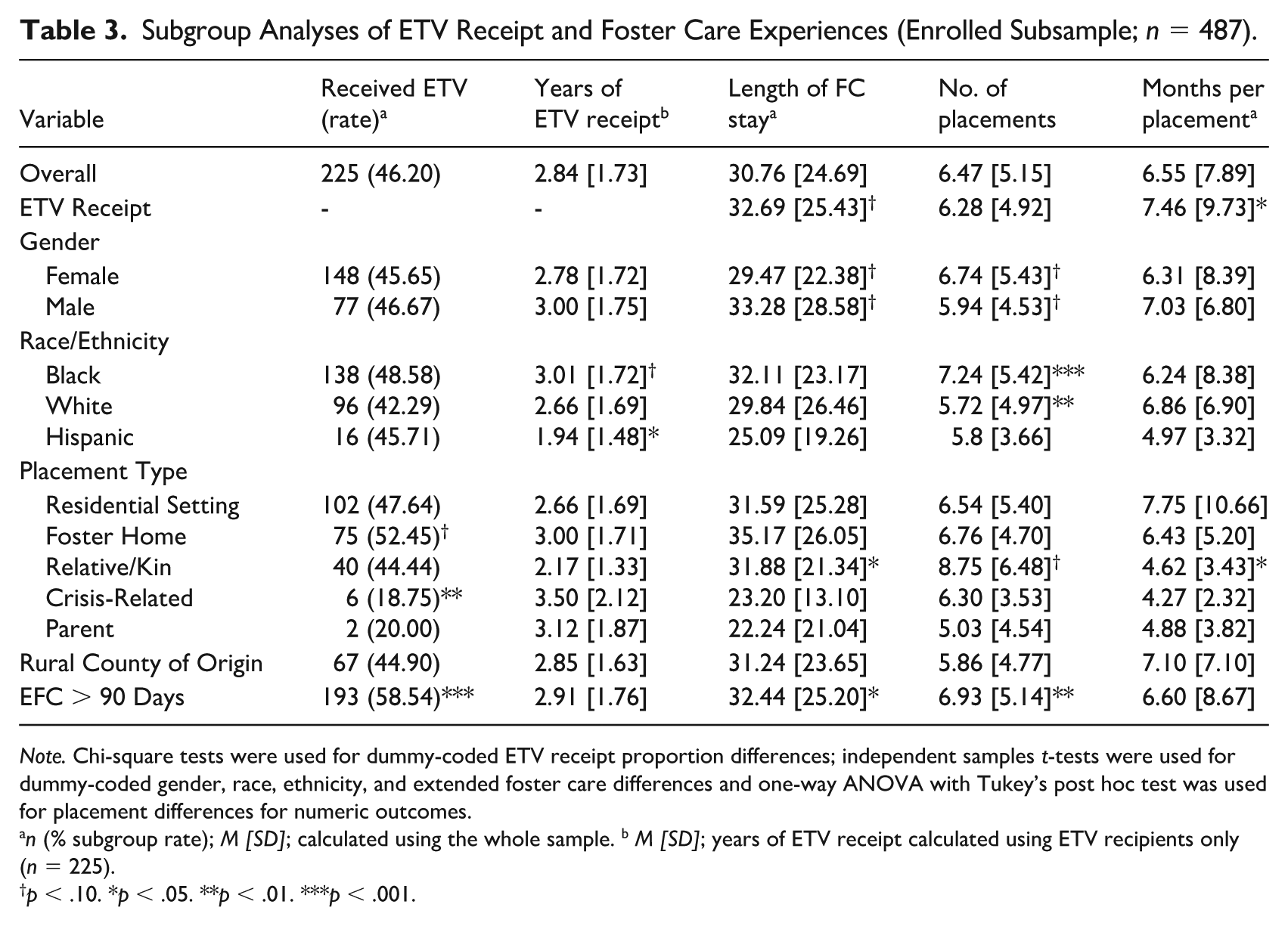
Note. Chi-square tests were used for dummy-coded ETV receipt proportion differences; independent samples t-tests were used for dummy-coded gender, race, ethnicity, and extended foster care differences and one-way ANOVA with Tukey’s post hoc test was used for placement differences for numeric outcomes.
n (% subgroup rate); M [SD]; calculated using the whole sample. b M [SD]; years of ETV receipt calculated using ETV recipients only (n = 225).
p < .10. *p < .05. **p < .01. ***p < .001.
Subgroup Differences
Exploratory subgroup analyses suggested that youth in the sample differed on key outcomes based on their gender, racial, and ethnic identities. Female youth were more likely than males to enroll in higher education (p < .001) and experienced marginally shorter stays in foster care than males on average (t(2,302) = −1.90, p = .06). Black youth were also more likely to enroll in higher education than their peers (p < .05), but experienced more placements (t(2,302) = −9.45, p < .001), and less placement stability (t(2,301) = 2.62, p < .05). Hispanic or Latine youth had fewer placements than their peers (t(2,302) = 4.13, p < .001). Compared to urban youth, youth from rural counties had longer lengths of stay (t(2,301) = 2.10, p < .05), fewer placements (t(2,301) = −3.81, p < .001), and greater stability (t(2,300) = 4.44, p < .001).
Significant differences in enrollment based on foster care experiences were also found. Youth whose final placements were with relatives (p < .01) had higher enrollment rates than those in other placement types. Those in relative placement also experienced shorter stays in foster care but less stability (p < .001). Youth in more crisis-oriented placements such as incarceration, hospitalization, or runaway tended to have lower enrollment rates, higher numbers of placements, and less stability. Youth remaining in EFC were more likely to enroll in higher education than the overall sample rate (24.85 vs. 21.14%, p < .001). Those utilizing EFC had longer foster care stays (t(2,302) = −3.80, p < .001) but greater stability (t(2,301) = −2.71, p < .05) than their peers.
Interestingly, fewer subgroup differences were detected among enrollees receiving ETV funds. The demographic trends associated with higher education enrollment were not observed when comparing ETV recipients and non-recipients, despite male students having marginally longer lengths of stay than female students and Black students having a greater number of placements than their peers prior to age 18 (p < .001). Youth who turned 18 while in a foster home were marginally more likely to use ETV funds than those in other placements (p = .08) while the small number of enrollees who turned 18 in crisis-related placements were significantly less likely to receive ETV (p < .01). Among enrollees, the most significant differences in ETV utilization rates were observed between those remaining in EFC and those who left care at age 18 (58.54 vs. 41.46%, p < .001).
Predictors of Higher Education Enrollment
Based upon initial patterns of enrollment and other outcome distributions, a series of logistic regression models was estimated to determine youths’ odds of enrollment, controlling for an increasing number of factors. As shown in Table 4, the model consisting only of the focal EFC utilization variable performed significantly better than a null model (p < .001) and estimated that those using EFC had 72% greater odds of enrollment compared to those who did not remain in care (p < .001). This effect was estimated to be even larger (135% greater odds) when controlling for demographic factors and foster care experiences, which significantly improved model fit (p < .001). When modeling EFC duration as a continuous variable with these covariates, the odds of enrollment were predicted to increase by 3% for every month of extended care (p <.001).
Results of Enrollment Logistic Regression Models (Overall Sample; N = 2,302).
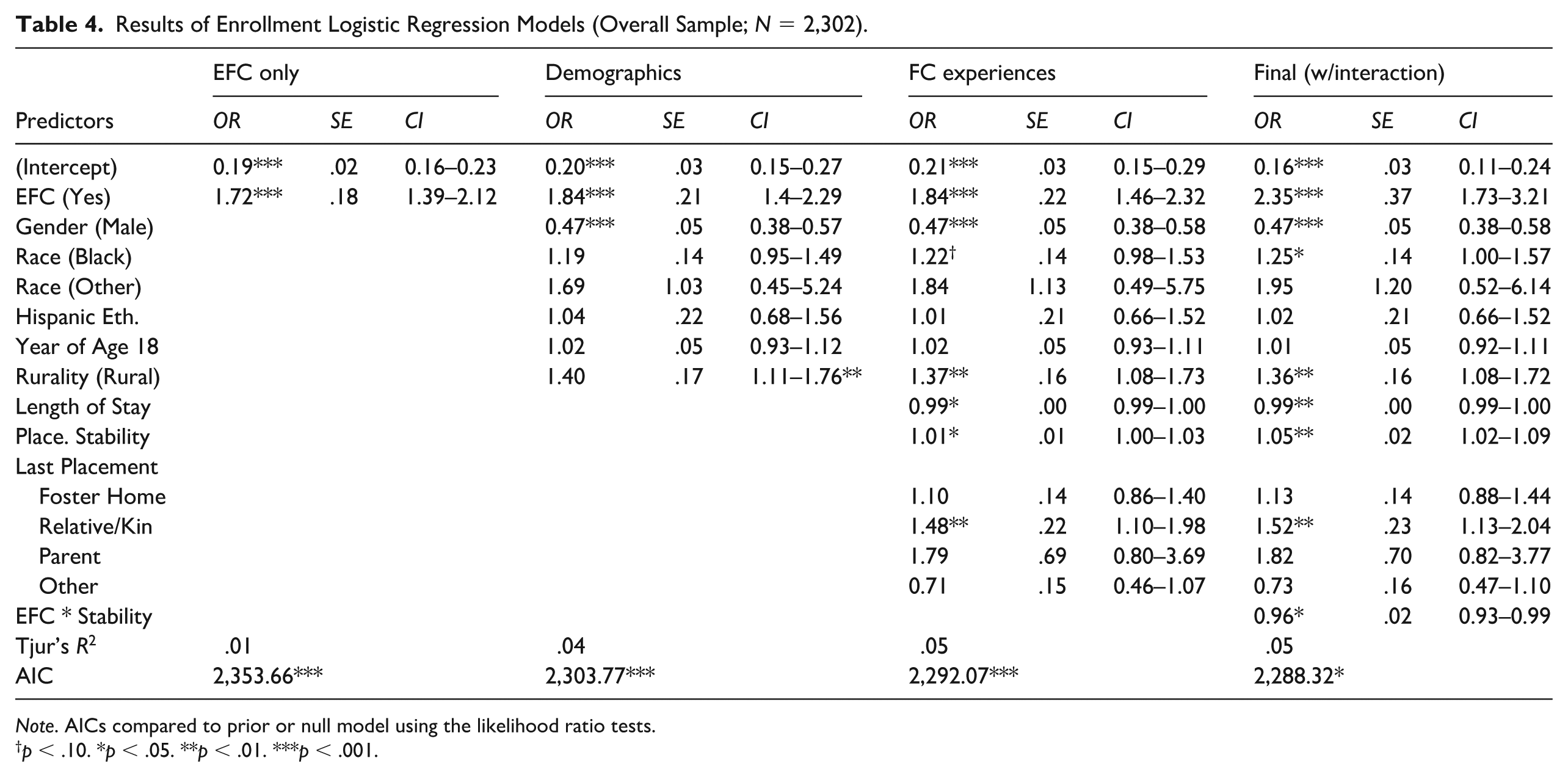
Note. AICs compared to prior or null model using the likelihood ratio tests.
p < .10. *p < .05. **p < .01. ***p < .001.
The final model also suggested that males’ odds of enrolling were 53% lower than females (p < .001), while Black youth’s odds were about 25% higher than their white peers (p < .01). Rural youth were estimated to have about 36% greater odds of enrollment compared to urban youth (p < .001). The model further estimated that 1 month per placement of greater stability on average increased the odds of enrollment by 5% when controlling for other factors (p < .05). Those who turned 18 while with kin had 52% greater odds of enrollment than those in residential placements (p < .01). A linear hypothesis test found that those in relative placements also had marginally greater odds of enrollment compared to those in foster homes (p = .06). The final model and best-fitting model (p < .05) included an interaction between EFC utilization and placement stability, and found that the relative greater odds of enrollment experienced by EFC utilizers compared to those who left care decreased as placement stability increased (p < .01).
AMEs and predicted probabilities were also calculated using estimates from the final logistic regression model to better understand the magnitude of the associations observed. Table 5 describes the AMEs of each predictor in the final model across all observations in the sample. On average, EFC utilization increased enrollment by 9.08% (p < .001). Males were 11.95% less likely to enroll on average, while Black youth were 3.55% more likely (p < .05). An increase of 1 month of average placement stability was associated with an increase in the probability of enrollment by 0.38% (p < .01). Relative placement was associated with a 7.13% (p < .01) change in probability of receipt, and rural youth had an average of 5.08% greater probability of enrollment. When predicted probabilities were plotted as shown in Figure 3, it was observed that the greater enrollment probability associated with EFC utilizers decreased as placement stability increased, but that it only reached an equivalent estimated probability of about 33% at around 20.5 months per placement (which only accounts for about 3% of the total sample). Thus, while the difference in AME between those in EFC and those who exit care is estimated to decrease for more stable youth, it remains positive for the overwhelming majority of youths in the sample.
Average Marginal Effects Calculated by Final Regression Models.
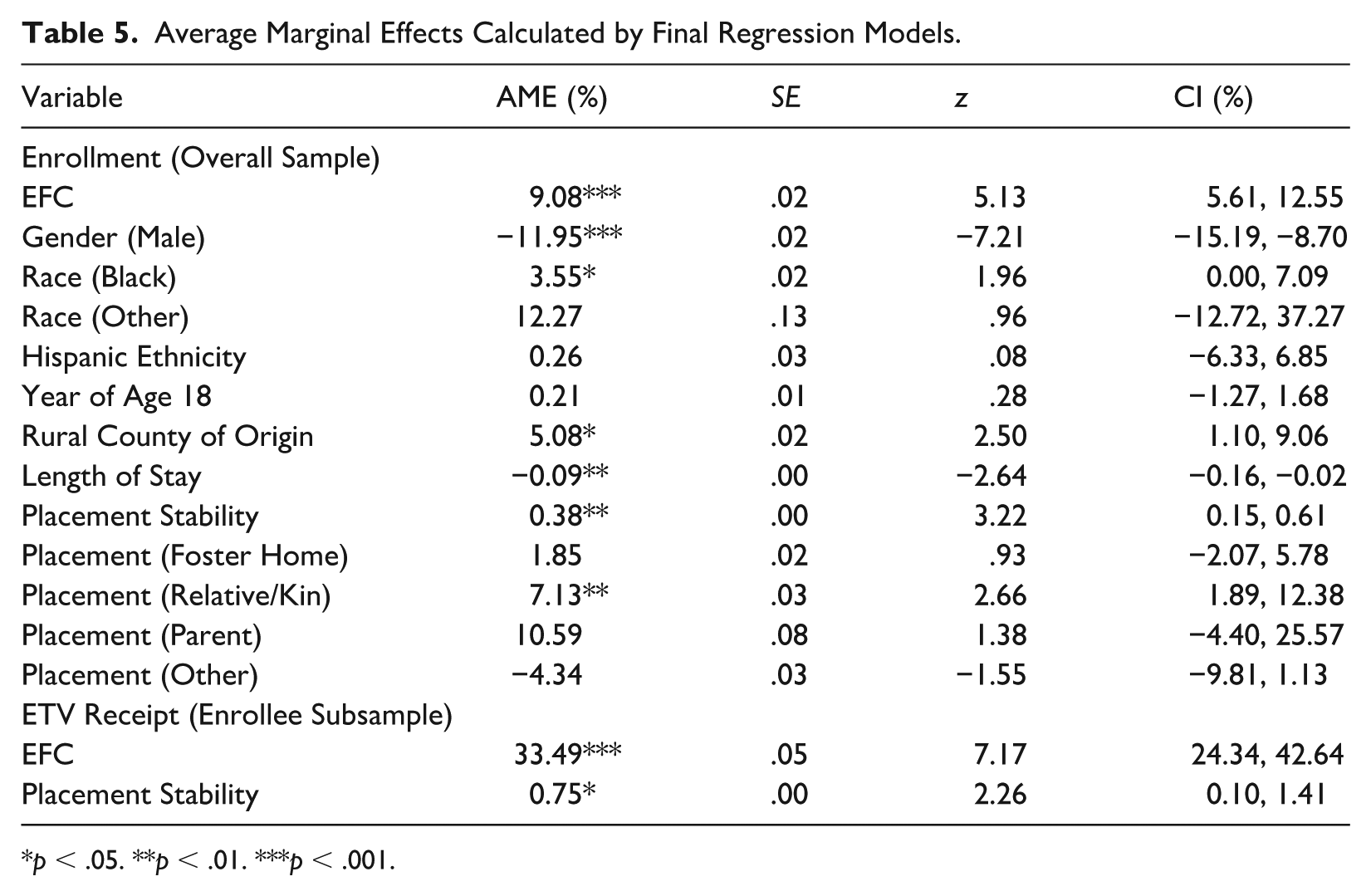
p < .05. **p < .01. ***p < .001.
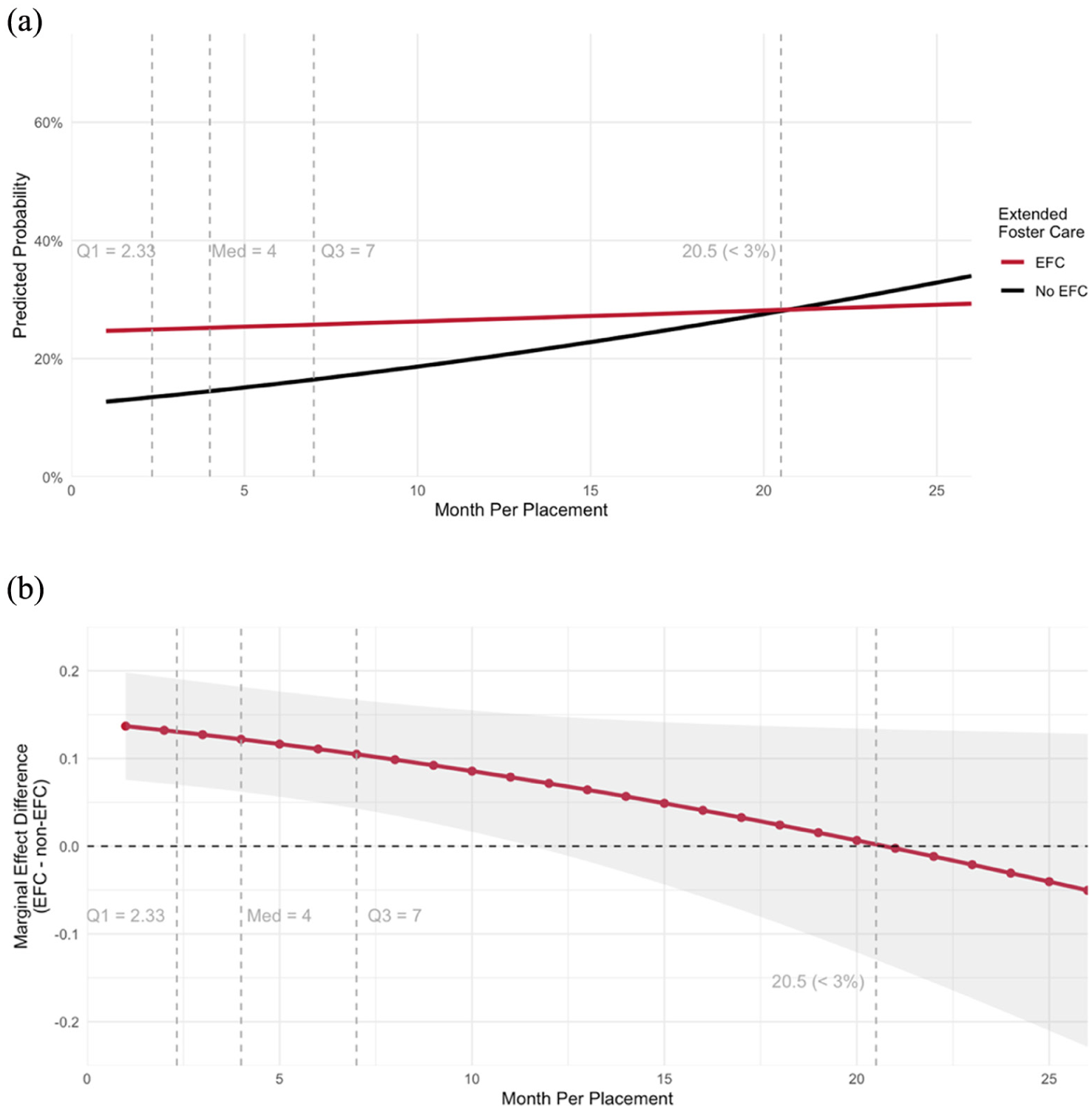
Differential (a) predicted probabilities and (b) marginal effects of EFC utilization and placement stability.
Predictors of ETV Receipt
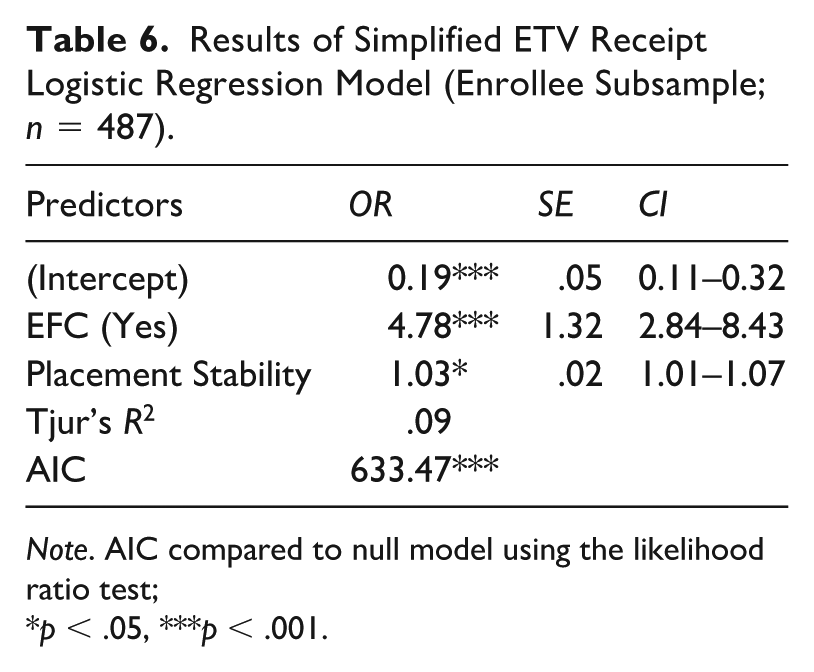
Table 6 shows the results for the simplified logistic regression model predicting ETV receipt among enrollees. Demographic characteristics and most foster care experiences were not shown to be predictive of ETV receipt once youth had enrolled in higher education, and models including these variables did not fit the data well. However, a simpler model containing only EFC participation and placement stability did perform better than a null model (p < .001). This model suggested that the odds of ETV receipt for those in EFC were 3.78 times greater than those who exited care at or immediately after age 18, when controlling for placement stability (p < .001). EFC participation was estimated to have an AME of 33.5%, while every additional month of stability had an AME of 0.75%. When modeled continuously, every month of EFC stay increased the odds of receipt by about 6% (p < .001).
Results of Simplified ETV Receipt Logistic Regression Model (Enrollee Subsample; n = 487).
Note. AIC compared to null model using the likelihood ratio test;
p < .05, ***p < .001.
Discussion
This study sought to understand the factors that predicted whether TAY who turn 18 while in foster care enrolled in higher education and utilized ETV funding, with an emphasis on the role that childhood and programmatic experiences while in foster care play in shaping educational and ETV program access. Overall, we found that about 21% of these youth ultimately enrolled in higher education, and about 46% of those enrolled received funds in the single state studied. Our findings align with other studies that have found that higher education enrollees among TAY populations are more likely to identify as female or Black (Hanson et al., 2023), despite the latter having more adverse experiences in foster care on average in this state’s context. Interestingly, this study did not find that demographic factors were predictive of ETV utilization once enrolled. One study examining the experiences of youth in California also did not find such differences when controlling for other factors (Okpych et al., 2020).
These outcomes and subgroup differences underscore several important disparities. On one hand, they point to the overall low rate of college enrollment for this subpopulation. Population-level estimates of immediate enrollment upon high school graduation for all young people in the United States (which even excludes later enrollees) are approximately three times greater (61%) than the rates found in this study (National Center for Education Statistics, 2024). They may also point to the ways in which child welfare services “level the playing field” for historically disadvantaged groups such as female, Black, and rural students. On the other hand, raw differences in utilization may also illustrate larger trends in higher education enrollment diversity. The fact that white and male students are generally shrinking as a proportion of college students nationally due to a host of factors may simply be mirrored in data related to enrollment and ETV utilization (Fry, 2023; O’Leary, 2024). It is notable, however, that the historically disadvantaged groups observed in this study were in fact able to access ETV funds at similar rates once the hurdle of college enrollment had been surmounted.
Addressing Differential Foster Care Experiences
Significant differences in the likelihood of both enrollment and ETV receipt were observed based on youths’ documented experiences in foster care, which likely illustrates the key educational challenges experienced by youth experiencing instability, turbulent trauma histories, and behavioral challenges. In our final models, every month of additional average placement stability was associated with an increase in the odds of enrolling in higher education and receiving ETV by age 24. The literature on placement disruptions makes it abundantly clear that the high rates of such instability among this population are often a consequence of the types of mental and behavioral health challenges (often resulting from traumatic stress) that hinder youths’ ability to thrive in both family and higher education settings (Geiger & Katz, 2025; Rock et al., 2015). Accordingly, while ETV-related research often highlights the need to reduce financial barriers as a means of increasing opportunity, findings such as the ones in this study also suggest that fostering well-being and stability for this population may be a necessary condition for youth to truly access higher education and other developmentally important resources as they navigate emerging adulthood.
This trend can also be observed through the differential enrollment and utilization rates experienced by youth who reached the age of majority in different placement types. Youth in crisis-related placements experienced the worst rates of enrollment out of all subpopulations examined in the study, regardless of other factors, although some estimates may be unreliable due to small subgroup sizes. It is also worth noting that those who turned 18 in residential settings and with a parent (while still remaining in the custody of the state) also had considerably lower rates of enrollment compared to their peers in foster homes or with relatives. In some ways, youth who both utilized the resources available through foster care placement and entered adulthood in a family-like setting can be seen as receiving the mutually-reinforcing facilitators of formal connectedness to resources and social supports that are critical at this stage in their educational development. However, low enrollment among the small subpopulation of youth who had returned home with parents (many of whom remain disadvantaged themselves even after child welfare intervention) may further suggest that the impacts of these social supports may be moderated by the types of advantages and resources offered by those in such family-like settings.
Understanding EFC Dynamics
EFC utilization was estimated to have the strongest associations with greater enrollment and ETV use rates observed in this study. Remaining in care was associated with a 135% increase in the odds of enrolling in higher education (an AME of about 9%) and a 378% increase in the odds of receiving ETV (an AME of about 33.5%). This facilitating effect can likely be explained by several factors that have been discussed in the research literature. Since its formalization in federal and state policy, EFC has been primarily intended as a means of increasing formal and social supports for this population that are likely to increase their motivation to enroll in postsecondary education and their awareness of resources to reduce potential burdens (Courtney & Hook, 2017). Furthermore, the additional resources provided to alleviate the responsibility of providing for one’s own financial independence at a young age (e.g., housing supports and life skills training) may also permit youth to focus on their education in more developmentally appropriate ways. It is also worth noting that the state included in this study has made EFC the default option for youth in care at age 18, which may also make this group more inclusive of larger swaths of the TAY population than normal. This observed association may, however, be complicated by the fact that both ETV and EFC share a common eligibility criterion—namely, enrollment in a higher education or equivalent program. While the state’s EFC policy also allows young adults to be eligible for extended services through employment and disability status, further studies should seek to parse out the extent to which EFC acts as a mechanism for higher education and ETV access rather than as an additional support that youth already engaging in higher education settings tend to use (i.e., whether the strength of this association represents a confounding effect of college enrollment).
It should also be noted that youth who did not utilize EFC had significantly higher placement instability than those who did, which corroborates research evidence that those with the most negative foster care experiences may be the most likely to refuse this resource (Wells & Zunz, 2009). EFC’s impact on enrollment rates lessened for those with more stable foster care experiences in this study, which highlights both the protective role that EFC may demonstrate for the most vulnerable youth and the unfortunate reality that many of those most in need do not utilize it. While policy changes such as the one enacted by this state to increase access to EFC likely go a long way to increasing educational and ETV access, more must be done to raise awareness and provide persuasive evidence of its effectiveness for youth who may be resistant to further child welfare involvement as they transition to adulthood.
Study Limitations and Future Research
This study uses robust, population-level linked data to highlight trends in ETV receipt; however, several limitations should be noted before interpreting its findings as broadly causal or generalizable. First and possibly most challengingly, the administrative data contain several sources of measurement and coverage error that warrant caution in interpreting population-level rates. The National Student Clearinghouse data are likely a significant underestimate of population-level youth participation in higher education due to matching and reporting challenges, and several of the demographic and foster care variables rely upon frontline professionals to accurately and comprehensively record realities about youths’ lives. This underestimation could have had an impact on the estimation of both descriptive rates and inferential relationships in our analyses. Several indicators that would paint a fuller picture of these lives (such as longitudinal placement history, first/native languages spoken, and the types of maltreatment that necessitated child welfare involvement) were not included in the data or not recorded in a way that allowed trajectories to be explored in greater detail. Outcome data for enrollment and ETV use also did not include other key outcomes that would assist in understanding youths’ emerging adulthood journeys, such as persistence, graduation, career satisfaction, living wage, mental health, and overall well-being. The absence of these variables not only limits the ability of this analysis to tell a fuller picture of youths’ experiences but also may have contributed to biased regression coefficients if such omitted variables confounded these key relationships (i.e., the relationship between EFC and enrollment may be lessened or no longer significant if both EFC and enrollment are predicted by higher mental health functioning). Including additional variables in future analyses could also shed light on whether, due to shared eligibility criteria, youth who are in EFC are already more likely to be on a higher education-related pathway that would increase ETV use or whether programmatic mechanisms truly facilitate access to this program.
Accordingly, the “treatment effect” of factors such as EFC and placement stability is likely confounded by the known differences among EFC stayers and non-stayers and should be accounted for using statistical techniques such as propensity score matching and the inclusion of additional control variables such as mental health and trauma histories. Future studies that include not only educational data and meaningful controls but also information about the length of EFC stay and the services delivered to eligible youth could provide more nuanced understandings of the predictors of educational success across the application-enrollment-graduation sequence. These rigorous quantitative methods should also be paired with qualitative and mixed methods research methods that can illuminate the most important factors for supporting youth resilience and the critically important firsthand stories told by youth who navigate the challenging path from foster care to adulthood.
This analysis also only provides an in-depth examination of one state’s context during a specific point in time (2015–2024). The generalizability of this sample is complicated by the unique state-level administration of ETV and EFC programs (Tiller et al., 2022) and the distinct experiences of ETV recipients during the years before, during, and after the COVID pandemic, as well as the overall population dynamics that exist within the state more broadly. Future research should not only explore data linkages in additional states but should also conduct analyses that account for geographical, population, and policy differences across jurisdictions and even subregions within jurisdictions. Such research can further the field’s understanding of how higher education and ETV reach different populations, as well as their differential impacts on youth with different experiences, contexts, and overlapping characteristics of disadvantage.
Implications for Practice
Despite the need for further investigation into the experiences of youth pursuing higher education opportunities, as well as youth eligible for and utilizing ETV programs, this study highlights several promising strategies that should be considered for system improvement strategies at the practice, administration, and policy levels. First, these findings underscore the reality that practitioners working with youth at risk of reaching emerging adulthood without legal permanency bear an incredible responsibility for meeting their needs in ways that support their long-term educational and developmental trajectories. TAY’s enrollment in higher education and later access to resources were observed to be shaped by a complex overlap of societal disadvantage, experiences while in foster care, and ongoing formal supports such as EFC and ETV. Systems and professionals must prioritize not only stabilizing youths’ mental and behavioral health needs to maximize placement and educational stability, but must also educate themselves about resources such as EFC and ETV as well as their potential benefits. Connecting youth to resources that foster well-being, stability, and awareness can shape their access to higher education settings and resources that will impact the overall health of their transition to adulthood, and professionals must ensure that the day-to-day demands of child welfare practice do not overshadow the vital work of facilitating youth inclusion and preparation in determining their long-term needs and goals.
This responsibility extends not just to frontline case managers, who are often less experienced and may have less awareness of resources, but also to supervisors, independent living specialists, agency leaders, campus support personnel, and external professionals such as guardians ad litem and service providers, who can all play a role in finding and communicating information relevant to youths’ educational trajectories. Many youth may not ultimately attend college, but it is crucial that practitioners involved in their lives offer information related to this opportunity so that youth are provided with the maximum number of options available to them and the awareness needed to make an informed decision. Accordingly, greater emphasis should be placed on capitalizing on the unique window of opportunity afforded by transitional planning and EFC periods through referring youth to comprehensive college preparation and support services, including proactive ETV application assistance, academic mentoring, and ongoing educational advocacy. The additional relationships, connectedness to support, and financial supports (e.g., housing) that likely shape the benefits of EFC observed in this study should be clearly articulated to youth through the supportive adults and professionals in their lives so that they can make educated decisions about the resources available to them. This could include early outreach programs, information sessions, and peer mentoring that increase their EFC and ETV awareness at younger ages to permit them to plan accordingly.
On an administrative and policy level, jurisdictions should develop best practices and innovations that maximize youths’ access to supports such as EFC and ETV. Such changes should emphasize the need for clear pathways to EFC for youth in all circumstances while not unduly compromising the need for familial support and permanency, including through licensing kin placements and foster homes that are particularly suited to support youth in emerging adulthood. Licensing and worker training for those serving this population of TAY should also include extensive detail regarding the processes for accessing and leveraging these support programs. States should also facilitate more broad eligibility for both EFC and ETV while also strengthening the degree and quality of support that participants in these programs receive. It is important that both secondary and higher education institutions also promote greater access and support linkages as youth seek to advance their educational goals. Counselors, campus support professionals, and administrators in these settings should take a proactive role in collaborating with child welfare professionals and youth to better understand the needs of youth involved in and transitioning from child welfare systems. In these ways, professionals can ensure that this vulnerable population is maximally equipped to not just overcome barriers to appropriate development as adults but to fully actualize their visions for a full and meaningful life in which they can thrive.
Footnotes
Disposition editor: Cristina Mogro-Wilson

Funding
The authors disclosed receipt of the following financial support for the research, authorship, and/or publication of this article: This project was funded by the Conrad. N. Hilton Foundation and conducted in partnership with the Georgia Department of Human Services.
Declaration of Conflicting Interests
The authors declared no potential conflicts of interest with respect to the research, authorship, and/or publication of this article.