







Abstract
A piezoelectric cantilever beam with a tip mass at its free end is a common energy harvester configuration. This article introduces a new principle of designing such a harvester that increases the generated power without changing the resonance frequency of the harvester: the attraction force between two permanent magnets is used to add stiffness to the system. This magnetic stiffening counters the effect of the tip mass on the efficient operation frequency. Five set-ups incorporating piezoelectric bimorph cantilevers of the same type in different mechanical configurations are compared theoretically and experimentally to investigate the feasibility of this principle: theoretical and experimental results show that magnetically stiffened harvesters have important advantages over conventional set-ups with and without tip mass. They generate more power while only slightly increasing the deflection in the piezoelectric harvester and they can be tuned across a wide range of excitation frequencies.
Introduction
Energy harvesting or scavenging are two terms commonly describing techniques for obtaining useful electrical power from the available energy in the environment. There are three main techniques for energy harvesting: vibration harvesting, thermal harvesting and solar harvesting.
Piezoelectric material is one of the three general vibration-to-electric energy conversion mechanisms, while the other two are electrostatic and electromagnetic transduction (Williams and Yates, 1996). Literature of the last few years shows that piezoelectric transduction has received most attention in powering electronic circuits; numerous scientific journals and conferences are due to this subject. The main reason why piezoelectric transducers are preferred for mechanical to electric energy conversion is that their energy density is three times higher compared to electrostatic and electromagnetic transduction (Priya, 2007).
Energy harvesting using piezoelectric materials is a promising technique, but there are a number of obstacles that currently limit the amount of the generated power. One major limitation is due to the necessary frequency matching: the maximum power is generated when the natural frequency of the harvester matches the excitation frequency. Manufacturing tolerances, excitation frequency changes and changes of electric load make frequency matching difficult. Al-Ashtari et al. (2012a) have developed an analytical model for piezoelectric bimorphs and conclude that manufacturing tolerances lead to a variation in the natural frequency of up to 5%, which cause a considerable drop in power. In our experiments, this drop was as high as 95%. Therefore, tuneable harvesters are essential for this technique to be commercially viable.
One technique for harvester tuning is to exploit the magnetic forces between permanent magnets. Literature shows that both attractive and repulsive magnetic forces can be used for enhancing the operation of piezoelectric harvesters. Depending on the separation distance, the alignment and the orientation of the magnets, their addition to an energy harvester introduces one or two non-linear effects. The first effect is the non-linear dependence of the magnetic force on the distance between the magnets and on their orientation. This effect is present in all systems. Literature shows that it can be modelled as an additional non-conventional spring, which allows the system to be analysed using linear equations. For example, Challa et al. (2008, 2011) fixed two small cylindrical magnets at the free end of a cantilever, one on the top and one on the bottom, and vertically aligned two magnets above and under the first two magnets. They used magnetic repulsion for the lower side and magnetic attraction for the upper side and tuned the harvester by changing the separation distances between these magnets. Zhu et al. (2010) used the attraction force between two axially aligned permanent magnets to change the resonance frequency of a cantilever beam in an electromagnetic generator. The opposing faces of the relatively large magnets are curved to maintain a constant separation distance between the two magnets during operation. Al-Ashtari et al. (2012b) introduced a tuning technique using attractive magnetic force acting in longitudinal direction of the cantilever. They presented a comprehensive derivation for modelling the effect of magnetic force as that of a non-conventional spring whose stiffness depends on the non-linear magnetic force.
A large number of publications show that repulsion between magnets can influence the stability of an energy harvesting system. This second non-linear effect of adding magnets to the system requires careful consideration, and the operation of such systems must be described using non-linear terms. For example, Cottone et al. (2009) proposed a piezoelectric bimorph cantilever with a tip magnet used as an inverted pendulum for non-linear energy harvesting and presented a lumped parameters model of the system. The magnet is repelled by another magnet with transversely adjustable position. Reducing the distance between the magnets leads to an increasing effective softening until the system changes from monostable to bistable at very small distances. A similar system was investigated by Karami and Inman (2011) and modelled using a distributed parameters approach. Stanton et al. (2010) also investigated bistable non-linear oscillators using magnetic repulsion. They proposed to use a cantilever beam and analysed it analytically and experimentally.
In this contribution, it will be shown that the configuration introduced by Neri et al. (2011) and Al-Ashtari et al. (2012b) can not only be used for tuning the frequency of energy harvesters over a wide range but it can also be used for significantly increasing the harvested electrical power. Many research projects work on increasing the output power of energy harvesters but most of them focus on developing new or optimised power flow concepts based on modifying the electrical harvesting circuit, such as Ottman et al. (2002), Badel et al. (2006), Dicken et al. (2009) and Ramadass and Chandrakasan (2010). The concept for power increasing introduced in this article is based on manipulating mass and stiffness, that is, mechanical quantities of the harvester. A new harvester configuration in which a tip mass is combined with magnetic stiffening has been developed. This allows increasing the power of energy harvesters without changing their natural frequency. Compared to a simple cantilever beam, this structure has two important advantages: it shows a considerable increase in the harvested power, and its resonance frequency can be tuned over a wide range of frequencies.
Many physical models have been introduced for predicting the voltage generated across a resistive load connected to piezoelectric harvesters. There are two classes of models, distinguished by the way that physical parameters are handled: models with distributed parameters and models with lumped parameters.
Models with distributed parameters are based on Euler–Bernoulli beam theory. These models evaluate the physical equations along the whole length of the beam. They generally give more accurate results than lumped parameter models but involve complicated mathematics and long mathematical expressions. Such models have, for example, been used by Lu et al. (2004), Chen et al. (2006), Lin et al. (2007) and Erturk and Inman (2008). Discretization of a model with distributed parameters leads to a lumped parameters model. Such models can be considered a less accurate approximation of the distributed parameters, but they are accurate enough for many applications. They also provide an explicit understanding of the operation of piezoelectric harvesters and can be handled with circuit theory by applying electromechanical analogies. This motivated Erturk and Inman (2008) to use their model with distributed parameters for deriving a correction factor for the lumped parameters model by du Toit et al. (2005) in order to improve its accuracy. Many researchers have used lumped parameters for modelling piezoelectric harvesters, for example, Roundy et al. (2003), Sodano et al. (2004), du Toit et al. (2005), Shu and Lien (2006), Richter et al. (2006) and Twiefel et al. (2007).
In this contribution, a lumped parameter model for piezoelectric energy harvesters with and without magnetic stiffening is introduced. This model is described by simple mathematical expressions and gives fairly accurate results. This allows further development and optimisation of piezoelectric harvesters.
Five set-ups incorporating piezoelectric bimorph cantilevers of the same type are compared due to theoretical and experimental results: one bimorph is unmodified; two bimorphs have tip masses of different size, reducing their natural frequency. The other two bimorphs carry similar tip masses but are additionally stiffened to compensate the drop of the natural frequency caused by the tip masses. All bimorphs were tested for different resistive loads and excited at constant base velocity amplitude. The implications of velocity- or acceleration-controlled excitation are discussed.
Theoretical and experimental results show that magnetically stiffened harvesters have important advantages over conventional set-ups with and without tip mass: they generate more power while only slightly increasing the strain in the piezoelectric transducer and they can be tuned across a wide range of excitation frequencies. The high power output, the wide tuning range and the good efficiency make magnetically stiffened harvesters a very promising option for future energy harvesting applications.
Piezoelectric harvester modelling
A typical piezoelectric energy harvester is a cantilever beam consisting of a shim layer and one or two layers of piezoelectric ceramic. Often a tip mass

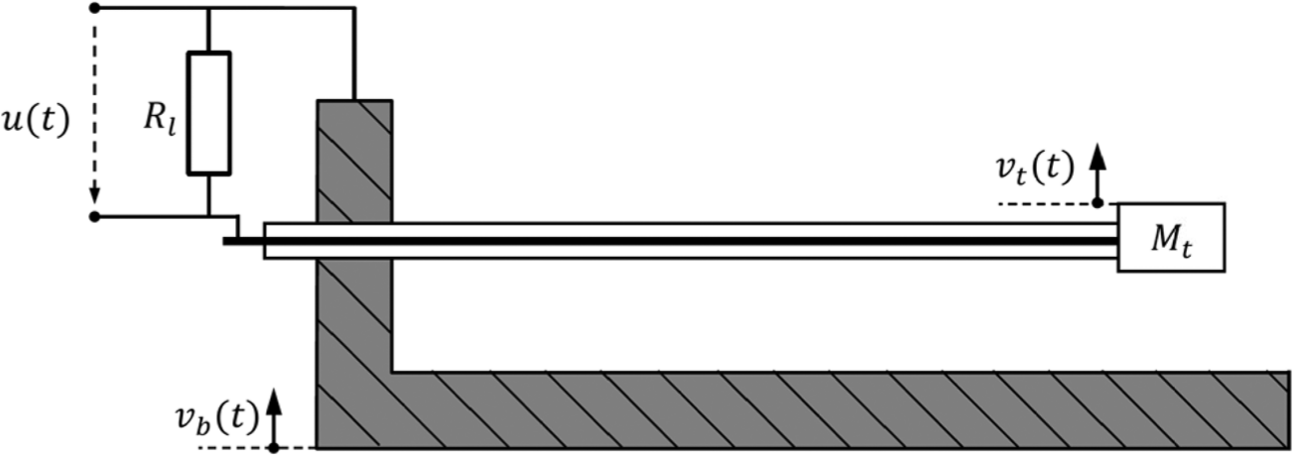
Typical energy harvesting system.
The piezoelectric harvester is an electromechanical device with both mechanical and electrical characteristics. For system analysis and optimisation, it is convenient to introduce a single domain representation of the electromechanical system applying electromechanical analogies. Figure 2 shows the lumped parameter electrical equivalent system similar to the one used by Richter (2010). Compared to the model by Roundy et al. (2003), this model allows nonzero base velocities.
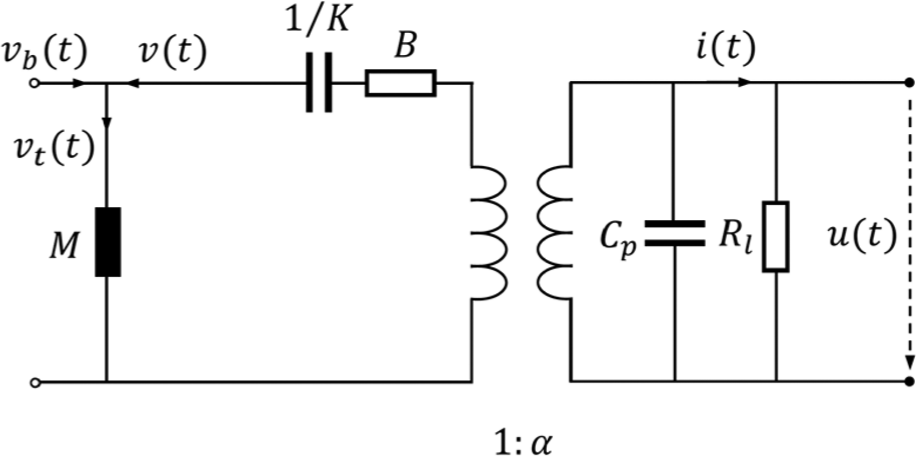
Equivalent electrical model of a base-excited piezoelectric energy harvester.
The parameters describing the electrical properties are the capacitance
A physical model of the energy harvester is used to calculate the characteristics of the energy harvester such as input and output power and vibration amplitude. This model can also be used to design and optimise energy harvesters. The derivation of the model starts with the governing equation of the piezoelectric harvester
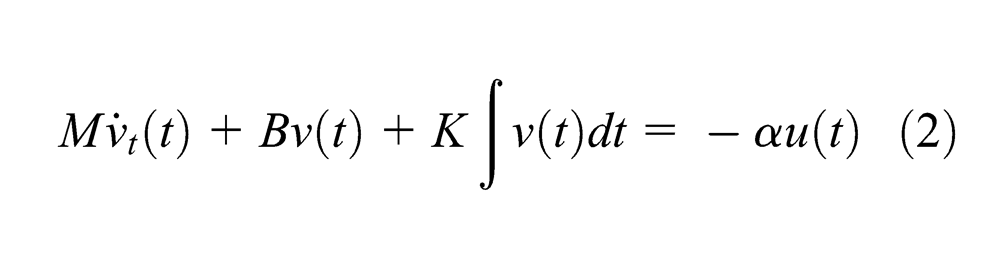
After subtraction of
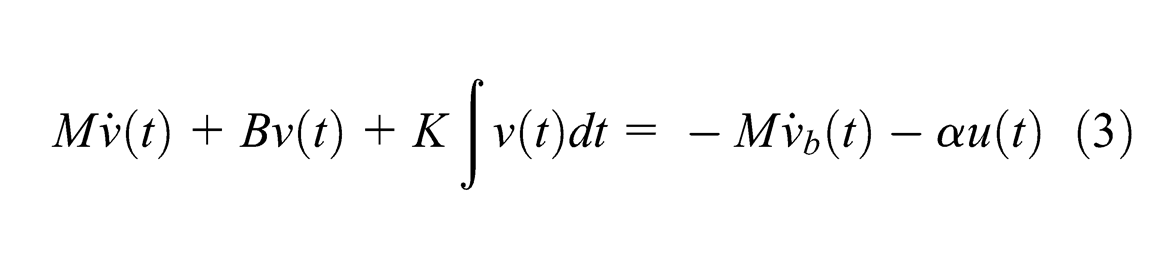
For the electrical system shown in Figure 2, the following equations are found


Laplace transformation of equations (3), (4) and (5) at zero initial conditions results in
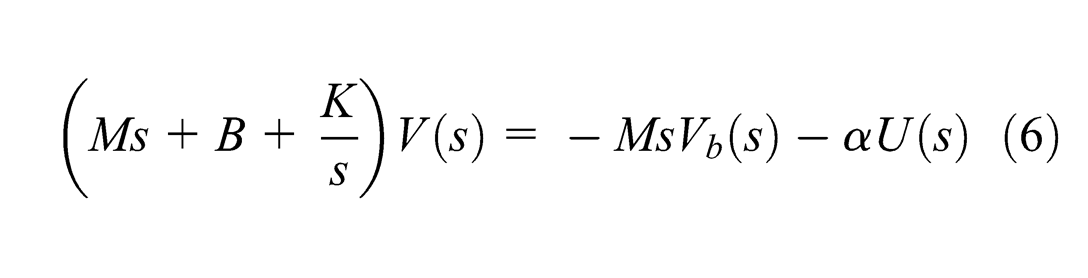


where
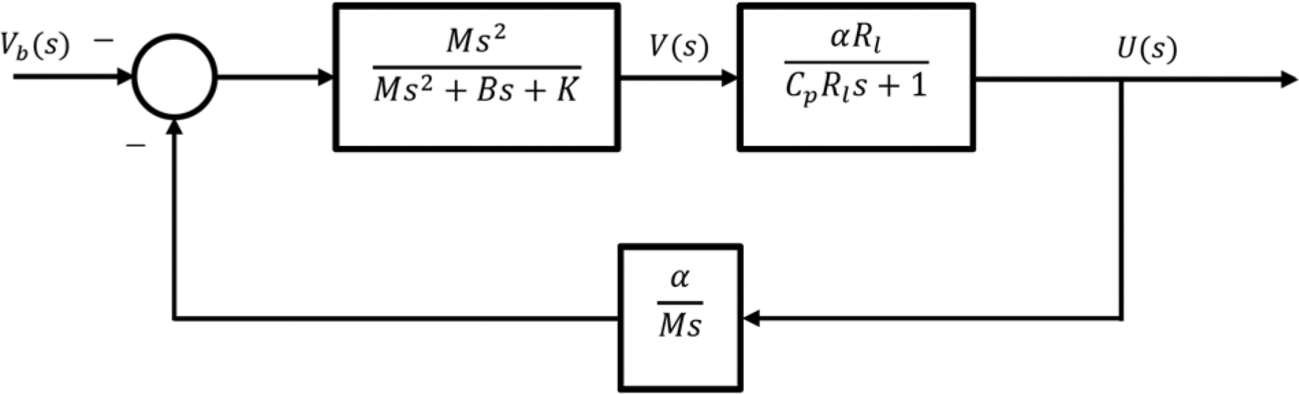
Block diagram of a base-excited piezoelectric harvester.
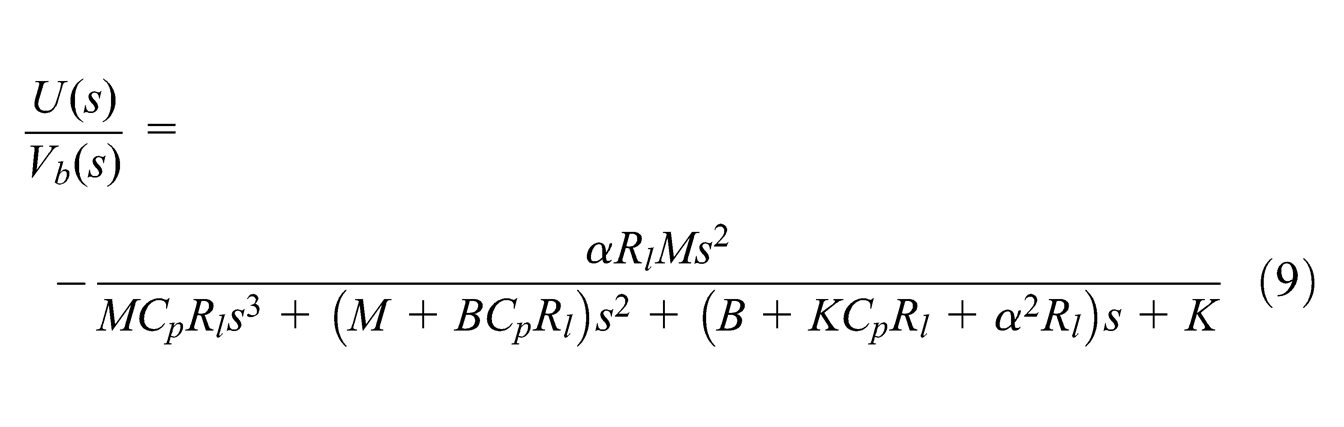
The system transfer function of the block diagram shown in Figure 3 is
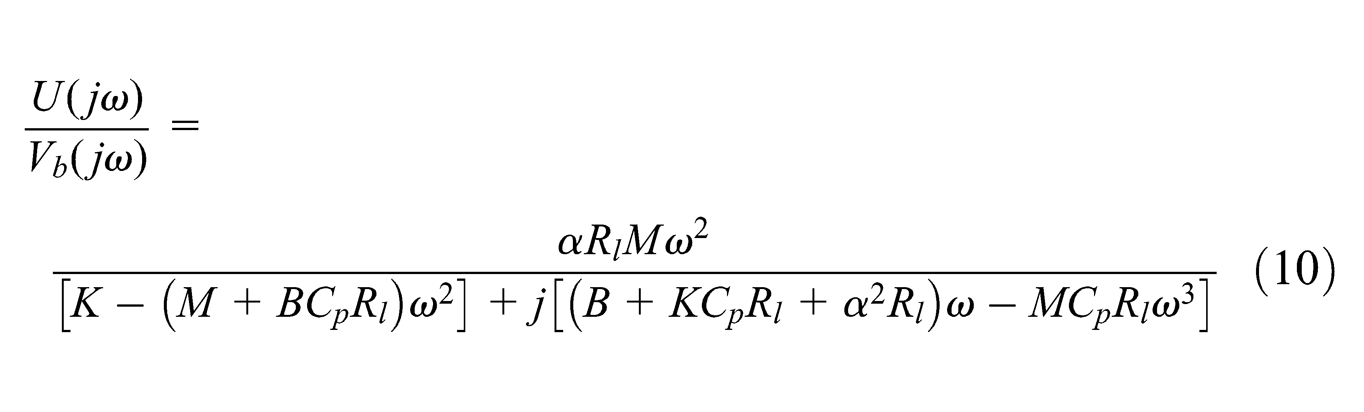
The sinusoidal transfer function is
In terms of natural frequency
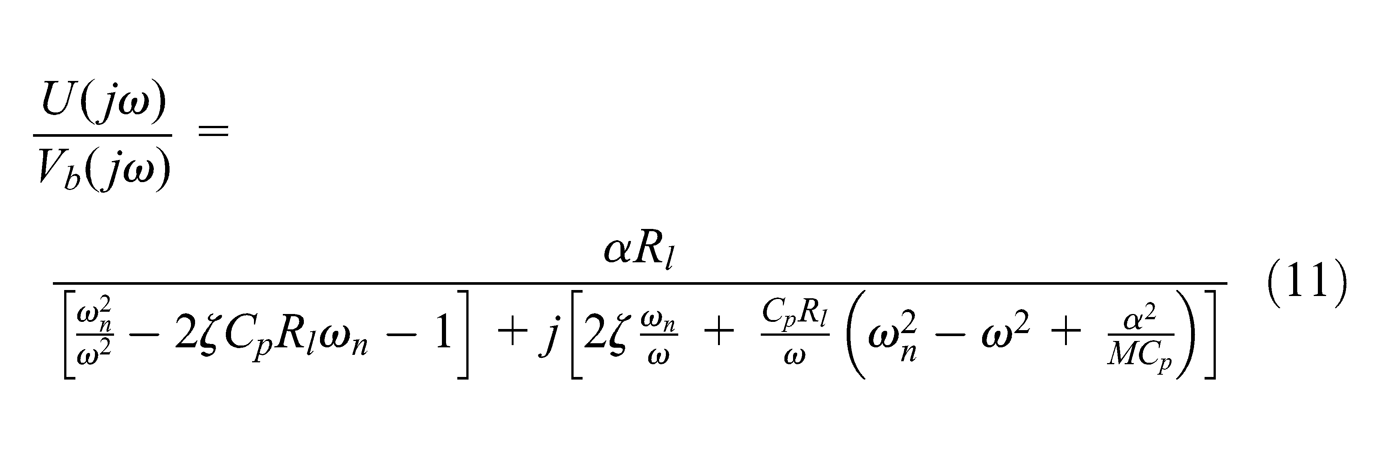
where

and

According to the equivalent electrical circuit shown in Figure 2, the ratio

where

with the voltage amplitude
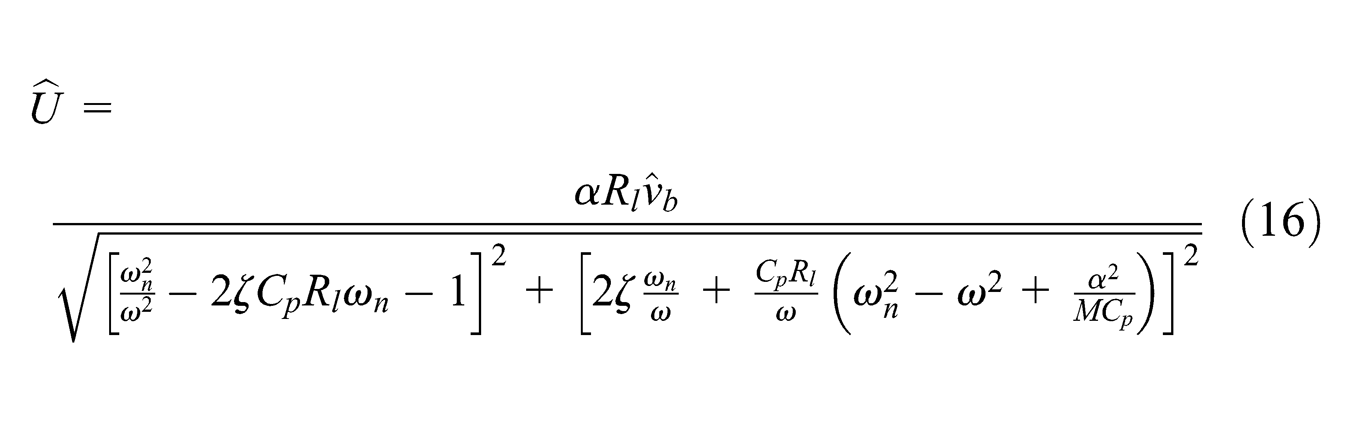
and the phase difference between voltage and base velocity
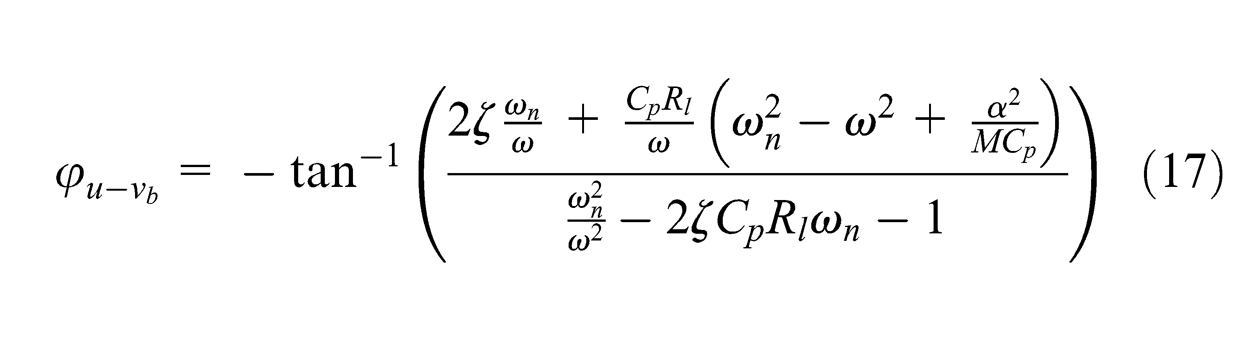
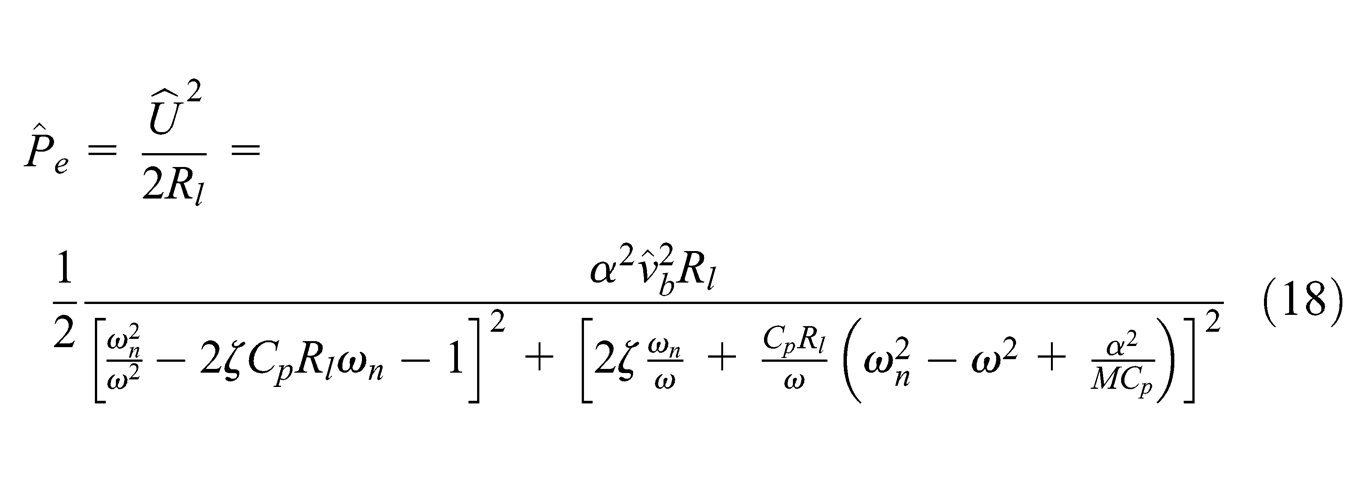
The average power dissipated by the load can be expressed as
The amplitude of the beam deflection, which is a measure for the strain inside the bimorph, is expressed as

where
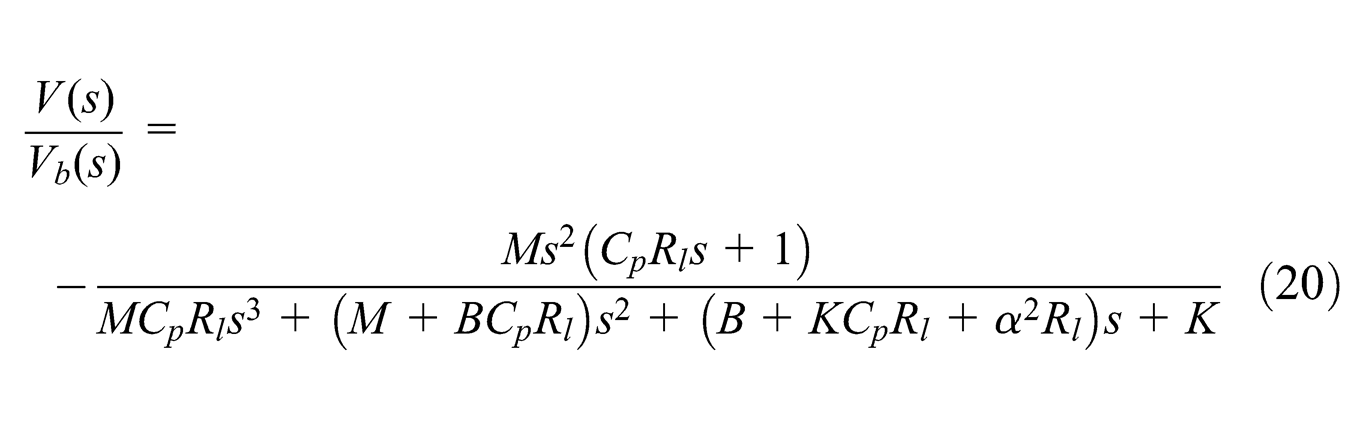
which, following equations (12) and (13), can be written in terms of natural frequency and damping ratio as
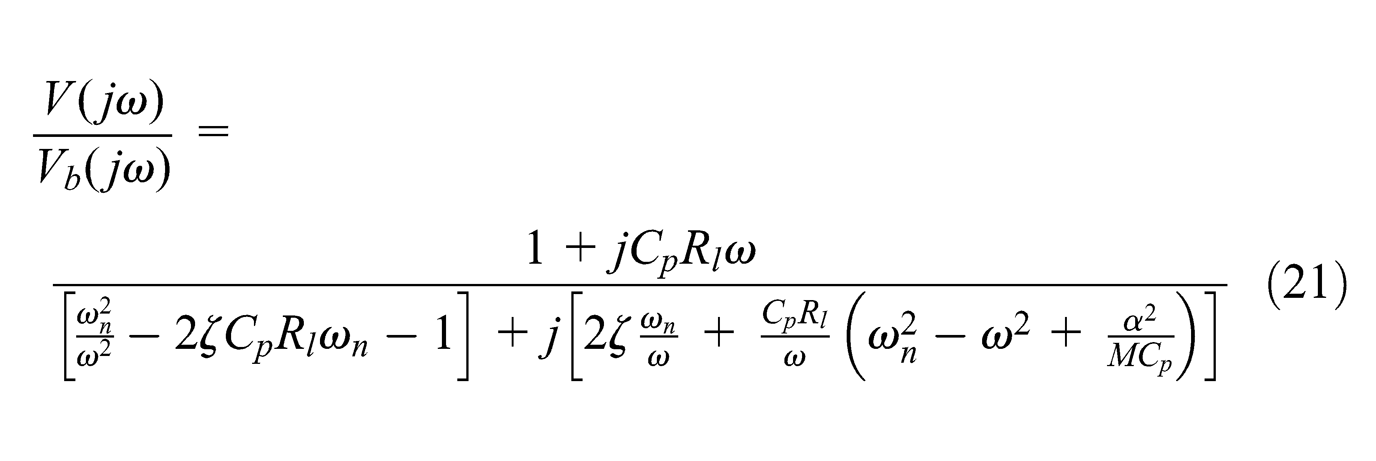
Thus, if the relative velocity is expressed as

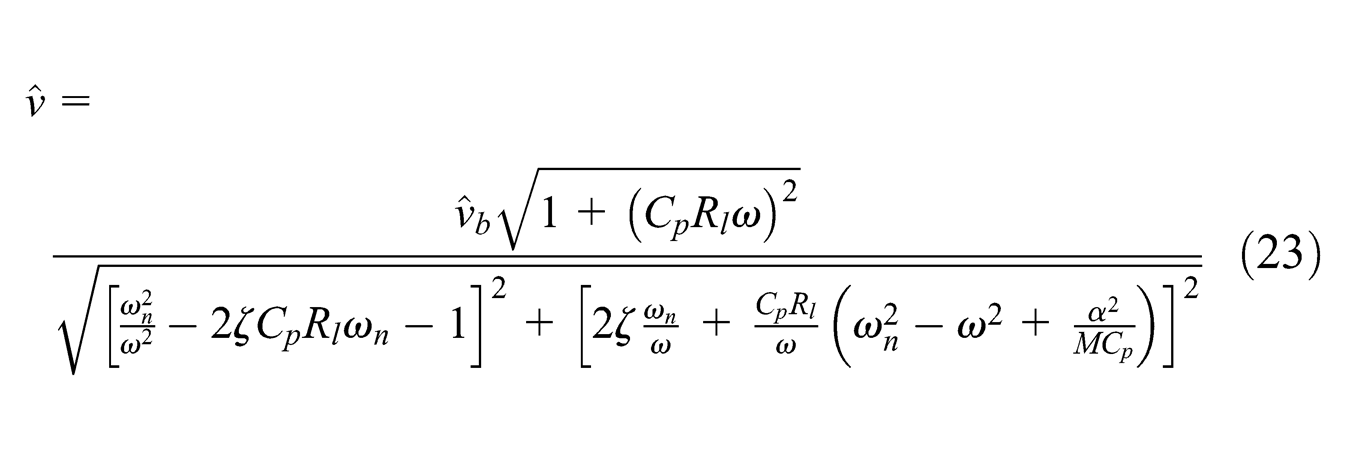
its amplitude can be written as
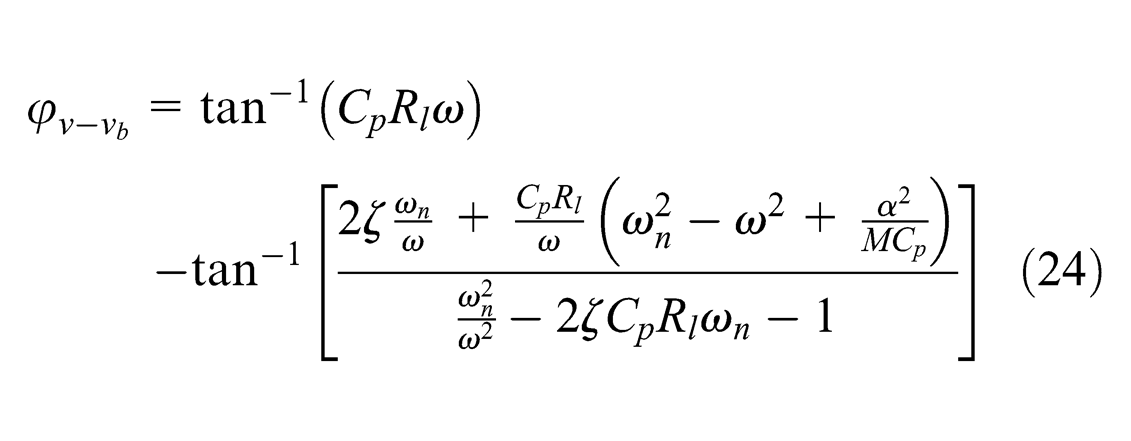
and the phase difference between the two velocities is described by
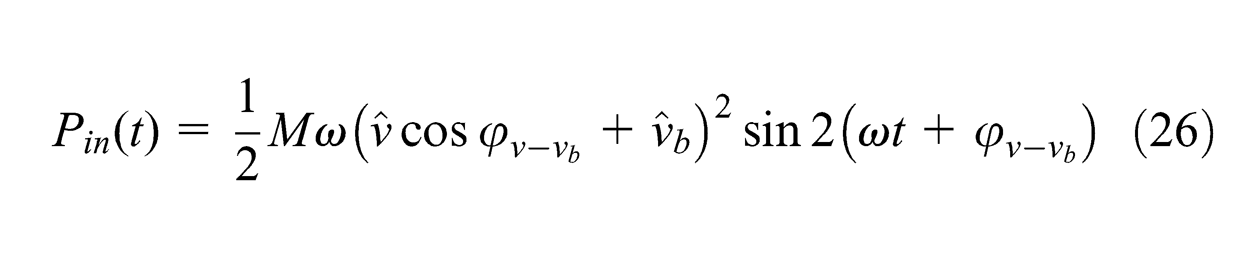
The mechanical power required to keep the system in steady vibration can be regarded as the input power of the energy harvester and is described by

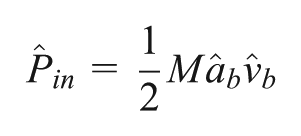
Applying equations (1) and (14) into equation (25) with some mathematical simplifications and trigonometric transformation leads to the following formula
Thus
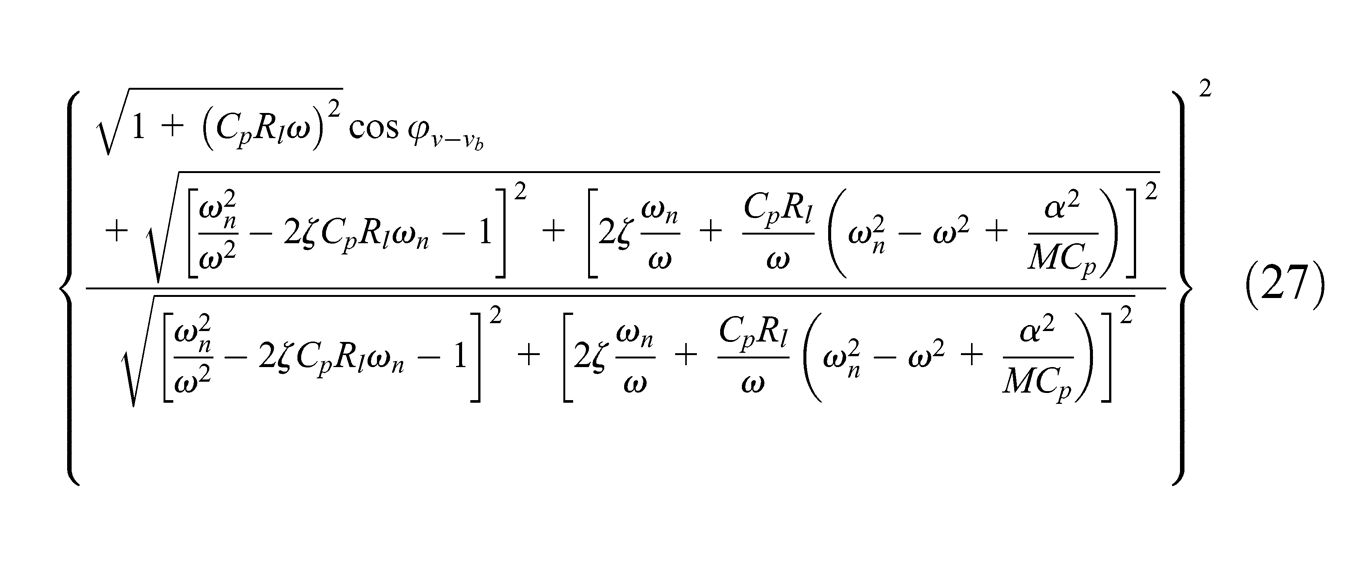
where

where

Substituting equations (13) and (23) into equation (27) results in
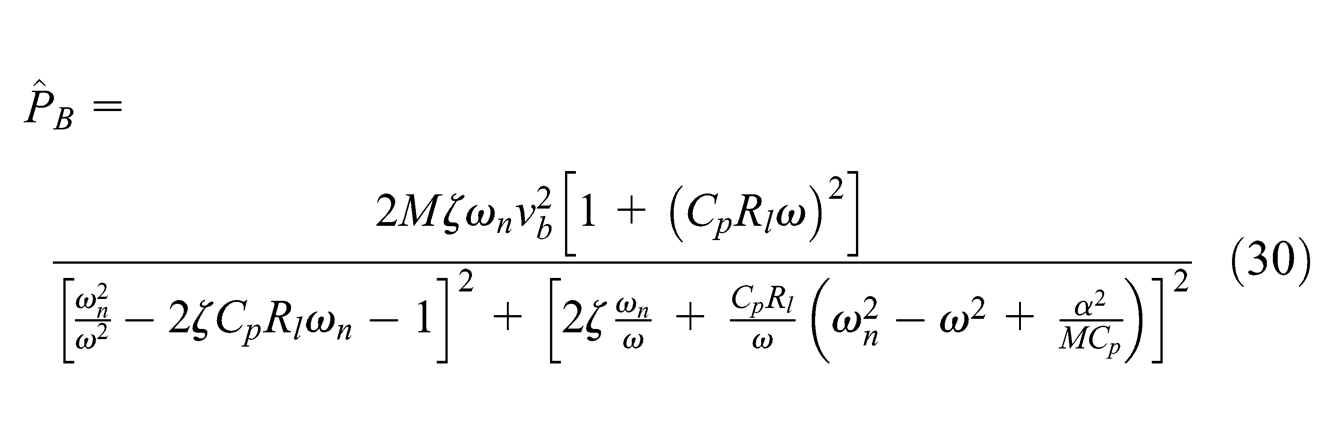
and with equation (18) follows for the dissipated power
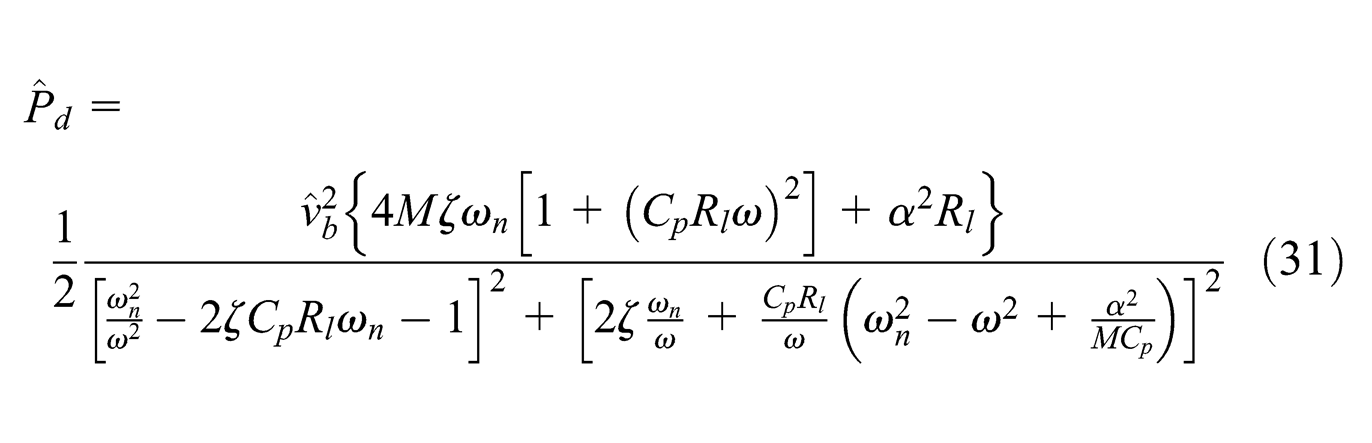
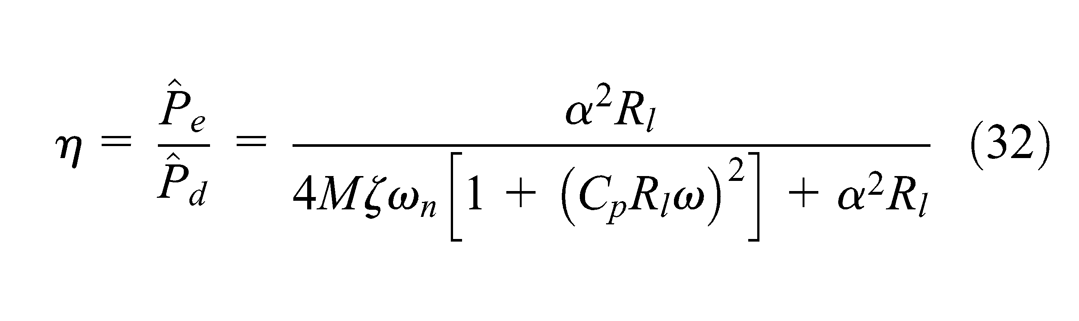
There is no generally accepted definition for the efficiency of energy harvesters and for an application-neutral comparison of different systems, especially if there are conceptual differences between the systems, other figures of merit such as the ‘effectiveness’ proposed by Roundy (2005) are more suitable. Two reasonable definitions for the efficiency of energy harvesters can be deduced from the above formulas, relating the output power
Magnetic stiffening technique
It can be deduced from equation (18) that the electrical output power can be increased by increasing the equivalent mass
The power increasing technique is based on the magnetic tuning method introduced by Al-Ashtari et al. (2012b). If the tip mass of a set-up as shown in Figure 1 is replaced by a magnet and a second magnet is attached to the vibrating structure as shown in Figure 4, the resonance frequency of the harvester can be adjusted by changing the distance
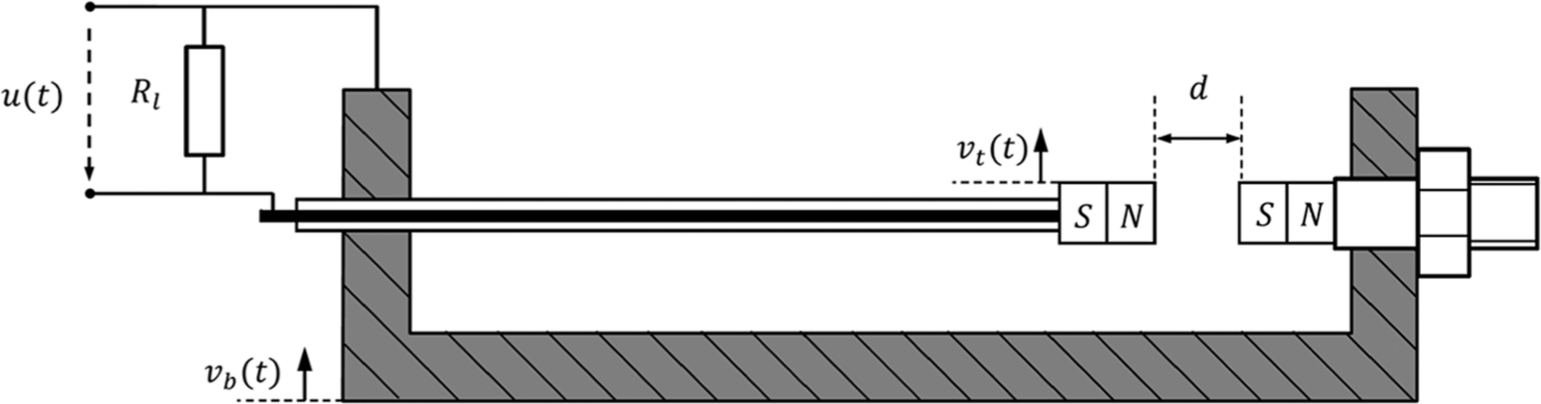
Principle set-up of a magnetically stiffened harvester.
The equivalent electrical model of the proposed harvester set-up is the same as shown in Figure 2, with the value of the motional capacitance decreased to

where
Experimental set-up
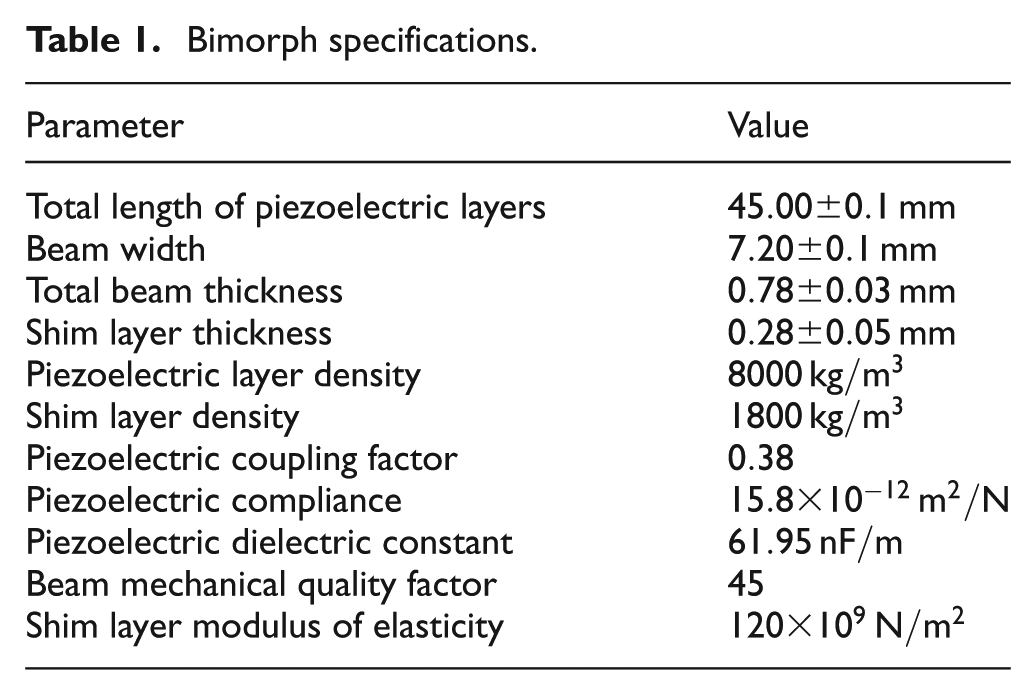
Five different harvester set-ups are investigated experimentally, all using the same type of piezoelectric bimorph, SITEX-Module 427.0085.11Z from Johnson Matthey. The specifications of the bimorphs are given in Table 1. Their vibrating length is about 40 mm in the experiments.
Bimorph specifications.
As tip masses and for the magnetic stiffening, two types of neodymium magnets from HKCM Engineering were used, Q08.5x02x01.5Ni-48H with a mass of 0.19 g and Q10x04.5x04.5Ni-N52 with a mass of 1.51 g.
The characteristics of the harvester set-ups are summarised in Table 2. While ‘reference set-up’ refers to the original cantilever beam without any mass or magnetic stiffening, ‘tip mass set-up’ describes the original cantilever beam with a tip mass attached to its free end, and finally, ‘stiffened set-up’ refers to the cantilever beam with a magnetic tip mass and magnetic stiffening.
Characteristics of harvester set-ups.
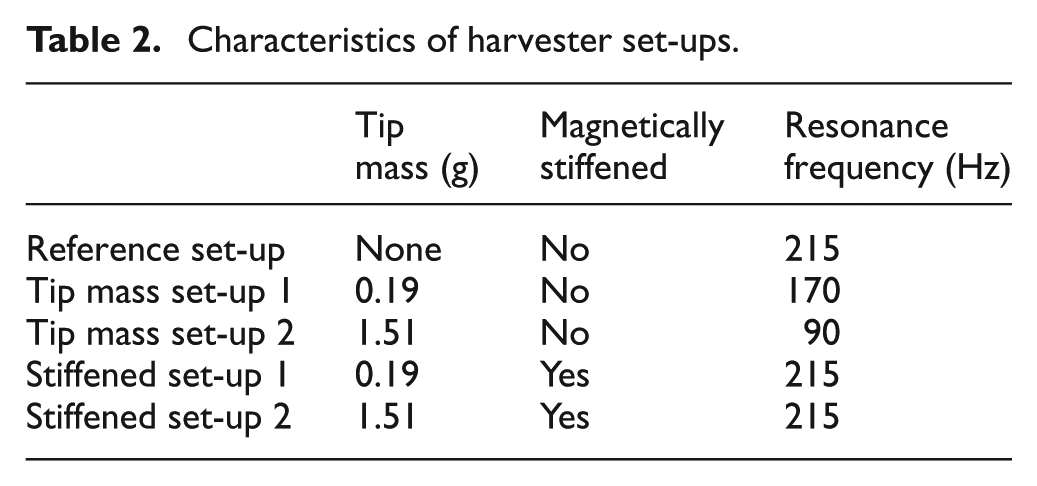
Figure 5 schematically shows the experimental set-up used in this article. The harvesters are excited by an electrodynamic shaker. The base velocity is monitored using a laser vibrometer, and the amplitude of the shaker voltage is manually adjusted to achieve the desired steady base velocity amplitude. The harvester base frame is rigid compared to the bimorph structure, so that the measured velocity at any location on the base frame is the same.
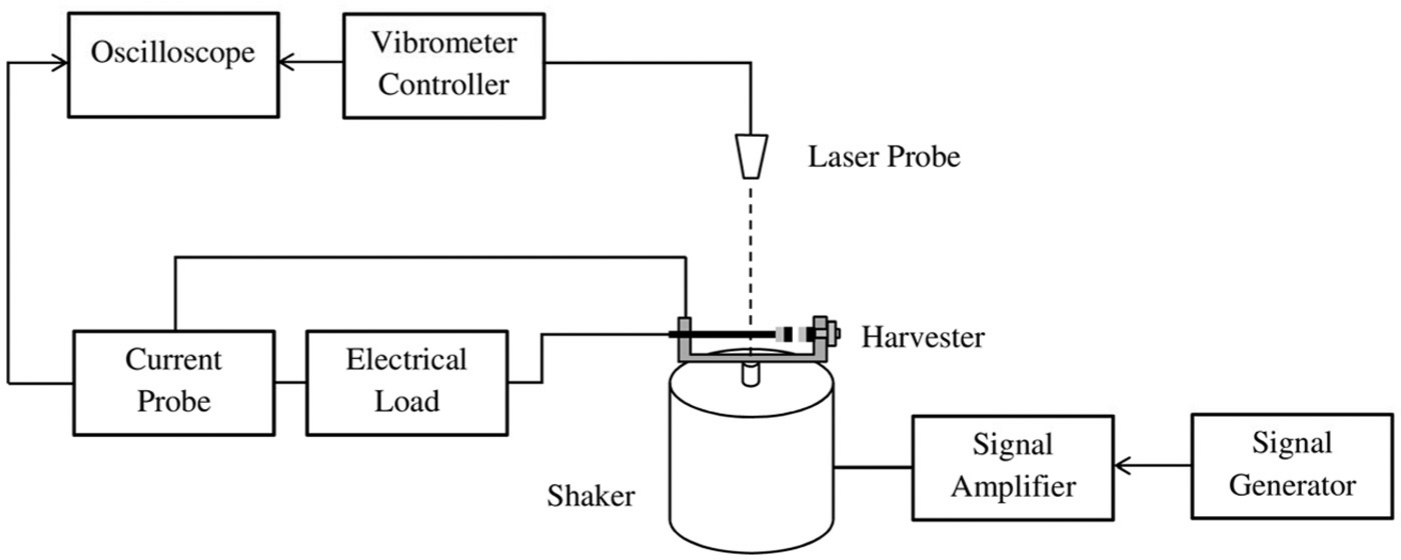
Schematic of the experimental set-up.
The experimental set-ups with tip masses are similar to the ones depicted in Figures 1 and 4, respectively. For technical reasons, the larger magnet has not been glued to the face of the bimorph, but on top of it and aligned with the face. This reduces the free vibrating length of the bimorph assumed in the calculations by the width of the magnet. Figure 6 shows this set-up.
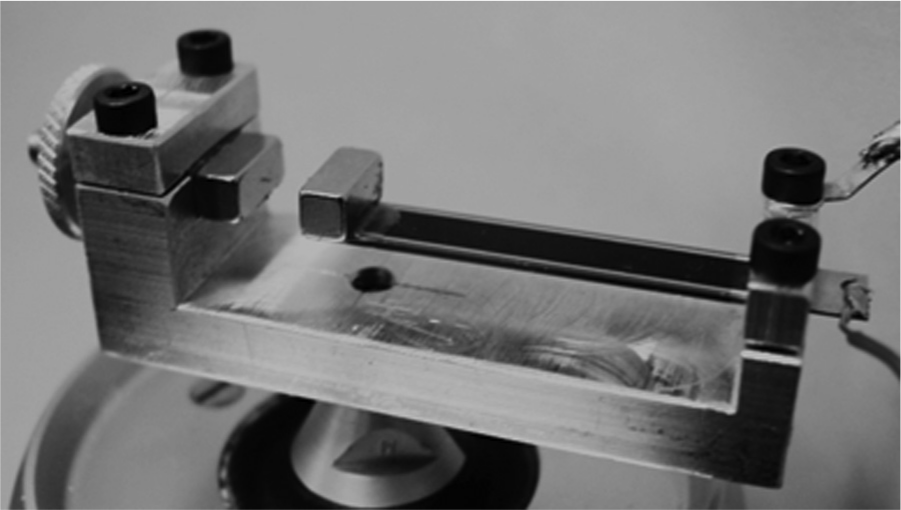
Magnetically stiffened harvester (stiffened set-up 2).
When comparing set-ups with different operating frequencies, the amplitude of excitation is an important factor. Experiments found in literature use either equal acceleration amplitude (Kim et al., 2010; Reilly et al., 2011; Roundy 2005; Zhu et al., 2008) or equal velocity amplitude (Loverich et al., 2008; Richter et al., 2006; Sherrit, 2008; Twiefel et al., 2007).
Equal acceleration amplitude is most often used in order to have equal input power. However, equations (27) and (31) show that neither equal total input power nor equal dissipated power is generally reached by equal acceleration amplitude. Investigation of equations (27) and (31) shows that the influence of the excitation amplitude on the respective powers depends on both excitation frequency and load and that

Roundy (2005), using a different modelling approach, has found this proportionality for resonant operation of piezoelectric harvesters. Thus, excitation with constant
Operation at equal input power effectively leads to a comparison of the efficiency. Whether the efficiency of energy harvesters is important or not is an often discussed topic. The significance of the efficiency, that is, the relation of output to input power, depends on the application. High efficiency is important if the desired output power shall be achieved while minimising the damping effect of the harvester on the host structure, thus drawing the minimum possible mechanical power from the excitation. In other applications, for example, vibration reduction, this damping is a desired effect and low efficiency can be regarded positive. But if the exciting vibration can be assumed to be uninfluenced by the harvester, harvester efficiency is irrelevant and absolute output counts. This is true for many real-world applications of energy harvesting.
In order to neutrally compare different energy harvesters for such applications independent of their individual optimum operation frequency, it is reasonable to assume that the vibrating host structure has equal vibrational energy at different frequencies. This can be achieved by ensuring equal excitation velocity as vibrational kinetic energy is a function of velocity. In the experiments and simulations documented below, an excitation with a base velocity amplitude of 2.5 mm/s has been applied.
In the experiments, the harvesters are excited by an electrodynamic shaker. The base velocity is monitored using a laser vibrometer, and the amplitude of the shaker voltage is manually adjusted to achieve steady base velocity amplitude. The harvester base frame is designed to be rigid compared to the bimorph structure, so that the measured velocity at any location on the base frame is the same. For measuring the beam deflection, a differential laser vibrometer is used with one beam pointed to the tip mass and the other pointed to the base frame.
It is well known that the power generated by a piezoelectric energy harvester is highly load dependent. The output terminals of the bimorphs are therefore connected to a resistor decade to investigate the influence of the load. The load is varied between 100 Ω and 20 kΩ. The base velocity is kept constant for all loads, and the steady-state amplitudes
Results and discussion
Figure 7 compares the theoretically and experimentally determined generated power of the different set-ups with a common resonance frequency of 215 Hz: reference set-up, stiffened set-up 1 and stiffened set-up 2. It is obvious that the magnetically stiffened harvesters generate much more power than the reference set-up especially at high load resistance. Stiffened set-up 2 with a larger tip mass and accordingly larger additional stiffness generates more power than stiffened set-up 1.
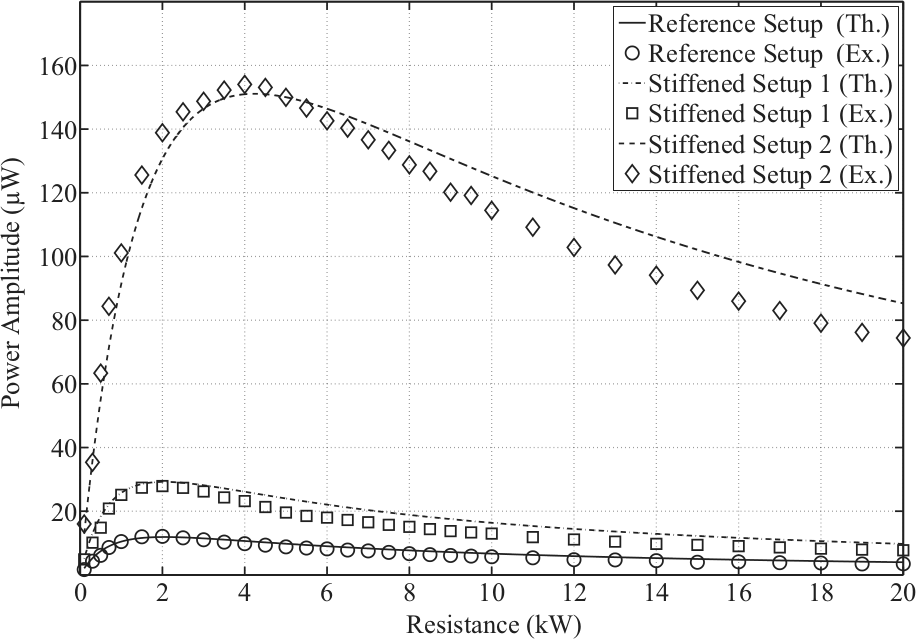
Generated power of three set-ups operated at their resonance frequency of 215 Hz.
Figure 7 also shows that magnetic stiffening influences the optimal load of an energy harvester, where the optimal load is defined as the load for which the harvester generates the highest power. For the investigated set-ups, the optimal loads are identified as 2.1 kΩ for the reference set-up, 2.2 kΩ for the stiffened set-up 1 and 4.1 kΩ for the stiffened set-up 2. Figure 8 shows a frequency sweep of the three set-ups driving the individual optimal loads. All three set-ups show a qualitatively similar frequency behaviour and a good agreement between experiment and model. Figure 8 also shows that the asymmetry of the experimental data around the frequency of maximum power, which is caused by non-linear effects neglected in this investigation, is very small.
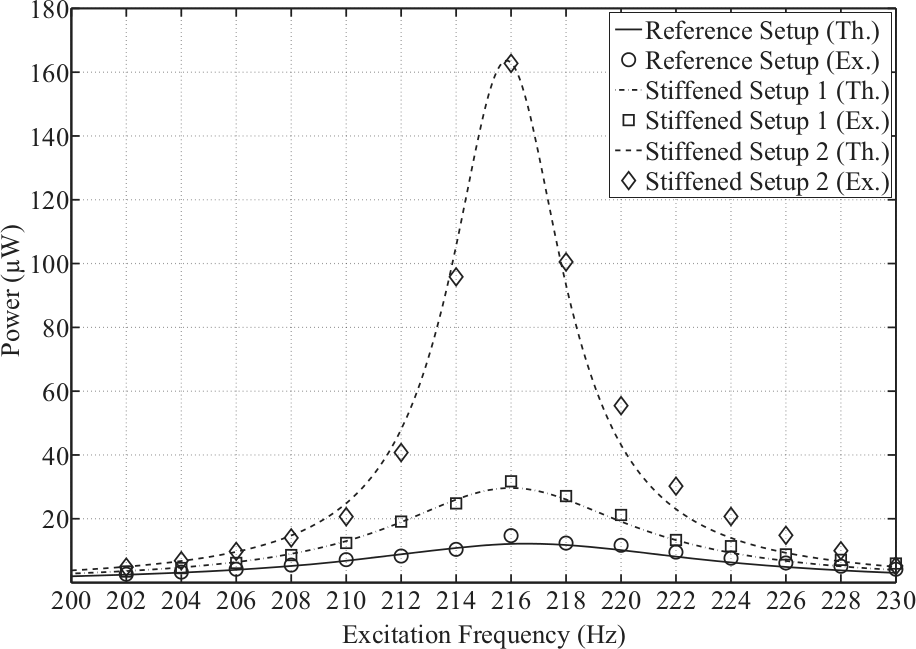
Frequency sweep of the generated power of three set-ups, each driving its optimal resistance.
The deflection of the bimorph tip is proportional to the strain inside the bimorph and as such is relevant for determining the lifetime and maximum allowable excitation amplitude. Figure 9 shows the corresponding deflection of the three set-ups. As expected, a larger tip mass leads to a larger deflection of the bimorph. But the power increase is not only caused by the increased deflection. The maximum power of stiffened set-up 2 is more than 13 times the maximum power of the reference set-up, with the deflection only being increased by a factor of about 2.6 as Figure 9 shows.
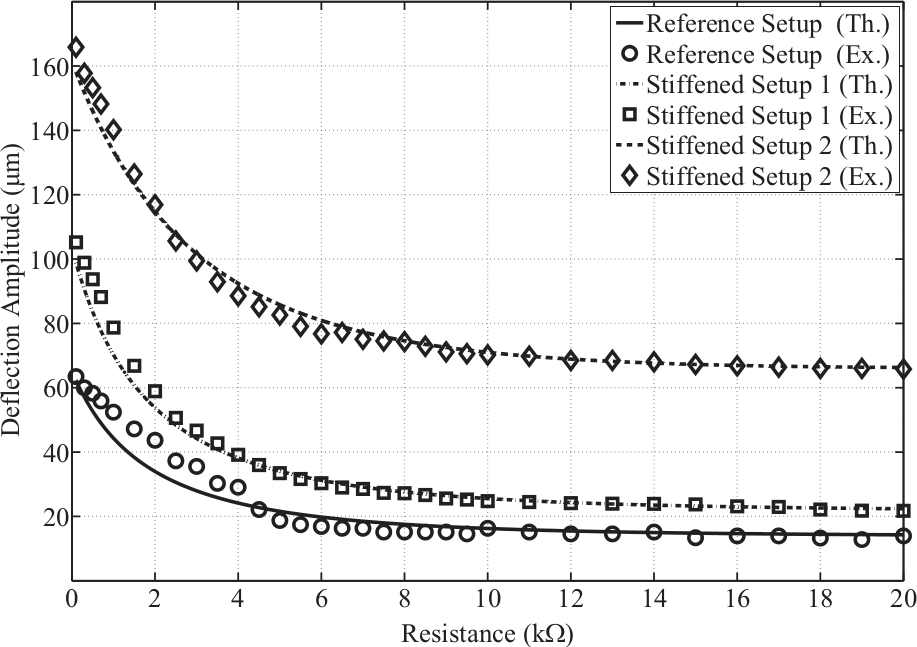
Bimorph deflection amplitude of three set-ups operated at their resonance frequency of 215 Hz.
The resistive loads connected to the reference set-up and stiffened set-up 1, respectively, can be adjusted so that both set-ups have the same deflection amplitude when excited at their common resonance frequency and with the same amplitude, as can be seen in Figure 9. Under these conditions, the generated electrical power of stiffened set-up 1 is significantly higher than that of the reference set-up.
Figures 10 and 11 show the power advantage of magnetically stiffened harvesters over using harvesters with a passive tip mass of the same size. The magnetically stiffened harvesters generate much higher power while increasing the bimorph deflection at optimum load by only approximately 50%.
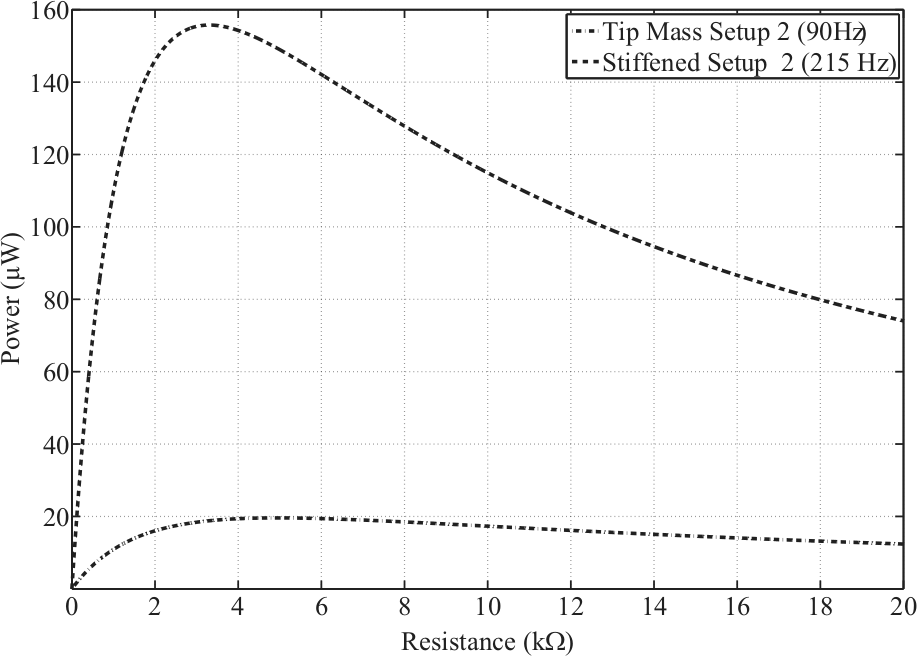
Calculated power generated by a bimorph with a tip mass of 1.51 g, without and with magnetic stiffening.
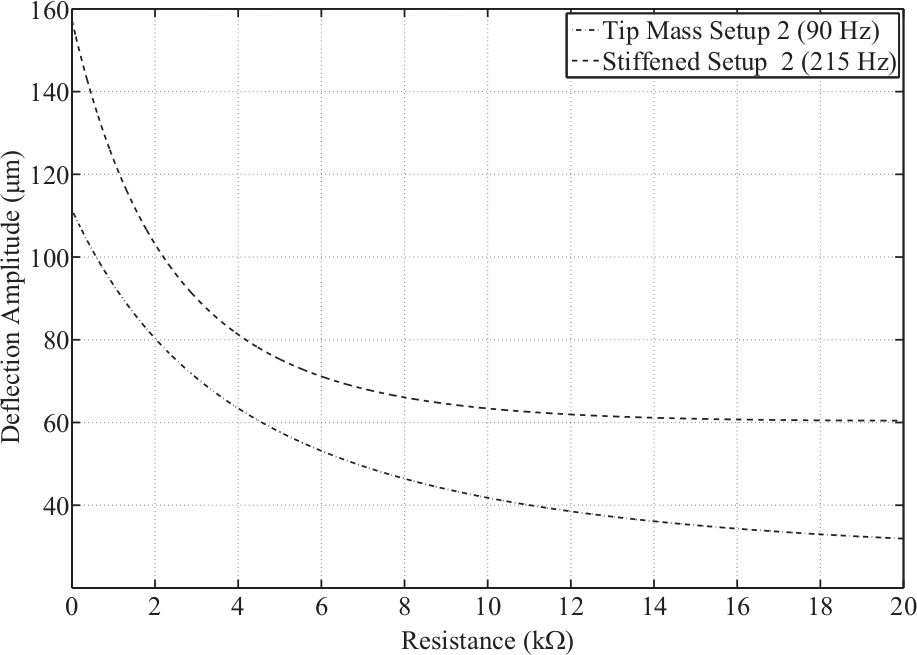
Calculated deflection amplitude of a bimorph with a tip mass of 1.51 g, without and with magnetic stiffening.
Figure 12 shows the relation of generated power and bimorph deflection and illustrates two major points. First, the power increase observed when using passive tip masses is mainly due to an increased deflection. If power is divided by deflection, the maximum value is changed only slightly by the tip mass. Second, magnetically stiffened energy harvesters generate much more power per deflection than the set-ups using no or passive tip masses.
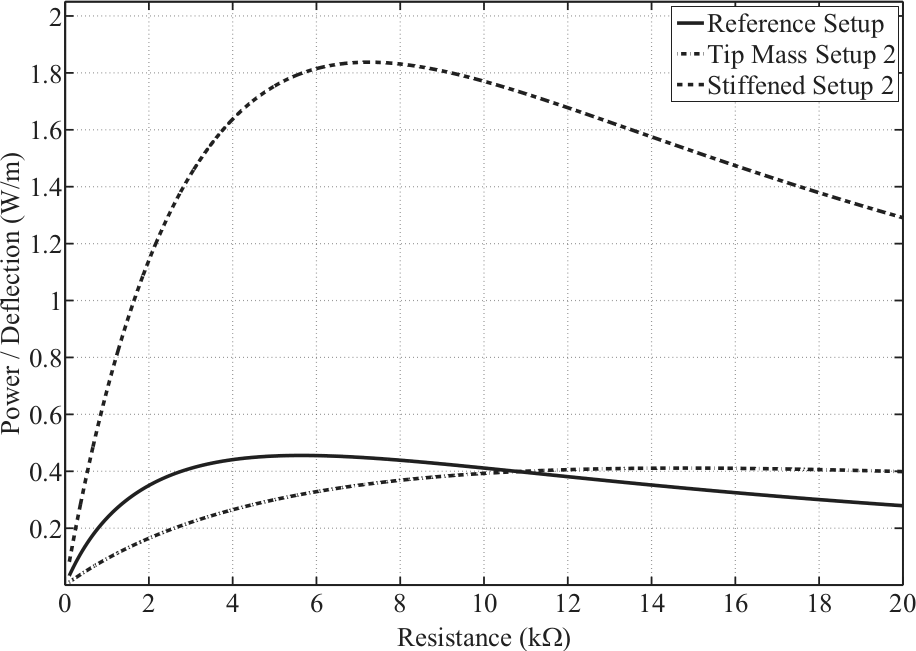
Calculated relation of generated power and bimorph deflection of three set-ups operated at their individual resonance frequencies.
The meaning of efficiency in energy harvesting has been discussed above. Figure 13 shows the efficiency of each of the investigated set-ups operating at its natural frequency following equation (32) with variable load. It is clear that a passive tip mass decreases the harvester efficiency. If magnetic stiffening is added, this is not necessarily the case. Stiffened set-up 1 reaches the efficiency of the reference set-up; stiffened set-up 2 has lower efficiency at all loads. One can conclude that there is an optimum magnet mass that can be attached to the bimorph in order to increase the harvested power without reducing its efficiency. This will be subjected to further investigation.
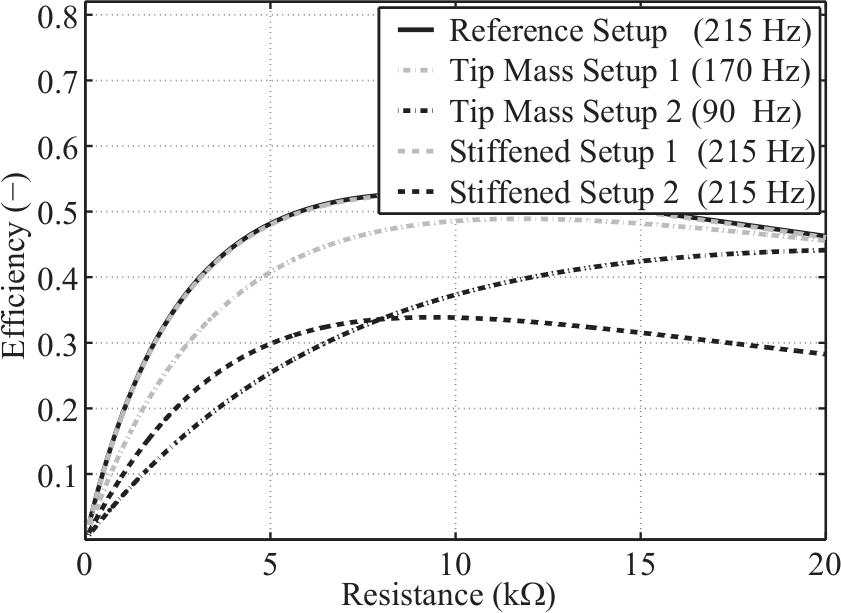
Calculated efficiency of the investigated set-ups excited at their individual resonance frequencies.
Summary and conclusion
In this article, a new principle for increasing the power generated by piezoelectric energy harvesters without changing their resonance frequency has been introduced and investigated: the attraction force between two permanent magnets is used to add stiffness to the system to counter the effect of a tip mass on the resonance frequency. Similar configurations that use the attraction force between two permanent magnets to manipulate the effective stiffness of the harvester have been introduced before for tuning the resonance frequency of energy harvesters (Al-Ashtari et al., 2012b; Neri et al., 2011).
A physical model for the piezoelectric harvester has been introduced. Different comparisons between theoretical and experimental results show the fair accuracy of the proposed model especially when a tip mass is attached to the harvester.
The magnetically stiffened harvester has important advantages over all other investigated set-ups with and without tip mass: it generates more power while only slightly increasing the strain in the piezoelectric transducer, and it can be tuned across a wide range of excitation frequencies. For magnets smaller than a certain critical size, the efficiency of the magnetically stiffened set-up is higher than that of a set-up with a passive tip mass of the same size and equals that of a harvester without tip mass. For larger magnets, the efficiency is lower, but it is still higher than that of a set-up with passive tip mass for certain loads. The high power output, tunability and good efficiency make magnetically stiffened harvesters a very promising option for future energy harvesting applications.
Footnotes
Funding
This study was supported by the German Academic Exchange Service (DAAD) and the Iraqi Ministry of Higher Education and Scientific Research (MoHESR).