







Abstract
Analytical solutions are presented to study the thermo-electro-mechanical vibration problem of functionally graded piezoelectric materials’ nanoscale rectangular plates based on the size-dependent Kirchhoff plate theory. The plate is under an applied electric voltage, a biaxial force, and a uniform temperature rise. The material properties vary continuously along the thickness direction. To check the validity of the method, the results are compared with the results obtained in previous studies for the special cases. Finally, a parametric study is accompanied to survey the effects of the gradient index, length scale parameter, length-to-thickness ratio, external electric, and temperature change on the vibration of functionally graded piezoelectric nanoplates.
Keywords
Introduction
Functionally graded materials (FGMs) are inhomogeneous composites characterized by smooth and continuous variants in both compositional profile and material properties that allow them to be used in a wide range of applications in many engineering devices. Using FGMs leads to uniform stress distribution in the structures and solve the problems such as jump in stress components among layers, interfacial debonding, matrix cracking, and so on. By growing of nanostructure fabricating technologies, FGMs are widely used in micro- and nanostructures such as thin films, microswitches, biomechanics, and micro/nano-electromechanical systems (MEMS and NEMS; Eltaher et al., 2012; Lü et al., 2009; Rahmani and Jandaghian, 2015; Woo et al., 2006; Yang and Shen, 2001).
Because of the excellent properties of piezoelectric materials, they have been widely used in various fields such as ultrasonics, vibration control, sensor and actuator, robotics, smart systems and structures, energy harvesting, and many others (Jafari et al., 2014; Jandaghian et al., 2013, 2014; Zhang et al., 2005). However, due to the low resistance of bonding interface, layered piezoelectric devices such as monomorph and bimorph piezoelectric actuators are easily cracked at interfaces that will decrease the reliability and efficiency of these piezoelectric devices. In order to overcome these problems, the concept of the FGMs was extended to the piezoelectric material to avoid the stress concentrations and interfacial debonding which is a common problem in piezoelectric materials; a new kind of piezoelectric materials without distinct interfaces named functionally graded piezoelectric materials (FGPMs) have been developed. It has been confirmed, both theoretically and experimentally, that the strength, reliability, and actuation performance of actuators can be significantly modified by the application of FGPMs (Komeili et al., 2011). A number of fabrication methods for the FGPM structures have been proposed and successfully implemented (Almajid et al., (2002); Chen et al., 2004; Qiu et al., 2003; Shelley et al., 1999; Takagi et al., 2003; Wu et al., 1996; Zhu and Meng, 1995).
By inventing the ZnO piezoelectric nanostructures (Pan et al., 2001), a variety of piezoelectric and their nanostructures have been successfully synthesized and characterized. Due to enhanced effect and the unique coupling between piezoelectric and semiconducting properties, piezoelectric micro/nano-structures are attractive for various applications in nanodevices such as MEMS/NEMS (Lazarus et al., 2012), nanoresonators (Tanner et al., 2007), chemical sensors (Wan et al., 2004), biosensors (Murmu and Adhikari, 2012), biomedical (Jang and Kan, 2007), and energy harvesting (Qi and McAlpine, 2010; Qi et al., 2010).
The results have been obtained by experiments, and atomistic simulations show that on nanoscale, electrical and mechanical properties of piezoelectric material are size-dependent. Thus, it is of vital importance to consider the size effect in experimental and theoretical studies concerning with piezoelectric nanostructures. Since the classical continuum theory is unable to capture the size effects of nanostructures, various types of continuum theories have been developed. The most significant of these theories are nonlocal theory, surface elasticity, and couple-stress theory. Between these theories, Eringen’s theory (Eringen, 1983, 2002; Eringen and Edelen, 1972), due to its simplicity and high accuracy, has found wide application to analyze the behavior of different nanostructures such as nanobeams, nanoplates, nanoshells, and so forth (Aksencer and Aydogdu, 2011; Aydogdu, 2009; Civalek and Demir, 2011; Ke et al., 2009; Pirmohammadi et al., 2014; Rahmani and Ghaffari, 2014; Rahmani and Pedram, 2014; Thai, 2012; Xie et al., 2006; Zhang et al., 2009). The nonlocal elasticity theory has also been used to investigate the size-dependent mechanical behavior of piezoelectric nanostructures. In this regard, Ke and Wang (2012) investigated the linear vibration and Ke et al. (2012) investigated the nonlinear vibration of the piezoelectric nanobeams based on the nonlocal theory and Timoshenko beam theory using the differential quadrature (DQ) method. Jandaghian and Rahmani (2016a, 2015) presented an exact solution for buckling and free vibration of piezoelectric nanobeams. Buckling and post-buckling behaviors of piezoelectric nanobeams using the nonlocal Timoshenko beam theory and von Kármán geometric nonlinearity were studied by Liu et al. (2014). Zhang (2014) investigated the dispersion characteristics of elastic waves propagating in a monolayer piezoelectric nanoplate with consideration of the surface piezoelectricity, as well as the nonlocal small-scale effect. Ghorbanpour Arani et al. (Arani et al., 2011, 2012a) investigated the axial buckling and free vibration of double-walled boron nitride nanotubes (BNNTs) embedded in an elastic medium under combined electro-thermo-mechanical loads. Ghorbanpour Arani et al. (Arani et al., 2012b) presented an analytical approach for buckling analysis and smart control of a single layer graphene sheet (SLGS) using a coupled polyvinylidene fluoride (PVDF) nanoplate. The SLGS and PVDF nanoplate are considered to be coupled by an enclosing elastic medium that is simulated by the Pasternak foundation. Liu et al. (2013) studied the thermo-electro-mechanical free vibration of piezoelectric nanoplates based on the nonlocal theory and Kirchhoff theory. The thermo-electro-mechanical vibration of the rectangular piezoelectric nanoplate under various boundary conditions based on the nonlocal theory and the Mindlin plate theory was investigated by Ke et al. (2015). They used the DQ method to determine the natural frequencies and mode shapes.
Nowadays, FGPMs have all the excellent properties of functionally graded (FG) and piezoelectric materials. Furthermore, with the growth of nanotechnology and the methods of synthesis materials in the nanoscale, functionally graded nanomaterials (Fu et al., 2003; Tan et al., 2005; Veith et al., 2008), and piezoelectric nanostructures (Buscaglia et al., 2004; 2005; Deng et al., 2006; Hungria et al., 2009), a new class of piezoelectric micro/nano material, that is, FGPM, has been made. There are no many studies to investigate the electrical and mechanical properties of FGPMs’ micro- and nanostructures. Most of the articles generally use classical continuum theories that ignore the size effect (Huang et al., 2007; Komijani et al., 2013a, 2013b; Shi and Chen, 2004; Zhifei, 2002). Recently, researchers to investigate mechanical and electrical properties of micro- and nano-FGP structures have used higher order continuum theories. Li et al. (2014) investigated the bending and free vibration of FGP beam based on modified strain gradient theory. They used Timoshenko beam theory, and the governing equations have been solved for a simply supported beam. Komijani et al. (2014) investigated nonlinear thermo-electro-mechanical response of FGPM actuators. They used Timoshenko beam theory and modified couple-stress theory with the von Kármán nonlinearity in the form of mid-plane stretching. Recently, Beni (2016) developed the nonlinear formulation of FGPM nanobeam by applying the Euler–Bernoulli model and using the consistent size-dependent theory. Jandaghian and Rahmani (2016b) investigated the free vibration analysis of FGPMs’ nanoscale plates based on the Eringen’s nonlocal Kirchhoff plate theory under simply supported edge conditions. Ebrahimi and Barati (2015) studied the buckling behavior of higher order shear deformable FGP nanobeams embedded in an elastic medium. They used Navier’s solution to solve the governing equations. Beni et al. (2015) investigated the buckling analysis of FGP cylindrical nanoshells subjected to pressure using the first-order shear deformable shell model and new modified couple-stress theory.
The review of literature presented in this article reveals that all the investigations mentioned in this article dealt with the conventional piezoelectric nanostructures and studies of the dynamic characteristics of FGP micro-/nano-structures are limited. In addition, there are no published works in the literature that shows the thermo-electro-mechanical vibration of a functionally graded piezoelectric nanoplate. These structures are often subjected to thermal, electrical, and mechanical loadings during manufacturing and working, and thus, the effects of these loadings become a primary design factor in specific cases. These effects in turn cause a quite significant change in the static and dynamic behaviors of the nanoplates. Therefore, there is strong scientific need to understand the thermo-electro-mechanical vibration of a functionally graded piezoelectric nanoplate. According to this fact, this study, for the first time, overcomes this gap in the literature by considering FGP nanoplates subjected to mechanical, thermal, and electrical loads. The plate has a functionally graded property along the thickness direction and is polarized in the thickness direction. It is assumed that properties of the graded plate are temperature- and voltage-independent materials. The results are obtained for various gradient indexes, nonlocal parameter, biaxial forces, external electric voltage, temperature change, aspect ratio, and thickness-to-side ratio. The results reveal that the nonlocal parameter and the external electric voltage have significant effects on the vibration behavior of the FGP nanoplates. It is expected that the results of this paper would be useful for designing NEMS/MEMS components in smart composite nanostructures.
Nonlocal theory for piezoelectric materials
Based on the theory of nonlocal piezoelasticity, the stress tensor and the electric displacement at a point x depend not only on the strain components and electric-field components at same point but also on all other points x′ of the body. The nonlocal constitutive behavior for the piezoelectric material can be written as follows (Ke and Wang, 2012; Ke et al., 2015)
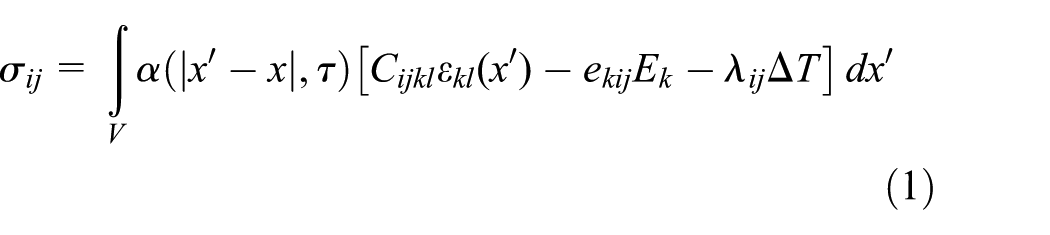
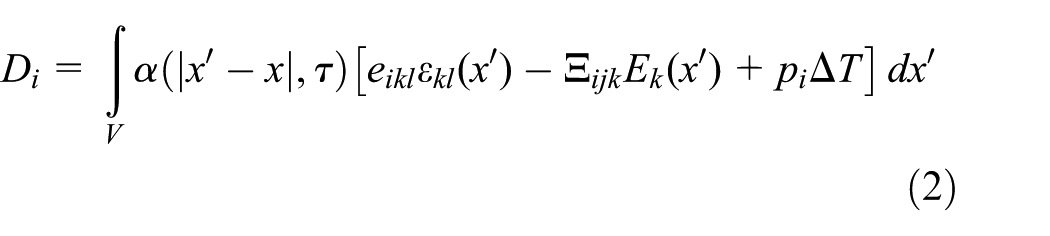


where σij, εij, Ei, Di, and ui are the stress, strain, electric field, electric displacement, and displacement components, respectively; Cijkl, ekij, Ξijk, λij, pi, and ρ are the fourth-order elasticity tensor, piezoelectric constants, dielectric constants, thermal moduli, pyroelectric constants, and mass density, respectively; ΔT is the temperature change and Φ is the electric potential. α (|


where ∇2 is the Laplace operator and e0a is the nonlocal parameter incorporating the small-scale effects into the constitutive equations of nanostructures. A method of identifying the small scaling parameter e0 in the nonlocal theory is not yet known. The value of the small-scale parameter depends on boundary condition, chirality, mode shapes, number of walls, and the nature of motions. Eringen proposed e0 = 0.39 by matching the dispersion curves via nonlocal theory for plane wave and Born–Karman model of lattice dynamics applied at the Brillouin zone boundary k = π/a, where a is the distance between atoms and k is the wave number in the phonon analysis (Eringen, 1972). However, Eringen proposed e0 = 0.31 in his study (Eringen, 1983) for Rayleigh surface wave via nonlocal continuum mechanics and lattice dynamics. Although e0 is a key parameter in the nonlocal elasticity theory, there is hitherto no rigorous study being made on estimating the scaling parameter e0 for various physical problems, and contemporary research is going on to find the exact values of nonlocal parameters for various nanolevel structural problems. Therefore, in many studies,
FGMs
Figure 1 displays the configuration of FGP nanoscale plate of length la, width lb, and thickness h subjected to an electric potential, biaxial forces, and a uniform temperature change. It is supposed that the FGP nanoscale plate is made of two-phase graded different materials (PZT-4 and PZT-5H) and the material properties change continuously along the z-direction. According to the rule of mixture, the effective material properties (P) can be obtained as

where Peff is the effective material property of the FGP nanoscale plate, Pb is the bottom surface property of the FGP nanoscale plate, and Pu is the upper surface property of the FGP nanoscale plate. The volume fraction of the functionally gradient piezoelectric material Vu can be written as

where g is the power law index that determines the material change contour through the thickness of the plate.
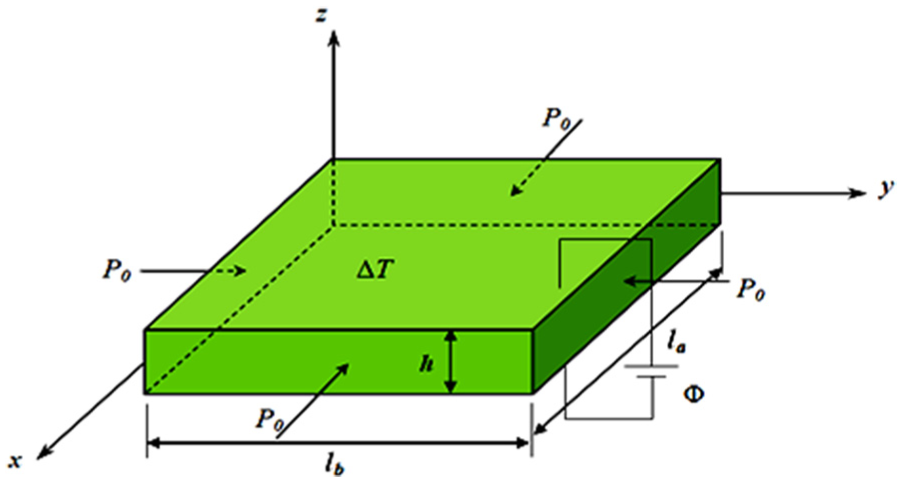
Schematic configuration of an FGP nanoplate.
Governing equations of FGP nanoplate
The displacement field of Kirchhoff plate theory can be expressed as



where u0(x, y, t) and v0(x, y, t) are displacement components of the mid-plane (on the x- and y-direction, respectively) and w0(x, y, t) is the out-of-plane displacement of the mid-plane of the nanoscale plate (on the z-direction) and t denotes the time. The strain–displacement relations of Kirchhoff plate theory are expressed as



However, we must suppose the distribution of the electric potential for the present piezoelectric nanoscale plate model. The key of the assumption of the electric potential, in the analysis of both macroscale and nanoscale piezoelectric plates, is that it must satisfy the Maxwell equation. In order to satisfy the Maxwell equation, Quek and Wang (2000) and Wang (2002) assume the electric potential as a mixture of a cosine and linear variation. Thus, the electric potential can be expressed as follows (Ke et al., 2015; Liu et al., 2013; Wang, 2002)

where α = π/h, z is considered from the mid-plane of the nanoscale plate in the transverse direction, h denotes the thickness of the piezoelectric nanoscale plate,
Using equation (15), the components of electric fields are given as



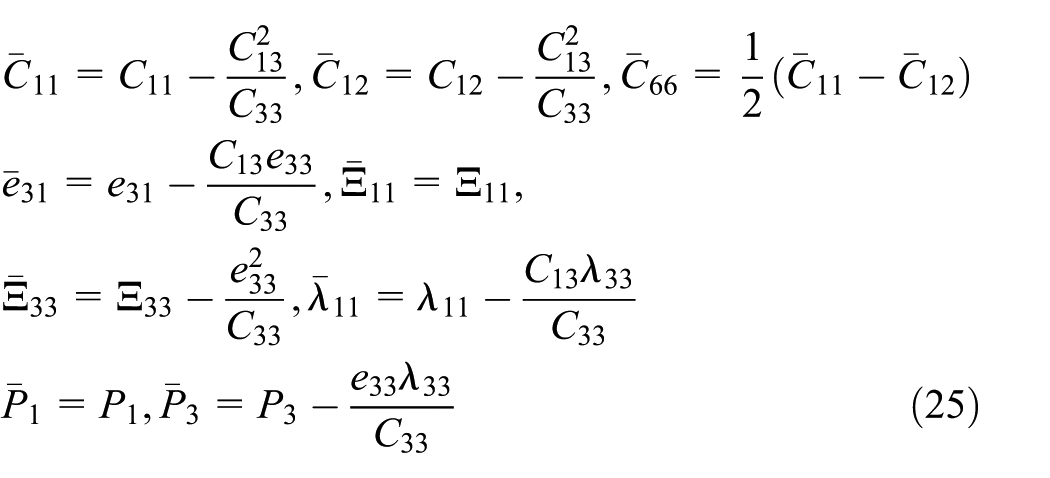
It should be mentioned that for a thin piezoelectric nanoplate whose thickness is much smaller than its other dimensions, the nonlocal behavior in the thickness direction can be ignored. Thus, the nonlocal constitutive relations (5) and (6) can be approximated as






where
The strain energy U of the FGP nanoscale plate is expressed as
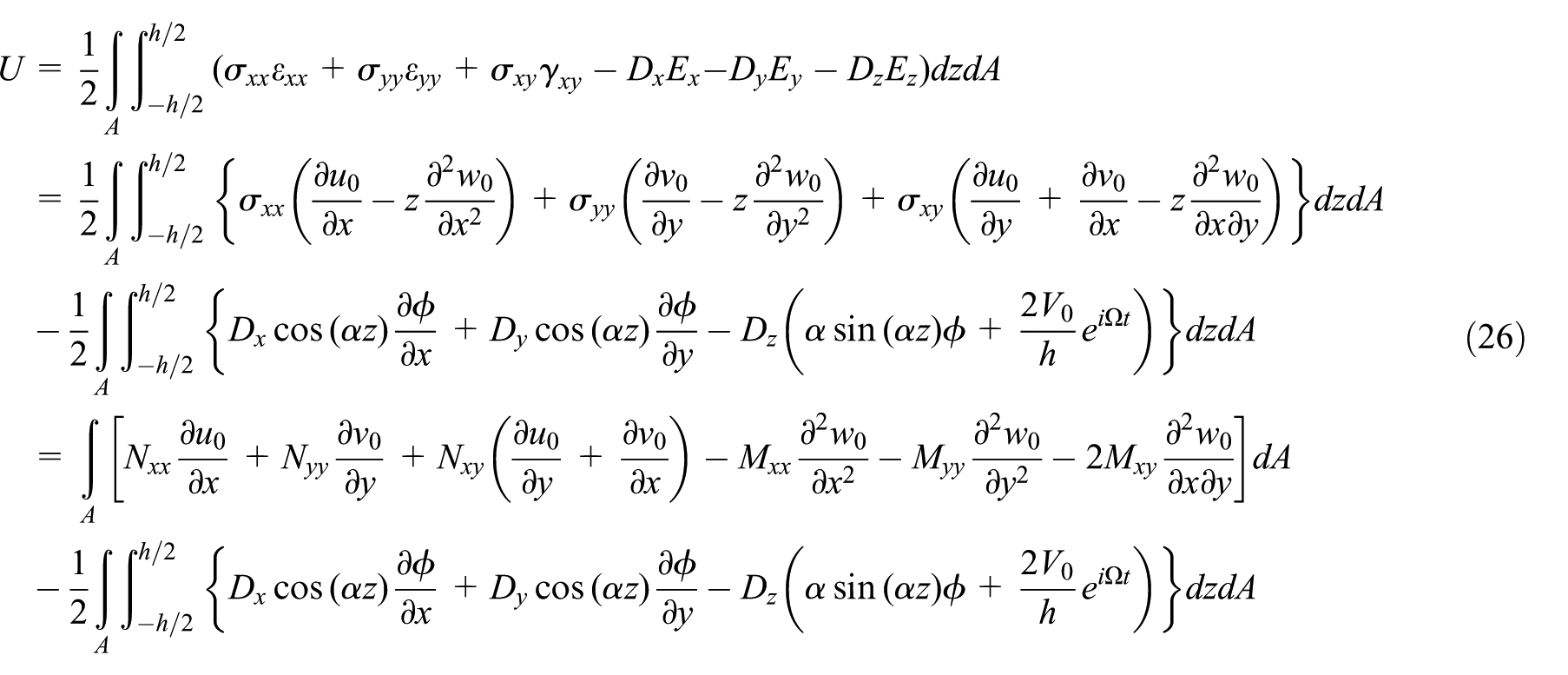
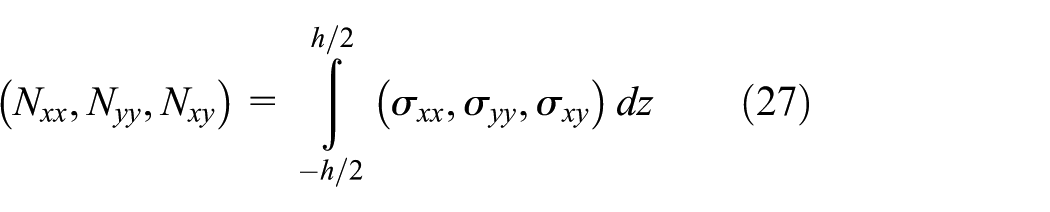
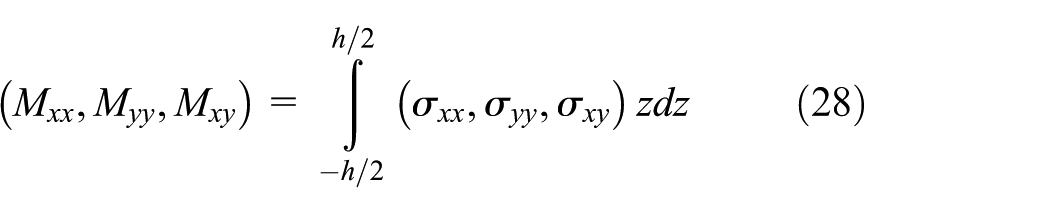
where A explains the area of the FGP nanoscale plate, Ni and Mi (i = x, y, xy) are resultant forces and couples and defined as follows
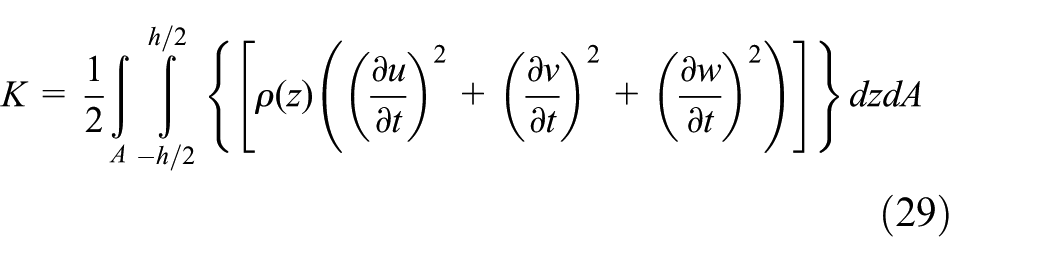
The kinetic energy K of the FGP nanoscale plate can be stated as
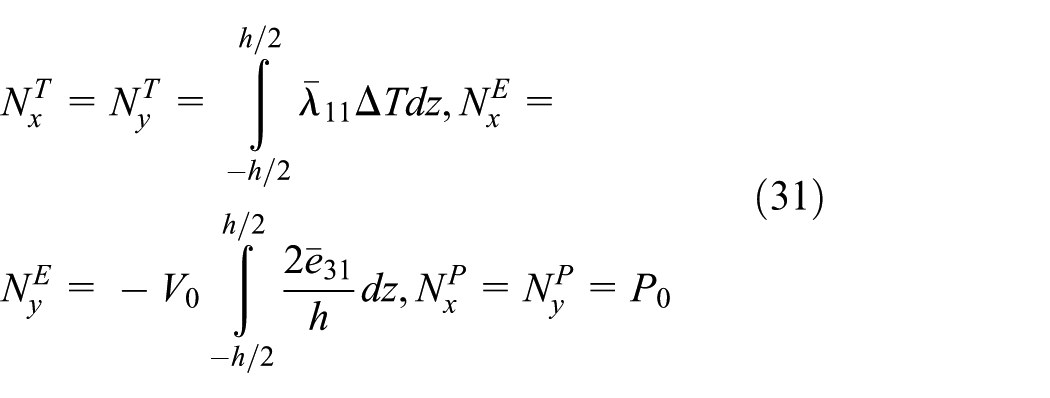
The work done due to external forces W can be written as

where
Considering Hamilton’s principle

Substituting equations (26), (29), and (30) into equation (32), the equations of motion are obtained as follows


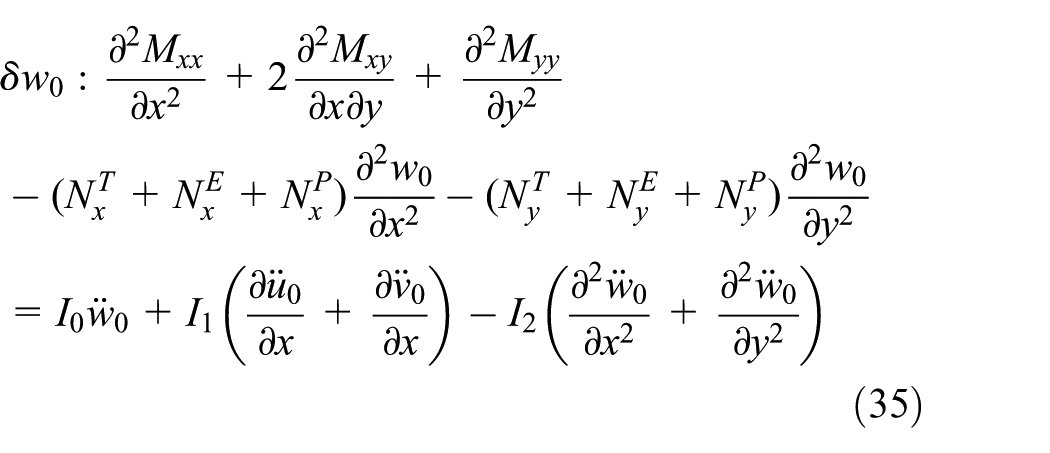
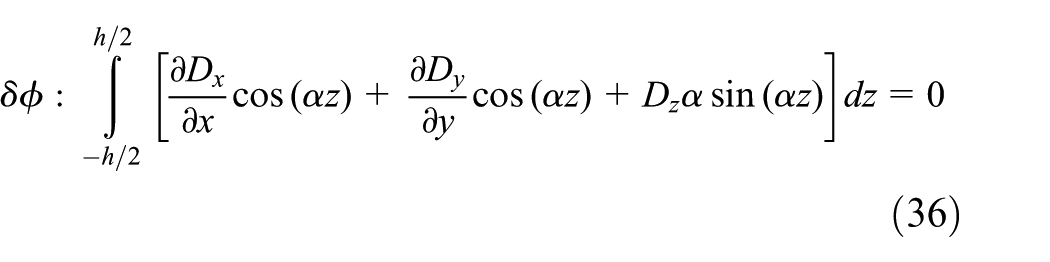
where in equations (33)–(35), superscript dot indicates the derivative with respect to time and I0, I1, and I2 are mass parameters that are defined as
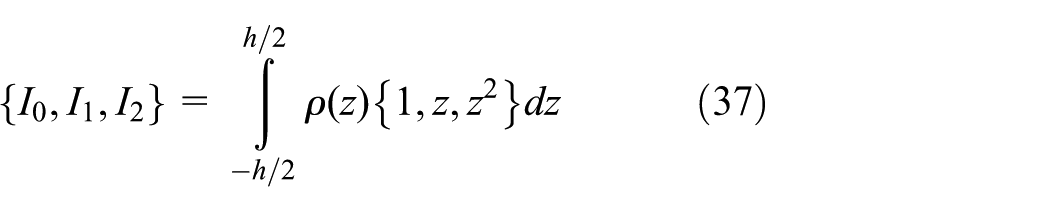
Using equations (19)–(24) and equations (27) yields
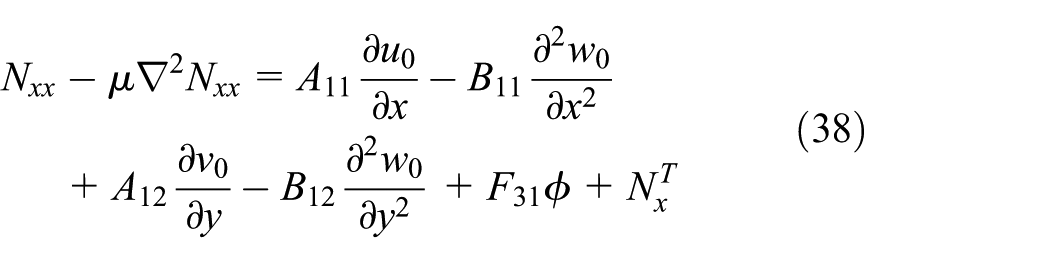

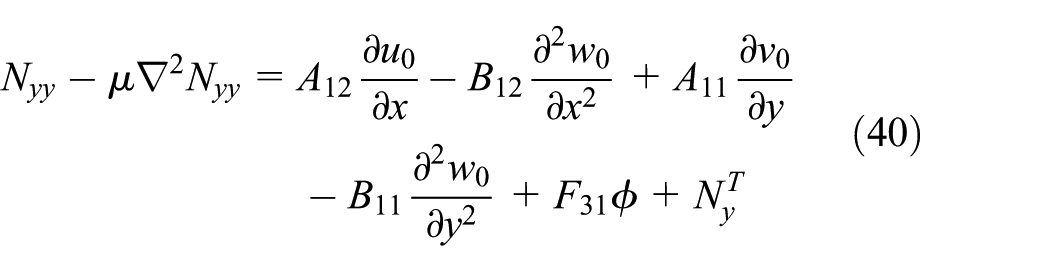
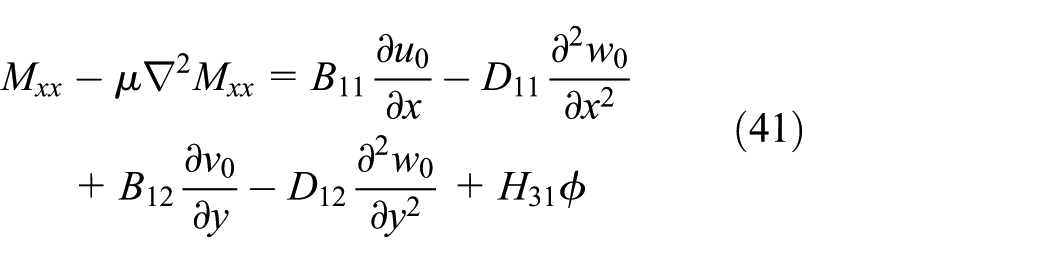

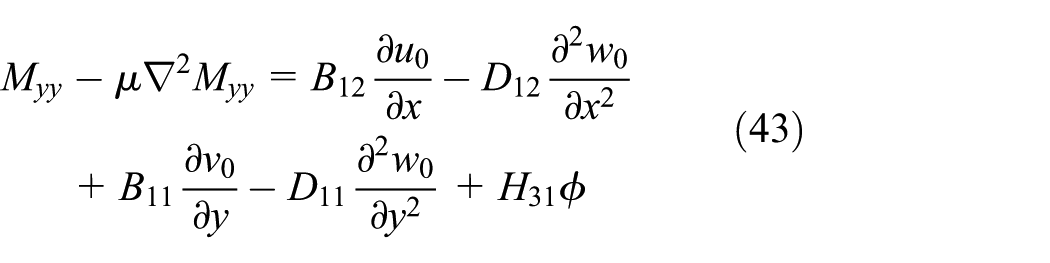
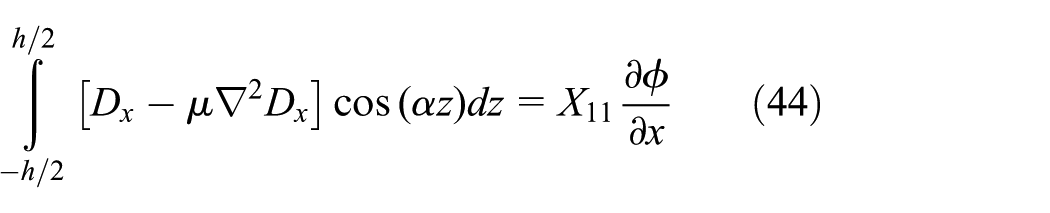
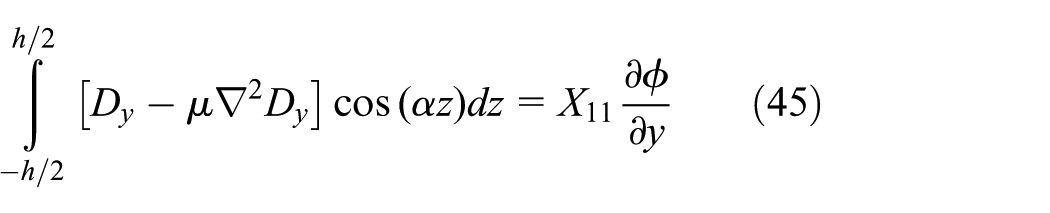
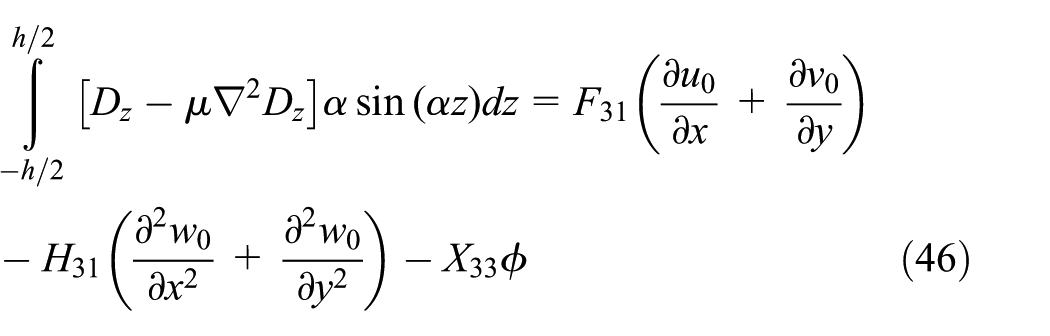
where in equations (38)–(46)
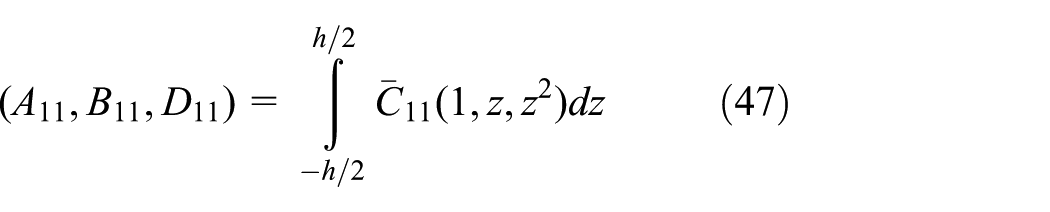
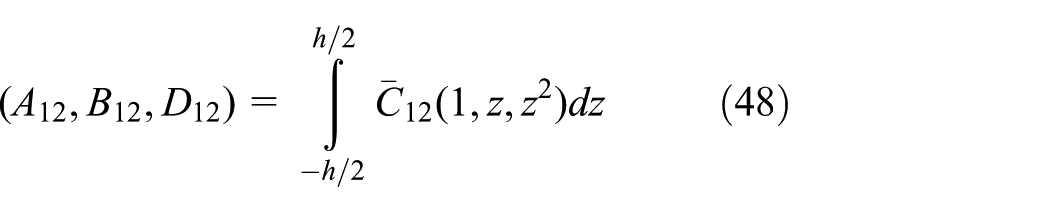
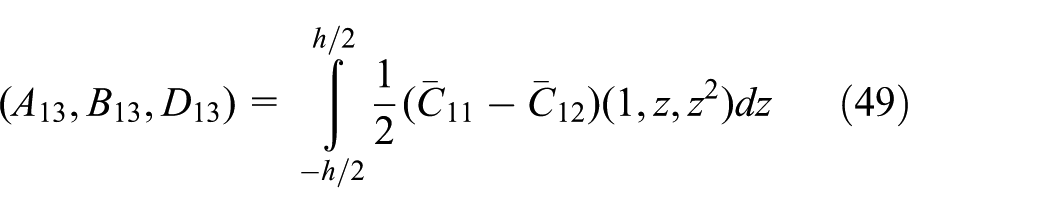
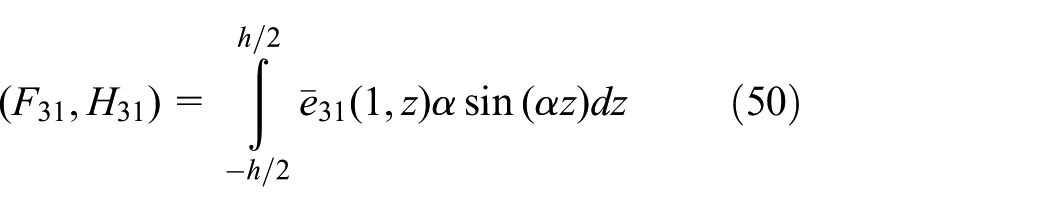
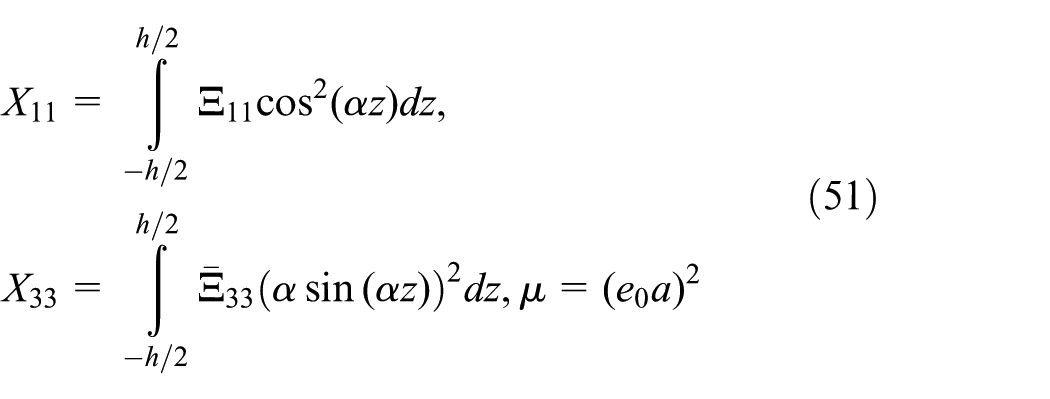
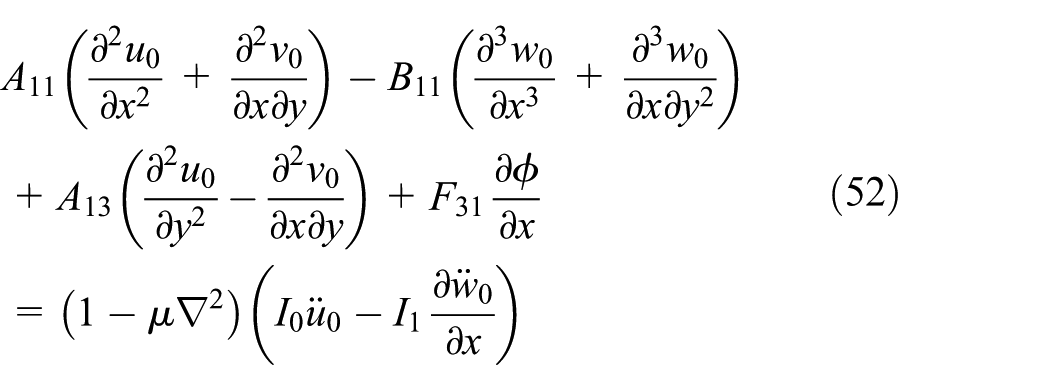
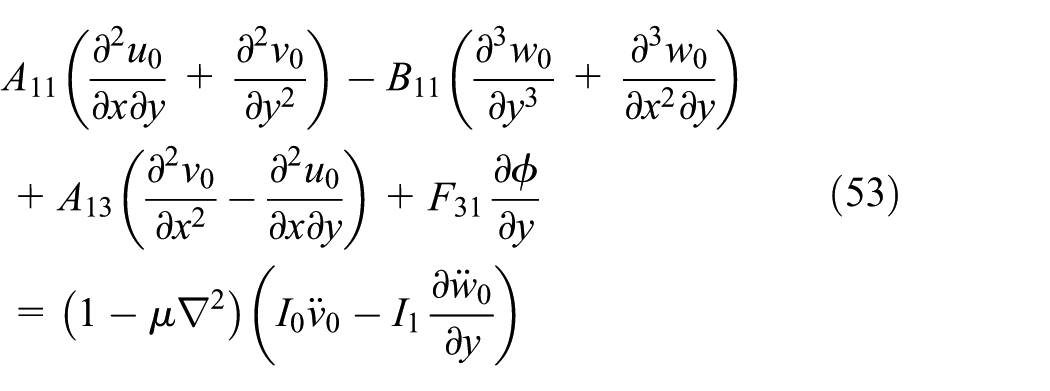
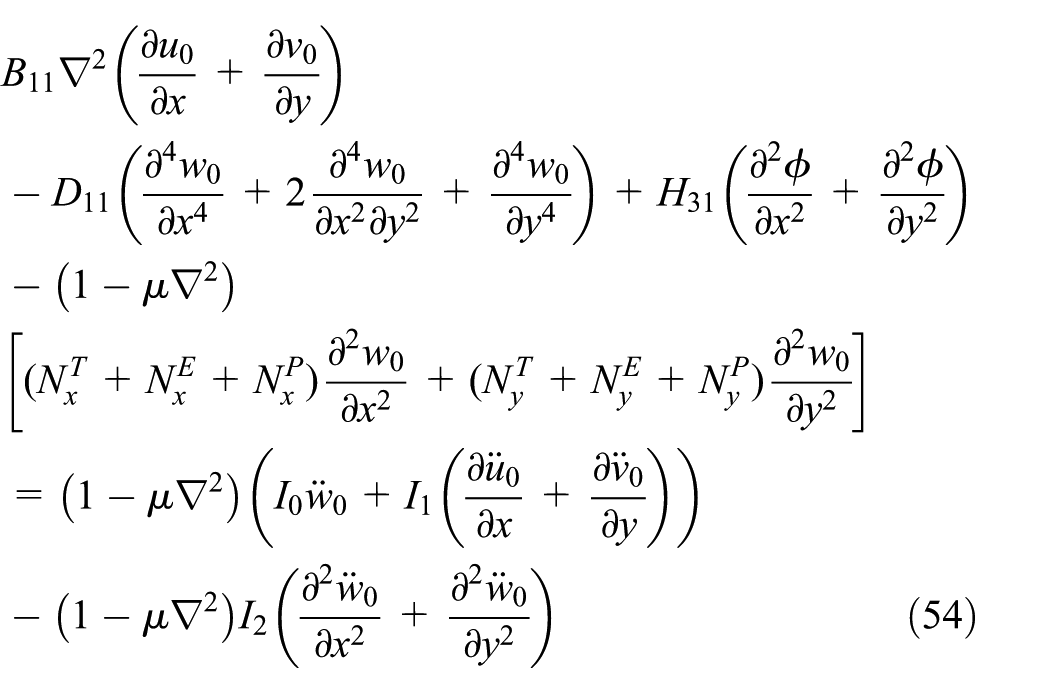
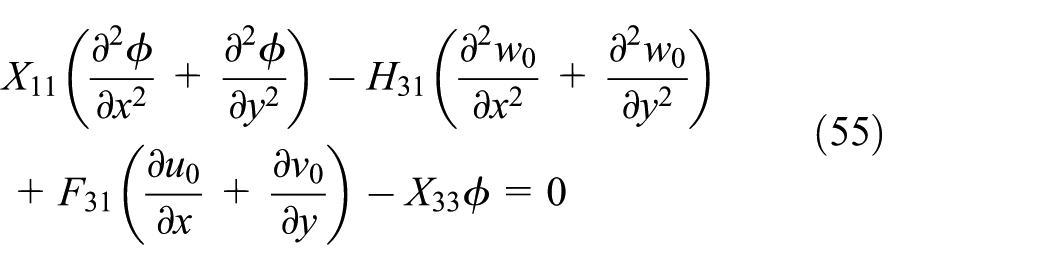
Substituting equations (38)–(46) into equations (33)–(36) leads to the nonlocal governing equations of the FGP nanoscale plate under thermo-electro-mechanical loading as follows
Solution procedure
An analytical study on the thermo-electro-mechanical vibration of the FGP nanoscale plate is presented in this section. It is assumed that all edges of nanoplate are simply supported and the electric potential is zero at all edges of the nanoplate. According to Navier’s method, the solutions of the governing equations of the FGP nanoscale plate are expanded in double Fourier series as
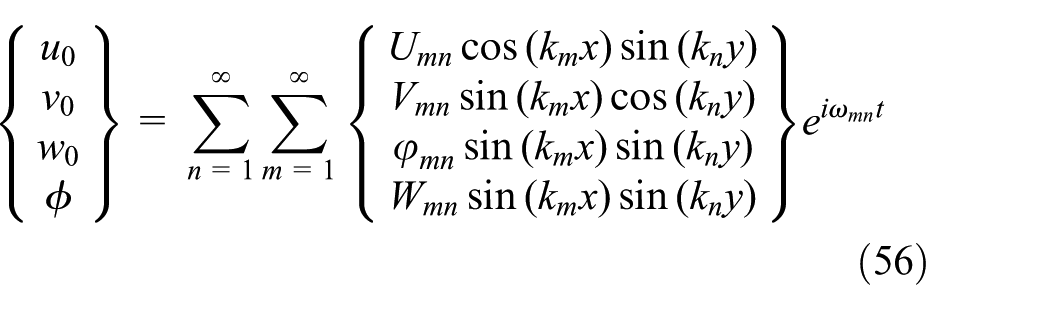
where ωmn denotes the circular frequency, m and n are the half wave numbers, km = mπ/la, and kn = nπ/lb. Substituting equation (56) into equations (52)–(55) results
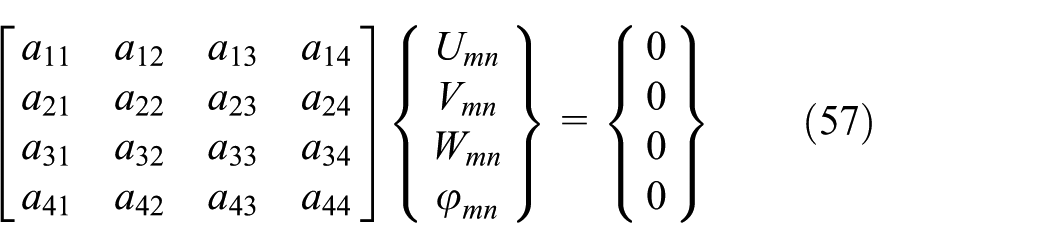
where coefficients a11 through a44 are given in Appendix 1.
Results and discussion
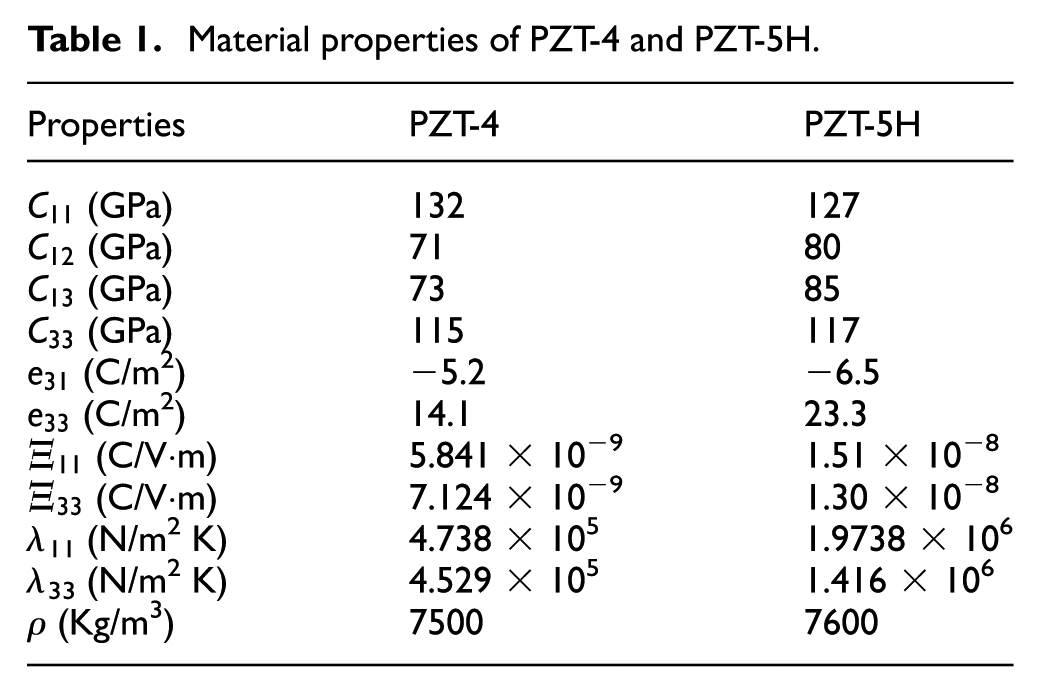
In this section, free vibration of FGP nanoplate subjected to combined thermo-electro-mechanical loadings is investigated. The FGP nanoscale plate’s top surface is made of PZT-5H and the bottom surface of PZT-4. The material properties are displayed in Table 1. Based on equations (7) and (8), for g = 0, we have PZT-4 and for g = ∞, we have PZT-5H.
Material properties of PZT-4 and PZT-5H.
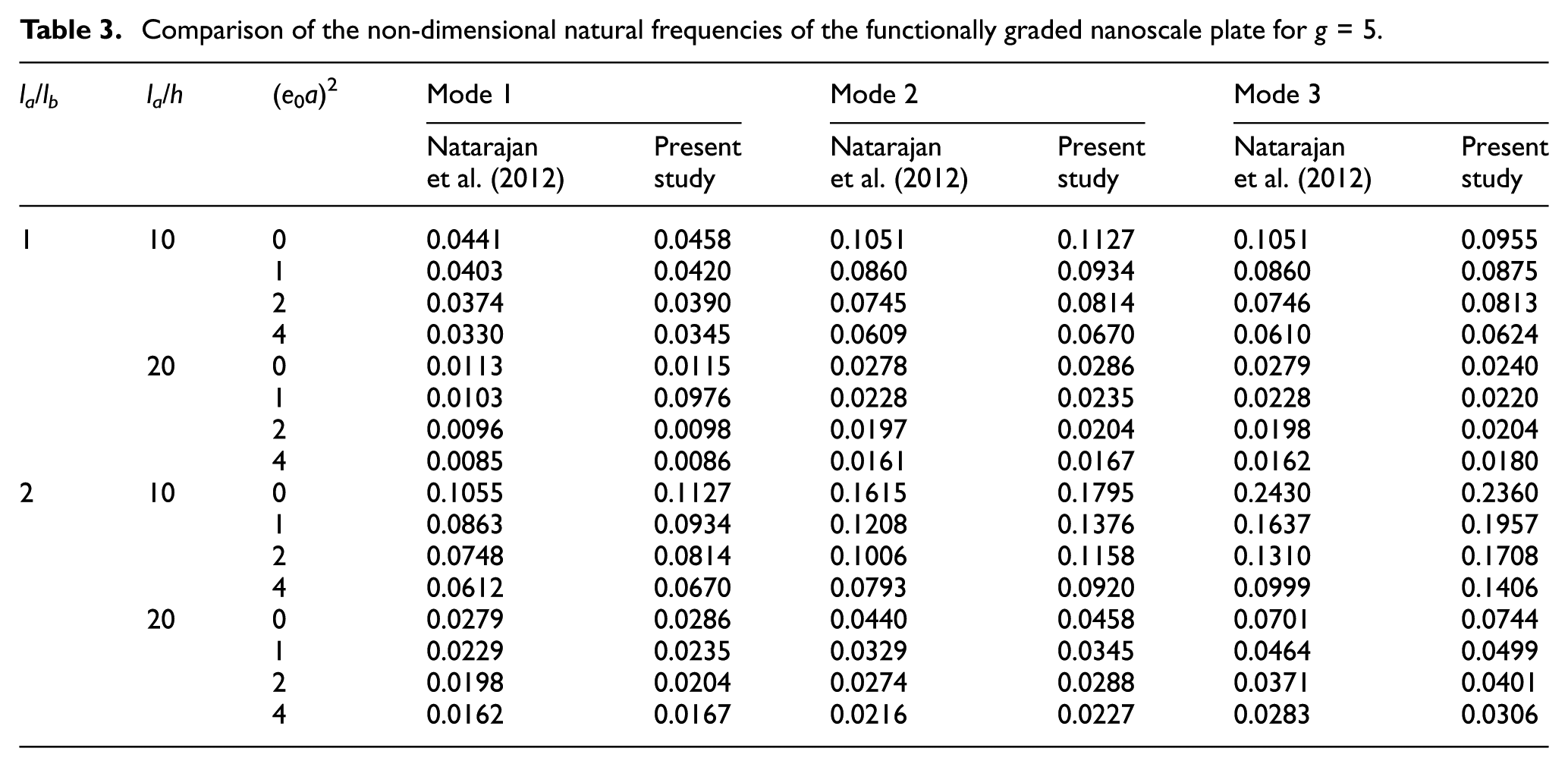
The effects of different parameters such as gradient index, nonlocal parameter, biaxial force, temperature rise, applied electric voltage, mode numbers, aspect ratio, and thickness-to-side ratio on the dimensionless natural frequency (
Comparison of the non-dimensional natural frequencies of the FGP nanoplate for g = 0 (la/lb = 1, h = 5 nm).

Comparison of the non-dimensional natural frequencies of the functionally graded nanoscale plate for g = 5.
The effect of the biaxial force on the dimensionless frequencies of the FGP nanoplate is listed in Table 4. It should be noted that the negative and positive values of the biaxial forces indicate the compressive and tensile force, respectively. It can be seen that the natural frequencies are sensitive to the change of the axial force. A larger compressive biaxial load (P0 > 0) makes lesser natural frequencies, while a larger tensile biaxial force (P0 < 0) causes higher natural frequencies. It is found that the biaxial compressive force reduces the stiffness of nanoplates, and that the axial tensile force increases the stiffness. As observed, the effect of biaxial force P0 is more prominent on the lower vibration mode numbers. For example, at g = 0, Ω11 decreases approximately with 44% as the axial force P0 varies from −3 to 3. Whereas, Ω13 decreases with 10.5% as the axial force varies from −3 to 3.
Effect of the biaxial force P0 (N) on the non-dimensional natural frequencies of the FGP nanoplate (V0 = ΔT = 0, e0a = 2 nm).
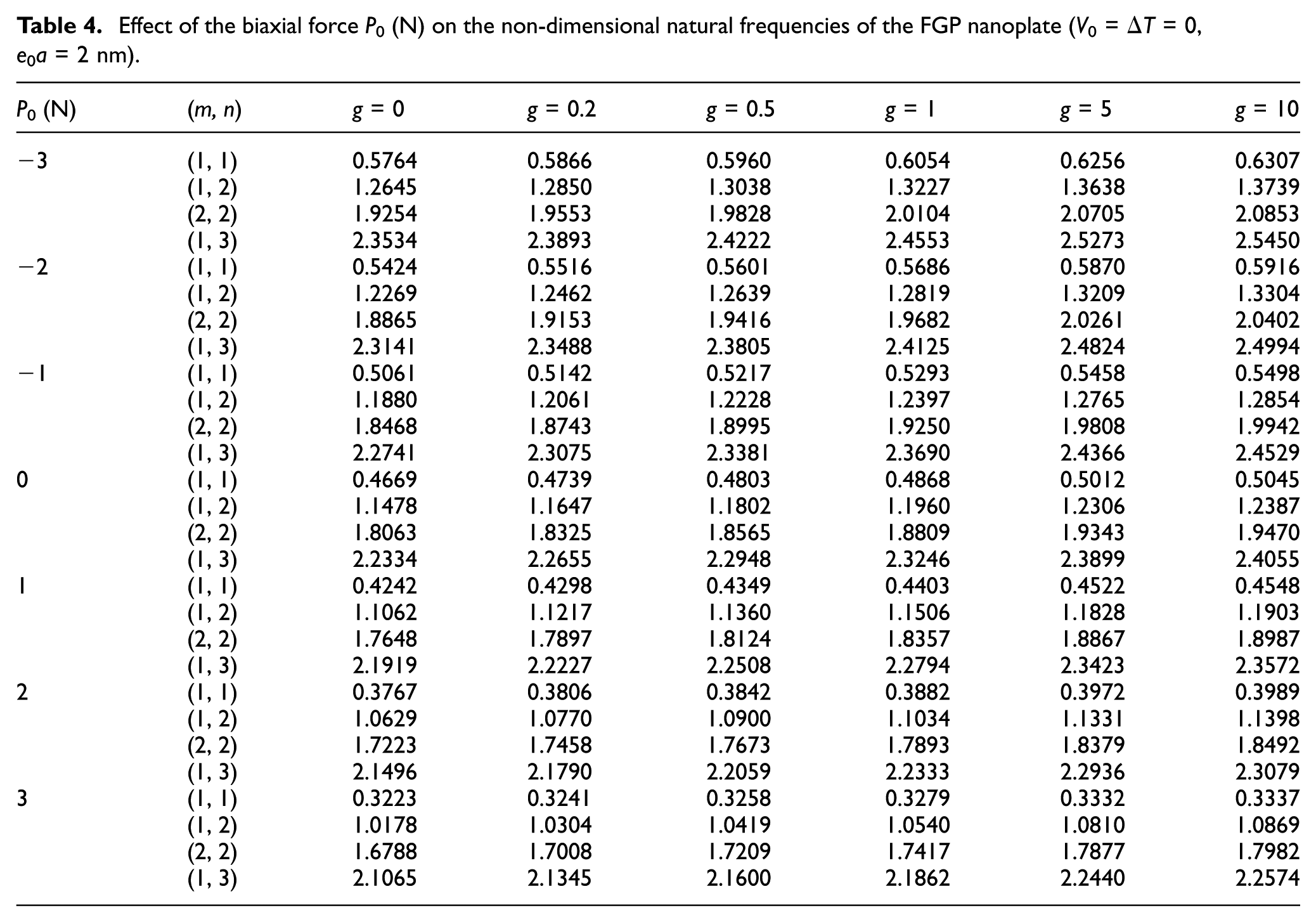
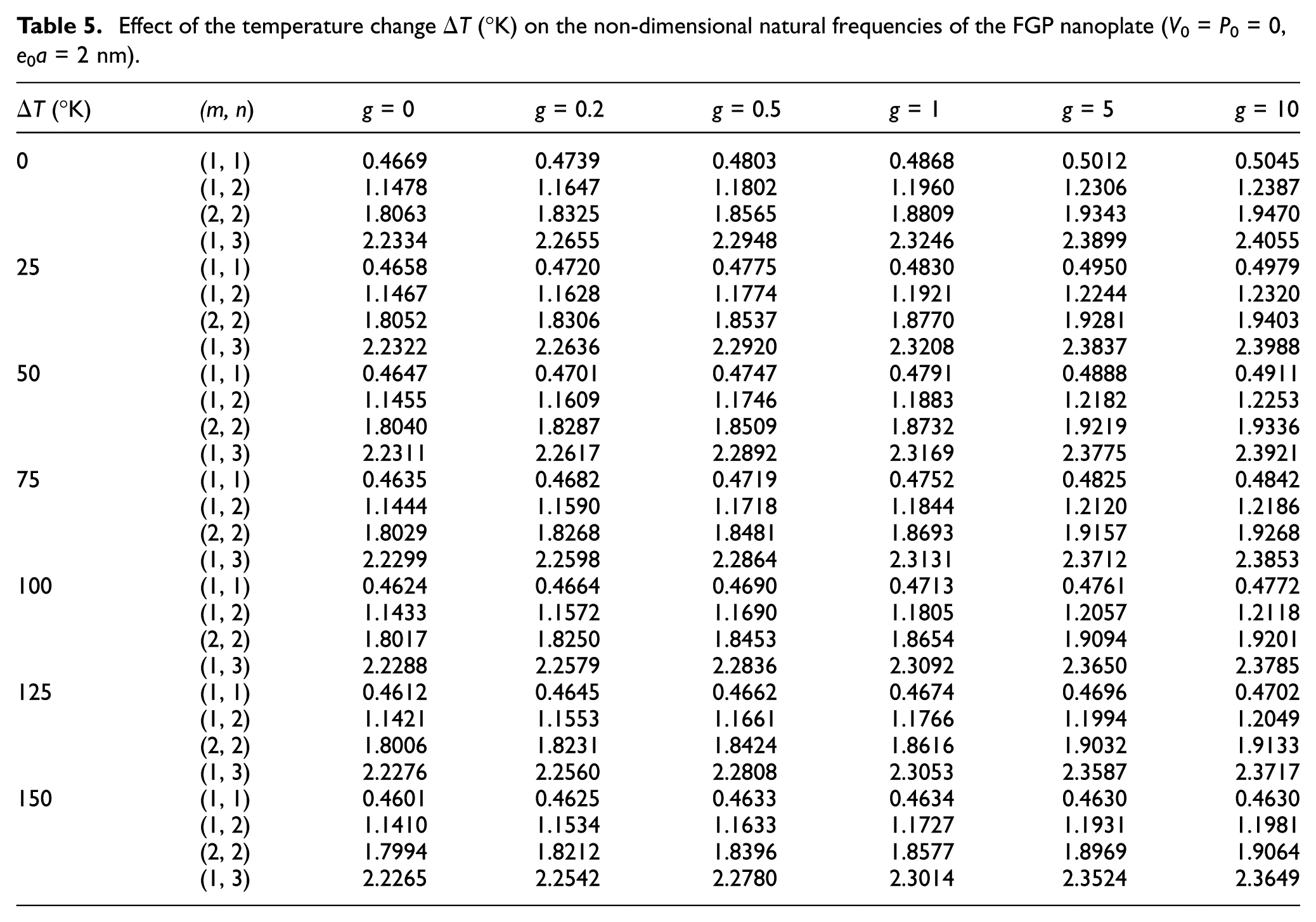
Table 5 presents the effect of the temperature change on the dimensionless frequencies of the FGP nanoplate with V0 = 0, P0 = 0, and e0a = 2 nm. From this table, it can be found that the natural frequencies of the FGP nanoplates are not sensitive to the temperature rise. By increasing the temperature, the natural frequencies reduce slightly that demonstrates a higher temperature rise, causes more decrease in the stiffness of FGP nanoplates, and thus results in lower natural frequencies of nanoplates.
Effect of the temperature change ΔT (°K) on the non-dimensional natural frequencies of the FGP nanoplate (V0 = P0 = 0, e0a = 2 nm).
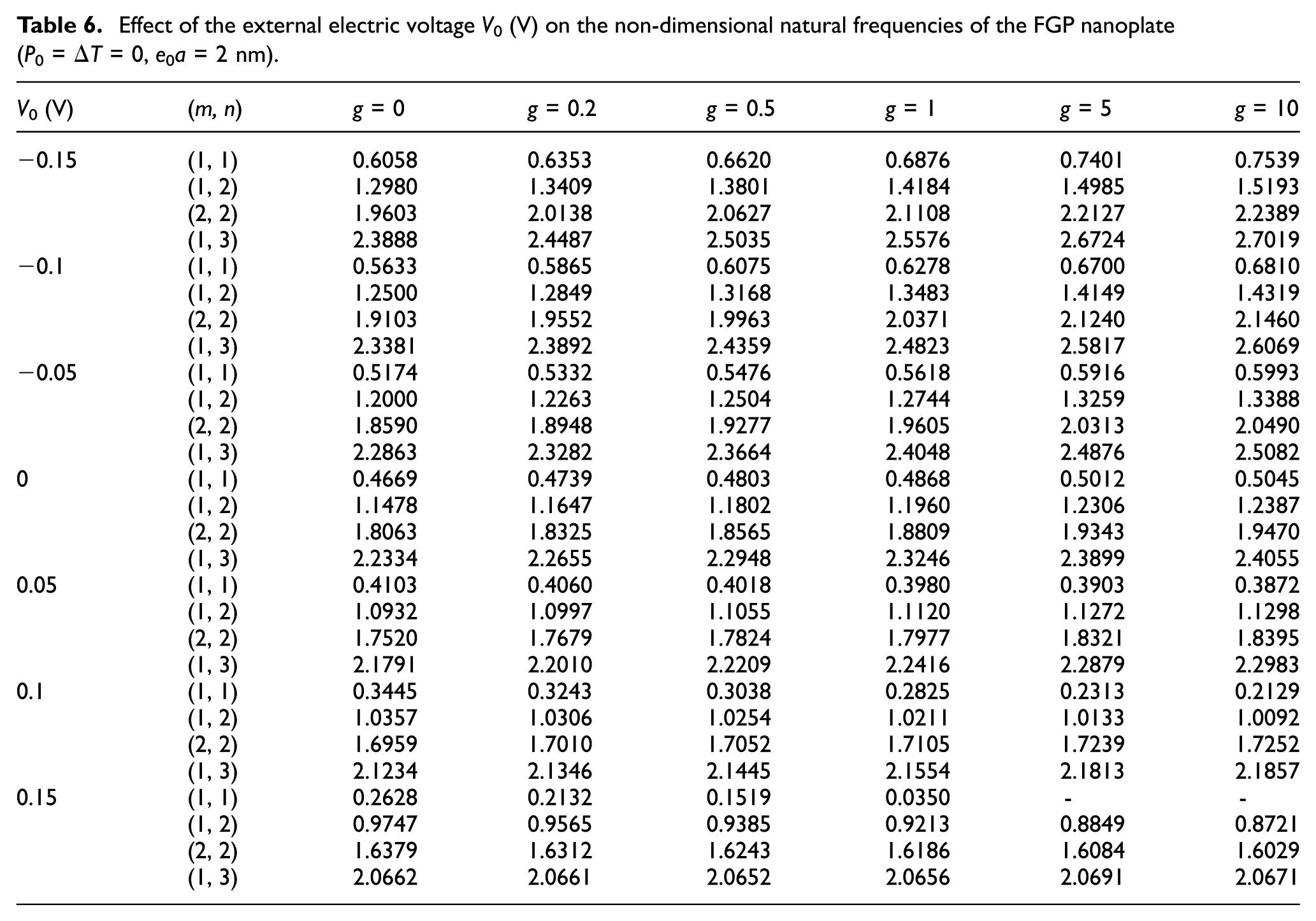
The influence of the applied electric voltage on the dimensionless frequencies of the FGP nanoplate with P0 = 0, ΔT = 0, and e0a = 2 nm is tabulated in Table 6. It is observed that the negative voltage increases the natural frequencies of FGP nanoplates, whereas the positive voltage has the contrary effect. That is because axial tensile and compressive forces are created in the nanoplate by applying negative and positive voltages, respectively. As can be seen, for a lower vibration mode (e.g. Ω11), the dimensionless frequencies are significantly affected by the external electrical load, while for a higher vibration mode (e.g. Ω13), the electrical load will not affect the dimensionless frequencies that much.
Effect of the external electric voltage V0 (V) on the non-dimensional natural frequencies of the FGP nanoplate (P0 = ΔT = 0, e0a = 2 nm).
The free vibration frequency ratio is defined in the following form
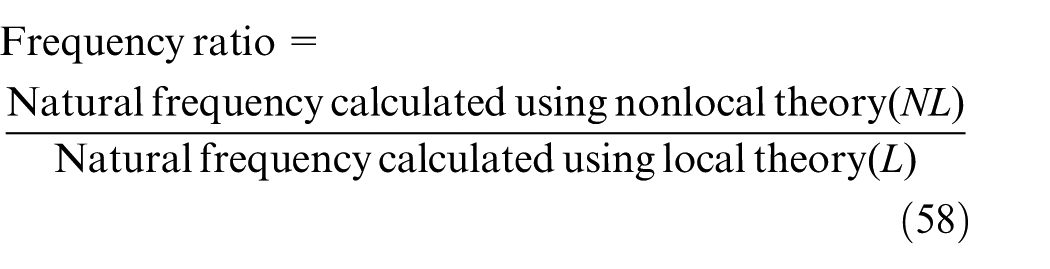
Frequency ratio of FGP nanoscale plate versus various nonlocal parameters at power index g = 5 has been plotted in Figure 2. It can be found that the nonlocality has significant effects on the natural frequency at higher modes and the nonlocality effects increase with increasing wave numbers. This is because of decreasing wavelength with increasing mode number. As a result, the effect of nonlocality increased for higher frequency than the lower one and the nonlocal theory softens the plate, makes it more flexible, and hence leads to falling values of natural frequencies.
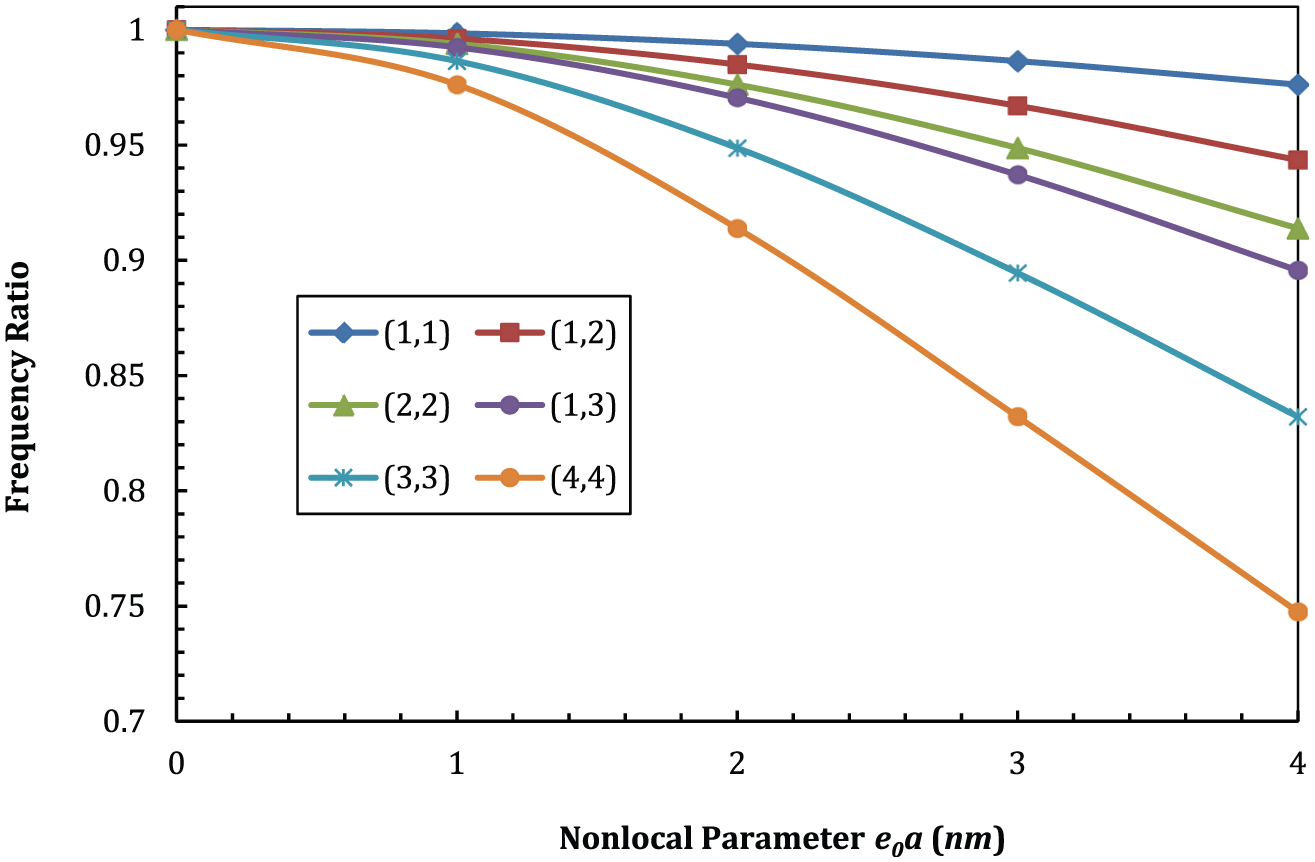
Effect of the nonlocal parameter e0a on the frequency ratio of FGP nanoplates with P0 = 0, V0 = 0, and ΔT = 0 (g = 5).
Figure 3 illustrates the variation of aspect ratio (lb/la)with changing of the nonlocal parameter for power index g = 2. It is seen that as the aspect ratio increases, the frequency ratio increases and this increase is more prominent for higher values of nonlocal parameter. Also, this figure shows that increase in aspect ratio (lb/la) of the FGP nanoscale plate leads to increase in the nonlocal effects and the nonlocal curve converges with the local theory results (e0a = 0).
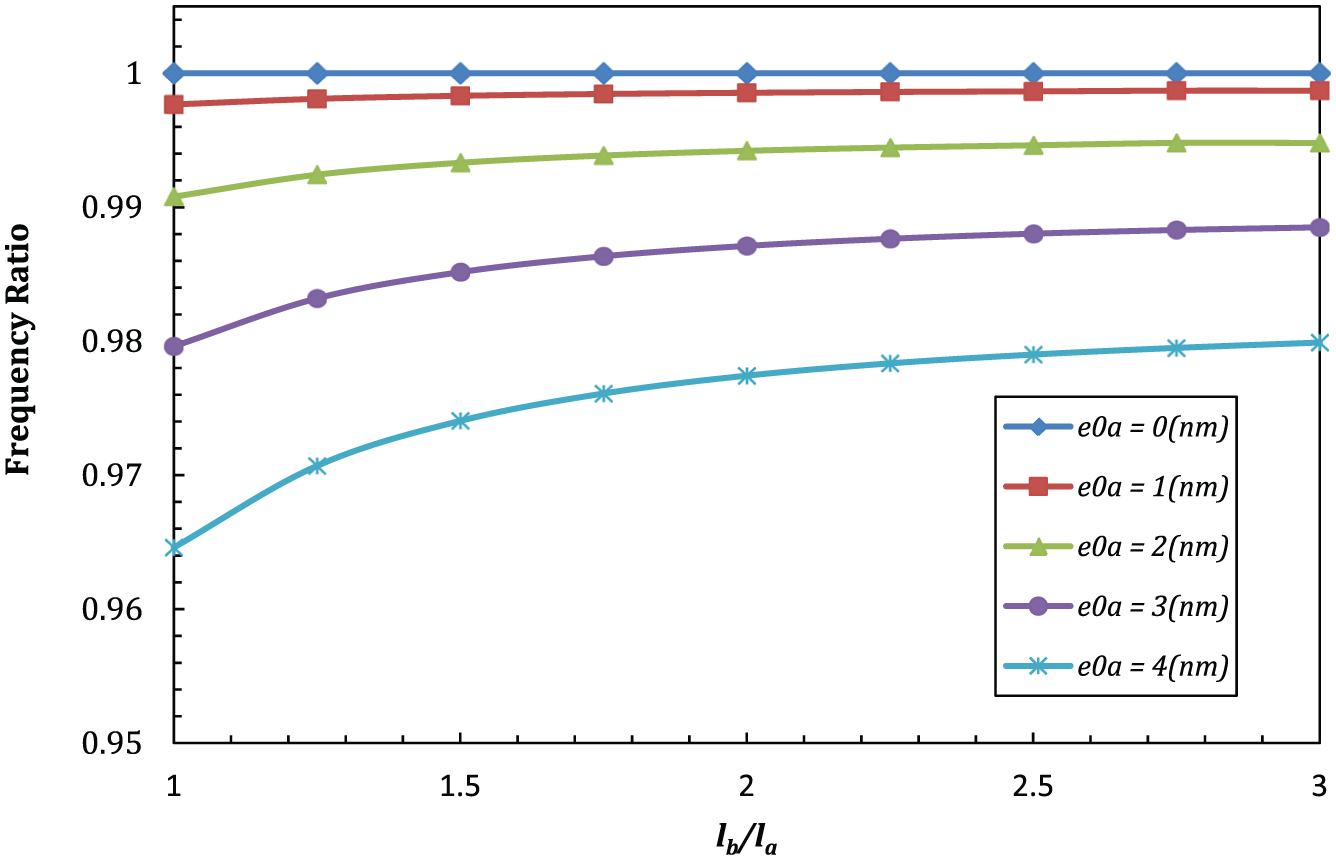
Variations of fundamental frequency ratio with aspect ratio with P0 = 0, V0 = 0, and ΔT = 0 (g = 2).
Figure 4 shows the effect of the thickness-to-length ratio (h/la) on the dimensionless frequency of the FGP nanoscale plate for various mode numbers and different power indexes. The figure illustrates that the dimensionless frequency increases with increasing thickness-to-side ratio (h/la), and this increase is more prominent for higher mode numbers. In this figure, the length and width maintain as la = lb = 65 nm, but the thickness varies to satisfy different thickness-to-length ratios. Therefore, with increasing h/la, the thickness of nanoplate increases and a higher thickness-to-length ratio shows that the nanoscale plate is thicker and so has a higher stiffness.
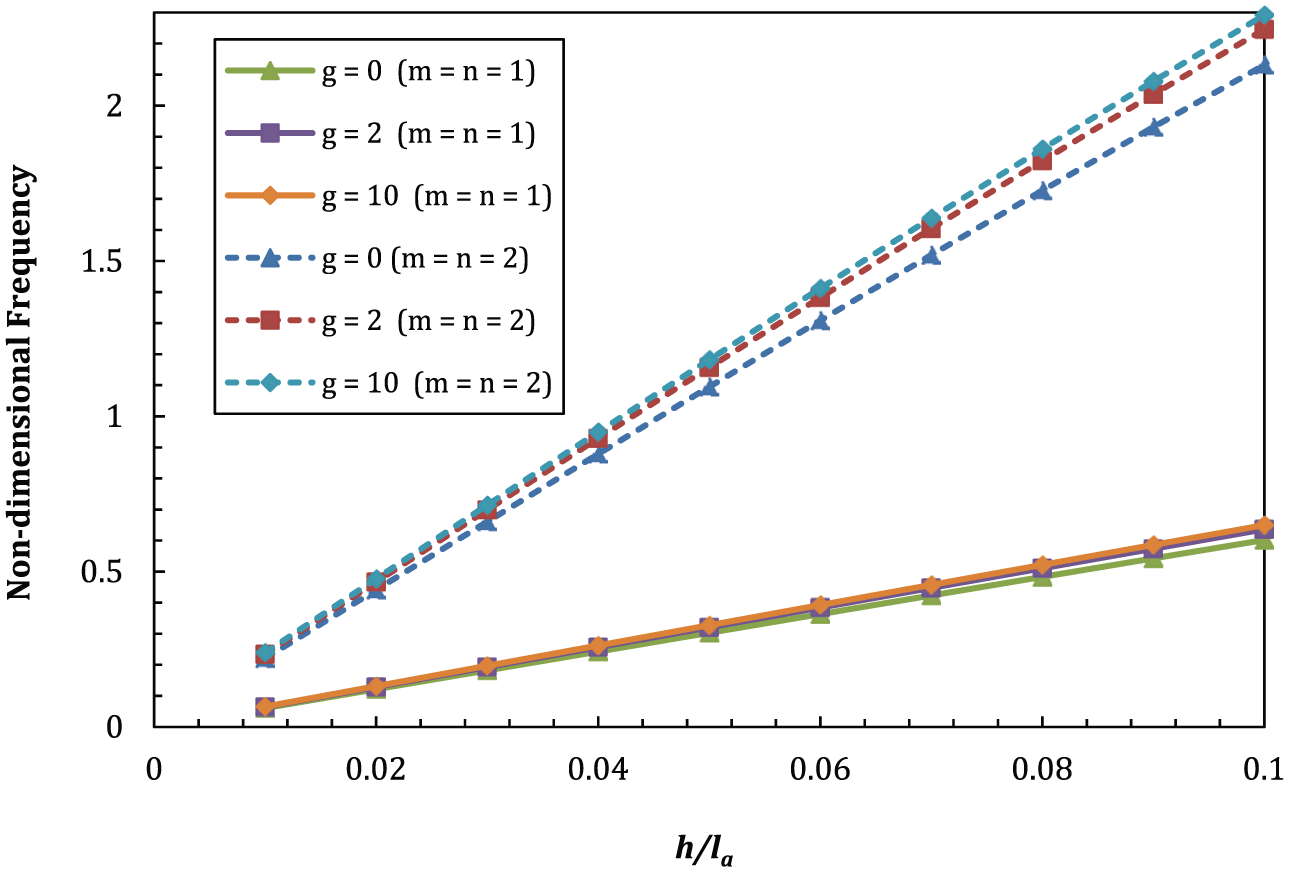
Variations of non-dimensional frequency with thickness-to-length ratio with P0 = 0, V0 = 0, and ΔT = 0. (la/lb = 1, e0a = 4 nm).
The influences of power indexes on the natural frequencies of FGP nanoscale plate for different nonlocal parameters are illustrated in Figure 5. Based on this figure, increasing the volume fraction index leads to the growth of the dimensionless frequencies and this increase is more significant as the volume fraction index changes from 0 to 4 and then by increasing g, the growth of the dimensionless frequencies stabilizes for g values greater than 7. Noting that the value of the mechanical properties of PZT-5H is larger than that of PZT-4 and the increase in g leads to a greater amount of PZT-5H, thus makes such FGP nanoscale plate less flexible and this is why the natural frequencies increase with increasing g for lowest four modes. In other words, an increase in the power law index results in an increase in elasticity modulus, which also implies that the nanoscale plate becomes stiff and for g > > 1, the FGP nanoscale plate becomes a PZT-5H nanoscale plate and its mechanical properties become almost steady.
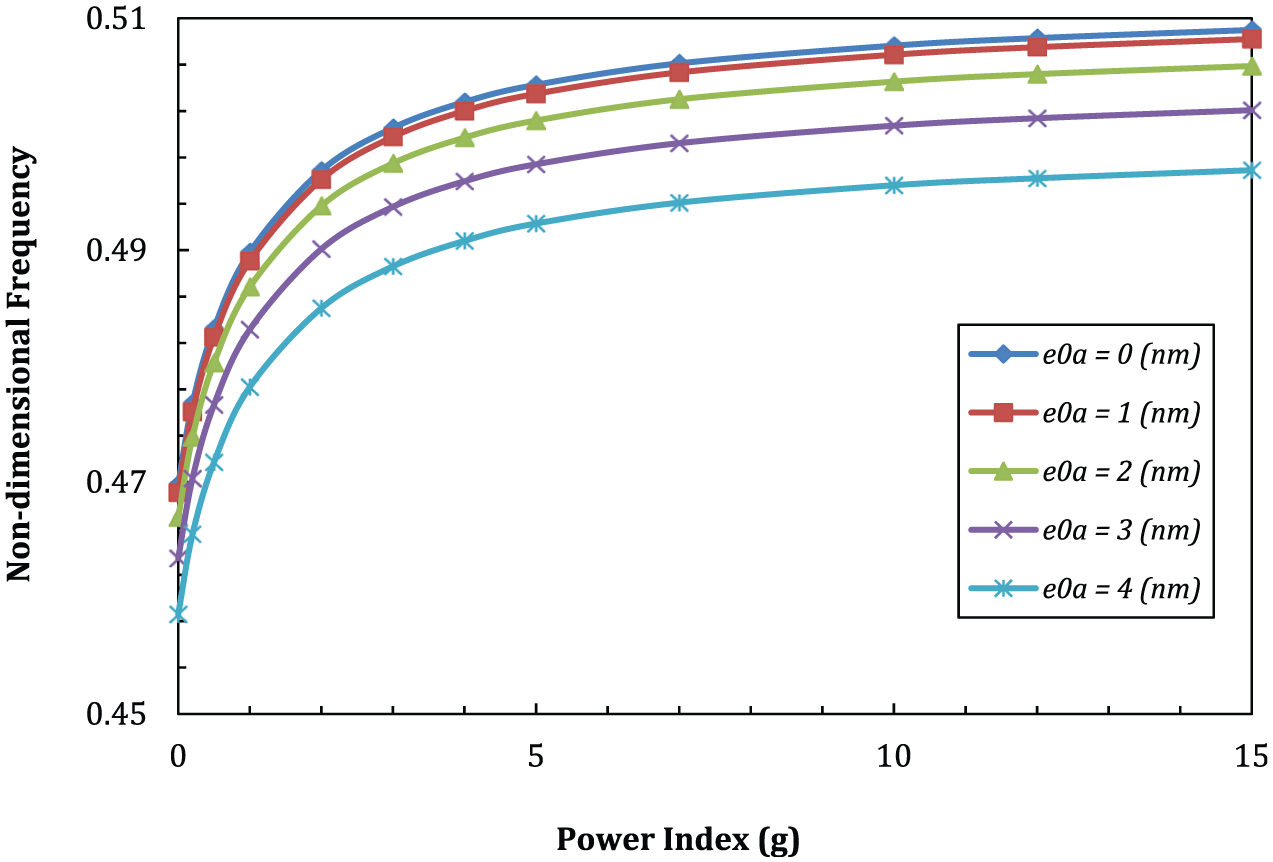
Effect of the power index on the non-dimensional frequencies of the FGP nanoscale plate for different nonlocal parameters with P0 = 0, V0 = 0, and ΔT = 0 (la/lb = 1, m = n = 1).
Conclusion
In this work, thermo-electro-mechanical vibration of FGPMs’ nanoscale plates based on the Eringen’s nonlocal theory and Kirchhoff plate theory is presented. The governing differential equations are derived using Hamilton’s principle, which are then solved analytically to obtain the natural frequencies of FGP nanoplate. The numerical results indicate that
The nonlocality has significant effects on the natural frequency at higher modes and the nonlocality effects increase with increasing wave numbers.
Increasing the volume fraction index (g) leads to the growth of the dimensionless frequencies.
The natural frequencies are quite sensitive to the external electric loading and mechanical loading, but they are not sensitive to the temperature change.
The natural frequency increases linearly with the increase in the thickness-to-length ratio.
Footnotes
Appendix 1
Coefficients a11 through a44
Declaration of conflicting interests
The author(s) declared no potential conflicts of interest with respect to the research, authorship, and/or publication of this article.
Funding
The author(s) received no financial support for the research, authorship, and/or publication of this article.