







Abstract
Recently, a novel method for mechanical energy harvesting has been proposed, which is based on stress-induced polarization switching in ferroelectric materials. Compared with the traditional piezoelectric energy harvesters, a huge improvement in the output energy has already been theoretically demonstrated. In this article, the influence of different materials on the energy-harvesting performance associated with this new strategy is further studied. The state-of-the-art phase-field model is adopted to investigate the nonlinear hysteretic energy-harvesting process in two nanoscale ferroelectric energy harvesters, which are respectively based on two typical ferroelectric materials—single-crystal BaTiO3 and PbTiO3. In both cases, the effects of the bias voltage and bias resistance are carefully investigated and the optimum values are obtained. Later, the energy-harvesting process and energy flow details in both harvesters working at the optimum conditions are presented and carefully compared in the context of real applications. Furthermore, the energy-harvesting performance of a BaTiO3-based nanoscale piezoelectric energy harvester with equivalent material size is additionally simulated with the finite element method and compared with the corresponding results of the ferroelectric energy harvesters, where obvious advantages associated with the new strategy are demonstrated.
Introduction
In the past two decades, mechanical energy harvesting has emerged as a promising method to power wireless sensor networks and implantable biomedical devices, generating great interest from researchers around the world (Karami and Inman, 2012; Priya and Inman, 2009; Shaikh and Zeadally, 2016). Generally, there are three principal ways to convert the ambient mechanical energy into useful electricity: electromagnetic, electrostatic, and piezoelectric effects (Invernizzi et al., 2016; Roundy et al., 2003). Among these three traditional methods, piezoelectric energy harvester (PEH) is the one that has been investigated most intensively due to its large electro-mechanical coupling coefficient. The idea of using piezoelectric effect for energy harvesting has already been extended to the nanoscale region (Wang and Song, 2006). Nanoscale PEHs or piezoelectric nanogenerators with different one-dimensional (1D) nanostructures, such as nanowires and nanobelts, are of great interest in energy harvesting for flexible or wearable electronics due to their supreme mechanical properties (Chen et al., 2017; Nafari et al., 2017). However, the energy density harvested via piezoelectric effect is still not sufficient, especially for applications in low-frequency mechanical environments. Different methods have been proposed in the literature to improve the energy-harvesting performance, including but not limited to, designing different mechanical structures to lower the natural frequency of the systems to meet the frequency range of the mechanical sources (Rezaeisaray et al., 2015; Sharpes et al., 2015; Zhou et al., 2017), introducing nonlinear effects into the energy-harvesting structures to broaden the resonance frequency range (Daqaq et al., 2014; Yang and Zu, 2016a), trying different energy-harvesting management circuits to optimize the output energy (Lefeuvre et al., 2017; Shen et al., 2010), and employing materials with better properties (Ren et al., 2010; Yang and Zu, 2016b). In addition to the efforts associated with these traditional methods, innovative mechanism-based strategies have also been proposed, for example, diverse electrochemical harvesters (Kim et al., 2016, 2017), harvesters using the coupling between flowing fluids and electronic charges (Liu et al., 2007; Yin et al., 2014), and the triboelectric nanogenerators (Fan et al., 2012; Wu et al., 2017; Zi et al., 2016).
Recently, a new method for mechanical energy harvesting has been proposed, which is based on stress-induced polarization switching phenomena in ferroelectric materials (Balakrishna and Huber, 2016; Wang et al., 2017). Different from the traditional piezoelectric mechanical energy harvesting, which is confined to the linear piezoelectric region, a non-180° ferroelastic polarization switching is induced in this new method to seek more polarization variations. The huge polarization changes associated with stress-induced polarization switching process result in a great improvement of the output energy. The energy density, which is several orders of magnitude higher than its counterpart harvested by traditional linear piezoelectric effect, has been theoretically demonstrated. By introducing a bias electric field, the robustness deficiency problem associated with the original prototype has been successfully tackled (Wang et al., 2017). Due to its great potential in real applications and the complicated nonlinear hysteretic phenomena involved, this new method requires a more detailed analysis.
In this article, the influence of different materials on the energy-harvesting performance is under investigation. Differences between two single-crystal BaTiO3- and PbTiO3-based nanoscale ferroelectric energy harvesters (FEHs) are demonstrated and discussed. As in our previous work (Wang et al., 2017), the state-of-the-art phase-field model is numerically implemented to carefully investigate the energy-harvesting performance. Before the phase-field study, the energy flow chart of this newly proposed FEH is established for the first time, which enhances the understanding of the basic working mechanism of this new strategy. Based on the energy flow chart, two different energy-harvesting efficiencies are defined, which serve as two important figures of merit when accessing the performance of the energy harvesters. In the phase-field simulation, the input stain amplitudes in these two FEHs are carefully designed to ensure that the ferroelastic polarization switching can be induced. In addition, values of the bias voltage and bias resistance are optimized to obtain the best energy-harvesting performance in both cases. Later, details about the energy-harvesting process and energy flow in the FEHs working at the optimum conditions are illustrated and discussed in the context of real applications. Finally, the energy-harvesting performance of a BaTiO3-based nanoscal PEH with equivalent material size is additionally simulated and compared with the results of the new strategy, where huge advantages associated with the newly proposed FEHs are demonstrated.
Basic working mechanism and energyflow chart of FEH
Before the phase-field investigation of the material influence, the basic working mechanism of the newly proposed FEH is briefly reviewed. As a subgroup of piezoelectric materials, ferroelectric materials are distinguished for their spontaneous polarizations under Curie temperature, which can be switched by external stress. A macroscopic polarization variation, which is much larger than that with piezoelectric effect and can be used for mechanical energy harvesting, is associated with the stress-induced polarization switching process. For details regarding polarization switching phenomena in ferroelectric materials, Shu and Bhattacharya’s (2001) work can be referred to. It is noticed that, in the literature, the terminology “ferroelectric” is always confused with “piezoelectric,” and FEH/PEH are both used to describe energy harvesting via linear piezoelectric effect indiscriminatingly. To make a distinction, in this article, FEH is specified for energy harvesting via stress-induced polarization switching, which is a typical feature of ferroelectric materials. A schematic representation of a base-excited single degree of freedom ferroelectric energy-harvesting system is shown in Figure 1. Compared with linear PEH, the main difference lies in the energy transducer element. The piezoelectric transducer is replaced by a ferroelectric transducer. Input stress/strain from the mechanical part induces a polarization switching process in the transducer. With appropriate electrodes and energy-harvesting circuit arrangement, the huge macroscopic polarization variation associated with stress-induced polarization switching leads to a large electric current in the output circuit. In this way, the mechanical energy is converted into the electricity. In Figure 1, the mass-spring-damper system is a simple representation of the mechanical part. In real applications, nonlinear distributed mechanical structures, such as different types of cantilevers, can be employed. The energy-harvesting circuit is the simple one adopted in our previous work (Wang et al., 2017), where the DC voltage source provides a bias electric field to impose a preferred orientation for polarization switching, and the resistance serves as the energy-harvesting element. Considering the similarity between this newly proposed FEH and traditional PEH, hints and references can be obtained from so many achievements regarding PEH, which gives the biggest advantage over other new mechanism-based energy-harvesting methods.
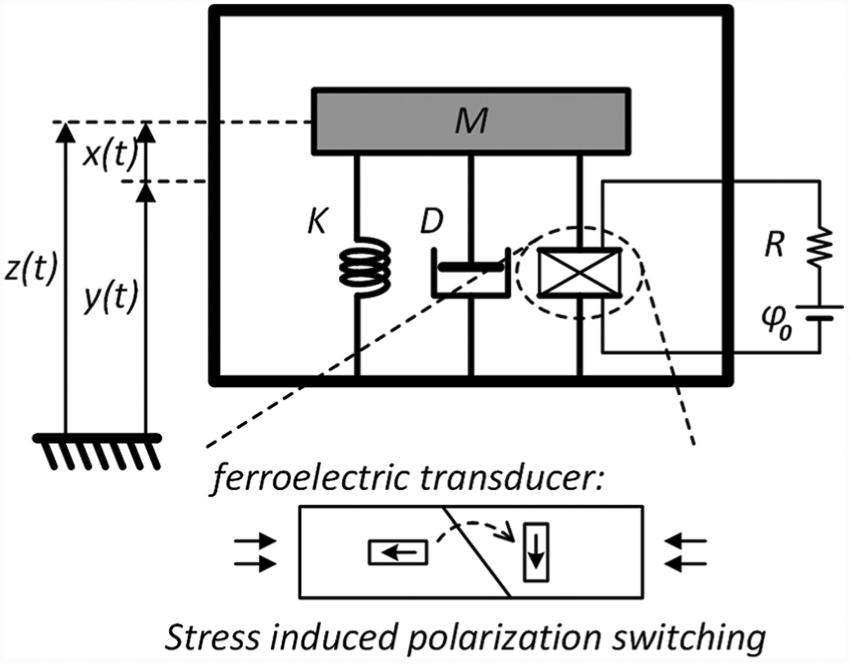
Schematic representation of a base-excited single degree of freedom FEH.
In addition to the basic working mechanism reviewed above, the energy flow chart of FEH is established for the first time in this section. The details are illustrated in Figure 2. Compared with the energy flow chart of PEH (Liang and Liao, 2012), the energy flow within the mechanical part is identical, while distinctions exist for the energy flows within the transducer part and electrical part. As polarization switching process is inherently a dissipative process, part of the input energy to the ferroelectric transducer is dissipated and finally converted to the thermal energy, which is represented by the energy flow
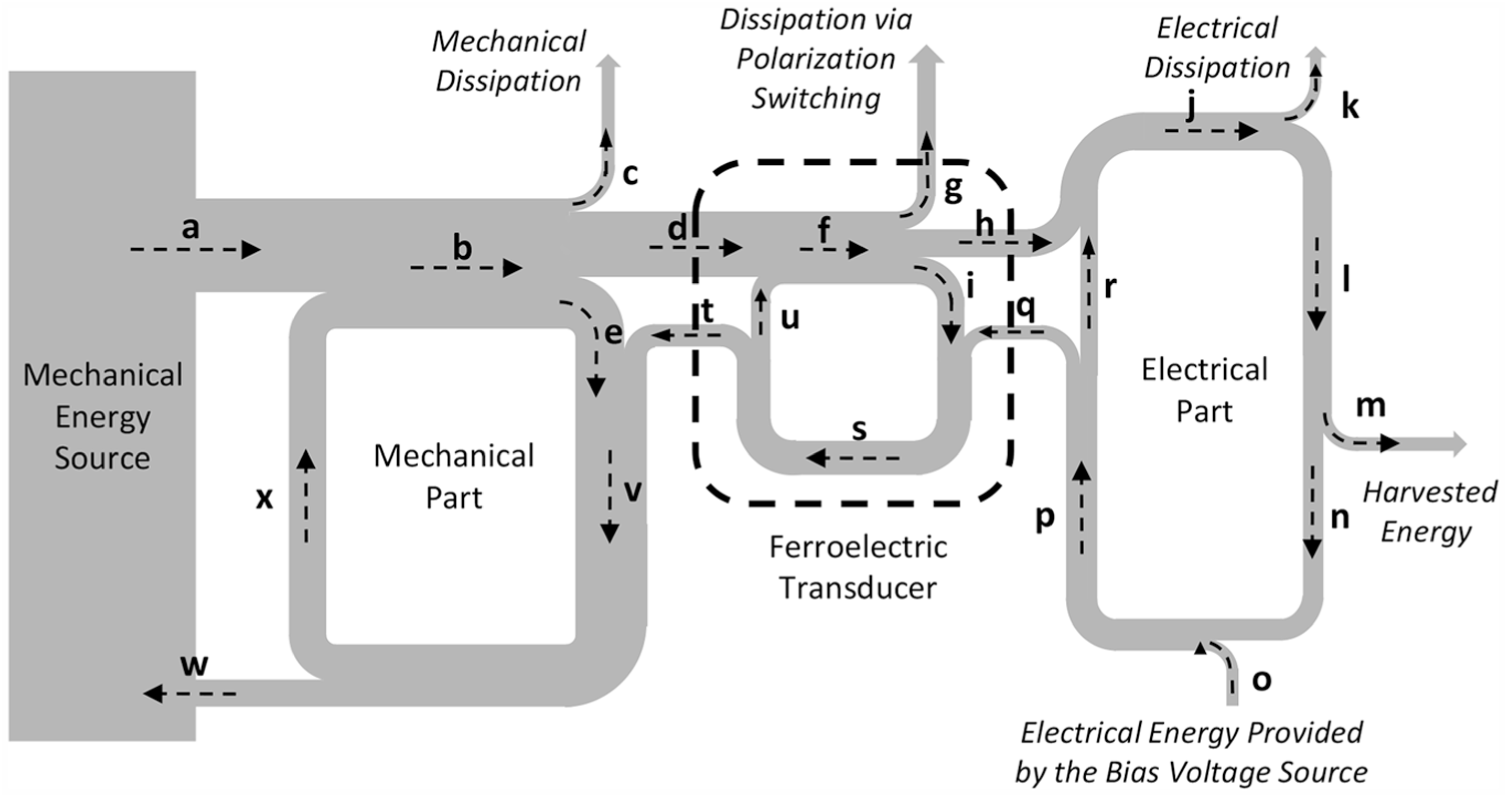
Illustration of the energy flow chart of FEH.
To assess the performance of an energy-harvesting system, two kinds of figures of merit are very important. One is the net amount of output energy density and the other is the system efficiency. Here, based on the energy flow chart established above, two energy-harvesting efficiencies are proposed. One is the total energy conversion efficiency, which can be expressed as

where

captures the ability of the system to harvest the electrical energy from a fixed amount of input mechanical energy. These two efficiencies are both very important in analyzing and trying to optimize the system performance and will be adopted in the following section to access the material influence.
Phase-field investigation of the material influence
Phase-field model and numerical implementation details
Phase-field model is a sort of diffusive interface model, which can simulate the microstructures and track the domain wall motions in ferroelectrics in a straightforward and robust way (Chen, 2002; Su and Landis, 2007; Zhang and Bhattacharya, 2005). Phase-field model for ferroelectrics has already been employed by different researchers to investigate the properties of ferroelectric-based nanoscale devices (Balakrishna and Huber, 2016; Balakrishna et al., 2014; Lich et al., 2015, 2017; Wang et al., 2018). As in our previous work, the state-of-the-art phase-field model is adopted in this article to investigate the nonlinear hysteretic polarization switching phenomena involved in the energy-harvesting process. The specific model adopted in this work is deduced as a gradient flow of the total free energy of the material. In the following, the model details are briefly reviewed. The total free energy of a single-crystal ferroelectric material can be expressed as (Zhang and Bhattacharya, 2005)
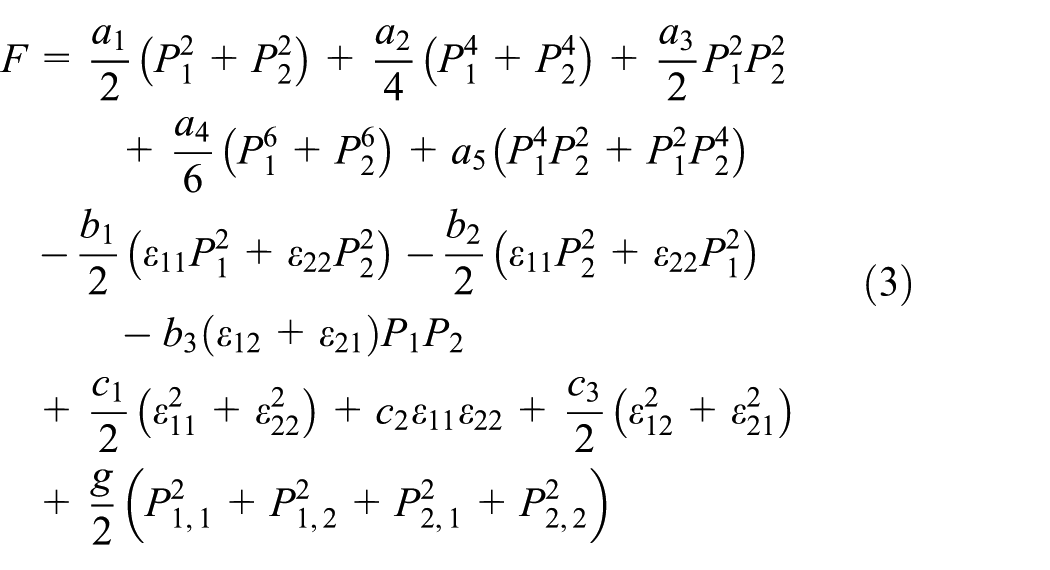
where

where


where
In the following, the phase-field model reviewed above is numerically implemented to investigate the material influence on the performance of the FEHs. As a demonstration, two nanoscale FEHs, which are respectively based on single-crystal BaTiO3 and PbTiO3, are considered. To fully capture the dynamics of the entire energy-harvesting system and optimize the system performance, the phase-field model, that is, equations (4) to (6), should be coupled with models for the mechanical part and the energy-harvesting circuit. However, when attached to a macroscopic mechanical structure, the back force from the nanoscale ferroelectric transducer is very small and can be omitted. For simplicity, the coupling effect with respect to the mechanical part is not considered in this investigation, and a given strain signal is directly fed into the phase-field model to mimic the mechanical input. On the other hand, the coupling, with respect to the harvesting circuit, is incorporated into the phase-field model through an appropriate accommodation of the electrical boundary conditions as in our previous work (Wang et al., 2017). Periodic boundary conditions are applied on the left and right boundaries. More detailed information regarding the boundary conditions is listed in Table 1. The computational area for each transducer material is 160 nm × 40 nm as illustrated in Figure 3. Details of the model parameters for the two FEHs considered in this work are listed in Table 2. Finite element method with backward time differentiation strategy is adopted to solve the model, which is numerically implemented in COMOSOL Multiphysics. Note that domain walls in phase-field model are diffusive, and their width defines a characteristic length scale (Su and Landis, 2007)

where
Boundary conditions for the phase-field simulations.
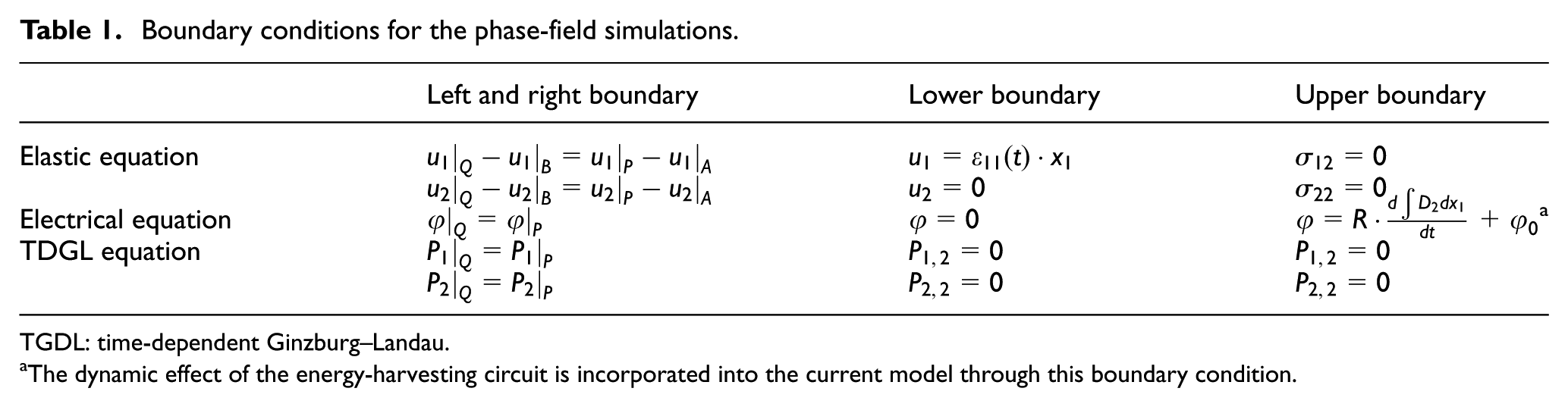
TGDL: time-dependent Ginzburg–Landau.
The dynamic effect of the energy-harvesting circuit is incorporated into the current model through this boundary condition.
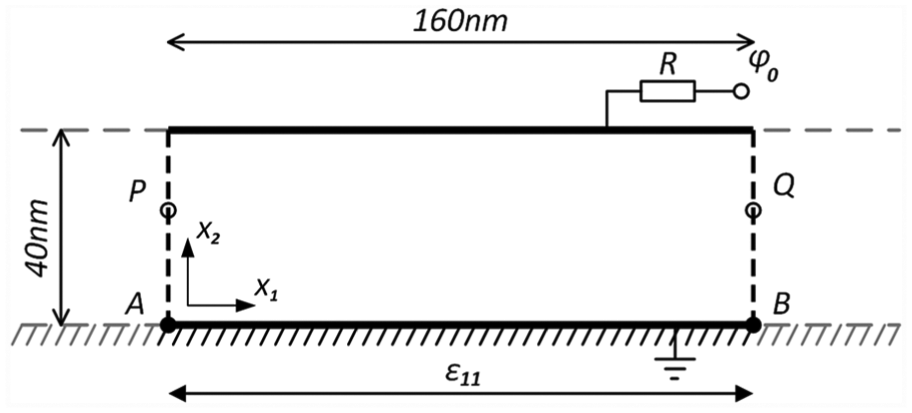
Illustration of the computational area for the phase-field simulation.
Material parameters for the phase-field simulations (Units: SI).
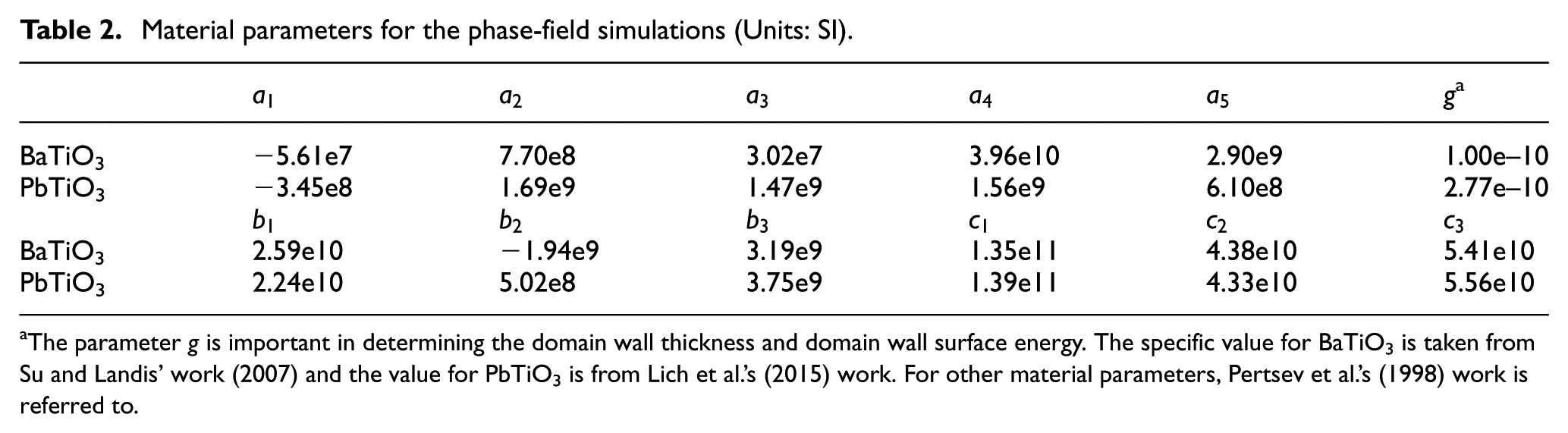
The parameter g is important in determining the domain wall thickness and domain wall surface energy. The specific value for BaTiO3 is taken from Su and Landis’ work (2007) and the value for PbTiO3 is from Lich et al.’s (2015) work. For other material parameters, Pertsev et al.’s (1998) work is referred to.
Optimization of the bias voltage and bias resistance
As discussed in our previous work (Wang et al., 2017), the bias voltage and bias resistance values have big impacts on the energy-harvesting performance of the FEHs. In this subsection, the phase-field simulations are first employed to optimize the bias voltage and bias resistance values in these two nanoscale FEHs. To induce the non-180° polarization switching in the energy-harvesting process, the amplitudes of the input strains need to be carefully designed. With some thermodynamic calculations, several important material-specific constants are provided in Table 3, which would be helpful in the following discussions. Based on these calculated material properties, the exact form of the input strain signals in both harvesters adopted in the simulations is given as

where T is the time period of the strain signal;
Several important material-specific constants.

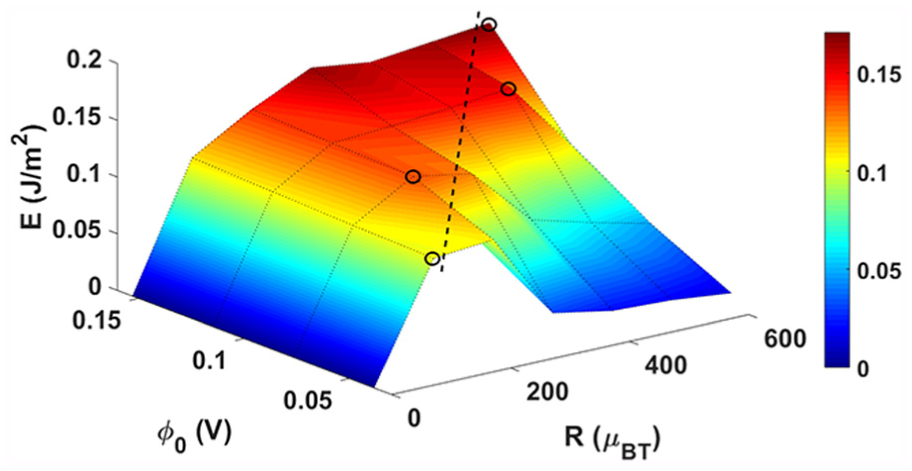
Demonstration of the influence of the bias voltage and bias resistance on the output energy density in BaTiO3-based FEH.
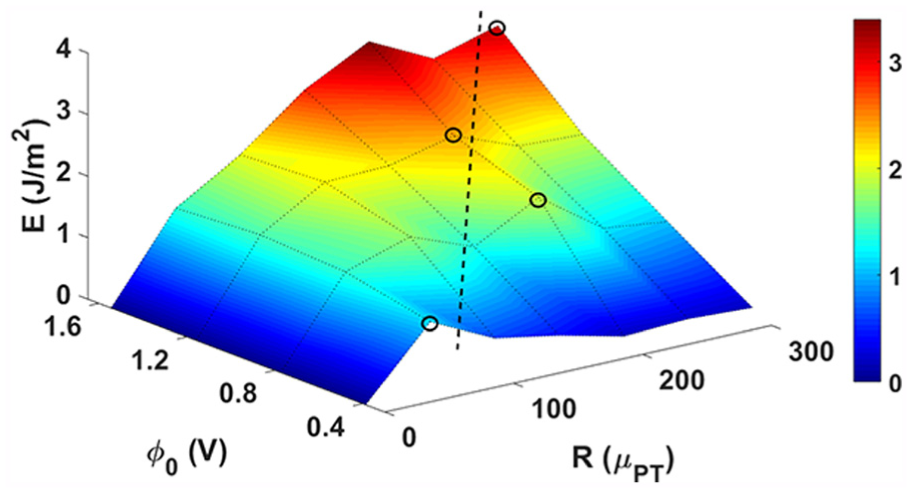
Demonstration of the influence of the bias voltage and bias resistance on the output energy density in PbTiO3-based FEH.
Comparison of the energy-harvesting process and energy flow details
In this subsection, the details of the energy-harvesting process and energy flow in the two nanoscale FEHs with optimum bias voltage and bias resistance values are provided and carefully compared. The temporal evolution of the domain patterns in a typical energy-harvesting cycle of the BaTiO3-based FEH working at the optimum condition is demonstrated in Figure 6. At the beginning of the cycle, the ferroelectric thin film is subjected to the maximum tensile strain, and all of the polarizations point in the negative
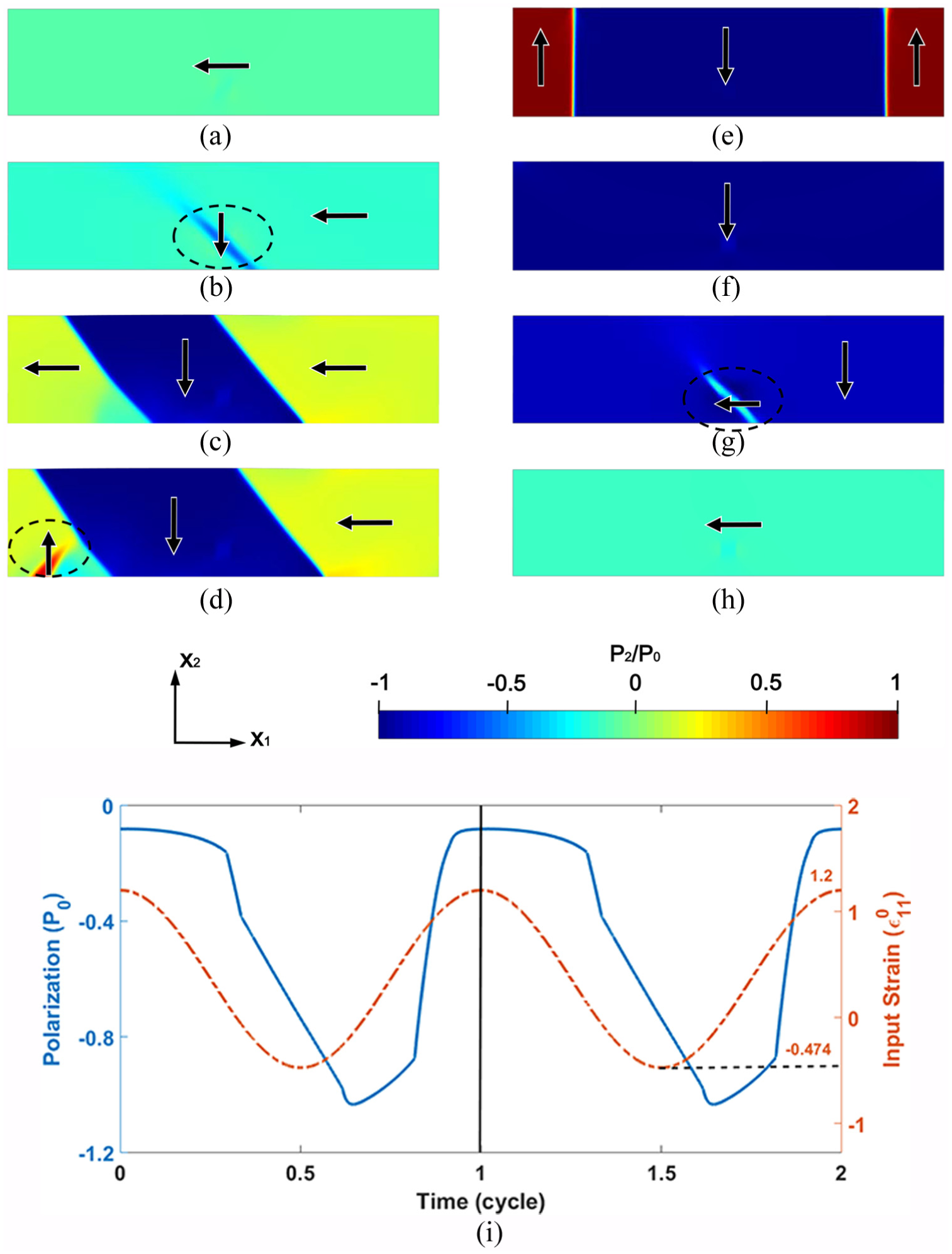
Demonstration of the energy-harvesting process in BaTiO3-based FEH working at the optimum condition: (a) to (h) the evolution of the domain patterns in a typical energy-harvesting cycle: (a) t = 0, (b) t = 0.294 T, (c) t = 0.310 T, (d) t = 0.334 T,(e) t = 0.368 T, (f) t = 0.616 T, (g) t = 0.816 T, and (h) t = 0.914 T; (i) the temporal evolution curve of the average polarizationalong the
In addition, the energy flow details associated with the above energy-harvesting process are further demonstrated in Figure 7. Figure 7(a) shows the temporal evolution curves of the net input mechanical energy density (i.e.
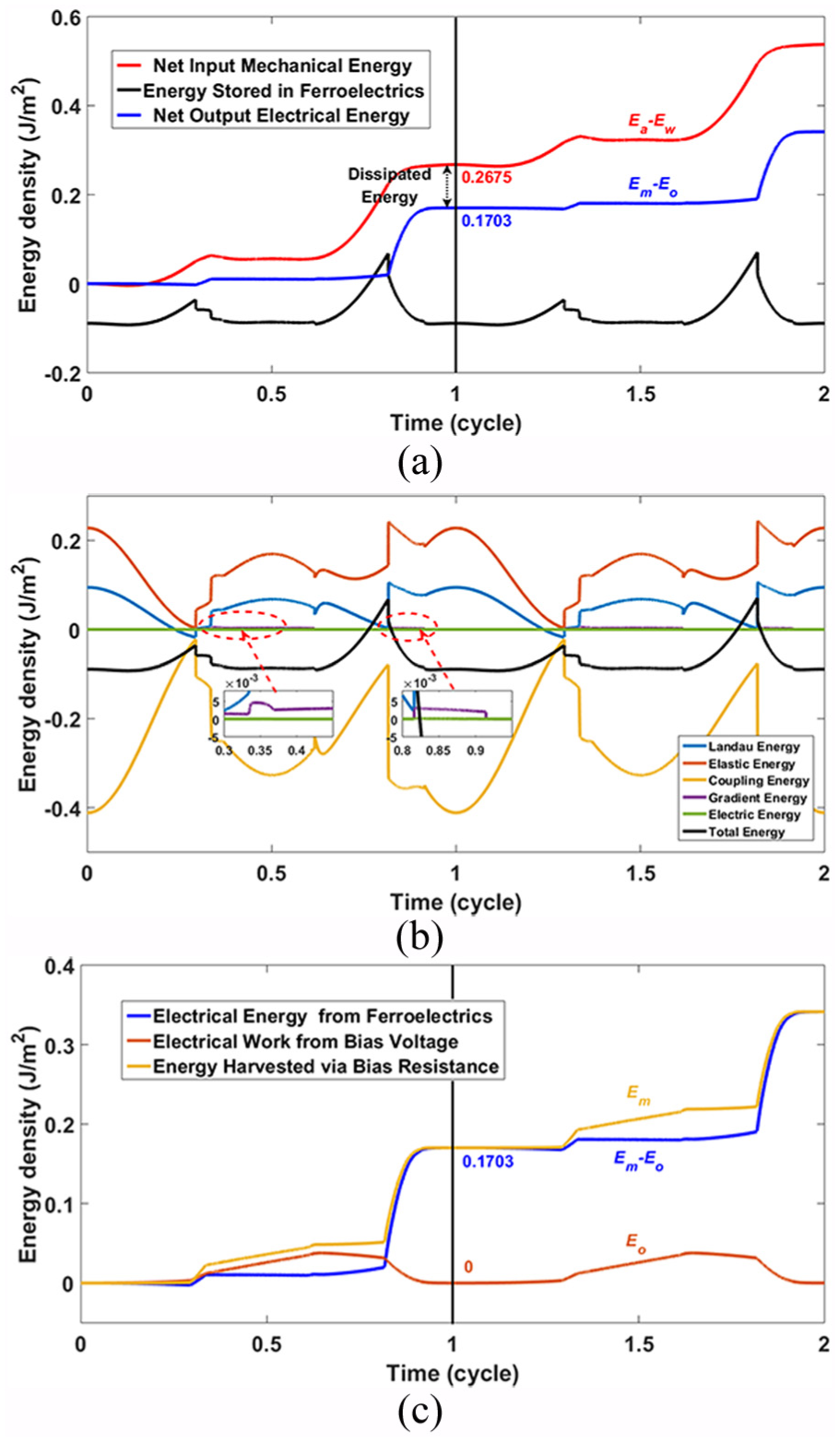
Demonstration of the energy flow details in BaTiO3-based FEH working at the optimum condition: (a) temporal evolution curves of three main energy components: net input, stored, net output; (b) temporal evolution curves of different components in the stored part; (c) temporal evolution curves of energy components involved in the energy-harvesting circuit.
Figures 8 and 9 demonstrate the corresponding results of the PbTiO3-based FEH working at the optimum condition. Compared with the energy-harvesting process of the BaTiO3-based FEH shown in Figure 6, the main features demonstrated in Figure 8 are similar, which is reasonable, considering the fact that same physical mechanism is adopted. Cyclic input strain induces cyclic polarization switching process. However, at some moment, the detailed polarization domain patterns are more complicated in PbTiO3-based FEH as shown in Figure 8(g), which can be ascribed to the much larger aspect ratio of the tetragonal phase of the PbTiO3. The aspect ratio of tetragonal PbTiO3 is 1.0669, while the corresponding value for BaTiO3 is 1.0113. Larger aspect ratio means more complicated stress state when the polarization switching process takes place. To release the mismatched stress, detailed domain patterns are formed. On the other hand, the energy flow details of PbTiO3-based FEH are demonstrated in Figure 9. The main features are also similar when compared to BaTiO3. The energy densities for PbTiO3 are in the order of
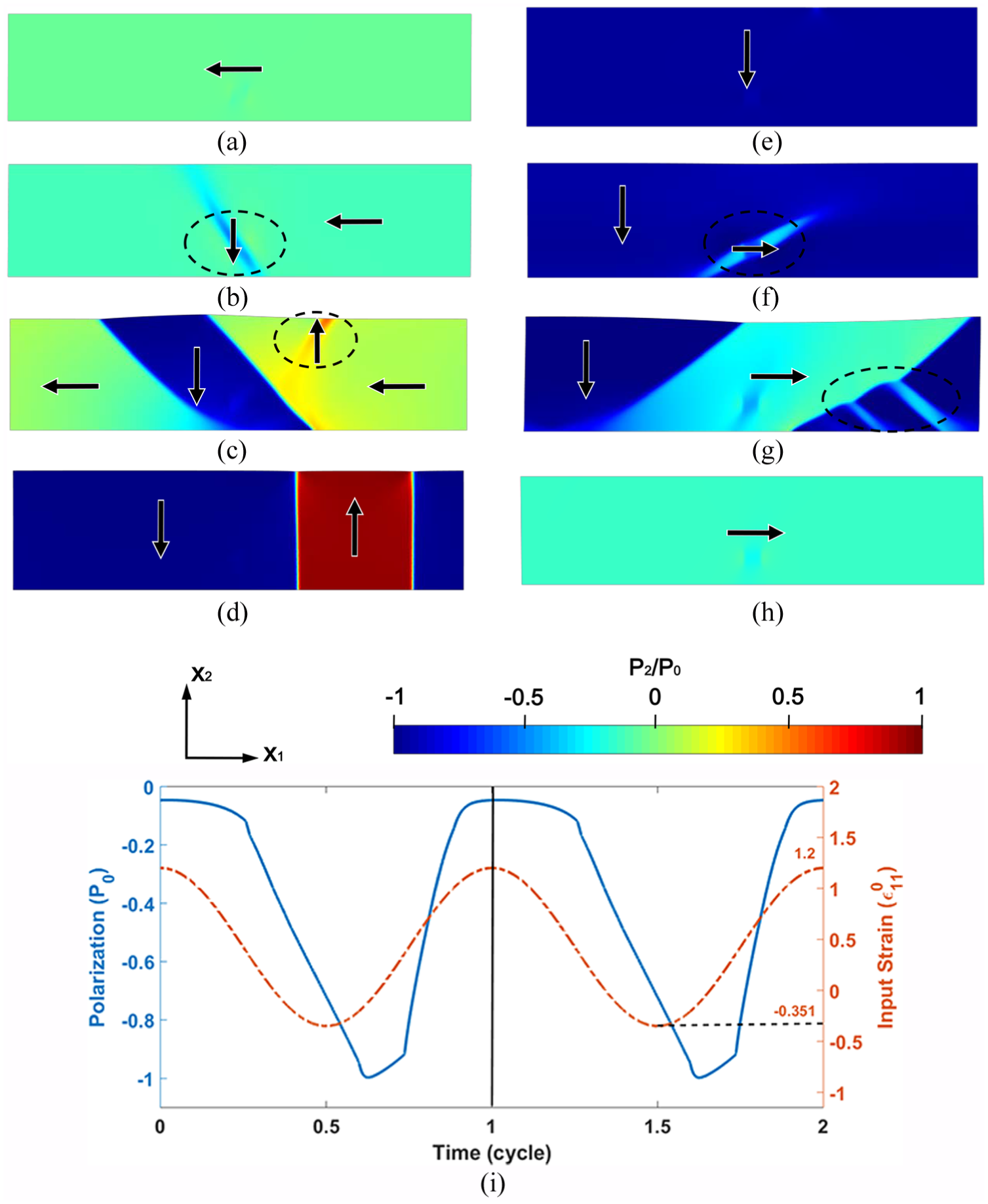
Demonstration of the energy-harvesting process in PbTiO3-based FEH working at the optimum condition: (a) to (h) the evolution of the domain patterns in a typical energy-harvesting cycle: (a) t = 0, (b) t = 0.257 T, (c) t = 0.269 T, (d) t = 0.395 T,(e) t = 0.600 T, (f) t = 0.737 T, (g) t = 0.781 T, and (h) t = 0.886 T; (i) the temporal evolution curve of the average polarizationalong the
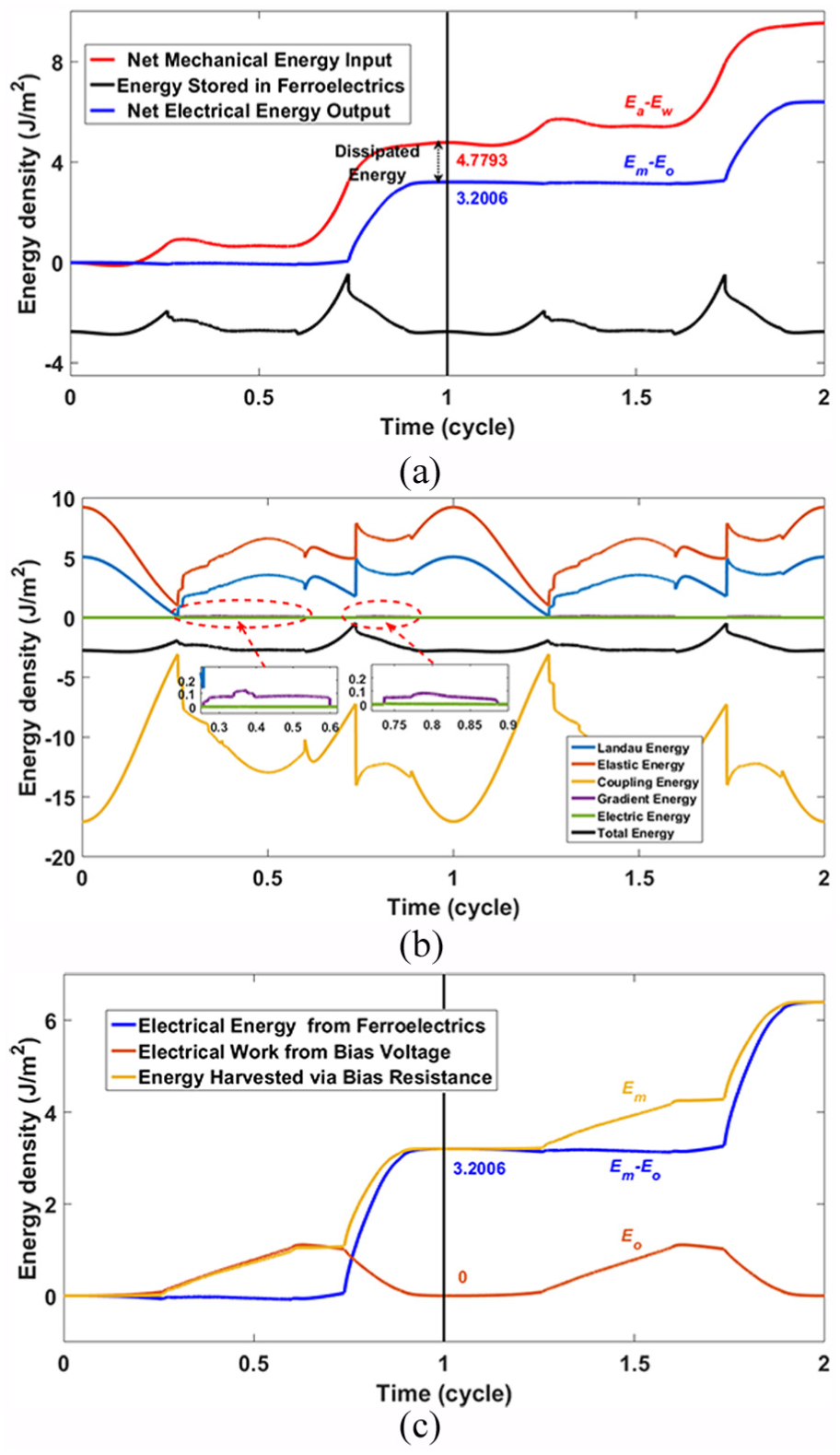
Demonstration of the energy flow details in PbTiO3-based FEH working at the optimum condition: (a) temporal evolution curves of three main energy components: net input, stored, net output; (b) temporal evolution curves of different components in the stored part; (c) temporal evolution curves of energy components involved in the energy-harvesting circuit.
Comparison with PEH with equivalent material size
To further demonstrate the material influence and the obvious advantage associated with the newly proposed strategy, the energy-harvesting performance of a BaTiO3-based PEH with equivalent material size is additionally simulated with the finite element method. Instead of the TDGL equation for ferroelectrics, the linear piezoelectric relation is adopted in the simulation. The linear piezoelectric relation is plugged into the elastic and electrical governing equations to characterize the properties of the piezoelectric transducer. The boundary conditions and the element types are kept the same as those adopted in the previous phase-field simulations. The material properties are taken from Park et al.’s work (2010), where a young’s modulus of 67 GPa and a piezoelectric coefficient of 78 pC/N were used. The magnitude of the input strain is kept as 0.005, which is comparable to the value assumed in Park et al.’s work (2010) and far smaller to induce the non-180° polarization switching. The piezoelectric potential distribution of the piezoelectric thin film with
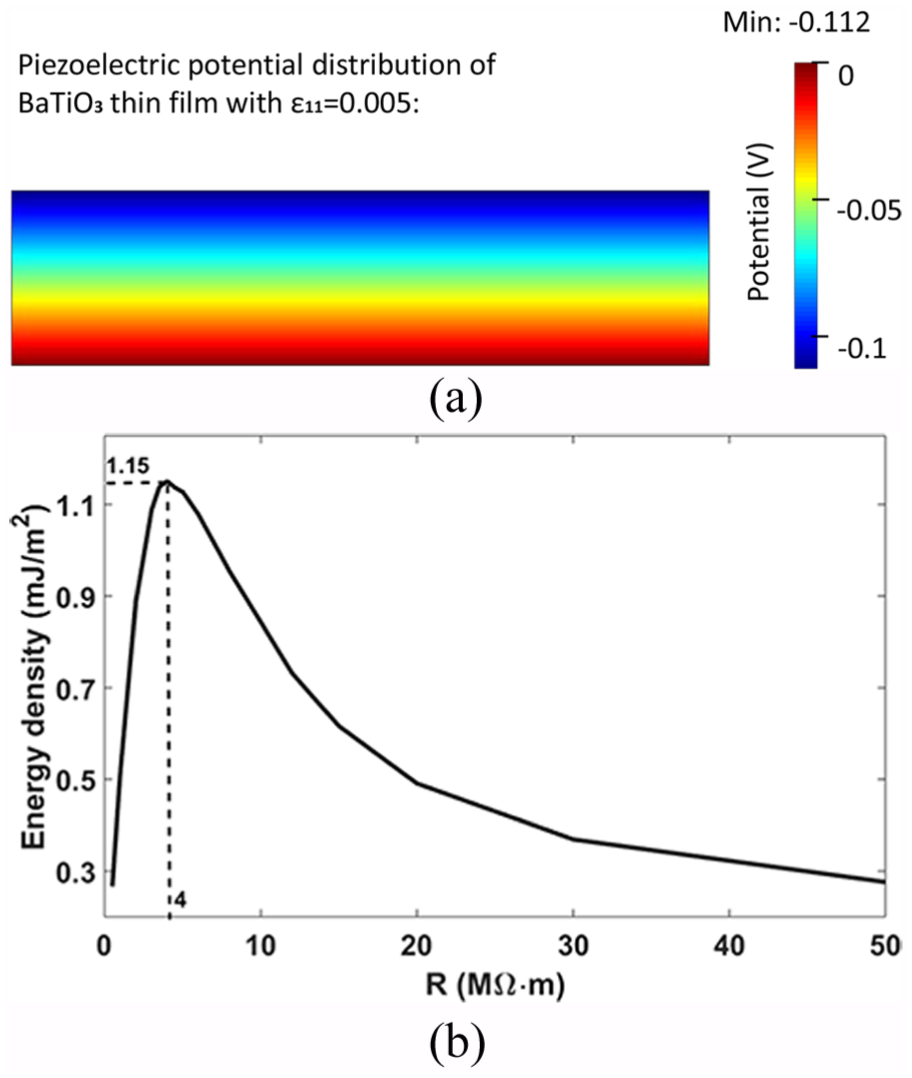
Demonstration of the energy-harvesting performance of the BaTiO3-based PEH: (a) the piezoelectric potential distribution with
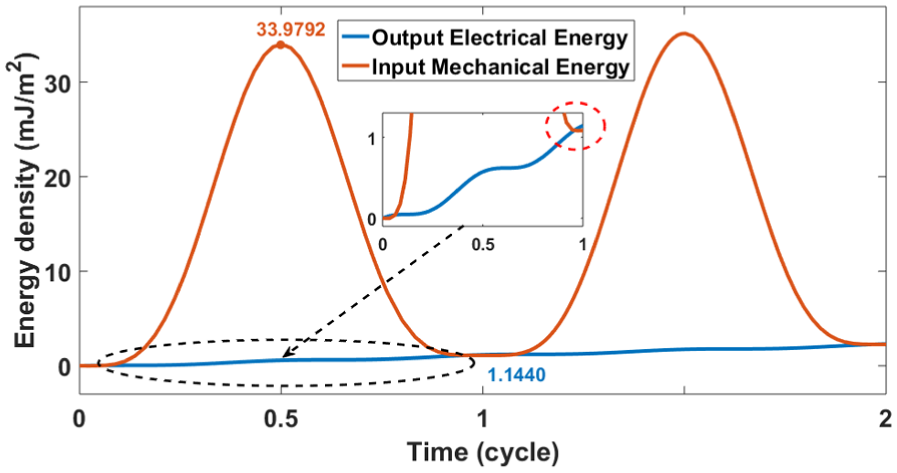
Demonstration of the energy flow details in BaTiO3-based PEH working at the optimum condition.
Conclusion
The material influence in newly proposed FEH has been carefully investigated in this article. The state-of-the-art phase-field model was adopted to simulate the nonlinear hysteretic energy-harvesting process in two representative nanoscale FEHs, that is, single-crystal BaTiO3- and PbTiO3-based FEHs. First, different bias voltages and bias resistances were connected to these two FEHs to optimize their performance. Compared with BaTiO3-based FEH, PbTiO3-based FEH retains a higher energy density. The critical stain required to induce non-180° polarization switching and the output energy density in PbTiO3-based FEH are both higher. The detailed comparison of the energy-harvesting process and energy flow in these two FEHs working at the optimum condition showed that the main features were very similar. However, due to the large aspect ratio of the tetragonal phase of PbTiO3, the domain patterns in some specific moment were more complicated. In addition, the energy flow details showed that reducing the coupling energy was the main driving force for polarization switching in both cases. The additional finite element simulation of a BaTiO3-based PEH showed that the maximum output energy density of the PEH was only 1.15 mJ/m2, which was several orders less when compared with FEH. This small output energy can be ascribed to the fact that a large portion of the input mechanical energy flows back to the mechanical energy source, and the effective energy-harvesting efficiency
Footnotes
Declaration of conflicting interests
The author(s) declared no potential conflicts of interest with respect to the research, authorship, and/or publication of this article.
Funding
The author(s) disclosed receipt of the following financial support for the research, authorship, and/or publication of this article: This work has been supported by the National Natural Science Foundation of China (Grants No.: 51575478 and 61571007). R.M. acknowledges the support from the NSERC and CRC program.
