







Abstract
Temperature-sensitive hydrogels are classified as high stretchable materials undertaking large recoverable deformation under thermomechanical loadings. Due to vast applications of these materials in microfluidic valves and stress/deformation discontinuity observed in multi-layered structures, understanding of thermomechanical behavior of functionally graded hydrogels is of great practical interest. In this article, the swelling of these materials is analyzed considering various types of micro-valves including solid cylinder, hollow cylinder, and Jacket-pillar cylinder. Accordingly, analytical solutions are developed for swelling behavior of diverse types of cylinders composed of functionally graded temperature-sensitive hydrogel. The distribution of the cross-link density alters along the radial direction in exponential and linear trends. Besides, finite element analysis is presented to evaluate the proposed analytical solution in different case studies. Then, to account for more realistic environmental conditions, heat transfer equation is also solved along with the mechanical equilibrium equation to propose a novel analytical solution validated by finite element method. Clarifying the micro-valves mechanism and illustrating the capability and accuracy of the analytical method, the effects of material and environmental variables are studied in detail; continuous stress and deformation fields are observed opposed to the multi-layered structures which normally involve stress discontinuity.
Keywords
1. Introduction
Hydrogels are water-swollen polymeric network containing three-dimensional cross-linked networks. Immersing the hydrophilic polymer in the solution, a high tendency for absorbing the solvent through the surface can be observed. Imbibing huge fraction of the solvent brings about the hydrogel swell to larger volume till the equilibrium state is reached. The swelling of smart hydrogels is affected by diverse properties, including the structural construction and environmental stimuli (Shojaeifard et al., 2019a, 2019b). The strength, permeability, and swelling capacity of hydrogel network vary due to the exterior stimuli such as temperature (Cai and Suo, 2011; Chester and Anand, 2011; Mazaheri et al., 2016; Zheng et al., 2018), light (Dehghany et al., 2018; Shojaeifard and Baghani, 2019), pH (Drozdov et al., 2016; Marcombe et al., 2010; Okumura and Chester, 2018), salt concentration (Zheng and Liu, 2019), electric (Attaran et al., 2015), and magnetic (Liu et al., 2006) fields as well as mechanical loading (Doi, 2009; Okumura et al., 2018). Besides, the cross-linked density as a structural factor can highly influence the mechanical response and swelling of the hydrogel. In addition, the fiber reinforced hydrogels are investigated recently to consider the anisotropic deformation (Zhou et al., 2019). Behavior of the hydrogel materials was also observed when they were probed in binary solvents to investigate the cosolvency and cononsolvency effects (Xiao et al., 2019). Moreover, the dynamic properties and phase transition of temperature-sensitive hydrogels are subjects that have attracted researchers, recently (Shoujing and Zishun, 2018; Xie et al., 2019). Besides the super absorption of these materials, the high flexibility and recoverability of hydrogel deformation drew researchers to use these materials in wide applications, for example, smart sensors and actuators (Beebe et al., 2000; Ionov, 2013), micro-valve (Beebe et al., 2000; Jadhav et al., 2015; Liu et al., 2002; Wang et al., 2005), tissue engineering (Wong et al., 2008), and drug delivery (Baghani et al., 2019; Graham and McNeill, 1984; Liu et al., 2006; Peeridogaheh et al., 2019).
Recently, stretchable materials considering the functionality, viability, and biocompatibility have been vastly utilized in biological and industrial applications. In this regard, finite deformation of high stretchable materials, for example, elastomers and hydrogels, are examined in numerous studies under various loadings including bending (Sheikhi et al., 2019; Shojaeifard et al., 2019b), extension-torsion (Valiollahi et al., 2019a, 2019b), rotating (Anani and Rahimi, 2016), and pressure-vessel (Almasi et al., 2017) to study their capability. In particular, the temperature-responsive hydrogels are being sensitive to a wide range of environmental temperature and undergoing exceedingly large deformation subjected to a slight temperature variation. Besides, among different environmental stimuli on the hydrogel structure, the temperature change is more common due to the field controllability. These aspects promote the researchers to propose theoretical description for the swelling behavior of temperature-sensitive hydrogels. Chester and Anand (2011) developed a theoretical continuum-based constitutive model to which has the capability of capturing the swelling deformation of the hydrogel by considering the heat transfer and the solvent permeation assumptions. They present the energy density to describe the hydrogel behavior based on Flory–Huggins energy. Later, Cai and Suo (2011) proposed a mechanical theory for poly-(N-isopropylacrylamide) (PNIPAM) hydrogel and analyzed the phase transition by modifying the Flory–Rehner model and considering the temperature-dependent interaction parameter. Examining the swelling behavior of temperature-responsive hydrogel in the vicinity of the phase transition temperature (PTT), they encountered snap-through instabilities. This limitation motivated Mazaheri et al. (2016) to diagnose the nature of multiple solutions and instabilities adjacent to the PTT point. They replaced the mixture energy by utilizing the polynomial expansion and proposed a modified continuous model. They used this constitutive model for several benchmark problems to represent the capability and stability of the model.
Utilizing different theories, the swelling response of smart hydrogels can be predicted in abundant applications. In particular, the microfluidic valve is a vital application of hydrogel which recently attracted much interest arising from importance of accurately controlling the fluid flow. The well-known micro-valve structure is a cylindrical Jacket composed of hydrogel introduced by Beebe et al. (2000). The hydrogel cylinder was coated on the fixed rigid pillar to be used as a microfluidic valve. Changing the temperature makes the smart hydrogel swell appropriately and block the microfluidic channel. Using the hydrogel as a micro-valve, Jadhav et al. (2015) performed an experimental study to investigate the capability of the hydrogel structure for use in micro-valve applications. They assembled new design of micro-valve utilizing PNIPAM hydrogel. Contrary to Beebe et al. (2000), which used cylindrical hydrogel coated on the rigid pillar, Jadhav et al. (2015) fabricated solid microgel positioned in micro-channel and pushed to the trapped area. They used different lasers to expose the light irradiation to change the environmental temperature and cause the hydrogel to swell. The intense swelling of the hydrogel valve could block the channel. Most of the experimental studies in the literature examined the hydrogel micro-valve, utilized cylindrical structure made of stimuli-responsive hydrogel, placed in diverse micro-channels (Liu et al., 2002; Wang et al., 2005). Hollow hydrogel cylinder is also an interesting design to be used in drug delivery applications (Liu et al., 2006). Thus, in this article, different circumstances of placing cylindrical micro-valve are studied including solid cylinder, hollow cylinder, and cylindrical Jacket coated on a rigid pillar.
Most of the earlier works considered structures made of homogeneous hydrogels. However, Guvendiren et al. (2009, 2010a, 2010b) conducted experimental studies on functionally graded (FG) hydrogels with the depth-wise cross-linked network. They analyzed the surface instability of the hydrogel layer and observed different surface patterns. The depth-wise cross-linked layer was fabricated using Poly(hydroxyethyl methacrylate) hydrogel with the ultraviolet (UV)-curable precursor solution. The cross-linked hydrogel is formed when the precursor solution is exposed to UV radiation. They stated that the cross-link density of the hydrogel layer could be determined by considering the intensity of the exposed UV radiation, time period, the concentration of initiator and cross-links, and the layer thickness. In this regard, a numerical study was carried out to scrutinize the onset of appearing instabilities pattern on the surface of the FG hydrogel layer. Then, an analytical solution of swelling-induced finite bending of an FG pH-sensitive layer was developed by Shojaeifard et al. (2019a). They evaluated the presented analytical approach using finite element (FE) analysis. Later, FG temperature-sensitive hydrogel was used to inspect the swelling behavior of multi-directional switches in finite bending (Shojaeifard et al., 2019b). Shojaeifard et al. proposed an analytical solution for hydrogel bilayer which bends in both directions. The hydrogel bilayer was composed of one upper and one lower critical solution temperature FG hydrogel that causes the structure to bend in each direction for different temperature variation. The benefit of the FG hydrogel compared to the multi-layered structure is the continuous distribution of stress components along the thickness of the layer, while it has a discontinuous trend in multi-layered structures.
Due to the vast application of cylinders as microfluidic valve, various circumstances of a circular cylinder including solid cylinder, hollow cylinder, and the cylinder Jacket coated on a rigid pillar are considered to be investigated under thermomechanical analysis. Besides, regarding the advantages of the FG hydrogel against the homogeneous and multi-layered hydrogel, that is, the continuous stress distribution and having much more control on the swelling response of the structure, which brings about more freedom in industrial designing, FG temperature-sensitive hydrogels are considered to be studied.
Whereas the swelling behavior of FG temperature-sensitive cylinder is not studied before, analyzing this problem simultaneously with the heat transfer equation for various cylindrical conditions looks highly applicable in designing microfluidic valves. In this article, an analytical solution for thermomechanical swelling behavior of cylinder composed of FG temperature-sensitive hydrogel is developed along with the heat transfer theory. The mechanical response of the cylinder for varied boundary conditions is presented using the temperature-responsive hydrogel theory developed by Mazaheri et al. (2016). The FG hydrogel is assumed with an exponential and linear cross-link density variations along the radial direction. The cylindrical coordinate is used for the initial and deformed state and the deformation gradient tensor is defined without defining an intermediary virtual state. To verify the proposed analytical solution, the FE analysis is used under the same conditions. The stress and deformation fields predicted by both analytical and FE procedures are in an excellent agreement. Altering the temperature causes the FG temperature-sensitive hydrogel to swell intensely, and this phenomenon can be utilized in various applications such as a microfluidic valve to block the micro-channel. Considering FG hydrogel in a micro-valve seems to be fascinating since this design makes the researchers be able to adapt the structure to arrive at the proper swelling ratio together with controlling the stiffness of the structure by selecting an appropriate cross-link distribution.
The article is categorized as follows: first, the kinematic assumptions and theory of the swelling behavior of an FG temperature-sensitive hydrogel are presented in section “Constitutive modeling of a temperature-sensitive hydrogel.” After recasting the stress components in the problem, an analytical solution is proposed to predict the swelling response of FG hydrogel cylinder by considering various conditions, for example, solid cylinder, hollow cylinder, and hydrogel cylinder Jacket coated on a rigid pillar in section “Swelling behavior of circular cylinder composed of FG PNIPAM hydrogel subjected to temperature variation.” Afterward, in section “Stress analysis,” the FE analysis is described for various conditions to compare its results with those of the presented analytical solution. Some other case studies are brought in both procedures to demonstrate the effects of different variables on the swelling behavior of the temperature-sensitive FG hydrogel. In the end, a summary along with some concluding remarks are given.
2. Constitutive modeling of a temperature-sensitive hydrogel
In the nonlinear continuum mechanics theory, hydrogels undergo reversible finite deformation by absorbing an aqueous solvent. The stress components of these materials can be computed using the free-energy density

Regarding the definition of the deformation tensor, the right Cauchy deformation tensor is

To describe the hydrogel response, the Helmholtz free energy is defined as

where

where the determinant of deformation gradient tensor is

In which the Lagrangian strain tensor is defined as

Considering Cauchy stress tensor given by

where
In the nonlinear mechanics, the hydrogel materials are described using free energy which is presented to precisely predict various phenomena taking place during the swelling such as stretching the network and mixing the solvent molecules between the network. In this regard, Mazaheri et al. (2016) additively decomposed the total free-energy density of the temperature-sensitive PNIPAM hydrogel to the stretching energy and the mixing part of energy


where

where

In which the material parameters
3. Swelling behavior of circular cylinder composed of FG PNIPAM hydrogel subjected to temperature variation
In this section, the mechanical swelling responses of a circular cylinder made of an FG temperature-sensitive hydrogel in diverse conditions are studied. Considering the dry cylinder under plane-strain condition, the cylindrical coordinate is assigned for the stress-free initial state, while its arbitrary position vector

Besides, the current reference assumed to be cylindrical coordinate as

In which

where symbol ⊗ indicates the dyadic operator and

Defining FG hydrogel, the cross-link density of the temperature-sensitive hydrogel changes along the radius with the exponential trend which has been utilized before to describe FG materials (Valiollahi et al., 2019b)
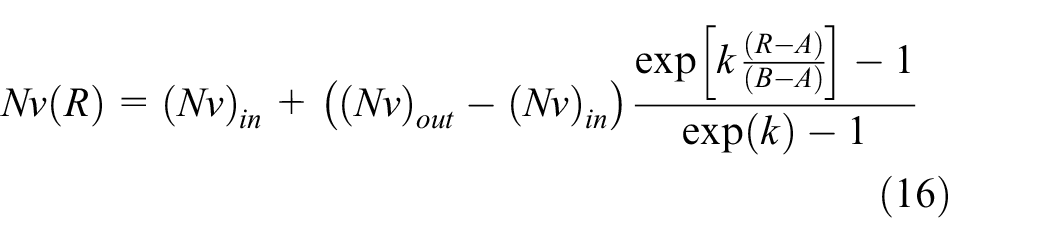
where the subscript

Regarding equations (8) and (9), the total free-energy density of the temperature-sensitive hydrogel is rewritten as a function of principal stretches

Substituting the total free-energy density in equation (7), the nominal stress components are found as follows
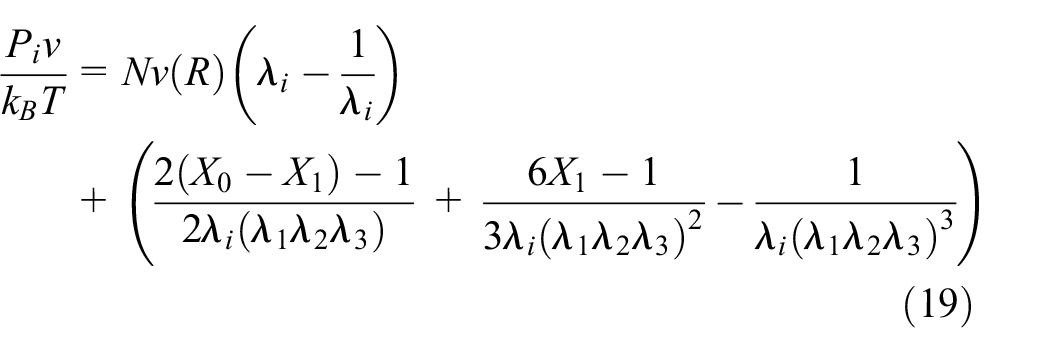
The radial and hoop components of the Cauchy stress tensor are presented in equation (20) as a function of temperature, current radius
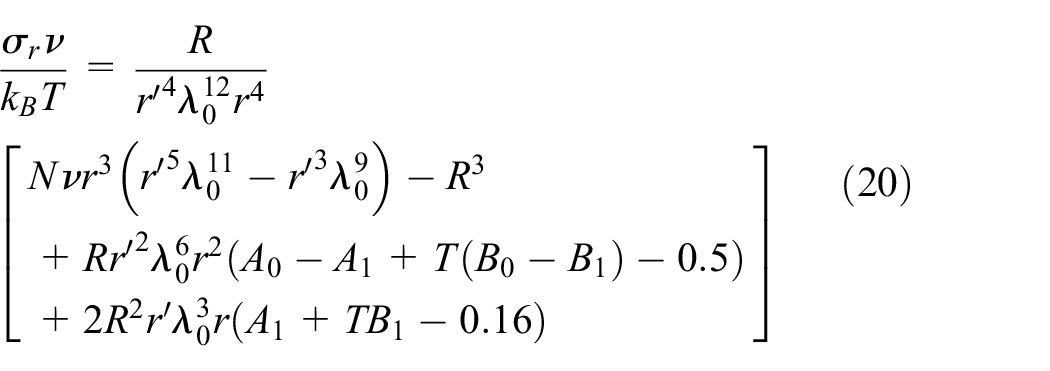
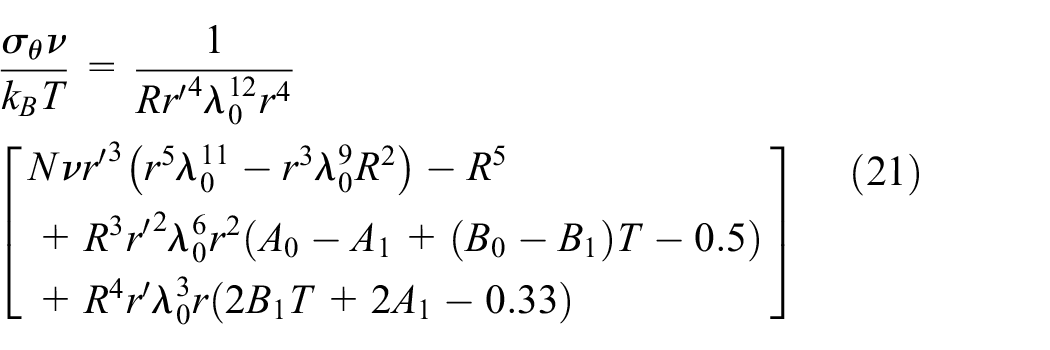
where

The temperature distribution is determined as a function of the current radius by considering the proper temperature boundary condition. Substituting the calculated temperature distribution in equations (20) and (21), radial and hoop stress can be recast as a function of

Substituting the radial and hoop stress components into equation (23), the nonlinear second-order ordinary differential equation is determined as follows

While the r-dependent coefficients of the nonlinear equation are
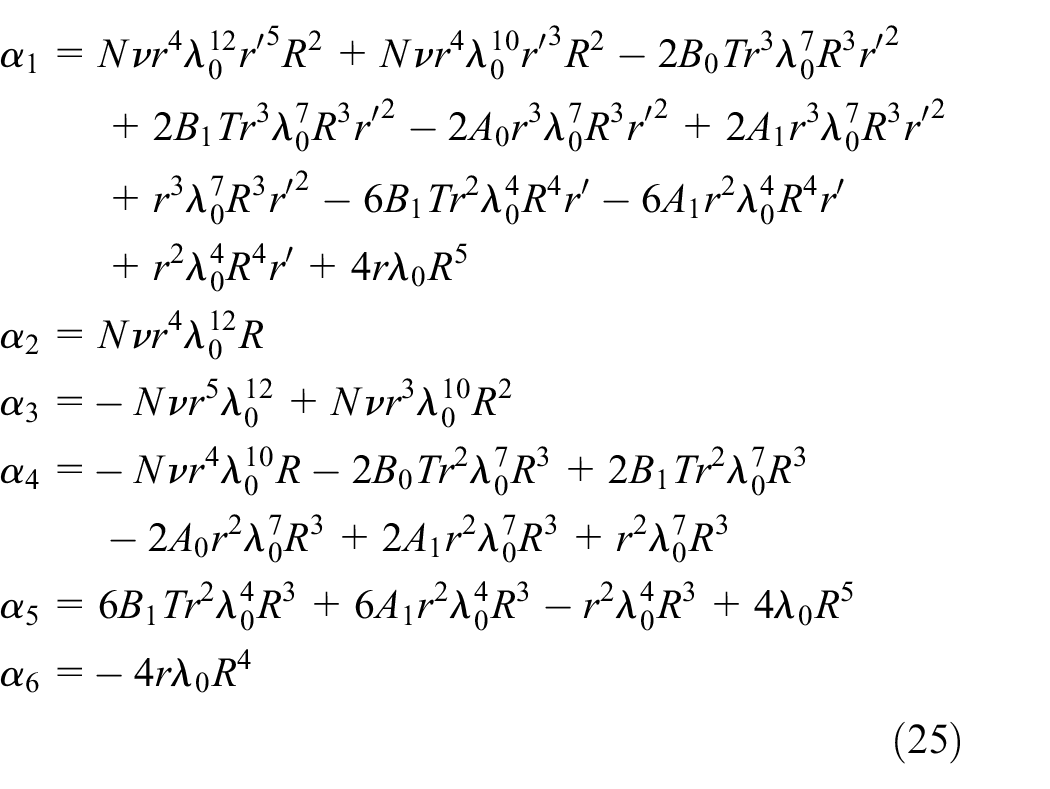
It is noted that in this equation, temperature is not known, unless an isothermal process is going to be studied where the whole structure undergoes the same temperature change. Therefore, another major task is to find the temperature distribution as a function of r which is discussed in detail in the following section.
4. Stress analysis
Investigating the swelling behavior of cylinder composed of a temperature-sensitive hydrogel, the constitutive equations recast to equation (24). Examining the structural and environmental effects on the mechanical response of FG hydrogel, the equilibrium equation should be solved satisfying the proper boundary conditions in different cases. Considering two deformation boundary conditions, three-stage Lobatto IIIa scheme (Kierzenka and Shampine, 2008) is applied to solve equation (24) to find the deformation field. Computing the deformation field variables
In this article, different cylindrical circumstances are studied due to the diverse application of hydrogel cylinder. Accordingly, as depicted in Figure 1, three various applicable conditions are assumed to evaluate: (1) temperature-responsive FG hydrogel Jacket coated on a rigid pillar due to the wide application of this design in micro-valve structure (Beebe et al., 2000; Liu et al., 2002); (2) hollow cylinder made of FG temperature-sensitive hydrogel, which is a suitable design concept in drug delivery (Graham and McNeill, 1984); and (3) solid temperature-responsive FG hydrogel cylinder, due to the capability of solid structures for application in some novel microfluidic-valve designs (Jadhav et al., 2015; Wang et al., 2005).
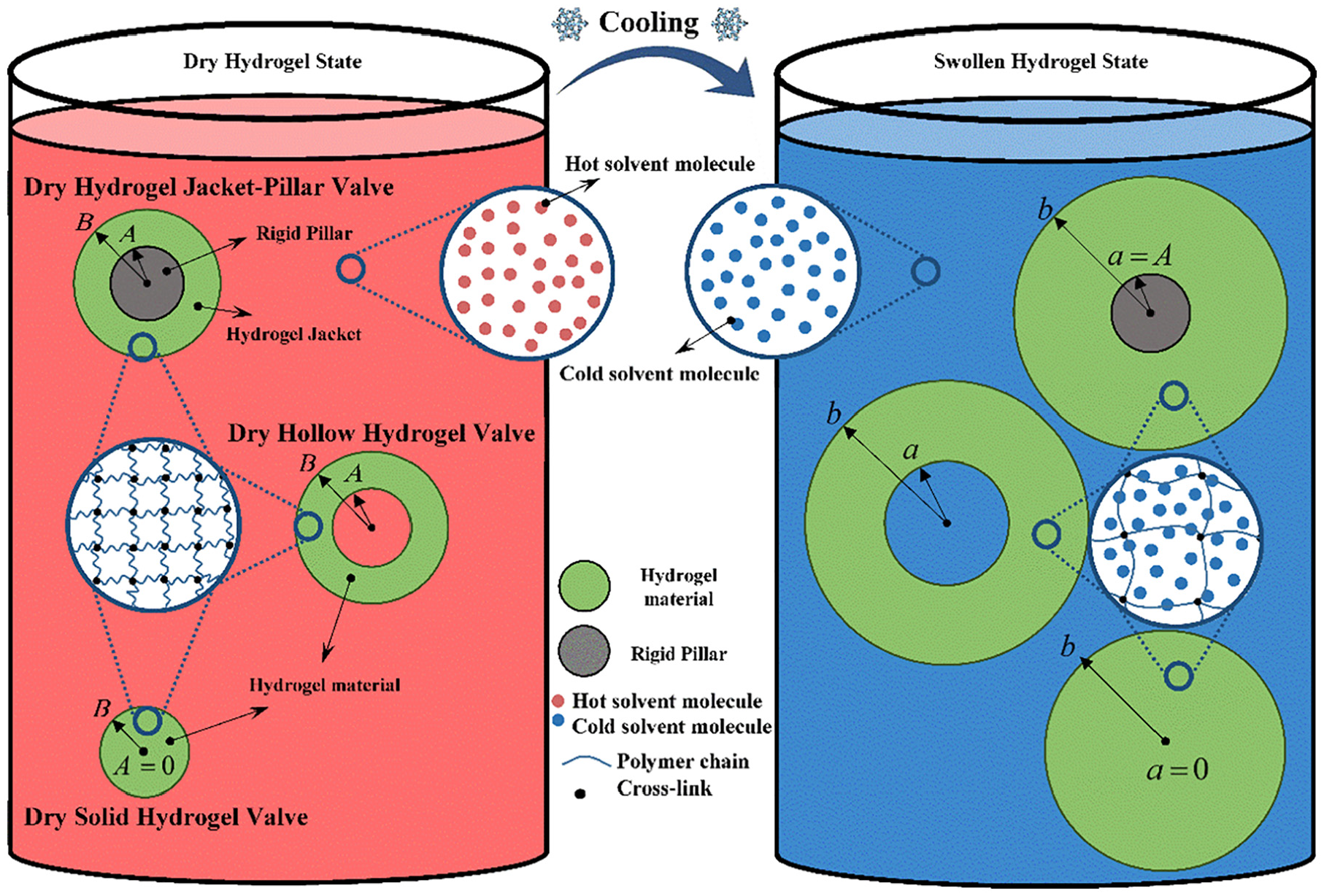
Schematic of various temperature-sensitive hydrogel cylinder subjected to cooling including Jacket-pillar (top), hollow (middle), and solid (bellow) micro-valves.
As illustrated in Figure 1, in hydrogel Jacket coated on the pillar, the inner radius of the hydrogel is attached to the rigid pillar which causes the inner radius of the hydrogel to be unchanged during the swelling. In addition, the outer surface of the hydrogel is stress-free. Thus, the boundary condition of the cylinder case 1 (hydrogel Jacket coated on the pillar) is

For the second case which is a hollow hydrogel cylinder, as depicted in Figure 1, during the swelling stemming from the cooling process, the inner and outer radius both grow while the inner and outer surfaces are in the traction-free state. Therefore, the boundary conditions of case 2 can be defined as

The third case deals with the swelling of a solid cylinder arising from decreasing the temperature of the aqueous environment. As shown in Figure 1, the volume of the swollen cylinder is much bigger than the initial dry cylinder, while the inner radius of the solid cylinder remains fixed. Thus, the boundary conditions of case 3 is defined as follows

These sets of boundary conditions are utilized in solving the simplified equilibrium equation presented in equation (24). Each case will be discussed in detail in the following section.
Temperature variation is another challenge which is dealt with in this article. In the former studies, a temperature change applied to the whole structure. This is not exactly what has been observed in practical experiments; thus, applying the same temperature change on the whole system is an unrealistic assumption. In this study, applying temperature as an exterior stimulus is analyzed via two approaches. The first one is the same as the former studies where the temperature change is considered to be identical in the whole hydrogel structure. This approach is used to compare the results with the former studied to disclose the importance of heat transfer analysis (Shojaeifard et al., 2019b). The next approach is based on the heat transfer theory which is applied to case 1. In this approach, the heat transfer equation is solved together with the equilibrium equation for presenting a more realistic situation. This scheme is reported due to the wide application of the hydrogel Jacket coated on the pillar. Considering a double-pipe as depicted in Figure 2, the inner pipe can act as the rigid pillar shown in Figure 1. The hydrogel Jacket placed on the outer surface of the inner pipe can be utilized as the micro-valve for the outer pipe. The outer surface of the hydrogel Jacket has the same temperature as the fluid flow of the outer pipe, while the inner surface of the hydrogel Jacket possesses a similar temperature as the inner pipe flow. On the contrary, to the condition assumed in the first approach, the temperature of the hydrogel cylinder varies along the radial direction. Despite the complexity of the problem of swelling of FG temperature-sensitive hydrogel, arising from the nonlinearity of the hydrogel material, this temperature distribution and the cross-link variation along the radial direction (FG assumption), considering these assumptions altogether, brings about a more realistic modeling which can be applied to design of microfluidic valves.
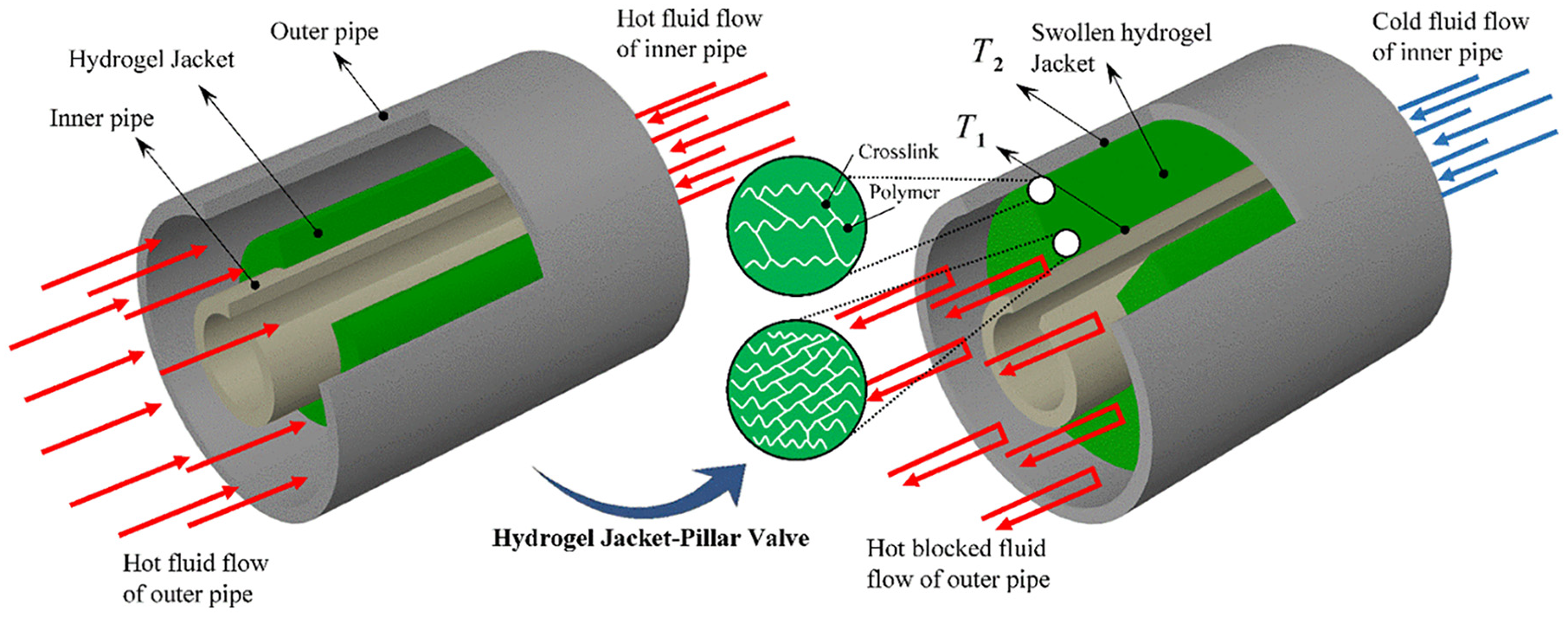
The schematic of blocking the fluid flow of double pipes via Jacket-pillar micro-valve.
According to Figure 2, the temperature boundary conditions for the heat transfer equation (22) is given by

where

After computing the temperature as a function of the current radius, obtaining the equilibrium equation as a function of

where
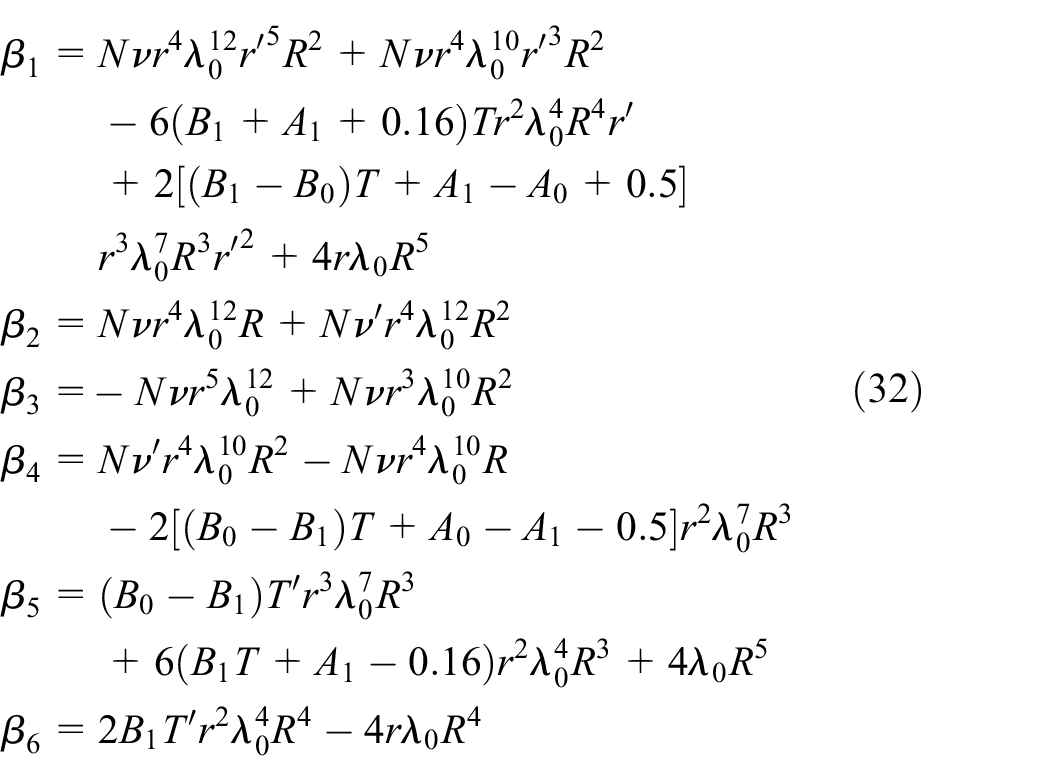
And cross-link density, temperature, and their derivatives are identified from equations (16) and (30). The analytical approach developed in this article is expressed in a flowchart (Figure 3) to clarify the approach of determining the swelling behavior of hydrogel cylinder under different circumstances.
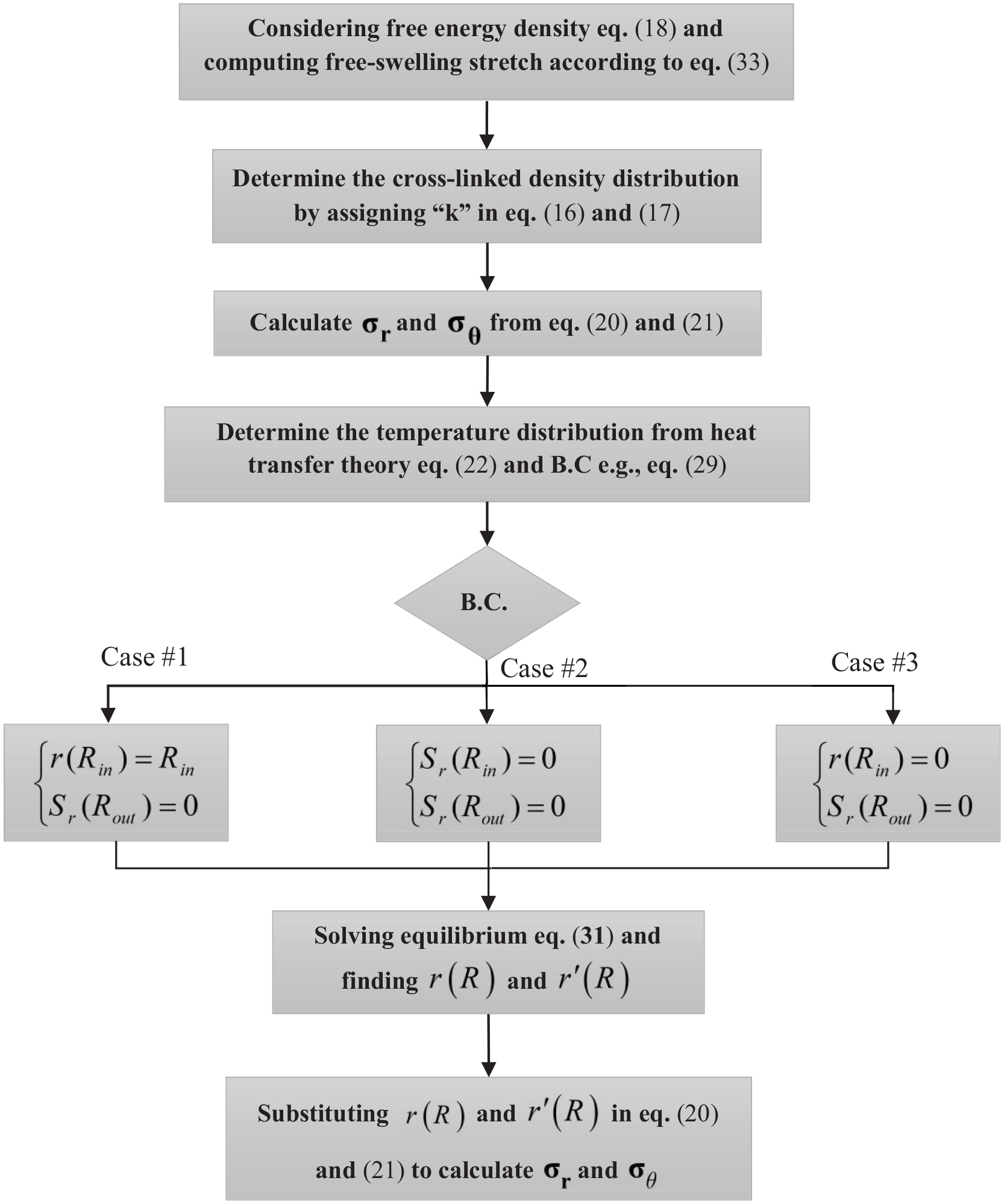
Flowchart of the developed algorithm for analytical solution of swelling a PNIPAM hydrogel micro-valve.
After proposing the analytical solution for swelling of the FG hydrogel cylinder, verification of this method becomes the main concern. To evaluate the presented solution, FE analysis is put to use in various cases. The first step of the FE method is developing the user-material subroutine UHYPER (presented in Appendix 1) to introduce the temperature-sensitive hydrogel model to the FE software, ABAQUS. Similar to Hong et al. (2009), a secondary state is defined between the initial and current states, in which the hydrogel structure swells freely. This assumption lets us avoid the singularity generated from the mixing part of the energy. The reference state created by free-swelling of the assumed hydrogel with material parameter listed in Table 1 is considered at 320 K, by reducing the temperature from 320 K, first the hydrogel swells slightly, however, it approaches PTT 307 K, the swelling ratio of the hydrogel rises dramatically. Specifying the reference state, the free-swelling swelling ratio should be computed. Thus, considering the free-swelling assumption

Experimental parameters utilized for functionally graded (FG) poly-(N-isopropylacrylamide) (PNIPAM) hydrogel cylinder (Afroze et al., 2000; Mazaheri et al., 2016).

Solving this equation gives the swelling ratio of the reference state.
The second step for analysis of the problem through FE method is simulating the FG hydrogel cylinder in each condition. For this purpose, a two-dimensional deformable circular shell is sketched with inner radius
5. Results of analytical and FE methods
In this section, the swelling behavior of an FG hydrogel cylinder is studied to specify the environmental and structural effects by using the proposed analytical solution and FE analysis. As illustrated in Figure 1, a PNIPAM hydrogel cylinder is considered in three cases using material parameters listed in Table 1.
Boundary conditions for each case was introduced in equations (26)–(28) and the cross-link distribution representing the FG material is based on equation (16). The mechanism of actuation presented in this article can be used in different applications, especially in micro-valves. Therefore, several case studies have been conducted to evaluate the robustness and capability of the presented method.
5.1. Evaluation of analytical solution through FE analysis
In this subsection, the validity of the presented solution is examined for three introduced cases. Predicting the swelling of the FG hydrogel cylinder, the temperature of the aqueous environment varies from 320 K to 288 K, which causes the hydrogel structure to absorb a great amount of solvent. This case study was conducted considering the linear and exponential distribution of cross-link density. As depicted in Figure 4, various amounts of exponential coefficients are chosen which makes the cylinder have different cross-link distributions with different free-swelling stretches.
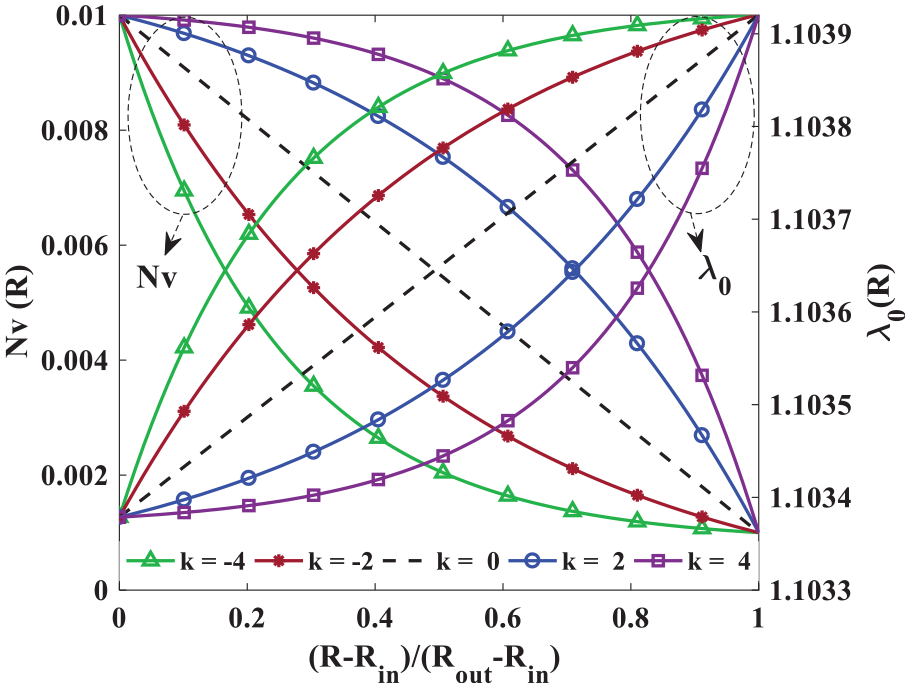
Distribution of cross-link density and the free-swelling ratio of the cylinder.
For the sake of validation, first the results of both analytical and FE methods are presented for linear variation of cross-link density. However, the influences of the exponential coefficient is discussed further. Figure 5 depicts the current radius variation after applying the temperature changes versus dimensionless initial radius. In this figure, the current radius distribution is illustrated in three cases for both analytical and FE methods. As observed from Figure 5, an excellent agreement is found between the analytical and FE analysis, which represents the accuracy of the proposed solution. For simplicity, in the following figures, the first case which is hydrogel Jacket coated on the pillar is called “Jacket BC.” The hollow hydrogel cylinder as the second case is nominated as “Hollow BC,” and the solid cylinder as the third case is called “Solid BC.” As shown in Figure 5, the FE analysis is conducted for various number of sections including 20, 40, and 80 that all of them are conformed with the analytical method.
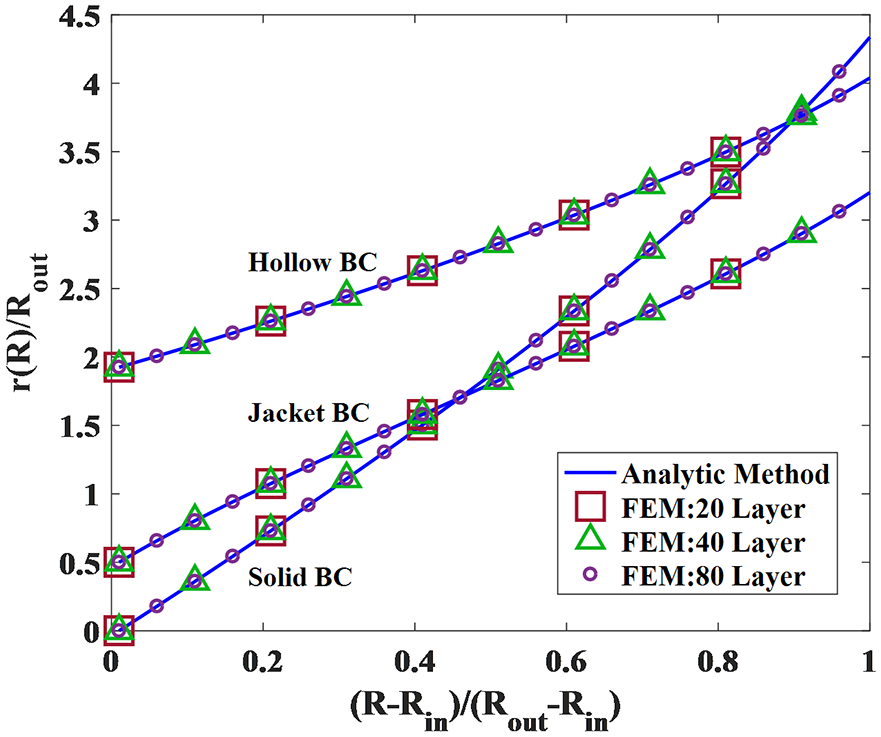
Current radius distribution of swollen solid, hollow, and Jacket-pillar cylinder micro-valves.
For further inspection, the stress distribution of the swollen hydrogel cylinder is also studied in three cases. Since the stress magnitude in these three cases are different, showing all of them in one figure could make the figure unclear, thus here we only present the hollow hydrogel cylinder. As shown in Figure 6, the non-dimensional radial and hoop stress distribution are illustrated for both analytical and numerical methods. FE analysis was carried out considering 20, 40, and 80 strips; however, looking closely at the enlarged part of the figure, the 80-layer simulation has excellent agreement with the analytical solution. Hence, for all of FE analysis presented in the following, 80 number of sections are assumed to compare the results. It should be noted that the same analysis is conducted for Jacket hydrogel on the pillar and the solid hydrogel cylinder, where 80 number of sections result in great conformity between the analytical and FE approaches.
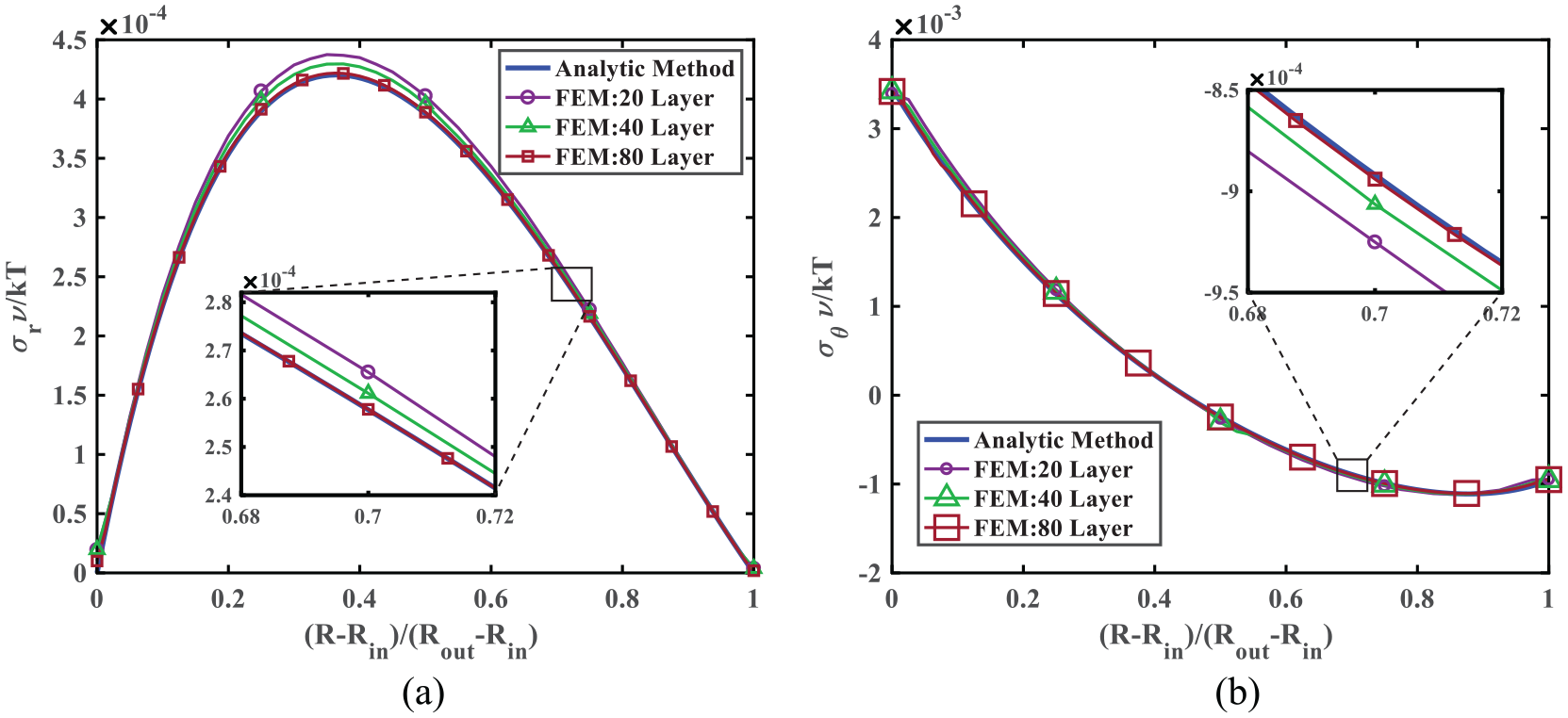
Comparison of (a) radial and (b) hoop stresses of various layered swollen hollow hydrogel cylinder with the analytical solution.
Comparisons made between both methods in Figures 5 and 6 confirm the accuracy and capability of the analytical solution. Henceforth, the effects of different factors on the swelling of the temperature-sensitive FG hydrogel cylinder are examined. In the following, not only the results of the analytical solution are presented with solid lines but also the FE analysis outcomes are shown with symbols, which are almost exactly the same as the analytical approach results. Therefore, the methods’ names are not mentioned in the legend of the following figures. Clarifying the swelling behavior of cylindrical valves, the Mises stress contour of FE analysis is presented for solid, hollow, and Jacket-pillar valves at
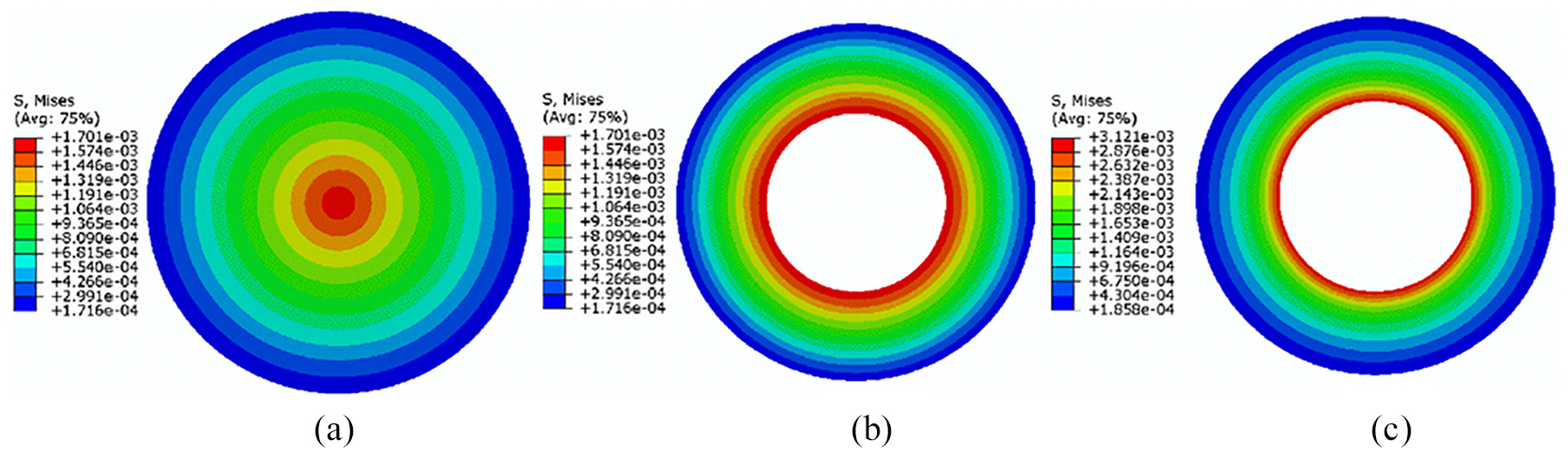
Mises stress contour for (a) solid, (b) hollow, and (c) Jacket-pillar cylindrical valves at
5.2. Swelling of hydrogel cylinder under temperature change applied on the whole structure
In this subsection, the influences of factors including temperature as environmental variable and cross-link density as a material parameter are studied. These parameters play the main role in designing the micro-valve composed of the temperature-sensitive hydrogel.
First, temperature variation is considered as a vital exterior factor on the swelling of hydrogel micro-valves. As depicted in Figure 8, for all three conditions including solid, hollow, and Jacket boundary condition, cooling causes the micro-valves to swell and reach a larger radius. It is obvious that at
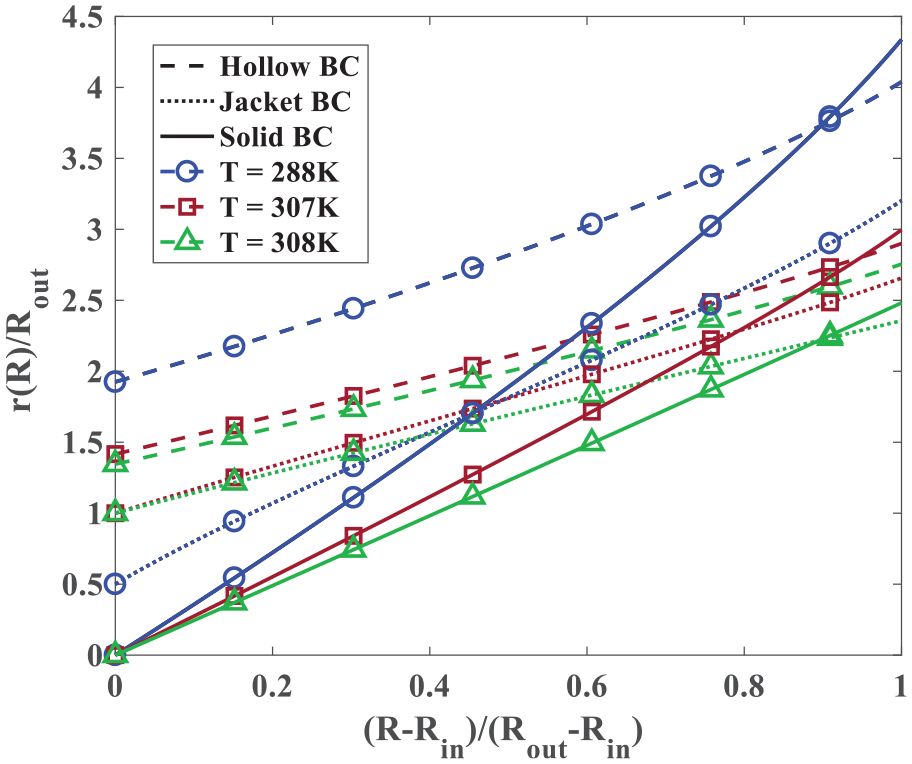
Current radius distribution of swollen solid, hollow, and Jacket-pillar cylinder micro-valves for different ending temperature in the cooling process.
For more inspection, during the cooling, the stress distribution is analyzed for various ending temperature in Figure 9. Figure 9(a) and (b) depict the radial and hoop stress component of solid hydrogel cylinder under temperature change from
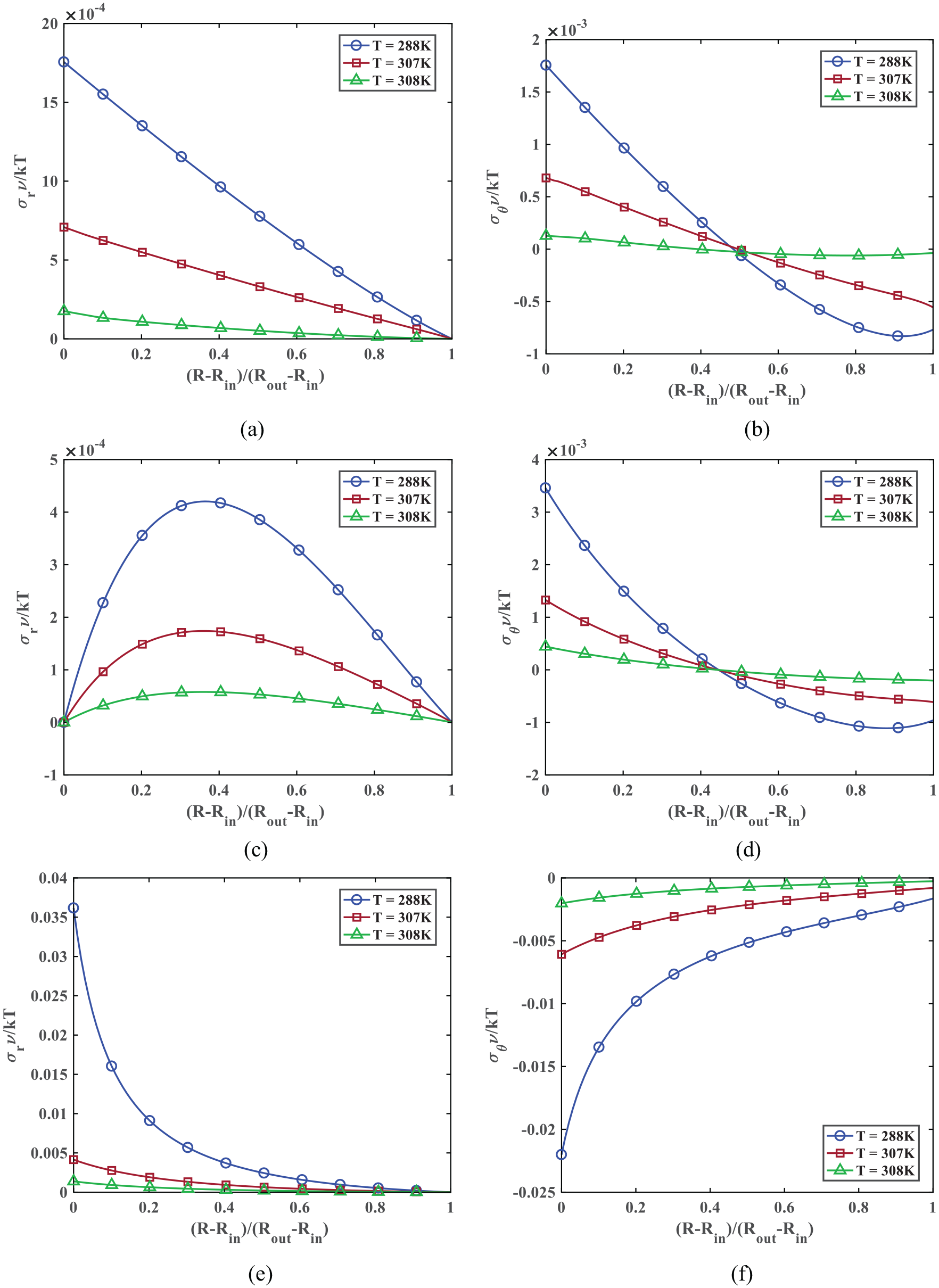
Radial and hoop stress components of swollen (a, b) solid, (c, d) hollow, and (e, f) Jacket-pillar hydrogel cylinder for different ending temperature in the cooling process.
Figure 9(c) and (d) show the radial and hoop stress of the hollow cylinder subjected to the cooling. The variation of the radial and hoop stress magnitudes are similarly increasing during reducing the temperature. It is apparent from Figure 9(c) that both analytical and FE methods satisfy the free-stress boundary condition in outer and inner surfaces. It is also demonstrated that altering the temperature almost does not affect the maximum position of the radial stress in Figure 9(c). The hoop stress has the same trend as a solid cylinder, diminishing from a maximum value at the inner surface and arriving at a lower magnitude at the outer radius.
Figure 9(e) and (f) illustrate the radial and hoop stress components of the Jacket hydrogel cylinder coated on a rigid pillar, while the temperature variation is applied to the whole structure. As observed in Figure 9(e), the radial component of the stress of Jacket-pillar condition is the same as the solid cylinder, starting from a maximum value arising from the fix constraint at the inner surface and reaching to a minimum amount at the outer radius. However, in the solid cylinder, the stress varies almost linearly, while in the Jacket-pillar cylinder, the stress changes in an exponential form. However, the hoop stress here is different from the previous ones, where it grows from a minimum value at the inner surface and arrives a maximum one at the outer surface. The hoop stress in the Jacket-pillar cylinder is compressive in the whole thickness and cooling causes the hoop stress value to rise.
As depicted in Figure 10, the cross-link distribution along radius can intensively affect the swelling ratio of the hydrogel cylinder. Decreasing the exponential coefficient makes a large part of the hydrogel have a lower cross-link density as seen in Figure 4. Since having a smaller cross-link density in the hydrogel network means a lower strength for the structure, a higher swelling ratio is observed. This phenomenon is illustrated in all three cases where the lower exponential coefficient makes the structures have a larger current radius. It is also evident that the Jacket hydrogel coated on the rigid pillar and the solid cylinders have fixed inner radius; however, the inner radius of the hollow cylinder increases by lowering the exponential coefficient. In addition, the hollow cylinder has a larger swelling ratio than the Jacket hydrogel cylinder, which is due to the fact that the hollow cylinder has more freedom and the inner surface can easily swell as well.
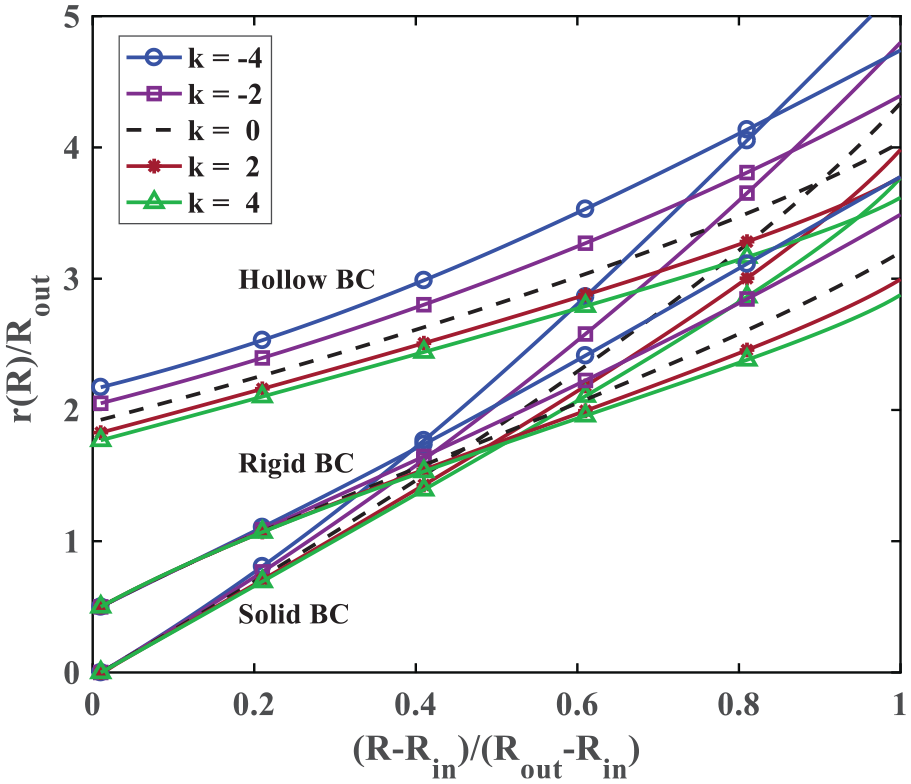
Current radius of the swollen solid, hollow, and Jacket-pillar hydrogel cylinders for different cross-link distributions.
Figure 11 represents the radial and hoop stress distribution versus current radius for all three cases. As depicted in Figure 11(a), the radial stress in solid hydrogel cylinder is investigated in both analytical and FE method with a great agreement. It is apparent that the outer surface the cylinder has is stress-free in conforming to equation (28). In addition, the radial stress is reduced from a tensile amount at the inner radius to 0 at the outer radius. Moreover, the radial stress of the inner radius decreases at larger exponential coefficients. It is observed that for negative values of exponential coefficient, the radial stress rate decreases along the radius, while it heightens for positive ones. Figure 11(b) illustrates the hoop stress variation after lowering the temperature from 320 to 288 K. The inner radius undergoes a higher stress and moving toward outer radius causes the hoop stress decrease slightly. The hoop stress at the inner and outer radii are reduced at higher exponential coefficients.
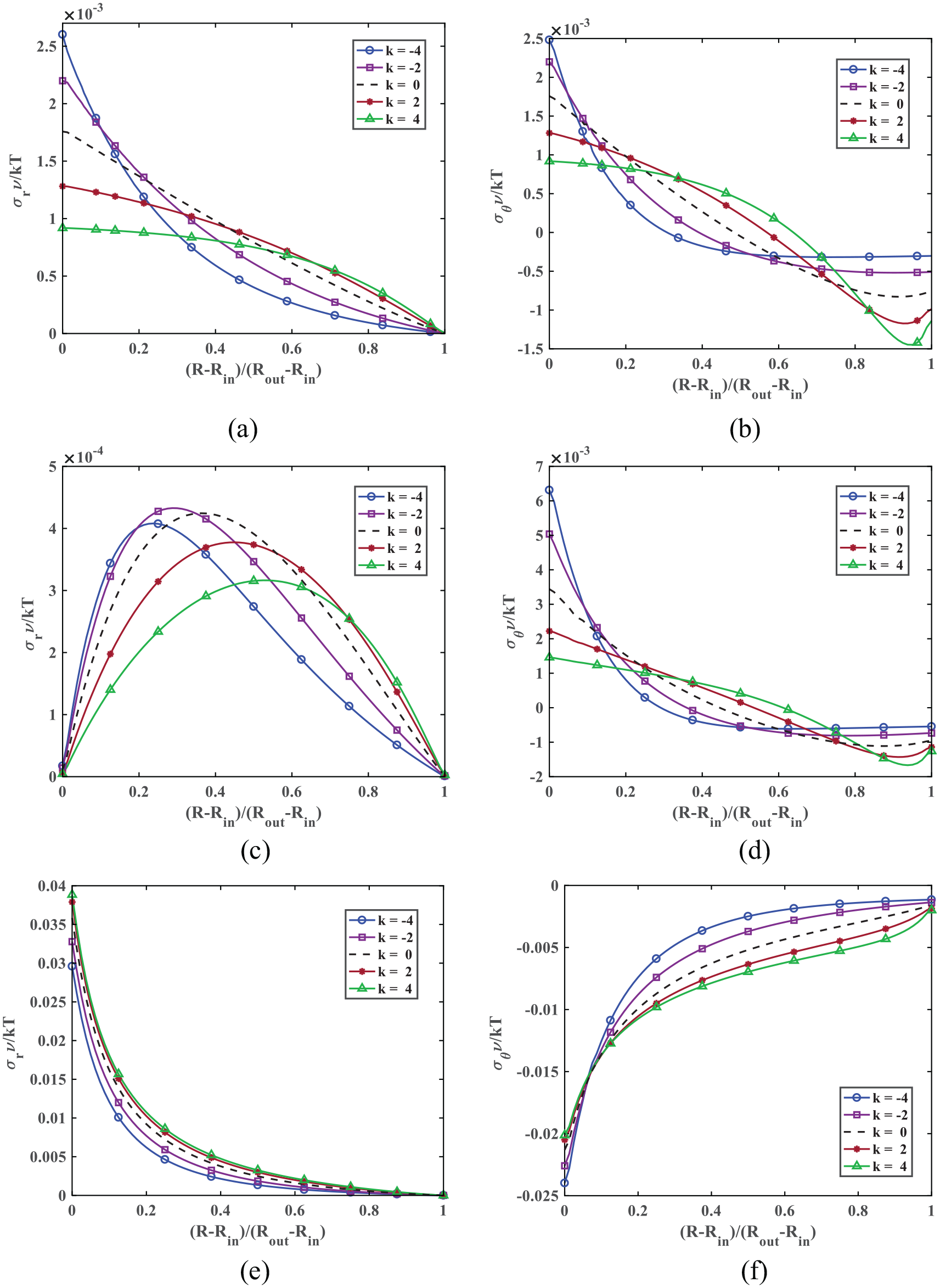
Radial and hoop stresses of a swollen (a, b) solid, (c, d) hollow, and (e, f) Jacket-pillar hydrogel cylinder for different cross-link distributions.
Figure 11(c) and (d) demonstrate the radial and hoop stresses of the Hollow hydrogel cylinder. The radial stress vanishes at the inner and outer radii, which is in agreement with boundary condition expressed in equation (27). The radial stress is fully tensile in this condition and its value starts with a minimum amount at the inner radius and reaches to a maximum and then diminishes. As observed from Figure 11(c), the maximum point for the radial stress moves toward the outer radius when the exponential coefficient rises. Figure 11(d) represents the hoop stress variation where the maximum value occurs at the inner radius. It is revealed that for the negative exponential coefficients, the hoop stress changes in a wider range, while for positive ones, it varies more moderately.
Figure 11(e) and (f) depict the stress of the hydrogel Jacket coated on the pillar, while the temperature is lowered from 320 to 288 K. The radial stress begins with its maximum at the inner radius and reduces till the outer radius vanishes according to equation (26). The radial stress in various exponential coefficients has the same trend; however, it slightly enhances at larger exponential coefficients. Unlike previous conditions, the hoop stress, as shown in Figure 11(f), grows by passing from the inner radius to the outer one. For larger exponential coefficients, the hoop stress has a higher stress at the inner radius and reaches to a smaller value at the outer radius.
5.3. Swelling of hydrogel micro-valve in double pipes subjected to more realistic thermal conditions
In this subsection, the problem of swelling of a hydrogel micro-valve coated on an inner pipe and placed between double pipes is examined, as depicted in Figure 2. This problem is studied due to its vast application as a micro-valve in more realistic thermal conditions. At the initial state, the hydrogel valve is in equilibrium with the fluid flow in the outer pipe. When the temperature of the inner pipe changes, the inner surface of the hydrogel micro-valve undergoes a temperature variation. The applied temperature on the inner surface of the micro-valve penetrates through the inner surface and affects the whole structure. The conductivity of the hydrogel body makes the heat flux reach to every point in the hydrogel micro-valve. This temperature difference causes the hydrogel valve to swell and block the fluid flow in the outer pipe, as illustrated in Figure 2. Material properties of the hydrogel used in this part are listed in Table 1 and the conductivity of hydrogel is considered as
As depicted in Figure 12, the temperature of the hydrogel cylinder begins from a similar value at the initial state
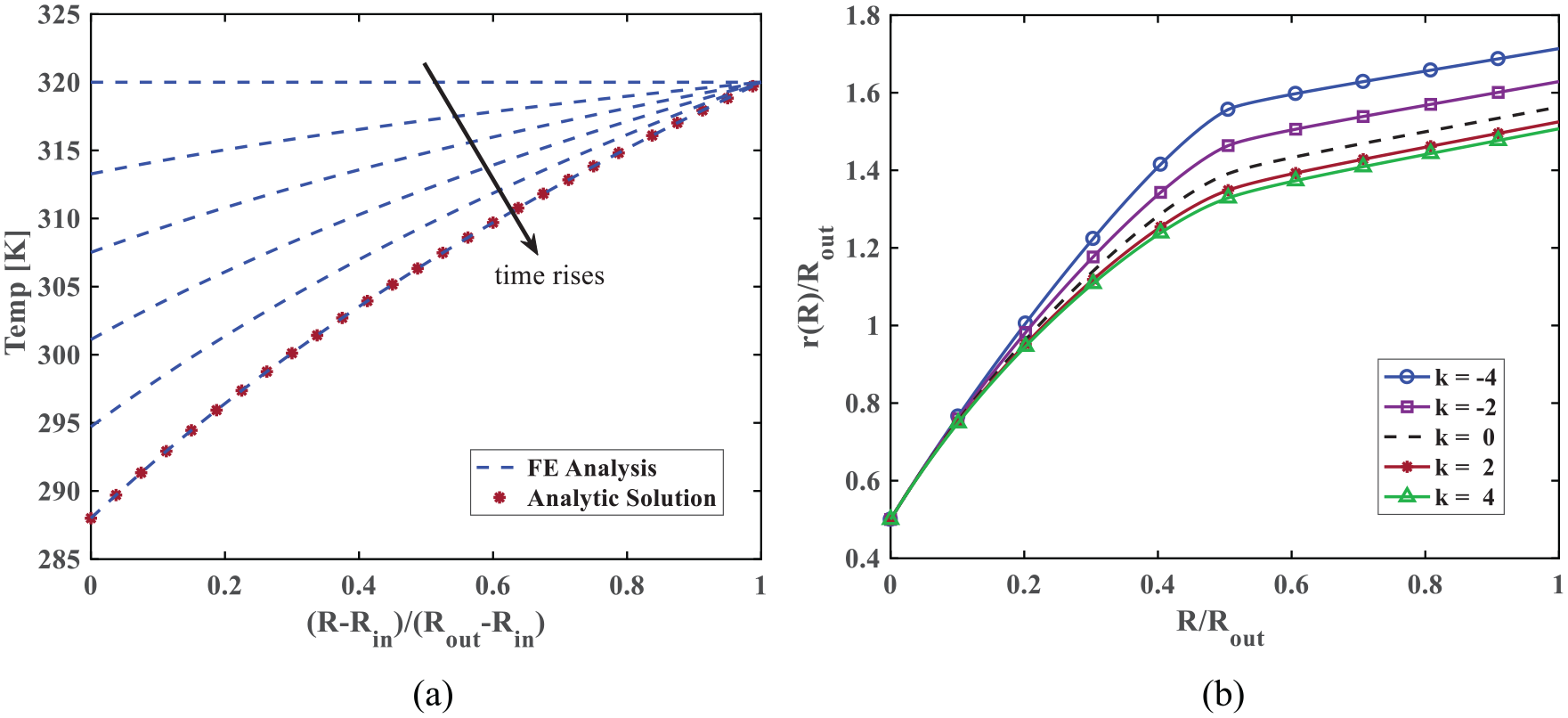
The variation of (a) temperature and (b) deformation of Jacket-pillar micro-valve when the heat transfer equation is solved simultaneously.
Examining more closely the behavior of FG temperature-sensitive hydrogel micro-valve, the radial and hoop stress components of the swollen cylinder is demonstrated in Figure 13. An excellent agreement is observed between FE analysis presented with symbols and analytic solution expressed by lines in Figure 13. As depicted in Figure 13(a), the radial stress is enlarged at
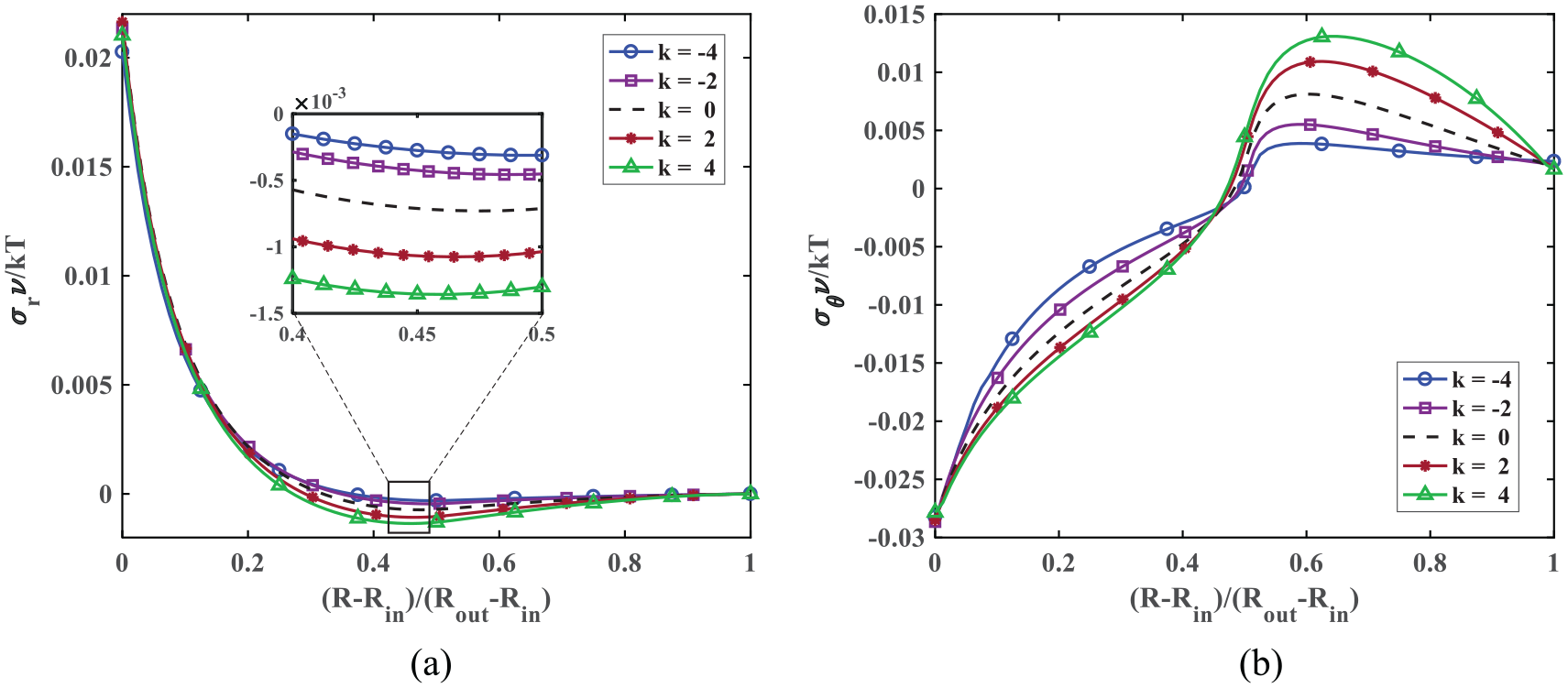
The variation of (a) radial and (b) hoop stress in Jacket-pillar micro-valve when the heat transfer equation is solved simultaneously.
The hollow valves seem to be more promising in application in comparison with solid ones, because the inner and outer radius temperatures can be applied by various thermal boundary conditions which cannot be seen in other types of valves.
6. Summary and conclusion
Smart hydrogels considering high deformability, reversibility, and biocompatibility can be called as promising materials to be used in fabricating various devices. Recently, implementing smart hydrogels in developing microfluidic valve draw researchers’ attention to present diverse design procedures, specifically cylindrical micro-valves. Temperature-sensitive hydrogel, due to the wide range of sensitivity and controllability, demonstrates more capability than the others. Accordingly, in this article, the swelling of FG temperature-sensitive cylindrical hydrogel under various conditions was studied. Analytical solutions were developed for more applicable structures including Jacket hydrogel coated on the pillar, hollow hydrogel cylinder, and solid cylinder. They were also analyzed with FE method by implementing a user-defined subroutine UHYPER. An excellent agreement in these benchmarks illustrated the capability and accuracy of the presented model. Besides, a more realistic problem considering heat transfer equation was investigated by the proposed analytical method. Lowering the temperature in mentioned cases caused the temperature-sensitive hydrogel to absorb the solvent and swell. This phenomenon was discussed considering different material, structural, and environmental parameters. Temperature as an environmental variable was examined vastly, and the direct relation of reducing the temperature and having a higher deformation and swelling ratio was clearly observed.
Furthermore, the value of radial and hoop stresses grew when the micro-valves were cooled, this growth intensified around
Footnotes
Appendix 1
To provide the UHYPER subroutine, the non-dimensionalized free-energy density and its derivatives are rewritten as follows
Acknowledgements
The authors are grateful for the research support of the Iran National Science Foundation (INSF).
Declaration of conflicting interests
The author(s) declared no potential conflicts of interest with respect to the research, authorship, and/or publication of this article.
Funding
The author(s) received no financial support for the research, authorship, and/or publication of this article.
