







Abstract
This study investigates dynamic mechanical properties and creep and recovery behaviors of disc-shaped magnetic Fe3O4 nanoparticles with carbonyl iron (CI) flake-shaped microparticles in water-based MR fluid. The experimental study is performed using a parallel plate rheometer. Dynamic performance and creep and recovery behaviors help understand deformation mechanism for its practical applications in MR devices like seismic vibration control, active dampers, earthquake dampers, etc., under applied strain, and stress levels. The oscillatory experiment reveals a transition from viscoelastic-to-viscous behavior at the critical strain of 0.1%. The storage modulus
Keywords
1. Introduction
Magnetorheological fluids (MRFs) are a type of smart materials whose properties vary rapidly and reversibly under external stimuli (Ginder, 1998). The MR fluid comprises magnetic particles of micron-sized carbonyl iron (CI) and metal oxides dispersed into a non-magnetic carrier medium. Under the applied external magnetic field, the magnetic particles are aggregated alongside the direction of a magnetic field to form a chain structure because of the magnetic dipole-dipole interaction among the magnetic particles (Choi et al., 2020; Li et al., 2004). The formed chain structure increases the viscosity of the fluid, and thus MR fluid changes rapidly from a liquid-like to a solid-like state in milliseconds (Biao et al., 2014; Ghaffari et al., 2014; Maurya and Sarkar, 2020a). Furthermore, water-based MR fluid has a 5°C–90°C working temperature range beyond this temperature; water evaporation occurs (Jolly et al., 1999). MRF-240BS is a standard water-based MR fluid prepared by LORD Corporation, whose operating temperature range is 0°C–70°C. So water-based MR fluids have numerous applications for controlling the temperature of devices. Water-based MR fluids have a fast response, ease of control, good dispersal of fine abrasives, low cost, lower environmental pollution, and excellent cooling characteristics, improving polishing efficiency (Dorosti et al., 2019).
The MR effect of MR fluids is described as the reversible process that the magnetic field can rapidly and easily control their properties. Based on these reversible characteristics and rapid responsiveness to an external magnetic field water-based MR fluid has attracted substantial interest in tunable vibration absorbers. It is noted that MR fluids devices often work in various operating modes under the magnetic field, where MR fluids are subjected to instantaneous strain, vibration frequency, shear stress levels, and loads. For example, dynamic mechanical performance and creep and recovery properties are the critical estimation parameter for devices and structural elements which are subjected under vibration frequency and constant load, respectively. Therefore, the dynamic mechanical performance and creep and recovery properties measurements are very useful for some engineering applications. Some engineering applications of MR fluids in such conditions are car suspension, shock absorbers in buses and motorcycles, seismic vibration control which will operate under the resonance frequency of the building and bridges by absorbing external impacts, shock waves, and oscillations that can cause harm, within the structure (Choi et al., 2020; Dyke et al., 1996), the MR dampers can be used in a prosthetic knee to give fast shock absorbing and make the user feel more natural feet under axial force (Ravishankar and Mahale, 2015). However, the advancement in MR fluids and MR devices is essential to the understanding of MR fluids response under such working modes and conditions. The water-based MR fluid behaviors in such modes and conditions have not been deliberated widely and are not well understand. Furthermore, analysis of creep and recovery behaviors of water-based MR fluids is rarely available, which is extremely essential for such engineering applications.
Creep is a time-dependent mechanical performance of materials that helps to understand their deformation mechanism of MR fluid under a constant applied load. Creep compliance and the ratio of elastic strain are the important estimation criterion for structure elements observed at constant stress levels (Xu et al., 2012). Under oscillatory sweep mode, storage modulus
This study performed using disc-shaped (iron oxide) nanoparticles as a supplement with micron-sized flake-shaped CI particles and suspended in water. The Fe3O4 nanoparticles improved the MR fluid performances as the Fe3O4 nanoparticles packed the voids among the micron-sized CI particles and toughened the particle-particle chain structure (Maurya and Sarkar, 2020b). The researchers with nanoparticles least analyzed CI and water-based MR fluid while it has better MR performances than hydrocarbon-based MR fluid under similar working conditions (Cheng et al., 2008). The dynamic experiments were performed under oscillatory and frequency mode to understand the mechanical performance of MR fluid at external strain and angular frequency, respectively, in the off-state and on-state of the magnetic field. Then, the creep and recovery performance of the fluid is investigated and analyzed to understand the viscoelastic properties at different steady stress levels and the magnetic field. The viscoelastic properties are directly correlated to applied constant stress levels and magnetic fields (Li et al., 2002). Based on the above experiments, we characterized the MR fluid to use in various temperature-controlled vibration absorber devices where MR fluid is subjected to instantaneous strain, vibration frequency, and constant load.
2. Experiments and methods
2.1. Materials
MR fluid was prepared with CI microparticles 65 wt% and iron (II, III) oxide (Fe3O4) nanoparticles 1 wt% by dispersing in Millipore water. MR suspension mixture was stirred 3 h continuously at 400 rpm rotating speed using a mechanical stirrer at room temperature. Magnetic CI particle has a flake shape with 6–10 µm (SEM) average particle size. The flake-shape CI particles have an enhanced rheological response and settling stability than the spherical shape CI particle (Upadhyay et al., 2013). Iron oxide particles have disc-shaped with an average particle size of 50–100 nm (SEM). CI and iron oxide bought from Sigma Aldrich (Germany) with the 7.86 g/mL density at 25°C, 55.85 molecular weight, with 97% purity and 4.8–5.1 g/mL density at 25°C, 231.53 molecular weight, with 97% purity, 20–50 m2/g surface area, respectively. Both CI particles and iron oxide (Fe3O4) particles were applied with no additional cleansing and chemical dealing. Note that 1 wt% of iron oxide concentration was taken because more than 1 wt% of iron oxide would not much enhance the on-state magnetorheological response (Maurya and Sarkar, 2020b).
2.2. Experimental setup and measurements
The rheological response, dynamic mechanical properties, and creep and recovery performances of MR fluid were studied using a commercial parallel plate-plate (PP20, Anton Paar Co., Austria) rheometer (Physica MCR 102, Anton Paar Co., Austria) equipped with the magnetorheological module, as presented in Figure 1(a) and (b). The parallel plate measuring tool system has maintained 0.5 mm gap thickness for all the experiments between two plates with a 20 mm rotating head diameter. Since the volume of MR fluids sample controlled for each experiment was 0.25πd2h = 0.25π × 20^2 × 0.5 = 0.157 mL. During the experiment process, MR fluids sample was laid at the center of the base plate in the gap, and the magnetic field between the base plate and rotating plate was generated by the coil fixed under the bottom plate of the rheometer, as shown in the schematic diagram of MR shell in Figure 1(b). The magnetic field passes normally to the parallel plates, and a magnetic cover (yoke) is employed to intensify the magnetic field and to make it identical over the radius of parallel plates where MR fluid was placed.
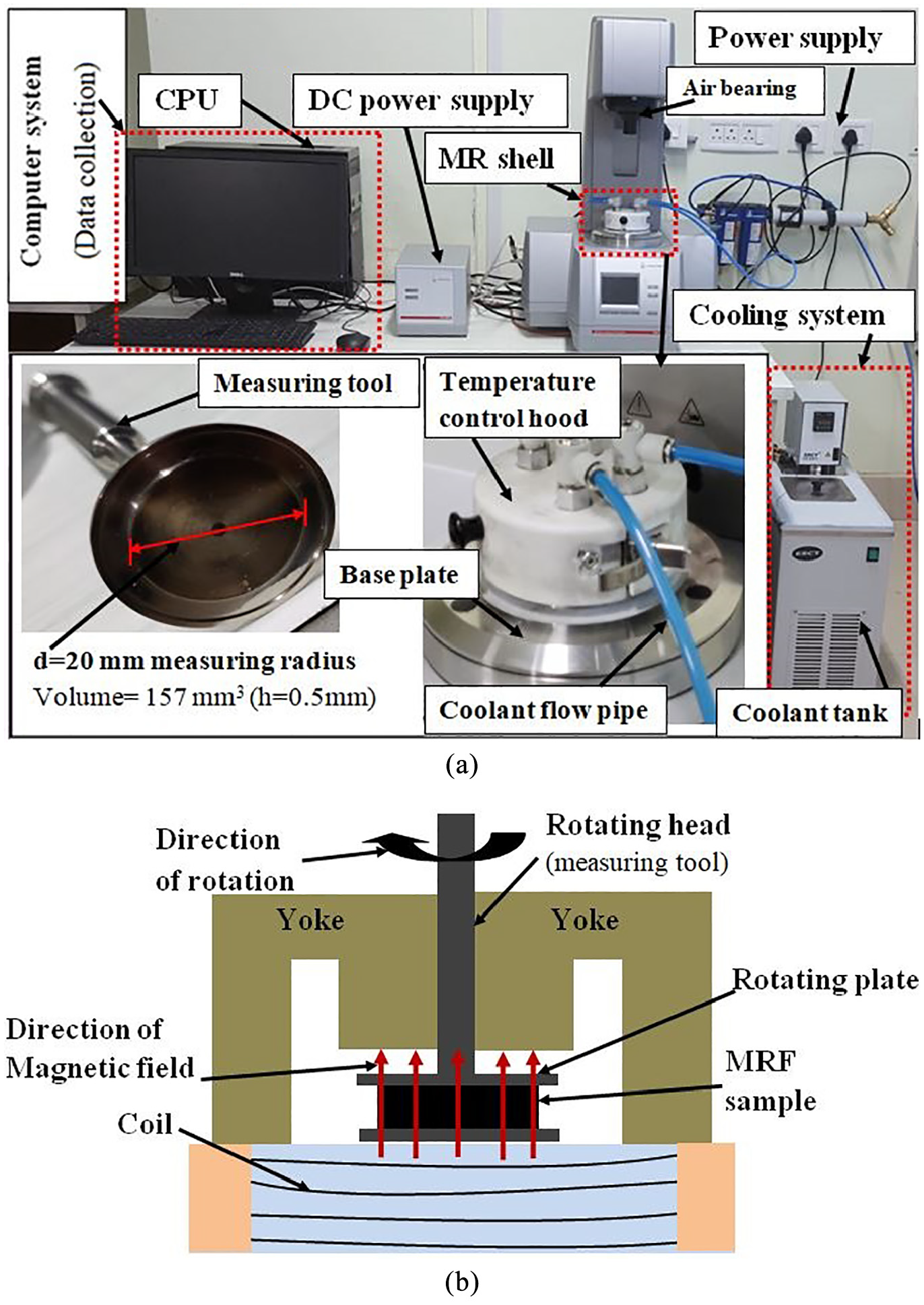
Measurement setup of (a) rheological equipment (Anton Paar MCR 102) and (b) schematic diagram of MR shell and magnetic field direction.
The experiments were performed by controlling the operating temperature 22°C ± 0.15°C and the temperature was controlled using a cooling system where temperature module connected to the base pate and temperature control hood applied over the magnetic chamber. The cooling system has a coolant tank to store the coolant fluid and coolant fluid flow through the pipes in the temperature control hood, as shown in Figure 1(a). It was observed that by applying 0, 1, and 2 A currents, the increment in temperature was well limited within 0.02°C. While at 3 and 4 A currents, a fluctuation of temperature vary significantly and increases for 0.06°C and 0.14°C, respectively. The operating inputs parameter like a current, shear rate, strain amplitude, and stress levels were controlled by Anton Paar RheoCompass 1.22 software and output data was recorded and processed with a data acquisition board (DAQ) and computer system. The rheological test of the shear stress response of MR fluids was conducted under shear rate sweep mode at the different magnetic fields with shear rate varies from 0 to100 s−1. The dynamic performance of MR fluids measured under amplitude sweep test by ranging the strain amplitude from 0.001% to 100% at a 10 rad/s fixed angular frequency and frequency sweep test by ranging frequency from 0 to 100 rad/s at a fixed strain of 0.1% under different magnetic field.
The surface morphology of CI, Fe3O4, and CI/Fe3O4 suspension and their particle size distribution was observed using Hitachi S-4800 field emission scanning electron microscope (FESEM). The sample was kept in a dry vacuum system during measurement and specifications of Hitachi S-4800 FESEM are included with 0.5 to 30 kV accelerating voltage, 1 nm resolution at 15 kV, 1.4 nm at 1 kV, and magnification from 30× to 800,000×. For the sample preparation, the Cressington 208 sputter coaters are used to apply a thin gold layer to non-conductive samples earlier to SEM imaging and EDS analysis. Gold sputter coating particles become visible and samples are suitable for imaging at higher magnifications. Elemental analysis of samples was measured with energy-dispersive X-ray spectroscopy (EDS). For elemental measurement, X-ray beam excitation is used in X-ray fluorescence spectrometers and a detector is used to convert X-ray energy into voltage signals; this information is sent to a pulse processor, which measures the signals and passes them onto an analyzer for data display and analysis.
The crystalline structure and phases of CI, Fe3O4, and CI/Fe3O4 particles were investigated using the Rigaku SmartLab X-ray diffractometer. X-ray diffraction (XRD) is one of the most important non-destructive tools to analyze powders and crystals. Rigaku SmartLab is the newest and most novel high-resolution X-ray diffractometer (XRD) with automatic high-resolution θ-θ multipurpose X-ray diffractometer (XRD) with expert system Guidance software.
The magnetic properties of pure CI, iron oxide (Fe3O4), and dry form of CI/Fe3O4 mixture were studied using a vibrating sample magnetometer (VSM) at room temperature. VSM was performed using quantum Design’s PPMS VersaLab is a cryogen-free cryocooler-based material characterization platform with a temperature range of 50–400 K without any consumption of helium gas, 3-T magnetic control platform, and equipped with an integrated cryopump and vacuum gauge for controlling the sample environment.
3. Results and discussion
3.1. Particle characterization
Figure 2(a) and (b) showed the morphology characteristics of the pure CI particles and mixture of CI/Fe3O4. Figure 2(a) showed that the CI particles exhibited flake shapes with an average particle size of 6–10 µm. The inset figure in Figure 2(b) indicates that Fe3O4 nanoparticles exhibit a moderately smooth surface and disc-shaped structure of 50–100 nm average particle size. In the case of the CI/Fe3O4 mixture, Fe3O4 nanoparticles surround the surface of CI microparticles and occupy the vacancies among the CI particles. A few Fe3O4 particles are attached to the surface of CI particles due to magnetic behavior and increase the size of CI particles. The surface structure and size of the magnetic particles influence the magnetorheological response of the MR fluid (Ngatu et al., 2008). In the schematic image of the CI/Fe3O4 mixture presented in Figure 2(c), it can be observed that under applied magnetic field CI microparticles formed a chain arrangement along the applied direction of the external magnetic field, and Fe3O4 nanoparticles packed the interspace among the CI particles and improved the overall friction. As a result, under the applied magnetic field, magnetic interaction among the CI microparticles and Fe3O4 nanoparticles improved and developed a more robust chain structure and improved the MR performances. The water base MR fluid has low viscosity at zero magnetic fields. It can be easily poured into borosil glass cylinder. Figure 2(d) is the picture of prepared CI/Fe3O4 with 1 wt% of Fe3O4 water-based MR fluid, where we can see that magnetic particles form a chain structure along applied the magnetic field direction.
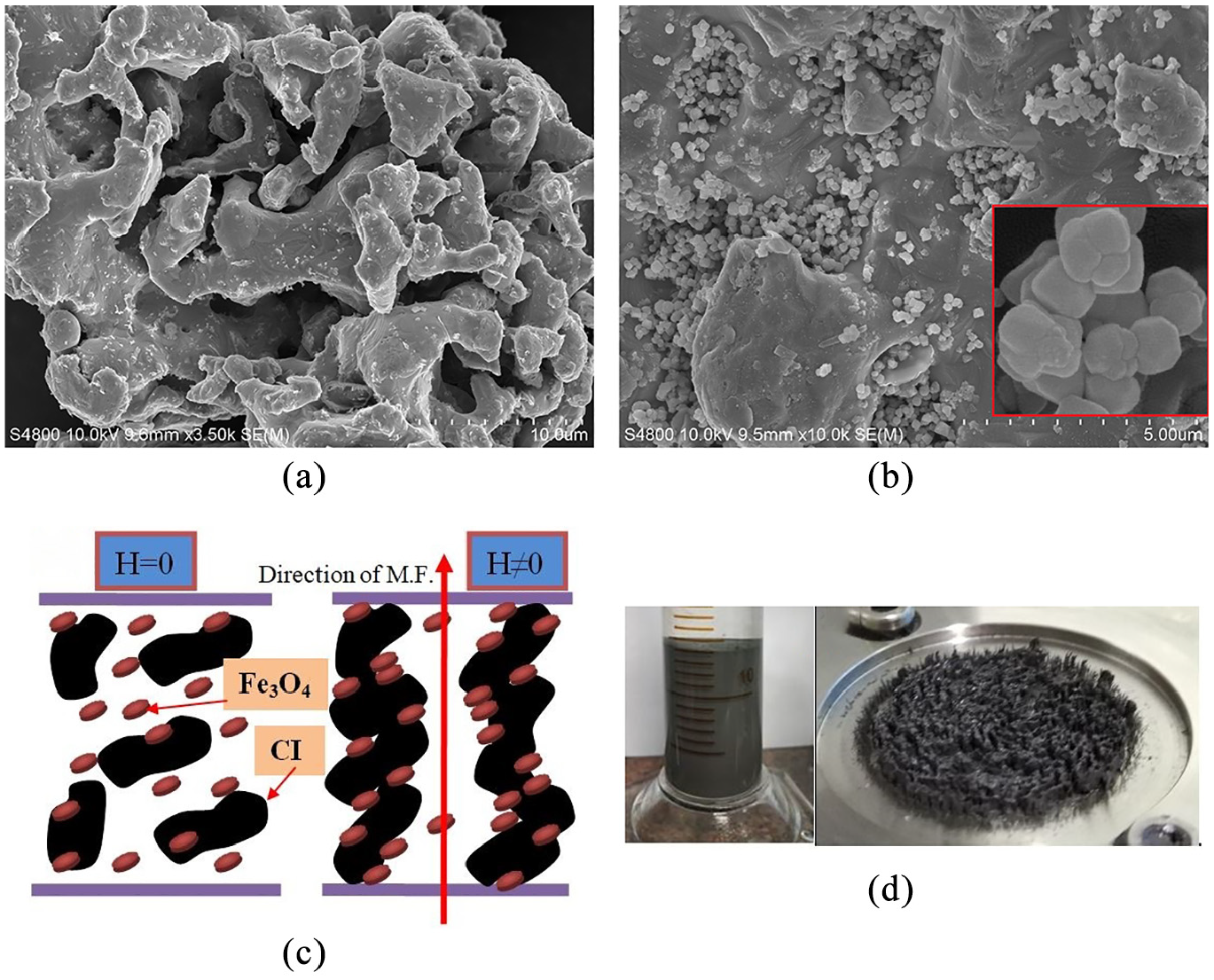
SEM image of (a) pure flake-shaped CI, (b) mixture of CI/Fe3O4, (c) schematic image of the MR effect of CI/Fe3O4 mixture, and (d) picture of prepared CI/Fe3O4 water-based MR fluid under magnetic field.
The magnetic properties of pure CI, Fe3O4, and CI/Fe3O4 with 1 wt% of Fe3O4 were investigated with VSM, as shown in Figure 3(a). The magnetization curves present the magnetic moment of each sample as a function of applied magnetic field strength varying from −2387.14 to +2387.14 kA/m (−30 to +30 kOe). All the samples show a typical superparamagnetic material behavior with a minimal coercive field and narrow hysteresis curve. Superparamagnetism can create magnetic particles that quickly scatter in solution with negligible magnetic interactions and avoid magnetic clustering, which is extremely important and helpful in practical applications of MR fluids (Wang et al., 2016). The top inset shows hysteresis loops of samples at very low magnetic field strength, and the bellow inset shows enlarge hysteresis loops at the center of the M-H curve. The magnetization curves of samples indicate a negligible remnant magnetization
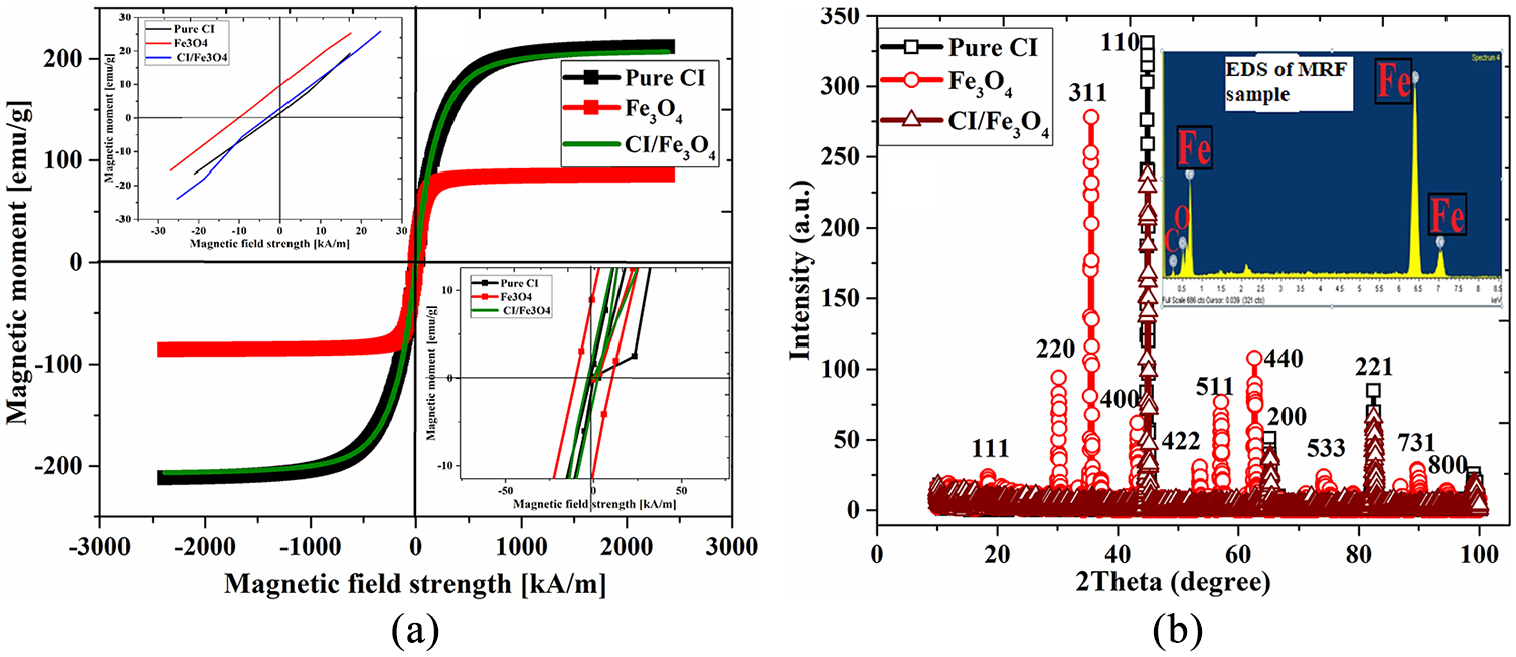
(a) VSM plot of CI, Fe3O4, and CI/Fe3O4 mixture. The inset presents the enlarged hysteresis loops at a small magnetic field and (b) XRD pattern of CI, Fe3O4, and CI/Fe3O4 mixture (inset figure shows the EDS of CI/Fe3O4 mixture).
The XRD patterns of CI, Fe3O4, and CI/Fe3O4 mixture investigated, as shown in Figure 3(b). The patterns of CI and Fe3O4 particles display prominent diffraction peaks of CI and Fe3O4, which presented that functionalities do not influence the core iron and magnetite, respectively. The positions of peaks matched with the usual XRD information for the cubic spinel structure of iron and magnetite. Diffraction peaks of CI and Fe3O4 particles have been indexed with no impurity phase peaks and a sequence of characters as (110), (200) (211), and (111), (220), (311), (400), (422), (511), (440), (533), (731), (800) planes of body-centered cubic (bcc) phase Fe, respectively. The CI/Fe3O4 mixture has similar diffraction peaks as CI particles. The inset figure showed the EDS spectral observation of the CI/Fe3O4 mixture; it established the CI/Fe3O4 microcluster composition with C and O elements with high Fe content.
3.2. Rheological measurement
The shear stress under controlled shear rate was investigated of the MR fluid containing CI/Fe3O4 1 wt% in off-state and on-state and compared with MR fluid containing CI, as shown in Figure 4. In practice, pre-shearing conditions can significantly influence the results of MR fluid response (Shan et al., 2015); thus a fresh state pre-shearing (at zero magnetic fields) test was conducted before the test under magnetic fields to eliminate the shear history effect. The shear rate varies from 0 to100 s−1, and magnetic field density varies from 0 to 0.74 T. The figure shows that the shear stress increased with the increasing magnetic field density due to strong dipole-dipole interaction among the CI and Fe3O4 nanoparticles magnetic particles. It was seen that shear stress of the CI-based MR suspension enhances with adding Fe3O4 nanoparticles. It is because nanoparticles occupy the voids between CI microparticles, which developed a strong magnetic chain-like formation and decreased the energy losses in the MR suspension because of inter-particle solid frictions. In addition to the wrapping effect on the CI particles, helps in increasing the strength of the columns and reforming the broken chain structure (Kim et al., 2016). The inset figure shows that adding the nanoparticles shear stress little enhanced at zero magnetic fields. The developed shear stress

Where
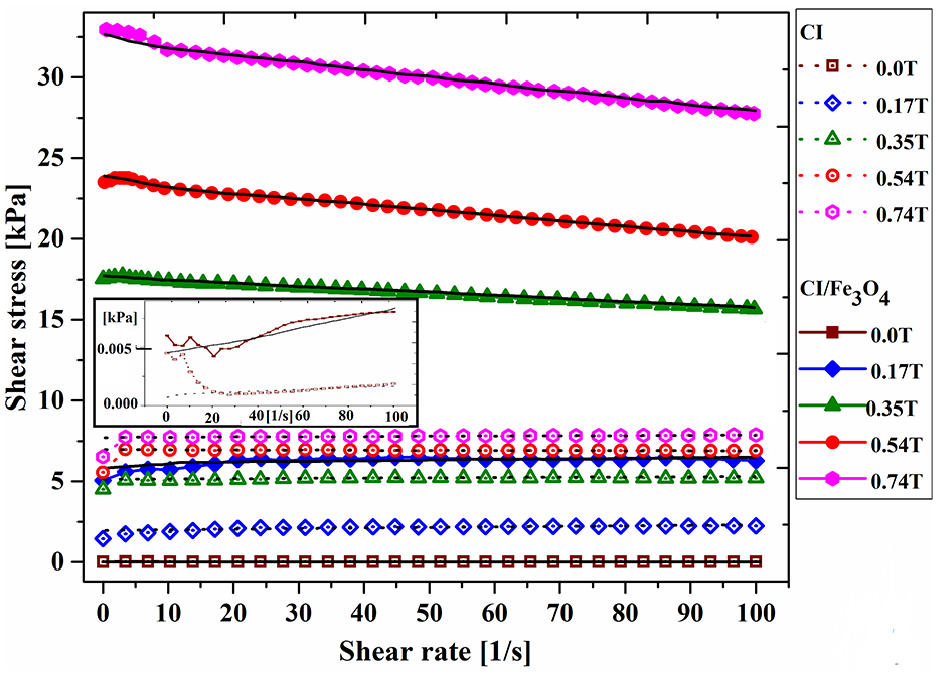
Shear viscosity plotted as the shear rate function (inset figure presents the magnified view of stress at 0.0 T).
Optimal fitting parameters for pure CI and CI/Fe3O4 based MR fluids using Bingham fluid model.
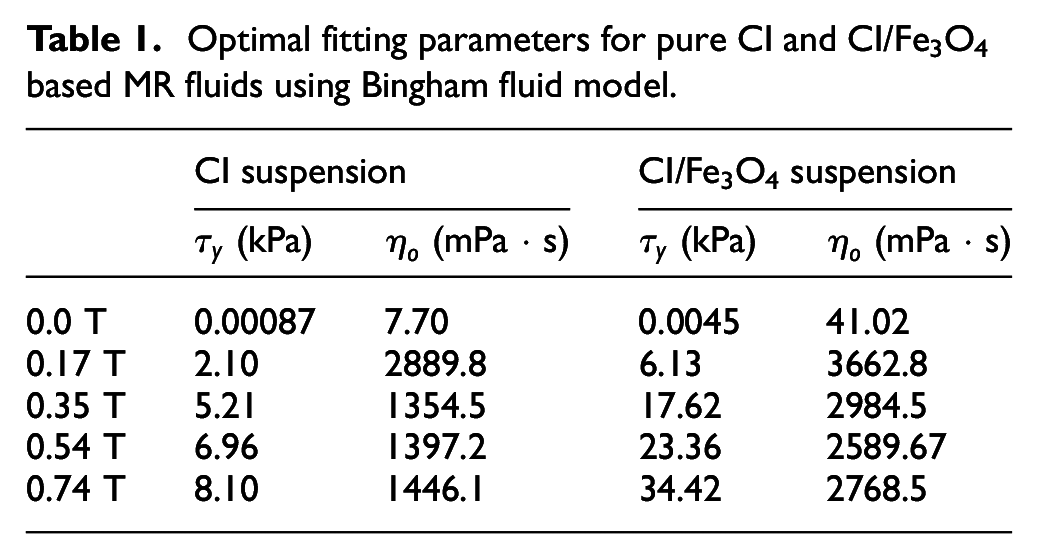
Furthermore, when the magnetic flux density was smaller or equal to 0.35 T, the initially taken gap thickness of 0.50 mm between the parallel plates of the rheometer was maintained. So we observed a stable plateau of shear stress as the shear rate increases at the lower magnetic field. While at higher magnetic field strength (above 0.35 T) 0.54 and 0.74 T the gap thickness between the plates changes from 0.50 to 0.69 mm and from 0.50 to 0.78 mm due to the developed maximum initial normal force 16.3 and 27.3 N, respectively. The initial maximum developed normal force increases the gap thickness continuously with time and shear rate to the maximum value at a particular magnetic field between the parallel plates. Therefore, shear stress may show decreasing trends with time (shear rate) at higher applied magnetic field strength due to continuous breakage of chain structure at larger gap thickness.
3.3. Dynamic performance
The amplitude test is a helpful method to examine the dynamic mechanical performance of MR fluid. A strain is forced to the fluid and the elastic and loss energy response measured. The viscoelastic behavior and chain formation can be observed by the elastic/storage modulus
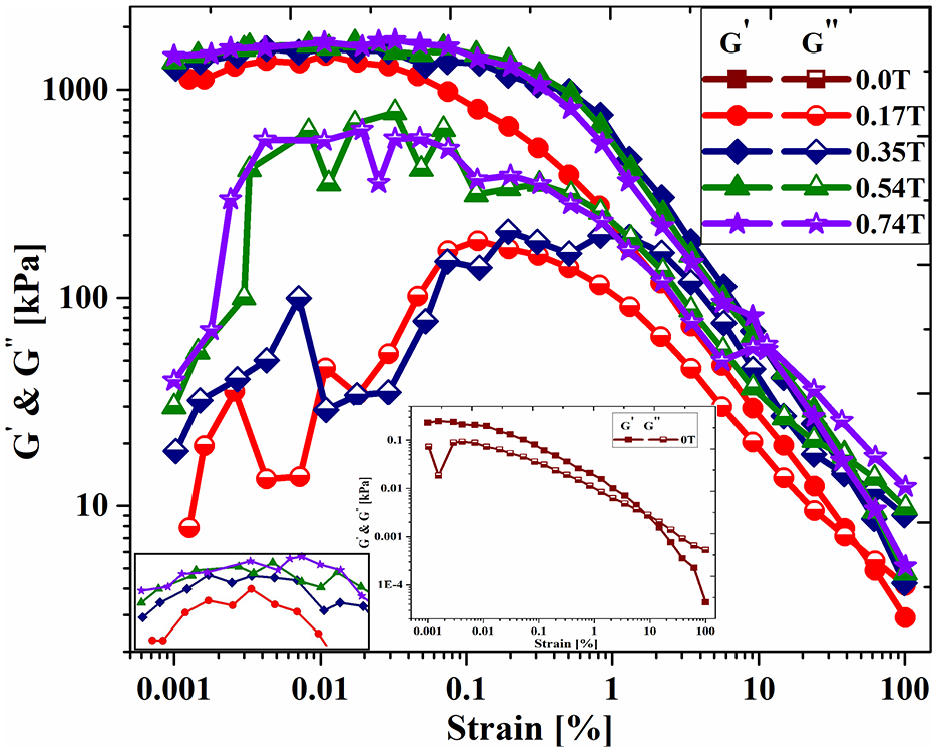
Storage modulus
The viscoelastic behavior of the CI/Fe3O4 MR fluid was measured using the frequency sweep at a fixed strain of 0.1%, and frequency ranging from 0 to 100 rad/s under the magnetic field. The storage moduli
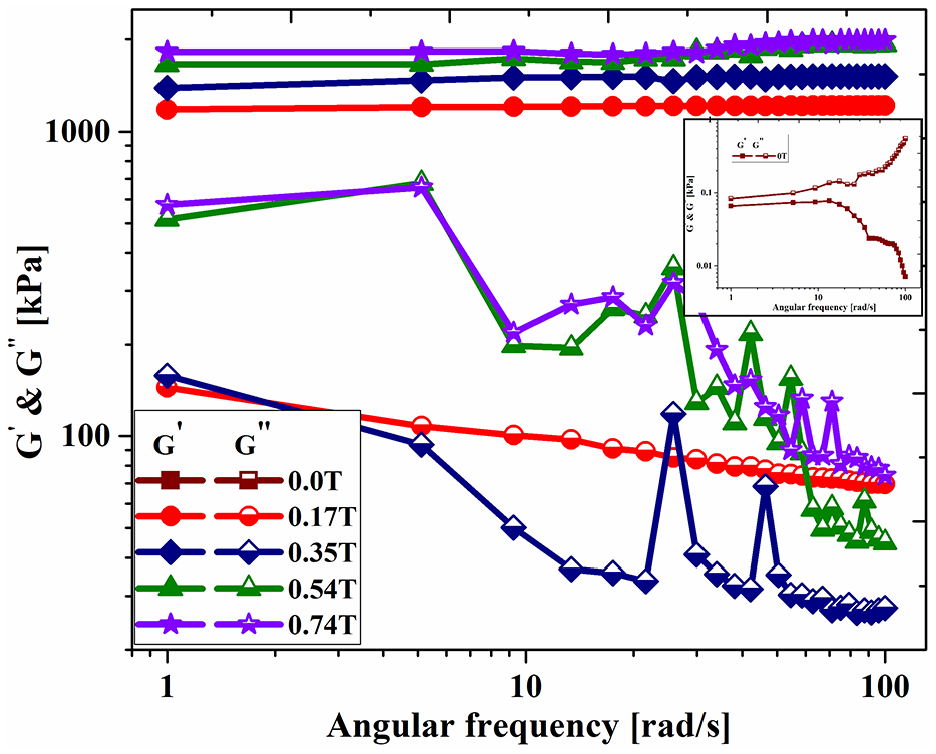
Storage modulus
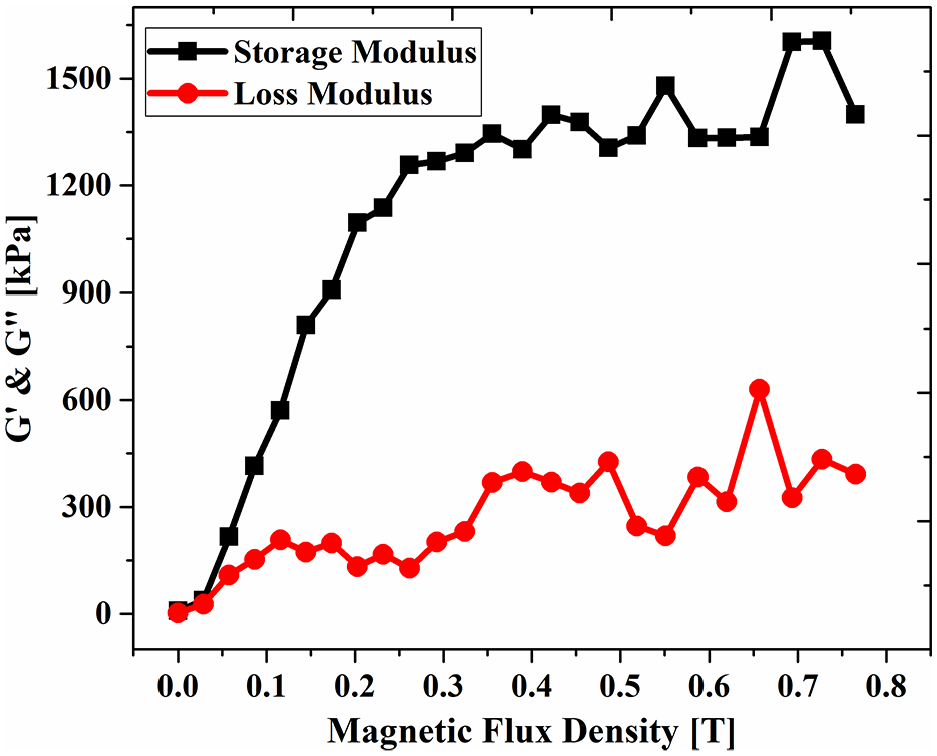
The loss factor is an essential parameter to analyze the performance of MR fluid as it provides information about storage and loss modulus and considers the damping properties of the material. It is the ratio of loss to storage modulus
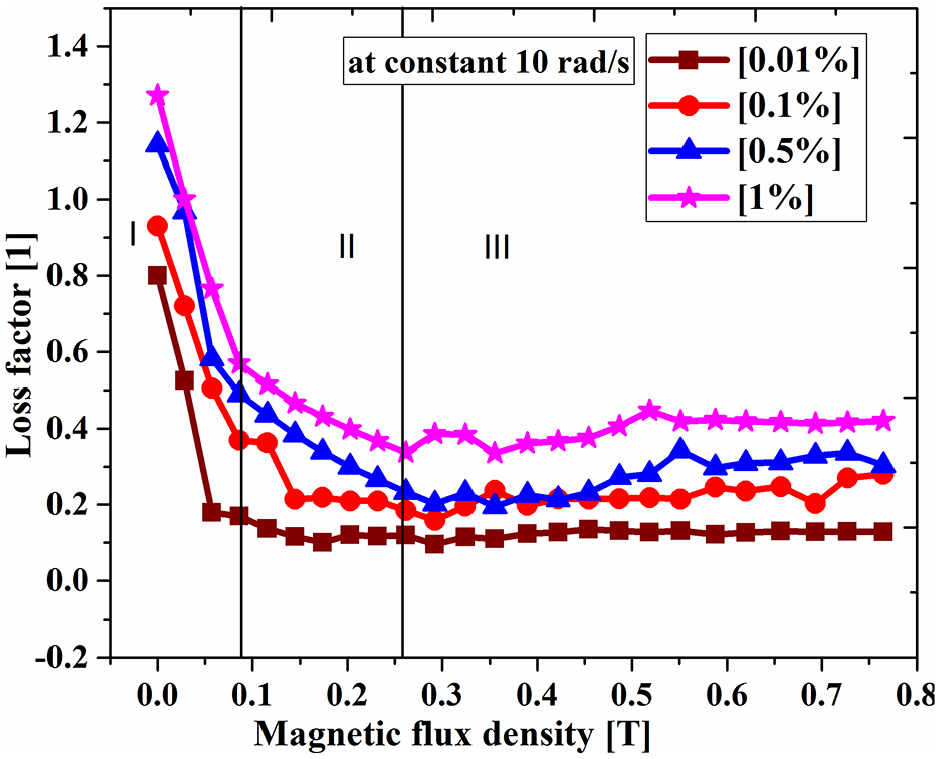
Loss factor is a function of a magnetic flux density of MR fluid at a constant strain of 0.1% and angular frequency of 10 rad/s.
Figure 9 shows the plot of

Where
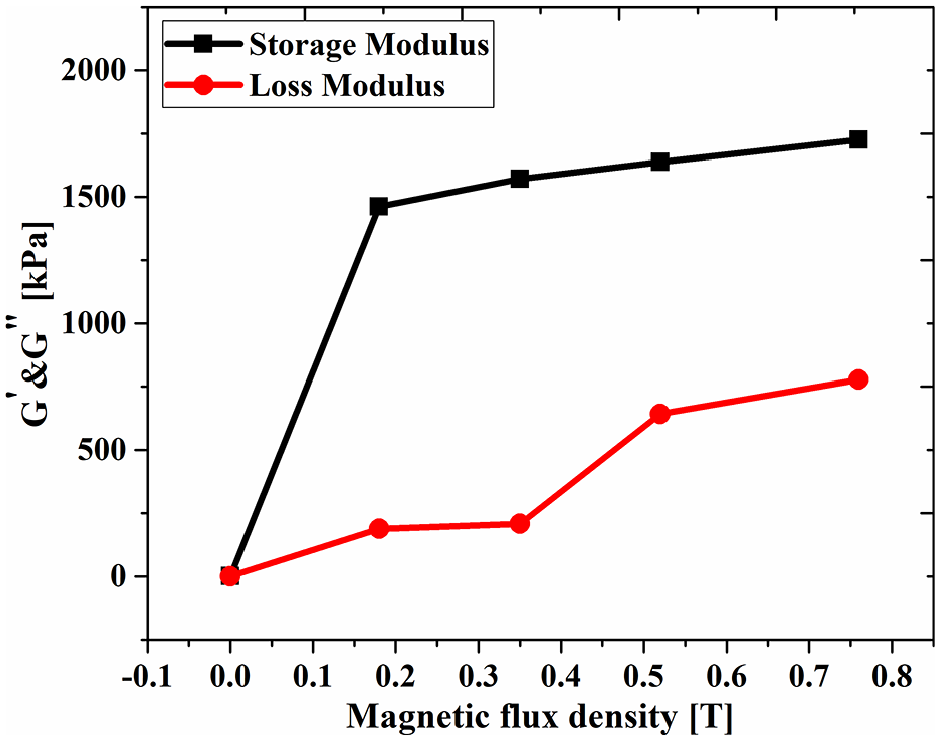
Dependence of the
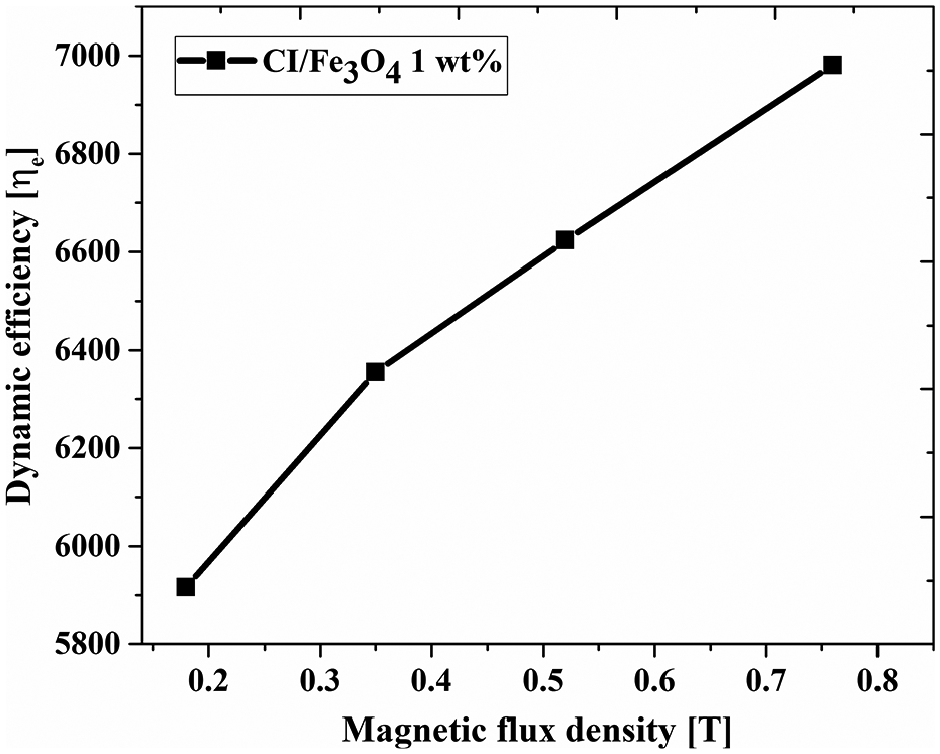
Dynamic efficiency of MR fluids as a function of magnetic flux density.
3.4. Creep and recovery behavior
Creep is the changing of strain with time under steadily applied stress
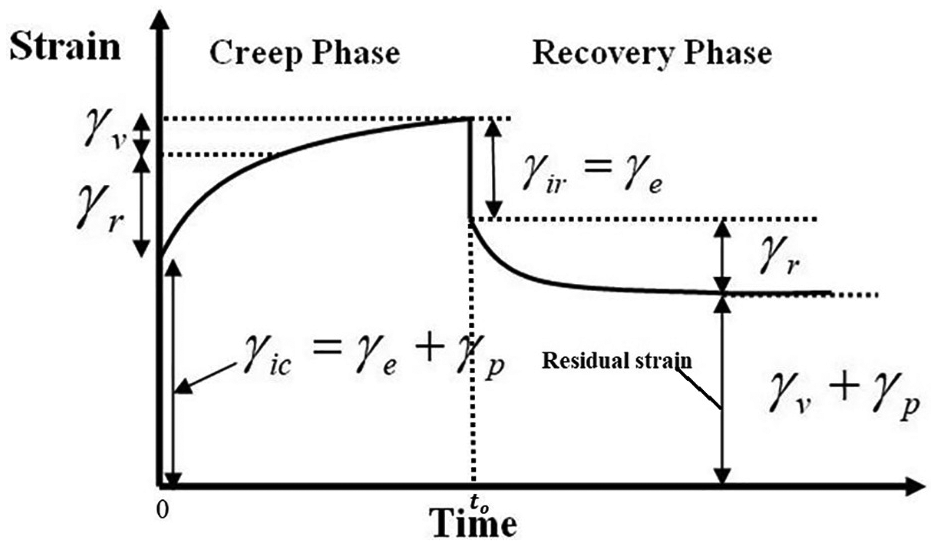
Schematic diagram of the creep and recovery behavior of a nonlinear viscoelastic material.
3.4.1. Creep phase
Stress

For the viscoelastic materials,
The three components of strain (

From equation (4) and equation (3). The

3.4.2. Recovery phase
It can be observed from Figure 11 that after removing the load from the material at

Correspondingly, a recovery compliance function

3.4.2.1.The influence of various stresses on creep and recovery performance
Figure 12(a) to (d) show the creep and recovery curves of fluid at different constant stress levels 200, 2000, 6000, and 10,000 Pa, respectively. The creep and recovery performance significantly depends on the applied loads for constant applied magnetic field 0.35 T, as shown in Figure 12. At lower stress
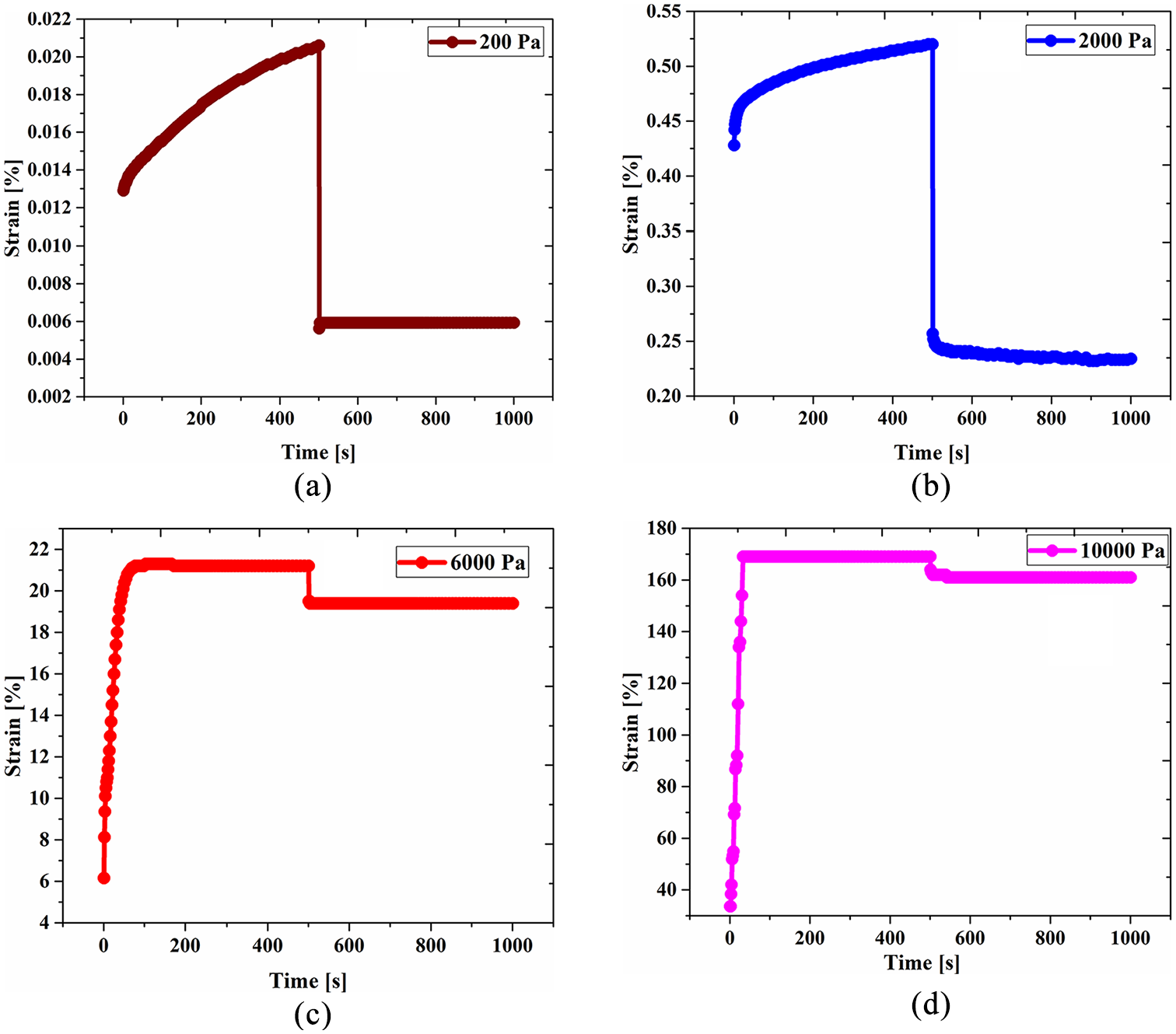
Creep and recovery performance of MR fluid at: (a) 200 Pa, (b) 2000 Pa, (c) 6000 Pa, and (d) 10,000 Pa.
Similarly, for the applied stress levels 6000 and 10,000 Pa, the contribution of the instantaneous creep strain greatly increases
As discussed in Figure 12(a) to (d), the instantaneous recovery strains
3.4.2.2. The influence of magnetic field on creep and recovery performance
Controlibity of magnetic properties of the MR materials is one of the most essential and attractive properties. Being a type of magneto-responsive material, a magnetic field plays a significant character in the creep and recovery performances of MR fluid. When a magnetic field is applied to MR fluid, CI particles formed a rigid chain structure; as a result, movement between the particles is restricted. Creep and recovery performances measured at different magnetic fields for constant stress of 2000 Pa, as presented in Figure 13. The instantaneous creep strain
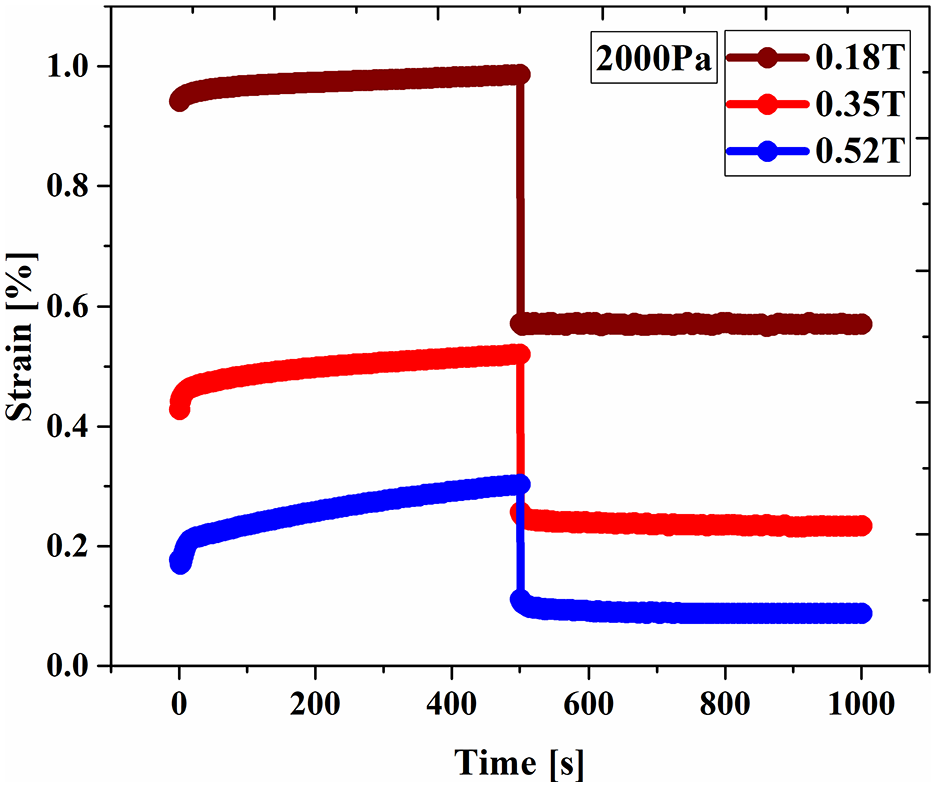
The influence of the magnetic field on creep and recovery behaviors.
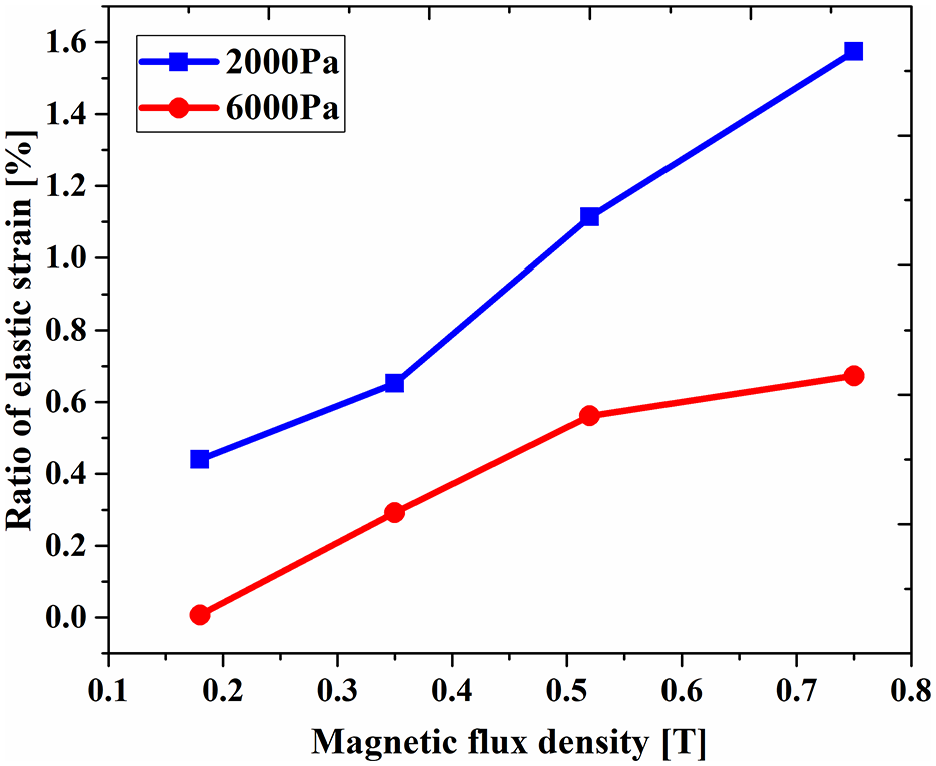
The ratio of elastic strain as a function of the magnetic field.
However, the reversible strain
Creep compliance is the total strain per unit applied stress levels before the creep break occurred. Creep compliance is dependent on stress levels and the magnetic field, as presented in Figure 15(a) and (b), respectively (Xu et al., 2012). It was observed that the creep compliance increases with the increment in the stress levels for the creep time range of 500 s at constant magnetic flux density 0.35 T, as shown in Figure 15(a). Results show that the MR fluid behaves like linear materials at small stress levels (200 and 2000 Pa), while at larger stress levels (6000 and 10,000 Pa) behave like complex nonlinear materials. Creep compliance depends on the applied magnetic field and shows a decrease in creep compliance value with increment in magnetic flux density for MR fluid, as presented in Figure 15(b) at a constant stress level of 2000 Pa. It occurred because creep compliance is the total load strain per unit of stress and the yield stress of MR fluid increases significantly with increasing the magnetic field. The creep compliance shows a constant plateau with time at different applied magnetic field except at magnetic field of 0.52 T. It was because, at 0.52 T, the temperatures of the MR sample region increases 22°C–22.08°C after 200 s and increase continuously with time up to 22.14°C, and as a result yield stress of MR fluid decreases with increase in temperature of MR sample. So due to the decrease in yield stress of MR fluid creep compliance shows a significant increase in trend with time after 200 s.
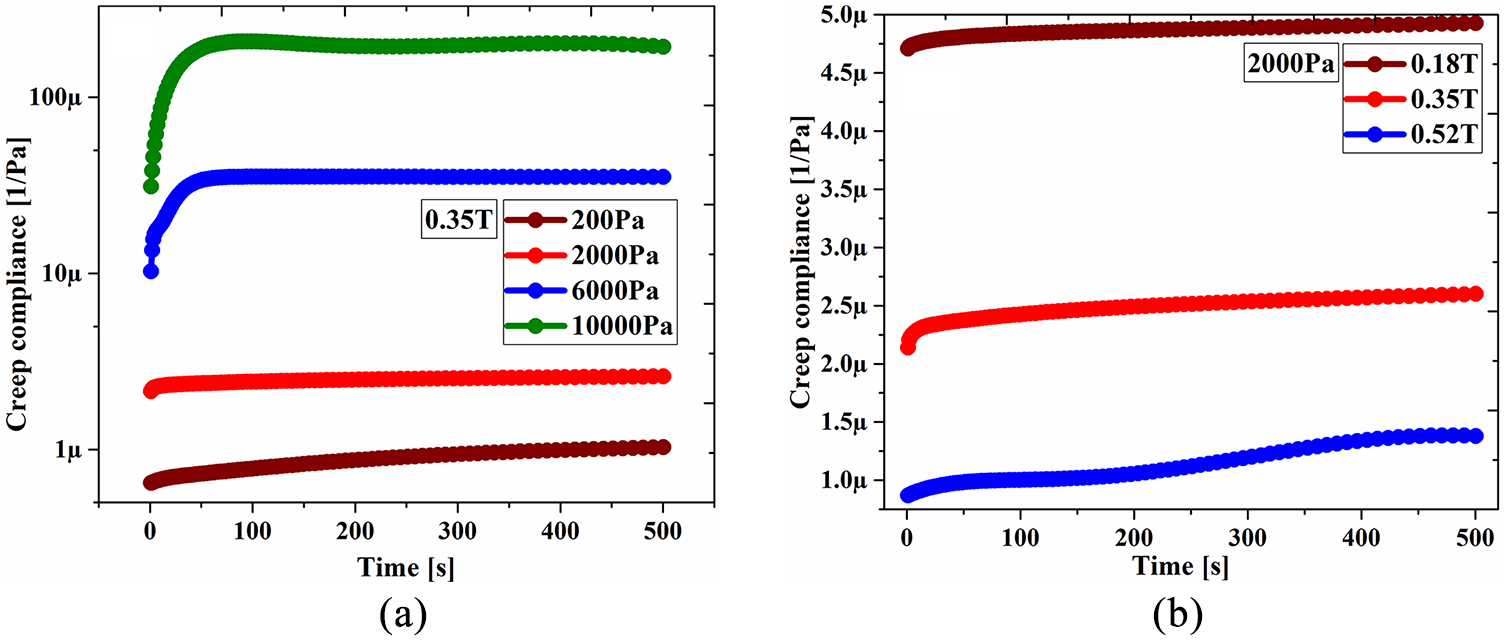
Creep compliance with time and dependent on (a) applied stress levels and (b) magnetic flux density.
4. Conclusions
This study measured the dynamic and creep and recovery performance of MR fluid under different operating mechanical conditions. The MR fluid contained CI microparticles and Fe3O4 nanoparticles mixture with 65 wt% of CI and 1 wt% of Fe3O4 and suspended in 35 wt% of water. CI/Fe3O4 suspension exhibited soft magnetic properties. Therefore suspension was highly reversible and, as a result, easily magnetized and demagnetized in on-state and off-state, conditions respectively. The rheological properties of CI-based suspension were enhanced with the addition of Fe3O4 nanoparticles because nanoparticles occupy the voids between CI microparticles, which make a strong magnetic chain-like structure and reduce the energy losses in the MR suspension due to inter-particle solid frictions. Under oscillatory sweep mode, the critical strain was
Footnotes
Acknowledgements
The authors would like to be grateful smart material and machines lab in the Department of Mechanical Engineering at IIT Patna, Patna, for providing a rotational rheometer (Anton Paar MCR102) for experimentation and all other resources used in this research.
Declaration of conflicting interests
The authors declared no potential conflicts of interest with respect to the research, authorship, and/or publication of this article.
Funding
The authors received no financial support for the research, authorship, and/or publication of this article.
