






Abstract
The magnetic properties of elastomers based on silicone matrix and iron microparticles assembled in linear chain-like aggregates of different length are experimentally investigated. For this purpose, elastomer samples with a low concentration of magnetic filler are structured in a magnetic field of various strength. The influence of the particle aggregates morphological characteristics on the macroscopic magnetic response of the samples is revealed. Moreover, the influence of the angle between the direction of particle aggregates, that is, the field applied in the process of crosslinking the polymer matrix, and the direction of the field applied during magnetic measurements on the macroscopic magnetic properties of the composite is taken into account. Magnetic measurements are supported by the evaluation of the real microstructure of the samples using X-ray computed microtomography and corresponding digital image processing methods.
Introduction
Composites based on magnetic particles and an elastic polymer matrix are called magnetic elastomers. Depending on the size and concentration of magnetic particles and the elasticity of the matrix, such materials can have a significant magnetorheological (MR) effect and are traditionally referred to as MR elastomers (Wereley, 2014). Regardless of the above parameters and the magnitude of the MR effect, the presence of a magnetic component makes such composites magnetically sensitive. The application of an external homogeneous magnetic field during the polymerization process makes it possible to obtain anisotropic material due to the structuring of particles in the initially liquid polymer matrix (see Figure 1).
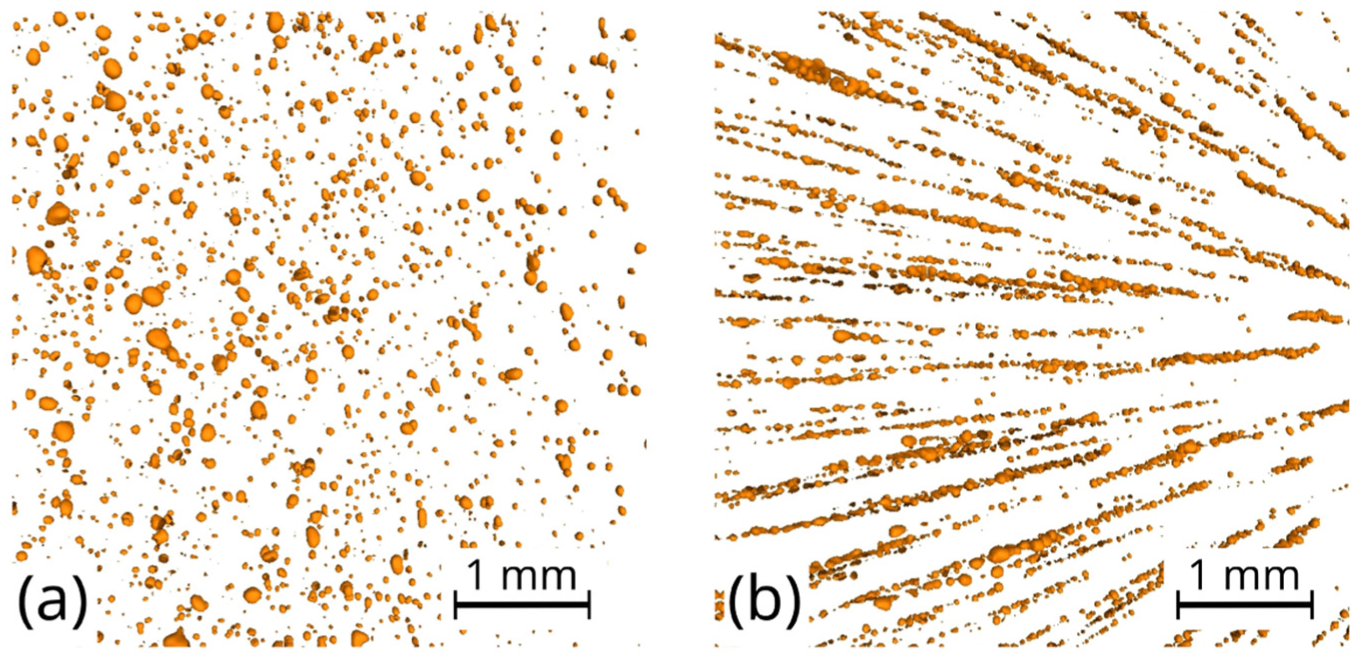
Enlarged, cropped isometric images of the magnetic elastomer microstructure, representing an isotropic distribution of magnetic microparticles (a), as well as particles that formed linear aggregates under the influence of a 1500 mT magnetic field applied during the cross-linking of the matrix (b).
It is obvious that the induced anisotropy significantly changes the magneto-mechanical response of composites to an external magnetic field. Recently, the influence of the mutual orientation of particle aggregates and the external magnetic field applied during magneto-mechanical tests on the macroscopic mechanical properties of MR elastomers was systematically investigated, see for example, Yao et al. (2019), Wang et al. (2023). At the same time, the known results of obtaining magnetization curves and determining the corresponding magnetic properties of magnetic elastomers as a function of the mutual orientation of the particle structures and the external field are limited to theoretical predictions, see for example, Romeis and Saphiannikova (2023). The known experimental publications consider parallel and perpendicular orientations only (Borin and Odenbach, 2017). On the other hand, varying the concentration of magnetic filler and the magnitude of the magnetic field applied during material crosslinking makes it possible to obtain a composite with different morphology of particle aggregates, see for example, Borin (2020). However, the relationship between the morphology of particle aggregates and the macroscopic properties of the material has not been sufficiently investigated to date. The question of the influence of the spatial orientation of different particle structures relative to the direction of the magnetic field applied in the experiment remains open. Accordingly, this study examines the influence of the angle between the direction of particle aggregates of different morphologies and the direction of the field applied during magnetic measurements on the macroscopic material response. Measurements of the magnetic characteristics of various composite samples are accompanied by microstructural studies.
Materials and methods
Composition and preparation of samples
The study examines elastomeric composite samples based on two-component polydimethylsiloxane matrix (silicone and crosslinker Neukasiel RTV 230 and A149). The shear modulus of the cross-linked matrix is
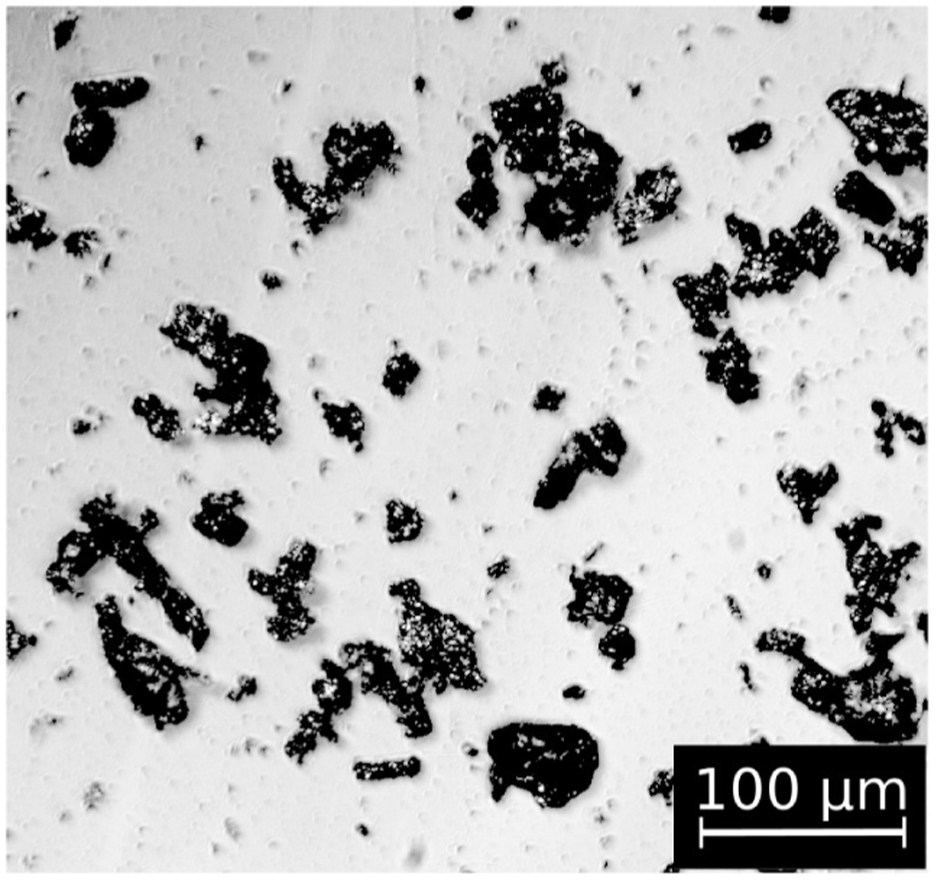
Optical microscopic image of the used Sigma-Aldrich iron powder particles.
The specimens are fabricated by mechanically mixing all the components, using manual stirring and a vortex mixer. The suspension of iron particles in polydimethylsiloxane is degassed under vacuum, poured into the mold, and then cross-linked at room temperature (23°C). The concentration of powder for all samples is 1 wt.% (approx. 0.14 vol.%) and is ensured by accurate weighing of the components prior to mixing. The reference isotropic samples were cross-linked in a zero field. To prevent the sedimentation of microparticles during matrix cross-linking, the isotropic samples were rotated on a laboratory Loopster. An external uniform magnetic field was applied to cross-link the anisotropic samples, as described below. The issue of particle sedimentation for anisotropic samples was irrelevant given the short time required to transfer the samples to the structuring setup.
Structuring and magnetic characterization
The structuring magnetic field is provided by the electromagnet of a vibrating sample magnetometer (Lake Shore VSM 7407), which is further used for magnetic measurements. Accordingly, a standard Lake Shore VSM 730935 sample holders are used as the molds for the specimens. The basic principles for the preparation of composites with different particle aggregate morphologies, visualized using computed tomography methods, are presented in Borin (2020). In the current study, a very low structuring field of about 1 mT is used to obtain a composite with short chains. Whereas a high field of 1500 mT is used to obtain a composite with long chains. The spatial orientation of particle structures relative to the direction of the external field in magnetic measurements is changed by rotating the VSM rod with the sample holder around the vertical axis. The magnetization curve is measured for different values of angle
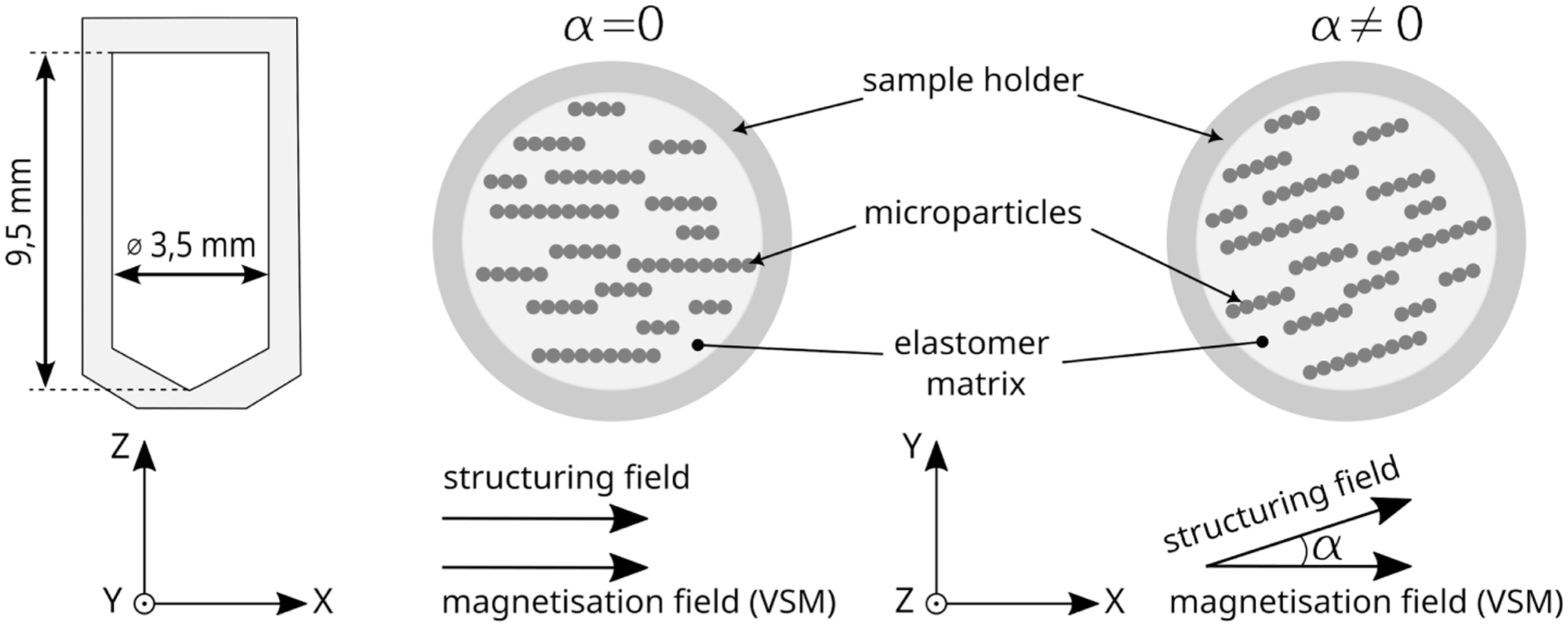
Schematic view of the sample holder (left) and the orientation of the sample during the experiment (right).
Microstructural characterization
Microstructural investigations are conducted using the own laboratory X-Ray microtomography setup TomoTU (Borin and Odenbach, 2023). To avoid damaging the elastomer composite structured directly in the VSM sample holder, tomography was performed without removing the specimen from it. The reconstruction process is performed calculating a three-dimensional model from the individual radiographs using a Feldkamp–Davis–Kress algorithm (Feldkamp et al., 1984) based software package developed in house. The open source platform Fiji (Schindelin et al., 2012)) was used for digital processing and analysis of the reconstructed cross-sectional images obtained.
Results and discussion
Visualization of the different internal microstructure of studied magnetic elastomer samples is shown in Figure 4. A composite with short chains formed by structuring of microparticles in a low (
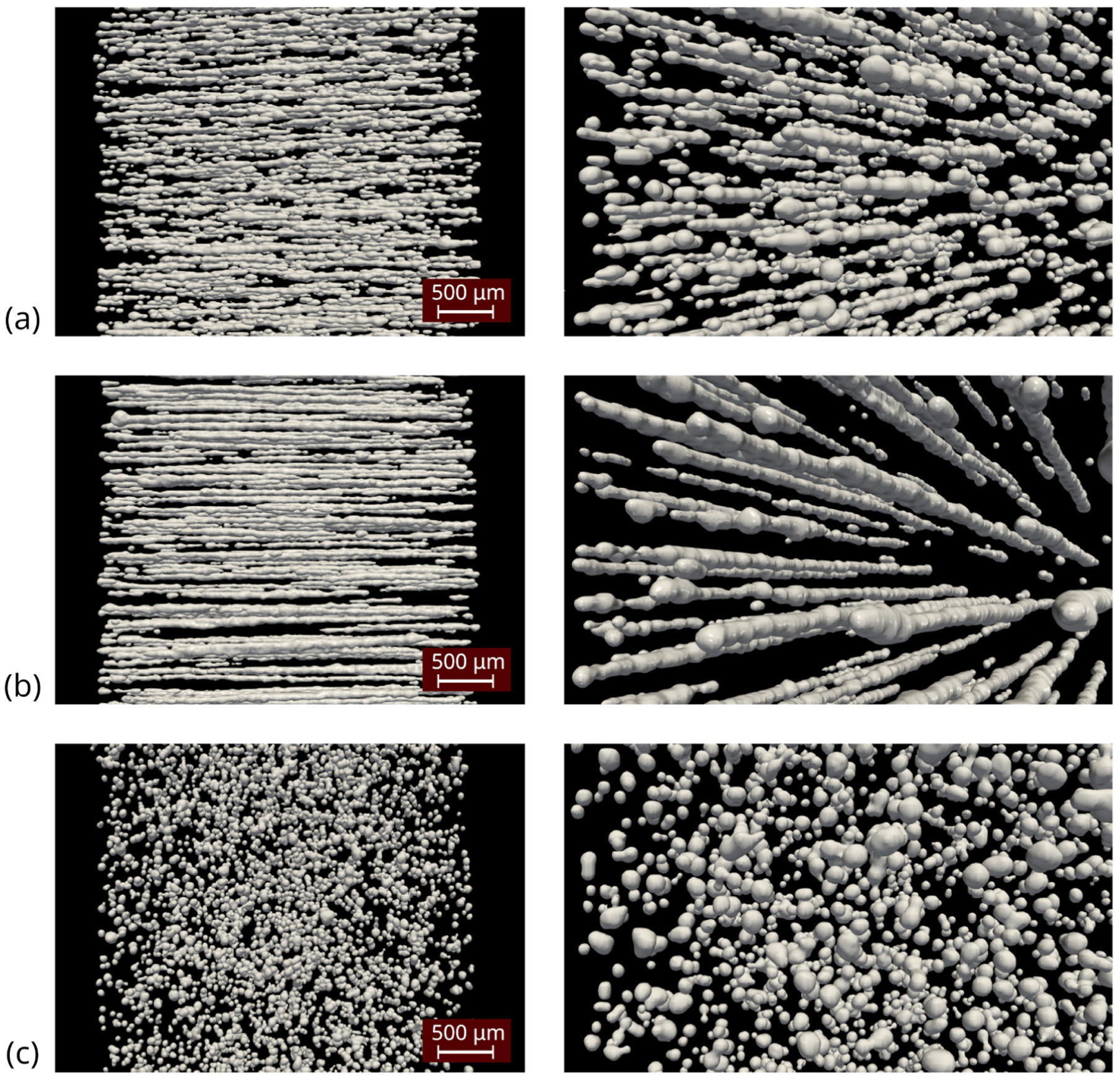
Obtained using X-Ray computed microtomography three-dimensional renderings of exemplary microstructures of the specimens: (a) short chain composite, (b) long chain composite, and (c) isotropic composite.
Figure 5 shows examples of reconstructed and processed images of cross sections of samples with short and long chain aggregates and isotropic particle distribution. At the same time, Figure 6 shows examples of longitudinal section images of the samples under study, with the section plane parallel to the direction of the structuring field.
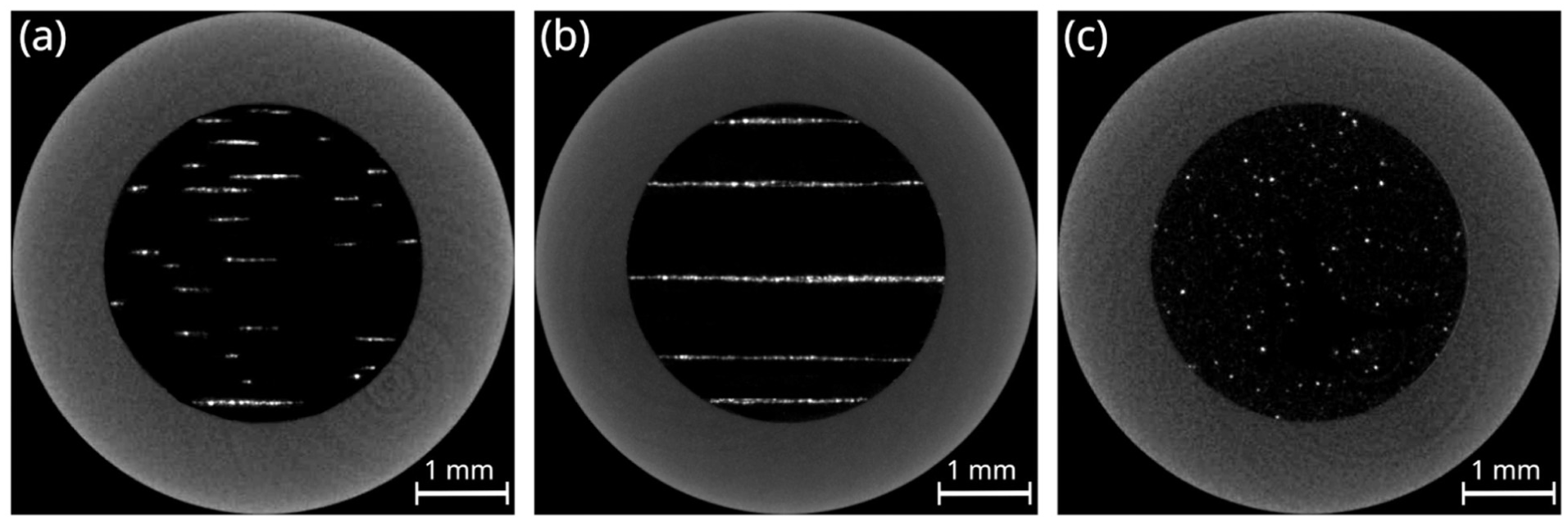
Processed reconstructured X-Ray tomographic images of exemplary cross sections of specimens in VSM specimen holder: (a) short chain composite, (b) long chain composite, and (c) isotropic composite.
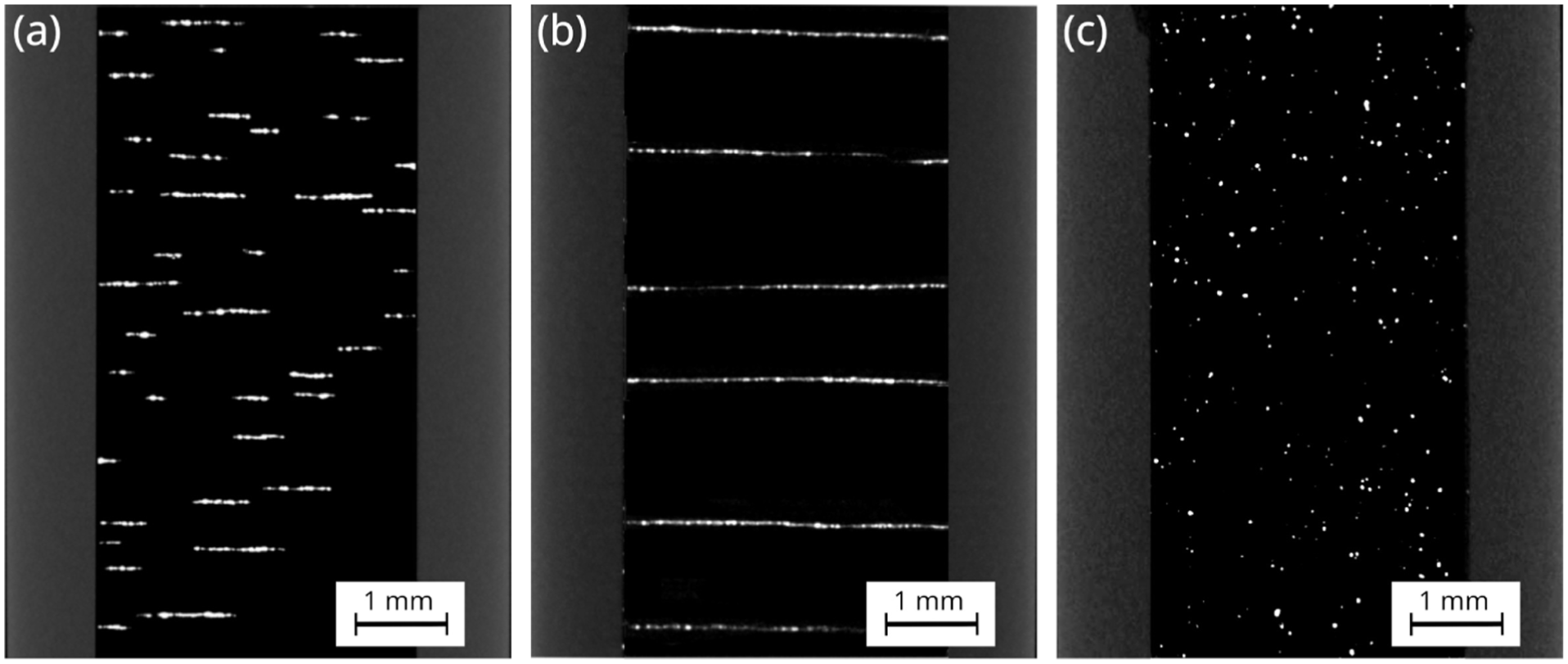
Processed reconstructured X-Ray tomograpnhic images of exemplary longitudinal sections of specimens in VSM specimen holder (section plane parallel to the direction of the structuring field): (a) short chain composite, (b) long chain composite, and (c) isotropic composite.
Using a median filter and binarization of the cross-sectional and longitudinal section images, a quantitative assessment of the length of chain aggregates was performed.
Chain aggregates in a composite structured in a field of
In a composite structured in a field of
The thickness of the observed chain aggregates corresponds to the diameter of individual powder particles. Thus, considering the average chain lengths, the length-to-thickness ratio of the aggregates is roughly 60 for a composite structured at
Figures 7 to 9 show the magnetization curves of differently aligned samples with chains of particles of varying lengths and an isotropic microstructure. The direction of the sample structuring field in Figure 7 coincides with the direction of the magnetometer magnetic field (angle
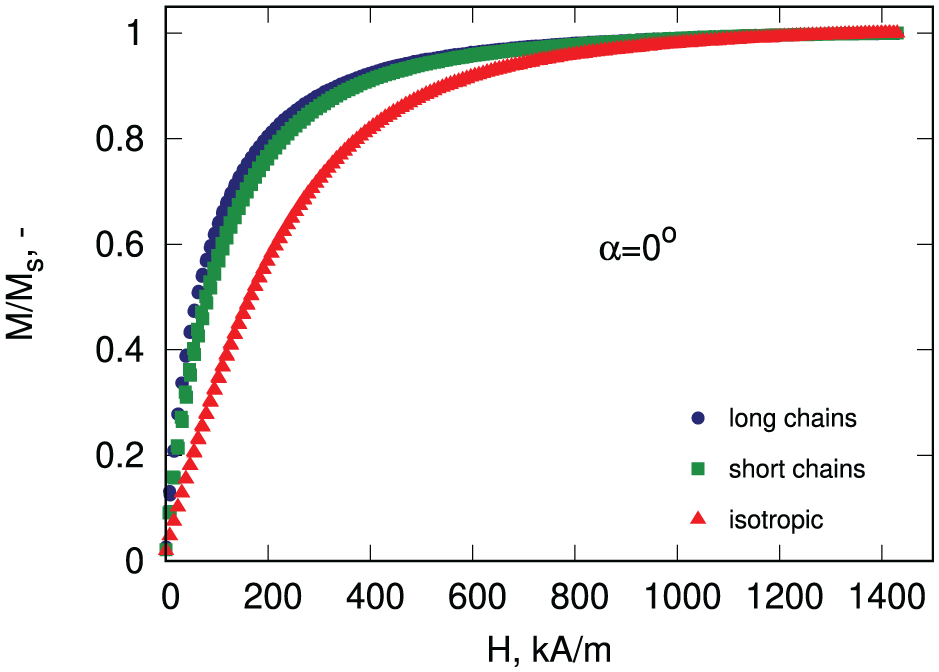
Magnetization curves of samples with long and short particle chains oriented parallel (
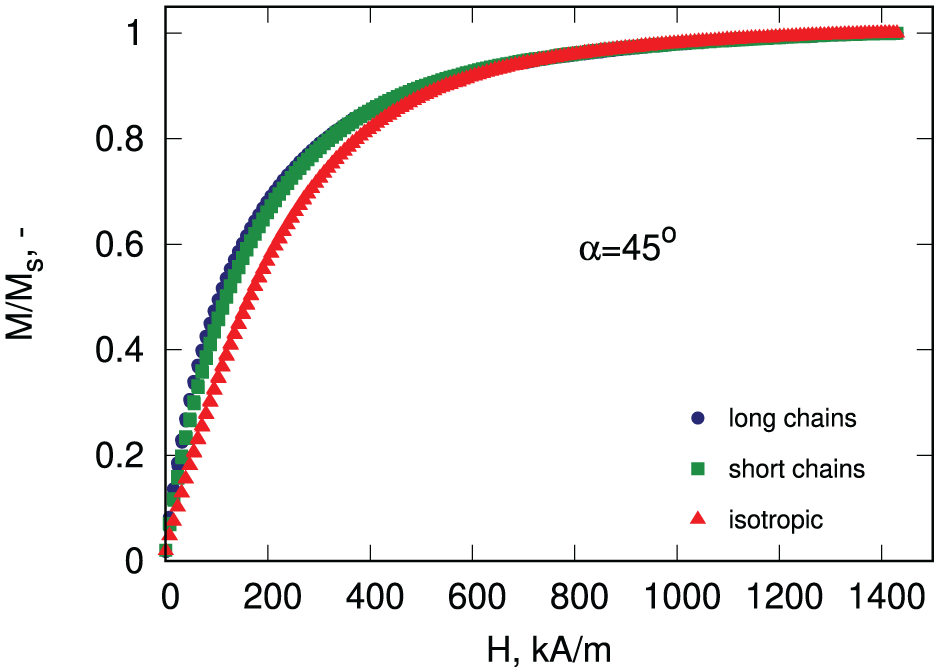
Magnetization curves of samples with long and short particle chains oriented at
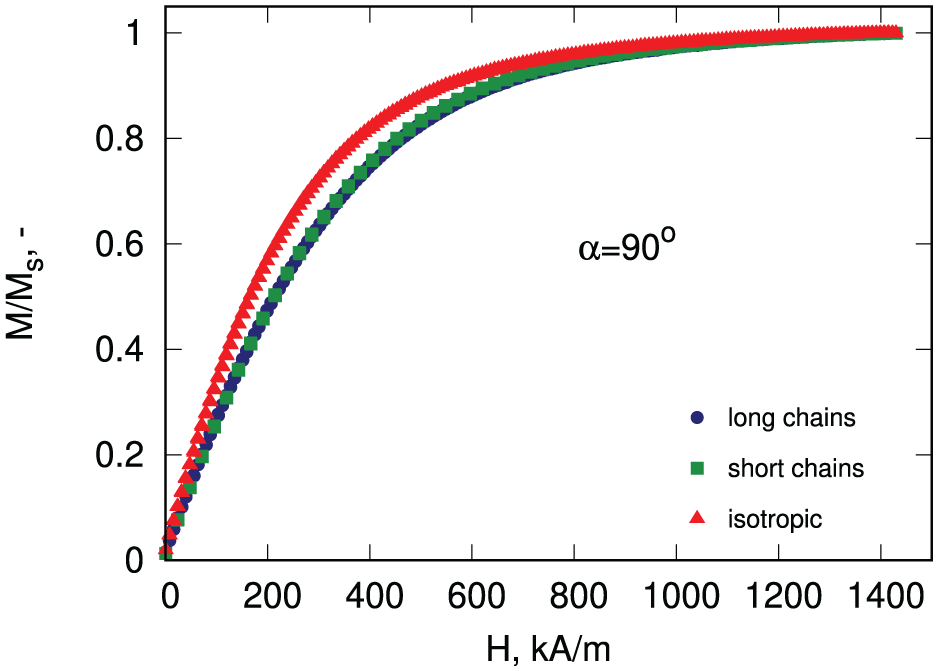
Magnetization curves of samples with long and short particle chains oriented perpendicular (
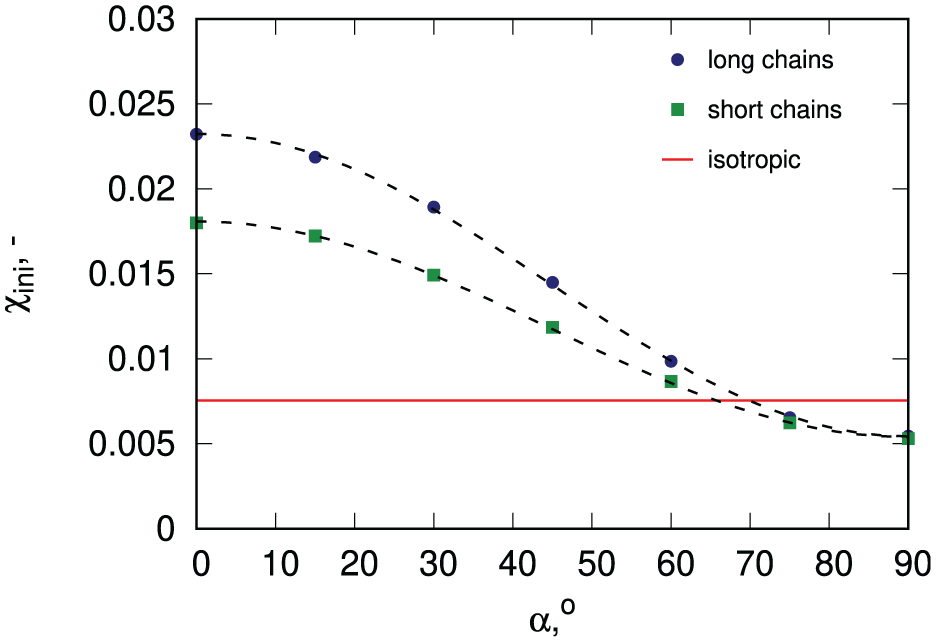
Apparent initial magnetic susceptibility of the samples with long and short particle chains oriented at various angle
The obtained dependencies clearly demonstrate the relation between macroscopic magnetic properties and microstructure anisotropy, which determines the effective magnetic field affecting the composite specimen. When evaluating the effective magnetic field, the influence of particle aggregates must also be taken into account. The demagnetizing factor of specimens with complex magnetic particle mixtures depends not only on the global demagnetizing factor

where
Generally, for the samples considered in this study, the variable parameters are the shape of the particle aggregates, that is, the parameter


where
The ratio
Changing the orientation angle of the sample in the range
The fact that
Summary and outlook
Through experimentation, we demonstrated differences in the magnetization of magnetic elastomers with various microstructural anisotropies. We focused on elastomers with linear chain aggregates. Quantitative microstructure analysis is key to understanding the macroscopic magnetic behavior of the studied composites. The magnetic properties of these elastomers depend strongly on the morphology of the aggregates and their relative alignment to the external magnetic field applied during magnetic characterization. Structured samples exhibit a strong dependence of the apparent initial susceptibility on the tilt angle. Samples with longer chains exhibit a greater change in susceptibility compared to samples with shorter chains. This behavior is due to the tilt-angle-dependent demagnetizing factor of the single particle chain aggregates. For composites with more complex microstructures further research is needed. The study examined composite samples containing a low concentration of magnetic particles in a sufficiently rigid matrix. The magnetorheological effect, that is, the change in viscoelastic properties induced by a magnetic field, is absent in such materials; consequently, investigations into their mechanical properties were of no interest. Nevertheless, from an application perspective, such composites possess precisely tunable magnetic anisotropy, which is induced during manufacture by controlled structuring using an applied field. Therefore, they are of interest for sensing devices similar to advanced, flexible, anisotropic magnetic films. See, for example, the corresponding review in Wu et al. (2026). The results obtained in the current study can serve as a basis for further development toward sensor applications.
Footnotes

Funding
The authors disclosed receipt of the following financial support for the research, authorship, and/or publication of this article: N.M. and S.O. are gratefully acknowledging the financial support by Deutsche Forschungsgemeinschaft (DFG) under Grant OD 18/35-1 within Research Unit FOR5599. D.R. would like to acknowledge the financial support by DFG under Grant RO 6756/3-1.
Declaration of conflicting interests
The authors declared no potential conflicts of interest with respect to the research, authorship, and/or publication of this article.
Data availability statement
The data that support the findings of this study are available upon reasonable request from the authors.