






Abstract
WEEE and RoHS regulations impose strict restrictions on lead content in electronics, whereas many accelerometers used in automotive, aerospace, and consumer electronics currently rely on lead-based piezoceramics. To address this challenge, we design and develop a novel lead-free compressive-mode accelerometer based on BCZT (Barium Calcium Zirconate Titanate). Environmentally friendly BCZT ceramics were synthesized in this work. The freshly poled BCZT ceramics exhibited an initial maximum piezoelectric coefficient
Introduction
Accelerometers have emerged as critical sensing components in the context of the rapid advancements associated with Industry 4.0 and the Internet of Things (IoT), particularly in predictive maintenance. Their role in real-time condition monitoring is indispensable across various harsh environments, such as aerospace structures (e.g. monitoring turbine blade vibrations, Hsu and Zhuang, 2022), automotive systems (e.g. enabling electronic stability control, Hema, 2013), and industrial machinery (e.g. facilitating bearing fault detection, Liu et al., 2020). The global market for piezoelectric sensors, a category that prominently includes accelerometers, is projected to reach approximately $6.45 billion by 2035 (Wu et al., 2023). This market expansion is driven by multiple factors, including technological advancement, increased industrial automation, and notably, the transition toward lead-free alternatives in compliance with the Restriction of Hazardous Substances (RoHS) directive (European Parliament and Council, 2011). The operational principles of these sensors can be broadly classified into three modes: shear mode, flexure mode, and compression mode. This study specifically concentrates on advancing the design of lead-free compression-mode piezoelectric accelerometers, systematically analyzing their operational characteristics, inherent advantages, limitations, and potential pathways for performance optimization. Despite the widespread adoption of compression-mode accelerometers, they face persistent challenges related to structural reliability and long-term stability. Conventional designs, which typically utilize a central stud to maintain mechanical integrity, are particularly vulnerable to thermal expansion and contraction effects (Zhang et al., 2010). These thermal instabilities, akin to the deformation observed in pavements under cyclic weather conditions, can significantly degrade measurement accuracy in dynamic operational environments. This degradation is especially pronounced during critical phases, such as machinery start-up and shutdown cycles, or when exposed to fluctuating ambient temperatures.
Compression-mode sensors demonstrated significant cost advantages over their shear-mode counterparts, primarily attributable to simpler manufacturing processes. However, these economic benefits may be counterbalanced by the long-term maintenance requirements and reliability limitations that commonly accompany their use (Wu et al., 2023). Their superior mounted resonant frequency primarily drove the early adoption of compression designs compared to shear configurations. Nonetheless, recent advancements in shear-mode technology have effectively equalized this performance gap, thereby necessitating renewed innovation and development in compression-mode systems.
A critical limitation inherent to piezoelectric compression-mode accelerometers is their susceptibility to the pyroelectric effect. This phenomenon occurs when temperature fluctuations induce spurious charges in piezoelectric ceramics, which can severely compromise measurement fidelity. To mitigate this issue, we propose a symmetric dual-element differential configuration that employs two mechanically series-connected BCZT (Ba, Ca)(Zr, Ti)O3 elements with opposing electrical polarizations. This innovative design enables the mutual cancelation of thermally generated charges while maintaining mechanical responsiveness to acceleration inputs.
The remainder of this paper is organized as follows. Section 2 describes the preparation and characterization of the BCZT ceramics. Section 3 presents the accelerometer package design and read-out circuit. Section 4 describes the finite element modeling and structural optimization. Section 5 provides the theoretical analysis of the dual-element compression-mode sensing and thermal-charge cancelation mechanism. Section 6 reports the experimental characterization of the fabricated accelerometer, including sensitivity, linearity, and temperature-dependent performance. Section 7 concludes the paper.
Material synthesis and characterization
The fundamental operating principle of accelerometers centers on their piezoelectric ceramic sensing elements, which facilitate bidirectional energy transduction between mechanical and electrical domains. This inherent energy conversion capability eliminates the necessity for conventional power sources, rendering these devices particularly advantageous for applications demanding precise acceleration measurements in conjunction with miniaturization and high energy efficiency.
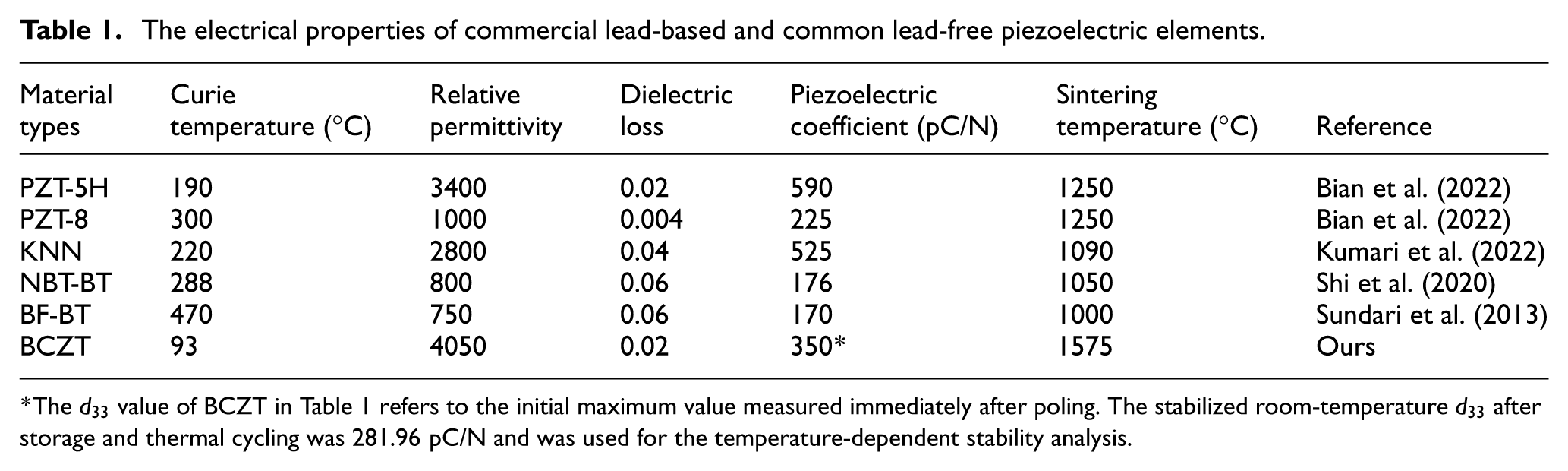
While lead zirconate titanate (PZT) ceramics have dominated this application, growing environmental regulations restrict their use due to persistent ecological risks associated with lead leaching during both manufacturing and end-of-life disposal processes. With increasing environmental concerns regarding lead-based piezoelectric materials, the scientific community has been intensively pursuing eco-friendly alternatives with comparable performance characteristics (Shi et al., 2023). Barium titanate-based lead-free piezoelectric ceramics have attracted considerable attention because of their environmentally benign composition and tunable phase structure. In this work, Ba(Ti0.8Zr0.2)O3-(Ba0.7Ca0.3)TiO3 (Zhao et al., 2022) abbreviated as BCZT was selected as the active piezoelectric material. By strategically substituting Pb2+ ions with Ba2+ and Ca2+ within the perovskite ABO3 structure, alongside optimizing the B-site ratios of Zr4+ and Ti4+, we engineered BCZT compositions that are situated near the morphotropic phase boundary (MPB). The freshly poled BCZT samples exhibited a direct piezoelectric coefficient (d33) of 350 pC/N. This value represents the initial d33 measured shortly after poling. After subsequent storage and thermal cycling associated with temperature-coefficient characterization, the stabilized room-temperature d33 was 281.96 pC/N, as discussed in Section 6.4. Therefore, the initial and stabilized d33 values are explicitly distinguished throughout this work. Importantly, even the stabilized room-temperature d33 value remains comparable to the lower range of widely used PZT ceramics for which d33 values typically vary from 225 to 590 pC/N (Gao, 2019).
We prepared (Ba0.85Ca0.15)(Ti0.9Zr0.1)O3 (BCZT) ceramics via the conventional solid-state reaction method. The freshly poled samples exhibited an initial maximum d33 is 350 pC/N, as shown in Figure 1. This value was used to confirm successful poling of the ceramic, while the stabilized d33 value after storage and thermal cycling was used for the temperature-dependent analysis. High purity oxide or carbonate powders, including BaCO3 (99%, Sinopharm Chemical Reagent Co., China), CaCO3 (99%, Sinopharm Chemical Reagent Co., China), ZrO2 (99%, Sinopharm Chemical Reagent Co., China), and TiO2 (99%, Tianjin Fuchen, China), were used as raw materials. These powders were wet milled in a nylon jar with zirconia balls for 5 h, followed by drying and calcination at 1200°C for 6 h in air. The calcined powders were subsequently subjected to a second ball-milling in anhydrous ethanol for 5 h. After drying, the powders were blended with 6 wt.% polyvinyl alcohol (PVA) and then uniaxially pressed into rings with an inner diameter of 7.5 mm and an outer diameter of 12.5 mm under a pressure of 150 MPa. The PVA binder was removed at 600°C for 2 h, and the pressed pellets were sintered at 1500°C–1550°C for 3 h in air (Figure 2).
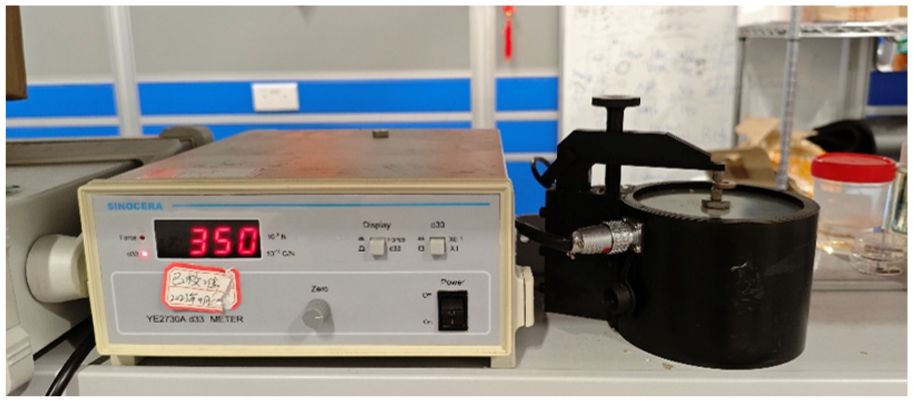
Direct measurement of piezoelectric coefficient, d33, measured immediately after poling (freshly poled, maximum value).
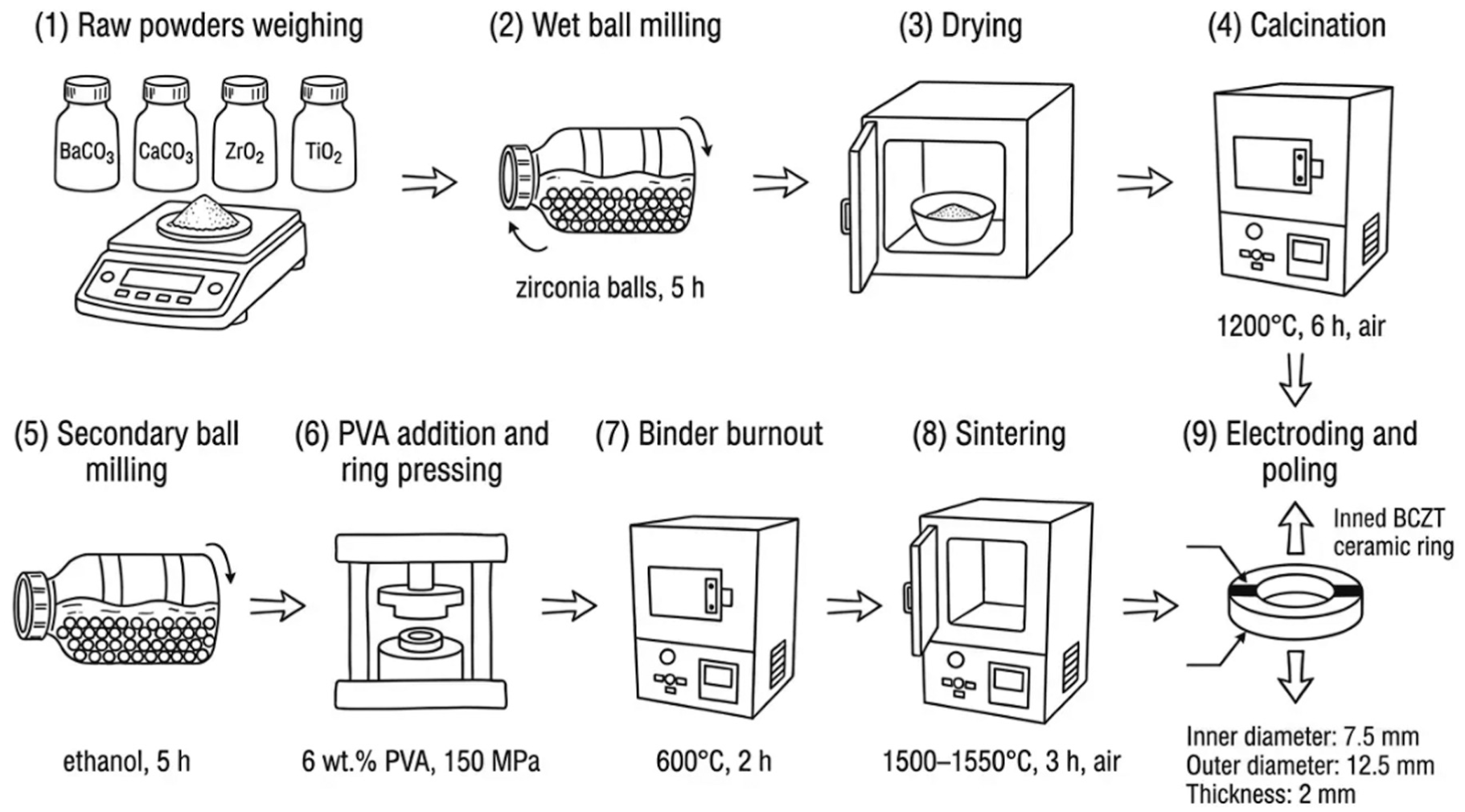
Schematic fabrication workflow of the lead-free (Ba,Ca)(Zr,Ti)O3 (BCZT) ceramic rings used in the piezoelectric accelerometer. The process includes raw-powder weighing, wet ball milling with zirconia balls, drying, calcination at 1200°C for 6 h in air, secondary ball milling in ethanol, PVA-assisted ring pressing at 150 MPa, binder burnout at 600°C for 2 h, sintering at 1500°C–1550°C for 3 h in air, electroding, and poling. The final BCZT ring had an inner diameter of 7.5 mm, an outer diameter of 12.5 mm, and a thickness of 2 mm.
As shown in the characterization images in Figure 3, the synthesized BCZT ceramics exhibit a uniform microstructure with well-developed grains. While some intergranular porosity is observed in Figure 3(c), the grain boundaries are distinct. In comparison, the reference PZT-5H sample (Figure 3(b)) displays a different grain morphology.
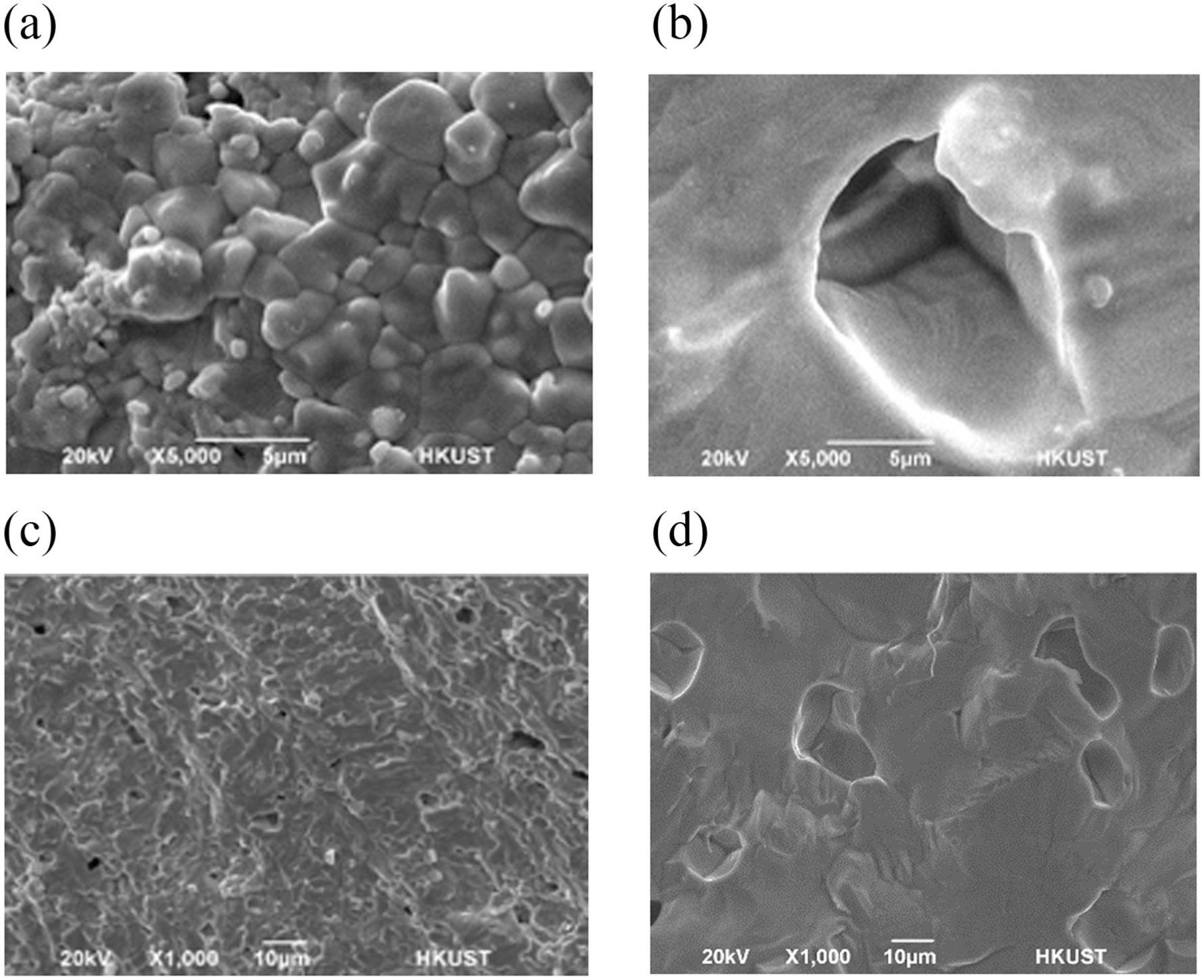
Comparative SEM micrographs of BCZT and PZT-5H ceramics at different magnifications: (a) BCZT at 5000× magnification, illustrating fine-grained microstructure with uniform grain distribution, (b) PZT-5H at 5000× magnification, showing coarser grains and distinct grain boundaries, (c) lower-magnification (1000×) view of BCZT, highlighting overall surface morphology and porosity, (d) corresponding 1000× image of PZT-5H, revealing denser packing and comparative grain arrangement. Scale bars: 5 (a and b) and 10 μm (c and d).
Figure 4(a) illustrates the frequency response of BCZT, showing the impedance spectra under different frequencies. The BCZT sensor exhibits resonant and anti-resonant frequencies of 582.3 and 618.6 kHz, respectively, which are almost twice as high as those of the PZT-5H sensor. These advantageous values indicate that BCZT-based accelerometers can operate at higher frequencies, potentially offering better performance in high-frequency applications. The polarization-electric field (P-E) hysteresis loop of the BCZT sample is presented in Figure 4(b), exhibiting a well-saturated behavior with a remanent polarization (Pr) of 9.8 μC/cm2 and a coercive electric field (Ec) of 3.2 kV/cm. Figure 4(c) presents the strain curve of the sample. The curve presents a slim butterfly shape. When the maximum electric field reaches 20 kV/cm, the strain exhibits a remarkable strain of 0.75% and the corresponding large signal piezoelectric coefficient is 3.25 × 10⁻⁴, highlighting the sample’s capability to generate a substantial piezoelectric response (Table 1).
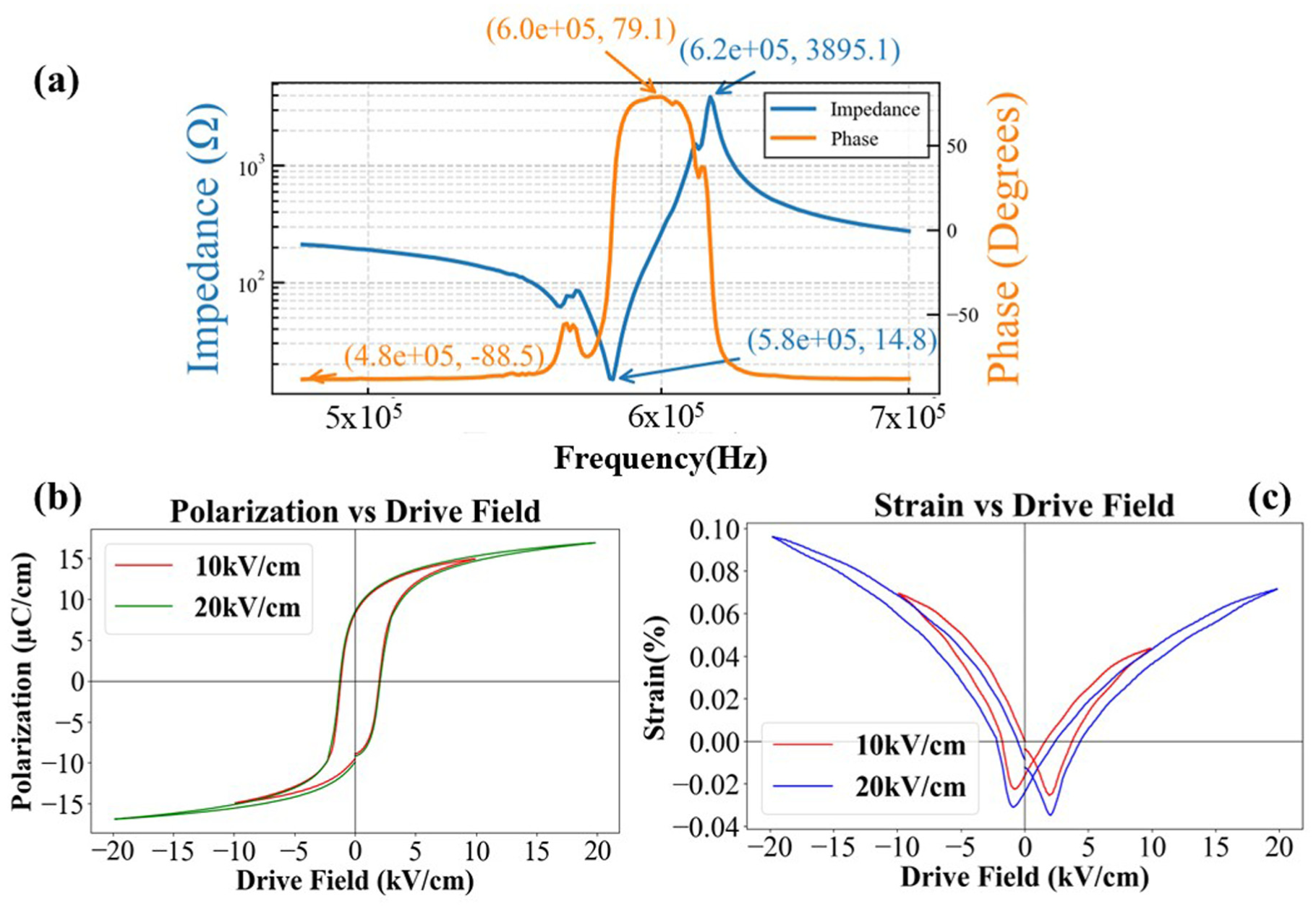
Frequency response and P–E loop measurement of the synthesized BCZT samples: (a) impedance and phase frequency response, (b) polarization–electric field (P–E) hysteresis loop, (c) strain versus drive field curve.
The electrical properties of commercial lead-based and common lead-free piezoelectric elements.
The
Accelerometer package design and read-out circuit
A cross-sectional view of the proposed accelerometer assembly is illustrated in Figure 5(a). The device comprises (1) a BCZT piezoelectric element optimized via finite element analysis, (2) a seismic mass that applies a proportional force under acceleration, (3) a base plate serving as the structural mounting foundation, (4) a pre-load spring to maintain a consistent compressive force, (5) a mounting system for mechanical integration, (6) readout circuits for signal integrity, (7) electrode connections for signal transmission, and (8) a stainless-steel housing with a hermetic sealing ring for environmental protection. These components are arranged in a compression-mode configuration, wherein acceleration applied to the base plate causes the seismic mass to exert a corresponding force on the BCZT element. This mechanical input is converted into an electrical output signal proportional to the applied acceleration. The assembly process was carefully controlled to maintain a uniform pre-load and achieve optimal sensing performance.
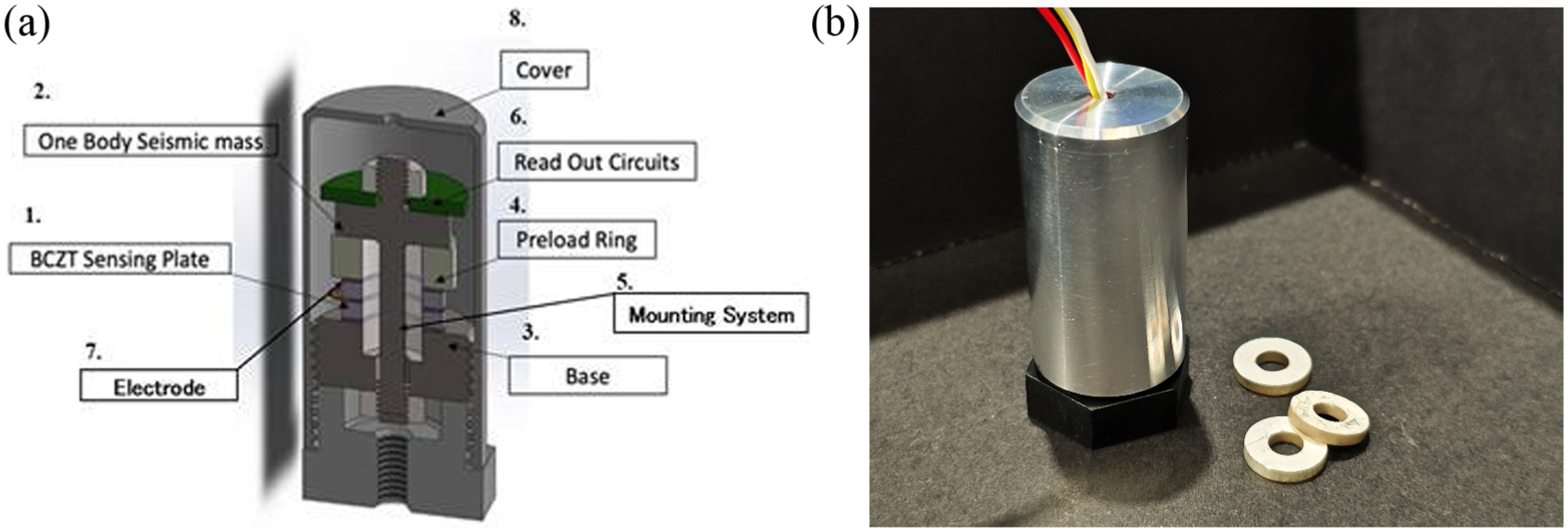
Accelerometer package design: (a) cross-sectional schematic of the accelerometer assembly, (b) photograph of the fabricated device and the BCZT ceramic rings.
To convert the charge output from the piezoelectric element into a measurable voltage signal, a custom-designed charge amplifier circuit has been made as shown in Figure 6. This circuit features an operational amplifier (U1: TLV9061DBVR) with high input impedance to minimize the loading effects on the input signal. The feedback network comprises a feedback capacitor (Cf = 10 pF) for charge-to-voltage conversion and a feedback resistor (Rf = 100 MΩ) to control the low-frequency response. To enhance signal conditioning, the circuit incorporates a low-pass filter (R1 = 10 kΩ, C1=1 nF) for high-frequency noise attenuation, a gain stage for improved sensitivity, and an output buffer to effectively drive subsequent stages or measurement equipment. The read-out circuit was implemented on a custom-designed PCB with careful consideration of parasitic capacitances, proper grounding, and shielding techniques to minimize electromagnetic interference. Component selection was optimized to ensure low noise performance throughout the system (Lanniel et al., 2021).
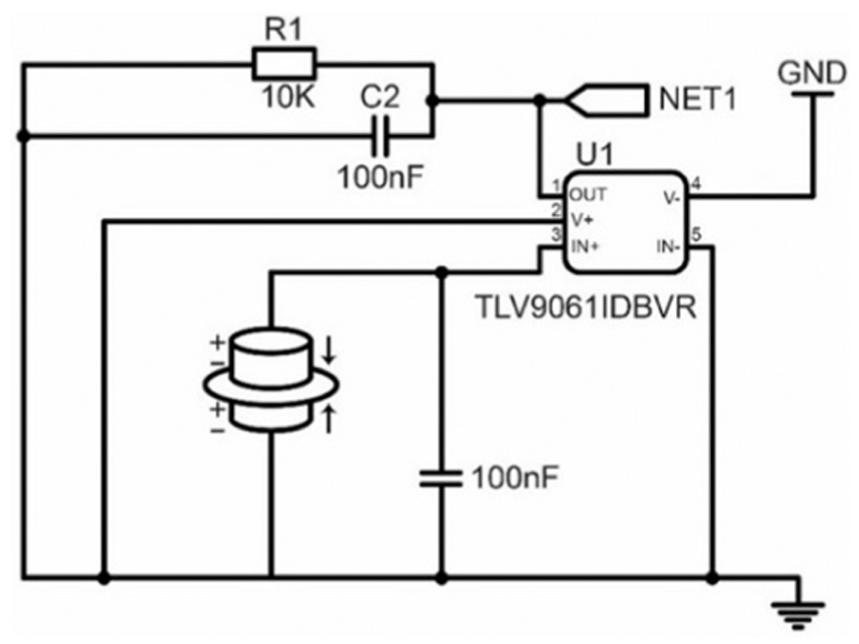
Accelerometer read-out circuit design.
Finite element modeling and structural optimization
Finite element modeling
The accelerometer was modeled using COMSOL, utilizing the specialized Piezoelectric Devices interface. The model geometry included the BCZT sensing element, conductive electrodes, and a seismic mass to capture the coupled electromechanical response, conductive electrodes, and a precisely defined seismic mass to ensure an accurate mechanical response. Three physics interfaces were integrated within the simulation framework: Solid Mechanics, Electrostatics, and the Piezoelectric Effect, allowing for a comprehensive analysis of the accelerometer’s performance. The properties of the BCZT material, including its elastic constants, piezoelectric coefficients, and dielectric permittivity, were derived from a combination of experimental data and established literature values to ensure accuracy and reliability.
Suitable boundary conditions were implemented to accurately simulate the operational characteristics of the accelerometer, incorporating fixed constraints, electrical connections, and acceleration inputs. A refined mesh was generated, with particular emphasis on regions of high-stress concentration, thereby ensuring the accuracy of the simulation results. A parametric sweep analysis was performed to systematically investigate the influence of BCZT element dimensions on the performance of the accelerometer, providing insights into design optimization. The parameters examined in this analysis included the following: Length (L): 1–10 mm, Width (W): 1–10 mm, and Thickness (T): 2 mm.
The following key metrics are utilized to assess accelerometer performance: (1) Sensitivity Analysis: Finite Element Modeling (FEM) was employed to investigate the geometric dependence of sensitivity. Figure 7(d) illustrates the linear relationship between acceleration and surface electrical potential, yielding a simulated peak sensitivity of 17.5 mV/(m/s2). This simulated value represents an idealized open-circuit response of the optimized sensing element and is therefore higher than the experimentally measured system-level sensitivity because packaging damping, interfacial losses, preload variation, and circuit parasitic effects are not fully included in the model. (2) Frequency Response Characterization: The resonant frequency exhibited an inverse relationship with structural dimensions, highlighting the inherent sensitivity-bandwidth trade-off where miniaturized elements achieved higher resonant frequencies at the expense of reduced sensitivity; (3) Linearity Assessment: Over an input acceleration range of 0–20g, percentage deviations from the ideal response were quantified, demonstrating that increased element thickness enhances linearity while concomitantly degrading sensitivity; and (4) Stability Evaluation: Larger elements demonstrated superior stability against thermal variations, as their increased volume reduces susceptibility to rapid temperature fluctuations. However, this robustness was accompanied by a degradation in frequency response characteristics. Collectively, these analyses delineate the multidimensional design constraints governing accelerometer optimization.
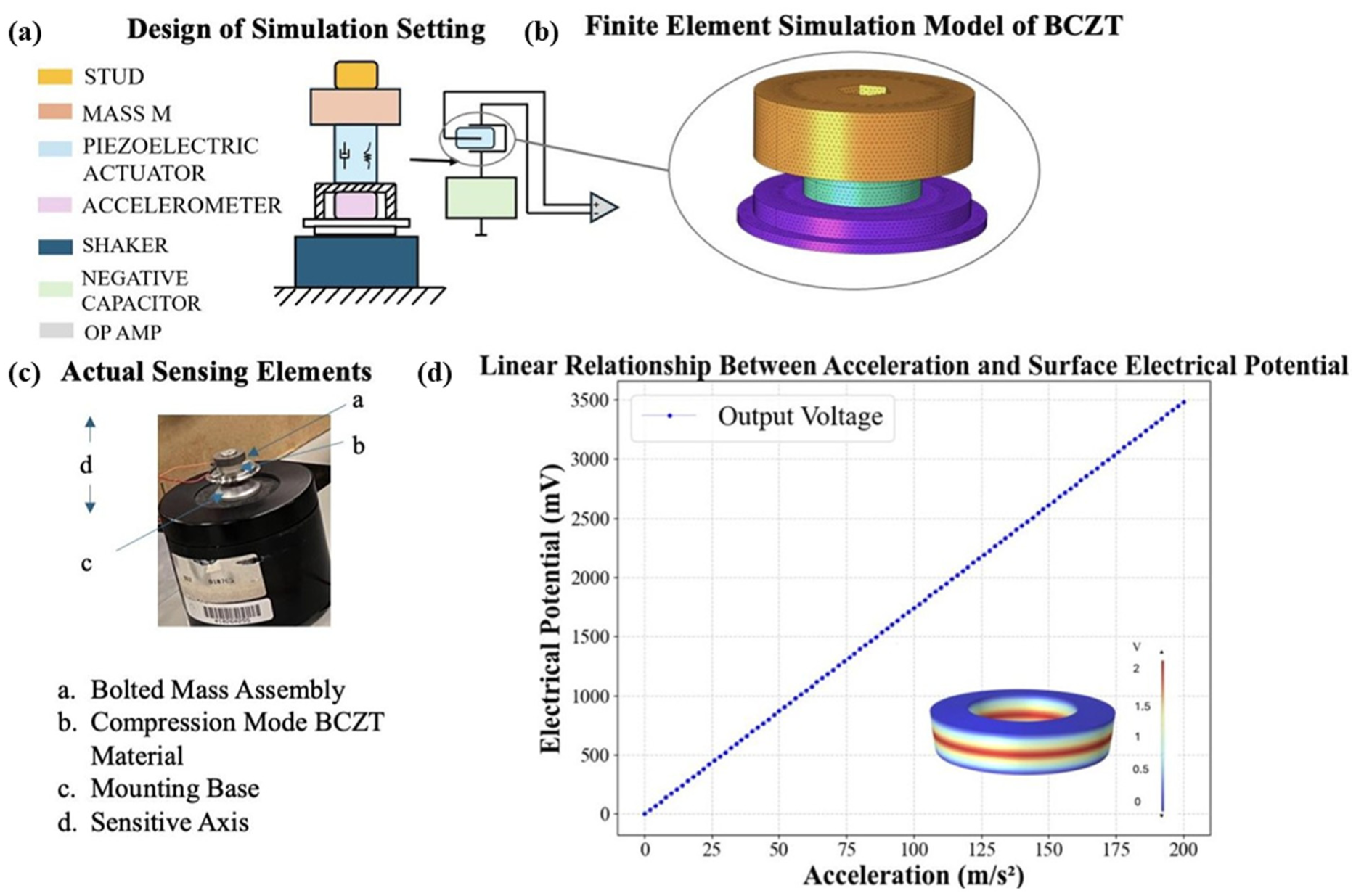
Finite element simulation model of BCZT & surface electric potential of BCZT material under varying accelerations: (a) design of simulation setting, (b) finite element simulation model of BCZT, (c) actual sensing elements, and (d) linear relationship between acceleration and surface electrical potential.
Structural optimization
Based on the FEM analysis, we identified an optimal sizing configuration for the BCZT-based accelerometer that effectively balances sensitivity, frequency response, linearity, and stability. The optimal dimensions for this configuration are as follows: Outer Radius is set at 6.25 mm, inner radius at 3.75 mm, and the thickness is maintained at 2 mm. This configuration demonstrated a simulated charge sensitivity of 57.9 pC/g, a structural resonant frequency of 784 kHz, a linearity deviation of less than 0.48%, and a cross-axis sensitivity below 1.1%. Here, 57.9 pC/g refers to the charge sensitivity of the piezoelectric sensing element, whereas the experimentally reported 10.61 mV/(m/s2) refers to the voltage sensitivity of the complete accelerometer system after charge-to-voltage conversion. This careful consideration of design factors contributes to the overall effectiveness and reliability of the BCZT-based accelerometer.
Comparative analysis of charge sensitivity between our proposed design and four other KNN-based compression mode accelerometers demonstrates that our design achieves the highest charge sensitivity among all compared implementations (Lee et al., 2023). However, when benchmarked against traditional lead-containing PZT accelerometers, there remains a performance gap in terms of overall sensitivity that warrants further optimization (Figure 8).
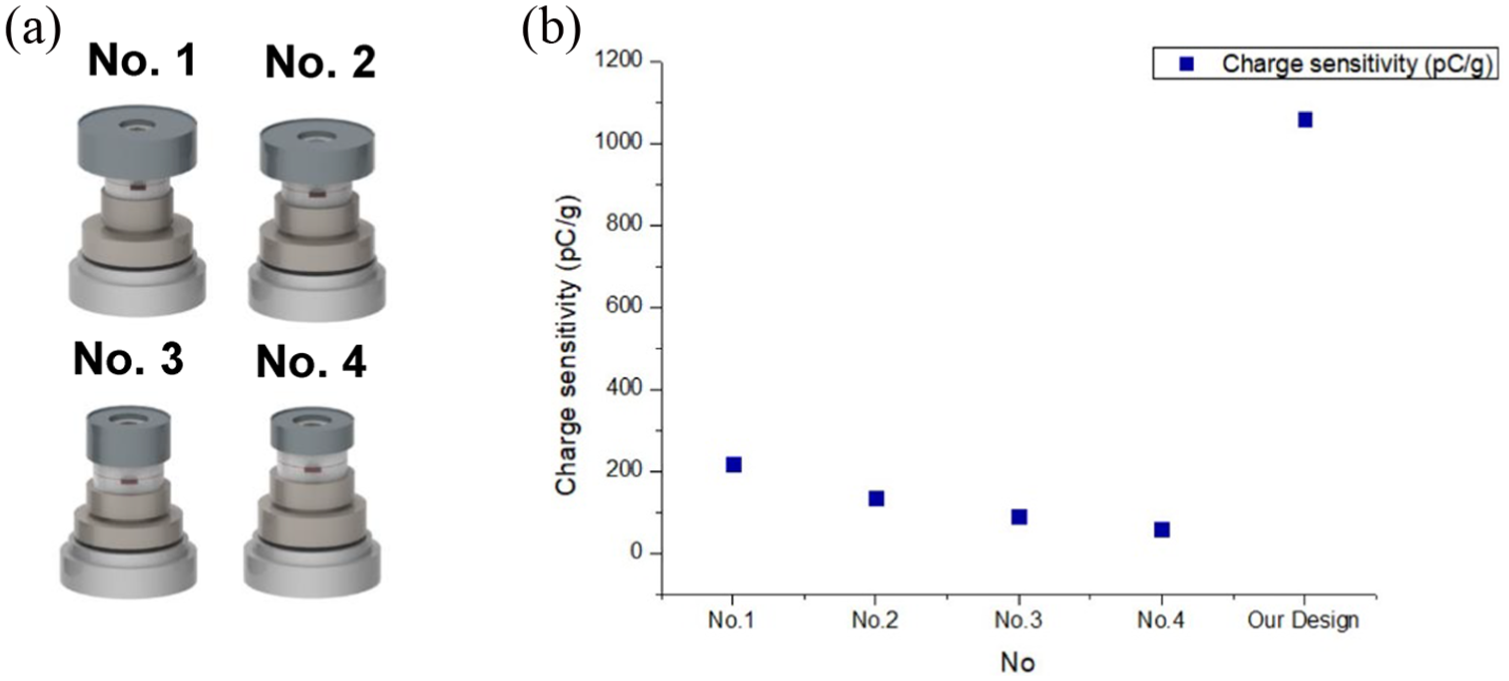
Sensitivity comparison among different lead-free accelerometer designs: (a) photographs of the four benchmark KNN-based designs (No. 1–No. 4), (b) charge-sensitivity comparison among the four benchmark designs and our proposed BCZT design.
Theoretical analysis of dual-element compression-mode sensing
The compression-mode BCZT accelerometer converts an axial inertial force into an electrical charge through the direct piezoelectric effect. For the thickness-direction response of a piezoelectric ceramic under one-dimensional compression, the linear constitutive equations can be written as:


where
For frequencies well below the first structural resonance, the compression-mode accelerometer can be approximated as a single-degree-of-freedom inertial system. The axial inertial force transmitted to the piezoelectric stack is:

where

This simplified relation is sufficient for sensitivity analysis because the experimental calibration was performed within the frequency range below the package resonance.
For a single BCZT ring under uniform axial compression, the generated piezoelectric charge is:

where

Therefore, the charge sensitivity of the dual-element compression-mode structure is:

In addition to piezoelectric charge, temperature variation can generate pyroelectric charge in each ceramic element. The thermally induced charge of the

where

Under a spatially uniform temperature variation, the thermally induced charges from the two oppositely poled BCZT elements cancel each other:

where

Therefore, sensitivity increases with

Where
Since the corresponding voltage sensitivity

To account for temperature effects on sensitivity, we introduce a linear temperature coefficient model:

Where S0 is the reference sensitivity at temperature T0, α is the effective temperature coefficient of voltage sensitivity, and T is the operating temperature. This first-order model is used here to describe the temperature dependence of the accelerometer response in the moderate operating range. Since the voltage sensitivity is mainly governed by the piezoelectric charge coefficient d33, effective seismic mass, and feedback capacitance, temperature-induced variations in d33 directly affect the output sensitivity. Therefore, the temperature-dependent sensitivity model provides a simplified but useful basis for evaluating thermal stability and for guiding possible temperature compensation of the read-out circuit.
Based on the above analysis, the performance of the BCZT accelerometer is evaluated using three key metrics: sensitivity, linearity, and stability. Sensitivity describes the electrical output generated per unit acceleration and reflects the combined effects of the piezoelectric coefficient, proof mass, stress transfer efficiency, and charge-to-voltage conversion gain. In this work, both charge sensitivity from the sensing element and voltage sensitivity from the complete read-out system are distinguished to avoid confusion between material-level and device-level performance.
Linearity describes how closely the output signal follows the applied acceleration over the tested acceleration range. For the proposed compression-mode structure, linearity is affected not only by the intrinsic piezoelectric response of the BCZT ceramics, but also by mechanical factors such as preload uniformity, contact condition, stress distribution, and package stiffness. A good linear response indicates that the inertial force is effectively transferred to the dual BCZT stack and that the charge output remains proportional to acceleration within the operating range.
Stability refers to the ability of the accelerometer to maintain consistent sensitivity under environmental and operational variations, especially temperature change. In the present design, stability is improved at both the material and structural levels. At the material level, the stabilized d33 value of BCZT determines the baseline piezoelectric response. At the structural and circuit levels, the symmetric dual-element configuration suppresses common-mode thermally induced charges, while the charge amplifier converts the acceleration-induced differential charge into voltage. As a result, thermal disturbance is reduced without sacrificing the acceleration response.
Overall, these three metrics are coupled: increasing the seismic mass or improving stress transfer can enhance sensitivity but may also influence bandwidth and package stability; improving mechanical symmetry and preload uniformity benefits both linearity and thermal stability. Therefore, the accelerometer design was optimized by considering the material properties, mechanical structure, and read-out circuit together rather than treating them independently.
Experimental results and analysis
To accurately characterize the sensitivity of the accelerometer, we implemented a carefully designed experimental setup incorporating a laser vibration measurement system. The configuration comprised an electrodynamic shaker to generate controlled vibrational inputs, a laser Doppler vibrometer for high-precision displacement measurements, a signal generator coupled with a power amplifier to drive the shaker, and a data acquisition system to record all output signals. During the measurement procedure, the accelerometer was rigidly mounted on the shaker table, while the laser vibrometer was precisely aligned with its housing to ensure accurate displacement detection. Controlled sinusoidal vibrations of predetermined frequencies and amplitudes were applied, and the accelerometer’s output voltage was recorded simultaneously with the vibrometer data. This protocol was systematically repeated over a frequency range from 10 Hz to 10 kHz, enabling a comprehensive evaluation of the accelerometer’s sensitivity across the target bandwidth.
Figure 9 illustrates the experimental configuration used for this assessment. The electrodynamic shaker is central to the arrangement, generating controlled vibrations across a specified frequency range, thereby providing a consistent input for the accelerometer. The laser Doppler vibrometer accurately measures the vibrational displacement of the accelerometer housing, enabling a direct correlation between the applied vibrations and the accelerometer’s output response. The signal generator and power amplifier work in tandem to produce sinusoidal vibrations, which are critical for sensitivity measurements. Additionally, the data acquisition system captures the output signals from both the accelerometer and the vibrometer, facilitating performance analysis. This systematic approach ensures comprehensive evaluation of the accelerometer’s response across its operational range.
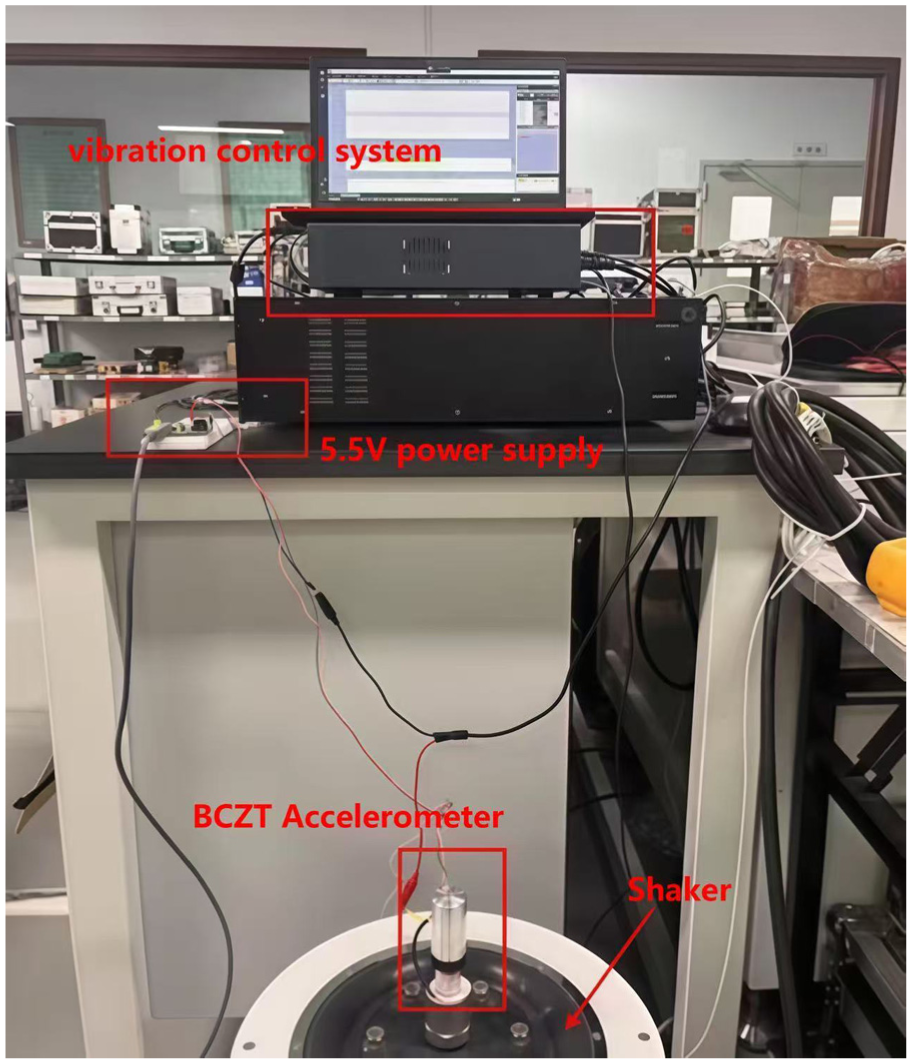
Experimental setup for measuring accelerometer sensitivity.
The accelerometer sensitivity was calculated using:

Where:
Figure 10 illustrates the measured sensitivity of the accelerometer as a function of frequency, showing the frequency-dependent voltage sensitivity within the tested range. The sensitivity, expressed in mV/(m/s2), demonstrates how the accelerometer performs across a spectrum of frequencies.
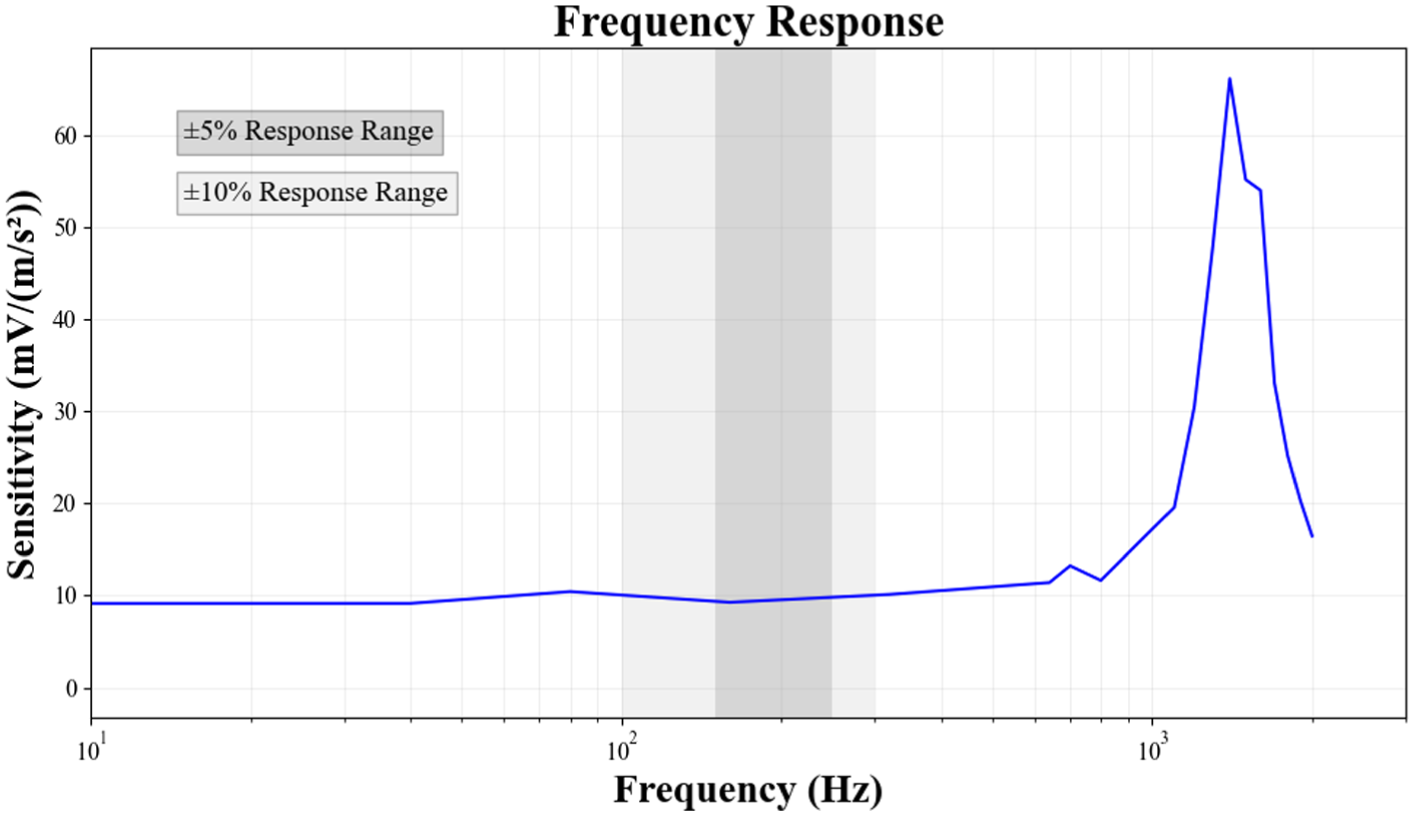
Sensitivity (mV/(m/s2)) versus frequency (Hz).
The data indicates that the accelerometer maintains relatively consistent sensitivity over the tested frequency range, confirming its suitability for dynamic vibration measurements within the calibrated bandwidth. This characteristic is crucial for applications requiring precise measurements in dynamic environments (Crenna et al., 2023; Rahim et al., 2015).
Figure 11 characterizes the accelerometer’s linearity performance, by plotting measured sensitivity against applied acceleration levels (g). This response illustrates the linear behavior of the device across various acceleration inputs, affirming its operational reliability.
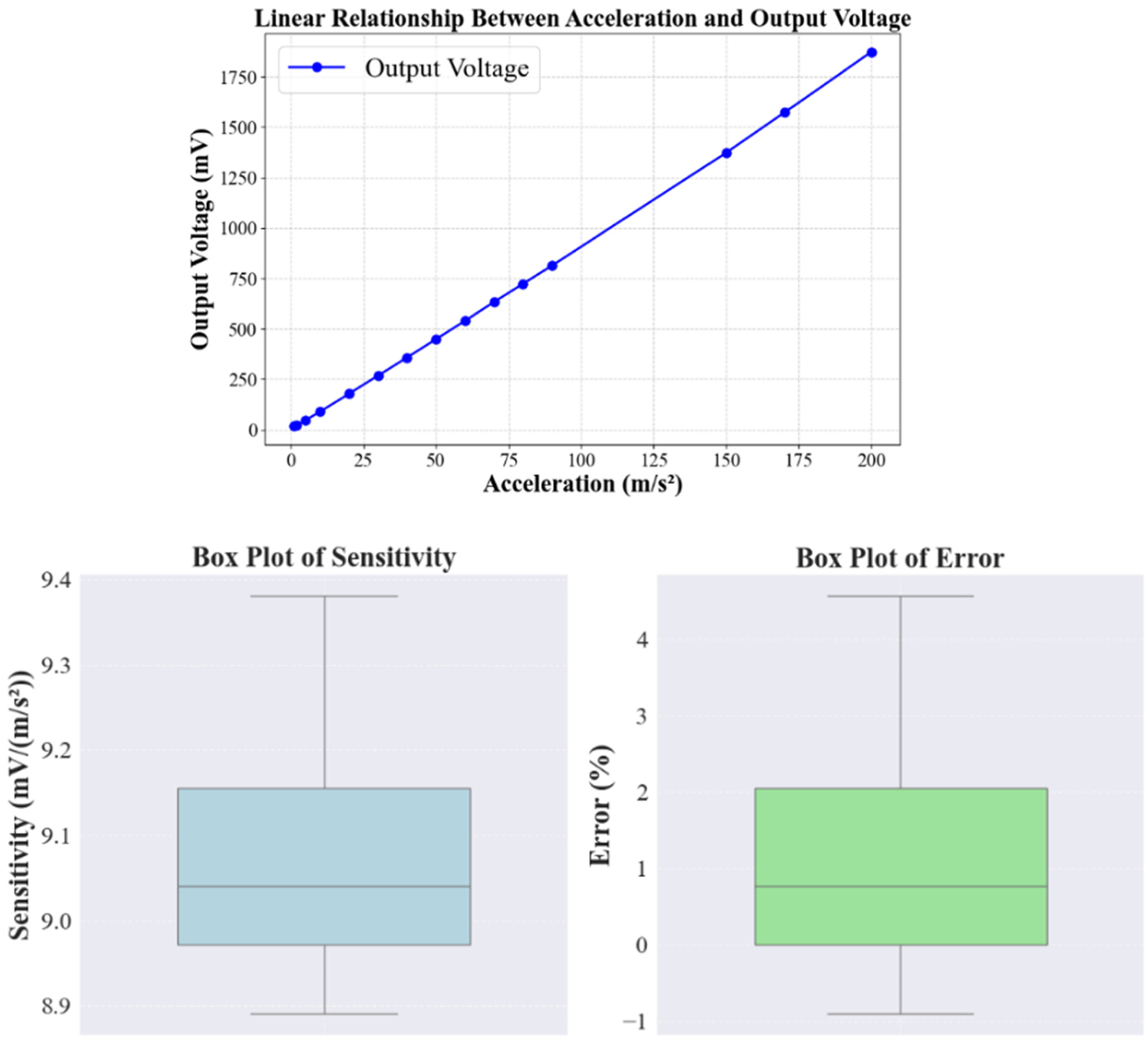
Output voltage versus acceleration level.
The experimental results demonstrate a strong linear relationship between sensitivity and acceleration, with Pearson’s correlation coefficient approaching unity for all tested sensor prototypes. This near-unity correlation indicates that the accelerometer’s output charge is directly proportional to the applied acceleration, thereby validating the effectiveness of the design in delivering accurate measurements.
The temperature-dependent behavior of the piezoelectric coefficient
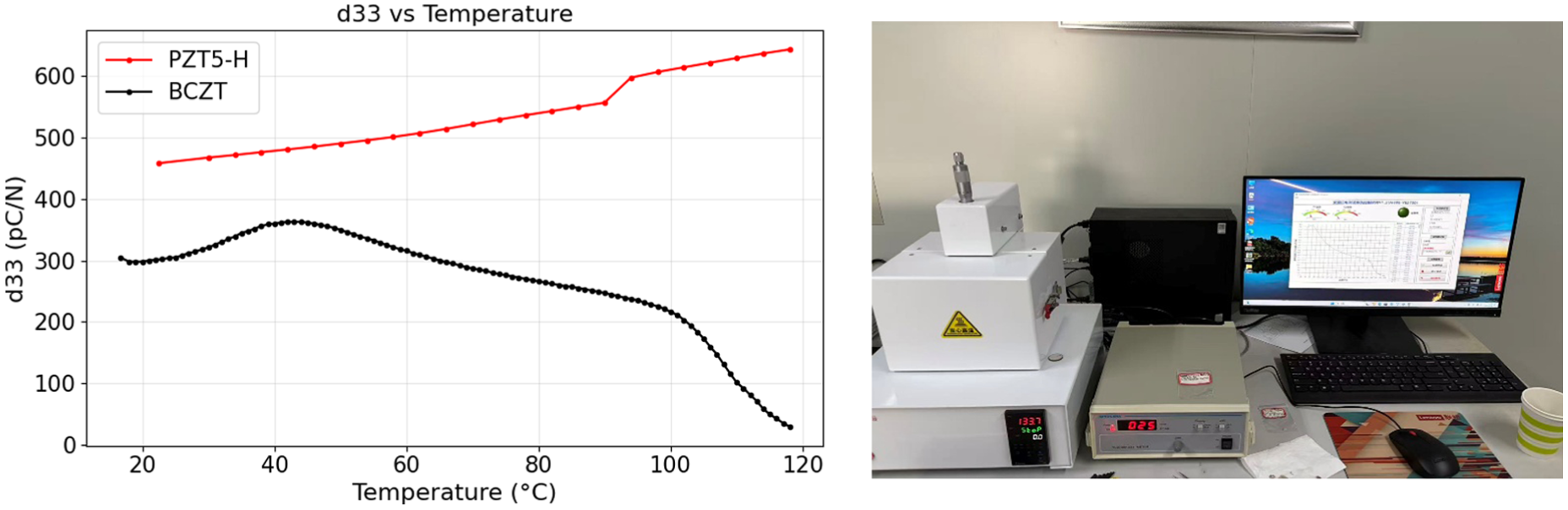
Temperature dependence of piezoelectric coefficient
At 70°C, the
Although the maximum test temperature in this work is 100°C, many vibration monitoring scenarios for industrial equipment and vehicle/aerospace structures place the sensor electronics in non-hot zones (e.g. on housings, brackets, or protected compartments), where the ambient temperature is typically below ∼85°C–105°C. Therefore, the investigated range (24°C–100 °C) is relevant for these applications. We acknowledge that for true high-temperature sensing (e.g. >150°C), BCZT with Tc
Significantly, BCZT outperforms even select lead-based counterparts. For instance, while (Pb0.97La0.02) (Zr0.95xSnxTi0.05)O3 antiferroelectric thick films (x = 0.20) exhibit a significant electrocaloric strength (ΔT) decline from 33 K at 25°C to near-zero above 100°C (Hao et al., 2015), BCZT maintains a substantially narrower d33 fluctuation (<16% relative to room temperature) up to 60°C. Nevertheless, their long-range operational stability remains constrained by accelerated degradation of piezoelectric coefficients beyond room temperature, highlighting a critical challenge for high-temperature applications where performance consistency at extreme thermal boundaries is paramount.
Conclusion
This study addressed the challenge of developing a high-performance, lead-free piezoelectric accelerometer in compliance with environmental regulations. We systematically investigated the design, fabrication, and sensing characteristics of a BCZT (Barium Calcium Zirconate Titanate)-based compression-mode accelerometer. Finite element method (FEM) simulations enabled us to structurally optimize the BCZT sensing element, achieving a balanced trade-off among sensitivity, frequency response, and thermal stability. Experimental characterization reveals that after storage and thermal conditioning during temperature coefficient measurement, the piezoelectric coefficient
To mitigate thermal instability from the pyroelectric effect, a symmetric dual-element configuration was adopted, effectively canceling thermally induced charges. The fabricated accelerometer achieved an experimental voltage sensitivity of 10.61 mV/(m/s2), with an output error within 2% and an experimental linearity error of ±7.08%FS. The FEM-optimized structure predicted a structural resonant frequency of 784 kHz and a linearity deviation below 0.48% under idealized simulation conditions. Frequency response analysis revealed a flat operational bandwidth comparable to commercial PZT-based accelerometers, validating the design approach.
BCZT ceramics exhibited superior thermal stability, with a d33 variation under 16% up to 84°C, outperforming other lead-free alternatives (e.g. BCZT–MgO, 14.18% energy density variation) and selected lead-based systems (e.g. Pb0.97La0.02 (Zr0.58Sn0.335Ti0.085) O33, 15% variation). These results support BCZT’s potential for lead-free vibration sensing in thermally variable automotive, aerospace, and industrial monitoring environments within moderate-temperature operating ranges.
The strong linearity between charge output and acceleration, along with the sensitivity–resonant frequency trade-off consistent with FEM predictions, affirms the reliability of the BCZT-based design. BCZT thus emerges as a sustainable, high-performance alternative to lead-based piezoelectric for robust sensing in thermally variable environments.
Supplemental Material
sj-csv-1-jim-10.1177_1045389X261457217 – Supplemental material for Lead-free piezoelectric BCZT accelerometer: Design, optimization, and performance analysis
Supplemental material, sj-csv-1-jim-10.1177_1045389X261457217 for Lead-free piezoelectric BCZT accelerometer: Design, optimization, and performance analysis by Yuze Yang, Yi Zheng, Xiaodong Yan, Peng Wang, Mian Tao, Yongsheng Gao, Chaoyang Shi, Zhaoye Qin and Zhengbao Yang in Journal of Intelligent Material Systems and Structures
Supplemental Material
sj-csv-2-jim-10.1177_1045389X261457217 – Supplemental material for Lead-free piezoelectric BCZT accelerometer: Design, optimization, and performance analysis
Supplemental material, sj-csv-2-jim-10.1177_1045389X261457217 for Lead-free piezoelectric BCZT accelerometer: Design, optimization, and performance analysis by Yuze Yang, Yi Zheng, Xiaodong Yan, Peng Wang, Mian Tao, Yongsheng Gao, Chaoyang Shi, Zhaoye Qin and Zhengbao Yang in Journal of Intelligent Material Systems and Structures
Footnotes

Funding
The authors disclosed receipt of the following financial support for the research, authorship, and/or publication of this article: This research was financially supported by the Hong Kong Research Grants Council (GRF Project No. 11210822 and Project No. 16214025), and the Innovation and Technology Fund (Project No. MHP/013/23) from Innovation and Technology Commission of Hong Kong Special Administrative Region.
Declaration of conflicting interests
The authors declared no potential conflicts of interest with respect to the research, authorship, and/or publication of this article.
Data availability statement
The data supporting the findings of this study are available from the corresponding author upon reasonable request.
Supplemental material
Supplemental material for this article is available online.
References
Supplementary Material
Please find the following supplemental material available below.
For Open Access articles published under a Creative Commons License, all supplemental material carries the same license as the article it is associated with.
For non-Open Access articles published, all supplemental material carries a non-exclusive license, and permission requests for re-use of supplemental material or any part of supplemental material shall be sent directly to the copyright owner as specified in the copyright notice associated with the article.
