






Abstract
Aim. This article gives an overview of how commercial computer game technology was introduced for training, education and decision support within the British Army.
Value of the article. It records the narrative of the introduction and development of first person shooter computer games into the British Army; an area where developments are not routinely reported outside the closed world of defence training.
Methodology. The research was based on interviews of key staff who worked in procurement at the Defence Academy of the UK and for the MoD during 2002 to 2012. The interviewees included two officers, an experienced defence contractor and a senior civil servant. These interviews were given on the understanding that the views expressed would not be individually attributable as they might not represent those of their current employers. The authors were also given access to a unique collection of documents, some of which were not publically available, but are held in the archives of the UK Defence Academy. These are cited in the bibliography.
Limitations of the article. This article cites the evidence from the time that supported the continued use of what was a radical and contentious new way of training. Since the introduction of Virtual Battle Space 2 into the British Army, further research into the effectiveness of games based training in the military has been published.
Analysis. Games based training has become a significant part of the training cycle for many parts of the British Army. These games have limitations, but are the only alternative to real operations for some types of training. However, the difficult topic of what is the correct proportion of games based training to other types? is a contested area within defence training in the UK.
Conclusions. Initial evaluations on the effectiveness of the use of computer games in preparing UK forces for operations in Iraq and Afghanistan showed they had a significant positive impact. The first experience of the British Army with these games has secured the long-term application of this technology and it is unrealistic to imagine future military training without some degree of games technology.
Keywords
The military has a long tradition of using games for military training and decision support as outlined by authors such as Dunnigan (1979), Perla (1990) and Smith (2010). During the 20th century, wargames were an embedded part of military training and decision support. The military use of computers for gaming started with the strategic level games, for example the SIMULATION OF TOTAL ATOMIC GLOBAL EXCHANGE used by the American Department of Defence in 1962 (Wilson, 1970). The American counter insurgency wargame TACSPIEL (Curry, 2009) epitomized the problems with using wargames with extremely detailed rules derived from operational research for training. Each move in TACSPIEL took two actual days to plan, execute and document each move; where each move represented just fifteen minutes in real life (Allen, 1987; Curry, 2009). Whilst TACSPIEL was invaluable in developing successful new doctrine for counter-insurgency during the Vietnam War, it was too slow to be an effective training tool.
During the 1980’s, the military around the world took to using computers to assist in military training (Michael & Chen, 2006). However, the cost of the hardware, the lead time for development and the lack of flexibility for each bespoke solution limited the availability of computers for military training. It was possible to build large simulators, to replicate the experience of flying an aircraft or driving a tank, but the military requirement to continually develop and modify the real combat systems meant that any simulators used had to be updated at the same time to maintain their training value. It was the arrival of the widespread use of personal computers, coupled with the application of commercial off the shelf software from commercial games that have made military training games on computers potentially readily available as a cost-effective training solution (Michael & Chen, 2006).
Using computer games for training has some intrinsic conceptual issues. Corbeil (2012) classified computer games as puzzles rather than games and suggested that players could become focussed on solving the puzzle at the expense of learning optimum real world strategies. However, the military practise of adopting computer games demonstrates that they do not see this as a major issue. Military training games are always supervised to ensure the participants are taking actions that would be of value in the real world. The computer game as puzzle point really applies only to pre-programmed single player games. Games like VIRTUAL BATTLE SPACE 2 (VBS2) can be just as adaptive as adversarial manual games when used with multiple players and/or active umpires. Armed forces worldwide are rapidly embracing military simulation and virtual training as a critical tool for enhancing training capacity, increasing training capability and in the process reducing training costs compared to live training (Visiongain, 2010).
This article examines the current trends in using computer based training games as an integrated part of the military curriculum by examining a detailed example from the British Defence Academy. The simulation laboratories at the Academy are used for research and for training staff in using VBS2 effectively for training. The British Defence Academy is responsible for education of the command staff of the British Army forces and supporting civilian staff.
Background
Military Training systems are normally divided into three areas:
Live simulations, with real troops, real equipment, and on real terrain, but the weapons have simulated effects. This is the type of training most soldiers would be familiar with, fighting across training areas firing blank rounds of ammunition.
Virtual Simulation, with live troops, but using simulated equipment in a simulated virtual environment. This is using real troops who are using computer equipment indoors to fight in what is effectively a computer game.
Constructive Simulations use simulated troops and a simulated (normally abstracted) environment. Any military hobby board game would fall into this category.
This article focuses on the area that has seen the most rapid change in the past few years; the use of virtual simulations, with real troops using networked computer based systems to conduct significant amounts of their training.
The Role of Commercial-Off-the-Shelf-Commercial-Technology in Virtual Simulations
Modelling and simulation has been extensively used in the defence training, analysis and procurement activities by the Ministry of Defence [MOD] (Macedonia, 2002; Murray, 1987; Read, 1999). However, significant capital and revenue expenditures are involved in maintaining these systems. The systems are expensive to buy and to maintain. In addition, they take a long time to go from initial requirements to application for training. The defence community has a growing interest in using off-the-shelf-commercial games technology to produce the equivalent defence training capability at reduced cost. The use of games technology was of particular interest as readily available and affordable (Roman & Brown, 2008).
The US Marines Use of the Computer Game DOOM
The US Department of Defence experimented with commercial games at an early point in the development of computer games. The development of products as a collaboration between the military simulation and games industries began in 1980 with the development of the US Army Bradley Trainer. Atari produced the arcade game BATTLEZONE, which used a wireframe pseudo 3D environment. This was adapted by the US Department of Defence a year later into a BRADLEY INFANTRY FIGHTING VEHICLE simulator with the software modified to include missiles and helicopters (Scott, 2007). The most notable element of this experiment was that the hand controller used in the game was a slightly smaller reproduction of the actual gunner’s controller (later reused by Atari with the popular STAR WARS (1983) game). This was however only an early experiment as it is believed that only two were actually made (Scott, 2007).
Later, the Commandant of the US Marine Corps issued a directive on 12 April 1997, about Military Thinking and Decision Making Exercises. This set in place a policy that American government owned computers could be used for approved PC-based wargames in order to develop decision making skills (Krulak, 1997). Following this directive, a number of officers at the Automated Information Systems Office at Quantico, Virginia, USA, set about modifying a copy of the commercial game DOOM, released in 1993 by id Software. This permitted low level fire team tactics and procedures to be practised by US Marines on a local network of 4 PCs. While this attracted much attention, especially in the press, its greatest value was in stimulating more research into advanced networked military training systems such as SIMNET (Lenoir & Lowood, 2003).
The capability of the commercial games industry supersedes that of the military sector. Rapid advances in PC hardware, in particular low-cost, but high performance PCs for graphics and sound, mean the defence community is not the driving force in IT development. The drive of market forces means that the key developments in graphics, animation, sound and visualization happen in the commercial games sector first.
DIVE, the MODs First Steps
The DISMOUNTED INFANTRY VIRTUAL ENVIRONMENT was a project initiated as part of the UK’s MoD (Ministry of Defence) Combat Readiness Research Program in 2002. It was recognized that, to understand the elements to be included in the Future Infantry Soldier Technology Programme, a novel approach would be needed. The normal process of establishing the requirements at a high level and then inviting industry for expressions of interest, examining manufacturer’s prototypes, conducting trials, etc., would be far too slow and cumbersome. We needed a virtual environment in which the various options could be tested quickly in order to whittle down to a manageable figure the huge number of different options for the Future Infantry Programme.
For example, part of the requirement was to develop a new sight for the underslung grenade launcher in order to allow the soldier to accurately put a grenade through a window at 100 metres. Conducting trials of this sort of capability in real life would have been extremely expensive (and dangerous). Firing multiple grenades at windows using a number of different experimental weapon sights was likely to require a large number of buildings, as well as having stringent safety precautions to avoid accidents.
A plethora of different potential real world equipment options were explored in the DIVE software produced by QinetiQ and Maverik Games. The software was a modification of the then very popular HALF LIFE game. This consisted of a virtual copy of Middle Barn Close, a small part of the British Army’s extensive urban training village Copehill Down (See figure 1). In this virtual environment, real soldiers could use the software for the virtual trial, which could then be compared to trials in the real training terrain.
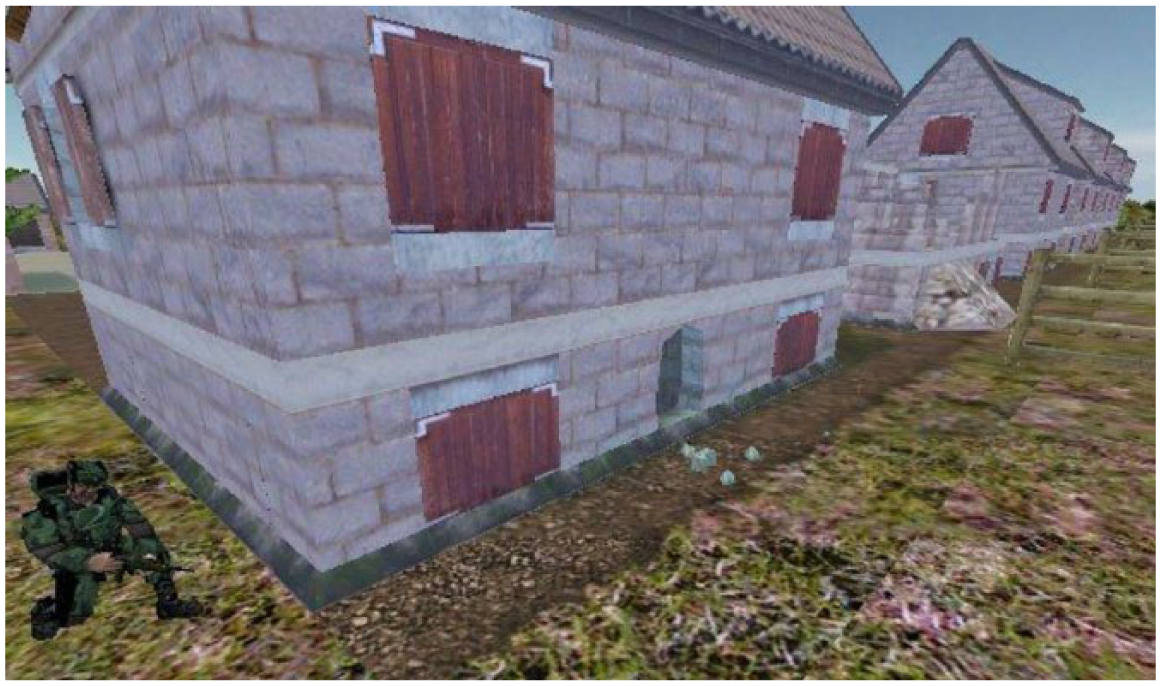
Middle Barn Close, a virtual representation of a real British Army training area. Note the wooden shutters over the windows, which can be opened in the game. Screenshot by Tim Price.
Analysis of the usage of the software during the trial showed that it continued to be used by the soldiers after each day’s formal trial had finished (Antolik, 2005). This indicated that it was extremely popular with the trainees and training staff made anecdotal assertions that such a system would be valuable for training.
The development of the Future Land Operating Concept (FLOC) Paper 2 in 2003 directed that the scope and frequency of urban training must increase and become routine at all levels (Ministry of Defence, 2003). The FLOC identified that a section level (8 man) urban computer simulation training system would help alleviate the difficulty most infantry battalions had in conducting urban training due to the shortage of facilities and cost constraints.
A number of specific trials were then carried out in order to establish if the training in the synthetic environment was actually beneficial and, if it was, what the correct mix of virtual and synthetic training should be. These trials were conducted in DIVE and then repeated in the identical live training area of Middle Barn Close and the results compared. The report stated:
The key findings of the trial are that both trainers and trainees consider the DIVE simulation a valuable aid to learning and rehearsing… for urban operations. Users responded increasingly more favourably as their exposure to the system and its capabilities increased. Especially valuable was the representation of weapons and systems’ capabilities that cannot be represented in conventional urban training such as grenades (hand-thrown and underslung), suppression, shooting through cover and the effects of casualties. The most significant benefits were found to be from the in-game overview and after action review (AAR) functions. (Antolik, 2005, p. 3)
A number of recommendations were made, the main one being that the concept be developed further, especially as the HALF LIFE game engine only supported a terrain that was just over 200 metres by 200 metres. Such a small virtual area placed undue constraints on tactical decision making, even in the constrained nature of the urban environment, where a battle is often fought within only a few streets. The HALF LIFE 2 engine, which had just been released in 2004, was about 830 metres by 830 meters, an area some 16 times larger (see figure 2).

Middle Barn Close updated to the HALF-LIFE 2 game engine. Screenshot by Tim Price.
This modification was carried out, but although the trial validated the training experience between virtual and live environments, a number of additional factors were ignored when considering the utility of this as a training capability. These ultimately proved insurmountable and the HALF LIFE 2 (DIVE2) modification of Middle Barn Close was never fully completed. These factors will be discussed later.
Realism Versus Training Value
As part of the development of a specific version of the commercial game for military training use, the military considered a number of modifications to be essential (Mouat, 2005). For example, the avatars in the game had to look like soldiers with the correct uniforms and equipment in order to create more immersion in the training than was likely to occur if the gas-masked police figures with full body armour, using science-fiction weapons, from the commercial game HALF LIFE 2 were used instead.
The weapons had to fire realistically. That is they had to accurately portray the characteristics of the real weapons with rate of fire, ammunition magazine capacities, time taken to reload and the dispersion radius of the bullets if the weapon was fired on automatic. The sight picture needed to be accurate so the user saw the same picture as if they were looking down the real weapon sight, rather than the floating cross-hairs system used by most commercial games. The virtual weapon also needed a safety catch, as safety training is a fundamental part of weapon training.
The way damage was allocated in the game was also modified. In the game it was a system of hit points where the player’s avatar was fully functional until the number of hit points reached zero, at which point the avatar died. This was replaced by a more functional approach based on hit location so, for example, if the avatar was shot in the arm, it dropped its weapon. If it was shot in the leg, it fell over and depending on the severity of the injury, could only crawl very slowly.
Conceptually, the changes to the hit location system were logical, but unfortunately other elements from the game remained unchanged. When these modifications and the game structure elements were put together, it produced some undesirable results for a military training system. An example of one of these was when the hit location modification was combined with the game method of play called team deathmatch in which the game ended when all the opposing forces were eliminated. This led to the users fighting in the game for some time until it appeared that no enemy was left standing. The game however did not stop and the users realised that those enemy who were shot in the leg were disabled, but were regarded by the game engine as still alive, so the game did not end. The practical effect of this was to have created a training system where the only way to win was to go around shooting the enemy wounded. This virtual breach of international law was seen as unacceptable practise in training by the British Army.
Examination of these issues led to a much greater understanding of the detailed requirements for a virtual training system (Mouat, 2005). Considerable discussion took place about the need or even the desirability of being able to vary or exaggerate elements of the virtual training environment in order to bring out specific training issues. An example of this was the heightened danger of friendly fire casualties in an urban environment. In the commercial game it was possible to turn off friendly fire, so that users on the same side were unable to accidently (or deliberately) kill each other. This was obviously not used in military training, but the fact was that it was comparatively easy to kill a user on the same side and, at the same time, extremely difficult in the complex urban terrain to identify who or what was responsible. Friendly fire during current operations in urban combat is a real problem and prevention is a vital training objective. This led to the concept of having an alarm that paused the game and specifically identified the user guilty of a friendly fire incident, in order to bring about the desired training behaviours.
JCOVE
The British Army investigated the use of Commercial Off The Shelf (COTS) games for military training use for a number of years as part of an on-going research project funded by the MOD central staff. A number of games were evaluated and had potential for use in training. Some were employed in limited numbers for specific projects, such as DANGEROUS WATERS, but by far the most successful and widely used was JCOVE (based on the VIRTUAL BATTLESPACE 2/ARMED ASSAULT commercial computer game).
The on-going requirement for better training opportunities in urban warfare continued to have a high priority over the next few years, especially given the current military operations in Iraq and Afghanistan. This led to a number of studies being carried out as part of the Ministry of Defence Output 3f Combat Readiness Research Programme. These identified many areas where improvements to low level and unit training could take place, such as the construction of mini-urban training areas near barracks. These were however extremely costly and the planning application process necessary in order to obtain authority to build such facilities was very lengthy and time consuming. Given the pressure on budgets and the tempo of current operations, no political will developed to make the long term (more than 10 years) investment decisions required to embark on such an ambitious infrastructure project. The UK was involved in two wars and had no time or money to plan beyond these conflicts.
One recommendation that was approved however was for a computer based low-level trainer optimised for fighting in an urban environment. The capability, called the UNIT BASED VIRTUAL URBAN COMBAT TRAINER (UBVUCT), was sponsored and funded as part of the Ministry of Defence Equipment Programme. This meant that funding and an endorsed requirement became available – the essential ingredients towards getting a project funded. The chief difficulty, however, was that the level of funding was quite insufficient to permit the vision of having a training classroom in every unit, each with about 20 PCs on which to conduct training.
Against the background of the byzantine nature of the bureaucracy in defence procurement, British soldiers were fighting and dying in Iraq and Afghanistan. The recognition that improved training was needed was addressed by applying for emergency funding as an Urgent Operational Requirement (UOR). UOR funding did not come from the Defence Budget, but instead came directly from the Treasury Department. This was naturally an attractive alternative as, if approved, it allowed for a much shorter procurement process.
However, a decision still had to be made concerning what software offered the best solution in order to provide the necessary training capability. Already in the intervening period the nature of the war had changed. Soldiers were being withdrawn from the cities of Iraq and casualties had started to rise from the enemy use of roadside Improvised Explosive Devices (IEDs) in Afghanistan. This meant that the emphasis for the training solution had shifted from explicitly urban to that of primarily convoy training, with some important urban elements. One consequence of this was that a simulation only capable of a terrain size of 800 metres square, such as DIVE2, was going to be hopelessly inadequate for convoy driving drills. A soldier driving a virtual truck would drive to the edge of the virtual world in less than a minute.
America’s Army
During this period a number of COTS first person computer games were available with an emphasis on realistic modern military operations. The US Army had even modified the popular UNREAL games engine in order to produce a modern military game to introduce potential recruits to life in the military, called AMERICA’S ARMY. This was developed and extended from its original purpose into a virtual training environment where, for example, it was modified to provide an extremely low cost trainer for the Javelin anti-tank system. At the same time, a political drive also arose in the US to be seen to be fighting in partnership with other nations, so the UK, among others, was offered AMERICA’S ARMY free of charge as part of an initiative referred to as COALITION WARRIOR (Mouat, 2005).
The DIVE experience had, however, highlighted the fact that a useful training system was more than just having a suitably modified games engine, with player avatars running around in British uniforms firing British weapons. Long experience in running training systems against the rapidly changing nature of the current operations in Iraq and Afghanistan had shown that the one constant was change. New weapons, new equipment and new tactics, techniques and procedures all conspired against any system that was not inherently flexible and easy to modify.
In order to illustrate this it is best to consider the example of training soldiers what to look for when driving on patrol on the outskirts of a city. When driving down a road in the simulation, the scenario has the trainee moving along a road busy with people going about their business. They turn a corner into a different street and find the road is suddenly deserted, with a lone car, down on its springs on the side of the road, overlooked by a building some distance away with a man armed with a video camera and a mobile phone watching the car. This should make them suspicious and they ought to then take the appropriate actions. If they do not, the car bomb will explode as they pass and the resultant video will shortly feature on the internet.
Creating such a scenario in many COTS game is not difficult. The difficulty lies in actually using it for training. Having got themselves blown up the first time, it is impossible to run the scenario again with the same soldiers because the second time the trainee will know exactly where the bomb is and take the appropriate action, rather than look for the indicators that are the purpose the training is being conducted in the first place. What was required is a system where it is possible for the trainer himself to modify the scenario each time in order to get the greatest training benefit (see figure 3).
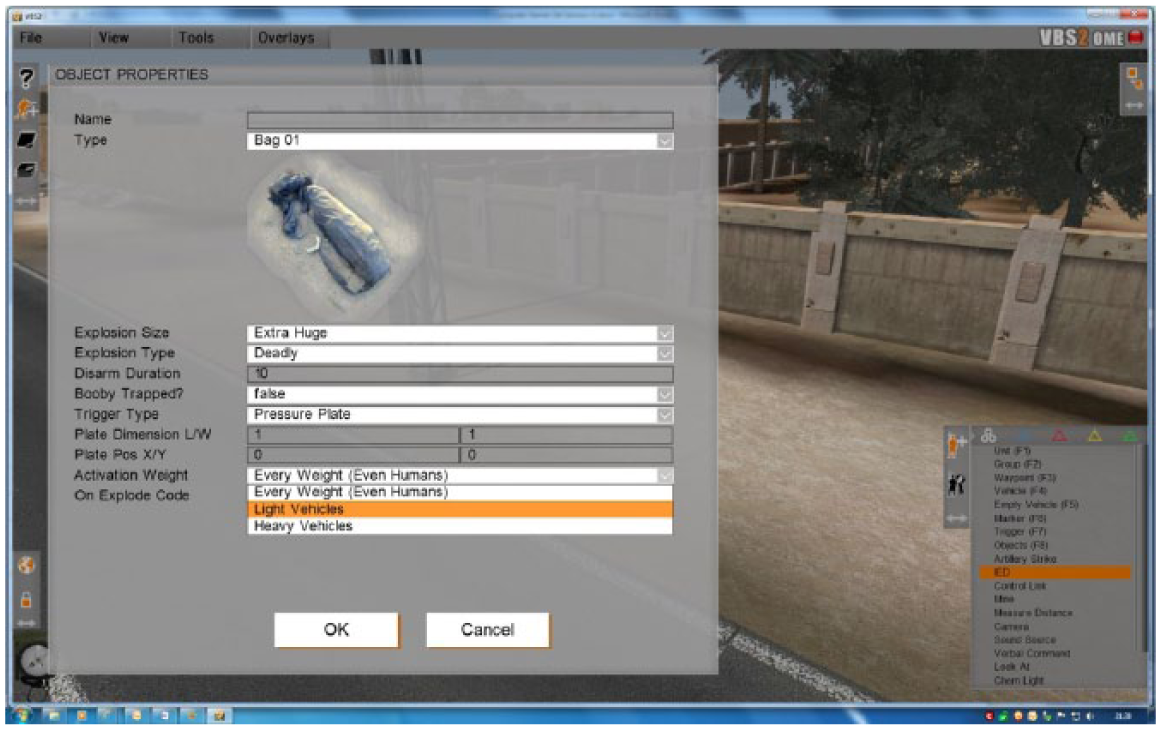
VBS2 has a comprehensive IED Menu of threats for soldiers to practice their drills against. Screenshot by Tim Price.
Bohemia Interactive
At the time a small games company called Bohemia Interactive had produced an unusual game called OPERATION FLASHPOINT. This game featured somewhat quirky graphics, but unprecedentedly large terrains (16km square) and a unique feature that was a Mission Editor built into the game. This meant that in the example above, it would be perfectly possible for the instructor to modify the scenario themself between training runs, for example moving the bomb from the car to a rubbish bin across the street, the observer to a different rooftop and changing the setting from daytime to night-time. This turned what was essentially a computer game, with training potential, into a proper military training capability and was the most important factor in its success.
The game, OPERATION FLASHPOINT, had already been converted in order to appeal to the military training market, as VIRTUAL BATTLE SPACE (VBS), but had not been successful due to a poor marketing model (the company insisted on a per-seat licence fee) and some fundamental problems with the game engine (grenades exploded on impact – which could be a problem when attempting to throw one through a window and the inadequate collision detection that meant it was possible to run through the junction of two walls). An officer in the Australian Army had, however, seen the potential of the game and, on leaving the army, invested in the company and started addressing these issues. As he had been involved in the procurement process when serving, he also addressed the licensing issues, coming up with a model that was far more practical for military customers. This revised system was called VBS2.
At the Interservice/Industry Training, Simulation and Education Conference (I/ITSEC, 2004) in the US it was possible to view in detail the performance of America’s Army on their huge stand, with large numbers of staff demonstrating virtual ranges, weapon trainers and free hand-outs of the game software (Alexander, 2004). A little way along the hall was a tiny and unassuming stand with VBS2 with a couple of video screens and few staff (one of them being the CEO of the company). After detailed discussion and examination of the two systems it became obvious that VBS2 had far greater training utility than the free
AMERICA’S ARMY. As a result the decision was made to procure VBS2 (Mouat, 2005). This would allow it to be used in convoy training for current operations in Iraq and Afghanistan as part of a UOR training capability.
VBS2 was procured on very favourable terms because, while the software was essentially complete, it had yet to be formally delivered and the British Army was one of the first customers. The software was procured on an enterprise unlimited licence for UK Government use and included, as part of the contract, models of all of the new equipment (such as the new vehicles Mastiff and Jackal) purchased for use in the war in Afghanistan.
The training capability was procured as a managed service by external contractors. The company would essentially arrive at the unit location as part of their pre-deployment work up training, install a classroom of networked laptops, and run the training. This was called JOINT CONVOY VIRTUAL ENVIRONMENT (JCOVE) and was run very capably by a number of ex-military staff with recent operational experience. By 2012 over 10,000 British soldiers have been trained using the system (Mouat, 2012) (see figure 4).
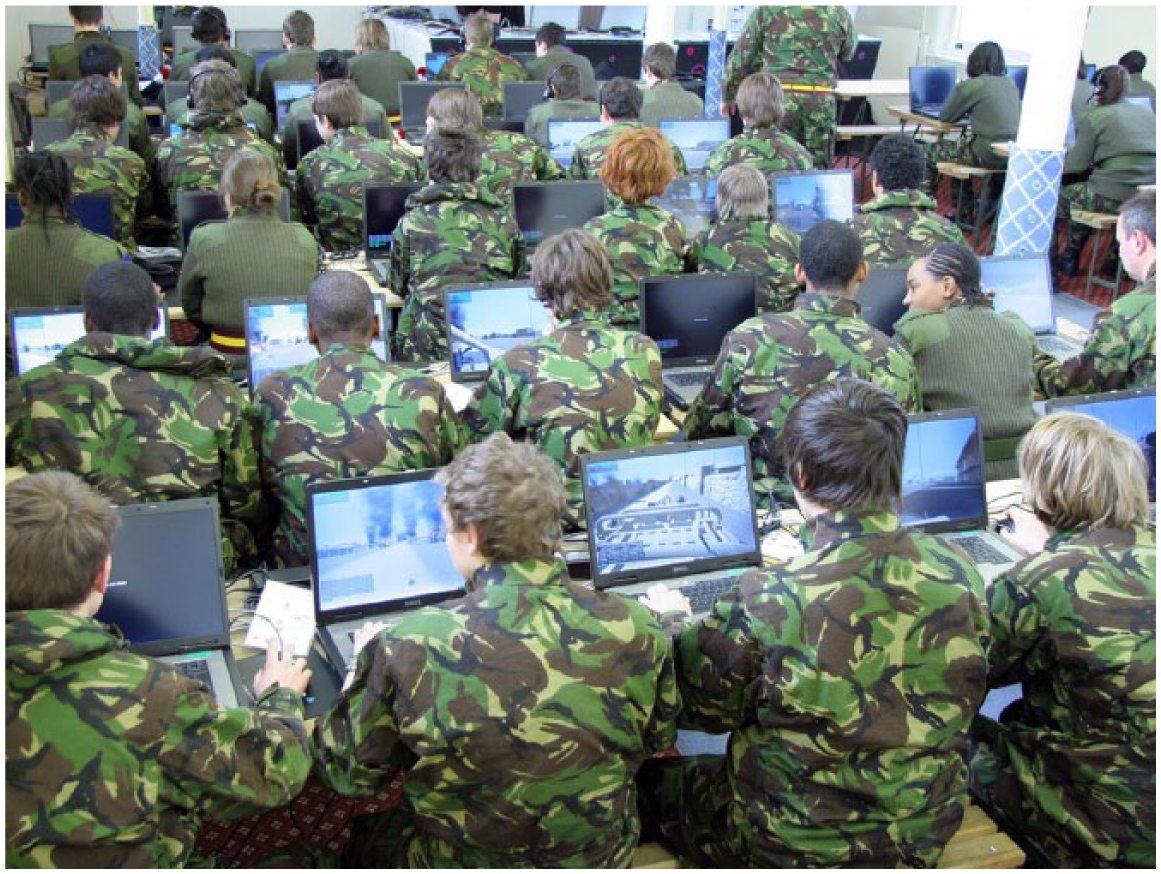
Army Cadets stress testing JCOVE prior to it being used for pre-deployment training. Photo by Tim Price.
The US Marine Corps is very similar in size to the British Armed forces and they were quick to see the potential for training Marine personnel embarked on ships; an environment with little opportunity for conventional training. After the US Marine Corps purchase of the game, VBS2 has also been adopted formally by NATO and the US, Canadian, Australian, New Zealand, Italian, and Dutch Armies as well as numerous other countries on a smaller scale and is rapidly becoming the de facto standard for low level training system interoperability (Bohemian Interactive Simulations, 2010).
Assessment of the Impact of Games Based Training
The common view in the military is that live training is the highest quality military training and that any other training is a poor compromise. However, a large number of weapon systems, such as Multiple Launch Rocket System (MLRS), cannot be used during live training due to its tremendous destructive power and therefore can only be represented virtually. One cannot fire salvoes of rockets and blow up several square kilometres of the British countryside, even if it is a military training area. The Unmanned Arial Vehicle (UAV) systems on which much of the intelligence and assessment is carried out in Afghanistan could not be legally flown in UK airspace over the military training areas, so training on their use has to be conducted synthetically.
In addition, it is simply unrealistic to think that a regime that only involved live training could be carried out in an affordable manner. While it is vital to ensure that the training lessons are properly validated under live conditions before troops deploy on operations, the only way to ensure the best use of scarce resources is by using a graduated training progression that starts off with constructive training for the Battle Group Headquarters, then moves on to virtual training for the main fighting echelons of the Battle Group before finally culminating with all elements of the Battle Group involved a live field exercise. It is more sensible to let a headquarters initially practise without using up the time and energy of the rest of the soldiers in the unit.
The impression acquired during a large number of Requirements Management meetings at the MoD Procurement Agency (Defence Equipment & Support) was that many military officers seemed to think live or synthetic training was a binary choice. In fact a large number of areas could benefit from synthetic training prior to live training, but in some areas synthetic training has no value whatsoever (physical fitness for example). Clear evidence by Mautone and Spiker (2010) showed that game based training can significantly improve results in certain types of training over conventional methods, but the skill lies in examining the type of training required and adapting a system to produce the best possible quality of graduate from the training within the resource constraints.
The Canadian Army conducted a study into the way they trained their Troop Warrant Officers on the Leopard and Coyote prior to deployment to Afghanistan (Roman & Brown, 2008) (see Table 1). Traditionally the course lasted 6 weeks, had no game based content and a 28% failure rate. They experimented with different proportions of game based training, with the following results:
Changes in Pass Rates Based on VBS Usage.

It should be noted that no reduction was made in the amount of live training available for the course, yet substantial savings in ammunition and vehicle mileage were still able to be made by releasing those who had reached the necessary standard from training early. This not only had a psychological impact on the remaining students, but the instructor to trainee ratio increased as the training progressed and the remaining trainees benefitted from more personal instruction.
This is, however, a special case of small team training to pass a qualification test and meet a specific standard. Collective Training, for example, of a 50 man Battlegroup command staff represents a different type of challenge, with very few objective criteria being available for assessment, so it is dangerous to assume that game based training will have the same sort of impact across all the different training areas essential to military operations. Training organisations actively debate the correct mix of Live, Virtual and Constructive training seeking a proportion that will universally provide the best results. The reality is that training takes place at many different levels and for many different specialised roles in preparing for operations, therefore a simplistic rule does not exist as stated by the UK Strategic Defence and Security Review (2010) section 9.2 Simulation and Training stated:
There is currently no analytical method to pre-determine the most cost-effective or optimum Live/Synthetic balance.
In a deployment to Afghanistan, one unit actively embraced the potential benefits that virtual training could bring with the VBS2 system, requesting additional training and a set of the training equipment to be provided on loan within the unit to allow them to conduct their own training. They trained extensively with the system until personnel at all levels were confident of their roles and responsibilities. This approach was vindicated in the eyes of the Commanding Officer when, on their first patrol In Theatre they were attacked within 20 minutes of moving out of the barracks. He was personally convinced that lives were saved by the quick reactions and application of the correct procedures instilled in the men by use of the simulation (Burbridge, 2010).
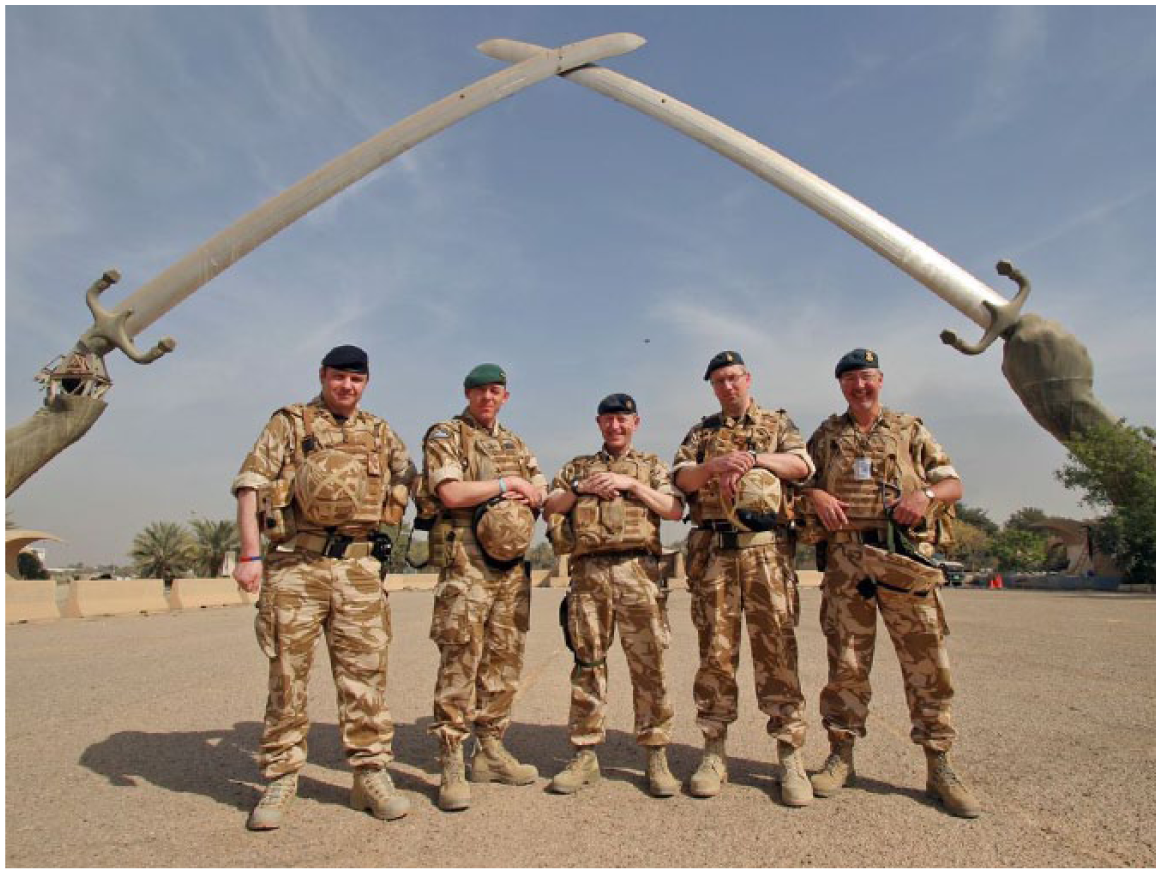
Some British Soldiers at Crossed Swords in Baghdad. Photo by Tim Price.
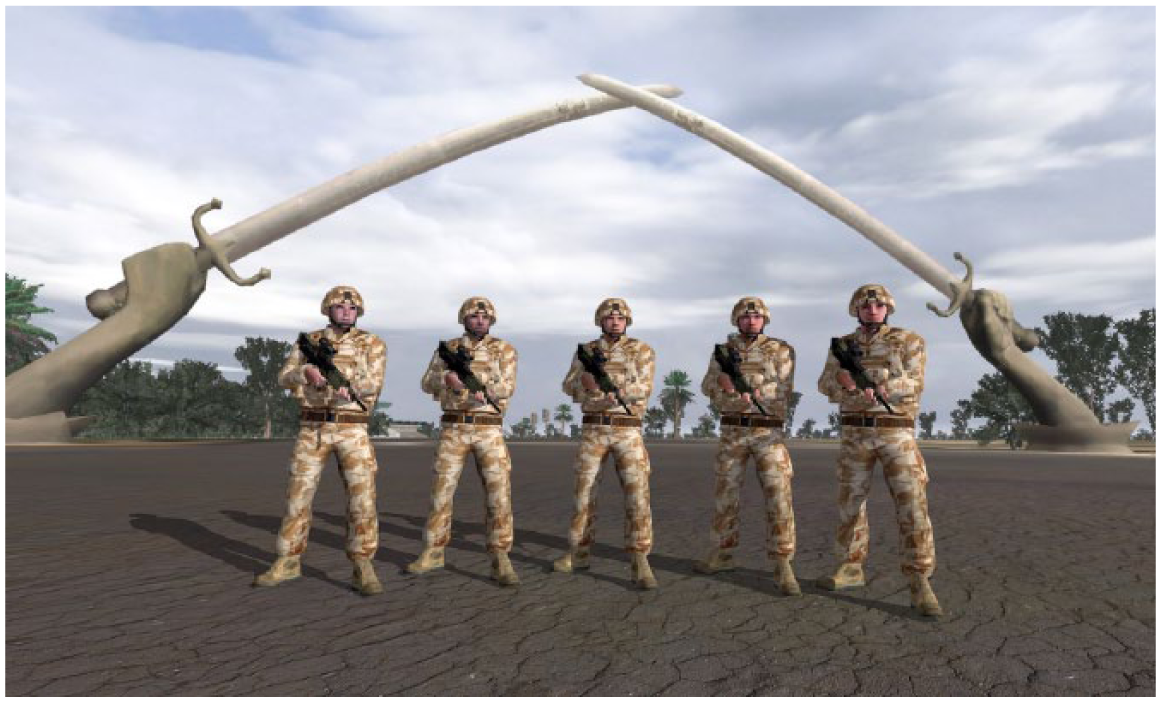
The VBS 2 virtual version of Crossed Swords. Screenshot by Tim Price.
Equally, however, other units have not appreciated the value of training in this way and failed to provide personnel in the correct rank structure to properly benefit from the training (for example sending only private soldier drivers) or, on some cases, cancelled the training entirely (reported during the Contract Quarterly Progress Meetings held between the Contractor and MoD, 2009).
Issues With a Games Based Approach to Military Training
Games based training has a number of issues, not all of which are associated with the technology, but are due to defence processes being inherently resistant to any form of change in the way training is delivered.
Many of the existing military training systems have been extensively tested over a number of years and have comparative data that can be objectively analysed against live performance. The systems have a process of verification and validation carried out where the capability is assessed to see if it does what it was supposed to do (functionality) and achieves the right training outcomes (effectiveness).
In most cases the data used is based on real operations, is usually sensitive and is often classified. The organisations most experienced with dealing with this data are usually the large defence companies who are involved in the manufacture of the weapon systems themselves. Any attempt to produce an alternate technology that does not have a prima facie link to this performance data is open to criticism and the question, is it accurate?
When one considers that most games based systems involve organisations that are not remotely connected with defence, developers who are young and unlikely to have any form of security clearances and involve collaboration with software houses and libraries from many different countries, the possibility of them being given access to the classified data is remote. The VBS2 software, for example, was developed by Bohemia Interactive, a company almost entirely staffed from citizens of a former Warsaw Pact nation. It is therefore more likely that the weapon performance and effectiveness in such base technology usually comes from Hollywood movies than from any objective real-world classified data sets.
This is not to say that some games based system cannot be accurate. The F-16 FIGHTING FALCON computer game (1984), despite the original release of the game being unstable, went on to have its flight model tweaked based on feedback from many users, some of whom had real experience in the real F-16 (Lenoir & Lowood, 2003; Lewis, 2006). This resulted in the characteristics of the plane in the simulation being extremely accurate, simply by a process of estimation, combined with trial and error.
The commercial success of many real-time first person games has led to the huge investment and advances that the military is keen to leverage in training systems. This has also led to a desire for ever more realistic game engines and equipment capabilities among developers. In the same way as F-16 FIGHTING FALCON benefitted from input from real pilots, many of the latest modern combat games (such as CALL OF DUTY) list military advisors in their credits and have actually carried out their own research on such real weapons as are commercially available. These are seen as adding a commercial edge and while the limitations in the design of the scenarios in order to generate exciting game play are recognised, the equipment performance and weapon characteristics are become increasingly more accurate.
Some quarters have a tendency to be overly critical of minor shortcomings in the systems, yet fail to recognise many of the overall benefits. When VBS2 was originally acquired, the game avatars were unable to climb over waist high walls in the game. This was listed as a major shortcoming in the system by a number of trainers during Requirements Management meetings (Mouat, 2007), yet the capability shortfall the system was acquired to address was mounted vehicle convoy drills. Very little requirement occurred for the personnel to dismount during training, except to conduct certain specific drills at halts, and the terrain database of Afghanistan had few walls of this type (most were low walls to do with irrigation, or much higher compound walls that could not be climbed).
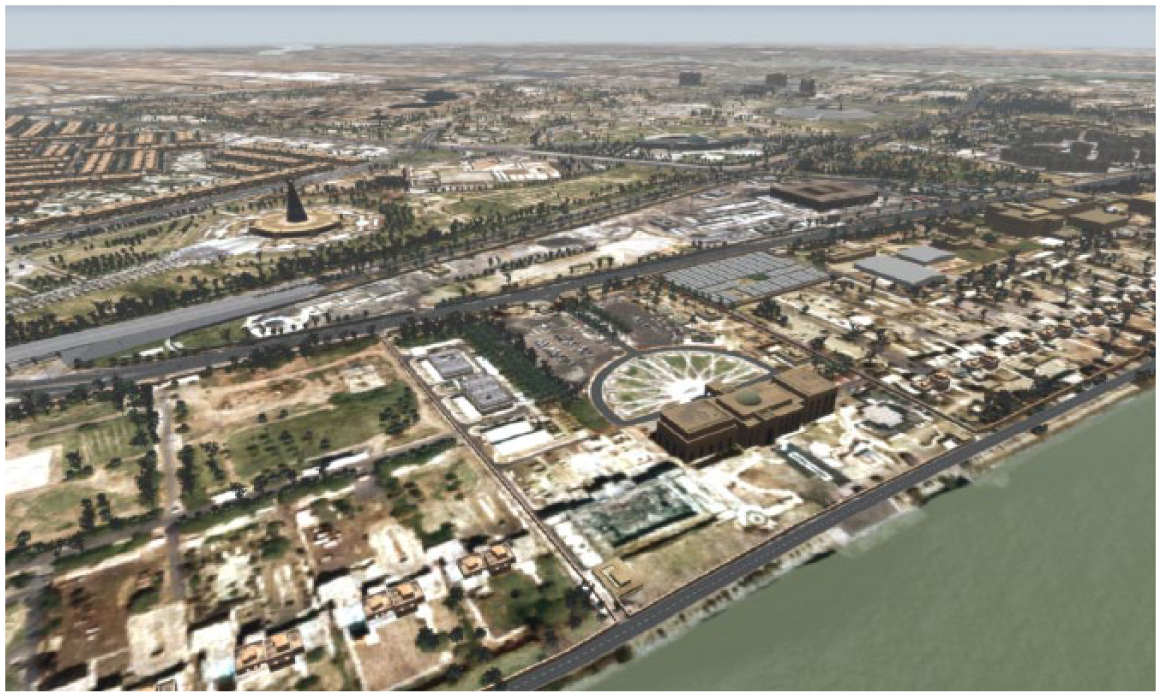
One of the differences between a commercial game and a military training game when the British Army adopted VBS 2 was the scale of the game world. This is the Australian Army’s model of the entire Green Zone in Baghdad (2010). However, now some commercial games such as ARMED ASSAULT have very large terrains when played online. Screenshot by Tim Price.
Some trainers have the attitude that game based training is ineffective when compared to traditional methods (despite evidence to the contrary) and is merely a game. Their view is that committed application of proper training (classroom based didactic learning, followed by live training) will generate better results. Some staff feel more comfortable with the traditional methods of training where they examine the doctrinal pamphlets, transfer these to PowerPoint slides in a lesson plan and deliver a standard 40 minute classroom session. When faced with alternate training methods that are unfamiliar they find it difficult to imagine how to prepare the material in order to generate the required training outcomes in the time available (Mouat, 2007).
As a result some of the teaching staff may not engage with the training technology fully in an imaginative way. They fail to prepare properly because the systems and methods are unfamiliar and may take time to generate the necessary training material. The games based training therefore fails to fulfil the expectations placed upon it and the lack of positive results becomes a self-fulfilling prophecy. In a number of cases the marked increase in performance noted in some experiments with games based training are caused by factors other than the technology used. In many cases the instructor is passionate about the value of games based training and is knowledgeable, enthusiastic and perfectly prepared to put additional work into ensuring that the experience for the trainees is the best is can be in the time available. Introducing games based training, per se, does not automatically generate positive results and in cases where the instructor is unfamiliar with the system or is given inadequate time to prepare, the results can actually be worse than conventional didactic lectures (Randel, Morris, Wetzel, & Whitehill, 1992).
Another problem in that much of the training delivered in the primary training establishments for technical trades such as armoured fighting vehicle (AFV) gunners is now delivered by civilian contractors as part of a drive to free up uniformed soldiers for deployable service. These contracts place their emphasis on the delivery of trained personnel using the MOD supplied training systems and, after running for a number of years, have pared down any surplus capacity in the contract in order to save time, money and maximise profitability. Companies see no commercial incentive to experiment with alternative training systems that could reduce costs, hence reduce margins and therefore overall profit.
This is further compounded by the way the Defence Equipment Programme is financed and budgeted within the MOD. Such contracts for long term support are very useful in that their running costs are clear, simple to forecast and easily understood. They are also part of a contract with the service provider and therefore very difficult to change. This means that, year on year, the funds required to support such contracts tend to roll on and tend to not be subject to the inevitable rounds of savings targets and departmental cuts. This would, of course, be perfectly acceptable if the technology remained unchanged for decades at a time. The difficulty is that, especially in the face of modern war fighting operations, the pace of technological change has been increasing.
Solutions and Recommendations
A number of different COTS games used or modified to support military training, especially in the US Military, but as of 2014, by far the most successful and internationally used is VBS2. Part of the reason why VBS2 has been so successful is that the CEO is ex-military with experience in military procurement. The game engine has a number of features that make it particularly attractive to military procurement agencies.
The game engine is designed in such a way to allow it to be modified by the users. Part of this stems from the inclusion of a mission editor to allow personnel to change the scenarios, but the game developers also provided a terrain editor and 3D model editor to allow users to generate terrains and new equipment. The performance of this equipment can be specified by the users through a comprehensive scripting interface. The result of this is that, while the game is produced with the developer’s best guess at weapon effects and equipment performance, it is possible for the military user to specify that the game instead uses the accurate performance data from their own research. A good example of this is the need to train with certain Improvised Explosive Device (IED) countermeasures. The performance data of these devices is understandably highly classified and developing a training system using this data would be extremely expensive in order to address all the security concerns. Instead the game developers develop a countermeasure in the game in generic terms, leaving the user to input the necessary data. Thus you can specify that Countermeasure A will defeat IED A at a range and under circumstances input by the user. This means the software production remains cost-effective, but the training use can support even the most sensitive and highly classified missions (See figure 8).
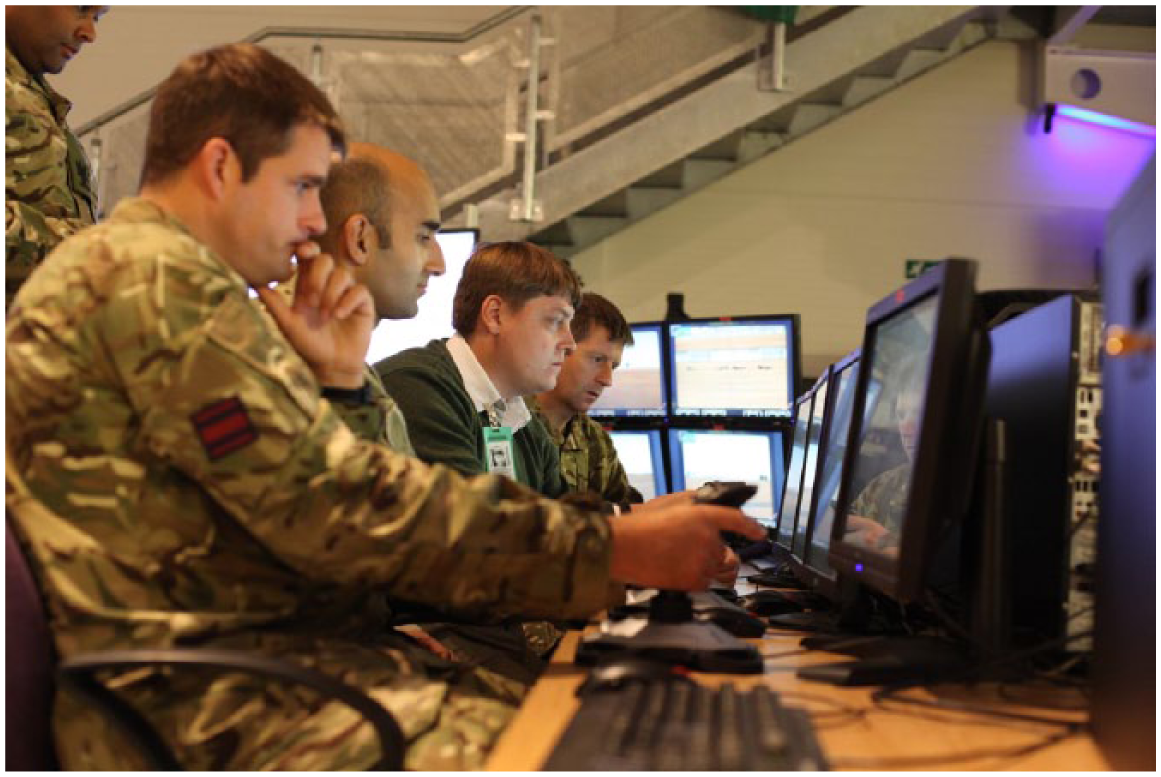
VBS2 being used for a Human Factors Integration Virtual Trial on the Trials Management Course at the Defence Academy of the UK. Photo by Tim Price.
The developers producing VBS2 were a relatively small organisation (Bohemia Interactive had 30 employees against Infinity Ward, one of the seven co-developers of CALL OF DUTY, with 100 employees, in 2010) and they saw it in their own and their customer’s interest to develop a single product where the users shared the development, rather than develop separate bespoke products for each customer (Bohemia Interactive Simulations, 2010). Thus if one customer, such as the UK MOD paid for the development of UK specific vehicles, equipment and game functionality, when the game was updated all users would receive the upgrade and be able to access the new equipment types.
The game system was also designed with a built-in after-action review (AAR) facility. This made it possible to replay training events in order to conduct analysis of what had actually happened from whatever viewpoint that trainer required. This is essential to learn lessons from training and greatly improves the quality of the training experience. It also allowed screenshots and movie files to be generated that could be used to augment normal classroom instruction and bring out specific training lessons.
Yet another reason for VBS2’s success was the inclusion of an industry standard interface that allowed interconnection between VBS2 and a number of existing military simulation systems as an add-on at an early stage of development. The company included this interface as part of the standard release of the game (so no additional costs arose). The company was also prepared to demonstrate interoperability with some of its rival systems, such as STEEL BEASTS (a relatively high fidelity tank simulator).
Of course none of these factors will necessarily affect the attitude to game based training prevalent within certain sectors of the military training community. Middle and upper-middle ranking officers who were old enough to remember the large scale live training events of the past may have an inherent resistance to giving up live training for a simulated alternative. They see any reduction in live training as negative and lack the experience that younger personnel have with games who can easily understand the value games based training can have, or the high level overview that very senior officers have that, with the pressures on the military budgets being what they are, simulation offers the only way that training effectiveness can be maintained.
The only way that these problems can start to be addressed is to ensure that the games used are actually accurate enough for training, and evidence on the effectiveness of games based training to be made widely available. The first of these requires that the outcomes from the engagements in the game based system be compared to the scientifically validated operational analysis data as part of the formal validation and verification process. Secondly, objective evidence as to the cost-effectiveness of the training needs obtained and widely circulated. Lastly, of course, the commitment needs to happen at all levels in the chain of command to ensure the correct level of buy-in from the individual trainers to ensure that this capability is used in the best way possible.
The fact that such a large amount of development of the VBS2 game engine has taken place within such a short time has led to the engine approaching the limit of what can be achieved without a major re-design of the engine architecture. If this sort of capability is to be taken forward and the benefits realised it is essential that the problems and solutions involved with game based training in the military are properly understood. If this happens, military requirements for future systems can be developed in such a way as to ensure a smooth transition from one system to another, and that a clear understanding will develop in industry as to what is the military need, which should lead to healthy choice and competition, rather than the current virtual monopoly situation.
Future Research Directions
It is clear that in order to ensure the credibility of games based training systems, more is required than high fidelity graphics. The accuracy of equipment performance and weapon effects in the game are essential to generating the level of buy-in needed by military trainers. In order to achieve this, a formal process of validation and verification is needed for game based training systems. This need not necessarily be as exhaustive as that needed for aircraft flight simulators meeting aviation authority requirements, but they need to ensure that the system is good enough for training.
Exactly what is good enough for training needs to be analysed and clearly understood. It then needs to be formally signed up to by those in a position of authority within the organisation. A balance has to be struck between training benefit gained, against a slavish dedication to exact accuracy and hence overall cost. For example, a presentation given to a requirements management meeting by a contractor from the Haldane Spearman Consortium on the accuracy of the ballistic model in the game STEEL BEASTS demonstrated that the simulation was inaccurate in the time of flight of kinetic energy projectiles by a few milliseconds. This was, of course, imperceptible to the naked eye and made no difference to the overall outcome of the vast majority of tank engagements. Attempting to modify this to be exactly accurate for a low-cost system communicating between workstations using internet protocols would have been extremely expensive and would have not materially improved training outcomes.
In military procurement during the requirements capture process, far too many military training systems identify needs whose benefit is low compared to the cost of developing their solutions. A clearer understanding of exactly what the training outcomes are required, at what point in the progressive training cycle, is needed. This can helpfully inform the verification and validation process to ensure that the resulting system is the best it can be in cost-effectiveness terms.
The next essential element is more formal objective evidence that games based training in a military context is actually effective. The Roman & Brown report of 2008 is one of the very few reports that explicitly looked at training effectiveness and costs in preparing soldiers for current operations, using a game based system. It clearly shows, under their circumstances, that both the effectiveness of the training can be improved and the costs reduced. The difficulty is a vast number of different military training systems at the individual, crew, team, unit, collective, joint and multi-national levels, so direct comparisons are not easy and sweeping generalisations can be dangerous.
Conclusion
The success of the computer games industry, and subsequent investment, has let to huge advances in the state of graphics engines, physics engines and PC hardware. This means that a number of modern computer games can, with modest modification, equal or exceed the training potential of many existing military training systems, at a fraction of the cost. They can also open up new possibilities for game based training in areas that were traditionally too difficult or expensive to realise, such as UAV support or for embarked units on board ship.
Despite compelling evidence on their effectiveness in certain fields, they do not have widespread acceptance in some areas of the training community (Whitney, Temby, & Stephens, 2014). Although Whitney et al challenges the role of games based training for dismounted infantry combat, currently no comprehensive review exists of the evidence for games in military training. Due to the closed nature of military training, limited opportunity exists for the wider academic community to apply its knowledge and expertise in evaluating the effectiveness of serious games in the military domain.
Game based training is not a magic solution to training problems. Without imagination, user buy in, proper preparation, delivery and post-training analysis, it will fail to achieve the desired training outcomes (as with any training).
The current state of computer game based training in the British Army is dominated by a single product due to the unique design of the software and the set of circumstances when it was procured. Game based training offers huge potential in maintaining or increasing training effectiveness against a background of limited defence budgets. Budget limitations may not inhibit games based training; they could actually encourage adoption as a cheaper supplement to live training.
Footnotes
Acknowledgements
The authors would like to thank Pierre Corbeil, Simulation & Gaming, Ready-to-use Simulation/Games editor, without whose inspiration and encouragement the article would have never have been started and successfully prepared for publication.
Author Contributions
JC and TP wrote the initial draft. PS contributed extensively to the development and shaping of the article. All authors contributed equally to the editing of the manuscript.
Declaration of Conflicting Interests
The authors declared no potential conflicts of interest with respect to the research, authorship, and/or publication of this article.
Funding
The authors received no financial support for the research, authorship, and/or publication of this article.
Author Biographies
 , which aims to capture and make available key material in the development of the hobby and professional wargaming. This wargaming archaeology has included a number of wargames that have never been in the public domain. He has edited or written over sixty books including new works that aim to capture current applications of wargaming type methods as used for training, analysis and decision support.
Contact:
Contact via John Curry
Contact: