







Abstract
Background The use of
Aim This research study explored the
Method 71 undergraduate students participated in a
Results Findings indicated students in a large course structured with game-based learning maintained
Conclusions The use of game-based learning is
Keywords
This article examines the student experience in a large lecture course designed with game-based learning (GBL). In particular, we explore the use of GBL instructional methods, as opposed to digital game play, as a way to address challenges associated with large lecture environments. We describe GBL as an approach to instruction, drawing on relevant literature and evidence of practice in higher education settings. The synthesis of the literature is followed by a detailed description of the course design and implementation. The results of this study were positive and are particularly relevant to educators and instructional designers. Foundational research is lacking in this area, and we provide strategies and recommendations for future course planning.
Research on Teaching in Large Lectures
Student success is closely tied to effective teaching methods, but ideal practices are difficult to maintain in the large lecture courses that are pervasive in higher education settings. To address the lack of student engagement, attendance, and achievement, faculty frequently explore alternative teaching strategies (Walker, Cotner, Baepler, & Decker, 2008). Research in this area is focused on two trends:
integration of technology such as personalized response systems (Judson, 2002; Mayer et al., 2009) and
curriculum revisions to include active learning (Smith & Cardaciotto, 2011; Walker et al., 2008).
For example, a study at MIT utilized both laptops and active learning to find that students had positive perceptions about both the active teaching methodology and the use of technology in class. However, even with engaging methods, regular attendance is an ongoing problem in higher education (Kelly, 2012). With many students not attending large lectures, absent students are missing out on the key skills and knowledge necessary for academic success (Freeman et al., 2007). Therefore, methods that increase the motivation to both attend and persist in these courses would make a significant contribution to effective practices in higher education instruction.
Theoretical Foundations of Games in Education
Game play has a strong positive impact on learning, including gains in the cognitive, motivational, emotional, and social domains (Granic, Lobel, Rutger, & Engles, 2014). Games align with the learning sciences, particularly the principles of constructivist learning environments where the building of knowledge can be the result of the learners’ attempts to use existing beliefs and practices to make sense of new experiences (Gerace, Dufresne, & Leonard, 1999). This structure provides the learners with the ability to use and broaden their creativity, to engage in a meaningful context, and to expand on their problem-solving capabilities, all within a safe environment where mistakes and failures are accepted as part of the learning process (Whitton, 2012). This scaffolding can be achieved with or without technology, but the emphasis is on the collaborative experience between an expert and novice (Reiser & Tabak, 2014). In the field of instructional technology in particular, the work of Brown, Collins, and Duguid (1989) is applied through observation, peer mentoring, and collaboration to provide relevant experiences for practicing technology applications. However, a review by Wu, Hsiao, Wu, Lin, and Huang (2012) revealed that the majority of studies in GBL fail to consider learning theory and focus only on student outcomes.
The design of the course in this study (Introduction to Digital Learning in the Secondary Classroom, CI 202) is rooted in the foundational work of Vygotsky and constructivist environments. Students consistently work at an appropriate level through challenges of increasing difficulty. This situated experience occurred in CI 202 through collaborative teamwork, competitive teamwork, and discussion boards. The practices in CI 202 align well to the findings in Wu et al. (2012), where constructivism was the most prevalent theoretical foundation cited in GBL studies.
Game-Based Learning in Curriculum Design
GBL has been defined where “specific problem scenarios are placed within a play context” (Tsai & Fan, 2013, p. 115), although primarily examined through the lens of digital games. According to the research literature, three game approaches have been attempted over the years to be implemented into educational contexts. In the first approach, students become the developers requiring them to learn the content and utilize their problem-solving skills to create games. In the second approach frequently termed gamification, the design process “involves the identification, extraction, and application of individual game elements or limited, meaningful combinations of those elements.” (Landers, 2014, p. 754). The third and most studied approach consists of integrating researcher-developed or commercial digital games where the game supports, delivers, and assesses learning.
However, we present a fourth use of games in education, where the teacher designs a full game environment when planning a curriculum. As opposed to adding individual game elements, the teacher takes the role of game designer. He or she not only designs the entire game structure, but also delivers the game within traditional education contexts. This is a clear distinction from gamification, where the addition of individual or combination of game elements does not create a larger game context (Landers, 2014). In GBL, the teacher moves beyond pieces, to view the whole structure of the curriculum as a full game.
Although this method has been called by different names such as game-based teaching, quest-based learning, the multiplayer classroom, and GBL, the focus is on where the “classroom is a game” (Sheldon, 2012, p. XIV). This defining characteristic greatly influences the design of the instructional environment. Not only must the teacher consider learning outcomes and assessments, but also the game mechanics that facilitate the learning experience. The specific combination of game attributes (e.g. feedback, goals, interaction) and game elements (e.g. badges, leaderboards) must be designed with the individual course needs in mind (Alaswad & Nadolny, 2015).
The study and implementation of game strategies within the design and development of instruction is gaining popularity in the research literature. Table 1 is a summary of research studies using games structures applied to curriculum design. These studies implemented game elements and techniques to measure impact on students including engagement, motivation, performance, and overall learning outcomes.
Research in Game-Based Learning in the Design of Curriculum.
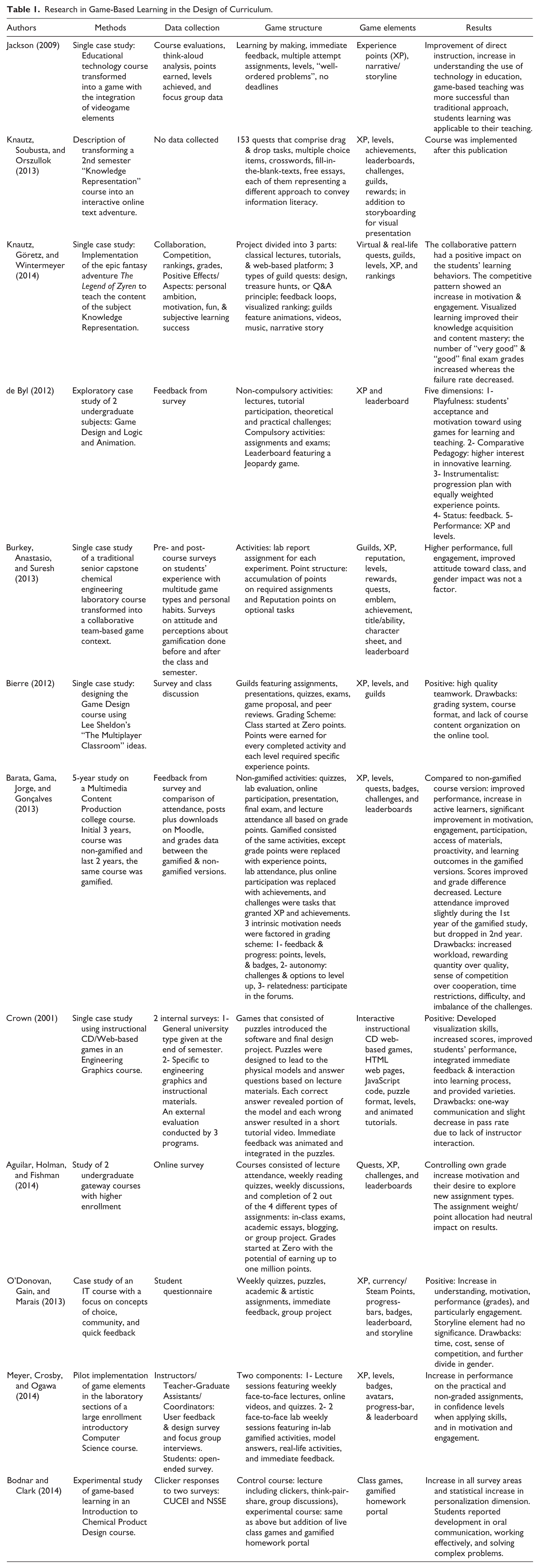
Although the course content, course design and integrated game elements differed throughout the various curricula listed in Table 1, the results and findings revealed parallel improvement in students’ motivation, engagement, performance, and cognition levels. For example, Barata, Gama, Jorge, and Gonçalves (2013) conducted a study on a multimedia course over a five-year period. During the initial three years, the course was presented in a traditional format. The same course was transformed into a GBL version during the last two years of the study. The data collected from the GBL version over the last two-year period revealed an increase in engagement, motivation, and proactivity when compared to the traditional format. Moreover, access to materials improved and online discussion posts increased from 211 to 2235. Attendance on the other hand increased in one year but then returned to prior levels in the next year. Other studies by Burkey, Anastasio, and Suresh (2013); O’Donovan, Gain, and Marais (2013); and Knautz, Göretz, and Wintermeyer (2014) also reported comparable results in students’ motivation, engagement, and performance. Some studies revealed improvement in teamwork (Bierre, 2012), in learning outcome (Jackson, 2009), and understanding of concepts and applicability of skills (Crown, 2001). de Byl (2012)’s case study explored the results further and identified five dimensions that could contribute to student responsiveness to GBL: (1) Playfulness: enjoyment with games for learning, (2) Comparative pedagogy: acceptance of other teacher methods, (3) Instrumentalist: perceptions of distraction (4) Status: visibility of grade status, and (5) Performance: achievement expectations. Factors such as gender (Hartmann & Klimmt, 2006), experience with casual games, and age (Blunt, 2007) repeatedly appear in the literature with digital games, but appear infrequently in the GBL. While these results indicate an overall positive experience, a closer examination of belief, practice, and characteristic factors is needed.
The study presented here was designed to add to the foundational literature on GBL within curriculum design, specifically the how and why of effective practice. This study examined student participation and achievement in a large college course structured with GBL methods. In addition to the overall participation of students, this study also examined the associations of age, gender, learning style, and time playing games with overall course achievement. The following research questions guide this study:
Course Design
Introduction to Digital Learning in the Secondary Classroom (CI 202) is a required course for students in secondary education programs at Iowa State University. Student certification areas are varied and range from biology, mathematics, and history, to specializations such as family and consumer science, physical education, and agriculture education. This course was traditionally taught as a large lecture and a smaller hands-on lab with approximately 100 students per course. This course was redesigned with GBL in Spring 2013 and further refined in Fall 2013, now as a blended course through the Blackboard Learning Management System (Figure 1).

Blackboard course homepage.
Course Goals and Format
As with similar instructional technology courses for teachers across the nation, this course is framed around the ISTE educational technology standards for teachers (ISTE, 2015). To apply a more motivating, game-like theme to the course, students are introduced to a challenging course-related goal that can only be achieved through successfully demonstrating proficiency on the national standards. The course goal is now to fill a virtual technology toolbox with badges earned through academic achievement on weekly quests (Table 2). Students are also encouraged to post these badges on the portfolio required for teacher certification.
Course Schedule.
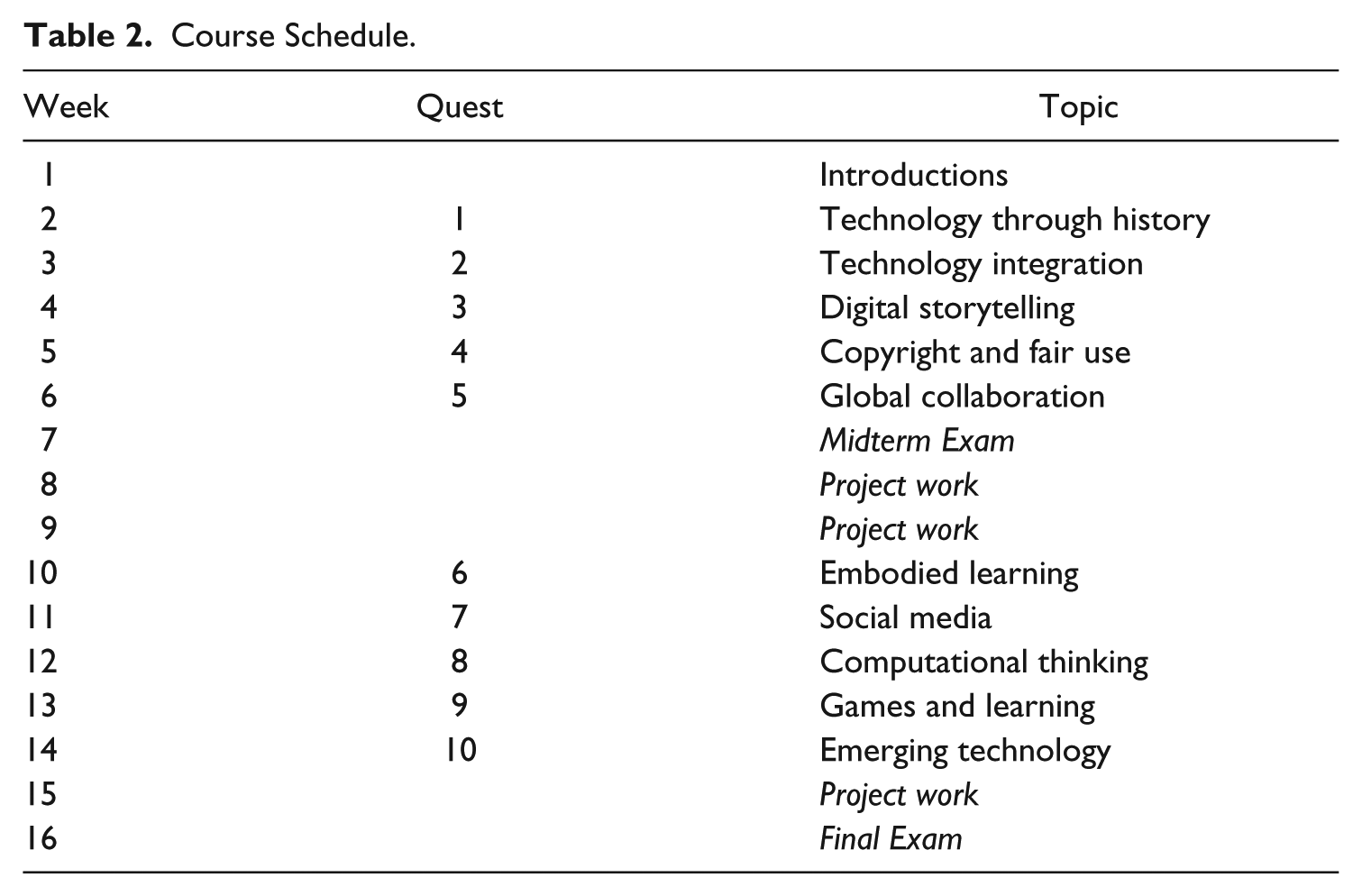
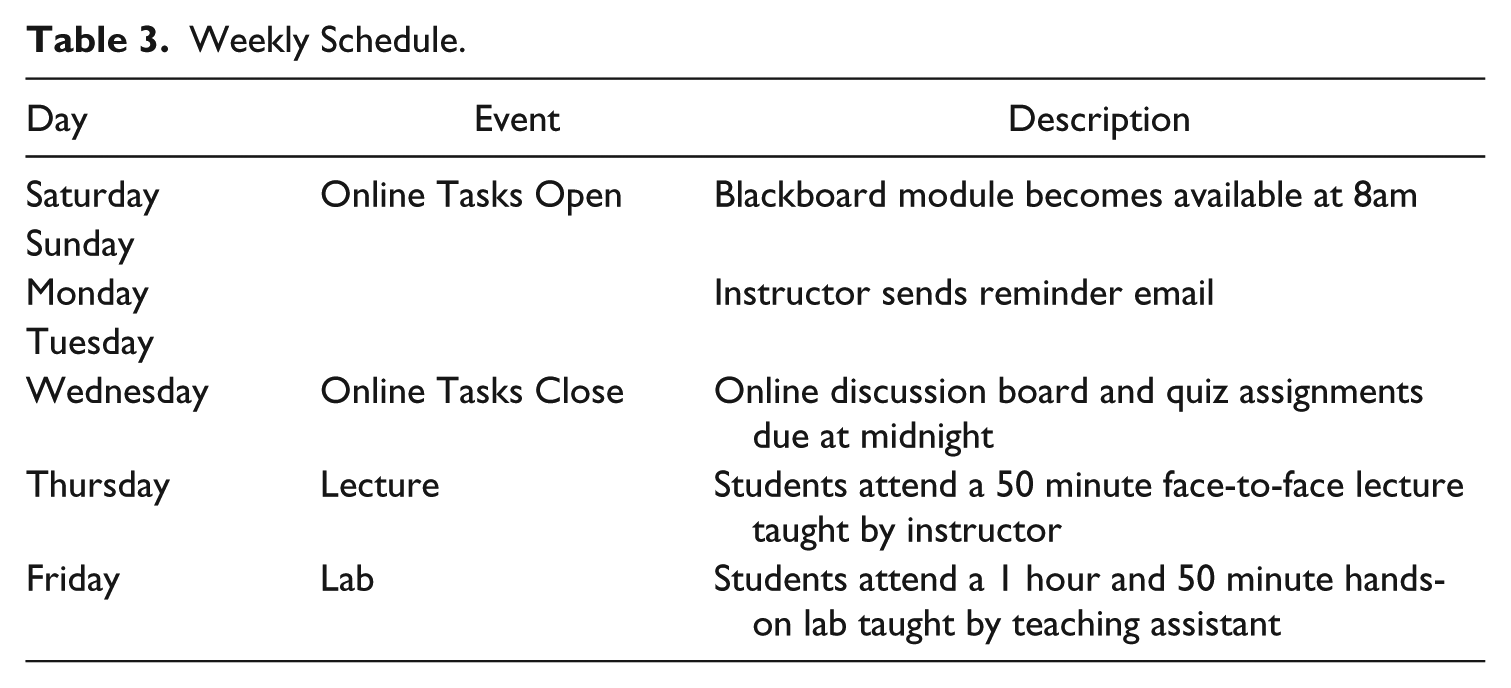
Although the revised course maintained a lecture and lab format, one of the two lecture periods was removed to accommodate a blended approach. Students now (1) completed readings, (2) took an open book quiz, (3) received feedback on the quiz, (4) participated in a discussion board, and (5) voted on questions for lecture, even before attending the first face-to-face session of the week (Table 3). The lectures were now focused on the review of difficult materials, playing quizzing games, and small group discussions. The week ended with hands-on challenges for students in the lab portion of the course. In lab, students worked together in teams to complete three increasingly difficult challenges related to the topic of the week. For example, in the computation thinking lab (Quest 8), students progressed from creating a simple 3D model to printing a small version of it on a 3D printer.
Weekly Schedule.
Course Game-Based Learning
The revised learning experience for the students was intentionally designed for motivation, challenge, and support. Topics were diverse and thematic, with a clear relationship to teaching practices in each academic area. This was achieved through a variety of links to lesson plans, videos, blogs, and other secondary education resources in the online materials. Other motivating elements included the ability to earn bonus points in lecture and lab for winning games, encouraging and immediate online feedback, and three chances to take open note quizzes.
Although the design of a course with GBL is complex, CI 202 can be summarized with the following areas of emphasis:
Quests: The content of the course was organized around 10 interdisciplinary themes called quests.
Points: As a course with final grades based on total points, students were rewarded by earning as many points as possible with the option of not completing activities when they no longer needed points.
Iterative feedback: Students were given three chances to take the online quiz based on reading materials for a high score. The score of the quiz automatically released encouraging feedback or a congratulatory statement for the students within the course management system.
Increasing challenge: The difficulty of assignments increased in several ways during the course: (1) the overall themes were arranged from basic knowledge in educational technology to advanced technologies, (2) the online tasks discussed previously were ordered from factual knowledge (i.e. readings and quiz) to conceptual knowledge (i.e. discussion boards, question voting), and (3) the three challenges in the lab portion increased in difficulty.
Other game mechanics utilized but not emphasized were badges, a narrative, collaboration, and competition.
Debriefing
The reflective sharing of personal experiences after game play is essential for deep learning. The sense-making or debriefing of information can help students clarify misconceptions and benefit from the community knowledge (Crookall, 2010). Curriculum design with GBL can make space for debriefing at the micro or macro levels, weaving reflective experiences after learning cycles or after reaching game goals. Journal writing, discussion forums, chat, office hours, and social media are all familiar methods for educators to elicit deep reflective practices. Important to note is the different role of the instructor during debriefing: open, accepting, and encouraging of new ideas and opinions (Petranek, Corey, & Black, 1992).
Three different reflective experiences were built into CI 202 within group and individual activities. First, students respond each week to an online group discussion board, critically examining an experience or concept learned that week. For example, students were asked in the discussion board during the digital storytelling week to choose an image representative of his or her content area and defend that choice. The students studying to be English teachers chose the Nike logo, with the following explanation:
I feel that pictures and images become a thing we recognize and understand at a glance for several reasons, one reason being they are passed along as a key part of our culture. Some images have a certain meaning associated with them and most people will know that meaning as soon as they look at an image. Part of English is understanding the meanings we associate with things as well as passing along and explaining that meaning in a different light. Another part of English is being brave enough to offer a differing view on an already socially accepted meaning. I chose a picture of the Nike swoosh. Most of us know it is the logo for Nike. Some people even know the meaning of Nike. Knowing the Greek translation is one thing, understanding everything that is associated with Nike and what it stands for is part of the larger action of creating, repeating, sharing, accepting, and challenging the information we encounter everyday.
This choice not only reflected depth of complexity for the image content, but also a complete understanding of how media can portray meaning in learning environments.
Second, each student was asked to contribute to an online question voting board using Google Moderator in preparation for the face-to-face lecture. These questions were easy to post and vote on by the entire class. Afterwards, the instructor would answer the top three questions each week. For example, one student asked during the quest on copyright and fair use, “I’m still highly confused on the whole copyright issue, even after reading the book. I know it’s important to know as a teacher, but how do I make my students care about something I think is a ‘dry’ subject myself?”. The top questions as voted by other students were addressed each week by the instructor. Third, students wrote a short one to five minute reflection, commonly known as an exit ticket, before leaving the Thursday lecture. The last PowerPoint slide of each lecture was a prompt for this reflection (e.g. “Compare and contrast the ISTE standards and TPACK”, Quest 2). These three points of debriefing about the content and learning experience occurred regularly throughout the semester.
Methods
Project participants included 71 undergraduate students (75% of course enrollment) in Digital Learning in the Secondary Classroom in Fall 2013. The mean age was 21 years, with a range from 18 to 41 years (SD=4.518). The majority of students were female (n=43).
Data collection in the study was focused on examining the overall participation of students as well as factors linked to academic success in a course structured with GBL. Academic achievement measures were collected through the online learning portion of the course in the Blackboard Learning Management System, including scores on individual assignments and overall course grade. A survey during the first week of the course (week 1) was used to collect information about age, gender, time playing games each day, and learning style. To identify a preferred learning style, students were presented with a description of six distinct categories, including competitive, collaborative, avoidant, participant, dependent, and independent (Grasha & Yangarber-Hicks, 2000). During the last week of the course (week 15), students were asked to complete an open response statement, “write some advice for another student taking this class next semester.”
Student participation data were obtained in lecture through the collection of scannable forms. In lab, instructors marked students absent or present and entered assignment data in the online gradebook. Online discussion board and quiz participation were determined through examination of scores within the online course management system.
Quantitative analysis included correlation appropriate to the data set as well as descriptive statistics using the SPSS software. All data for statistical tests were determined to be normally distributed, as assessed by visual inspection of Normal Q-Q Plots or Shapiro-Wilk test (p > .05) with no outliers of the data. Four students who failed to complete the course were eliminated from the data set. Open response questions were coded for emerging themes (Yin, 2014).
Results
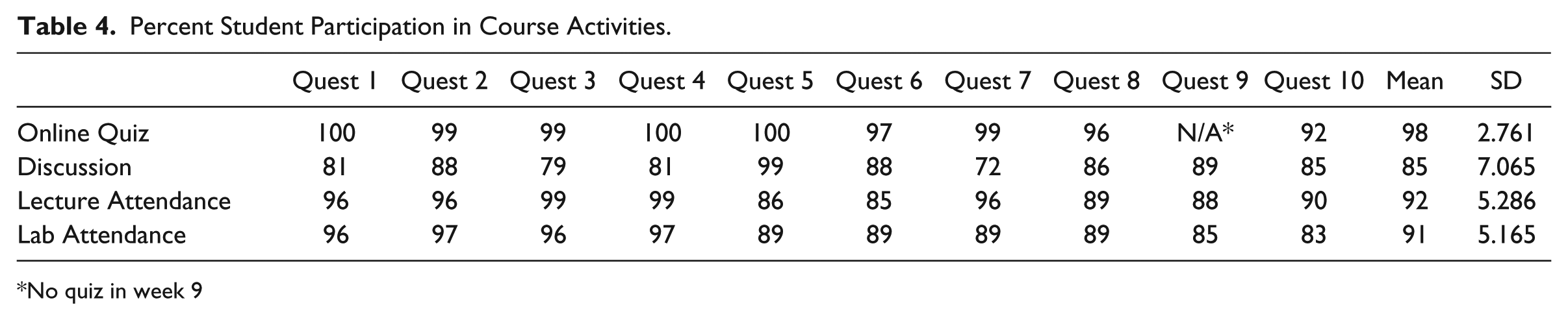
Student attendance in lab and lecture was high, with an average of 92% attendance in lecture and 91% in lab sessions (Table 4). Discussion board participation varied from week to week, with a notable decrease in weeks three and seven when students were asked to post reflective videos recorded using their computer webcam. The process to create a video discussion board was time consuming for students and contributed to lower participation.
Percent Student Participation in Course Activities.
No quiz in week 9
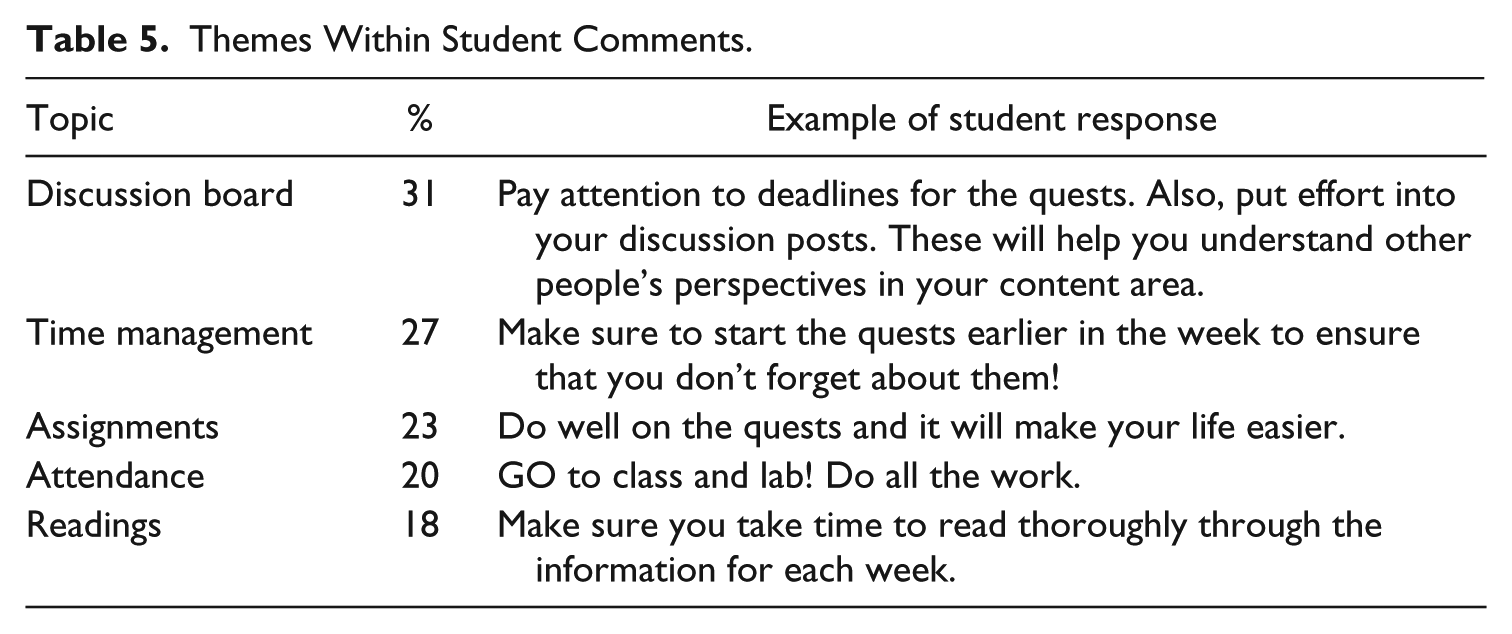
With so many components each week, students recognized the importance of staying on top of assignments. When asked to give advice for future students, 49 students commented with a focus on five main themes (Table 5). The comments can be divided into advice for the course overall (time management, attendance) and assignment specific advice (overall assignments, discussion board, readings). Students recognized the need to participate in all areas of the course, as well as the organization of time and effort required to meet expectations. The readings and discussion board were frequently mentioned as the most important assignments, although for different reasons. Students mentioned that the readings were important for achievement on quizzes and exams, while the discussion board was noted as particularly important for conceptual understanding. One student’s comment considers the responsibility to the group within the discussions, making sure not to be “that person that waits until 10 minutes before it’s due at midnight to finish it! You might not only miss your chance at posting, but other students might suffer from discussions where you have to respond to others’ posts.”
Themes Within Student Comments.
Multiple Attempts for a High Score
The weekly quizzes contained 10 questions selected from a pool of 20-30 questions based on readings and online resources for that particular quest. Almost all students completed the quizzes with an average of two attempts per student. Students appreciated the ability to take the quiz multiple times and approximately 20% of the students took the quiz three times for a higher score (Figure 2). All of the quizzes had a similar distribution of attempts except for Quest 10, where students had the ability to opt out of the quiz if they had achieved enough points for the semester. Although not a major theme in the open response item, several students posted advice concerning the quizzes. Student comments included “take all the quizzes multiple times to get the highest score” and “do the quizzes as much as possible to get a higher grade.”
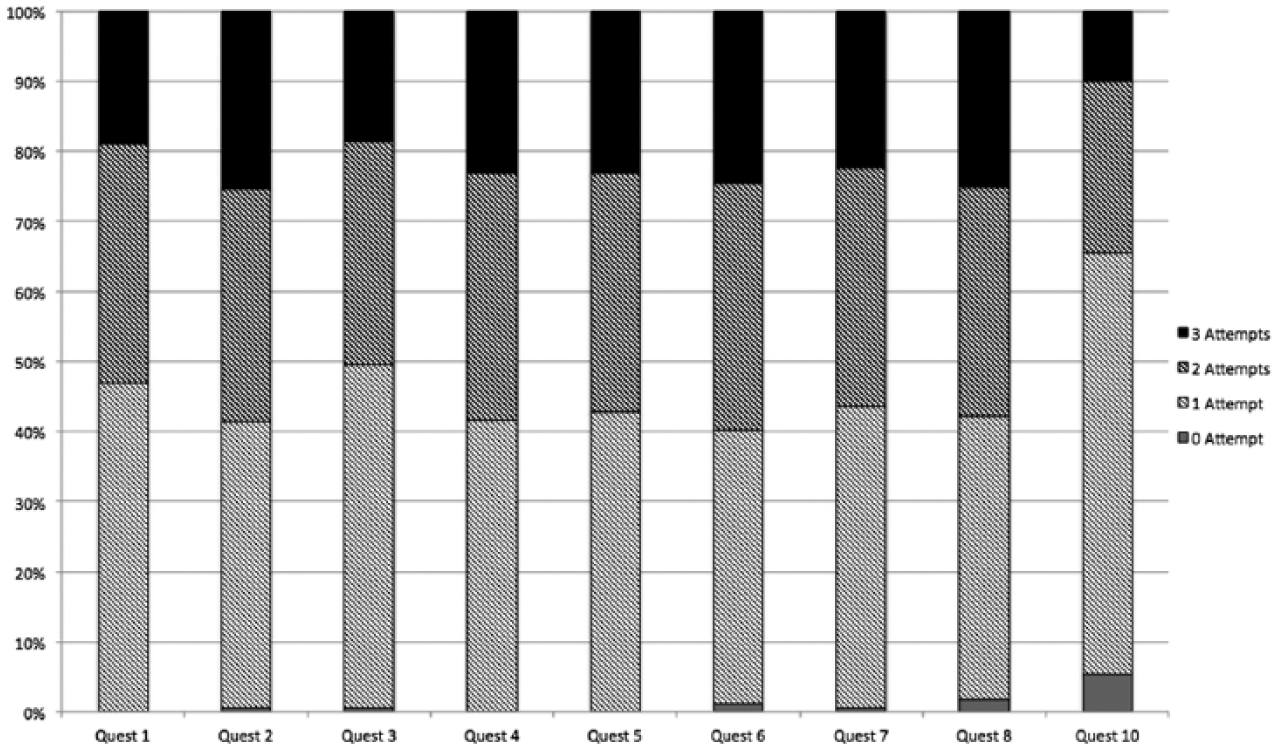
Quiz attempts. No quiz during quest 9.
Spearman’s rank-order correlation was used to determine the relationship between age and achievement. Although the mean age is 21 (SD = 4.636), 79% of the students are between the ages of 19 and 21. No significant correlation existed between grade and age, rs = −2.57.
A one-way ANOVA was conducted to determine if final scores were different for groups with different learning styles. Participants were classified into six groups: competitive (n = 0), avoidant (n=0), collaborative (n = 20), participant (n = 15), dependent (n=14), and independent (n = 19). Statistical analysis resulted in no statistically significant differences in score between the different learning styles, F(3,63) = .601, p = .617.
A one-way ANOVA was conducted to determine if final scores were different for groups with daily use of gaming systems. Participants were classified into four groups: no use (n = 38), less than 1 hour/day (n = 18), 1-2 hours/day (n = 11), and 2 or more hours/day (n = 0). The results demonstrated no statistically significant differences in score between the different game system use groups, F(2,64) = .725, p = .488.
An independent sample t-test was run to determine any differences in scores between males and females on final grade. Although females scored higher than males, the difference was not significant, t(64) = −1.979, p = .052.
Overall, final grade was not associated with with age, gender, gaming experience, or learning style. The open-ended questions also supported this result, with no comments indicated that any of these groups would prefer a course designed with a GBL approach.
Discussion
This research demonstrated that students enrolled in a large lecture course designed with GBL maintained a high level of participation and persistence throughout the semester. Student attendance in lab and lecture ranged from 83-100%, with averages between 91-98%. A noted limitation to this study is the lack of comparable data on attendance for a non-GBL version of the course. Although the new structure of the course (i.e. blended format and GBL) would make a comparison to a previous version impractical, the historical context of attendance provided an indication of impact. Mark, whose experience includes attending the CI 202 class as a student and working as a teaching assistant in the course for a total of three different instructors, noticed a clear difference between the lecture-style course and GBL approach:
I would say that before the attendance in lecture was around 65-70% of students showing up on a regular basis. The only exceptions being the first day and the final exam when you would have the entire lecture hall packed. From my experience the transition to game-based learning the attendance seemed to be around 90-95% on a regular basis. Not only was there an increase in attendance but it also seemed to have the students more engaged during lab sections and during the face-to-face meeting. What I mean by that is that students seem more prepared, like they actually did the readings and also that they were more interested in what was happening during the times we met.
The CI 202 course was designed featuring game characteristics motivating the students to participate and return for more to achieve the end goal of finishing the course. Students transferred their knowledge from the online modules and face-to-face lectures to projects, exams, and quizzes while earning points and badges. Each quiz featured the multiple attempts, providing students with the opportunity to achieve higher rewards by completing each quiz up to three times. Students voluntarily took the quiz on average twice, demonstrating motivation from within. The consistent and high level of participation evident in this study has positive implications for the use of GBL instructional strategies as a way to address challenges with attendance in larger course enrollments.
Contradictory to the research literature on GBL, data analysis demonstrated no significant relationships between student characteristics and course grades in this study. Although a substantial amount of the literature has focused on the differences between games and gender, recent studies report conflicting information. For example, Lucas and Sherry (2004) found that female college-age students played games less frequently, were less motivated by play, and less interested in competitive games. Contrary to those findings, examination of game preferences reveal that both male and female gamers enjoy imaginative games utilizing strategy or adventure with competition as a key motivating component (Greenberg, Sherry, Lachlan, Lucas, & Holmstrom, 2010). Age is also a characteristic that didn’t result in significant association to course grade, but this may be attributed to the concentration of traditional age students (18-21) in the course. The lack of correlation between game use outside of the course and grades also contradicts the literature. In contrast, three DoD studies on the difference in academic achievement among students who did and did not use video games in learning resulted in younger learners scoring significantly higher as compared to older learners above 41 years of age (Blunt, 2007). Our findings may provide evidence of a changing demographic of technology user and game player. The majority of teens own cell phones, download apps, and play games regardless of race or ethnicity (Lenhart, 2015; Madden et al., 2013).
Recognizing that students, male and female, young and old, are prepared to not only use digital tools in learning, but also engage in game-like environments, the findings clearly denote the need for further research in GBL in education. In particular, research is needed to determine situations with a clear advantage to use GBL compared to traditional methods and teachers’ expertise, experience, and strategies in designing GBL curricula. In addition, this study is limited in that it only represents one course in one university. A more controlled study with multiple classrooms would provide comparable data and increase generalizability of findings.
Iterations and Lessons Learned
Educators regularly reflect, revise, and adjust in order to improve student learning. The same process occurred during this course, where the instructor taught using the same GBL methods two semesters before data collection in the study presented below. We thought it was imperative to share specific strategies that were and were not successful for these students in order to advance the body of research on GBL.
Students highly valued cumulative points to replace letter grades for assignments. They enjoyed tracking points and knowing that earning extra points would give them a cushion for other assignments. The point system also allowed for increasing difficulty of assignments with increased points. This is in agreement with Jackson (2009) where points allowed students to reach appropriate levels of increasing challenge over time.
Although originally lectures were entirely eliminated from the course, they did make their way back into the schedule. Students were not able to see that large group games were cleverly hidden lectures (i.e. same materials discussed and reviewed), and were uncomfortable with the lack of direct instruction. In the most recent iteration of the course, the Thursday face-to-face lecture consisted of a lecture-style presentation or group discussion with some fun competitive and collaborative quizzing games.
As with Jackson (2009), the game narrative is still a work in progress. The students were not motivated by a creative fictional story and instead requested more real world connection to the teaching profession. Future iterations of this course may use a more practical narrative and engage with current practicing teachers within the GBL structure.
Although the potential benefits for student motivation and achievement using GBL are great, barriers to implementation of this method in curriculum development, including (1) instructor time and effort in development, (2) willingness to address student feedback with ongoing revisions, and (3) institutional acceptance for alternative teaching methods in large courses.
Conclusion
The use of educational games and GBL strategies in large higher education courses has the potential to address challenges in student motivation and participation in course activities. Data analysis indicated that students’ attendance and participation was high within a large lecture course designed with GBL. Contrary to other publications on games and learning, no relationships appeared between achievement in the course and age, gender, learning style, or game use. This research highlights the extensive process of redesigning a course with games in mind, including the cycles of assessment and feedback. The time and effort were well spent, leading to positive outcomes for students and a path forward for other faculty interested in impacting overall student success.
Footnotes
Acknowledgements
The authors would like to thank our initially blind, then coaching, reviewers for their critical examination of the article and positive feedback throughout the process. They are Chris Aviles, Penny de Byl, Paul Rudman, and Nicola Whitton.
Authors Contribution
Both authors contributed to this article, in content and in form. LN and ALH wrote the manuscript and did the data interpretation. LN did the statistical analysis and the calculations. Both authors contributed equally to the editing of the manuscript.
Declaration of conflicting interests
The authors declared no potential conflicts of interest with respect to the research, authorship, and/or publication of this article.
Funding
The authors received no financial support for the research, authorship, and/or publication of this article.
Author Biographies
Contact:
Contact: