







Abstract
Seafaring involves multiple patterns of mobility. Ships are mobile workplaces that connect and disconnect from land. Many move within and between national boundaries. Maritime labor forces are recruited from multiple locations engaging in varying commutes to and from homeports—international commutes for international labor forces and internal commutes for national labor forces. Mobilities expose seafarers to a range of occupational health and safety hazards, which can be exacerbated by mobility-related constraints on regulatory protections. Based on legal analysis and twenty-five semi-structured interviews with Canadian seafarers, managers, and key informants, this exploratory study examines how employment-related geographical mobility may create occupational health and safety challenges for Canadian seafarers working on the Great Lakes and the St. Lawrence Seaway. Findings show that few legal instruments are available to protect seafarers from commuting-related occupational hazards and that occupational health and safety challenges are numerous. Seafarers’ occupational health and safety rights on board are restricted and they are systemically discouraged from raising safety concerns.
Keywords
Introduction
It is important to examine the occupational health and safety (OHS) challenges arising from employment-related geographical mobility (E-RGM) among Canadian seafarers on the Great Lakes and St. Lawrence Seaway. Rapid technological progress, significant developments in transport and communication, and changes in work organization practices are enhancing the mobility of people, capital, goods, and information globally. 1 These changes, including the increasing level of diverse forms of E-RGM, have attracted considerable attention from OHS scholars whose research has shown they can generate new types of hazards, risks, and challenges for OHS, including for regulation and prevention.2–5 A review of studies across different sectors, including mining, construction, trucking, and oil and gas, identified a series of health problems related to E-RGM including cardiovascular problems, commuting injuries, stress, burnout, and depression. 1 Limited attention has been paid to Canadian maritime transport workers, although the excessive and complex work-related mobilities within seafaring jobs are well recognized. 6 To fill this research gap, drawing upon legal doctrinal analysis and semi-structured interviews with Canadian and international seafarers, we argue that complex and often extended domestic and international mobilities of seafarers working on Canada’s Great Lakes and St. Lawrence Seaway restrict available resources to implement health and safety standards on board vessels and affect seafarers’ entitlements to OHS. As a result, these seafarers confront considerable challenges arising from E-RGM.
Shipping on the Great Lakes and St. Lawrence Seaway
The 2016 Review of Maritime Transport 7 shows that Canada has the world’s 29th largest fleet with 208 Canadian flagged vessels and 154 vessels registered overseas. Canada has approximately 14,680 registered seafarers. 8 Only Canadian citizens and permanent residents can work on Canadian flagged vessels which are responsible for transport between Canadian ports. a
The Great Lakes and St. Lawrence Seaway (the Seaway) is the world’s longest deep-craft marine highway. It is critical for raw-material transport, including iron ore, coal, cement, limestone, petroleum products, wheat, and corn, between extraction, agricultural, and manufacturing centers in Canada, the United States, and internationally. 9 Shipping on the Seaway is a major part of Canadian domestic trade. In 2011, it accounted for 31% of domestic marine trade in commodities such as iron ore, fuel oils, and wheat. 10 In 2016, shipping on the Seaway directly contributed over $33 billion (U.S. dollars) in business revenue to the Canadian and U.S. economies directly supporting one hundred thousand maritime-related jobs including seafarers, shipping agents, cargo forwarding agents, and maritime insurers. 11 It is estimated that 3037 workers in Canada, including crew and shore-based management employees, operate ships, barges, and tugs on the Great Lakes. They are a crucial labor force to maintain the prosperity of this maritime transport. 12 The Seaway is also accessible to international shipping, and given some foreign ships can operate maritime transport between international ports, including ports in Canada/United States, international seafarers from India, China, and the Philippines and elsewhere are also working on these foreign ships as they navigate the Seaway.
The Seaway is connected by five canals, which include 15 locks. This means that in addition to navigating horizontally through space, seafarers also frequently confront the challenges of navigating vertical mobility as they move through the locks. In particular, the Welland Canal with eight locks is reported to be the most fatiguing part of the Seaway system for seafarers. 13 In Canada, the Seaway and Great Lakes region has the highest numbers of ship-related injuries and fatalities, accounting for 60.7% of the accidents involving fatalities or injuries in the maritime sector in Canadian waters for the period between 2004 and 2015. 14
The demanding logistics, safety, and environmental protection obligations associated with shipping make the maritime sector a challenging work environment. 15 The labor process in shipping is complex. It includes watchkeeping during the voyage, piloting through narrow waterways, mooring and anchoring at terminals, loading and discharging, cargo handling, and trimming, marine engineering, and vessel-sourced pollutant processing.15,16 Because commercial shipping is the main transport method for oil and chemical products, seafarers also work with dangerous and hazardous substances, particularly when they are on chemical and oil tankers. In addition to these OHS-related challenges in shipping, Canadian Seaway seafarers also have the special task of using landing booms to swing a crew member ashore to handle mooring lines on tie-up walls. 17 This practice is unique to the Seaway (see Figures 1(a) and (b)).
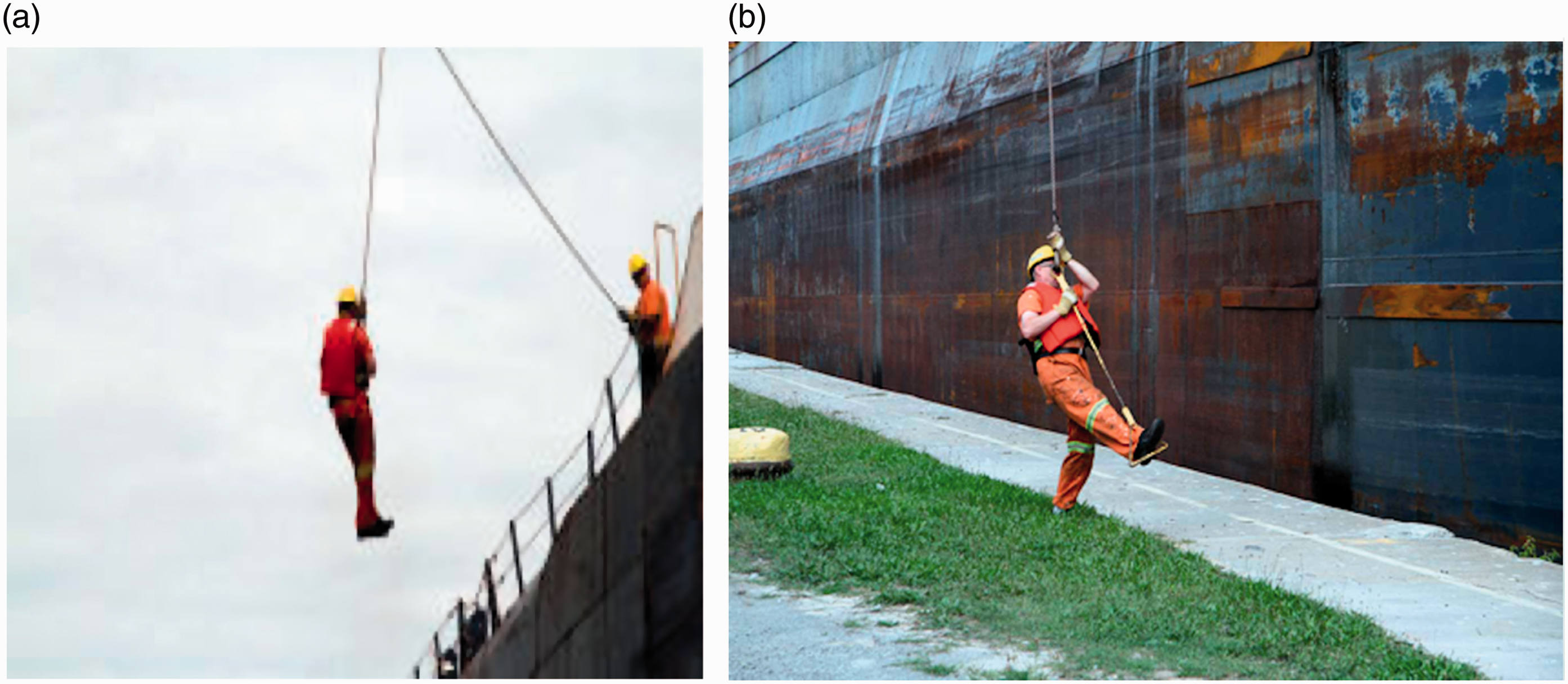
Crew using landing booms. (a) Seafarer is being transitted by the landing boom, (b) Seafarer succesfully lands ashore, Source. Great Lakes and Seaway Shipping Online Inc. (c) 2018, cited with permission.
Although most bulk carriers are laid up in the winter on the Great Lakes, with the assistance of ice-breaking services provided by the Canadian Coast Guard, navigation on the St. Lawrence Seaway continues in winter (see Figure 2). 18 Winter weather is associated with some of the toughest conditions for working on a ship. The accumulation of ice on board ships in the winter can raise the center of gravity, lower the speed, and cause difficulty in maneuvering. Icing can also create various problems with cargo-handling equipment, hatches, anchors, winches, and the windlass.18,19
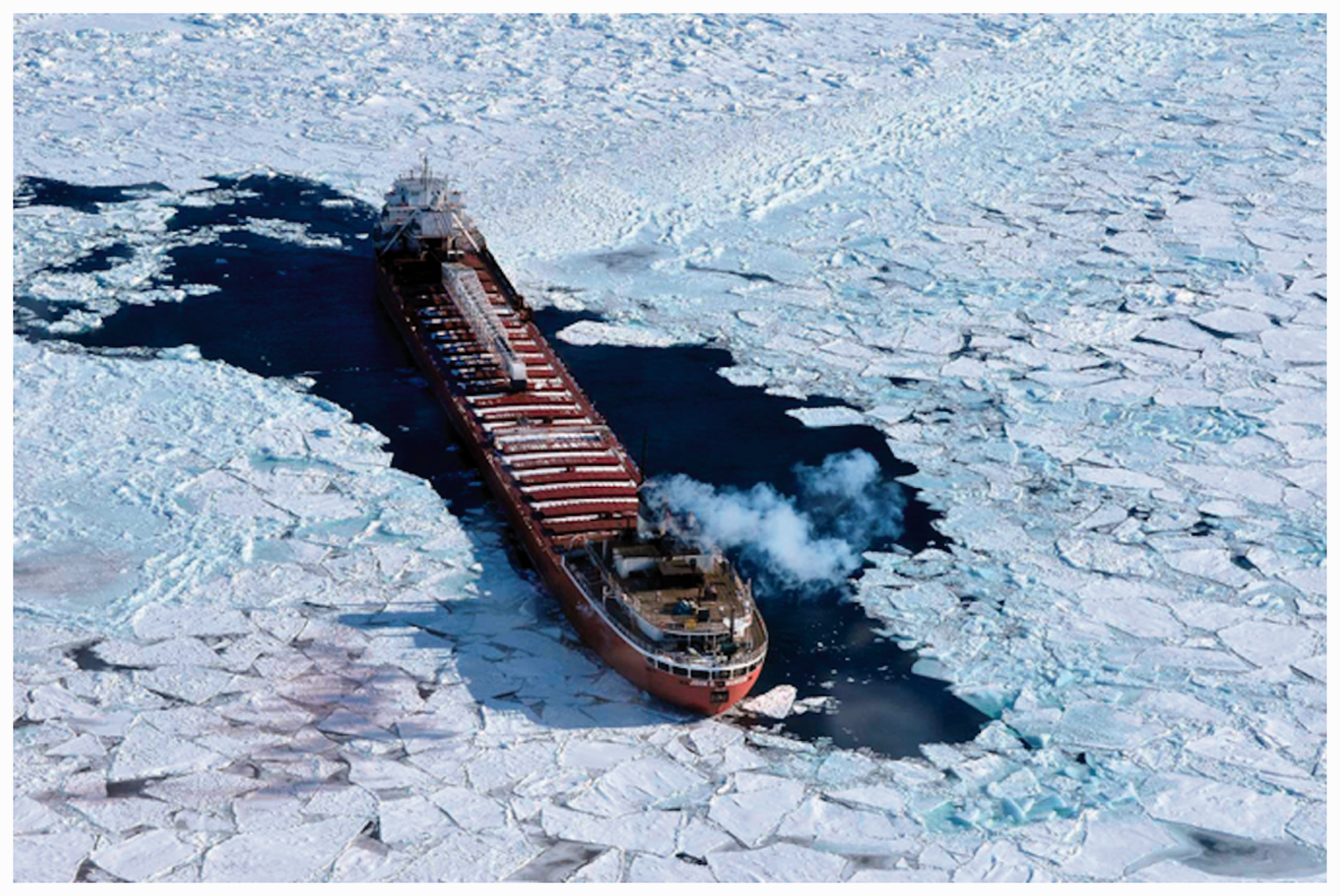
Ice Navigation on Lake Superior, Whitefish Bay. Source. Great Lakes and Seaway Shipping Online Inc. (c) 2018, cited with permission.
Human Factors, Work Organization, and Occupational Hazards in the Maritime Industry
Seafaring remains one of the most dangerous occupations globally. 15 The mortality rates at work in the shipping industry are significantly higher than in the general labor force. A British study found that the relative risk of workplace accidental fatalities in the shipping industry was 21 times greater than in the general workforce. 20 As argued by Lippel and Walters, 21 E-RGM to, from, and within work can have serious effects on OHS by impacting hazards associated with the journey to work, life at work, and life at home. There are key regulatory challenges associated with work-related mobility including in jobs done in mobile workplaces such as seafaring.1,21 Existing studies recognize some of the OHS challenges arising from seafaring occupations such as constraints on the ability of seafarers to leave the worksite (sometimes even in port), extreme weather conditions, long periods away from home, and living and working on a moving platform. 20 However, most existing research focuses only on exposures at work without considering the journey to work. Furthermore, most focus on international seafarers’ OHS and on international seafaring journeys as opposed to coastal/inland seafaring.
Another weakness in the existing literature is the tendency to focus on human factors and risk in maritime transport studies instead of examining OHS challenges arising from E-RGM. As outlined in the 2016 report, Commercial marine shipping accidents: Understanding the risks in Canada, 14 the commonly cited causes of maritime accidents are human and organizational factors; a claim that is echoed in the popular argument that more than 80% of marine casualties are caused by human error.22,23
Hetherington et al. 22 and Rothblum et al. 23 propose a framework for identifying human factors including design issues (automation); personnel issues (stress, fatigue, communication, training, and shift work); and organizational issues (safety culture). From this perspective, cultivating a safety culture to eliminate seafarers’ risky behaviors is promoted as a key strategy for ensuring maritime safety. 22 Furthermore, using the human factors approach to preventing accidents and casualties, accident investigators are encouraged to identify individual seafarers’ flaws. Incident reporting systems may, however, facilitate a blame culture against individual seafarers. As a result of the fear of being blamed, underreporting is identified as a common practice among on board seafarers in research conducted by Bhattacharya 24 in two European shipping companies. Various standards were introduced in the international maritime conventions to reduce the risk of human error in the international shipping industry. These include the Manila Amendments to the International Convention on Standards of Training, Certification and Watchkeeping for Seafarers 25 and the International Safety Management Code (ISM Code). 26 They seek to control seafarers’ qualifications and behaviors. 27
Bloor et al. 28 suggest the focus on “human error” should not encompass blameworthy behavior that arises out of commercial pressures, reduced crew size and turnaround time, inadequate training, excessive hours, and fatigue. In these highly mobile workplaces, work and life are regulated and restricted. Ships were described as a type of total institution by Goffman. 29 Such institutions are purportedly established to pursue some technical task and are justified only on these instrumental grounds. 29 Similar to company towns and operations where workers stay in work camps, one of the totalistic features of ships is that work, rest, and entertainment are all under a single authority on board. The ship operator controls the work schedules and rest hours as well as food choices, accommodations, and entertainment facilities on board. As a result, while working, the safety, health, and well-being of all aspects of seafarers are largely subject to the management practices as well as the hierarchical control on board. 30 In the Maritime Labour Convention, 2006, 31 which came into force in 2013, the Title 3 Regulations provide minimum standards for accommodation, food, and catering on board. Walters and Bailey 15 suggest, however, that the isolation and enclosure of shipboard life have been developed to meet the needs of ship operators and to ensure the crew in mobile and distant workplaces will be responsive to their commands. In the total institution of the ship, hierarchical control, rigid rules around duties and conduct, and strictly structured work shift systems are common working conditions, and they are supported by domestic regulations and international conventions. In this isolated and confined working environment, a majority of seafarers report experiencing moderate to high levels of stress. Lack of, or poor-quality sleep, long working hours, excessive workloads, as well as noise, vibration, and motion on board may all contribute to fatigue among seafarers. 32 Increasing numbers of seafarers report that the motion of ships leads to lack of sleep on board. 33 Fatigue may impair nearly all physical abilities including strength, speed, reaction time, coordination, decision-making, and balance. 34 Fatigue, sleeping disturbances, and loneliness are the main contributing factors to stress levels at sea. 35 Finally, in a case-control study among male Finnish seafarers, Saarni et al. 36 found that occupational exposures to oil and chemical products among deck crew added to their risk of cancer, and engine-room conditions seem to increase risk of lung cancer.
E-RGM as a Factor in OHS of Maritime Workers
Roseman et al. 37 suggest that it is important to consider how public institutions’ policies, including legal frameworks, may exacerbate or fail to remediate social inequalities related to employment-related mobility. The current literature on maritime OHS highlights the importance of this factor. Seafarers who regularly “migrate” away from places of residence to work in a totalistic working environment, a mobile vessel on water, are faced with significant OHS challenges. While they are touched on in the seafaring literature, there are two underresearched areas in the current research on OHS in seafaring: (1) OHS challenges related to commuting mobility between home and ship are often underexamined, 13 and (2) most studies focus on international seafarers and European seafarers, while the experiences of Canadian seafarers and seafarers engaged in coastal/inland trade are rarely examined. Nor are there studies on the confluence of international and internal mobility and international and domestic workers found in areas similar to the Seaway. This confluence leads to overlapping requirements imposed by international, binational, and domestic regulations and an increase in the complexity of OHS regulation and enforcement on these ships.
We have examined the issue of commuting to work and vessel mobility and its relationship to fatigue in another publication. 13 In this article, we report on a case study of Canadian seafaring OHS on the Seaway and Great Lakes to address research gaps and to identify regulatory gaps created by the neglect of domestic shipping, the tendency to normalize and eclipse mobility within maritime OHS studies and regulation, and the failure to explore the confluence of internal, national, and internationally mobile ships and crews and their potential individual and collective contributions to risk and injury in the sector.
Research on the Canadian shipping sector is one way to understand the impact of E-RGM on OHS performance because, as a developed maritime nation, Canada does not have many of the policy-related contributing factors to unsatisfactory OHS performance that have been documented in the international shipping industry. Furthermore, E-RGM can be identified as a major challenge for maritime OHS in this case. Therefore, the study of Canadian seafarers on the Great Lakes and St. Lawrence Seaway allows us to identify the OHS-related challenges arising specifically from E-RGM and the limitation of current legal instruments in empowering seafarers to cope with these challenges.
As argued elsewhere, 13 the E-RGM associated with Seaway seafaring jobs is multifaceted and diverse and includes extended and complex commutes to work and different kinds of mobility within work, each of which has implications for health and safety including fatigue. Working in the maritime industry involves dual mobility: masters and crew travel to and from their homes to join the ships they serve and the work itself involves constant mobility between ports, often crossing provincial and national (Canada–United States) boundaries and dealing with seasonal and regional changes in weather and environmental conditions. As in other sectors, the combination of 24/7 and seasonal and/or 365-day vessel operations, extended commutes, and working away from home create a context where both employers and workers tend to favor long working hours and overtime. Working away from home also requires seafarers to cope with separation from their partners and families, which is one of the important causes of stress experienced by seafarers. 38 Loneliness, homesickness, and “burn-out” syndrome are caused by long periods away from home. These mobility-related dynamics have the potential to affect workers’ health, well-being, safety, and their family life. Thomas et al. 38 suggest the following management strategies to help seafarers cope with separation from families caused by work-related mobility at sea: (1) arranging shorter trips (preferably less than four months), (2) providing paid leaves between voyages, (3) adopting continuous employment instead of voyage-based employment, (4) providing opportunities for families to sail, and (5) helping seafarers and their families access cheaper communication to keep regular contact.
Maritime OHS Regulations
The ILO’s 3 2008 Fundamental Principles of OHS include (1) all workers have rights; (2) occupational safety and health policies must be established; (3) a national system for occupational safety and health must be established; (4) social partners and other stakeholders must be consulted; (5) OHS programs and policies must aim at both prevention and protection; (6) compensation, rehabilitation, and curative services must be made available to workers suffering occupational injuries, accidents, and diseases; (7) education and training are vital components of safe, healthy working environments; (8) workers, employers, and competent authorities have certain responsibilities, duties, and obligations; and (9) policies must be enforced.
Maritime OHS involves international coordination of flag states (states in which a vessel is registered and which has exclusive jurisdiction over the international vessels registered under its flag on the high seas), port states, and crew-supply states which makes the regulations complicated. Maritime OHS is addressed by several international conventions, including the International Convention for the Safety of Life at Sea, the International Convention on Standards of Training, Certification and Watchkeeping for Seafarers, and the Maritime Labour Convention, 2006. However, the implementation and enforcement of the above international maritime safety and health standards depends on ratification by sovereign states. A majority of flag states and crew-supply states are developing countries. 7 International ship managers are able to choose a management headquarters where they can gain access to cheaper labor forces and a lower social security burden, usually in developing countries. 39 Developing countries usually do not have sufficient capacity or political will to implement maritime labor standards. 40 For a long time, the lack of will to enforce international labor standards in flag states has been identified as a major reason for health and safety rights infringements, such as abandonment of seafarers, in the international shipping industry. 41 The lack of effective regulation of labor standards particularly by flag states, such as Panama and Liberia, has been identified as a cause of poor OHS performance in the protection of international seafarers.15,42
Unlike developing countries, with limited resources and will to enforce international maritime labor standards and OHS regulations, Canada has a relatively comprehensive set of labor standards and maritime OHS regulations. Although OHS usually falls under provincial and territorial jurisdiction in Canada, maritime OHS related to seafarers working on federal waters, including the Great Lakes and St. Lawrence Seaway, falls within federal jurisdiction. Marine safety is primarily regulated by the Canada Shipping Act, 2001, 43 the responsibility of Transport Canada. However, there are also labor protection issues in the maritime sector that are regulated by the Canada Labour Code, 44 falling within the jurisdiction of the federal Department of Employment and Social Development Canada. 45 The Canada Shipping Act, 2001 and Marine Personnel Regulations 46 provide standards for competency of seafarers, safe manning levels, working conditions, and rest hours on Canadian ships. b The Canada Labour Code and Maritime Occupational Health and Safety Regulations 47 provide standards for health and safety equipment, crew accommodation, first-aid requirements on board, hazard prevention, and violence prevention. To optimize OHS inspection, in 1998, a memorandum between Human Resources Development Canada c and Transport Canada was signed to authorize Transport Canada to carry out OHS inspections on board Canadian ships. 45
Trade unions play an important role in enforcing health and safety regulations within Canada and internationally. 48 In the Canadian shipping industry, the Seafarers International Union is the major union for unlicensed seafarers. The Canadian Merchant Service Guild represents the majority of ships’ officers and engineers in the maritime industry. Walters 49 has shown that trade union support for representation in health and safety is crucial in determining the effectiveness of health and safety representatives. Johnstone et al. 50 suggest that joint health and safety arrangements involving trade unions are associated with better health and safety outcomes than when employers manage OHS without representative worker participation. Walters and Bailey 15 criticize behavior-based safety management, which is favored by the industry, as its effectiveness is limited due to the absence of workers’ participative arrangements. They argue that trade union-supported worker representation on health and safety at sea could promote good practice in participative OHS management.
The issue of lack of regulation by flag states does not arise in our study. As required by the Canada Shipping Act, 2001, shipowners, managers, and seafarers must have genuine links to Canada. Canadian shipowners cannot normally source their crew overseas. Unless a foreign seafarer becomes a landed immigrant, overseas seafarers cannot obtain certificates of competency from Transport Canada, so they cannot be employed on Canadian ships. In Canada, unlike many crew-supply states, such as China, effective maritime OHS regulations exist, and many seafarers are represented by trade unions.
In addition to national regulations and union representation in the maritime transport sector, as a safety-sensitive industry, industrial self-regulation also plays a role in business compliance with OHS regulations. In the supply chain, for instance, the safety performance of a ship is a major concern of charterers. Although the ISM Code is not binding on ships on the Great Lakes and St. Lawrence Seaway, some shipping companies have chosen to voluntarily adopt the ISM Code and develop safety management systems to improve their competitiveness in the chartering market. 12
Methodology
This research adopted qualitative research methods, which are recognized as valuable instruments to obtain insights into the experiences and views of stakeholders. 51 A key objective was to explore the OHS consequences of the high mobility of maritime occupations for Canadian seafarers on the Great Lakes and St. Lawrence Seaway. Semi-structured in-depth interviews were conducted with seafarers, safety managers, human resource managers, representatives from unions and charities, and key informants from Canadian maritime authorities.
Online invitations were used to recruit interviewees. Based on the contact information available online, e-mail invitations were sent to maritime authorities, unions, and charities. The LinkedIn social medium was used as the primary approach to invite seafarers to participate in the research. In addition, an advertisement of the research and invitation to participate was posted on the first author’s LinkedIn homepage.
Lippel and Walters 21 address the policy challenges associated with E-RGM and OHS by looking at four aspects of the life of mobile workers: getting to work, being at work, living at work, and living at home. The interview schedules were designed according to this framework to inquire as to the challenges faced by the Canadian seafarers with regard to these four aspects. Results led us to adapt this framework to the reality of seafarers, focusing on three aspects—getting to work, at work, and living at home—because seafarers’ working and living conditions while at sea are organized by shifts and are closely connected.
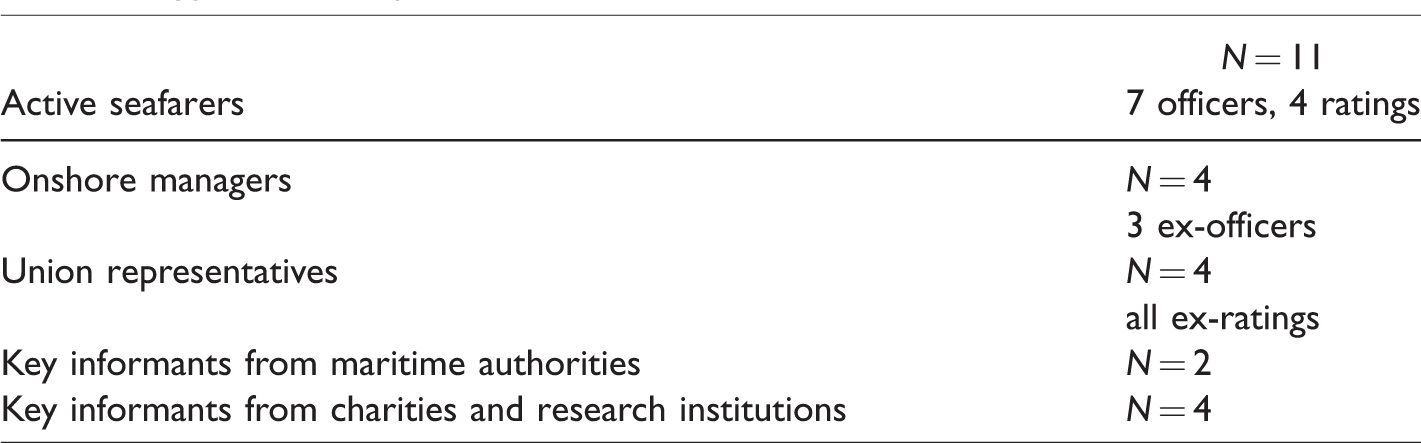
Twenty interviews were conducted between July 2017 and January 2018. Four face-to-face interviews were conducted at the university meeting room and the offices of the interviewees. Another 16 interviews were conducted by telephone and Skype at times and places that were convenient for participants to share their experiences, views, and opinions. Between January 2018 and April 2018, five participants, including one maritime health and safety manager as well as an ex-seafarer from India, contacted the first author and volunteered to participate in the research. Thus, five additional interviews were conducted through telephone and Skype. In total, 25 interviews were conducted and recorded in audio, with an average length of 99 minutes (see Table 1). The audio recordings were transcribed by the first author and NVivo 11 software was used to assist with a thematic analysis of the data. Canada is a country of immigration, and the official languages of the country are English and French. More than one third of the research participants indicated in the interview that their first language is not English. Ethics clearance for this research was obtained from the Office of Research Ethics and Integrity of the University of Ottawa. Pseudonyms of all participants are used to preserve their anonymity.
Types of Participants.
The research methods also included legal doctrinal analysis, documentary analysis drawing on legal sources to provide a technically accurate portrait of the applicable regulatory framework. The first author conducted legal research using both international conventions and Canadian acts and regulations collected from the official websites of the International Maritime Organization (http://www.imo.org/en/KnowledgeCentre/Pages/Default.aspx) and Transport Canada (https://www.tc.gc.ca/eng/acts-regulations/menu.htm). A selection of collective bargaining agreements provided by the interviewees was also analyzed to understand contractual rules applicable to the working conditions of Canadian seafarers on the Great Lakes and St. Lawrence Seaway. A preliminary report on the findings was presented publicly in June 2018 at the 53rd Canada Transport Research Forum held in Gatineau. The audience provided extensive feedback, and findings were validated through various sources.
We now turn to our findings which identify regulatory issues that need to better address OHS challenges arising from E-RGM more broadly, in light of the experiences of the participants in our study.
Findings
Getting to Work: Commuting to the Ports
Commuting by seafarers usually encompasses several legs including driving/taking a taxi between home and airports, flying between home city and port city, and taking another taxi from the airport to the port terminal. In these processes, temporary and sometimes prolonged waiting periods between traffic modes may be necessary.
On the Great Lakes and St. Lawrence Seaway, the main shipping activity is the transport of bulk cargo including iron ore, coal, steel, cement, grain, road salt, and petroleum products. The shipping routes are not fixed and may be varied as per charterers’ orders. For Canadian seafarers, the commuting distances may also vary depending on charterers’ choice of ports. Commuting distances range from local walking distances in a port city, such as Montreal, to traveling thousands of kilometers from Newfoundland and Labrador, Nova Scotia, and British Columbia to Montreal, Thunder Bay, Hamilton, or other ports (see Table 2).
Home Bases of Active Seafarers in This Research.

Many Canadian seafarers reported “feeling tired after their commute” as their primary safety concern, in particular those living in Atlantic Provinces, such as Newfoundland and Labrador and Nova Scotia. Seafarers living in nearby port cities in Quebec and Ontario reported that commuting would rarely affect their ability to work safely on board. One seafarer said, “I could walk to the ship to start my shifts.” However, seafarers living in the Atlantic Provinces reported more challenges in the commuting process. One captain said: It takes me six hours from home to the port. And my first shift task is to complete the transit from Lake Erie, through Welland Canal to Lake Ontario. I have eight locks to pass. They threw me directly to a pilotage shift and I had to be on the bridge for 15-16 hours. The manager did not understand the work and the tiredness of traveling at all. (John, Captain) I spent 17 years navigating on the Great Lakes and St. Lawrence Seaway. I was based in India. Sometimes I joined the ship in Montreal or Halifax. The crew agency in India booked flight tickets for me. I took a taxi from my hometown to Mumbai, about two hours. I flew from Mumbai to Hong Kong, Hong Kong to Tokyo, Tokyo to Seattle, then Seattle to Montreal, or through Toronto to Halifax. From my home to ship, it was about 24 hours traveling. About one in four times I was given a hotel to rest before my shifts. Because the ship was delayed. In most cases I must start to work on board immediately. [ … ] Navigating on the St. Lawrence Seaway requires a lot of work: preparing mooring, cargo watching and picking up provisions. It was a more than full-time job and on the Great Lakes and St. Lawrence Seaway, at least we worked 14 hours a day. I stayed on board for 11 months or longer when I was a deck cadet. (Hari, Captain and health and safety manager of an international ship management company)
The burden of traveling expenses for commuting is key to understanding some of the challenges arising from E-RGM for seafarers. For permanent employees, as per the collective bargaining agreements, companies are obliged to pay for all the transportation costs including taxi costs between airports and port terminals. However, relief seafarers hired to cover leaves taken by permanent employees have to pay for their own travel expenses to the ship. Current legislation clearly stipulates that the representative of the shipowner is liable to pay the costs of seafarers’ return trips to where they first came on board, d but the travel costs to join the ship are not regulated.
Young seafarers, with limited work experience, are more likely to take short relief work and to have to pay the travel expenses to join the ship. As one tunnel man said, “I had little experience and the wage was good. Even [though] I had to pay [travel expenses], it was still a good opportunity for me” (Victor, Tunnel Man).
Experienced seafarers are less willing to pay for the costs of a long commute for relief work. One cook said, “Did you see that job? We have to travel to New York to take the job. It is a one-week job. The wage is not even enough to cover the flight ticket. I would not take that one” (Bob, Cook).
The burden of transportation costs to and from work and the issue as to whether seafarers are paid for the time consumed by mobility is important to understand the extent of “financial expropriation.” 37 In particular, one issue is the (un)willingness of employers to pay for hotels for seafarers after a long trip before they begin active shifts on board. Long commuting, including driving and railway travel, are reported to increase stress and negatively affect the health of workers. 52 In the shipping industry, the fatigue arising from commuting may impair seafarers’ decision-making capability when they begin to conduct safety-critical tasks such as oil loading and looking out on the bridge.
Some companies understand the challenges related to commuting. One manager, for instance, mentioned they would choose strategic switch points for seafarers to join their ships to avoid long-distance commuting fatigue. However, in the absence of clear legal requirements, managers are not obliged to follow these good practices. Considering the special nature of twenty-four-hour transportation work, long working hours are known to generate fatigue and sleepiness among seafarers. 32 Commuting hours are not calculated within regulated working hours, not even as unpaid working hours. Accordingly, one of our policy recommendations is that the timing of shifts on board should be adjusted to take into consideration unpaid commuting time, so as to help seafarers cope with travel-related fatigue.
At Work: Shore Leave and OHS Rights
Ships are a 24/7 operational workplace where a shift work system is applied. In this research, two patterns of shift work were identified: a four on/eight off schedule on bulk carriers and a six on/six off schedule on tankers (see Table 3). In the former situation, seafarers are assigned to standard watches and work eight hours per calendar day on a three-watch system. As per the description of seafarers and union representatives, in this system, seafarers work continuously on board up to three months and then take thirty days off without pay. As per the collective bargaining agreement, the maximum number of continuous working days at sea is 140 days. e
Two-Shift Systems On Board. a

aSee Unifor and McAsphalt Marine Transportation Ltd., Collective Bargaining Agreement: http://uniforlocal4401.org/sites/uniforlocal4401.org/files/units/document/Microsoft%20Word%20-%20MMTL%20Unlicensed%20CBA%20Final%20-%202015-2018.pdf
During these long working periods, shore leaves are crucial for seafarers to have rest time from their heavy workload. When ships call at a port during the cargo loading and unloading process, some crew may have an opportunity to have a short shore break to go to the supermarket to buy groceries. However, with the increasing competition in loading and discharging operations, shore break opportunities are becoming rarer for seafarers. Captain Thomas said: Shore leave is a problem. While I was on the boat last year, I did not get ashore even once. You just work too many hours and have a very short period of time in port. One port had us discharging in 8 hours, shifting to the next dock and loading for 18 hours. The docks [charterer] no longer want to pay demurrage to the ship for unnecessary delay. I had to account for every single minute of a vessel passage and load/discharging. Every month we would get a report that gave the numbers for each vessel in the fleet and comments were made regarding certain vessels and how their numbers were. It was a big point of pride for the crew if they had good numbers. As I was told, the boat does not make money by being stationary. Now there were ports I could have gone ashore, but either I didn’t want to, or I felt sleep was more important.
One ex-chief engineer described a dangerous working situation when his request to refuse to work was denied: The engine was too hot to continue operating. I called the captain. I told him that I had to stop the engine otherwise it might explode in any minute. But the captain said no and insisted that the engine must keep operating because we were in shallow water. If the engine was off, then we might ground any minute. This is a very dangerous practice from an engineer’s perspective, but this is also a normal working condition for us at sea. (Sam, Chief Engineer) [F]or the purposes of addressing health and safety matters that apply to individual work places, and subject to this section, every employer shall, for each work place controlled by the employer at which twenty or more employees are normally employed, establish a workplace health and safety committee and, [subject to s. 135.1 which provides that the employee representatives are to be selected by the union or by the employees], select and appoint its members.
However, an employer is not required to establish such a committee for a workplace that is on board a ship in respect of employees whose base is the ship.
i
Canadian ships are, however, required to have health and safety representatives. As per Section 136 (1) of the Canada Labour Code, Every employer shall, for each workplace controlled by the employer [ … ] for which an employer is not required to establish a workplace committee, appoint a person [selected by the union or by the employees] as the health and safety representative [ … ].
Application Scope of the Safety Management System.a
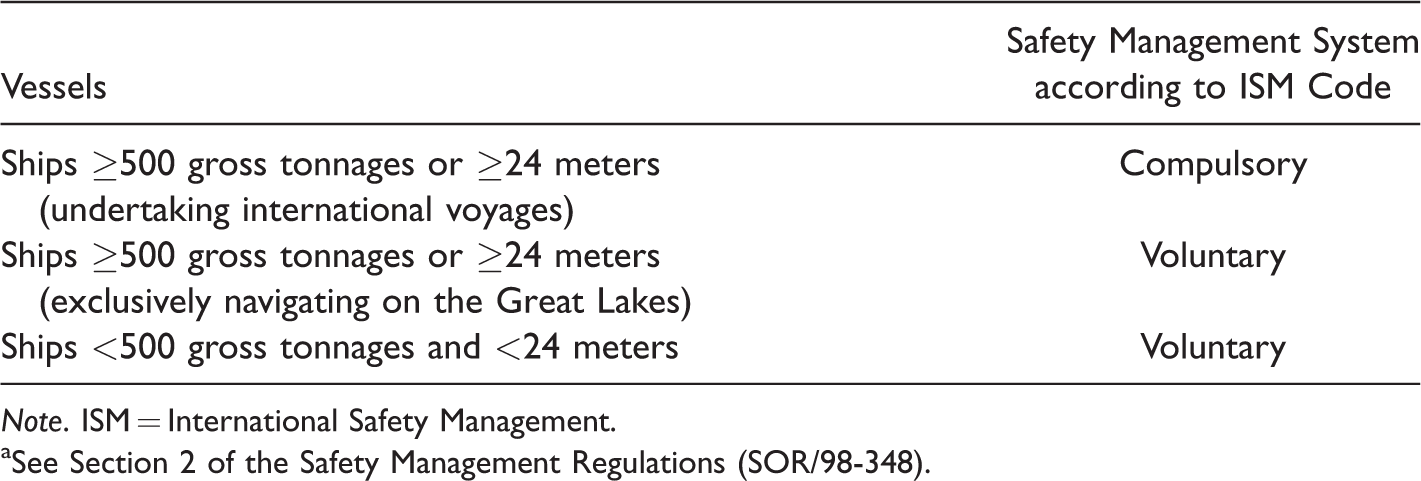
Note. ISM = International Safety Management.
aSee Section 2 of the Safety Management Regulations (SOR/98-348).
Most seafarer participants said they would feel comfortable communicating safety hazards to their safety officers or at a safety meeting. But there are still factors that might hinder it. For instance, one rating said: The ship tunnel is short. If I wear hard hat, my head will be stuck here and there. Maybe because the ship was built in Asia, and Asian guys are shorter. I chose not to wear a hard hat, but I would never report this to the safety meeting. The morale on ship is important and no one really wants to work with a guy who always complains. (Edmund, Tunnel Man) The ship is like a big family. To be a safety representative is like “to be a safety mom or dad” to instruct their “children” to work safely. Not many seafarers like this role. They usually have to take the role in turn. (Delta, Chief Engineer)
However, accidental occurrences may reduce seafarers’ access to their safety bonus, as one second officer said: Money makes people do strange things. On one ship I worked on, if we reported an actual accident, all of us would lose the safety bonus, about 2-3% of our annual income. So I found some people who had injuries just kept the injuries to themselves because they did not want to lose the safety bonus. (Claude, Second Officer)
This “safety bonus” system may discourage seafarers from reporting actual accidents, because this may reduce cash income of all crew on the ship thus potentially affecting relationships with their colleagues and supervisors. 55 In a totalistic working environment on board, relationships with colleagues and supervisors are extremely important. For seafarers, to make an OHS complaint, may make them into “troublemakers” on board. This will not only affect their income but may also impact future working opportunities and career development. 24
At Home: Work–Life Balance Challenges for Seafarers
Work–life balance can be particularly difficult for seafarers as working on ships for six weeks to three months implies long absences from home. Transition between work and home can be trying. Captain Thomas said, “The first three days off the ship were spent sleeping and eating. You do not want to socialize or spend more time than needed with people.”
For relief seafarers, who are required to cover leaves taken by regular employees, it may be difficult for them to take peaceful rest at home. Lima (Second Engineer) described his experiences: I was a relief officer, and that was written on my union paper. I had a lot of work, but there was zero job security. I worked four to five months on the Lakes and then I came home a couple of days. Then they would call me and wanted me to come back. I had to say yes, because if I said no there was nothing guaranteed [ … ] that they would call me back. [ … ] I could not have (future) work opportunities. I do not have the seniority in the union, so I had to work from vessel to vessel. When they need me, I have to be there. You see all men and we are like a family on board. But when you go home, the guys will see each other from time to time at home. I am not going to do that, and I cannot go to another guy’s home when his wife is there. [ … ] Then you tend to go home without a network of friends because you spend most [of your] time with these guys on board. Then you come, and you do not have them at home. I think women tend to be more vulnerable to being lonely even when they come home.
Concluding Discussion
This study identifies OHS challenges faced by Canadian seafarers on the Great Lakes and St. Lawrence Seaway and gaps that exist in current maritime OHS regulatory measures. Getting to work presents a variety of health and safety concerns associated with commuting hazards. In Canada, researchers find that bad weather, poor road conditions, and long commuting may all present OHS challenges for workers. 21 However, the implications of commuting mobility for seafarers are not sufficiently considered in the current OHS legal frameworks in Canada. One study shows that for the first fifteen days on board, international seafarers are more likely to be injured than after ninety days on board. 59 The lack of rest between long commuting and adjustment to shifts on board may be one reason for the high risk of injury at the beginning of the voyage. As a category of transportation workers, seafarers confront similar challenges arising from E-RGM, to those of truck drivers and pilots.60,61 Shift work systems, an inherent part of 24/7/365 mobile transport work scheduling, raise significant OHS challenges for workers, including fatigue and fatigue-related accidents. The findings from this study in addition to those in previous studies suggest that new legal instruments should be adopted to protect mobile workers, including seafarers, from travel-related fatigue risks.
The OHS challenges associated with commuting to and from work have always been overlooked by maritime OHS regulation and literature as is the case in many other sectors and contexts. However, in this research, Canadian seafarers share their experiences of the accumulated fatigue attributable to long commuting followed by immediately beginning their shifts on board. One captain and several chief engineers, the top managers on board, identified these accumulated fatigue risks and suggested the crew should have proper rest after long commuting hours to join their ships. Good practice that would allow seafarers to rest before the beginning of their shifts needs the cooperation of shore-based human resource managers. In addition, we recommend changes to the Marine Personnel Regulations to exclude commuting hours from the statutory minimum rest hours for all seafarers working on Canadian vessels. k
Due to continuous mobility, ships are an isolated and confined working environment. The safety of the ship comes before individual seafarers’ rights to health and safety, and this is why a seafarer’s right to refuse dangerous work can be set aside by the captain for the sake of ship and general crew safety. Workplace safety committees are not compulsory for ships. This exemption is likely to limit the power of seafarers in negotiating OHS concerns with management in these workplaces. Furthermore, the fact that “the ship is like a big family” means that speaking out on health and safety is problematic, an issue that can be further exacerbated by safety bonuses and other economic incentives that may contribute to underreporting. 55
Although many shipping companies adopt behavior-based safety management systems in compliance with the ISM Code, the effectiveness of self-regulation is questionable. First, safety management systems are not mandatory for Canadian ships below five hundred gross tonnages and those that are shorter than 24 meters. Seafarers working on small ships may not be adequately protected by safety management systems. Second, management is entitled to incorporate measures to discourage seafarers from communicating their safety concerns. This is illustrated by the practice of offering safety bonuses which encourages near miss reports but may discourage reports of actual accidents. The underreporting of safety accidents has been identified in previous studies on international safety management.24,62 The isolated working environment makes seafarers, like others working in remote worksites 21 , an invisible work force. Furthermore, the “safety bonus” practice encouraging accident underreporting contributes to the invisibility of the OHS issues confronting seafarers. 62 We recommend that anonymous safety accident reporting systems be established and that seafarers, either individually or collectively, should not be “fined” or suffer financial loss for reporting accidents.
According to Walters and Bailey’s 15 study on international shipping, the effectiveness of behavior-based safety management systems is limited due to the absence of worker participation. Section 135 of the Canada Labour Code Part II stipulates workers’ rights to participate but explicitly excludes seafarers’ access to a workplace health and safety committee on board. As a result, seafarers have to rely on a safety representative who is isolated and potentially seen as a troublemaker by his or her colleagues. Regulatory protections are replaced by behavior-based safety management systems, and it would seem that Canadian seafarers are deprived of the OHS right to participate granted to other workers in Canada. Our research results support our recommendation that seafarers’ right to access a workplace health and safety committee on board should be equally protected, as we have found that individual safety representatives are more likely to be marginalized, whereas worker members of a committee would be less isolated.
In the maritime OHS literature, mobility is regarded as an inherent part of seafaring occupations. Many studies focus on “human elements” and suggest the elimination of human errors, including individual and organizational errors, to reduce accident and injuries. However, if the OHS challenges arising from mobility of ships and commuting mobility are ignored, tackling the human element alone cannot protect seafarers from OHS hazards on board. This research sheds light on the challenges arising from E-RGM for Canadian seafarers and contributes to a mobility-based analysis of OHS concerns. Instead of framing prevention solely through a human factors approach which may lead to a “blame culture,” prevention analyses that include E-RGM in their focus may provide a new approach to help seafarers, managers, and policy makers to understand OHS hazards without shedding blame on the workers.
Last but not least, gender-related OHS challenges arising from E-RGM have not been fully examined in the current literature. In this study, only one female seafarer participated in this research, which restricts our discussion about this topic. With the limited data provided by this female seafarer, there appears to be a gender-based difference of maritime OHS challenges in the Canadian shipping industry. Future studies should pay attention to this research gap.
This exploratory study has strengths, as it is the first study to look at this population from an E-RGM perspective, linking findings to the regulatory environment. It also has limitations. The themes of E-RGM-related OHS challenges emerged from the qualitative interviews and are based on self-reports from a small sample of interviewees. A broader understanding of occupational hazards and challenges related to E-RGM among Canadian seafarers requires more research. Future studies could broaden the scope of the research to include quantitative data related to injuries at different stages of work at sea and perspectives from shipping companies and maritime safety authorities in order to develop a more systematic understanding of E-RGM-related OHS challenges, management, and regulation practices.
Footnotes
Acknowledgments
The authors wish to thank Craig Slatin and Barbara Neis and the anonymous reviewers for their insightful comments. They also wish to thank the participants in this study.
Declaration of Conflicting Interests
The author(s) declared no potential conflicts of interest with respect to the research, authorship, and/or publication of this article.
Funding
The author(s) disclosed receipt of the following financial support for the research, authorship, and/or publication of this article: This research was funded by the On the Move Partnership: Employment-Related Geographical Mobility in the Canadian Context, which is a project of the SafetyNet Centre for Occupational Health and Safety Research at Memorial University. On the Move is supported by the Social Sciences and Humanities Research Council through its Partnership Grants funding opportunity (Appl ID 895–2011-1019), the Canada Foundation for Innovation, InnovateNL, Government of Newfoundland and Labrador, and numerous university and community partners in Canada and elsewhere.