







Abstract
Between 1917 and 2007, Alcoa operated an aluminum smelting plant in Badin, North Carolina, resulting in hazardous occupational and environmental exposures in West Badin, a predominantly Black community. We partnered with the Concerned Citizens of West Badin Community to document the experiences of prior employees and their families. We used a community-engaged survey approach to summarize residents’ workplace and community-level experiences. Fourteen interviews were coded for recurring themes. Potroom work was the most frequently reported job. Occupational exposures included asbestos, extreme heat, and dust inhalation. Additional workplace stressors included take-home exposures and racism. Most participants expressed concerns about environmental exposures as well. Health conditions most frequently reported included cancer, heart disease, and lung disease. Badin residents experience cumulative impacts of occupational and environmental hazards resulting from Alcoa's operations. This survey served as a tool for documenting their experiences, identifying ongoing environmental concerns, supporting community organizing, and highlighting the resilience of the West Badin community.
Keywords
Introduction
The 1987 United Church of Christ publication, Toxic Wastes and Race in the United States, concluded that toxic waste facilities were sited more frequently in communities of color. 1 Various studies have since reported disparate siting of hazardous waste sites and industrial facilities in communities of color.2–4 In addition to the disparities in environmental exposures, these communities also bear a disproportionate burden of hazardous occupational exposures.5–7 One such community is West Badin, NC, which has faced years of environmental contamination, hazardous workplace exposures, and adverse health conditions related to aluminum smelting operations in their town. 8
Between 1917 and 2007, Alcoa (formerly the Aluminum Company of America) operated an aluminum smelting facility in Badin, North Carolina (NC). 8 Badin began as a company town. Alcoa provided all services and infrastructure, and to date, much of the land in Badin remains under Alcoa's ownership.8,9 Badin was originally established as a racially segregated town, divided by a highway, with Black residents living in West Badin and white residents living in East Badin. 10 Following its incorporation in 1990, the town has been governed as a single municipality, obscuring demographic differences in publicly reported data. Nevertheless, West Badin remains predominantly Black, while East Badin remains predominantly white. 10 Notably, Alcoa's aluminum smelting facility and dumping sites were and still are located in West Badin. 8 Residents of West Badin have expressed concerns regarding the long-lasting impacts of Alcoa's operations on their community.11–13 Former Alcoa workers have further shared concerns about personal exposures to hazardous substances on the job and concerns that they had unknowingly brought take-home exposures to family members (eg, washing work clothes with those of family). 9
Primary aluminum production involves 2 main steps: (1) the refining of bauxite into alumina and (2) the electrolytic smelting of alumina into aluminum metal. The smelting step occurs in the potroom, where alumina is dissolved in molten cryolite and reduced to molten aluminum in large, carbon-lined steel pots.14,15 Key tasks in an aluminum potroom include operating and maintaining pots through activities such as anode changing, tapping molten aluminum, monitoring pot performance, and adding alumina, as well as dismantling and rebuilding pots. Additional tasks involve mechanical and electrical maintenance, operation of cranes and vehicles, and transporting metal out of the potroom. 14 Potential hazards related to working in the potroom include exposures to dust (eg, alumina, fluoride dust), coal tar pitch volatiles, carbon monoxide, fluoride, sulfur dioxide, extreme heat, and noise. 14
Another major concern is the lack of cleanup efforts by Alcoa and the local, state, and federal governments. Although the Alcoa plant is no longer operating, the unlined landfill, plant site, and other dumpsites remain in West Badin. Community members are concerned that hazardous substances continue to leach into the soil and local waterways. 16 Alcoa currently maintains a National Pollution Discharge Elimination System (NPDES) permit with the NC Department of Environmental Quality (NC DEQ), which allows runoff from the plant sites into local waterways, including Badin Lake and Little Mountain Creek.9,17 These waterways have historically been used recreationally by Badin residents for activities such as fishing, swimming, and boating, raising additional concerns about hazardous exposures. 8 In addition, Badin Lake is a drinking water source for nearby communities. 18 Both the work-related and community-level exposures to hazardous substances have raised health concerns among West Badin residents, who report high rates of cancer and early death in their community.9,19 Residents have also expressed concerns regarding exclusion from decision-making processes affecting their community. 13
Since 2013, the Concerned Citizens of West Badin Community (CCWBC) have worked to advocate for contamination remediation in their community. To date, they have partnered with academic partners and nonprofit organizations to address their concerns. These partnerships have resulted in an ethnographic play written and produced by Dr Pavithra Vasudevan based on community interviews; various seminars hosted with the North Carolina Environmental Justice Network (NCEJN), the Reimagining America Project, and the University of North Carolina at Chapel Hill (UNC-CH); rallies hosted with the NCEJN; various news articles9,11–13,20–25; and research studies and publications.5,8,10,19 Major findings from prior research publications were that (1) Black workers were most likely to be hired into undesirable and dangerous jobs (eg, in the potroom)5,8 and the least likely to transition out of them, 5 (2) potroom workers had higher all-cause and cancer-specific (respiratory, bladder, mesothelioma) mortality rates compared to those who never worked in the potroom, and (3) all-cancer, bladder cancer, and mesothelioma rates were elevated among Alcoa Badin employees compared to the NC population. 19
The objective of this study is to document the experiences of Black West Badin residents who either worked or had family members who worked at the Alcoa aluminum smelting facility. We used a community-engaged survey approach to summarize collective experiences of West Badin residents on the job and in the community. Whereas prior studies on the impacts of industrial facilities on workers’ health and the environment have primarily been industry-led, our study takes a rare approach and centers community voices, concerns, and experiences. Our study further expands on the epidemiologic studies5,19 described above by supplementing with workers’ and family members’ experiences and perspectives. This information is harder to capture via surveillance and administrative data, and therefore, is typically missed in traditional epidemiologic studies. While the prior studies5,19 focused solely on occupational exposures and experiences, the current study further assessed participants’ experiences related to environmental exposures. The current literature on the use of community-engaged survey methods to address environmental justice issues, particularly those relating to industrial pollution, has been slowly growing.26–42 A growing number of studies in the occupational health sciences are also using community-based methods.16,42–46 Still, occupational epidemiology has remained limited in its use of community-engaged research methods for centering workers’ experiences and contextualizing exposures. 47 Our study is unique in that it leveraged the strengths and lived experiences of West Badin residents to document both environmental and occupational exposures related to Alcoa's operations. Documentation of community experiences not only serves as a record for future reference but also serves as a tool for community organizing and information sharing.
Methods
Research methods for this project were developed through collaboration among researchers at UNC-CH, University of Texas-Austin (UT-A), and the CCWBC. The team's previous epidemiology analyses were community-informed research that reflected community concerns but were limited by traditional epidemiologic methods.5,19,47,48 By design, traditional epidemiologic methods focus on specific exposure-outcome relationships. They have difficulty including community members and workers in a single study due to differing exposure pathways and methods of assessing exposure (especially retrospectively). Epidemiology is inherently quantitative and does not deal with qualitative findings that capture lived experiences. 47 To capture what epidemiology cannot, we developed an open-ended household survey designed to document community experiences 47 The survey was developed through a slow process, modeled after one used in an effective scientist-community collaboration documenting health impacts of living downwind of the Hanford nuclear facility. The process was iterative, comprehensive, and reflected scientific and community input, valuing each body of expertise equally. 29
In initial team planning meetings, the CCWBC identified the community-engaged survey as the best approach for addressing community needs. The CCWBC elected to conduct a survey, consisting of open and closed-ended questions on occupational and environmental exposures and illnesses. The CCWBC holds monthly community meetings in Badin. The researchers worked with CCWBC over several regular community meetings to draft the survey, collect feedback from community members, and finalize survey questions. During these conversations, CCWBC members prioritized validating and documenting experiences, especially those negated and overlooked by Alcoa and local government in public dialogue concerning the facility's impacts. 9 One example of a negated experience was Alcoa's claim that polychlorinated biphenyl (PCB)-laden oil was not used to keep dust down on the roads in West Badin, despite prior workers’ testimonies of spraying the oil in the community.
The final survey included 6 sections: (1) demographics, (2) work exposure history, (3) health history, (4) impacts, (5) comments, and (6) results sharing (full survey available in supplemental materials). Survey participants were invited by word of mouth by CCWBC members, and team members also solicited participants door to door. Ten-dollar Visa gift cards were offered in exchange for study participation. Eligible participants were Black West Badin residents who either previously worked at Alcoa or had family members who worked at Alcoa. Participants provided informed consent prior to their interviews. The team, which consisted of researchers and CCWBC members, hosted a 3-hour training at the Badin public library for the research assistants who would be conducting the interviews. The training included concepts of ethical conduct of research, survey collection methods, history of the CCWBC, and respectful engagement of community members. Recorded interviews were transcribed using Otter.ai, and transcripts were reviewed and corrected by UNC-CH and UT-A research assistants. Coding of interview transcripts was completed via Qualtrics. We first used deductive coding to create a list of codes based on the interview questions. We then used a grounded theory-informed inductive coding approach, 49 where we added new codes based on themes emerging from participants’ interview responses rather than relying only on predefined codes. Codes were organized by theme and frequency of respondents. Exemplifying quotes were selected for each theme to place associated codes in context.
Results
Demographics
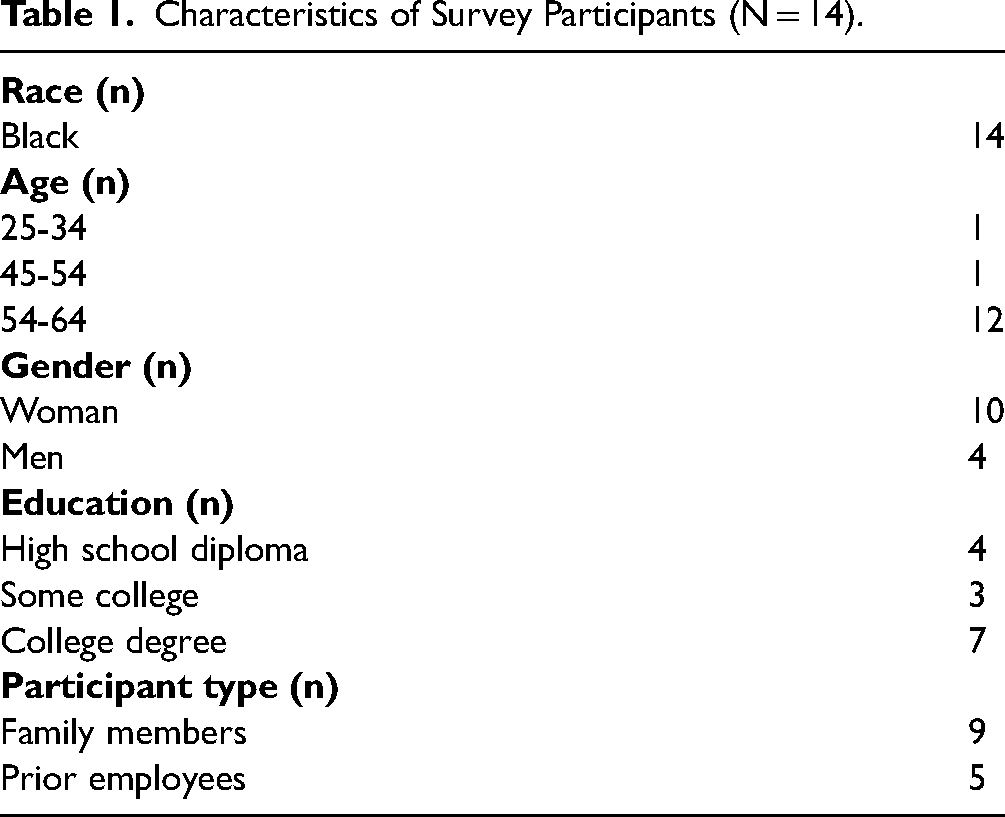
In total, 14 West Badin community members participated in the study. Table 1 describes the study participants’ characteristics. Most participants (N = 12) were 55 years or older. All participants identified as Black. Ten women and 4 men participated. Four participants reported completing at least high school, 3 reported completing some college, and 7 reported completing college degrees. Among the 14 participants, 5 were past Alcoa employees and 9 were family members.
Characteristics of Survey Participants (N = 14).
Survey Response Themes
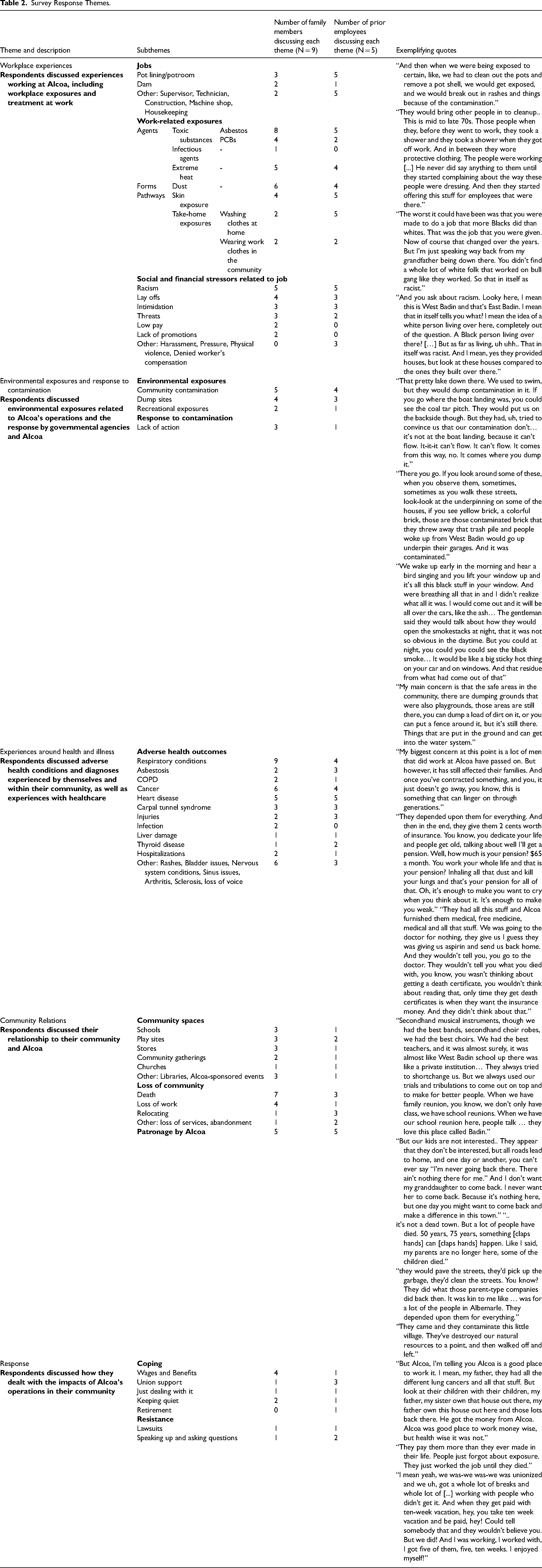
Overarching themes included workplace experiences, environmental exposures and response to contamination, experiences around health and illness, community relations, responses to and awareness of Alcoa's impacts on the community. Descriptions of themes, subthemes, response counts, and exemplifying quotes are provided in Table 2.
Survey Response Themes.
Workplace Experiences
All participants reported having relatives who worked at Alcoa. Among the 14 study participants (prior workers and family members of prior workers), the reported number of years that relatives worked at Alcoa ranged from 5 to 44 years. Most reported that relatives had worked at least 25 years in the plant. Of the 5 past employees who participated in the study, years worked at the plant ranged from 24 to 42 years. Three mentioned having been inducted into the 25-Year Club, for which they received a plaque, a check, and 4 extra weeks of paid vacation. Positions worked at Alcoa included pot lining/potroom work, working at the hydroelectric dam, housekeeping work, supervisory positions, technician, working in the carbon plant, construction team, engine department, machine shop, control center/power division, and working the crane (Table 2). The most frequently reported job was in the potroom. All of the prior workers participating in the study reported potroom work, and 3 of the family members participating reported having relatives who worked in the potroom.
Participants reported that workers at the facility were exposed to extreme heat, infectious agents, and toxic substances on the job. Extreme heat exposure was reported by 5 family member participants describing their relatives’ experiences and by 4 prior workers themselves. One family member reported that a relative had contracted an infection while working at the facility. Reported toxic substance exposures included asbestos (8 family members and 5 prior workers) and PCBs (4 family members and 2 prior workers). Additionally, 6 family members and 4 prior workers described work-related exposure to dust, likely representing a mixture of toxic substances, through inhalation. Reported exposure pathways included skin absorption as well. Participants indicated that the company did little to protect employees from these exposures. While participants were not all asked specifically about personal protective equipment (PPE) or occupational safety enforcement, a few participants commented on the lack of enforcement of PPE use and safety protocol up until the mid-70s. Despite these exposures and the relative lack of protection, one prior worker reported that workers were frequently denied workers’ compensation.
Reports indicate that workers’ families experienced take-home exposures, since workers wore their soiled work clothes outside the community (eg, to stores, home, church) and washed their work clothes at home. Skin exposure to toxic substances was reported by 4 family members and 5 prior workers. Among the reports of take-home exposures, 2 family members and 5 prior workers reported work clothes being washed at home, and 2 family members and 2 prior workers reported employees wearing their work clothes throughout the community. Reports indicate that the company did little to protect workers’ families from take-home exposures. Participants reported that it was not until the late 90s/early 2000s when employees were issued uniforms, which would be washed onsite as opposed to at home. The lack of on-site laundering contributed to take-home exposures that exposed workers’ families and thereby extended workplace hazards beyond the workplace.
Participants reported on social and financial stressors related to working at Alcoa. Among the family members who were interviewed, job-related social and financial stressors experienced by relatives included racism (N = 5), layoffs (N = 4), intimidation (N = 3), and threats (N = 3). Among the 5 prior employees, the most common stressors experienced included racism (N = 5), layoffs (N = 3), and intimidation (N = 3). Participants also reported harassment, including sexual harassment, physical violence, and pressure on the job.
Environmental Exposures and Impacts
Participants reported experiencing contamination throughout the community. Most (N = 9) reported being concerned about Alcoa's contamination of West Badin. There was reporting of air, soil, and water pollution, as well as take-home exposures, as discussed above. Participants noted concerns around mysterious substances being released from smokestacks at the plant, coating their cars and windows, and the strong smell permeating the community. One participant noted that bricks contaminated with several carcinogenic agents in spent potliner from the plant, which were dumped in the trash pile, were given by Alcoa to residents as “gifts” to be used at their homes. Participants also discussed Alcoa's dump sites within the community (N = 7) and shared information about recreational exposures (N = 3). Participants noted concerns around contamination of Badin Lake, which was and still is used for swimming and fishing. One participant reported finding coal tar pitch near the boat landing. Others expressed concerns about Alcoa's dumpsites being used as playgrounds by the local children. A few participants (N = 4) expressed frustrations with the lack of action to address contamination in the community. Several noted disappointment around the lack of cleanup efforts and Alcoa's exit from the community.
Experiences of Health and Illness
All 9 of the family members of workers who participated in the study reported that a relative who worked in the plant suffered from a respiratory condition (including COPD, asbestosis, and coughing), making these conditions the most frequently reported health outcomes reported by family members. The next most frequent was cancer (N = 6), followed by heart disease (N = 5), carpal tunnel (N = 3), and infections (N = 2). Other reported outcomes included injuries (N = 2) and hospitalizations (N = 2). Among the 5 prior employees participating in the study, participants reported experiencing heart disease (N = 5), cancer (N = 4), respiratory conditions including asbestosis (N = 4), carpal tunnel syndrome (N = 3), injuries (N = 3), and thyroid disease (N = 2). Other conditions mentioned included rashes, bladder issues, nervous system conditions, sinus issues, arthritis, and sclerosis.
Participants reported workers and community members receiving care from both the Alcoa doctor and one other non-Alcoa doctor working in town. The nearest hospital and ambulatory service were (and are) in Albemarle, so participants traveled to Albemarle for emergency services. Participants generally reported having great health insurance and access as Alcoa employees and family members of Alcoa employees; however, not everyone trusted that the Alcoa doctor was honest or that they were receiving the best care. Further, participants reported having little healthcare coverage and support after Alcoa closed the Badin facility.
Community Relations
Participants reported numerous sources of support within the community, including play sites (N = 5), schools (N = 4), stores (N = 4), community gatherings (N = 3), and churches (N = 2). Participants also mentioned that Alcoa sponsored events in the community, including festivals and field trips, prior to the facility's closing. Participants further reported a strong sense of community and pride within West Badin and Alcoa.
There has been a substantial loss of community following the closing of Alcoa. Many reported losing community and family members to death (N = 10). Participants also discussed the loss of work (N = 5) and opportunities due to Alcoa closing and also due to residents’ inability to continue working as a result of illness. A few participants (N = 4) reported losing community by way of relocations. There is concern about the younger generations leaving due to a lack of opportunities. Other aspects of community loss reported included loss of services (eg, trash and mail services) after Alcoa left and general feelings of abandonment by Alcoa.
The town of Badin was built around and maintained by Alcoa, and there was a strong theme of company patronage, up until the time that Alcoa closed. Several respondents (N = 10) described a familial relationship between Alcoa and the community. Participants discussed the resources and support the company provided to workers and their families in a way that functions like a paternal relationship, sometimes critically and sometimes uncritically. By establishing a company town, Alcoa positioned itself as a caretaker of Badin residents.
Response to and Awareness of Alcoa’s Harm in the Community
Despite the harm done by Alcoa, several participants (N = 5) noted that Alcoa paid well and provided impressive employee benefits (eg, housing, vacation time, healthcare). Prior workers reported that the leadership of the union (United Steelworkers) advocated for equitable access to spaces and for healthcare and diagnostic testing. The union also filed lawsuits to protect workers’ health. In addition, participants reported pursuing lawsuits independently of the union and speaking up as residents started noticing trends around illness and deaths. It is important to highlight that many participants (N = 6) reported that residents and Alcoa workers were not aware of the toxicity of exposures until after the harm was done. Ways of coping with the situation included accessing resources and support through the union (N = 4), keeping quiet (N = 3), just dealing with it (N = 2) and retiring.
Discussion
For over a century, West Badin residents have suffered from environmental and occupational hazards relating to Alcoa's aluminum smelting operations.5,8,9,11,12,19,20,23 Although the plant is no longer operating, the community remains concerned about exposure to hazardous substances in the environment. Currently, the CCWBC opposes Alcoa's stormwater discharge permit, which allows continued runoff from the plant site into local waterways. Instead of continued DEQ permits, the CCWBC advocates for cleanup of the community and safe removal of the hazardous waste from the plant site and landfill. Another major concern of the community is the recent and sudden demolition at the plant site, which raises questions about pollution for the neighboring West Badin community. West Badin residents have reported seeing dust coming from the demolition site that likely contains spent potliner from the smelting process, contaminated with cyanide, arsenic, lead, mercury, cadmium, polycyclic aromatic hydrocarbons (PAHs), and PCBs. 50 These ongoing exposures are especially concerning due to the high rates of illness reported in the community. 19 Almost all participants in this study reported personally experiencing or having family members who experienced cancer, heart disease, and/or respiratory conditions. Prior work also indicated elevated cancer rates among prior Alcoa employees and among those who worked in the potroom.5,19 Continued exposure to harmful agents could further exacerbate these conditions.
It is important to note the extended duration of occupational exposures and potential intergenerational effects. Not only were workers exposed to hazardous conditions but many of them were exposed for decades. Three of the 5 prior workers in this study reported being in the 25-Year Club, also known among the workers as “The Graveyard” since members reportedly died early. A wall of 25-Year Club members’ photos at the Badin Conference Center serves as a visual reminder of the far-reaching impact of occupational exposures in Badin. In addition, participants reported having had family members, grandparents, parents, and children who worked at the plant. Thus, harms experienced on the job were multigenerational.
It is also important to note the delay in provision of PPE and safety protocols. Occupational safety and health were not federally regulated in the early years of operation. One participant noted that workers did not begin wearing protective clothing or showering after work until the 70s and did not begin washing their clothes at the plant until even later. The reported lack of enforcement of PPE use and safety protocols, along with the absence of on-site laundering of work clothes, highlights gaps in occupational safety and health practices during the plant's earlier years of operation. These examples also reflect broader failures by Alcoa to implement protections across levels of the hierarchy of health and safety controls. 51 Within the hierarchy of controls, PPE is considered the least effective strategy when used in isolation and is most protective when combined with other higher-level controls (ie, elimination/substitution, engineering, and administrative controls). Study participants shared no accounts of Alcoa implementing practices for eliminating, reducing, or controlling hazards at the facility. This suggests that workers were not fully protected by effective exposure prevention strategies. This is especially an issue among the Black Alcoa workers, who are reported to have worked the dirtiest and most dangerous jobs,5,19 consistent with the experience of Black workers in closely related sectors. Segregation of jobs and tasks is only one aspect of the large role of postemancipation occupational segregation in driving racial health disparities. Black workers were segregated into the most dangerous manufacturing industries (such as aluminum smelting and coking work), as well as the most hazardous jobs within those industries. 52 In our study, working in the potroom was the most commonly reported position. This kind of work is one of the most dangerous jobs in the plant. Its hazards included extreme heat, PAHs, and various types of dust from the smelters. 14
Most study participants further reported experiences with racism on the job and in the community. Examples of racism in the community included segregation into East and West Badin, differences in resources provided between East and West Badin, siting of the plant and landfill in West Badin, and prohibiting Black residents from joining the local country club. Examples of racism in the workplace included assigning Black workers to the most dangerous jobs at the plant, informally segregated communal spaces, such as break room and showers, within the plant (enforced by harassment and intimidation), and racist remarks by coworkers. One participant shared, “I was the first Black in the department. […] there were like 120 people and two of us were black. We played cards. […] Played a game called set back and I got to watch. They never asked me to play. I asked the guy one time. He told me- someone said if you play they gonna quit playing. I said yeah I don’t believe I’ll taint the cards, I’m gonna start playing, you better get ready to quit.” Another recounted, “When I worked there, they had locker room where you took showers. And the right side with black people and the left side was white people. This was in the early-mid 70s. […] They were trying to make things right after they were forced to make things right because they tore that wall. The wall was a solid wall. White went in this door, blacks went in this door.” Alongside the racism, women working in the plant reported compounded challenges, including workplace discrimination due to gender, assaults, and sexual harassment. One participant recalled, “White men. Uh, they were very disrespectful. They would literally, um, say things, that, the Black guys down there had to come to our defense. […] I had a supervisor come through the break room acting like an ape, and I had to call the Black manager on them. […] They pants drop and it's, you know, they wouldn’t be exposing their privates but that was very disrespectful for us.”
Findings from our study highlight the complexity of West Badin's relationship with Alcoa. Alcoa had a paternalistic influence in Badin, having built the homes and schools, and provided jobs and community services. Several participants expressed appreciation for the resources and services Alcoa provided. In providing these supports, Alcoa earned residents’ trust and had great influence over the community. This trust and appreciation, however, is juxtaposed against residents’ anger and disappointment about the harms caused by Alcoa, which make them feel betrayed. Alcoa's presence in Badin was characterized by power imbalances. Since West Badin residents relied on Alcoa for work and resources, they were discouraged from acknowledging or speaking out about harms.
Moreover, Alcoa has largely failed to acknowledge and take responsibility for its harm in the community. Reports of denied workers’ compensation claims, coupled with the company's refusal to carry out cleanup efforts requested by residents, underscore a pattern of inaction and avoidance of responsibility. The one participant who reported the denial of workers’ compensation shared that “[…] a lot of people are already sick and having problems and stuff like that and they couldn’t get workman's comp. A doctor up at Yale- he turned them all down and nobody got it.” Alcoa was self-insured for workers’ compensation (ie, captive-funded program). Hence, when we consider the severity of the workplace hazards and adverse health outcomes reported by community members, these denials reflect a failure to take responsibility for harm or to support worker's health and well-being. Participants expressed frustrations with the lack of effective cleanup by Alcoa or government agencies. One stated, “My main concern is that the safe areas in the community, there are dumping grounds that were also playgrounds, those areas are still there, you can dump a load of dirt on it, or you can put a fence around it, but it's still there. Things that are put in the ground and can get into the water system. You know?” Another participant noted, “Basically they've done what most industries have done. They needed Badin and now they’re separating from Badin. Well, that's what I said. They came and they contaminate this little village. They’ve destroyed our natural resources to a point and then walked off and left.” In the absence of cleanup, environmental hazards persist in the community, contributing to long-term, continued exposures and potential exacerbation of existing health conditions among residents.
Through all the harm and pain experienced by West Badin residents, participants still expressed pride in their community and history. They boasted of having the best schools and close ties within the community. They love West Badin and want to create a safe place for younger generations. That is why they continue to fight for cleanup in their community. This is a highly resilient community. Their strong resolve, commitment, and willingness to share their experiences have been major assets for community organizing.
Several other studies have used community-engaged survey approaches to assess environmental26–42,53,54 and occupational justice issues.16,42–46 Like our study, most of these reported disproportionate burdens of hazardous exposures and frequent reporting of illness.26,27,30,31,36,40,53 Also similar to our study, many of the others used community-academic partnerships to support organizing efforts, including policy advocacy, information sharing, and coalition building.16,26,28,30,31,38,43,53 Our study differs from prior studies in that we collected both environmental and occupational information, allowing us to tell a more holistic story of Badin residents’ exposures.
Strengths and Limitations
Community engagement in the planning and design aspects of the project was a major strength of this study. Contributions and guidance by the CCWBC enhanced the survey design and ensured the results would be meaningful and useful to the community. Additional strengths include the use of open-ending interviewing, which allowed extensive sharing of experiences and documentation of experiences that traditional epidemiologic studies are not designed to capture. One limitation is the small sample size. We originally planned to conduct more interviews, but these efforts were hindered by the COVID-19 pandemic. While online methods (eg, zoom) for interviewing participants were available, these methods were not accessible for this population at that time. In-person training on video calling, as well as Wi-Fi access would have been required. The former would not have been safe, and the latter was not available to many community members.
In collaboration with the CCWBC, we used a community-engaged survey approach for documenting and validating the experiences of past Alcoa workers and their families. The CCWBC has fought for over a decade, advocating for the cleanup of hazardous sites in the community. In addition to addressing their main organizing goals, CCWBC meetings are spaces where community members come together to share concerns and support one another through challenges relating to Alcoa's actions. This project supported the CCWBC by helping to identify, engage, and share information within the community. This work also validates the experiences of West Badin residents by aggregating shared experiences surrounding Alcoa and its impacts. The CCWBC regularly attends events such as town council meetings and public hearings. This aggregated information on community experiences serves as an advocacy tool for broader sharing during these events. Further, this work will inform future community-engaged work and community-academic partnerships in communities experiencing similar challenges.
Policy and Organizing Implications
The following policy and organizing implications were compiled by our research team and are informed by concerns and points raised during study interviews and monthly CCWBC Meetings, which we regularly attend. Although we did not ask participants directly about policy and organizing implications in the current study, future work would benefit from doing so.
Federal Level
We recommend that the Environmental Protection Agency (EPA) provide more guidance and oversight to state Departments of Environmental Quality managing contaminated sites. Sites not remediated in a timely manner should be reconsidered for Superfund status. As noted, the West Badin community continues to be impacted by contamination from the plant and its various dump sites. One major ask from the CCWBC is that the hazardous waste in the unlined landfills be safely removed from the community. While the site was once considered for the EPA’s Superfund List, it was ultimately placed and currently remains under jurisdiction of the NC DEQ. Several other prior Alcoa sites, including one in Point Comfort, TX, and another in Massena, NY, have been placed under the EPA's oversight and have seen more comprehensive cleanup.55,56 To date, no plans or timeline for removing the hazardous waste from West Badin have been announced.
While we recommend increased oversight and guidance by the EPA, we acknowledge that ongoing reductions in EPA staffing and funding under the Trump administration have severely limited the agency's capacity to provide additional support to state departments and Superfund remediation efforts.57,58
State and Local Levels
Stronger accountability, communication, and resources (eg, funding, staffing) are needed at the state level. The NC Governor's office should maintain and engage regularly with the Environmental Justice Council for accountability. We recommend that regular communications and community meetings be hosted across the state, where the NC DEQ can address community questions. Several divisions (eg, stormwater, hazardous waste management) within NC DEQ currently oversee different aspects related to the sites. Stronger communications (eg, joint briefings) across divisions, as well as increased transparency of each division's role in management of the site, are needed to increase efficiency and gain community trust. We recommend that additional state funding be budgeted for the NC DEQ to increase its capacity for addressing environmental issues. We encourage environmental justice organizations and community groups to organize in support of the Environmental Justice Council and to invite North Carolina residents to attend the Governor's Office public listening sessions and NC DEQ public meetings to advocate for stronger accountability and resources for NC DEQ. Organizing efforts might include drafting a list of recommendations to be signed by NC organizations and residents or coordinating to make public listening sessions more accessible (eg, offering transportation to in-person sessions and technical support for online sessions).
We recommend that NC DEQ ensure accountability and stricter enforcement for companies licensed and maintaining environmental permits with the state. Alcoa currently maintains a NPDES wastewater discharge permit with the NC DEQ. 17 Prior to issuance of the new permit in November 2026, Alcoa had been operating under an expired permit, originally issued in 2019. Like the 2019 permit, the new permit requires Alcoa to test for contaminants at discharge points and penalizes Alcoa when levels exceed set thresholds. The new permit still allows Alcoa to conduct its own sampling and to choose the lab that analyzes the samples. In response to public comments, the new 2026 permit now also includes additional effluent limits for specific contaminants, increased frequency of monitoring for specific contaminants, language allowing for DEQ to require more frequent monitoring if needed, requirements for use of labs with sufficiently sensitive test methods, and required split sampling with DEQ and Alcoa.17,59,60 While these are improvements to the prior permit, we recommend that the NC DEQ continue to enforce stringent and standardized rules for monitoring and reporting. Future requirements should include the use of third party for sampling and testing, chosen by a stakeholder board with representation from the impacted community, and required public reporting of individual measurements as opposed to averages across samples.
We recommend that state and local governing bodies acknowledge the history of harm and cumulative impacts in communities during decision-making processes. For example, the NC DEQ should consider the joint impacts of the historical occupational and environmental harms in West Badin when reviewing Alcoa's NPDES permit applications. The EPA previously proposed a Framework for Advancing Consideration of Cumulative Impacts. 61 While not currently a requirement, we recommend that state and local agencies adopt this framework, which encourages disparate-impact or cumulative-impact analysis, as well as community engagement in environmental decision-making. Community members can engage in environmental decision-making by attending NC DEQ public hearings and submitting public comments in response to proposed changes to regulations or permits. Community groups and nonprofits are encouraged to organize around preparing residents to submit comments (eg, offering templates, suggesting talking points, and sharing meeting logistics).
We recommend that state and local governing bodies maintain transparency and community-involvement to sustain trust and build stronger community relations. The CCWBC regularly expresses disappointment about not being included in decision-making processes, particularly at the local level. Effective community engagement in decision-making processes is needed, especially regarding siting, construction, and permits. This includes making time to communicate directly about concerns and sharing pertinent information regarding decisions impacting the community. Additional transparency of the NC DEQs permitting processes, as well as their current role and progress with overseeing the cleanup of contaminated sites in West Badin, is also needed. Further, county health departments should mobilize around the environmental contamination and offer guidance for cleanup, prioritizing public health improvements.
Community Level
Communities facing environmental injustices are encouraged to organize collectively to share information, build capacity, and hold governmental bodies accountable. The CCWBC and/or the NCEJN could benefit from partnering with national environmental justice organizations, such as the Center for Health, Environment & Justice, to offer trainings on effective research partnerships for community groups across the U.S. facing similar challenges. National environmental justice organizations could support this work by facilitating connections among community groups and providing financial and technical resources to support communication and dissemination efforts. The CCWBC could also benefit from partnering with other community organizations that have successfully achieved cleanup of industrial contamination in their communities to learn more about effective communication with state and federal agencies. Further, the CCWBC could share their experiences with active Alcoa employees at currently operating sites to ensure they understand potential occupational and environmental risks associated with their work. One example of this organizing strategy has been published and can serve as a model. 62 In this particular example, Black Workers for Justice sent Rocky Mount-based Schlage Lock employees to a new plant site in Mexico to build solidary and educate the new employees.
Conclusion
West Badin residents face cumulative impacts of occupational, environmental, and psychosocial hazards related to Alcoa's operations. Still, residents remain resilient, care deeply about their community, and leverage community relations and resources to advocate for cleanup. Our study documents their experiences, serves as a tool for continued community organizing, and will inform future work with communities experiencing occupational and environmental injustices, especially those using community-engaged survey methods. Findings from this survey support the need for local, state, and federal policy interventions to improve environmental health in West Badin and to protect other communities against similar harms.
Supplemental Material
sj-docx-1-new-10.1177_10482911261455061 - Supplemental material for Documenting Experiences of Black Aluminum Smelting Workers in West Badin, North Carolina: A Community-Engaged Survey Approach
Supplemental material, sj-docx-1-new-10.1177_10482911261455061 for Documenting Experiences of Black Aluminum Smelting Workers in West Badin, North Carolina: A Community-Engaged Survey Approach by Cherrel Manley, Elizabeth Teka, Pavithra Vasudevan and Elizabeth S. McClure in NEW SOLUTIONS: A Journal of Environmental and Occupational Health Policy
Footnotes
Acknowledgments
The Badin Community Survey Study was conducted in collaboration with the Concerned Citizens of West Badin Community (CCWBC). The authors are grateful to the Concerned Citizens for their guidance, partnership, and commitment to this work. The authors thank the North Carolina Environmental Justice Network for their involvement and support in initiating this work. The authors also thank Juliana de Groot for her early support with reviewing literature and offering input on the survey design. The authors further thank Jonitka Hall, Supriya Sadagopan, Chelsea Cagle, and Alicia Allen for their support in conducting interviews. The authors also acknowledge attendees of the Spirit of 1848 caucus sessions of the 2019 American Public Health Association Meeting, the Department of Epidemiology Environmental Epidemiology Seminar, and the Carolina Population Center Interdisciplinary Seminar for their thoughtful feedback in the early stages of this study.
Author Contributions
Cherrel Manley reviewed interview transcripts, led the data analysis, conducted the literature review, and drafted the initial manuscript. Elizabeth S. McClure conceptualized and designed the study, conducted interviews, provided content to the analysis, contributed to editing of the manuscript, and approved the final manuscript as submitted. Pavithra Vasudevan conceptualized and designed the study, provided content to the analysis, contributed to editing of the manuscript, and approved the final manuscript as submitted. Elizabeth Teka provided content to the analysis, assisted with the literature review, contributed to editing of the manuscript, and approved the final manuscript as submitted.
Consent to Participate
Informed consent was obtained verbally and in writing from all study participants.
Data Availability
Contact the corresponding author for deidentified survey response data. Survey questions are included as supplemental materials.
Declaration of Conflicting Interests
The author(s) declared no potential conflicts of interest with respect to the research, authorship, and/or publication of this article.
Ethical Considerations
This research was approved by the University of North Carolina Institutional Review Board.
Funding
The author(s) disclosed receipt of the following financial support for the research, authorship, and/or publication of this article: The authors acknowledge the generous funding sources that made this study possible. The North Carolina Occupational Safety and Health Education and Research Center pilot project grant, the Environmental Epidemiology training grant (T32 ES007018), and the National Institute for Occupational Safety and Health training grant (T42OH008673).

Supplemental Material
Supplemental material for this article is available online.
Author Biographies
References
Supplementary Material
Please find the following supplemental material available below.
For Open Access articles published under a Creative Commons License, all supplemental material carries the same license as the article it is associated with.
For non-Open Access articles published, all supplemental material carries a non-exclusive license, and permission requests for re-use of supplemental material or any part of supplemental material shall be sent directly to the copyright owner as specified in the copyright notice associated with the article.
