







Abstract
Purpose:
This research aimed to understand the views of social workers on factors influencing decision making toward child placement and any possible differences in perception of these factors among social workers with experience in placement decision making and those without it.
Methods:
The Q sort methodology was used to analyze the opinions of 64 social workers by presenting them 54 statements on single sheets and asked to rank them on a grid.
Results:
Analysis showed five distinct paradigms: family-centered; veiled shared concept; child-centered; paternalistic; and professional evidence-based, which influence the entire process and outcomes of the decision making process. Both groups (those with experience in decisions towards placement and those without such experience) believed in family centeredness. Workers without prior experience of deciding to place children, regarded highly the role of workers in the decision-making process. They highlighted the need for data to guide decisions and the responsibility of workers to protect the child's welfare. Workers with prior experience focused mostly on generalized concepts and highlighted a detachment of the social worker from the decisions made. They attributed responsibility for decisions to the wider environment.
Conclusion:
Reflecting on the paradigms within which decisions concerning child welfare are made is essential to improving on the decision-making processes and has implications for both research and practice.
Decisions related to taking children out of their homes into foster care are not easy. Decisions taken regarding the removal of children evoke great emotions and, among the affected families and society at large, are believed to be arbitrary and made under the influence of subjective beliefs (Munro, 2011). Social workers do not find it easy to make decisions related to taking children into care. Often, they have to make these decisions without sufficient data, the consequences of which they are unable to predict (Gray & Webb, 2010). Such situations often lead to tensions and conditions in which it is difficult to make fully rational decisions (Mänttäri-van der Kuip, 2016).
In most cases, these decisions are not made under any rigor or very strict procedure (Spratt et al., 2015) but are burdened with errors resulting from different biases (Taylor, 2017). It can also be pointed out that many of these decisions belong to an intuitive process rather than a reflective decision-making process (Sicora, 2017).
Therefore, it is important that these decisions are burdened with as little error as possible. These decisions on one hand can be made too late (false positives), exposing the child to unnecessary danger, and on the other hand too early (false negatives), unnecessarily destroying the family structure and introducing disorder into it (Besharov, 1991). Hence, it is important to properly assess the risks and determine the right moment when it is necessary to intervene to ensure the child’s safety. It should also be mentioned that these decisions are related to time and must often be taken under the pressures of time and the risk of the child’s welfare (Taylor, 2020).
In most cases, decisions change and set new life trajectories for children and their families. Research shows that placing children in foster care has great influence on their later lives, even more when some of the children who have been placed in foster care stay in it for longer periods (Kim et al., 2012). Researchers generally agree on the negative impact of being in foster care on a child (Pecora, 2010; Sinclair, 2005), despite the fact that such actions result from the desire to ensure the child’s safety and are generally undertaken in the interests of the child.
In Poland, 72,450 children are in various forms of foster care (as of the end of 2019), and 12,480 children were taken from their birth families into foster care in 2019 (Ministry of Family and Social Policy, 2020). It should also be pointed out that each year in Poland, family courts subject children to new custody, guardianship, or supervision following the imposition of limits on the authority of the parents. For instance, in 2018, legally valid court decisions were made on 197,233 cases which involved 163,331 families with limited parental authority leading to 118,512 minors placed under the supervision of probation officers and 39,267 children placed in foster families (Ministry of Justice, n.d.). These figures show that the courts make decisions concerning close to 200,000 children and families.
The family court in Poland is the ultimate entity responsible for making decision to place a child in foster care (Słyk, 2015). A judge’s decision is preceded by a whole process in which the key role is played by the social worker or his equivalent, that is, the family assistant (family social worker; Andrzejewski, 2012). The social worker or family assistant is most often the initiator of the court’s involvement, drawing attention to the possible threat to the child’s safety. Although they are not the ultimate decision makers, the commencement or otherwise of the whole process depends on them (Przeperski, 2017).
The very process of deciding whether to take a child has not yet been thoroughly researched and does not seem to be fully understood. Although research is conducted to distinguish factors influencing the making of specific decisions in specific cases of children and families, this knowledge is not complete and does not allow for accurate prediction of the decisions made (Lindsey, 2004).
Initially, the key element emerging in the context of decision making was the correct diagnosis of a given case. It determined the further course of action. For example, Phillips et al. (1971) in their early research identified 43 factors related to parents, family, and children that influenced child placement. It seems that the biggest challenge in research into making decisions in this area was to understand that it is important to assess not only what is happening in the family with respect to the best interest of the child (Banach, 1998). Therefore, the decision-making process that leads to placing a child in foster care was investigated and analyzed. Basically, two models were distinguished in the cases of risk assessment and the need to protect children: technical approaches and cognitive approaches (Damman et al., 2020). The first one was based mostly on the use of psychometric tools, equipping a social worker with tools allowing for better diagnosis and analysis of a given case (Hughes & Rycusa, 2006). The second emphasized the importance of reflection processes and practice based on qualitative analysis (Munro, 2011). Shlonsky and Wagner went on to propose that for proper decision making, it is important not to rely on one of the models but to try to integrate them (Shlonsky & Wagner, 2005).
The development of research and science related to decision making has shown that it is important to distinguish two areas: the decision-making process and the context in which this process takes place. The next stage of development is considering and analyzing not only the process itself but also all the factors that influence this process and thus determine the result and the final decision. One of the most interesting models presenting this approach is “decision-making ecology” (Baumann et al., 2011). This model integrates a technical and cognitive approach and places the decision-making process in a broader context. According to the model, decisions are influenced by four types of factors: case factors, organizational factors, external factors, and decision maker factors. As can be seen, one of the important factors is that related to the person making the decision or contributing to making such a decision. Historically, factors related to decision makers have been disregarded in favor of factors related to cases (Graham et al., 2015). Subsequent development of research also involved an analysis of the impact of the professional experience of decision makers (Gold et al., 2001) and their attitude and reaction to poverty, gender, or race (Dettlaff et al., 2011; Lindsey, 2004; Rivaux et al., 2008). It seems that previous experiences of decision makers are also an important factor that may influence the type of decisions made. The overall take-up of experience can be applied to different areas, basically dividing them into personal experiences and work-related experiences. Personal experiences are related to the trajectory of life, childhood, or adult personal life experiences. Work experience can be considered in different areas, one of which is knowledge-capital formation. There is a relationship between employees with extensive experience and those new in the way of making decisions. Research shows a relationship in which the more experience capital is accumulated by an employee, the more often not only the decision-making process is based on regulations or results from a deep reflection process but is also situated more in intuitive decision making (Parada et al., 2007). Another area of consideration is work experience that transforms the employee’s relationship to future cases. In a particular research (Portwood, 1998), it was indicated that previous personal experiences related to raising one’s own children and cases of child abuse shaped the way of making decisions regarding child protection. In this context, it seems that a significant factor related to the professional experience of a social worker may be their participation in the decision that led to placing the child in foster care.
Study Aims and Objectives
The aim of the study was to explore the subjective views of social workers on the factors that influence their out-of-home decision making. In the study, an important goal was also to investigate whether there is a difference in the perception of factors influencing the decisions of social workers whose previous decisions contributed to placing children in foster care and those who did not have such experiences.
Method
Q Methodology
The use of the Q sort methodology allows to discover subjective opinions, feelings, and beliefs. Q sort methodology was introduced in the 1930s by William Stephenson (Brown, 1993) where he proposed a combination of a quantitative and qualitative approach. There has been a renaissance in the use of this methodology in the last 20 years despite being discovered 85 years ago (Watts & Stenner, 2012). The basis of Q sort is the idea of subjectivity, which is based on personal opinions. The use of Q sort also allows to obtain answers in situations of difficult topics (Stenner et al., 2008). As shown in the literature, taking children from their biological families may be an activity burdened with an emotional charge which makes it difficult to deal with. Using Q sort also allows one to discover patterns of views rather than separate ratings for each statement.
Participants
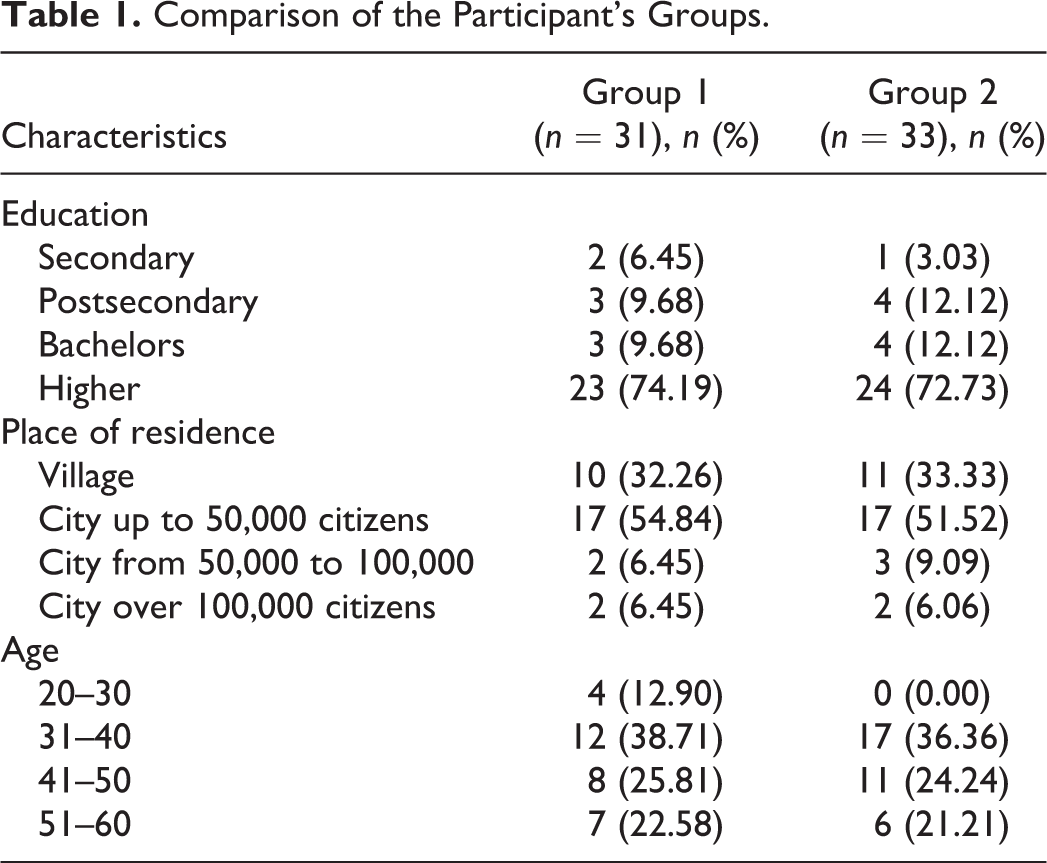
The participants of this study came from different backgrounds and covered different age groups, place of residence, and educational level, as described in Table 1. Sixty-four social workers participated in the study with 33 of them indicating that their decisions have contributed to placing children in foster care and 31 stated that they have had no such experience. The χ2 test showed that there are no statistically significant differences between the two groups in terms of education and place of residence. The independent sample test showed that there were no statistically significant differences between the groups in terms of age. Thus, these factors did not influence the possible differentiation of groups in terms of the patterns of factors influencing decision making. Presented in Table 1 are data on the characteristics of the participants grouped into those who have contributed to decisions to take children into foster care (Group 2) and those who have no such experience (Group 1).
Comparison of the Participant’s Groups.
Procedure
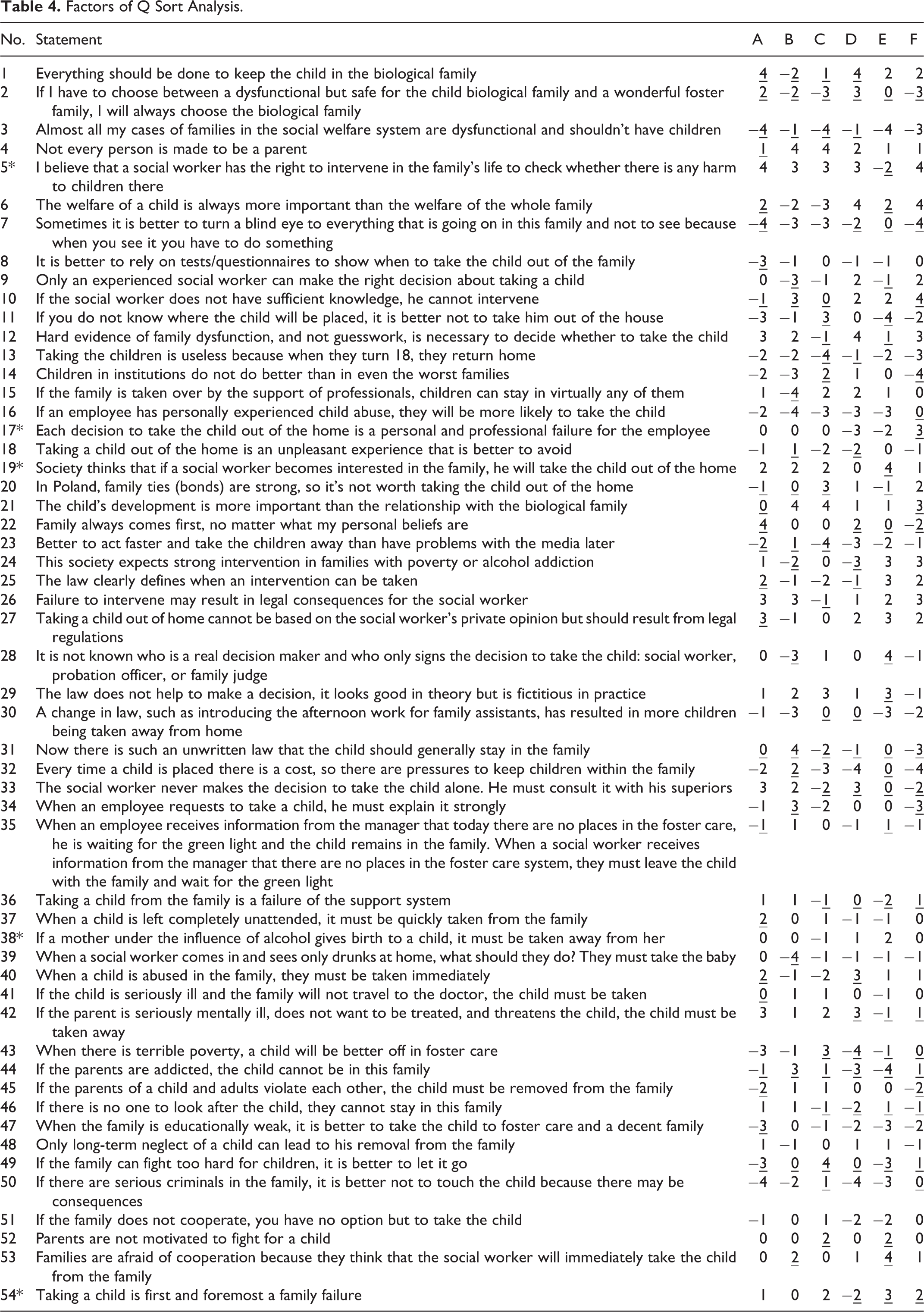
The first stage of Q sort is preparing a set of statements which can be sorted by participants and this is regarded as one of the most important stages of conducting Q method research (Brown, 1993). Sæbjørnsen and colleagues recognize two ways to build a concourse: naturalistic and theoretical (Sæbjørnsen et al., 2016). The study used a mixed strategy since adopting such an approach also allows to avoid the trap of full subjectivity in the selection of statements that make up a concourse (Cordingley et al., 1997). The literature review allowed to distinguish the first group of factors that affect placement of children in institutions. The ecological decision theory was also chosen (Baumann et al., 2011). Based on this model, interviews were conducted with two social workers. During the meeting, they prepared a set of factors corresponding to various categories of influence on decision making. As a result of the literature review and information obtained from the social workers, 184 statements were curated. The number of statements was reduced by removing identical and similar statements. Ultimately, 54 statements were selected for the study which are listed in Table 4 with their corresponding factor scores. This is in accordance with the opinion of Watts and Stenner (2012) that the reduction of statements should lead to a selection of 40–80 statements. The statements were presented to the participants on single sheets. They were asked to ranked them on a grid as illustrated in Figure 1, according to their belief in whether a given statement was the most or least influencing factor in the decisions regarding placing a child in foster care.
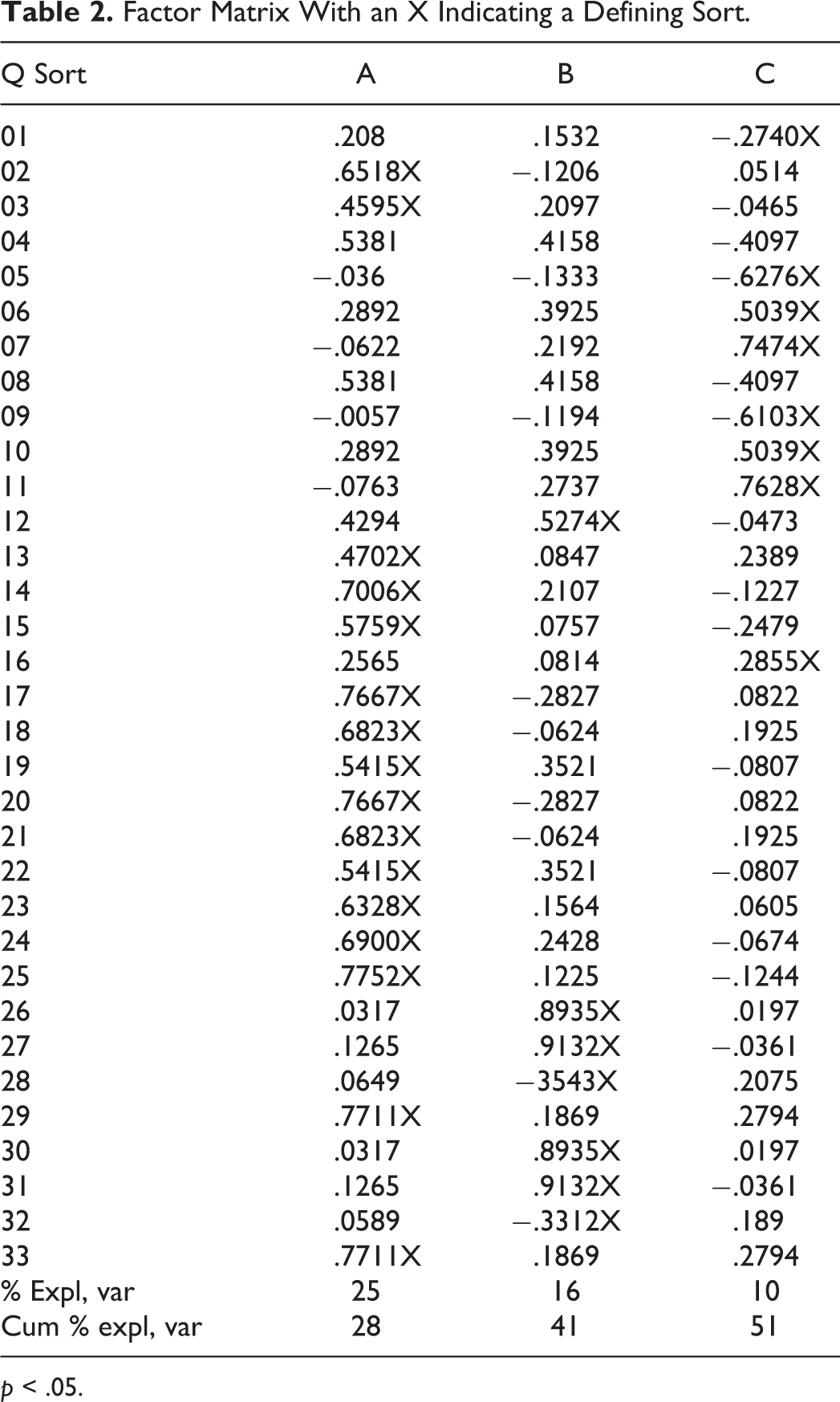
Factor Matrix With an X Indicating a Defining Sort.
p < .05.
Factor Matrix With an X Indicating a Defining Sort.

p < .05.
Factors of Q Sort Analysis.
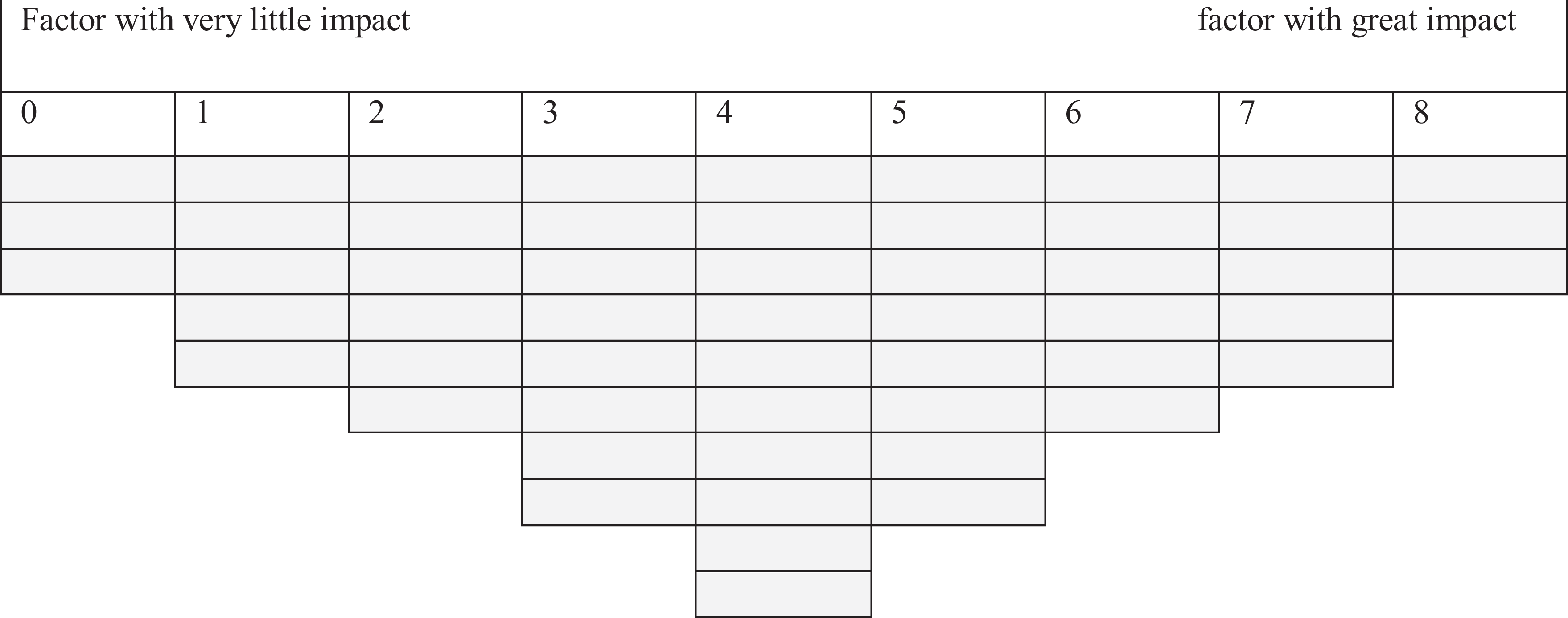
Q sort grid used in the research.
The resulting 64 Q sorts were entered into the PQ Method Program (Schmolck & Atkinson, 2002). Emerging data indicated which grouped statements created the new factors and how these were assessed by study participants.
Results
The first analysis concerns the social worker who contributed to the decision to take the child out of the home. Principal component analysis with varimax rotation resulted in three distinct factors. Correlation between factors was low.
The factor loadings indicate the degree to which each Q sort correlates with each of the two emerging factors, as shown in Table 2. When a Q sort loads significantly on a factor, this is marked by an X. The closer to 1, the more equivalent the Q sort is to the factor. Twenty-three participants define Factor A (by loading significantly on this factor), 18 define Factor B, and 21 define Factor C.
The resulting factor scores (z-scores) were subsequently converted back to the original values of the scale used in the Q sort matrix (as shown in Table 2) to facilitate a visual inspection of the factors. The second set shows the results for social workers who did not contribute to the decisions to remove a child from the home. Principal component analysis with varimax rotation resulted in three distinct factors. Correlation between factors was low.
The factor loadings indicate the degree to which each Q sort correlates with each of the two emerging factors, as shown in Table 3. When a Q sort loads significantly on a factor, this is marked by an X. The closer to 1, the more equivalent the Q sort is to the factor. Twenty participants define Factor D (by loading significantly on this factor), 25 define Factor E, and 20 define Factor F.
Combined Results for Social Workers
Interpretation of the factors is based on (i) the overall configuration of the statements, (ii) distinguishing statements on each factor, and (iii) consensus statements. These statements and their corresponding scores for each factor (A to F) are presented in Table 4. Consensus statements (marked with *) reveal what the participants have in common, regardless of what factor they load most highly on, while distinguishing statements (underlined factor scores in Table 4) are significantly unique for each specific factor. For example, it is typical and unique for individuals associated with Factor A to have statement number 1 on score +4.
Underlined values represent distinguishing statement values for the specific factor at significance level of p < .05. Statements marked * represent consensus statements (do not distinguish between the factors).
Discussion
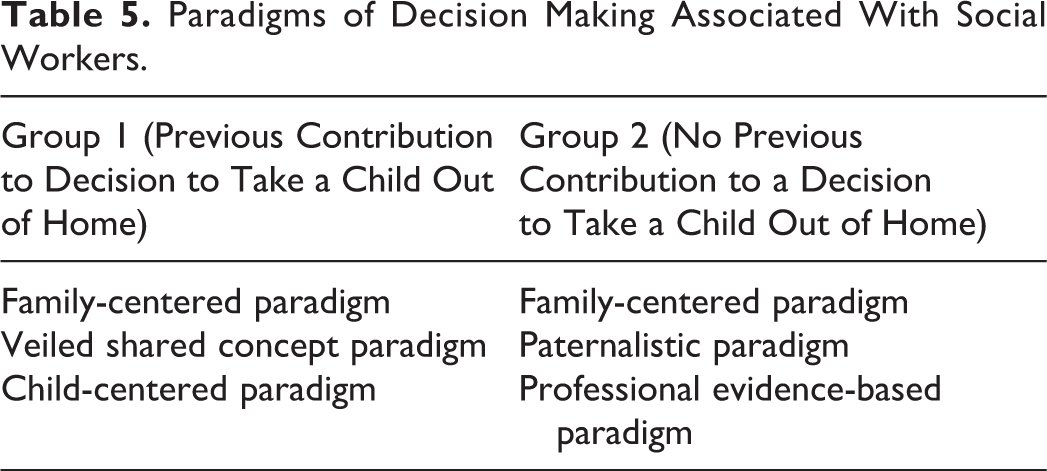
Factors A, B, and C correspond to the Family-centered paradigm, Veiled shared concept paradigm, and Child-centered paradigm respectively and together relate to social workers whose decisions contributed to the placement of children in foster care, as described in Table 5.
Paradigms of Decision Making Associated With Social Workers.
Factor A: Family-Centered Paradigm
Factor A analysis identifies the paradigm of seeing the family as the focal point of the decision-making process. In this paradigm, family centrality is recognized at different levels: personal, organizational, and case-specific.
Social workers responded positively to the point that all efforts should be made to keep the child in the family (4/# 1). This family-centered concept is emphasized in the response to the statement that the family should always come first regardless of whether it conflicts with the personal beliefs of the social workers (4/# 22). They also indicated that the law safeguards the unity of the family and that the possible removal of a child from the family may not result from the personal beliefs of the employee but from legal regulations (3/# 27). Even in the case of evaluating the birth family as educationally poor and the foster family as a good environment for the child, they believed priority should be given to the birth family (−3/# 47). They also disagreed with the stigmatization of families involved in the support system as dysfunctional and therefore should not have children (−4/# 3). At the same time, it seems that in situations requiring intervention, the social worker is believed to have the right to act by providing some form of support to the family (−4/# 7), although such actions may not necessarily lead to placing the child in foster care.
The analysis reveals a pattern indicating a worldview where the belief in the value of the family (the family-centered paradigm) is the most important factor that influences the decision to take a child or not. Under this worldview, it seems that even in cases involving families where interventions are required, the actions of the social worker do not originate from a completely professional judgment but more from the willingness to help the family and the belief that it is necessary to preserve it.
Factor B: Veiled Shared Concept Paradigm
When analyzing the statements that make up Factor B, it seems that the overriding category of factors determining decision making is the external conditions in which a social worker functions. Their own convictions or views are not important because external conditions are the main factors shaping the decision. Moreover, they are often not clearly defined and written-down laws but unwritten conventions and recommendations. This worldview is illustrated in the agreement with this statement: “Now there is such an unwritten law that the child should generally stay in the family” (4/# 31). Such unwritten laws as shown in this statement may arise from several situations over time. For instance, concerns about the cost of keeping children in the care system can possibly lead to an organizational culture at the local level where children are left with their families (2/# 32). In Poland, the cost of custody is divided between local governments and the central government, and the longer the child stays in the care system, the greater the cost to the local government. This leads to unwritten rules at local agencies that encourage keeping children with their families.
Respondents emphasized that even in the case of taking a child, they are obliged to present strong reasons to justify such a decision before their superiors (3/# 34). Situations that allow for the taking of a child are those socially and culturally considered dangerous. Alcoholism has for many years in Poland been considered as one of the main problems and therefore as an unwritten rule, it is seen as an acceptable reason for taking children out of their homes (3/# 44; Przeperski & Taylor, 2020). Problems such as alcoholism are identified as central, and thus there exists a social consensus to intervene in cases involving them even though they are unwritten laws.
Factor C: Child-Centered Paradigm
When analyzing this factor, the need to secure the best interest of the child is considered the primary factor influencing the decisions of social workers. This centrality of the child’s interest is the main subject of the decision-making process and should be considered first.
Securing the child’s welfare is expressed in several categories, the first of which is to ensure good economic and living conditions. As a result, if the biological family is poor (3/# 43) or worse than the foster family (−3/# 2), the choice will be to determine a better place (in terms of conditions) for the child. Employees pointing to this factor see no problem with the fact that care is a temporary solution and after the age of 18 children return to their birth family homes (−4/# 13). Child safety and protection is another component of the concept of child centrality. It is expressed in the statement that in situations of uncertainty of where the child is to be placed, the existing family structure should not be violated for the sake of the child (3/# 11). Also, media pressure (fear of bad publicity) should not be a reason for very hasty decisions regarding placement for a child (−4/# 23). It is also worth pointing out that the respondents appreciate the value and importance of the child maintaining ties with relatives in the family (3/# 20). However, in the event that the institution itself is threatened by families who are too strongly opposed to the employee’s decisions (4/# 49), respondents believe this worldview can be altered.
Factors D, E, and F that are described below relate to social workers whose decisions did not contribute to the placement of children in custody.
Factor D: Family-Centered Paradigm
The first factor is similar to that generated for social workers who have contributed to the decision to take a child into foster care. The behavior of the family will be the main factor influencing the decision since the desire to keeping the family intact is paramount. This is indicated by assertions made through these statements: Everything should be done to make the child stay in the biological family (4/# 1); even a dysfunctional biological family is better than the foster family (3/# 2); poverty of the family itself cannot be a reason to take a child from the family (−4/# 43). However, there is also a deviation from the family-centered principle in the case of serious family problems related to child abuse (3/# 40) or the presence of serious mental illness and the lack of willingness to seek treatment (3/# 42). Under this paradigm, the family unit is regarded so highly that any decision to take the child leading to a breakdown of the family system should always be consulted with superiors (3/# 33) and not be subject to societal expectations (−3/# 24).
Factor E: Paternalistic Paradigm
The analysis of the E factor shows a specific perception of the role of a social worker in the process of taking the child away from the family. It is seen as a key factor in the disruption of the family system. The social worker is seen as an intruder who harms the family. Therefore, any interest of the social worker in the family is perceived by the family to be a threat possibly leading to their child being taken away (4/# 19; 4/# 53). In this paradigm, taking children into foster care is defined as a total failure of the family and not the welfare system (with a social worker as its representative; 3/# 54). This paternalistic worldview results in the social worker intervening even when the family resists strongly (−3/# 49). At the same time, employees with this worldview do not perceive clear guidelines for decisions and are skeptical of the effectiveness of established laws (3/# 29). It is also unclear who is really responsible for decisions regarding the child and family (4/# 28) under this paradigm.
Factor F: Professional Evidence-Based Paradigm
Under this paradigm, it seems that the central value is the professional conduct of the social worker. This is differentiated from employees under the previous paternalistic paradigm. Social workers under this paradigm employ a professional approach to decision making. They do not make decisions without sufficient information (4/# 10) and taking children out of the home is treated as a personal and professional failure (3/# 17). Their sense of professionalism also does not allow to ignore uncomfortable facts or events and thus are compelled to act and make difficult decisions (−4/# 7). Social workers under this paradigm seem to lean more toward a child-centered worldview (although response to some questions points to an appreciation of the family-centered worldview). However, the main point is the belief in the professionalism of the care system where each case is considered based on available facts. This is evident in the score in the statements regarding the superiority of institutional foster care over dysfunctional families (−4/# 14), good foster family over dysfunctional biological family (−3/# 2), and the priority of ensuring good development of a child over bonds with the biological family (3/# 21).
The employee’s professionalism also gives them confidence that their decisions are good and are not afraid of providing additional justifications for them (−3/# 34).
Theoretical and Practical Implications
Decision making is a complex and multidimensional process. Each study can reveal new areas of analysis of this phenomenon. The main objective of the study was to try to find out whether the perception of factors that influence the decision to place a child in custody differs between social workers whose decisions have previously contributed to the removal of children and those who have had no such experience. Results from the survey show, quite surprisingly, new categories of factors. The analysis of the results showed that in addition to the categories of factors indicated in the Baumann model (Baumann et al., 2011) there is an overarching category that can significantly affect the decision-making process and shape the effects of the influencing factors (external, organizational, decision maker, and case factors). It seems appropriate to call this category a paradigm. According to Kuhn (2012), the term paradigm refers to the constellation of beliefs, values, techniques, and skills shared by members of a particular community. Community can be understood as a group of people who practice according to a specific paradigm and are seen as pursuing a set of shared goals (Kuhn, 2012). Collective and shared assumptions are beliefs, often unacknowledged, that shape choices, actions, and development of knowledge within a particular community (Salmon & Young, 2017). A given paradigm also helps to analyze the grounded assumptions about the way of perceiving the nature of the world (Guba & Lincoln, 2005; Nelson et al., 2001). Policies, theories, interventions, and descriptions of the processes are constructed and developed upon, according to given paradigms (Payne, 2016).
Considering this understanding of paradigms, the study revealed five main paradigmatic approaches: family-centered paradigms, veiled shared concept paradigm, child-centered paradigm, paternalistic paradigm, and professional evidence-based paradigm. When we apply the paradigm concept to the Bauman model, we get a diagram (Figure 2) where each aspect of the decision-making process is influenced by the paradigm in which the process occurs.
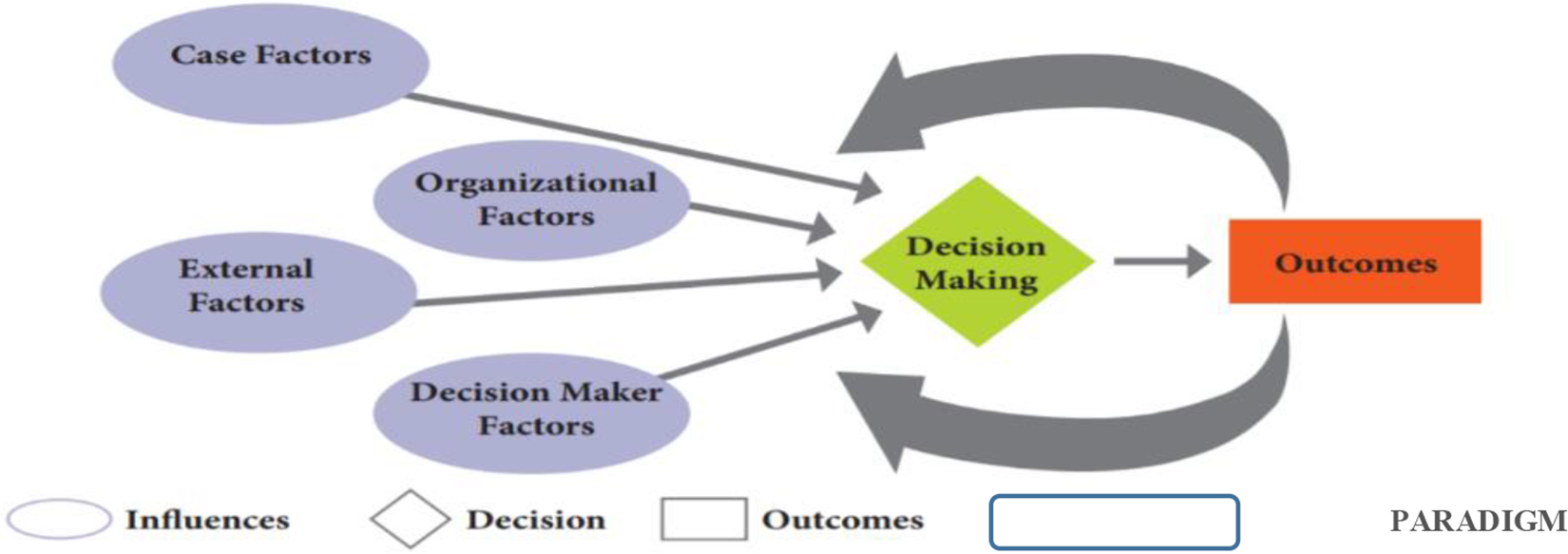
Paradigmatic model of decision-making ecology. Source: Based on Baumann et al. (2011).
The paradigm will influence not only the factors related to the decision making but also the decision itself and the results of that decision. Although the subject of this article is not a comprehensive analysis of decision paradigms, it is worth pointing to a few examples. This process can be traced by comparing the two family-centered and child-centered paradigms. Case-related factors have a different effect. In the family-centered paradigm, the family is a system that must be prevented from collapsing. This is how it presents itself, but also the way the decision maker perceives it. In the child-centered paradigm, the child’s safety is the main priority. Therefore, factors related to ensuring the safety of the child and not the protection of family unity will be exposed. Also, in the case of organizational factors, it is important whether the system is more focused on the child or the family as a unit. It also seems that the approach of personal beliefs about the child and family generates different decisions.
One may also consider whether the paradigm is not part of the indicated external factors. The problem, however, is that the paradigm shapes all factors, but also the decision itself and its results (outcomes). It should also be emphasized that the result of the decision, whether it was appropriate or not, will be shaped by a paradigm. It will be important to answer the question whether the decision contributed to the protection of the family in the family-centered paradigm and the child in the child-centered paradigm.
It is essential to note that the conducted study showed only examples of paradigms shaping the decision-making process. The entire pool of possible approaches to decision-making is not exhausted by this catalog of indicated paradigms. It is also worth noting that although the paradigms have been discussed as unique and stand-alone in this paper, decisions are made in real life under the influence of one or more of these paradigms.
Conclusion
The main research question concerned the differences in perception of factors influencing decisions between employees whose decisions contributed to the removal of children and those who did not have such experience. The study showed that the following paradigms as summarized in Table 5, were obtained in the two groups.
Both groups of respondents were consistent in the case of the family-centered paradigm. These were also factors indicated by most of the respondents. The results of employees who had no experience in contributing to a decision to place a child in custody are noteworthy. They focused more on the role of the worker themselves where they see it as crucial in the decision-making process. People who have previously contributed to a decision to take a child out of home focused more on some general ideas and concepts. It seems that they try to shift the relationship between the employee himself, the way he works, and the decisions made. Thus, workers with experience in decisions to take children out of homes make attempts to shift the responsibility for the decision to wider conditions in which a given social worker functions.
In the practice of making decisions, it is important to pay attention to the wider context of decision making in matters of placing a child in foster care. In order to obtain the most objective decision, which could also be the best solution, it is necessary to seriously reflect on the paradigms in which we consciously or unconsciously function. This is a task for both theoreticians and practitioners of social work and the broadly understood child and family protection system.
Footnotes
Declaration of Conflicting Interests
The author declared no potential conflicts of interest with respect to the research, authorship, and/or publication of this article.
Funding
The author disclosed receipt of the following financial support for the research, authorship, and/or publication of this article: This research was funded through the research project “Cooperation—Effective and efficient”, implemented under the Operational Program, “Knowledge, Education, Development 2014–2020,” which is financed by the European Social Fund.
