







Abstract
Keywords
The critical need for end-of-life care (EoLC) continues to grow with the progress of aging (Coyne, 2017; Horey et al., 2015; Sleeman et al., 2019). Studies indicate that the involvement of volunteers in EoLC caters to this need and improves the quality of life of patients and their family members (Candy et al., 2015). However, as EoLC has a higher requirement on volunteers and is quite emotionally taxing (Coleman & Walshe, 2021; Morris et al., 2013), training has become an element to improve their service capacities to fulfil their roles in the integrated multidisciplinary teams, usually under the supervision of social workers (Claxton-Oldfield et al., 2022; McGlinchey et al., 2022; Söderhamn et al., 2017; Wang et al., 2020).
Gap 1: Unmet Needs of EoLC Volunteers’ Capacity Building
In Hong Kong, volunteers are an essential part of service delivery and often engage with clients in frontline or supportive roles under the coordination of non-governmental organizations (NGOs), particularly under the burden of limited medical resources. Similar to other countries (Horey et al., 2015; Lee & Lee, 2020; McGlinchey et al., 2022; Wang et al., 2020), to equip volunteers effectively for their service, a variety of training programs have been developed. These programs mostly utilized live lectures, conducted in person and completed within 1–2 days. In our project, we find that such a mode of program-based training provided more interactions between trainers and participants, however with some disadvantages.
Firstly, after completing the training, volunteers lacked the opportunity to continuously review and learn. Additionally, with the emergence of new types of volunteers and increasingly diverse volunteer backgrounds (Vanderstichelen, 2022), training needs among EoLC volunteers have become more heterogeneous. Nevertheless, existing research has provided a relatively narrow portrayal of this population, which may limit our understanding of their evolving training needs.
Extant studies have described EoLC volunteers as predominantly older, retired individuals, with a strong intrinsic interest in helping, learning, and acquiring EoLC knowledge and skills (Lee & Lee, 2020; Morris et al., 2013). While learning motivation has been identified as an important driver of volunteer participation (Lin & Lou, 2024), limited attention has been paid to how training programs align learning interests with sustained service engagement. As a result, some volunteers may participate in in-person training primarily to fulfill learning needs, without developing a clear commitment to ongoing service roles, and may withdraw after completing the training. For programs aimed at cultivating volunteers to join organizational services, this can lead to a certain degree of resource wastage.
Given the increasing diversity of volunteers and their training needs, a single, uniform training approach may no longer be sufficient. There is a growing need for diverse training modalities that can address different learning motivations and backgrounds. In this context, online training may represent a promising solution, as it offers greater flexibility and accessibility for volunteers with varied needs.
Gap 2: Limited Studies on Online Learning Evaluation Among EoLC Volunteers
Online learning is defined as “learning experiences in synchronous or asynchronous environments using different devices (e.g., mobile phones, laptops, etc.) with internet access. In these environments, students can be anywhere (independent) to learn and interact with instructors and other students” (Singh & Thurman, 2019), thus offering opportunities for those unable to attend in-person classes and catering to those in need of EoLC knowledge and skill. In this study, the online learning experience is asynchronous, allowing participants to adjust their own learning pace.
Responding to the rise of e-learning in academic institutions and healthcare organizations (Yunusa & Umar, 2021), particularly pronounced during the COVID-19 pandemic (Dhawan, 2020), there have been efforts to deliver EoLC knowledge and skills to medical students (Schulz-Quach et al., 2018) and health professionals through e-learning (Bergman et al., 2016; Callinan, 2020; Pelayo et al., 2011). Systematic and scoping reviews show that online, distance, and blended EoLC education significantly improves knowledge of palliative care principles, symptom management, ethics, and end-of-life communication across professional groups (Alanazi et al., 2026; Chua & Shorey, 2021; Li et al., 2021). Studies of primary care and multidisciplinary learners further highlight increased self-efficacy and perceived clinical readiness following online or blended training, while qualitative evaluations describe digital education as empowering and supportive of integrating palliative approaches into routine practice (Atreya & Salins, 2023; Matthew et al., 2023; Morgan et al., 2021).
However, no study has yet examined EoLC volunteers’ attitudes towards e-learning as a method for delivering EoLC education. Unlike formal professional or academic learning contexts, participation in volunteer training in Hong Kong is typically voluntary and motivation-driven. Learners are not required to complete online courses for certification purposes, yet training outcomes may influence their readiness and performance in face-to-face service provision. Within this context, learner satisfaction becomes a critical factor affecting platform engagement and learning effectiveness.
Gap 3: Lack of Evidence on Factors Affecting Volunteers’ Online Learning Satisfaction
As online education continues to evolve, understanding the factors that shape online learning satisfaction (OLS) has become increasingly important for improving learners’ experiences. Satisfaction is widely regarded as a key indicator of online course quality, reflecting learners’ affective evaluations of multiple aspects of the learning process (Rajabalee & Santally, 2021; Sampson et al., 2010). In this context, satisfaction has been conceptualized as individuals’ feelings toward various factors that influence their learning experiences (Li & Zhu, 2022; Schwab & Cummings, 1970).
Extensive research has examined predictors of OLS, with mixed findings regarding the role of demographic variables. Some studies suggest that factors such as gender and academic status may predict learning satisfaction (Shen et al., 2013), whereas others report inconsistent or controversial effects of these variables (Yu, 2022). Notably, most existing OLS research has focused on student populations, limiting its applicability to other learner groups. EoLC volunteers represent a distinct learning population, often characterized by retirement status, higher educational attainment, and strong intrinsic motivation to learn. Whether these demographic and motivational characteristics influence EoLC volunteers’ OLS remains underexplored and warrants further investigation.
Beyond demographic characteristics, prior empirical studies have consistently identified multiple factors associated with OLS, commonly categorized into learner-related, instructor-related, platform or technology-related, and instructional design-related dimensions. These categories provide a useful framework for examining satisfaction in diverse online learning contexts, including volunteer training.
Learner-related variables include self-efficacy, motivation, computer anxiety, technological skills, and self-directed learning ability. For instance, higher self-efficacy and lower computer anxiety have been shown to positively predict OLS, as learners feel more confident in navigating online environments (Alqurashi, 2016, 2019). Instructor-related variables encompass teaching presence, feedback quality, interaction with students, and attitudes toward online teaching. Strong instructor facilitation, timely feedback, and active engagement often emerge as the strongest positive predictors of satisfaction (Baloran et al., 2021; Kuo et al., 2014; Rajabalee & Santally, 2021). Platform/technology-related variables focus on system quality, ease of use, reliability, accessibility and technical support. Perceived usefulness and ease of use (drawn from the Technology Acceptance Model (TAM)) are frequently reported as critical, with poor infrastructure or usability negatively affecting OLS (Yu, 2022). Instructional design-related variables include course flexibility, content quality, organization, assessment diversity, and opportunities for interaction (student-student, student-content, student-instructor) (Alqurashi, 2019). Well-organized courses with flexible pacing and meaningful interactions tend to yield higher satisfaction levels (Su & Guo, 2021). These variables collectively explain substantial variance in OLS across contexts, particularly during the COVID-19 shift to online learning.
Similarly, Sun et al. categorized the aforementioned factors into several key dimensions that influence OLS: learner dimension, instructor dimension, course dimension, technology dimension, and design dimension (Sun et al., 2008). This framework has been widely applied in empirical studies to operationalize and assess factors influencing satisfaction in e-learning contexts. In the present study, we adopted measurement scales derived from Sun et al.'s framework. However, the instructor dimension was excluded because the online training platform under investigation does not provide instructor-related interaction or feedback functions.
To capture both system-related characteristics and learners’ evaluative experiences, this study draws on an integrated analytical framework combining the User Satisfaction Model (USM) and the TAM. The USM, originally developed by DeLone and McLean (2003), emphasizes the roles of system quality and information quality as core determinants of user satisfaction and system success. Within online learning contexts, system quality reflects attributes such as platform reliability, flexibility, accessibility, and functional integration (Haryaka et al., 2017). While USM effectively captures structural and technical attributes of information systems, it provides limited insight into learners’ individual cognitive and affective characteristics.
In contrast, TAM focuses on users’ attitudes toward technology use, positing that perceived usefulness and perceived ease of use shape evaluative responses and subsequent acceptance behaviors (Davis, 1989). Prior studies have suggested that learners’ perceptions and attitudes play a critical role in shaping satisfaction with online learning environments (Marangunić & Granić, 2015). Sun et al. (2008) incorporated learner attitudes alongside system-related features to assess satisfaction, implicitly integrating insights from TAM into the evaluation of online learning experiences. This integrative approach addresses limitations inherent in each model when applied independently: USM does not account for learners’ subjective perceptions, while TAM provides limited assessment of platform system characteristics (Li & Zhu, 2022).
Consistent with this integrated perspective, the present study combines constructs from both USM and TAM to examine factors influencing OLS in a training context. Because participants had already enrolled in and used the platform, behavioral intention was not measured. Instead, the analytical focus was placed on examining how learner characteristics and platform attributes jointly shape attitudes toward platform use and satisfaction following training. Based on the foregoing framework, this study adopts four core dimensions—learner, course, technology, and design—to examine factors influencing OLS among end-of-life care volunteers. Accordingly, the following hypotheses were proposed for empirical examination: Hypothesis 1 (H1). Demographic characteristics will be associated with participation in online learning. Hypothesis 2 (H2). End-of-life care volunteers will report higher levels of self-rated competencies related to end-of-life care knowledge following participation in the training. Hypothesis 3 (H3). Learning attitude, computer anxiety, computer self-efficacy, course quality, flexibility, technology and internet quality, perceived usefulness, and perceived ease of use will be associated with learning satisfaction among end-of-life care volunteers.
Method
Study Context and Ethical Approval
This study was conducted as part of The Hong Kong Jockey Club End-of-Life Community Care Project, launched in 2016 to strengthen community-based end-of-life care and support terminally ill patients’ preferences to remain in community settings. The project is a collaboration between the University of Hong Kong and four NGO partners. Ethical approval was obtained from the Human Research Ethics Committee of The University of Hong Kong (Approval No. EA220206).
Participants and Procedure
Participants were recruited through an existing online learning platform developed in 2023 for registered end-of-life care volunteers. Participation in both the platform and the study was voluntary. Upon registration, volunteers could enroll in an online course consisting of eight self-paced learning modules.
Prior to commencing the course, participants were required to complete a baseline questionnaire assessing demographic characteristics and learner-related variables. Upon completion of all course modules, participants were invited to complete a post-training questionnaire assessing platform- and course-related evaluations, learning satisfaction, and perceived end-of-life care competence.
Data were collected between February and July 2023. A total of 274 participants completed the baseline questionnaire, and 173 completed the post-training questionnaire. To assess the potential impact of attrition on the study findings, a series of sensitivity analyses were conducted. Baseline (T0) EoLC competence measures were compared between participants who completed both the pretest and posttest assessments and those who did not complete the posttest. Independent-samples Mann–Whitney U tests indicated no statistically significant differences across all baseline competence domains between the two groups. In addition, associations between study completion status and demographic characteristics were examined using chi-square tests. The results showed no statistically significant associations between completion status and key demographic variables.
For the present analyses, only participants who completed both pre- and post-training questionnaires were included, resulting in a final analytical sample of 156 participants. All participants provided informed consent electronically and were informed of their right to withdraw at any time.
Measures
All questionnaires were adapted from established multi-item instruments based on the literature review and research objectives. Demographic information was collected using items developed by the research team. Online learning satisfaction scale was adapted from validated instruments widely used in e-learning research, primarily derived from Sun et al. (2008).
Consistent with an integrated framework combining the USM and the TAM, four dimensions relevant to a self-directed learning platform without instructor interaction were retained: learner, course, technology, and design. All instruments were translated from English into Chinese using a back-translation procedure to ensure semantic equivalence. Minor wording adaptations were made to fit the end-of-life care volunteer training context.
Online Learning Satisfaction
OLS was measured using nine items adapted from Sun et al. (2008) (α = .900; ω = .876). Items assessed participants’ overall satisfaction with online learning (e.g., “I was very satisfied with the course”), with three reverse-coded items included.
End-of-Life Care Volunteer Competence
Perceived end-of-life care competence was assessed using a 27-item scale adapted from the original 22-item scale by Wang et al. (2020), covering knowledge, skills, and role-related competencies. Responses were rated on a Likert-type scale. The scale demonstrated excellent internal consistency at both pre-training (α = .985; ω = .985) and post-training (α = .986; ω = .986).
Learner-, Course-, and Technology-Related Variables
Learner-related variables measured prior to training included learning attitude, computer anxiety, computer self-efficacy, and perceived ease of use. Platform- and course-related variables measured after training included online learning flexibility, technology quality, internet quality, course quality, and perceived usefulness. Internal consistency estimates for all scales were acceptable, with most α and ω values exceeding .70.
Demographic Variables
To facilitate interpretable analyses within a modest sample size, several demographic variables were recoded into binary categories. Age was dichotomized at 50 years because descriptive statistics for our sample showed that the volunteer cohort is predominantly ≥50. This threshold was selected to align with the demographic profile of the volunteer cohort and to facilitate interpretable group comparisons within the constraints of the sample. In addition, our sample was largely composed of college-educated, retired volunteers, and with religious affiliations. The variables were recoded as follows: gender (male = 0, female = 1), age (below 49 = 0; 50 or above = 1), marital status (single = 0; in a relationship = 1), educational level (below college level = 0; college level or higher = 1), employment status (unemployed/retired = 0; employed = 1), and religion (no religious belief = 0; has religious belief = 1).
Data Analysis
We utilized SPSS software version 28.0, with an alpha of p < .05 (2-tailed), for descriptive analysis and paired samples t-tests. We first examined distributional assumptions for variables used in group comparisons. Normality was assessed using the Shapiro–Wilk test. The majority of variables deviated from normality; therefore, for between-group comparisons, we complemented the parametric analyses with nonparametric tests that do not assume normality. Specifically, two-group comparisons were conducted using the Mann–Whitney U test. A reliability check was conducted using Cronbach's alpha to determine the reliability of the data collection tools and their individual components (Tavakol & Dennick, 2011). To provide a robustness check, we also computed McDonald's omega. The results were highly comparable (Table 1).
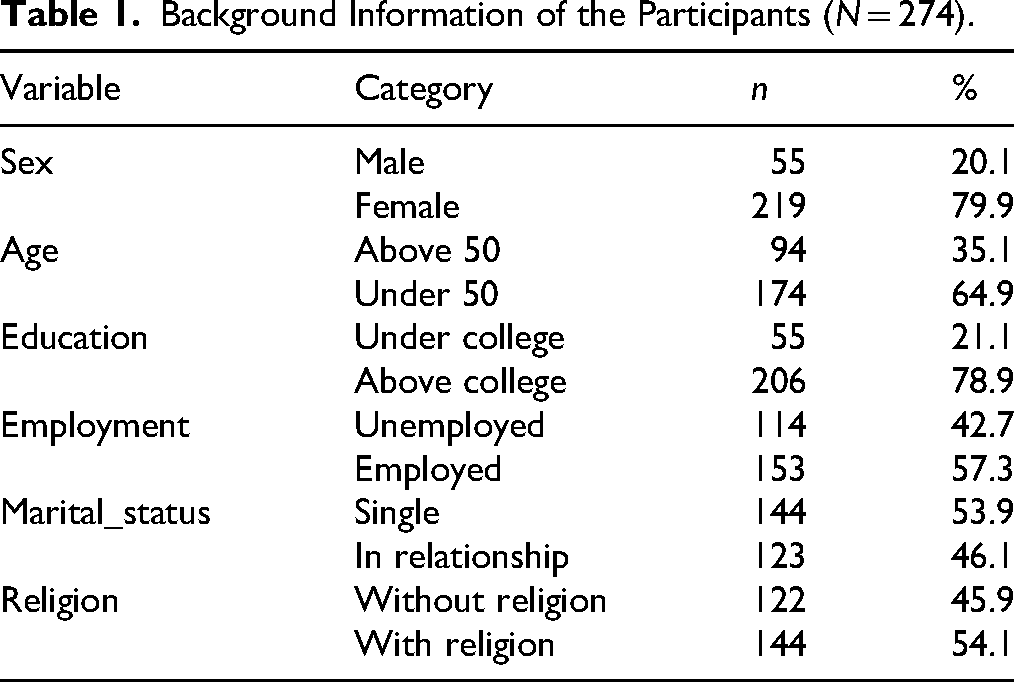
Background Information of the Participants (N = 274).
To examine the factors influencing OLS, we employed partial least squares structural equation modeling (PLS-SEM) using the seminr package (v2.4.2) in R. PLS-SEM is well suited for exploratory and prediction-oriented analysis rather than strict confirmatory theory testing (Hair et al., 2011). In this study, PLS-SEM was used to estimate relationships among constructs within an adapted, practice-oriented framework informed by prior literature and tailored to an intervention-based learning context.
The choice of PLS-SEM is further supported by sample size considerations. With a sample size of 156, PLS-SEM offers greater statistical power and more robust parameter estimation than covariance-based SEM, which generally requires larger samples and stronger distributional assumptions (Li & Zhu, 2022; Urbach & Ahlemann, 2010). Therefore, the use of PLS-SEM is methodologically appropriate and consistent with the study's research objectives and data characteristics. Only complete cases were retained, as both pretest and posttest constructs were explicitly modeled in the structural model.
Results
To understand the demographic background of the participants and examine whether it was associated with OLS (H1), we conducted descriptive analyses of demographic variables and performed a nonparametric Mann–Whitney U test. Table 1 indicated that the majority of the participants were females, accounting for 79.9% (n = 219) of the sample, while males made up 20.1% (n = 55). Most of the participants were under 50 years old, representing 64.9% (n = 174) of the sample, with those above 50 years old accounting for 35.1% (n = 94). In terms of education, a substantial majority (78.9%, n = 206) had attained an education level above college, while 21.1% (n = 55) had an education under college. When it came to employment, more participants were employed (57.3%, n = 153) than unemployed (42.7%, n = 114). Regarding marital status, a slight majority were single (53.9%, n = 144), with those in a relationship forming 46.1% (n = 123) of the participants. Lastly, participants with a religious affiliation marginally outnumbered those without, at 54.1% (n = 144) and 45.9% (n = 122), respectively.
The demographic background information indicated that more than half of the EoLC platform users were under 50 years old. Apart from this difference, other demographic factors were similar to those found in earlier researches (Lin & Lou, 2024; Morris et al., 2013). The nonparametric Mann–Whitney U test indicated no differences among these demographic variables and learning satisfaction. Hypothesis 1 was thus not supported.
Potential Effectiveness of Online Self-learning for EoLC Volunteers
To examine the potential effectiveness of the training (H2), a paired-samples t-test was conducted to compare participants’ self-rated end-of-life care competencies before (T0) and after (T1) the training. The results indicated a statistically significant increase in self-rated competencies following the intervention, t (155) = 15.53, p < .001 (two-tailed). The mean difference between post- and pre-training scores was 50.57 (95% CI [44.14, 57.00]), indicating higher competency scores at posttest. The magnitude of this change was large, as reflected by the standardized effect sizes. Cohen's d for the paired difference was 1.24 (95% CI [1.03, 1.45]), and Hedges’ corrected effect size was 1.24 (95% CI [1.03, 1.45]). According to conventional benchmarks, these values indicate a potential effect. These findings suggest that participation in the training was associated with an increase in perceived end-of-life care competencies, indicating the potential effectiveness of the online learning, substantiating our hypothesis 2.
Factors Affecting EoLC Volunteers' Online Learning Satisfaction
To examine factors associated with OLS (H3), PLS-SEM was employed. In the first step, the reliability of the measurement model was assessed. Internal consistency was evaluated using Cronbach's alpha (α), rhoA, and composite reliability (rhoC). As shown in the reliability results, all constructs exceeded the recommended threshold of 0.70, indicating satisfactory internal consistency. All latent constructs demonstrate adequate to excellent reliability. Convergent validity was assessed using average variance extracted (AVE). A value above 0.50 indicates that the construct explains more than half of the variance of its indicators. Bootstrapped outer loadings showed that the majority of indicators loaded strongly and significantly (p < .001) on their respective constructs. Several indicators had lower loadings but remained statistically significant. Based on content validity and theoretical considerations, all indicators were retained. The model thus demonstrated adequate reliability and validity.
As shown in Figure 1, the model for perceived usefulness and learning satisfaction accounted for substantial proportions of variance in their respective outcomes, with R2 values of 0.801 for usefulness and 0.735 for satisfaction. Course Quality (β = 0.533, p < .001, 95% CI [0.41, 0.66]) and Flexibility (β = 0.397, p < .001, 95% CI [0.22, 0.54]) emerged as the strongest predictors of perceived usefulness. Perceived usefulness was positively associated with learning satisfaction (β = 0.415, p < .001, 95% CI [0.21, 0.60]). In addition, Flexibility (β = 0.277, p < .001, 95% CI [0.11, 0.45]) and Course Quality (β = 0.185, p = .046, 95% CI [0.00, 0.36]) were also positively associated with satisfaction, independent of perceived usefulness. These results suggest that course-related characteristics, particularly pedagogical quality and flexibility, were more strongly associated with learners’ evaluations of the platform than individual learner characteristics in this post-intervention context. The association between perceived usefulness and satisfaction highlights the central role of users’ evaluative perceptions in shaping satisfaction with the learning experience. Other theoretically relevant predictors did not show statistically significant direct associations with the outcome variables in the current model. Hypothesis 3 was thus partially supported.
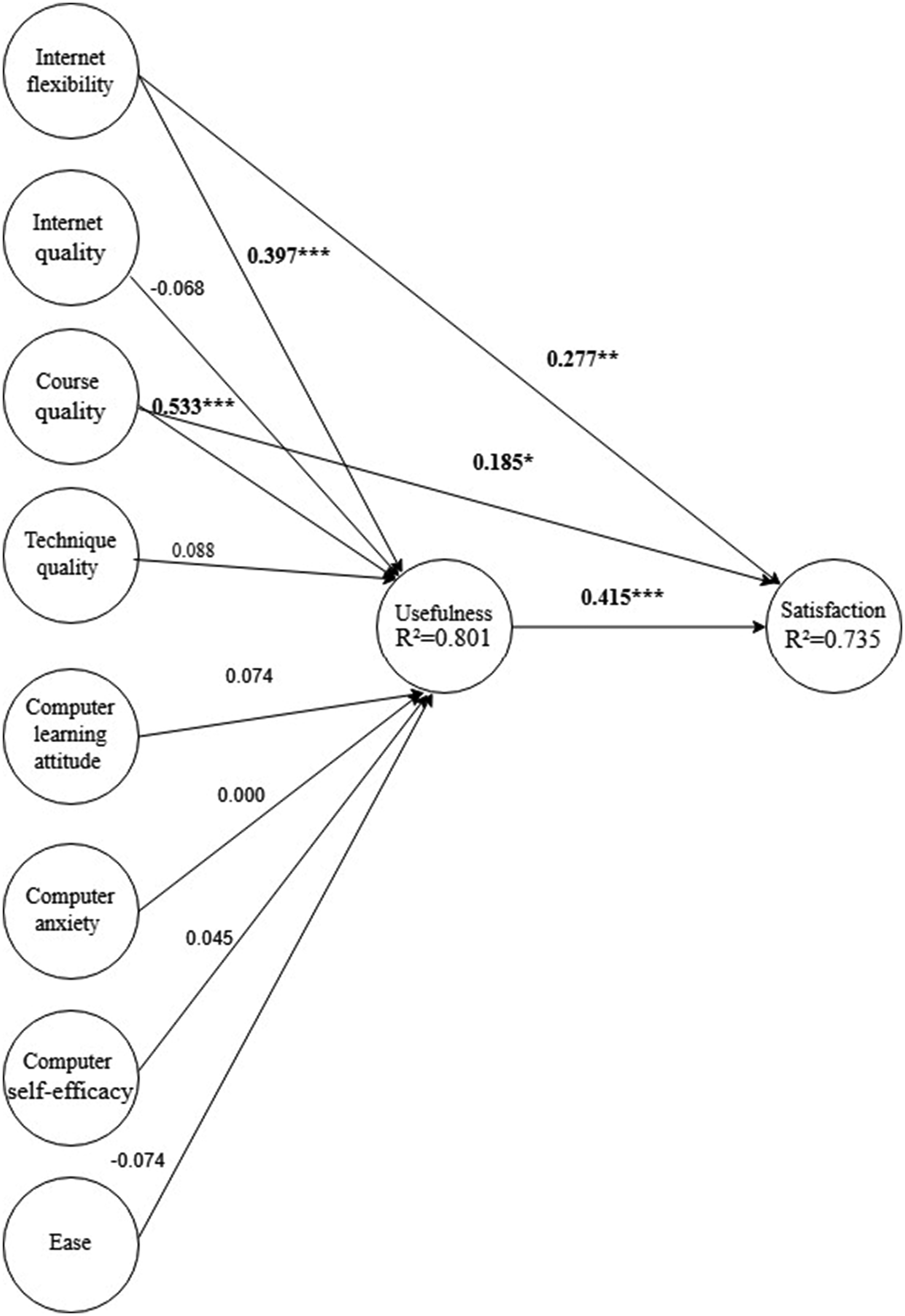
Online learning satisfaction model for EoLC volunteers.
Discussion and Application for Practice
The purpose of this study was to investigate the potential effectiveness of a newly designed online self-learning platform and identify factors associated with OLS. Drawing on the refined TAM with the integration of the USM, the analysis focused on perceived changes in volunteers’ EoLC competencies and their self-reported learning experiences following platform use.
Consistent with previous research, course quality and flexibility emerged as the most influential factors shaping learners’ evaluations of the online platform (Martín-Rodríguez et al., 2015). Rather than suggesting causal effects, these findings highlight perceived relationships among platform characteristics and learner satisfaction within the specific context. In this sense, the study contributes by situating established model constructs within EoLC volunteering.
Although preceding researches indicated that a significant portion of EoLC volunteer applicants were female retirees between the ages of 50–65 (Morris et al., 2013; Yeun, 2020), our data revealed that most EoLC volunteer registrants were under 50 years old with full time jobs, with only 35.1% being over 50, indicating that younger cohort, as frequent internet users, tend to be more enthusiastic about online learning platforms compared to elderly learners (Ching et al., 2023; Czaja et al., 2006). It further indicates a change in volunteer background online and their interests in EoLC knowledge and skills. However, Mann–Whitney U tests in this study show that demographic characteristics do not significantly affect satisfaction, exhibiting different results than other studies (Yu, 2022).
A central finding of this study is the prominent role of perceived usefulness in its association with OLS among end-of-life care volunteers. Perceived usefulness was consistently linked to participants’ evaluations of the platform and course characteristics, suggesting that it served as an important interpretive lens through which learners appraised their online learning experience (Yu, 2022). Rather than indicating a causal pathway, this finding highlights the salience of perceived usefulness as a key construct shaping how learning design features are understood and evaluated in this context.
Course quality was indirectly associated with learning satisfaction through perceived usefulness, alongside a smaller direct association. This pattern is consistent with the hypothesized relationships proposed in the study and extends prior research that has primarily reported direct associations between course quality and learner satisfaction (Sun et al., 2008). By incorporating perceived usefulness as an intervening construct, the analysis suggests that learners’ evaluations of course quality are closely linked to their perceptions of the platform's functional value, which in turn relates to overall satisfaction with the learning experience.
Flexibility also emerged as an important construct in the model and was closely associated with both perceived usefulness and learning satisfaction. Consistent with existing literature, higher perceived flexibility was linked to more favorable evaluations of the learning experience, suggesting that flexible learning arrangements are a salient feature shaping how participants assess the platform and its overall utility (Su & Guo, 2021). The findings further suggest that flexibility was associated with satisfaction in ways that were not fully accounted for by perceived usefulness alone. Participants who experienced the platform as flexible tended to report higher levels of satisfaction, indicating that flexibility itself was viewed as a meaningful and valued aspect of the learning experience. This pattern is particularly salient in social work and related fields, where learners often navigate competing professional, personal, and family demands. Features such as asynchronous access, modular design, and opportunities for repeated engagement appear to be perceived as supportive learning conditions that shape overall satisfaction, rather than functioning solely through perceptions of usefulness.
In contrast to several prior technology-acceptance studies, learner characteristics such as computer anxiety, learning attitude, and computer self-efficacy did not show significant associations with perceived usefulness in our model (Marangunić & Granić, 2015). Similarly, perceived ease of use, while often identified as a key predictor of usefulness and satisfaction (Li & Zhu, 2022; Muñoz-Carril et al., 2021), was not a significant predictor in the present study. One plausible explanation lies in the timing of measurement. Different from aforementioned previous studies, in this study, variables such as ease of use and technology-related anxiety were assessed at the pretest stage, prior to participants’ engagement with the learning platform. As a result, these constructs may have captured anticipated rather than experienced usability, which may differ substantively from post-use evaluations.
A second explanation relates to the intervention strategies intentionally implemented prior to learning. To address potential barriers related to digital literacy and technology anxiety, several preparatory strategies were incorporated. Volunteers were invited to participate in user testing activities, during which feedback was actively solicited and used to refine platform functions. In addition, an online pre-training session was provided to familiarize them with the platform's features and navigation. These strategies were designed to enhance digital self-efficacy and reduce anxiety associated with technology use. Consequently, individual differences in computer anxiety and self-efficacy may have been attenuated by the time volunteers engaged with the learning content, reducing their predictive power in the structural model.
Implications for Practice
From a social work practice perspective, the findings offer contextual insights for the design and delivery of online training and intervention programs. Rather than prioritizing initial learner readiness or levels of technological confidence, the results suggest that attention to course quality, flexible learning arrangements, and ongoing support features may be particularly salient in shaping participants’ learning experiences. When online platforms are perceived as user-friendly, responsive to learner input, and adaptable to varied time constraints, individual differences in comfort with technology appear less central in how learners evaluate their engagement with the training.
These observations are especially relevant for social work education and continuing professional development, where participants often come from diverse age groups, educational backgrounds, and levels of prior exposure to digital learning environments. In addition, the findings may hold relevance for organizations involved in the training and coordination of end-of-life care volunteers. Within settings characterized by increasing service demands and constrained training resources, online self-learning platforms may represent a potentially flexible and scalable complement to existing training approaches. The perceived benefits observed in this study indicate that, when thoughtfully designed, online training may support volunteers’ engagement with essential competencies, particularly as an adjunct rather than a replacement for face-to-face educational formats.
Feasibility Indicators for Practice Implementation
Several indicators from this study suggest that the online learning intervention is feasible for implementation in social work practice settings. First, participants who completed both the pretest and posttest reported relatively high levels of perceived usefulness and satisfaction, indicating that the platform was experienced as meaningful and acceptable rather than burdensome. Second, technology-related factors such as computer anxiety, self-efficacy, and ease of use did not emerge as significant barriers in the final model, suggesting that initial concerns about digital skills may not become a factor to stop using the platform. Additionally, user acceptance testing and the integration of participant feedback into platform modifications enhanced the feasibility and implementation of the platform in practice settings.
Limitations
Several limitations of this study should be acknowledged. First, the evaluation of training effectiveness relied on a one-group pretest–posttest design, which limits the strength of causal inferences. Although statistically significant improvements in participants’ self-reported end-of-life care competencies were observed following the intervention, the absence of a control or comparison group makes it impossible to rule out alternative explanations such as testing effects, maturation, or external influences. Accordingly, the observed changes should be interpreted as preliminary and indicative rather than conclusive evidence of intervention effectiveness.
Second, study outcomes were assessed using subjective self-reported measures of perceived competence, rather than objective or externally validated performance assessments. While self-assessment captures learners’ confidence and perceived preparedness—important outcomes in practice-based training—such measures may reflect perceived rather than actual improvement and are susceptible to response bias. As a result, the findings should not be interpreted as direct evidence of objectively measured competency gains.
Third, participant retention posed a challenge, with substantial attrition from the initial sample to the final analytical sample used in both the pretest–posttest and PLS-SEM analyses. As participation in the online learning program was voluntary and self-paced, individuals who completed both assessments may differ systematically from non-completers in motivation or engagement. Although an online learning certificate was offered as an incentive and could only be downloaded after completion of the posttest, this mechanism may not have been sufficiently motivating to ensure higher retention rates. Consequently, decreased participation and retention levels may have affected the representativeness of the final analytical sample.
Fourth, several measurement and analytical decisions warrant caution. Some demographic variables were recoded into binary categories to facilitate interpretation when taking the smaller sample size into consideration, which may have reduced variability and analytic precision. In addition, extremely high reliability coefficients observed for some constructs may indicate item redundancy rather than substantive breadth, while inconsistencies across reliability indices for certain constructs suggest uneven measurement performance. Together, these issues constrain strong conclusions regarding construct validity.
Finally, although the analytical framework was informed by TAM-related literature, the model represents a context-specific rather than a full test of established technology acceptance theories. Behavioral intention was not measured, as the adopted instrument focused on post-use evaluations of learner experience and satisfaction in an already enrolled population. As such, the PLS-SEM results should be interpreted as exploratory and associational, providing insight into perceived relationships among constructs rather than rigorous theoretical validation or causal testing.
Conclusion
Overall, the results highlight the central role of instructional design features—especially course quality and flexibility—in shaping learners’ perceptions of usefulness and satisfaction in online learning environments. By elucidating the paths through which these factors operate and contextualizing them within an intervention framework, this study contributes to a more practice-oriented understanding of technology-mediated learning. For social work practitioners and program designers, the findings reinforce the importance of focusing on modifiable design features and supportive implementation strategies that promote engagement, satisfaction, and equitable access to online learning opportunities.
Footnotes
Author Note
We thank our colleagues from the Jockey Club End-of-Life Community Care project team who provided insight and expertise that greatly assisted this study, and our partners at the Hong Kong Society for Rehabilitation, Hope of Heaven Christian Services, S.K.H.Holy Carpenter Community Centre, and St. James’ Settlement for their assistant with recruitment and training volunteers and providing valuable materials for data analysis of this study, together with those volunteers who participated in this project.

Funding
The authors disclosed receipt of the following financial support for the research, authorship, and/or publication of this article: The Hong Kong Jockey Club Charities Trust.
Declaration of Conflicting Interests
The authors declared no potential conflicts of interest with respect to the research, authorship, and/or publication of this article.