






Abstract
Purpose
This study describes social work doctoral dissertation research over a 10-year period (2014–2024) and compares findings to a prior review (1998–2008) to characterize methodological and substantive shifts over time.
Method
A structured review of 525 dissertations was conducted. Data were independently extracted across research design, methodology, data source, practice area, and research populations, with chi-square analyses and odds ratios used to compare the two review periods.
Results
Dissertations in the current review period were approximately 37% less likely to employ quantitative methods and nearly twice as likely to utilize qualitative methods. Secondary data use more than doubled (OR = 2.13). Micro practice dissertations increased while dissertations focused on the social work profession declined. Research populations were otherwise relatively stable.
Discussion
These findings suggest meaningful methodological shifts consistent with broader theoretical trends towards postmodern and critical frameworks, with implications for social work doctoral education and research training curricula.
Same Old Story or a New Chapter?
Social Work Dissertation Research Revisited
Social workers have a long-standing history of working to establish a distinct research identity. This struggle has been evident since the early 1900s, when claims that social work lacked a unique body of knowledge called into question its standing as a profession (Flexner, 2001). Since then, social work has been in perpetual pursuit of carving out its place within the research and professional landscape. Consensus on uniform priorities or methodologies has remained elusive, sustaining ongoing concerns about the state of social work research (Donovan et al., 2017; Dunleavy & Lacasse, 2025; Thyer, 2025). Periodic examinations of social work dissertation research have served as one mechanism for taking stock of these ongoing tensions, offering an empirical snapshot of the field's methodological commitments and substantive priorities at a given moment in time (Maynard et al., 2014). What doctoral students study, and how they study it, does not occur in a vacuum; the contextual forces shaping the broader research landscape inevitably filter into dissertation research and thus can provide a valuable window into the state and direction of research in social work. Therefore, the purpose of this review is to explore how social work dissertation research is being conducted, to examine what practice areas, topics, populations, and countries are being studied, to describe the overall trends in social work doctoral dissertation research over the past decade, and to compare these findings with those of the prior analysis of dissertations completed between 1998 and 2008 (Maynard et al., 2014).
Changes in policy and practice, environmental factors, and technological advances have undoubtedly influenced the conduct and accessibility of research over the last decade. Among the most significant of these shifts was the prioritization of evidence-based practice (EBP) in the early 2000s, which became embedded in professional standards, a mandatory requirement for Council on Social Work Education (CSWE) accreditation, and a driver of funding priorities (CSWE, 2022; Gambrill, 2007; National Institutes of Health [NIH], 2006). The uptake of EBP is broadly aligned with social work's primary professional mission of enhancing well-being and meeting the basic needs of all people, with particular attention to those who are vulnerable, oppressed, or living in poverty (National Association of Social Workers [NASW], 2021). While EBP's origins emphasized the integration of research evidence, clinical expertise, and client values (Sackett et al., 1996), its operationalization in social work has not been without debate. Disagreements persist not only about which methodologies best align with social work values, but more fundamentally about what constitutes knowledge and how it should be generated. In particular, EBP has at times been questioned for its potential to de-emphasize qualitative evidence and practice wisdom by privileging experimental and quantitative designs, with research priorities potentially guided by hierarchical or top-down structures rather than centering the experiences of those most affected (Gambrill, 2006; Longhofer & Floersch, 2012).
These debates reflect deeper epistemological divisions within the profession. Some researchers favor a postpositivist approach, employing quantitative methods and emphasizing probabilistic truth, logic, and empirical evidence as the foundation for improving social work practice and science, while also recognizing the importance of diverse perspectives in developing and refining effective interventions (Hodge & Drake, 2025). Others prioritize postmodern and critical approaches, representing broad and internally diverse traditions that may include constructivism, interpretivism, feminist theory, and critical race theory among others, which center individual voices and lived experiences, question the influence of neoliberalism on research priorities, and argue for the existence of multiple socially constructed realities that cannot be fully captured through quantitative methods alone (Drake & Hodge, 2022; Houston, 2012; Longhofer & Floersch, 2012). Alignment with one of these perspectives may strongly influence the methodological choices of social work researchers. Given the widespread integration of EBP into social work education and accreditation standards, it is reasonable to expect that these priorities may have shaped the methodology and focus of dissertation research in some capacity. Doctoral candidates trained during the height of the EBP movement may reflect its priorities, and its tensions, in their choice of research design, topics, and populations studied.
Social work research has also been shaped by significant technological advances over the last decade. Although secondary data has long been available through government datasets such as census data, National Health and Nutritional Examination Survey (NHANES), and Behavioral Risk Factor Surveillance System (BRFSS), as well as the Inter-university Consortium for Political and Social Research (ICPSR), federal mandates beginning around 2013 required publicly funded research data to be made openly available, substantially expanding accessibility to large datasets (Office of Science and Technology Policy, 2013). The widespread incorporation of electronic health records into medical systems has further increased the volume of available data (U.S. Department of Health and Human Services, 2019). Improvements to data interfaces have made these resources more accessible to researchers with limited technical training, and the entry of digitally native scholars into doctoral programs may have further facilitated comfort with these systems (Elaoufy, 2023; Iñiguez-Jarrín et al., 2020). These developments may have meaningfully shaped dissertation research, potentially accelerating the trend toward secondary data analysis that was already emerging in the prior review (Maynard et al., 2014).
Contextual factors have also significantly influenced the research landscape over the current review period. The COVID-19 pandemic, officially declared a pandemic by the World Health Organization in 2020, disrupted research in numerous ways (Cucinotta & Vanelli, 2020). In-person data collection was severely restricted, longitudinal studies were influenced by a life-altering population-level event, and federal funding priorities shifted toward pandemic-related research (Harper et al., 2020; Hensen et al., 2021; Rusk et al., 2026). Doctoral students were not immune to these disruptions, as dissertation timelines were extended and research plans were modified (National Center for Science and Engineering Statistics, 2023). Greater reliance on secondary data during this period may have accelerated trends already underway. Beyond the pandemic, shifts in federal policy have introduced additional uncertainty for social work researchers. Recent executive action directing federal agencies to eliminate Diversity, Equity, and Inclusion (DEI)-related mandates and references from federal grants has raised significant concerns for social work researchers who frequently study vulnerable and marginalized populations (Executive Order No. 14173, 2025). Such policy changes have the potential to shape the topics researchers pursue, the populations they study, and the availability of grant funding. For doctoral students in particular, whose dissertation research is often shaped by faculty mentorship, funding availability, and institutional priorities, these shifts may have already begun influencing the questions being asked and the populations being studied. Potential reductions in federal research funding may have broader implications for doctoral program admissions and the production of social work scholarship in the years ahead. Whether and how these forces have collectively altered the trajectory of social work dissertation research since the prior review remains an open and important question.
Doctoral dissertation research offers a unique window into the current priorities, methodologies, and future directions of the field, as doctoral students are simultaneously shaped by the practices of established researchers and positioned at the leading edge of emerging scholarship. Findings from the prior review spanning dissertations from 1998 to 2008, to which our current review will be compared, indicated that social work dissertation research was primarily observational (93%) in nature, quantitative methods were most frequently utilized, and a trend toward secondary data analysis was emerging (Maynard et al., 2014). A review of qualitative social work dissertations from 2008 to 2010 examined the use of theory, reflexivity, paradigm, and power dynamics to explore the quality of qualitative social work dissertation research (Gringeri et al., 2013). Results indicated that while 96% of social work doctoral students incorporated theory into their dissertation work, slightly less than half (45%) included reflexivity, 13% included paradigms, and only 8% discussed power dynamics (Gringeri et al., 2013). Fogel and colleagues (2016) focused specifically on reviewing social work dissertations centered on macro social work published between 2000 and 2009. Their findings revealed a significant disparity in the number of micro versus macro social work dissertations produced, and among macro-focused dissertations, the most common topics were policy, followed by community, and then administrative works (Fogel & Ersing, 2016).
While these studies have primarily focused on the content of social work dissertations, others have reviewed the specific challenges that social work doctoral candidates may face when completing their dissertations, with over half (54.9%) reporting challenges with recruitment and sampling, and only 44.7% reporting receiving adequate guidance during this process (Mirick et al., 2017). Taken together, these prior reviews highlight both the evolving nature of social work dissertation research and the persistent challenges doctoral candidates face in producing it. Building on this body of work and extending the prior decade-long examination of social work dissertations (Maynard et al., 2014), the current study aims to describe the contemporary state of social work doctoral dissertation research across a period marked by significant shifts in practice, policy, technology, and context. In doing so, it offers an opportunity to assess not only where the field currently stands, but how it has changed and perhaps how the forces described above have left their mark on the next generation of social work scholars.
Purpose
Examining doctoral dissertations offers valuable insights into the research training, interests, expertise, and experiences of the newest generation of scholars in social work (Lekwa & Ysseldyke, 2010). A current and comprehensive analysis of dissertation research can provide a renewed perspective on the evolving landscape of social work scholarship, highlighting shifts in research training, methodological approaches, and capacity building in the field. Additionally, such an examination can shed light on emerging trends, persistent gaps, and areas of growth in doctoral-level social work research.
Given our previous analysis of social work doctoral dissertations from 1998 to 2008 (Maynard et al., 2014), this study extends that work by exploring dissertation research conducted over the past decade. Specifically, this study aims to address the following key questions:
How is dissertation research being conducted (e.g., research design, methods, analysis, and data sources)? What practice areas, topics, subjects/participants, and countries are being examined/included? What overall trends can be observed in social work doctoral dissertation research over the past decade? How do the findings from this study compare to those from our previous analysis of dissertations from 1998 to 2008?
By addressing these questions, this study seeks to enhance our understanding of how social work scholarship continues to evolve and to inform future research training and academic inquiry within the discipline.
Method
Inclusion Criteria
To be eligible for inclusion, social work doctoral dissertations had to be published in ProQuest Dissertations and Theses Global between January 2014 and December 2024 from member schools of the Group for the Advancement of Doctoral Education (GADE) with PhD programs. GADE is a non-profit voluntary professional organization committed to the advancement of doctoral education in social work (Group for the Advancement of Doctoral Education in Social Work [GADE], 2025). GADE membership comprises schools of social work and social welfare located in Council on Social Work Education (CSWE)-accredited schools. Since doctoral programs are not formally accredited by the CSWE, GADE membership serves as a reliable indicator of a program's credibility and quality (Horton & Hawkins, 2010). In 2024, 86 social work PhD programs held membership in GADE, including 79 from the United States, and 7 from Canada (GADE, 2024). The 1996–1997 GADE membership directory indicates that there were 63 operating programs and eight programs in development, indicating a possible 71 programs by 1998, the first year of the prior review, representing a change of approximately 15 programs (GADE, 1997). Given the distinct nature of PhD and DSW programs, only dissertations completed as part of a PhD in social work or social welfare were included in this study. We selected the time frame from January 2014 to December 2024 to encompass the most recent decade of social work dissertation research, ensuring a comprehensive analysis of emerging trends, methodological advancements, and evolving scholarly priorities within the field. Though we did not intentionally restrict dissertations to those published in English in the database search, all GADE membership institutions from the current review period are located in countries in which English is the primary language, which likely restricted dissertations to only those published in English. The prior review explicitly restricted dissertations to those published in English (Maynard et al., 2014).
The search strategy was developed in consultation with a Saint Louis University librarian to ensure an effective and efficient retrieval process within the ProQuest Dissertations and Theses Global database. To enhance precision and minimize irrelevant results, we utilized the advanced search function, optimizing both sensitivity (reducing false positives) and specificity (minimizing false negatives). The term “social work” was searched within the subject heading MAINSUBJECT field, and we selected all 67 universities identified by GADE as offering PhD programs using the “Look up Universities/Institutions” field. Additionally, we restricted the search to doctoral dissertations to maintain the study's focus on PhD-level scholarship.
The search yielded 2,878 records, which were imported into EndNote reference management software. Dissertations were organized in EndNote by publication year. A systematic random sample was drawn by selecting every fifth dissertation, yielding a final sample of 576 dissertations representing approximately 20% of the eligible population. This sampling approach replicates the methodology employed in the prior review by Maynard et al. (2014), ensuring methodological consistency across the two review periods to support valid cross-period comparison. Systematic random sampling, in which every fifth dissertation was selected from the full ordered list, is a well-established probability sampling method that produces representative samples when applied consistently across the full sample (Levy & Lemeshow, 2008). Dissertations were reviewed using Rayyan, a systematic review management tool (Ouzzani et al., 2016). Two reviewers (HMB, BRM) reviewed the full text of each dissertation included in the sample to ensure the data extracted from eligible dissertations were from a GADE school awarding a PhD social work degree. Dissertations completed for a DSW degree or for a doctoral degree outside of social work were excluded. Within the randomly selected sample, 17% of dissertations (n = 98) were excluded because they were either DSW dissertations or PhD dissertations outside the field of social work. Based on this proportion, we estimated that 2,388 dissertations in the full sample represented PhD dissertations in social work. Ineligible dissertations from the initial random sample were replaced with newly randomly selected records to ensure adequate representation. In total, data was extracted from 525 eligible dissertations, exceeding our predetermined threshold of reviewing at least 20% of the sample representing PhD degrees in social work.
Data Extraction Procedures
A structured data extraction form based on the data extraction form used in the prior study was used to guide systematic examination of the dissertation abstracts (Maynard et al., 2014). The data extraction form was designed to extract information on study design and methodology, data analysis method, data source, research topics, primary practice domains addressed, study participants, the country the study focused on, and the type of dissertation (traditional versus multipaper). Descriptions of study designs, methods, and data analysis categories are provided in Table 1. The complete data extraction form is available from the first author by request. A few distinctions are worth noting regarding how dissertations were categorized. First, the definitions of experimental and observational research employed in this review may differ from those used in other research contexts, particularly medical research. In the current review, experimental designs were classified as any study in which the researcher assessed the effects of one or more researcher-manipulated interventions or treatments, including randomized experiments, quasi-experimental designs, single-group pre-post designs, and single-subject designs. Observational designs were those in which no variables were manipulated by the researcher, encompassing descriptive and case study designs, correlational designs, systematic reviews and meta-analyses, measurement studies, and program evaluations in which the researcher did not assign or manipulate the intervention. A pretest–posttest design, for example, would be classified as experimental if the researcher manipulated an intervention, but as an observational program evaluation if outcomes were examined across conditions without researcher-assigned manipulation. Dissertations based on narrative case studies, historical methods, or solely theoretical frameworks were also classified as observational.
Study Design and Method Category Descriptions.
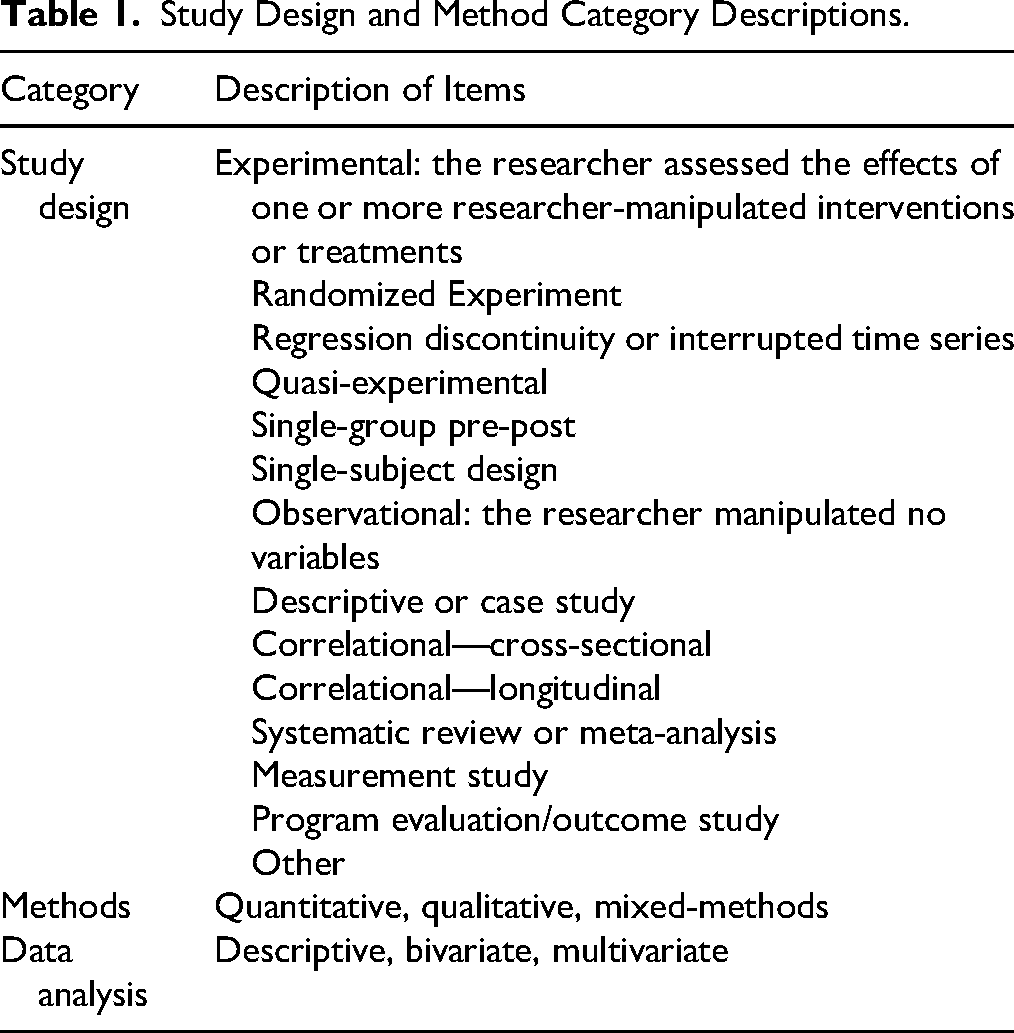
With respect to research methodology, studies were classified as qualitative if they analyzed unstructured data in the form of words, images, or objects, and as quantitative if they utilized statistical, mathematical, or computational techniques. Quantitative studies were further categorized as either cross-sectional or longitudinal and by the type of analysis conducted, including descriptive, bivariate, or multivariate categories. Studies employing both qualitative and quantitative approaches were classified as mixed methods. When a dissertation included both a descriptive or case study component and a quantitative analysis, the study was categorized according to the quantitative component to allow for more detailed analytic coding. This classification approach is consistent with that employed in the prior review by Maynard et al. (2014) and was chosen to examine the extent to which social work dissertation research focuses on assessing the effects of interventions or treatments compared to research that does not involve such manipulation.
Another notable distinction lies within the practice domain category. While categories such as micro practice and macro practice are generally understood, the research category warrants further specification. Dissertations were classified under the “research” practice domain if they were solely focused on the topic of research itself, rather than a substantive social work topic. Examples include dissertations examining strategies to improve engagement or participation in social work research, the development of new measures or analytic approaches, and studies examining the content or quality of systematic reviews available in the social work literature. Another category that warrants further clarification is the geographical focus of each dissertation. Geographical focus was determined by the location in which the study took place or the location of research participants, rather than the physical location of the researcher. A doctoral student completing a dissertation at a United States institution who physically collected data from participants in Africa would be classified as an international study, as the geographic focus of the research was Africa. Similarly, a dissertation in which a researcher conducted remote qualitative interviews with participants located in Africa would be classified as an international study focused on Africa, regardless of whether the researcher was physically located in the United States or in the country where the research participants were located. This approach ensures that geographic classification reflects the substantive focus of the research rather than the institutional affiliation or physical location of the researcher.
All categories were developed a priori and designed to be mutually exclusive. In cases where data were not present in the dissertation abstract to make a determination in any of the categories, the full text of the dissertation was obtained, and data were extracted from it. Two authors pilot-tested the data extraction form with five dissertations. This preliminary testing allowed for refinements and clarifications before formal data extraction began. An additional two team members were trained on the data extraction procedures to familiarize them with the extraction framework, including category definitions, coding scheme, and examples of application. This session ensured that all team members extracting data had a shared understanding of the framework and its intended use. To ensure reliability, two authors independently extracted data from all dissertation abstracts and referred to the full text if sufficient information was not available in the abstract. After completing data extraction, the authors met to review and compare the extracted data and discuss any discrepancies to ensure consistency and accuracy. Formal interrater reliability statistics were not calculated; instead, two reviewers independently extracted data for each dissertation, and all discrepancies were either resolved through discussion and consensus or through additional review by a third reviewer.
Differences Between Review Periods
Two reviewers were authors of the prior dissertation review (BRM, MGV) and guided the conduct and reporting of this review. Though we attempted to replicate the prior review as closely as possible, there were notable differences in how the primary topic and populations were captured across the two review periods. In a departure from the previous study, dissertations were coded for the primary topic and for whether they targeted a specific population, rather than having a combined, singular category. In instances where the dissertation might have fallen into more than one category, the abstract was re-read, and two reviewers came to a consensus on which category should be deemed the primary. The primary topic of the dissertations was categorized using a priori categories derived from the results of the prior dissertation review study (Maynard et al., 2014). If a primary topic fell outside these categories, a note on the specific topic was made during the data extraction process.
Race and ethnicity categories were derived from U.S. Census Bureau categories and included: Black/African American, American Indian/Alaska Native, Asian, Native Hawaiian/Other Pacific Islander, and Hispanic/Latino. Additional specific population groups were chosen due to being included in the 2014 study and include: at-risk youth; disabled individuals; immigrants, refugees, or displaced persons; lesbian, gay, bisexual, transgender, or queer (LGBTQ); and military or veterans. Once all studies were coded, those initially categorized as “other” were reviewed to determine whether additional thematic groupings were warranted. Following this review, two new categories, including individuals with serious mental illness and homeless individuals, were created and incorporated into the coding framework.
Data Analysis
Descriptive statistics are provided to characterize the current sample of doctoral dissertations. To determine whether any significant changes have occurred in social work doctoral research throughout the last decade, zero-order correlations were used to assess whether research design, method, or data source variables were significantly associated with publication year. This approach replicated the methods utilized in the prior review. To compare the results of this review to the prior review, chi-square analyses were conducted to detect any significant differences where methodologically appropriate, and odds ratios were reported to provide insight into the magnitude of change.
Results
Current Trends in the Conduct of Social Work Doctoral Research
Study Design, Methodology, and Data Sources
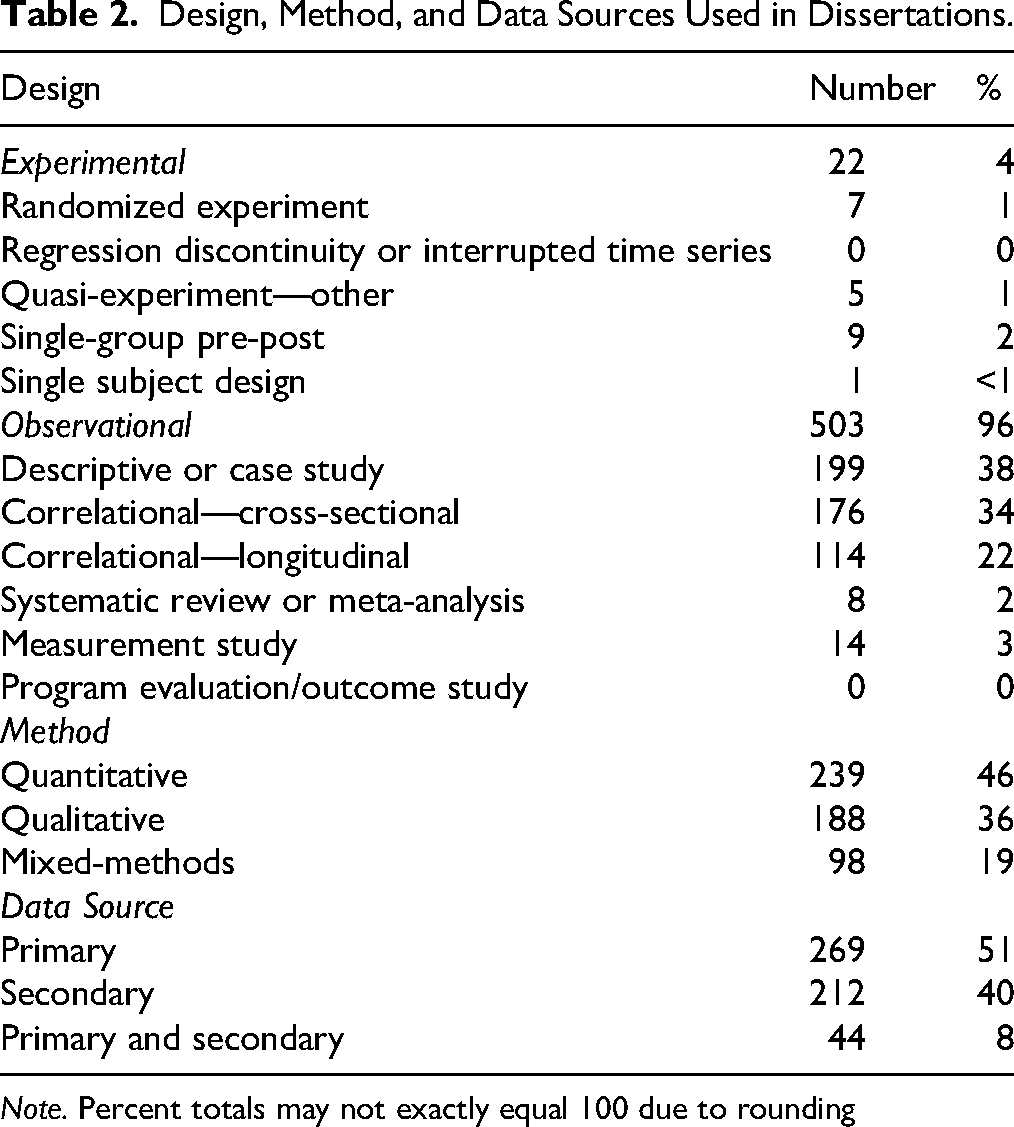
Table 2 contains the study design, method, and data sources used in dissertations. Of the 525 dissertations, 18% were in a multiple-paper format, while 82% were traditionally formatted. Nearly all of the dissertations in this sample employed observational designs (96%), with only 4% incorporating an experimental component. Among the 22 studies that included an experimental design, seven were randomized experiments, five used quasi-experimental designs, nine employed single-group pre–post designs, and one utilized a single-subject design. Of the observational studies, 38% were descriptive or case studies, 34% were correlational cross-sectional studies, and 22% were correlational longitudinal studies. A small proportion consisted of systematic reviews or meta-analyses (2%), and measurement studies (3%).
Design, Method, and Data Sources Used in Dissertations.
Note. Percent totals may not exactly equal 100 due to rounding
The distribution of methodological approaches was more balanced. Nearly half of the studies (46%) employed quantitative analyses, while 36% utilized qualitative methods. An additional 19% incorporated a mixed-methods design, integrating both quantitative and qualitative approaches. Data sources were also relatively balanced overall, with 51% of studies (n = 269) analyzing primary data, 40% utilizing secondary data, and 8% having a combination of data. When examined by study type, quantitative studies were much more likely to rely on secondary data (74%), while 25% used primary data, and only 2% incorporated both data types. In contrast, qualitative studies primarily used primary data (87%), with 9% relying on secondary data and 5% using both sources. Among mixed-methods studies, 48% used primary data, 20% used secondary data, and 32% used both primary and secondary data.
Further details on dissertation trends over time are presented in Table 3. Zero-order correlations were used to assess whether each research design, method, or data source variable was significantly associated with publication year. Results indicated a weak, negative, and statistically significant correlation between the use of quantitative methods and year (r = −.131, p = .002). A negligible yet statistically significant positive relationship was found between primary data source use and year (r = .085, p = .05). A weak, negative correlation was identified between secondary data use and year (r = −.100, p = .02). No significant correlations were found for mixed-method or qualitative methodologies, either study design type, or the combined use of primary and secondary data sources. Taken together, these findings suggest a trend toward decreased use of quantitative methods and reliance on secondary data in social work dissertation research over the 10-year period.
Study Design, Methods, and Data Sources of Dissertations.
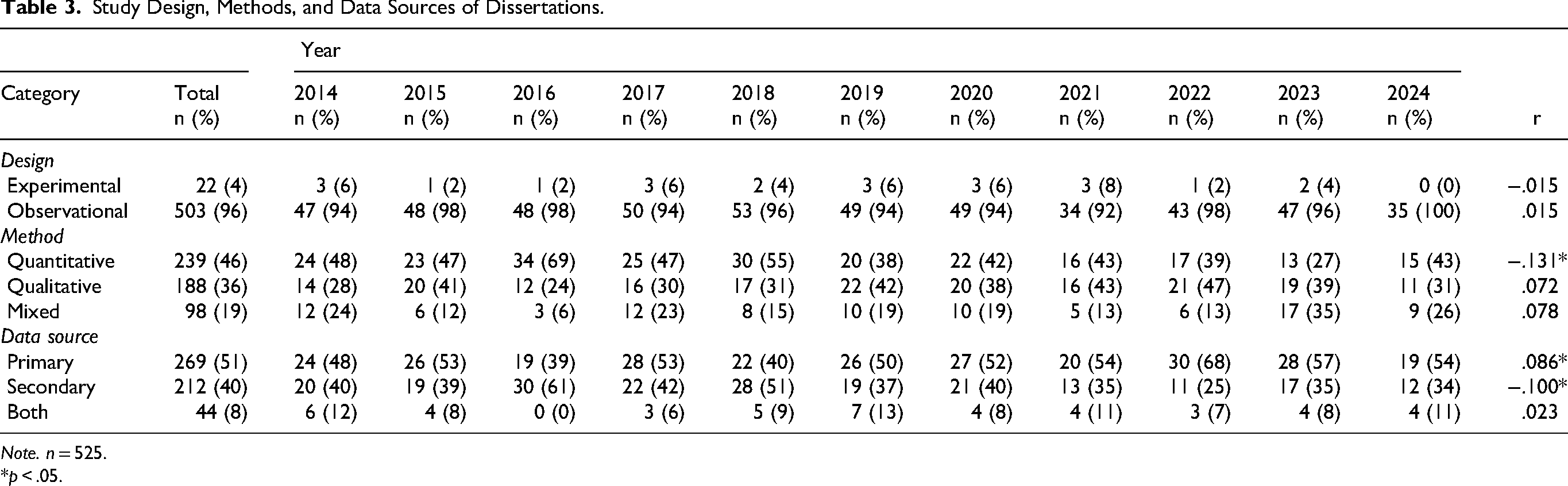
Note. n = 525.
*p < .05.
Current Trends in the Content of Social Work Doctoral Research
Social Work Practice Domains
The frequency and percentage of social work practice areas represented in the dissertation sample are presented in Table 4. The majority of dissertations addressed micro-level practice (i.e., work with individuals, families, and groups), comprising 75% of the sample. Macro-level practice, encompassing policy, administration, and community practice, accounted for 16% of dissertations. Seven percent focused exclusively on social work education or professional development, while only 1% centered on research.
Social Work Practice Domains Addressed.
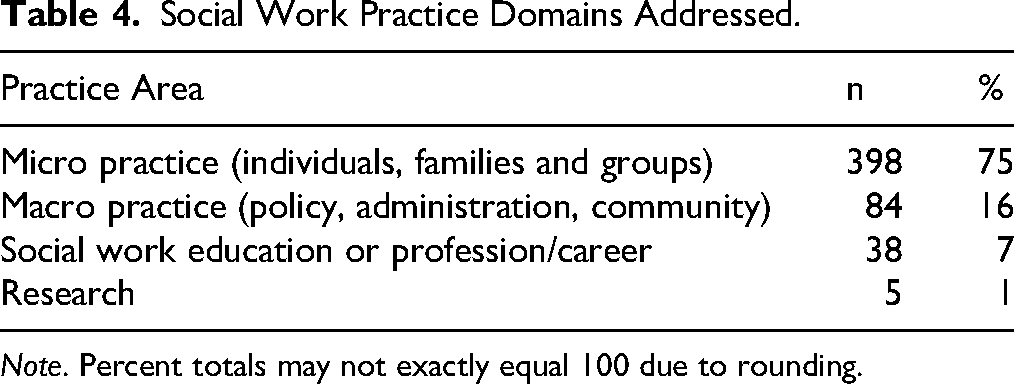
Note. Percent totals may not exactly equal 100 due to rounding.
Subjects of Research
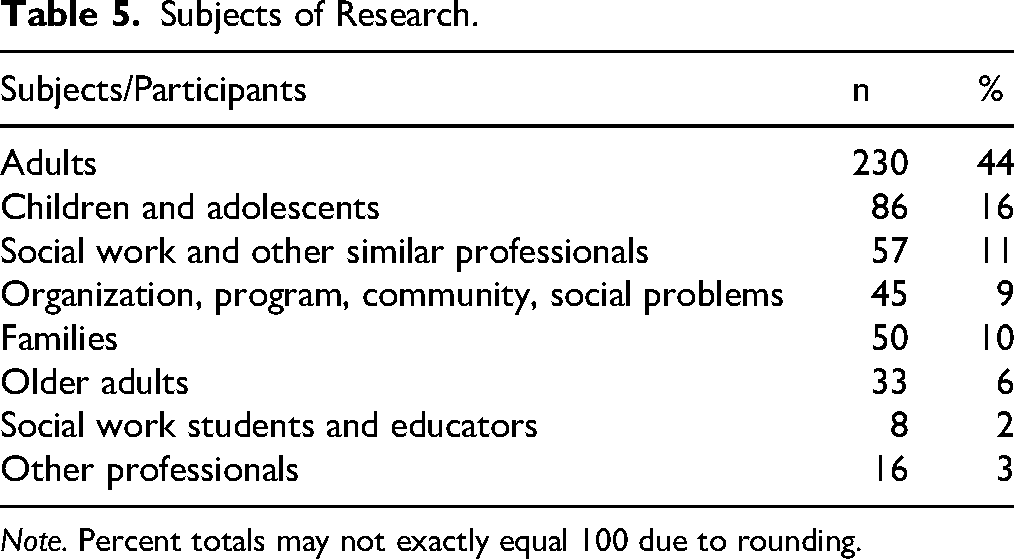
Table 5 presents the characteristics of research participants. Although social work doctoral dissertations addressed populations across the lifespan, adults were the most frequently studied group, comprising 44% of the sample. Children and adolescents were the primary population in 16% of studies. Social work and allied professionals represented 11% of dissertations, followed by families (10%) and organizational, program, or community-level subjects (9%). Older adults were the primary population in 6% of studies. Social work students or educators and other professionals each accounted for 3% or less of the subjects included in the sample of dissertations. It is worth noting that these categories were coded as mutually exclusive based on the primary focus of each dissertation. While social work professionals and other professional groups are themselves adults, dissertations were classified according to the most salient characteristic of the population under study. For example, a dissertation examining burnout among social workers was coded as social work professionals rather than adults, reflecting the professional identity of the sample as the primary focus of inquiry.
Subjects of Research.
Note. Percent totals may not exactly equal 100 due to rounding.
Specific Populations
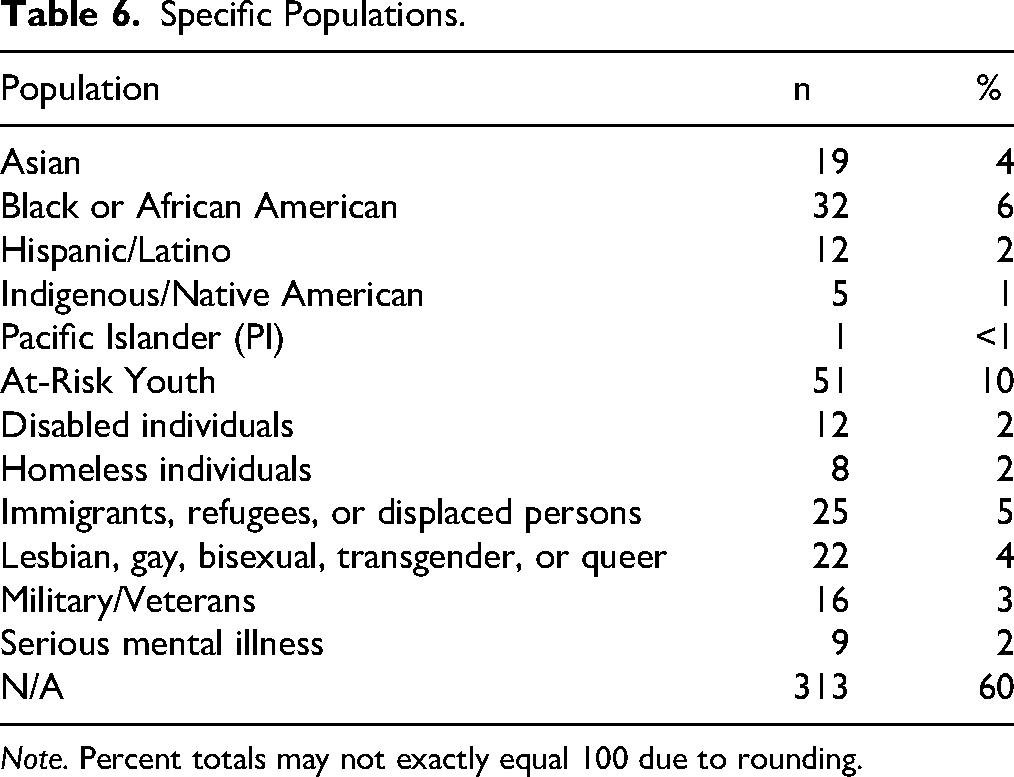
While most dissertations did not specify populations beyond the broader categories noted above, a subset explicitly focused on historically marginalized, underrepresented, or otherwise vulnerable groups. With respect to race and ethnicity, Asian populations were the focus of 4% of dissertations, Black or African American populations 6%, Hispanic or Latino populations 2%, and Indigenous, Native American, or Pacific Islander populations 1% or less. Among dissertations targeting other specific populations, at-risk youth comprised 10% of the sample; immigrants, refugees, or displaced persons, 5%; LGBTQ + individuals, 4%; military personnel or veterans, 3%; and individuals experiencing disability, homelessness, or serious mental illness, 2% each. Results pertaining to specific populations are presented in Table 6.
Specific Populations.
Note. Percent totals may not exactly equal 100 due to rounding.
Topics of Dissertation Research
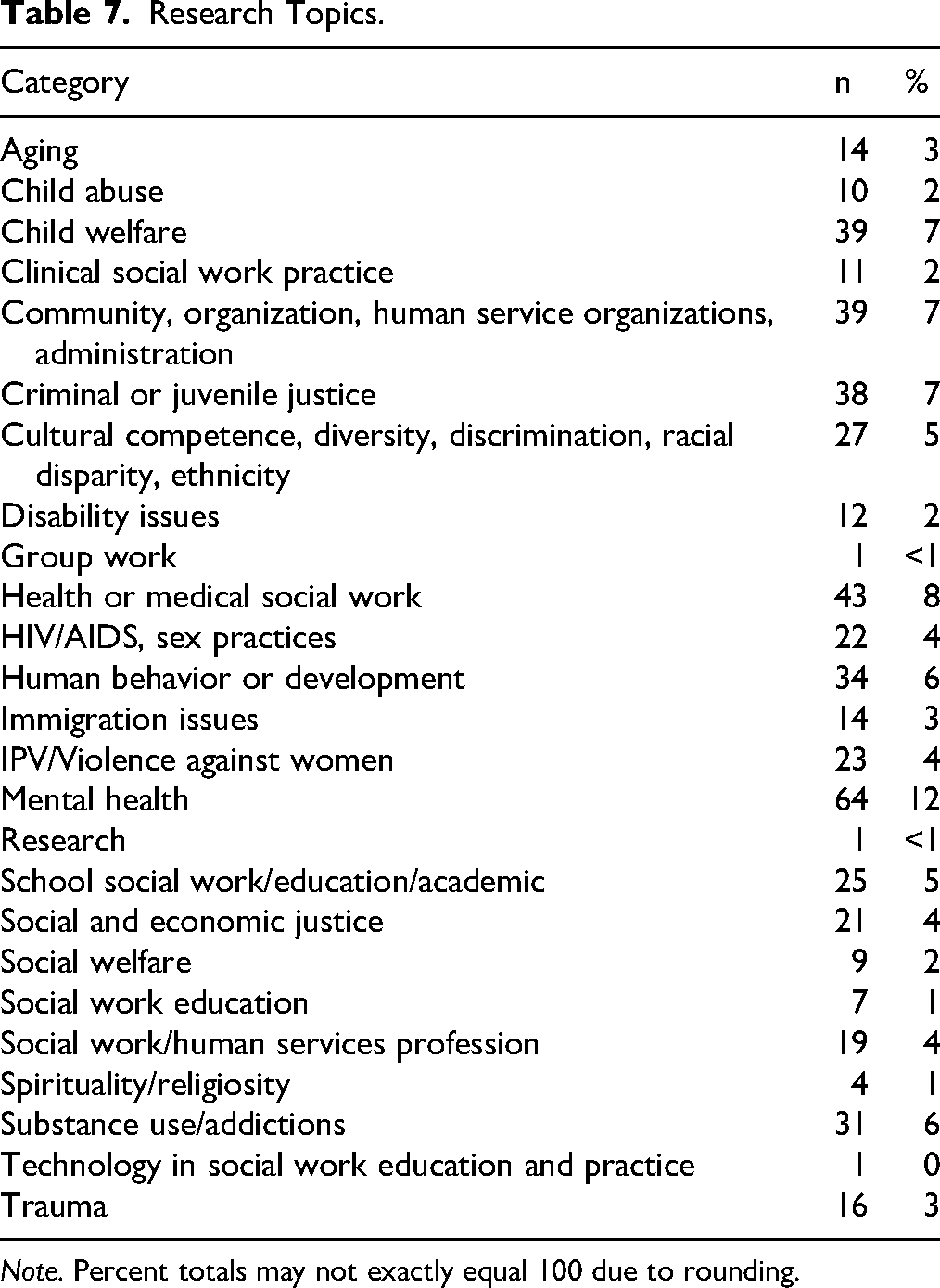
Table 7 displays results related to the primary dissertation topics examined across dissertations. The primary dissertation topics were distributed across the a priori categories with notable variation. Mental health represented the most frequently studied topic (12%), followed by health and medical social work (8%). Community, organizational, and human service administration and leadership, as well as criminal and juvenile justice, each accounted for 7% of dissertations. Substance use and addiction, and human behavior and development, each comprised 6%. Topics related to cultural competence, diversity, discrimination, racial disparity, and ethnicity appeared in 5% of dissertations. Several topics each represented 4% of the sample, including HIV/AIDS and sexual health practices; intimate partner violence (IPV), violence against women, and trafficking; social and economic justice; and social work and human services professions. Trauma and aging were each addressed in 3% of dissertations. The remaining categories, including child abuse, child welfare, clinical social work practice, disability, group work, research methods, social work education, spirituality or religiosity, and technology in social work practice or education, each comprised 2% or less of the total.
Research Topics.
Note. Percent totals may not exactly equal 100 due to rounding.
International Social Work
The majority of dissertations were conducted in the United States, accounting for 88% of the sample (n = 464). Four percent of studies (n = 21) were conducted in Canada. The remaining studies were classified into two categories. The first, coded as “Other,” comprised 6% of the sample (n = 31) and included studies conducted in countries outside the United States and Canada, each represented by no more than two dissertations. The second category, “Two or More Countries,” represented 2% of the sample (n = 9) and included dissertations in which data were collected across multiple countries, most commonly the United States paired with one other country.
Comparison to 1998–2008 Dissertation Study
Below we will provide a comparison of the current review to the 1998–2008 review (Maynard et al., 2014). Where sufficient data exists to perform analysis, odds ratios (ORs) are reported alongside chi-square results to provide a standardized indication of the magnitude and direction of these differences. In the prior review, dissertations could be categorized within more than one dissertation topic. In the current review, dissertations were categorized into a single primary topic. Given these methodological differences, primary dissertation topic will not be compared across the two review periods. There were also differences in data extraction for determining specific populations. This review relied on Census Bureau categories for specifying racial and ethnic categories, and also included specific populations such as “immigrants, refugees, and displaced persons” as a specific population rather than solely as a dissertation topic. As a result, the comparison of specific populations across the two reviews is provided descriptively. Where data analysis was possible, results indicated statistically significant differences across multiple variables.
The search conducted in the prior review yielded 3,088 dissertations, from which a systematic random sample of 20% was drawn, resulting in a final sample of 593 dissertations after excluding those outside the field of social work or otherwise ineligible. The search conducted in the current review yielded 2,878 dissertations, resulting in a final sample of 525 dissertations following the same sampling and eligibility procedures. The modest difference in initial search results across the two periods is difficult to attribute to true differences in dissertation production, as raw search totals may also reflect variability in database coverage, search term indexing, and the inclusion of DSW or non-social work dissertations that were subsequently excluded. The final sample sizes of 593 and 525 are comparable and sufficient for the descriptive and comparative analyses conducted.
Study Design, Methodology, and Data Sources
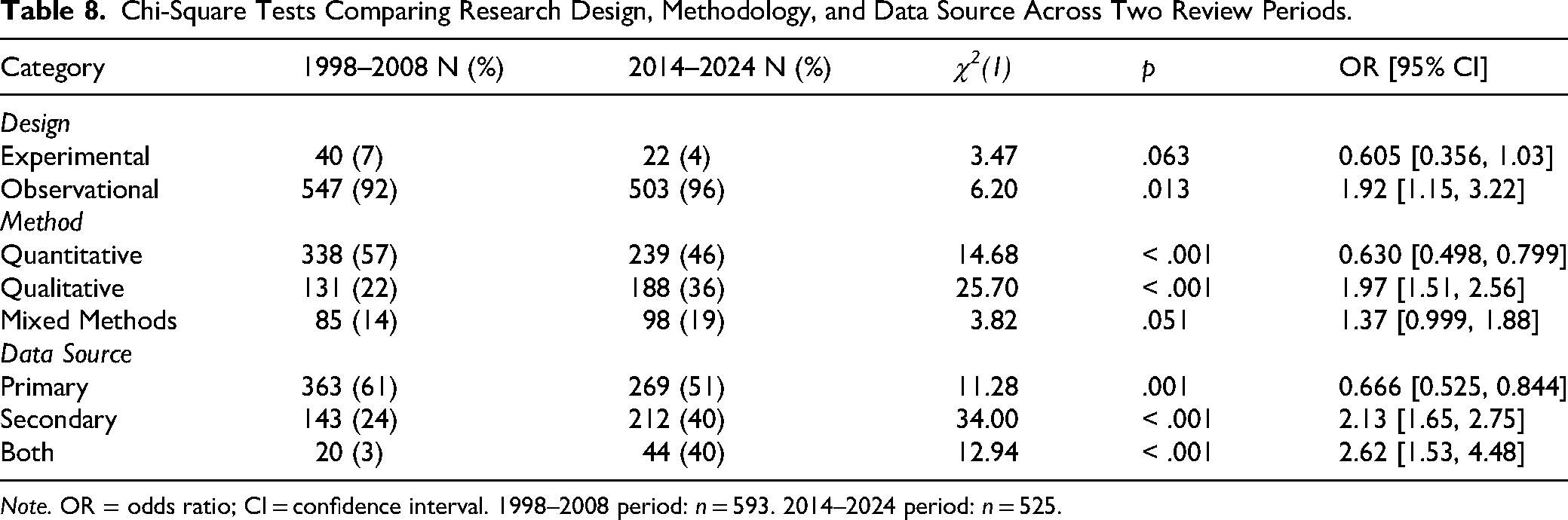
Differences in research design, methodology, and data source use between the two review periods were examined to assess whether observed differences in proportion were statistically significant. Comparisons between the two review periods across research design, methodology, and data source use are presented in Table 8. Although the proportion of dissertations employing experimental designs was lower in the current review period compared to the prior period (4% vs. 7%), this difference did not reach statistical significance. The proportion of dissertations employing qualitative methods was significantly higher in the current period (36% vs. 22%), while the proportion employing quantitative methods was significantly lower (46% vs. 57%), and the proportion of mixed-methods approaches were higher and approached, but did not reach statistical significance (19% vs. 14%), suggesting meaningful shifts in methodological approaches. The proportion of dissertations using secondary data was also markedly higher in the current period (40% vs. 24%), while primary data use was lower (51% vs. 61%), and using both primary and secondary data was higher (3% vs. 8%).
Chi-Square Tests Comparing Research Design, Methodology, and Data Source Across Two Review Periods.
Note. OR = odds ratio; CI = confidence interval. 1998–2008 period: n = 593. 2014–2024 period: n = 525.
Social Work Practice Domains
Table 9 represents the results of chi-square analyses conducted to examine whether changes in social work practice domains differed significantly between the two review periods. The higher proportion of micro practice dissertations from 66% to 75% was statistically significant, while the lower proportion of macro practice dissertations from 18% to 16% did not reach statistical significance. The dissertations focused on the social work profession or career significantly lowered from 13% to 7%. The research practice area was excluded from comparative analysis due to insufficient cell counts (n = 5 in each period), which preclude reliable chi-square estimation.
Chi-Square Tests Comparing Practice Domains Across Two Review Periods.

Note. OR = odds ratio; CI = confidence interval. 1998–2008 period: n = 593. 2014–2024 period: n = 525.
Subjects of Research
Research subjects targeted in dissertations were also examined for statistically significant differences between the two review periods (Table 10). Subject groups with sufficient cell counts for chi-square analysis included adults, children and adolescents, social work and similar professionals, organizations and communities, families, and older adults. Results indicated that research populations remained largely consistent across the two periods, with the only statistically significant change being a high proportion of dissertations focused on the study of families from 6% to 10%. The decrease in dissertations focused on social work and similar professionals from 15% to 11% approached but did not reach statistical significance, χ2(1) = 3.32, p = .069, and should be interpreted cautiously as a trend. All remaining subject groups showed no statistically significant differences between the two review periods. Social work students and educators were excluded from analysis due to insufficient cell counts (n = 19 and n = 8, respectively).
Chi-Square Tests Comparing Subjects of Research.
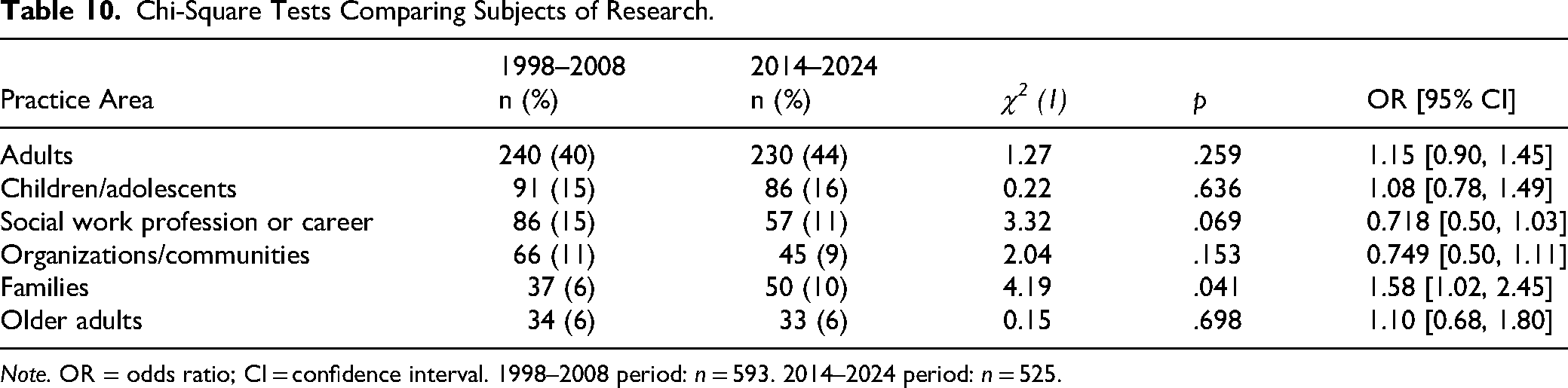
Note. OR = odds ratio; CI = confidence interval. 1998–2008 period: n = 593. 2014–2024 period: n = 525.
Specific Populations
Specific population groups were examined descriptively due to insufficient cell counts for reliable chi-square estimation and differences in data extraction procedures between the two studies. In the prior study, dissertations could be categorized into more than one topic and were also coded for ethnic and racial groups including African American/Black, Hispanic/Latino, and other, whereas in the current study, each dissertation was coded according to a single primary topic and coded for a specific population if one was present in the dissertation. For this review, we also added specific population groups, for example, “immigrants, refugees, or displaced persons” rather than having this remains solely as a primary topic. Given these methodological discrepancies, direct statistical comparison was not warranted, and a descriptive overview is provided instead. Descriptive statistics for specific populations from both review periods can be found in Table 11.
Specific Populations Across Review Periods.
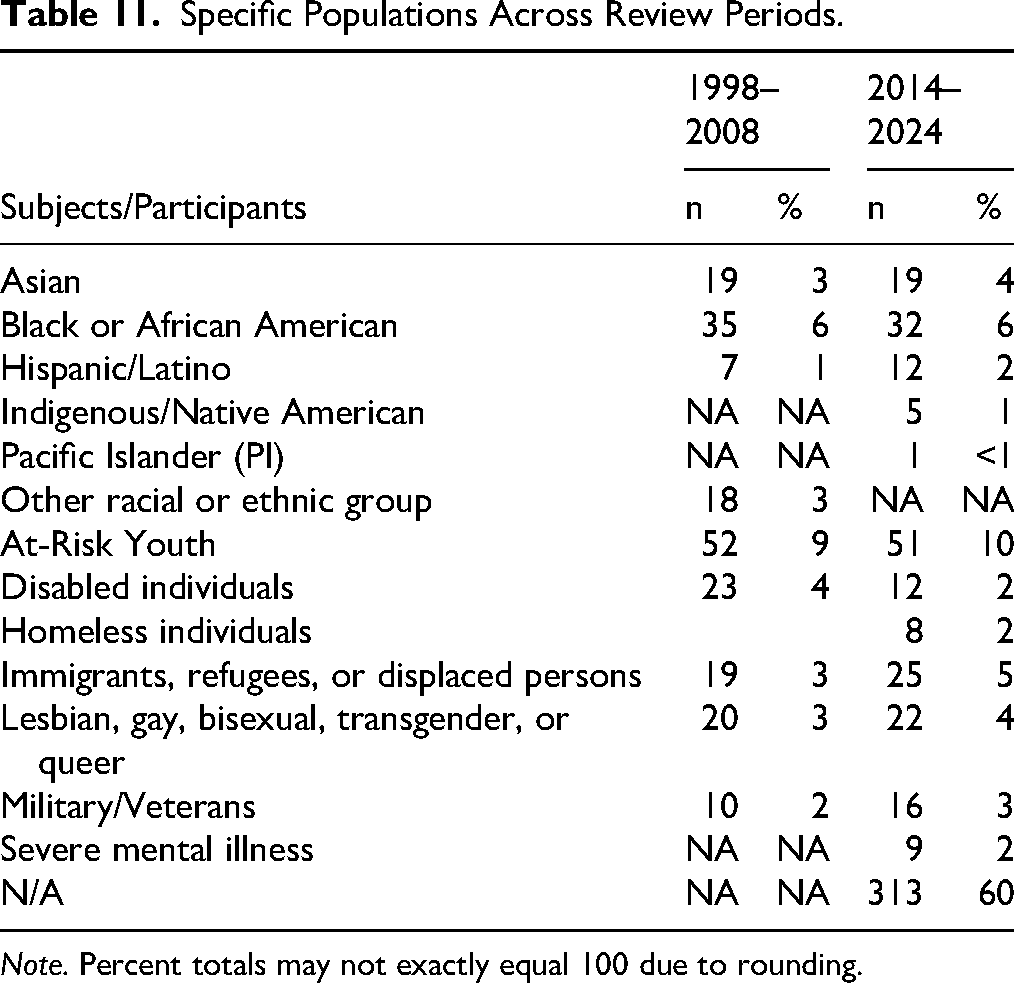
Note. Percent totals may not exactly equal 100 due to rounding.
Among racial and ethnic groups specified by doctoral scholars, representation remained relatively stable across the two review periods. Black or African American populations were the most frequently specified racial or ethnic group in both periods (6% in each), followed by Asian populations (3%–4%) and Hispanic or Latino populations (1%–2%). Indigenous and Native American populations, Pacific Islander populations, and other racial or ethnic groups were not consistently categorized across both reviews, hindering comparison for these groups. Among other specific populations, at-risk youth remained the most frequently studied, with representation stable across periods (9%–10%). Several research topic categories from the prior study, including immigration, disability, LGBTQ+, and military social work, were recategorized as specific population groups in the current study. Dissertation research involving immigrants, refugees, and displaced persons was higher (3%–5%), as well as research focused on LGBTQ + individuals (3%–4%). Research involving disabled individuals appears to have lowered from 4% to 2%. Military personnel and veterans represented 3% of the current sample, one percentage-point higher than the prior study.
Sensitivity Analysis
In examining the institutional distribution of dissertations, one university contributed a disproportionately large number of studies (n = 49; approximately 9% of the sample). In comparison, the number of dissertations per institution ranged from 1 to 49, with the next highest institution contributing 20 dissertations. To assess the influence of this outlier, we conducted a sensitivity analysis excluding dissertations from this university. The remaining 476 dissertations were analyzed using the same methodology applied to the full sample. Table 12 provides a comparison of the results between the full sample and the sensitivity analysis sample.
Sensitivity Analysis: Chi-Square Tests Comparing Research Design, Methodology, and Data Source Across Review Periods.
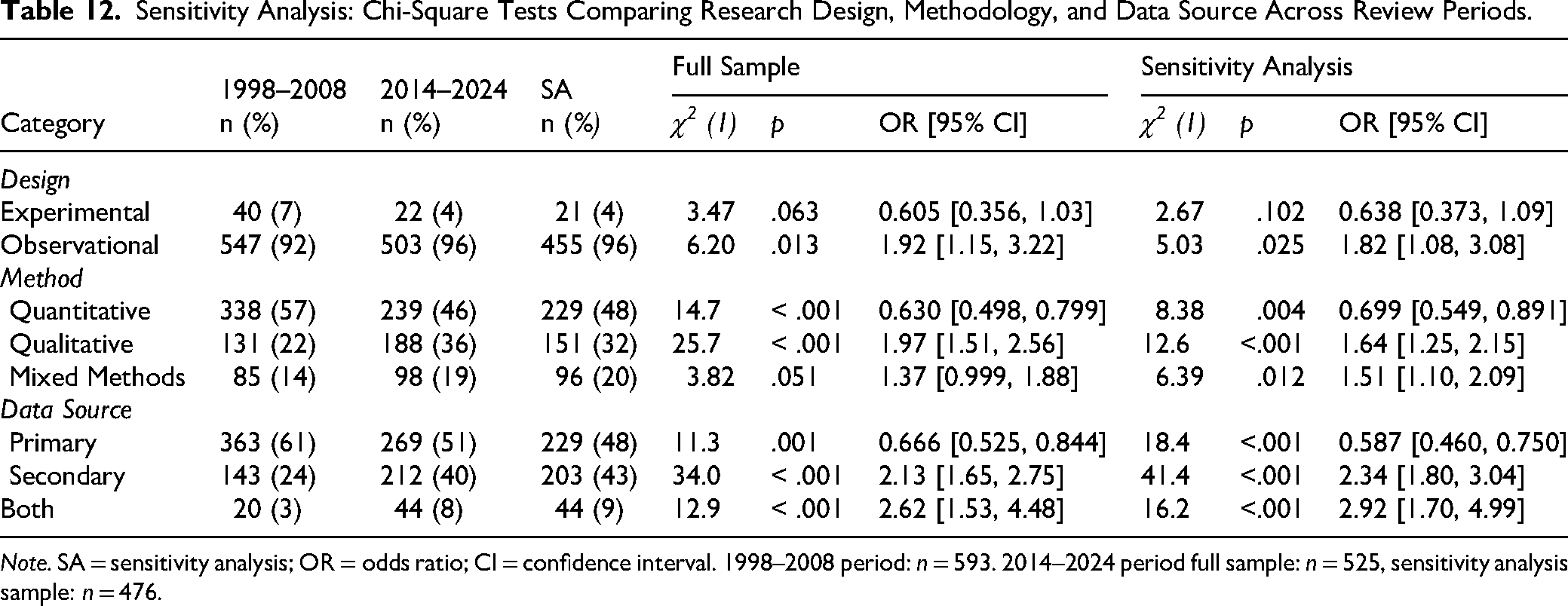
Note. SA = sensitivity analysis; OR = odds ratio; CI = confidence interval. 1998–2008 period: n = 593. 2014–2024 period full sample: n = 525, sensitivity analysis sample: n = 476.
Analysis of zero-order correlations between research characteristics and year indicated no substantial differences in research design over time in the reduced sample. Quantitative studies retained a weak, negative correlation with year (r = −.107, p = .02). However, mixed-methods approaches demonstrated a weak, positive correlation with year that reached statistical significance in the sensitivity sample (r = .102, p = .03), whereas this relationship was not statistically significant in the full sample. Additionally, the weak positive correlation between primary data use and year, and the weak negative correlation for secondary data use observed in the full sample, were no longer present in the sensitivity analysis. These findings suggest that the inclusion of this institution may have influenced observed trends, potentially obscuring an increase in mixed-methods studies over time and inflating associations related to data source.
We further compared the sensitivity analysis sample with the prior review period to examine differences in research design, methods, and data sources. The higher likelihood of using observational designs remained statistically significant (p = .025). The lower likelihood of employing quantitative methods and the higher likelihood of using qualitative methods also remained significant, although the magnitude of effect was slightly weakened (OR = 1.97, p < .001 vs. OR = 1.64, p < .001). Consistent with the main analysis, dissertations in the current review period were more likely to employ mixed-methods approaches compared to the prior review period (OR = 1.51, p = .012).
All data source categories (primary, secondary, and combined) remained statistically significant. Notably, the magnitude of effect for the use of combined data sources was greater in the sensitivity analysis sample than in the full sample (OR = 2.62, p < .001 vs. OR = 2.92, p < .001). This pattern may align with the increased use of mixed-methods approaches, which often involve multiple data sources.
Discussion
This study examined social work doctoral dissertation research completed between 2014 and 2024, extending a prior decade-long review (Maynard et al., 2014) to provide a comprehensive picture of the methodological approaches, research designs, data sources, topics, and populations that have characterized doctoral-level social work scholarship in recent years. Understanding these patterns is important not only as a barometer of the field's current research capacity, but as a window into the training, priorities, and expertise of the next generation of social work scholars who will ultimately shape the knowledge base of the profession. A central feature of this study is the comparison of findings across two distinct decades of social work dissertation research, specifically the prior review period spanning 1998–2008 and the current review period spanning 2014–2024, allowing for an assessment of how doctoral-level social work research has shifted over time. Situating these findings within the broader contextual shifts of the past decade, including expanding access to secondary data, technological advances in research tools, significant disruptions wrought by the COVID-19 pandemic, and shifting federal priorities, allows for a richer interpretation of what the data reveal and what they may signal for the future of social work research.
Findings from the current review reveal that social work doctoral dissertation research over the past decade was predominantly observational in design and quantitative in method, though qualitative and mixed-methods approaches were also well represented. The micro practice domain remained the primary focus of dissertation research, and the breadth of topics and populations studied continued to reflect the diversity of the social work profession, with mental health, child welfare, and issues related to race, ethnicity, and culture among the most frequently examined areas. Though a surprising finding given the noted disruptions to research during the COVID-19 pandemic and significant technological shifts, secondary data utilization significantly, weakly decreased over the current ten year review period. A similar relationship was observed between quantitative studies and the current review period, suggesting that a possible explanation could be that secondary data use decreased as quantitative methods decreased. While 74% of quantitative dissertations relied on secondary data, only 9% of qualitative dissertations utilized secondary data. Therefore, it is possible that less reliance on secondary data use is a reflection of the lesser likelihood of utilizing quantitative methods, as both demonstrated a significant, but weak relationship with year. Taken together, these findings paint a picture of a field that has maintained many of its traditional research orientations while also exhibiting emerging meaningful variation in how doctoral students are approaching their scholarship.
To fully appreciate the significance of these findings, it is useful to consider them at two levels: trends within the current ten-year period and shifts observed in comparison to the prior review. First, examining trends within the current review period alone, only weak relationships between the passage of time and a lower proportion of quantitative methods and less secondary data use is revealed. Incremental changes within a body of literature can easily go undetected without this kind of longitudinal lens, and the within-period analysis suggests that while some methodological drift was occurring, it was gradual. While the current period findings offer a valuable snapshot of doctoral-level social work research, the fuller significance of these patterns becomes apparent when viewed against the backdrop of the prior review period spanning 1998 to 2008. It is at this second level of analysis, across decades, that the magnitude of shift in social work doctoral dissertation research becomes most apparent.
Although concerns about the limited use of experimental designs and intervention research in social work research have been longstanding (Horton & Hawkins, 2010), observational design use continued to increase significantly across the current review period, further cementing a pattern that has persisted across decades. This finding is consistent with prior research suggesting that social work doctoral programs have historically emphasized observational and correlational approaches, with experimental designs remaining rare despite repeated calls for more rigorous outcome research practices in the field (Horton & Hawkins, 2010; Maynard et al., 2014; Thyer, 2025). This higher prevalence of observational and correlational research is consistent with findings from the broader social work literature (Hendrix et al., 2025). Dissertations from the current review period were approximately 37% less likely to use quantitative methods than the prior review period and were twice as likely to utilize qualitative methods. Taken together, these findings suggest a meaningful shift toward observational and qualitative approaches in social work doctoral research.
Similarly, a small proportion of dissertations consisted of systematic reviews or meta-analyses (2%, n = 8), representing only a modest increase from the prior review (1%; Maynard et al., 2014). This limited uptake is notable given the rapid expansion of evidence-informed practice and the central role that research synthesis now plays in informing policy and practice. Moreover, the small proportion of research synthesis found in dissertation research is inconsistent with the field's own evolving standards. The Group for the Advancement of Doctoral Education in Social Work (GADE) updated its PhD Program Quality Guidelines in 2023 to explicitly include conducting high-quality systematic reviews as a core doctoral competency, yet dissertation practice has not kept pace. The low prevalence may reflect assumptions that systematic reviews rely on others’ work, require a team rather than a sole investigator, or are insufficiently rigorous or methodologically sophisticated to meet doctoral standards. All three assumptions warrant scrutiny. Survey research across doctoral programs found that resistance to systematic reviews as dissertation research was strongly associated with unfamiliarity with the methodology itself (Puljak & Sapunar, 2017), and coordinators of programs where systematic reviews are widely accepted as dissertations overwhelmingly rejected claims that they are too easy or produce insufficient new knowledge (Dotto et al., 2020). The team-based objection is particularly unconvincing: secondary data analysis dissertations, which were common in this sample, rely entirely on data collected by others, yet we accept these as dissertations because students are expected to independently conceptualize, analyze, and interpret those data. A student conducting a systematic review does the same, but must additionally design the search strategy, screen potentially hundreds of sources, critically appraise study quality, and synthesize findings across a varied literature, requiring deep familiarity with the research designs and analytic approaches used across included studies (ten Ham-Baloyi & Jordan, 2016).
The low prevalence also represents a missed training opportunity at a time when the volume of published syntheses in social work has grown substantially but many are of low methodological quality across fields (Maynard, 2025). Addressing this quality problem requires researchers with deep training in synthesis methods, yet across disciplines the most consistently cited barriers to accepting systematic reviews as dissertation research are limited faculty expertise and inadequate candidate training (Dotto et al., 2020; Puljak & Sapunar, 2017). This is particularly consequential given that GADE's (2023) Quality Guidelines explicitly identify conducting high-quality systematic reviews as a core competency doctoral graduates should possess. Curricular investment and clearer program-level guidance on research synthesis as a valued dissertation methodology could help close the gap between this expectation and current practice.
While the percentage of dissertations employing systematic review or systematic review and meta-analysis remained low, significant shifts were observed in data source utilization. Dissertations from the current review period were more than twice as likely to utilize secondary data sources. The increased use of combination of both primary and secondary data sources within a single dissertation also suggests shifting methodological priorities in the design of doctoral dissertation research, and may reflect perspectives that mixed-methods research is well-suited for exploring the complexities and nuance of social problems (Haight & Bidwell, 2016). When considered within the context of the current theoretical discourse surrounding social work research, these findings lend support to the argument advanced by Hodge and colleagues (2025) that social work is moving toward methodological approaches more aligned with postmodern and critical schools of thought, in which quantitative methods may be deprioritized in favor of qualitative and mixed-methods approaches that center lived experience and marginalized perspectives (Houston, 2012; Longhofer & Floersch, 2012). Alongside this theoretical shift, the technological advancements in qualitative research software over the two review periods may have also contributed to the increase in the proportion of dissertations employing qualitative methods (Belkin et al., 2026; Moylan et al., 2015). Technological advances may also explain the increase in the utilization of secondary data.
The substantial increase in secondary data use across review periods also appears consistent with the noted technological advances across the two review periods, including rapid improvements in data availability, open data mandates, and the increased accessibility of large administrative datasets (Office of Science and Technology Policy, 2013; U.S. Department of Health and Human Services, 2019). Doctoral students may also favor secondary data analysis because it can reduce time and resource burdens that have been associated with Institutional Review Board (IRB) review and approval processes (Spellecy et al., 2018). Other practical advantages of secondary data for doctoral students include reduced data collection burdens and access to large and representative samples, which may ultimately lead to the ability to complete dissertations more efficiently (Pederson et al., 2020). While there was a substantial shift across the review periods in secondary data use, results from the current review period showed a weak, negative correlation with secondary data use and publication year, a surprising finding given the noted impacts to research during the COVID-19 pandemic. It is possible that the noted technological advances in data accessibility initially contributed to the substantial shift in secondary data use during the span of the two review periods, while the overall impact of these effects has steadied over time and secondary data use is currently more dependent upon the primary methodology chosen. Future reviews may provide greater insight to better understand the nuance in the relationship between secondary data use, technological advances, and methodology. Notably, while it may be difficult to isolate the precise impact of the COVID-19 pandemic on the overall findings, no experimental studies were identified among 2024 dissertations. Doctoral students who entered their programs in 2020 may have selected or been constrained to nonexperimental designs as a result of pandemic-related restrictions on in-person data collection (Harper et al., 2020; National Center for Science and Engineering Statistics, 2023). Whether this represents a pandemic-specific disruption or a continuation of the broader decline in experimental research in social work doctoral education remains another important question for future reviews.
Another important consideration for future reviews is the potential influence of mainstream artificial intelligence (AI) on social work dissertations. Although the current influence of AI on social work dissertations is unknown, the significant technological developments that have occurred warrant consideration in future examinations of social work doctoral research. While limited AI applications were available to researchers in the early 2000s, and the 2010s brought significant expansions to machine learning, including natural language processing, data mining, and automated systematic review software (Madanchian & Taherdoost, 2025), the mainstream emergence of generative AI tools in 2022 may mark a significant shift in how researchers across disciplines access, analyze, and produce knowledge. Given that the majority of dissertations in the current review were completed prior to or immediately following this shift, its full impact on social work doctoral research remains to be seen. The current review may therefore serve as an important benchmark against which future reviews can potentially assess the extent to which AI has influenced the methodology, data sources, and topical focus of social work dissertation research in the years ahead.
Other notable trends in the focus of doctoral dissertations include the continued rise of micro practice dissertations and a lower proportion focused on dissertations related to the social work profession or career. The persistent dominance of micro practice in dissertation research mirrors broader patterns in social work education, where direct practice and clinical concentrations continue to account for the majority of MSW enrollment (CSWE, 2023), suggesting that doctoral students’ research interests may remain closely tied to their prior practice experiences and professional training. The lower proportion of dissertations focused on the social work profession or career in the current period is somewhat concerning, as understanding the workforce, professional identity, and educational experiences of social workers is critical to sustaining the profession (Mor Barak et al., 2006). Dissertations from the current review period were also more likely to focus on family units as the primary research population, which may reflect growing recognition of the importance of family-level interventions and systems in addressing complex social problems (Pierce et al., 2022). Beyond these differences, research populations appeared to remain relatively stable across descriptive analysis, suggesting that while methodological approaches have evolved, the substantive focus of social work doctoral research has remained largely consistent with the profession's traditional areas of concern.
Limitations
The difference in how topics were coded across the two review periods represents a notable limitation of the current study and prohibited the ability to meaningfully compare primary dissertation topic and specific populations. An additional limitation concerning the specific population category, which was designed to capture the number of dissertations focused on marginalized, oppressed, or otherwise vulnerable groups but did not allow for the selection of multiple racial or ethnic identities simultaneously. Notably, five dissertations specifically identified their focus as Black, Indigenous, or People of Color (BIPOC) populations; however, the coding structure did not accommodate this designation, and dissertations specifying BIPOC or multiple racial or ethnic groups were coded as not applicable, as they could not be assigned to a single category. Many dissertations also specifically focused on women, however reviewers did not systematically code for research populations based on biological sex or gender. Future dissertation reviews should incorporate more granular coding for BIPOC populations and gender-specific research at the outset of the screening process to more accurately characterize the scope of equity-focused scholarship in social work doctoral research.
An additional limitation of this review is that a 20% sample of dissertations was used to draw inferences about the broader population of social work doctoral dissertations completed during the review period. Although systematic random sampling was employed, and this approach improves the likelihood of a representative sample, there remains the possibility that the sample does not fully capture the prevalence of less common dissertation topics, populations, or methodological approaches. This sampling approach was maintained for consistency with the prior review by Maynard et al. (2014), which also examined a 20% sample, thereby supporting the validity of cross-period comparisons. Despite the limitations of the current study, the findings provide a general overview of how social work doctoral research has shifted over time.
Conclusion
This study fulfilled its aim to describe social work doctoral dissertation research over the past decade and to compare these findings with the prior review period of 1998–2008. The findings reveal a field in methodological transition that is steadily moving away from quantitative approaches and primary data collection toward qualitative methods and secondary data utilization, consistent with broader theoretical shifts toward postmodern and critical frameworks in social work scholarship. Micro practice continues to dominate the focus of doctoral research, and families have emerged as a more prominent research population in the current period. Other research populations and practice domains remained relatively stable across the two review periods.
Beyond describing the current state of social work doctoral research, these findings have meaningful implications for social work doctoral education. As the field continues to shift methodologically, doctoral programs may need to examine whether their research training curricula are adequately preparing students across the full range of methodological approaches, including the use of large secondary datasets and emerging technologies. The significant contextual changes of the past decade, including open data mandates, the COVID-19 pandemic, and evolving federal research priorities, have already begun to shape the landscape of social work doctoral research, and their influence is likely to continue. Future reviews should build on this work by incorporating more granular coding for equity-focused populations, including BIPOC communities and gender-specific research, to more fully capture the scope of social work doctoral education research. As social work continues to navigate a rapidly changing research landscape, periodic reviews of doctoral dissertation research will remain a critical tool for assessing whether the field's scholarly priorities align with its evolving professional values and the needs of those it seeks to serve.
Footnotes
Acknowledgments
We gratefully acknowledge Rebecca Hyde for her valuable expertise as a research librarian and her assistance in developing the search strategy for this review. This article does not contain any studies with human or animal participants. The authors declared no potential conflicts of interest with respect to the research, authorship, and/or publication of this article. The authors received no financial support for the research, authorship, and/or publication of this article. The datasets generated during and/or analyzed during the current study are available from the corresponding author on request.

Funding
The authors received no financial support for the research, authorship, and/or publication of this article.
Declaration of Conflicting Interests
The authors declared no potential conflicts of interest with respect to the research, authorship, and/or publication of this article.