






Abstract
Purpose
To assess the effects of a child welfare workforce training-and-coaching model on workers’ perceptions of individual and organizational capacity to engage youth in case/permanency planning.
Method
Five state pilot sites—Michigan, Missouri, Montana, Nebraska, and Rhode Island—selected intervention and comparison regions based on population density and characteristics. Intervention groups received the training-and-coaching model; comparison groups received no intervention. Pre–post surveys were completed (N = 703) between January 2023 and September 2024. Analysis of covariance models were used to assess outcomes.
Results
Intervention groups showed small, significant improvements in caseworkers’ self-perceptions of confidence, skills, and agency culture supportive of youth–adult partnership; in supervisors’ and caseworkers’ commitment to meaningful youth–adult participation; and in supervisors’ perceptions of organizational capacity for change. No significant changes were observed in worker well-being or job satisfaction.
Conclusions
Training paired with supervisor coaching may strengthen workforce capacity for youth engagement, though attention to workforce well-being during implementation is warranted.
Keywords
Authentic youth engagement in child welfare is a strengths-based practice that centers youth as experts of their own experiences and active partners in decisions about their lives, which has been shown to support their autonomy, resilience, and more effective permanency planning (Administration for Children and Families, 2019; Annie E. Casey Foundation, 2019; Williams-Butler et al., 2018). For youth in care, permanency extends beyond physical placement to include legal (Annie E. Casey Foundation, 2019; Winokur et al., 2018), relational (Fowler et al., 2025; Williams-Butler et al., 2018), and cultural aspects (Fowler et al., 2025; Julien-Chinn & Lietz, 2016), together supporting long-term well-being and positive identity formation (Bell & Romano, 2017; Child Welfare Information Gateway, 2019). Sustainable permanency across all three dimensions is best achieved through authentic youth partnerships. Child welfare practices that emphasize youth voices have been shown to be more likely to lead to permanency plans that better align with youth needs and realities, making them more durable and relevant (Annie E. Casey Foundation, 2019; Williams-Butler et al., 2018). Consequently, increased youth involvement in permanency planning is associated with more stable placements, stronger social networks, improved compliance with case plans, and greater perceived fairness in legal proceedings (Administration for Children and Families, 2019; Williams-Butler et al., 2018). Genuine engagement has been shown to foster critical developmental gains that can help prepare youth for adulthood and support successful transitions in employment, education, and independent living (Annie E. Casey Foundation, 2019; Williams-Butler et al., 2018).
While evidence supports these practices, individual- and system-level barriers affect the extent to which youth are engaged in planning processes. For example, child welfare workers sometimes restrict youth participation in aspects of case planning due to concerns about emotional impact, doubts about the decision-making abilities of younger children, or in high-stakes situations (Toros, 2021). Without proper support or preparation, youth with out-of-home care (OOHC) experiences have described unrealistic expectations that they would advocate for themselves (Simmel et al., 2025). There is an ongoing need for practices and policies that promote youth agency and address implicit biases (Administration for Children and Families, 2019; Annie E. Casey Foundation, 2019; Peters et al., 2024) as youth participation remains constrained by skill gaps, overprotective attitudes, and organizational barriers, such as heavy caseloads and limited time for meaningful conversations (Peters et al., 2024; Toros, 2021). Structural reforms, such as providing ongoing training for workers, have been shown to foster meaningful youth engagement (Kim et al., 2024; Toros, 2021). Organizational contexts are vital for facilitating this engagement. Research has shown that supportive cultures, policies, and training within child welfare organizations may foster environments where youth–adult partnerships can flourish (Annie E. Casey Foundation, 2019; Julien-Chinn & Lietz, 2016). However, a critical gap remains due to the lack of tangible, evidence-based approaches to effectively translate this evidence on youth engagement into system-wide child welfare practice (see Wollenhall et al. (2025) for a comprehensive review of youth engagement practices in child welfare settings). Building an evidence base for workforce development requires first establishing whether training and coaching shift worker perceptions—a necessary precursor to changes in practice behavior and, ultimately, youth outcomes.
Given this need, the current study examines the extent to which the Quality Improvement Center on Engaging Youth in Finding Permanency (QIC-EY) child welfare workforce training and coaching model promotes shifts in the workforce's perspectives on individual and organizational capacity to engage youth in case and permanency planning. Three primary outcomes were evaluated in the current study, including pre–post changes in perceptions of: child welfare workforce preparedness and capacity to engage youth in case and permanency planning; organizational philosophy and culture related to youth engagement; and professional well-being and job satisfaction. We provide background on each, followed by an overview of the QIC-EY initiative.
Workforce Preparedness and Capacity to Engage Youth in Case/Permanency Planning
Child welfare workers’ confidence and skill in engaging youth in permanency planning may influence how youth in care experience their child welfare services and long-term outcomes. Higher self-efficacy among child welfare workers has been associated with higher-quality permanency decisions, reduced placement disruptions, and foster stability (Julien-Chinn & Lietz, 2016; Winokur et al., 2018). Conversely, low worker confidence and resource constraints have been shown to limit youth involvement, especially for younger or more vulnerable children (Kim et al., 2024; Williams-Butler et al., 2018). However, enhanced communication training tailored to youths’ developmental stages has been shown to promote inclusive engagement across age groups, and confidence can be further bolstered through targeted supervision and the integration of trauma-informed practices (Toros, 2021). Collectively, the literature indicates the need for comprehensive workforce and organizational development efforts to enhance competencies in youth engagement and permanency planning within supportive organizational cultures (Julien-Chinn & Lietz, 2016; Kim et al., 2024; Toros, 2021).
Organizational Philosophy and Culture Related to Youth Engagement
Organizational culture, a set of learned beliefs that become norms, influences how an organization translates its mission into action (Osborne et al., 2022; Schein, 2010) and arises from the interplay among individuals’ beliefs, organizational practices, and external forces (Osborne et al., 2022). Research has shown that social service workers’ attitudes often align with those of organizational leadership (Reingold & Liu, 2009), and individual beliefs can impact organizational practices and policies (Al-Hawari et al., 2021; Brieger et al., 2021; Rahn et al., 2023). Employees’ values, beliefs, and attitudes (VAB) have been shown to influence the VAB of other staff, employee satisfaction, management practices, and the organizational agenda (Stokes et al., 2016), underscoring the multilevel influences on the adoption of quality improvement initiatives.
The Organizational Readiness Framework (Weiner, 2009) suggests two key factors of change readiness: employees’ level of change commitment and change efficacy. Change efficacy, workers’ beliefs in the organization's ability to implement change, is influenced by aspects of infrastructure, including guidance from supervisors and access to training and resources (Schulman, 2006). When change commitment and change efficacy align, they create a culture conducive to enduring, meaningful change.
In youth-serving organizations, dedication to youth engagement is reflected in funding streams, training opportunities, and roles designated for youth within programs (Butler, 2025; Carter, 2021; Conrad, 2023). Powers (2024) expanded the youth–adult partnership framework by introducing the youth–adult coproduction model. In this model, every conversation involving youth includes youth representation in the room, such as youth participation in departmental leadership meetings. In legal and court contexts, youth engagement advances through practices such as early rapport-building, transparency, and the inclusion of youth voices in hearings and permanency decisions (Annie E. Casey Foundation, 2019; Kim et al., 2024). These youth-centered strategies can improve youth well-being by supporting stable relationships, boosting self-esteem, and preparing youth for independent adult roles, while addressing structural inequalities (Toros, 2021; Williams-Butler et al., 2018).
Professional Well-Being and Job Satisfaction
Facilitating system-wide change in any organization can be challenging, particularly in child welfare systems; organizational challenges in child welfare agencies include high staff turnover, competing professional demands, and resource limitations (Nalani et al., 2021; Salazar et al., 2021). Staff turnover is especially disruptive to continuity in youth–adult relationships; each time a youth is assigned a new caseworker, the trust-building cycle restarts. Over time, ongoing disruptions make it increasingly difficult to engage youth with OOHC experience, who may already take longer to build trust in a youth–adult partnership (Lee et al., 2026; Nalani et al., 2021). Further, staff are expected to balance competing work demands while adhering to procedural timelines and working within resource limitations; pressure to perform amid less-than-ideal working conditions can lead staff to revert to adult-centric relationships (Elsen and Ord, 2021). Rates of burnout and secondary traumatic stress remain high among the child welfare workforce, who are regularly exposed to trauma experienced by children and families. In a systematic review of resilience and burnout among the child welfare workforce, McFadden et al. (2015) identified both individual and organizational factors influencing professional well-being. Individual factors identified in the review included child welfare workers’ own trauma histories—which can be a source of motivation for entering the field while placing workers at increased risk of burnout—and experiencing symptoms of secondary traumatic stress. However, adequate preparation for the job through training, education, and ongoing professional development has been linked to decreased burnout and increased retention. Organizational factors identified by the authors included commitment to their work and agency, adequate support from supervisors, peers, and the organization, and time and resource demands (McFadden et al., 2015). Consequently, there is a crucial need for additional strategies to support the child welfare workforce in their practice, for their own well-being, and for the well-being of the young people they serve.
The Quality Improvement Center on Engaging Youth in Finding Permanency
The QIC-EY is a national initiative funded by the Children's Bureau and organized by Spaulding for Children to improve how child welfare systems in the United States involve youth aged 12 and older in permanency planning and decision-making. Historically, the focus of the child welfare system has been to protect children from harm. While important, this singular goal has often led the system to overlook other dimensions of well-being, thereby affecting the quality and types of services offered, as well as the genuine involvement of youth in planning and decision-making. The QIC-EY aims to change this so that youth are treated as capable partners in decisions that impact their lives. The project centers on the idea that achieving legal, relational, and cultural permanency should involve and empower children from the earliest stages of the permanency process.
In pursuit of these goals, the QIC-EY partners conducted an environmental scan, including a scoping review of available evidence on youth engagement practices (Wollenhall et al., 2025), focus groups with individuals with lived experience, and a nationwide survey of over 100 young adults (Day et al., 2024; Peters et al., 2024; Quality Improvement Center on Engaging Youth in Finding Permanency, n.d.; Wollenhall et al., n.d.). The results of these efforts indicated that people recently involved in the child welfare system often had negative experiences related to finding permanency. Children reported feeling disempowered, not understanding their options or rights, and not having a voice in permanency-related discussions with caseworkers or in court proceedings, underscoring the need for transformational change within the child welfare system.
These findings informed the design of the core components of the QIC-EY that were implemented and evaluated in eight pilot state and tribal child welfare systems across the United States: a workforce training and coaching model to address identified concerns regarding youths’ lack of voice in permanency-related discussions and decisions; an asynchronous training program for court personnel focused on youth engagement in child welfare legal proceedings; site-specific youth program models; and site-specific capacity-building activities aimed at supporting system-level change. The integrated workforce training and coaching model was the first of these core components to be implemented and is the focus of the current paper.
Workforce Training and Coaching Model
Grounded in Empowerment theory (Zimmerman, 2000) and solution-focused case management (Blundo & Simon, 2015), the workforce training and coaching model was developed to guide case-carrying and supervisory child welfare staff in engaging youth to take an active and collaborative role in permanency planning and related decision-making. Caseworkers and supervisors in the QIC-EY groups participated in workforce training. Supervisors in the QIC-EY groups also participated in coaching training and facilitated coaching sessions with their staff.
QIC-EY Evaluation and Current Study
The QIC-EY evaluation team assessed the model's effectiveness through a rigorous evaluation across pilot sites. A theory of change and logic model were developed, positing that participation in the training and coaching model would improve various outcomes related to youth engagement in finding permanency, relative to an equivalent comparison group that did not receive the training and coaching model. Based on prior literature and the environmental scan, expected outcomes included greater staff preparedness to engage children and youth in permanency and case planning, as well as a shift in organizational culture toward youth engagement. Additional outcomes assessed as part of the workforce evaluation are presented in a separate paper.
The current study evaluates the impact of the QIC-EY Transforming Engagement training and coaching model on workforce perceptions of individual and organizational capacity to engage children and youth in case/permanency planning, compared to “business as usual.” Using a quasi-experimental design with non-randomized but equivalent comparison groups across five state pilot sites in the United States, outcomes were measured using pre- and post-survey data to assess workers’ perceptions of (1) workforce preparedness and capacity to engage youth in case planning and permanency planning, (2) organizational philosophy and culture related to youth engagement, and (3) professional well-being and job satisfaction. Based on theory, lived expertise, and empirical literature, we developed the following hypotheses:
Intervention group participants will have increased perceptions from pre- to post-test of their capacity to engage youth in case/permanency planning. Specifically, we predict higher scores on the Workforce Confidence Scale and the Self-Rated Skills in Engaging Youth in Case/Permanency Planning Scale, and lower scores on the Barriers to Youth Involvement Scale relative to the comparison group. Intervention group participants will show improvements in their perceptions of an organizational philosophy and culture conducive to youth engagement, including increased scores on the Case-Level YE Philosophy and Culture Scale, on the Youth Voice Agency Level Assessment (Y-VAL), on the Y-VAL Overall Vision and Commitment Subscale, and on the Texas Christian University Organizational Climate (TCU ORC-D4) Change Subscale relative to the comparison group. Intervention group participants will report greater improvements in professional well-being and job satisfaction, including reductions in scores on the Professional Quality of Life (ProQOL-5) Burnout and Secondary Traumatic Stress Subscales, alongside increases in ProQOL-5 Compassion Satisfaction Subscale scores, TCU ORC-D4 Efficacy Subscale, Supervision for Frontline Staff Scale, and the Intent to Stay Scale relative to the comparison group.
Method
The University's Institutional Review Board determined this study to be exempt. All participants provided their consent electronically to participate in the evaluation.
Pilot Sites and Participant Recruitment
The QIC-EY partners employed a two-phase process in recruiting pilot sites. The first phase involved an assessment of site-level data for each potential site, including demographic characteristics such as the child welfare system's operational structure, permanency rates for children in foster care, and overall population density. These data were also used to help sites select comparable intervention and comparison regions. The second phase included site-level interviews assessing the alignment of the QIC-EY project goals with the site's broader objectives, the site's interest in implementing the required evaluation components, and its capacity to execute the project. At the end of this process, two tribal communities and six states were selected as QIC-EY pilot sites. The two tribal communities included the Yakama Nation, Nak-Nu-We-Sha, in the state of Washington, and the Southern Plains Consortium in Oklahoma, which includes the Caddo Nation, Cheyenne and Arapaho Indian Child Welfare, Comanche Nation Social Services, Delaware Nation, Ft Sill Apache, Kiowa Tribe, and Wichita Affiliated. The six participating states included Hawai’i, Nebraska, Michigan, Missouri, Montana, and Rhode Island. Hawai’i, the Southern Plains Consortium, and the Yakama Nation piloted a culturally relevant version of the workforce and coaching training model. The current paper evaluates the five states that piloted the standard version of the training: Michigan, Missouri, Montana, Nebraska, and Rhode Island.
For the current analysis, each of the five sites had an intervention area where the QIC-EY training and coaching model was implemented and a comparison area that did not receive the intervention. Pilot sites aimed to recruit at least 35 supervisors and 70 case-carrying staff per condition. Each trainer, participant, and evaluator was aware of the participants’ assigned condition in the study. Based on historical staff turnover rates, attrition across sites was assumed to be high. Ideally, additional participants would have been recruited at each site to account for this. However, capacity constraints stemming from existing site initiatives, short staffing, and the relatively small size of some agencies prevented such over-recruitment. Despite these limitations, each supervisor and case-carrying staff member in the intervention sites was required by their state to complete their assigned training; however, participation in the evaluation was optional. The comparison regions received no intervention. Site implementation teams and agency staff invited caseworkers and supervisors in the predetermined intervention and comparison regions to consider participating in the study.
Implementation and Data Collection
The workforce training and coaching model was implemented from January 2023 to September 2024. At each pilot site, training was delivered in person and synchronously online across multiple cohorts, depending on the needs and preferences of sites. Collection of baseline survey data began in January 2023 and continued through March 2024 as sites rolled out the training cohorts. The evaluation team used REDCap, a secure online data-collection system, for participant registration, consent, and survey administration. For the intervention groups, baseline surveys were initially completed during the allocated time on the morning of the training start date, when possible. By May 2023, however, we had moved to having participants complete the survey on a different day from the training due to feasibility issues. Site implementation teams and agency staff contacted workers in the intervention and comparison regions to support the completion of the baseline and follow-up surveys. The evaluation team also built in automatic reminders for the surveys to increase completion rates. The follow-up survey became available 180 days after the initial training start date at all sites, except in Rhode Island, where it became available 150 days after the training start date. The survey closed for all sites on September 9, 2024.
Implementation Fidelity
Data on the fidelity of implementation of the training and coaching models were collected to assess whether the models were being implemented as designed. At the end of each training session, facilitators reported the training duration and which activities from that module were successfully included that day. For workforce training, facilitators reported that the average duration of each module was 59 min, compared with the expected 60 min. The average percentage of activities completed by the facilitators for the workforce training was 96%. For the supervisor training, facilitators reported an average duration of each coaching module of 184 min per module, compared with the expected average of 144 min. The average percentage of activities completed by the facilitators for the coaching training was 95%. At each of the three 90-min group sessions with a facilitator, supervisors were asked whether they had delivered coaching to their staff. On average, supervisors reported delivering coaching 75% of the time since their last meeting with a facilitator.
Measures
Each of the three primary outcomes is listed below, along with the associated constructs and measures. Due to the many factors that needed to be assessed, alongside practical limitations on the acceptable length of the outcome survey, several validated measures had to be shortened from their original forms. Items less central to the goals of the current intervention were excluded. Several of the measures were developed by the researchers due to a lack of existing measures assessing the constructs of interest in this population. To increase the validity, feasibility, and acceptability of these newly developed measures, the survey underwent several iterations of refinement following review and feedback from child welfare professionals and administrators, as well as a team with lived experience in child welfare. All the following measures were administered via REDCap at baseline and follow-up in the intervention and comparison groups.
Outcome 1: Workforce Preparedness and Capacity to Engage Youth
Outcome 2: Organizational Philosophy and Culture Related to Youth Engagement
Outcome 3: Professional Well-Being and Job Satisfaction
Analysis
Baseline equivalence between groups was confirmed using propensity score matching (PSM) as a diagnostic check. PSM was used to estimate the likelihood that any participant would be in the intervention group, based on several role-based and demographic characteristics (Rosenbaum & Rubin, 1983; Starks & Garrido, 2014; Stuart, 2010). This process helps confirm baseline equivalence between the comparison and intervention groups, accounting for underlying participant characteristics as potential confounders in data analyses. Participant characteristics used as propensity-score matching control variables included role (i.e., supervisor or case-carry staff), years of experience in the role, age, sex, education level, and aggregated race and ethnicity. For each of these characteristics, baseline equivalence was assessed using Variance Ratios and Absolute Standard Mean Differences (ASMDs). The Variance Ratio applies only to continuous variables, and baseline equivalence is indicated when the calculated value is near 1. The ASMD measure is an effect-size calculation; baseline equivalence is indicated if the calculated value is 0.25 or less (Wilson et al., 2024). The PSM technique was conducted in R. The ASMD for the full sample of participant data was measured for each characteristic, with values less than 0.13. Age, the only continuous variable, had a Variance Ratio of 0.9 in the full sample. These ASMD and Variance Ratio values indicate baseline equivalence across the full participant sample, with no need for reduction. Accordingly, the PSM method was employed only as a diagnostic check and not in the analysis, and the full sample of participants was used for all statistical models.
SPSS version 29.02 was used to conduct statistical comparisons for each outcome measure. Missing data were managed using regression imputation within SPSS's Missing Value Analysis tool; thus, the sample size for each model remained consistent. Between-group differences were assessed using analysis of covariance (ANCOVA) models. The difference in scale scores between baseline and follow-up was the dependent variable, and study condition (intervention or comparison group) was the independent variable. In each model, we controlled for baseline scale score, state, race, ethnicity, years of experience in the child welfare system, and the worker's age. To address the elevated risk of Type I error across the multiple ANCOVA models, we applied Šidák corrections to adjust for multiple comparisons within each outcome domain and report the adjusted p-values.
Results
Participant Demographics
Among workers participating in workforce training across all pilot sites, 957 consented to participate in the evaluation and complete the baseline survey. However, records were suspended for 143 baseline participants, including 83 intervention group participants and 60 comparison group participants, who no longer met eligibility criteria due to changes in role or leaving their jobs. The number of suspended intervention group participants is likely higher due to increased implementation team contact with this group, which facilitated awareness of these workers’ employment changes (but does not capture all cases where attrition was due to employment). Consequently, the baseline sample comprises 813 participants who were eligible to take the follow-up survey, including 109 intervention supervisors, 100 comparison supervisors, 370 intervention caseworkers, and 256 comparison caseworkers. Overall, 87% of eligible participants who took the baseline survey (N = 703) completed the follow-up survey, including 94% of intervention supervisors, 97% of comparison supervisors, 80% of intervention caseworkers, and 88% of comparison caseworkers. Among eligible participants who did not complete the follow-up survey, analysis of the intervention and comparison groups showed no statistically significant differences in demographic characteristics; however, among the caseworkers, there were differences in attrition between conditions by pilot site, X2(4) = 20.80.63, p < .001, with one site accounting for over 50% of the intervention group attrition. All intervention group participants included in the current sample completed the baseline survey and at least 80% of the training, while comparison group participants received no intervention.
Participant demographics are included in Table 1. Of the 703 participants, approximately 17% (n = 117) were from Michigan, 22% (n = 151) from Montana, 24% (n = 169) from Nebraska, 9% (n = 64) from Rhode Island, and 29% (n = 202) from Missouri. For supervisors, the only demographic that differed significantly between intervention and control groups was highest educational degree obtained, with the intervention group having higher education levels than the comparison group, X2(2) = 7.63, p = .02. For caseworkers, no demographics were statistically significantly different between conditions.
Participant Demographics, N = 703.
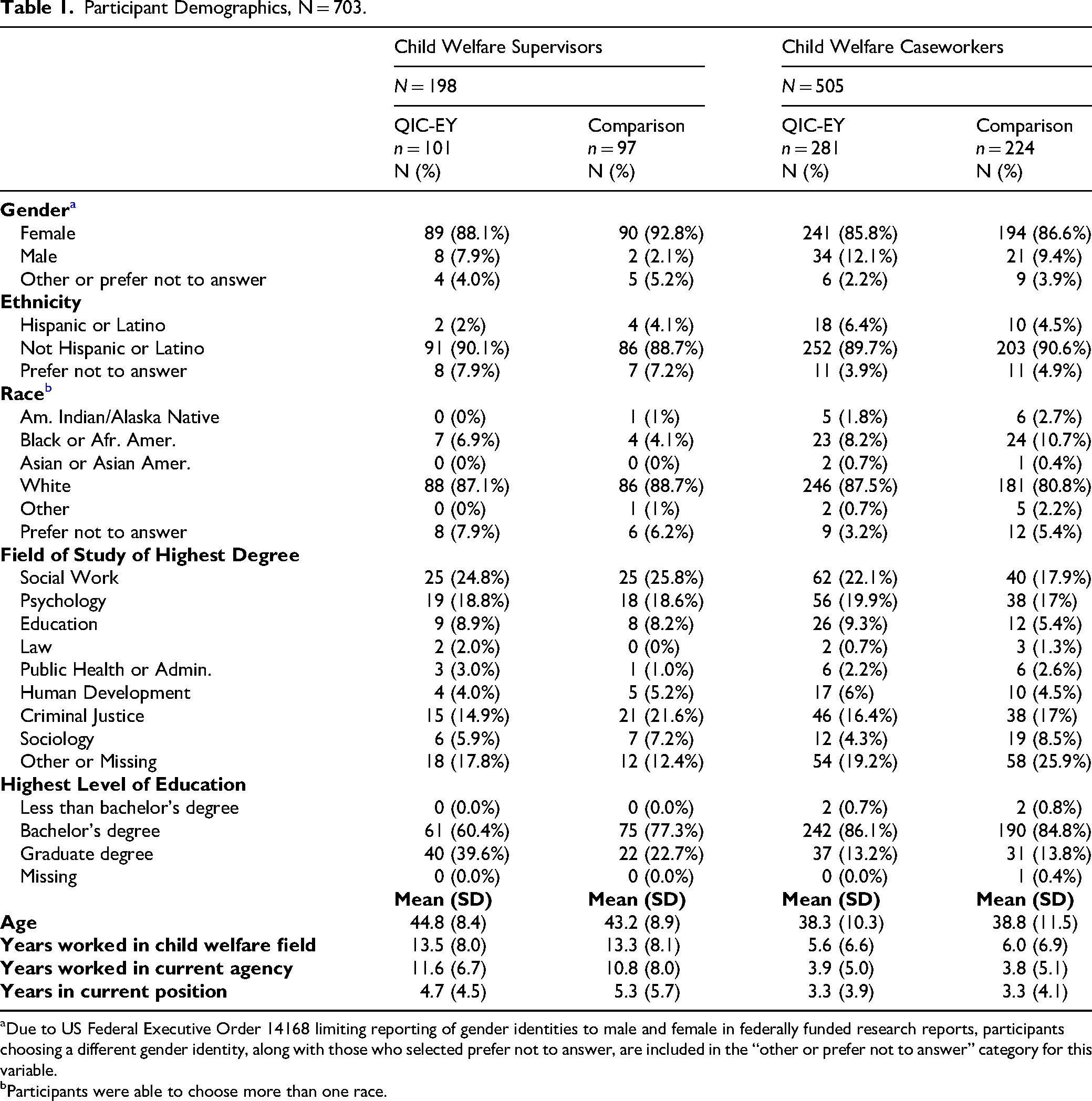
Due to US Federal Executive Order 14168 limiting reporting of gender identities to male and female in federally funded research reports, participants choosing a different gender identity, along with those who selected prefer not to answer, are included in the “other or prefer not to answer” category for this variable.
Participants were able to choose more than one race.
Descriptive and Bivariate Analyses
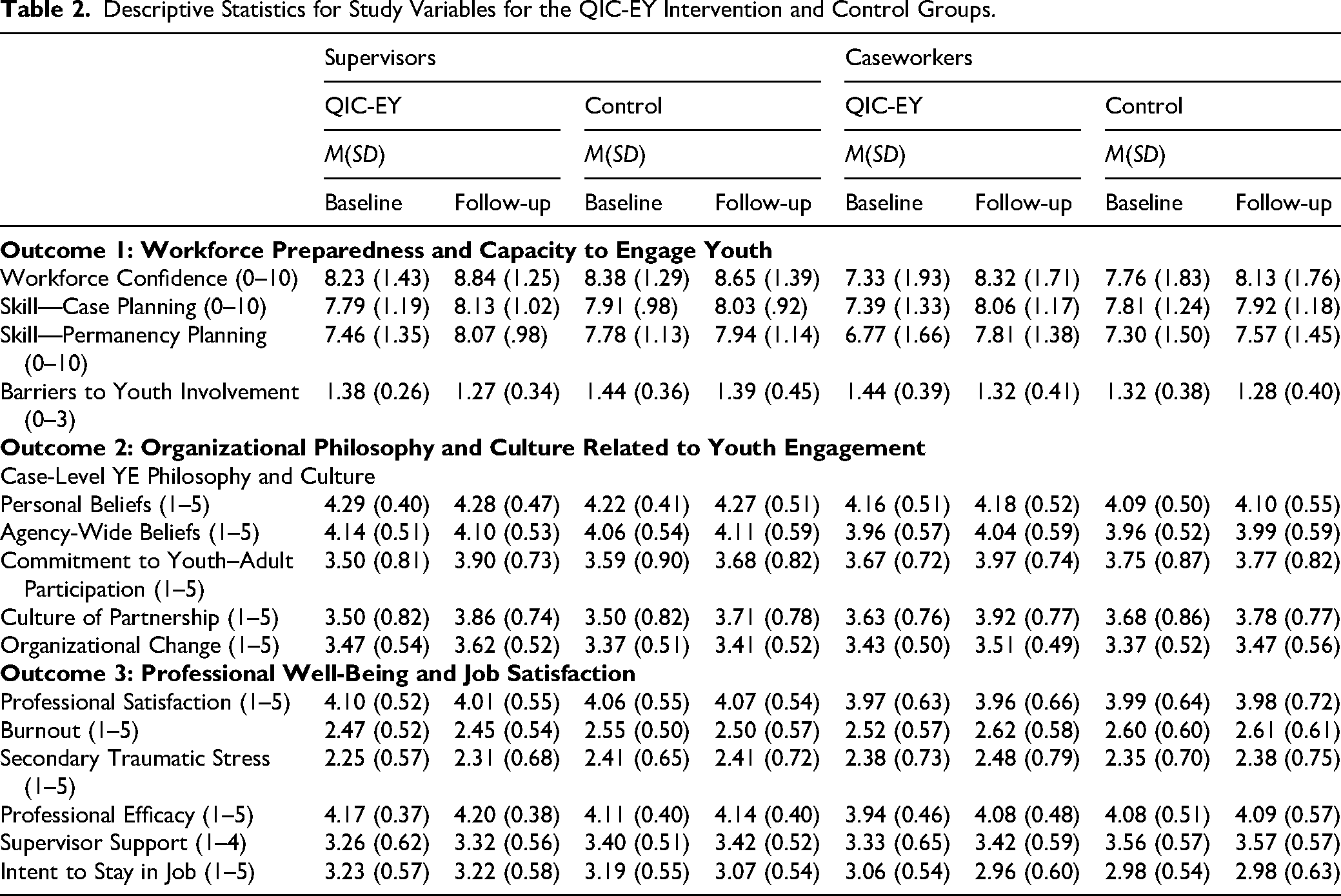
We conducted preliminary analyses, including descriptive statistics and bivariate correlations, to examine relationships between demographic control variables and baseline scale scores and to verify assumptions for subsequent ANCOVA models. Table 2 presents descriptive statistics for all study variables at baseline and follow-up by group. For continuous demographic variables, bivariate correlations were calculated; for categorical variables, independent-samples t-tests or ANOVAs with Bonferroni pairwise comparisons were used. Statistical comparisons of baseline scores and control variables are presented in Table 3.
Descriptive Statistics for Study Variables for the QIC-EY Intervention and Control Groups.
Statistical Comparisons of Scale Scores and Demographic Control Variables—Full Baseline Sample, N = 703.
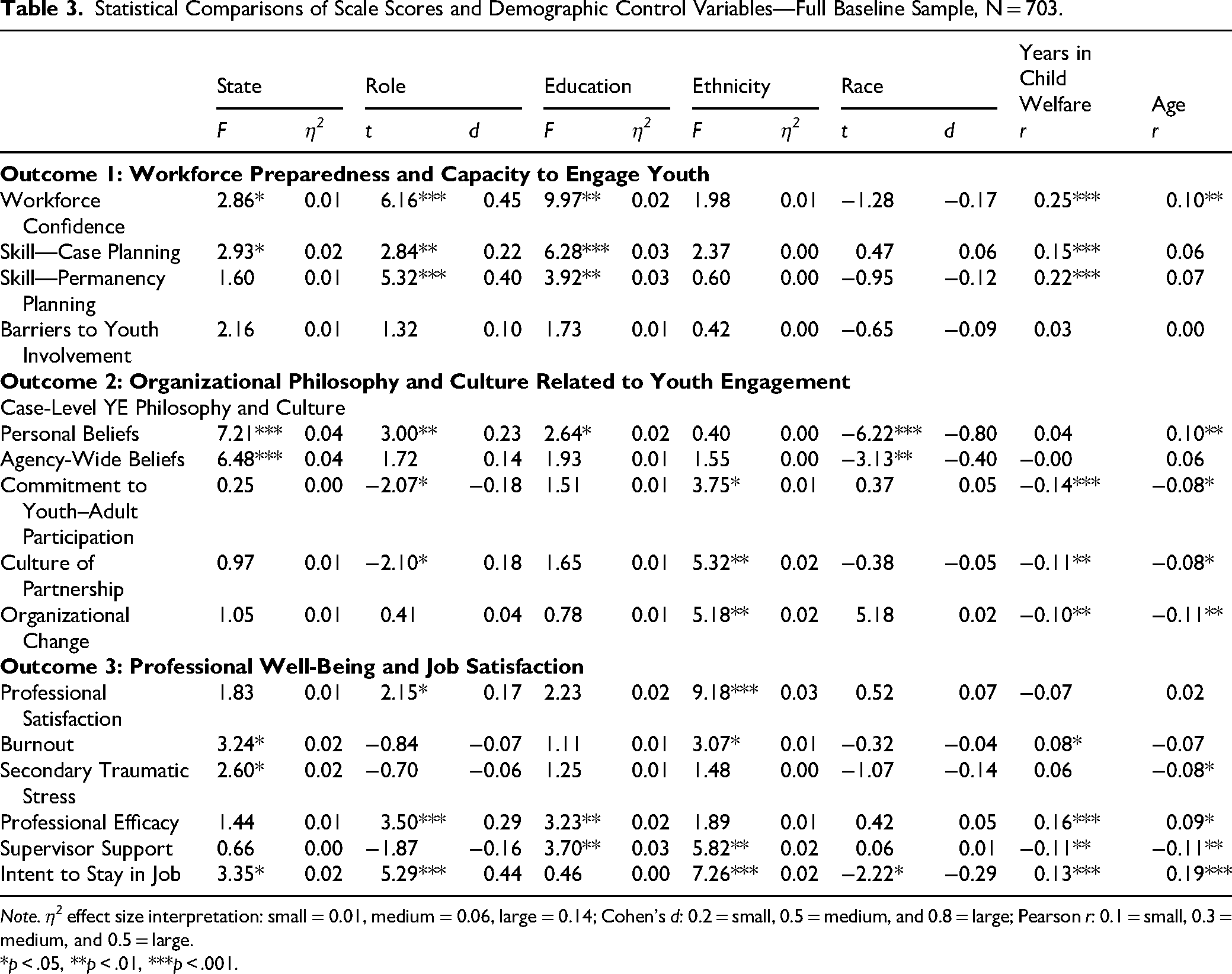
Note. η2 effect size interpretation: small = 0.01, medium = 0.06, large = 0.14; Cohen's d: 0.2 = small, 0.5 = medium, and 0.8 = large; Pearson r: 0.1 = small, 0.3 = medium, and 0.5 = large.
*p < .05, **p < .01, ***p < .001.
Several demographic characteristics were significantly associated with baseline scores across outcome domains. State of employment and staff role were associated with baseline scores across workforce preparedness, organizational culture, and professional well-being outcomes. Education level was associated with workforce confidence, skills in engaging youth, and professional efficacy. Race and ethnicity were associated with several organizational philosophy and professional well-being outcomes. Years working in child welfare and worker age showed consistent associations across domains, with more experienced and older workers generally reporting higher confidence and skills but lower commitment to youth–adult participation and organizational change. No demographic variables were significantly associated with Barriers to Youth Involvement at baseline. Given these associations, state, role, education, race, ethnicity, years in child welfare, and age were retained as covariates in subsequent ANCOVA models, and all analyses were separated by supervisor and caseworker roles.
ANCOVAS
ANCOVA models were used to test the hypotheses corresponding to each of the following outcomes. A p-value less than .05 was considered statistically significant. Partial Eta Squared was used to measure effect size, using Cohen's (1988) interpretation: η2 = 0.01 is a small effect, η2 = 0.06 is a medium effect, and η2 = 0.14 is a large effect. Table 4 presents ANCOVA model results across outcomes.
Statistical Comparisons of QIC-EY Intervention and Control Groups Pre–Post Changes.
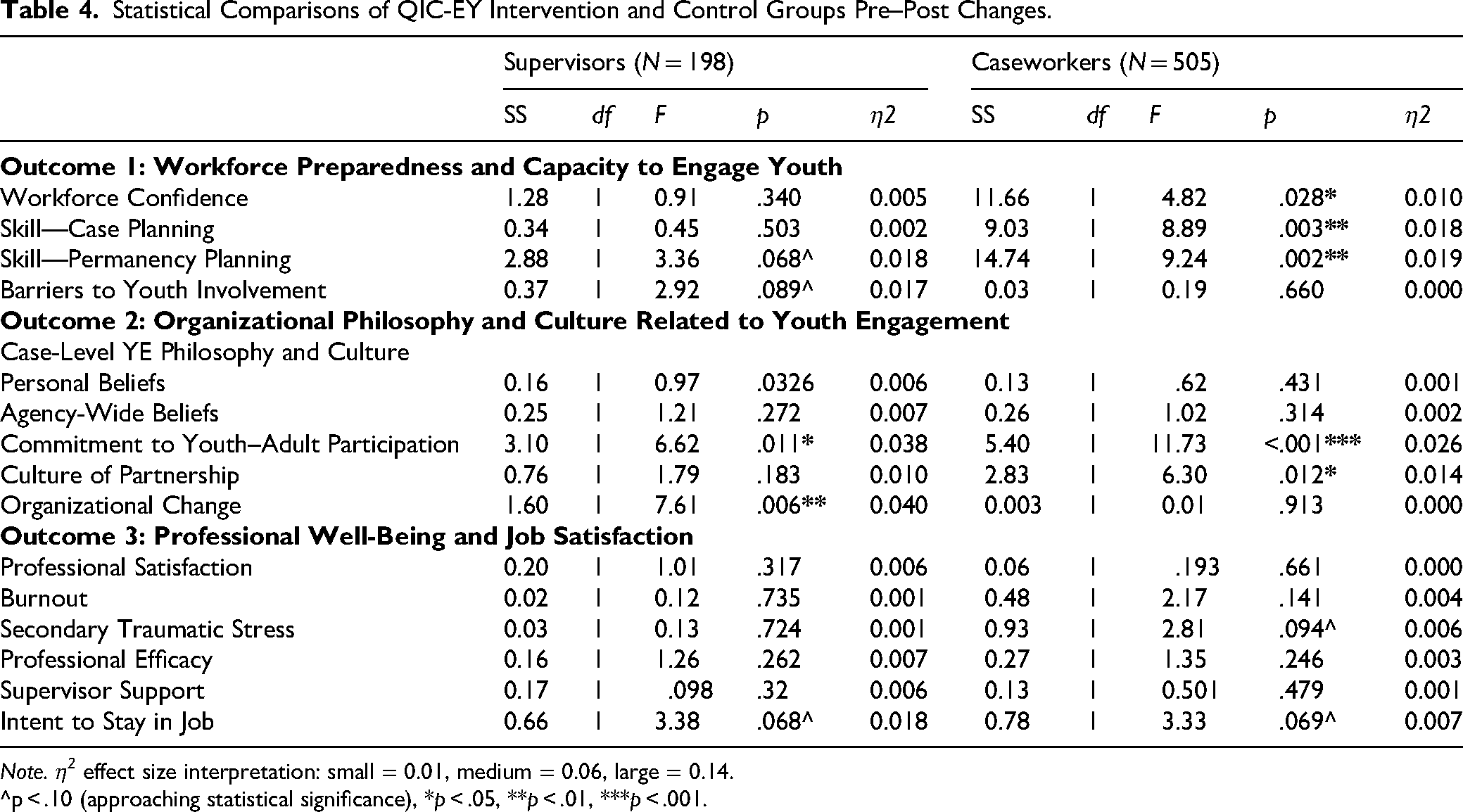
Note. η2 effect size interpretation: small = 0.01, medium = 0.06, large = 0.14.
^p < .10 (approaching statistical significance), *p < .05, **p < .01, ***p < .001.
Outcome 1: Workforce Preparedness and Capacity to Engage Youth
Hypothesis 1: Intervention group participants will have increased perceptions from pre- to post-test of their capacity to engage youth in case/permanency planning. Specifically, we predict higher scores on the Workforce Confidence Scale and the Self-Rated Skills in Engaging Youth in Case/Permanency Planning Scale, and lower scores on the Barriers to Youth Involvement Scale relative to the comparison group.
Outcome 2: Organizational Philosophy and Culture Related to Youth Engagement
Hypothesis 2: Intervention group participants will show improvements in their perceptions of an organizational philosophy and culture conducive to youth engagement, including increased scores on the Case-Level YE Philosophy and Culture Scale, on the Y-VAL, on the Y-VAL Overall Vision and Commitment Subscale, and on the TCU ORC-D4 Change Subscale relative to the comparison group.
Outcome 3: Professional Well-Being and Job Satisfaction
Hypothesis 3: Intervention group participants will report greater improvements in professional well-being and job satisfaction, including reductions in scores on the ProQOL-5 Burnout and Secondary Traumatic Stress Subscales, alongside increases in ProQOL-5 Compassion Satisfaction Subscale scores, TCU ORC-D4 Efficacy Subscale, Supervision for Frontline Staff Scale, and the Intent to Stay Scale relative to the comparison group.
Discussion and Applications to Practice
We conducted a multi-site quasi-experimental evaluation of the QIC-EY Transforming Engagement training and coaching model. The current study investigated the influence of this model on child welfare workforce perceptions of individual and organizational capacity to engage children and youth in case and permanency planning, relative to a comparison group. While the magnitude of effects across outcomes was small, the findings provide preliminary evidence that structured workforce training, paired with supervisor coaching, can strengthen child welfare caseworkers’ perceived preparedness to engage youth in case and permanency planning and to support organizational change related to youth engagement. However, some findings were mixed, including the lack of meaningful change in workforce well-being and job satisfaction.
For the first outcome—workforce preparedness and capacity to engage youth in case and permanency planning—the intervention's most beneficial effects were among caseworkers: those who participated in the QIC-EY Transforming Engagement training and coaching model showed statistically significant improvements in their confidence and skills. This provides promising evidence of the training's effects on caseworkers’ perceptions of their capacity to meaningfully engage youth. Because workers’ confidence and perceived skill have been linked to permanency outcomes among youth in care (Julien-Chinn & Lietz, 2016; Kim et al., 2024; Williams-Butler et al., 2018; Winokur et al., 2018), future research should explore how these positive shifts in perceptions may influence practice behaviors and youth outcomes. While supervisors did not show any statistically significant changes, this first outcome relates to experiences in direct practice with children and youth, so the lack of impact on supervisors’ perceptions in this area is understandable.
The second outcome—organizational philosophy and culture related to youth engagement—showed improvements in constructs related to change commitment and change efficacy among the intervention groups, both of which, according to the Organizational Readiness Framework, are necessary conditions for supporting enduring, meaningful change (Weiner, 2009). Regarding change commitment, both the supervisor and caseworker intervention groups showed statistically significant improvements in their commitment to meaningful youth–adult participation. Supporting shifts in change efficacy, caseworkers in the intervention group showed statistically significant improvements in an agency-wide culture supportive of youth–adult partnership, while supervisors in the intervention group showed statistically significant improvements in organizational capacity to implement changes in youth engagement practices. Collectively, findings for the first two outcomes align with and extend prior work, indicating that ongoing worker training, supportive organizational cultures, and policies can foster meaningful youth–adult partnerships (Annie E. Casey Foundation, 2019; Julien-Chinn & Lietz, 2016; Kim et al., 2024; Toros, 2021).
Contrary to our expectations, there were no statistically significant changes in the third outcome—professional well-being and job satisfaction. Although prior literature indicates better child welfare workforce retention and reduced burnout when supervisors and organizations provide adequate support, training, and greater workforce preparedness for their roles (McFadden et al., 2015), the intervention group did not show improvements in job satisfaction. It is possible that participation in the program model increased workers’ expectations without reducing their workload in systems already facing high turnover, competing demands, and pressure. Other factors beyond those controlled for in our models could influence these findings. It is important to consider that any positive impacts of new initiatives may take time to be realized. While the long-term impacts on professional well-being were beyond the scope of this study, the lack of change in this outcome suggests a need for added organizational support when rolling out child welfare workforce development initiatives.
These findings provide insights into strategies that may support meaningful change in child welfare practice and policy. A key practice implication is the use of structured supervisory coaching to reinforce transfer of learning. The intervention's design illustrates a feasible pathway for translating training into day-to-day practice through supervisor reinforcement and guided application tools. Because the observed improvements concentrated in practice-proximal outcomes among caseworkers, agencies implementing similar models should emphasize consistency in coaching routines (e.g. regular supervisor-caseworker check-ins focused on youth engagement strategies). It is also important to distinguish between the types of support required for supervisors and caseworkers. In practice, agencies may consider tailoring supervisor-facing components toward (a) coaching skill, (b) implementation leadership, and (c) creating conditions for sustained change, consistent with the observed supervisor improvement in organizational change capacity.
At the organizational level, these evaluation findings offer preliminary evidence supporting child welfare agency investment in training-plus-coaching as a workforce strategy for youth engagement. Because the strongest impacts were observed among caseworkers with direct responsibility for engaging youth in practice, workforce development policies should prioritize training models that explicitly build youth-engagement competencies and reinforce them through supervision/coaching structures. Similarly, pairing practice expectations with organizational infrastructure for implementation is essential. Beyond individual skill gains, the intervention was associated with statistically significant improvements in perceptions of agency commitment to meaningful youth–adult participation and improvements in organizational culture constructs. These findings provided some evidence supporting state and agency policies that not only articulate expectations for youth engagement but also invest in the organizational conditions that support implementation (e.g. coaching structures, shared vision and commitment), because organizational culture and implementation capacity are measurable and can shift within the study period. Finally, the Supporting America's Children and Families Act (P.L. 118-258), signed Jan. 4, 2025, which reauthorizes Title IV-B programs through 2029, emphasizes the need for states, tribes, and territories to improve workforce retention and recruitment via increased attention to workforce supports. Additionally, this law requires states to implement practices that promote high-quality caseworker visits. While our work does not evaluate the effects of this legislation, we anticipate that workers trained in authentic engagement would deliver higher-quality visits, leading to improved retention in the child welfare workforce. Future research is needed to assess the implications of the QIC-EY on these policy requirements. In sum, evaluation findings provide promising evidence to support policy and administrative decisions to fund, require, and sustain youth-engagement capacity-building as an ongoing practice change, especially when the model includes both didactic learning and structured coaching supports.
There are also several notable limitations to this study. This evaluation focused on efforts in five states; findings may differ in other contexts. While the non-randomized, quasi-experimental design of this study reflects a feasible, ethical approach to implementation and evaluation in real-world child welfare settings, it also has implications for the generalizability of the findings. First, given the real-world context of this evaluation, contamination between intervention and comparison regions is possible. Next, the implementation fidelity data collected and reported related to time and activity completion of the trainings, along with data on supervisors’ delivery of coaching, generally indicated high levels of adherence to the models as designed. However, these data were not collected in a way that allowed them to be tied to outcome measurements for specific supervisors and caseworkers. In addition, the dosage data collected on the frequency and quality of coaching delivered by supervisors to caseworkers were too generic to fully understand the model's coaching component in detail. Furthermore, while this study offers important insights into shifts in child welfare workers’ perceptions of youth engagement practices following program participation, the findings should be interpreted keeping in mind that all assessments in this study were self-report data from the perspectives of the participants rather than external assessments of behavior or practice change, and thus could be impacted by inaccurate self-assessment or social desirability. The study timeline also did not allow for more intensive psychometric assessment of newly created and/or adapted survey instruments beyond assessments of internal consistency. Future evaluation should consider additional observable outcome measures and perspectives of young people whom caseworkers aim to better engage. Finally, an extensive follow-up period was not feasible to assess whether the gains resulting from the intervention were maintained or whether the observed strain on the workforce declined over the long term.
Conclusion
Although substantial evidence indicates improved outcomes associated with centering authentic youth engagement throughout case and permanency planning processes (Administration for Children and Families, 2019; Annie E. Casey Foundation, 2019; Williams-Butler et al., 2018), practical strategies are needed to systematically embed these values in practice and policy. The QIC-EY Transforming Engagement training and coaching model begins to fill this resource gap by offering an adaptable set of tools to support multilevel change across diverse child welfare settings. This study provides promising preliminary evidence of a shift in workers’ perspectives on their individual and organizational capacity to engage young people as active participants in their own lives, a critical step toward improving the lives of young people in care.
Footnotes

Ethics Considerations
The University of Washington's IRB reviewed this study and determined it to be exempt from full review.
Consent to Participate
All study participants provided electronic consent prior to participation.
Funding
The authors disclosed receipt of the following financial support for the research, authorship, and/or publication of this article: This research was supported by the U.S. Department of Health and Human Services (HHS), Administration for Children and Families (ACF), Children's Bureau. Quality Improvement Center: Engaging Youth in Finding Permanency. HHS-2021-ACF-ACYF-CO-1911. The contents are those of the authors and do not necessarily represent the official views of, nor an endorsement by, ACF/HHS or the U.S. government.
Declaration of Conflicting Interests
The authors declared no potential conflicts of interest with respect to the research, authorship, and/or publication of this article.
Data Availability
The data that has been used is currently confidential.