






Abstract
Purpose
Digital technologies have opened a new era for social work. Despite their potential benefits, their uptake remains limited. Guided by the Unified Theory of Acceptance and Use of Technology, this scoping review maps factors influencing digital technology adoption among frontline social workers.
Methods
Following the Joanna Briggs Institute guidance and the PRISMA Extension for Scoping Reviews, Chinese- and English-language literature published between 2015 and 2026 was searched. Twelve studies were included.
Results
Reported factors mapped onto performance expectancy, effort expectancy, social influence, facilitating conditions, and structural contexts. Adoption was shaped by perceived practice value, digital competence, organizational support, infrastructure, and service users’ digital access. Ethical challenges, including privacy and confidentiality, professional boundaries, algorithmic bias, and digital exclusion, also influenced technology acceptance.
Discussion
Technology adoption among social workers is a contextualized process of “selective integration.” Implications for practice and future research are discussed.
Keywords
Digital technologies such as the Internet of Things, big data, social networks, and artificial intelligence (AI) have opened a new era for social work (López et al., 2018). Since computers and the internet entered professional practice in the late 20th century, email, online information retrieval, and online communication have been used to support social work services. In the 21st century, the diffusion of the internet provided social workers with new communication platforms and channels for information sharing, and online forums, support groups, and forms of remote service gradually emerged (Chen, 2014). Since the 2010s, the widespread use of mobile technologies and smart devices, especially smartphones and tablets, has enabled social workers and service users to access services, information, and resources with greater flexibility. Mobile applications have also been used to support practice tasks such as mental health services, learning and education, resource linkage, and emergency assistance (Huang & Wang, 2025). In recent years, digitally mediated service interactions have further entered the scope of social work practice. Online focus groups have been used for group interviews and therapeutic activities (Chan, 2016); online or virtual consultations have been regarded in some contexts as supplements or alternatives to home visits (Owen, 2020), and the anonymity of online interaction has been considered potentially useful for reducing help-seeking stigma and increasing service use (Menon & Rubin, 2011). At the same time, virtual reality and augmented reality technologies have begun to be used in simulated interventions to support individuals coping with posttraumatic stress disorder and other mental health problems (Pink et al., 2022). Developments in big data analytics and AI have also created new practice possibilities in social work for needs identification, risk prediction, resource allocation, and service evaluation (Hu, 2022).
At the practice level, digital technologies have expanded the intervention media and communication methods of social work and have become important drivers for improving work efficiency and enhancing service effectiveness. However, the integration of digital technologies into social work does not occur evenly, nor is it automatically achieved simply because technologies are available. Existing studies show that technology adoption and use are influenced by multiple factors, including individual competence, technological characteristics, organizational infrastructure, management and training support, professional culture, and value positions (Aasback & Røkkum, 2021; Leidner & Kayworth, 2006; Mishna et al., 2021; Nadav et al., 2021; Steers et al., 2008; Straub et al., 2002; Wolf & Goldkind, 2016). Thus, whether and how social workers adopt digital technologies is a highly complex practice process.
This complexity is closely related to the professional nature of social work. Social work is a value-laden field that emphasizes relational practice, social justice, and ethical responsibility. When digital technologies characterized by standardization, automation, and even dehumanization enter practice processes, scholars and practitioners naturally attend both to their empowering potential and to their professional risks. Accordingly, recent studies have discussed the positive role of digital technologies (Barak & Grohol, 2011), while also continuing to examine the challenges they may pose for privacy protection, relationship quality, and digital exclusion (Nordesjö & Scaramuzzino, 2023). Existing reviews have also mapped the impact of digital tools in social work and emphasized their multiple implications for ethical practice (Afrouz & Lucas, 2023; Ramsey & Montgomery, 2014).
Despite concerns about technology use, digital technologies have increasingly permeated the practice fields of social work. Researchers have begun to focus on the benefits and value of technology use and to emphasize the need to provide practitioners with continuing professional education (Holden et al., 2012). However, research on the impact of technology cannot directly explain technology adoption itself. Even when a certain digital technology has been shown to have potential benefits, frontline social workers may still choose to use it in a limited way, delay its use, or even reject it. At the micro level, research on why some social workers adopt technology whereas others reject it remains very limited. Given the limited penetration of different digital technologies in social work and their potential benefits, it is important to examine technology adoption among this group.
Technology adoption theories provide a structured entry point for understanding this issue. The Unified Theory of Acceptance and Use of Technology (UTAUT) has often been used in fields such as business, education, health care, and public services to explain the factors driving individual users’ and organizational members’ adoption of information technologies and emerging intelligent technologies. Although this framework has shown strong explanatory power (Venkatesh et al., 2003), its application in social work practice research remains limited (Nordesjö & Scaramuzzino, 2023). For social work, UTAUT can help researchers systematically identify the influence of technology, organizational environments, and social structures on practitioners’ adoption behavior, thereby providing an operational analytical framework. At the same time, social work's emphasis on relationships, ethics, and context also helps examine the boundaries of this framework's applicability in value-laden practice settings.
Digital technology adoption among social workers remains an emerging research field that has not yet been systematically synthesized. Existing reviews have mainly emphasized the advantages and challenges of digital technologies (Bruheim-Escobar et al., 2026), but have not sufficiently focused on the factors influencing frontline social workers’ adoption of digital technologies, nor have they often synthesized these factors systematically through a theoretical framework. Given that the relevant studies span different technology types, practice settings, countries and regions, and research designs, this study adopts a scoping review method to map the extent, nature, and distribution of evidence in this field. Guided by the UTAUT framework, this study aims to systematically identify existing evidence on the factors influencing frontline social workers’ adoption of digital technologies, present the complex practice landscape before technology adoption decisions and during technology use, and provide an evidence base for future empirical research and theoretical development. Accordingly, this scoping review is guided by the following overall question:
What is the extent and nature of the literature on digital technology adoption in frontline social work practice?
Specifically, this study focuses on the following four subquestions:
What types of digital technologies have been examined in the existing studies? What barriers and facilitators influencing frontline social workers’ adoption have been reported in the literature? How do these factors correspond to the core constructs of UTAUT? What contextual factors related to frontline social workers’ digital technology adoption have been reported in the literature? What ethical challenges do frontline social workers face when adopting digital technologies?
Theoretical Framework
The UTAUT is a theoretical framework for explaining users’ technology adoption and use behaviors. Over the past several decades, the acceptance and use of information systems and information technologies have been important research topics. Numerous models have been proposed to explain why users accept or reject new technologies, including the Technology Acceptance Model (TAM), the Theory of Planned Behavior (TPB), the Model of PC Utilization (MPCU), and Innovation Diffusion Theory (IDT) (Ajzen, 1991; Davis, 1985; Rogers, 1995). To reduce the omission of important variables that may result from relying on a single model, Venkatesh et al. developed UTAUT by integrating eight major technology acceptance models. The framework was designed to predict users’ behavioral intention to use technology and their actual use behavior in organizational contexts (Venkatesh et al., 2003).
UTAUT identifies four core constructs: performance expectancy (PE), effort expectancy (EE), social influence (SI), and facilitating conditions (FC). It also incorporates four moderating variables: age, gender, experience, and voluntariness of use. Performance expectancy refers to the extent to which an individual believes that using a system will improve their job performance. It includes dimensions such as perceived usefulness, extrinsic motivation, job fit, relative advantage, and outcome expectations. Effort expectancy refers to the perceived ease of system use and includes perceived ease of use, complexity, and ease of operation. Social influence refers to the extent to which an individual perceives that important others believe they should use a new system; it may be reflected in subjective norms, peer expectations, or organizational climate. Facilitating conditions refer to the extent to which an individual believes that the organizational and technical infrastructure exists to support system use. This construct involves perceived behavioral control, facilitating conditions, and compatibility. According to UTAUT, performance expectancy, effort expectancy, and social influence primarily influence behavioral intention, whereas behavioral intention and facilitating conditions jointly influence actual use. Different combinations of the four moderating variables may moderate these relationships (Venkatesh et al., 2003).
In empirical comparisons, UTAUT has been considered to have stronger explanatory power than several of the earlier models it integrates (Venkatesh et al., 2003, 2012). As digital technologies have spread across different industries and everyday settings, UTAUT-based research has continued to grow. The framework has been applied in higher education, online learning, e-government, the sharing economy, and other public service and commercial contexts. It has also been used in fields with care-related and ethical requirements, such as mental health and health care (Akter & Ahmed, 2025; Békés et al., 2025; Jahanshahi et al., 2020; Su et al., 2025; Xue et al., 2024; Zeebaree et al., 2022). At the same time, UTAUT has been used to explain the adoption of emerging digital technologies, including the Internet of Things, AI, e-health technologies, and robots (Ates & Polat, 2025; Ronaghi & Forouharfar, 2020; Su et al., 2025).
Technology adoption theories have begun to appear in social work research, although existing studies more often refer to earlier frameworks such as TAM (Segal et al., 2025). TAM has a clear structure and can explain users’ judgments about the usefulness and ease of use of technology, but it does not fully account for the influence of the environment. Digital technologies in social work are usually not tools chosen by individual users in isolation. Rather, they are practice media embedded in institutional systems, service processes, and professional relationships. By comparison, UTAUT covers a wider range of variables and is therefore more suitable for analyzing frontline social workers’ use of digital technologies in organizational practice.
Based on this consideration, this study uses UTAUT to guide the classification and synthesis of factors related to frontline social workers’ digital technology adoption in the existing literature. This approach helps improve the analytical consistency of the scoping review and provides a basis for future empirical research and theoretical refinement on technology adoption in social work.
Methods
Study Design
We conducted a scoping review to map the available evidence. This approach is useful for exploring an emerging and heterogeneous knowledge base, describing the landscape of evidence, and identifying gaps; it is therefore well aligned with the aims and review questions of the present study. The conduct of the review was informed by Arksey and O’Malley's (2005) foundational framework for scoping studies and guided by the Joanna Briggs Institute (JBI) methodological guidance for scoping reviews (Peters et al., 2020). The review was reported in accordance with the PRISMA Extension for Scoping Reviews (PRISMA-ScR; Tricco et al., 2018). The protocol was preregistered on the Open Science Framework (OSF).
Inclusion and Exclusion Criteria
The inclusion and exclusion criteria were developed using the Population–Concept–Context (PCC) framework. The PCC framework is recommended in the JBI methodological guidance for scoping reviews and is suitable for review questions that are broad in scope, draw on heterogeneous sources of evidence, and aim to map the evidence landscape. By specifying the population, core concept, and practice context, this framework helped define the boundaries of the review and maintain consistency between the eligibility criteria and the review questions (Peters et al., 2020). The criteria were as follows.
Population
This review included studies that focused on frontline social workers. Studies whose participants included, but were not limited to, frontline social workers were also included if they reported findings for the frontline practitioner subgroup separately or if the findings could reasonably be extended to this group. Studies focusing on nonfrontline service providers, such as agency managers, students, volunteers, or educators, were excluded. Studies focusing on organizations as a whole, such as organizational-level adoption, implementation, or use, were also excluded.
Concept
Digital technologies refer to technologies for information storage, processing, and transmission that have developed with modern computing and the emergence of the World Wide Web. More specifically, digital technologies include physical devices such as computers, laptops, tablets, smartphones, and sensors; software applications that provide operational instructions for device functions and user interaction; and infrastructures that support software and hardware functions such as digital communication, data storage, and platform-based services (Zhao & Wang, 2023). In this review, digital technologies in social work practice include communication tools such as computers and smartphones, case management systems, electronic records, online service platforms, AI, and other digital systems used for assessment, documentation, intervention, communication, and management.
The adoption of new technologies is a dynamic and complex process. Although technology adoption research has grown substantially, no consensus has been reached on the definition, interpretation, or measurement of adoption because studies differ in research field, purpose, theoretical assumptions, and analytic models (Montes De Oca Munguia et al., 2021). In implementation research, Proctor et al. (2011) define adoption as “the intention, initial decision, or action to try or employ an innovation or evidence-based practice” and note that the concept is sometimes also referred to as uptake. However, related studies still often use different and sometimes inconsistent terms.
This issue is particularly evident in research on digital technologies in social work. Existing studies often use concepts that are not clearly defined, such as experience of use, readiness to use ICT, utilization, and successful implementation. They also use different labels to describe similar content, most commonly through the overlapping use of adoption, acceptance, and use. Given that research on digital technologies in social work is still developing and that related concepts have not yet reached stable consensus, this review uses adoption as the central organizing concept while also including studies that use related use-oriented terms.
Context
No restrictions were placed on the type of organization in which social workers were employed. No restrictions were imposed on country or region, gender, or other cultural background characteristics.
Other Criteria
The publication window was limited to 2015–2026 in order to cover the formative and accelerating period in which social work became increasingly integrated with information and digital technologies. Because of the languages that the research team could reliably assess, only Chinese- and English-language literature was included. Eligible publication types included journal articles, scholarly books, conference papers, and comparable academic sources. Records were required to provide basic methodological information and original qualitative or quantitative data. Textbooks, popular publications, non-academic books, editorials, commentaries, news items, review articles, and records without accessible full texts were excluded. Full-text availability was assessed through the authors’ institutional library resources, open-access platforms, and other online channels. For potentially eligible records that could not be obtained through these channels, the authors were contacted to request the full text.
Information Sources
The literature search was conducted in Web of Science, Scite, and China National Knowledge Infrastructure (CNKI). These platforms cover a broad range of Chinese- and English-language social science journals and related scholarly literature. In addition, the first 100 records from Baidu Scholar and Bing were reviewed, and citation tracking was conducted for the included studies, including backward tracking of reference lists and forward tracking of citing records, to identify potentially relevant literature. A staged search strategy was used: the electronic database searches covered the period from 2015 to 2026, whereas the supplementary web-based searches were conducted in July 2025.
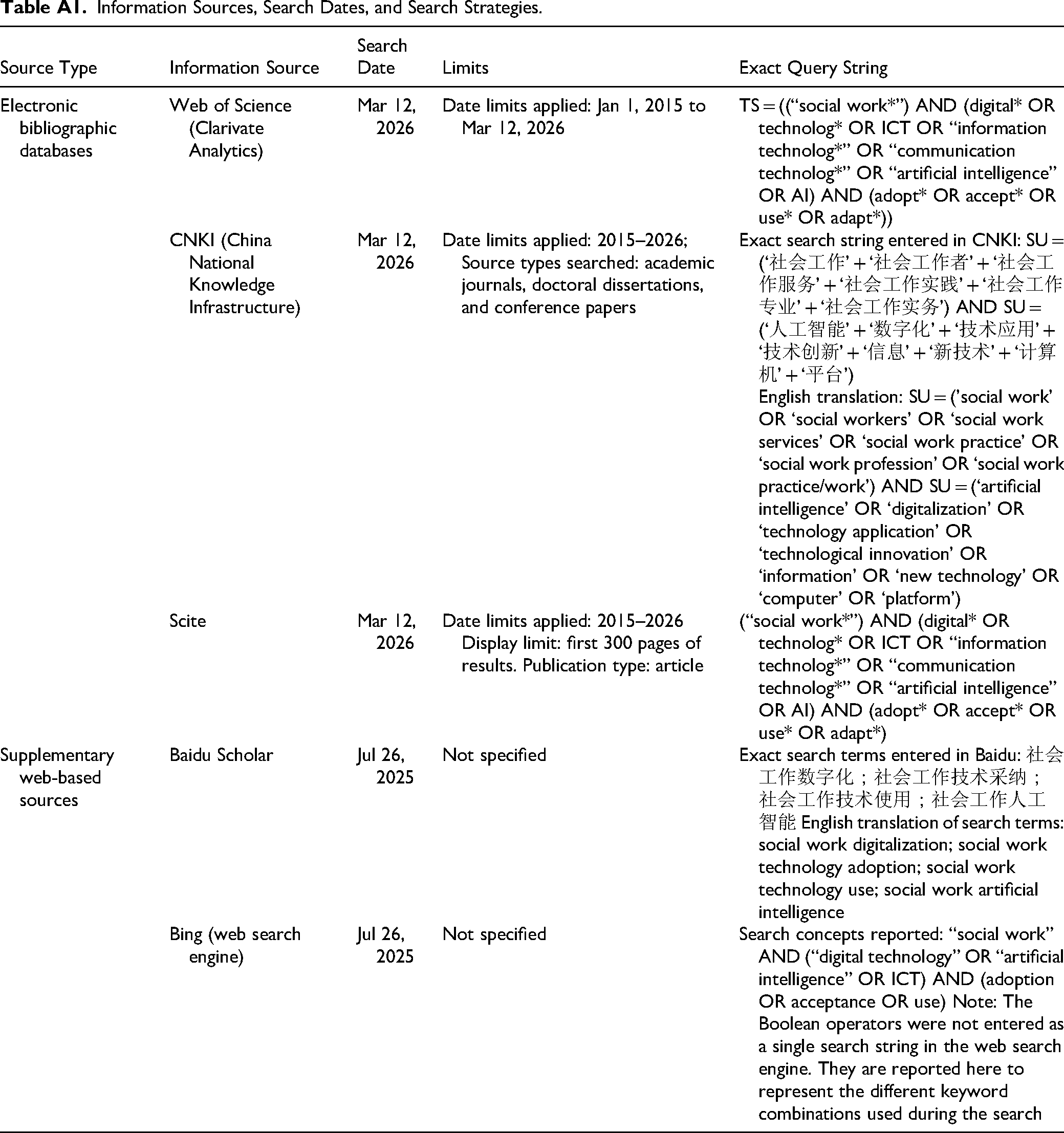
Before the formal search, the research team selected several key studies known to be highly relevant to the review topic as a test set to assess the sensitivity of the search strategy. For test studies that were not captured by the initial search string, the research team reviewed their titles, abstracts, and keywords and then added relevant synonyms or adjusted the search combinations accordingly. The final search strategy combined the following term groups: “digital technology” and its synonyms, “use” and “adoption” and their synonyms, “social work” and its synonyms. The full search strategies for each information source, the final search dates, and search limits are provided in Table A1, “Information Sources, Search Dates, and Search Strategies.” All records were managed and deduplicated in EndNote, and the original exported files were retained for verification.
Search and Screening Strategy
A stepwise search and screening strategy was used. Before formal screening, pilot calibration was conducted by two members of the review team. At the title and abstract stage, the two screeners independently screened approximately 30 records, discussed discrepancies after screening, clarified the decision rules, and then conducted another calibration exercise with 30 sample records. Formal screening began once an agreement threshold of 75%–80% had been reached. At the full-text stage, the same two members conducted a small-sample pilot test with five to 10 articles, and the formal process began once agreement was reached at least 70%.
In the formal stage, after the two reviewers had completed the calibration process, one reviewer independently screened the records and recorded inclusion or exclusion decisions, while the other reviewer randomly checked ∼10% of the records. During title and abstract screening, any record judged by either screener as potentially eligible or uncertain was retained for full-text assessment. The same procedure was applied at the full-text assessment stage: one screener assessed all full-text articles according to the agreed eligibility criteria, and the other screener randomly checked 10% of the full-text sample. Disagreements that could not be resolved through discussion were adjudicated by a third member of the review team. Reasons for full-text exclusion were recorded using prespecified categories. The number of records at each stage and the reasons for full-text exclusion are reported in the PRISMA flow diagram (Figure 1).
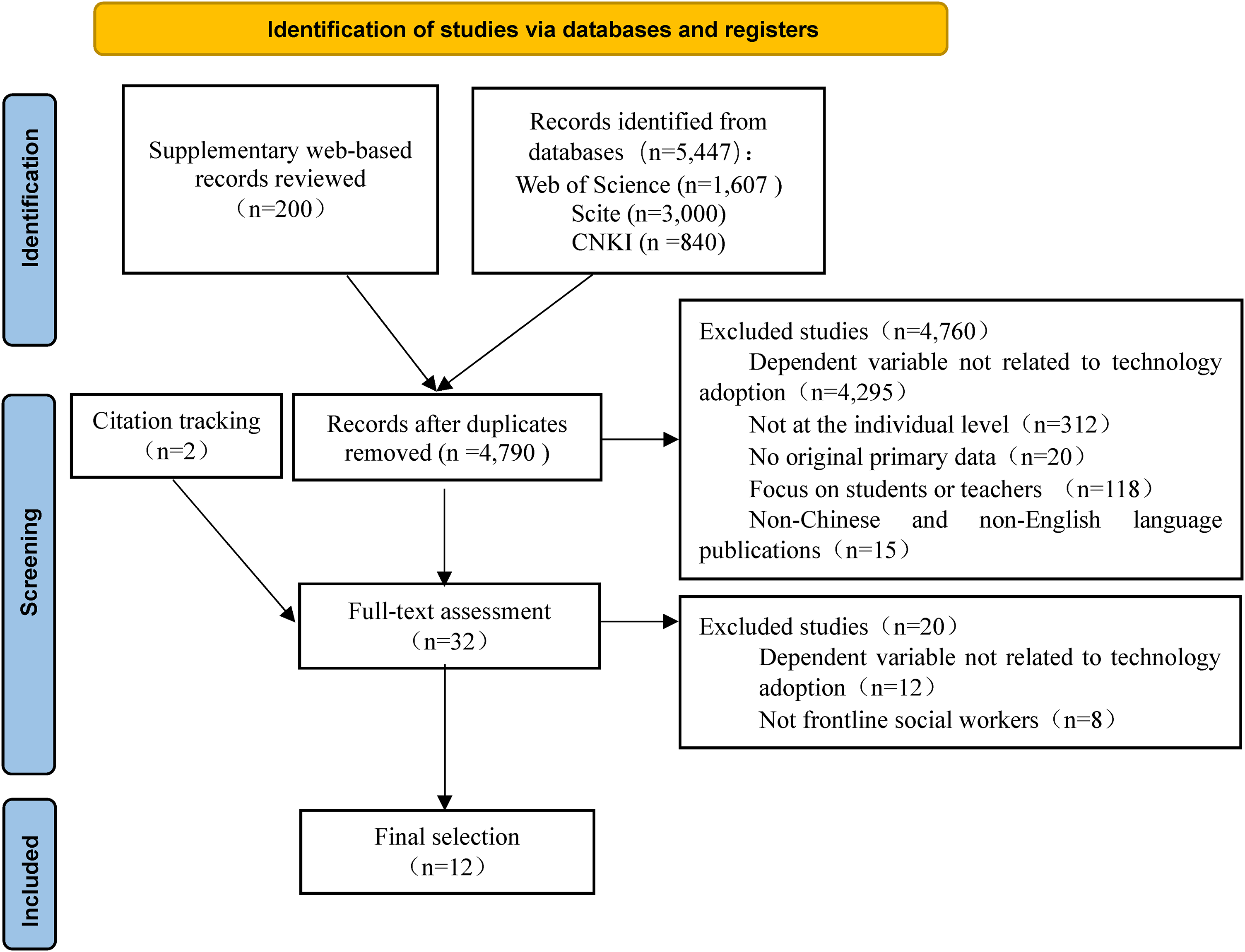
Study selection flow diagram.
Data Extraction
Data were extracted in accordance with the review questions stated above. The extraction items covered three domains. First, study and sample characteristics were extracted, including year, region, study population, sample size, and study design. Second, key concepts and terms were extracted, including their names, definitions, dimensions, and items. Third, influencing factors and study findings were extracted, including factor names, categories, and relevant original text.
Data extraction was conducted using a standardized Excel form that had been developed in advance and pilot-tested. Two researchers first piloted the form on three to five sample studies and revised it accordingly. One researcher then completed the formal extraction, and a second researcher checked each item. The merged dataset was subsequently spot-checked for consistency and accuracy. After consensus had been reached, the dataset was finalized for synthesis and analysis.
The data charting template and operational definitions of each variable are provided in Supplemental Appendix B. Detailed data extracted from the included studies are available from the corresponding author upon reasonable request.
Risk-of-Bias Assessment
No risk-of-bias assessment was conducted in this review. This is consistent with the JBI methodological guidance for scoping reviews.
Synthesis of Results
The extracted data were synthesized using descriptive statistics and narrative methods. First, study characteristics, technology types, use contexts, barriers, facilitators, moderating variables or contextual factors, and ethical challenges were organized according to the review questions. A predefined classification framework was then developed based on the definitions of the UTAUT constructs, and findings related to digital technology adoption were mapped onto the corresponding theoretical dimensions.
For quantitative studies, classification was based on the variable names, measurement content, and item meanings reported in the original studies. For qualitative studies, classification was based on the specific content related to digital technology adoption in the themes, subthemes, or findings descriptions. When a single finding involved multiple constructs, it was classified according to its primary meaning in the original text. Findings were split across multiple constructs only when different dimensions of influence could be clearly distinguished. Ethical challenges were synthesized as a separate theme. The initial mapping was completed by one researcher and checked by another researcher against the extraction form and the original text. Disagreements were resolved through discussion. Finally, narrative synthesis was used to identify key patterns, evidence gaps, and implications for future research and practice.
Results
Characteristics of the Included Studies
A total of 12 studies met the inclusion criteria, all of which were published in or after 2018. Geographically, the studies were concentrated in Europe (n = 6, 50.0%), Asia (n = 3, 25.0%), and North America (n = 3, 25.0%), covering Finland, Ireland, Norway, Sweden, the Czech Republic, the United States, Canada, Hong Kong (China), Israel, and South Korea. All included records were peer-reviewed journal articles. Most were published in social work journals (n = 11, 91.7%), and one was published in a journal categorized under “Health Care Sciences and Services/Medical Informatics.”
In terms of practice fields, child, youth, and family services were the most frequently coded field (n = 8, 25.0%), followed by services for older adults and elder care (n = 4, 12.5%). Mental health services, disability and developmental services, protective services, and integrated community services were also represented (each n = 3, 9.4%). Studies involving employment and financial assistance services were less common (n = 2, 6.3%). Primary health care, immigrant services, addiction services, and services for gender and sexually diverse populations were also represented to a limited extent (each n = 1, 3.1%).
With respect to geographic setting, only two studies reported relevant information. One included participants from urban, suburban, rural, and remote areas (n = 1, 8.3%), whereas another focused on urban areas (n = 1, 8.3%). The remaining 10 studies did not report participants’ geographic backgrounds (n = 10, 83.3%).
The evidence base was primarily qualitative. Eleven studies used qualitative methods (91.7%), including interviews, focus groups, diaries, and case study designs; one of these was a longitudinal qualitative case study. The remaining study was a quantitative cross-sectional online survey (8.3%).
Table 1 summarizes the basic information of each included study, including study design, participants and sample size, digital technologies examined, adoption-related focal terms, facilitators, barriers, contextual variables, and ethical challenges. The following subsections provide a more detailed synthesis of the included studies.
Full List of Selected Articles and Synthesis of Results (n = 12).
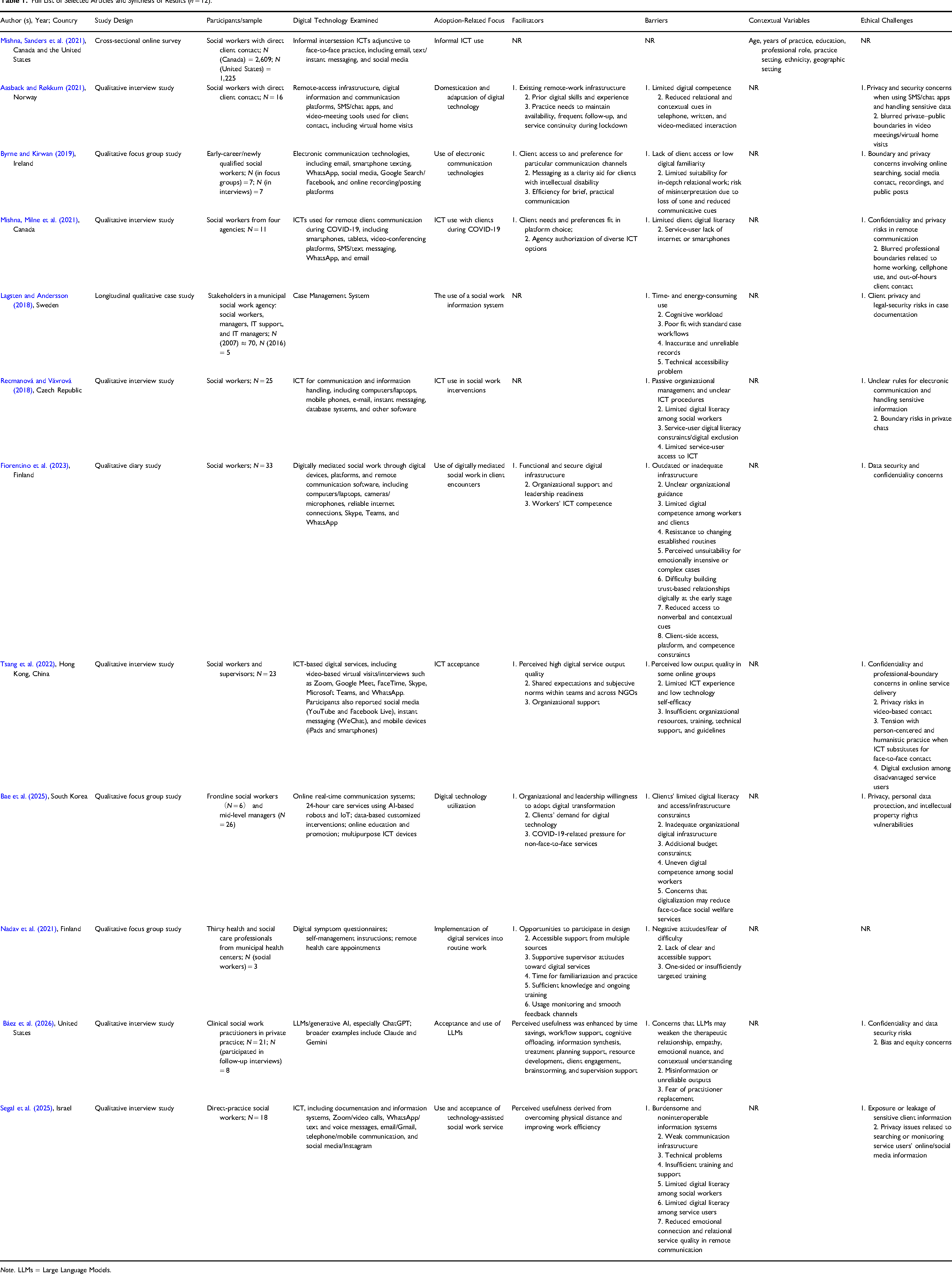
Note. LLMs = Large Language Models.
Types of Technologies in Practice
The technologies examined in the included studies were grouped into four categories. Communication and interaction technologies were the most frequently reported category (n = 9). These included email, text messaging or instant messaging, social media, mobile communication, and videoconferencing tools used to contact service users, colleagues, or other professionals (Aasback & Røkkum, 2021; Bae et al., 2025; Byrne & Kirwan, 2019; Fiorentino et al., 2023; Mishna, Milne et al., 2021; Mishna, Sanders et al., 2021; Recmanová & Vávrová, 2018; Segal et al., 2025; Tsang et al., 2022). Infrastructure and information systems were also common (n = 8). These included remote access infrastructure, general information and communication technology (ICT) devices such as desktop computers, laptops, tablets, smartphones, cameras, microphones, and internet connections, as well as information systems used in everyday social work practice, including documentation systems and case management systems (Aasback & Røkkum, 2021; Bae et al., 2025; Fiorentino et al., 2023; Lagsten & Andersson, 2018; Mishna, Milne et al., 2021; Recmanová & Vávrová, 2018; Segal et al., 2025; Tsang et al., 2022).
Technologies supporting digital service delivery appeared in fewer studies (n = 4). These included applications and tools for virtual home visits, self-management guidance, remote appointments, online education, and outreach (Aasback & Røkkum, 2021; Bae et al., 2025; Nadav et al., 2021; Tsang et al., 2022). Emerging intelligent technologies were the least frequently examined category (n = 2). These studies focused mainly on generative AI and large language models, such as ChatGPT, Claude, and Gemini, as well as robots and the Internet of Things used to support care services (Bae et al., 2025; Báez et al., 2026).
Barriers to Digital Technology Adoption
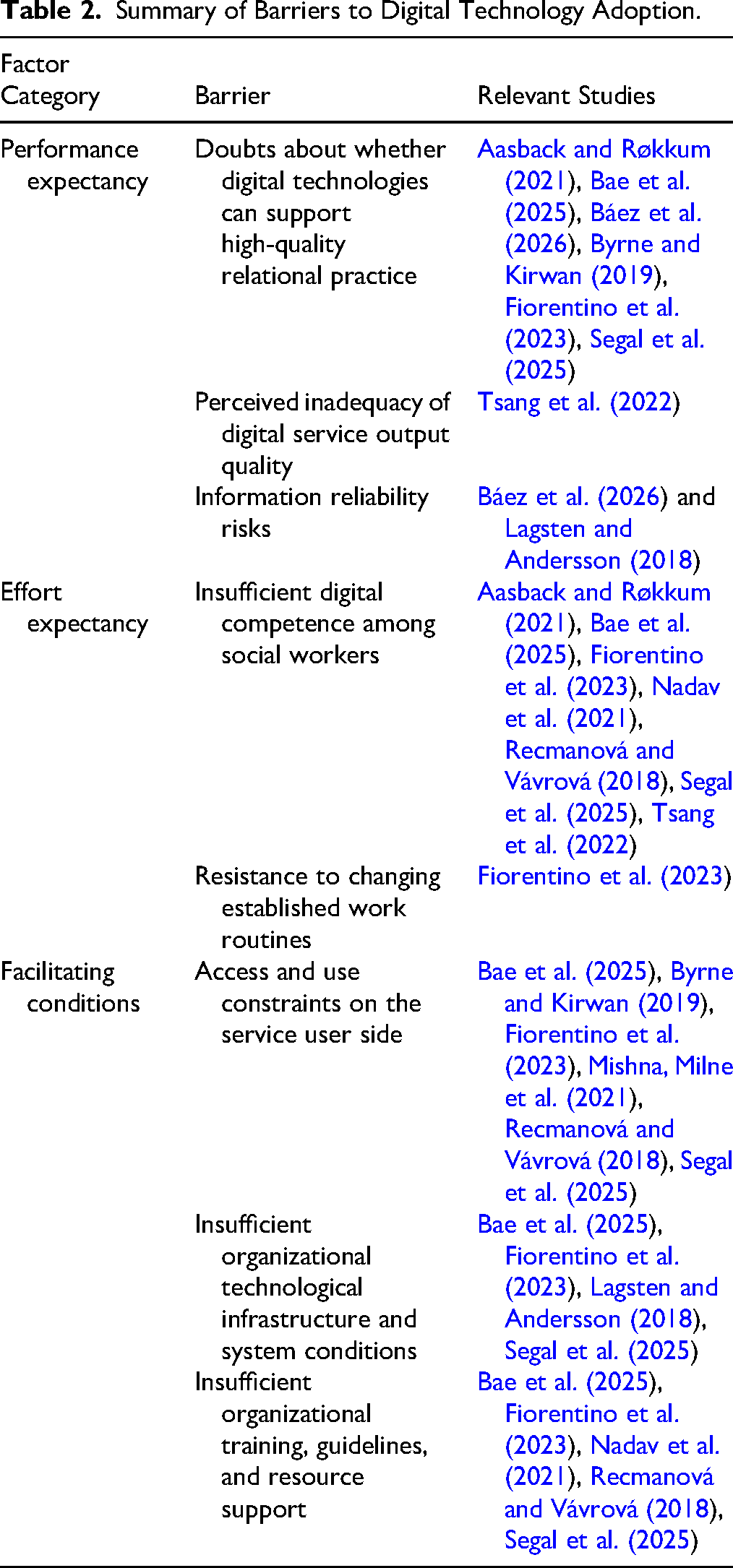
Table 2 summarizes the main findings on barriers to social workers’ adoption of digital technologies in the included studies.
Summary of Barriers to Digital Technology Adoption.
At the level of performance expectancy, barriers mainly involved social workers’ doubts about whether digital technologies could support high-quality relational practice. First, some studies showed that electronic communication methods, such as telephone calls, text messages, email, videoconferencing, and social media, were often viewed as less suitable for socially complex and emotionally intensive social work tasks. Interviews conducted approximately one month after the lockdown in Norway showed that social workers found telephone and written communication less able to convey empathy and more limited in providing immediate feedback (Aasback & Røkkum, 2021). A diary study conducted during the first wave of the pandemic in Finland similarly found that remote meetings were perceived as less suitable for cases involving severe mental health problems, older service users, complex life circumstances, or professional relationships that had not yet been established. Social workers found it more difficult to capture facial expressions, movements, tone of voice, and the atmosphere of the setting, which weakened contextual judgment and increased the risk of misunderstanding (Fiorentino et al., 2023). Early-career social workers in Ireland also considered text messages, email, and social media more appropriate for making appointments, confirming arrangements, or conveying simple information, whereas in more intensive interactions, information could easily become distorted in transmission (Byrne & Kirwan, 2019). Similar concerns also appeared in relation to emerging AI technologies. Clinical social workers in the United States worried that large language models lacked empathy and emotional nuance, were unable to support trust-based therapeutic relationships, and might weaken social workers’ core role in professional judgment, accompaniment, and relationship building. Large Language Models (LLMs) were therefore more often viewed as assistive tools rather than substitutes for relational practice (Báez et al., 2026).
Second, some studies reported inadequate digital service output quality. A study conducted in Hong Kong during the pandemic found that some social workers perceived online groups for children as more prone to distraction and weaker interaction, and therefore regarded digital service output quality as an important issue affecting the perceived usefulness of ICT (Tsang et al., 2022).
Third, concerns about information reliability also weakened judgments of usefulness. Problems related to record keeping, content standardization, and information reliability in case management systems affected social workers’ evaluation of system value (Lagsten & Andersson, 2018). In the context of LLM use, social workers were also concerned that model-generated content could be inaccurate, erroneous, or shaped by commercial interests, thereby misleading service users and causing potential harm (Báez et al., 2026).
At the level of effort expectancy, barriers were mainly reflected in two areas. First, insufficient digital competence among social workers was one of the most common thresholds. In the early stage of pandemic control measures, services were forced to move online, and differences in social workers’ competencies quickly became visible. The Finnish study showed that when workers were uncertain about their own operational skills, remote meetings were more likely to become uncomfortable or frustrating experiences (Fiorentino et al., 2023). In the Norwegian study, although respondents generally already had laptops and remote access before the pandemic, entering the environment of videoconferencing and digital communication still created considerable learning pressure (Aasback & Røkkum, 2021). The Czech study also noted that insufficient digital literacy could slow down work, complicate procedures, reduce service quality, and increase the burden of explaining and teaching technology use to service users (Recmanová & Vávrová, 2018). The Korean study further showed clear differences in competence within organizations: a small number of younger workers or staff interested in technology took on more digital tasks. As AI robots and related devices became more widely used, organizations also needed personnel with knowledge of electronic equipment (Bae et al., 2025). Similarly, social workers in the Israeli study mentioned that age might influence technological literacy, and that some workers only knew how to use basic functions (Segal et al., 2025). Some social workers questioned whether they could successfully integrate ICT because they lacked experience in technology-based services and felt anxious when they were insufficiently prepared (Tsang et al., 2022). A Finnish study of health and social care professionals also showed that when professionals perceived digital services as “too difficult” or had poor prior implementation experiences, their subsequent willingness to adopt them decreased (Nadav et al., 2021).
Second, reliance on existing work routines also hindered adoption. During the first wave of the pandemic in Finland, remote work and remote meetings suddenly became necessary practices. Although some social workers had originally held relatively positive attitudes toward digitalization, established workflows were still difficult to change. Some staff had long shown limited interest in new digital ways of working, which constrained the development of digitally mediated social work (DMSW) (Fiorentino et al., 2023).
At the level of facilitating conditions, barriers were the most concentrated and can be summarized in three areas. First, there were access and use constraints on the service user side. Not all service users had the conditions needed for digital access and use. Studies showed that some older service users had difficulty understanding the internet or adapting to videoconferencing, some service users with intellectual disabilities did not even have mobile phones, and some service users in communities with lower levels of technology use also lacked the necessary hardware (Bae et al., 2025; Byrne & Kirwan, 2019; Mishna, Milne et al., 2021; Segal et al., 2025). Limited devices, internet access, software, skills, and interest made it difficult for social workers to establish digital contact, send follow-up materials, explain digital programs, and arrange or conduct meetings (Bae et al., 2025;Fiorentino et al., 2023; Mishna, Milne et al., 2021; Recmanová & Vávrová, 2018).
Second, the organizational technological infrastructure and system conditions were insufficient. During the pandemic, some organizations lacked cameras, microphones, laptops, appropriate software, and stable internet connections. Social workers and service users were sometimes unable to meet on the same platform (Fiorentino et al., 2023). Information systems themselves could also become barriers. Lagsten and Andersson's (2018) longitudinal study of a case management system in a Swedish municipal social work agency showed that the system involved difficulties in access and maintenance, poor interface design, misleading button labels, inconsistent saving and exiting logic, complex menus, insufficient support for standard case workflows, missing functions, system failures, documents becoming stuck, and information loss. These problems increased the burden of data entry, system switching, and confirmation, while also taking time away from direct service. A follow-up visit in 2016 showed that many interface and technical problems had been corrected, but problems related to workflow, role responsibilities, and system embeddedness remained more difficult to resolve (Lagsten & Andersson, 2018). In addition, the Israeli study showed that social workers had to switch among multiple systems, including electronic records, social media, email, video calls, and instant messaging. The lack of interoperability across systems created fragmented understandings of treatment progress and family circumstances and increased workload (Segal et al., 2025).
Third, organizational training, guidelines, and resource support were insufficient. Resource constraints were first reflected in cost pressures. The Korean study showed that digital technology use generated additional costs, including wireless networks, camera equipment, paid software, and hardware updates. When government or organizational support was insufficient, social workers sometimes had to use personal devices or purchase software themselves (Bae et al., 2025). In addition, several studies noted that the lack of clear procedures, training, and technical support reduced the feasibility of adoption. Finnish health and social care professionals reported that a lack of support or unclear support pathways hindered the integration of digital services into routine work. Professionals needed to know whom to contact when problems occurred and where to obtain support information, and training videos alone were insufficient for developing stable use capacity (Nadav et al., 2021). In the Israeli study, some social workers had to teach themselves or seek help from colleagues because formal training and support were insufficient (Segal et al., 2025). The Finnish pandemic study also showed that the absence of clear guidelines and organizational preparation weakened the foundation for implementing DMSW (Fiorentino et al., 2023).
Facilitators of Digital Technology Adoption
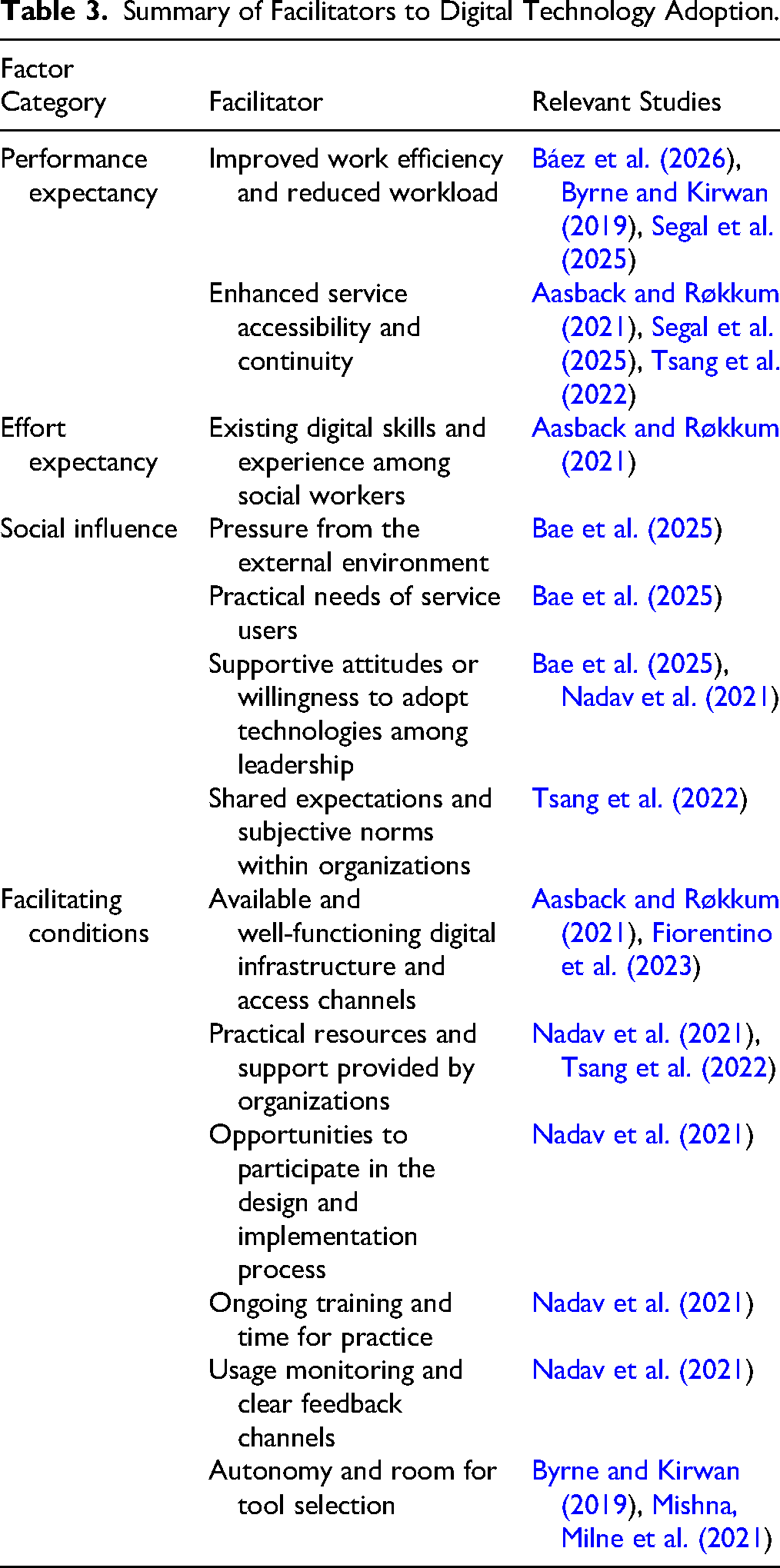
Corresponding to the barriers described above, the included studies also showed that digital technologies were not simply resisted. Under specific conditions, social workers recognized their work-related value and selectively embedded them into practice (see Table 3).
Summary of Facilitators to Digital Technology Adoption.
At the level of performance expectancy, facilitators were mainly reflected in two areas. First, social workers perceived that digital technologies could improve work efficiency and reduce part of their workload. In the use of traditional electronic communication tools, text messages, email, WhatsApp, voice messages, and virtual meetings were often used to arrange meetings, provide quick confirmations, contact caregivers, or handle brief matters. These tools could therefore be more easily embedded into high-demand and fragmented workflows (Segal et al., 2025). For some service users with intellectual disabilities, written messages could be repeatedly checked and confirmed, which helped reduce confusion in verbal communication (Byrne & Kirwan, 2019). Emerging AI technologies were also considered potentially useful for supporting information integration and professional judgment. Báez et al. (2026) found that clinical social workers in the United States who had prior experience using LLMs were more likely to perceive their usefulness. Participants reported that LLMs could save time on administrative tasks, organize ideas, reduce cognitive load, synthesize complex information, generate preliminary treatment plans or resource materials, and serve as an auxiliary tool for brainstorming and professional reflection when immediate supervision or peer support was unavailable. Some participants also suggested that LLMs could provide service users with supplementary support resources between formal sessions, thereby enhancing their autonomy (Báez et al., 2026).
Second, digital technologies helped enhance service accessibility and continuity. Remote communication technologies enabled social workers to overcome spatial and mobility constraints. In the early stage of the lockdown in Norway, social workers used telephone calls, videoconferencing, and chat tools to maintain more frequent follow-up, making service users feel that social workers were “still present” and reachable. This helped sustain a sense of community and prevent negative feelings (Aasback & Røkkum, 2021). The study conducted in Hong Kong during the pandemic also showed that some social workers became more accepting of ICT use because it produced positive service outcomes. Examples included using Zoom to support virtual visits between older adults in residential care and their family members, conducting financial assistance assessments, and receiving application materials through WhatsApp and WeChat, thereby improving the efficiency of resource delivery and service continuity (Tsang et al., 2022). In the Israeli study, online meetings also enabled some mental health service users who could not leave home to continue receiving support (Segal et al., 2025).
At the level of effort expectancy, facilitators mainly involved social workers’ existing digital skills and prior experience. The Norwegian study showed that pre-pandemic technological competence influenced the scope and creativity of social workers’ subsequent technology use. Participants with prior digital experience were more able to transform existing resources into professional tools, such as setting up small production spaces, using Mentimeter to collect group feedback, or arranging interactive activities such as games and cooking through videoconferencing in child welfare services (Aasback & Røkkum, 2021).
At the level of social influence, facilitators mainly came from external pressure, service user needs, leadership support, and shared expectations within teams and the field. The Korean study showed that COVID-19 created direct pressure for non-face-to-face services. After the pandemic, as face-to-face contact became restricted, online education and online communication shifted from optional methods to practical necessities, and some organizations began to use tools such as KakaoTalk and Zoom to deliver services (Bae et al., 2025). At the same time, service user needs could also drive technology expansion. For example, in older adult service settings, growing interest among older adults in digital education, livestreaming, video production, and smart devices became an important driver for organizations to expand their use of digital technologies (Bae et al., 2025).
Leadership willingness within organizations and subjective norms within the field also facilitated adoption. When organizational leaders showed a stronger willingness to adapt to and adopt digital transformation, agencies were more likely to actively introduce digital technologies. In some Korean welfare agencies, leaders even promoted the establishment of a “Future Society Connection Team” and a “Digital Convergence Team” to introduce information technology into social work practice and develop clearer directions for digital projects (Bae et al., 2025). In the Finnish study of health and social care professionals, participants also reported that supportive attitudes from supervisors or managers contributed to the successful implementation of digital services (Nadav et al., 2021). In addition, the Hong Kong study showed that the continued use of ICT to maintain services during the pandemic gradually became a shared expectation across teams and organizations. Positive experiences from other NGOs also created a demonstration effect, further promoting digital technology adoption within participants’ own organizations (Tsang et al., 2022).
At the level of facilitating conditions, facilitators were mainly reflected in four areas. First, available and functionally stable infrastructure and access channels were basic prerequisites for digital technology use. In the Norwegian study, many respondents already had laptops and remote access systems before the pandemic and were therefore able to shift relatively quickly to working from home after social distancing measures were introduced (Aasback & Røkkum, 2021). The Finnish study also showed that the implementation of DMSW depended on basic conditions such as devices, software, internet connections, and data security. Whether digital connections could operate smoothly and support familiar work tasks was a key condition for successful DMSW implementation (Fiorentino et al., 2023). When management was willing to purchase mobile devices, provide appropriate software, and adjust work arrangements, digital social work was easier to implement (Fiorentino et al., 2023).
Second, practical resources, technical support, and implementation guidelines provided by organizations increased the feasibility of adoption. The Hong Kong study showed that organizational support was an important factor influencing ICT acceptance, including managerial recognition, equipment and resources, training, on-site information technology support, risk management, and agency guidelines (Tsang et al., 2022).
Third, participation in design, continued practice, and post-implementation feedback and follow-up helped digital services become stably integrated into routine work. Finnish health and social care professionals reported that digital services were more likely to be accepted when professionals could express their needs during the design stage and provide input based on their own work tasks. During implementation, professionals also needed time to become familiar with and practice using the services, together with ongoing support, post-implementation feedback channels, in order to reduce social workers’ concerns about using systems incorrectly (Nadav et al., 2021).
Fourth, when organizations granted social workers a degree of autonomy and flexibility in selecting ICT tools, technology use could be better aligned with specific service contexts. The Canadian pandemic study showed that agencies allowed social workers to flexibly choose ICT tools according to service users’ needs, comfort levels, and preferences, which made digital practice easier to advance (Mishna, Milne et al., 2021). Similarly, social workers in the Irish study made “communication considerations” based on service users, relationship status, communication content, and service settings. When some service users could only be reached through text or social media, text messaging or social media became a more feasible communication method than telephone or video (Byrne & Kirwan, 2019).
Contextual Factors of Digital Technology Adoption
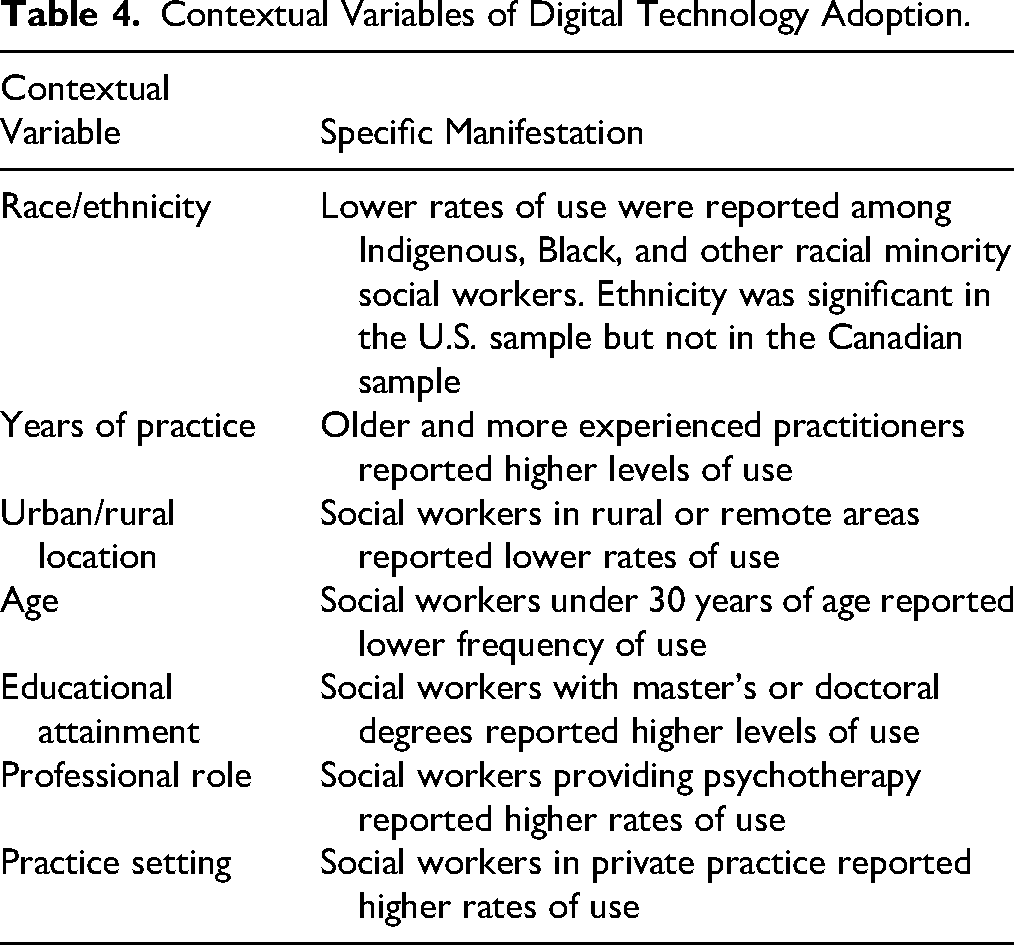
In addition to the direct facilitators and barriers described above, a small number of studies suggested that digital technology adoption may be associated with individual and contextual differences such as age, educational attainment, professional role, practice setting, race, and geographic location. However, the relevant evidence currently comes mainly from one cross-national study (Mishna, Sanders et al., 2021). This study found relatively lower rates of informal digital technology use among social workers under 30 years of age, those in rural or remote areas, and Indigenous, Black, and other racial minority social workers. In contrast, use was relatively higher among those with master's or doctoral degrees, those providing psychotherapy, and those in private practice (Mishna, Sanders et al., 2021) (see Table 4).
Contextual Variables of Digital Technology Adoption.
Ethical Challenges
Even when digital technologies are operationally available, social workers may remain cautious because of concerns related to professional values and ethical standards. The included studies showed that these ethical challenges were concentrated in four areas (see Table 5).
Ethical Challenges in Social Workers’ Adoption of Digital Technologies.
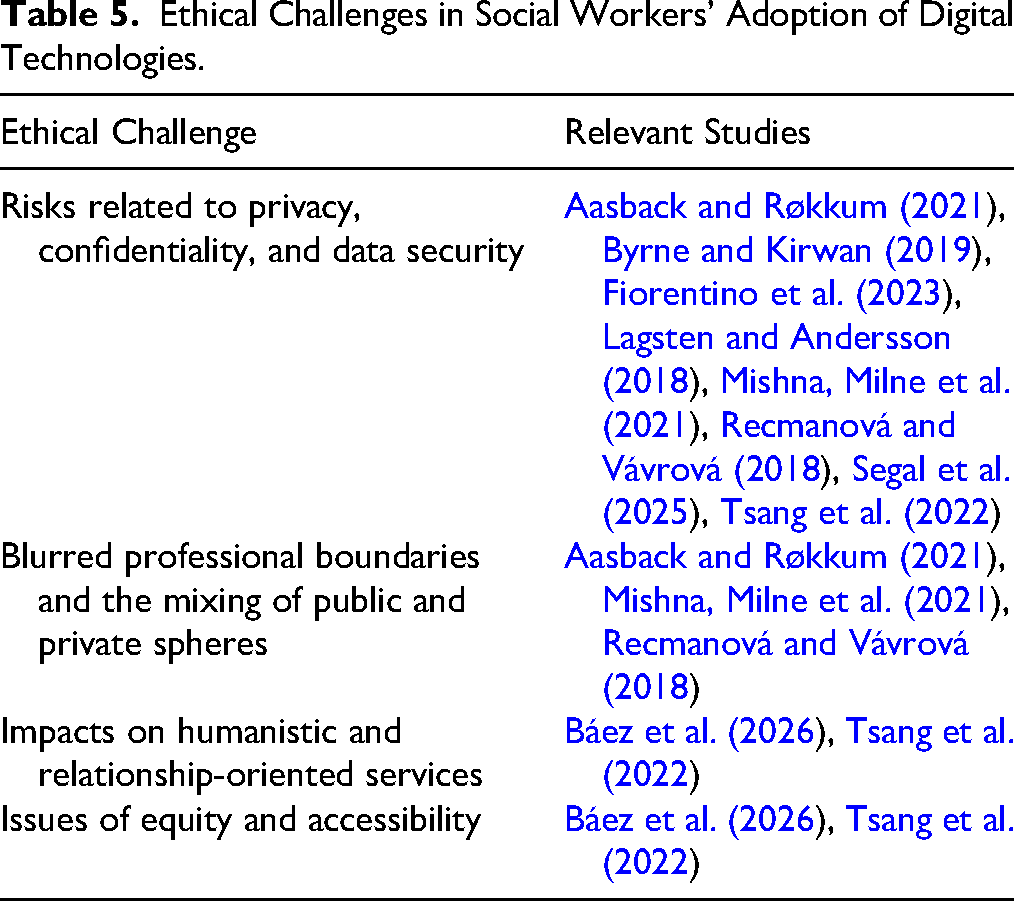
First, privacy, confidentiality, and data security risks were frequently reported. The Norwegian study showed that child welfare workers lacked a secure platform for written communication and had to rely on SMS and mobile chat applications. These tools were considered unsuitable for transmitting sensitive data, but in the early stage of the lockdown, the need to “quickly maintain services” temporarily outweighed privacy and security concerns (Aasback & Røkkum, 2021). Screen sharing also created risks because other tabs could contain sensitive personal information (Aasback & Røkkum, 2021). The Canadian pandemic study similarly found that even when agencies had developed privacy guidelines, service users could still overlook confidentiality risks in email and text messaging during crises, panic, or strong emotional states. Social workers’ own home-based work settings also created confidentiality risks, as one participant noted, roommates or others might overhear conversations with clients (Mishna, Milne et al., 2021). The Hong Kong study further showed that parents accompanying children in online groups could weaken confidentiality and boundary rules. When family members used Zoom to check the physical condition of older adults in residential care facilities, social workers were also concerned that residents’ privacy might not be sufficiently respected (Tsang et al., 2022). The Israeli study recorded risks such as family identities being exposed in WhatsApp groups, Gmail accounts being hacked or messages being sent to the wrong recipient, and data leakage caused by lost mobile phones (Segal et al., 2025). Risks could also occur in the opposite direction: service users might search for, comment on, photograph, record, or upload content related to social workers, leading to professional exposure and safety-related anxiety (Byrne & Kirwan, 2019).
Second, boundaries between public and private life, as well as professional boundaries, became blurred. Videoconferencing brought services into service users’ homes. This could provide a sense of accompaniment, but it could also be experienced as an intrusion into private space (Aasback & Røkkum, 2021). Boundary issues were more pronounced in text-based communication and social media use. The Czech study noted that publishing content through personal social networks, adding service users as friends, or engaging in private chats could disrupt professional relational boundaries (Recmanová & Vávrová, 2018). After the shift to home-based and online work during the pandemic, working-time boundaries also became compressed. Once work mobile numbers were widely shared, receiving messages at night and on weekends became more common (Mishna, Milne et al., 2021).
Third, digital technology use could affect relationship-oriented and humanistic services. The Hong Kong study showed that some social workers were concerned that ICT might replace face-to-face interaction and thereby weaken the humanistic orientation of social work. During the pandemic, applicants could submit wage proof and other materials through WhatsApp and WeChat, and some staff even suggested no longer requiring applicants to attend in person, instead depositing checks directly into bank accounts. A participant acknowledged that this approach could improve efficiency, reduce contact, and lower infection risk. At the same time, the participant felt that the more social distancing requirements were emphasized, the more the service process became “less humanistic.” Without face-to-face assessment, social workers felt more like loan assessors in private banks than practitioners fulfilling a social work role (Tsang et al., 2022). Similar concerns also appeared in the LLM study. Clinical social workers who had not used LLMs were especially concerned that AI as a therapeutic substitute would weaken interpersonal relationships, empathy, and embodied interaction, while also challenging the professional role of social workers (Báez et al., 2026).
Fourth, equity and accessibility challenges were reported. Digital technologies may reinforce the digital divide among disadvantaged groups. In the Hong Kong study, some children from poor families frequently experienced interruptions in online activities and online tutoring because of weak home internet coverage and limited data. To ensure equal access to information and resources, social workers needed to make additional efforts (Tsang et al., 2022). In the LLM study, equity concerns also involved model bias and unequal distribution. Clinical social workers worried that LLM training data might embed racial, cultural, linguistic, or experiential biases and reproduce systemic inequalities. They also questioned who would have access to these technologies and their potential benefits (Báez et al., 2026).
Overall, ethical concerns were not merely secondary issues that emerged after technology use; they directly shaped adoption judgments. The relevant studies showed that when ICT use raised concerns about confidentiality, boundaries, digital discrimination, or information leakage, social workers were more likely to question its usefulness and ease of use. The continuous vigilance required for privacy protection also increased cognitive burden (Segal et al., 2025; Tsang et al., 2022).
Discussion and Applications to Practice
This review enriches the existing literature by shifting attention from the role of digital technologies in social work practice to why frontline social workers adopt or resist these technologies. To our knowledge, this is one of the first reviews to synthesize determinants of frontline social workers’ digital technology adoption within an explicit technology acceptance framework. The findings help explain why, despite the rapid diffusion of digital tools since the pandemic and the widely recognized benefits associated with them, adoption remains uneven. Overall, the evidence suggests that frontline social workers’ adoption of digital technologies is not an automatic or linear diffusion process, but a contextualized process of “selective integration.” Social workers do not accept or reject digital tools simply because they are available. Rather, they continuously evaluate whether these tools can support professional relationships, fit local practice conditions, and align with ethical responsibilities. This pattern is broadly consistent with technology acceptance research that emphasizes technology-related perceptions and facilitating conditions (Davis, 1989; Venkatesh et al., 2003), while also suggesting that, in social work, judgments about these conditions are filtered through professional values and commitments.
UTAUT provided a useful framework for integrating an otherwise fragmented body of evidence. However, ethical factors, as a value system running through professional practice and as antecedent conditions shaping technology perceptions and adoption judgments, are not yet fully reflected in the existing UTAUT model. Since its development, UTAUT has been extended in different studies, with additional predictors including perceived privacy risk, trust, and personal innovativeness (García de Blanes Sebastián et al., 2022). Personal characteristics such as self-efficacy have also been incorporated into the model as additional constructs (Carter & Schaupp, 2008). Therefore, in the field of social work, there remains room to further clarify the hierarchical relationships among ethics, self-efficacy, organizational support, and other factors in order to develop a more explanatory model of technology adoption.
Based on the findings of this review, performance expectancy appears particularly important. In traditional technology acceptance research, perceived usefulness is usually associated with efficiency or task performance (Davis, 1989; Venkatesh et al., 2003). The studies included in this review also reported similar perceived benefits, such as reducing administrative burden, improving communication, supporting idea generation, and ensuring service continuity (Báez et al., 2026; Tsang et al., 2022). From the perspective of social workers, however, the usefulness of digital tools depends more on whether they can support professional relationships and service quality. Nadav et al. (2021) emphasized that professionals need to understand “why the service is implemented and why the service is necessary to use.” Byrne and Kirwan (2019) also noted that when social workers understand why digital communication can support relationship development and see that technology can maintain or strengthen the relationship between service providers and service users, their perceived usefulness of technology increases. Thus, in social work practice, performance expectancy should first be understood as practice-relevant usefulness, rather than only speed, efficiency, or convenience.
Effort expectancy is also important. Existing studies show that insufficient digital competence can weaken social workers’ confidence in use and increase their anxiety about digital services. At the same time, positive feedback from service users, peer support, and external assistance from volunteers or young service users can strengthen practitioners’ self-efficacy and reduce resistance. Successful attempts to use new platforms and functions may also further reinforce social workers’ belief that information technology can improve service efficiency and effectiveness (Tsang et al., 2022). This suggests that effort expectancy does not only refer to whether a technology is easy to use; it also concerns whether social workers have the conditions needed to use technology safely, effectively, and confidently.
Facilitating conditions further highlight the importance of the organizational environment. Previous research has shown that even when individuals are willing to make an effort, facilitating conditions still influence behavioral intention (Yeow & Loo, 2009). The included studies show that social workers’ adoption of digital technologies depends to a considerable extent on whether agencies can provide secure platforms, reliable devices, stable internet connections, training, technical support, and clear practice guidelines. This is consistent with broader implementation research, which indicates that the use of innovations is also shaped by organizational readiness, perceived fit, and sustained support (Damschroder et al., 2009; Weiner, 2009). Nadav et al. (2021) further noted that digital services are more likely to become integrated into routine work when professionals have sufficient time to become familiar with the service, opportunities to provide feedback, and follow-up after implementation. By contrast, a heavy workload can become a key barrier. Therefore, effort expectancy cannot be attributed simply to individual ability. Digital literacy and self-efficacy are important, but they are also constrained by organizational resources, time arrangements, and workload.
Digital inclusion should be understood as an issue concerning both service users and social workers. Several studies reported that service users’ limitations in devices, internet connectivity, and digital skills could hinder service access and increase social workers’ workload (Bae et al., 2025; Mishna, Milne et al., 2021; Recmanová & Vávrová, 2018). At the same time, social workers’ own use of digital technologies may vary by age, educational attainment, race, professional role, and geographic location (Mishna, Sanders et al., 2021). In other words, digital divides may exist within both service provider and service user groups. Digital transformation strategies in social work should therefore include investment in low-income, rural, and resource-constrained areas and agencies, as well as support for practitioners and service users who are required to use technology for service delivery without being sufficiently prepared. Otherwise, digital adoption may reproduce or even reinforce the very inequalities that social work seeks to address.
Ethical challenges are among the most distinctively social work–specific findings of this review. Privacy, confidentiality, data security, professional boundaries, algorithmic bias, and digital exclusion are not only risks that emerge after technology use; they also directly shape technology adoption. When social workers perceive that ICT may create ethical dilemmas, they are more likely to question the usefulness and ease of use of the relevant tools (Segal et al., 2025; Tsang et al., 2022). This cautious stance is consistent with existing social work ethics and technology practice standards. The NASW Standards for Technology in Social Work Practice require social workers to assess the benefits and risks of electronic services, the feasibility of confidentiality, professional boundaries, verification of service users’ identities, and service users’ familiarity with and access to technology when providing services through technology (NASW et al., 2017). The IFSW Global Social Work Statement of Ethical Principles also states that social work ethics apply to contexts involving digital technology and social media, and notes that technology use may threaten ethical standards related to privacy, confidentiality, conflicts of interest, competence, and documentation (IFSW, 2018). Ethics, therefore, is not an additional issue that appears only after technology adoption, but an antecedent condition through which social workers judge whether technology can be responsibly integrated into practice.
These findings have direct implications for practice. First, agencies should at minimum provide secure platforms, appropriate devices, stable internet connections, and reliable technical support. Second, before introducing digital technologies, social service agencies should conduct a “technology–practice fit” assessment to clarify which tasks the technology is suitable to support, which service users may benefit from or be harmed by it, and which mode of service delivery is most appropriate. Scheduling, educational outreach, documentation, and drafting administrative documents may be suitable for digital support in many contexts. However, information gathering and risk assessment, crisis intervention, complex relationship work, and communication involving sensitive information may require face-to-face contact or a more strictly human-led approach. Such assessment should also consider service users’ digital conditions. For service users who lack devices, stable internet access, private space, literacy, or confidence in using technology, low-technology or nondigital alternatives should continue to be provided. On this basis, agencies should also establish clear and actionable digital practice procedures and incorporate them into supervision and feedback mechanisms. This is consistent with the IFSW Global Social Work Statement of Ethical Principles, which states that social workers and their employing bodies should work together to create working environments in which ethical principles can be discussed, evaluated, and upheld (IFSW, 2018).
Skills-based training is important, but training should not be limited to the operation of devices or software. It should also help social workers understand and apply these procedures and rules in specific practice contexts, and develop awareness of data rights, ethical judgment, risk identification, and the capacity for critical technology use. Because digital practice is highly contextualized, formal rules cannot exhaust all concrete situations, and social workers still need to exercise professional judgment under conditions of uncertainty. The included studies suggest that although digital practice may limit some contextual cues and situated interactions available in traditional face-to-face encounters, social workers can still use technology creatively to maintain core professional values (Aasback & Røkkum, 2021). Reflective practice and creativity-building may therefore help practitioners sustain the professional values they consider important in the gray areas between rapid technological development and insufficient organizational guidance.
The current evidence base still has several areas requiring further development. First, the included studies remain predominantly qualitative, with limited large-scale quantitative and longitudinal evidence. It is therefore difficult to determine the relative importance of different factors and their interactions. Future research should move from broad factor identification toward mechanism testing and should more systematically incorporate ethical considerations into models of technology adoption in social work. Second, research needs to distinguish between different types of technology. Existing research on AI adoption has suggested that, when facing new technologies such as AI, technology adoption models may need to include more contextual and intervention-related factors, such as training, support, and management measures (Venkatesh, 2022). This review also shows that text messaging, videoconferencing, case management systems, generative artificial intelligence, and robots are unlikely to raise the same adoption issues. Third, more evidence is needed from non-Western, resource-constrained, rural, and minority-serving contexts. Future studies should also report service fields, organization types, staff roles, service user groups, the core technologies and functions examined, and the focal adoption-related terms more clearly.
This review also has limitations. First, the search was limited to Chinese- and English-language literature, which may have led to the omission of relevant studies published in other languages. Second, the gray literature search was not exhaustive. Although supplementary web-based searches were conducted, dedicated gray literature databases were not searched, and core journals were not systematically hand-searched. Third, as a scoping review, this study did not conduct a formal critical appraisal; its findings are therefore more appropriate for mapping the distribution of themes than for assessing the strength of evidence. Fourth, the included studies covered multiple types of technology, including communication tools, information systems, and AI-related applications. This helped provide an overall picture, but limited the ability to draw in-depth conclusions about specific technologies. Fifth, although this review applied an inclusion threshold focused on frontline practitioners, the scarcity of evidence meant that some studies could not fully rule out overlap with other service settings or role categories. Nevertheless, these studies still provide useful insights for understanding frontline social workers’ technology use.
Overall, supporting frontline social workers’ adoption of digital technologies requires more than improving technological access or teaching operational skills. It also requires organizational support, ethical governance, reflective perspectives, sustained opportunities for practice, and digital inclusion strategies oriented toward disadvantaged groups. Only under these conditions can social workers cautiously and effectively integrate digital technologies into professional practice without weakening their commitments to relationship-oriented and justice-oriented social work.
Supplemental Material
sj-xlsx-1-rsw-10.1177_10497315261464543 - Supplemental material for Digital Technology Adoption in Frontline Social Work Practice: A Scoping Review
Supplemental material, sj-xlsx-1-rsw-10.1177_10497315261464543 for Digital Technology Adoption in Frontline Social Work Practice: A Scoping Review by Ying Zhang and Hui Yang in Research on Social Work Practice
Footnotes

Funding
The authors disclosed receipt of the following financial support for the research, authorship, and/or publication of this article: This work was supported by the China National Social Science Research Fund (grant number [21BSH145]).
Declaration of Conflicting Interests
The authors declared no potential conflicts of interest with respect to the research, authorship, and/or publication of this article.
Supplemental Material
Supplemental material for this article is available online.
Information Sources, Search Dates, and Search Strategies.
| Source Type | Information Source | Search Date | Limits | Exact Query String |
|---|---|---|---|---|
| Electronic bibliographic databases | Web of Science (Clarivate Analytics) | Mar 12, 2026 | Date limits applied: Jan 1, 2015 to Mar 12, 2026 | TS = ((“social work*”) AND (digital* OR technolog* OR ICT OR “information technolog*” OR “communication technolog*” OR “artificial intelligence” OR AI) AND (adopt* OR accept* OR use* OR adapt*)) |
| CNKI (China National Knowledge Infrastructure) | Mar 12, 2026 | Date limits applied: 2015–2026; Source types searched: academic journals, doctoral dissertations, and conference papers | Exact search string entered in CNKI: SU = (‘社会工作’ + ‘社会工作者’ + ‘社会工作服务’ + ‘社会工作实践’ + ‘社会工作专业’ + ‘社会工作实务’) AND SU = (‘人工智能’ + ‘数字化’ + ‘技术应用’ + ‘技术创新’ + ‘信息’ + ‘新技术’ + ‘计算机’ + ‘平台’) English translation: SU = ('social work’ OR ‘social workers’ OR ‘social work services’ OR ‘social work practice’ OR ‘social work profession’ OR ‘social work practice/work’) AND SU = (‘artificial intelligence’ OR ‘digitalization’ OR ‘technology application’ OR ‘technological innovation’ OR ‘information’ OR ‘new technology’ OR ‘computer’ OR ‘platform’) |
|
| Scite | Mar 12, 2026 | Date limits applied: 2015–2026 Display limit: first 300 pages of results. Publication type: article | (“social work*”) AND (digital* OR technolog* OR ICT OR “information technolog*” OR “communication technolog*” OR “artificial intelligence” OR AI) AND (adopt* OR accept* OR use* OR adapt*) | |
| Supplementary web-based sources | Baidu Scholar | Jul 26, 2025 | Not specified | Exact search terms entered in Baidu: 社会工作数字化;社会工作技术采纳;社会工作技术使用;社会工作人工智能 English translation of search terms: social work digitalization; social work technology adoption; social work technology use; social work artificial intelligence |
| Bing (web search engine) | Jul 26, 2025 | Not specified | Search concepts reported: “social work” AND (“digital technology” OR “artificial intelligence” OR ICT) AND (adoption OR acceptance OR use) Note: The Boolean operators were not entered as a single search string in the web search engine. They are reported here to represent the different keyword combinations used during the search |
References
Supplementary Material
Please find the following supplemental material available below.
For Open Access articles published under a Creative Commons License, all supplemental material carries the same license as the article it is associated with.
For non-Open Access articles published, all supplemental material carries a non-exclusive license, and permission requests for re-use of supplemental material or any part of supplemental material shall be sent directly to the copyright owner as specified in the copyright notice associated with the article.
