






Abstract
To understand obese adolescent girls’ perspectives regarding their weight and health we studied video intervention/prevention assessment audiovisual narratives created by 14 obese girls ages 12 to 20 years. The narratives included interviews, monologues, and daily activities. Themes included illness conceptualizations, health concerns, health misinformation, and distress regarding appearance deriving from both within and without. The predominant theme was ambivalence about obesity. Close examination of these themes revealed potential footholds for intervention. Sensitive exploration of issues such as appearance and psychosocial distress might strengthen the patient–clinician partnership in identifying a patient’s strengths and motivating weight loss.
Keywords
Motivating obese adolescents 1 to make positive lifestyle changes can be difficult, even with intensive education and counseling, which are the core elements of obesity care (Barlow, 2007). Although there are many different models of obesity care for adolescents, consistently effective motivators remain unclear. Understanding a particular adolescent’s health-related motivations and decision-making processes might first require exploration of the adolescent’s fundamental understanding and perspective regarding weight and health. To avoid miscommunication or disconnect, such exploration should take into account the distinctions between the diseases clinicians treat (physical and psychological dysfunction), the subjective patient illness experience, and the social construct of illness (Rich, Taylor, & Chalfen, 2000). The experiences of adolescents, and the thoughts and perspectives that emerge from them, are likely to be most accurately reflected by their choices and behaviors within their actual day-to-day environments.
The goal of this qualitative study was to explore the perspectives of obese adolescent girls regarding weight and health to better understand factors that might motivate or inhibit health-promoting behavioral changes. We accomplished this through analysis of personal audiovisual narratives that conveyed the participants’ experiences and expressions “from the inside out” (Rich, Polvinen, & Patashnick, 2005), as shown and told by them while living their day-to-day lives at home, at school, and in their communities.
Methods
We used video intervention/prevention assessment (VIA; Rich, Lamola, Gordon, & Chalfen, 2000) to explore the experiences and perspectives of obese adolescent girls. We originally recruited the participants as part of the VIA - Overweight and At-Risk Study (VIA-OAR), which is an ongoing study comparing the audiovisual narratives of 21 obese and 21 normal-weight adolescents matched by age, gender, and race/ethnicity, with a particular focus on health and nutrition. We recruited obese (body mass index [BMI] ≥ 95th percentile for age and gender) and normal-weight (BMI 25th to 75th percentile for age and gender) adolescents ages 12 to 20 years from the adolescent primary care and obesity specialty clinics at a large children’s hospital in the northeastern United States from 2007 to 2009. Girls accounted for two thirds of the obese cohort (n = 14).
We recruited participants to help their clinicians understand their weight and health. We recruited some participants who were actively engaged in obesity treatment and others in the context of primary care, although none of the research staff were clinically involved with any of the participants. We applied the following exclusion criteria: (a) genetic, metabolic, or other medical conditions that predisposed to becoming overweight; (b) restrictive eating disorders; (c) cognitive or physical impairments that precluded completion of questionnaires and an audiovisual narrative; and (d) primary languages other than English. We did not decline any prospective participants because of any of the exclusion criteria. We obtained informed consent from participants (or parents, with underage participants’ assent) prior to participation. The hospital’s institutional review board approved VIA-OAR.
For this investigation of obesity-related experiences, perspectives, and motivations of adolescent girls, we limited analyses to the 14 obese girls who participated in VIA-OAR. We determined the number of participants to be included in the analyses based on the number of obese girls recruited into VIA-OAR. The participants included African American (n = 11), White (n = 2), and Hispanic (n = 1) adolescent girls. This racial distribution was more heavily skewed toward African American participants than the general clinic population. All participants lived in urban neighborhoods similar to the broader clinic population. Their mean age was 16.3 years (SD = 2.5), with a range of 12 to 20 years. Average weight at entry was 106.4 kg (SD = 23.07), with a range of 75.8 to 164.8 kg. Average BMI at entry was 38.0 kg/m2 (SD = 7.76), with a range of 29.6 to 55.6 kg/m2. Average BMI percentile for age was 98.3 (SD = 1.22), with a range of 95 to 99.7.
Over 2 weeks, participants used VIA to create audiovisual narratives, 20 to 32 hours in length, of their experiences living with obesity. During the first week, we asked participants to teach their clinicians about their experiences by documenting their lives on video, revealing issues they faced, how they responded to them, and what they thought. We encouraged participants to show and tell anything that revealed the realities of their lives and that might affect their weight and health.
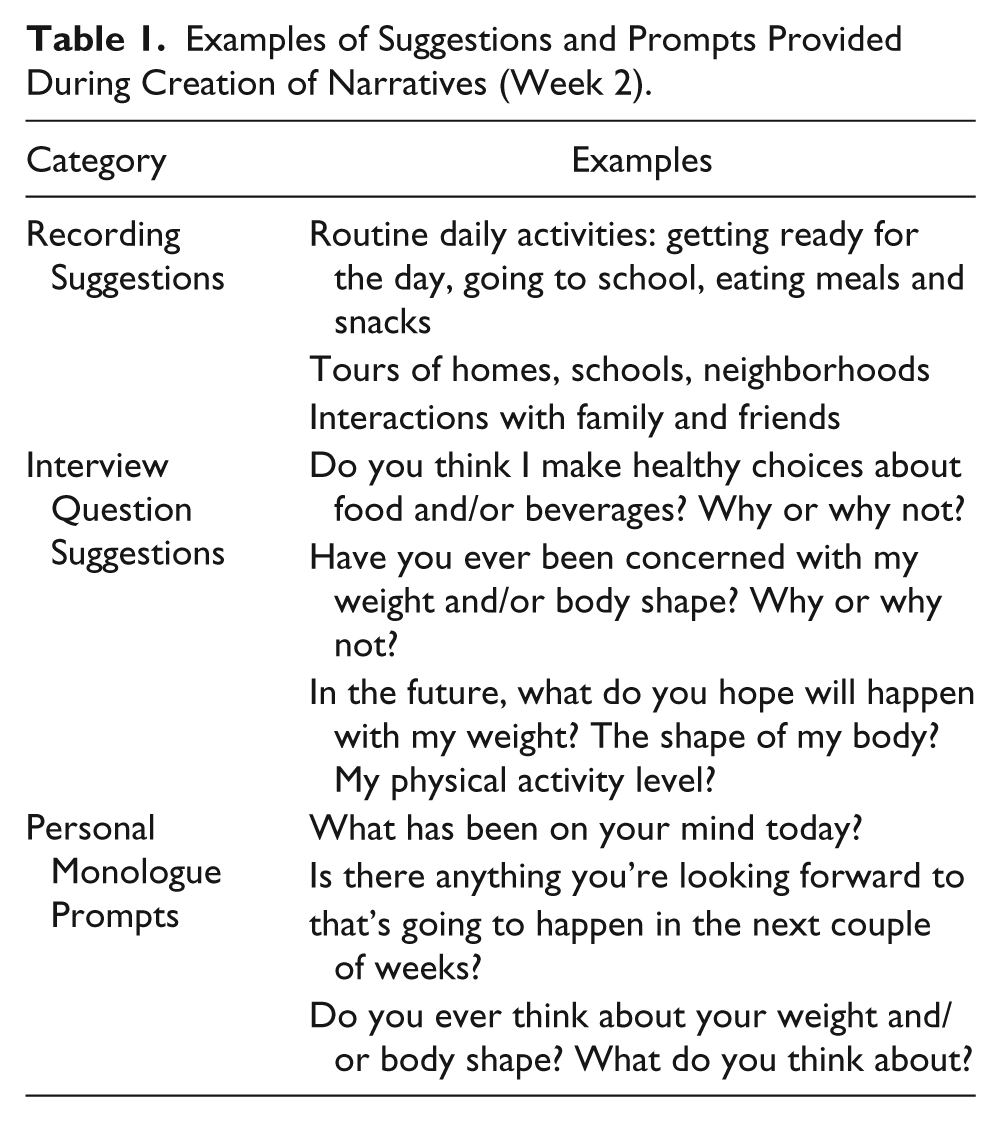
For the second week, we gave participants standardized suggestions of cross-comparable information to record, including details of their physical and psychosocial environments, interviews of family members and friends, and personal monologues relating experiences, thoughts, and emotions that might affect their weight, health, or psychological status (see Table 1). Prior studies have shown that providing suggestions of key data to record allows participants to use them as springboards for their own ideas without directing or compromising the integrity of their personal narratives (Rich et al., 2005).
Examples of Suggestions and Prompts Provided During Creation of Narratives (Week 2).
We logged and coded the audiovisual data using linked Transana 2.41 (Wisconsin Center for Education Research, 2009) and NVivo 8.0 (QSR International, 2007) qualitative analysis software. We standardized the VIA logging process to maintain the richness of the original data in as many dimensions as possible (Rich et al., 2005; Rich & Patashnick, 2002). Through logging, we organized the textual documentation of the data using discrete identification of each frame of the audiovisual narrative to allow for correlation. We detailed and carefully structured the logs, including descriptions of what was seen, what was heard, and the perspective of the narrative in each moment (who was holding the camera). Two different loggers logged each visual narrative to optimize reliability.
We then imported the logs into NVivo (QSR International, 2007) for analysis. In NVivo, we coded emerging themes as “free nodes,” which we defined, modified, and refined iteratively. After coding, we built conceptual relationships between nodes and structured free nodes into conceptual “trees” of related themes. We used NVivo to metastructure the data, finding areas in which themes overlapped through the use of Boolean searches for intersections of nodes. A second coder independently coded 30% of the data and compared these results with the primary coder’s results to establish the validity of code assignments.
Following the tenets of grounded theory, in which data are examined and structured to build theoretical models rather than to test predetermined hypotheses (Strauss & Corbin, 1990), we identified key themes regarding the participants’ health and well-being based on what they recorded and said. Although we derived the themes from analysis of the entirety of the audiovisual data, including not only audio data but also visual elements, context, and circumstances, we present the data in this article through key quotations, as these elements best captured the thoughts and feelings of participants as related to the key themes and are representative of the composite audiovisual data.
Results
The audiovisual data yielded significant insights into the lives of participants across a variety of settings, including their homes, schools, and neighborhoods, and in various social contexts, including among peers, among family members, and while alone. Each narrative offered a nuanced perspective on the participant’s personality and specific influences on her daily routines related to eating, exercising, and other self-care behaviors. The participants’ daily experiences often culminated in private monologues, which offered the clearest entryway into their personal perspectives and provided a foundation for drawing out key themes from the data.
The central theme around which we conceptualized the other key themes was ambivalence among participants regarding their obesity, overarching their health-related decision making and motivation to change. Specific foci of their ambivalence included the importance of obesity and its consequences, the origin of obesity, the ability to control one’s weight, and the need for and mechanisms of treatment. Other key themes that emerged from analysis of the narratives and that were related to the central theme of ambivalence included nuanced illness conceptualizations, physical health concerns, variable health literacy among participants, and a pervasive focus on personal appearance.
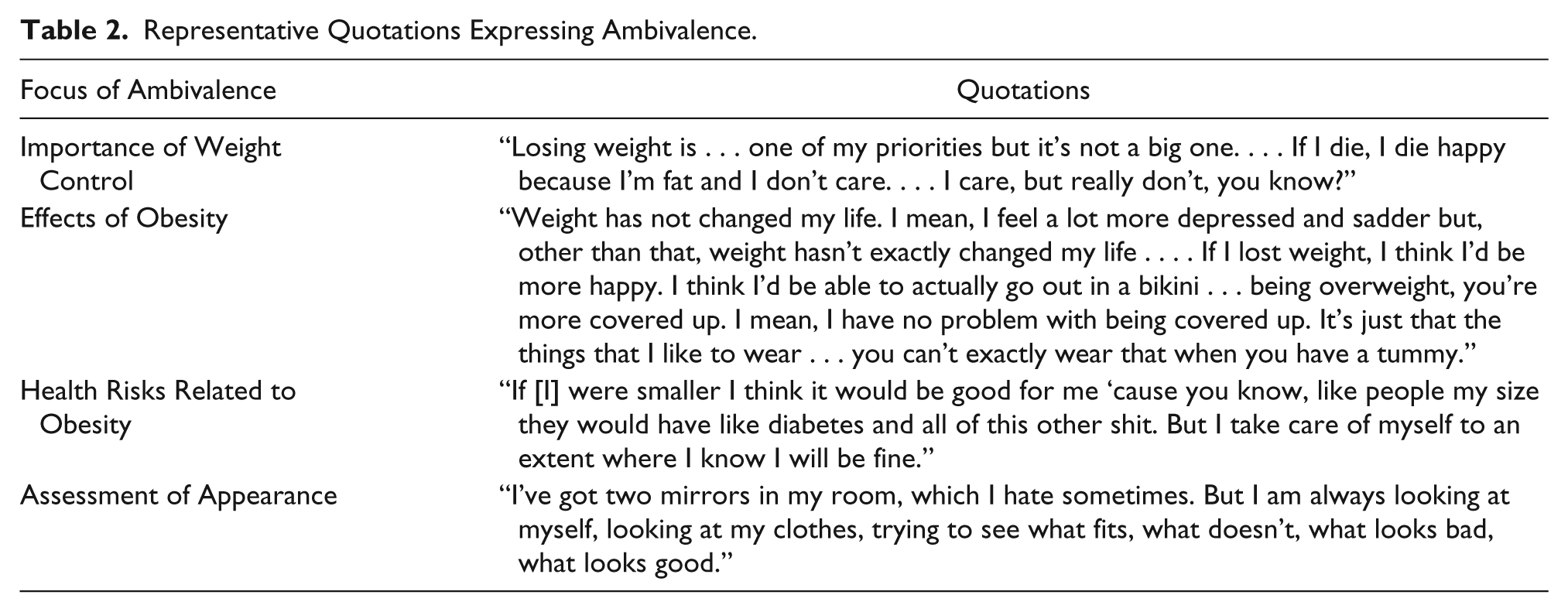
Eleven participants explicitly expressed ambivalence in discrete statements, with representative examples shown in Table 2. Others manifested ambivalence through conflicted thoughts and emotions expressed over time across multiple segments of narrative. Ambivalence emerged both when girls faced actual health-related decisions and when reflecting on their lives in conversations and personal monologues. Through close examination of their expressions of ambivalence and the other highlighted themes, it became apparent that ambivalence was not only the predominant theme but also a genuine commonality among the other key themes elucidated. By further characterizing these additional themes, we developed a deeper understanding not only of the themes themselves but also the competing thoughts and priorities that comprised key facets of the girls’ ambivalence.
Representative Quotations Expressing Ambivalence.
Eleven of the 14 participants described illness conceptualizations (see Table 3), unifying core beliefs and understandings that defined obesity for the adolescents and shaped their interpretations of their experiences living with obesity. They described a wide variety of these conceptualizations, most of which diverged from a strictly medical interpretation of obesity. Despite dissonant information that participants received from family, friends, and clinicians, as well as their own ambivalence about their weight, these conceptualizations appeared to reinforce their status quo by calling into question their need or ability to change obesity-related factors.
Representative Quotations Conveying Illness Conceptualizations, Health Concerns, and Misinformation.
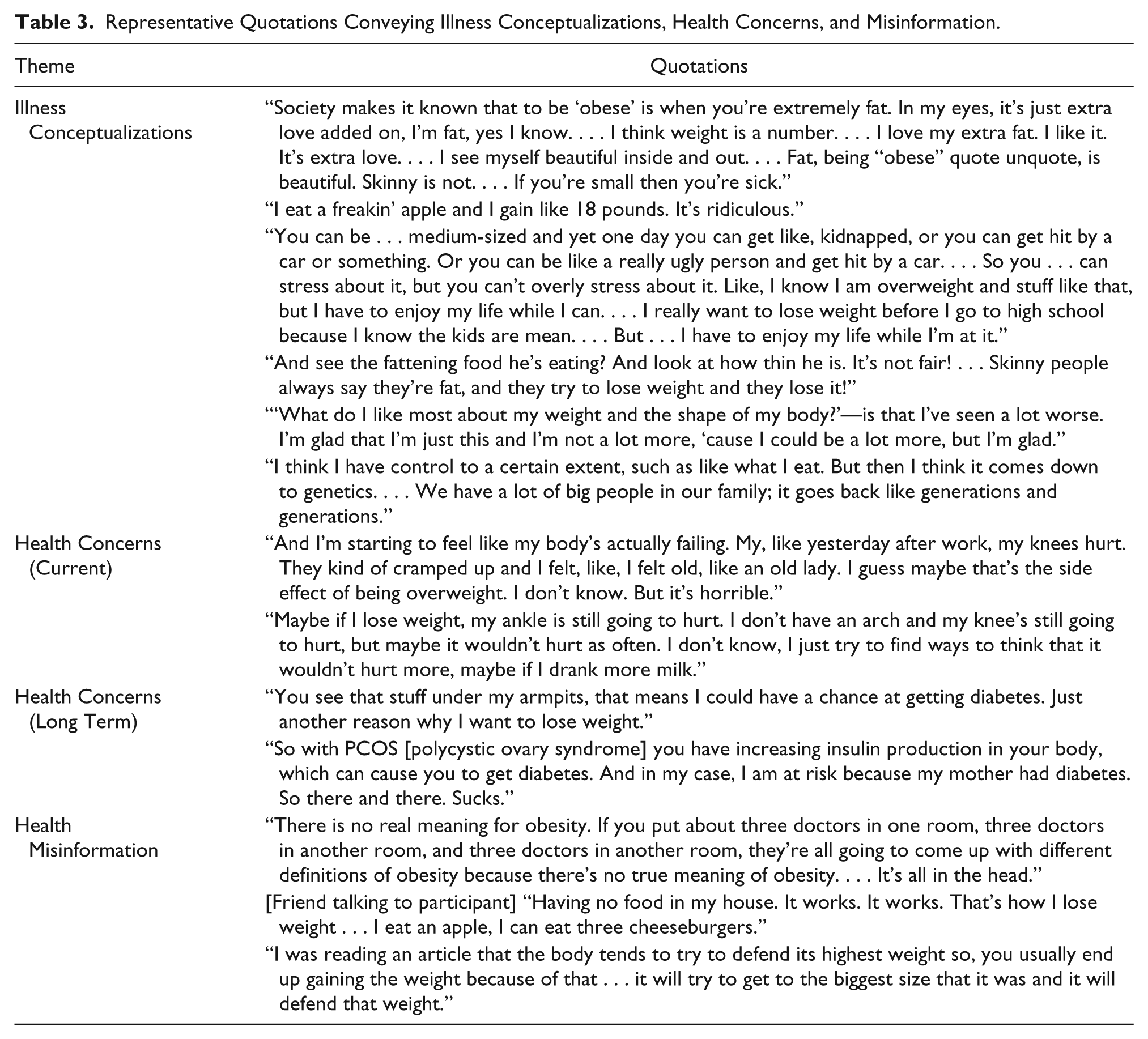
Eight participants explicitly raised current and long-term health concerns related to their weight (Table 3). They valued current symptoms attributed to obesity and their effects on daily activities more than long-term potential health consequences. These concerns appeared to contribute to their overall ambivalence about obesity. Although participants manifested distress stemming from their health concerns, behavioral change was not discussed. Ten participants evidenced health-related misinformation or misinterpreted accurate and potentially useful information. They highlighted peers and media as important sources of misinformation and misinterpretation that supported unhealthy behaviors, inhibited change, and contributed to ambivalence about obesity. These elements of misinformation also colored participants’ core illness conceptualizations.
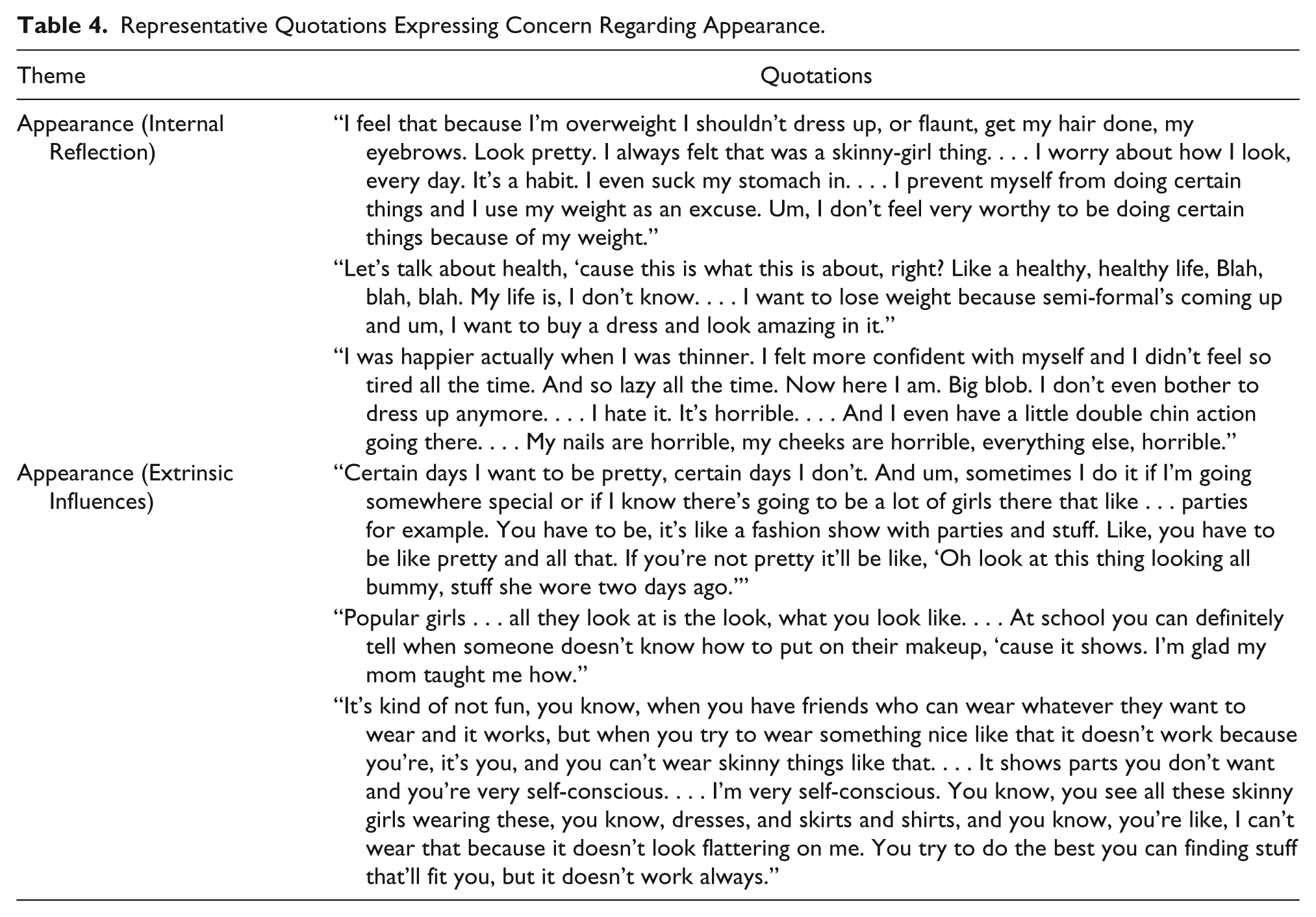
All participants expressed concerns about physical appearance, which they derived from both internal reflection and extrinsic influences such as peers and media (see Table 4). Although girls expressed that these concerns motivated them somewhat for behavioral change, they did not describe actual associated changes. Instead, this concern appeared to generate emotional distress, which was most apparent in the participants’ personal monologues. Additionally, ambivalence about the importance and meaning of obesity emerged most prominently when appearance concerns were juxtaposed with health concerns. In these moments, it was clear that participants valued appearance concerns more than the physical health implications of obesity.
Representative Quotations Expressing Concern Regarding Appearance.
Although ambivalence about obesity and behavioral change was common among the obese adolescent girls who participated in this study, a variety of related concerns were also apparent. Specifically, concerns about their short- and long-term health and, even more prominently, distress about their appearance, were prevalent. These concerns appeared to be intricately tied to their expressions of ambivalence, suggesting possible starting points for exploring motivation for change.
Discussion
In this study, we explored the perspectives of 14 obese adolescent girls through examination of personal audiovisual narratives of their everyday lives, and found that ambivalence was a fundamental issue in how they described and experienced obesity. Participants’ expressions of their ambivalence revealed a genuine complexity, suggesting a varied etiology. Ambivalence, which can be defined as the simultaneous existence of competing thoughts and motivations (Sparks, Conner, James, Shepherd, & Povey, 2001), has been shown to be an important issue among obese urban adolescents (Lieberman, Robbins, & Terras, 2009). The audiovisual narratives offered a uniquely deep and rich perspective of this ambivalence, underscoring its complexity as it was manifested across various settings and circumstances and was interwoven with other emergent themes. Notably, apathy was not a common theme, underscoring the important distinction between the two concepts. The predominance of ambivalence suggests that it is a key to understanding the perspectives and decisions of obese adolescent girls.
Ambivalence is also a central construct in a variety of health behavior counseling techniques, particularly motivational interviewing (Rollnick, Miller, & Butler, 2008). Indeed, the core goal of motivational interviewing is to help patients explore and resolve ambivalence, which then, it is thought, opens the door to sustained behavioral change. In general, ambivalence poses a difficult challenge for clinicians because of a lack of time, knowledge, and comfort with the issue (Kehler et al., 2008). However, these findings suggest that it might be important to both elucidate and discuss with obese girls.
Many participants also described distinct illness conceptualizations—fundamental interpretations and beliefs about their weight and health cited in support of their health-related decisions. These varied conceptualizations might offer adolescent girls a foundation for making sense of their circumstances and accepting the status quo. For example, the contribution of genetics to obesity offered one young adolescent a viable explanation for her current struggles. Accurate or not, these constructs might offer entry points for understanding each adolescent’s unique perspective and decision-making processes. If elucidated, these frameworks might be addressed directly by clinicians, clarified, and modified, which might then mitigate an obstacle to addressing ambivalence and initiating change.
Health concerns described by participants focused predominantly on current weight-related physical symptoms and their impact on present activities and priorities, with fewer, but some longer-term concerns voiced as well. This short-term, immediate perspective about health is consistent with the cognitive abilities of adolescents who have yet to fully develop executive functions such as future thinking. Given their developmental stage, it might be more effective to explore and engage in discussions with adolescent girls about distressing current physical symptoms when providing obesity counseling, rather than focusing on long-term consequences of obesity. Additional work is necessary to determine if this approach is truly effective.
Health literacy was another salient theme in the narratives. Misinformation was woven into the fabric of participants’ illness conceptualizations and took the form of either overtly incorrect information or partially correct information interpreted and applied incorrectly. This observation underscores the importance of clinicians providing and reinforcing accurate health information, helping adolescents apply that information effectively, and actively combating misinformation by asking adolescents what they are hearing from others. Health misinformation fed into ambivalence, providing apparently sound evidence to maintain the behavioral status quo rather than enact health-promoting behavioral changes.
Concern about personal appearance was another emergent theme and was found in all of the narratives, often pitted against health-related concerns. The richness of the audiovisual narratives brought this ubiquitous concern into full relief in a novel and important way. Instead of effectively motivating behavioral change, these concerns seemed to create distress, likely because of their relationship to self-esteem and self-efficacy. Furthermore, distress also appeared to emerge for several participants from a conflict between normative adolescent desires for autonomy and control over one’s physical appearance and a sense of ultimately having very little control at all over one’s weight status. These dynamics of distress and conflict might be a foundational element for participants’ ambivalence about their weight and the prospect of behavioral change.
The importance of appearance among adolescent girls is not new. Borra, Kelly, Shirreffs, Neville, and Geiger (2003) described appearance as a key concern of girls in focus groups and recommended sensitivity to this concern in weight-related counseling. Similarly, Alm et al. (2008) found in semistructured interviews that adolescent girls considered appearance to be a key reason for weight control and found negative body image to be a barrier to exercise. More recently, Mond, van den Berg, Boutelle, Hannan, and Neumark-Sztainer (2011) elucidated that body dissatisfaction was closely linked to impairment of emotional well-being among both overweight adolescent boys and girls, suggesting that distress related to negative body image should be specifically addressed in obesity care. Our findings build on these prior studies by demonstrating the pervasive nature of this concern across a variety of settings and circumstances in the audiovisual narratives and linking it to the issue of ambivalence. Indeed, concerns about appearance both punctuated mundane day-to-day activities and dominated extended private monologues, often interwoven with expressions of ambivalence. The poignancy and primacy of this concern flowed through the narratives in real time, crystallizing the relevance of this issue to obese girls and the clinicians who care for them.
Clinicians typically avoid discussions of a patient’s physical appearance in clinical counseling, especially with adolescent girls, for fear of damaging self-esteem and triggering disordered eating. Indeed, ample research has documented associations between negative body image and eating disorders, depression, and other negative outcomes (van den Berg & Neumark-Sztainer, 2007). Although the potential for weight-related counseling in clinical care to contribute to such negative sequelae is unclear, some clinicians might fear such consequences and, as a result, simply encourage adolescents to maintain a positive body image and self-esteem, without exploring and addressing underlying roots of body dissatisfaction.
The dominance of concern about appearance among obese girls, however, indicates that it might need to be addressed more directly in clinical settings. The apparent emotional importance of this concern in the participants’ lives suggests that for some adolescent girls, sensitive discussion of this concern might be both helpful and appreciated. Such a discussion of not only body image but also the associated emotional distress would be substantially different and potentially more effective than suggesting a more positive body image without addressing the primary causes and consequences of this concern. Future research should carefully examine if it is possible to implement such a strategy without generating negative body image or reducing self-esteem.
Studies that have shown that poor body satisfaction does not motivate healthful change, but instead predicts unhealthy weight-control behaviors, less physical activity, and weight gain (Neumark-Sztainer, Paxton, Hannan, Haines, & Story, 2006), highlight the need for sensitivity in addressing appearance concerns. As such, strategies should be developed and tested that sensitively address appearance concerns by focusing on enhancing body satisfaction and a desire for self-care, because these might be most effective (Neumark-Sztainer et al.). Discussions that validate appearance concerns might open the door for additional discussion that enhances body satisfaction, but the concern might need to be explicitly invoked first.
In summary, our analyses highlighted the high prevalence of ambivalence about various aspects of obesity among the participants in our study, several key themes which might contribute to ambivalence in important ways, and areas of concern among obese adolescent girls that might provide potential avenues for eliciting motivation for change. Whether in the form of established illness conceptualizations reinforcing the status quo, current physical symptoms overshadowing long-term health abstractions, misinformation contradicting sound health advice, or urgent appearance concerns and their attendant social consequences taking precedence over other competing concerns, the themes elucidated through our analyses suggest mechanisms through which ambivalence about various aspects of obesity might develop and might be addressed. If ambivalence is indeed a central obstacle to behavioral change, as suggested most prominently by the motivational interviewing framework, then future interventions might be most effective if they explore and resolve ambivalence, thereby improving the engagement of adolescents with obesity care and perhaps leading to improved outcomes through clinical counseling. The themes presented here might be important footholds for starting such conversations.
Limitations and Future Directions
The qualitative design of this study yielded rich data on the experience of obesity “from the inside out” (Rich et al., 2005), but incurred the limitations of a small sample size. Participants were all girls and most were African American, limiting our ability to generalize findings. The strong cultural and social influences on obesity make it likely that groups not represented by our sample, in particular adolescent boys, will have quite different influences on and experiences of obesity. Finally, we focused primarily on internal dynamics of personal choice and change, with the understanding that such change might be less effectual if not coupled with broader societal changes not addressed in our analyses.
This qualitative study generated hypotheses about the centrality of ambivalence as an obstacle to behavioral change. The unique methodology offered a rich vantage point from which prior conclusions in the literature could be pushed further and new hypotheses could be developed. These ideas require confirmation by other studies and additional evaluation as to how they might relate to clinical practice. If validated, these findings could lay the foundation for more effective obesity care, in particular through techniques such as motivational interviewing, which directly address ambivalence.
Conclusion
Obese adolescent girls are ambivalent about their weight status and their ambivalence is multidimensional. Engaging girls on issues relevant to their ambivalence that hold particular personal value might offer footholds for clinical intervention. Characterizing a patient’s illness conceptualization and sensitively exploring an obese adolescent’s thoughts and beliefs about her physical appearance might validate her experience and establish trust through demonstration of respect and understanding. This shared understanding could provide the basis for a more effective patient–clinician partnership in drawing out her strengths and ability to make changes that can help her achieve weight loss and maintain a healthy lifestyle.
Footnotes
Acknowledgements
We thank Alison Field, Cara Ebbeling, Julie Polvinen, and Jennifer Patashnick.
Authors’ Note
We presented analyses using portions of the data from this study in poster format at the 2010 Society for Adolescent Health and Medicine meeting. We also presented the specific analyses described herein in poster format at the 2011 Society for Adolescent Health and Medicine meeting. Finally, we also presented these analyses in poster and oral format at the 2011 Pediatric Academic Societies meeting.
Declaration of Conflicting Interests
The authors declared no potential conflicts of interest with respect to the research, authorship, and/or publication of this article.
Funding
The authors disclosed receipt of the following financial support for the research, authorship, and/or publication of this article: The work was supported by the Charles H. Hood Foundation, the Center on Media and Child Health, and Leadership Education in Adolescent Health training grant #T71MC00009 from the Maternal and Child Health Bureau, Health Resources and Services Administration.
Notes
Author Biographies