







Abstract
Emotions, like joy and sorrow, feature in illness narratives, dramatizing stories of becoming: sick, well, controlled, in control. However, brief emotions, such as surprise, have received limited analytic attention in cancer illness narratives. Drawing on 20 interviews with 11 participants with diverse cancer diagnoses, along with the 455 photographs they produced for this study, we address the complex interactions between discourse, societal expectations, and perceptions in moral-affective economies. Tracing the emergence, deployment, and silencing of surprise provided an avenue to explore connections between affect, morality, advocacy, and philanthropy. We show how surprise works to deny uncertainties couched in individual risk, and situate cancer causation within the logics of anticipation, (re)producing socio-cultural etiology narratives. Attending to surprise reveals how some cancers are situated as individual responsibilities, with restricted access to compassion and collective resources. Thus, we interrogate the affective-moral economy underpinning cancer illness narratives, and surprise’s pivotal role in its analysis.
Keywords
Introduction
Illness narratives are a key means of witnessing and interrogating the emotional and moral dimensions of suffering within experiences of chronic or life-threatening diseases, such as cancer (Frank, 2003; Sidenius et al., 2019). Drawing on socio-cultural scripts, they construct selfhood within a moral framework, and answer paramount questions: Why me? Who am I now? and How am I to live (well) with this new identity (Plage, 2021; Tamminen & Bennett, 2017)? Inserting cohesion and control into the powerless injustice of debility, illness narratives prompt reflection on past actions, while offering a blueprint for a (re)envisaged future. Through stories, illness narrators re-imagine a sense of self, re-construct reality, and replace the passivity of patienthood with reasserted purpose (Plage & Kirby, 2021; Sidenius et al., 2019).
Illness narratives are inherently intersubjective. Through shared stories, we “see ourselves in the lives of others” (Frank, 2007, p. 394). Storytelling positions the teller and audience within a lifeworld composed of common experiences, emotions, understandings of reality and causality drawn from cultural and scientific constructions of sickness (Sakellariou et al., 2013). Experiential knowledge of illness complements other (e.g., biomedical) forms of knowledge. Engagement in service to others is a common driver for storytelling, as people experiencing illness act on a moral concern beyond their own healing (Frank, 2003). In illness narratives, questions of morality are situated within dynamics of individuation and collective processes of illness, as well as within dialectics of lay and expert knowledge.
Cancer illness narratives, specifically, are constructed within frameworks informed by the health sciences and situated within projects furthering awareness, advocacy, philanthropy, and research agendas (Sidenius et al., 2019). Such projects are often centered on a collective quest for a cure (King, 2006; Klawiter, 1999) or cancer risk mitigation and screening (Steinberg, 2015). Evolutions in the normative rhetoric underpinning these projects have been a focus of social science literature since Sontag’s (1978) famous critique of illness as metaphor. Emotions, however, are underutilized in such scholarship. As we argue in this article, emotions offer a lens through which the individual-collective moralities in illness narratives, and their intersections across lay and expert knowledge, become tangible. To do so, we draw on the concepts of moral and affective economies (Ahmed, 2004; Sayer, 2007), tracing how surprise, in particular, points to the reproduction of socio-cultural etiology scripts that bear upon the eligibility to care, and ultimately the allocation of collective resources.
Background
Cancer Culture and Emotion
Studies of cancer culture (e.g., support, philanthropy, and awareness) take aim at cancer’s association with lifestyle discourses (Bell, 2010). Individuals with cancer are placed at the intersection of probability, morality, and responsibility paved with narrow views of disease causation and prevention (Lupton, 1993; Sontag, 1978; Vallgårda, 2011). Risk and control feature in such discourses, venerating certain subjectivities while reinforcing individual accountability (Steinberg, 2015). Studies of the rhetoric around breast cancer offer illustration.
Cancer booklets on breast cancer position all women as at risk (Davis, 2008). To reassert control over a diagnosis which threatens to rob them of certainty over their future (Blow et al., 2011), patients are encouraged to seek information, ask questions, and fight cancer with trusted health care professionals (Davis, 2008). As “survivors,” they are encouraged to generate political momentum and increase visibility, advocacy, and philanthropy (Ehrenreich, 2001; King, 2006; Klawiter, 1999). Such media portray cancer as the enemy and reinforce breast cancer survivor narratives featuring active cancer “warriors,” and an oppressively optimistic “‘rah-rah’ rhetoric,” which implies that those who do not survive may be to blame for not fighting hard enough (Coreil et al., 2004, p. 916; Ehrenreich, 2001; Gaudet, 2021).
Individual culpability intensifies with lung, bladder, and colorectal cancer; awareness campaigns position these cancers as lifestyle diseases, and prevention and screening as individual responsibilities. Risk awareness, rather than cancer, is portrayed as the problem. Campaigns to forewarn smokers of the well-known link between smoking, lung, and bladder cancer (Anand et al., 2008; Chapple et al., 2004) situate individuals diagnosed with these cancers as uninformed and irresponsible (Schoenau et al., 2020). Such rhetoric reinforces broader health moralities, in which illness appears as punitive and becomes subject to dynamics of blaming and shaming (Lupton, 2012). Beyond the effects of stigmatization (Chapple et al., 2004; Evans-Polce et al., 2015), the emphasis on individual behaviors obscures broader social, cultural, and economic patterns of incidence and risk (Petersen & Lupton, 1996).
Emotions such as shame and fear are invoked to further cancer control agendas, for example, in public health campaigns on smoking (Bell et al., 2010) or breast cancer screening (Brown et al., 2017). Where fear in the lived experience of cancer has been interrogated, this is mainly with respect to the waiting period during diagnostic processes (Morse et al., 2014), uncertainty in terms of treatment, suffering, and outcomes (Dragojlovic & Broom, 2017), or possibilities of recurrence (Horlick-Jones, 2011). Shock and surprise are featured to lesser extent in narrative research on cancer illness.
A cancer diagnosis can prompt paralyzing disbelief (Liamputtong & Suwankhong, 2015), a phenomenon known as “diagnostic shock” (White, 2006, p. 58), yet, life course stage may mediate such emotional responses. For example, later in life, a cancer diagnosis is not necessarily unexpected, aligning with assumptions around the onset of illness in old age, or as a sequitur to the experience of hardship in life (Sinding & Wiernikowski, 2008). In contrast, a cancer diagnosis during adolescence or young adulthood is experienced as a disruption to “mythical biographies” that are based on the worldviews of youth in which infirmity is externalized (Tindle et al., 2019, p. 177). Consequently, “shock” appears as the intensification of surprise in the face of an unanticipated cancer diagnosis, and is associated with moral questions that foreground individual responsibility (Tindle et al., 2019). However, the role of surprise and shock, in positioning the diagnosed as unprepared (Lamprell & Braithwaite, 2018), and health professionals as responsible—is left to intimation. How shock and surprise are socially embedded and meaningful in cancer control strategies is underexplored.
A notable exception is a recent analysis of surprise’s rhetorical significance within screening and insurance marketing campaigns. Surprise occurs in those unaware of colorectal cancer’s prevalence, the risk (of death) mitigating benefits of early detection or the financial risks of survival (Gaudet, 2021). Risk awareness “guards against surprise” (Gaudet, 2021, p. 2). Such emplotment situates the proactive and informed as “admirable” and the unprepared as “reprehensible” (Gaudet, 2021, p. 7). Gaudet’s (2021) analysis of cancer culture goads our call to treat emotions, especially surprise, as meaningful analytic tools in interrogating the moral-affective economies (defined below) in cancer illness narratives.
Cancer Illness Narratives and Emotion
Despite their centrality to relationships, positioning, and storytelling (Tamminen & Bennett, 2017), few analyses of cancer illness narratives prioritize emotions; attention to surprise is almost absent. Their role is largely limited to a feature of storytelling. Suffering dramatizes the loss of control within cancer narratives (Frank, 2007). Anxiety, anger, and fear set the scene, marking the rupture and loss preceding a journey toward “becoming a [new] self” (Blow et al., 2011; Frank, 2007, p. 391). Containing distressing emotions is a purpose of cancer illness narratives. Stories help us to acknowledge but distance us from sources of distress. As Frank (2007) explains (p. 389), “fear and loss become actors in [our] drama, and [we] become capable of directing that drama.” Thus, emotions are attended to as the relational topography within cancer illness narratives. Yet, as we argue, emotions are also an avenue through which moralities in illness narratives become tangible.
Although emotions are often experienced individually and physiologically, they are indivisibly social, moral, and hierarchical (Olson et al., 2020; Olson & Dadich, 2019). They are relational. Emotions constitute and “express our relationship to the world” and each other (Burkitt, 2014, p. 2); they are how we make sense of ourselves in context. Emotions emerge from and reinforce status differences (Collins, 1990). As symbolic interactionists have pointed out, emotions are central to maintaining a moral order. Pride, guilt, and shame emerge during social interactions, serving as mechanisms of social control, as individuals judge themselves against culturally defined benchmarks (Cooley, 1998). Portraying expected emotions—felt or induced—is similarly important to reinforcing a moral order (Hochschild, 1979).
Advancing understanding of emotion’s relationality, Fox (2015, p. 302) articulates emotions as “part of a continuum of affectivity that links human bodies to their physical and social environment.” Emotions, Fox (2015) argues, pertain to social and moral order as a particular affect that arises from bodies acting upon another. Here, emotion conceptually relates to affect. Ahmed (2004, 2012) further stresses that affect and emotion circulate across bodies and objects (rather than residing in subjects) and are productive through pre-existing socio-cultural meanings. She explains, “how we feel about others is what aligns us with a collective” (2004, p. 27). Thus, it is the circulation of emotions that (re)produces boundaries, subjective positions, objects, and spaces. In such a conceptualization, questions such as, “what can a body do?” (Fox, 2015); or “what do emotions do?” (Ahmed, 2012) become relevant, shifting emphasis toward relational conditions and affective capacities to locate bodies in a social or moral order.
We draw on these arguments to unpack the nuanced dynamics between cancer culture, morality, and illness narratives, and theorize how cancer experiences (e.g., lung, breast, neuroendocrine cancers) become differentiated and subsequently ordered as more or less deserving of compassion and care. Specifically, we demonstrate how attending to emotions, such as surprise, offers analytic insight into cancer’s moral-affective economy.
Cancer’s Moral-Affective Economy
By “moral economy” we refer to the understanding that all (in)formal economies are influenced by ethical norms (Sayer, 2007). By moral-affective economy, we acknowledge that circulating emotions are central to moral economies (Ahmed, 2004, 2012). Philanthropy, advocacy, and research funding competition comprise cancer’s moral economy—practices in which people with cancer participate (King, 2006; Klawiter, 1999). Perceptions of deservedness—and concordant emotions (e.g., shame, hope)—guide these practices (Chapple et al., 2004). Allocation of research funding across cancer types offers illustration, as this does not follow need expressed in burden of disease. Lung cancers result in the greatest loss of healthy years of life and overall years of life, yet receive considerably less research funding than breast cancers (Carter & Nguyen, 2012). Less common cancers, such as neuroendocrine tumors, that are nearly always incurable when they are detected rely on patients leveraging alliances with clinical experts to support development and access to treatments (Plage et al., 2018). We argue that a complex melange of lay and expert knowledge of what causes cancer, understandings of responsibility, as well as how we feel about certain types of cancer play a pivotal, yet, underexplored role in cancer’s moral-affective economy. Emotions, such as shock and surprise, offer an opening into this moral-affective economy.
Surprise
Surprise denotes a sense of “disequalibrium,” a feeling of “being caught off-guard” because a belief about one’s anticipated future is unsettled (Steinbock, 2019, p. 3). Shock occurs when one’s sense of disbelief is sustained: a transition to a reconfigured understanding of reality does not occur (Steinbock, 2019). In colloquial usage, however, shock denotes a more intense experience of surprise. In this article, we understand surprise and shock as varying intensities of the same emotion, and often refer to them both as surprise. Following Wilkinson and Kitzinger (2006, p. 178), we conceptualize surprise as visceral and interactional achievements: “a potent interactional resource” that positions self and others within a “moral order.”
In narratives, surprise connotes rupture (Caine, 2010), disjunction (Miller, 2000), and lack of anticipation (Lamprell & Braithwaite, 2018), opening audiences to share in a sense of (in)justice with storytellers. In cancer narratives, shock dramatizes the diagnosis, inviting audiences to share the narrator’s feelings of disbelief and betrayal by one’s body (Jain, 2013; Stacey, 1997). Such narratives rely on cultural notions of cancer as aligned with death and suffering (Jain, 2013), and its association with the unforeseen and deservedness (Ahmed, 2012). Thus, surprise and shock constitute interactional resources that can be deployed or withheld, and rely on shared knowledge, values, and expectations. Although not inherently valanced (Steinbock, 2019), in cancer contexts, we conceptualize shock and surprise as negative emotions with possibly favorable (i.e., exonerating) social consequences.
Situating emotions, like surprise and shock, in lived experiences of cancer within moral-affective economies allows us to explore questions such as, How is surprise deployed in cancer illness narratives? What is the role of shared beliefs of cancer causation? How is surprise circulated and to what effect? How do surprise and shock fare in the context of advocacy and what are the implications for what is considered just and deserved? It allows us to examine how people with cancer—in disclosing, concealing, and invoking surprise—(re)produce the moral-affective economy that mediates individual and collective responsibilisation.
Methods
Combining narrative (Riessman, 2008) and visual inquiry (Guillemin & Drew, 2010), we closely attend to participants’ cancer storytelling—using oral, photographic, and written communication—as a way to circulate feelings and understandings of what causes cancer. In doing so, we tease out the contingencies of care and solidarity in the politics of cancer advocacy and philanthropy made evident through a focus on surprise within cancer narratives.
Study Design, Recruitment, and Data Collection
Study findings were produced as part of a project on cancer survivorship (DP150100414, Plage, 2020, 2021; Plage & Kirby, 2021). Participants were recruited from two cancer care centers within public hospitals in Queensland, Australia. Ethical approval was granted by a participating hospital’s Human Research Ethics Committee (HREC/15/——/65). Prospective participants were approached by treating oncologists and, if interested, followed up by Stefanie Plage. Participants had the opportunity to ask questions before giving written consent.
In two interviews on separate occasions (i.e., initial and follow-up), we flexibly explored how participants became aware of cancer, how they looked to the future, and how cancer affected them in their everyday lives. Prompts and questions were refined in later interviews to explore intersections of emotions, socio-cultural knowledge, and individual-collective responsibility. We facilitated participant storytelling by using open-ended prompts, such as “Tell me (more) . . .” or “Can you give me an example . . . .” We permitted participants to narrate uninterruptedly, while actively listening, allowing pauses, and asking questions or probing further only after participants cued the interviewer that they had concluded. Between initial and follow-up interview, participants were prompted to “tell the story of what cancer looks and feels like and what it means” to them using a digital camera provided.
Twenty interviews took place between November 2016 and May 2018 in private hospital rooms or in participants’ homes. Altogether 11 people (4 female, 7 male) living with cancer aged in their mid-thirties to early-seventies (average age: mid-fifties) participated in an initial interview and 9 (3 female, 6 male) returned for follow-up. We flexibly scheduled the follow-up interview to allow sufficient time for the completion of the photography prompt, resulting in an average of 67 days between interviews. Altogether, participants supplied 455 photographs that were discussed and captioned during follow-up. Two participants were not available for a follow-up interview due to deterioration in health or changed personal circumstances. Follow-up participants could invite a nominated carer to join them. This resulted in one dyadic interview including the participant’s mother. The final sample included participants with lung (4), bowel (1), throat (1), testicular (1), and neuroendocrine (2) tumors. Two participants had metastatic disease with an unknown primary tumor site.
Data Analysis
Interviews were recorded, transcribed, and deidentified for analysis. One participant requested not to be recorded because he uses an electrolaryngeal device. Notes were taken during these interviews instead. Any quotes from this participant were read back to him for confirmation. Potentially identifiable visual content was blurred or cropped. All components of the data were understood as equally significant and entwined in the overall analysis (Guillemin & Drew, 2010). To trace surprise in cancer’s moral-affective economies, data were subjected to four types of narrative analysis: thematic, structural, visual, and dialogic/performative (Riessman, 2008). A thematic approach attends to the narrative’s content; structural analysis interrogates the forms in which stories take shape (e.g., parsing); dialogic/performative analysis explores narratives as the outcome of social interactions; and visual analysis seeks to examine images alongside talk (Riessman, 2008). Specifically, dialogic/performance analysis facilitated an engagement with surprise as an interactional achievement (Wilkinson & Kitzinger, 2006), as we traced how narratives are formed in interaction between participant(s) and their audiences: interviewer, and anticipated readers or viewers of transcripts and photographs. We appreciated participants’ experiences, stories, and photographs as relational, with future prospective audiences inflecting photography and narrative practices (Guillemin & Drew, 2010). Initially, we sought to, as Riessman (2008, p. 53, 62) put it, “keep a ‘story’ intact by theorising from the case” with a focus on fleshing out “the moral of the story.” This focus was expanded concentrically as the study progressed to include comparisons across participants’ narratives (Riessman, 2008).
Exploratory data analysis began while conducting the initial interviews seeking to understand what was narrated (i.e., thematic analysis) while taking note of how these stories were told (i.e., structural analysis) and co-produced during the interview (i.e., dialogic/performative analysis). The addition of photographs provided an entry point for visual analysis. We used the photographs as a lens through which to interrogate any initial themes, often revealing connections between talk and photographs but also omissions. We viewed and annotated the photographs (i.e., thematically) and reflected on individual participants’ collections of photographs as a whole (i.e., structurally). These impressions informed targeted prompts during follow-up, in turn providing further data for dialogic/performative analysis. After follow-up interviews, we inserted the photographs into interview transcripts, and resumed reading, annotation, and memoing to develop a conceptual framework derived from discussion of the photographs. This conceptual framework was then applied to the initial interviews as we grouped related text together with the photographs, their captions, and discussions. In this way, the interconnectedness of narratives and their visualizations became evident.
Results
In this section, we trace the emergence, deployment, and circulation of surprise, highlighting the connections between what is intimately felt and collectively practiced. We begin by situating individual cancer narratives within collective moral-affective economies. This allows us to then illustrate what surprise does: reveal an underlying logic of anticipation that bears on what is considered just.
Cancer as an Individual and Collective Moral Issue
Many participants expressed their wish to “contribute” to research on cancer, including studies like the present one, fundraising, and clinical trials, with some planning to donate their bodies when deceased. Throughout interviews and photographs, participants drew on aphorisms, metaphors, and idioms to reflect on being connected through action and experience with others. There was an overarching sentiment of solidarity guiding these embodied practices: As a child [he] would blow the dandelion, the seeds were airborne and tens of thousands of them would take off, but only a few of them would strike. This is meant to represent how he feels that it’s not very probable that his personal experience will make a difference. However, he felt it doesn’t matter; it’s meant to describe the collective effort that at least he went out “flying,” and if tens of thousands of people would do just like him . . . eventually seeds will fall on fertile ground. (Participant with throat cancer, notes)
Sentiments of growth, failure, serendipity, loss, and togetherness are captured here. It reflects trust in the capacity to collectively affect change, even though how or when is beyond comprehension and elides individual control. In this imagery, cumulative desires and practices of many bridge social and temporal divisions. This participant visualized the aim to “lock out” cancer from a societal body (Lupton, 2012) in photographs of walls (see Figure 1) and explained: “If each brick presents one possible journey, then the photo [of a brick wall] would be inadequate because it doesn’t show how each journey is different and how it is unique.”

Each brick presents one possible journey.
Solidarity, here, is constituted at points of contact in-between individuals. “Beating” cancer is not the feat of an extraordinary person or abstract field of knowledge. A morality takes shape in which everyone can (and should) commit to doing what is within their capacity to contribute to ending cancer. This morality simultaneously was about individuality (i.e., through capacities to affect), while not being about individuals (i.e., a survivor identity to be reified).
Participating in cancer culture through media exposure, storytelling, donating body tissue and raising money exemplify ways in which laypeople relate to expertise, and share in affective economies (Ahmed, 2004). Affective economies work on and through participants’ bodies (i.e., their time, cell tissue, feelings), calling upon them to commit themselves, their knowledge, and desires to the promise of a cure. Expanding on research into advocacy within breast cancer culture (King, 2006; Klawiter, 1999), participants, reflected on how sharing in affective economies intersects with economies of suffering and vulnerability, from which some profit financially, and problems in the allocation of resources become salient: People with rare cancers, there is an imbalance and injustice in terms of funding . . . and what people have to pay. . . . While there’s an economic reality to the more people, the more likely pharmaceutical companies are going to research it . . . it doesn’t stop the human capital part going that it’s unjust. (Participant with neuroendocrine tumours)
In such narratives, participants highlighted inequalities in research practices within a competitive funding environment as well as the implications of market-driven logics for less prevalent cancers. This constrains affective capacities for collective solidarity, as other moral principles guide the generation and allocation of resources. Below we show how surprise and shock, through affectively shared socio-cultural knowledge of what is to be anticipated, contribute to a separation of individual and collective responsibility.
Putting Emotions to Work: Surprise and Moral Ordering
Attending to surprise and shock as thematic, structural, performative, and affectively circulating tools within participants’ narratives allowed us to understand the role of emotions in cancer’s responsibilisation. Although certainty for people with cancer as to what caused their condition is rare, all participants nonetheless deliberated the question: I don’t smoke, never have . . . I can understand it . . . people who smoke heavily and develop things like lung cancer. . . . cancer I knew was in the family to a certain extent, but my parents have never had it and we don’t live unhealthy lifestyles . . . I always thought . . . if you treated your body like rubbish you get what you pay for . . . . I never really subscribed that I would possibly get it for no reason other than just doing what I usually do . . . So, I suppose to me it was a bit of a shock that, you know, “what have I done to cause this?” (Participant with testicular cancer)
Asked what his first reaction was when told he had cancer, this participant replied: Oh shock. First thing to go through your mind is shock, horror, but I’m a positive person. I never look on a defeated side of things. (Participant with unknown primary tumour)
Shock is a common reaction to a cancer diagnosis (Jain, 2013; Stacey, 1997). Rather than sustained disbelief (Steinbock, 2019), shock is interpreted here as a more intense form of surprise. Participants, like the above, linked their surprise to their negotiation of potential risk factors (e.g., genetics, diet, smoking) and their relation to them. This connection between lifestyle and cancer echoes causal relations emphasized in epidemiological literature (Anand et al., 2008) and broader socio-cultural perceptions (Bell, 2010; Hebsgaard Offersen et al., 2018), framing illness as an individual trouble.
Simultaneously, professing shock or surprise at a cancer diagnosis doubled as an interactional token (Wilkinson & Kitzinger, 2006). Rather than reliving or describing the emotion, participant and interviewer co-produced “shock” drawing on their shared socio-cultural knowledge of cancer causation. What “shock” achieves in this context is to position the participant’s experience in relation to other counterfactual, but imaginable experiences, making his cancer unexpected and beyond pre-emptive action. The implication is that there are other contexts and cancers, in which shock or surprise would not make sense, as shared beliefs about causation would render cancer anticipated. Consider the participants below, all (past) smokers: This lung cancer has been self-inflicted. I have been a smoker for many years, and that’s the result . . . they say that smoking does contribute to it, you’ve got more chance of getting lung cancer if you have been a smoker . . . I expected it. (Participant with lung cancer) I have done this to myself. I can’t whinge about it now. (Participant with throat cancer) I smoked for 30 years, and I enjoyed it. I definitely raised the odds for it to happen. That’s why I said okay, you have to be willing to pay the price for that one. (Participant with lung cancer) Well, I was a smoker and that’s the luck of the draw. (Participant with lung cancer)
One participant visualized these sentiments in a photograph (see Figure 2), commenting, “Well, this is why I’m like this at the moment. This is why I’ve got lung cancer.”
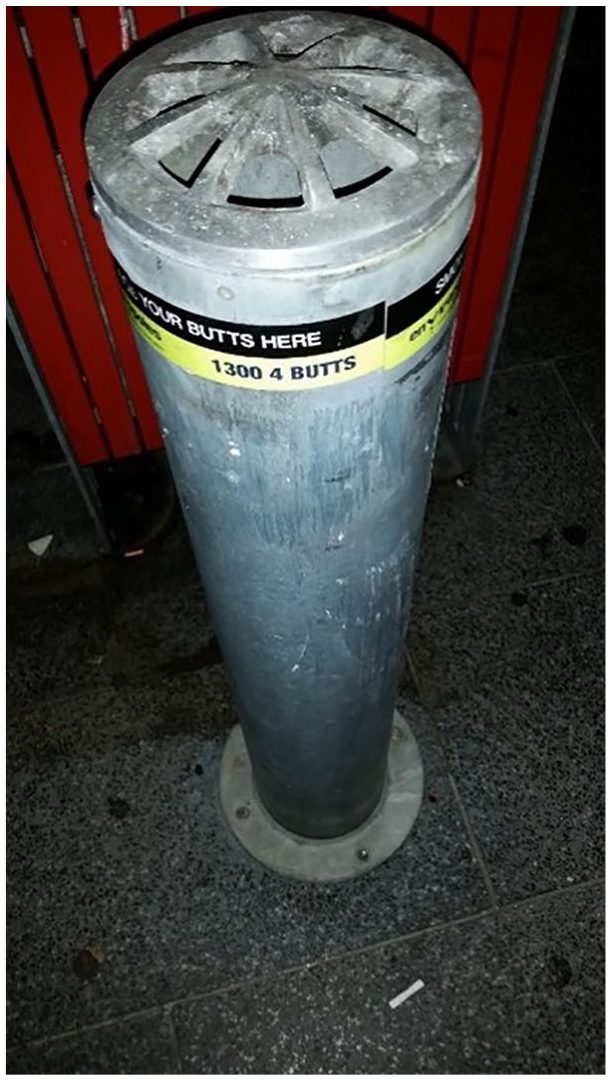
This is why I’ve got lung cancer.
These participants contextualized cancer in relation to a smoking habit—always unprompted and often at the beginning of their first interview. This is not to say that a cancer diagnosis was not felt as shocking or surprising by all participants. No participants appeared to be emotionally prepared for cancer, yet, no sense of shock or surprise emerged in these interviews. We interpret this as an effect of the pervasive smoking-cancer story. Many alluded to the difference between cause and risk, using probabilistic phrases; however, the absence of surprise reinforced a sense of predictability. This alludes to the socio-cultural knowledge of potential consequences of smoking, their assumed preventability, and a responsibility to engage in anticipatory practices. Contrast this with a “never smoker’s” narrative: It was a real shock and it really took my breath away, so to speak . . . [Husband] had lung cancer, the same. And both of us were never smokers. We never smoked. It was all just too unreal . . . People seem to assume you must have smoked at some time, I think. That’s what I’ve noticed. People say, “Oh, were you a smoker?” You say, “No,” and then they go, “Oh.” They don’t really know what to say then. (Participant with lung cancer)
For this participant, cancer was a “shock.” Yet her surprise is not directed at having cancer, but at the departure from the expected cancer-smoking-plot. Conversations, as the one described, do not go as anticipated, because her experience does not fit into the anticipatory logic of behavioral explanations of lung cancer. Here “shock” opens possibilities to negotiate morally fraught social interactions. While feeling surprised and letting it show is an expected response to serious illness, such feelings indicate an affective relation to social norms (Wilkinson & Kitzinger, 2006). “Shock” and “surprise” emote a morally privileged position.
In this way, the surprise—and its intensification in shock—after a cancer diagnosis contributes to embodied boundaries (Ahmed, 2004). It separates the body-with-cancer from others, but also creates difference with respect to other bodies-with-cancer. Such difference (re)produces a moral order. Surprise aligns with the unexpectedness of illness. In turn, there may be bodies that do not feel shock at a cancer diagnosis thereby establishing a logic in which cancer was always going to happen, where risk is affectively and interactionally transformed into certainties. Most participants, however, grappled with uncertainties of “whom” or “what” to identify as a cause for their cancer, and how this would inflect capacities to affect compassion and care in others, as we discuss further below.
Circulating Emotions: Embodied Morality Tales
Apart from interactional achievements, such as the consensus that cancer was un/anticipated, participants sought to produce visceral emotional experiences with their audience. Responsibilisation acted as a mediating process accounting for the complexity of risk, behavior, lifestyle, and choices: Probably you feel more embarrassed that it is actually lung cancer and you’ve contributed to it. It’s not a breast cancer or ovarian cancer . . . So, it is more demeaning . . . Yes, I am embarrassed by it. (Participant with lung cancer) I just say, “I’ve got it in my lymph nodes and it’s in the lung.” I thought, “Well, I’m not telling a fib. They just might think it went from the lymph to the lung.” [laughter] But no, I was certainly thinking, “Will I tell them? Will I tell them?” Because, yes, people will say, “Well, you shouldn’t really complain. They’ve been telling you for years about smoking and cancer.” . . . Whereas if I had breast cancer none of that would have gone through my head. (Participant with lung cancer)
Reflections such as these demonstrate the emotional complexity of interactions with others about their cancer. Feelings of embarrassment are not sufficiently explained as the outcome of self-stigmatization (Evans-Polce et al., 2015): an internalized morality that results in self-blame. Arguably, embarrassment is an appropriate, even socially expected emotional response to a breach of social norms (Cooley, 1998)—a relation between emotion and morality that is widely utilized in public health campaigns (Bell et al., 2010). Culturally sanctioned emotions, here emoting embarrassment instead of surprise, in interactions with others acknowledge anticipatory regimes, and not having acted responsibly despite better knowledge.
However, this participant’s interactional strategy avoids embarrassment while opening pathways to compassion. She did not explicitly contest linear and punitive moral trajectories, but framed her illness experience to distract from the smoking-cancer causal chain. In a similar vein, participants discussed past actions to pre-empt poor health prior to a cancer diagnosis by changing their lifestyle. One participant captured this in a photograph of an e-cigarette (see Figure 3), writing, “I loved to smoke. I actually still love to smoke. I miss something. I lost quality of live [sic]. I hopefully gained something.” He went on to explain: I stopped, more or less, smoking and, honestly, I enjoyed my life more when I had 95 kg [before weight loss] . . . If I had known three years ago that I suffer cancer today, maybe I would have said for the next three years we can live with that weight as well . . . It hasn’t paid off either . . . At least it felt a little bit betrayed. (Participant with lung cancer)

I hopefully gained something.
Like him, many participants linked consumption to morality. Short-term pleasure was often conflated with detrimental long-term health effects. These were framed as trade-offs that became part of moral bargaining, indicating an expectation of good health as a reward for good behavior (Jain, 2013). The participant saw himself as deceived. Having heeded advice to lose weight, reduce smoking, and live more healthily—what he considered a loss of quality of life—he nonetheless got cancer. At the same time, he felt like not having done enough, saying, “I would love to stop [smoking] and I know I should stop but I haven’t reached that point yet. Upsetting, frustrating.’ Another participant similarly commented, ‘There’s not much I can do about it [cancer]. I stopped smoking, I went on patches and that’s been very hard, and I still feel like having a cigarette, especially if I’m out or . . . sitting with family.”
There are tensions in these accounts between futility, regret, and loss in attempting salutogenic lifestyle changes. Almost all participants described efforts to improve their health through diet and exercise, smoking cessation, or mindfulness interventions. Similar dynamics have been observed in narratives of people with type 2 diabetes, signaling acceptance of their illness as a consequence of their habits, setting the scene for a redemption narrative (D. Broom & Whittaker, 2004). For many participants, such as the ones below, this translated into attempts to “save” others through their testimonies: When I talk to others in the general community. . . . I try to tell them, “look, all right. I’ve had cancer. I am only in my . . . early forties.” “Oh, wow!” “Well, if you put your body through these particular things, you will probably most likely end up with what I have. So, is it worth it? Is it really something that you want to do with your life?” I’m not trying to preach. I’m trying to educate that, “look, life choices do have consequences.” (Participant with testicular cancer, emphasis in original) My niece is smoking and I said, “Do you want to end up like Aunty . . .?” She said, “No.” I said, “You really need to get some help. Go and see . . . our local doctor, “and see if you can get some help to try and kick the habit.” She said, “I will when I’m ready.” So, you can’t make people do it, but surely they can see. (Participant with lung cancer)
Experiences are turned into morality tales (D. Broom & Whittaker, 2004), embodying the potentialities of those they address, making future cancer palpable and predictable for others. The first excerpt explicitly acknowledges the role of surprise produced in sharing his experience. Surprise is associated with the unexpected, assuming that his present audience may not have sufficiently internalized knowledge of cancer causation. The elicitation of shock appears as virtuous, incentivising others to “better themselves” before it is too late for them (too).
Smoking clearly exemplifies lifestyle discourses; decades of smoking cessation campaigns have made the link between smoking and cancer salient in the public imagination (Bell et al., 2010; Evans-Polce et al., 2015). Yet, participants related similar reflections on other behavioral (e.g., obesity) and emotional explanations for cancer (e.g., stress, poor mental health), whether evidence-based or not. Indeed, lay aetiologies emphasizing individual factors bear the potential to effectively obscure larger relations of responsibility and capacities to affect change. However, they are very relevant for the economies of advocacy and philanthropy that support cancer research reflecting the moral ordering among people with cancer.
Deservedness and Fairness in Collective Responsibilization
So far, presented encounters took place between interviewer and participants, or participants and their social contacts. In such contexts, surprise was an interactional achievement: a visceral entanglement with the production of shared knowledge and moral ordering. Agreement on what makes cancer (un)anticipated was central to these encounters. In this section, we expand the examination of these moral-affective dynamics into the context of collective action. Compare the captioned photographs in Figure 4.
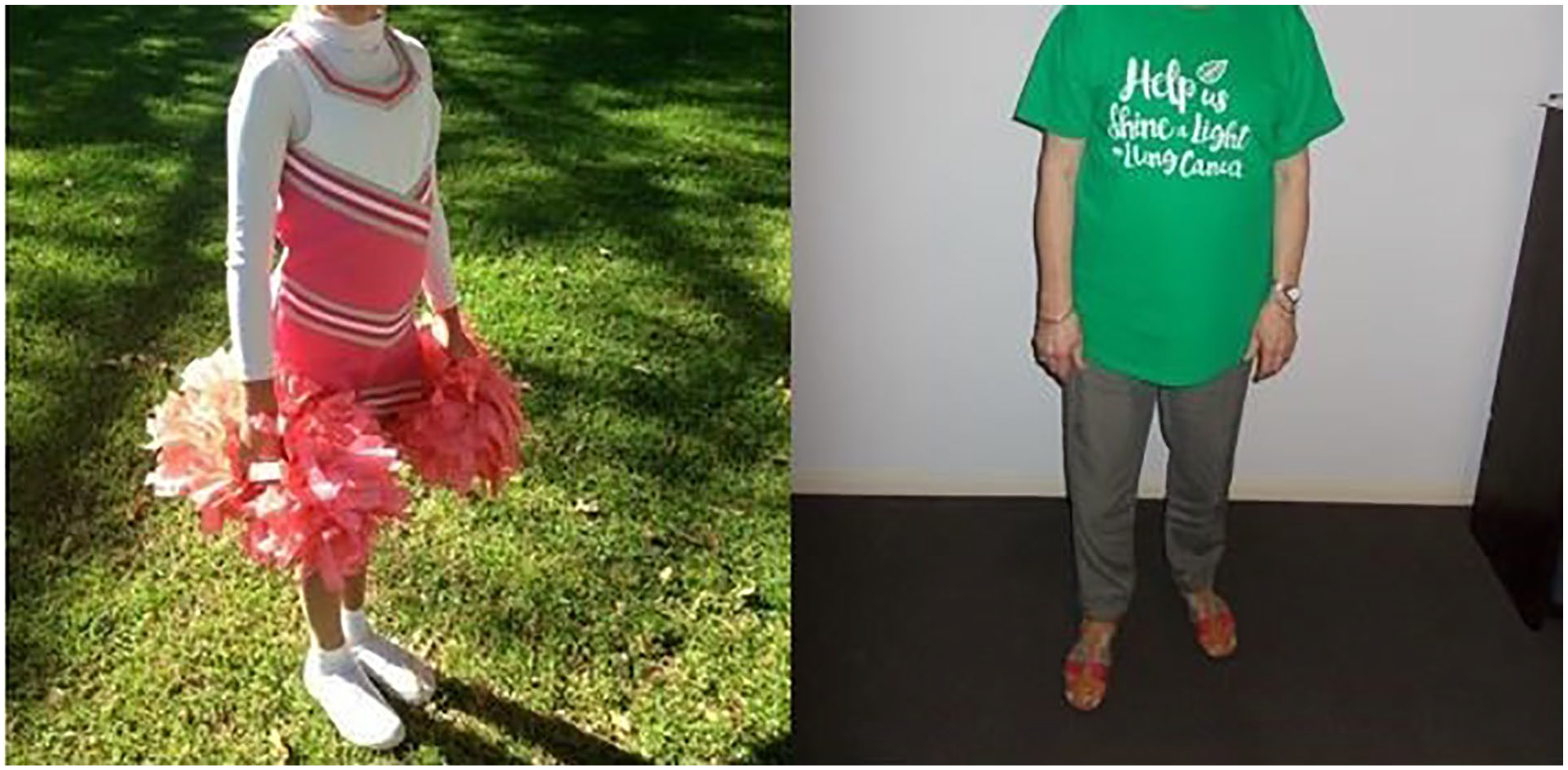
Left: Breast cancer awareness walk; Right: Supporting Lung Foundation Australia.
Breast cancer awareness walk: [Daughter] does cheerleading and each year they support this walk. Each year I had always said no as I knew it would raise questions I didn’t want to answer. I let her this year . . . I look at her little face and think. . . if only she knew and am I doing the right thing? (Participant with neuroendocrine tumours) Supporting Lung Foundation Australia, to bring awareness of the status of lung cancer, research for early detection, a cause and a cure. (Participant with lung cancer)
These photographs reiterate how cancer advocacy and philanthropy overlap with marketing, consumerism, and branding. Breast cancer is identified with pink; lung cancer is color-coded green. These processes are embedded in broader perceptions of types of cancers competing for limited resources (King, 2006; Klawiter, 1999). One participant reflected on the competition between ‘pink’ and ‘green’: It [lung cancer] doesn’t get much funding. It’s got a stigma attached to it about smoking. If you smoked, then you did it to yourself . . . it felt good that at least we’re doing something. . . . I’d be proud to do that . . . Well, we say there’s too much pink out there. We need more green . . . It’s all deserving. (Participant with lung cancer)
This was the only participant with lung cancer who engaged in advocacy, potentially, because her non-smoker history allowed her to navigate this more easily. The connection between perceived deservedness and advocacy highlights how we collectively feel about certain cancers and the allocation of resources: their positioning within a moral-affective economy. Surprise revealed contingencies of care, solidarity, and deservedness, as was reinforced when participants talked about children and cancer: A lot of kids getting it. What have they done wrong? . . . What did they do wrong to get cancer? Young two, three-year-old kids and that. So, have they eaten the wrong thing? Have they done the wrong thing? Have they [been] exposed to the wrong thing? Why are they getting it? Is it hereditary? (Participant with bowel cancer) I saw a 12-year-old [at the cancer clinic]. He was waiting for his cancer treatment . . . Now, that’s a very young age. He was very brave . . . That kid is going to go through sheer hell and that’s not fair. (Participant with testicular cancer) That’s what I’ve noticed going to clinics, on the different ages of people. . . . The little boy that went in there the other day that was only about nine, I was really surprised, happy little fella, but he had a type of cancer. (Participant with unknown primary)
These participants struggled to reconcile understandings of responsibility with childhood cancer, because it does not easily fit within anticipatory logics. Thus, they expressed surprise at meeting children while undergoing their own treatments, and connected this feeling with their understanding of what is fair. In associating childhood with innocence (Ahmed, 2012), hopes of a long, healthy life for the young, their powerlessness, and lack of opportunity to have anticipated or prevented cancer resonate. As such, children were considered exempt from such responsibilities, implicitly affirming adults’ accountability for their suffering.
In turn, efforts to protect children from cancer and difficult emotional experiences acted as a constraint on narratives. The participant captioning a photograph of her daughter (Figure 4 left) described pressure from others to engage in advocacy to increase awareness about her neuroendocrine cancer, and to participate in community fundraisers for breast cancer. Concurrently, she was aware of the capacity of her testimony to elicit powerful emotions, such as shock in her family. For her “doing the right thing” meant not sharing her embodied experience with her daughter (see Morse et al., 2014). Thus, her narrative shows how emotions in moral-affective economies circulate with little individual control: engaging publicly in cancer advocacy can affect those to whom one relates intimately.
Discussion
In this article, we explored connections between how cancer is intimately felt and the politics of cancer advocacy and philanthropy, drawing together scholarship on moralities in illness narratives (Frank, 2003), and moral (Sayer, 2007) and affective economies (Ahmed, 2004). We traced surprise’s—and its more intense form, shock—circulation, revealing how emotions, stories, and embodied practices intertwine in (re)producing cancer’s moral-affective economies. Surprise exists at the nexus of risk and responsibility contained in discourses on cancer prevention and anticipation, warranting its prioritization in studies of individual and collective action. Thus, our article contributes a call to prioritize emotions in narrative inquiry, recognizing their centrality to storytelling and the reproduction of moral-affective economies.
In focusing on lifestyle, disease is cast as the anticipated consequence of bad habits (Vallgårda, 2011). This association of living “well” with capacities to prevent cancer obfuscates issues of justice. As Ahmed (2012, p. 195) urged, “justice is not about ‘good character.’ Not only does this model work to conceal the power relations at stake in defining what is good-in-itself, but it also works to individuate, personalise and privatise the social relation of (in)justice.” Such warnings were pertinent to how participants framed risk in individual illness narratives, abstracted from wider relations of production and consumption (Ehrenreich, 2001; Jain, 2013).
In analyzing cancer narratives, surprise is used to differentiate the collective body, subtly enact a moral ordering among people with cancer, and reveal contingencies of care. Where one finds oneself with respect to the moral ordering along innocence and deservedness is entangled with practices prior to a cancer diagnosis and throughout illness, in turn affecting others’ experiences. Prioritizing surprise in our narrative inquiry fostered understanding of how emotions bring into being differences between people with cancer, and how emotions shape their connections to each other and the broader community. Although causal relations are plausible for many cancers, only some are burdened with stigma. This implies that the moral ordering among people with cancer is a complex mix of scientifically purported aetiologies and shared socio-cultural beliefs on causation (Hebsgaard Offersen et al., 2018; Stacey, 1997).
All participants with a (past) smoking habit found themselves exposed to an assumed lifestyle-cancer-plot. There were instances of subtle challenges to the authority of this shared knowledge of cancer. However, participants also echoed and further disseminated the moralities contained in public health messages that emphasize individual responsibility (Bell, 2010). Indeed, some utilized embodied cautionary tales to make abstract probabilities connecting lifestyle and cancer tangible, situating their experiences within others’ anticipatory horizons. In emoting, silencing, and eliciting surprise or shock, people with cancer participate in health behavior governance.
Prioritizing emotions—namely surprise—in our narrative inquiry revealed the complexities of economies as political, moral, and affective (Ahmed, 2004, 2012), while highlighting repercussions for lived experience. Surprise at a cancer diagnosis signaled that there was nothing (more) that could have been known or done to prevent the onset of illness. Surprise and shock privileged the person who emoted it relative to participants who presented themselves as unsurprised by getting cancer. Shock was circulated to instigate other’s behavioral change (i.e., prevention and/or preparedness). Thus, emotions in cancer advocacy and philanthropy are both effects of objects in circulation (Ahmed, 2012), and the currency in which moral economies trade. This pertains to the distribution of research funding embedded in the regimes of anticipation in which people with cancer are called upon to compete for compassion and care. Here, the corporeal intersects with the corporate (Ehrenreich, 2001). In turn, participating in cancer culture for the benefit of a community of suffering (Frank, 2003) can expose people with cancer to experiences of moral ambivalence (A. Broom et al., 2016). Cultural scripts to endure illness stoically and protect, for example, children from being exposed to existential anxiety persist, and are not easily reconciled with offering up testimony and advocacy for the betterment of the community. Evaluative work is required to prioritize what is “right” within this context.
The findings presented here have clear implications for practice, supporting arguments for person-centered health care that allows for a range of emotions to emerge in interactions between patients and health care providers (Plage, 2021; Plage & Kirby, 2021). This includes communication, particularly at the moment of diagnosis, but also during, at the end of and after treatment. Health care professionals should be aware of the potentially moralizing implications of making connections between past lifestyle and a present cancer diagnosis (Carter-Harris et al., 2015), and should weigh up if such associations are indeed necessary to providing effective treatment. At the cancer care centers where this study was conducted, patients and their families were routinely approached to support local philanthropies, such as the ones affiliated with their centers offering treatment (see also Ehrenreich, 2001). Requests for support, of course, seek to capitalize on emotions of gratitude and promote reciprocity. However, our findings suggest that such requests can expose people to moral ambivalence that is difficult to negotiate: on one hand, appealing to a sense that participating is for the collective good; on the other hand, putting in circulation a range of emotions that people may wish to contain (e.g., embarrassment, shock). Finally, our findings highlight a need to reconsider broader cancer control strategies and the societal relations in which they are embedded (see Bell, 2014). We raise questions regarding the appropriateness of competitive funding structures underpinned by logics of deservedness and individual responsibility to alleviate cancer’s burden of disease.
Conclusion
As we demonstrate in this article, surprise works to deny uncertainties couched in individual risk, and situate cancer causation within the logics of anticipation. Through a conceptualization of surprise and shock as more-than-individual phenomena, our findings reveal how collective action is moderated through differential cultural frames of deservedness and responsibility that sit in tension with individual-in-collective cancer narratives. Thus, our research provides a basis for more profound engagement with how cancer is felt, beyond pervasive critiques of positivity in cancer care (Ehrenreich, 2009; Jain, 2013; Steinberg, 2015). Findings support a call for the application of sophisticated conceptualisations of emotions and their circulation through stories. In short, our conclusions, made possible through a narrative inquiry prioritizing surprise as an affective capacity and interactional token, demonstrate that surprise is pivotal to analyzing cancer illness narratives within their affective-moral economies.
Footnotes
Acknowledgements
We acknowledge Australian Research Council (DP150100414) Chief Investigators Prof. Alex Broom, A/Prof. Emma Kirby, and Dr. Katherine Kenny, Investigator Prof. John Oliffe as well as the clinical collaborators A/Profs Zarnie Lwin and David Wyld at the Royal Brisbane and Women’s Hospital. We also thank all participants of this study for telling their stories.
Declaration of Conflicting Interests
The authors declared no potential conflicts of interest with respect to the research, authorship, and/or publication of this article.
Funding
The authors disclosed receipt of the following financial support for the research, authorship, and/or publication of this article: This research was supported by by the Australian Government through an Australian Research Council Discovery Project (DP150100414); a Research Training Program Scholarship, and the Australian Research Council’s Centre of Excellence for Children and Families over the Life Course (CE200100025).

Author Biographies
Stefanie Plage is a postdoctoral research fellow at the School of Social Science, and a fellow at the ARC Centre of Excellence for Children and Families over the Life Course. Her research explores the intersections of culture and experience in health and illness.