






Abstract
Background
Inpatient palliative care may reduce length-of-stay, costs, mortality, and prevent readmissions. Timing of consultation may influence outcomes. The aim of this study was to explore the timing of consultation and its influences patient outcomes.
Method
This retrospective study of hospital consultations between July 1, 2019 and December 31, 2019 compared patients seen within 72 hours of admission with those seen after 72 hours. Outcomes length of stay and mortality. Chi-square analyses for categorical variables and independent t-tests for continuous normally distributed variables were done. For nonparametrically distributed outcome variables, Wilcoxon rank sum test was used. For mortality, a time-to-event analysis was used. 30-day readmissions were assessed using the Fine-Gray sub-distribution hazard model. Multiple regression models were used, controlling for other variables.
Results
696 patients were seen, 424 within 72 hours of admission. The average age was 73 and 50.6% were female. Consultation within 72 hours was not associated with a shorter stay for cancer but was for patients with non-cancer illnesses. Inpatient mortality and 30-days mortality were reduced but there was a higher 30-day readmission rate.
Discussion
Palliative consultations within 72 hours of admission was associated with lower hospital stays and inpatient mortality but increased the risk of readmission. Benefits were largely observed in patients followed in continuity.
Conclusion
Early inpatient palliative care consultation was associated with reduced hospital mortality, 30-day mortality and length of stay particularly if patients were seen by palliative care prior to hospitalization.
Introduction
Inpatient palliative care for patients with serious or life-threatening illnesses has been reported to reduce inpatient length-of-stay, costs, mortality, and prevent readmissions.1-7 Not all studies found this to be true. In a systematic review, 12 of 16 studies found that palliative care did not reduce length of stay and only selectively reduced ICU stays in decedents. 1 There may be reasons for this discrepancy. One difference may be the timing of the palliative medicine consultation. Berkeley and colleagues found that palliative care consultations within 6 days of hospitalization reduced readmissions and hospital mortality. 8 Another study found that palliative care consultations within 24 hours of admission reduced length of stay by 4.2 days. 6 A third study also found that palliative care consultations within one day of admission reduced length of stay and the cost of care. 5 It is difficult to interpret these studies since there were differences in the structure of palliative care and and varied consult timing.
Palliative care services at the Geisinger Medical Center have been active predominantly seeing inpatient consultations since 1999. A palliative care team of a physician and an advanced practice nurse of physician assistant make up the rounding time. Social workers were utilized who were assigned to particular wards and hospital chaplain services were used when needed. Hospice services were integrated with general inpatient hospice admissions. Continuity is available through embedded and freestanding palliative care clinics, through community based palliative care and telemedicine conference calls or video sessions. Geisinger has had an electronic medical record (EPIC) since 1996 which provides detailed information on consultation timing and patient outcomes. The aim of this study was to determine if the timing of palliative care consultation influenced hospitalization and patient outcomes. We hypothesized that an early palliative care consultation defined as occurring within 72 hours of admission would reduce hospital length of stay without increasing mortality relative to consultations occurring after 72 hours.
Methods
This was a retrospective study of all inpatient hospital palliative care consultations that took place between July 1, 2019 and December 31, 2019. The study was approved by the Geisinger Medical Center IRB. The comparison of interest was between the group of patients seen within 72 hours of admission and those seen greater than 72 hours after admission. The outcome variables of interest were length of hospital stay, overall mortality (diagnosis to death), 30-day mortality, inpatient mortality, and 30-day readmission rates. Specifically, for mortality outcomes the median follow-up time was examined. To adjust the length of stay for the consultation timing, the length of stay after consultation was calculated by subtracting the discharge date from the consultation date. Data was complete for all patients and no additional exclusions were made; all patients were included in analyses.
Statistical Analysis Plan
To assess differences among those who received palliative care consultation within 72 hours with those who had consultations greater than 72 hours after admission, chi-square analyses were conducted for categorical variables and independent t-tests for continuous normally distributed variables. For nonparametric continuous variables the Wilcoxon rank sum test was used. To assess mortality over the entire study period, a time-to-event analysis and a reverse Kaplan-Meier technique was used to compare median follow up time. Due to high post discharge mortality, 30-day readmissions were assessed using a Fine-Gray sub-distribution hazard model where death was treated as a competing risk. To determine the strength of the relationship between length of stay and consultation timing, a biserial correlation was performed. Multiple regression techniques were used to assess the consultation timing effect on outcomes while controlling for other variables. For dichotomous outcomes, a logistic regression was utilized and the odds ratios with associated 95% confidence intervals were reported. For outcomes that were non-normally distributed regression models on the log transformed outcomes were conducted and percent change was reported. To assess differences among those with and without a cancer diagnosis, stratified analyses were performed. A P-value less than or equal to .05 indicated statistical significance.
Results
The study population consisted of 696 patients, 424 who had a palliative care consultation within 72 hours of hospitalization. The mean age of the total study group was 72.90 (SD 13.84) years, 50.6% were female. Approximately 80% of the population died during the study period, 14.8% of those discharged alive were readmitted within 30 days. The median length of hospital stay after consultation was 3 days.
Descriptive characteristics and outcomes of those consulted for palliative care before and after 72 hours of hospitalization.
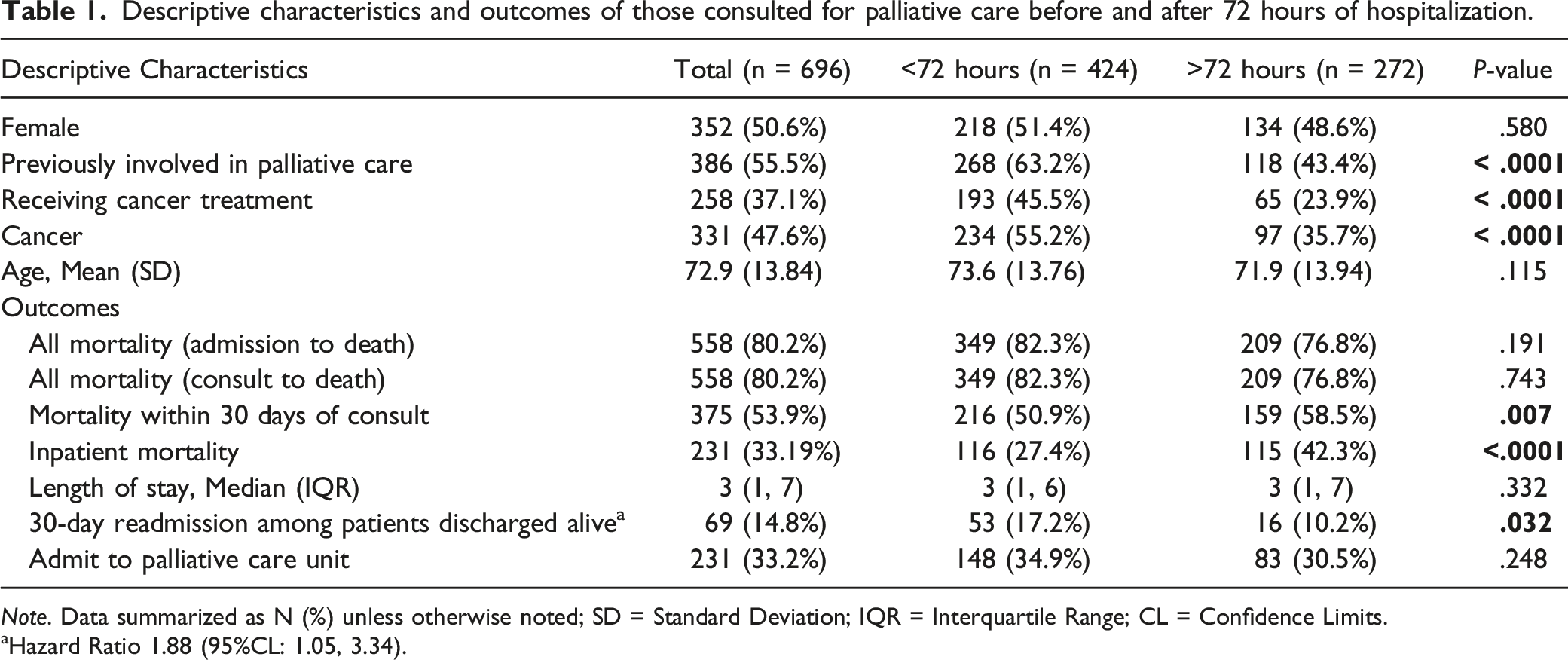
Note. Data summarized as N (%) unless otherwise noted; SD = Standard Deviation; IQR = Interquartile Range; CL = Confidence Limits.
aHazard Ratio 1.88 (95%CL: 1.05, 3.34).
Patients seen within 72 hours had a lower probability of inpatient mortality, were less likely to die within 30 days of consultation but were more likely to have a 30-day readmission compared with patients who were consulted after 72 hours of admission. There was no difference in overall mortality (median days to mortality< 72 hours= 398 days: > 72 hours =391 days) or admission to the palliative care unit. A biserial correlation demonstrated a weak relationship between length of stay after consultation and consultation timing (biserial r = .07) (Table 1).
Descriptive characteristics and outcomes of those consulted for palliative care before and after 72 hours of hospitalization by diagnosis.
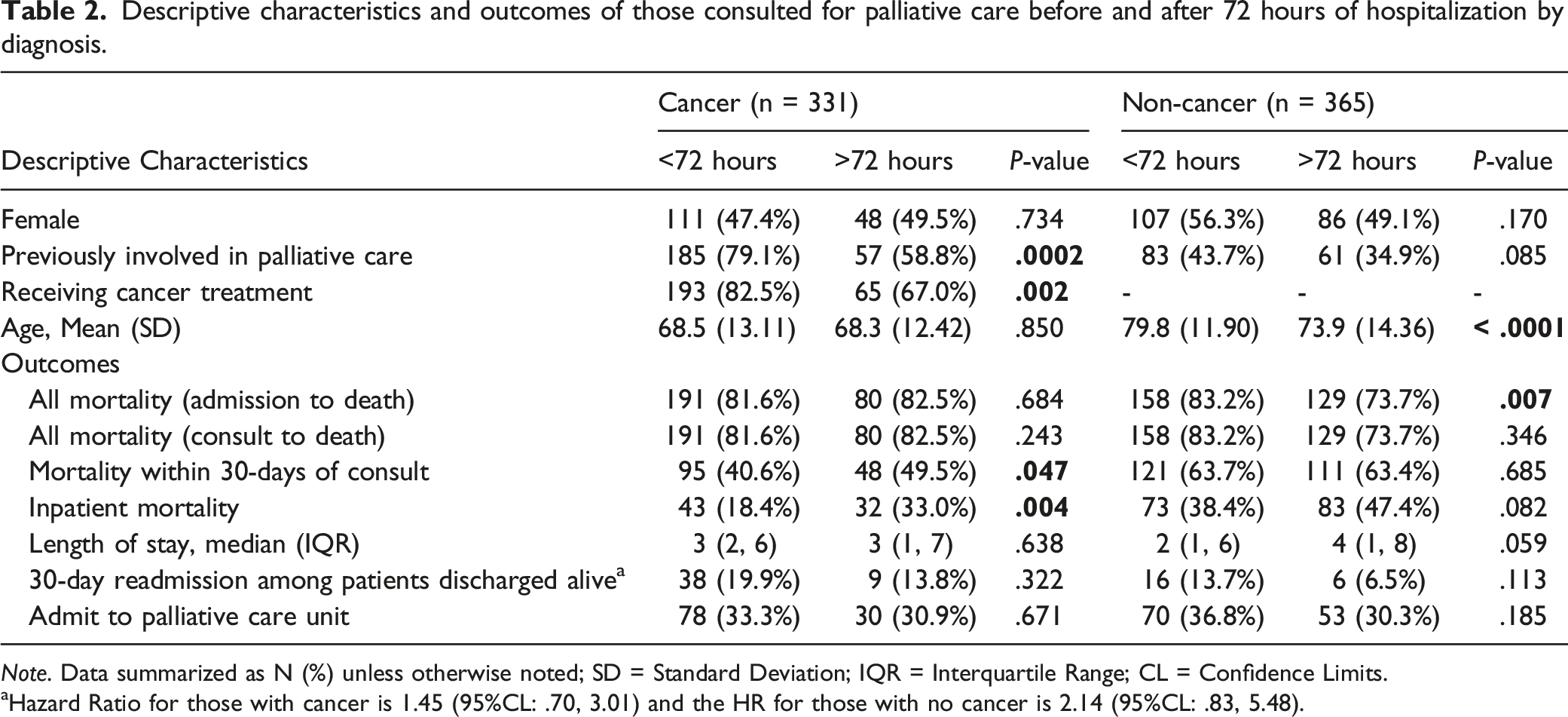
Note. Data summarized as N (%) unless otherwise noted; SD = Standard Deviation; IQR = Interquartile Range; CL = Confidence Limits.
aHazard Ratio for those with cancer is 1.45 (95%CL: .70, 3.01) and the HR for those with no cancer is 2.14 (95%CL: .83, 5.48).
Comparison of Cancer and Non-cancer Subgroup
Multivariable model in patients consulted before and greater than 72 hours of hospitalization.
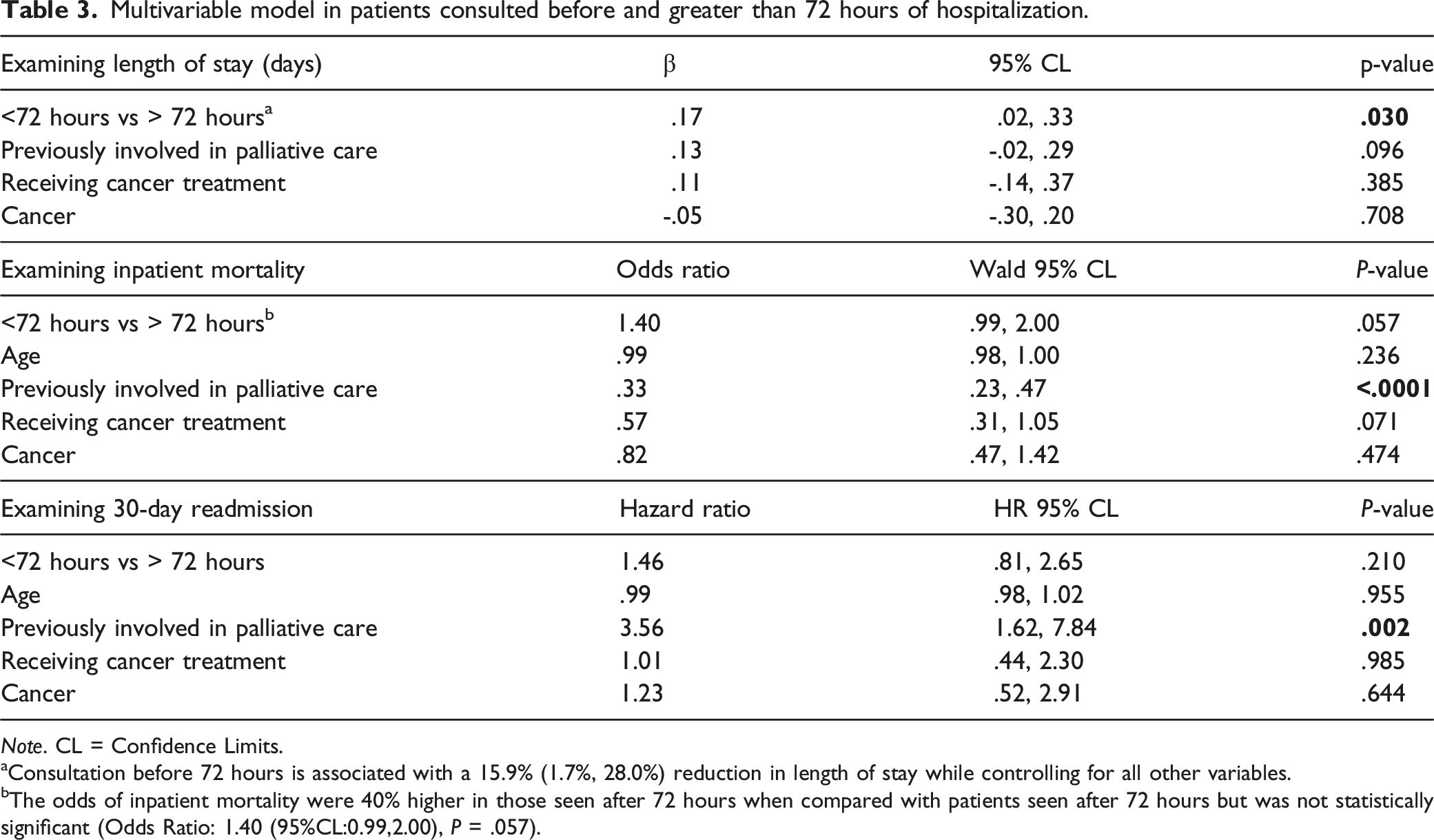
Note. CL = Confidence Limits.
aConsultation before 72 hours is associated with a 15.9% (1.7%, 28.0%) reduction in length of stay while controlling for all other variables.
bThe odds of inpatient mortality were 40% higher in those seen after 72 hours when compared with patients seen after 72 hours but was not statistically significant (Odds Ratio: 1.40 (95%CL:0.99,2.00), P = .057).
Early consultation in the non-cancer group was associated with a longer median survival time from diagnosis (405 days) compared to those who were seen after 72 hours (median time 398 days) but this was not statistically significant. In those diagnosed with cancer, patients consulted within 72 hours had a reduced 30-day mortality, lower inpatient mortality, and but not shorter length of stay compared with those seen after 72 hours. Patients with cancer did not have a significant difference in overall mortality, with a median follow up time of 395 days compared to 375 days if seen after 72 hours.
Multivariable models in patients consulted before and greater than 72 hours of hospitalization by diagnosis.
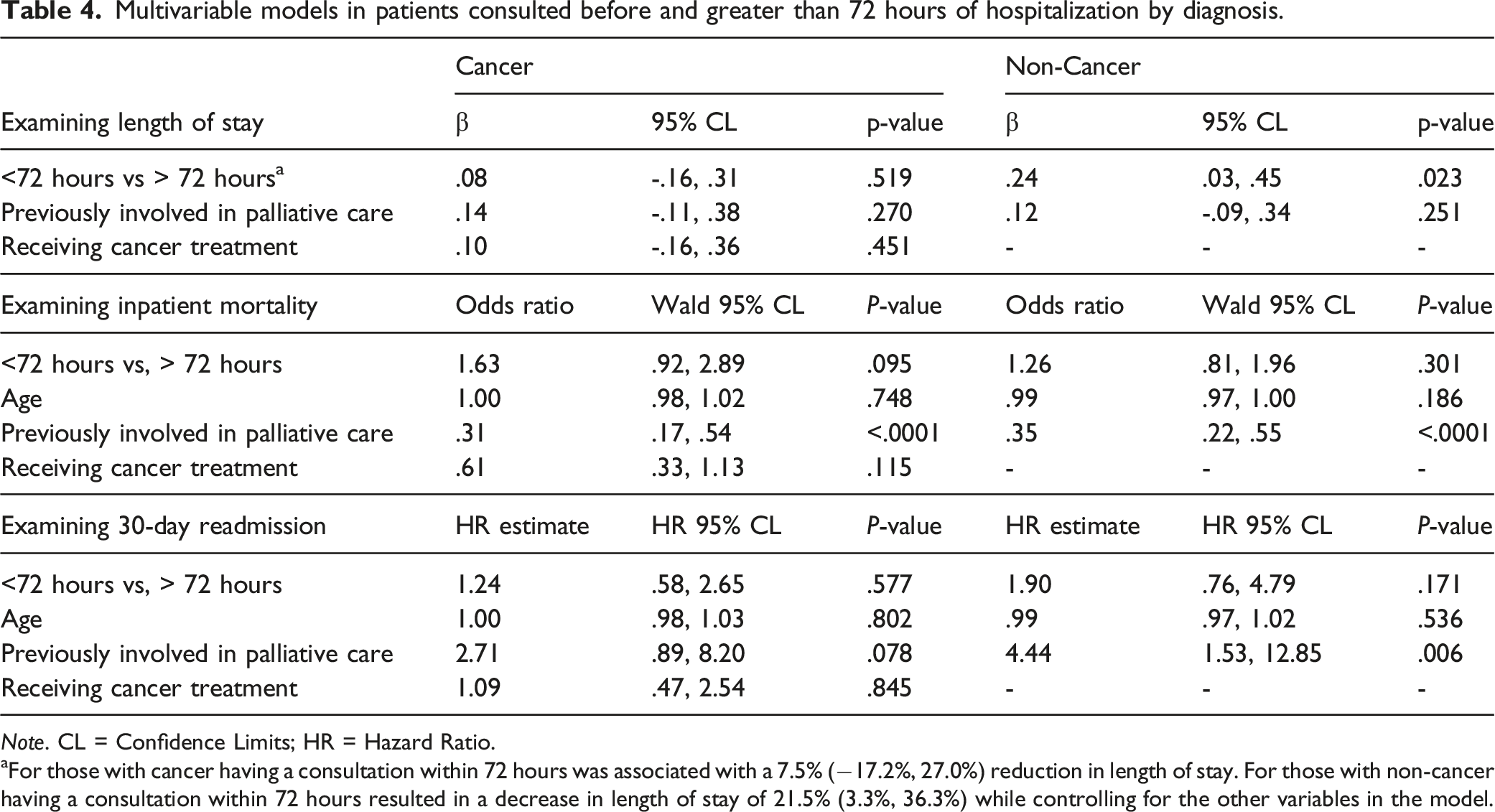
Note. CL = Confidence Limits; HR = Hazard Ratio.
aFor those with cancer having a consultation within 72 hours was associated with a 7.5% (−17.2%, 27.0%) reduction in length of stay. For those with non-cancer having a consultation within 72 hours resulted in a decrease in length of stay of 21.5% (3.3%, 36.3%) while controlling for the other variables in the model.
The timing of palliative care was not associated with a risk of readmission. However, if patients with a non-cancer serious illness were seen by palliative care prior to admission, there was an associated risk of 30-day readmission (P = .006).
Discussion
We found that early palliative care consultations in hospital defined as occurring within 72 hours of admission was not associated with reduced hospital length of stay in patients with cancer but was so for those with a non-cancer diagnosis.). We also found that early palliative care reduced hospital mortality without increasing overall mortality particularly if patients had been seen prior to admission for which there was an established relationship with the patient. Finally, we found that palliative care whether early or late in the hospital course was associated with readmissions within 30 days except in those with a non-cancer diagnosis who had been seen by palliative care prior to admission. Exposure to palliative care prior to hospitalization is associated with reduced hospital mortality and 30-day mortality. Palliative care is associated with reduced length of stay for a select group of patients.
A previous study suggested that between 45-90% of patients admitted to the hospital with cancer have at least one indicator for which a palliative care consultation would be appropriate. The time from admission to palliative care consultation in one study was on average 5.5 days and from referral to death 9 days. 9 Several palliative care functions can facilitate hospital disposition. These include exploring patient and family understandings of the underlying illness, education of families about disease course and prognosis, clarification of goals while exploring values, and assessing support at home and checking for hospice eligibility. Management of uncontrolled symptoms may also help to reduce the duration of hospital stay. 10 Palliative care does reduce symptom severity in those patients who have a high a symptom burden.11-13 Serious non-cancer illnesses such as heart failure, chronic obstructive lung disease and end-stage renal and liver disease have similar symptom burdens compared with individuals who have cancer. The decision-making process and exploration of values are the same whether the patient has advanced cancer or a non-cancer serious illness. The trajectory of illness in non-cancer illnesses is more difficult to predict than those with cancer.14-16 Decision support processes of palliative care require a developed relationship and trust between palliative care service and the patient and family. Such trust requires time and a number of encounters. Having an established relationship prior to hospitalization will facilitate establishing goals of care and plans for future care.
There are obvious advantages in reducing hospital length of stay particularly when hospitals are near maximal capacity. A full hospital has minimal potential for new admissions which are often diverted to other hospitals. Diversions or prolonged waiting time in emergency departments lead to prolonged hospitalization and also leads to loss of reimbursement particularly in a capitated or value based health care system. 1 We found that in general, for palliative care to reduce the length of stay there needed to be a relationship with the service prior to admission. The length of stay is influenced by multiple factors other than goals of care and symptom management, one of which may be continuity. Disposition can also be held up by bed availability in subacute nursing units or nursing homes or arranging community services for home care and for which palliative care services has little control.
A systematic review published in 2010 reported quasi-randomized trials with propensity matching between the palliative care and a comparator arm without palliative care. The median length of stay was 14.1 days (IQR 4.7, 35.8 days). In 12 of the 16 studies, there was no reduction in the length of stay with an inpatient palliative care consultation. Only the intensive care unit length of stay was reduced in patients having a palliative care consultation in the intensive care and only in subgroup of decedents. 1 We found that there was not an association between length of stay and the timing of palliative care consultation for patients with cancer but was for those with non-cancer illnesses.
A systematic review and meta-analysis of studies centered on the influence of palliative care on hospital length of stay and mortality found the palliative care in the non-ICU setting did not reduce length of stay (odds ratio .19: 95% confidence intervals -2.27, 2.61) but did reduce hospital mortality by 34% (odds ratio .66, 95% confidence intervals .52, .82). The studies were heterogeneous and low-quality limiting conclusions. 3 In our study, we found that hospital mortality was significantly influenced if patients were seen in continuity. This may explain the differences in hospital mortality between studies.
Perhaps, the major factor which influences hospital length of stay is the timing of the inpatient palliative care consultation relative to the time of admission. There are several studies to suggest this may be true. One study found that cost savings with a palliative care consultation was related to the length of stay. There was a 13% cost savings relative to a propensity matched group if patients were seen within 1–7 days of admission and 4.9% cost savings if seen after 8 days but before 30 days after admission. 4 The cost savings were likely due to reduced length of stay. However, it is not known in these studies whether patients were previously seen by a palliative care specialist prior to hospitalization or not.
Maddison and colleagues found that the average time from admission to palliative care consultation was 7 days and 26% were seen by palliative care within 1 day of admission. Late referrals defined as greater than 3 days after admission were more often seen in patients with a non-cancer diagnosis (odds ratio 2.2:95% confidence interval 1.02, 2.78) and in the elderly (odds ratio 2.68:95% confidence interval 1.25, 5.7). 17 This is the reason we chose a timeframe of 72 hours as the breakpoint between early and late palliative care consultations. In our study, patients with non-cancer serious illnesses were older but there was no difference in the proportion of patients seen within 72 hours or greater than 72 hours compared with those with cancer which allowed for the comparison.
In a university affiliated community based urban hospital, patients who had a palliative care consultation within 24 hours of admission had a median length of stay of 4.2 days (range 2 to 7.2 days) and those seen greater than 24 hours after admission the length of stay was 9.7 days (range 6 to 18.3 days). The total costs of hospitalization were dramatically less with early palliative care consultation (38,600 versus 95,000 dollars). 6 Part of the cost reduction was reduced direct cost per day and the second component was a reduced length of stay. Fitzpatrick and colleagues 18 found that early palliative care involvement defined as a consultation occurring for within 72 hours of admission was associated with a reduced length of stay versus consultations after 72 hours (6 days versus 16.5 days). 18 We did not demonstrate such a dramatic reduction in length of stay. It is possible that other studies did not control for the diagnosis or correct for the timing from admission to consultation where the late consultation would already have had a longer length of stay.
Our findings differ with this published literature. Early palliative care defined as a palliative care consultation within 3 days of hospital admission though did not reduce hospital length of stay in patients with cancer but only in those with non-cancer serious illness and early consultations reduced hospital mortality whether patients have cancer or a serious noncancer life-limiting illness. We controlled for length of stay post consultation. Individuals seen later in hospitalization would already have a longer length of stay and so this needs to be considered when reporting length of stay as an outcome.
We also found that early palliative care consultation reduced hospital mortality but did not influence overall mortality. Inpatient palliative care likely increases hospice referrals which may facilitate home hospice care thus reducing hospital mortality. 19 Barkley and colleagues found that inpatient palliative consultation regardless of timing reduced hospital mortality. 8 This will depend upon the availability of community-based hospice services and community based palliative care. In a systematic review of palliative care consultations, hospital mortality was reduced by 34% (odds ratio .66: 95% confidence interval .52,.84). 3 We found that early palliative care consultations reduced hospital mortality (27.36% versus 42.8%) and so the timing of palliative care consultation may play a role in reducing inpatient mortality.
However, there are conflicting studies regarding the influence or association of palliative care with hospital mortality. In a review of palliative care consultations within the emergency department, hospital mortality was not significantly reduced. This may reflect a patient population at high risk for hospital-related mortality. 2
Thirty day readmissions are reported to be reduced by an early palliative care consultation in a group of patients with high comorbidities. 20 Other investigators have claimed that the key to reducing 30-day readmissions is to refer to hospice after discharge. 21 However, one of the proposed triggers for palliative care consultation is previous hospitalizations for the same diagnosis. 22 On the other hand, inpatient palliative care consultations have been shown to be a marker for increased readmission risks in a subgroup of patients who were not referred to hospice. 23 Patients, after a goal of care discussion, may elect to continue disease modifying therapy rather than utilize hospital supportive services even when the disease process is worsening. Continuity as an outpatient, ongoing discussions regarding goals, and close follow-up by the palliative care team may forestall a readmission. We found that readmissions increased regardless of the timing of consultation.
There are multiple weaknesses with this study. This is a retrospective study with all palliative consults over a limited period of time and is biased by referral pattern. Because this is retrospective, the associations we found cannot be assumed to be the cause of our findings. Only a prospective randomized trial would confirm or invalidate our findings. There may be several non-observed confounders could have influenced the findings.
Conclusion
Early palliative care defined as palliative care consultations occurring within 72 hours of admission does not reduce length of stay in cancer but does for those with non-cancer serious illness. Palliative care reduces hospital mortality without influencing overall mortality particularly if there is a relationship with palliative care prior to hospitalization. However, inpatient palliative care consultations are also associated with an increased risk for 30-day readmissions.
Footnotes
Declaration of Conflicting Interests
The author(s) declared no potential conflicts of interest with respect to the research, authorship, and/or publication of this article.
Funding
The author(s) received no financial support for the research, authorship, and/or publication of this article.
