







Abstract
To demonstrate the trends and variety of research on palliative care during the COVID-19 pandemic. A systematic search of the Web of Science database. Since the outbroke of the COVID-19 pandemic, the adjustment of palliative care systems is warranted to maintain a high quality of care. The COVID-19 -related palliative care studies account for approximately 4% of all publications on palliative care. However, there is a dearth of research investigating the nature of these studies. A total of 293 studies were included. Of the included studies, those related to system improvement were the most common (181/293, 61.8%), followed by those related to patient care (79/293, 27.0%), bereavement support for patients or family members (19/293, 6.5%), and the mental health of frontline practitioners (14/293, 4.8%). From these studies, 82, 137, and 74 studies were published in 2020, 2021, and 2022 (until August 1), respectively. The research trends of palliative care demonstrate the flexibility and rapid response of the global palliative care system to the COVID-19 pandemic and show how the palliative care system is evolving. While most studies are interested in system improvement, patient care, and bereavement support, the mental health of frontline practitioners has received less attention. Our findings provide palliative care practitioners with current valuable information and highlight possible future trends.
This review demonstrated the trends of research on palliative care during the COVID-19 pandemic. We discovered that the most popular research topics were those pertaining to system improvement and patient care. The diversity of publications demonstrated that the palliative care system is flexible and responded rapidly to the COVID-19 pandemic.Key message
Introduction
According to the World Health Organization (WHO), only 14% of the more than 40 million people who require palliative care every year receive such care. The COVID-19 pandemic has resulted in an even smaller proportion of people receiving the palliative care they require. Palliative care systems serve a crucial role in the fight against this devastating disease but face several COVID-19-related challenges, including the heavy burden placed on frontline caregivers, social distancing, and rapidly changing policies. The adjustment and evolution of palliative care systems are warranted to maintain a high quality of care.
Numerous studies have investigated strategies for addressing the challenges engendered by the COVID-19 pandemic.1-4 The most notable strategy entails the implementation of telemedicine to resolve challenges associated with isolation policies.5-7 Telemedicine not only supports patients but also serves as a tool for maintaining the physical and mental health of a patient’s family members and frontline practitioners and strengthens social connections between various people.6,8 Among patients with COVID-19, breathlessness, cough, fatigue, and agitation are the most common symptoms and lead to rapid deterioration of the clinical condition and potential death. Besides, spiritual suffering consists of isolation, grief, loneliness, and vulnerability also frequently caused by the pandemic. Timely pharmacologic management, including opioids, benzodiazepines, and antipsychotics combined with spiritual care is vital in palliation of the suffering. Scholars have thus investigated new strategies for relieving the symptoms of COVID-19 and shared their experiences to provide valuable guidance in caring for patients with COVID-19 infection and provide suggestions on how to manage the mental burden of all the frontline practitioners.9-16
We conducted a review of the literature to demonstrate the variety of research and the trends in research on palliative care since the start of the COVID-19 pandemic. The present study is 1 of the first to review the trends in research on palliative care during the COVID-19 pandemic. Our findings can provide palliative care practitioners with current information and highlight possible future trends.
Methods
Study Design and Setting
We conducted an observational study by reviewing publications and retrieving relevant data (eg, publication titles, publication year, first author’s nationality, Web of Science (WoS) categories, document types, languages, and number of citations) from the WoS database. This study was approved by the Chang Gung Medical Foundation Institutional Review Board, which waived the need for informed consent (IRB Number: 202201605B1).
Literature Search Methods
We conducted a search of the WoS database from 2020 (the entire year), 2021 to August 2022. All articles discussing palliative care associated with the COVID-19 pandemic were included. The key terms are as following: “COVID-19,” “SARS-CoV-2,” “2019 Novel Coronavirus Disease,” “2019-nCoV Disease,” “Coronavirus Disease-19,” and “Coronavirus Disease 2019” combined with “palliative care,” “hospice,” “terminal care,” and “palliative medicine.” The reference lists of the identified articles were also reviewed. No language restrictions were applied during the search.
Selection Criteria and Classification
All articles discussing palliative care associated with the COVID-19 pandemic were included (Figure 1). Articles that did not mention palliative care during the COVID-19 pandemic were excluded. According to the WHO, palliative care is defined as care that is aimed at improving the quality of life of patients and their families when those patients are faced with problems associated with a life-threatening illness. The articles were categorized into the following fields of palliative care research according to the main focus of the study: system improvement, patient care, bereavement support of the patient or family member, and mental health of frontline practitioners. System improvement was divided into the following subcategories: alternative delivery methods, public education, staff training, and effect on the health-care system. Two independent reviewers (CHW and YKC) independently reviewed and classified the included articles. Disagreements were resolved through discussion with a third reviewer (CHL). The flow diagram of the included literature.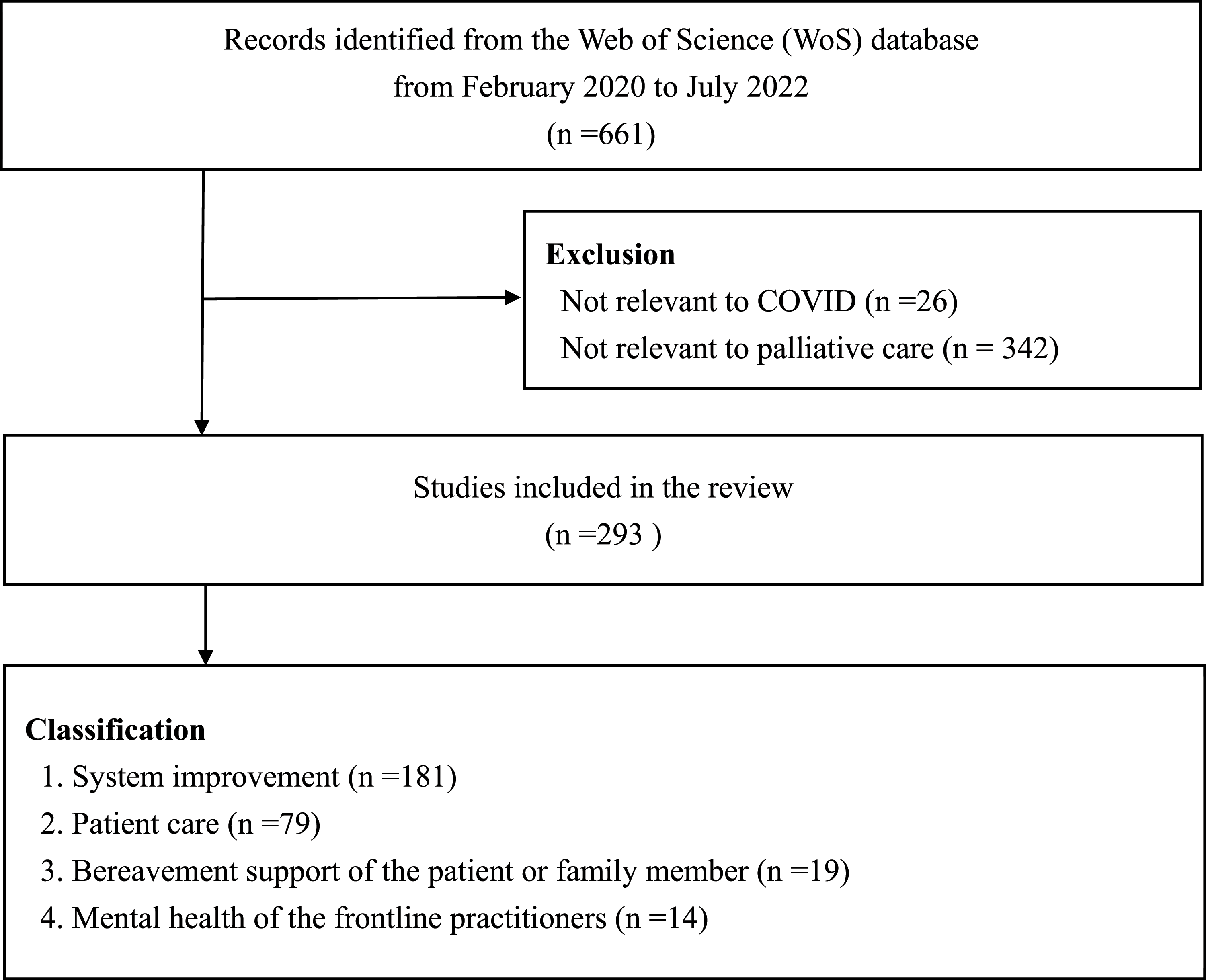
Outcomes
The primary outcome was the distribution of palliative care research fields. The secondary outcomes were the number of citations, first author’s nationality, publication year, publication titles, WoS categories, and document types. Other outcomes included the language and the percentage of COVID-19-related palliative care articles among all articles on palliative care since the COVID-19 outbreak in February 2020.
Results
Inclusion and Exclusion Criteria
We conducted a review of published studies. A total of 661 studies were retrieved from the WoS database. Of these studies, 26 were excluded from the review because they were not related to COVID-19-related palliative care and 342 were excluded because they did not focus on palliative care. Finally, 293 studies met the inclusion criteria and were included.
Summary of Outcomes
The primary outcome (Figure 2) was the distribution of research on palliative care. We observed that studies related to system improvement constituted the highest proportion of our sample (181/293, 61.8%), followed by those related to patient care (79/293, 27.0%), those related to bereavement support for patients or their family members (19/293, 6.5%), and those related to the mental health of frontline practitioners (14/293, 4.8%). The percentage of each research field publications since COVID-19 pandemic. aUntil August 1st, 2022.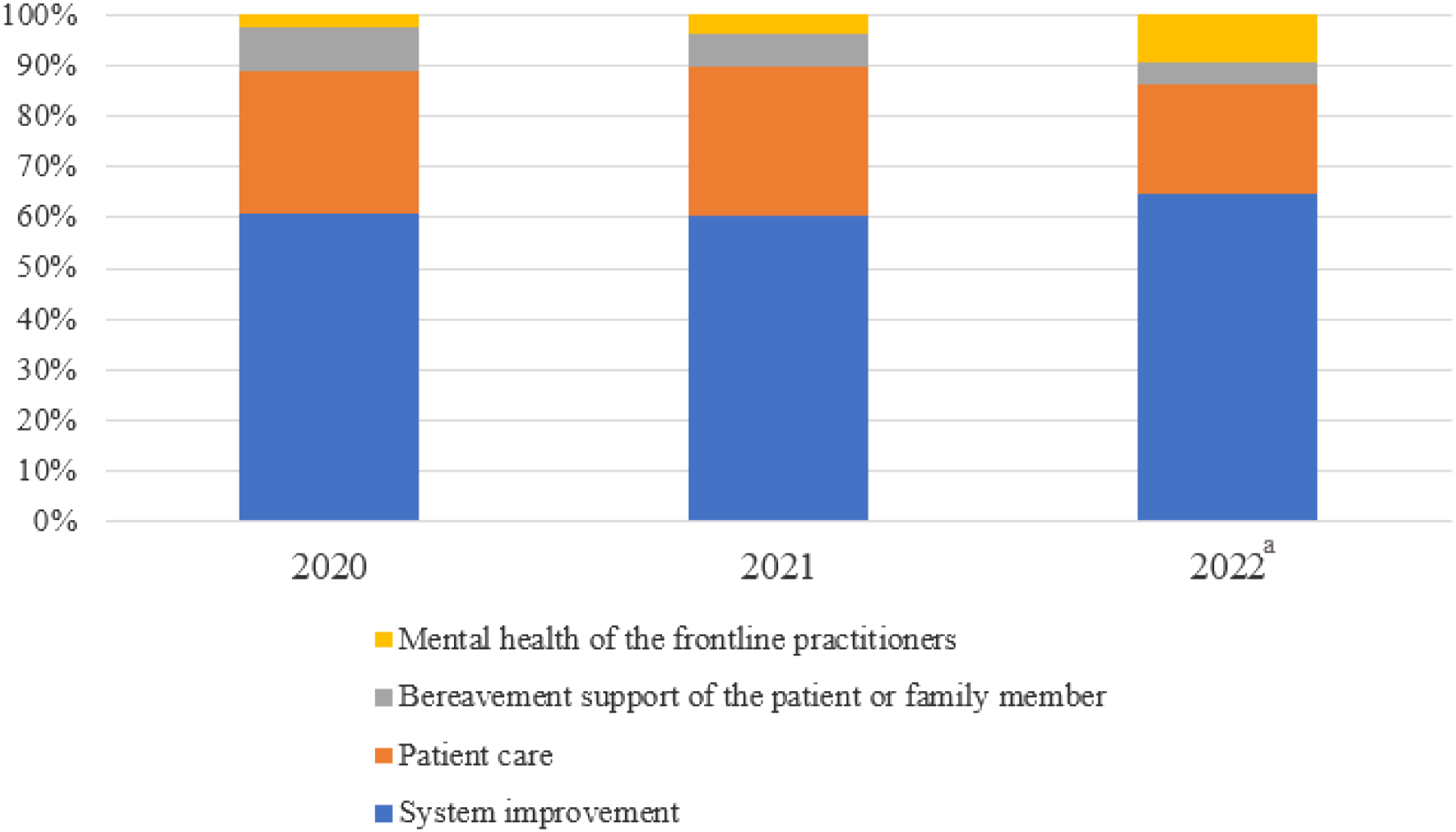
Analytic Statistics of the Included Publications.
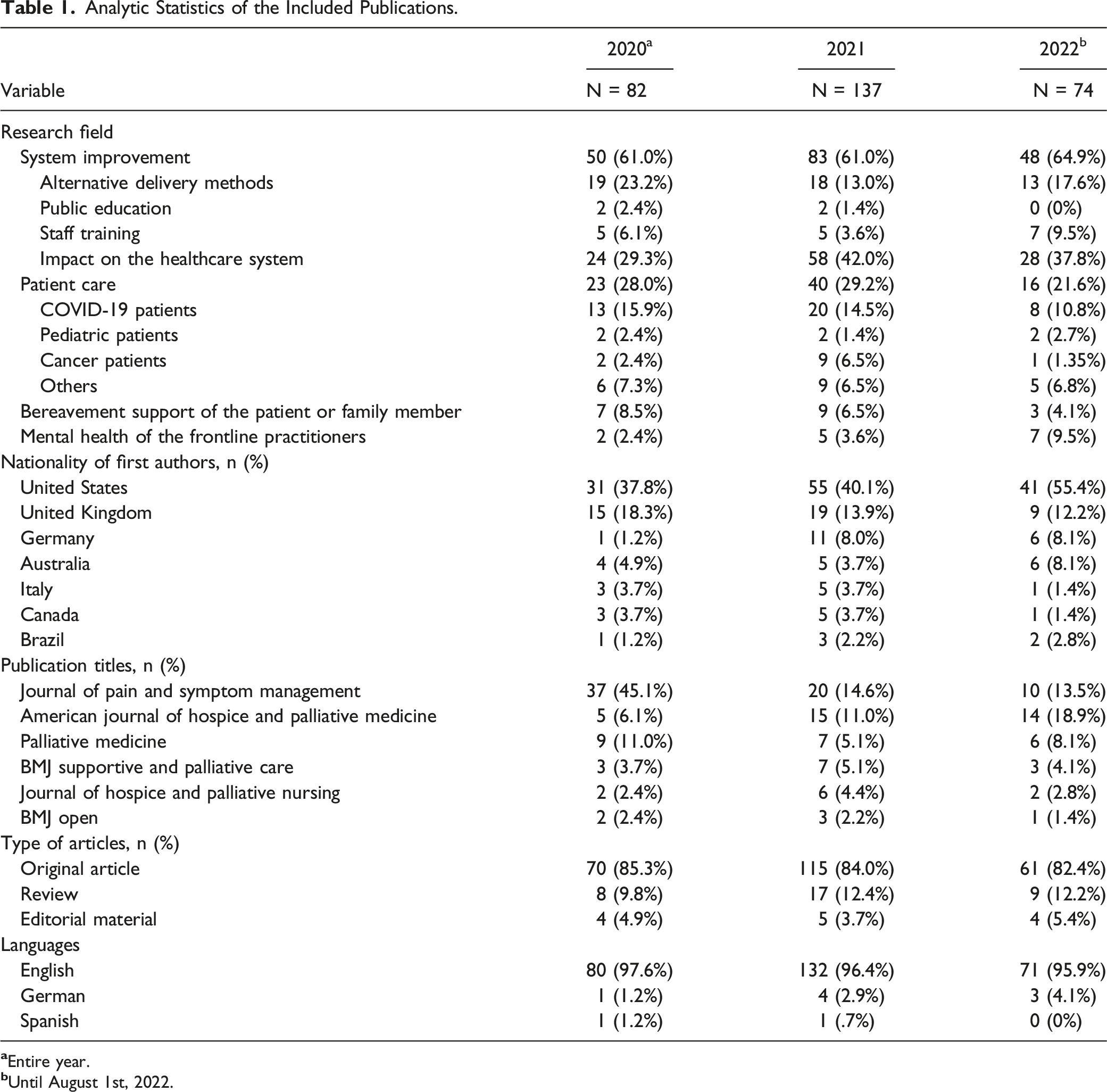
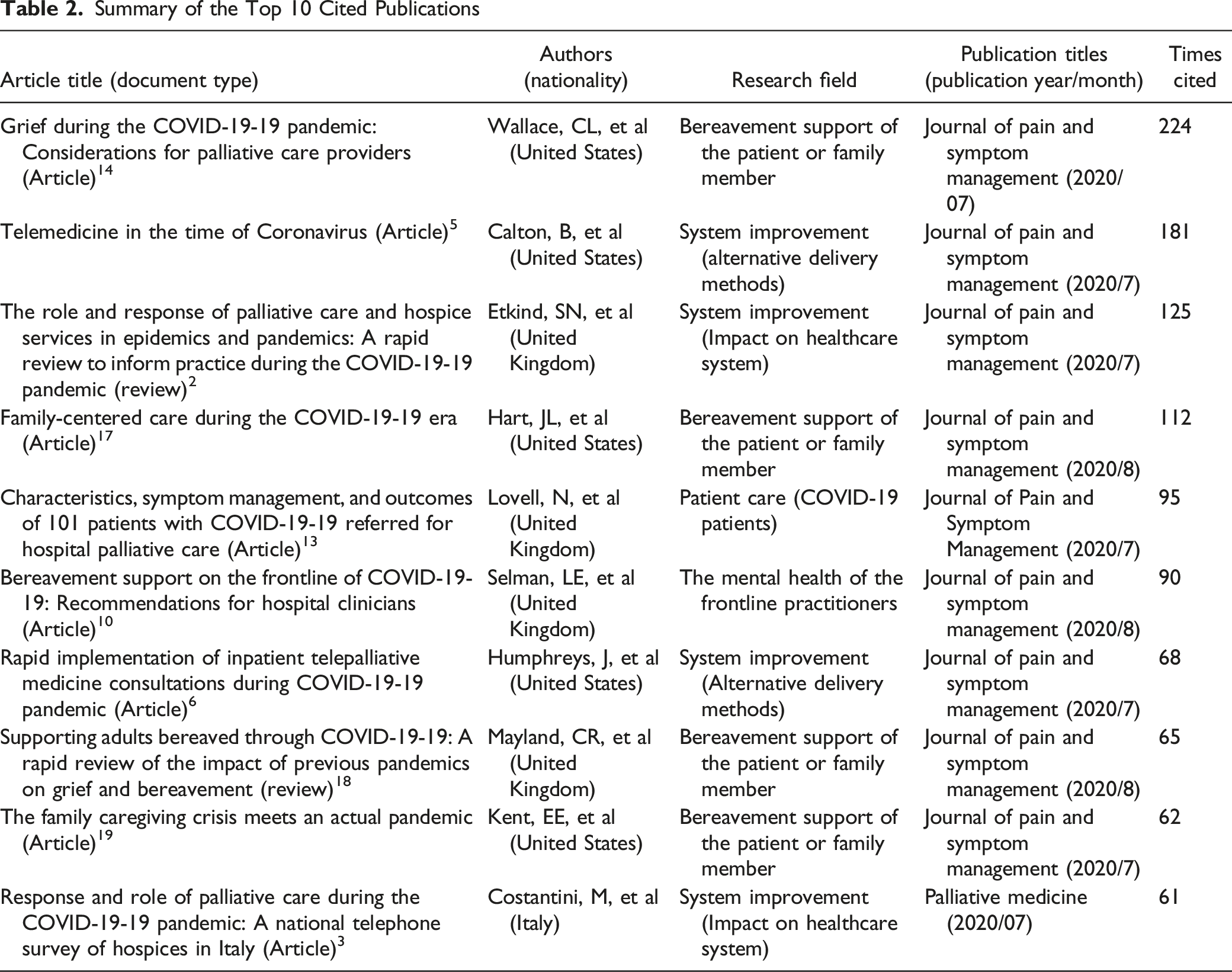
The total number of citations received by all of the included articles was 2132, and the average number of citations received by each article was 9.46. Among the articles, the most-cited 1 had a total of 224 citations. 14 Regarding the nationality of the first authors, American constituted the most common nationality (127/293, 43.3%), followed by British (43/293, 14.7%), German (18/293, 6.1%), and Australian (15/293, 5.1%). English publications accounted for 96.6% of all publications. Furthermore, of the included studies, 84.0% (246/293) were original articles, 4.4% (13/293) were editorial material and 11.6% (34/293) were review articles. Concerning the distribution of the articles in the various WoS categories, those belonging to the Health Care Sciences and Services category constituted the majority of our the included studies (183/293, 62.5%), followed by those belonging to the Medicine, General and Internal category (105/293, 35.8%).
Of the included studies, 22.9% (67/293), 11.6% (34/293), 7.5% (22/293), 4.4% (13/293), 3.4% (10/293), and 2.0% (6/293) were published in the Journal of Pain and Symptom Management, American Journal of Hospice Palliative Medicine, Journal of Palliative Medicine, BMJ Supportive and Palliative Care, Journal of Hospice and Palliative Nursing, and BMJ Open.
Discussion
Trends in Research on COVID-19-Related Palliative Care
The COVID-19 pandemic negatively affected the ability of global health-care systems to provide quality care. As an essential part of global health-care systems, palliative care systems faced challenges during the pandemic; nevertheless, relevant stakeholders have responded rapidly to the challenges and developed strategies for addressing them. Our review revealed that studies related to system improvement (181/293, 61.8%) and patient care (79/293, 27.0%) were the most common in the field of research on COVID-19-related palliative care. It showed the urgent need for innovative palliative care delivery methods and management of relieving distressing symptoms. On the other hand, although studies related to bereavement support for patients or their family members (19/293, 6.5%) and studies related to the mental health of frontline practitioners (14/293, 4.8%) were less common, their importance should not be underestimated. As the pandemic evolve the percentage of publications in these 2 areas didn’t increase rapidly and even inverted between 2020 and 2022 (Table 1). It may be associated with the improvement of spiritual support through generalist-level palliative care and less fear when we have more information about the disease and better treatment options. However, some other emotional stress including isolation, grief, loneliness, or anxiety may still exist in the patient, family, or frontline practitioners, thus further investigation was warranted to figure out the possible lag behind in the mental and spiritual care services throughout the pandemic and beyond. The research trends we identified reflect the hot issues and the challenges associated with palliative care, and such challenges require addressing.
Summary of the Top 10 Cited Publications
Summary of Each Research Field
System Improvement
A well-designed palliative health-care system is fundamental to effective and efficient patient care. Policies for preventing disease spread, such as visitor restrictions and patient isolation, restrict the abilities of palliative care providers to provide quality care. Therefore, improvement of palliative care delivery methods, education of the public, development of health-care strategies, and implementation of staff training programs are all critical tasks.1,20 Telemedicine was the most popular research topic, accounting for approximately 17.1% (50/293) of the studies on COVID-19-related palliative care. Many of the telemedicine-related studies provided pieces of advice and information on home-based palliative care.5,7,21 Studies reported that inpatient video consultations, multidisciplinary team communication, and online family meetings were associated with improvements in the quality of care.6,8 We also noted a trend toward the increasing digitalization of palliative teaching courses.22-25 Another study discussed how palliative care systems respond to the challenges of the COVID-19 pandemic. 26
Patient Care
Because of the lack of prior experience with COVID-19, providing high-quality palliative care was difficult. Some studies identified the symptoms and characteristics of COVID-19. 13 . Other studies developed recommendations for effectively treating symptoms.4,27 However, difficulties dealing with patient subgroups, including pediatric patients, older adult patients, patients with cancer, and critically ill patients, were noted. Further research is warranted to develop strategies for addressing these difficulties. To better support patients with cancer, research is warranted on the following issues: ensuring the accessibility of critical drugs such as opioids or targeted therapy medications 28 and maintaining cancer treatment such as palliative chemotherapy or palliative radiotherapy for both outpatients and inpatients with a COVID-19 diagnosis.29,30 A global survey for the provision of pediatric palliative care revealed that changes in patient–family–provider interactions and financial considerations were common problems. 12
In addition to the challenges related to the treatment of symptoms and the underlying disease, isolation policies associated with the COVID-19 pandemic and the uncertainty of disease progression and treatment were observed to cause spiritual distress. Thus, spiritual care during the COVID-19 pandemic is an urgent, nonnegligible part of palliative care, 11 as emphasized in a study by a European Respiratory Society international task force. 4 Although spiritual care has long been an essential component of quality palliative care, the effect of the pandemic has further highlighted the requirement for quality spiritual assessment and care. 11
Bereavement Support of the Patient or Family Member
Grief is a natural human emotion while facing loss. Bereavement care is thus considered a vital component of quality palliative care. During the COVID-19 pandemic, caring for bereaved family members before and after the death of a patient was a major challenge and required much more effort than expected. 9 An open observational online survey completed by bereaved relatives revealed that respondents who received emotional support under restrictive isolation policies were more likely to consider the place of their family member’s death as appropriate than did respondents who did not receive such support. 31
Being unable to accompany dying relatives was associated with a higher risk of anxiety and grief disorder. Screening tools were developed to enable palliative care providers to identify those at risk of dysfunctional grief due to the loss of a relative to COVID-19 infection. 32 Strategies involving the improvement of communication skills, optimization of symptom management, discussions of care plans in advance, provision of online counseling, and establishment of virtual support groups enabled palliative care providers to facilitate quality care to family members after the loss of a relative, despite the many restrictions.9,10,18,33
Mental Health of Frontline Practitioners
Repeated empathic engagement with individuals who are in grief may result in varying degrees of emotional stress. One qualitative multiple-case study revealed that having previous experience caring for dying patients does not prevent moral distress from accumulating and worsening. 34 A survey in Hong Kong discovered that up to 82% and 43% of palliative care professionals reported being moderately to highly stressed and anxious, respectively, during the pandemic. 35 Self-awareness and self-resilience tools are vital for coping with emotional stress. Informal debriefing and peer support facilitated by hospitals or other institutions, rather than single-session psychological courses, are recommended to support the wellbeing of frontline practitioners. 10 Overall, emotional stress should not be underestimated, and early identification and appropriate response are essential for supporting frontline practitioners.
Strength and Limitations
To the best of our knowledge, our study is among the first to analyze research trends in palliative care related to the COVID-19 pandemic. Nevertheless, our study has some limitations. First, our study design prevented us from conducting comprehensive comparisons and descriptions of specific problems. Second, the generalizability of the results of worldwide studies to local populations is unclear. Additional studies in various regions are thus warranted. Third, we noted that the majority of the included studies were conducted in the United States or Europe and that relatively few studies investigated mental health. However, this may be related to publication bias. Hence, the results should be interpreted with caution.
Conclusion
As one of the first studies to review the trends in research on palliative care during the COVID-19 pandemic, the research trends demonstrate the flexibility and rapid response of the global palliative care system to the COVID-19 pandemic and show how the palliative care system is evolving. While most studies are interested in system improvement, patient care, and bereavement support, the mental health of frontline practitioners has received less attention. Our findings provide palliative care practitioners with current valuable information and highlight possible future trends.
Footnotes
Acknowledgments
The authors thank the entire team of the Department of Emergency Medicine of Keelung Chang Gang Memorial Hospital for their support of this study.
Declaration of Conflicting Interests
The author(s) declared no potential conflicts of interest with respect to the research, authorship, and/or publication of this article.
Funding
The author(s) received no financial support for the research, authorship, and/or publication of this article.
