







Abstract
Background
This study reviewed the role of occupational therapist’s in palliative and hospice care over the past 20 years.
Methods
A scoping review following Arksey and O'Malley’s five stages was undertaken using PubMed, OTseeker, Scopus, Elsevier, Cochrane Library-Medline, CINAHL, PsychInfo, Web of Science and Google Scholar.
Results
A total of 41 articles were reviewed. The most publications occurred in 2010, 2011, 2015, and 2023. The majority of the studies (48.7%) were of qualitative design. Various roles of occupational therapists have been defined in palliative care: discovering occupational meaning in the last periods of life and supporting occupational participation, management of persistent physical and psychological symptoms, especially pain and fatigue, improving or supporting the quality of life for individuals under palliative care, supporting mental well-being, supporting social participation, use of adaptive technologies, providing individuals with confidence and comfort. Occupational therapists also have various duties in maintaining palliative-hospice care at home include evaluating the individual at home and supporting home care and rehabilitation after discharge. Interventions for caregivers or supporting caregivers who have lost their roles, occupations or jobs in the care process are also among the roles of occupational therapists.
Conclusion
Occupational therapy within the context of palliative care aims to assist individuals in attaining their highest level of independence in important occupations. Occupational therapists play a crucial role in coordinating and facilitating safe transitions from the hospital to home, aiming to improve the overall quality of life and reduce hospital stays.
Introduction
Palliative care, a specialized field within healthcare, aims to enhance the quality of life for individuals and their families facing life-limiting illnesses. 1 Hospice care also represents essential pillars of compassionate healthcare for these individuals. The specialized forms of care focus on managing symptoms, and providing holistic support to clients and their families/caregivers during challenging periods.2,3 The importance of palliative care has become even more evident with the increase in life expectancy worldwide in recent years. While many diseases have become more manageable due to medical and technological advancements, the complexity of symptoms and needs in the final stages of life has also grown. Palliative care, which aims to maximize quality of life, plays a crucial role at this stage by addressing not only the physical but also the emotional and psychosocial needs of patients and their families. With the rising prevalence of chronic diseases and an aging population, palliative care has become an indispensable part of modern healthcare services. 4 Diseases such as cancer or heart failure may require lifelong treatments. While people are struggling with chronic diseases, treatment practices could be affected psychologically by getting tired and fatigue of hospital procedures. This situation negatively affects the course of the disease and the quality of life of the person. People with chronic diseases need to be supported to balance between the hospital and home, as they are constantly involved in the treatment process. The World Health Organization accepted that palliative care is a specialty in the field of health and defined it as an approach that improves the quality of life of the individuals and the caregivers who face problems related to life-threatening diseases. 5
According to the definition of the American Occupational Therapy Association (AOTA, 2023), occupational therapy enables people of all ages to participate in daily living. Occupational therapists’ unique skill set in assessing functional abilities, promoting independence, and fostering holistic well-being aligns seamlessly with the principles of palliative care.6,7 Occupational therapists play a significant role in assessing and implementing interventions aimed at improving the quality of life for patients in palliative and hospice care. Specifically, they assess patients’ physical, emotional, and cognitive capacities to determine their level of participation in activities of daily living (ADLs). During the intervention process, they develop strategies such as pain management, energy conservation techniques, environmental modifications, and the use of adaptive equipment. Additionally, they implement individualized interventions to maximize patients' independence, provide psychosocial support, and promote engagement in meaningful activities. Occupational therapists also collaborate with family members to facilitate their involvement in the care process and guide patients in maintaining their social roles. Studies have been conducted for years to define the roles of occupational therapists in palliative care. In one of the first comprehensive studies on this subject, Dawson (1982) reviewed the roles of occupational therapists in palliative care. 8 A comprehensive scoping review examining occupational therapy practices in palliative and end-of-life care, 9 as well as thematic reviews such as “Occupational Therapy for People Living with a Life-Limiting Illness,” have also been focused. 10 Although the role of OTs in palliative care has gained traction, it remains an underexplored facet within the healthcare literature. There have been many publications since this date, however; there is no scoping review describing the roles of occupational therapists in palliative and hospice care, especially in recent literature. Therefore, this study aims to conduct a scoping review to elucidate how the actual roles of occupational therapists in palliative and hospice care are defined.
Method
Scoping reviews are thorough investigations aimed at examining and guiding practices within a specific field. They aid in documenting the kinds of evidence available and the research procedures involved. This review adheres to the five-step scoping review framework outlined by Arksey and O'Malley (2005). Within this study, the authors were responsible for crafting the research inquiries, search criteria, and research methods. 11
Research Questions
The main research questions of this scoping review are: 1. What are the nature and scope of the studies defining the roles of occupational therapists in palliative, hospice, and end of life care? 2. What are the roles of occupational therapists in home palliative-hospice care and for caregivers? 3. What are the perceptions and attitudes towards occupational therapists’ roles in palliative and hospice care?
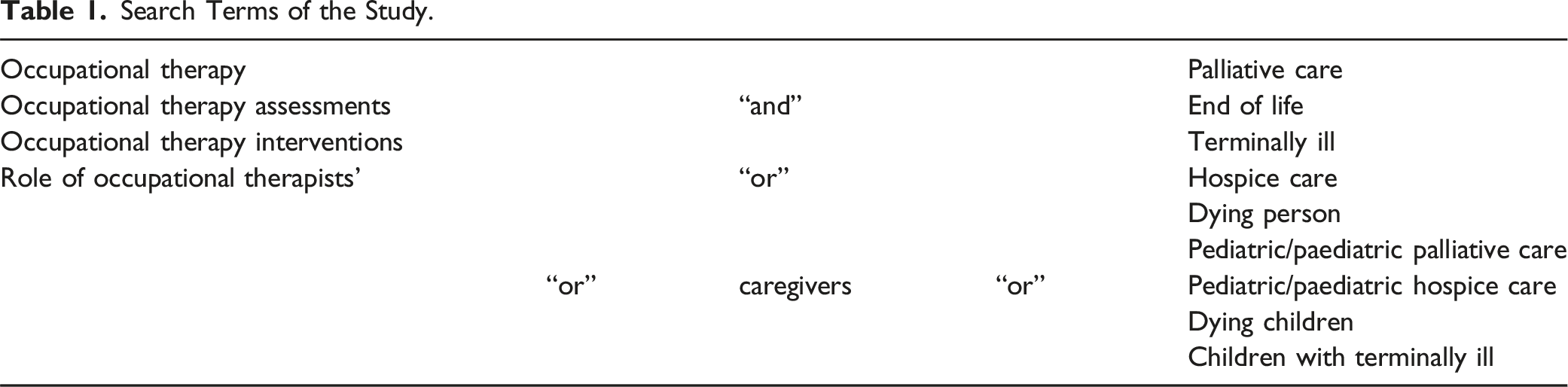
Identifying Relevant Studies
Search Terms of the Study.
Study Selection
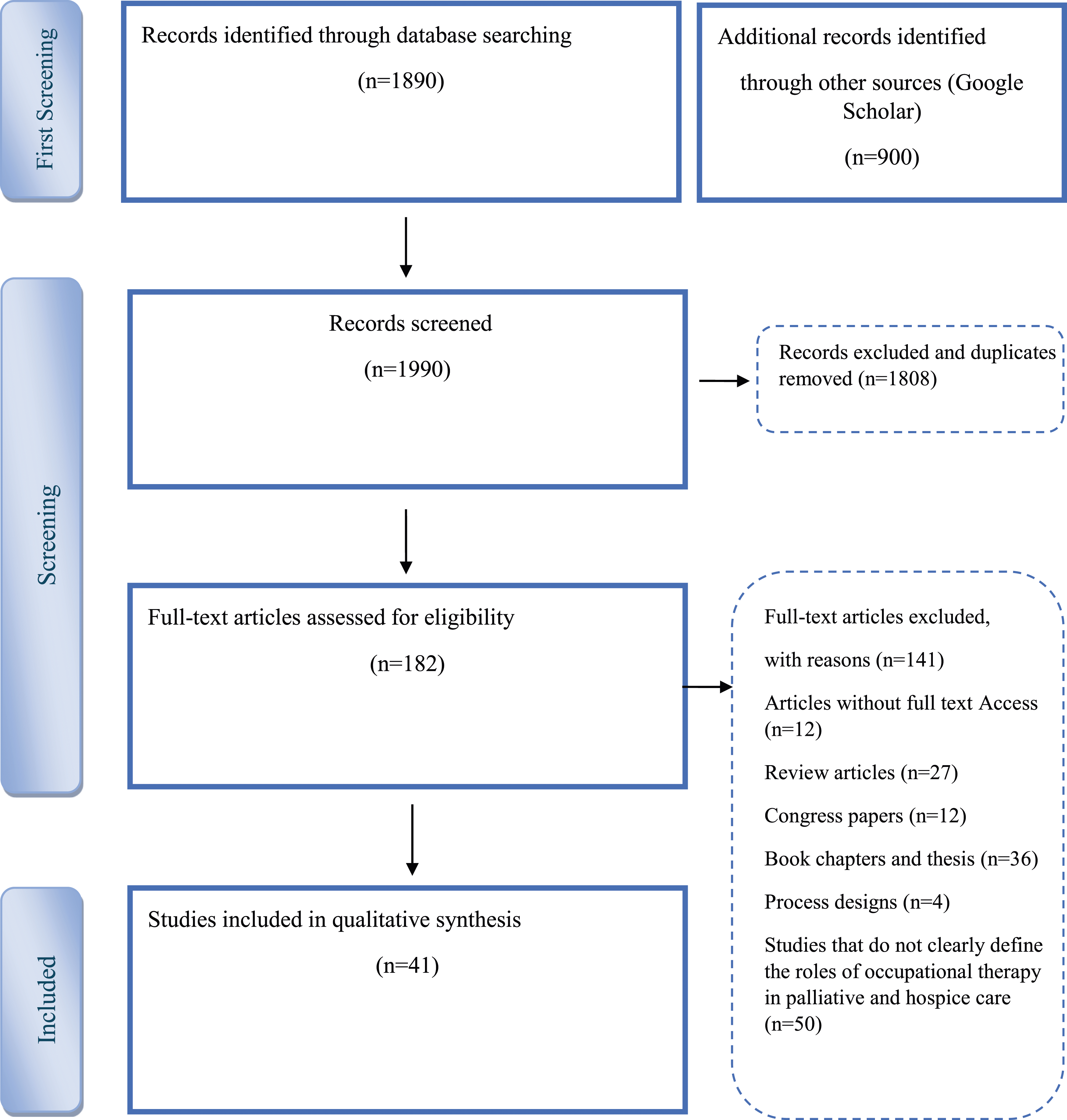
Figure 1 exhibits the PRISMA diagram illustrating the procedure for choosing articles. Studies that delved into or explored the role of occupational therapy in hospice and palliative care were considered for inclusion. The study selection process entailed evaluating articles using established criteria: • Published between January 2004 and February 2024 • English written • Studies defining the roles of occupational therapy in palliative and hospice care • Qualitative, quantitative, and mixed-methods studies • Articles available in full text. PRISMA flow diagram for article selection (Moher et al, 2009).
The following studies were excluded from the study: • Review articles, congress papers, book chapters, thesis • Studies that do not clearly define the role of the occupational therapist in palliative care and hospice care.
The initial screening of paper titles and abstracts was conducted by two authors to identify literature. Subsequently, these authors examined the full-text versions of the selected papers and conducted a reference list search to find additional relevant literature. Furthermore, third author individually reviewed half of the full-text papers. Any disagreements concerning inclusion, quality, or relevance were resolved through discussions involving all authors. For a concise overview of this process, please refer to Figure 1.
Findings
What are the Nature and Scope of the Studies Defining the Roles of Occupational Therapists in Palliative, Hospice, and End of Life Care?
Forty-one studies describing the roles of occupational therapy and occupational therapists in palliative and hospice care over the last two decades were included in this study. Year distribution of the publications is shown in Figure 2. It was determined that the most publications were in 2010, 2011, 2015, and 2023 (10.25%). The highest number of studies were qualitative design (n = 20, 48.7%). Although the palliative care continuum was not explicitly defined in all studies, 22.2% of the studies addressed early palliative care services,4,5,12-15 36.4% focused on general palliative care services, and 36.4% examined hospice care services. In the studies, the palliative care continuum was expressed in various ways. While 58.5% of the studies focused on general palliative care, 21.9% included hospice care. Only two studies (4.8%) mentioned early palliative care processes.16,17 Additionally, 14.8% of the studies included individuals or perspectives encompassing both the palliative and hospice periods. In 43.9% of the studies, the research was conducted in institutional settings (eg, hospitals, hospice care centers, nursing facilities, inpatient clinics, etc.), while 26.8% utilized online data collection methods. Additionally, 21.9% focused on processes related to patient assessments or treatments at home, and 2.4% included both online and hospital-based interviews. The distribution of studies carried out between 2004-2024 by years.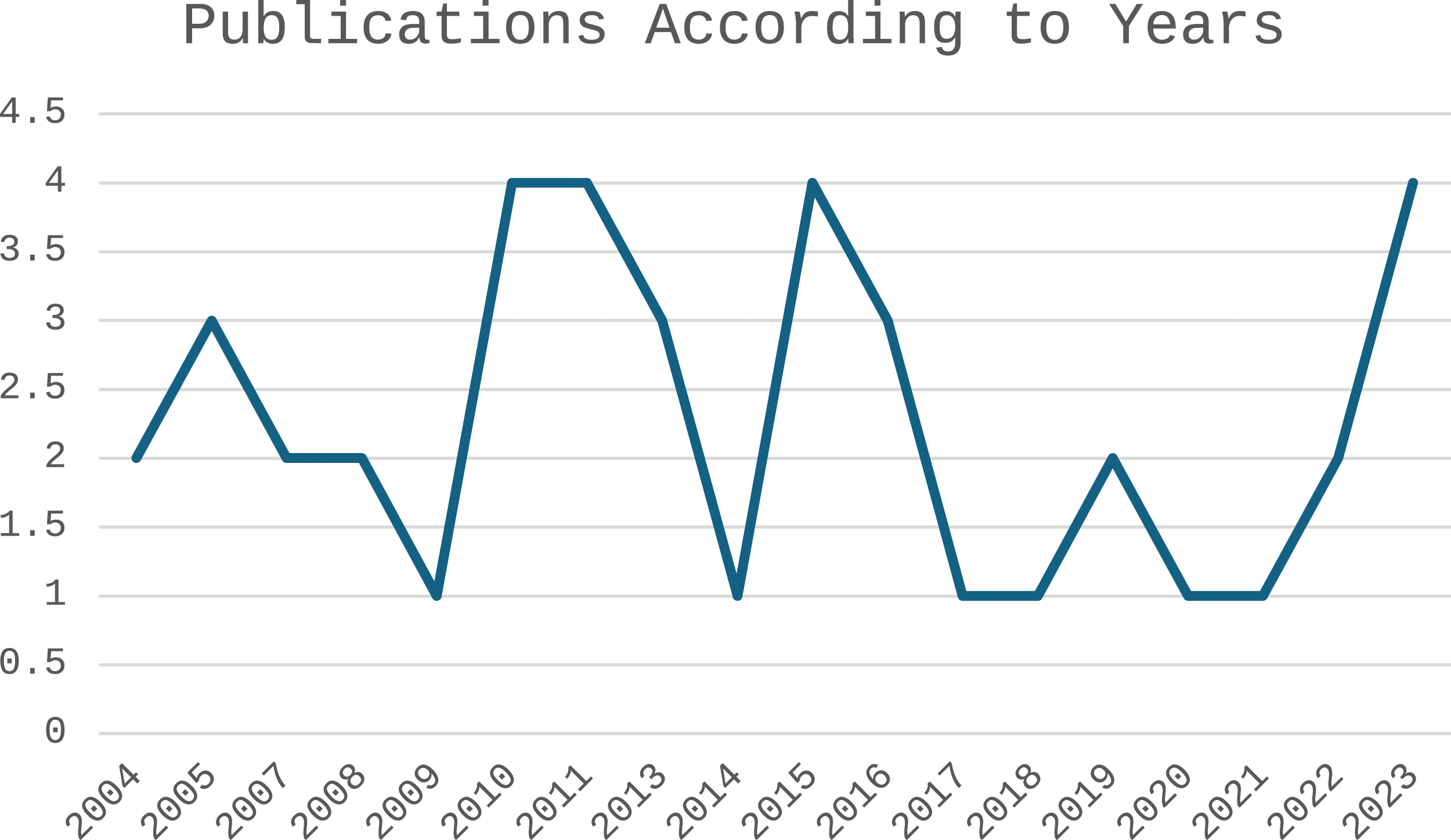
Various roles of occupational therapists have been defined in palliative care (See Supplemental Appendix). The first of these topics was discovering occupational meaning in the last periods of life and supporting occupational participation.18-21 When situations of disengagement in meaningful occupations occur, occupational therapists should provide opportunities for each individual to have equal participation opportunities within the scope of occupational justice. 19 One of the roles of occupational therapists is to support the performance and participation levels of individuals, especially in the palliative period, in their activities of daily living.12,17,22-29 Additionally, occupational therapists support individuals in the palliative and end-of-life period to participate in creative activities and leisure activities.30-32 In addition to activity-based approaches, occupational therapists also work on improving functionality 12 in palliative care on specific issues such as nutrition, 13 mobility,25,32,33 and transfer 34 training.
Occupational therapists contribute to manage persistent physical and psychological symptoms, especially pain and fatigue, that individuals encounter during the palliative care process.17-19,28,35,36
Improving or supporting the quality of life for individuals under palliative care is a valuable role of occupational therapists.22,27,29,33,37,38
One of the important roles of occupational therapists in palliative care has been defined as supporting mental well-being. 35 Relaxation or coping training, 39 role support, reducing anxiety, depression, improving self-efficacy, 40 and approaches to spirituality are among these studies.28,41 In addition, occupational therapists work to prepare the individual for death and ensure their dignity and spiritual integrity during the palliative or hospice processes.26,27,31,42 This concept has been described as “a good farewell”. 14
Apart from these roles, relatively few studies have described the different roles of occupational therapists in palliative and hospice care: supporting social participation, 43 use of adaptive technologies, 17 providing individuals with confidence and comfort. 44
What are the Roles of Occupational Therapists in Home Palliative-Hospice Care and for Caregivers?
The roles of occupational therapists in maintaining home-based palliative-hospice care have been identified.24,45 These roles include evaluating the client at home 46 and supporting home care and rehabilitation after discharge. Interventions for caregivers or supporting caregivers who have lost their roles, occupations or jobs in the care process are also among the roles of occupational therapists.19,47,48 Bringing family members together to support family functionality is among the goals so that both the individual and his/her family in the palliative period could live their lives to the fullest. 49
What are the Perceptions and Attitudes Towards Occupational Therapists’ Roles in Palliative and Hospice Care?
Occupational therapists experience role uncertainty due to inadequate understanding their contribution to palliative care, inadequate promotion, inadequate funding, and limited literature.15,50 One of the main challenges faced by occupational therapy in palliative care is the lack of funding. Insufficient funding leads to difficulties in establishing full-time occupational therapy positions, providing consistent services, and managing therapists’ excessive workloads. 41 Additionally, the potential of occupational therapists to support caregivers has been emphasized, and the need for increased support from policymakers and health insurance companies has been highlighted.23,50 Despite these issues, 58.5% of the studies did not mention any information about payment or funding. OT’s role in hospice care is misunderstood, and OT services are underutilized by the other professionals regarding the underutilization of OT services: (1) lack of reimbursement, (2) timing of referral, (3) knowledge of the role of OT, (4) refusal of services by family members, and (5) lack of OT presence in this setting. 51 Studies are necessary to improve the service quality of occupational therapists in palliative care and to adequately understand their roles.52,53
Discussion
In this study, a scoping review of the studies over the last two decades describing the roles of occupational therapists in palliative and hospice care is presented. The most publications were in 2010, 2011, 2015, and 2023; the highest number of studies were qualitative design. This review indicates a growing interest in understanding the role of occupational therapy in palliative and hospice care, with a notable concentration of the studies in specific years. The predominance of qualitative studies suggests a focus on exploring the nuanced aspects of OT interventions and the experiences of individuals and caregivers in these settings. The distribution of the studies across different types highlights the multifaceted nature of OT involvement in palliative care, including intervention studies, caregiver-focused research, and studies exploring the meaning of occupation in end-of-life care.
The greatest emphasis in the studies was on discovering occupational meaning and supporting occupational participation in individuals in the last stages of the life during the palliative and hospice periods.18-21 One of the roles of occupational therapists is to support the performance and participation levels of individuals, especially in the palliative period, in their activities of daily living, leisure activities or social activities.12,17,22-29 Especially for individuals in the last period of life, participation in basic and instrumental activities of daily living could be challenging due to the disease and treatment processes. One of the most important roles for occupational therapists should be to find occupational meaning in the last period of life. In addition, specific task training with function-based approaches is also among the work areas of occupational therapists.12,13
Occupational therapists contribute to manage persistent symptoms.17-19,28,35,36 A catastrophic change could occur in this term that affects individual’s will, habit, and performance capacity. Persistent symptoms such as fatigue, loss of appetite, and eating and swallowing disorders, fever, edema, lymphedema, especially pain, which often occur due to cancer and its treatment, could limit individuals’ occupational participation. For this reason, the first goal of both medical treatments and rehabilitation services is to control symptoms. However, priorities for the individual in the palliative process go beyond the symptoms. The type and severity of symptoms vary according to the course and type of the disease. Since the occupational therapists are concerned with the functional consequences of symptoms, they should try to plan for functional problems in advance, rather than waiting for a crisis.
Improving or supporting the quality of life for individuals under palliative care is a valuable role of occupational therapists.22,27,29,33,37,38 Optimising comfort and quality of life for the person with a life-limiting condition and her/his family is a dynamic process that involves anticipating, acknowledging, assessing, and responding to a range of symptoms and needs in a proactive and timely manner in order to prevent and relieve suffering. The idea that it is an occupational justise for individuals to spend the last moments of their lives with quality should not be forgotten.
Occupational therapists play a pivotal role in addressing the psychosocial and mental well-being of individuals in palliative and hospice care, helping them navigate the emotional, social, and existential challenges associated with the end-of-life journey.26,27,31,42 This role extends beyond the management of physical symptoms to encompass the broader dimensions of well-being, emphasizing the need for holistic and person-centered care in this critical period. The concept of “a good farewell” captures the importance of helping individuals find meaning, acceptance, and peace as they navigate the realities of their declining health. 14 However, in these difficult days of life, individuals may need occupational therapists to reduce their suffering, spiritual peace, and manage the dilemma between their bodies and life tasks. In this context, occupational therapists are uniquely positioned to support patients in managing the fear, anxiety, and isolation that often emerge at the end of life. By providing opportunities for engagement in meaningful activities and strengthening connections with loved ones, therapists significantly contribute to preserving a sense of identity and dignity. They enable individuals to maintain a sense of purpose and control, even as physical limitations increase. Moreover, the role of occupational therapists in fostering spiritual peace and addressing existential dilemmas is particularly vital. As individuals grapple with the conflict between the limitations of their bodies and the life roles they value, occupational therapists guide them in reconciling these challenges, promoting emotional and spiritual resilience. This approach not only alleviates suffering but also enhances the patient’s overall quality of life, helping them approach the end of life with greater confidence and comfort.
Apart from these roles, relatively few studies have described the different roles of occupational therapists in palliative and hospice care: supporting social participation, 43 use of adaptive technologies, 17 providing individuals with confidence and comfort. 44 It suggests that the studies are still insufficient.
It has been reported that occupational therapists can support caregiver training and discharge/home care processes. 46 Interventions for supporting caregivers who have lost their roles, occupations or jobs in the care process are also among the roles of occupational therapists.19,47,48 Bringing family members together to support family functionality is among the goals so that both the individual in the palliative period and his/her family could live their lives. 49 Taking care of a dying person, witnessing the loss of a loved one, and losing their own roles and routines in this process could be challenging for the caregiver. During these processes, supporting family and making care easier may provide opportunities.
Various role definitions have been defined by both members of the profession, students, and other professionals about the roles of occupational therapists in palliative and hospice care and the provision of services.15,50,51 Studies are necessary to improve the service quality of occupational therapists in palliative care and to adequately understand their roles.52,53
Global differences in integrating occupational therapy (OT) into palliative care arise from variations in healthcare systems, funding, and cultural attitudes. Studies from countries like Australia highlight underfunding as a key challenge, limiting the availability of OT services.19,23,41 While the United States provides OT through Medicare-covered hospice care, delayed referrals often reduce its impact. 51 Awareness of OT’s contributions remains low globally, with therapists in Germany, Canada, and Singapore reporting misunderstandings about their roles.19,23,48 Additionally, cultural contexts influence practice; in Asia, family-centered care dominates, requiring OT interventions to align with family dynamics, unlike the individual-focused approaches in Western countries.23,41,52 Occupational therapy should be better integrated into palliative care education and policy frameworks, with attention to consistency across international practices.
Limitations in the design of studies include small sample size in the studies and inadequate generalisable results for new methods. Another point that attracted attention in the studies was that the terms palliative and hospice care were used in the same sense in most studies.
Conclusion
Occupational therapy within the context of palliative care aims to assist individuals in attaining their highest level of independence in occupations which are important for them. Occupational therapists play a crucial role in coordinating and facilitating safe transitions from the hospital to home, with the ultimate goal of improving the overall quality of life and reducing hospital stays. They assess and analyze specific challenges and, employing clinical reasoning and evidence-based methods, develop treatment plans or interventions to enable the patient to maintain as much independence as possible. Proactive planning by occupational therapists to address functional challenges before they escalate into crises is a critical aspect of palliative care, as it not only reduces immediate disruptions to daily life but also equips patients and caregivers with the tools and strategies needed to navigate the complexities of end-of-life care with greater confidence and resilience. It is worth noting that palliative care remains an unfamiliar territory for occupational therapists both locally and globally, underscoring the need for further research in this topic.
Supplemental Material
Supplemental Material - Actual Roles of Occupational Therapists in Palliative and Hospice Care: A Scoping Review
Supplemental Material for Actual Roles of Occupational Therapists in Palliative and Hospice Care: A Scoping Review by Güleser Güney Yılmaz, Hulya Yucel, and Milda Gintiliene in American Journal of Hospice and Palliative Medicine
Footnotes
Acknowledgments
The authors thank to OT Sever Sevi for supporting the literature review.
Author Contributions
All authors contributed to the development of the study methodology, data collection and analysis. All authors participated in writing, reviewing and editing the manuscript, and approved the final version.
Declaration of Conflicting Interests
The author(s) declared no potential conflicts of interest with respect to the research, authorship, and/or publication of this article.
Funding
The author(s) received no financial support for the research, authorship, and/or publication of this article.

Supplemental Material
Supplemental material for this article is available online.
References
Supplementary Material
Please find the following supplemental material available below.
For Open Access articles published under a Creative Commons License, all supplemental material carries the same license as the article it is associated with.
For non-Open Access articles published, all supplemental material carries a non-exclusive license, and permission requests for re-use of supplemental material or any part of supplemental material shall be sent directly to the copyright owner as specified in the copyright notice associated with the article.
