







Abstract
Colleges of business grapple with a perceived lack of quality in their graduates’ professional writing and recognize students’ need to learn disciplinary discourses. This article describes the motivation, design, and preliminary outcomes of a business-writing prototype at Auburn University. Writing consultants trained in business communication worked with one class on a substantial writing project. They provided conferencing and written feedback, greatly lowering the faculty workload. Student surveys and informal interviews indicate that students, faculty, and consultants were satisfied with this prototype program.
Keywords
In the last several years, university business colleges have moved to mitigate a recognized problem: a perceived lack of quality in their graduates’ professional writing (e.g., Beason, 2001; Carrithers & Bean, 2008). They have also appreciated students’ need to “assimilate the powers of [their] professions” by learning disciplinary discourses, which in turn allow them to “remake” those disciplines and “incorporate their experiences and perspectives into their evolving fields of practice” (Bazerman, 2005, p. 89). In the past, business and other colleges within universities often resisted incorporating writing into their courses because doing so involved “radically rethinking teaching and, sometimes, curriculum” (Russell, 2007, p. 269). Now, sentiments about writing have shifted, particularly in colleges of business. Business colleges participate within their universities’ programs for writing across the curriculum (WAC) or writing in the disciplines (WID) with an eye not only toward improving their students’ communication skills but also toward maintaining accreditation and improving how students’ communication skills are perceived by advisory boards, recruiters, and employers. The Association to Advance Collegiate Schools of Business (AACSB), for example, has pointed out that any college with a functioning (and AACSB-mandated) “curriculum management process” will include in its undergraduate program learning experiences meant to improve students’ communication abilities (Association to Advance Collegiate Schools of Business, 2010, p. 70).
Faced with the challenge of improving its students’ writing; grappling with the feedback from advisory boards, recruiters, and potential employers (e.g., Association of American Colleges and Universities, 2006); and attempting to meet the accreditation demands of the AACSB, Auburn University’s College of Business (COB) decided to formulate its own approach—a business writing prototype (BWP)—to engaging students in supported professional writing by partnering and cooperating with the Writing Studies Program of the Auburn University (AU) College of Liberal Arts. (Soon after the COB initiated its approach, a top-down university writing initiative began in earnest in 2010. I discuss the relationship between this initiative and the BWP in the conclusion.) This article describes the motivation behind, the design, and the preliminary outcomes of this BWP.
The BWP builds on prior work of other COBs that have incorporated writing into their curricula (Bowers & Metcalf, 2008; Cyphert, 2002; Tuleja & Greenhalgh, 2008), but it also experiments with other strategies for improving students’ disciplinary writing. In the BWP, graduate students trained in business communication were assigned to COB class sections and worked with that class’s students exclusively on a multicomponent, semester-long writing project. These writing consultants provided students with one-on-one conferencing and substantial written feedback (along with rubric ratings that faculty used in calculating assignment grades). Their extensive work with students and students’ writing lessened the workload for COB faculty. Results from the AU Institutional Review Board-approved student surveys, informal interviews with writing consultants, and informal interviews with COB faculty indicate that students, faculty, and writing consultants were satisfied with the experience.
The Challenge of Integrating Writing into COB Classes
Of course, if integrating writing into business courses were easy, more COBs (and other colleges) would have undertaken the challenge before being pressed into doing so by advisory-board, employer, and recruiter perceptions; accreditation standards; and university WAC and WID initiatives. Traditionally, one of the most difficult challenges in this integration process is to motivate faculty to develop writing projects that lend opportunities for students to research, develop, design, and manage a discipline-specific writing project over the span of several months. Faculty in many disciplines tend to avoid large, individualized document projects because such projects demand time-consuming instructor intervention, usually through conferences and written feedback, throughout document development (Plutsky & Wilson, 2001). And this time, investment is particularly daunting in classes of 50 students or more—common in many business colleges, including AU’s. A faculty member who spends 20 minutes giving feedback on a draft of each student’s paper and another 20 minutes assessing the final version of that paper would invest nearly 35 hours outside of class just providing written comments. Conducting 30-minute conferences with students could double, triple, or even quadruple this time investment, depending on the number of conferences required or requested by students. For nontenured faculty, such a time expenditure could have other consequences. Martins and Wolf (2005) found that nontenured faculty in their WAC program worried that incorporating writing into their courses could generate problems with their retention, promotion, and tenure review (p. 161). Those faculty had noted that they were given “no clear indication of the kind of ‘value’ that participation … might have in … review committees” (p. 161). In short, obtaining faculty buy-in involves finding creative ways to decrease the time demands on faculty. Thus, we designed the BWP to use trained writing consultants who could shoulder the responsibility of commenting on students’ papers and meeting with students to plan, write, revise, edit, and design their papers.
Further, business faculty may feel uncomfortable assessing students’ writing for its communication effectiveness rather than for its subject-matter content. Plutsky and Wilson (2001) pointed out that “faculty members are insecure when assigning writing to or evaluating the writing of their students” (p. 28). Indeed, COB faculty at AU noted that they felt uncomfortable assessing students’ writing form. Although as writing specialists, we see this distinction between form and content as problematic and false in a number of ways, the distinction is valid in the sense that faculty in other disciplines perceive it. Thus, writing specialists must acknowledge this distinction as they work with COB faculty to integrate writing into COB courses.
Indeed, as coordinator of the BWP, I saw this distinction surface time after time in my conversations with COB faculty. The tasks that I carried out in this role included the following: helping COB faculty to develop their writing assignments and integrate the assignments (particularly deadlines) and pretests/posttests into their class schedules providing resources and training to writing consultants in business communication genres (e.g., the white paper), business communication research (e.g., on you-attitude), and writing-pedagogy research (e.g., on formative feedback) creating a pretest/posttest for programmatic assessment that measures sentence-level and paragraph-level correctness and managing the data collection modifying a general rubric for formative and programmatic assessment for the draft and final versions of students’ papers and managing the data collection creating an online survey for formative and programmatic assessment for students and managing the data collection serving as a liaison between the Writing Studies Program and the COB administration and faculty and between the writing consultants and the COB administration
One of the most important of these tasks was providing resources and training to the BWP writing consultants in order to build and extend their proficiency in business communication, including its common genres, and its pedagogy.
One potential solution to the problems addressed by the BWP—the lack of COB faculty time and the relative lack of COB faculty expertise in writing pedagogy—is to incorporate a stand-alone business communication course into the COB departments’ curriculum. This potential solution, however, has several drawbacks. First, it silos the study of rhetorically effective writing and the practice of an iterative and workable writing process. In business communication courses, students engage in writing projects that are related to but not specifically focused on the topics covered in their disciplinary courses. Thus, students may see the writing projects they develop for these courses as writing exercises as opposed to opportunities to develop as communicators within their specific disciplines. For example, their writing may fail to draw from primary data or draw deeply from secondary data such as it would if they were conducting research for a course within their major. The projects students take on in business communication classes may not even reflect the most useful genres in their particular business disciplines. Depending on the level of coordination between business communication instructors (who may be in departments of English or have had little experience or coursework in business) and business faculty, stand-alone business communication courses may neglect particularly useful genres (e.g., the white paper) or commonly used visual elements (e.g., box-and-whiskers diagrams).
Such oversights are particularly likely in business communication courses taught by graduate teaching assistants, who may have little professional experience outside academia and thus little experience with the kinds of business-oriented writing that they are asked to teach and that students need to practice and develop. For example, one faculty member who participated in the BWP asked students in her auditing course to write a risk-analysis report—a report that evaluated risk of noncompliance with regulations. This report equated essentially to the genre that business and technical communication instructors would call an evaluation report. But this risk-analysis assignment was different from the evaluation reports that many business communication instructors have assigned in that it required students to use accounting standards as evidence, in addition to using the secondary sources normally required in an evaluation report. In short, while business communication instructors usually cover a variety of genres in stand-alone classes, they may be unfamiliar with targeted and important genres such as the risk analysis and the specific kinds of evidence that construct credibility for the authors of such a report.
In the BWP, students focused on a common, rhetorically valid genre within their discipline. Current research shows that practicing genres that are and will be important to students is critical to their ability to enter and succeed in their disciplines (Wardrope, 2002). The COB faculty, with help from me and the BWP writing consultants, developed genre-based writing projects that asked students to respond to a plausible, real-world scenario by researching, presenting, and synthesizing data and then stating clearly their evaluation or recommendation. By focusing on one genre (i.e., one writing project) per class, the BWP simplified writing-related matters for faculty, and the assignment (and its concomitant conferences, deadlines, and supporting deliverables) could be more readily integrated into already-packed class schedules. In addition, by focusing on one genre per class, the BWP engaged students in a semester-long, multistep, comprehensive production process. We believed that this process would lead to writing activity that is more concerned with transforming than transporting knowledge and is more participative than performance oriented (Bereiter & Scardamalia, 1989; Freedman & Adam, 1996; Ochsner & Fowler, 2004). That is, the BWP provided scaffolding for students as they learned to write within their disciplines.
This focus on learning to write, introducing students to research, writing, editing, and document design in their discipline, has stronger empirical grounding than its alternative, writing to learn. The writing-to-learn model assumes that the writing process in itself will help students master and recall course content, but this assumption about the efficacy of the writing process for learning lacks evidence. As Carter, Ferzli, and Wiebe (2007) and Klein (1999) have pointed out, there is plenty of controversy over the extent to which writing actually generates learning because research “results continue to be mixed” (Klein, 1999, p. 206). These mixed results mean that simply adding more writing into the curriculum may have little effect on students’ learning outcomes. That said, some research suggests that the writing process can indeed help students to learn course content if this process leads students to construct relationships between content elements and to associate those content elements with document elements. In other words, the process can lead to “better understanding and recall of information” (p. 230) if it forces students to map content onto a genre. Of course, for such learning to take place, students need to access the disciplinary genre that is appropriate to the rhetorical situation. The importance of understanding disciplinary genre and its potential to help students understand the course content and disciplinary discourse practices is what led us to work with each faculty member to develop one writing project that reflected real-world, specific disciplinary discourses.
In the following section, I describe the BWP’s organization and support the choices we made.
The BWP
Because graduate teaching assistants in the Writing Studies Program at AU work 15 hours per week during the academic year, the BWP writing consultants each worked a total of 225 hours in the 15 weeks of the fall 2010 semester. We distributed their hours (assuming a class of about 50 COB students) as follows: 100 hours working with individual students in four scheduled, 30-minute conferences 50 hours commenting on student papers and evaluating papers with the rubric 20 hours attending class 55 hours holding office hours for walk-in conferences
With this distribution of hours, the consultants devoted about 5 hours to each COB student assigned to them. Of these 5 hours, consultants spent at least 2 hours interacting one-on-one with the student.
Participants
Although the main goal of the BWP was to help students to develop a project that engaged them in a useful disciplinary genre, another goal was to get business faculty involved in this endeavor. One way that I involved them was by asking them to tailor for their assignment the general rubric that I had developed by modifying a rubric created at the W. A. Franke College of Business (n.d.). Four faculty members teaching seven sections of four courses (undergraduate and graduate) participated in the BWP in fall 2010. The course names, sections, and instructors are listed in Table 1 , along with the assignments that faculty developed with input from me, the writing consultants, and, in one case, an enterprising student. The four COB faculty who volunteered to participate already required some writing from their students (e.g., analyses of and responses to cases). But they were too strapped for time to provide substantial feedback (spoken or written) on a larger, multifaceted writing assignment. They volunteered in part because they recognized that the consultants assigned to their classes would be able to provide frequent quality interventions in students’ writing process and thus facilitate students’ development as writers within their disciplines. They also recognized that consultants’ evaluations of students’ papers (via the tailored rubric) would greatly facilitate their grading of the added student work. That is, they saw the BWP as, in Ochsner and Fowler’s (2004) terms, “a partnership for improvement” that offered a better chance for students’ success (p. 134).
COB Faculty, Course Number and Name, Enrollment, Consultant, Assignment, and Percentage of Final Grade
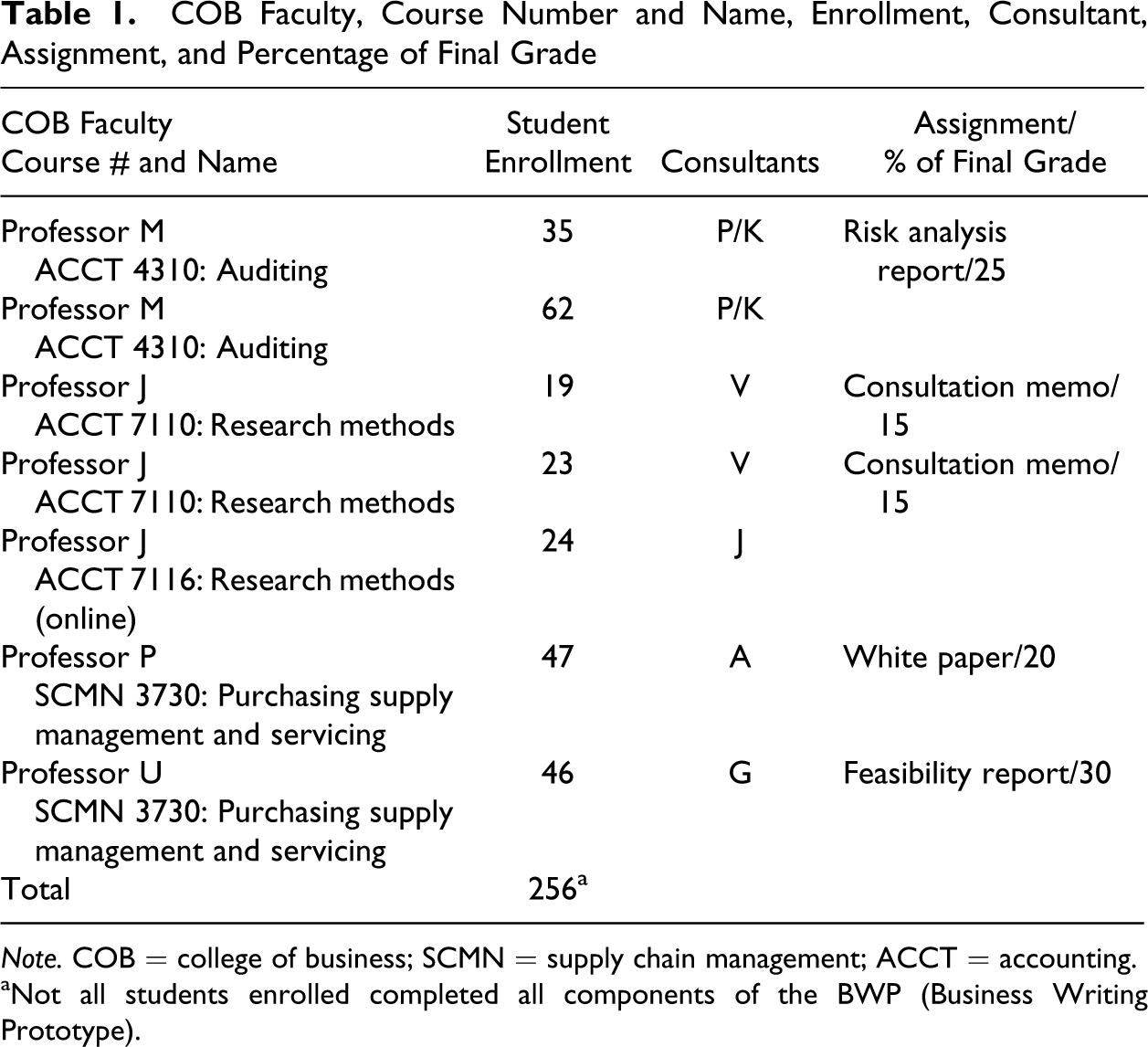
Note. COB = college of business; SCMN = supply chain management; ACCT = accounting.
aNot all students enrolled completed all components of the BWP (Business Writing Prototype).
Six writing consultants participated in the BWP, four of whom were veteran consultants who had worked several years in the university writing center. Two of the veteran consultants were specifically paired with the new graduate students. In fall 2010 (the BWP’s first iteration), one veteran–newbie pair worked with two sections of one instructor’s auditing course. Another veteran–newbie pair worked with two faculty members teaching two sections of SCMN 3730, Purchasing: Supply Management and Servicing. (In spring 2011, the veteran continued to work with her same instructor in another SCMN 3730 class. I switched the new consultant to ACCT 3120, Intermediate Accounting II, to expand the prototype to another core business course—one that is often devoid of writing).
Usually writing consultants (i.e., tutors) who are experienced in working with student writers in writing-center settings have been trained in giving feedback on academic essays (e.g., the essays commonly produced in first-year composition courses), but such consultants are not necessarily familiar with business disciplinary genres. Indeed, even the veteran consultants were not familiar with the specific genres that the business faculty wanted to assign to their students. To familiarize these consultants with the specific genres that faculty wanted students to learn, I held training sessions during the first 2 weeks of the fall semester, focusing on business genres, design of graphs and charts, and paragraph structure. These sessions not only familiarized the consultants with genres often discussed in business and technical communication but also helped them to relate those common genres (e.g., the feasibility report, the evaluation report) to the assignments that the faculty had developed (e.g., the Walmart feasibility report, the risk analysis report).
In these 60- to 90-minute training sessions, I also analyzed examples of white papers, a genre that one of the BWP faculty assigned. But even a cursory analysis of white paper examples reveals that this genre is in fact quite heterogeneous. It includes not only the genres of objective evaluation and recommendation reports but also marketing reports that proffer a company’s product or service (e.g., developing and maintaining brand consistency across media channels) as the best solution to an industry problem (e.g., consumer confusion about company mission). Such training is particularly necessary in a WID approach because writing consultants must be familiar with the discipline’s genres and credible evidence in order to help students practice their discipline’s discourse.
In addition to receiving training in business genres and the design of common visuals in business documents, writing consultants delved into research. They read reports on writing-to-learn (WAC) versus learning-to-write (WID) programs, assessments of business communication programs, and studies of business communication such as linguistic and rhetorical analyses of business reports and e-mails. All of these sources, in addition to Web links to useful online writing labs and other resources, were organized in a Blackboard course-development site. Consultants could move resources appropriate for their students back and forth from the BWP Blackboard site to the class Blackboard sites. Their access to the faculty member’s class site helped them to provide knowledgeable written and oral feedback. Consultants also attended class once a week with the students (i.e., about 50% of the class hours). Thus, as the semester went along, their knowledge of the subject matter—and thus their ability to give good, deep-level feedback—improved because they learned about accounting and supply chain management along with the students.
In addition, the consultants had access to writing assignments that the COB had collected for its previous year’s assessment. These examples revealed that the COB had been assessing its writing in part on writing-to-learn assignments, namely, book reviews and academic essays (e.g., an essay about Benford’s law). While these examples did not help acquaint the consultants with disciplinary writing in accounting and supply chain management in particular, they did give them a sense of the predominant types of writing typically required of COB students, the quality of COB students’ writing, and the COB’s perceptions of writing quality (the samples were marked with scores from COB assessment).
The COB supplied office space and other resources for the consultants. Two consultants shared an office in the COB building so that they could be easily accessible during their office hours. The COB also installed a somewhat dated desktop computer in each office so that the consultants could access the course-development site and the instructor’s Blackboard resources. Singer, Breault, and Wing (2005) aptly explained the importance of providing consultants with such resources: Providing access to the materials required to conduct that work is essential for consultants—for all productive people actually. If the consultant understands his work and has access to the materials he needs, he will find value and satisfaction in his labor. He will more likely be an effective tutor. (p. 147)
Consultant-Student Conferences
In fall 2010, the consultants met with each of their students at least four times throughout the semester. Each session lasted about half an hour. The consultants and I called two of these sessions floating conferences because students could schedule them at their convenience at any point during the semester. (As I discuss later, we stopped using the term floating after the first iteration of the BWP because it caused some confusion for students.) The floating conferences focused on the student’s problems that were diagnosed by the pretest: Problems identifying errors in a (recommendation) report and errors at the sentence and paragraph levels (e.g., subject-verb agreement and unorganized paragraphs). The consultants addressed these problems, however, with lessons applied to the student’s paper.
The other two conferences occurred at specific times in the semester. Students signed up to meet with their consultant once during the planning stage for the assignment and once during the (prefinal version) revising stage. In the planning conference, the consultants helped students to outline their papers and support their arguments with sources. In the prefinal-version conference, the consultants gave feedback on their revised paper so that they could revise it again before submitting the final version.
The BWP employed one-on-one writing conferences as a main method of helping students to be able to engage successfully in disciplinary discourse. Writing conferences—particularly one-on-one sessions between a consultant or tutor who is an experienced writer and a student who is learning to write at a college level (as in much writing-center tutoring and tutoring in various WAC and WID programs)—are a commonly used method of giving individualized attention to students, bolstering their motivation to write and revise and even to improve their writing on individual assignments. Of course, most researchers who focus on such tutoring point out that the purpose of writing conferences is not to help students improve individual pieces of writing but to help them analyze a rhetorical situation, address that situation, and thus improve as writers in general (e.g., North, 1984). Because this basic premise about the purpose of one-on-one (or even small group) writing conferences is a prevailing assumption of those who run writing centers or direct WAC or WID programs, little research arising out of writing studies has focused on the extent to which one-on-one conferences affect assessments of students’ writing.
Still, a few researchers have attempted to connect conferences to improved writing outcomes. Bell (2002) suggested that “better writers have better writing processes or more usable knowledge of conventions or both, and a manifestation of this improvement is often better written products” (p. 6). Bell found that students working with peer tutors and a professional tutor focused mainly on surface-level changes (i.e., changes that leave meaning intact). But because the tutors and students revised during the conference, Bell concluded that “this study cannot say with confidence whether these students [the participants] became better writers” (p. 19).
Thonus (2002) analyzed interview data and writing-center conferences for characteristics that can be tied to successful interventions. First, she found that success correlated with the tutor’s own active engagement in disciplinary writing. While the BWP writing consultants did not engage in writing specifically for accounting or supply chain management in their own scholarly and professional work, they did both study those disciplines’ important genres in their training with me and engage in similar professional writing in their own academic and professional roles (e.g., report writing).
Second, Thonus found that a tutor’s refusal to take on an instructor role (i.e., declining to directly tell a student what to do) correlated with successful intervention. Veteran consultants in the BWP had received training for their work at the university writing center in nondirective tutoring and in scaffolding students’ learning, as examined by Thompson (2009), who grounded her work in Wood, Bruner, and Ross’s (1976) educational research and in subsequent studies based on Vygotskian psychology (e.g., Gallimore & Tharp, 1990). According to Thompson, tutor-student collaborations are asymmetrical. The tutor, as the writing expert, aims “to support and challenge the less-expert student to perform at levels higher than the student could have achieved without assistance.” Thompson explained the roles of instruction, cognitive scaffolding, and motivational scaffolding—tutoring strategies that manifest themselves in varying degrees depending on a tutor’s ability to “balance between encouraging student responsibility and ownership and guaranteeing successful student performance” (p. 419): Instructional strategies are most directive. They include giving an example or explaining an answer or solution. Tutors need not avoid such strategies. The idea in nondirective tutoring is to target instruction carefully and judiciously, not to avoid it altogether. With cognitive scaffolding strategies, tutors supply an intervening step toward an answer or solution. Rather than instructing, the tutor might demonstrate how to solve a similar problem, suggest a strategy for solving a problem, or focus the student’s attention on a problem. Motivational scaffolding works at an affective level. With it, tutors urge students to continue their progress. Such strategies include humor and praise.
Both before the start of the semester and during its early weeks, the veteran consultants helped train the new consultants in these strategies. (The new consultants also had prior experience in tutoring writing and working with writers in the workplace.)
And third, Thonus (2002) found that early agreement between the tutor and the student about which aspects of the paper they would focus on led to successful intervention (pp. 126–127). In the BWP, the agenda was predetermined in two of the four mandatory conferences. Students had more freedom to set the agenda of the floating conferences. Most wanted to focus on ensuring that the content of their papers met the assignment’s requirements (e.g., the white paper had to describe and analyze a company’s supply chain) and that their sources were properly cited within the text and in the reference list. Consultants were also free to incorporate lessons on surface-level issues and document design.
As Thonus’s (2002) analysis of tutor and student behaviors shows, determining successful intervention involves more than comparing draft papers to subsequent writing to look for gains in writing quality (in some measure, such as sentence-level correctness). The sheer amount of talk about writing that occurs in a writing conference and the concomitant attention it focuses on evaluating and improving a text support the efficacy of writing conferences—even if that efficacy is difficult to objectify and measure.
But I realized that COB administrators would need to see evidence that students’ writing—individual documents—had improved over the semester if they were to allow the program to continue. Thus, all of the consultants used the tailored rubric to help their students develop and write their papers, to assess students’ writing by comparing drafts and final versions, and to facilitate assessment of the BWP via measures of gains between drafts and final versions. I will save the discussion of students’ gains as measured with these rubrics and their pretests and posttests for a later article.
Writing Consultants’ Written Feedback
Given the complicated story surrounding the efficacy of writing conferences, it is not surprising that research on the efficacy of instructors’ or tutors’ written feedback on writing is unclear as well. What we know from research, though, is that written feedback has the most potential to help students improve both their individual assignments and their ability to assess how well their own writing has met the challenges of their specific rhetorical situation if the feedback—as an intervention in the document-composing process—timely (Kinneavy, 2002), clear (e.g., Sperling & Freedman, 1987), and action oriented (Huot, 2002).
The day-to-day practice of thousands of writing instructors and tutors shows that most regard providing written feedback on students’ writing as a basic component of writing pedagogy. In this way, they agree with educational theorists who claim that “formative feedback can also assist students to evaluate their progress and plan for future learning” (Crisp, 2007, p. 572). Even though providing written feedback devours their time, and they often see it as an onerous task, instructors continue to provide it.
I adapted Parr and Timperley’s (2010) five dimensions of quality comments for the consultants’ use as they began their first and most extensive round of written feedback when students turned in their draft papers (see Appendix A). In a two-year study, Parr and Timperley tested the relationship between quality of written feedback and student progress in writing. They found a strong relationship between teachers’ ability to give quality feedback (i.e., to put their knowledge about quality feedback into practice) and students’ progress. I chose Parr and Timperley’s dimensions of quality comments, grounded in assessment-for-learning pedagogy, to guide consultants’ written responses because these dimensions reflect research findings on characteristics of feedback that develop students’ ability to learn how to write, including learning how to write within their discipline (e.g., Ramaprasad, 1983; Sadler, 1998; Wiliam & Thompson, 2007; Zellermayer, 1989). Using Parr and Timperley’s criteria, writing specialists like the BWP consultants can gauge the extent to which their comments help writers understand what a quality “performance” means in a given situation, how far their work is from that quality performance, and what they need to do “to bridge the gap between current and desired performance” (p. 70).
Assessment with the Student Survey and Informal Interviews
At the end of the fall 2010 semester, we asked students to respond to an online survey (see Appendix B). The writing consultants sent the survey URL to students in an e-mail. The survey took about 10 minutes to complete.
Rather than ask the COB faculty and writing consultants to complete a survey, I conducted informal interviews with them and took notes about their responses. In one-to-one interviews, I asked faculty about the following topics: the writing assignment (whether it met its goals) the schedule of the due dates and conferences (whether it could be improved for them or for students) the rubric (whether it should be modified for easier assessment) the writing assignment grades (whether components of the assignment, including the pretest, posttest, and conferences, could incrementally make up the grade) their satisfaction with the writing consultant/consultants with whom they worked (how the consultants might improve) their satisfaction with my work as coordinator (how I might improve the BWP or make their participation in the BWP easier)
In group interviews, I asked the consultants essentially the same questions (modified for their role in the BWP).
Results: Feedback from Writing Consultants, COB Faculty, and the Student Survey
This section reports the results of my informal, group interviews with the writing consultants and one-on-one interviews with the COB faculty as well as the results of the student survey.
Writing Consultants
In general, in fall 2010, the writing consultants found their work to be rewarding. They reported that they enjoyed collaborating with COB faculty and that they had learned a lot about the subject matter of the course. (Indeed, they reported that students occasionally asked questions about course content in addition to questions about writing.) But they also found their work to be quite challenging and made suggestions for fixing some of the problems that they encountered during the semester: State all requirements explicitly, including citation style (even if it is not a priority for the faculty member), number of sources cited, number of words in the executive summary (if required), number of words in the paper (as opposed to number of pages), and format of headings, diagrams, images, line spacing (single or double). Ask faculty to use incremental grade deductions for missed BWP components, such as a required conference or the posttest. Create a policy for handling missed conferences, including scheduling makeup conferences. Ameliorate problems with missed conferences and scheduling difficulties by creating blocks of conferences (e.g., three-week blocks) and asking students to sign up for one conference in each block. Each conference block should have a dedicated purpose: planning, revising, or editing. Improve students’ preparedness by requiring deliverables at each conference, particularly at the planning conference. Students should bring an outline and article summaries to their planning conference; at the other conferences, students should bring a bulleted list of changes from the previous version that will (a) force students to meta-analyze their writing and (b) give consultants a quick understanding of the work that students have done.
The first suggestion points toward anticipating questions that students have about specific assignment requirements (e.g., the number of sources that must be cited). Consultants said that anticipating such questions and laying out requirements would reduce time spent e-mailing faculty members, the chance of giving an answer that did not match what the instructor had said in class or in an office meeting, and time spent repeating answers to the same questions.
But the suggestions mainly relate to students’ preparation for and scheduling of conferences. Consultants wanted to make sure that students’ got the one-on-one help that the BWP offers and that their conference time was not only purposeful and effective but distributed over the semester (avoiding student pressure to schedule extra conferences at the semester’s end).
These suggestions are useful beyond the BWP. They can serve as evidence that writing program administrators can provide to COB faculty of the importance of detailing writing assignments, usability-testing assignments (by asking one or two students to read it through), requiring milestone deliverables—even for conferences in which strategizing research and planning the paper’s content make up the agenda—to avoid project inertia, and protecting writing consultants from students’ end-of-semester requests for extra time and help.
COB Faculty
In fall 2010, faculty members were pleased with the BWP as well. The participating COB faculty already valued writing and saw its importance in their disciplines, so they particularly valued the opportunity to engage students in a substantial writing project that they might not have otherwise attempted without the expertise and support that the writing consultants provided to students. The ACCT 4310 faculty member said that she was “very pleased with the end results.” She noted that soon after the fall semester ended, a just-graduated student e-mailed her to say that in his new job, he was already using his recently developed skills in risk analysis communication. She also noted that having the consultants in the class helped a great deal because students had ready access to them. One SCMN 3730 faculty member said that the consultant assigned to him “did a great job.” He went on to say that the quality of the submissions was higher than in previous semesters—it had “shifted up”—and that he was “very, very satisfied” with the results. The ACCT 7110 and 7116 faculty member, talking about the consultant assigned to his on-campus classes, said that he liked the presence of the writing consultant in the classroom, was impressed by her understanding of the subject matter (which he had not necessarily expected at the outset), and thought that the students appreciated her presence in the class and her “approachability.” He noted that via end-of-semester e-mails, he had received positive feedback about the writing assignment and the writing consultants from students in both the on-campus and the distance courses (ACCT 7110 and 7116, respectively).
The fact that all four COB faculty volunteered to participate again in the spring 2011 iteration is evidence that they were satisfied with their experience in the first iteration of the BWP. I was able to accommodate all but one of the fall 2010 COB faculty participants (one of the SCMN 3730 faculty) in spring 2011. I was unable to accommodate both SCMN 3730 faculty because I needed to add a new faculty member teaching a different graduate course in accounting, while the number of faculty slots in the BWP remained the same. In addition, the School of Accountancy’s decision to fund two graduate assistantships for writing consultants in 2011–2012 suggests that the participating faculty and subsequently the administration were satisfied with the program and its preliminary outcomes.
Student Survey
Of the 256 students enrolled in the seven classes participating in the BWP, 195 (76%) completed all of the questions in the online survey (85% of the 230 students who turned in a draft and a final paper that received rubric ratings and 86% of the 227 students who completed a pretest and posttest). Students’ responses to these Likert-type scale survey questions indicate that they were satisfied overall with their experience in the BWP and that they perceived that their writing on the assignment and their professional writing in general had improved. In their responses to questions 2–6, a single question tailored to each class (see Appendix B), most students agreed that they did understand the components of the writing assignment (see Figure 1 ).
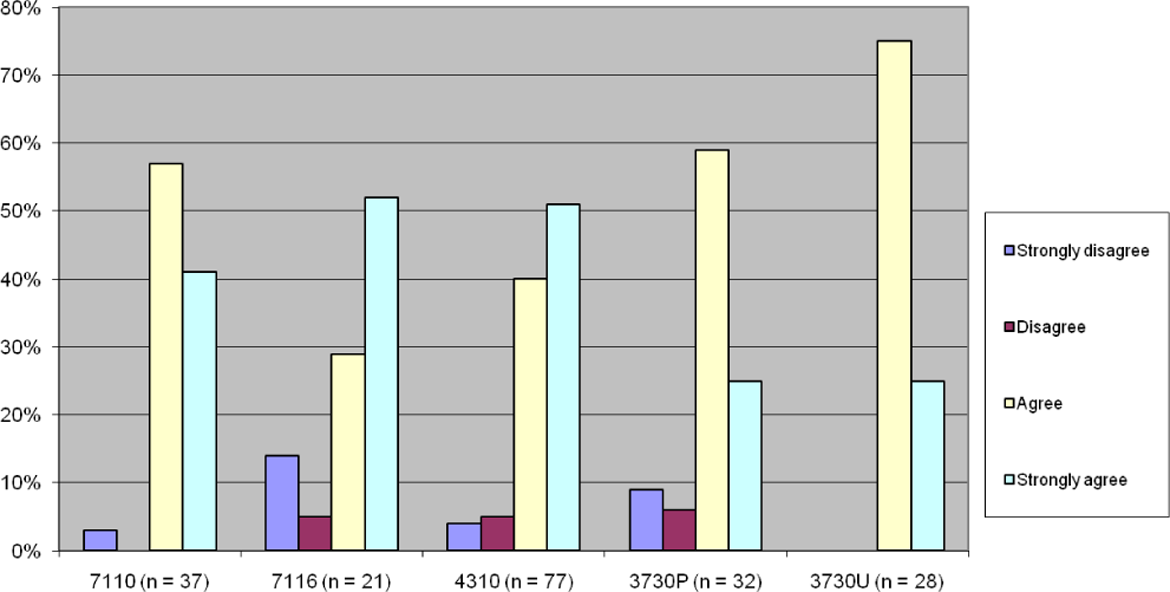
Students’ survey responses to questions 2–6: You worked on a [assignment] for [instructor name]’s class. To what extent do you agree with this statement? I understood the components of the writing assignment (the pretest, the draft, the final version, the meetings with my writing consultant, the posttest) that I needed to complete in order to complete the writing assignment.
In answering question 7, students offered several suggestions concerning how the components of the assignment could have been made more clear. They suggested that their instructor or their writing consultant should spend more time in class discussing the assignment and instructor expectations for it. They also wanted more detailed directions for the assignments. For example, one ACCT 4310 student wrote about the scenario for the risk analysis assignment, “It was difficult to tell whether the company was already a client or if they were just a potential client.” Students also suggested that we make available more examples of papers that they could use as models. This suggestion was especially salient in the comments of both SCMN 3730 classes. These students worked on a white paper and a feasibility report—two genres that were likely unfamiliar to the students. One SCMN 3730 student wrote, “I was a little bit unclear about the format of the paper. I wished that I could have seen more examples of other white papers.” Finally, students suggested that we work harder to make the number of mandatory conferences clear at the semester’s outset because they did not understand that they were required to attend four conferences. One ACCT 7110 student wrote, “The only thing I was unclear about was that the floating conferences were mandatory.” Students’ reported confusion about the number of mandatory conferences jibes with some students’ rush to schedule more conferences with their consultants toward the end of the semester, causing the consultants to feel pressured to squeeze extra conferences into their already full schedules.
In responding to question 8, the students overwhelmingly indicated that the consultants helped them improve their writing on the writing assignment (see Figure 2 .). In their responses to question 9, students were slightly less likely to say that the consultants helped them improve their professional writing in general; even so, from 75% to 96% of the students rated their consultants as either helpful or very helpful (see Figure 3 ).
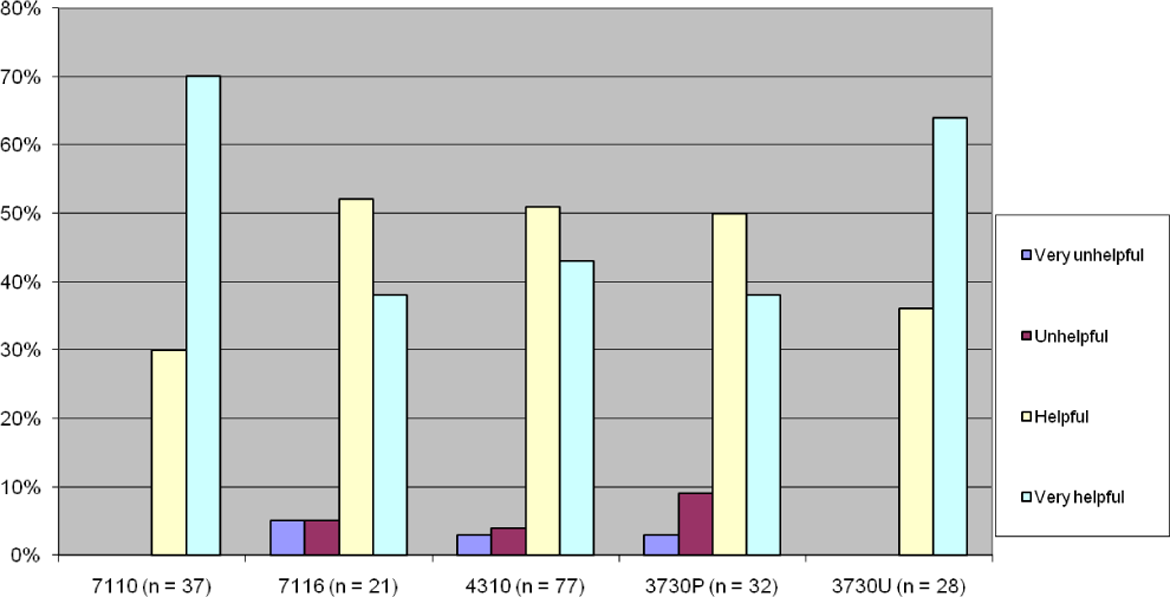
Students’ survey responses to question 8: How much did your writing consultant [name(s)] help you to improve your writing on the writing assignment for your class [class name]?
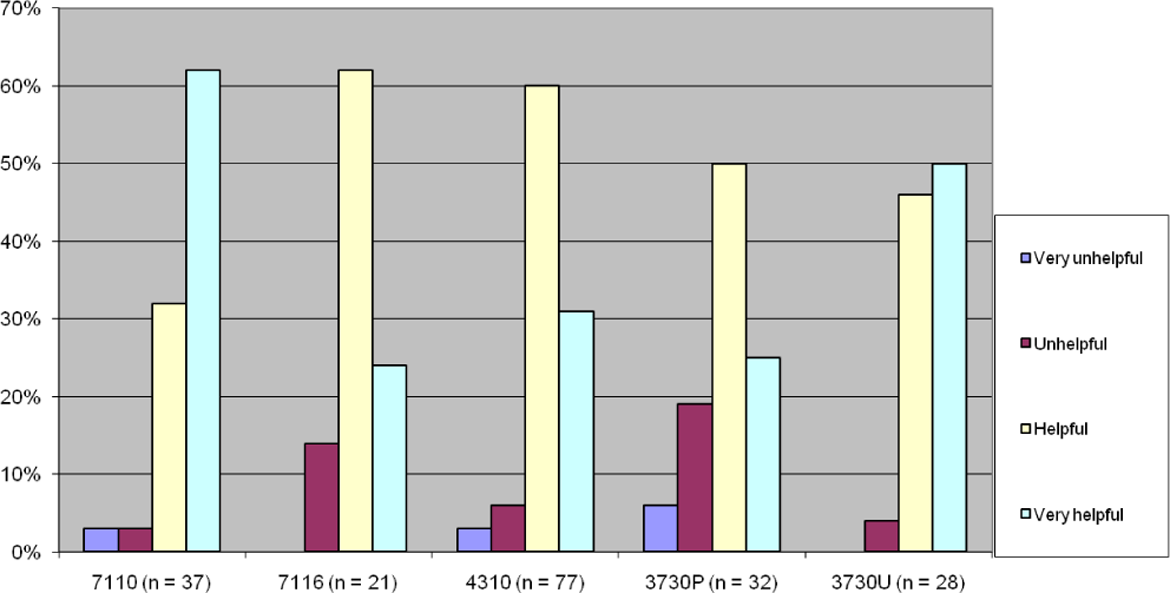
Students’ survey responses to question 9: How much did your writing consultant [name(s)] help you to improve your professional writing (writing for accounting or writing for supply chain management) in general?
In answering question 10, which asked students to explain their ratings in the previous two questions concerning the helpfulness of the consultants, students overwhelmingly expressed that they valued their discussions with their consultants. For example, one SCMN 3730 student working on a feasibility report wrote, “G was excellent! … I relied heavily on G. If it were not for him, I would not have been able to put together the paper I did.” An ACCT 4310 student wrote, “My writing consultant was definitely helpful. After each meeting I always felt more confident about my writing. She was also great about answering any questions that I had. An ACCT 7110 student wrote, “V was GREAT! She was a huge help to me, and really directed the progression and development of my memo. She offered great advice and encouragement throughout the process. She was also readily available to meet with our class, and she was so nice! I would love to have her help again in a future writing assignment!!” And an ACCT 7116 (the online class) student wrote, “J was prompt with responses and suggestions. Meetings with her were always helpful no matter what stage of the process you were in.” Students also pointed out some limitations of their consultant’s help. A few students commented that at times their consultant’s answers to specific questions (e.g., about format) contradicted what their instructor had said. These comments make salient the added complexity that comes from incorporating into a class another source of expert feedback on writing and the need to ensure that the assignment and schedule are detailed and clear.
Question 11 asked students to assess the assignment, rather than their consultant, in regard to how helpful it was in improving their ability to write for their profession. Their responses indicated that they saw the assignment as helpful (55–68%) or very helpful (13–27%) in this regard (see Figure 4 ).
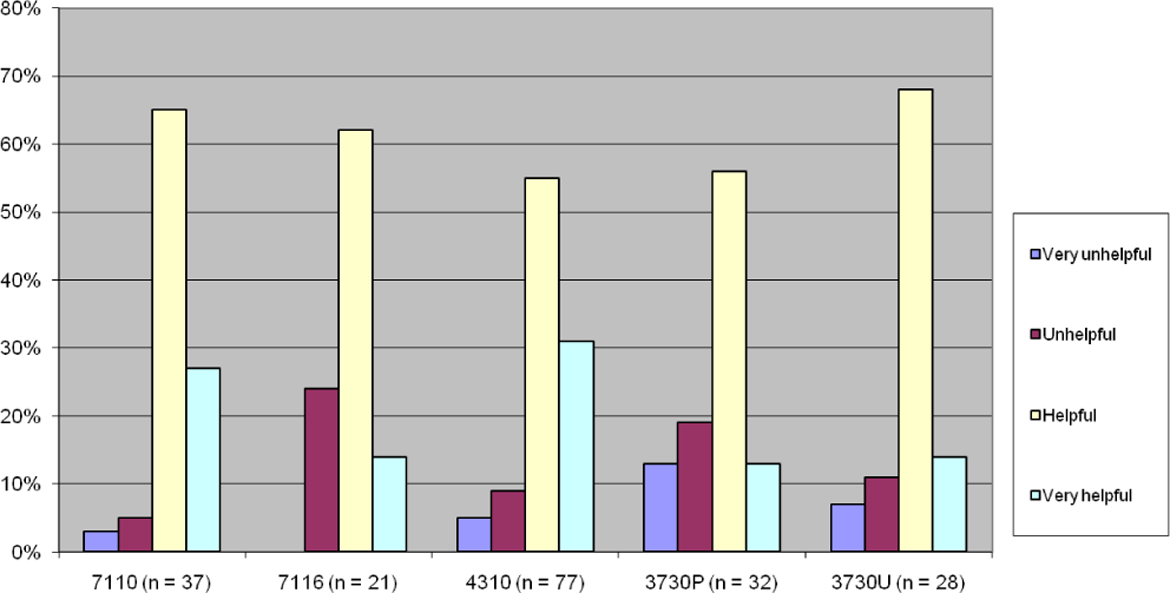
Students’ survey responses to question 11: To what extent did working on this writing assignment help you to improve your ability to write for your profession (e.g., accounting, supply chain management)?
Even more informative are students’ responses to question 12, which asked students how the assignment could be changed to be more helpful for improving their ability to write for their profession. Students had several suggestions. A few ACCT 7710 and 7116 students said that the assignment should be more tightly focused on students’ specialties (e.g., tax accounting) and thus more tied to a “real world environment.” Such comments from graduate students might suggest allowing them more freedom in choosing a topic for their research and writing. And some students in SCMN 3730 said that the assignment’s topic should be limited in scope to ensure that the necessary content (e.g., description and analysis of Walmart’s supply chain) can be covered within maximum word count.
Finally, in answering question 13, students indicated that they were satisfied (54–71%) or very satisfied (14–35%) with their experience working on the writing assignment throughout the semester (see Figure 5). With this question, we aimed to assess students’ satisfaction with their overall experience. Although the results suggest that students did not encounter many serious problems, they also suggest areas that need improvement. In question 14, we tried to prompt students’ input on how we might improve the BWP by asking them for further comments about their experience writing in the BWP class. Unfortunately, only 47 students responded to this prompt. Those who did respond mainly reiterated their appreciation for their writing consultants. A few pointed out their surprise that the assignment turned out to be useful. One SCMN 3730 student who wrote a feasibility report commented, “Better than I thought it was going to be. It actually helped my writing and allowed me to get a grasp of the business technical writing style.”
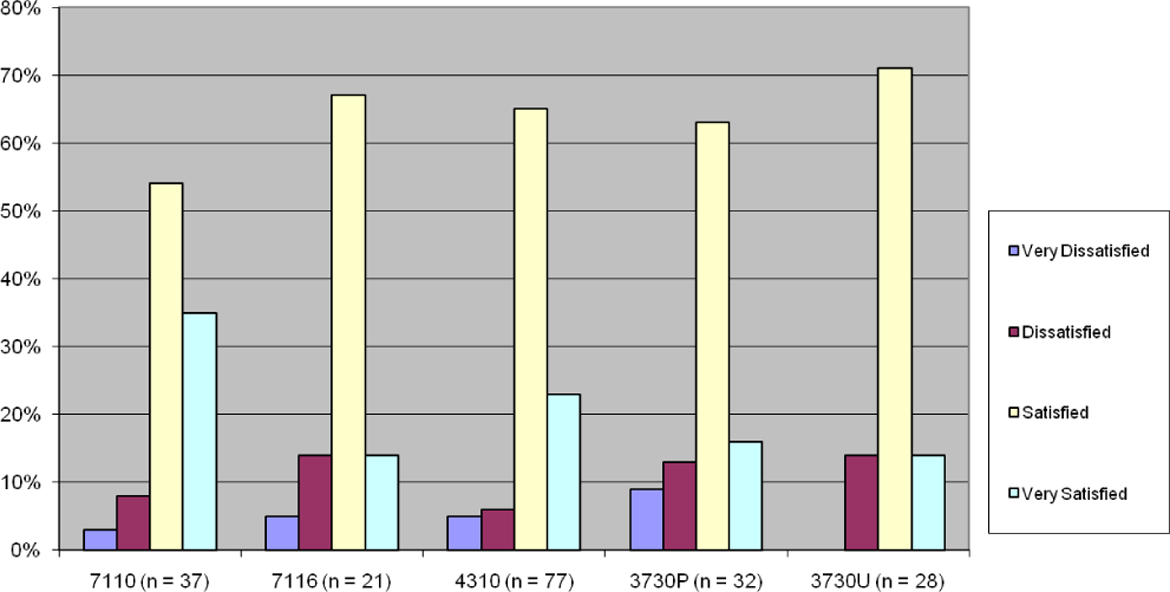
Students’ survey responses to question 13: Overall, how satisfied are you with your experience working on the white paper/feasibility report/consultation memo/risk analysis?
In sum, while some students saw the writing assignment as peripheral and unrelated to the subject matter of their class, most acknowledged that they had learned something about writing for their chosen field.
Conclusion
The BWP features substantial one-on-one conferencing and written feedback from trained writing consultants. Unlike many other WAC or WID programs, it minimizes the time COB faculty need to devote to discussing writing in class, responding to students’ papers, and meeting with students about their writing. And the BWP’s WID approach achieved good results. Students were satisfied with their experience and the improvements that they perceived in their writing ability. Faculty members were satisfied with the student outcomes. And the consultants were satisfied with their work yet noted ways to make the program stronger in the second iteration. In conclusion, I discuss the improvements we have made to the BWP and the extent to which we have been able to sustain the program.
Improvements to the BWP
Although the first iteration of the BWP was successful in many ways, we made some changes in the second (spring 2011) iteration. As the consultants’ feedback at the end of fall 2010 made clear, we should have worked with COB faculty at the outset to set a policy for missed conferences. Such a policy need not be one size fits all, even for faculty housed in the same department within the college. In the BWP’s first iteration, COB faculty worked diligently with me and the consultants to implement a conference-attendance policy when students began to miss scheduled conferences about six weeks into the semester. (Although this problem was nearly nonexistent in the graduate classes, it was particularly bad in undergraduate courses in which attendance was not required.) As consultants noted in their feedback, when they needed to meet with all the students in the class in just a few weeks (e.g., before the final version was due), missed conferences were especially problematic. Toward the end of the fall semester, consultants spent entire days in conferences, exhausting themselves; even so, some students who had missed their conferences found that no consultant hours remained available. We were able to circumvent this problem by asking students to make up their remaining floating conferences by meeting with one of the two business writing consultants who were being paid by the hour to work with all COB students—not just the ones enrolled in BWP courses.
In the BWP’s second iteration, COB faculty implemented policies involving lowered grades for missed conferences and other BWP components. The consultants and I worked with faculty to determine how students’ grades would be incrementally affected by missing components of BWP participation such as conferences and various writing-assignment deliverables. Faculty implemented incremental grade reduction for missed components of BWP participation in different ways. For example, they subtracted points from the grade for class participation or from the final grade for the writing assignment. All faculty incorporated a fair and measured way to deal with students who failed to meet with their consultants and submit deliverables throughout the semester. We also lowered the number of conferences from four to three, and we labeled them more informatively: planning, revising, and editing. In spring 2011, consultants worked with each student once in each of the three (approximately three-week) conference blocks. Students seemed to better understand the schedule of one conference per block; their survey responses from the BWP’s first iteration showed not only that they thought four conferences were too many but also that they did not understand the purpose and scheduling of the floating conferences.
Besides the problem of students missing scheduled conferences and the burden of rescheduling these conferences, consultants pointed out that many students came to conferences—particularly the planning conference—unprepared. To ameliorate this problem, in spring 2011, we required from students deliverables due at the beginning of each conference: An outline for the paper and three summaries of articles that they intended to use as source material were due at the planning conference. Consultants encouraged students to ask for help at the reference desk or to attend a library workshop developed for them by AU’s business-subject librarian. In this library workshop, students learned about not only the basics of business-related research (e.g., using databases such as Lexis-Nexis and Business Source Premier) but also advanced search strategies and specialized databases (e.g., EDGAR SEC Filings and Hoovers). A first revision (after the turned-in draft) was due at the revising conference, along with a bulleted list of changes from the first draft. A second revision with another bulleted list of changes was due at the editing conference.
Requiring such deliverables pushed students to prepare for their conferences and, more important, to get an early start on their research and writing.
Sustainability of the BWP
We implemented our BWP right before a university WAC initiative began in earnest. This top-down university initiative mandated that the colleges plan how they would incorporate writing into their classes. The initiative is grounded in a philosophy about writing that is different from the BWP’s philosophy. In the BWP, we value the expertise of writing consultants trained in business communication and effective tutoring and feedback strategies. As graduate students engaged in research about writing or professional communication, the BWP consultants bring their know-how to faculty who to some extent lack confidence in assessing writing and to students who need to develop their ability to write in their discipline. But in the university initiative, students (mainly undergraduates) housed in colleges such as AU’s COB are trained as peer tutors. While there is much to be said for the feedback of peers who have some measure of subject-matter expertise, the usefulness and credibility of this feedback may fall short of that of feedback from writing consultants who have a scholarly background in the writing process and business communication, training in relevant disciplinary genres, and some knowledge of the business subject matter. In addition, these peer tutors do not relieve the faculty or supply to students the substantial and individualized feedback—both written and spoken—across the course of a semester and throughout the development of a writing assignment as do the BWP writing consultants.
Taking on the job in fall 2010, the new dean of the COB determined that maintaining the BWP would muddle the matter of COB writing—particularly for undergraduate courses, which fell under the umbrella of the university-wide writing initiative. For example, students might confuse class-specific BWP writing consultants with writing-center tutors (paid per hour from the writing-initiative budget). Given that the writing initiative required that the COB departments find ways to incorporate writing into their classes, the dean determined that BWP writing consultants, whose positions each cost nearly $14,000 per year, would no longer be funded. Thus, the COB discontinued the BWP in undergraduate courses after spring 2011.
Even in light of this disappointing outcome, the participating COB administrators and faculty view the BWP as a success. They are continuing the BWP in 2011–2012 in graduate classes—courses outside the umbrella of the writing initiative. The COB’s School of Accountancy funds two BWP consultants. As in the previous year, in 2011–2012, writing consultants work with students (on campus and distance) who are taking classes in research methods as they work toward a Master of Accountancy.
In sum, as the positive responses from students, COB faculty, and writing consultants show, the research-driven BWP has been a successful model, especially after the changes we made in response to the fall 2010 results. We continue to look for ways to improve this approach that relies on writing consultants to help COB students learn to write their discipline’s discourse.
Footnotes
Appendix A
Appendix B
Acknowledgments
Thank you to David Russell and the anonymous reviewers for their detailed and thoughtful feedback. I appreciate the way you pushed me to improve the article. Thanks very much to Lori Peterson for her excellent copyediting. Thanks also to my colleague and friend Isabelle Thompson, who read more than one draft of this article. Finally, thank you to COB faculty M, J, P, and U for their participation in the BWP.
The author declared no potential conflicts of interest with respect to the research, authorship, and/or publication of this article.
The author received no financial support for the research, authorship, and/or publication of this article.