







Abstract
Background
The cutting operation of the mat-type paddy nursery for mechanical transplanting poses significant human postural challenges, leading to potential health risks for farmers.
Objective
A nursery cutter was designed, developed and evaluated considering the ergonomic guidelines for the human farm workers.
Methods
Anthropometric dimensions of 5th and 95th percentile of the Indian Agricultural workers was considered for the design of nursery cutter. The total length of cutter 1205 mm aligns with 80% of the 95th percentile male acromial height ensuring operator comfort. Additionally, a 413 mm handle crossbar length (95th percentile female elbow-elbow breadth) and a 280 mm width (5th percentile for both genders) were selected for ergonomic compatibility and ease of operation. Computer-aided design with human manikin was simulated for the postural evaluation.
Results
The developed equipment could achieve a cutting capacity of 325–425 mats/ h with uniform cutting. The cost comparison analysis revealed that cutting mats for one hectare with the manual nursery cutter was significantly lesser (INR 71.00–89.00) than using a sickle/knife (INR 162.00–202.00) or an indigenous cutter (INR 146.00–172.00). Physiological results of workers showed that heart rates, oxygen consumption rate and energy expenditure rate ranged from 104–120 bpm, 0.66–0.88 l/min, and 13.7–18.37 kJ/min, respectively, indicating that the physical demands on workers were within moderate limits rather than heavy workload as in case of other conventional methods.
Conclusions
Adopting ergonomic design equipment, the PAU manual nursery cutter can potentially enhance productivity, timeliness in operation, reduce operator fatigue, and mitigate health risks associated with nursery cutting operations.
Keywords
Introduction
Rice cultivation plays a vital role in ensuring food security and supporting the livelihoods of millions of farmers worldwide. Mechanical paddy transplanters have gained significant popularity in rice-growing regions around the world. They are increasingly being adopted due to their ability to improve transplanting efficiency, save labor, and uniform plant spacing. Several countries, including Japan, China, South Korea, Thailand, Vietnam, and the United States, developed and adopted mechanical transplanting technology to varying degrees.1,2 Some popular types of mechanical paddy transplanters include 4-wheel riding type transplanters, 2-wheel walk-behind type transplanters and single-wheel riding type transplanters.3–6
Estimates indicate that out of Punjab's total cultivated area of 4.13 million hectares, approximately 2.92 million hectares were under paddy cultivation.7,8 During the year 2022–23, mechanical transplanting was employed on nearly 26,000 hectares, through more than 850 walk-behind transplanters and 250 four-wheel riding-type rice transplanters. 9 These mechanical transplanters require mat-type nurseries for paddy transplanting, which are typically cut by manual cutting using sickles/ knives (Figure 1a), or indigenous equipment (Figure 1b). The cutting and uprooting processes present considerable ergonomic challenges, exacerbating fatigue and potential health hazards for farmers.5,7,10 The manual cutting of paddy nurseries necessitates farmers to assume awkward postures involving repetitive bending, squatting, kneeling, and lifting over extended periods.11,12 These awkward positions can place excessive strain on muscles and joints, resulting in discomfort, fatigue, and a higher risk of musculoskeletal disorders.13–15 Furthermore, the inadequate ergonomics of the indigenous equipment further contributes to physical fatigue among farmers.16–18
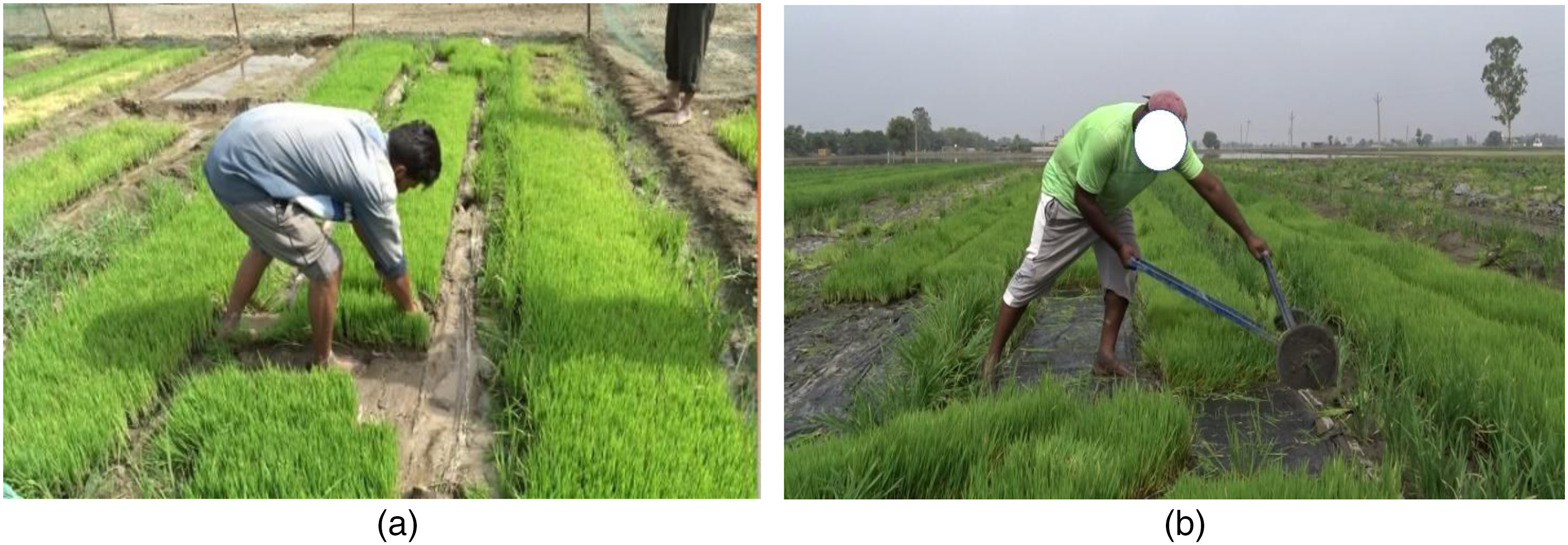
Cutting of seedlings mats of paddy nursery conventionally with a) knife/ sickle; and b) Indigenous nursery cutter.
Several studies have investigated the cutting, uprooting and transplanting of wash root-type paddy nurseries for manual transplanting, including research by.12,19 It's important to highlight that there is currently a noticeable gap in the literature concerning the cutting of mat-type paddy seedlings designed for transplanting using a paddy transplanter. Despite this gap, indigenous cutters crafted by local artisans exists, among which one specific type has been compared in the current study. To address these pressing challenges and improve the efficiency of mat-type paddy nursery cutting, a manual nursery cutter based on the ergonomic guidelines was designed, developed, and evaluated. The development of this ergo-efficient equipment minimizes labor intensity, improves timeliness in operation, reduces nursery damage, and achieves uniform cutting of the mats. It can save on labor expenses and potentially allocate those resources to other farm operations efficiently.
Methods
A manual nursery cutter was designed and developed during 2022–23 considering the anthropometric dimensions, physical requirements, comfort, and safety of human workers. Human postural assessment criteria were involved considerations related to the position that workers should adopt at their workplace to ensure the effective execution of various tasks. Often, the worker's posture is influenced by the height of the working surface, which can be constrained by practical limitations in the field. A favorable working posture could be maintained with minimal static muscular effort, enabling efficient task performance with minimal discomfort. Research has indicated that nursery cutting can be accomplished in either a squatting or bending posture, with little difference in energy expenditure. 20 However, bending posture results in greater postural discomfort for the worker. Therefore, the concept of nursery cutting tasks was performed in a standing rather than a bending posture. The methodology for design consideration and performance evaluation of the manual nursery cutter is described as under:
Design of manual nursery cutter
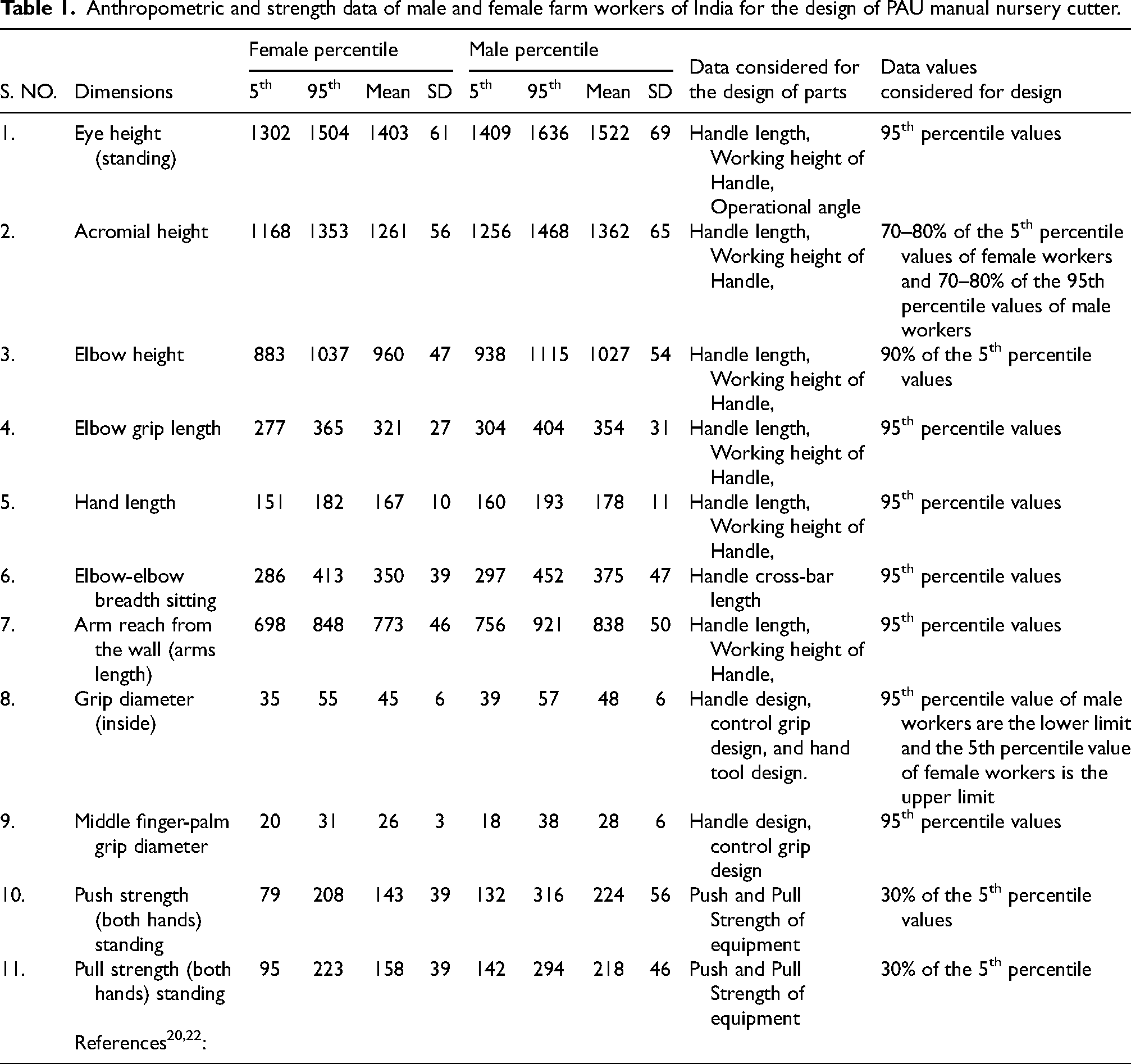
While determining the dimensions of the equipment, it was essential to consider the human body dimensions of the users. To achieve this, anthropometric data and strength parameters of farm workers in India20,21 were considered. Anthropometric data and strength parameters played a significant role in designing the different parts of equipment, viz. length of the handle, diameter of handle, placement of the hand on the handle grip, length of cross bar length of handle, push and pull force, etc., suitable to the diverse human population. The design parameters were considered to accommodate 90% of the individuals ranging from the 5th to the 95th percentile within the target user group. This indicates that those falling outside these percentiles might still be able to use the equipment, although with potentially reduced efficiency and comfort levels. The anthropometric parameters of male and females farm workers of India were considered during this study included eye height (while standing), acromial height, elbow height, elbow grip length, elbow-elbow breadth sitting, grip diameter (interior) and middle finger palm grip diameter (Table 1).
Anthropometric and strength data of male and female farm workers of India for the design of PAU manual nursery cutter.
Push and pull strength
Strength parameters, such as push/pull strength with both hands in a standing posture, were also taken into account in the design considerations. The maximum push force applied by a male and female worker using both hands while in a standing posture is 498 N and 302 N, respectively.20,22 However, to maintain better muscular efficiency, the dynamic effort of a repetitive nature should not exceed 30% of the maximum push force. 23 If more force is needed than this, the operator will have to take frequent rest breaks in between the work schedule depending on the severity of the work.
Dimensions of cutting disc
The dimensions of the cutting disc (thickness and radius of cutting discs, and distance between two discs) in the design of a nursery cutter were important parameters that significantly impacted the cutter's overall performance, effectiveness, and reduction in worker's effort. These cutting disc dimensions were determined by considering factors such as soil resistance, the force required for soil cutting, and operational requirements.
Equation (1) was used to determine the depth of the cutting disc, as it established a relationship between push force, soil resistance, and various design parameters.
24

A distance of 280 mm was chosen to match the requirement for a nursery mat width of 280 mm to ensure the cutting of the mat with the desired mat width. The sustainable push force was considered 30% of the 5th percentile of push strength of Indian female agricultural workers. 25 The specific soil resistance, with a value of 0.02 N/mm² for heavy soil was considered. 26 The angle of operation of the nursery cutter by a worker should be in the range of 30–45°. 25 Solving for dc, the cutting depth lies within the range of 5.00 mm to 6.00 mm. As two cutting discs are being used in the nursery cutter, therefore the thickness of one disc should lie within the range of 2.5 mm to 3.0 mm. Therefore, the thickness of 3.0 mm for each cutting disc was taken so that during the cutting operation, the disc will not get bent as in the case of a conventional nursery cutter. The radius of the cutting disc (Rc) affected the depth of soil cutting and directly correlated with the cutter's efficiency. A radius of 145 mm was considered which is aligned with operational requirements while striking an optimal balance between soil cutting depth and operational stability.
Dimensions of the handle of the equipment
For the design of handle dimensions, three major guidelines were considered (Figure 2);
The handle length, and operational angle are important to accommodate operators’ requirements, accounting for variations in users’ anthropometric dimensions. Both of these parameters are interdependent, with the angle determined by functional design and typically ranging from 30 to 45 degrees When using a long-handled tool, the upper limb and the equipment should align in a straight line. The height of the nursery cutter should fall within the recommended range of 70% to 80% of the acromial height of human workers.
25
That the overall height of equipment, including the handle, should not be below the eye level of a standing worker.
27
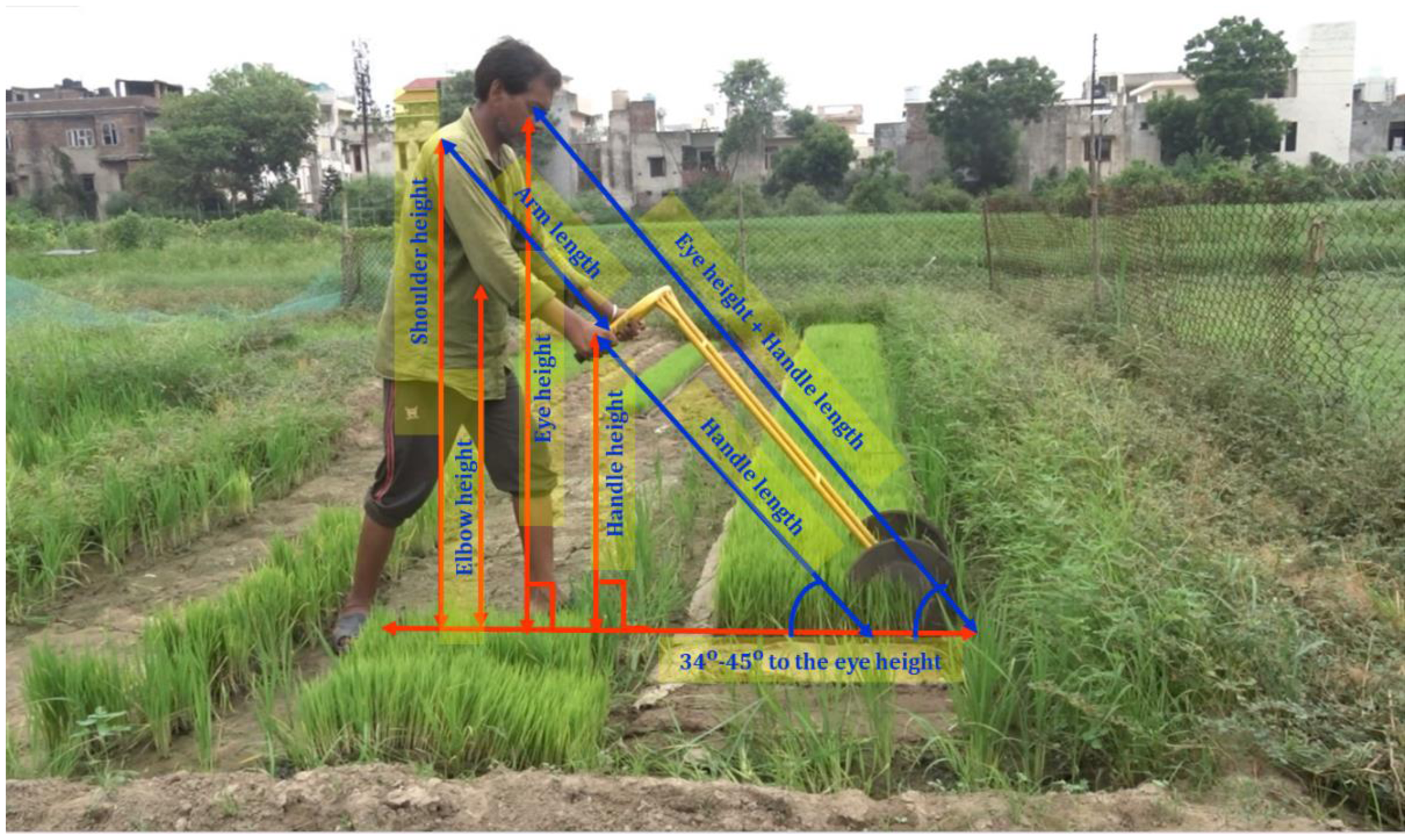
A view of PAU manual nursery cutter with the major ergonomic design consideration.
Therefore keeping in view the above facts the total length of equipment was determined with the following considerations,

By equating equations (2) and (3) and Solving for L, we get: Length of handle of equipment =1060 mm. Now, the total length of equipment, TL = L + Rc = 1060 + 145 = 1205 mm
The total length of the nursery cutter, including the radius of the cutting disc, was determined to be 1205 mm, which equates nearer to 80% of the 95th percentile male acromial height of 1538 mm. Thus, it satisfies the condition that the actual height of the nursery cutter should fall within the recommended range of 70% to 80% of the acromial height of human workers.
25
The working height of the handle from the ground while operating by human workers was determined as under:

Diameter of handle grip
The cylindrical shape of the handle grip was considered for the comfort of the operator's effort. The grip's diameter was selected to ensure that while holding it, the operator's longest finger didn't touch the palm and didn't exceed the internal grip diameter. As recommended, the grip diameter should be chosen to allow the operator's longest finger to not touch the palm while ensuring it doesn't exceed the internal grip diameter. 22 As both male and female workers may use the equipment, the lower limit was based on the 95th percentile middle finger palm grip diameter, which was 38 mm, while the upper limit was determined by the 5th percentile grip diameter (inside) of male workers, typically 45 mm. 20 As a result, the recommended handle grip diameter was 45 mm, ensuring user comfort and ease of operation.
Handle cross bar length (HCBL) and width
The handle crossbar length was determined based on the observation that pulling and pushing power exhibited similar magnitudes whether the arms were positioned sideways or forward in the sagittal plane. To minimize operator fatigue during continuous work, the handle crossbar length was aligned with the elbow-elbow breadth. Considering both male and female operators, the 95th percentile elbow-elbow breadth for each group (413 mm for females and 452 mm for males) was taken into account. Consequently, a handle crossbar length of 413 mm was selected, ensuring ergonomic compatibility during operation. The handle crossbar width was considered at 280 mm to facilitate the ease of operation for both male and female operators of the 5th percentile.
Conceptualization and computer-aided design (CAD)
Computer-aided design (CAD) was used to create the detailed 3D models, incorporating ergonomic considerations. This facilitated the design of components such as the handle, cutting discs, axles, and the adjustable features while incorporating the anthropometric dimensions. The development of a solid model for the nursery cutter was imperative to conduct finite element analysis of various components, and this was achieved through the utilization of CATIA V5 DS5 (Figure 3). Initially, 2-D drawings were developed to represent the handle, fork-hitch, axle, U-clamp, and twin discs. These 2-D drawings laid the foundation for generating isometric views, which, in turn, facilitated the construction of the solid model. By employing a feature-based modelling technique for each part, these components were assembled to form the complete nursery cutter.
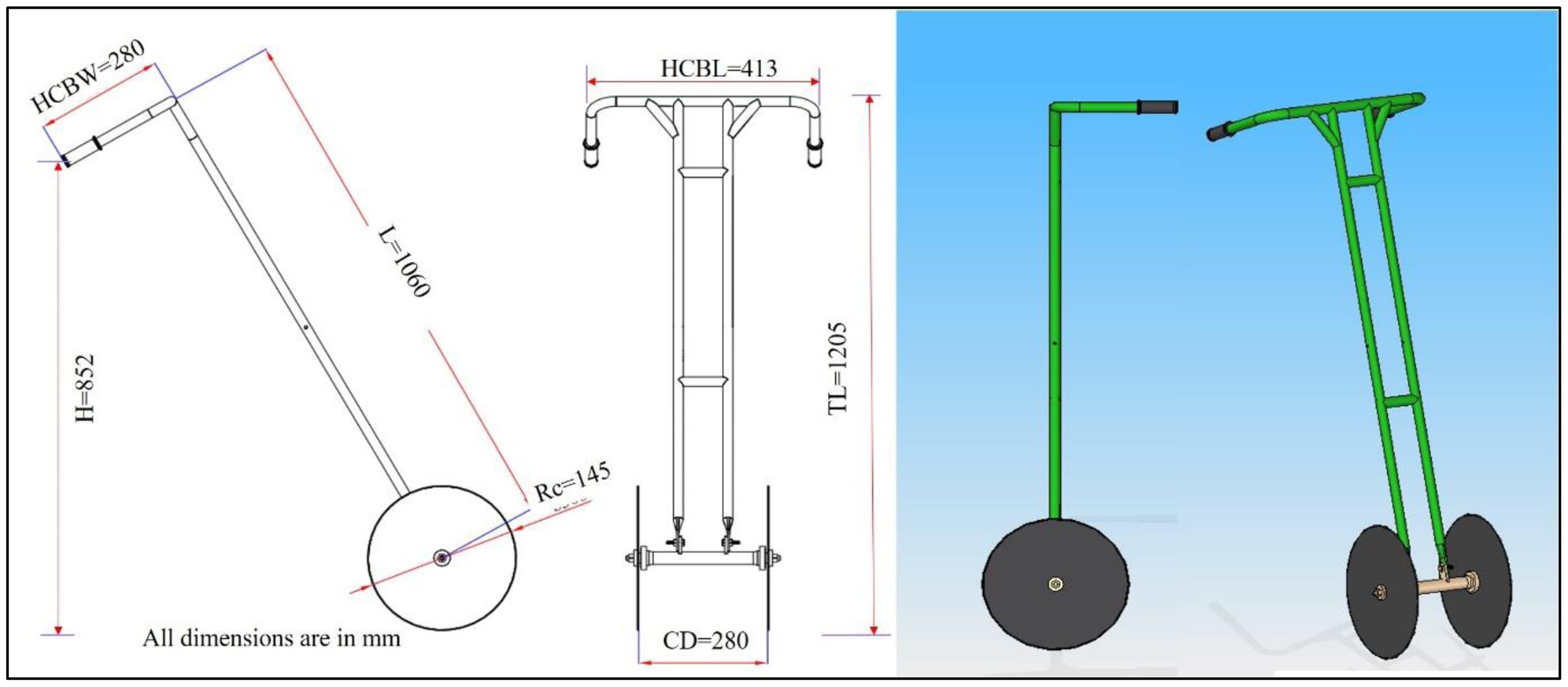
CAD drawings of the developed PAU manual nursery cutter with various dimensions. (Where, H = Working height of handle nursery cutter; L = Length of handle of equipment; TL = Total length of the equipment, Rc = Radius of cutting disc; CD = distance between two discs; HCBW = handle crossbar width, HCBL = Handle crossbar length).
Material and weight of equipment
The selection of appropriate materials and the design of the handle were considered to ensure the strength, durability, and cost-effectiveness of the manual nursery cutter. Various manufacturing processes, such as casting, forging, machining, and welding, were undertaken based on the chosen materials. Component designs were optimized for ease of assembly, maintenance, and potential repairs. A standard lightweight 25 mm outside diameter conduit pipe made of mild steel (M.S.) was chosen for the handle of the nursery cutter. Adhering to ergonomic standards20,22,23 the cutter's weight was designed to be around 30% of the operator's body weight of Indian farm women at the 5th percentile of body weight. To accommodate operators of varying heights, two adjusting brackets were included, allowing the handle's height to be customized to the operator's elbow height level for maximum comfort. During operation, the handle's working height could be adjusted to match the operator's elbow height and shoulder height.
The nursery cutter comprises several components: a flat iron frame, a tubular pipe handle, twin mat cutting discs, and handle height-adjusting brackets. These components are securely fastened to the frame. Two round MS sheet discs are incorporated to provide stability during nursery cutting operations. These discs are connected via a common cycle hub, facilitating smooth rotation with minimal friction. The cycle hub was affixed to the frame. The nursery cutting discs, made from medium carbon steel, were hardened, tempered, and sharpened at an angle to facilitate the cutting of mat-type paddy nurseries.
Development process of the equipment
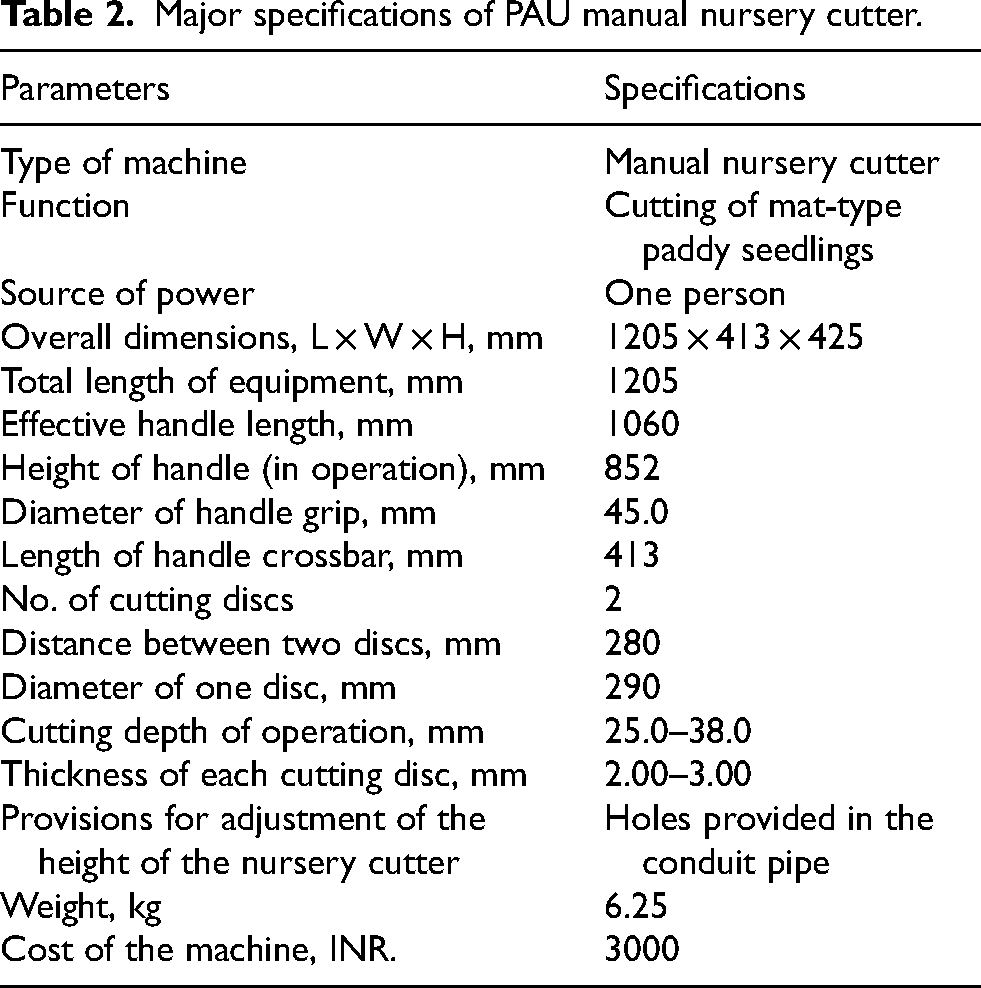
The developed nursery cutter of mat-type paddy seedlings emerges as a promising advancement in farm equipment design. The major specifications of the equipment are presented in Table 2. This equipment is easily operated by one person. It contains two discs mounted on an axle at 280 mm. The radius of each disc was kept at 145 mm. The cutter's 280 mm cutting width was in line with the common 300 mm spacing between the rows in mechanical transplanting systems. The developed mat-type paddy nursery cutter ensured consistent cutting depth, easily handling mat thickness ranging from 250 mm to 381 mm, an option made by different farmers with different soil and paddy seedling conditions. The equipment's ability to maintain uniform cutting depth across varying mat thicknesses ensures its practicality and adaptability. With its manageable weight of (6.25 kg) and user-friendly operation, it stands poised to contribute positively to the labor-intensive processes of mat-type nursery cutting.
Major specifications of PAU manual nursery cutter.
Ergonomic evaluation of the nursery cutter
The developed nursery cutter was operated by pushing and pulling strokes. The forward or pushing stroke serves as the working stroke, during which the operator exerts force and simultaneously lowers the handle to engage the discs with the soil, effectively cutting the nursery mats. In the pulling or backstroke, the operator raises the handle to draw the mats towards them. This cycle is repeated as the operator moves forward to ensure continuous cutting. After cutting each mat, the operator collects and places them aside. To address physical strain and the severity of cutting of paddy nursery tasks, the impact of a newly developed PAU nursery cutter on human posture and physiological conditions was evaluated.
Selection of subjects, their physiological measurements and calibration
For this ergonomic evaluation ten farm workers were selected and their anthropometric measurements were measured following the guidelines of.
20
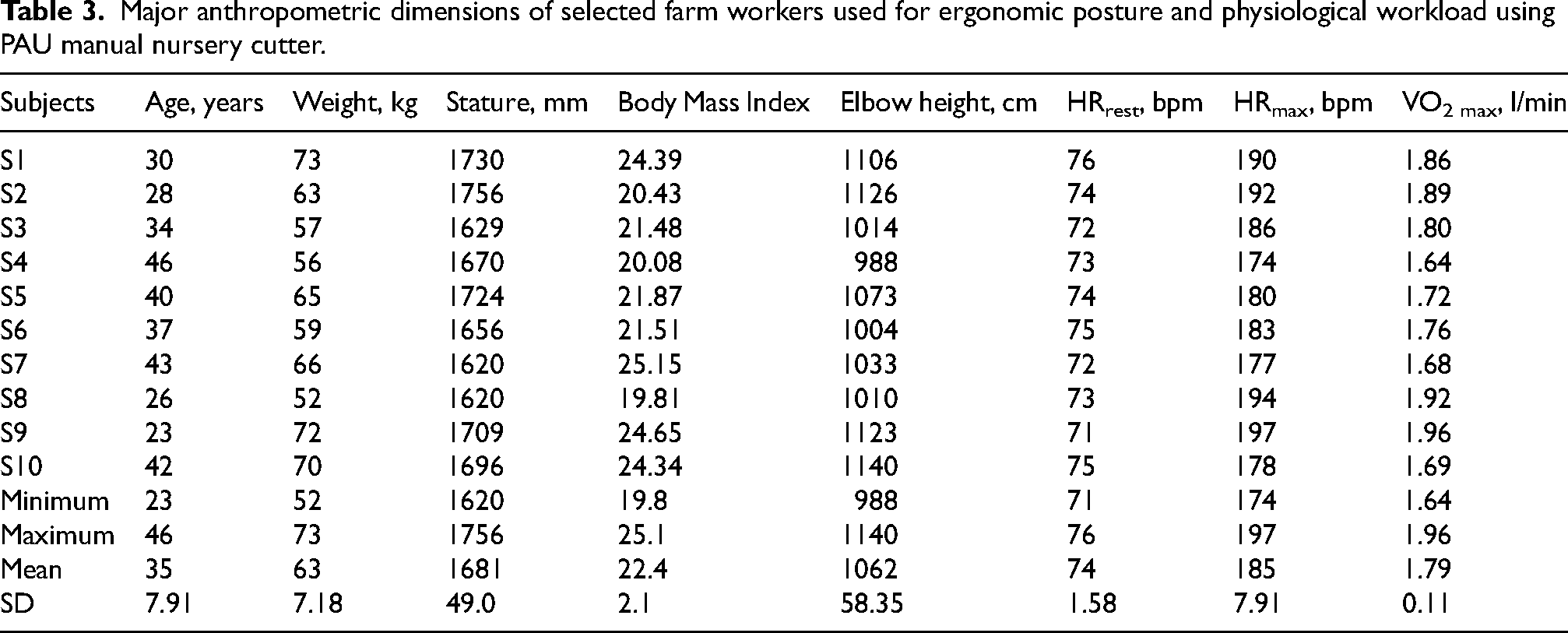
The selected farm workers exhibited mean age of 35 ± 7.91 years, stature of 1681 ± 49 mm, weight of 63 ± 7.18 kg and elbow height of 1062 ± 58 mm (Table 3). Heart rate and oxygen consumption rate were considered to assess the physiological workload of farm workers with participants having no history of musculoskeletal, cardiovascular, or respiratory issues. Subject-specific heart rate and workload curves were established through bicycle ergometer calibration, while oxygen consumption, measured via respiratory analysis, provided insights into overall fatigue levels. Maximum heart rate (HRmax) for each participant was determined using the formula:
Major anthropometric dimensions of selected farm workers used for ergonomic posture and physiological workload using PAU manual nursery cutter.
Where; HRmax = Maximum heart rate; A = Age of farm workers
The maximum oxygen consumption rate/ aerobic capacity (OCRmax) was evaluated through laboratory calibration, linking heart rate and oxygen consumption rate (OCR) using a bicycle ergometer and Computerized Ambulatory Metabolic Measurement Equipment (COSMED, Italy K4B2). The subjects were instructed to pedal the bicycle at a rate of 50 rpm, guided by a visual metronome displayed continuously on a computer screen. A manual protocol was implemented where the workload increased automatically by 15 W every 2 min through software. To ensure safety, each subject pedaled until their heart rate reached 75% of their targeted heart rate (HRmax), but they could continue beyond this if desired. Heart rate (HR) and oxygen consumption rate (OCR) values, measured per breath, were averaged into one-minute intervals using software. Calibration charts plotting HR against OCR were determined for each subject, and correlations between HR and OCR were developed. VO2(max) was determined by extrapolating the calibration chart to HR(max). These calibration charts and correlation equations were used to predict OCR for specific HR values recorded during field work. The resting heart rate of the selected subjects ranged in between 71–76 bpm, while the HR(max) lies in the range of 174–197 bpm. The VO2(max) of the subjects were observed 1.64 to 1.96 l/min (Table 3).
Measurements of physiological parameters of the subject at work
The physiological cost of work is influenced by various parameters, including operator health, heart rate, oxygen uptake, and basal metabolic rate. 20 Heart rate is a key indicator of physical exertion. Heart rate, which has a linear relationship with physical activity and oxygen consumption, was continuously monitored by Computerized Ambulatory Metabolic Measurement Equipment (COSMED, Italy K4B2) during field operations to evaluate the physical and physiological workload experienced by workers. The increasing heart rate correlates with escalating levels of physical stress and effort. When the heart rate is less than 75 bpm, the work is considered very light (Table 4). A heart rate between 75 and 100 bpm corresponds to light work, while 100 to 125 bpm indicates moderately heavy work. A heart rate between 125 and 150 bpm is classified as heavy, 150 to 173 bpm as very heavy, and anything above 175 bpm is considered extremely heavy.
Work severity characterization based on different ergonomic parameters.
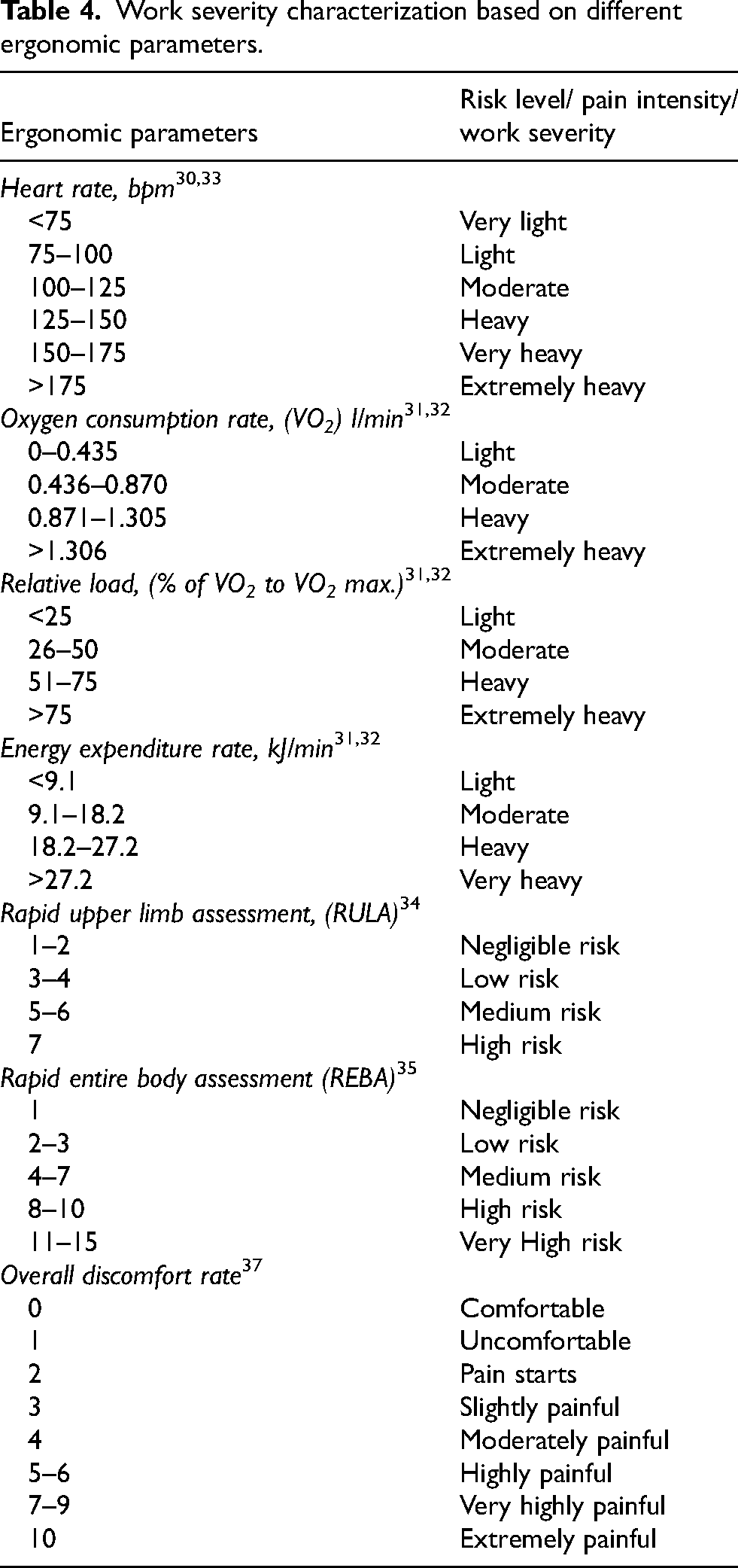
Oxygen consumption rate measures the volume of oxygen used per minute, reflecting metabolic demand and energy expenditure (Table 4). A VO2 rate from 0 to 0.435 l/min is considered light, 0.436 to 0.870 l/min is moderate, and 0.871 to 1.305 l/min is heavy. When the oxygen consumption rate exceeds 1.306 l/min, the work is classified as extremely heavy. These categories help in understanding the intensity of physical activities based on how much oxygen the body requires to sustain them. The oxygen consumption rate was determined by using the following equation:
20

The relative load provides insight into how demanding the work is relative to an individual's aerobic capacity. Relative load compares the oxygen consumption rate to the maximum oxygen consumption capacity (VO2 (max)). A relative load of less than 25% of VO2 max indicates light work (Table 4). If the relative load is between 26% and 50%, the work is moderate; between 51% and 75% is heavy; and any relative load above 75% is extremely heavy.
Energy expenditure rate (EER) was determined to quantify the physical effort in terms of energy used, highlighting the intensity of the work performed. It is the amount of energy used per minute and is another measure of physical workload. The calculated EER provide quantitative insights for optimizing workload distribution and task management, thereby reducing accidents and enhancing worker safety.28–30 When energy expenditure is less than 5.0 kJ/min, the work is very light (Table 4). An expenditure rate between 5.1 and 7.5 kJ/min is light, 7.6 to 10 kJ/min is moderately heavy, and 10.1 to 12.5 kJ/min is heavy. If the energy expenditure rate is between 12.6 and 15.0 kJ/min, the work is very heavy, and rates above 15.0 kJ/min are classified as extremely heavy. Energy expenditure rate (EER) was determined by using the following equation;31–33
Assessment of postural discomfort of the subject at work
A comprehensive ergonomic postural evaluation of the farm workers working on developed equipment was done utilizing various assessment tools and methods, including the Rapid Upper Limb Assessment (RULA), Rapid Entire Body Assessment (REBA), and Overall Discomfort Rating (ODR). These tools will be helpful in identifying ergonomic challenges, and assess the effectiveness of the developed nursery cutter to minimize ergonomic risks so that further guidelines and improvements could be made to optimize ergonomic design and its performance. 18
Rapid Upper Limb Assessment (RULA)
The RULA assessment primarily focuses on evaluating the postures of the neck, trunk, and upper limbs to pinpoint potential ergonomic risks. 34 The human manikin was produced and simulated in the CATIA software, along with the operation of equipment that uses the human manikin as the actual operator in the field. The RULA score in CATIA software was calculated by modifying the three distinct postures of each participant (Figure 4). The RULA score categorizes observed upper limb postures into risk levels, ranging from negligible to very high-risk level (Table 4). A RULA score between 1 and 2 indicates negligible risk, suggesting that the task is unlikely to cause harm. Scores of 3 to 4 represent low risk, where minor changes might be beneficial. Scores of 5 to 6 indicate medium risk, suggesting that changes should be considered soon to reduce the risk. A score of 7 signifies high risk, indicating that immediate changes are necessary to mitigate significant health risks.
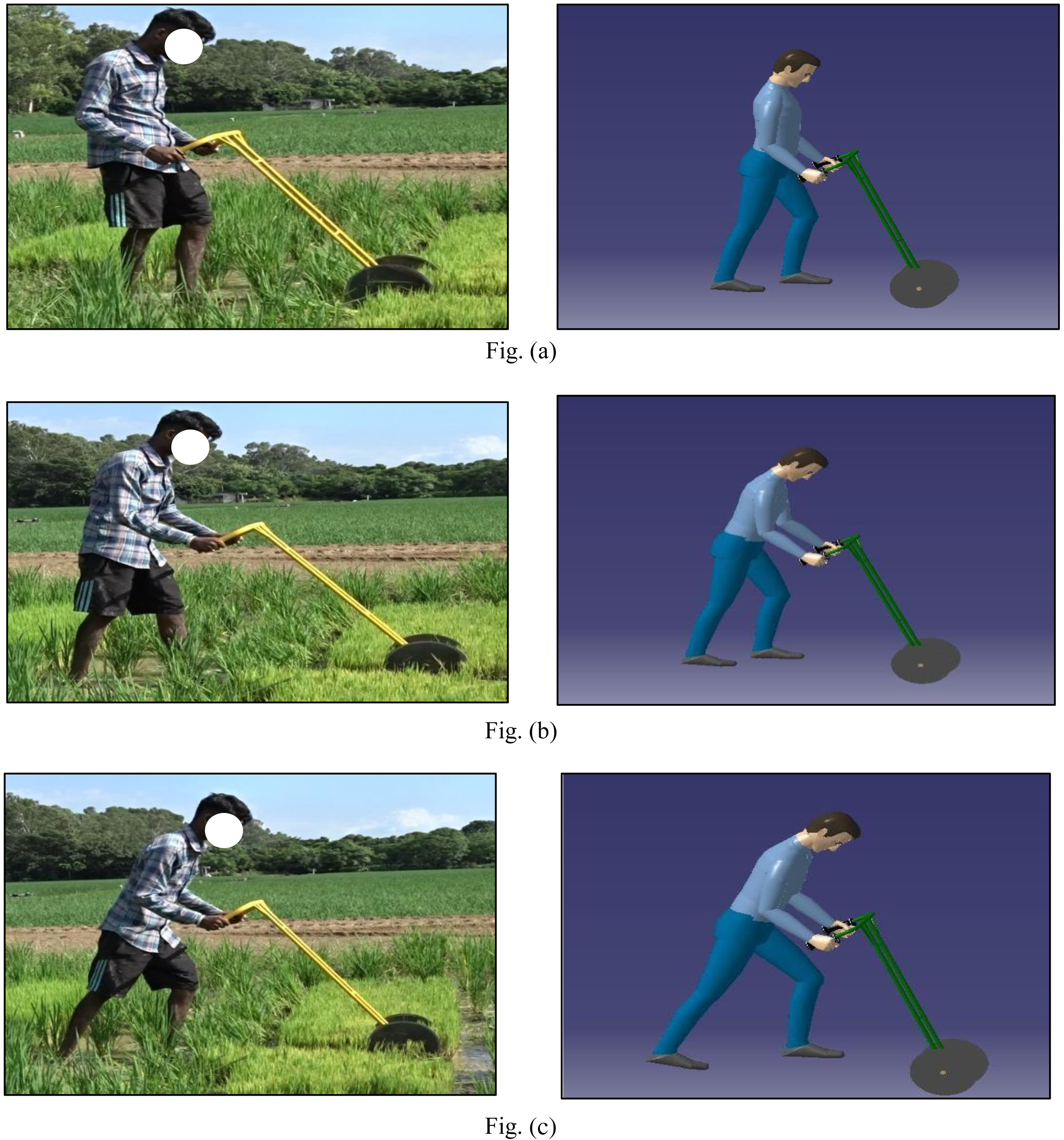
Actual working postures of subject-I and digital human modelling in CATIA for determining RULA scores while operator using PAU manual nursery cutter in different postures a) to c).
Rapid Entire Body Assessment (REBA) score
The Rapid Entire Body Assessment (REBA) score is a tool in ergonomics, aims to assess potential musculoskeletal risks related to entire body postures most frequently adopted by the workers. 35 The REBA score of all the subjects with three distinct postures were determined using CAPA software. 36 REBA assigns a numerical score based on posture parameters, such as joint angles and body positions, and provides recommendations for intervention based on the score obtained Table 4). The scoring system categorizes postures into five risk levels, from negligible to very high, each suggesting specific actions. A score of 1 indicates negligible risk, meaning the task is safe with minimal concern for injury. Scores of 2 to 3 suggest low risk, where minor modifications could improve safety. Scores between 4 and 7 are medium risk, recommending more prompt changes to prevent injury. Scores of 8 to 10 indicate high risk, necessitating immediate interventions to reduce severe health risks. Scores between 11 and 15 represent very high risk, indicating that urgent and significant changes are required to protect the worker's health.
Overall discomfort rating (ODR)
Overall discomfort rating (ODR) was used as a measure to assess the body discomfort arising as a result of working posture due to activity by the subject and measured as the category scale (CR-10) scale. 37 After the completion of the 15-min experiment of cutting mats with different methods, the subjects were asked to indicate their current level of overall discomfort on the scale. A rating of 0 means the task is comfortable, causing no discomfort. A rating of 1 indicates slight discomfort, while a rating of 2 marks the beginning of pain (Table 4). Ratings of 3 and 4 indicate slight and moderate pain, respectively. Ratings between 5 and 6 denote high levels of pain, suggesting significant discomfort. Ratings between 7 and 9 indicate very high pain, showing severe discomfort that could impact performance and well-being. A rating of 10 represents extreme pain, necessitating immediate action to alleviate the worker's suffering.
Performance evaluation of PAU manual nursery cutter
To validate the performance of the developed manual nursery cutter, field evaluation trials were conducted. The performance of the developed cutter was compared with the existing practices of nursery cutting with sickle/ knife) and indigenous equipment. The performance and evaluation procedure focused on assessing the cutter's effectiveness in cutting paddy nursery mats, ease of maneuverability, and overall user satisfaction. The field evaluation trials assessed the field capacity of the nursery cutter, which refers to the cutting of mats per hour as well as the number of cutting of mats required for one hectare per unit of time. All the selected subject were asked to cut the 10 mats of nursery with the developed nursery cutter. The time to cut 10 nursery cutter was observed and the mean field capacity of all the ten selected subjects were determined as under:
The economic feasibility and practicality of implementing the nursery cutter on farms were determined, considering factors such as cost of operation, labor requirement, saving cost, and saving in labor requirement as compared to the other conventional methods.
Research methods, statistical approach & interpretation
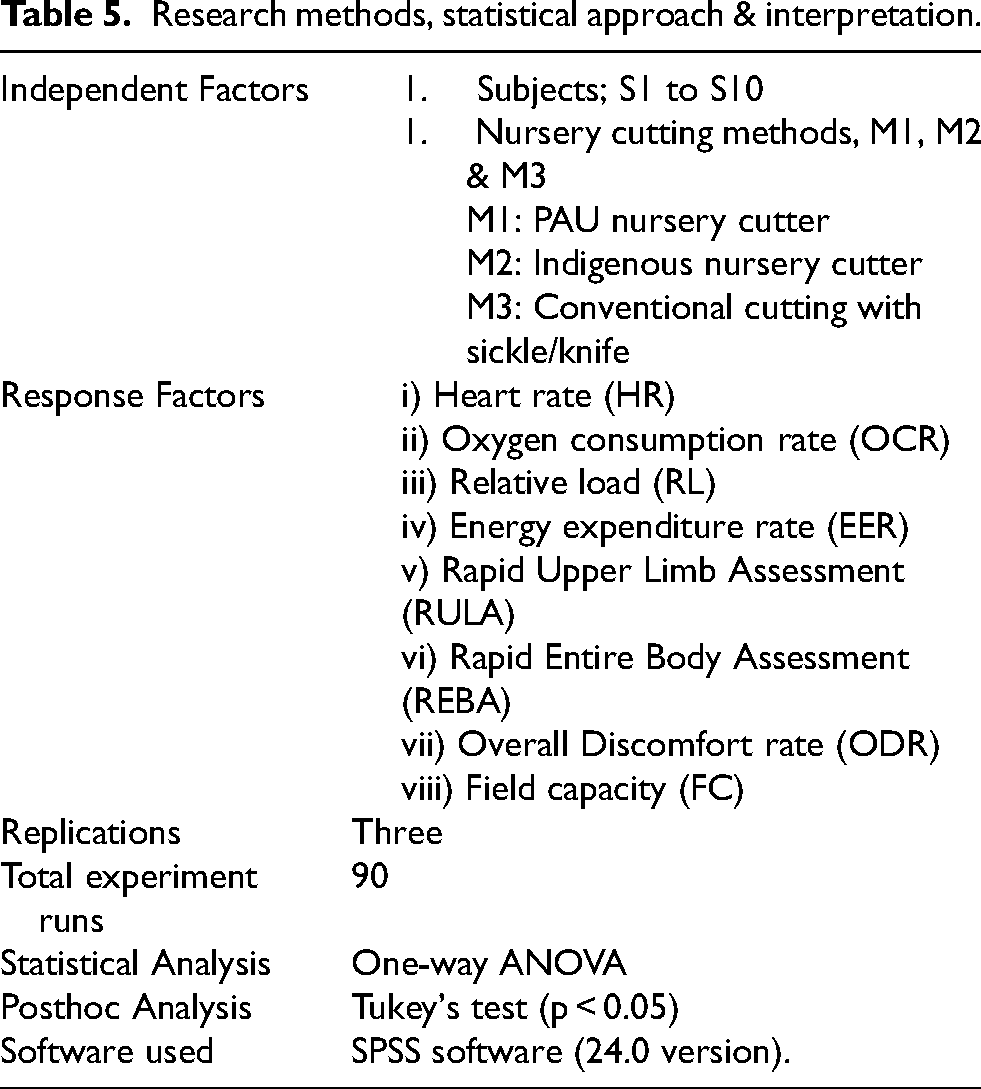
The study involved ten subjects and compared three nursery cutting methods: PAU nursery cutter, Indigenous nursery cutter, and conventional cutting with a sickle/knife, each replicated three times (Table 5). Dependent factors measured included RULA, REBA, heart rate, EER, and field capacity. Data were analyzed using one-way ANOVA with SPSS software (24.0 version), and differences among means were further examined using post-hoc Tukey's test, identifying significant differences at p < 0.05 with homogeneous subsets.
Research methods, statistical approach & interpretation.
Results
Measurements of physiological cost of the subject at work
Heart rate (HR)
The heart rate measurements illustrate the varying levels of cardiovascular demand associated with the newly developed PAU manual nursery cutter and other conventional methods for nursery cutting (Table 6). The PAU Manual nursery cutter exhibited significantly (p < 0.05) lower heart rates (104 to 120 bpm) of the farm workers than the use of other methods and categorized as “Moderate workload”. In contrast, the indigenous nursery cutter showed higher heart rates (118–135 bpm), classified as “Heavy workload”. The nursery cutting with a sickle/knife resulted in the significantly higher (p < 0.05) heart rates, ranging from 135 to 150 bpm, also categorized as “Heavy workload” reflecting the most strenuous cardiovascular workload among the three methods.
Work severity classification of postural analysis and physiological cost of human operator.
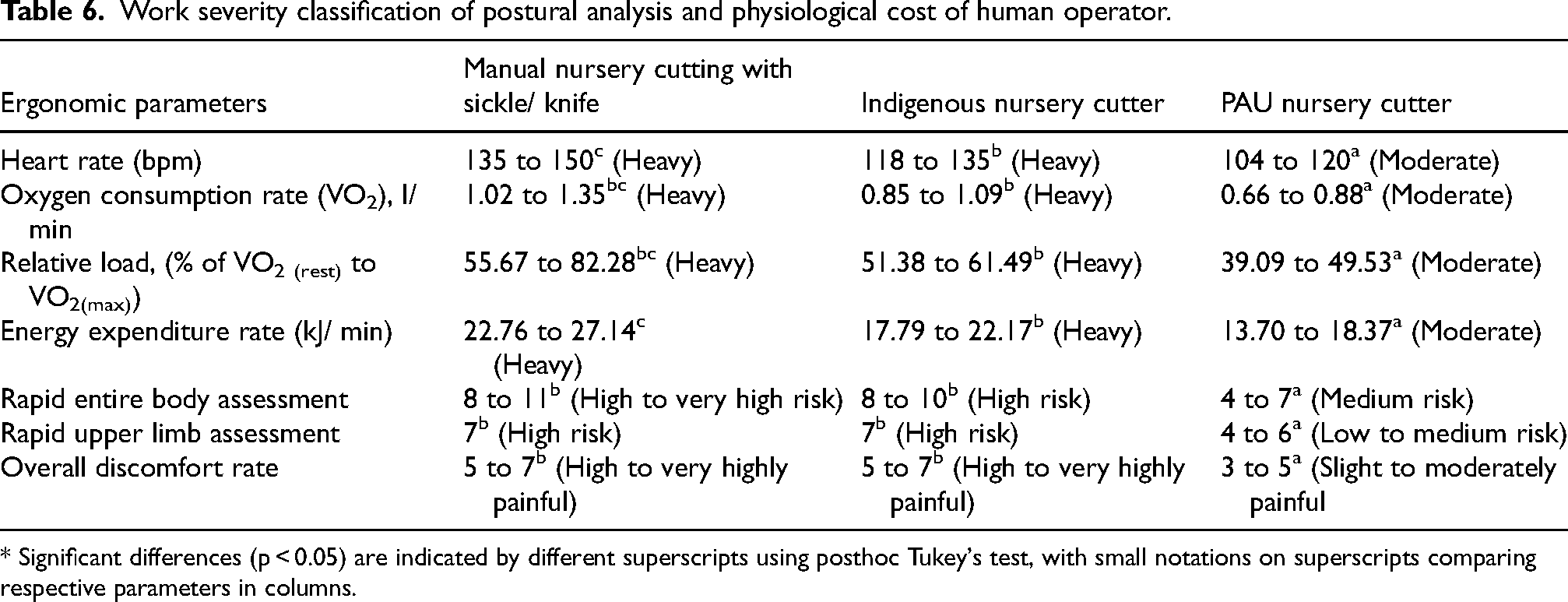
* Significant differences (p < 0.05) are indicated by different superscripts using posthoc Tukey's test, with small notations on superscripts comparing respective parameters in columns.
Oxygen consumption rate (OCR) and relative load (RL)
The oxygen consumption rate (OCR) highlight the respiratory demands associated with each nursery cutting method. The results revealed that a significantly lower (p < 0.05) OCR of the farm workers was observed while operating PAU manual nursery cutter, than the use of an indigenous cutter (0.85 to 1.09 l/min) and cutting with sickle/ knife (1.02–1.35 l/min). The relative load (RL), expressed as a percentage of oxygen consumption at rest (VO2(rest)) to the consumption of maximum oxygen (Vo2(max)), indicates the intensity of workload relative to an individual's maximum oxygen uptake capacity. The PAU manual nursery cutter had a significantly (p < 0.05) lesser (39.09%-49.53%) relative load than the use of indigenous cutter (51.38%-61.49%), and using a sickle or knife (55.67%-82.28%) for nursery cutting. As presented in Table 6, based on the OCR and RL, the work severity classification with the PAU nursery cutter was categorized as “moderate workload’, whereas it was classified as ‘heavy workload while using other conventional methods of nursery cutting.
Energy expenditure rate (EER)
The energy expenditure rates provide insights into the physiological costs associated with each nursery-cutting method. The PAU manual nursery cutter had significantly lower energy expenditure rates (13.70 to 18.37 kJ/min) of farm workers at p < 0.05 (Figure 5d), indicating a ‘moderate workload’, compared to the indigenous cutter (17.79 to 22.17 kJ/min) and the sickle/knife (22.76 to 27.14 kJ/min), both categorized as “heavy workload” (Table 6).
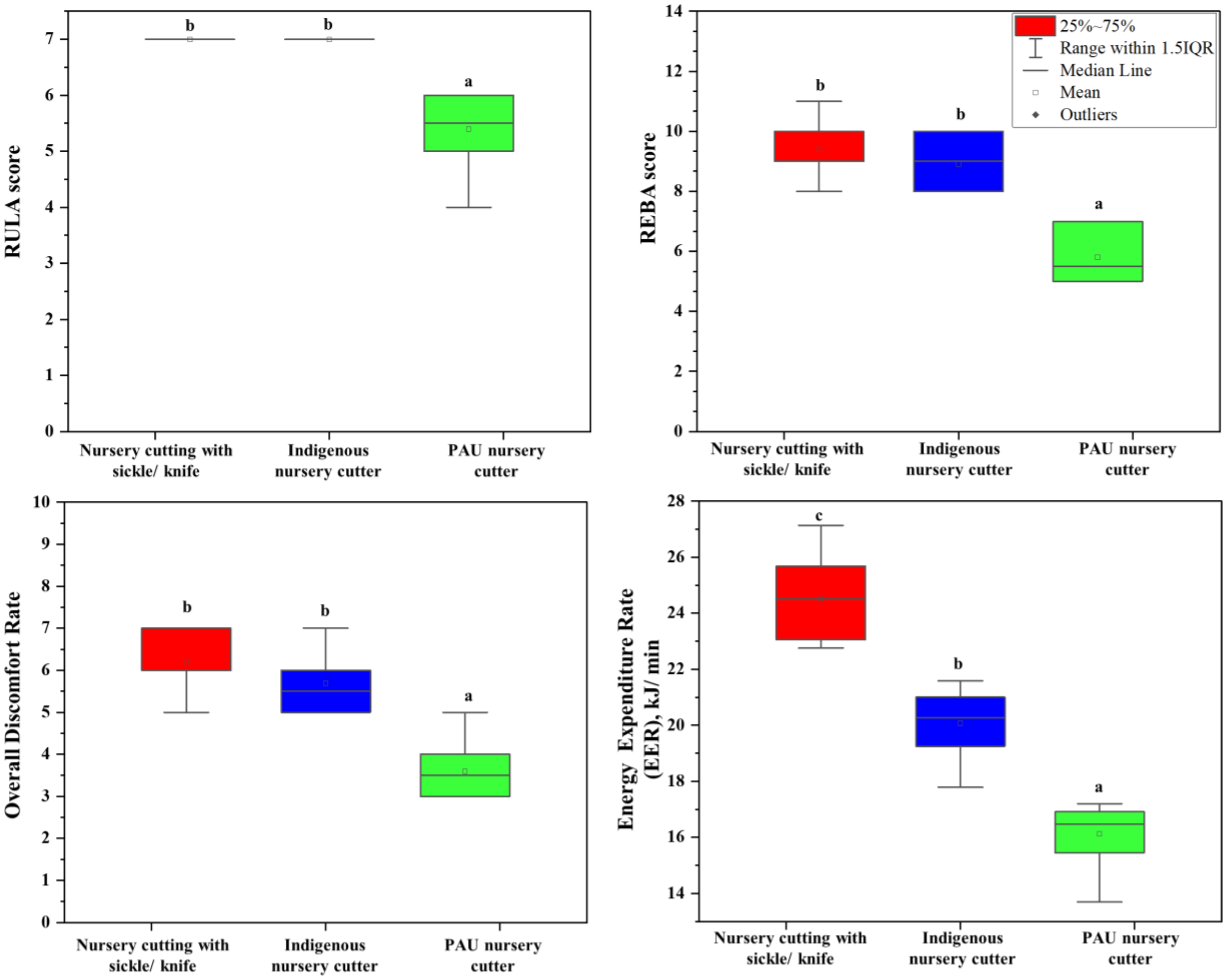
Box-plot analysis of variations in: (i) rapid upper limb assessment (RULA); (ii) rapid entire body assessment (REBA); (iii) overall discomfort rating (ODR); and (iv) energy expenditure rate (EER), among ten workers performing mat-type nursery cutting using different methods.
Assessment of postural discomfort of the subject at work
The comparative analysis using REBA, RULA, and ODR techniques highlights the significant differences among the three methods in terms of ergonomic human postural evaluation (Table 6). The manual cutting method and the indigenous nursery cutter both required high-risk classifications in all three evaluation techniques, indicating consistent ergonomic challenges and discomfort for the operators. In contrast, the PAU nursery cutter consistently establishes significantly higher ergonomic performance across all three nursery methods.
Rapid upper limb assessment (RULA)
The Rapid Upper Limb Assessment (RULA) scores specifically address the risk associated to the upper limbs. The manual nursery cutting with a sickle/knife and the indigenous nursery cutter, both had a RULA scores of 7 categorizing them as high-risk activities (Table 6). This high risk indicates a substantial physical strain on the operators’ upper limbs, which could lead to discomfort and potential injury. Conversely, the significant lower (p < 0.05) RULA score of farm workers ranged from 4 to 6, while using the PAU nursery cutter representing a low to medium risk level (Figure 5a). This score indicates that the cutter poses a lower ergonomic risk, with more ergonomic postures and movements that are less physically demanding on the upper limbs, making it a safer option for operators.
Rapid entire body assessment (REBA)
The Rapid Entire Body Assessment (REBA) score highlights the entire body risk levels associated with the different nursery cutting methods. The significantly (p < 0.05) lower REBA score (4–7) of farm workers were determined while using PAU manual nursery keeping it in the medium-risk category (Table 6). In contrast, the nursery cutting with a sickle/knife, a REBA score ranging from 8 to 11, indicating a high to very high-risk level. The indigenous nursery cutter also exhibited high risk, with REBA scores between 8 and 10, indicating a slightly lower but still significant risk (Figure 5(b)). The results revealed that, the developed equipment is less strenuous on the operator's body, lowering the risk of musculoskeletal issues, whereas the other methods significantly increase this risk due to their strenuous and awkward postures.
Overall discomfort rating (ODR)
The overall discomfort rate (ODR) reflects the subjective pain and discomfort experienced by operators using different nursery cutting methods (Table 6). The newly developed PAU nursery cutter resulted in significantly lower (p < 0.05) discomfort ratings (3 to 5) among farm workers experiencing slight to moderate pain, compared to conventional nursery cutting methods with a sickle/knife and the indigenous nursery cutter, which had discomfort ratings ranging from 5 to 7, classified as ‘high to very highly painful’ (Figure 5c). This highlights a significant difference in discomfort levels and potential injury risk.
Field performance evaluation
The performance evaluation of the PAU nursery cutter highlights its substantial advantages over the conventional counterparts, widely employed by mat-nursery farmers as depicted in Table 7. In comparison, the PAU manual nursery cutter (375 ± 50 mats/h) and indigenous cutter (353 ± 50 mats/h) performed significantly (p < 0.05) higher cutting capacity than that of nursery cutting with sickle/ knife (310 ± 32 mats/h). Furthermore, the study evaluated labor and cost savings. To cut the number of mats required for hectare (225 ± 25 mats) the newly developed nursery cutter displayed significantly (p < 0.05) lesser labour requirement (0.60 ± 0.07 man-h) over the indigenous nursery cutter (1.27 ± 0.15 man-h) and manual method of cutting with a sickle/knife (1.45 ± 0.15 man-h).
Field performance parameters of PAU manual nursery cutter with the existing practices.
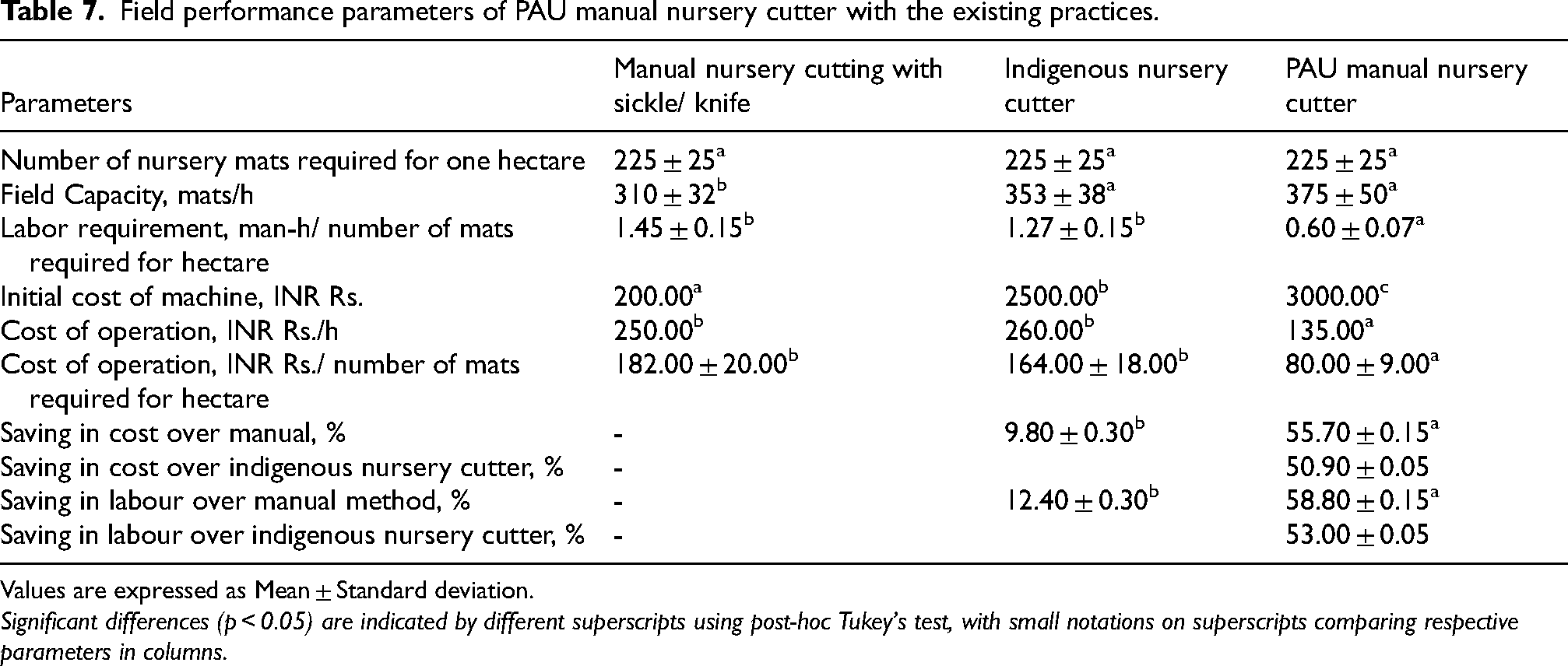
Values are expressed as Mean ± Standard deviation.
Significant differences (p < 0.05) are indicated by different superscripts using post-hoc Tukey's test, with small notations on superscripts comparing respective parameters in columns.
Economic analysis
The economic considerations also played a crucial role. The initial cost of equipment was determined as INR 3000. The cost of operation for cutting the mats by developed nursery cutter was found significantly (p < 0.05) lower i.e., INR 80.00 ± 9.00 per 225 ± 25 mats (required mat for one hectare) than the conventional method of nursery cutting with sickle/knife (Table 7). The cost of operation for manual cutting with a sickle/knife was significantly higher at INR 182.00 ± 20.00 per required mat for one hectare, whereas it was INR 164.00 ± 18.00 when using an indigenous nursery cutter.
Discussion
Previously, no studies on the cutting of mat-type nurseries were found, although various indigenous cutters crafted by local artisans do exist. In contrast, many studies have examined the processes of cutting, uprooting, and transplanting wash root-type paddy nurseries for manual transplanting. This study emphasis on the development of nursery cutter for mat type paddy seedlings and compares with locally made cutter and methods. The newly developed PAU nursery cutter for mat type paddy seedlings was found ergo-efficient and minimizes labor intensity, improves timeliness operation, reduces nursery damage, and achieves uniform cutting. It will empower farmers by increasing efficiency, improving ergonomics, reducing labor costs, achieving uniform and fine cutting.
The cutter's effectiveness is further emphasized by its capacity to effortlessly cut 375 ±50 mats per hour with a sole farm worker while ensuring appropriate intervals for rest. Although, the results also revealed that statistically, the capacity of the developed nursery cutter was significantly higher than the manual cutting with sickle but it was at par with the indigenous cutter. However, while considering the cost of mats per required mats for one hectare the developed nursery cutter showed significantly better performance.
Additionally, the newly developed cutter displayed a labor-saving of 58.80 ± 0.15% over the traditional manual method of cutting with a sickle/knife and 50.90 ± 0.05% over the indigenous nursery cutter. Similarly, the cost savings were significantly higher with the developed nursery cutter leading to a 55.70 ± 0.15% reduction over the traditional manual method of nursery cutting with sickle/knife and 50.90 ± 0.05% over the indigenous nursery cutter.
The findings highlighted significant differences in postural and physiological demands and the practical implications of each cutting method. The ergonomic considerations integrated into the design manifest in a more favorable working posture, distinct from the constrained and ineffectual positions necessitated by the conventional cutter. The prevailing limitations of conventional cutters, demanding elevated force application during mat cutting, and compelling operators into uncomfortable bending postures, have been effectively mitigated by the newly developed cutter. The physiological analysis of the different nursery cutting methods clearly indicates that the PAU manual nursery cutter was found the most ergonomic and least physically demanding option. It results in moderate levels of heart rate, oxygen consumption, relative load, and energy expenditure, making it a more sustainable and safer choice for operators. In contrast, the manual nursery cutting with a sickle/knife and the Indigenous nursery cutter are associated with heavy physiological demands, indicating a higher risk of fatigue and potential health issues for the operators. These findings highlights the need for ergonomic improvements in traditional cutting methods or the adoption of more advanced tools like the PAU manual nursery cutter to enhance operator safety and efficiency
Conclusions
The study emphasis on the design, development of a newly developed manual nursery cutter designed for cutting mat-type paddy seedlings, comparing its field performance and physiological cost of farm workers with existing methods.
The PAU manual nursery cutter demonstrated moderate heart rates (104–120 bpm) and oxygen consumption rates (0.66–0.88 l/min) of farm workers, indicating a lower cardiovascular and respiratory workload compared to the indigenous cutter and manual cutting with a sickle/knife. Postural discomfort of farm workers was minimal with the PAU manual nursery cutter, scoring 3–5 (slight to moderately painful), while the sickle/knife and indigenous cutter scored 5–7, indicating higher ergonomic strain. The PAU manual nursery cutter achieved a cutting capacity of 325–425 mats per hour, with an initial cost of INR 3000 and operational costs of INR 71–89 to cut the mats required for one hectare (200–250 mats), proving economically feasible and efficient. Significant labor (58.65–58.95 %) and cost savings (55.55–55.85%) were observed compared to manual cutting, enhancing productivity and reducing operational costs.
The study recommends widespread adoption of the PAU manual nursery cutter for paddy cultivation. This equipment reduces ergonomic risks, discomfort, and physical strain, improving operator well-being and efficiency.
Footnotes
Acknowledgements
The authors thank the All-India Co-ordinated Research Project (AICRP) on Ergonomics and Safety in Agriculture and Allied Sector (ESAAS) for providing the necessary funds and facilities to conduct the study.
Ethical approval (name of institute and number)
Punjab Agricultural University, Ludhiana-141004 (India).
Informed Consent
Punjab Agricultural University, Ludhiana-141004 (India).
Reporting Guidelines
Followed as per journal guidelines.
Funding
ICAR- AICRP on ESAAS.
Declaration of conflicting interests
The authors declared no potential conflicts of interest with respect to the research, authorship, and/or publication of this article.