







Abstract
Background
The ongoing fourth industrial revolution, characterized by the integration of intelligent machines, presents a transformative shift in the nature of work. Unlike past industrial revolutions that reshaped job dynamics, the current reliance on intelligent machines introduces new complexities. It is challenging to determine whether the adoption of intelligent machines fosters active engagement or diminishes motivation of employees.
Objective
This paper explores how the adoption of intelligent machines affects employee work engagement. We aim to identify the key combinations of factors influencing work engagement amidst technological integration by utilizing a supportive ecosystem perspective.
Methods
We employed fuzzy-set qualitative comparative analysis (fsQCA) to examine the interplay of seven factors: challenge stressors, leadership empowerment behavior, technology dependence, relationship dependence, emotional dependence, benefit dependence, and growth need strength. This approach addresses the limitations of previous research by considering the interdependencies and non-linear relationships among these factors.
Results
Our study reveals diverse configurations that influence work engagement. The fsQCA analysis uncovers multiple pathways through which the identified factors interact to impact work engagement, providing a nuanced understanding of the conditions that foster employee engagement in the era of AI.
Conclusions
Theoretically, this study contributes to the literature by elucidating multiple configurations that influence work engagement, highlighting the importance of a supportive ecosystem perspective in understanding employee behavior in technologically advanced workplaces. The findings also offer empirical insights to guide managerial interventions aimed at fostering employee engagement in the AI era.
Keywords
Introduction
Over the past 250 years, three industrial revolutions have transformed the nature of work through the introduction of new technologies. Currently, we are in the midst of the fourth industrial revolution, characterized by a wave of technological advancements. 1 Unlike past revolutions that reshaped employee jobs, this one is distinguished by its reliance on intelligent machines—devices or systems equipped with advanced computational capabilities that mimic human-like intelligence, enabling them to analyze data, learn from experience, make decisions, and adapt autonomously. 2 Traditionally, machines followed a set of commands based on human input, with employees directing the workflow. 3 However, intelligent machines now possess sophisticated intelligence that allows them to autonomously provide relevant information and inputs, significantly impacting the workforce. 4 These machines have become indispensable in daily operations across industries such as manufacturing, healthcare, finance, and customer service.1,5 Consequently, most existing jobs are likely to undergo significant transformation in the coming years.
Given this context, it is challenging to determine whether the adoption of intelligent machines fosters active engagement or diminishes the motivation of employees. As intelligent machines autonomously carry out complex work-related actions, they may alter the dynamics of employee engagement and involvement in their tasks. Previously, employees were responsible for directing the workflow, actively engaging in tasks, and making decisions based on their expertise and understanding. However, the introduction of intelligent machines has shifted roles, leading employees to rely more on the information and inputs provided by these machines.1,6 This shift raises questions about its impact on employee work engagement. Research has shown that high levels of work engagement are associated with increased productivity, job satisfaction, and organizational commitment. 7 Therefore, understanding how the adoption of intelligent machines influences employees’ level of engagement in their work is essential. For instance, while intelligent machines may streamline processes and provide valuable insights, they could also potentially disengage employees if they feel marginalized or disconnected from their work tasks. 8 Thus, organizations need to integrate intelligent machines into the work environment in a way that enhances, rather than diminishes, employee engagement. By doing so, organizations can formulate more effective management strategies to promote employee engagement, facilitating long-term organizational success.
To address these limitations, we utilized fuzzy-set qualitative comparative analysis (fsQCA) to explore the essential components for enhancing employee work engagement amidst the integration of intelligent machines within the work setting. This method analyzes the influence of multiple factors on a particular outcome by comparing fuzzy sets under different conditions to identify key factors affecting the outcome.9,10 Specifically, work engagement is defined as the state of being fully absorbed, enthusiastic, and deeply involved in one's work activities, encompassing aspects such as vigor, dedication, and absorption. 11 Although scholars have proposed various organizational and individual factors to enhance employee work engagement (see 7 for a review), there is a lack of comprehensive exploration on improving overall work engagement among employees, particularly given the increasing reliance on intelligent machines in the workplace. By considering various organizational and individual factors from a supportive ecosystem perspective, we can gain a more comprehensive understanding of the complexities involved in enhancing employee work engagement. This approach allows us to capture the interplay between different variables and their combined effects on work engagement, providing a more nuanced view of the phenomenon.
We believe that adopting a supportive ecosystem perspective can assist employees in effectively navigating changes, especially given the significant transformations brought about by integrating intelligent machines in the workplace. Based on the literature on work engagement, we identify seven categories of factors within a supportive ecosystem that affect employee work engagement (see Figure 1): challenge stressors, 12 leadership empowerment behavior, 13 technology dependence, relationship dependence, emotional dependence, benefit dependence, and growth need strength. 15 Despite numerous studies exploring the relationship between various factors and work engagement, two primary limitations persist: (1) Prior research predominantly employed a “binary relation” approach, assuming that factors are independent and do not interact, often resulting in analyses with a single equilibrium point and optimal path.7,16 This approach overlooks the interdependence and interaction among multiple factors and the potential issues of path equivalence in result analysis; (2) Previous studies mainly analyzed the impact of different factors on work engagement using quantitative methods such as correlation and regression analysis,7,16,17 typically considering only the linear and symmetrical relationship between factors and work engagement. They neglected the possible existence of non-linear and asymmetrical relationships between variables, as well as the issue of configuration effects among variables.
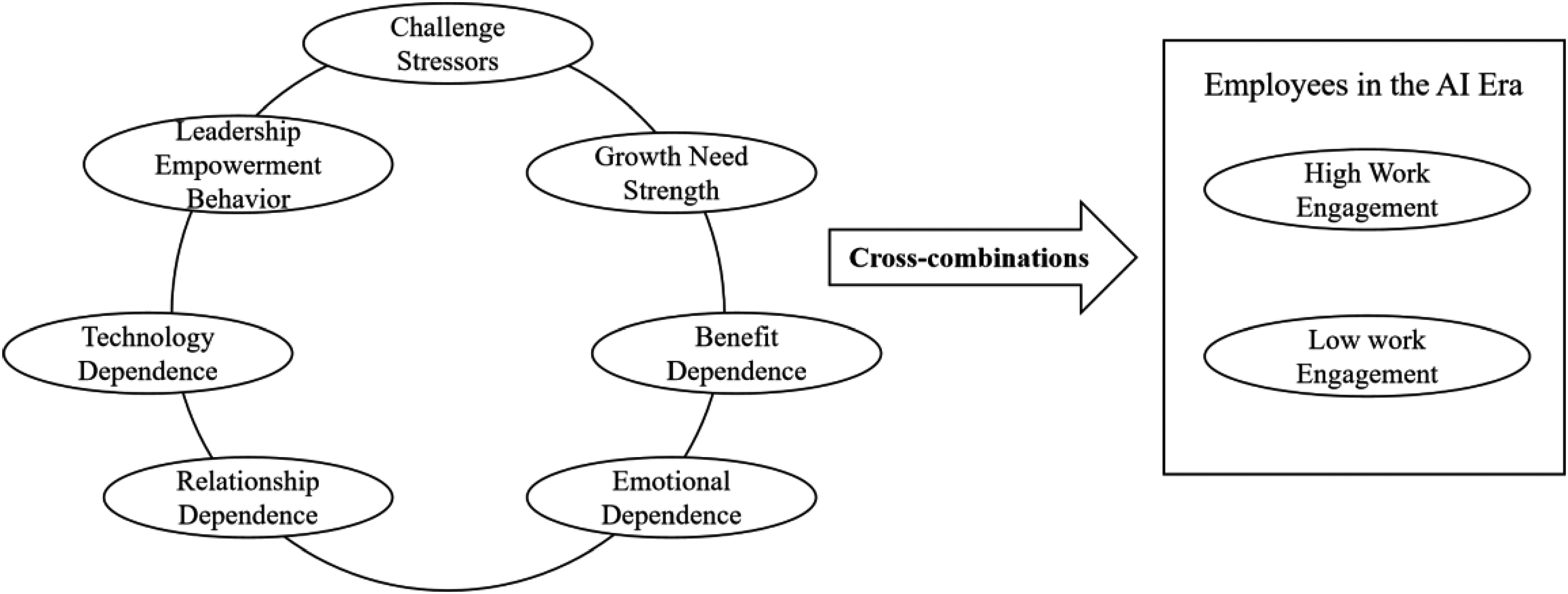
Theoretical model.
In summary, the fsQCA method, based on a set-theoretical approach, offers a novel perspective to address these limitations by emphasizing the combination of antecedent conditions and elucidating path equivalence and asymmetry between variables.9,10 From a supportive ecosystem perspective, this study aims to investigate the combinations of factors influencing employee work engagement within the context of integrating intelligent machines into the workplace. Our research makes several important contributions. Firstly, we explore combinations of factors within a supportive ecosystem affecting work engagement, enriching and expanding existing research, which primarily examined the impact of factors on work engagement using a “binary relation”.7,16 Secondly, prior studies often focused on linear and symmetrical associations between variables and work engagement, neglecting path equivalence and non-linear, asymmetric relationships.7,17 By applying fsQCA, this study conducts a thorough examination of variable relationships, identifying diverse configurations that influence employee work engagement from a more comprehensive perspective. Thirdly, by investigating beneficial factors and their combinations for work engagement, this study provides empirical insights to aid managers in devising interventions that address the unique challenges and opportunities in the workplace, thereby maximizing efforts to enhance employee engagement.
Theoretical background and research framework
Challenge stressors
Challenge stressors refer to the perception of work demands as opportunities for personal growth and development, leading to positive emotions and outcomes for individuals. 12 These stressors include factors such as time pressure, workload, task complexity, and high job responsibilities. When individuals view these demands as challenging yet manageable, they may experience increased motivation, engagement, and satisfaction in their work. Overcoming challenge stressors can result in both material and psychological rewards for employees, contributing to their overall well-being and performance. 18
In the context of integrating intelligent machines into organizations, challenge stressors can significantly impact employee work engagement. While these challenges may initially induce stress, employees who perceive them as opportunities for growth and development are more likely to feel motivated and engaged in their work. For instance, challenges such as time pressure, increased workload, complex tasks, and elevated job responsibilities resulting from intelligent machine integration can be seen positively by employees as chances to enhance their skills, knowledge, and capabilities. 19
Although the introduction of intelligent machines often requires employees to adapt to new technologies, learn new skills, and assume new roles and responsibilities, those who successfully navigate these complexities and demonstrate their ability to excel in their new roles may experience a sense of accomplishment, satisfaction, and enhanced self-efficacy. 20 These positive emotions can further fuel their motivation and commitment to their work, ultimately enhancing their level of work engagement. Therefore, challenge stressors associated with intelligent machine integration can serve as catalysts for employee work engagement when perceived as opportunities for growth and development. By effectively managing these stressors and providing support and resources for employees to overcome them, organizations can foster a work environment conducive to high levels of engagement amidst intelligent machine integration.
Leadership empowerment behavior
Leadership empowerment behavior refers to the actions taken by leaders to delegate authority, provide support, and foster autonomy among employees. It involves granting individuals the power, resources, and encouragement to make decisions, solve problems, and take ownership of their work. 13 We propose that leadership empowerment behavior enhances employee work engagement during the integration of intelligent machines within an organization.
Firstly, by delegating authority and providing support, leaders empower employees to take ownership of their work, including tasks related to the integration of intelligent machines. This autonomy and responsibility instill a sense of pride and accomplishment in employees, motivating them to fully engage with their tasks. Secondly, leadership empowerment behavior encourages employees to actively participate in decision-making processes related to the integration of intelligent machines. This involvement not only enhances employees’ understanding of the technology and its implications but also gives them a sense of control over their work environment. This sense of control can significantly increase their motivation and commitment to achieving organizational goals through effective utilization of intelligent machines. Moreover, by providing resources and encouragement, leaders enable employees to develop the necessary skills and confidence to work effectively with intelligent machine technologies. This support reduces uncertainties and anxieties associated with technological changes, leading to higher levels of engagement.
Overall, leadership empowerment behavior creates a supportive and motivating work environment where employees feel valued, competent, and empowered to embrace the challenges and opportunities brought by intelligent machine integration. 21 This, in turn, enhances their work engagement and contributes to the successful implementation of intelligent machine technologies within the organization.
Organizational dependence
Organizational dependence refers to the extent to which individuals or entities rely on an organization for various resources, support, and opportunities. It involves the interdependence between individuals or groups and the organization, where both parties rely on each other to achieve their goals and objectives. According to Luo et al. (2021), organizational dependence can be divided into four dimensions: technological dependence, relational dependence, emotional dependence, and benefit dependence.
In the context of integrating intelligent machines into the organization, technological dependence can lead to increased employee work engagement. Employees who rely on the organization's technological infrastructure and tools to perform their tasks efficiently may feel more engaged in their work. Access to advanced technology can streamline processes, reduce workload, and enhance productivity, thereby empowering employees to focus on more meaningful and challenging aspects of their roles. 22 This empowerment through technology can stimulate employees’ interest and motivation, driving higher levels of work engagement as they leverage intelligent machines to accomplish their objectives effectively. Therefore, technological dependence can be a catalyst for increased employee work engagement.
The establishment of strong relationships and networks within and outside the organization (i.e., relational dependence) can contribute to employee work engagement, particularly in the context of integrating intelligent machines. Employees who have access to supportive relationships and collaborative networks are more likely to feel connected, valued, and motivated in their work. 23 These relationships provide avenues for knowledge sharing, problem-solving, and mutual support, fostering a sense of camaraderie and belonging among employees. As intelligent machines are introduced, relational dependence ensures that employees can adapt to technological changes collaboratively, leveraging collective expertise and resources to navigate challenges and seize opportunities. This collaborative approach enhances employee engagement by promoting teamwork, communication, and shared ownership of outcomes. Thus, fostering strong relationships and networks is crucial for enhancing employee work engagement in the AI era.
Emotional attachment and commitment to the organization (i.e., emotional dependence) also play a crucial role in influencing employee work engagement amidst the integration of intelligent machines. Employees who feel emotionally connected to the organization, its values, and its mission are more likely to exhibit higher levels of engagement in their work. Emotional dependence fosters a sense of belonging, loyalty, and pride among employees, motivating them to invest their time and effort into achieving organizational goals.24,25 As intelligent machines become part of the work environment, emotional dependence ensures that employees remain resilient and adaptable in the face of technological changes. Emotional support from leaders and colleagues, combined with a strong organizational culture, reinforces employees’ confidence and commitment, driving sustained work engagement. Hence, emotional dependence is a vital factor influencing employee work engagement in the AI era.
Dependence on the organization for material and non-material benefits (i.e., benefit dependence) can positively influence employee work engagement during the integration of intelligent machines. Employees who perceive fair compensation, career advancement opportunities, and other benefits as rewards for their contributions are more likely to be engaged in their work. Benefit dependence reinforces employees’ motivation and commitment to the organization, as they recognize the value of their efforts and the organization's investment in their well-being. 26 With the introduction of intelligent machines, benefit dependence ensures that employees perceive technological advancements as opportunities for personal and professional growth. Access to training programs, skill development initiatives, and career pathways supported by the organization enhances employees’ confidence and motivation, driving higher levels of work engagement as they embrace new challenges and opportunities presented by intelligent machines. Consequently, employees are more engaged in their work, driven by the prospect of personal and professional advancement within the organization's supportive environment.
Growth need strength
Growth need strength refers to the degree of an individual's desire for learning, personal development, and achievement in the workplace. 15 In the context of integrating intelligent machines into an organization, growth need strength can significantly impact employee work engagement. Employees with high growth need strength are more likely to seek opportunities for learning, skill development, and career advancement, which contributes to their overall engagement and satisfaction in their roles. 27 As intelligent machines reshape job roles and processes, individuals with a strong growth need are motivated to adapt to new technologies, acquire new skills, and explore innovative ways of working. Their intrinsic drive for growth and development fuels their engagement, as they view challenges and changes as opportunities for personal and professional enrichment. Therefore, focusing on growth need strength is crucial for organizations, as it directly impacts employee engagement, performance, and overall organizational success.
Research study
Participants and procedure
We employed a cross-sectional study design to collect data from a diverse range of organizations actively incorporating AI technologies, spanning sectors such as finance, healthcare, manufacturing, and technology in southeast and southern China. Data was gathered through both field and online questionnaire surveys. To minimize the issue of common method bias, we implemented two key measures:
Firstly, participants were informed before the survey that the research results would be used solely for academic purposes and kept confidential, thereby alleviating respondent concerns. Secondly, no more than five samples were collected from the same department within any single company. Additionally, participants had the freedom to withdraw from the study at any time. To incentivize participation, we offered each participant a certain amount of monetary compensation upon completing the questionnaire. In total, 296 questionnaires were collected. After excluding invalid responses—those failing the attention check test and filter questions (“Are you familiar with AI?” and “Do you know about AI?”), 28 random answers, and incomplete responses—a total of 247 valid questionnaires were retained, resulting in an effective response rate of 83.45%.
Among the participants, females accounted for 50.2%, while males accounted for 49.8%. The majority of participants were aged between 31 and 45 years (68.9%), followed by those aged 26–30 years (14.6%), 46–50 years (8.1%), 25 years and below (4.9%), and 50 years and above (3.6%). In terms of education level, the majority had completed undergraduate education (54.7%), followed by those with a master's degree (17%), junior college education (13.8%), high school or below (9.3%), and a doctoral degree (5.3%). Regarding job positions within their organizations, the distribution was primarily at the grassroots management level (30.0%) and middle management level (32.8%), followed by ordinary employees (25.1%) and senior management (12.1%). As for years of work experience, 12.9% had less than 2 years, 16.8% had 2–4 years, 35.7% had 5–7 years, 23.1% had 8–10 years, and 11.5% had over 10 years of experience.
Measures
Unless otherwise specified, all items were rated on a five-point Likert-type scale ranging from 1 (strongly disagree) to 5 (strongly agree). To ensure accuracy, all measurements will be translated into Mandarin Chinese using the translation and back-translation procedure recommended by Brislin et al. (1973). 29
Challenge stressors
We measured challenge stressors using a six-item scale developed by Cavanaugh and colleagues (2000). 12 Participants were asked to reflect on how the integration of AI tools and technologies in their organization has influenced various aspects of their job. Sample items include “the number of projects and/or assignments I have” and “the amount of time I spend at work” (α = 0.93).
Leadership empowerment behavior
Leadership empowerment behavior was assessed using a 12-item, four-dimensional scale developed by Ahearne et al. (2005) 13 (α = 0.95).
Organizational dependence
Organizational dependence was measured using the scale developed by Luo et al. (2021), 14 which divided organizational dependence into four dimensions: technology dependence, relationship dependence, emotional dependence, and benefit dependence. Each dimension consisted of several items measuring different aspects of organizational dependence. Sample items include “my skills and talents are fully utilized in my work,” “the company performs well in signing and fulfilling labor contracts,” “the relationships between colleagues in the department are quite harmonious,” and “the company offers generous salary and benefits” (α = 0.87, 0.90, 0.86, and 0.87 respectively).
Growth need strength
Growth need strength was assessed using a six-item scale developed by Hackman & Oldham (1980), 15 following the stem: “Considering all the things that are personally important to you in a job, how important is it to you to have a job with…,” such as “stimulating and challenging work” (α = 0.93).
Work engagement
Employees’ work engagement was measured using the UWES-9 scale developed by Schaufeli et al. (2006). 11 Sample item is “At my work, I feel bursting with energy” (α = 0.93).
The fsQCA method
Fuzzy-Set Qualitative Comparative Analysis (fsQCA) is a research paradigm based on Boolean algebra principles that can simultaneously handle the set relationships between multiple causes and outcomes. 30 This method combines quantitative mathematical statistics and qualitative case inductions. 31 FsQCA is suitable for both small and medium samples (5–60) as well as large samples (>100).10,32 It is not threatened by multicollinearity among condition variables. 33 The focus of fsQCA research includes conjunctural causation (where cause conditions are combined in different ways to produce different outcomes), equifinality (multiple paths can produce the same result), and asymmetry (the reasons for a specific result being high or low are different). Notably, it can address the problem of interdependence and interaction among conditions. 34
In our study, we utilized fsQCA 3.0 software to analyze the complex relationships between multiple conditions and a single outcome. FsQCA is particularly designed to handle scenarios where traditional linear methods may fall short. It does not rely on the assumption of linearity or the correlation between individual variables and the outcome.30,34 Instead, fsQCA emphasizes the combinations of conditions that collectively lead to the outcome, inherently considering non-linearity in the relationships. The rationale for our choice of fsQCA is outlined below:
Results
We employed Harman's single-factor method to test for common method bias in our cross-sectional data. The results showed that the first unrotated factor explained 39.70% of the total variance, which is below the threshold of 40%, indicating that common method bias is not a significant concern. 35 The cumulative contribution rate of all factors explained 73.19% of the variance, demonstrating a high degree of data explanation. 36 This supports that common method bias was effectively controlled in our study. Descriptive statistics and variable correlations are presented in Table 1, while the results of reliability and validity analysis are shown in Table 2.
Descriptive statistics and correlations.
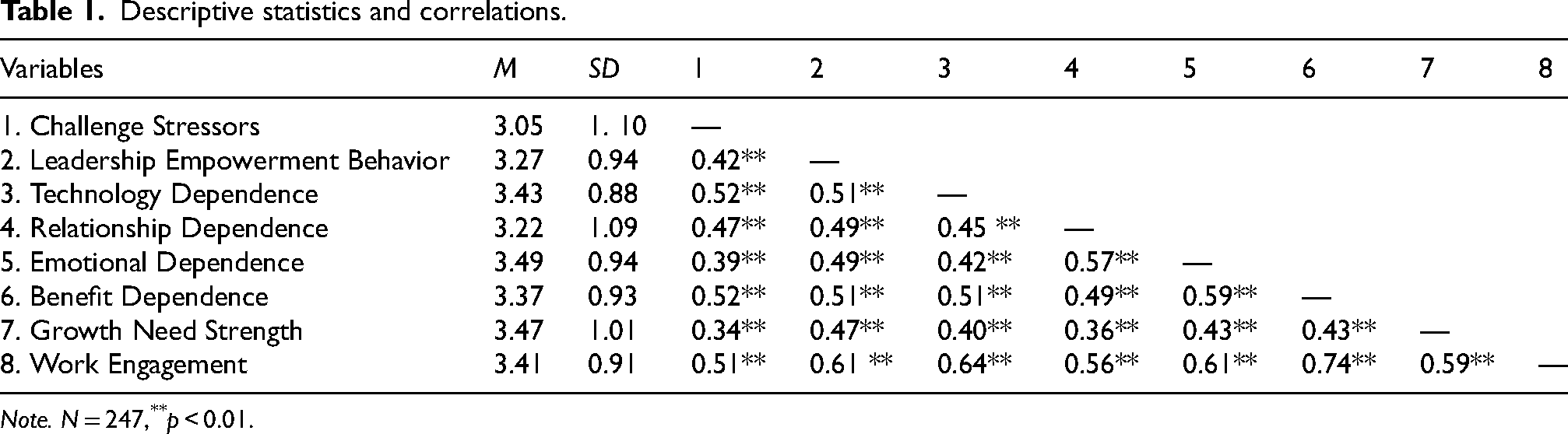
Note. N = 247,**p < 0.01.
Results of reliability and validity analysis.
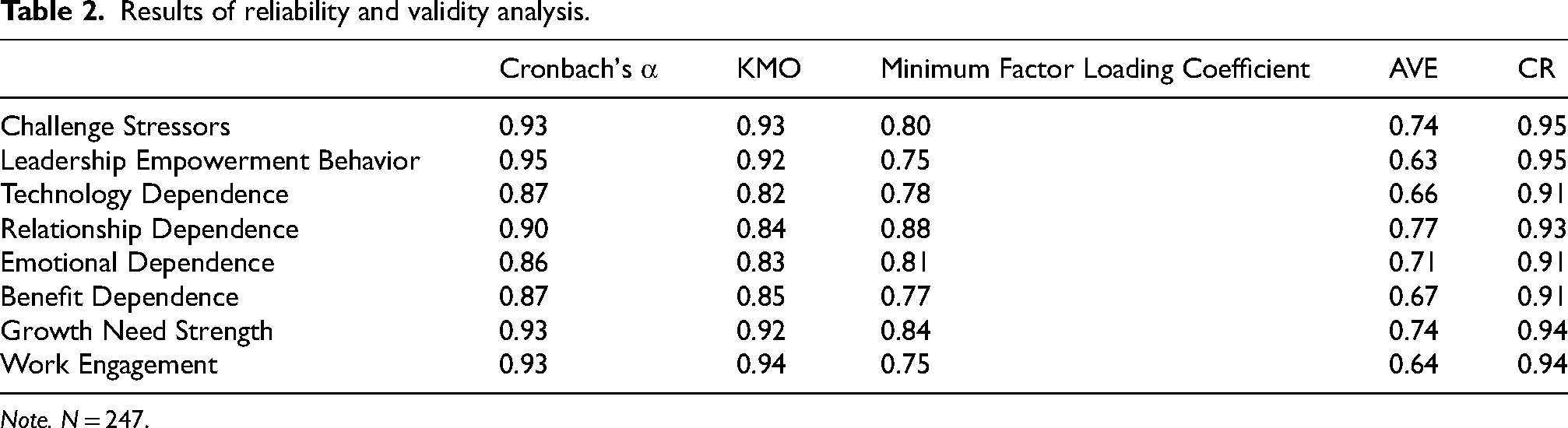
Note. N = 247.
Calibration of variables
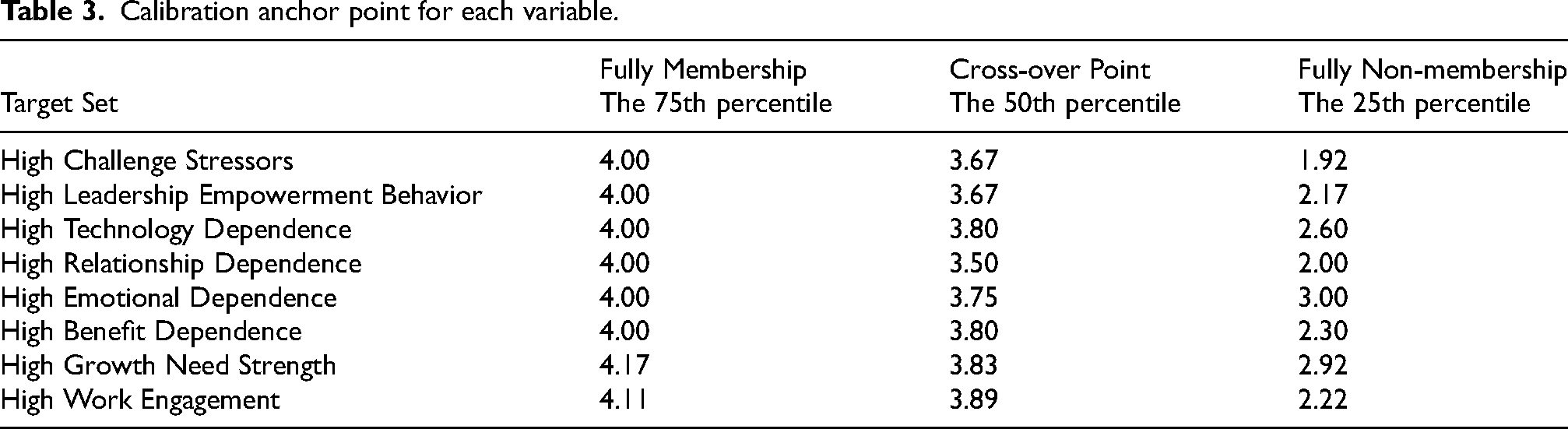
The objects of fsQCA analysis are sets rather than variables, with each combination of conditions (7 factors) and outcomes (work engagement) considered a set. Therefore, it is necessary to calibrate the initial data by assigning membership scores to each set. Following Fiss (2011), 37 the three anchor points for full membership, crossover points, and full non-membership for the 7 variables were set at the 75th percentile, 50th percentile, and 25th percentile of the sample data, respectively. This process forms a truth table based on membership degrees. The calibration information for the condition and outcome variables in this study is presented in Table 3.
Calibration anchor point for each variable.
Analysis of necessity
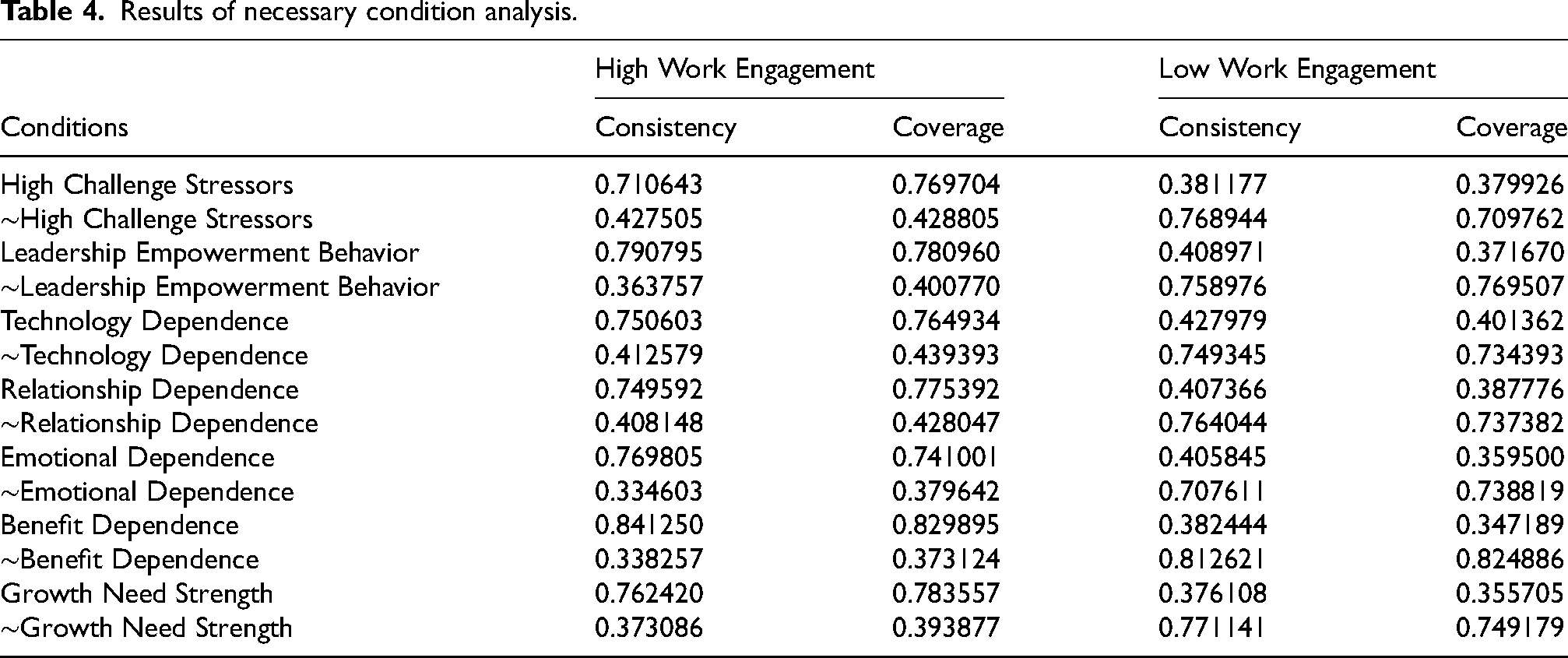
The first step in the fsQCA analysis involved assessing the necessity of the causal conditions for the outcome to occur. 38 A factor is considered a necessary condition for the configuration if it consistently accompanies the occurrence of the outcome. Following standard fsQCA procedures, we evaluated causal necessity using a consistency threshold of 0.9. 39 As shown in Table 4, the consistency of all single variables is below 0.9 for both high and low levels of work engagement, indicating that no single factor can serve as a necessary condition for employee work engagement.
Results of necessary condition analysis.
Analysis of sufficiency
After conducting the analysis of necessity, we proceeded with the analysis of sufficiency by constructing a truth table. The frequency threshold for sufficiency analysis is typically determined based on sample size. 40 For studies with medium to small sample sizes, a frequency threshold of 1 is often set. Given our sample size of 247, which falls into the category of larger samples, we established a frequency threshold of 2. Following the recommendations by Du & Jia (2017), 33 the consistency threshold for the PRI was set at 0.8, and the consistency threshold for the truth table was set at 0.85.
Consistent with previous research practices, this study reported the intermediate solution alongside the parsimonious solution from the fsQCA 3.0 software output. 37 According to Ragin's (2008) guidelines, 10 conditions appearing in both the intermediate and parsimonious solutions were labeled as core factors, while elements appearing only in the intermediate solution were labeled as marginal conditions. Therefore, the subsequent statistical analysis focused solely on the parsimonious and intermediate pathways.
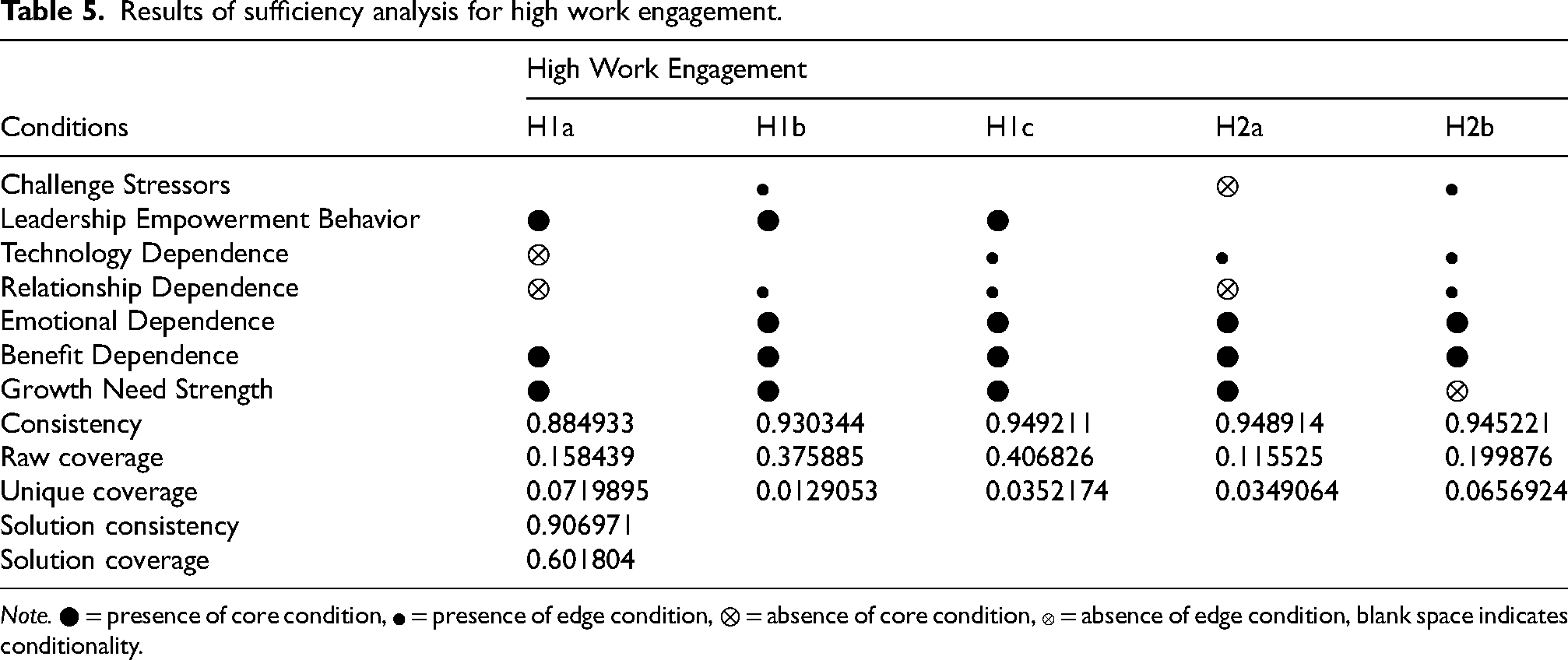
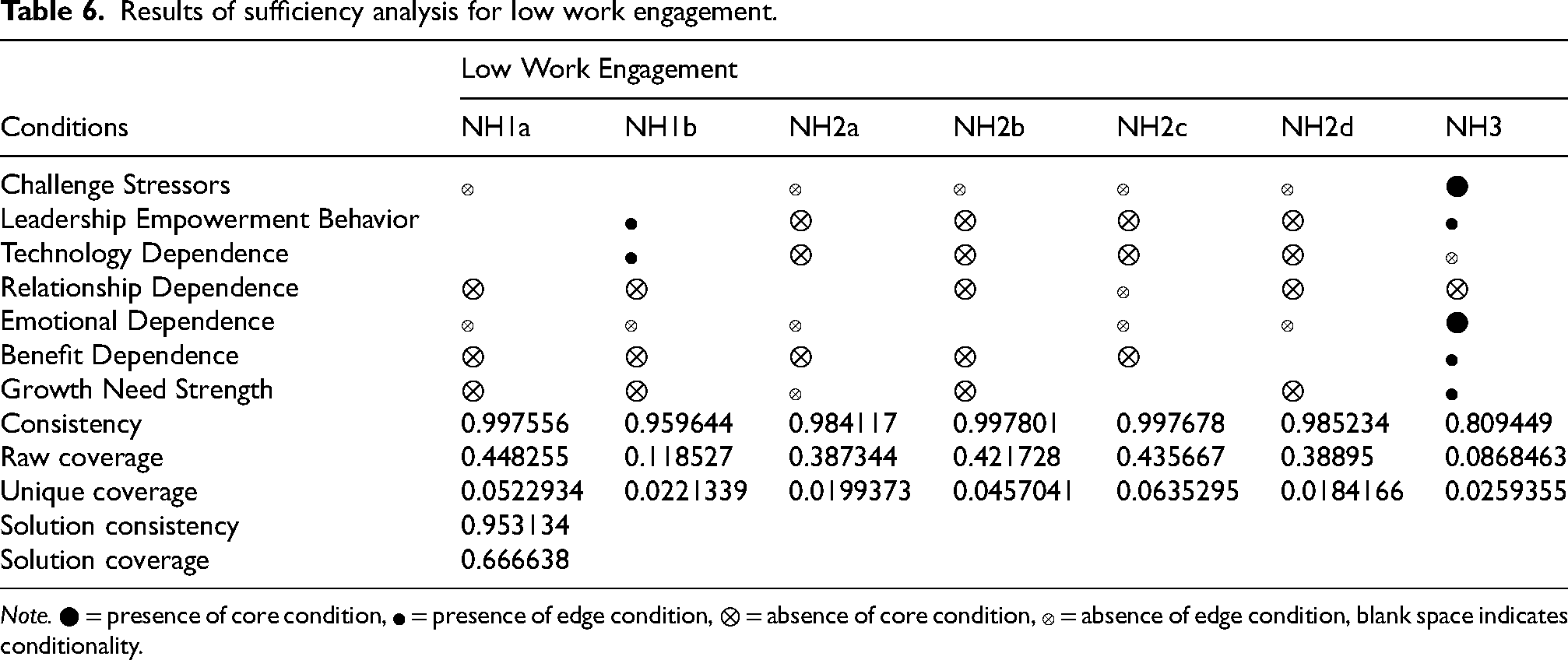
Table 5 presents the results of the sufficiency analysis for the seven factors, revealing two categories of driving pathways that explain high levels of work engagement (configurations H1a-H1c, and configurations H2a-H2b). Considering the causal asymmetry inherent in the fsQCA methodology—where conditions leading to the presence or absence of an outcome are asymmetrical—this study further analyzed the configurations leading to low levels of work engagement. The results of the sufficiency analysis for low levels of work engagement are detailed in Table 6 (configurations NH1a-NH1b, configurations NH2a-NH2d, configuration NH3).
Results of sufficiency analysis for high work engagement.
Note. ● = presence of core condition, ● = presence of edge condition, ⊗ = absence of core condition, ⊗ = absence of edge condition, blank space indicates conditionality.
Results of sufficiency analysis for low work engagement.
Note. ● = presence of core condition, ● = presence of edge condition, ⊗ = absence of core condition, ⊗ = absence of edge condition, blank space indicates conditionality.
According to Table 5, each configuration revealed that configurations H1a-H1c shared the same core conditions: leadership empowerment behavior, benefit dependence, and growth need strength, which played a central role in driving high levels of work engagement. However, the specific conditions varied across the three configurations. In configuration H1a, technical dependence and relationship dependence were absent as edge conditions, while challenging stressors and emotional dependence were deemed irrelevant. In configurations H1b and H1c, emotional dependence remained a core condition. Challenging stressors and relationship dependence served as supportive factors in H1b, while technology dependence was considered irrelevant. In configuration H1c, technology dependence and relationship dependence acted as supportive factors, while challenging stressors were deemed irrelevant. Overall, although emotional dependence emerged as a core condition in H1b and H1c, it was considered irrelevant in H1a. The presence or absence of challenging stressors, technology dependence, and relationship dependence did not affect the influence of the core conditions—leadership empowerment behavior, benefit dependence, and growth need strength—on high levels of work engagement.
For configurations H2a-H2b, emotional dependence and benefit dependence were identified as core conditions, but the marginal conditions differed between the two configurations. In H2a, the presence of technology dependence and the absence of relationship dependence acted as supportive factors, whereas in H2b, both factors’ presence served as supportive factors. The distinction between H2a and H2b lies in the core conditions when employees exhibit high levels of work engagement. In H2a, growth need strength plays a central role, with challenging stressors being marginally absent, while in H2b, challenging stressors played a supportive role, with growth need strength being marginally absent.
The detailed analysis of sufficiency for low-level work engagement is presented in Table 6, revealing three categories of driving pathways explaining low levels of work engagement (configurations NH1a-NH1b, NH2a-NH2d, NH3). The analysis shows that the core absent conditions for NH1a-NH1b are relationship dependence, benefit dependence, and growth need strength. The core absent conditions for NH2a-NH2d are leadership empowerment behavior and technology dependence. In configuration NH3, the core absent condition is relationship dependence, while challenging stressors and emotional dependence serve as core presence conditions.
Robustness test
To test the robustness of the fsQCA results, we adjusted the cross-over point from the 50th percentile to the 55th percentile. 37 The analysis revealed that this adjustment did not alter the complex solution, intermediate solution, or parsimonious solution. These findings confirm the robustness of our fsQCA results.
Sector-wise analysis
Results
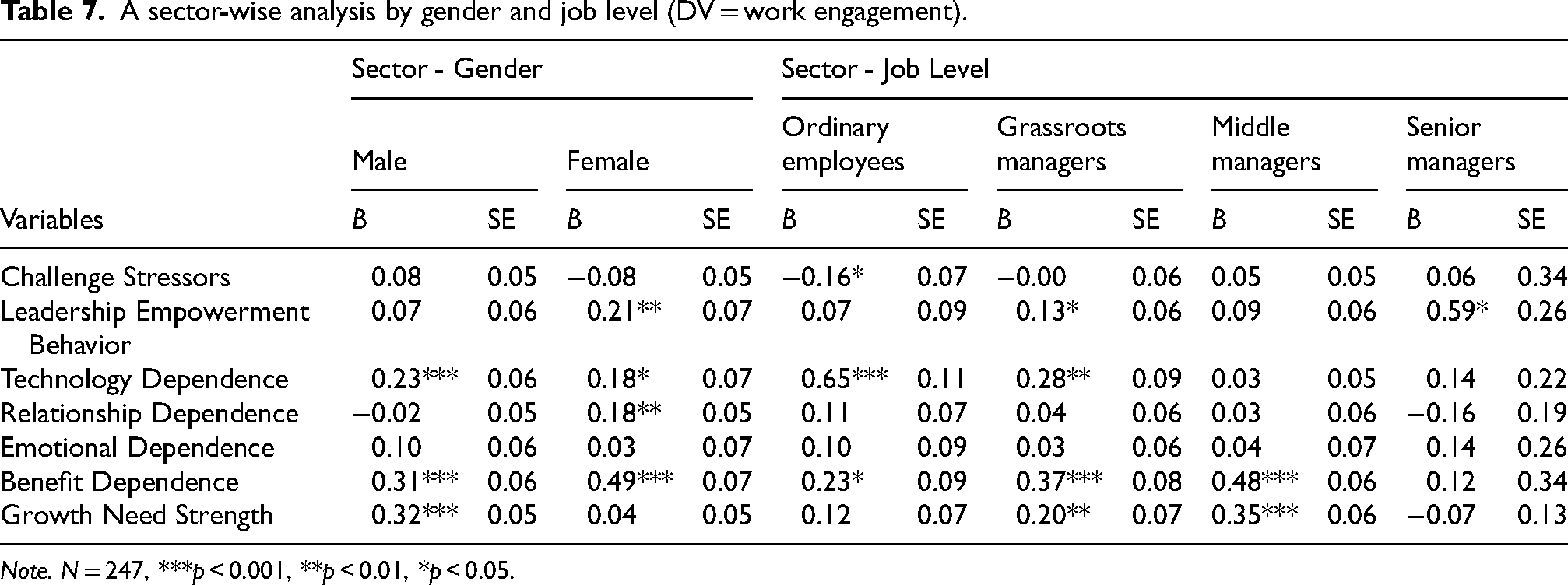
We also conducted an additional analysis to explore how responses differ across gender and job levels, which provided valuable insights (see Table 7). From the analysis, it is evident that the impact of the variables varies significantly across different genders and job levels. Benefit dependence shows the most consistent positive impact across all groups, especially for females and middle managers. Technology dependence is also a significant positive factor for both genders, particularly for ordinary employees. Leadership empowerment behavior is notably beneficial for females and grassroots managers, while growth need strength is highly significant for males and middle managers.
A sector-wise analysis by gender and job level (DV = work engagement).
Note. N = 247, ***p < 0.001, **p < 0.01, *p < 0.05.
Tailored managerial interventions
Given the high significance of growth need strength, investing in the latest technology and providing adequate support and training can enhance work engagement for male employees. Since benefit dependence and leadership empowerment have a consistently positive impact, improving benefit programs (e.g., health insurance, retirement plans, and flexible working hours) and encouraging leaders to empower female employees can significantly boost work engagement for females. Implementing stress management programs and ensuring reasonable workloads can help reduce the negative impact of stressors. Ensuring that ordinary employees have access to up-to-date technology and adequate training will significantly boost their engagement. Offering leadership training programs and equipping grassroots managers with advanced technology and resources can enhance their engagement. Providing middle managers with clear career progression plans and opportunities for further education and professional development can significantly improve their engagement. For senior managers, focusing on leadership empowerment behavior is an effective way to boost their engagement.
Discussion
This study used fsQCA to investigate the types and combinations of factors influencing employee work engagement in the AI era from a supportive ecosystem perspective. The core research findings are outlined below:
According to the analysis of sufficiency for high levels of work engagement, this study identified two driving pathways for enhancing employee work engagement in the AI era.
Leadership Empowerment Behavior - Benefit Dependence - Growth Need Strength: Configurations H1a-H1c reveal that high levels of employee work engagement are driven by leadership empowerment behavior, benefit dependence, and growth need strength. The introduction of intelligent machines by a company may aim to improve production efficiency, reduce costs, and enhance product quality, among other objectives.
1
In such a scenario, leadership empowerment behavior could involve providing employees with adequate training and resources to effectively collaborate with intelligent machines, while also encouraging employee participation in decision-making processes to boost their motivation and confidence.
21
Moreover, employees’ benefit dependence would motivate them to become more engaged in their work to maintain their position within the company and ensure a stable income source.
26
Simultaneously, employees’ growth need strength is essential for them to continuously learn and adapt to new technologies and work methods.
15
Together, when leadership empowerment behavior, benefit dependence, and growth need strength are integrated, they create a supportive environment where employees feel valued, secure, and motivated to embrace technological changes. By empowering employees, ensuring their benefits, and fostering opportunities for growth, organizations can enhance work engagement and drive success in the AI era. Emotional Dependence - Benefit Dependence: Configurations H2a-H2b suggest a second pathway that leads to high levels of employee work engagement in the AI era. When organizations address both emotional and benefit dependence simultaneously, they create a supportive environment where employees feel valued, understood, and secure in their roles. Emotional support, such as effective communication and opportunities for collaboration, plays a crucial role in enhancing employees’ sense of belonging and reducing anxiety related to technological changes.
24
This support fosters resilience among employees, providing them with a foundation to cope with uncertainties and challenges that accompany technological advancements. Simultaneously, ensuring tangible benefits like fair compensation, career growth opportunities, and job stability reinforces employees’ trust in the organization's commitment to their well-being. These benefits offer employees a sense of stability and confidence in the future, empowering them to embrace change, acquire new skills, and explore growth opportunities. By addressing both emotional and benefit dependence, organizations foster adaptability among employees, enabling them to navigate technological changes more effectively. Absence of Relationship Dependence, Benefit Dependence, and Growth Need Strength: Configurations NH1a-NH1b suggest that when relationship dependence, benefit dependence, and growth need strength are not adequately addressed, it can lead to diminished employee work engagement. Relationship dependence entails the organization's reliance on robust networks and connections within and outside the industry. These connections provide employees with valuable resources, collaborative opportunities, and a supportive environment. However, when this dependence is lacking, employees may feel disconnected and isolated, lacking the necessary support and resources to excel in their roles.14,23 Benefit dependence further contributes to employee engagement by ensuring that employees feel valued and rewarded for their contributions. Fair compensation, job security, and opportunities for advancement are essential aspects of benefit dependence. Without these benefits, employees may perceive a lack of appreciation from the organization, leading to diminished motivation and engagement with their work. Additionally, the inhibition of growth need strength exacerbates the situation by stifling employees’ opportunities for personal and professional development. Without opportunities for skill enhancement, training, and career advancement in a work environment where intelligent machines coexist, employees may feel stagnant and disengaged in their roles.
41
This lack of growth prospects can further dampen their motivation to invest fully in their work.
27
The absence of these factors creates an environment where employees feel disconnected, undervalued, and lacking in growth opportunities, leading to decreased work engagement, undermining the organization's ability to effectively harness the potential of intelligent machines. Absence of Leadership Empowerment Behavior and Technology Dependence: Configurations NH2a-NH2d suggest that the absence of leadership empowerment behavior, coupled with technology dependence, can lead to low levels of employee work engagement when companies introduce intelligent machines. When leadership fails to empower employees, there is a lack of support, guidance, and involvement in decision-making processes. Without effective leadership, employees may feel undervalued, unsupported, and uncertain about adapting to technological changes.
42
This lack of empowerment creates a disconnect between employees and the organization's goals, resulting in decreased motivation and engagement. Moreover, if employees become overly dependent on technology without proper guidance and support from leadership, it can lead to feelings of disconnection and alienation. Instead of feeling empowered to collaborate with intelligent machines, employees may feel overwhelmed, isolated, and disconnected from their work. They may perceive technology as a threat to their skills and job security rather than an opportunity for growth and development. In such a scenario, employees may experience decreased work engagement due to a lack of motivation, confidence, and sense of purpose, leading to lower engagement. Absence of Benefit Dependence: Configurations NH2a-NH2c indicate that employees’ lack of benefit dependence significantly affects their work engagement. When employees do not rely on organizational benefits, such as job security or career advancement opportunities, their motivation and engagement in their work are likely to decrease. This suggests that a deficiency in benefit dependence acts as a suppressor, hindering employees from fully engaging in their work. Absence of Growth Need Strength: Configuration NH2d suggests that, in the absence of necessary benefit dependence, employees’ intrinsic motivation for personal and professional development, indicated by their growth need strength, becomes the primary driver of their work engagement. When organizational benefits are not considered essential, employees’ growth need strength compensates for the lack of benefit dependence, driving their engagement in their work. Absence of Relationship Dependence, Presence of Challenge Stressors, and Emotional Dependence: Configuration NH3 indicates that the absence of strong relationships within the organization, coupled with the presence of challenge stressors and emotional dependence, creates a pathway that significantly impacts employee work engagement. When an organization lacks robust connections with other entities in the industry, such as networks, customer bases, and collaborative atmospheres, it misses out on valuable resources and opportunities. This isolation undermines employees’ ability to adapt to technological changes and collaborate effectively with external partners, leading to decreased engagement. Challenge stressors, such as increased workloads and uncertainty about job roles, exacerbate the negative impact of the absence of strong relationships. Without external support, employees may struggle to cope with the demands of technological changes, leading to heightened stress levels and decreased motivation.
20
Emotional dependence further complicates the situation by amplifying the effects of the absence of strong external relationships and the presence of challenge stressors. When employees rely heavily on emotional support from colleagues and supervisors, the absence of external networks becomes even more detrimental. In summary, without access to external resources and support networks, employees may struggle to adapt to technological changes, collaborate effectively, and maintain high levels of engagement.
According to the analysis of sufficiency for low levels of work engagement, our research findings suggest three driving pathways that lead to low levels of employee work engagement in the AI era.
In this scenario, two distinct situations emerge:
All in all, our research employs fsQCA to analyze the key combinations of factors influencing work engagement in the AI era within a supportive ecosystem. Unlike traditional approaches that focus on isolated factors,7,17 fsQCA allows us to consider the interplay and synergy among various elements within the work environment. For example, in Configurations H1a-H1c, we identify that high levels of work engagement are driven by a combination of leadership empowerment behavior, benefit dependence, and growth need strength. This suggests that organizations need to provide empowering leadership, ensure employee benefit satisfaction, and foster an environment conducive to personal and professional growth to effectively enhance work engagement. Configurations H2a-H2b indicates that addressing both emotional support and tangible benefits concurrently creates a supportive environment, enhancing work engagement in the AI era. By exploring these combinations, our research offers a more comprehensive understanding of the factors contributing to work engagement, enabling organizations to develop targeted strategies for improvement.
Secondly, traditional approaches to studying work engagement often assume linear and symmetrical relationships between variables,7,16 overlooking the potential for non-linear and asymmetric dynamics. Through the application of fsQCA, our research breaks away from this conventional paradigm to explore the complexities of variable relationships. For instance, in Configuration NH1a-NH1b, we find that the absence of relationship dependence, benefit dependence, and growth need strength leads to diminished work engagement. This highlights the non-linear and asymmetric nature of the relationship between these factors and work engagement outcomes. Configuration NH2a-NH2d shows that when leadership fails to empower employees and they become overly dependent on technology without proper guidance, it results in low work engagement in the context of introducing intelligent machines. Configuration NH3 indicates that when organizations lack strong external relationships, coupled with the presence of challenge stressors and employees’ heavy reliance on emotional support, it creates a challenging environment that significantly impacts work engagement. By considering path equivalence and non-linear dynamics, our research uncovers diverse configurations that influence work engagement, providing a more nuanced understanding of the underlying mechanisms at play. This shift in methodology enables organizations to identify and address the unique configurations of factors contributing to low work engagement, ultimately enhancing their ability to foster engaged and productive work environments in the AI era.
Our research offers empirical insights that can guide managers in developing targeted interventions to enhance work engagement. By identifying specific pathways and key factors driving work engagement, we provide practical guidance for organizations:
Firstly, organizations should enhance leadership empowerment behavior and benefit dependence. Leaders should provide comprehensive support and resources to help employees effectively integrate with intelligent machines. This includes offering training programs, access to technical assistance, and guidance on adapting to new technologies. Leaders should also encourage employee involvement in decision-making processes related to the integration of intelligent machines, increasing their sense of ownership and commitment to the changes. Organizations should ensure stable benefits for employees, such as competitive salaries, performance incentives, healthcare benefits, and career advancement opportunities. These benefits enhance employees’ reliance on the organization and foster a sense of loyalty and commitment.
Secondly, organizations should promote the combination of employee emotional dependence and benefit dependence. As intelligent machines increasingly integrate into work processes, it is essential for organizations to prioritize emotional support by cultivating a culture of open communication, empathy, and collaboration that remains human-centered, even in a high-tech environment. While intelligent machines can greatly enhance efficiency by automating tasks and streamlining processes, they cannot replace the subtle and vital emotional connections between individuals in the workplace. Managers and leaders should regularly check in with employees, provide feedback, and address concerns to create a supportive environment. Alongside emotional support, organizations should maintain stable benefits and recognize employees’ contributions through fair compensation, recognition programs, and opportunities for professional development. Building trust and connection with employees through transparency, fairness, and respect can significantly boost their work engagement.
Addressing the combination of challenge stressors, emotional dependence, and relationship dependence is a third recommendation for enhancing employee work engagement. Organizations should identify and mitigate challenge stressors in the workplace by streamlining processes, providing adequate resources, clarifying role expectations, and offering stress management programs. In addition to reducing stressors, organizations should provide emotional support to help employees cope with challenges, including counseling services, resilience training, and peer support networks. Cultivating strong networks and partnerships within and outside the industry is crucial. These connections provide valuable resources, collaborative opportunities, and support systems for employees, fostering a culture of cooperation, innovation, and mutual growth.
Finally, regardless of the circumstances, fostering growth need strength among employees is beneficial for organizations introducing intelligent machines into their operations. Organizations should focus on cultivating a culture that encourages employees to embrace change, seek out learning opportunities, and continuously improve their skills and knowledge. By prioritizing the development of growth need strength, organizations can create a resilient and adaptable workforce capable of thriving amidst technological advancements. Managers should provide support, resources, and recognition to employees who demonstrate a strong desire for growth, fostering a positive and dynamic work environment conducive to innovation and success.
While this study provides valuable insights, it is essential to acknowledge potential other factors that could influence employee work engagement in the AI era beyond those examined in this research. Limitations such as sample constraints, methodological considerations, and the scope of the study may impact the generalizability of the findings. 43 To address these limitations and further advance our understanding, future research should consider including additional factors that may contribute to employee work engagement. Expanding sample sizes and diversifying samples across various industries and organizational sizes would enhance the robustness and generalizability of the findings. Moreover, exploring other potential influencers, such as cultural differences, leadership styles, and organizational structures, could provide a more comprehensive understanding of work engagement dynamics in the AI era.
Considering the unique characteristics of intelligent machines, future research could also explore how specific features of intelligent machines, such as automation level, task complexity, and human-AI interaction, influence employee work engagement. Understanding how employees perceive and interact with AI systems in their work environment can provide valuable insights into the mechanisms underlying work engagement in the AI era. Additionally, future studies could integrate perspectives from various disciplines such as management, psychology, and technology to comprehensively examine the effects of introducing intelligent machines on organizations and employees. Such studies would capture evolving trends and provide insights into the lasting effects of AI implementation. Overall, by considering these additional factors and expanding the scope of investigation, future research can offer a more comprehensive understanding of employee work engagement in the context of the AI era, facilitating more effective strategies for organizational success and employee well-being.
Conclusion
Overall, our study employs fuzzy-set qualitative comparative analysis (fsQCA) to explore the combinations of factors influencing employee work engagement in the AI era. We identified key combinations that enhance and diminish work engagement. These findings provide actionable insights for organizations aiming to foster a supportive and engaging work environment amidst technological advancements. By understanding the interplay of various factors, organizations can implement targeted strategies to enhance employee engagement and drive success in the AI era.
Footnotes
Acknowledgements
We sincerely appreciate all participants for their involvement and contribution to this study. We also extend our gratitude to the anonymous reviewers and the Associate Editor for their valuable feedback and insights.
Ethical approval
The School of Economics and Management of East China Jiaotong University has approved the ethical application for the research. All procedures have been conducted in strict accordance with established standards and have been thoroughly verified.
Informed consent
Informed consent was obtained from all participants in this study, with data usage restricted to non-commercial purposes.
Funding
The authors received no financial support for the research, authorship, and/or publication of this article.
Declaration of conflicting interests
The authors declared no potential conflicts of interest with respect to the research, authorship, and/or publication of this article.
Data availability statement
The data supporting this study's findings are available from both authors upon reasonable request.