







Abstract
Background:
The conventional Work Triangle principle has long been a guiding concept in kitchen design, aiming to optimize workflow and minimize workload. However, with the advent of modern appliances and evolving lifestyles, the effectiveness of the Work Triangle in addressing the diverse activities and needs of contemporary kitchens is increasingly limited.
Objective:
This study aims to verify the validity of the Work Triangle in modern kitchen design and propose a kitchen modeling algorithm that facilitates customization based on layout and the area size from a user-centered perspective.
Methods:
The research was conducted in two parts. In the first part, the validity of the Work Triangle was verified through the analysis of 38 actual apartment kitchen floor plans in Korea. Then the second part, a kitchen layout optimization model was developed using 0–1 integer programming to minimize the distance between kitchen appliances, incorporating the placement of modern appliances not included in the traditional Work Triangle.
Results:
The statistical analysis of kitchen floor plans data showed that the impact of Work Triangle compliance on movement efficiency was limited, suggesting the need for customized kitchen design that reflects user behavior patterns and the placement of modern appliances and storage spaces. The model was evaluated through simulation, demonstrating its effectiveness in optimizing kitchen appliances layout.
Conclusions:
The study emphasizes the need to consider actual usage patterns and the limitations of the Work Triangle in modern kitchen design, proposing a user-centered optimization model that enables customization based on individual cooking scenarios and lifestyles.
Keywords
Introduction
The kitchen is arguably the most suitable space in our homes for the application of ergonomics. It is a common site for accident and repetitive injuries such as cuts, slips, falls, and burns often resulting from poor ergonomic design. 1 Unlike other areas of the home, the kitchen has fixed locations for essential facilities like water and electricity, necessitating careful planning during the initial design phase. For those who perform household chores, the kitchen is akin to a factory floor, requiring an efficient layout that minimizes the movement path distance between kitchen facilities due to repetitive movements. To address these concerns, the Work Triangle principle, introduced in the early twentieth century, has traditionally guided kitchen design to optimize workflow and enhance ergonomics. 2 This concept focuses on ensuring efficient movement paths between the sink, refrigerator, and stove, minimizing the distance and obstacles between these key points to reduce unnecessary movement and improve overall efficiency. 3 Figure 1 illustrates the Work Triangle concept and its length constraints in a typical kitchen layout. Its widespread adoption underscores its significance in creating functional and ergonomic spaces for household chores. 4
However, nearly a century after the Work Triangle concept was introduced, significant changes in the kitchen environment have limited its effectiveness. The advent of new kitchen appliances like dishwashers and microwaves has made storage space crucial for a clutter-free workspace. 5 Additionally, innovative cookware and gadgets crowd counters, increasing the need for more storage. 6 Changing lifestyles, including more single-person households and urban living, have diversified cooking practices and behaviors. 7 These factors have created a demand for user-centered kitchen designs rather than standardized ones.
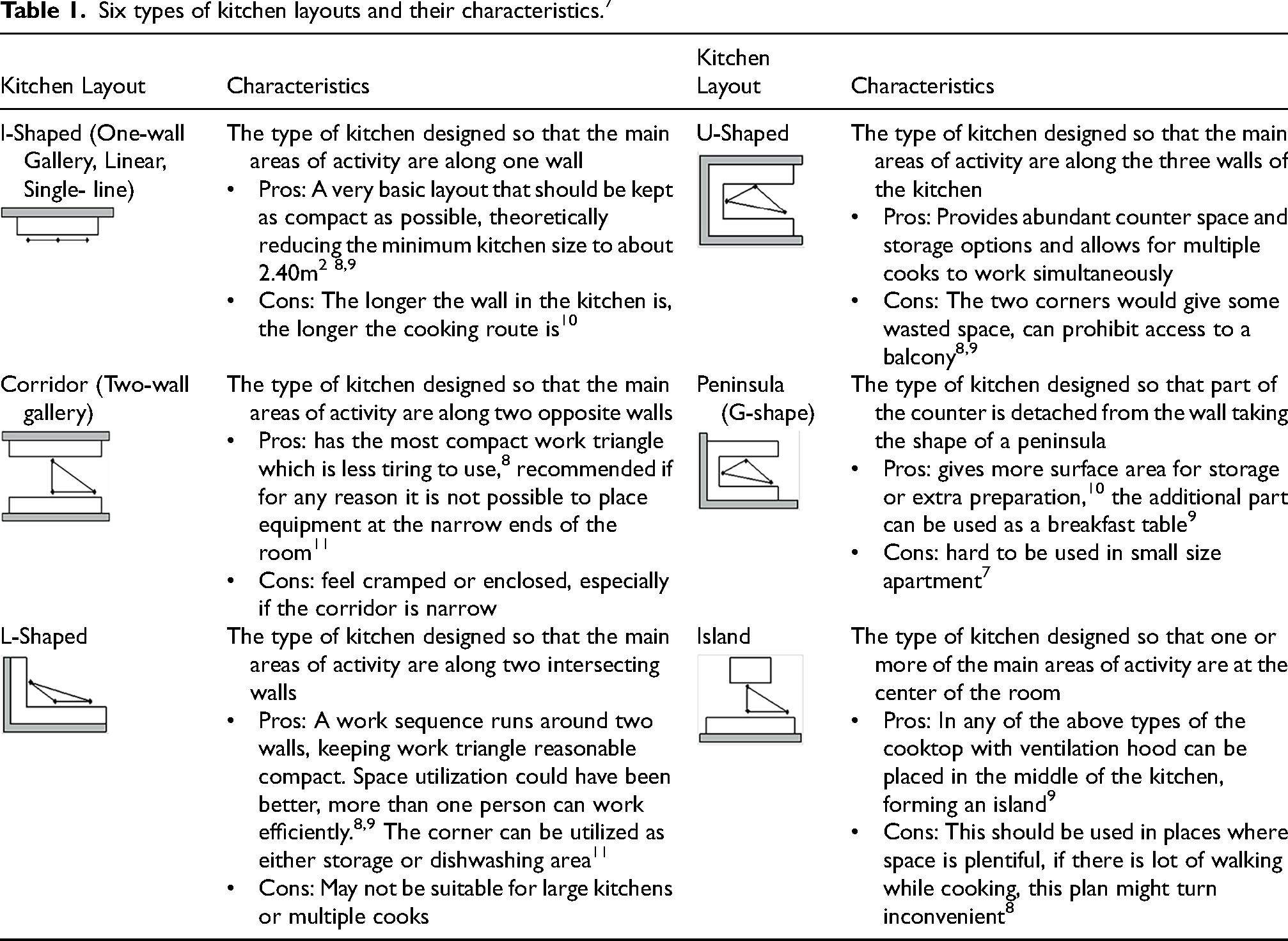
Common kitchen layouts today include I-shaped, L-shaped, U-shaped, Peninsula, Island, and Corridor. 8 Each layout shapes the Work Triangle differently, impacting kitchen efficiency. Each has its advantages and disadvantages depending on space and the context-of-use, making it essential to understand these factors when designing a kitchen (see Table 1). Relying solely on the Work Triangle is limited due to the increase in appliances and changes in lifestyle and cooking behavior. Thus, accurately evaluating the existing situation and providing evidence-based recommendations is necessary for modern kitchen design.
Six types of kitchen layouts and their characteristics. 7
This study focuses on minimizing the movement path distance between kitchen facilities, going beyond just considering the kitchen appliances based on the Work Triangle. It applies a specified workflow that accounts for the context of use within the kitchen and statistically analyzes the relationships among kitchen size, layout types, and appliances to identify key variables for movement optimization. Through this approach, we sought to verify the validity of the Work Triangle in modern kitchen design and propose a kitchen modeling algorithm that facilitates customization from a user-centered perspective.
The research was conducted in two parts. First, we verified the modern validity of the Work Triangle by analyzing apartment kitchen floor plans, defining workflow, and calculating movement distances using data from major domestic kitchen construction companies, considering variations in kitchen size, layout, and appliance placement. In the second stage, we suggested kitchen layout optimization models using 0–1 integer programming, incorporating modern appliances. These models were evaluated through simulation. Figure 2 illustrates the research process. This study helps establish kitchen design guidelines to enhance user convenience and satisfaction through efficient and tailored layouts.
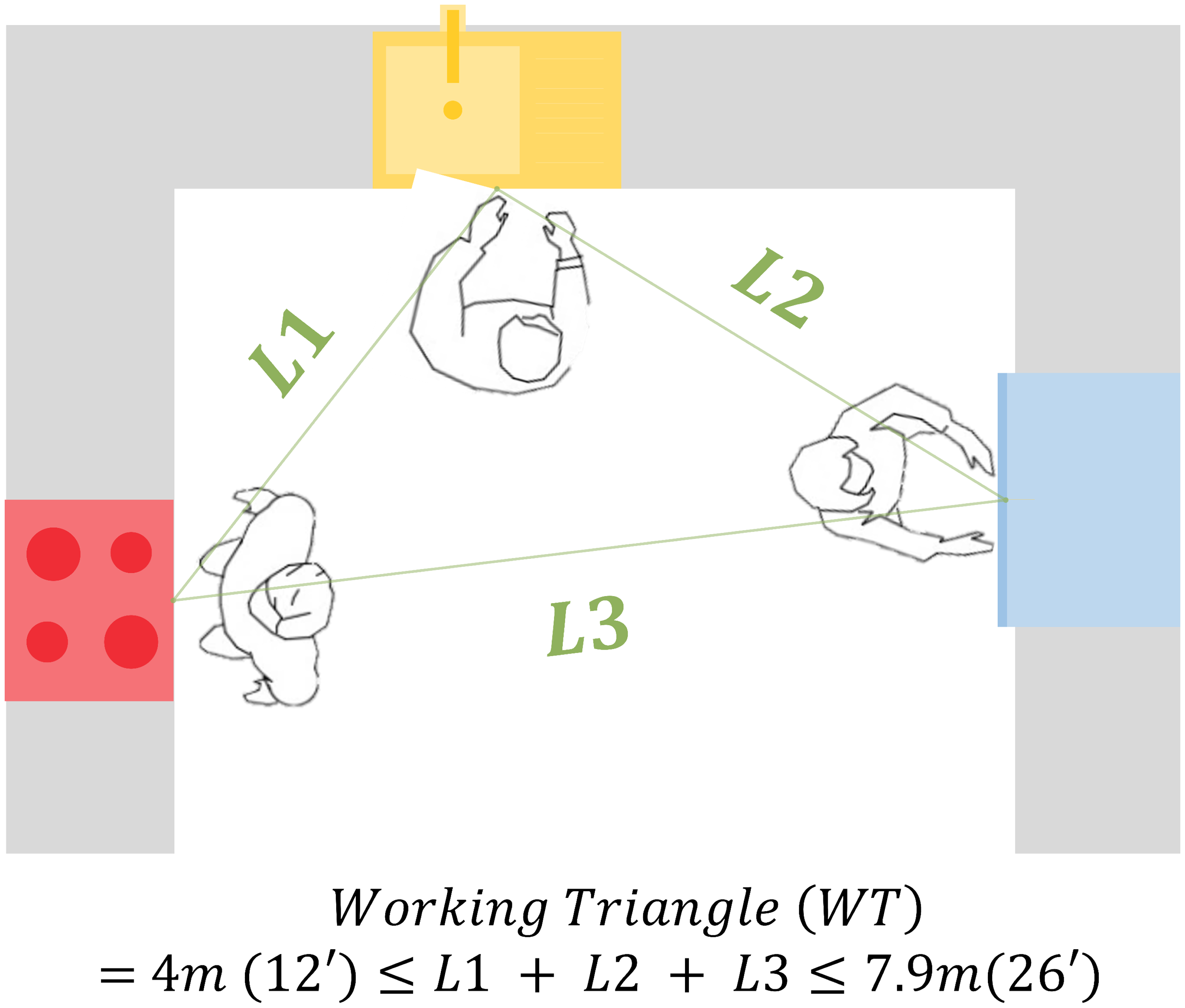
Work Triangle in kitchen and its length constraint.
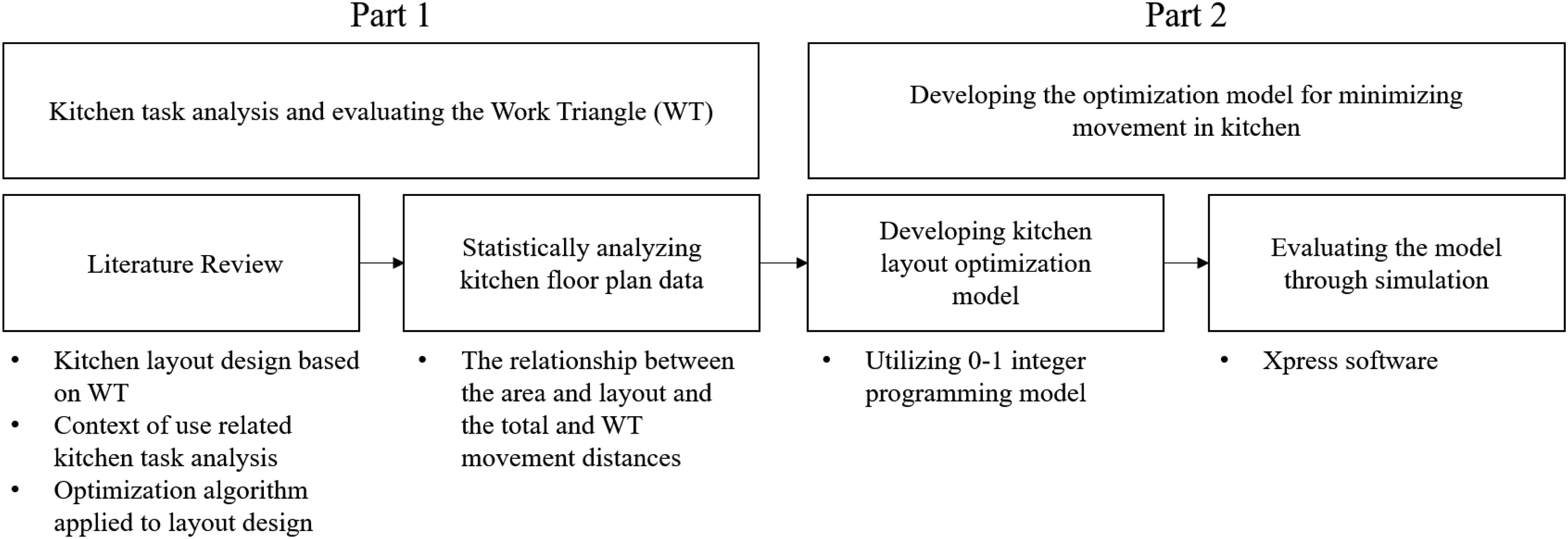
Flowchart of research process.
Literature review
Kitchen layout design based on work triangle
Modern day kitchen designs still use the century-old Work Triangle concept as a key guideline factor to create kitchen workspaces.12–15 Some studies have taken noble perspectives to improve or redesign the Work Triangle, considering different user contexts. Bonenberg 16 studied a functional kitchen layout minimizing movement accommodating disabilities using the Work Triangle. Sundaram & Rukmangadhan 8 proposed simple design interventions for modular kitchens in India to reduce ergonomic risk factors. Kang & Lee 17 introduced universal design concept for kitchens for the elderly or disabled. Mihalache et al. 18 proposed a layout considering food safety and the Work Triangle for those who are vulnerable to diet-related diseases. Kiran, Verma, & Atreya 19 designed a smart and compact kitchen layout that optimizes space for modern small households.
As the differences found in the context-of-use in modern kitchen is reflected in the movement pattern of the users, numerous researchers have analyzed the movement patterns within kitchen spaces to provide recommendations for optimizing kitchen layouts and designs. Tao et al. 10 defined the Chinese cooking process as storage, organization, preparation, cooking, dining, leftover handling, and cleaning. Mihalache et al. 12 focused on the sink's role in cooking raw foods for hygiene. Erbay et al. 9 defined kitchen activities as preparation, cooking, serving, dining, cleaning, stacking, and storage, assuming three stages: preparation, cooking, and post-meal organization.
Accordingly, some studies revised the Work Triangle to match with the context-of-use. Tao et al. 10 proposed a new L-shaped configuration for Chinese kitchens, adding cooking tables and storage cabinets. Sun & Ji 20 included storage cabinets, sinks, preparation tables, and dining tables in integrated kitchens. Kiran, Verma, & Atreya 19 highlighted the Work Triangle, cabinet storage, and counter space. Our study considered five layout elements: the cooktop, sink, refrigerator (the three-furniture constituting the Work Triangle concept), pantry, and counter. This study assumed the kitchen usage process as three stages: preparation for cooking, cooking, and post-meal organization. Then we considered storage as a critical element in modern kitchen and have added counter and pantry as spaces meant for storage from the perspective of context of use.
Studies on kitchen layout and movement path optimization
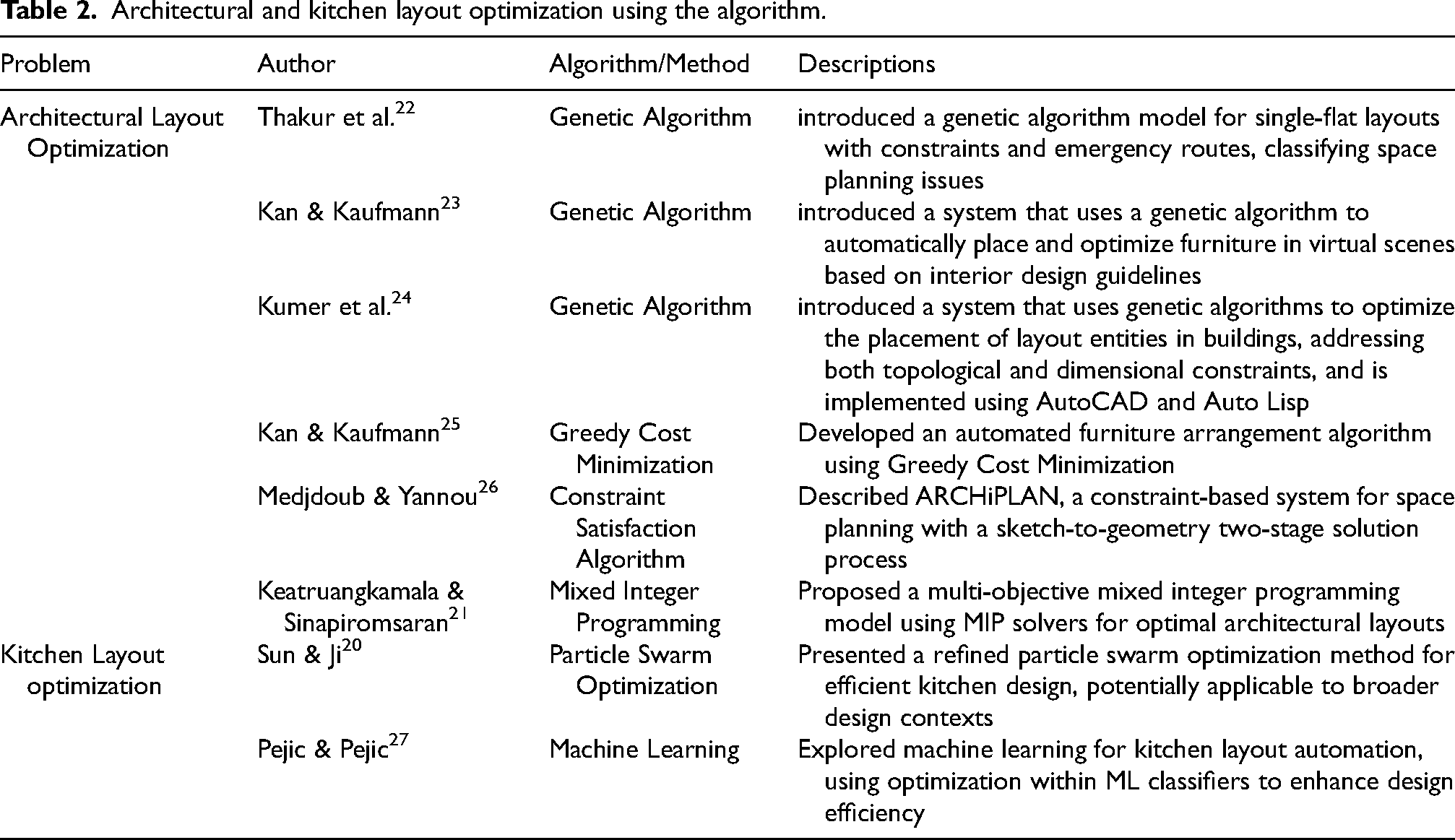
Many studies have applied various algorithms to optimize interior and furniture arrangement (see Table 2). In particular, Keatruangkamala & Sinapiromsaran 21 proposed a multi-objective mixed integer programming model that optimizes architectural layout design by resolving functional and dimensional constraints using an MIP solver and optimizing the minimum distance between rooms and maximum room space. This methodology provides user-customized results through parameter adjustment, but currently, there is a lack of research applying integer optimization, particularly to kitchen modeling. Therefore, this study attempted to expand this approach and create a universally adaptable integer optimization-based kitchen layout optimization model that can be adjusted to specific requirements.
Architectural and kitchen layout optimization using the algorithm.
Part 1: analysis of Korean kitchen floor plans to evaluate the effectiveness of the work triangle concept
This study analyzed Korean kitchen floor plans to validate the modern-day application of Work Triangle, and investigate the influence of kitchen layout and its movement paths.
Methods
Data collection
The study utilized kitchen layouts from a leading kitchen construction company in Korea. The data consisted of three apartment area types most common in Korea: 66.12㎡, 99.17㎡, and 132.23㎡, and three kitchen layout types: L-shaped, U-shaped, I-shaped. A total of 38 floor plans were analyzed, each reflecting the placement and actual sizes of kitchen appliances such as refrigerators, cooktops, sinks, dishwashers, and storage cabinets. Figure 3 shows an example of the kitchen floor plan of each kitchen area.
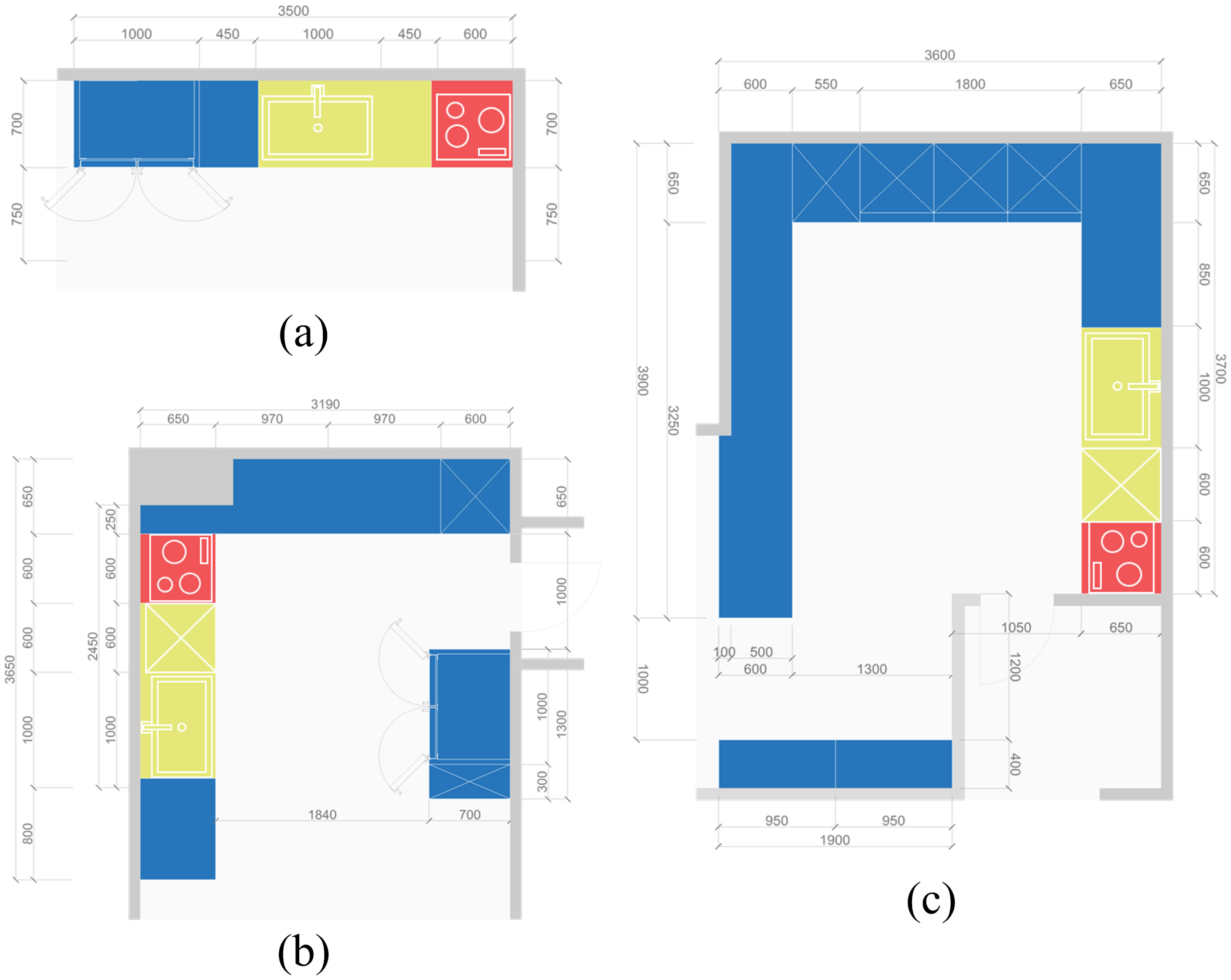
Example image of an actual apartment kitchen floor plan design files (a) 66.12m2 I-shaped kitchen layout (b) 99.17m2 L-shaped kitchen layout, (c) 132.33m2 U-shaped kitchen layout.
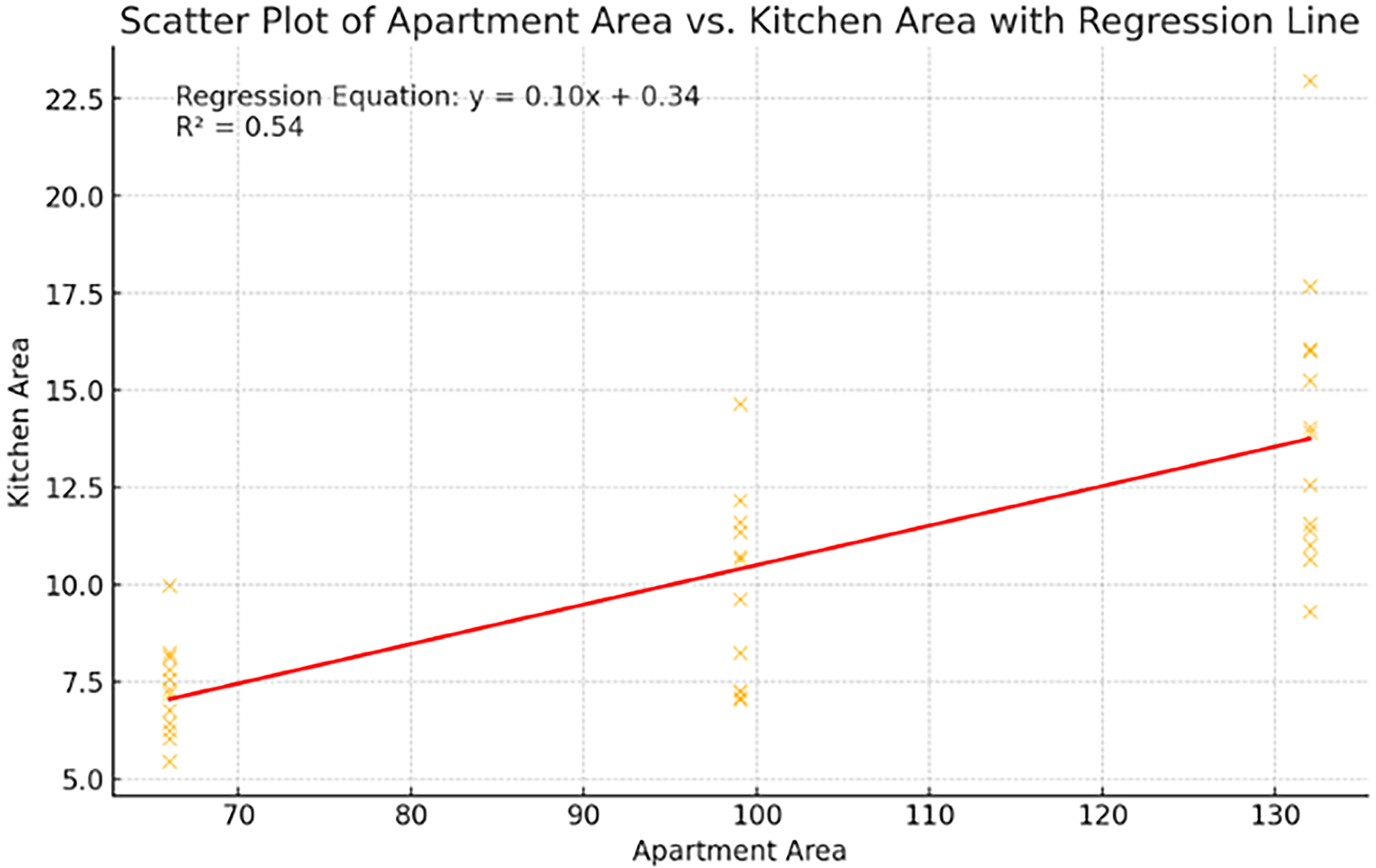
Scatter plot of apartment size vs kitchen size with regression line (See Table 3).
Definition of key concepts and variables for workflow
Ergonomic kitchen design defines workflow as the efficient arrangement of appliances to optimize food preparation and household activities. 17 In this study, workflow is defined as the movement distance among kitchen appliances required for each task. Consequently, total movement distance is calculated as the sum of the workflow. This study identified three main kitchen task areas: preparation, cooking, and cleanup.
There are two dependent variables in this study; total movement distance - the sum of the workflow for each task, and Work Triangle movement distance. The size of kitchen area (66.12㎡, 99.17㎡, 132.23㎡) and kitchen layout (L-shaped, U-shaped, I-shaped) were set as independent variables. The analysis also included the movement distances of traditional Work Triangle, considering refrigerator (preparation), sink (cleanup), and cooktop (cooking).
In this study, the movement distance between kitchen appliances was measured in Euclidian, considering the straight-line distance from the center point of each appliance. However, when specific furniture, such as an island table, obstructed the shortest path, a detour around the furniture's outer edge was applied. Accordingly, it is assumed that small kitchen appliances, such as microwaves, rice cookers, electric kettles, and air fryers, are placed in storage cabinets. Floor plans reflect the placement and actual sizes of larger kitchen appliances, including refrigerators, cooktops, sinks, dishwashers, storage cabinets, and counters.
Hypothesis development
This study aimed to empirically examine a set of research hypotheses by integrating and analyzing a dataset encompassing the total apartment area, kitchen area, installed kitchen appliance dimensions, and contextual factors influencing the utilization of kitchen spaces. The investigation will be grounded in the analysis of authentic, as-built floor plans of apartment kitchens. By considering the context-of-use, this research may contribute to a more nuanced understanding of the complex design dynamics of contemporary apartment kitchens. - H1-1: Kitchen area will be proportional to apartment size. - H1-2: As the kitchen area increases, the total movement distance between appliances will also increase. - H1-3: As the kitchen area increases, the Work Triangle movement distance between appliances will also increase.
One can expect that the larger apartment area results in longer movement paths, in accordance to larger kitchen space and longer space between appliances. - H2-1: There will be differences in total movement distances according to kitchen layout. - H2-2: There will be differences in Work Triangle movement distances according to kitchen layout.
Different kitchen layouts have different appliance arrangements, so movement paths patterns are also expected to differ. - H3: The Work Triangle will not be effective in modern apartment kitchen appliance layouts.
It is anticipated that movement paths have increased due to the addition of various appliances and equipment in modern kitchens.
Results
This study analyzed the impact of the kitchen area and layout on task movements using various methods based on 38 apartment kitchen floor plans to investigate the validity of the Work Triangle for modern kitchen layout designs.
Analysis of movement paths differences by kitchen area size
We first looked at the ratio of kitchen area to apartment area for each floor plan. The kitchen area ratio ranged from a minimum of 7% to a maximum of 16%. Correlation analysis and linear regression analysis were performed between the total apartment area and kitchen area, and the correlation coefficient was 0.733, showing a strong positive correlation. The linear regression analysis also showed that the effect of the total apartment area on the kitchen space was statistically significant (t = 9.545, p < 0.001) (see Table 3). As shown in Figure 4, the regression analysis demonstrates a positive correlation between apartment size and kitchen area, with an R-squared value of 0.54. In summary, both the correlation analysis and linear regression analysis results supported the H1-1 hypothesis. In other words, the total apartment area and the kitchen area proportionally increase in the floor plans.
Pearson Correlation and Linear Regression between the total apartment area and kitchen area (H1-1).

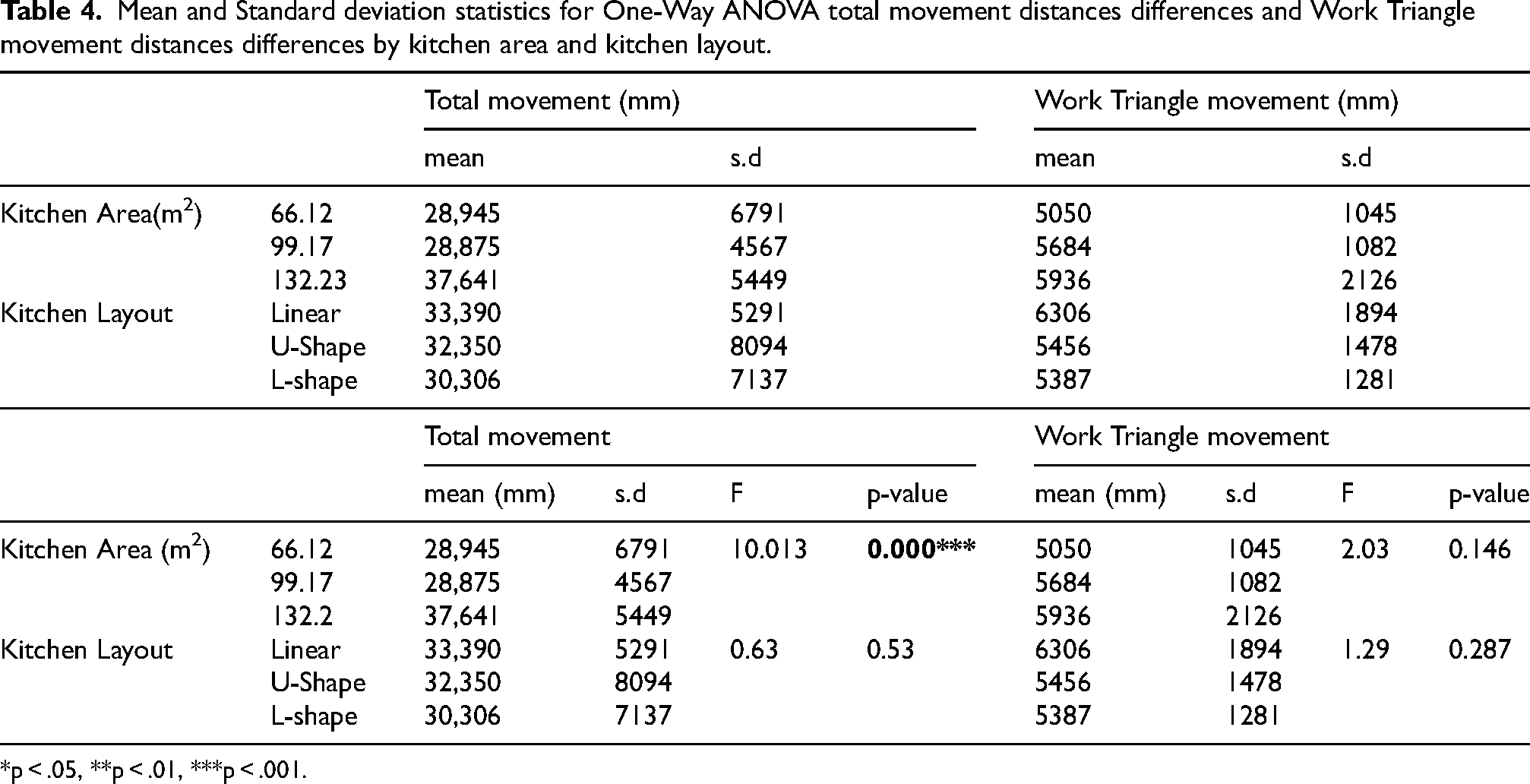
Next, assuming that a larger kitchen area leads to a larger working space and longer movement distances, we investigated whether there is a positive relationship where the total movement and Work Triangle movement lengths increase as the kitchen area increases. One-way ANOVA results showed that the total movement significantly differed according to kitchen area (F = 10.013, p < 0.001). In contrast, the Work Triangle movement showed no significant difference according to kitchen area (F = 2.036, p > 0.05) (see Table 4).
Mean and Standard deviation statistics for One-Way ANOVA total movement distances differences and Work Triangle movement distances differences by kitchen area and kitchen layout.
*p < .05, **p < .01, ***p < .001.
Furthermore, analyzing the relationship according to the kitchen area, the results showed that the Work Triangle movement was similarly distributed regardless of the kitchen area. Notably, a larger total area does not necessarily result in a longer movement length, and the Work Triangle distances were similar for both 66.12m2 and 99.17m2 apartment kitchens.
Analysis of movement paths differences by kitchen layout
We sought to determine which kitchen layout has the minimum movement distance and how they differ by layout type. Following the second hypothesis, “There will be differences in Work Triangle and task area movement distances according to kitchen layout,” we aimed to investigate significant difference in movement distances via one-way ANOVA for movement distances and Work Triangle distances by I-shaped, U-shaped, and L-shaped kitchen layouts.
Comparing the average total movement and Work Triangle distances by kitchen layout, the results are shown in the following table. One-way ANOVA for total movement (F = 0.634, p > 0.05) and Work Triangle distances (F = 1.3, p > 0.05) revealed no significant differences by kitchen layout. Therefore, as discussed in the literature review, it is important to select a layout that suits the user's needs and space characteristics, considering the advantages and disadvantages of each kitchen layout (see Figure 5, Table 4).
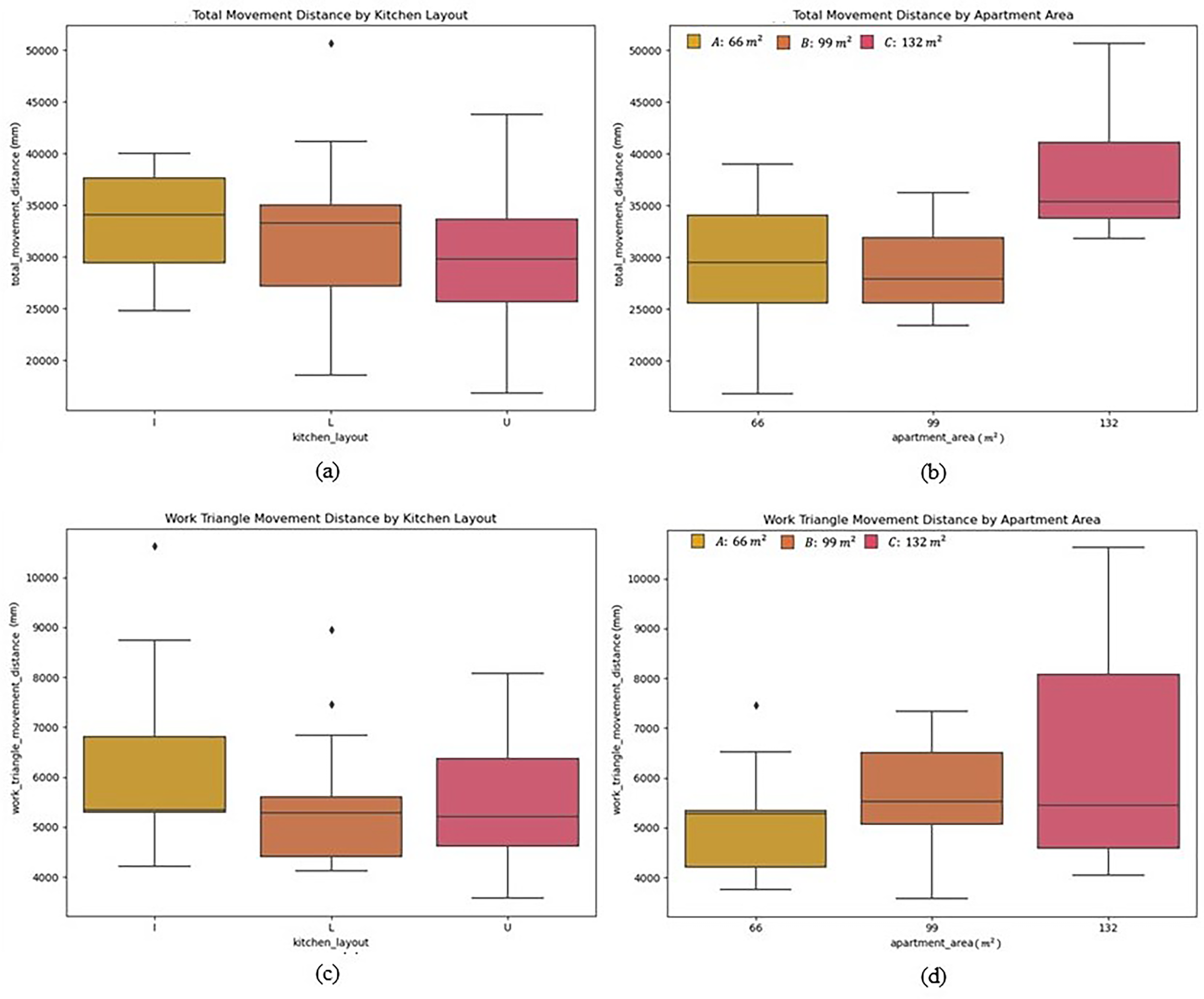
Comparison of total movement distance and Work Triangle distance by kitchen layout and apartment area: (a) Total movement distance by kitchen layout (b) Total movement distance by apartment area (c) Work triangle distance by kitchen layout (d) Work triangle distance by apartment area.
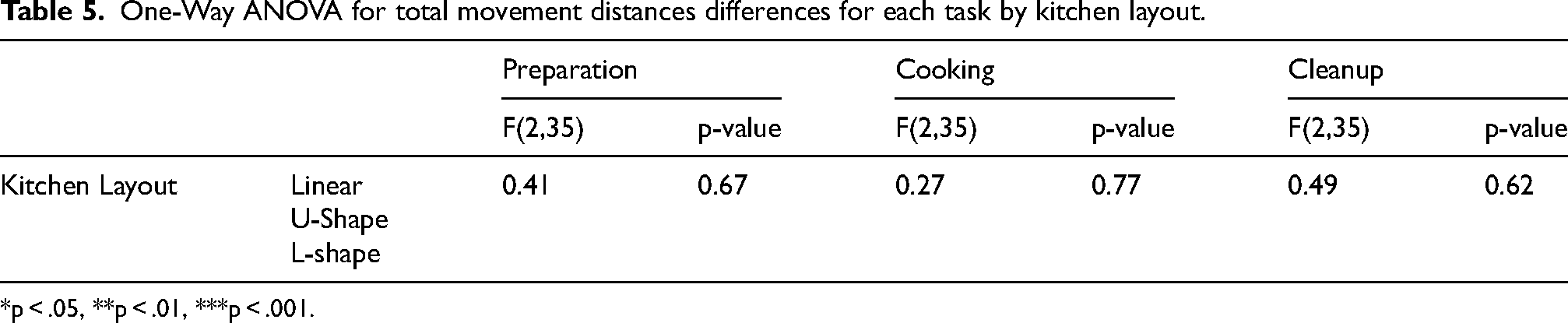
Comparing the average movement distances by I-shaped, U-shaped, and L-shaped kitchen layouts, the preparation movement was the longest in the I-shaped layout, while the cooking movement was the longest in the U-shaped layout. However, one-way ANOVA results showed no significant differences in preparation total movement (F(2, 35) = 0.41, p > 0.05), cooking total movement (F(2, 35) = 0.27, p > 0.05), and cleanup total movement (F(2, 35) = 0.49, p > 0.05). This suggests that kitchen layout also does not have a decisive impact on workflow distance. (see Table 5)
One-Way ANOVA for total movement distances differences for each task by kitchen layout.
*p < .05, **p < .01, ***p < .001.
Analysis of work triangle compliance and movement efficiency
To test hypothesis H3, “the Work Triangle will not be effective in modern apartment kitchen appliance layouts”, we analyzed the relationship of Work Triangle compliance against movement efficiency, kitchen area, and layout.
First, we divided the kitchens into two groups: those that comply with the Work Triangle and those that do not. Consequently, t-test was conducted to compare the movement distances between the two groups. As there was no significant difference in movement distances between the two groups(p = 0.7740) (See Table 6), the Work Triangle compliance may not have a substantial impact on movement efficiency in modern apartment kitchens.
t-test between the group that complies with the Work Triangle and the group that does not (H3).

*p < .05, **p < .01, ***p < .001.
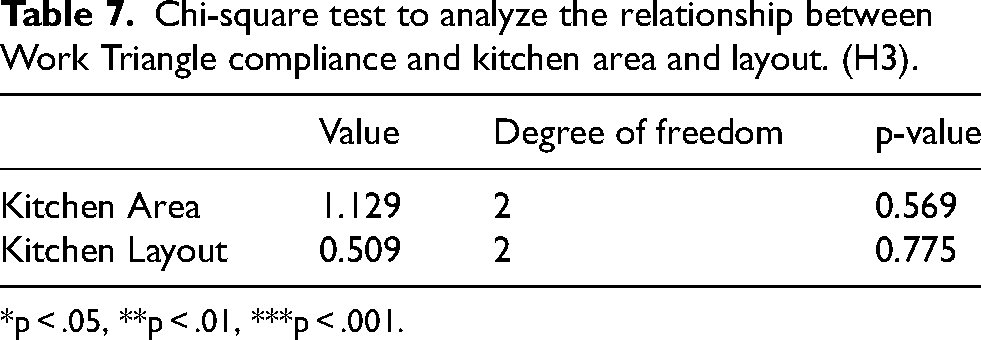
Additionally, chi-square test was conducted to analyze the relationship of Work Triangle compliance against kitchen area and layout. The chi-square test revealed no statistically significant relationship between Work Triangle compliance and kitchen area (p = 0.569) or layout (p = 0.775) (see Table 7). In other words, Work Triangle compliance was found to be independent of the kitchen area and layout. This implies that the Work Triangle theory may not be an absolute criterion in modern kitchen design. Therefore, when designing a kitchen, it is necessary to consider factors other than the Work Triangle, such as the placement of appliances and storage spaces, and user behavior patterns.
Chi-square test to analyze the relationship between Work Triangle compliance and kitchen area and layout. (H3).
*p < .05, **p < .01, ***p < .001.
Part 2: mathematical model for kitchen layout optimization
Methods
In the first part of the study, the results showed that the impact of Work Triangle compliance on movement efficiency was found to be limited. These findings suggest the need to update Work Triangle for the modern kitchens, considering appliance and storage space placement, along with the user behavior patterns to meet the context-of-use. In this study, we attempted to optimize the kitchen appliance layout with minimum distance between appliances using a 0–1 integer programming model.
The integer optimization methodology is a mathematical modeling approach suitable for solving the kitchen appliance placement and modeling combinatorial optimization problems. In particular, the 0–1 integer programming model clearly expresses the placement of appliances and the occupancy of grid points, and it can mathematically model constraints such as context-specific movement scenarios considering the user's context-of-use and kitchen appliances, reflecting the needs to be considered in actual kitchen design. In this process, grid-based space representation, constraints on duplicate appliance placement, and constraints on the distance between adjacent appliances are mathematically modeled. This aspect has not been sufficiently addressed in existing kitchen design optimization studies, and in this study, we aim to explore user-centered kitchen design optimization methods by utilizing this approach.
In this study, the following assumptions and constraints were used for the kitchen appliance placement to minimize the average distance of movement scenarios. The variables and parameters for the model are defined as follows:
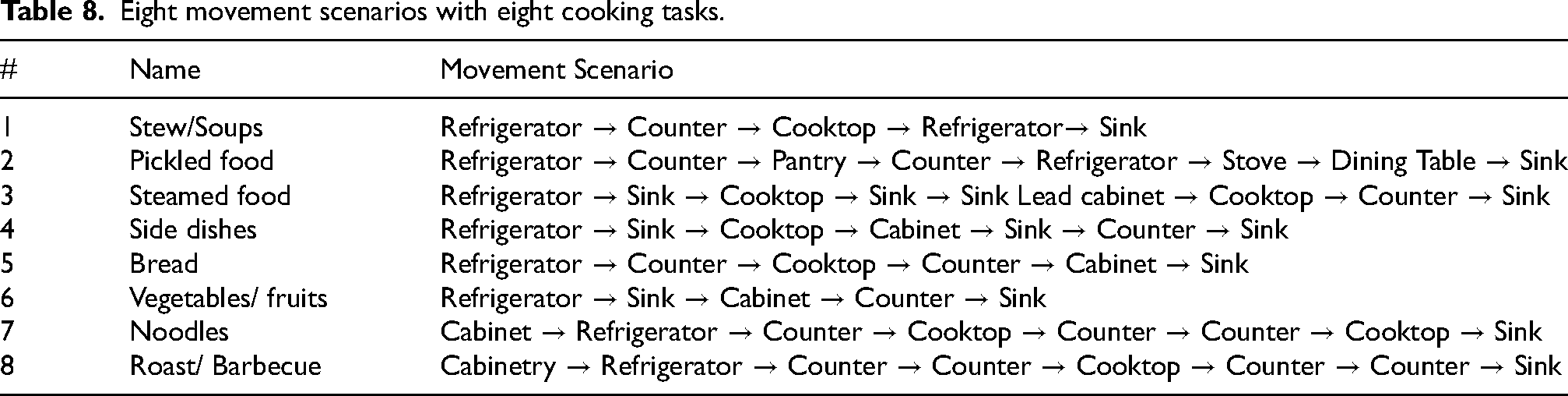
N = {1, …, n}: the set of installation j, (1 ≤ j ≤ n), j ∈Z V = {1, …, v}: the set of grid point i, (1 ≤ i ≤ v), i ∈Z F = {1, …, f}: a set of movement scenario, each scenario is defined as a sequence of installations:
As shown in Figure 6, the kitchen is assumed to be a grid of a certain size, and each grid point has coordinates (
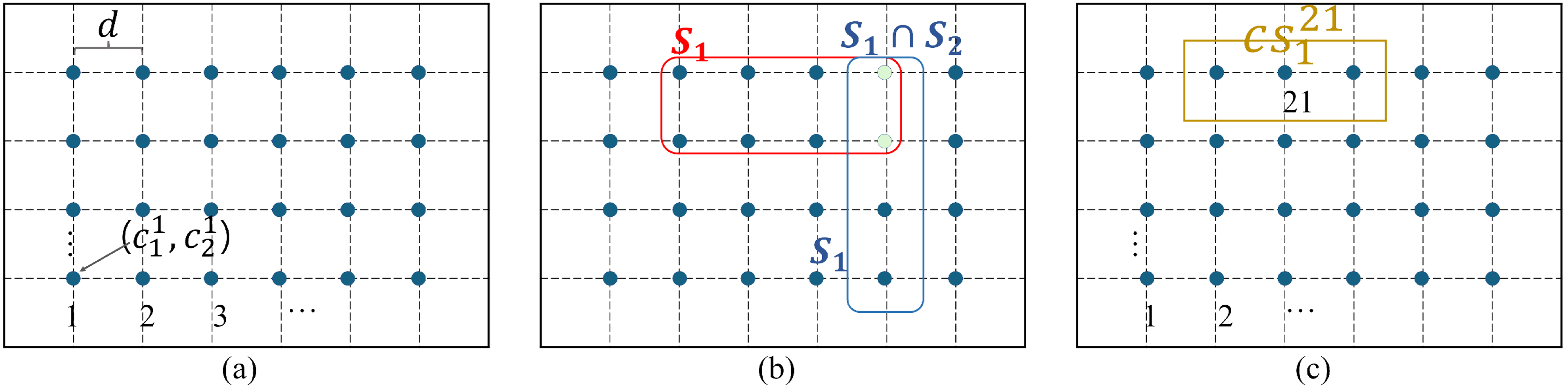
(a) Kitchen area as a grid (b) Sj, the set of grid points enabling the placement of each installation (c) the set of grid points covered by installation,
Eight movement scenarios with eight cooking tasks.
Optimization model for minimizing movement path in the kitchen
The optimization model for minimizing kitchen movement is formulated as follows:
minimize

Subject to




The constraints of the model are as follows:
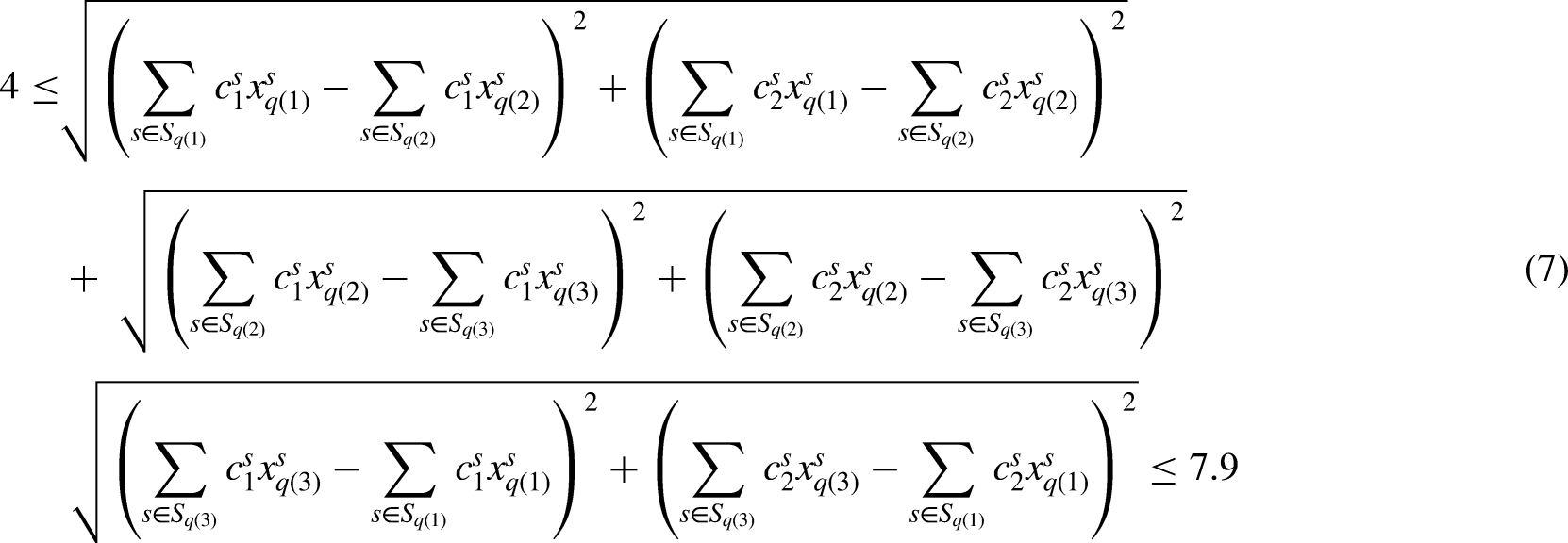
Constraints (2) state that each facility must be placed at exactly one grid point. Constraints (3) ensure each grid point can be covered by at most one facility Constraints (4) state if a facility is placed at a grid point, the grid points covered by that facility are set to 1. Constraints (5) state if facility j is placed at grid point s, it is assigned a value of 1, otherwise 0 (binary variable) Constraints (6) states if grid point i is covered by facility j, it is assigned a value of 1, otherwise 0 (binary variable) Constraint (7) states the triangle constraints: The sum of the distances between the three main facilities (e.g., refrigerator, sink, stove) is restricted to be below a certain value
Constraints (2) ensure each appliance must be placed at exactly one grid point, constraints (3) ensure each grid point can be covered by at most one appliance, constraints (4) ensure if an appliance is placed at a grid point, the grid points covered by that appliance are set to 1. For constraints (6),
Simulation results of the mathematical model
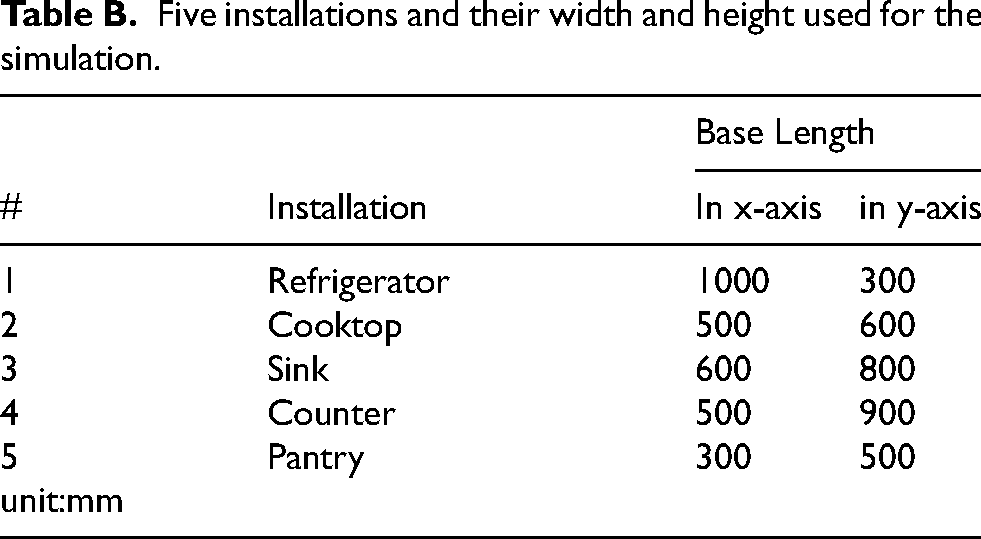
In this study, simulations were performed using Xpress software to solve the kitchen appliance placement optimization problem using the proposed integer programming model. For the simulation, the kitchen space was first constructed as a grid with regular intervals using a function that calculates the distance between grid points. Consequently, candidate grid points were selected for each appliance, and as shown in the figure above, points closest to the kitchen walls were chosen. This is because it is common to place appliances against walls in actual kitchen design. (see Appendices Tables a, b)
Once the positions of the appliances were determined, the grid points occupied by the appliances were selected based on those positions. This was determined based on the distance between grid points and the size of each appliance. For example, if an appliance is located at a specific grid point, it is considered that the grid points equal to the size of the appliance, including that point, are occupied by the appliance. The practical significance of this model lies in the fact that it can execute the optimal kitchen appliance placement tailored to the user by inputting the kitchen area, size of each appliance, number of appliances to be placed, and mathematical representation values of frequently performed cooking activities (see Figure 7).
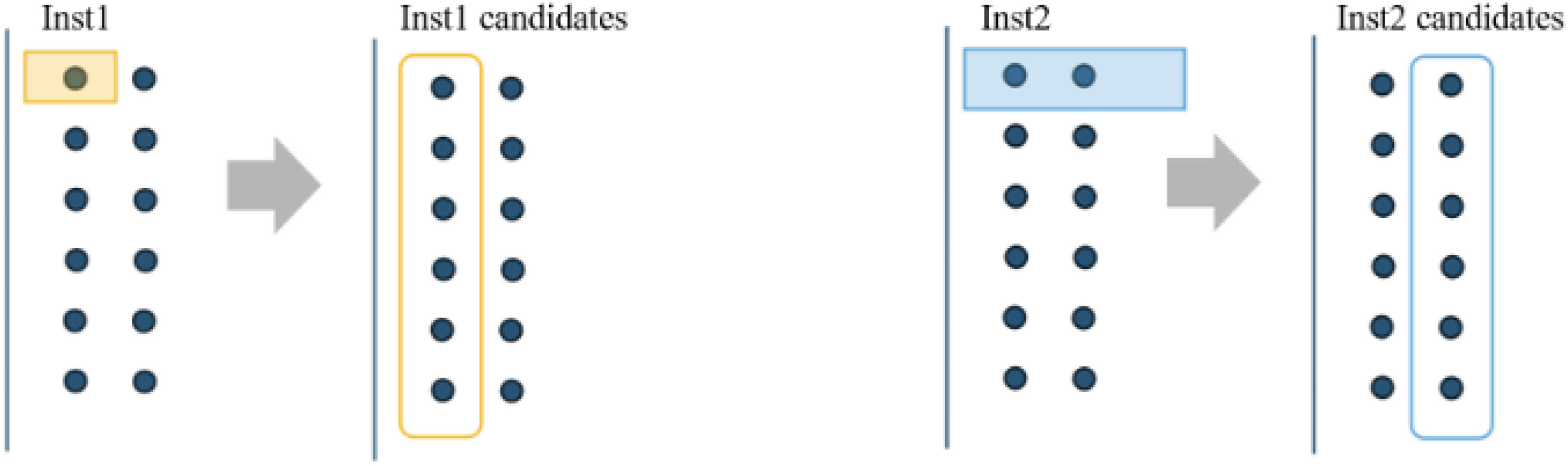
Selection of candidate grid points for kitchen appliances using the function to create an equidistant grid along kitchen walls.
The study conducted simulations for two scenarios (Figure 8). In Scenario 1, where appliances were placed at the edges of the four kitchen walls, the average movement distance was 1.88 m. In Scenario 2, with appliances located at the edge of one wall (linear arrangement), the average movement distance increased to 2.1 m. The proposed optimized layout (Scenario 1) reduced the average movement distance by about 20% compared to the conventional I-shaped layout (Scenario 2). This demonstrates the potential of the optimization model to improve kitchen efficiency. However, actual kitchen designs may have more diverse constraints on appliance placement positions, necessitating additional scenario analyses.
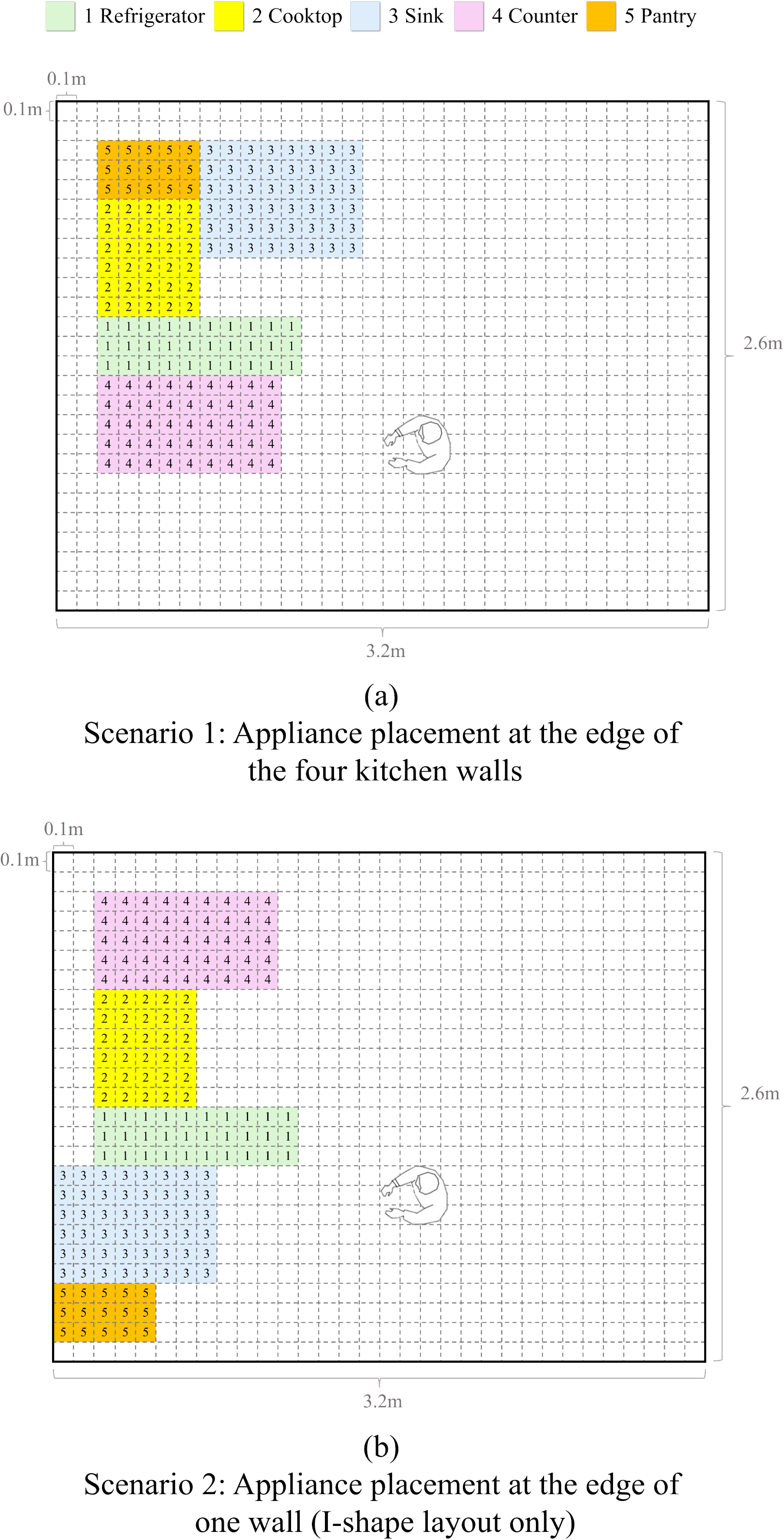
Example of a simulated optimized kitchen layout for each scenario on a grid of 3.2×2.6 m cell: (a) Scenario 1: Appliance placement at the edge of the four kitchen walls, (b) Appliance placement at the edge of one wall.
Discussion
Validity of work triangle
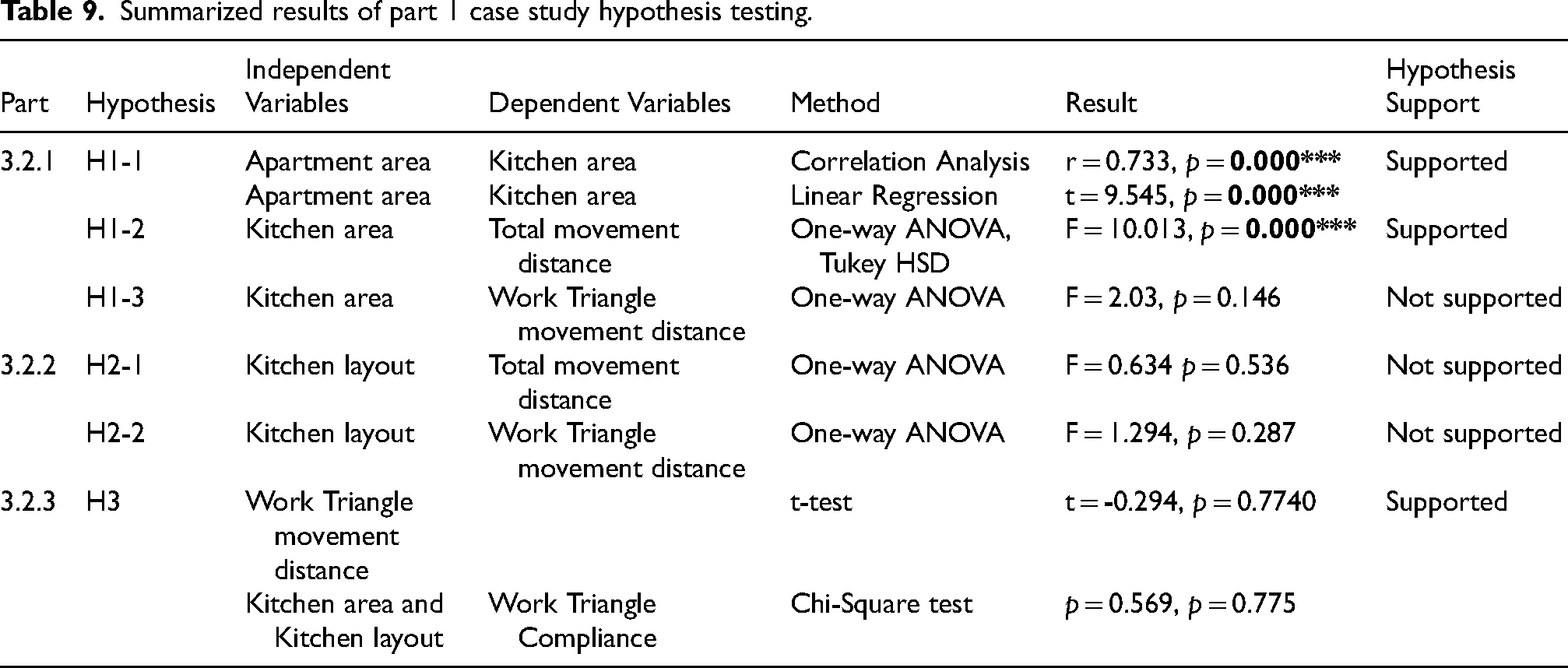
In this study, we found that both kitchen layout and kitchen area did not have a statistically significant impact on the total moving distance and Work Triangle. Therefore, we investigated which factors influence kitchen work flow efficiency. Comparing the average movement distances by task, the cooking task had the longest movement distance (15,818 mm), while the preparation (7957 mm) and cleanup tasks (7156 mm) had similar movement distances. Table 9 summarizes the results of part 1 case study hypothesis testing.
Summarized results of part 1 case study hypothesis testing.
As the kitchen area increased, the increase in movement distance for the cooking task was particularly prominent. Specifically, when there was no counter or sink between the cooktop and refrigerator, the cooking movement tended to be longer. This finding is consistent with Kang & Lee's 17 study, which pointed out that the movement distance may increase when the sink is not located between the counter and refrigerator.
Examining the movement patterns by task according to layout, there was no significant difference in the cleanup task between layouts. However, the preparation task had the longest movement distance in the I-shaped layout, while the cooking task had the longest movement distance in the U-shaped layout.
The type of task within the kitchen has the greatest impact on the total moving distance. While the kitchen layout also has some influence, its effect is relatively small compared to the type of task. Therefore, to improve kitchen workflow efficiency, it is necessary to focus on optimizing the cooking workflow, but also to consider improvements to the layout within each work area. While layout may not be the sole determining factor in overall kitchen performance, it remains crucial to consider layout in conjunction with other kitchen design considerations for specific tasks.
Simulation for kitchen layout optimization
Also, the simulation results confirmed that the proposed mathematical model can effectively solve the kitchen appliance placement optimization problem. Placing appliances at the edges of walls was found to be advantageous for minimizing movement distance. This layout was found to be like the layout with the minimum movement distance in actual Korean kitchen layout data.
In summary, this study confirmed that the kitchen appliance placement optimization problem can be effectively solved through the proposed 0–1 integer programming model and simulations. The proposed model and simulation results can be utilized in actual kitchen design and are expected to contribute to enhancing user convenience and efficiency.
Limitations
This study presents a mathematical model applicable to residential kitchen facility layout. It also offers a new approach to optimizing facility layout beyond the framework of layout in residential kitchens, which is significant.
However, the Part 1 study has limitations in generalizing the results as the analysis was based on only 38 floor plans. Therefore, future research should explore the relationship between kitchen design and movement path distance more deeply using large-scale data. Despite these limitations, this study is meaningful in that it quantitatively analyzed the relationship between kitchen design and movement scenarios based on actual apartment kitchen layouts. It is expected that subsequent studies comprehensively considering various factors related to kitchen design will provide practical guidelines for user-centered and efficient kitchen space design. Future research will also address the sensitivity to changes according to the area by dealing with more diverse kitchen size scenarios.
The 0–1 integer programming model used in the Part 2 has limitations in that it simplifies the size and shape of facilities using a grid-based approach. Future research should develop methodologies that more precisely reflect the actual shape and size of facilities, thereby deriving more realistic kitchen facility layout optimization results. Additionally, follow-up studies, such as expert evaluations of the simulation layouts 27 created in this study, interviews with actual kitchen users, 10 and time study experiments, are needed to verify the model's effectiveness.
While this study pursues ergonomically optimized kitchen design by considering only 2D facility layouts that rationally arrange modern kitchen appliances and storage cabinets, future research aims to explore ways to design along the z-axis to consider musculoskeletal workload for ergonomic kitchen design.
Conclusion
In conclusion, this study verified the effectiveness of the Work Triangle concept using actual kitchen layout data and proposed an optimal kitchen design layout model that minimizes the movement path distance between kitchen facilities using integer programming. The results confirmed that workflow efficiency is a crucial evaluation factor in kitchen design and that integer optimization methodology can be effectively applied to optimize kitchen facility layout.
Analysis of kitchen workflow patterns in real apartment layouts revealed that the importance of storage cabinets has increased, indicating that the Work Triangle alone is insufficient to optimize the efficiency of current kitchen movement path. Furthermore, workflow patterns that accounted for usage context significantly increased due to various movement factors arising from the introduction of new furniture and appliances, such as storage cabinets and dishwashers. This suggests the need for more detailed movement pattern analysis than previously considered.
As demand for new kitchen furniture and appliances increases in twenty-first-century kitchens, new movement path optimization methods and additional research that consider these factors are necessary. The proposed model enables individuals considering kitchen facility layouts to realize the optimal arrangement by adjusting cooking scenarios and the number of kitchen facilities according to their lifestyle factors. Additionally, kitchen construction companies can utilize this model to propose kitchen layouts that reflect customers’ needs and constraints and provide effective basic data to customers through computer simulation and visualization.
In summary, this study has empirically demonstrated the importance of optimized movement path for workflow efficiency and the application of mathematical modeling techniques in the kitchen design. The findings offer valuable insights and methodologies that can be readily applied to kitchen design practice. However, it is important to acknowledge the limitations of this study. If future research can address these limitations and further develop a comprehensive kitchen design decision support system, it is expected to contribute to the kitchen design field. By refining and expanding upon the concepts and techniques presented in this study, future work can pave the way for more efficient, user-centric, and evidence-based kitchen design solutions that optimize workflow and enhance the overall kitchen experience for users.
Footnotes
Acknowledgments
Authors wish to thank the members of the LSR/CX team of LX Hausys Co, South Korea for their help in providing the basic motivation and data for the research.

Ethical approval
Not applicable
Informed consent
This article does not contain any studies with human or animal participants.
Funding
The authors disclosed receipt of the following financial support for the research, authorship, and/or publication of this article: This work was supported by the BK21 FOUR Program (Education and Research Center for Industrial Innovation Analytics) funded by the Ministry of Education, Korea (No. 4120240214912), and also supported by National Research Foundation of Korea(NRF) grant funded by the Korea government(MSIP) (RS-2023-00222172).
Declaration of conflicting interests
The authors declared no potential conflicts of interest with respect to the research, authorship, and/or publication of this article.
Appendices
Five installations and their width and height used for the simulation.
| # | Installation | Base Length | |
|---|---|---|---|
| In x-axis | in y-axis | ||
| 1 | Refrigerator | 1000 | 300 |
| 2 | Cooktop | 500 | 600 |
| 3 | Sink | 600 | 800 |
| 4 | Counter | 500 | 900 |
| 5 | Pantry | 300 | 500 |
| unit:mm | |||