







Abstract
Background
The need for care of patients is increasing day by day as societies age. In parallel with the increase in the need for care, the adequacy of the care provided and the factors affecting it gain importance.
Objective
This study aims to determine the effect of nurses’ humanistic behavior skills on caregiving competence and the factors affecting it.
Methods
The study sample consisted of 445 nurses working in a state hospital and selected by random sampling method. The study data were collected between January and April 2023. Face-to-face interview method was used to collect the data. The questionnaire application was conducted in a period of approximately 15–20 min. The nurse information form including demographic characteristics, the humanistic behavior skills in nursing practice scale (HPAN) and the caregiving competence scale were used to collect the data.
Results
The nurses’ humanistic behavior skills affected their caregiving competence by 0.082. HPAN and age had an effect size of 0.084 on caregiving competence; HPAN, age and gender had an effect size of 0.124 in the triad model; HPAN, age, gender and average overtime worked in a month had an effect size of 0.136 in the quad model.
Conclusions
It was determined that as the humanistic behavior skills of the nurses increased, their caregiving competence also improved. The humanistic behavioral skills of the nurses affect care giving competence at a rate of 8.2%. In addition, age, gender, overtime work and working years also affect care giving competence.
Introduction
The need for care of patients is increasing day by day as societies age. 1 In parallel with the increase in the need for care, the adequacy of the care provided also gains importance. Caregiving competence (CSS) refers to the ability to provide effective and quality care to patients. 2 Effective care increases the efficiency of health services and ensures the correct and effective use of health resources. 3 Moreover, effective care can help reduce complications, shorten the duration of hospitalization and prevent recurrent hospitalizations. Therefore, it is of great importance to determine the factors affecting caregiving competence.
It is thought that one of the factors affecting caregiving competence is the ability of nurses to act humanistically. Humanistic behavior refers to a patient-oriented approach and includes holistic evaluation of the patient, respect, meeting emotional and psychological needs, and showing empathy. 4 Humanistic behavior skills are valuable elements that form the basis of patient care in nursing practice. 5 Developing these skills can help nurses provide effective and humane care. A humanistic approach forms the basis of patient-centered care and aims to fully meet the patient's physical, emotional, psychological and social needs.6,7 This can increase patient satisfaction, promote treatment compliance, and provide quality care. In addition, a humanistic approach accelerates patient recovery and improves the quality of nursing care.8,9 Therefore, it is thought that examining the effect of nurses’ humanistic behavior skills on caregiving competence is an important subject of study. The present study aims to determine the effect of nurses’ humanistic behavior skills on caregiving competence and to contribute to the research on the subject.
Research questions
- Do nurses’ humanistic behavioral skills have an effect on their caregiving competence?
- What are the factors affecting the competence of nurses to give care?
Methods
Population and sample of the study
The study population consisted of 503 nurses working in a state hospital. In the study, no sample selection was made and the whole population was included in the study and the study was completed with 445 nurses. The data were collected between January and April 2023. This is a descriptive and cross-sectional study.
Inclusion and exclusion criteria
Nurses who could be contacted, who did not have any psychiatric diagnosis, physical or mental health problems, who were not on leave or report during the data collection period and who volunteered to participate in the study were included in the study.
Nurses who filled out the data collection tool incompletely or who wanted to leave the study during the data collection phase were excluded from the study.
Data collection and instruments
Face-to-face interview method was used to collect the data. The questionnaire application was conducted in a period of approximately 15–20 min. In order to collect the data, 3 separate forms prepared by the researchers, including the Nurse Information Form containing demographic features, the Humanistic Behavior Skills in Nursing Practices Scale and the Caregiving Competence Scale, were used.
Descriptive information form
This is a form developed by the researchers, which includes the descriptive information of the nurses and consists of 6 questions (age, gender, marital status, the clinic worked in, total time worked, average monthly overtime hours).
Humanistic practice ability of nursing scale (HPANS)
The Turkish validity and reliability study of the scale developed by Zhang et al. in 2021 to measure nurses’ ability to act humanistically in nursing practices 10 was conducted by Yanmış et al. in 2022. 5 The scale consists of 29 items. The scale is based on a five-point Likert scale (5 (Very applicable); 4 (Fairly applicable); 3 (Generally applicable); 2 (Not applicable); 1 (Not applicable at all), with a minimum score of 29 and a maximum score of 145. The total score of the scale is calculated by summing the scores obtained from the items. There are no reverse coded items in the scale. High scores on the scale indicate high levels of humanistic behavior skills. While the Cronbach Alpha value of the scale is 0.93, the Cronbach Alpha value was found to be 0.97 in this study.
Caregiving competence scale (CCS)
The scale was developed by Pearlin et al. in 1990. 11 The Turkish validity and reliability study was conducted by Avcı and Gözüm in 2022. 12 The scale consists of 4 items and determines the level of competence of the caregiver regarding the care of the patient with 4 questions. The Likert-type scale is structured as “not sufficient at all” 1, “somewhat sufficient” 2, “sufficient” 3 and “very sufficient” 4. The minimum score is 4 and the maximum score is 16. The higher the score on the scale, the higher the competence for caregiving. There are no reverse coded items in the scale. While the Cronbach Alpha value for the original scale is 0.83, the Cronbach Alpha value was found to be 0.91 in the present study.
Ethical considerations
Approval was obtained from the Health Sciences Scientific Research and Publication Ethics Committee of a state university for the conduct of the study. The researchers complied with the rules specified in the Declaration of Helsinki throughout the study. The participants were informed about the study by the researchers and their consent was obtained.
Analysis
The SPSS program was used for data analysis. Descriptive characteristics of the nurses were expressed by number, percentage, mean, and standard deviation. The Cronbach α reliability coefficient was used to determine the internal consistency of the scales. Multiple regression analysis was used to determine the effect of independent variables on the dependent variable. In the present study, the results were considered statistically significant at a confidence interval of 95% and a significance level of p < 0.05.
Results
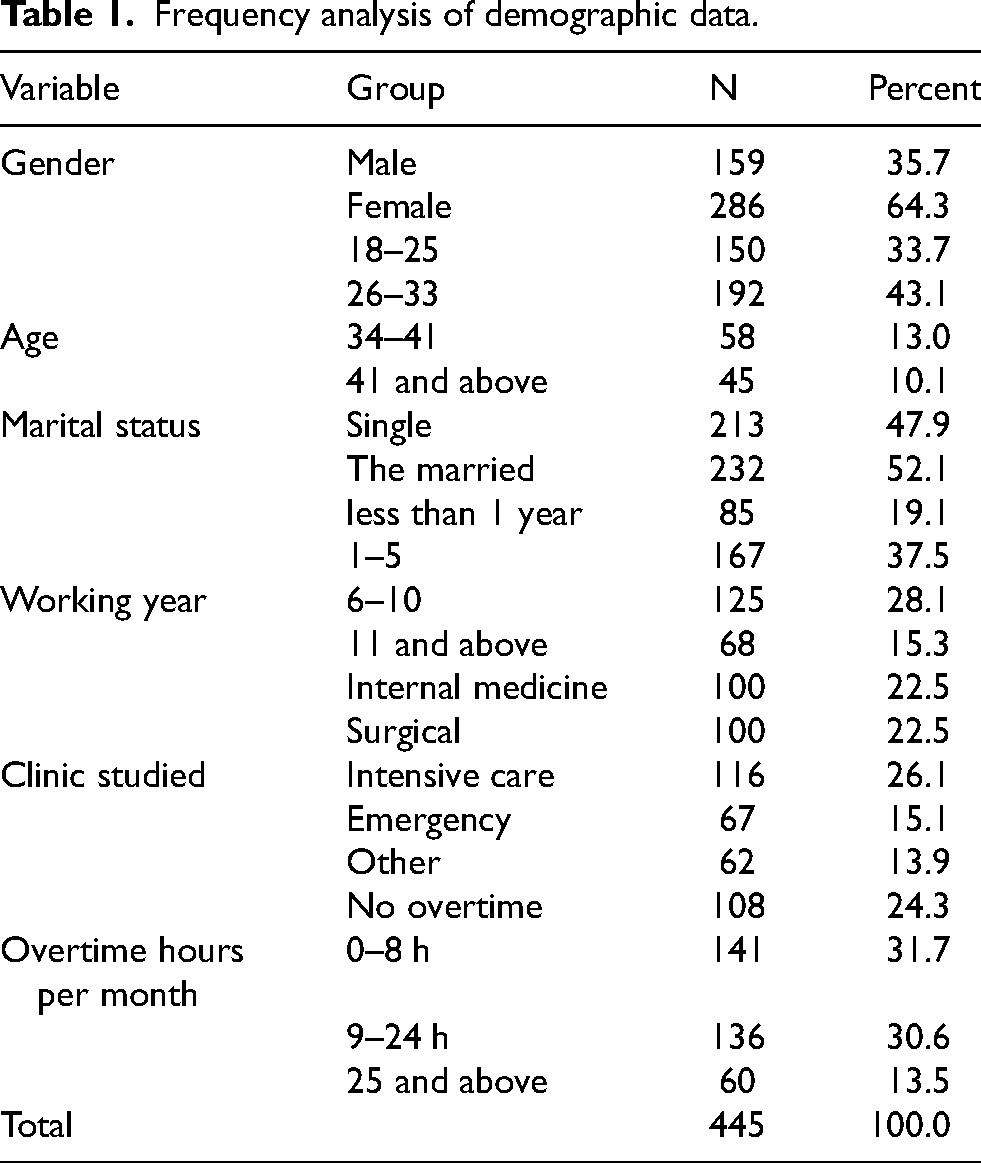
Of the participants, 64.3% were female, 43.1% were between 26–33 years of age, 52.1% were married, 37.5% had been working between 1–5 years, and more than 60% worked an average of 0–24 h of overtime per month (Table 1).
Frequency analysis of demographic data.
A statistically significant, positive and very strong relationship was found between the nurses’ humanistic behavior skills and caregiving competence (r:289, p < 0.01) (Table 2).
CCS-HPAN ınventories correlation analysis.
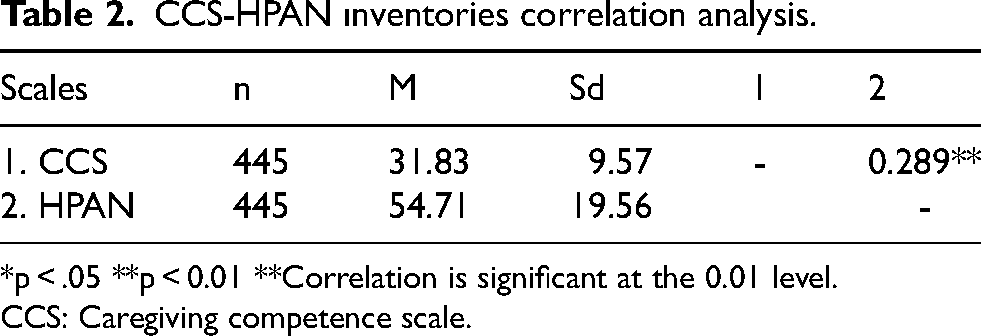
*p < .05 **p < 0.01 **Correlation is significant at the 0.01 level.
CCS: Caregiving competence scale.
Regression analysis was performed to examine the relationship between the nurses’ total CSS scores and socio-demographic variables. CSS total score was accepted as the dependent variable. HPAN total score, age, gender, overtime, marital status and years of employment were used as independent variables. According to Table 3, HPAN total score alone had an effect size of 0.082, HPAN and age had an effect size of 0.084; HPAN, age and gender had an effect size of 0.124 in the triad model; HPAN, age, gender and average overtime worked in a month had an effect size of 0.136 in the quad model; HPAN, age, gender, average overtime worked in a month and years of employment had an effect size of 0.157 in the quintet model. In this case, of the independent variables listed, HPAN alone had the largest effect (Table 3).
Predictors of CSS according to regression analysis.
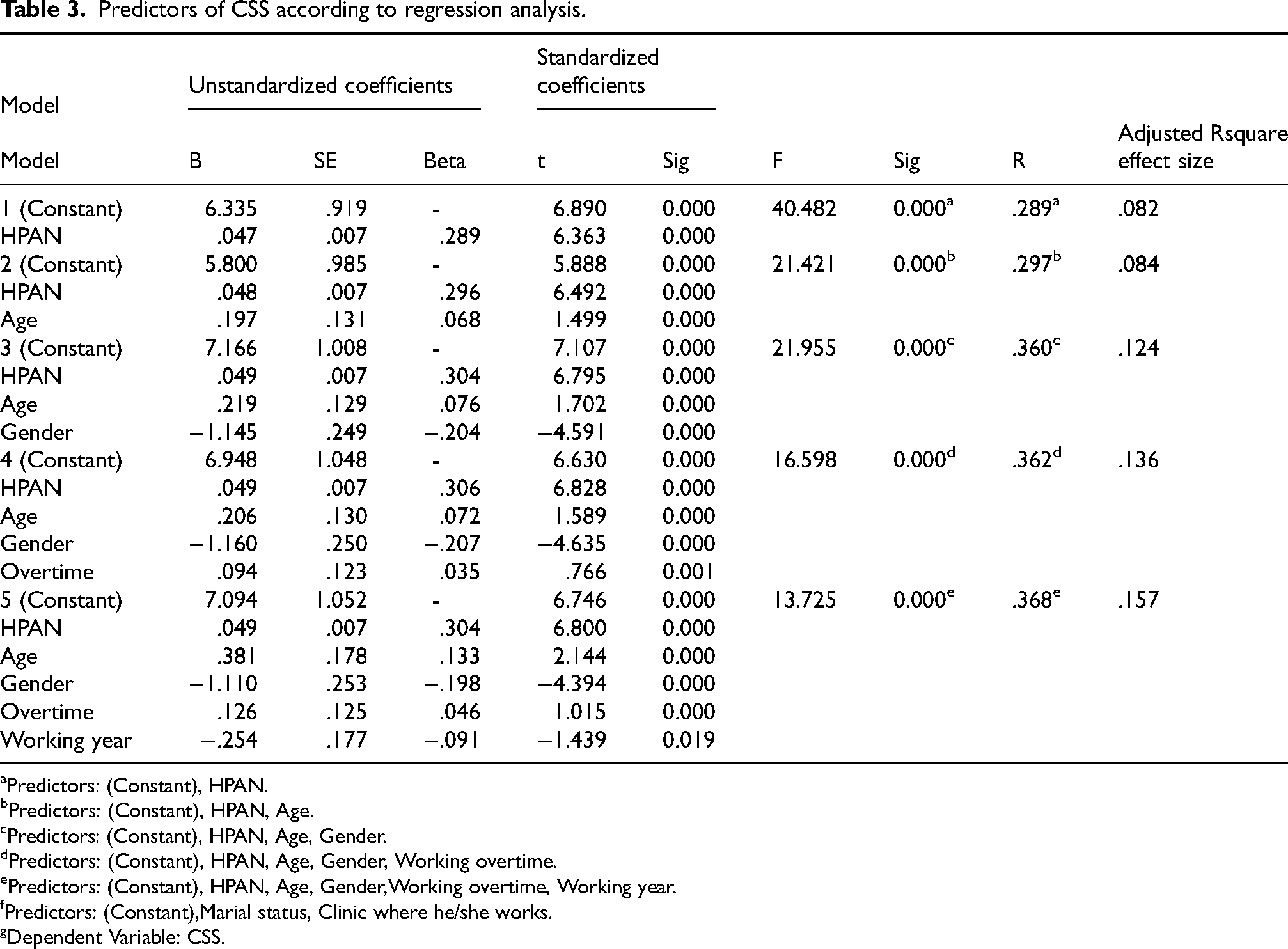
Predictors: (Constant), HPAN.
Predictors: (Constant), HPAN, Age.
Predictors: (Constant), HPAN, Age, Gender.
Predictors: (Constant), HPAN, Age, Gender, Working overtime.
Predictors: (Constant), HPAN, Age, Gender,Working overtime, Working year.
Predictors: (Constant),Marial status, Clinic where he/she works.
Dependent Variable: CSS.
Discussion
The present study shows that the ability to act humanistically in nursing practices affects caregiving competence. In addition, it has been determined that age, gender, overtime work and working year also affect caregiving competence. Caregiving competence refers to the ability to provide care to patients in an effective, safe and humane manner.13,14 In recent years, caregiving competence has increasingly gained prominence due to reasons such as changing patient needs and expectations, errors in treatment and care threatening patient safety, the need to increase patient satisfaction, and ensuring professional satisfaction of nurses.14,15
In the present study, a statistically significant, positive and very strong relationship was found between the nurses’ caregiving competence and their humanistic behavior skills (Table 2). As the humanistic behavior skills of nurses improve, their caregiving competence also increases. Humanistic behaviors include being understanding, empathetic and respectful towards others. 16 Nurses can make progress by regularly practicing and developing skills such as empathy, communication and interpersonal relationships. With the increase in these skills, caregiving competence improves over time and individuals increase their capacity to help others more effectively. 17 With the development of nurses’ humanistic behavior skills, more effective care can be provided to patients. In addition, it is known that the inclusion of family members in the care process in patient care increases the quality of care.18–20 Therefore, it is thought that including family members and humanistic approaches in the care process will increase patient satisfaction.
In the study, a step-by-step analysis of linear regression was performed to determine the factors associated with the nurses’ caregiving competence. In this study, HPAN alone had the highest effect on caregiving competence at a rate of 8.2%. In addition, HPAN and age were found to affect caregiving competence at a rate of 8.4%; HPAN, age and gender at a rate of 12.4%; HPAN, age, gender and average overtime worked in a month at a rate of 13.6%; and HPAN, age, gender, average overtime worked in a month and years of employment at a rate of 15.7% (Table 3). It is known that caregiving competence increases as professional experience increases. 21 It is thought that the fact that the majority of the nurses participating in this study were over middle age and had professional experience affected CSS.
Another factor affecting caregiving competence in this study was gender. Traditionally, caregiving tasks and responsibilities have generally been attributed to women. Women tend to assume the caregiving role both professionally and within the family.22,23 A review of the literature reveals that women generally possess more emotional support and emotional bonding skills, 24 while men tend to provide more practical help and financial support. 25 However, it should be noted that individual differences and personal characteristics also affect caregiving. 26
In the present study, overtime hours worked in a month also affect caregiving competence. There is a complex relationship between overtime and caregiving. Overtime usually refers to the extra work that employes perform outside of normal working hours. Overtime can have various effects on caregivers. In the literature, it has been found that overtime can limit the time and energy of caregivers, reduce the time that caregivers can devote to caregiving tasks, increase the burden of caregiving, and lead to feelings of fatigue and burnout.27,28 It is thought that the majority of the nurses participating in this study had a high level of caregiving competence because they did not work overtime and worked between 0–8 h.
In this study, years of employment also affects caregiving competence. Many studies show that there is a positive relationship between years of employment and caregiving competence. As the professional experience of caregivers increases, their care skills, knowledge and competencies tend to improve.29,30 It is thought that the majority of the nurses participating in this study have high caregiving competence because they have a certain professional experience.
Limitations of the study
The limitations of the study include the fact that the nurses included in the study were recruited from a single center, the hospital had a high patient density, some of the nurses did not want to fill out the questionnaire because they were tired and the results could be generalized to only one center. In addition, the fact that the study subject is based on self-assessment by nurses is limited in explaining causality.
Conclusion
The present study showed that as the nurses’ humanistic behavior skills improved, their caregiving competence also increased. Among the independent variables examined, it was found that the ability to behave in a humanistic manner affected the care-giving competence of nurses the most. In addition, it was found that age, gender, years of employment and overtime worked in a month also affected the caregiving competence. It should not be forgotten that many factors affect caregiving competence. In future studies, factors such as the caregiver's educational level, emotional state, financial status and support systems can be investigated.
Footnotes
Acknowledgements
We thank the nurses who helped us to collect data.

Ethical considerations
Approval was obtained from Bingöl University Health Sciences Scientific Research and Publication Ethics Committee for the conduct of the study (2023-E.92182). The researchers complied with the rules specified in the Declaration of Helsinki throughout the study.
Informed consent
The participants were informed about the study by the researchers and their consent was obtained.
Funding
The authors received no financial support for the research, authorship, and/or publication of this article.
Declaration of conflicting interests
The authors declared no potential conflicts of interest with respect to the research, authorship, and/or publication of this article.