







Abstract
Background
Examining the restorative effects of indoor nature exposure that can be controlled through management and design in work settings is crucial for public health. However, concerns about the external validity of existing findings persist due to insufficiency of studies with ecologically sound experimental designs.
Objective
Through an experiment that prioritized higher ecological validity, this study aimed to explore the effects of working in an office room vegetated with green plants on employees’ physiological and psychological well-being, and their attentional performance.
Methods
This controlled experimental study employed a crossover design in real-life work environments, involving 40 working individuals. It assessed changes in perceived fatigue, psychological and physiological stress, and attentional performance after individual work in either a vegetated or plant-free office room, with other environmental factors kept constant.
Results
After an hour of individual work in a vegetated room, participants reported decreased perceived stress and fatigue, supported by changes in measures of systolic blood pressure and heart rates when compared to a plant-free room. Gender differences emerged, with females experiencing greater relief in perceived stress and males showing more noticeable reductions in stress-related physiological indicators. Enhanced attentional reactions were noted solely among males.
Conclusions
This study accentuated the immediate emotional well-being benefits of indoor plants at work, highlighting the importance of considering diverse user groups in indoor workspace design. It also proposes potential explanations for how indoor plants induce restorative effects on working individuals, suggesting further research.
Introduction
Nature exposure, well-documented for its positive impact on psychological well-being,1,2 encompasses various natural environments, including wilderness, public green spaces, community and private gardens, and indoor elements like plants. In conjunction with empirical studies, theoretical frameworks, such as the Stress Reduction Theory (SRT) and Attention Restoration Theory (ART), offer explanations for the psychological benefits associated with nature exposure. SRT suggests that direct contact with nature reduces stress, enhancing positive affect and facilitating the transition to a relaxed state.3,4 This affective change is cognitively beneficial, enabling individuals to sustain attention effectively. Considering the cognitive perspective, individuals in urban settings often rely on top-down processing for focus and decision-making. 5 ART suggests that top-down directed attention is a finite resource leading to mental fatigue when depleted. In contrast, natural environments capture bottom-up attention, inducing a state of ‘soft fascination’ that imparts restorative effects. This state, characterized by effortless and involuntary attention, allows individuals to concurrently replenish and maintain top-down directed attention.6–8 However, modern urbanites now spend the majority of their time indoors, with a significant increase in the duration spent in indoor working environments. 9 Therefore, a more comprehensive understanding of the restorative benefits of nature exposure in indoor work environments is crucial. This knowledge can inform evidence-based workplace designs and interventions aimed at improving the health of occupants.
Indoor nature exposure's health benefits have garnered sustained attention from researchers since the 1980s. Ulrich found that “nature in the window” improved pain tolerance and reduced hospital stays for post-cholecystectomy patients. 10 Looking at the natural surroundings through a window, is widely recognized as an effective mode of nature exposure, bringing health benefits to observers10–12 . Beyond medical settings, numerous health benefits of “nature in the window” have been documented in office settings, including anxiety relief,13,14 reduction of physiological stress, 15 and improvement of subjective well-being. 12 However, the opportunity to freely enjoy a nature view from windows is not uniformly distributed among office users. Objective factors, such as the office's floor location and external environment, influence the ability to access a nature view. The trend of constructing large-scale high-rise office buildings in densely urbanized areas has further restricted the opportunity to get nature views. 16 Unfortunately, office users and managers lack the means to enhance the presence of “nature in the window” within their toolbox. Therefore, a pivotal question arises: Can practical solutions, such as incorporating indoor plants in office, yield significant health benefits for office users? It is crucial to note that benefits derived from “nature in the window” cannot be indiscriminately bundled with contacts with indoor plants.13,14 Yin et al.'s study 14 compared the restorative effects among three indoor environments highlighted the distinctions: a windowed area without plants, a windowless area with plants, and a non-biophilic area without both. The findings indicated significant differences in the efficacy and efficiency. Moreover, different visual interactions with plants, influenced by indoor plant arrangements such as active interaction with plants placed in front of the view and passive interaction with plants on the side, also led to variations in restorative effects.17,18 Additionally, there appears to be a potentially significant interaction between gender and indoor nature exposure on restorative effects. Studies have indicated gender differences in indoor nature's restorative impacts on working memory, 19 stress recovery 20 and task performance. 18 These findings suggest that women may be more responsive than men to the beneficial effects of plants, particularly in attention-related restorative aspects. However, the limited understanding of this potential interaction, due to the minimal consideration in previous studies, highlights the necessity for further exploration.
The presence of indoor potted plants is found to be linked to stress reduction and improvement in work productivity.21,22 However, several common limitations identified in related studies pose challenges to extending our understanding of the restorative effects on users in work settings. Potential limits to the generalizability of findings were identified concerning visual stimuli, sampling, experimental settings, and the way to implement exposure. 23 A limitation is the predominant use of 2D images and videos for environmental exposures,13,24,25 raising concerns about the ecological validity of results. 26 Kahn et al. 11 provided direct evidence, demonstrating that viewing nature through a window was beneficial, whereas viewing the same scene from an equal-sized plasma display yielded no such benefits. Although digital immersive virtual environments (IVEs) offer a higher sense of presence, digital models still lack the natural-grown unpredictable differences in spatial and color features of plants. 27 Additionally, it often fails to simulate real working scenarios during experimental exposure. Existing studies typically involve brief exposures lasting only a few minutes.28–30 Participants are often instructed to complete organized cognitive tasks rather than engage in daily works.21,22 Furthermore, most laboratory studies utilize convenient samples of student groups. While field studies are somewhat limited, they present divergent results compared to major experimental studies conducted with student samples in laboratories. For instance, productivity differences were observed in the experimental tests, but no significant differences were observed in objectively measured efficiency in a longitudinal investigation. 31 Students showed enhanced work performance due to indoor plants, yet these findings were not consistently replicated in real-world studies involving employees. 32 Another real-world study found no significant effect of plants on perceived health, tiredness, or well-being. 33 Thus, relying solely on student samples may compromise external validity, hindering predictions of indoor plant impacts in actual work settings. However, the uncontrolled field studies may inevitably introduce extraneous variables that compromise internal validity, emphasizing the need to control external disturbances from people and environmental factors like room climate in experiments.14,32
In summary, the current research findings fall short in providing a comprehensive understanding of the health benefits stemming from the presence of plants in work settings. This limitation hinders efforts to optimize work environments through evidence-based design approaches that harness the full potential of salubrious effects. Addressing this knowledge gap necessitates additional studies, particularly through the implementation of controlled experimental studies in a more ecologically valid manner, exploring real working scenarios in situ.34,35 This study aims to enhance current understanding of the restorative effects of indoor plants in work environments through a controlled experimental design conducted in a real-life office setting, providing a more ecologically valid examination.
Methods
We opted for a crossover study design to attaining a higher level of statistical power. In this experiment, each participant acted as their own control to eliminate the influence of the potential time-invariant factors. Each participant made two visits to the experimental environments (office room with and without plants), with the order of visits randomized. For each participant, we first generated a random number between 0 and 1 using the RAND() function in Excel. Participants of the same gender were then ranked in order from largest to smallest based on these random numbers. Those with an odd ranking number were assigned to participate in the experiments in the order of “Green-Lean,” while those with an even ranking number were assigned to the “Lean-Green” order. To minimize potential carry-over effects, a washout period of one week was implemented for each participant. Both visits took place at the same time of the same weekday, ensuring minimal impact from circadian rhythm on the physiological and cognitive performance. To mitigate potential biases from seasonal variations, we limited the overall duration of the entire series of experiments to one month. The experiment was reviewed and approved by the Review Board of (anonymized for review) and carried out following the guidelines on working with human subjects.
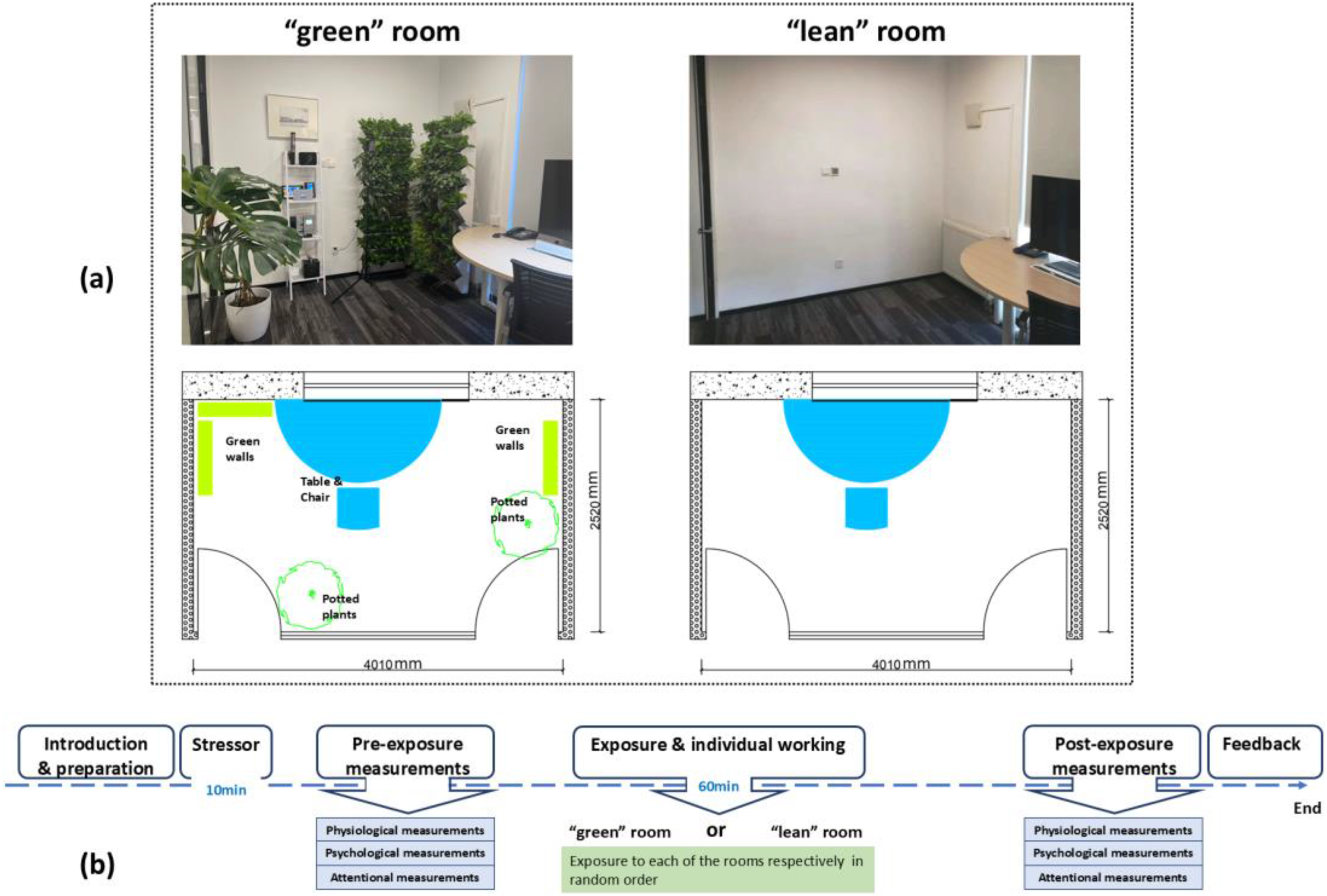
The procedure of the experiment. (a) displays the layout of the experimental office room (“Green” room), while the “Lean” room replicates the same layout without plants. (b) presents the flow chart of the experiment.
Description of the subjects.
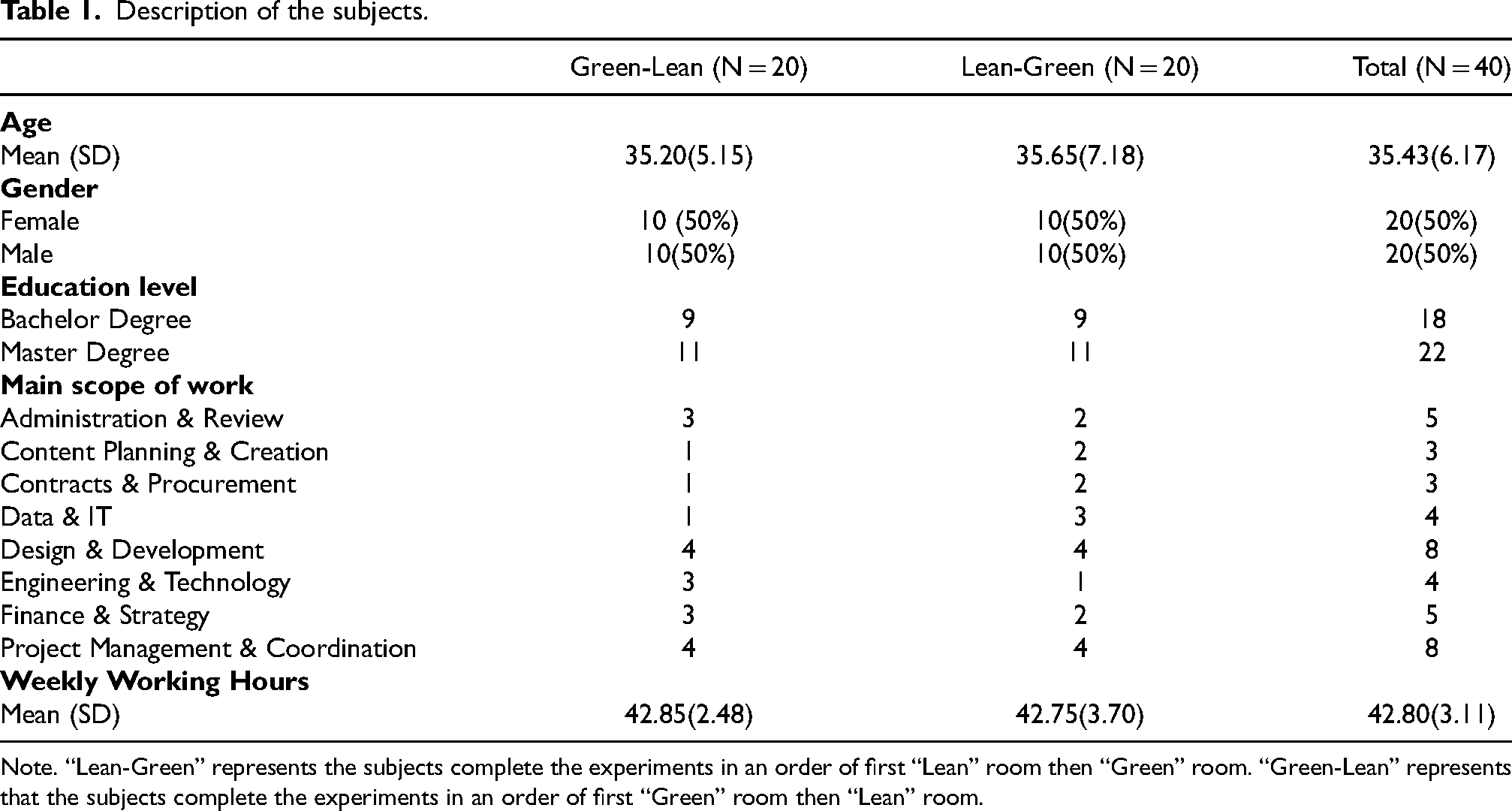
Note. “Lean-Green” represents the subjects complete the experiments in an order of first “Lean” room then “Green” room. “Green-Lean” represents that the subjects complete the experiments in an order of first “Green” room then “Lean” room.
All the experiments were arranged on weekdays, prior to which the experimenter communicated with the subjects regarding the experimental date, and their work schedules surrounding that date. This measure was taken to ensure that the subjects maintained their regular daily working routine, thereby preventing any additional cognitive burden arising from abnormal work arrangements.
We conducted momentary measures of blood pressure, heart rate and salivary cortisol concentration before and after exposure to each environment. Blood pressure and heart rate were measured using the Yuwell-YE660A device (Yuwell Group). Participants were instructed to place a sampling sponge in their mouths for one minute to collect the saliva samples before and after exposure to the environment. The collected samples were stored in sterile tubes at −20°C before cortisol concentration measurement using ELISA testing.
Results
Impacts on perceived stress and perceived fatigue from the exposure to indoor plants
The repeated measures ANOVA on the perceived stress measured by the PPS-14 revealed a significant main effect for both the factors of “Environment” and “Time”. The interaction effect between “Gender” and “Environment” was found to be significant. The other main effects and interactions did not reach statistical significance including the interaction of “Gender” × “Time”. This indicated that, overall, there was no significant difference in the environmental groups caused by gender before and after exposure. The significant effects of the interaction “Gender” × “Environment” suggested that there were group difference between “Lean” and “Green” environments caused by gender (see Supplementary Table S3).
The post hoc analyses using pairwise comparison revealed no significant differences in perceived stress levels before exposure between groups. However, after exposure, individuals in the room with indoor plants reported a significantly lower level of stress (p = 0.02, Cohen's d = 0.44). Further analysis on the effect of “Time” showed that the perceived level of stress significantly decreased only in the presence of indoor plants (p = 0.03, Cohen's d = 0.35). Conversely, when individuals were in the room without indoor plants, there was no significant change in the perceived stress levels. There was no significant change in perceived stress in each environment after exposure within each gender group. However, a significant difference was observed after exposure between the “Lean” and “Green” environments in the female group (p = 0.025, Cohen’d = 0.78). The PSS-14 score of the “Green” group (Mean = 16.40, SD = 6.78) was significantly lower than the “Lean” group (Mean = 19.65, SD = 6.52). Conversely, no significant difference was observed in the same paired comparison in the male group, see Figure 2(a). In addition, the joint test of “Time” indicated that the factor of “Gender” had a significant effect on the perceived level of stress in the “Green” environment but not in the “Lean” environment. Altogether, these results suggested that indoor plants were more effective in reducing the perceived level of stress in females than in males.
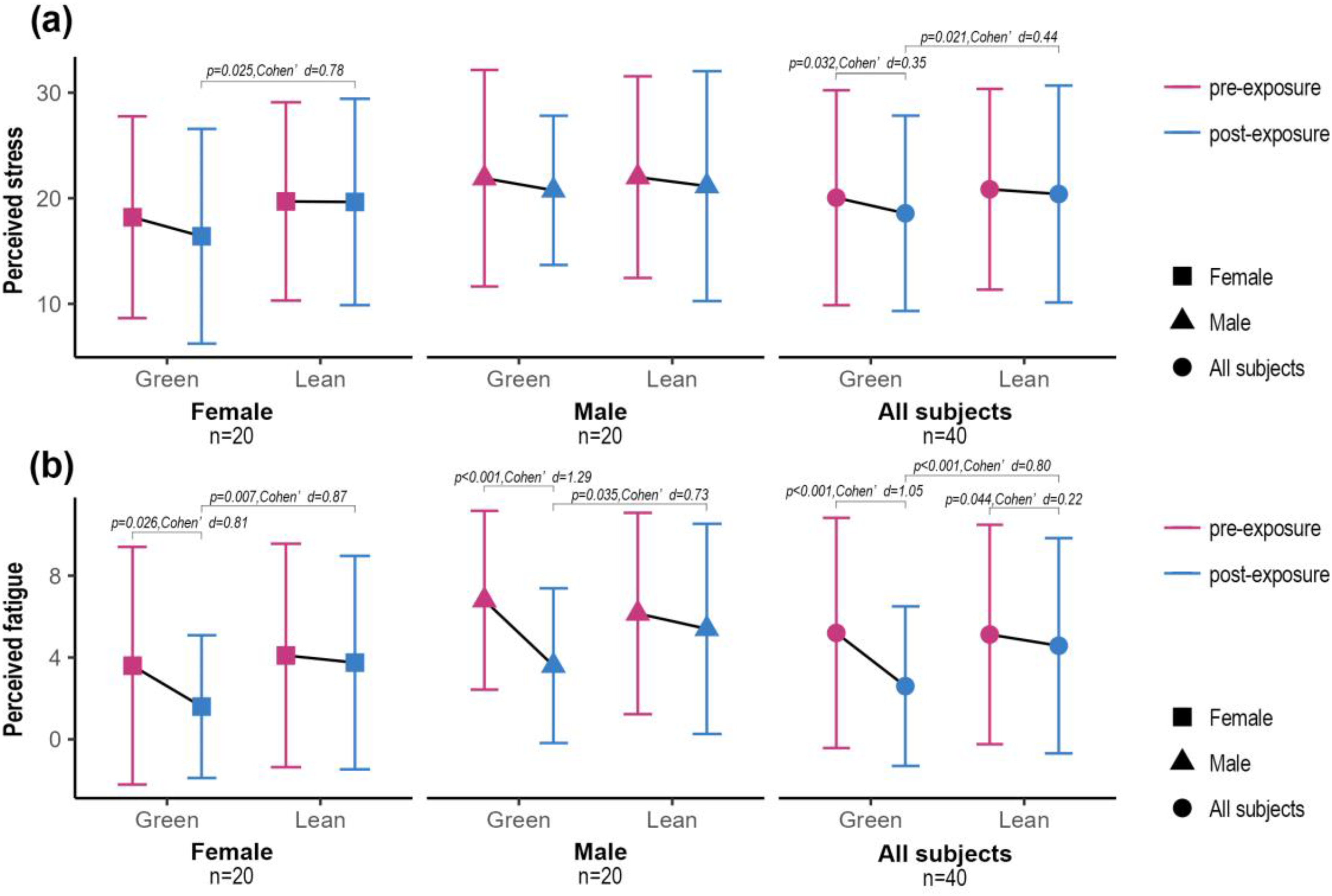
Mean levels of the self-evaluated perceived stress measured by PSS-14 (a) and perceived fatigue measured by FS-14 (b) pre and post exposure to the “Green” and “Lean” room. Paired comparisons of means are presented for females, males, and all subjects, with significance levels marked for pairs achieving p < 0.05, along with their corresponding p-values and Cohen's d. The error bars indicate the standard deviation of the mean.
The repeated measures ANOVA conducted on perceived fatigue, as measured by the FS-14, revealed significant effects for the factors of “Environment”, “Time” and “Gender”, as well as the interaction between “Environment” and “Time” (see Supplementary Table S4). The post hoc analysis, conducted using pairwise comparison, revealed that there was no significant difference in the perceived fatigue between environments prior to the exposure, irrespective of the gender. However, individuals in the room with indoor plants reported a significantly lower level of fatigue after the exposure (p < 0.001, Cohen's d = 0.78). Furthermore, the post hoc analysis on the effect of “Time” indicated that both groups, whether in rooms with and without indoor plants, experienced a significant decrease in perceived fatigue. Specifically, when exposed to the room without indoor plants, participants’ perceived fatigue decreased from 5.13 (SD = 3.58, 95% CI: 4.02, 6.23) to 4.58(SD = 3.51, 95%CI: 3.47, 5.68), with a p-value of 0.04 (Cohen's d = 0.22). On the other hand, when exposed to the room with indoor plants, the alleviation of perceived fatigue obtained a much higher effect size, with a drop from 5.20 to 2.60 (p < 0.001, Cohen's d = 1.05). Thus, the interaction effect between “Environment” and “Time” stems from the significantly greater reduction in perceived fatigue observed after exposure to an indoor working environment with plants, compared to the “lean” counterpart. The paired comparison within each gender showed no significant difference in perceived level of fatigue after exposure to the “Lean” environment. However, a significantly lower level of fatigue was observed in both male and female participants after exposure to the “Green” environment, with a high effect size in both gender group (female, p = 0.026, Cohen’d = 0.81; male, p < 0.001, Cohen’d = 1.29). No other significant differences were detected, see Figure 2(b). These results indicate no significant gender differences in reducing the perceived level of fatigue when working in office with plants.
Impacts on Stroop task performance from the exposure to indoor plants
The repeated measures ANOVA showed that there were no significant differences in the accuracy rates and reaction times of the Stroop tasks with respect to the effects of “Environment” or the interaction of “Environment” × “Time” (Supplementary Table S5 and Table S6). However, though the ANOVA on accuracy rates revealed a significant effect on the factor of “Time”, yet post hoc analysis showed no significant differences across any simple effect. On the other hand, reaction time was significantly influenced by the factor of “Time”. Pairwise comparison indicated that only in the male group performed significantly faster in Stroop task after working in the office with plants (p = 0.017, Cohen’d = 0.45), see Figure 3(a). This suggests that male group is more positively affected in attention when working in the “Green” room.
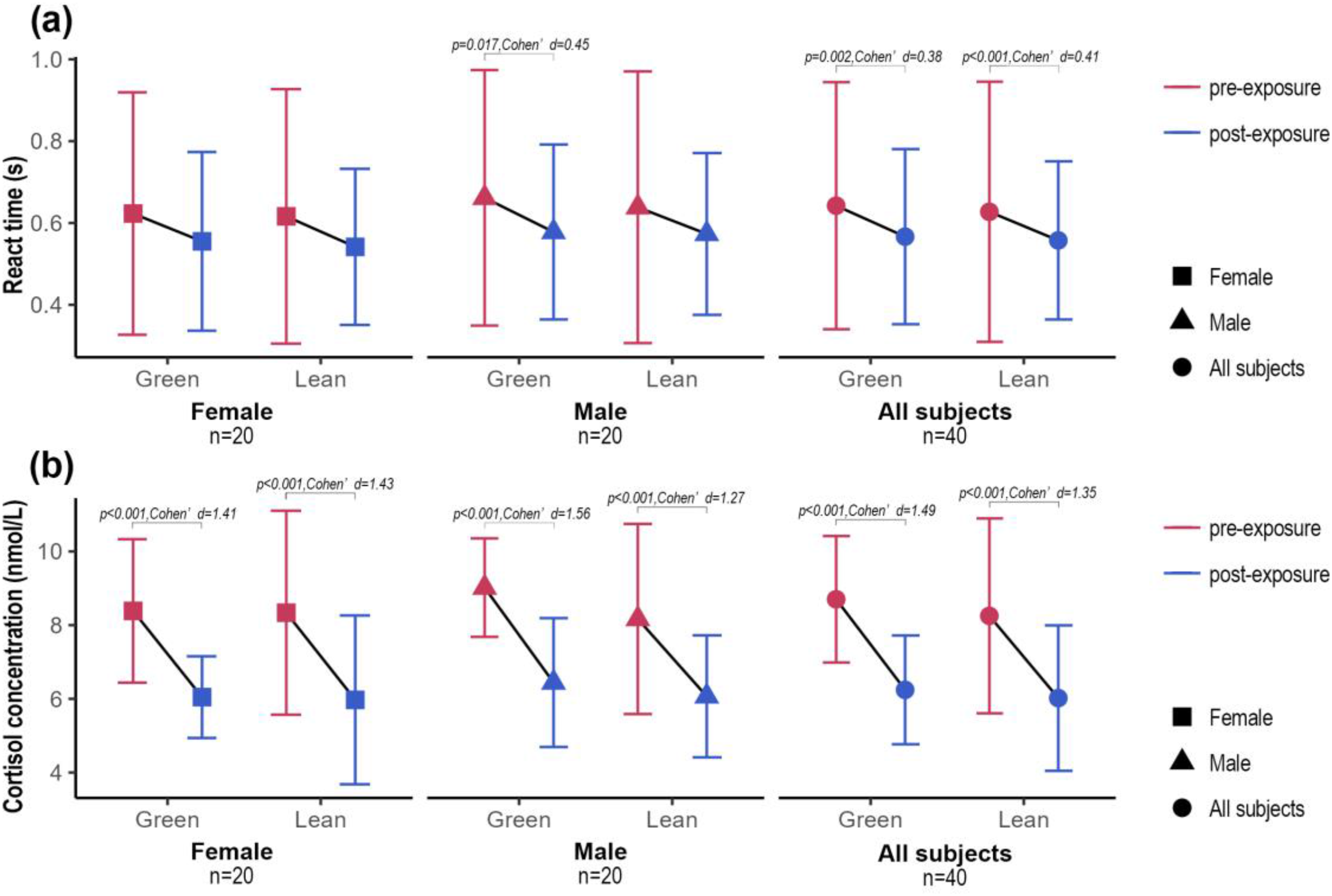
Mean levels of the react time of the Stroop task (a) and cortisol concentration (b) pre and post exposure to the “Green” and “Lean” room. Paired comparisons of means are presented for females, males, and all subjects, with significance levels marked for pairs achieving p < 0.05, along with their corresponding p-values and Cohen's d. The error bars indicate the standard deviation of the mean.
Impacts on the physiological indicators from the exposure to indoor plants
The repeated measures ANOVA conducted on cortisol concentration revealed a significant effect of “Time” (p < 0.001). However, no statistical significance was observed for the main effect of “Environment” or the interactions (see Supplementary Table S7). Pairwise comparisons indicated that, irrespective of the gender, there were no significant differences in cortisol concentration between groups, both before and after the exposure. Nevertheless, a significant decrease in cortisol concentration was observed after exposure in both environments (“Lean”, p < 0.001, Cohen’d = 1.33; “Green”, p < 0.001, Cohen’d = 1.47), see Figure 3(b).
The repeated measures ANOVA on SBP indicated a significant effect on the factor of “Time”, and the interactions of “Environment” × “Time” and “Gender” × “Time” (see Table S8). The pairwise comparisons for both genders together on the factor of “Environment” revealed no significant difference prior to exposure. However, post-exposure, the SBP was found to be significantly lower in the room with indoor plants compared to the room without indoor plants (p = 0.025, Cohen's d = 0.36). Furthermore, the post hoc analysis revealed a significant decrease in SBP (p = 0.004, Cohen's d = 0.502) only when working in the room with indoor plants, dropping from 115.13 mmHg (SD = 17.58, 95%CI: 109.50, 120.75) to 110.38 mmHg (SD = 15.70, 95%CI: 105.36, 115.40). For the female group, there were no significant differences in SBP after working in either the “Lean” room nor the “Green” room. While the male group showed a significant decrease in SBP only after working the “Green” room (p = 0.005, Cohen’d = 0.83), see Figure 4(a). No significant effects were observed on the diastolic blood pressure (DBP).
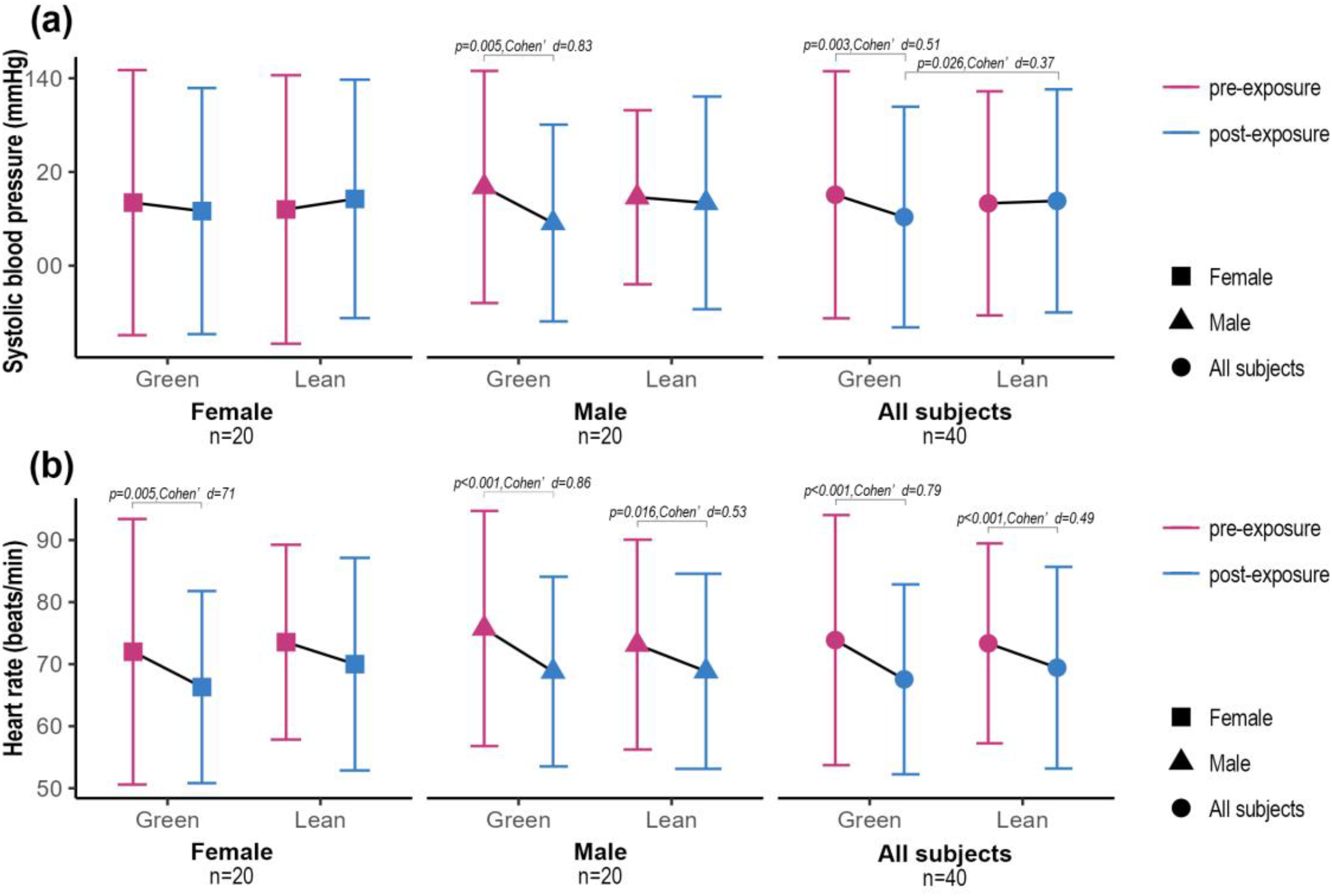
Mean levels of the systolic blood pressure (a) and heart rate (b) pre and post exposure to the “Green” and “Lean” room. Paired comparisons of means are presented for females, males, and all subjects, with significance levels marked for pairs achieving p < 0.05, along with their corresponding p-values and Cohen's d. The error bars indicate the standard deviation of the mean.
The repeated measures ANOVA demonstrated a significant effect of “Time” on heart rates. The effect of the interaction between “Environment” × “Time” was marginally significant (Table S9). Post hoc analysis indicated no significant difference in the entire sample between the two environments, both before and after exposure. However, there was a significant decrease in heart rate observed after exposure in both environments. In the indoor environment with plants, the heart rate decreased from 73.88 beats/min to 67.55 beats/min (p < 0.001, Cohen's d = 0.77), while in the “lean” working environment, the change was from 73.35 beats/min to 69.43 beats/min (p < 0.001, Cohen’d = 0.48). The effect size for the room with indoor plants was notably larger than that of the “lean” room. This suggests that the marginal significance of the interaction effect of “Environment” × “Time” stems from the greater decrease in heart rates observed after the exposure to the room with indoor plants. No significant difference between the “Lean” and “Green” environments was observed in heart rates for both male and female before the exposure. For the females, there was a significant decrease with a high effective size in heart rates after exposing to the “Green” room (p = 0.005, Cohen’d = −0.71), while no significand difference was showed in after exposing to the “Lean” room (p = 0.070, Cohen’d = 0.44). For the male group, there were significant decrease both after exposing to the “Lean” room (p = 0.016, Cohen’d = 0.53) or the “Green” room (p < 0.001, Cohen’d = 0.86), see Figure 4(b). The effective size of the changes in heart rate in the “Green” group is notably larger than that of the “Lean” group.
Discussion
Our findings indicate that working in an office with plants significantly reduces perceived stress and fatigue, supported by substantial effect sizes, compared to a plant-less office. Physiological data further demonstrate lower SBP and heart rates during work with plants. These results, coupled with self-assessments, suggest that indoor plants effectively alleviate emotional distress, 40 aligning with the belief in nature's positive impact on affective health status. Our experiments revealed a gender difference in stress-related indicators among subjects. Females demonstrated more significant relief in perceived stress with indoor plants, evident in perceived stress reduction, while males exhibited a more apparent decrease in physiological stress indicated by SBP. Although not within a working scenario, previous findings indicate that females displayed more apparent stress recovery after observing red-flowering Geraniums compared to males. 20 There is a lack of comparable studies discussing the gender differences in stress reduction when working with indoor plants, which underscores the imperative for in-depth investigations into gender differences in the context of indoor plant exposure in work settings. In our study, no significant group difference in salivary cortisol concentration was observed. Previous research suggests immediate physiological responses after exposure to biophilic environments, with the most substantial impacts occurring within the initial five minutes of the recovery process. 14 Given the quiet and clean nature of the stimulus environments used in our experiments, one hour should suffice for salivary cortisol levels to return to baseline after stressor removal. Rapid increases in salivary cortisol levels following acute stress and subsequent return to baseline are typical. 51 Additionally, the observed effect of “Time” may be linked to the natural circadian decline or the return to baseline after stressor removal, given cortisol's descending circadian pattern throughout the day. 45 Consequently, the absence of a significant group difference doesn't rule out the possibility that, in the room with plants, salivary cortisol levels decreased more rapidly within a shorter duration after exposure to the stressor, eventually reaching a comparable size to that of the control group. Future research could involve measuring salivary cortisol concentrations at various time points to elucidate the cortisol level curve. This approach would facilitate a more comprehensive investigation of the physiological effects of indoor plants on stress regulation.
In this study, the repeated measures ANOVA on the accuracy rate of the Stroop task did not detect a significant effect of indoor plants on all the participants. However, male participants exhibited faster react time after working in the “Green” room, a change not observed in female participants. This divergent impacts of indoor plants on users of different genders have received limited attention in previous studies, with only a few mentions. A study by Shibata & Suzuki 18 on the effects of the foliage plants on task performance and mood found that the presence of plants affected male subjects more than female subjects in association and sorting task performance. Unlike studies on exposure to outdoor nature, which consistently detect attention restoration effects,1,52–54 similar evidence is often lacking in studies on indoor nature exposure. Some studies have demonstrated that indoor plants or “nature in window” can effectively improve the attentional state of individuals in a room,31,33,55 while others do not.56,57 We here propose two possible explanations for the efficacy of indoor natural elements in enhancing attentional state or productivity. Firstly, there may be differences between male and female individuals in the impact on attentional performance for plants in working environments, contributing to disparities among studies with different sample compositions. Secondly, the restorative effects on attention from indoor plants are likely to occur during the initial stage of exposure. Studies have shown that students exhibited improved performance in attentional tests five minutes after a demanding cognitive task when in a room with indoor plants, indicating prompt attentional restoration benefits. 21 Over an extended period, the levels of attentional restoration from an acute stressor may gradually become similar in rooms with and without plants. On the other side, some studies have found that indoor nature may actually act as distractions during cognitive tasks,18,28 and individuals may perform better on attention-demanding tasks in a room without a nature view.24,56 Relevant research has uncovered interesting phenomena, such as the positive association between “indoor nature” and improved performance in creative tasks18,58 or increased self-efficacy.21,28 These research findings highlight the potential existence of a complex mechanism underlying the benefits of nature exposure in indoor work settings. Further exploration is warranted to ascertain the differences in how indoor nature impacts individuals engaged in various types of work, such as those involved in creative tasks or those requiring undivided attention. This line of inquiry would provide research evidence that offers greater practical value for designing and managing indoor working environments catering to different user groups.
Expanding the discussion beyond experimental findings, we incorporate relevant macroscopic investigations. Korpela's 59 analysis, using a cross-lagged panel model based on a one-year longitudinal questionnaire investigation, indicated that engaging in more physical activities in outdoor nature during leisure time leads to better vitality. However, there was no significant correlation between nature exposure in work settings and vitality. The researcher consequently suggests that the benefits of nature exposure in work settings are immediate rather than long-term. 59 Some macroscopic investigations also have revealed that individuals with higher emotional demands at work tend to visit outdoor recreation areas more frequently. 60 Considering these evidences alongside our findings, a reasonable inference is that the indoor nature in workspaces is more effective in contributing to individuals’ emotional well-being, thereby enhancing productivity in the long run. However, during tasks requiring focused attention, simultaneous exposure to indoor nature may not significantly improve attentional performance. Instead, post-work nature exposure, when individuals do not demand as much focus, could enhance cognitive resources vital to attentional performance. This highlights the nuanced relationship between indoor nature exposure, task demands, and temporal considerations, suggesting that the timing and context of nature exposure are crucial factors influencing its impact on cognitive functioning and emotional well-being in work environments.
Strength and limitations
This controlled crossover study conducted in a real-world setting provides valuable insights into the restorative effects of indoor plants on users during working states. Notably, the analysis revealed gender differences, suggesting the existence of complex mechanistic pathways for stress reduction and varying sensitivities to attentional restoration. While a review study over a decade ago hinted at potential gender differences in the health promotion effects of indoor nature exposure, 61 the lack of focus on this aspect in current literature underscores the need for more relevant studies and comprehensive reviews.
The study's cross-over experimental design effectively mitigated the impact of sequence and grouping, enhancing statistical power with the same number of subjects. By conducting the study in real-world scenarios, ecological validity was ensured. To maintain a normal working pace and minimize disruptions, a pre- and post-design was employed instead of frequent measurements with shorter intervals. However, this approach limits a comprehensive understanding of the whole process of how indoor nature in working environments influences users. Future research could benefit from including cognitive indicators such as electroencephalography (EEG) throughout the entire process. Despite challenges associated with investigating real-time cognitive processes in field studies, balancing data quality with the benefits of ecological validity is crucial. The study's exposure duration was one hour. Comparable experimental studies commonly utilized short-term exposure to indoor nature, typically ranging from 5 to 60 min. However, to better understand the potential long-term restorative impacts of indoor nature exposure, future research should explore longer and continuous exposure in real-world settings through extensive longitudinal investigations. Finally, to ensure a controlled experimental setting, only minimal elements were incorporated, resulting in a relatively simple space. However, actual work environments typically feature a wider array of visual elements and diverse spatial configurations. Further research is thus needed to clarify how these environmental factors interact to support users’ restorative benefits, and these considerations should be comprehensively integrated into the design of real-world indoor work environments.
Conclusions
Advancing our understanding of the restorative effects of indoor plants in work settings provides crucial insights for creating and managing healthy work environments. Previous studies, hampered by limitations in study design, have often compromised ecological validity. This controlled crossover experimental study is conducted in real working scenario. The findings highlight that spending an hour in a vegetated office room significantly reduces perceived stress and fatigue levels, while inducing positive physiological changes compared to a plant-free environment. Notably, gender differences reveal nuanced responses, with females experiencing greater relief in perceived stress, and males showing more apparent reductions in stress-related physiological indicators. Improvements in reaction time for the Stroop task were observed exclusively in males. Building on previous research, we accentuate the immediate benefits of indoor plants for emotional well-being during work, underscoring the importance of considering diverse user groups when designing indoor workspaces.
Supplemental Material
sj-docx-1-wor-10.1177_10519815251323994 - Supplemental material for The restorative effects of working individually in a vegetated office space: A crossover controlled experimental study in real-life workplace setting
Supplemental material, sj-docx-1-wor-10.1177_10519815251323994 for The restorative effects of working individually in a vegetated office space: A crossover controlled experimental study in real-life workplace setting by Gaochao Zhang, Tingting Li, Yu Cui and Tori Hui Ren in WORK
Footnotes
Acknowledgements
We thank Han Lin and Yi Yang for their assistance to carry out this experiment. We thank Dr Ke Wang and Biannan Zhang for their donations and supports for setting up the green walls used in the experiments. We also thank the participants of the experiment.

Ethical approval
The experiment was reviewed and approved by the Institution Review Board of Southeast University (2024ZDSYLL161-P01) and carried out following the guidelines on working with human subjects.
Informed consent
All participants agreed to participate in the study and signed a consent form.
Funding
This study was supported by the Start-up Research Fund of Southeast University (Grant no. RF1028623250), and donation from Delos China (HK) limited.
Declaration of conflicting interests
The authors declared no potential conflicts of interest with respect to the research, authorship, and/or publication of this article.
Supplemental material
Supplemental material for this article is available online.
References
Supplementary Material
Please find the following supplemental material available below.
For Open Access articles published under a Creative Commons License, all supplemental material carries the same license as the article it is associated with.
For non-Open Access articles published, all supplemental material carries a non-exclusive license, and permission requests for re-use of supplemental material or any part of supplemental material shall be sent directly to the copyright owner as specified in the copyright notice associated with the article.
